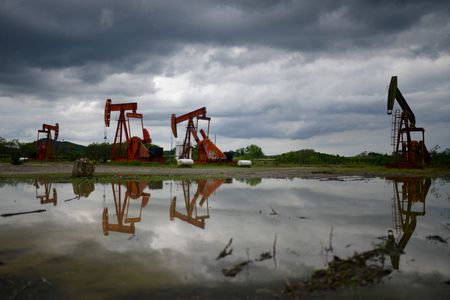

Crude oil markets saw modest increases during early Tuesday trading as tensions between Iran and Israel kept investors cautious about the durability of a temporary ceasefire between the two nations.
Brent crude futures climbed 13 cents to reach $94.38 per barrel, marking a 0.14% increase at 0001 GMT. Meanwhile, U.S. West Texas Intermediate crude gained 11 cents to $91.41 per barrel, representing a 0.12% rise.
The energy markets had experienced significant volatility during the prior trading session, with prices jumping as much as 5% following fresh Israeli military action against Iran and operations in Lebanon that dampened expectations for a swift end to the broader conflict. However, those gains were reduced after Iran’s military forces declared an end to their operations targeting Israel.
“While there is some relief from the latest pause in direct strikes, investors are not convinced the truce will hold,” said Tim Waterer, chief market analyst at KCM Trade.
According to Waterer, the market continues to factor in ongoing uncertainty instead of expecting a permanent solution.
Both Iran and Israel announced they had suspended their mutual attacks following an intervention by U.S. President Donald Trump, who urged them to immediately “stop ‘shooting’.” However, Tehran indicated it would restart military strikes if Israel persisted in targeting Hezbollah forces in Lebanon.
“While this helped stop the situation snowballing, the geopolitical backdrop remains tense, and a lasting peace deal remains elusive,” said Tony Sycamore, market analyst at IG.
In a video message broadcast on Israeli television, Israeli Prime Minister Benjamin Netanyahu declared that Israel would respond forcefully should Iran launch another attack.
During an interview with Axios published Monday, Trump revealed he had cautioned Netanyahu that he could end up fighting without support if he returned to warfare with Iran.
“The key question is whether current de-escalation efforts can finally translate into a longer-lasting resolution, or if we’re simply in another temporary lull,” Waterer said.
Among the primary issues Washington is pursuing with Tehran during peace negotiations is the reopening of the Strait of Hormuz, a waterway that carried approximately one-fifth of global oil supplies before U.S. and Israeli airstrikes targeted Iran in late February.
U.S. military forces intercepted an empty oil tanker in the Gulf of Oman on Monday after the vessel tried to reach an Iranian port despite the current blockade restrictions against Iran, according to military officials.