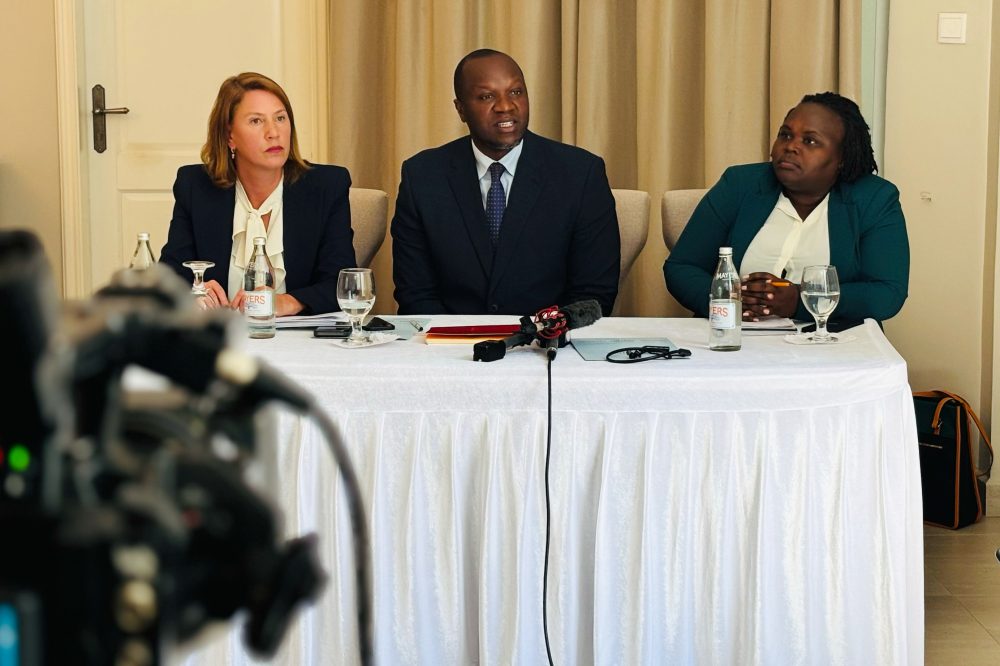

Survivors of brutal violence during Sudan’s civil war turned to Kenyan authorities Tuesday, requesting an investigation into torture and sexual assault allegations against members of a feared paramilitary organization.
This marks the initial effort to pursue legal action against the Rapid Support Forces, known as RSF, beyond Sudan’s borders. The paramilitary unit has battled the Sudanese military for more than three years.
Human rights organizations have labeled the RSF’s actions as war crimes and crimes against humanity. The group maintains connections with Kenya’s administration, and Kenyan President William Ruto previously welcomed RSF commander Gen. Mohamed Hamdan Dagalo for discussions he described as promoting Sudanese peace initiatives, creating diplomatic friction.
Legal Action Worldwide, a Switzerland-based international legal organization, submitted the formal complaint describing torture and sexual assault by RSF personnel across multiple sites in and around Khartoum during the period from April 2023 to March 2025, when paramilitaries controlled Sudan’s capital.
Twelve survivors are requesting Kenya’s Director of Public Prosecutions to authorize criminal charges against 10 RSF members, with several suspected of currently living in Kenya.
The Associated Press has contacted the RSF for a comment.
The latest complaint describes victims confined under deplorable conditions with minimal food, restricted water access, and poor sanitation. They claim they endured beatings, burning, suffocation, electric shock treatment, and sexual assault including rape. Some were allegedly compelled to move corpses from detention centers.
Antonia Mulvey, who founded Legal Action Worldwide, stated Kenya should pursue prosecution of the alleged offenses under the nation’s International Crimes Act of 2008.
“For Kenya, despite the sensitivity of the matter, it is an opportunity to lead in the fight against impunity. Authorities can now demonstrate the strength of the country’s investigative, prosecutorial, and judicial institutions in addressing the most serious international crimes, regardless of where they are committed,” she said.
The RSF began fighting the Sudanese military in April 2023, after disagreements between both factions exploded into armed confrontation in Khartoum and additional areas nationwide.
The organization developed from the infamous Arab Janjaweed militias, blamed for extensive brutalities in the early 2000s targeting communities with East or Central African heritage in Sudan’s western Darfur area.
Human rights groups and the United Nations have charged the RSF with committing violence during the current war that could constitute war crimes and crimes against humanity, especially in Darfur where the organization maintains significant control.
Mulvey contended that victims have little chance of receiving justice within Sudan since the nation’s legal system remains “inaccessible, unavailable, and ineffective.”
She noted the International Criminal Court’s authority covers only Darfur and excludes offenses occurring in or near Khartoum.
Willis Otieno, a Kenyan attorney who submitted the local complaint, indicated evidence suggests some individuals of interest have Kenyan connections and that the nation has adequate legal structures to investigate and prosecute these offenses.
Otieno characterized Kenya’s Office of the Director of Public Prosecutions as capable, stating: “We have faith that the office will act. For now, let’s treat them with that goodwill.”
The RSF has previously faced accusations of mass executions, gang rape, and ethnically-motivated violence, including during an October attack on the Darfur city of el-Fasher that killed over 6,000 people in three days. U.N.-commissioned experts characterized the operation as displaying “hallmarks of genocide.”
Among its final actions, the Biden administration charged the organization with genocide and sanctioned its leaders, including Dagalo.
The conflict has claimed at least 59,000 lives during three years, according to the Armed Conflict Location & Event Data Project, a U.S.-based monitoring organization that noted the figure likely underestimates actual casualties due to reporting challenges.
The fighting has generated the globe’s most severe humanitarian emergency, with approximately 34 million people — nearly two-thirds of all Sudanese — requiring aid, the U.N. reports.