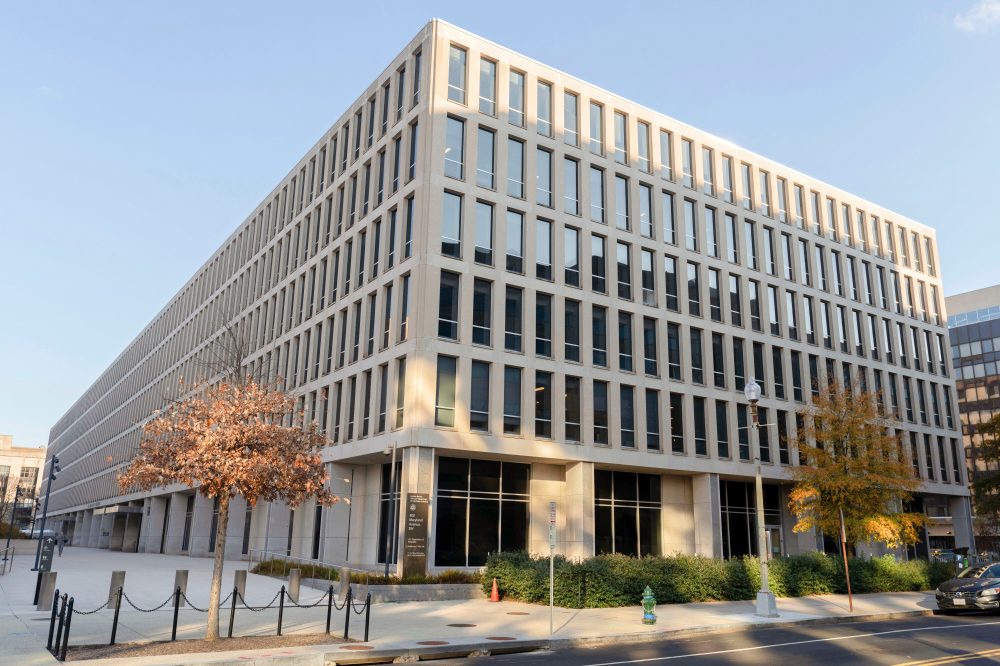
A federal appeals court stepped in Friday to halt the Trump administration’s newest attempt to sharply reduce the workforce at the U.S. Consumer Financial Protection Bureau, dealing another blow to the White House’s ongoing push to shrink the agency.
The ruling came from the U.S. Court of Appeals for the District of Columbia Circuit, which was examining the administration’s challenge to a March 2025 injunction issued by a federal district court judge. That injunction had temporarily blocked the mass layoffs from moving forward.
The latest plan, submitted by the Justice Department in late March, called for cutting roughly two-thirds of the agency’s employees. This followed earlier proposals that sought to eliminate up to 90% of the bureau’s staff — plans that had already been turned back in court multiple times.
The Justice Department had urged the appeals court to allow the new round of cuts to proceed right away. It also asked that the case be returned to the district court judge with a 45-day window to revisit the original injunction.
The appeals court agreed to send the case back to the district court, but refused to allow the staff reductions to resume in the meantime and declined to impose any deadline on the lower court judge.
The CFPB was established by Congress in the wake of the 2008 financial crisis to serve as a watchdog over consumer financial products and services.
President Trump and other top administration officials have pushed to abolish the agency entirely, arguing it places an unnecessary and politically motivated burden on businesses. Supporters of the bureau, including Democrats and consumer advocates, counter that undermining it would benefit financial industry players at the cost of everyday consumers.
With the most aggressive moves blocked by the courts, the administration has pursued other avenues to weaken the agency. In May, the CFPB announced it would require all employees to relocate to its Washington headquarters — a step widely seen as a way to encourage resignations. Earlier this month, Trump put forward a prominent critic of the bureau to serve as its next director.
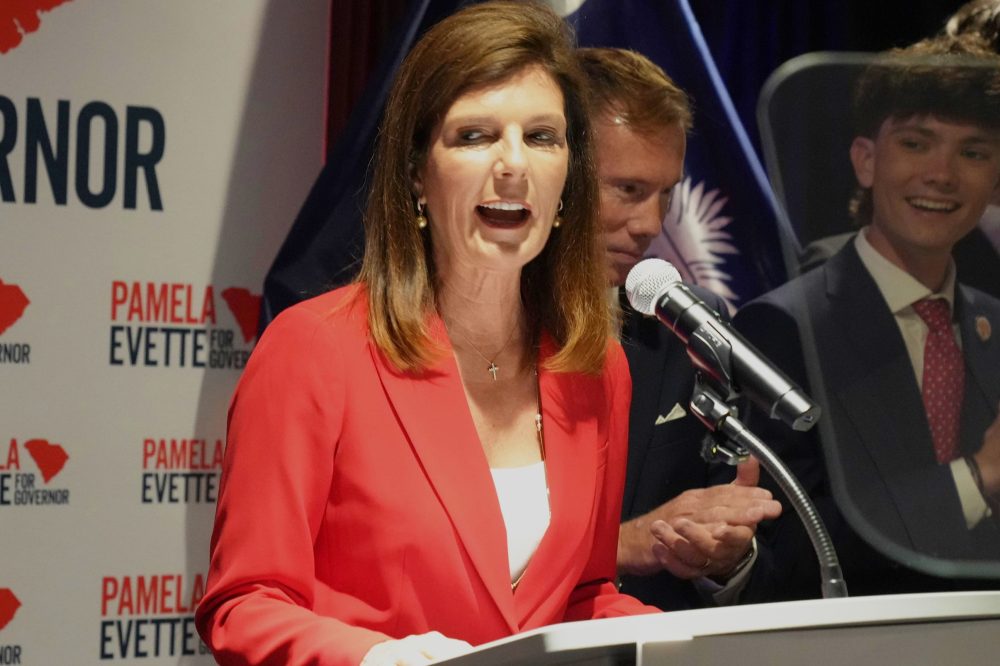
COLUMBIA, S.C. — President Donald Trump reversed course Friday ahead of next week’s South Carolina Republican governor runoff, declaring that both candidates in the race — not solely Lt. Gov. Pamela Evette, who received his endorsement before the June 9th primary — would make a solid pick.
Taking to his Truth Social platform, Trump offered praise for both Evette and state Attorney General Alan Wilson, writing: “Both have had amazing careers, and have been with me from the beginning. They are MAGA and America First all the way!”
The shift signals a strategic hedge by Trump during a primary season in which several of his handpicked candidates have come up short — a pattern of rare losses that has raised questions about his political influence as he moves into the latter half of his second term.
Trump had previously given Evette his “Complete and Total Endorsement.” He had also highlighted what he called a “BIG added plus” for her campaign — the possibility that Henry McMaster Jr., son of the current governor and a close Trump ally, might serve as her running mate. However, the 38-year-old attorney later announced he would not be seeking the position.
Evette responded to Friday’s development on social media, posting: “I was proud to come in first as President @realDonaldTrump’s endorsed candidate for Governor on June 9th. Looking forward to doing it again on June 23rd.”
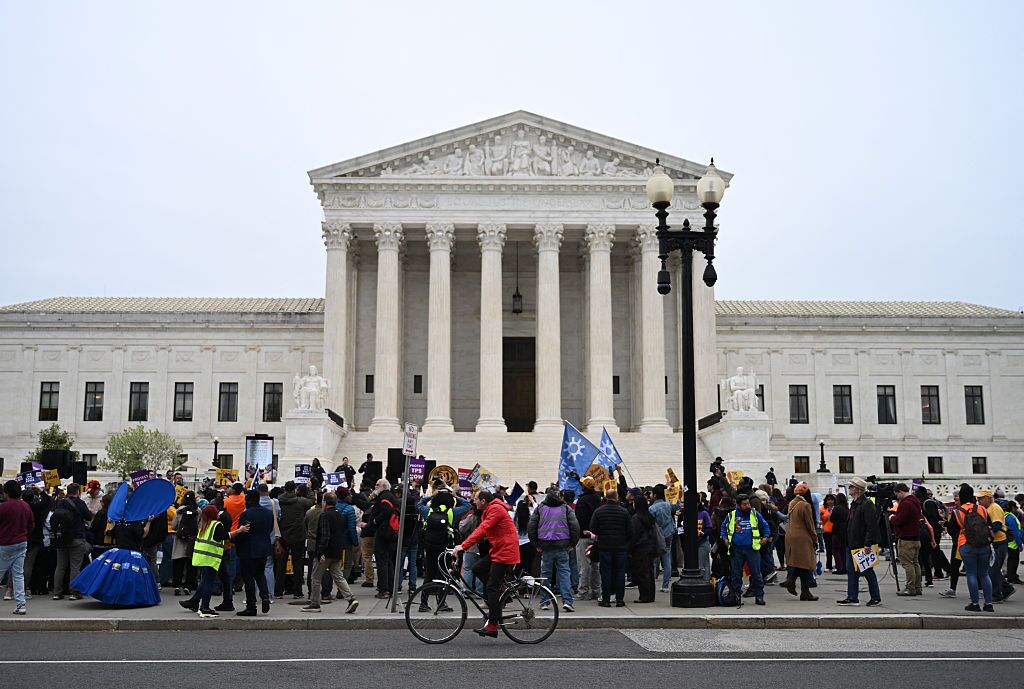
Wilson also took to social media, writing: “I am honored to have the endorsement of President Donald J. Trump.” Shortly after, his campaign issued a news release listing the legal briefs he has filed in support of Trump’s policy positions, including on restricting birthright citizenship — an issue the U.S. Supreme Court has yet to rule on.
Almost immediately following Trump’s dual-endorsement post, South Carolina Sen. Tim Scott announced on social media that he was throwing his support behind Wilson, predicting the attorney general “will lead with humility, courage, and an optimistic vision for our state.”
A source familiar with Scott’s thinking, who was not authorized to speak on the record, told The Associated Press that the senator had been making calls on Wilson’s behalf, helping with fundraising efforts, and encouraging Trump to endorse Wilson’s candidacy.
Evette has described Trump’s backing as a “golden ticket” for Republicans running in South Carolina, though the results across other states have been uneven. Trump’s picks in both Iowa and Georgia lost their races this month.
This isn’t the first time Trump has taken a broad approach to endorsements. Just before a 2022 U.S. Senate primary in Missouri featuring former Gov. Eric Greitens and Attorney General Eric Schmitt, Trump simply endorsed “ERIC” — leaving both candidates to claim the nod. Schmitt ultimately won both the nomination and the Senate seat.
Arizona’s primary is still a month away, but Trump has been weighing in on that governor’s race for two years. In late 2024, he endorsed housing developer Karrin Taylor Robson, a move that upset several key allies in the state who distrust her deep ties to the party’s business wing. Then in April 2025, Trump added U.S. Rep. Andy Biggs to his list of endorsements — alongside Robson.
Trump’s 2026 primary endorsements have produced a mixed record overall. Biotech entrepreneur Vivek Ramaswamy in Ohio and U.S. Sen. Tommy Tuberville in Alabama both received early Trump backing and went on to dominate their primaries. Similarly, former state Sen. Mike Mazzei, Trump’s pick in Oklahoma’s crowded governor race, advanced to an Aug. 25 runoff.
On the other hand, Trump’s preferred candidates have stumbled in several contests. In Georgia, billionaire healthcare executive Rick Jackson — backed by more than $100 million, much of it from his own personal wealth — defeated Trump’s endorsed candidate, Lt. Gov. Burt Jones, to claim the Republican nomination.
In Iowa, U.S. Rep. Randy Feenstra, whom Trump endorsed on the same day as Evette, lost his governor’s race to businessman Zach Lahn.
A lavish Boeing 747 jet, donated to President Trump by the nation of Qatar, made its arrival at Joint Base Andrews on Friday — coming in ahead of the expected timeline.
The aircraft, which carries an initial estimated value of $400 million, has stirred considerable debate since news of the gift became public. Critics have called it one of the most substantial foreign gifts the United States government has ever received.
The plane’s arrival marks a significant moment in what has been an ongoing controversy surrounding the appropriateness and legality of accepting such a high-value gift from a foreign government.
A popular NPR podcast is diving into a complex and long-debated question: when the government harms people, who actually gets compensated?
NPR’s Code Switch is examining the issue of government-caused harm and the financial remedies — or lack thereof — that follow. The episode touches on the long-stalled effort to pass legislation that would study reparations for slavery, a bill that has failed to move forward in Congress for many years.
At the same time, the program points out a notable connection: the Trump administration’s so-called ‘anti-weaponization fund’ could potentially have drawn from a financial source that itself exists because of other reparations-related efforts — raising questions about how the government decides who deserves to be made whole after suffering at its hands.
The episode invites listeners to consider the broader principles at play when it comes to government accountability and who ultimately benefits from compensation programs rooted in past wrongs.
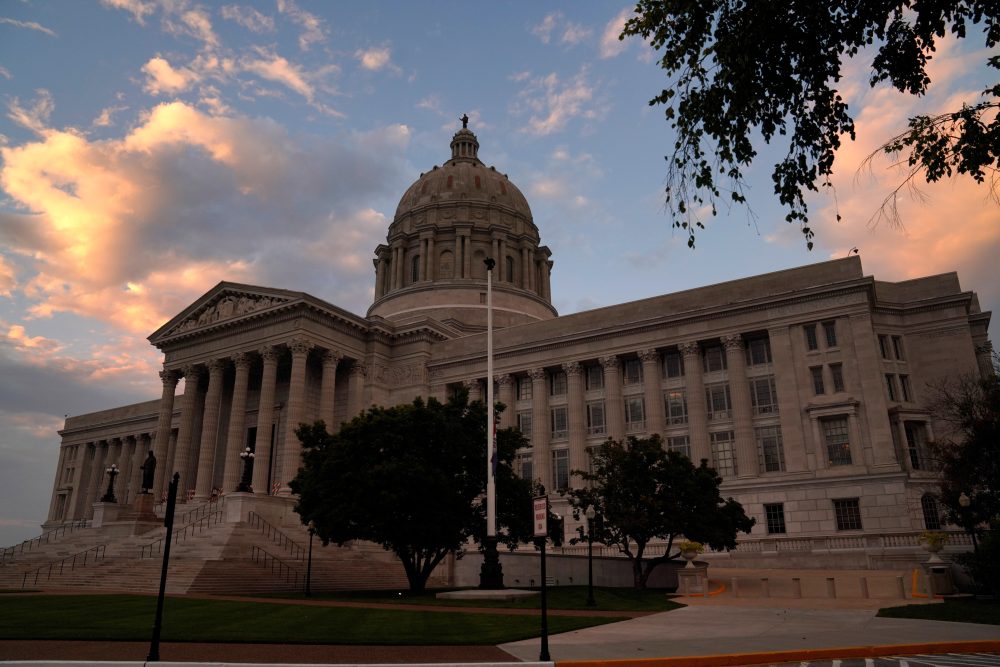
A Missouri judge this week struck down dozens of state laws limiting abortion access, determining that those laws conflict with a constitutional amendment that state voters approved in 2024.
Many of the restrictions had already been put on hold following an earlier preliminary court decision. But the latest ruling carries a significant new consequence: the two Planned Parenthood affiliates operating in Missouri announced they will begin prescribing abortion pills to patients in the state for the first time since 2018.
While the decision marks a clear win for abortion rights supporters, it is not the final chapter. Both an appeal and another ballot measure are expected to follow.
Jackson County Circuit Judge Jerri Zhang issued the ruling Thursday, several months after presiding over a 10-day trial on the matter earlier this year. She reviewed 40 separate state laws to determine whether they conflicted with the 2024 constitutional amendment, and in the majority of cases, she sided with abortion rights groups over the state government, which had argued the laws should remain in force.
Among the provisions she struck down was a rule requiring women seeking an abortion to visit a doctor in person on two separate occasions at least 72 hours apart. She also eliminated a requirement that the first dose of abortion pills — the most common method of obtaining an abortion — be taken in the presence of the prescribing physician.
However, the judge did uphold a requirement that patients visit a doctor in person to confirm how far along the pregnancy is and to rule out an ectopic pregnancy.
Missouri became the first state in the country to enforce a complete ban on abortions at all stages of pregnancy following the U.S. Supreme Court’s 2022 decision overturning Roe v. Wade. Even before that ban took effect, existing laws had already made abortion largely inaccessible for many women in the state.
In 2024, Missouri voters made the state the first to pass a constitutional amendment reversing such a ban, permitting abortions up until fetal viability — generally considered to be sometime after 21 weeks of pregnancy, though no fixed point is defined. The two Planned Parenthood affiliates in the state filed a lawsuit to dismantle remaining abortion restrictions shortly after voters approved that amendment.
Following this week’s ruling, Planned Parenthood said it would begin offering medication abortion appointments starting next week.
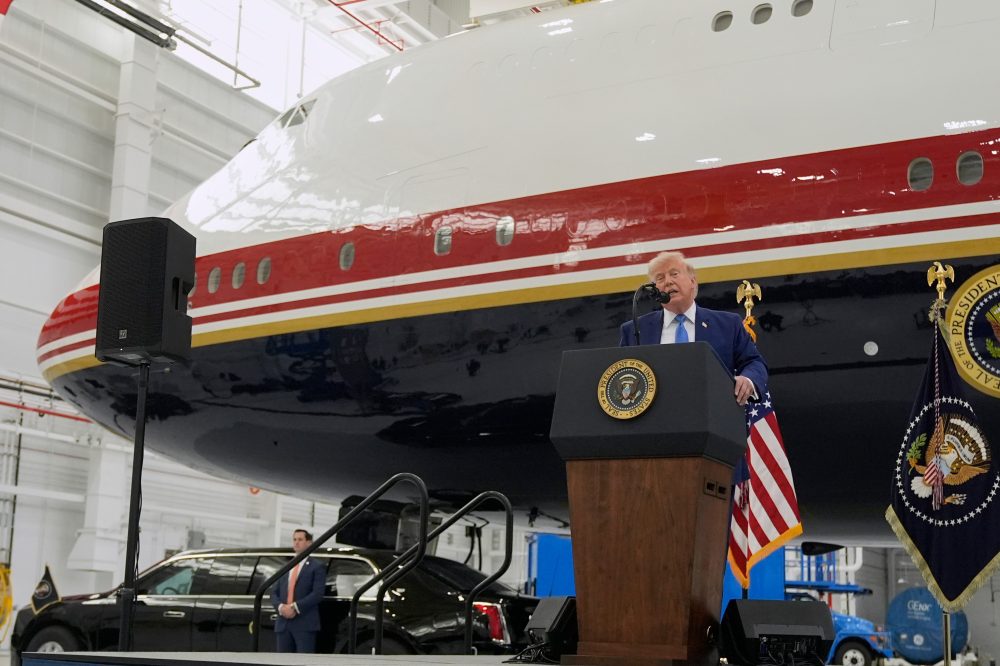
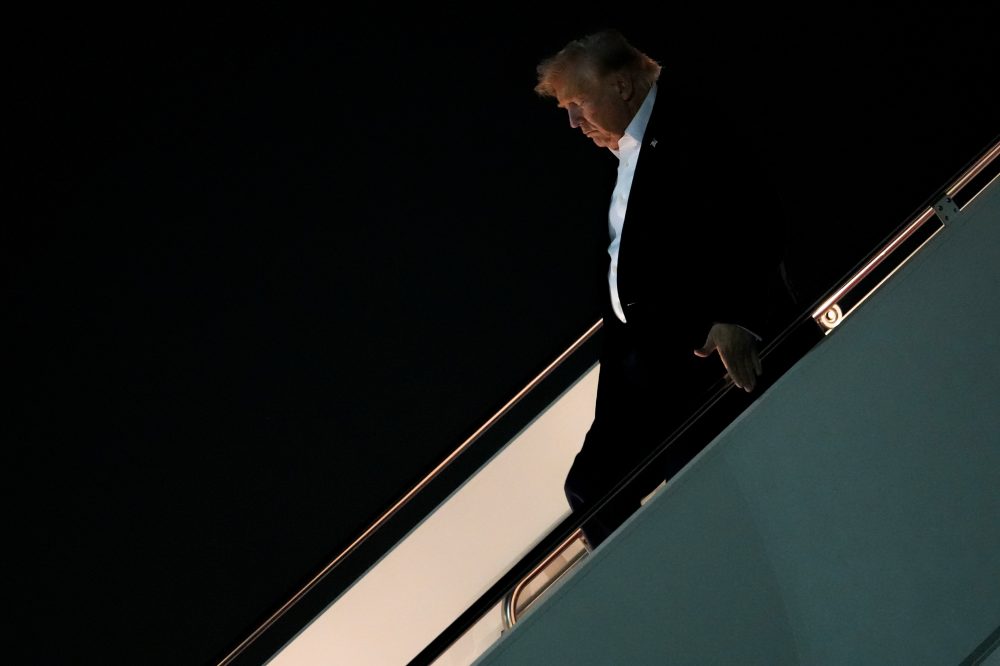
ANDREWS AIR FORCE BASE, Md. — President Donald Trump pulled back the curtain Friday on a revamped Air Force One — a massive Boeing 747 jet formerly belonging to Qatar that has been transformed into the official aircraft of the U.S. president.
The plane sports a dramatically different appearance compared to its predecessor. Gone is the pale blue exterior that has been associated with the presidential aircraft since the Kennedy administration. In its place, the belly of the aircraft is painted a deep navy blue, topped by a bold red stripe. The presidential seal is displayed on the left side of the plane — the side used for boarding — while a large American flag dominates the tail.
Standing inside a packed hangar at Andrews Air Force Base before a crowd of several hundred Air Force personnel, Trump praised the craftsmanship of the aircraft after stepping off the plane to the sounds of his signature song, “God Bless the USA.” “The workmanship of this plane is, when you see it, you won’t believe it,” Trump said.
The Qatar-gifted jet is being used as a so-called “bridge” aircraft — a temporary solution to transport the president while a brand-new fleet ordered directly from Boeing is completed. That delivery is currently expected in 2028.
The administration officially accepted the luxury jet from Qatar last year to serve as the presidential plane, though the move sparked ethical and legal questions about receiving such a high-value gift from a foreign government. Trump has previously stated he does not intend to use the Qatari jet after leaving office, saying it would eventually be donated to a future presidential library.
The Air Force has previously indicated that security upgrades to the aircraft would run under $400 million.
Trump’s push to redesign the presidential plane goes back to his first term in office, when he directed that an incoming fleet of jets adopt a color scheme closely resembling that of his personal aircraft. That plan was reversed in March 2023 by then-President Joe Biden, after an Air Force review found that the darker paint could drive up costs and slow down delivery of the new planes. When Trump returned to office, he reinstated his preferred design.
The Air Force announced earlier this year that other government jets used by top administration officials would also adopt the red, white, and navy color scheme.
An Air Force spokesperson, speaking anonymously to discuss sensitive planning details, told the Associated Press that the two existing presidential aircraft — known as VC-25As — will not be retired. They will remain active until the new Boeing jets, designated VC-25Bs, enter service. How the older planes will be used going forward remains unclear, but the spokesperson noted that both the Qatari aircraft and the VC-25As will remain available, with the Presidential Airlift Group choosing “the appropriate aircraft for each mission based on operational requirements.”
President Donald Trump says he has changed his view of artificial intelligence company Anthropic, telling “The Axios Show” in an interview published Friday that he may have considered the firm a national security threat a week ago — but does not anymore.
The dispute between the Trump administration and Anthropic involved foreign access to the company’s two most advanced AI models, Fable 5 and Mythos 5. After Trump directed Anthropic to block foreign nationals from using those models, the company shut down access to them for all users. Senior technical staff from Anthropic had been scheduled to meet with administration officials earlier this week to work through the issue.
Several key points emerged from the Axios interview:
When asked whether he considered Anthropic or its CEO, Dario Amodei, a threat to national security, Trump replied: “Well, not now, but a week ago, maybe.”
Trump told Axios that Amodei had responded to the administration’s export control directive “very quickly” and “responsibly.”
Trump and other G7 leaders also met with technology executives, including Amodei, during a summit held in France this week.
On the question of whether he might invoke emergency authority under the Defense Production Act against Anthropic, Trump did not rule it out. “I have the power to use a lot of things,” he said of the DPA. “But I’m not sure I have to do that.”
An Anthropic spokesperson responded to Trump’s comments, stating: “We are grateful to the administration for their ongoing partnership in working to get this matter resolved as quickly as possible. We remain committed to working alongside them towards our shared goals of protecting critical infrastructure and making sure the U.S. leads in AI.”
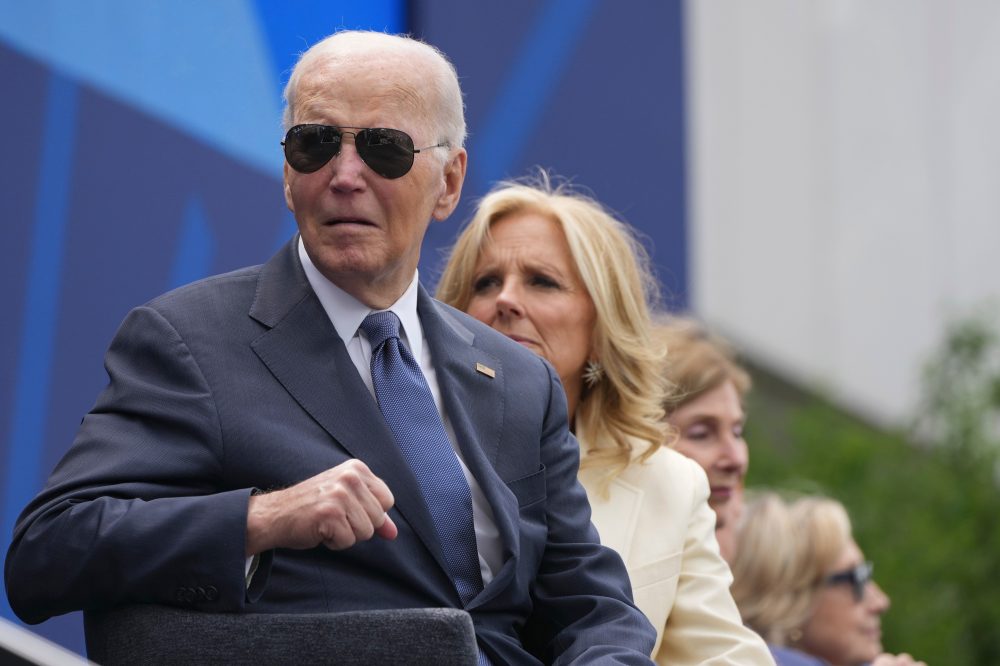
A federal judge on Friday turned down former President Joe Biden’s legal effort to stop the Trump administration from handing over audio recordings — made between Biden and a ghostwriter — to a conservative organization.
U.S. District Judge Dabney Friedrich ruled that the public’s interest in accessing the material was greater than any privacy rights Biden could claim.
The recordings were gathered by special counsel Robert Hur during his investigation into whether Biden had improperly held onto classified documents from his time as a senator and vice president. After Hur chose not to bring charges against Biden, congressional Republicans pushed hard for access to the recordings.
During Biden’s time in office, his Democratic administration refused to hand over the 2017 recordings and their transcripts. That refusal led congressional Republicans to hold his attorney general, Merrick Garland, in contempt of Congress.
The current administration under President Donald Trump later authorized the release of those materials. In response, Biden filed a lawsuit last month to prevent the records from being turned over to a staffer at the conservative Heritage Foundation, who had formally submitted a request for them.
Biden argued the release would be a violation of his privacy, saying the recordings contained discussions of deeply personal subjects — including the death of his older son, Beau Biden. However, Judge Friedrich found that the administration had already redacted that sensitive content.
In her written ruling, Friedrich stated that the materials “contain no mention of highly sensitive topics like illness or death, nor do they mention any non-public persons, including members of Biden’s family.”
Representatives for Biden did not immediately offer a public response, but they did ask Friedrich to put the release on hold while they pursue an appeal. The Justice Department also did not respond to a request for comment by press time.
Judge Friedrich was originally nominated to the federal bench by Trump, a Republican, in 2017.
WASHINGTON — President Donald Trump is heading to Camp David this weekend for a rare visit to the presidential retreat, marking only the second time he has returned to the Maryland getaway since taking office again last year.
A White House official confirmed that Trump will conduct both policy and political meetings during the stay. His family will be joining him for the weekend, which wraps up with Father’s Day on Sunday.
The visit comes at a tense moment in foreign policy. Trump is working to finalize a peace agreement to bring the war with Iran to a close, but the effort is facing pushback from critics who argue the preliminary deal is too generous toward Tehran.
Talks between the U.S. and Iran that had been scheduled to take place in Switzerland on Friday were called off after fighting flared up in Lebanon, throwing the timeline of negotiations into question. Those talks are considered critical to reopening the Strait of Hormuz to international shipping and bringing stability back to the Middle East.
Despite the setbacks, Trump took to Truth Social on Friday to stand by his approach, insisting that Iran came to the table from a weakened position.
“We didn’t meet out of desperation, Iran did. They are FINISHED!” Trump wrote. “We’ll play out the 60 days. They get no money, not ten cents!”
Trump’s last trip to Camp David was in June 2025, when he gathered top military and foreign policy advisers to talk through immigration protests in California, the situation with Iran, and the ongoing war in Gaza.
The wooded retreat, nestled in Maryland’s Catoctin Mountains, has not been a frequent stop for Trump. He has typically chosen to spend his weekends at properties he personally owns, such as Mar-a-Lago in Florida or his golf club in Bedminster, New Jersey.
A Cabinet meeting that had been planned at Camp David in May was relocated to the White House after forecasters predicted poor weather.
The government-owned compound sits roughly 70 miles from Washington and has historically seen much heavier use from other presidents, who have relied on it both for rest and for high-level diplomatic and policy gatherings.
Maine Democrats have selected state auditor Matthew Dunlap as their candidate for the 2nd Congressional District, a closely contested race that could play a significant role in determining which party controls the U.S. House of Representatives come November, according to U.S. media projections released Friday.
The district, which is largely rural, is among a handful of competitive congressional seats expected to influence the balance of power in Washington. Democrats face a challenging landscape there, as the district has historically leaned toward Republican presidential candidates.
The seat became available after centrist Democrat Jared Golden announced he would not run for reelection. Golden had managed to hold the district multiple times despite its conservative-leaning voters.
Dunlap emerged from a Democratic primary field that also included state Senator Joe Baldacci, considered the most moderate of the group, along with former congressional aide Jordan Wood and social worker Paige Loud.
The Associated Press called the race 10 days after the June 9 Democratic primary — a timeline that reflects how Maine’s ranked-choice voting system can require additional time to determine a final outcome. Dunlap, who campaigned as a progressive, took to social media to celebrate the result.
“Today’s results tell us that people want real change and a better future,” Dunlap wrote.
In the general election, Dunlap will go up against Republican former Governor Paul LePage in what is shaping up to be a high-profile contest.
“Together, we’re going to defeat Paul LePage one more time and make sure he’s never on the ballot again. While we’re at it, we’re going to fight to advance policies that will actually help Mainers — like Medicare for All, affordable childcare, a lower cost of living, and stopping this illegal war in Iran,” Dunlap said.
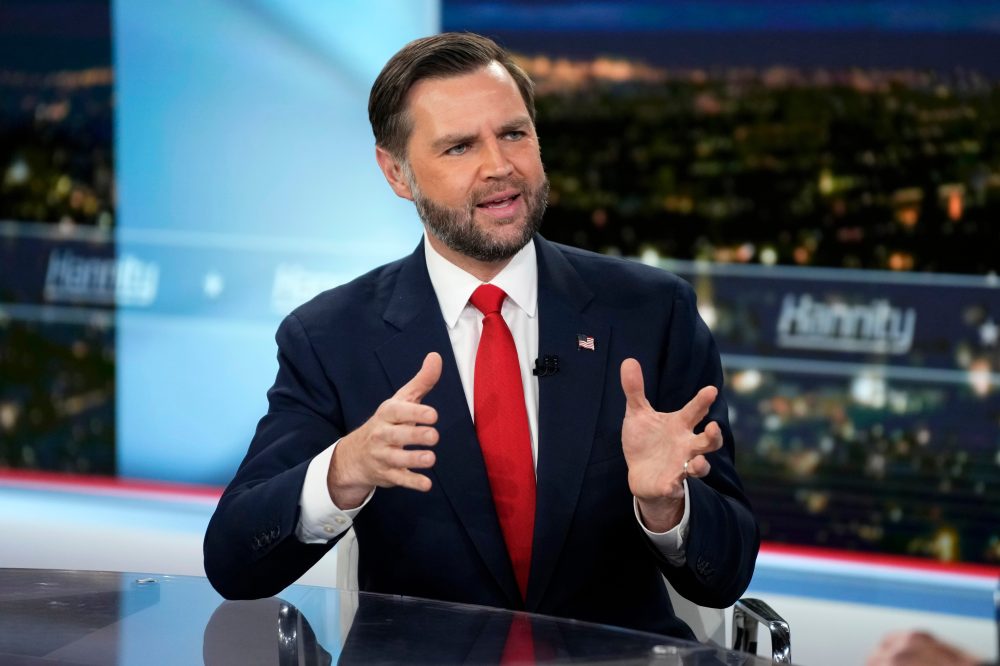
WASHINGTON/LUCERNE, Switzerland — Vice President JD Vance is stepping into the most prominent international role of his career, serving as President Donald Trump’s lead negotiator in efforts to bring a lasting end to the three-month war with Iran — a position that could significantly influence his chances of one day occupying the Oval Office.
The United States and Iran reached a provisional peace agreement on Wednesday, halting active fighting but leaving several critical issues unresolved. Key questions surrounding Iran’s nuclear program, its backing of regional militant groups, and the strategically important Strait of Hormuz have been pushed to a 60-day negotiating window.
The stakes are enormous — for both sides in the conflict, for the wider Middle East, and for Vance’s own political future. Adding to the uncertainty, Vance cancelled a scheduled Thursday evening flight to Switzerland, where talks were set to begin. The White House said the U.S. delegation remains “prepared to depart at the first available opportunity.”
These rapidly unfolding events are happening at the same time Vance is promoting his new book, “Communion,” about his conversion to Catholicism. During his media appearances to discuss the book, he has also been positioning himself as the strongest advocate for the Iran agreement.
That push reached a high point Thursday at a White House news conference, where Vance outlined American hopes for a permanent peace deal and delivered what some observers described as one of the most pointed criticisms of Israel ever made by a senior U.S. official. He also brushed aside a question about whether he intends to run for president.
“If the Iranians don’t change their behavior, their military and their nuclear program is still destroyed,” Vance said. “If they do change their behavior, then they are going to have a transformative relationship with the Middle East, and the Middle East will have a transformative relationship with the people of Iran.”
Other Republicans have taken note of Vance’s elevated profile in the negotiations. Senator Lindsey Graham of South Carolina, a prominent voice on foreign policy within the party, referred to Vance as the “architect” of the peace agreement and said the vice president should bring any final deal before the Senate for a vote.
President Trump made light of the situation Wednesday, suggesting the arrangement put Vance in a tough spot politically.
“If it works out, I’m going to take the credit. If it doesn’t work out, I’m blaming JD!” Trump said with a laugh during a news conference at the G7 summit in Evian-les-Bains, France.
Representatives from Vance’s office declined to comment for this report.
Trump came into office promising to bring down costs for Americans and avoid prolonged military engagements in the Middle East. However, inflation has picked up pace, and he ordered strikes against Iran on February 28. Some of his Republican allies have accused Trump of making too many concessions to Iran in order to ease the economic strain caused by the conflict.
While Trump has characterized the provisional ceasefire as a complete military and diplomatic win, the current situation appears to fall short of his stated goals at the start of the war. Iran’s government remains in power, the country still holds ballistic missiles and a supply of highly enriched uranium, and it continues to support anti-Israel armed groups including Hezbollah in Lebanon.
Vance has found himself in the delicate position of defending the president’s choices while also trying to avoid being dragged down by Trump’s declining approval numbers. He has pointed to modest economic progress while acknowledging that “there’s a lot more work to do.”
“Have a little bit of faith in the president of the United States. The idea that he is going to strike a deal that’s bad for the American people, it’s preposterous,” Vance said Thursday.
Earlier in the week, speaking with conservative media host Megyn Kelly, Vance said stepping away from the Iran effort would be “a very immature way to approach the political process.” He also took aim at hawkish conservatives, accusing them of wanting to continue U.S. military strikes “until every bomb has been dropped, or until every Iranian is dead.”
Vance has consistently urged restraint and pushed for a diplomatic resolution, and he has emerged as a leading figure in a growing wing of the Republican Party that wants to pull back from large-scale U.S. military operations abroad.
Not everyone is supportive of his approach. Right-wing media figure Ben Shapiro said Thursday on Fox News: “In my opinion, the vice president — the chief negotiator on this project — has not well served the president.”
Trump’s decision to make Vance the public face of the agreement — rather than Secretary of State Marco Rubio, who traditionally serves as the nation’s top diplomat — has raised questions among administration allies about Rubio’s role in the process. A White House official, speaking anonymously to discuss internal conversations, said no one on Trump’s team objected to the provisional peace deal.
Rubio is also considered a potential candidate for the 2028 Republican presidential nomination, though neither he nor Vance has publicly stated plans to seek the presidency.
One person close to the White House, speaking on condition of anonymity, said Trump’s approach of rotating the spotlight among cabinet members is consistent with how he has managed his team throughout his second term.
“This back and forth is throwing people off, but Trump knows what he’s doing,” the person said. “He is literally conducting a tryout in real time.”
Throughout all of this, Vance has found ways to weave promotion of his book into nearly every media appearance, often with a sense of humor about it. When pressed on topics ranging from Iran to immigration to civil rights during an appearance on ABC’s “The View” on Tuesday, he quipped: “Let’s talk about the book — I’m here to sell books.”
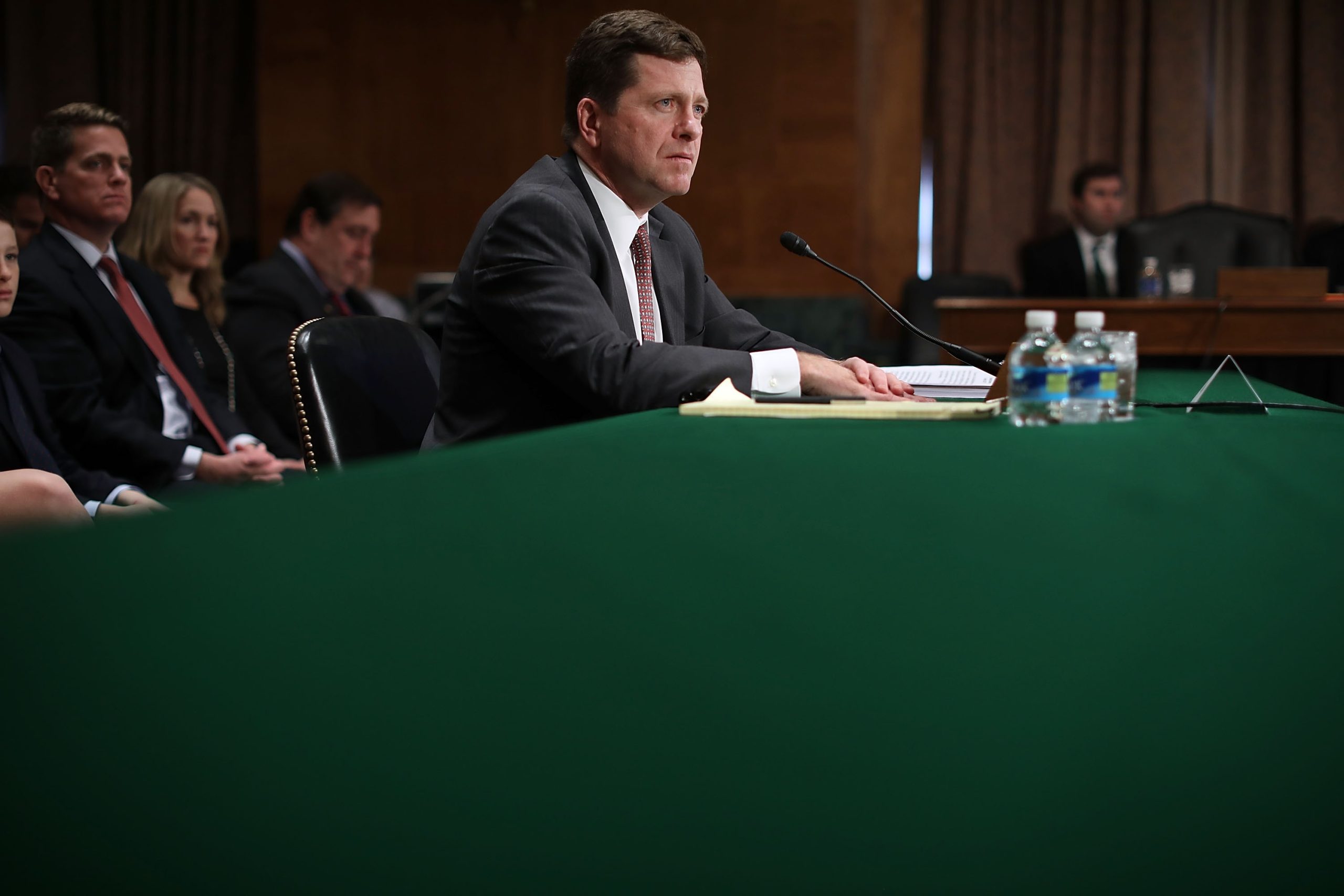
WASHINGTON (AP) — The bond between President Donald Trump and Senate Republicans came dangerously close to breaking this week, as the president disrupted their efforts to confirm one of his own nominees and threatened to withhold his signature from a key surveillance law unless lawmakers agree to new conditions.
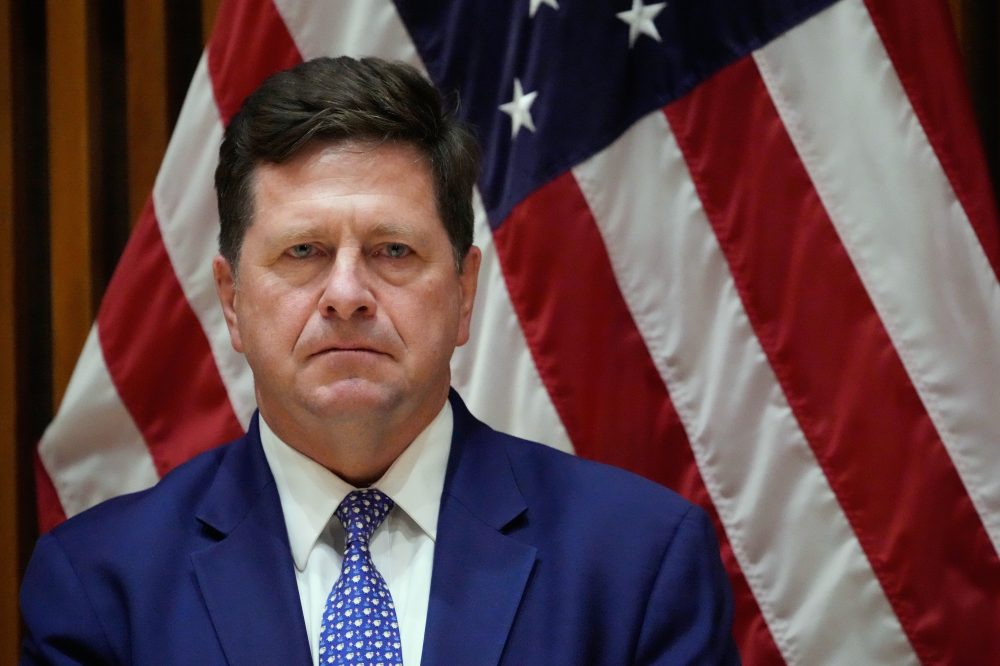
A late-night social media post from Trump on Wednesday announced he was putting the brakes on Jay Clayton’s nomination for national intelligence director — a bombshell that landed just hours before Clayton’s confirmation hearing was set to begin. The move deepened an already-fraying relationship between the White House and the Senate. Later that same day, Republican senators who had largely stayed quiet about the president’s handling of the Iran conflict broke their silence with pointed criticism of the deal he struck to end it.
“This is the worst foreign policy blunder in decades,” Sen. Bill Cassidy, R-La., wrote in a post on X.
The open hostility marks a dramatic shift from just a year ago, when Senate Republicans and Trump worked hand-in-hand to push through his sweeping package of tax and spending cuts. Back then, Republican lawmakers on Capitol Hill rarely — if ever — spoke a word against the president, and they were counting on that legislative victory to fuel their midterm campaigns.
Now, with November drawing closer and Republicans scrambling to hold onto their congressional majorities, Trump has been throwing curveballs at Congress with unexpected demands and reversals, pushing several Republican senators to publicly rebuke him for the first time.
“I think somebody’s not dialing the president into the complexities of what he’s done here,” Sen. Thom Tillis, R-N.C., said Wednesday following the postponement of Clayton’s confirmation. “I mean, my God.”
The unraveling of what once appeared to be a rock-solid alliance between the executive and legislative branches also extends to policy. Trump seems to have largely set aside the broader Republican legislative agenda, instead zeroing in almost exclusively on his push for voting legislation that would require proof of citizenship — a measure that has virtually no path to passage. Meanwhile, he has asked Congress to fund portions of a White House ballroom renovation, accept a temporary intelligence director that few of them support, and hand over their authority on matters related to the Iran conflict.
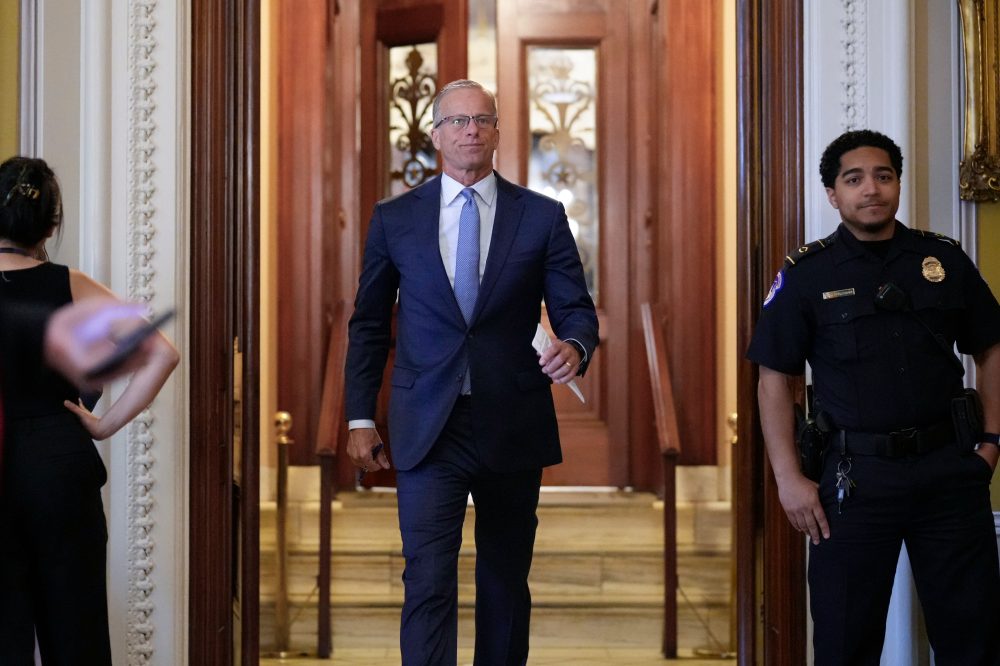
The widening divide has brought much of the Senate’s work to a standstill and put Republican incumbents on the defensive heading into the election. It has also placed significant pressure on Senate Majority Leader John Thune, who has been candid with Trump about the limits of what he can accomplish in the Senate.
Trump has leaned hard on Thune to eliminate the filibuster and force through the proof-of-citizenship bill, known as the SAVE America Act. Thune, R-S.D., has told the president both publicly and behind closed doors that the votes simply aren’t there for either move. Trump has continued pushing anyway.
In a social media post Thursday, Trump warned he would be “the last Republican president” if the voting bill fails to pass.
“Senate Majority Leader John Thune, and the Republican Senate, must not let this ‘carnage’ happen,” Trump wrote. “They will go down on the wrong side of History, as will all Republicans who just stood by and watched.”
Despite the pressure, Trump has stopped short of attacking Thune personally — a contrast to his treatment of Thune’s predecessor, Sen. Mitch McConnell, R-Ky., whom Trump once called a “dour, sullen, and unsmiling political hack.”
The two men speak regularly, even when Thune is delivering news the president doesn’t want to hear. As Trump continued pushing for the voting bill, Thune carved out weeks of Senate floor time to consider it — a gesture meant to signal the chamber’s support even in the absence of the necessary votes.
Missouri Sen. Eric Schmitt, one of Trump’s closest allies in the Senate, said he has never heard the president say anything critical about Thune.
“It’s a difficult position,” Schmitt said of Thune’s role. “I think they have a good working relationship.”
One of Thune’s closest allies, Republican Sen. Mike Rounds of South Dakota, described the majority leader as the “right person at the right time.”
“In the Capitol today, he is the stable force,” Rounds said. “In Washington, D.C., today, he is the stable force.”
Despite the friction, there were no clear signs of an outright rebellion within the Republican conference.
Thune “has managed it better than anyone else could manage it,” said Cassidy, who has grown into a more frequent Trump critic after losing a primary to a Trump-endorsed challenger.
Criticism of the president has occasionally come even from some of his closest Senate supporters — particularly over his proposed $1.776 billion settlement fund for political allies and his selection of Bill Pulte, who has no known background in intelligence, as acting intelligence director.
But the tensions with Trump have also stirred new friction within the Republican caucus itself. Several senators used a private conference lunch this week to call out Sen. Mike Lee, R-Utah, for running an online campaign to abolish the filibuster and pass the SAVE America Act, arguing he was sowing division within the party during an election year.
Some Senate Republicans, however, have made clear they have no intention of distancing themselves from the president. As colleagues criticized Trump’s Iran agreement this week, first-term Sen. Bernie Moreno, R-Ohio, took to social media in vigorous defense of it.
“Let’s get the Nobel Peace Prize ready!” Moreno posted on X.
Still, Trump has far fewer loyal Senate allies now than he did when the tax and spending package narrowly cleared Congress a year ago — partly because he helped eliminate some of his most dependable supporters himself.
Both Cassidy and Texas Sen. John Cornyn lost their primaries last month after Trump threw his support behind their opponents. Tillis had already announced he wouldn’t seek reelection after Trump repeatedly targeted him on social media. All three have since become regular critics of the president.
Shortly after his primary defeat, Cornyn shared a fable on social media about a frog and a scorpion. In the story, the scorpion convinces the frog to carry it across a river, then stings the frog mid-crossing, sealing both their fates.
“The dying frog asks the scorpion why it stung despite knowing the consequence,” Cornyn’s post read. “To which the scorpion replies: ‘I am sorry, but I couldn’t help myself. It’s my character.’”
The November midterm elections haven’t happened yet, but politicians in several states are already plotting their next move — redrawing congressional maps to gain an advantage heading into the 2028 elections.
This new wave of redistricting efforts represents the second phase of a mid-decade boundary battle that already touches 10 states, which together are home to two out of every five people living in the United States.
The first phase got underway last summer, when President Donald Trump called on Republican-controlled states to redraw U.S. House district lines in an effort to limit losses in the midterms. Democratic-led states responded by pursuing their own partisan remapping. Then, in late April, a U.S. Supreme Court ruling weakened the federal Voting Rights Act, giving Southern Republicans new legal footing to restructure districts with large minority populations that have historically elected Democrats.
The midterm results will serve as a report card on those changes. Republicans believe they could pick up as many as 10 additional House seats under the redrawn maps. Democrats, however, point to historical trends — the president’s party typically loses seats in midterm elections — and argue that Trump’s low approval ratings could work in their favor.
If November produces another razor-thin majority for either party, the incentive to redraw maps before 2028 could intensify significantly.
Here’s a breakdown of where things stand in key states:
New York has already taken an early step toward 2028 redistricting. The state legislature recently passed a proposed constitutional amendment that would permit mid-decade redistricting, remove existing bans on partisan gerrymandering, and make it easier for lawmakers to sidestep an independent redistricting commission down the road. The measure must clear another legislative vote next year before it can be placed before voters statewide.
In Maryland, the state House speaker has asked members to block off time in July for a possible special session focused on redistricting. One proposal would put a constitutional amendment before voters that would change the requirement for compact districts — a standard that was cited in a 2022 court ruling that threw out a previous map as “a product of extreme partisan gerrymandering.”
In Colorado, supporters of an initiative petition are working to get a constitutional amendment on the November ballot that would set aside congressional maps drawn by an independent commission and allow new ones to be created.
New Jersey lawmakers face a higher bar — any constitutional amendment to bypass a bipartisan redistricting commission would require either a three-fifths vote in each chamber or simple majority approval in two consecutive years before it could go to voters.
Virginia could make another attempt at a redistricting amendment that bypasses its bipartisan commission. Under state rules, amendments must pass the legislature in two separate sessions with an election in between. The state Supreme Court ruled in May that lawmakers had missed their opportunity to act before the 2025 elections, but they could restart the process with an eye toward the state’s 2027 elections.
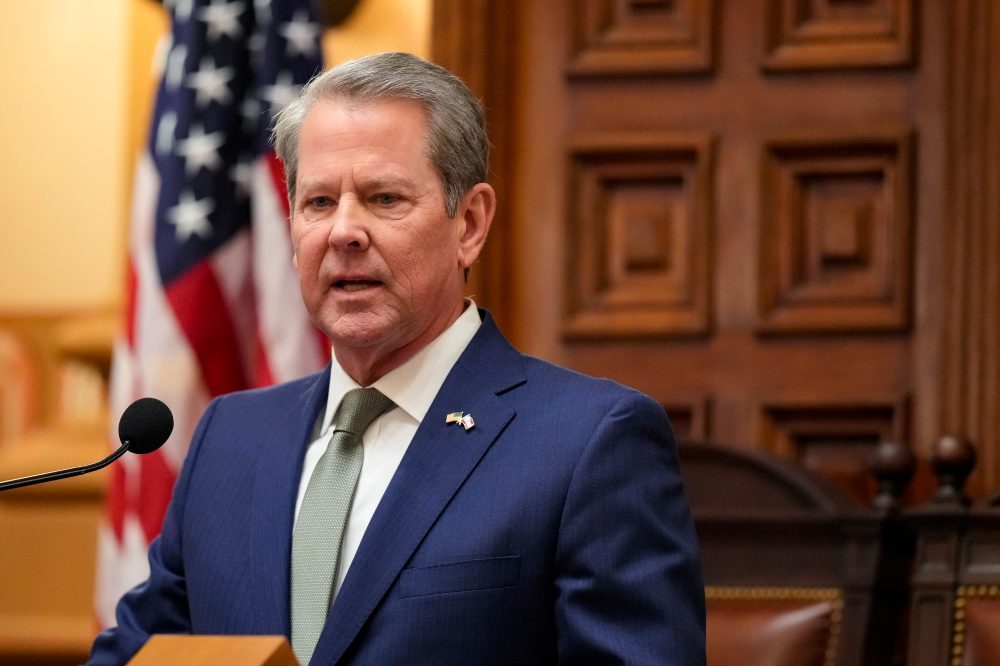
Georgia’s legislative leaders on Wednesday chose not to pursue redistricting for 2028 during a special session called by Gov. Brian Kemp. While they expressed reluctance to act hastily, they left the door open for revisiting the issue at a later date.
Kansas Republicans fell short last year of the two-thirds support needed to call themselves into a special session on redistricting and override a potential veto from the Democratic governor. However, if Republicans capture the governor’s office in November, the path to redistricting next year could become much smoother.
The Indiana Senate rejected a Trump-backed congressional redistricting plan last year. But in this year’s Republican primaries, several senators who had opposed redistricting were defeated by Trump-endorsed challengers, potentially clearing the way for another attempt next year.
South Carolina’s Senate also turned down congressional redistricting ahead of the midterms in May, though the issue could come back before the next election cycle.
Minnesota has the most evenly split legislature in the country, with a tied House and a one-seat Democratic Senate majority. If Democrats win control of both chambers in November and hold the governorship currently held by Democratic Gov. Tim Walz, they would have the power to redraw congressional lines. Republicans, if they win the governorship and legislative races, would have the same opportunity.
Pennsylvania is in a comparable position. Democrats hold a slim House majority while Republicans have a narrow Senate edge. If Democrats win both chambers and Democratic Gov. Josh Shapiro wins reelection, they could redraw the state’s congressional map. Republicans also have a path to full control. For either party, a 2018 state Supreme Court decision that struck down a Republican-drawn map as unconstitutionally gerrymandered serves as a warning against overreach.
Wisconsin faces a competitive race to fill the seat of outgoing Democratic Gov. Tony Evers. Legislative candidates will run this November under new district lines that give Democrats better odds. If Democrats gain full control, they could reconfigure the state’s Republican-leaning congressional districts — though Republicans are also in contention for the governor’s office and could hold at least one legislative chamber. Two active lawsuits challenging the current congressional map could also force redistricting regardless of election outcomes.
Republican Mississippi Gov. Tate Reeves has said he anticipates state lawmakers will redraw congressional districts before the state’s 2027 elections, though no specific plan has been introduced yet.
In Illinois, Democratic state lawmakers dismissed a national party suggestion last year to redistrict congressional seats before the midterms, citing concerns that doing so could reduce representation for Black voters. Still, Democrats left open the possibility of revisiting redistricting at a later point.
The man tapped to lead the United States intelligence community is wasting no time making his mark — and his plans could mean pink slips for hundreds of workers, CNN reported Friday.
Acting Director of National Intelligence Bill Pulte is pushing to eliminate a large number of positions at the Office of the Director of National Intelligence, according to two sources familiar with the situation who spoke to CNN. Pulte reportedly arrived at his new workplace a day earlier than expected on Thursday, after requesting a complete employee roster so he could evaluate who might be let go.
President Donald Trump appointed Pulte — a federal housing regulator — to the acting director role earlier this month. The appointment placed a political loyalist with no prior national security experience at the helm of the country’s intelligence apparatus during a period marked by ongoing conflicts and rising global tensions.
In his new role, Pulte would oversee major agencies including the Central Intelligence Agency and the National Security Agency, the latter of which monitors foreign communications and works to defend the country against cyberattacks.
During his Thursday visit, Pulte met with attorneys and staff members, CNN noted. The Office of the Director of National Intelligence did not respond to a request for comment from Reuters.
Pulte steps into the role left by Tulsi Gabbard, who announced her resignation last month. Her final day leading the agency is June 19.
Pulte’s early arrival caught many staffers off guard. Even Gabbard herself was only given a brief warning ahead of the visit, according to CNN’s reporting.
Reuters had previously reported earlier this month that agency managers had warned employees to brace for significant workforce reductions in the months ahead, following public statements from Trump expressing his desire for the new interim leader to downsize the agency.
Gabbard had already overseen a roughly 40% reduction in the agency’s workforce since she took over the position last year.
WASHINGTON — A government report identifying serious security weaknesses in American voting machines has been sitting unreleased for months, held back by White House officials as the November midterm elections draw closer, according to three sources with knowledge of the matter.
The report was produced by the Office of the Director of National Intelligence and concludes that voting machines could be better protected through measures such as software updates. While the document does not claim that any votes were actually changed, it does identify security gaps in how the machines are used during elections, the sources said.
Inside the White House, the report has sparked debate. Some officials have argued that releasing it could damage voter confidence, particularly among Republican voters. Others have taken issue with the report for a different reason — they feel it does not adequately support President Donald Trump’s repeatedly debunked claims that the 2020 presidential election was stolen. Several court cases brought by Trump’s legal team failed to establish any evidence of voter fraud in that race.
Some Democrats privately expressed concern that the investigation into voting machines could be used by the administration to pressure states into switching to paper ballots.
The sources spoke on condition of anonymity to discuss internal administration deliberations.
Director of National Intelligence Tulsi Gabbard, who launched the investigation into voting machines and sought evidence to back Trump’s false election fraud claims, is stepping down on Friday. Federal housing regulator Bill Pulte will take over as interim director. Trump has publicly stated he wants Pulte to look into what he calls “rigged elections” during his time leading the agency.
What Pulte intends to do with the unreleased report remains unknown. Two of the sources said he has been briefed on the agency’s work examining voting machine flaws, including the existence of the unpublished report.
Democrats and some analysts have raised alarms about potential interference by the Trump administration in the upcoming midterm elections, which analysts widely expect will result in Republican losses.
Officials within ODNI and outside experts who advised the agency pushed in meetings with White House staff late last year to begin addressing the identified flaws. They warned that the remediation process — which requires significant coordination with individual states — needed to start promptly to be completed before the midterms.
When asked about the delay, White House spokesperson Davis Ingle issued a statement saying the administration “continues to offer assistance to state and local election officials, including through the FBI and CISA, to ensure the security and integrity of all machines used in American elections.” CISA refers to the Cybersecurity and Infrastructure Security Agency.
ODNI spokesperson Olivia Coleman said Gabbard has taken “actions within her authorities” to “support the President’s directive to secure our elections — which includes identifying vulnerabilities in our critical infrastructure.”
Pulte did not respond to a request for comment.
Some of the vulnerabilities described in the ODNI report are not new — one former senior Biden administration official and two other sources said previous administrations were aware of similar issues. Those weaknesses include voting machines running outdated software and machines that can connect to the internet, creating potential entry points for hackers.
All of the sources said they were not aware of any evidence that votes had been manipulated in U.S. elections.
The report is connected to the administration’s wider push to investigate potential election fraud, which gained momentum after Trump signed an executive order in February 2025 aimed at expanding federal oversight of U.S. elections. Under the Constitution, states hold the primary authority over how their elections are run.
Senior officials at the FBI and Justice Department have spoken publicly about their own investigations into possible voter fraud. The ODNI report, which draws on both open-source and classified intelligence, would mark the first time the administration has publicly detailed its work specifically focused on voting machines.
It is one of two reports ODNI commissioned on the subject. The second report, also unpublished, was written by a government contractor called Mojave Research, which examined voting machines that had been seized from Puerto Rico. That report found no evidence the machines had been hacked, according to two sources.
Both reports have come up in White House discussions where officials debated whether sufficient evidence existed to support Trump’s claim that the 2020 election was taken from him.
Over the past six months, ODNI has briefed the White House on its findings, but has never received the go-ahead to publish the report, two sources said. The report concludes that many states are relying on outdated election systems.
The intelligence agency drew on previous reports from CISA that referenced hacking conferences where researchers found some voting machines could be compromised through insecure hardware. CISA itself has said it found no evidence of foreign interference in the 2020 election and, along with other federal, state, and local officials, declared that vote “the most secure in American history.”
The Mojave Research contract was terminated in October. The software and coding vulnerabilities that contractor identified led to a recommendation that the administration launch an emergency remediation plan requiring states to immediately update their systems. Two sources confirmed that plan has not been put into action.
Former President Barack Obama is looking to cement his historical legacy through his newly established presidential center, a project designed to reflect how he hopes to be remembered by history.
The Obama Presidential Center represents an opportunity for the former commander-in-chief to frame his years in the White House on his own terms, preserving the ideals and vision that guided his time in office.
WASHINGTON — A new national poll shows that most Americans are not satisfied with how President Donald Trump has handled the conflict with Iran, even as a tentative agreement to end the fighting came together. His overall approval rating, meanwhile, has remained flat, according to the AP-NORC survey conducted as Trump announced a deal had been reached.
The poll underscores just how unpopular the three-month war with Iran has been across the country, even as Trump shifted sharply from threatening further escalation to pursuing negotiations. About 65% of U.S. adults — roughly two-thirds — said they disapprove of Trump’s approach to Iran. The disapproval is heavily split along party lines: the vast majority of Democrats and independents view his actions negatively, but only 28% of Republicans share that view.
Trump’s Iran numbers closely mirror his broader job approval, which sits at 37% — identical to where it stood in an AP-NORC poll taken in May.
The survey was carried out June 11-17, shortly after Trump pulled back from threats to intensify the war. It wrapped up just before the final deal was signed on Wednesday, during which Trump announced an agreement with Iran and authorized lifting the U.S. naval blockade in the Strait of Hormuz.
Even among Republicans, some expressed dissatisfaction with the terms of the agreement. The deal allows Iran to resume selling its oil on the open market immediately, reopens the Strait of Hormuz without tolls for two months, restarts diplomatic talks over Iran’s nuclear program, and requires Tehran to dilute its stockpile of highly enriched uranium.
David Farrington, a 79-year-old Republican-leaning independent from Fort Worth, Texas, said he has no sympathy for Iran — but he’s disappointed the deal centered on the strait rather than delivering meaningful progress on the country’s nuclear weapons program.
A newly surfaced Department of Homeland Security document reveals federal plans to arm local police departments with facial recognition technology that immigration agents currently use — a development that would dramatically expand the surveillance reach of Immigration and Customs Enforcement.
According to the document, the technology used by federal immigration agents would be made available to local law enforcement, extending the scope of ICE’s ability to identify and track individuals at the local level.
The plan represents a significant shift in how immigration enforcement tools could be deployed across the country, putting powerful identification technology in the hands of local police agencies that have not previously had access to it.
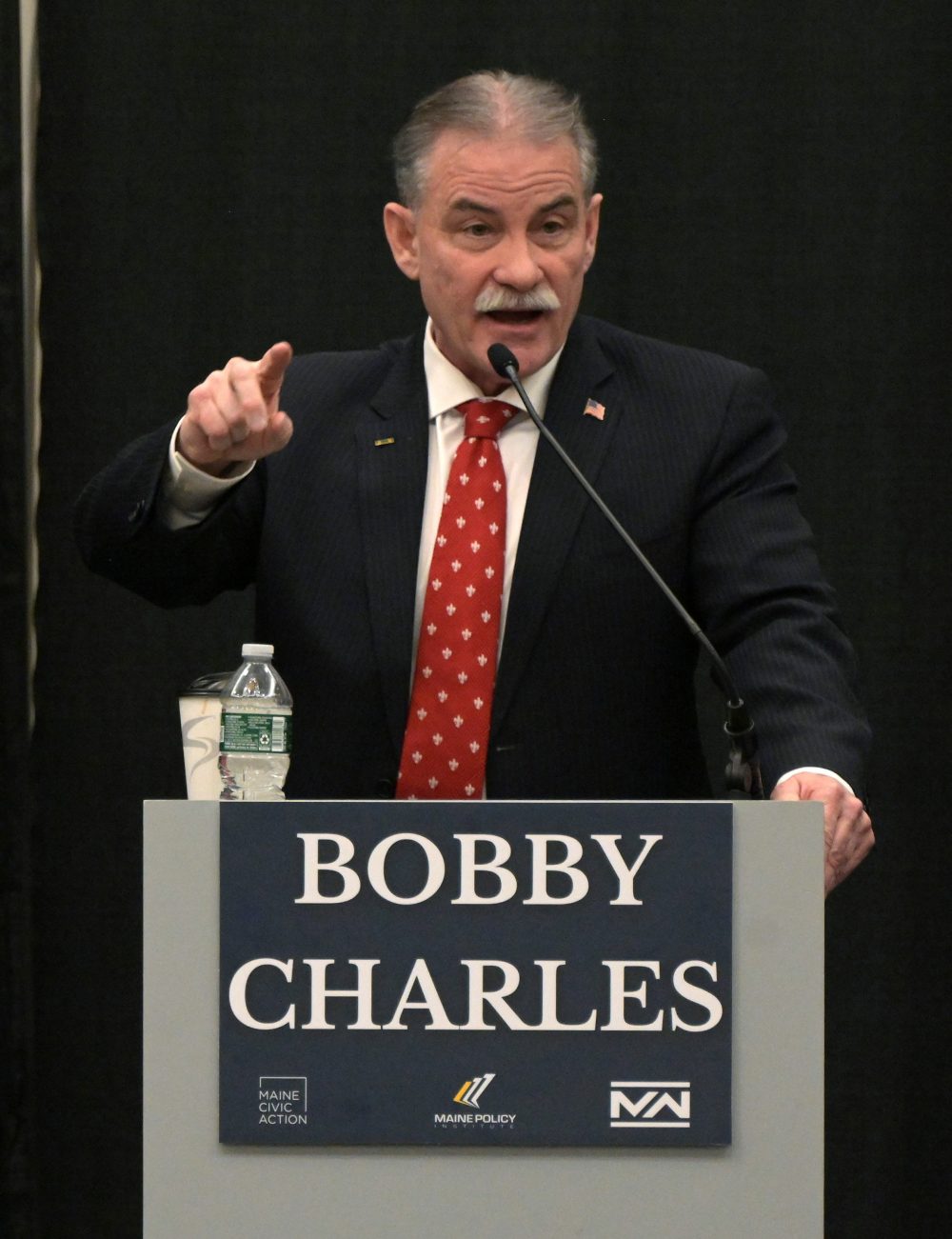
PORTLAND, Maine — Maine’s ranked choice voting process has wrapped up, setting the stage for a competitive fall election season. Democrat Hannah Pingree and Republican Bobby Charles emerged as their parties’ nominees for governor, following a June 9 primary that required a ranked choice runoff to determine winners.
In the state’s 2nd Congressional District, Democrat Matt Dunlap claimed his party’s nomination. He will now face former Republican Gov. Paul LePage — a close ally of President Donald Trump — in what is expected to be one of the most hotly contested House races this November. Democrats are fighting to hold the seat as part of the broader battle for control of the U.S. House of Representatives.
Maine’s primary season also saw Democratic voters select oyster farmer Graham Platner to challenge longtime Republican Sen. Susan Collins. Platner’s win was decisive enough that it did not require a ranked choice runoff.
The governor’s race is an open contest because Democratic Gov. Janet Mills, who has been in office since 2018, is term-limited and cannot seek re-election. That opened the door for five Democrats and seven Republicans to actively campaign in the June 9 primary. With such large fields in both parties, no candidate crossed the 50% threshold needed to avoid ranked choice tabulation. The Democratic contest was especially tight, with the top four candidates separated by only a few percentage points.
Democratic primary voters considered several candidates for governor: Pingree, the former speaker of the Maine House of Representatives; Maine Secretary of State Shenna Bellows; former Maine Senate President Troy Jackson; energy executive Angus King III; and former director of the Maine Center for Disease Control and Prevention Nirav Shah.
The Republican field was even larger. GOP voters chose among Charles, a former U.S. assistant secretary of state; healthcare executive Jonathan Bush; former Maine Senate Majority Leader Garrett Mason; former Paris, Maine, selectman Robert Wessels; and businessmen Owen McCarthy, David Jones, and Ben Midgley.
Gov. Mills had entered the U.S. Senate primary but suspended that campaign in April. On election night, she reflected on her time on the campaign trail, saying: “Throughout my two campaigns for governor and this one for Senate, what I have always loved the most is traveling across our beautiful state and getting to talk to Maine people.”
In the 2nd Congressional District Democratic primary, voters chose from former Maine Secretary of State Dunlap, state Sen. Joe Baldacci, former U.S. Senate candidate Jordan Wood, and social worker Paige Loud. LePage, meanwhile, ran unopposed on the Republican side. He served as governor from 2010 to 2018, during which time he built a reputation as a vocal critic of liberalism and a strong supporter of Trump.
The 2nd District seat is open because Democratic Rep. Jared Golden, who has held it since 2018, announced he is stepping down. Golden, known as a moderate who occasionally broke with his party, explained last year that he has “grown tired of the increasing incivility and plain nastiness that are now common from some elements of our American community.”
Though Golden won the district multiple times, it has also shown strong backing for Trump, who captured an electoral vote there in three straight presidential elections. The district covers a large geographic area, encompassing much of Maine’s rural land, logging country, and key fishing ports.
Maine has used ranked choice voting for a decade, after voters approved the system. Under the process, voters rank candidates in order of preference. If no one tops 50% of the vote, the last-place candidate is eliminated and those voters’ second choices are redistributed. The process continues until one candidate achieves a majority.
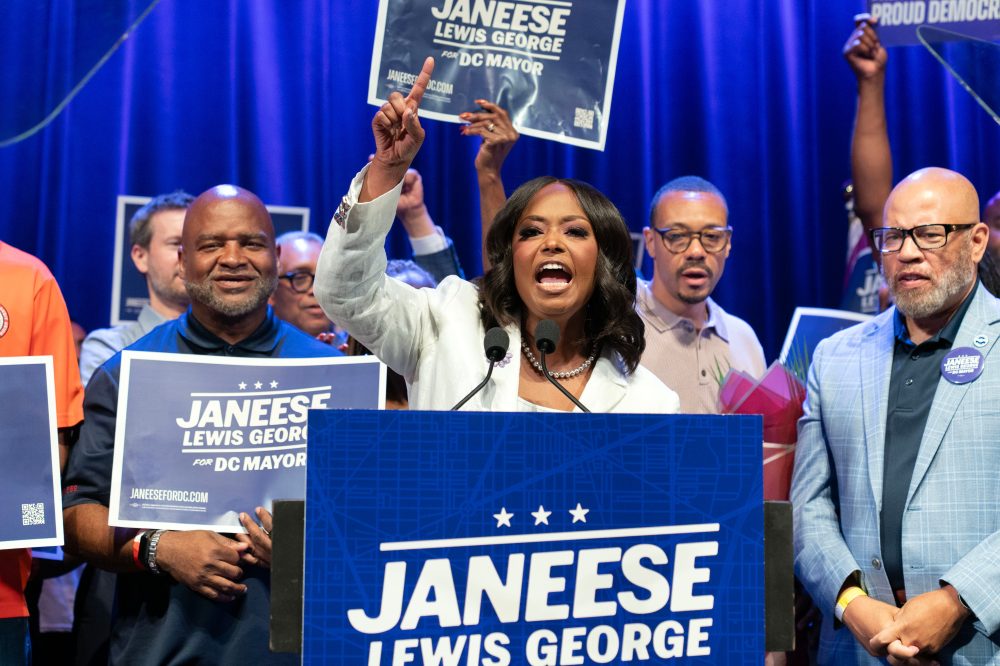
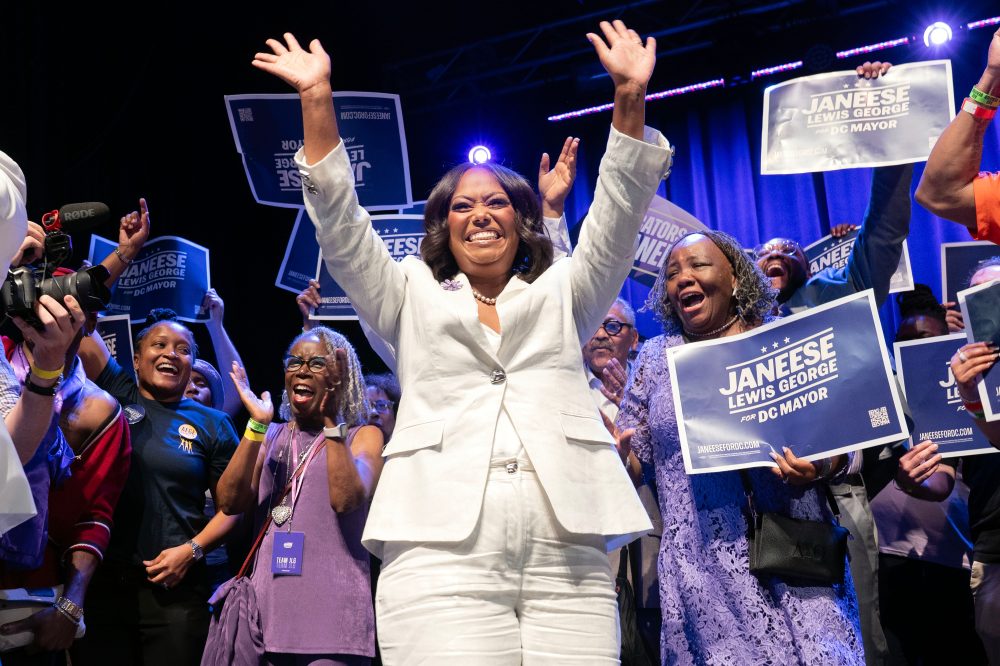
As Janeese Lewis George charts her course toward the mayor’s office in Washington, D.C., she’s been telling voters they don’t have to settle for less. Her boldly left-wing platform includes subsidized or free childcare, expanded down payment help for first-time homebuyers, community-based crime prevention resources, and a firm commitment to push back against President Donald Trump’s efforts to reshape the nation’s capital.
“People are tired of hearing what government can’t do. They want to hear what government can do,” Lewis George said in an interview ahead of the city’s primary election, where she defeated her Democratic rivals and put herself in a strong position to win the November general election in a city where Democrats hold a commanding majority.
Her primary win marks a clear departure from roughly 25 years of centrist leadership in Washington, D.C., and places her among a growing group of democratic socialists making gains in urban politics. Zohran Mamdani defeated Andrew Cuomo — son of a well-known political family — on his way to the New York City mayor’s race. Katie Wilson pulled off an upset win to lead Seattle last fall. And earlier this month, Nithya Raman secured a spot in the November runoff against Los Angeles Mayor Karen Bass.
All four candidates are members of the Democratic Socialists of America, known as the DSA. Over the past decade, the organization’s membership has exploded from a few thousand people to more than 100,000 nationally, driven largely by younger Americans who were energized by Vermont Sen. Bernie Sanders’ presidential campaigns. Sanders has also described himself as a democratic socialist.
There’s no clear evidence of coordination among these candidates at the national level, and it remains uncertain whether voters are drawn more to their promises of better public services, their willingness to challenge the Trump administration, or their broader critiques of capitalism.
Still, across the country, aggressively progressive candidates are advancing in races for city hall. Mayors tend to be held closely accountable by residents, and democratic socialists will face real pressure to follow through on their pledges for a new style of governance. Whether any of this reshapes national Democratic politics is the next test for the movement.
“They are all channeling a displeasure with a status quo and a serious desire for economic populism that the establishment Democratic Party hasn’t been preaching,” said Eric Stern, a Democratic strategist with Fight Agency, a political consulting firm that helped shape Mamdani’s mayoral campaign.
Stern also noted that Democratic voters seem more open to backing the most progressive option in mayoral contests than in races for U.S. House seats. Candidates like Mamdani and Raman, he said, are “daring voters to dream and fall in love not just with the individual candidates but also the political process as a whole.”
However, the reach of this progressive surge may have limits when it comes to broader Democratic politics. Mayors in cities such as Atlanta, Houston, Miami, and San Francisco have each won in recent years on comparatively moderate platforms.
Progressives have also run into significant headwinds in some places. Chicago’s mayor was endorsed by the city’s DSA chapter during his 2023 campaign but has since drawn criticism from both moderate and liberal local officials over immigration, the city budget, and public safety concerns. Elsewhere, progressive district attorneys in several jurisdictions were removed from office — through recalls or public pressure — over the past five years, as criminal justice reform efforts clashed with growing unease over public disorder in the aftermath of the COVID-19 pandemic.
Trump’s aggressive stances on immigration and law enforcement have also created complications for liberal-leaning cities. The situation is especially acute for Washington, D.C., given its unique status as a federal territory. When asked this month about the possibility of a democratic socialist becoming D.C.’s mayor, Trump told reporters: “Maybe we take back Washington and run it on a federal basis. We won’t put up with it.”
But progressive advocates are counting on widespread anti-Trump sentiment in heavily Democratic cities to lift hard-left candidates in the months ahead.
“It’s not folks looking for the leftmost option so much as looking for a candidate who’s gonna be on their side,” said Ravi Mangla, speaking on behalf of the left-leaning Working Families Party. The party frequently backs the same candidates as the DSA and is preparing to pursue more mayoral offices in the country’s largest cities this fall and in 2028. “It’s less about whether you are on the right or on the left so much as whether you are willing to punch up at the powerful,” Mangla added.
Both Mamdani and Lewis George describe themselves as “sewer socialists” — a term that emphasizes responsive, practical government services over ideological attacks on market economics. The phrase is a callback to socialist mayors of the Gilded Age era who were mocked by critics for being more focused on public works than political theory.
Reviving the term is partly a deliberate strategy to connect left-wing ideas with everyday concerns about affordability and the economy — issues that ranked as top priorities for voters in the midterm elections — and to reframe democratic socialists as pragmatic public servants rather than radical ideologues.
“This is absolutely a change election and I’m excited to bring the change that people want, which is really putting people first in the city and having the moral clarity and courage to stand up to Trump,” Lewis George said.
While conservatives have long used the word “socialist” to paint Democrats as extreme or out of touch, some D.C. voters expressed mixed feelings ahead of Tuesday’s primary. Several longtime residents said they viewed Lewis George as a “fighter” but weren’t convinced she could make a significant difference in the local economy, given the city’s federal district status.
“I go back and forth on my own labels and whether I am supportive of that movement or not, but I am supportive of making D.C. more affordable,” said Owen Fitzgerald, a University of Maryland graduate student, explaining why he backed democratic socialism in general terms.
Fitzgerald voted for Lewis George because of her willingness to stand up to Trump, and said he first heard about her campaign through friends in his neighborhood. He admitted he didn’t know she was a democratic socialist until he read news reports that described her that way.
“It sends a cultural message to this administration that the people who are surrounding them in the capital are opposed to their platform, opposed to their political agenda, and I think that it will send a message, both nationally and internationally,” Fitzgerald said.
The U.S. Department of Defense is seeking $80 billion from Congress to pay for costs stemming from the Iran war along with other unrelated expenses, the Wall Street Journal reported Thursday, citing sources with knowledge of the discussions.
Deputy Defense Secretary Stephen Feinberg made the request known to lawmakers during phone calls earlier this week, according to the newspaper’s sources.
A broader supplemental funding request — one that would include not just Pentagon needs but also priorities like farm assistance and disaster relief — could be submitted to Congress within the next few days, the Journal added.
Reuters, which first reported on the story, was unable to independently confirm the details. Neither the White House nor the Pentagon responded to requests for comment outside of normal business hours.
Back in April, a Pentagon official gave Reuters the first official estimate of what the Iran war has cost so far — approximately $25 billion. That conflict, which began on February 28 when Trump launched military action alongside Israel, has left Congress wrestling with questions about its total price tag.
An earlier White House request for $200 billion in additional war funding ran into significant pushback from lawmakers. At an April hearing before the House of Representatives Budget Committee, White House budget director Russell Vought said he had no cost estimate for the war while defending Trump’s proposed $1.5 trillion annual military budget.
The budget proposal reflects Republican priorities as the party looks to hold onto its congressional majority in the upcoming November midterm elections. Republicans are navigating growing public concern over rising living costs, high energy prices, and the financial strain of the ongoing Iran conflict.
Two Democratic candidates have locked in their spots for a special general election in California, competing to complete the remaining term of former U.S. Rep. Eric Swalwell, who stepped down from Congress after facing sexual assault and misconduct allegations.
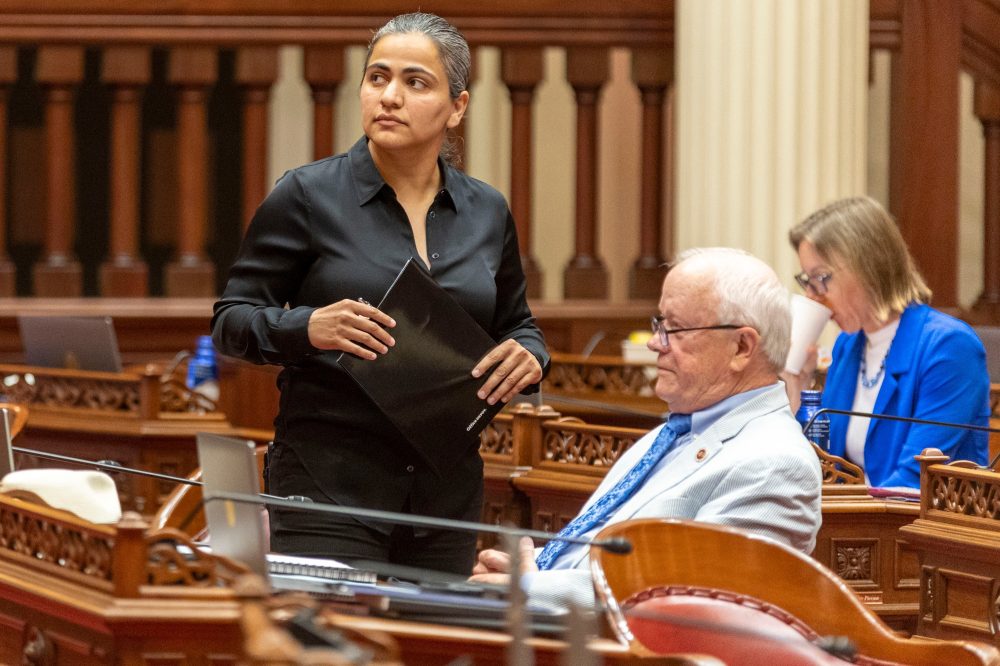
State Sen. Aisha Wahab and Melissa Hernandez, a director with Bay Area Rapid Transit, earned the most votes Thursday from a large pool of Democratic and Republican candidates, earning their places in the August 18 special general election.
While Wahab held the lead in vote totals, Hernandez outlined her strategy going forward, saying her path to August involves “digging into the numbers, and going out to those areas where we know that we can secure votes.”
“I connect to voters, and that’s one thing that is definitely different than my opponent,” Hernandez added, emphasizing her focus on reducing costs for lower- and middle-class families. “We’re going to fight the good fight.”
The winner of the August special election will hold Swalwell’s seat through January, at which point the victor of the November regular general election will take over for a full two-year term. Notably, both Wahab and Hernandez also claimed the top two positions in the regular June 2 primary, meaning they are simultaneously competing in two separate races for California’s 14th Congressional District — a region that covers East Bay communities including Fremont, Hayward, and Livermore.
Republican candidates faced a steep climb in the heavily Democratic district. The third-highest vote-getter in the special election was also a Democrat — businesswoman and attorney Rakhi Israni Singh — who finished just behind Hernandez.
Whichever candidate prevails in August will likely gain a visibility advantage and several months of congressional experience to draw on during the November campaign.
Wahab, who serves as the Senate’s assistant majority leader and is a well-known figure in California politics, did not immediately respond to a request for comment Thursday. Her campaign platform leans progressive, highlighting her record in office — including expanding social safety net programs, strengthening renter protections, championing social justice causes, and working to reduce red tape for small businesses.
Hernandez, a former mayor of the East Bay city of Dublin, has promoted many of the same goals but with a stronger emphasis on business-friendly policies. She has said she would “prioritize growing small businesses” to help lower costs, push for housing incentives, and work to reduce health insurance premiums by restoring insurance subsidies.
One of the two women will ultimately succeed Swalwell, who served seven terms in Congress before resigning in April and withdrawing from the California governor’s race. His departure followed a San Francisco Chronicle report alleging he sexually assaulted a woman on two separate occasions, including while she was employed by him. CNN subsequently reported that additional women accused him of sending inappropriate messages and explicit photos.
Swalwell, a Democrat, has consistently denied all of the allegations but stated that remaining in Congress would be unfair to the people he represented.
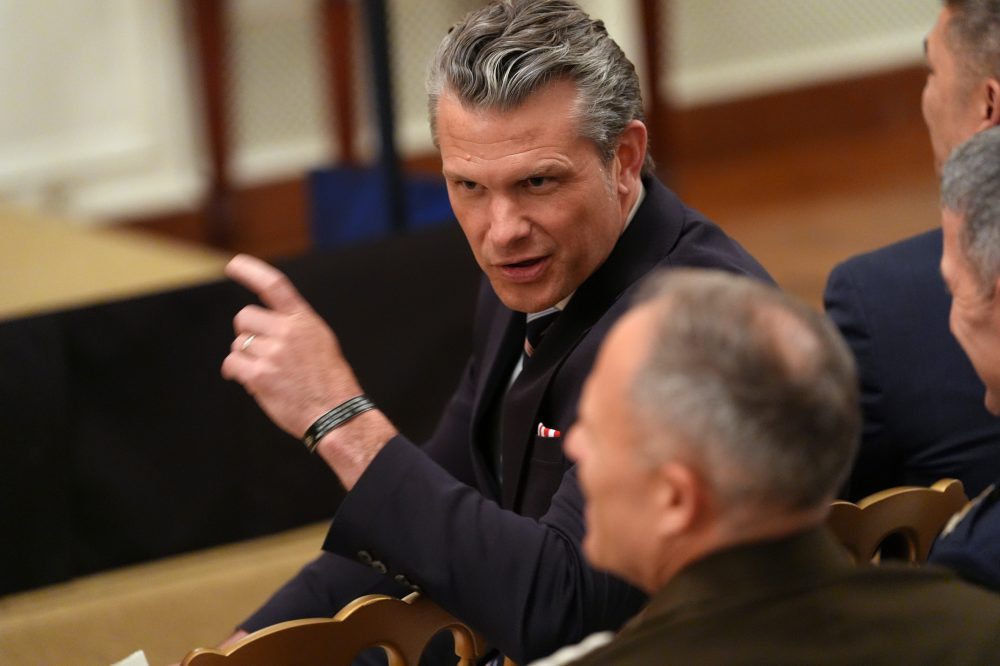
WASHINGTON — Lawmakers in the U.S. Senate are taking aim at Defense Secretary Pete Hegseth’s travel budget, looking to cut off a portion of those funds unless the Pentagon delivers several investigations it has been sitting on — most notably one involving a deadly strike on an Iranian elementary school at the start of the U.S.-Israeli war.
The new restrictions were written into this year’s annual defense authorization bill, filed earlier this week. Under the legislation, no more than 25% of the defense secretary’s office travel funds can be used until Hegseth turns over what the bill calls “unredacted civilian harm investigations,” including a probe into the February 28, 2026, strike on the Minab school. Officials have said preliminarily that the United States was responsible for that strike, which has been attributed to outdated intelligence.
Congress, which is responsible for overseeing Pentagon operations, has not yet received the completed investigation. It is believed the report was finished last month.
Sen. Jack Reed, the leading Democrat on the Senate Armed Services Committee, released a statement saying this year’s defense package “forces the Secretary to be more accountable to Congress and will prevent many errors of the past from being repeated in the future.”
The strike on the elementary school occurred on the opening day of the U.S. military campaign against Iran and resulted in the deaths of more than 165 people, a large number of them children. The school was located next to a Revolutionary Guard base, and the incident quickly became one of the most controversial moments of the conflict.
People familiar with the early findings, released in March, said outdated intelligence most likely caused the United States to carry out the missile attack. If confirmed, the strike would rank among the most deadly civilian casualty events tied to American military action in the past two decades.
Senators on both sides of the aisle inserted the travel fund restrictions into the National Defense Authorization Act as a way to compel the release of the findings. The bill text specifies that the cap applies until the secretary submits the investigations along with “all relevant supporting documents” covering multiple civilian harm incidents.
The Pentagon did not respond to a request for comment.
Beyond the Iran school strike, senators are also calling for the Pentagon to release unedited video footage of U.S. military strikes on boats near Venezuela that were allegedly involved in drug trafficking.
The Pentagon has carried out a campaign lasting several months, striking vessels in the Caribbean Sea and eastern Pacific Ocean. At least 211 people have been killed in those operations so far. The military has publicized some of the strikes by posting selected video clips on social media. In at least one case, people who survived an initial strike were later killed in follow-up attacks — something military law experts say conflicts with established rules of engagement. Lawmakers had pushed for similar video disclosures in last year’s defense bill as well.
Senators are additionally requesting three separate investigations into a set of strikes carried out in Yemen in April 2025, during the U.S. military’s campaign against Iranian-backed Houthi rebels who had been targeting commercial shipping in the Red Sea.
Among the incidents under scrutiny is a strike on a port that left at least 70 people dead and more than 170 wounded, as well as a strike on a residential area in Sanaa — the rebel-controlled capital of Yemen — that hit a house and killed at least four people while wounding 16 others. Those casualty numbers were reported by the Houthis.
At the time of those strikes, U.S. Central Command declined to answer questions about them directly. After the port strike, the command said the operation “was not intended to harm the people of Yemen” and argued it was meant to “eliminate this source of fuel for the Iran-backed Houthi terrorists and deprive them of illegal revenue that has funded Houthi efforts to terrorize the entire region for over 10 years.”
All of the requested reports are to be delivered to the Armed Services committees in both the House and Senate.
The provisions are part of the National Defense Authorization Act, a wide-ranging 1,500-page policy document that sets the direction for the military in the coming year. The bill is put together with input from both Republicans, who hold the Senate majority, and Democrats in the minority — making it one of the rare pieces of legislation that routinely passes with bipartisan support.
The Senate Armed Services Committee approved the measure last week, and the full Senate is expected to take it up for a vote.
SAN JUAN, Puerto Rico — A deepening political crisis is gripping the administration of Puerto Rico Gov. Jenniffer González, as fresh allegations of public corruption, government interference, and conflicts of interest continue to surface.
The latest figure caught up in the controversy is the governor’s chief of staff, Francisco Domenech, who is now the subject of a high-profile investigation. His situation follows the resignation last month of the island’s economic development chief, Sebastián Negrón, who publicly accused the administration of meddling in his agency’s operations. More than ten other officials from that agency — including its general counsel and finance chief — also stepped down, leaving the agency struggling in its mission to attract new investors to an island already burdened by chronic power outages and other persistent challenges.
Domenech holds a prominent role in the administration and also serves as executive director of Puerto Rico’s Fiscal Agency and Financial Advisory Authority.
On Wednesday, Domenech filed sworn statements with Puerto Rico’s Department of Justice and its Office of Government Ethics, accusing Negrón of corruption and conflicts of interest. The following day, he defended those actions in an interview with WIPR, a government-run television station.
Domenech explained that he waited until this week to act because he needed time to gather what he describes as evidence against Negrón — the same official the governor had previously praised as “a star” when she expressed regret over his departure in late May.
The allegations targeting Domenech are being examined by an independent state agency, and the matter has now reached the halls of the U.S. Congress. Federal lawmakers questioned the governor directly about the situation during a committee hearing Wednesday.
“How can Congress be assured that federal funds sent to Puerto Rico aren’t being misused or misplaced?” asked Republican Sen. Mike Lee of Utah during the hearing.
Gov. González responded by saying there is rigorous oversight in place for federal funds and insisted the allegations against Domenech are untrue. When Sen. Lee pressed her on why Negrón would make such accusations, she replied, “I don’t know what political motivations he may have.”
The controversy has also stirred tensions within the governor’s own party. Puerto Rico Senate President Thomas Rivera Schatz, who belongs to the same pro-statehood party as González, called for Domenech’s resignation on Wednesday. Then on Thursday, Rivera Schatz offered legislative immunity to Domenech and anyone else “if they confess their crimes and produce results that eradicate corruption.”
Domenech’s interview with WIPR marked the first time he had spoken publicly since Negrón accused him of irregularities tied to contract processing and improper government interference. Negrón had also referred to the Justice Department and the Office of Government Ethics the findings of an internal investigation involving two government officials accused of meddling in the bidding process for a contract that included federal funds.
Domenech filed his sworn statements after alleged private text messages between him and Negrón became public earlier this week, sending shockwaves through the U.S. territory. Some of those alleged messages appear to show pressure being applied to find positions within the economic development agency for loyal supporters of González who had worked on her campaign. Domenech also claimed that Negrón was already aware he was under investigation.
In a statement released Thursday, Negrón flatly denied Domenech’s accusations against him.
“The most troubling aspect of what happened today is not the attack against me personally, but the message it sends to every public servant who witnesses irregularities and decides to report them,” Negrón said.
He also warned that businesses that have invested in Puerto Rico are being pulled into the scandal as collateral damage.
“Puerto Rico needs to strengthen the confidence of those who invest, produce, and generate opportunities, not turn them into collateral damage in personal or political disputes or vendettas,” Negrón said.
WASHINGTON (AP) — A number of Republican leaders on Capitol Hill, including key figures on national security, are speaking out against the Trump administration’s deal to stop the conflict with Iran — with some offering outright condemnation of its terms.
President Donald Trump signed a memorandum of understanding that kicks off a 60-day countdown to negotiate a permanent agreement on Iran’s nuclear future. While some Trump allies point out the deal isn’t finalized, the removal of economic sanctions on Iranian oil sales and a proposed $300 billion fund to rebuild Iran’s economy have sparked backlash from Republican lawmakers and conservative voices — including some who have previously been among Trump’s staunchest supporters.
Mississippi Sen. Roger Wicker, who chairs the Senate Armed Services Committee and has previously urged Trump to maintain pressure on Iran, expressed his unease. “President Trump has pursued peace through strength. I hope the intermediaries working on this deal are not undermining that objective,” he said.
Wicker also took aim at the reconstruction fund, saying, “The $300 billion fund for the reconstruction and economic development of Iran — though not funded by U.S. taxpayers — would make Iran’s payoff under President Obama’s 2015 deal look like a pittance by comparison.” He was referring to the Democratic administration’s Iran agreement that Trump walked away from during his first term in office.
The pushback from within Trump’s own party — while not universal — comes as the president is working to wrap up an unpopular war with midterm elections fewer than five months away, a period when Republicans are already facing challenges in protecting their slim congressional majorities.
Several of Wicker’s Senate colleagues, many of whom backed the war when it started, echoed his concerns. Texas Sen. Ted Cruz, a strong supporter of the war effort, put it bluntly: “History demonstrates giving billions of dollars to the theocratic lunatics who want to kill you is an exceptionally bad idea. And so I hope we don’t do that.”
Trump fired back on Truth Social, labeling his critics “fools” and calling the notion that the United States would pay $300 billion to Iran “fake news.” The interim agreement does include a $300 billion postwar reconstruction fund, though the source of that money remains unclear. Trump echoed Wicker’s point that American taxpayers would not be footing the bill. “All there is for the U.S. is Success, Lower Oil Prices, and Victory,” Trump posted.
As the memorandum was formally transmitted to Congress on Thursday, multiple Republican senators said it raised more questions than it answered, particularly around its financial terms. Senate Majority Leader John Thune and his South Dakota colleague Sen. Mike Rounds said they were looking for answers on how financial incentives to Iran would be enforced and how conditions against funding terrorism would be upheld, because “right now, a lot of money’s going to go to Iran,” Rounds noted.
Not all Republicans were critical. Some who align more closely with Trump’s America First approach were willing to give the president room to work. Sen. Roger Marshall of Kansas highlighted what he called a crucial provision in the memorandum, writing on social media that it “lays out a key commitment that strengthens regional security and ensures that Iran can never have a nuclear weapon.”
Louisiana GOP Senate candidate John Fleming, who is courting Trump’s most loyal base ahead of a June 27 Republican primary runoff, argued that the deal carries an implicit warning. He said Trump has signaled the U.S. would strike Iran again if it fails to honor the agreement. “The criticism may be worthy if there isn’t follow-through,” Fleming said. “He’s using the speak-softly-and-carry-a-big-stick in offering them plenty of help, but at the same time he’s got that stick ready if they don’t live up to their agreements.”
Even some of Trump’s most devoted supporters in conservative media have sounded the alarm. Conservative radio host Mark Levin suggested the administration should slow things down and wait until after the midterms before finalizing anything with Iran. “We should consider slow-walking the enemy, building up our munitions, our oil reserves, get the price of gasoline down, get through the midterms, then knock them out,” he wrote on social media. He argued the current approach appeared to be “rushing to a deal, building up their oil industry” while agreeing to transfer billions of dollars to the Iranian government.
Right-wing social media influencer Laura Loomer, a long-time Trump supporter who has also promoted conspiracy theories, was even more pointed in her criticism, posting on X: “Who is giving the President tainted, pro-Islamic intel?”
Despite their varying relationships with Trump, the critics share a fundamental distrust of the Iranian regime. Former Vice President Mike Pence, whose bond with Trump was severely damaged following the January 6, 2021 attack on the U.S. Capitol, weighed in as well. “It does smack of the kind of appeasement,” Pence said. “Bottom line. I don’t trust the Iranians.”
Sen. Tammy Duckworth fired off a letter Thursday to the head of the Federal Aviation Administration, asking the agency to hold the line against any potential pressure from President Donald Trump to greenlight his proposed triumphal arch without fully weighing aviation safety risks.
Duckworth, an Illinois Democrat who serves as the top Democrat on the Senate’s aviation subcommittee, is raising alarms about Trump’s plan for a 250-foot (76-meter) arch in the nation’s capital. The structure, which Trump wants built to mark the country’s 250th anniversary, would stand more than twice the height of the Lincoln Memorial.
In her letter, Duckworth expressed concern that the FAA’s early review of the arch appeared to have been rushed. She questioned whether Trump or members of his White House staff are “already improperly pressuring FAA to prioritize rubberstamping Trump’s vanity arch over public safety.”
A National Park Service preliminary report, which Duckworth referenced in her letter to FAA Administrator Bryan Bedford, indicated that officials are aiming to finish the massive structure within three years. That timeline could require construction crews to work up to 20 hours a day, with cranes reaching as high as 320 feet (106 meters).
The FAA said it plans to respond to Duckworth directly.
A central concern in the letter is the arch’s location near the congested airspace surrounding Ronald Reagan Washington National Airport — the same airport where a U.S. Army helicopter and a commercial airliner collided last year, claiming 67 lives.
That disaster “underscores the consequences of inadequate coordination and the need for extreme caution when evaluating any new obstruction in this environment,” Duckworth wrote. She added that the FAA must be “firm in rejecting any improper or irresponsible pressure” from Trump regarding the project.
The FAA had previously stated that an early feasibility review found “no adverse impacts to operations” at the nearby airport, though it noted the top of the arch would require red obstruction lighting, which it described as “a common safety tool.” The agency said a more thorough study, conducted in partnership with the National Park Service, would follow.
Duckworth also raised a cultural concern, arguing that the arch would cut across the historic visual corridor between the Lincoln Memorial and Arlington National Cemetery, which she said would “offensively desecrate the hallowed symbolism” of that view.
WASHINGTON — When President Donald Trump unveiled tall new flagpoles he had installed on both the North and South Lawns of the White House last summer, he offered reporters a candid reflection on how much things had changed since his first time in office.
“You guys were after me,” he told members of the press. “I was the hunted. And now I’m the hunter.”
That moment serves as the centerpiece of a new book called “Regime Change,” written by New York Times journalists Maggie Haberman and Jonathan Swan. The book chronicles the first year of Trump’s second term and argues that his time out of the White House actually made him a more forceful president upon his return in 2025.
The book’s central argument — one Trump himself embraces — is that losing the 2020 election ultimately strengthened his second term. Had he won then, he might have faced significant resistance from within his own administration, the lingering effects of the coronavirus pandemic, the inflation that followed, and a Congress controlled by Democrats. None of those obstacles have stood in his way this time around.
Trump continues to falsely assert that he won the 2020 election.
Among the book’s more intriguing revelations is that Trump has repeatedly asked aides whether Vice President JD Vance or Secretary of State Marco Rubio would be the better person to succeed him. Some donors favored Rubio, and certain aides felt that Trump and Rubio had stronger personal chemistry. But Trump also expressed admiration for Vance’s sharpness in television interviews, especially difficult ones.
Trump is described as being impressed by Rubio’s heritage as the son of Cuban immigrants. In one telling anecdote, after Trump filled the Oval Office with gold decorations, someone asked whether a future president might reverse all those changes. Trump’s reply: “Cubans love gold.”
Despite the competition between Rubio and Vance for Trump’s favor, the two men are reportedly friends. One example the authors provide: Rubio sent Vance a text message offering to campaign alongside him after Vance’s remarks about “childless cat ladies” generated controversy. Rubio wanted to show public solidarity.
Even as both men position themselves ahead of a potential 2028 presidential run, Trump shows little sign of stepping aside. He frequently references the two and a half years remaining in his term — a timeline that runs to Inauguration Day 2029 — signaling that he has no intention of letting potential successors steal his spotlight.
That dynamic played out vividly during an Oval Office meeting that included Trump, Vance, Senate Democratic Leader Chuck Schumer, and House Democratic Leader Hakeem Jeffries. According to the book, Trump produced “Trump 2028” baseball caps, prompting Jeffries to gesture toward Vance and ask, “How does he feel about that?” Trump replied, “Ah, he’s fine. He doesn’t care,” before adding, “We’re giving him a little more training.” Vance’s response was simply: “No comment.”
The book also reveals the level of alarm inside the White House over the release of files related to disgraced financier Jeffrey Epstein. White House Chief of Staff Susie Wiles called a crisis response meeting in the Situation Room. Vance reportedly suggested having friendly interviewer Tucker Carlson conduct a sit-down with Ghislaine Maxwell, Epstein’s former girlfriend who remains imprisoned. The disclosure of what was discussed in that secure setting has since raised questions about whether audio recordings were made inside a classified area of the White House.
On a more personal note, Haberman and Swan reveal that Trump and first lady Melania Trump sleep in separate bedrooms — making them the first presidential couple to do so since Richard and Pat Nixon. The authors note that Bill and Hillary Clinton briefly slept apart when his affair with Monica Lewinsky became public. Melania sleeps in the Executive Residence’s traditional master bedroom, known as Room 219, while the president occupies Room 220, located next to the Yellow Oval on the second floor.
Trump reportedly decorated his bedroom with gold accents and other personal touches, carrying some items in himself from a hallway where Melania had previously chosen the decor during his first term. Because the first lady was not in Washington frequently at the start of the second term, she was not around to intervene. One item relocated was a gold-leaf-framed mirror from the Queen’s Bedroom redesign — it ended up outside on the Colonnade near the Oval Office, where it is now used for selfies.
Melania had overseen a renovation of the Rose Garden during the first term and resisted Trump’s desire to pave it over and replace it with a patio resembling his Mar-a-Lago estate in Florida. The president ultimately backed down on the roses, though surrounding grass was covered. She lost a bigger fight, however: the East Wing was torn down to make room for a $400 million ballroom Trump is constructing.
While Trump began his second term making public statements about acquiring Greenland and turning Canada into the 51st state, the book says he was privately more focused on Venezuela. He even floated the idea of Venezuela becoming a U.S. state where he could appoint the governor.
Trump initially allowed special envoy Ric Grenell to lead negotiations with Venezuelan President Nicolás Maduro. But Rubio eventually argued that Maduro was simply running out the clock, hoping to outlast the Trump administration until 2029. Grenell was sidelined as a result.
Rubio told White House officials that Maduro’s vice president, Delcy Rodríguez, was corrupt but capable of maintaining order. On the night U.S. forces entered Venezuela and removed Maduro from power, Rubio spoke directly with Rodríguez, telling her she needed to stabilize the country and prevent mass migration and violence. Rodríguez has since remained in charge of Venezuela following Maduro’s ouster.
In a March 2026 interview with the authors, Trump described having a “love affair” with Venezuela, tracing it back to his years running the Miss Universe pageant and the country’s frequent representation by beautiful contestants. That affection did not extend to Ukraine, which Trump said he did not like — except for its women, who he noted had won Miss Universe multiple times.
The book closes with Trump recounting a story about a historian — introduced to him by golfer Gary Player — who reportedly told the president he was the most powerful person the world had ever seen, surpassing even Alexander the Great, William the Conqueror, and Napoleon. Trump promoted the story himself on social media but admitted during the interview that he could not remember the historian’s name. A White House staffer later told the authors the truth: the person Gary Player had actually been speaking about was his longtime caddy.
WASHINGTON — The newly refinished Lincoln Memorial Reflecting Pool is showing troubling signs of failure, with paint peeling away from the pool’s bottom and drifting into algae-tinted water — and it’s been less than two weeks since President Donald Trump declared the project done.
Trump announced on June 6 that renovation work on the historic pool was complete. But by Tuesday, workers were already pouring hydrogen peroxide into the water to fight an algae bloom that had turned the pool an unexpected shade of green rather than the intended dark blue. Now, peeling paint has added to the growing list of problems at the site.
The pool’s makeover was part of a sweeping Trump administration effort to redesign the nation’s capital. The renovation was carried out under a $14.7 million no-bid contract. The broader initiative also includes plans to tear down the East Wing of the White House to make room for a new ballroom and to construct a large arch near Arlington National Cemetery.
The National Park Service, which manages the National Mall where the pool is located, did not respond to a request for comment. Atlantic Industrial Coatings, the Virginia-based company that performed the renovation work, also had not responded as of the time of reporting.
People visiting the pool on Thursday were not shy about sharing their disappointment. Robert Dale, who traveled from Edwards, Colorado, told Reuters what he thought as he surveyed the scene: “I want my money back after seeing this. I think our resources could be used a lot better elsewhere. I think this reflecting pool was beautiful before, before all this attention.”
The Trump administration has faced pushback for bypassing traditional planning and preservation processes in its capital renovation efforts. Administration officials have brushed off that criticism as politically motivated, pointing instead to the president’s background as a real estate developer as a reason to trust his design judgment.
Separately, lawmakers have raised concerns about Trump’s decision to accept a $400 million aircraft from Qatar intended to serve as Air Force One. National security experts have cautioned that making the plane safe for presidential use would require significant upgrades — including measures to prevent eavesdropping, new communications systems, and missile-defense technology — all of which would demand considerable time and expense.
Local police departments and cities across the country could be in line for a share of more than a billion dollars in federal grant money — but accepting those funds comes with a significant condition.
The U.S. Department of Justice is distributing the grants to law enforcement agencies nationwide, with one key requirement attached: any agency that receives the money must work alongside federal immigration enforcement authorities.
The move ties federal financial support for local policing directly to cooperation with immigration operations, a condition that could put some departments in a difficult position, particularly in communities that have adopted policies limiting local involvement in federal immigration matters.
DOVER — As the 153rd General Assembly nears its end, three Delaware state leaders are coming together to launch a drive aimed at collecting period products for women and girls across the state who are in need.
Rep. Alonna Berry, Sen. Elizabeth “Tizzy” Lockman, and Lt. Governor Kyle Evans Gay are spearheading the effort, which will be formally unveiled at a press conference at Legislative Hall in Dover.
Members of the public and media are welcome to attend the event, which marks the official launch of the initiative.
WASHINGTON — Over $350 million drawn from President Donald Trump’s sweeping tax and spending cuts legislation has been quietly funneled toward White House security — and Democrats are charging that the money is being used to help pay for the president’s new ballroom project, despite his repeated promises that taxpayers wouldn’t foot the bill.
The funds were directed by the White House’s Office of Management and Budget late on a Friday, pulled from two accounts originally set aside to give the U.S. Secret Service additional resources for hiring and training following last year’s assassination attempts on the president. That’s according to Democrats on the Senate Budget Committee. The move came just days after Congress rejected a $1 billion White House funding request that had been attached to a Homeland Security bill Trump signed into law, and as the ballroom project faces ongoing legal challenges.
Senate Judiciary Committee Chairman Chuck Grassley, whose committee originally drafted the security funding language, said Thursday he had no knowledge of where the money was being directed.
“The president said that it was all going to be paid for with private money,” said Grassley, R-Iowa. “And that’s what the country expects.”
Sen. Jeff Merkley of Oregon, the leading Democrat on the Senate Budget Committee, went further, calling Trump’s actions potentially illegal.
“After repeatedly telling the American people that zero taxpayer dollars would be spent on his gold-plated ballroom boondoggle, now Trump appears to be using a smoke and mirrors tactic,” Merkley said in a statement.
“Trump has proven that he can’t be trusted to follow the law,” Merkley added. “He only cares about wasting taxpayer money on his vanity projects.”
The president has run into obstacles in his effort to construct the ballroom on White House grounds, which required demolishing the historic East Wing to make room for it. During a visit to the construction site last month, Trump described the development as a “gift” to the American people, maintaining it would be covered entirely through private donations — a claim that has itself drawn scrutiny from ethics watchdogs who have raised concerns about potential corruption and conflicts of interest.
Congress shot down the administration’s $1 billion funding request for the project last month after attempts to attach it to a Homeland Security spending bill were rejected by both Republican and Democratic lawmakers. The request became a political liability at a time when many Americans are struggling with the high cost of living.
The Washington Post reported earlier this week that the total cost of the project has grown to $600 million, according to a summary prepared by the contractor, with taxpayers covering more than half of that amount. Roll Call was the first to report on the newly redirected security funds.
At the heart of the dispute is a disagreement over what portion of the White House project is truly about security — including underground bomb shelters and a medical facility — versus what portion is tied to the president’s promised 999-seat ballroom above ground.
A White House spokesman pushed back on the criticism, saying Trump and private donors are contributing roughly $400 million toward the ballroom, and that the involvement of the Secret Service had been disclosed from the start of the project.
“The East Wing Modernization Project is inextricably tied to the security of the President, the White House grounds and the certain security infrastructure assets,” White House spokesman Davis R. Ingle said in a statement.
Ingle also pointed to events from the past weekend — including an alleged plot targeting the UFC Freedom 250 event held at the White House — as evidence of why the project is necessary.
“President Trump and generous American patriots are funding the ballroom to the tune of approximately $400 million, which will be a secure and appropriate venue for Presidents for generations to come,” he said.
Government lawyers have argued in court that the project incorporates critical security measures designed to defend against threats including drones and missiles. Court documents filed by the White House describe the East Wing project as “heavily fortified,” featuring bomb shelters, military installations, and a medical facility beneath the ballroom. The Secret Service told senators last month that $220 million of the original $1 billion request would go toward hardening the ballroom addition with bulletproof glass, drone detection systems, and chemical protection technology.
The remaining funds, according to a document shared with Senate Republicans, would cover other security upgrades — including $180 million for a new, “long overdue” visitor screening facility at the White House.
The redirection of these funds is expected to intensify an ongoing debate in Congress over the separation of powers and whether the president is appropriately using money that lawmakers designated for specific purposes.
The funds originate from Trump’s major tax cuts and spending reductions bill, which the president signed into law last summer. That legislation included more than $1 billion earmarked for Secret Service resources, covering “personnel, training facilities, programming, and technology; and performance, retention, and signing bonuses.”
That provision drew no opposition at the time it was written — even though Democrats voted against the broader bill. Democrats acknowledged they did not attempt to strip out or challenge that particular section of the legislation.
Under the U.S. Constitution, the authority to allocate federal funds rests exclusively with Congress, covering operations across the executive and judicial branches. While the president can sign or veto spending bills, once funding is enacted into law, it is largely required to be used as Congress intended.
ATLANTA — Just one day after shelving plans to redraw the state’s congressional and legislative district maps, Georgia lawmakers moved Thursday toward delaying any action on the state’s controversial vote-counting system as well.
The result would leave Georgia’s current ballot-tallying method — one that depends on a QR code printed on paper ballots — in place heading into the November election. Some advocates for voting rights said they actually preferred that outcome, worried that last-minute changes could create confusion at polling locations.
Republican Governor Brian Kemp had placed both redistricting and the election system on the agenda for a special legislative session. On Wednesday, the first day of that session, lawmakers shot down his push for redistricting ahead of the 2028 election. Their concern: acting too hastily following a U.S. Supreme Court ruling that weakened federal Voting Rights Act protections for minority voters.
On Thursday, the focus shifted to the QR code voting system. Legislators moved forward with a bill that would extend a looming deadline rather than replace the system outright.
The QR code system has been a flashpoint in recent years. President Donald Trump claimed — without providing evidence — that Georgia’s voting machines deleted or switched votes during the 2020 election, which he narrowly lost to Democrat Joe Biden in the state.
Two years ago, the legislature passed a law banning the use of QR codes for the official vote count after July 1 of this year. However, no alternative vote-counting method was ever put in place. Instead of developing a new system during the special session, lawmakers now appear ready to simply push the deadline back.
The bill advanced by state senators Thursday would move the July 1 cutoff to January 1, 2028. It would also establish a committee charged with developing recommendations for “specifications, standards, and requirements” for a new voting system.
Republican state Sen. Max Burns, who co-authored the bill, explained the reasoning to fellow lawmakers: “We feel that this gets us into a position to clarify and provide certainty to our election officials and to our electorate.”
County election officials across Georgia have been receiving conflicting guidance about how to handle vote counting if the legislature failed to act on the deadline or introduce a replacement system.
Burns said the governor’s office and House leadership had both agreed to the Senate’s approach. The bill cleared two committees Thursday, with a full Senate vote scheduled for Saturday.
Georgia’s voting machines have long been the target of conspiracy theories. Manufacturer Dominion Voting Systems has fought those claims aggressively in court. At the same time, election integrity advocates have raised separate concerns, arguing the machines could be vulnerable to hacking and that voters have no way to verify their choices are accurately recorded since QR codes cannot be read by the human eye.
President Trump singled out these machines — which are also used in at least some counties across more than a dozen other states — in his first executive order on elections after beginning his second term in January 2025. That order has since been blocked by multiple courts and is currently not being enforced.
Under the proposed legislation, the newly created committee would have until January 31, 2027, to submit its recommendations. State lawmakers would then be responsible for securing funding, purchasing, and putting a new system into operation in time for the 2028 election cycle.
The nine-member committee would include three people appointed by the governor, three members from the Senate, and three from the House.
New Jersey Republican Congressman Tom Kean Jr. is scheduled to make his return to Capitol Hill on June 30, following a months-long absence tied to an unspecified medical condition. A political consultant for Kean confirmed the date on Thursday.
Since his last House vote on March 5, Kean has been absent from both Washington and his home district, missing over 100 votes and generating widespread speculation about his condition and political future. His district is considered a key battleground seat heading into this November’s midterm elections.
Harrison Neely, a political consultant for the congressman, shared the news in a text message: “Congressman Kean is eager to return to in person work on June 30 and resume a full schedule. He plans to be fully transparent regarding the nature of his health issue and you should expect to hear from him in person June 30th.”
Kean’s office has confirmed he intends to seek reelection and will face Democratic Navy veteran Rebecca Bennett in what is expected to be one of the state’s most closely contested races this fall. The seat has changed party hands in each of the last two midterm cycles — Kean won it in 2022 over Democrat Tom Malinowski, who had previously taken it from Republican Leonard Lance in 2018.
Back in April, Kean’s social media account acknowledged he had been dealing with a personal medical matter, with his doctors expecting a full recovery. He has not publicly disclosed what the condition is. On Primary Day earlier this month, President Donald Trump threw his support behind Kean’s reelection bid, making no mention of the congressman’s extended absence. That same day, Kean released a statement saying he anticipated returning to work within a few weeks.
Kean carries a deep legacy of public service. His family’s political roots stretch back roughly 250 years to the founding of the country, when one of his ancestors became New Jersey’s first leader following independence. His great-grandfather served as a senator, his grandfather was a congressman, and his father, Tom Kean Sr., served two terms as governor of New Jersey.
WASHINGTON (AP) — Janeese Lewis George claimed victory Tuesday in Washington, D.C.’s Democratic mayoral primary, setting the stage for a likely confrontation with the Trump administration over its ongoing efforts to limit the city’s self-governance.
Because Washington is a heavily Democratic city, Lewis George is considered the strong favorite heading into November’s general election. Her win means she will succeed moderate Muriel Bowser, who chose not to seek a fourth term.
Lewis George will not be alone in facing off against federal pressure. Robert White Jr., who won the Democratic primary for the district’s congressional delegate seat, is also expected to take a tougher stance against the Trump administration than his predecessor. Both candidates campaigned on promises to more forcefully resist federal moves affecting the city, including the ongoing deployment of the National Guard in what has been described as an open-ended crime-fighting mission.
Speaking to a crowd of enthusiastic supporters Tuesday night, Lewis George made her intentions clear: “As mayor, I will work with anyone who makes D.C. safer, but I will also stand up to Trump.”
Washington operates under limited autonomy, with federal officials retaining considerable authority over local matters — including the right to approve the city’s budget and laws passed by the D.C. Council.
President Donald Trump moved further into that space last year, briefly taking control of the city’s police force and launching a law enforcement surge that included National Guard troops. His efforts to shrink the federal government also hit the capital region hard, eliminating thousands of jobs. Trump has also been leaving his mark on the city’s physical landscape, renovating well-known landmarks and attaching his name and image to buildings.
Lewis George, a member of the D.C. Council who describes herself as a democratic socialist, was already on Trump’s radar before the primary results came in. Last week, the president threatened to place the district under direct federal control if she won the race.
“Maybe we’d take back Washington, run it on the federal basis,” Trump said.
Her main challenger, former D.C. Council member Kenyan McDuffie, formally conceded the race Thursday and confirmed he had reached out to Lewis George to congratulate her.
“While the final certification process will continue, it is clear that the voters have chosen a different path,” McDuffie said in a written statement. He extended his best wishes to Lewis George for the general election and encouraged his own supporters to stay engaged.
“The campaign may be over, but the work of building a safer, more affordable, more prosperous city continues,” he said.
Lewis George, 38, is a third-generation Washington native. She has promised to overturn an executive order issued by the city’s police chief that allows local law enforcement to work alongside Immigration and Customs Enforcement agents, arguing the order “hurt the trust of our community.”
She has also pledged to use every tool available under the city’s home rule agreement to push back against what she characterized as authoritarian interference in local governance.
“We have legal tools we can use to fight back,” she told The Associated Press ahead of the vote. “And we know that when we have gone to court, we’ve won.”
Outgoing Mayor Bowser faced ongoing criticism from residents who felt she was too accommodating toward the Trump administration. Meanwhile, Eleanor Holmes Norton — the district’s 18-term, 89-year-old congressional delegate — also drew criticism from those who believed she was not doing enough to counter the administration’s actions against the city.
Beyond the federal fight, Lewis George has made the cost of living a central issue. Her platform includes rent assistance, eliminating below-minimum-wage pay for tipped workers, and reining in high utility costs.
Tuesday’s primary was notable for several reasons: it was the first time in a generation that D.C. voters chose both a new mayor and a new congressional delegate in the same election. It was also the city’s first election conducted using ranked choice voting.
PHOENIX (AP) — Arizona Attorney General Kris Mayes announced Thursday that she is dropping a wide-ranging criminal case that accused former White House Chief of Staff Mark Meadows, former New York City Mayor Rudy Giuliani, and others of attempting to reverse President Donald Trump’s 2020 election defeat in the state.
This marks the third fake elector case brought by a state to be dismissed. However, the Democratic attorney general says she intends to bring the matter before a new grand jury in an effort to obtain a fresh indictment.
The dismissal is a calculated legal move designed to sidestep a Friday deadline for initiating new grand jury proceedings. That deadline came about after Mayes lost an appeal earlier this month — an appeal that was triggered when defense attorneys successfully argued that the original grand jury was never shown the relevant portions of the law governing how presidential election results are officially certified.
Courts have also thrown out similar cases in Michigan and Georgia. A special prosecutor additionally dropped a federal case in late 2024 that had charged Trump with conspiring to undo the 2020 election results. Those cases collapsed following Trump’s 2024 victory over Democratic Vice President Kamala Harris. Fake elector-related cases are still active in Nevada and Wisconsin.
In Nevada, charges were dismissed in 2024 after a judge determined that Clark County — the state’s most populated county and home to Las Vegas — was the wrong location to try the case. The case was later refiled in Carson City, Nevada’s capital.
The Arizona case had been largely at a standstill for more than a year while the attorney general pursued the failed appeal.
Defense attorneys in Arizona argued that the law permitted multiple slates of electors to be submitted to Congress when results were under dispute. Federal law was updated in 2022 to clarify that each state may only submit one slate of electors and that the state’s governor must sign off on the submission.
Joe Biden carried Arizona in 2020 by a margin of 10,457 votes.
The attorney general has faced significant obstacles in pursuing the case. It was filed nearly three and a half years after the 2020 election and involves complex conspiracy charges against 18 defendants. A dozen motions to dismiss filed by defense attorneys have repeatedly slowed the proceedings.
The original judge assigned to the case stepped aside in late 2024 after an email emerged showing he had encouraged fellow judges to publicly push back against criticism of Harris’ presidential campaign. The judge who took over then ordered the case returned to a grand jury.
Among the 18 Arizona defendants, two were former Trump administration aides, five were attorneys who worked for Trump, and 11 were Republicans who signed a document falsely claiming Trump had won Arizona.
Three of the defendants have already resolved their legal situations, including one who entered a guilty plea to a misdemeanor charge. The remaining defendants pleaded not guilty. Some have stated they signed the certificate believing it might be needed if Trump prevailed in ongoing court challenges before Congress’ January 6 deadline to count electoral votes.
The case has also become an issue in Arizona’s attorney general election, with both Republican candidates challenging Mayes publicly stating they would drop the charges if elected to the position.
WASHINGTON — Several top-ranking U.S. diplomats assigned to the Organization of American States have either resigned or been let go following disputes with the Trump-appointed ambassador overseeing the mission, according to six sources with knowledge of the situation.
The OAS, founded in 1948, serves as the Western Hemisphere’s primary multilateral forum, addressing regional security, human rights, democracy, and economic development. The Washington-based organization has played a key role in resolving disputed elections across Latin America and has frequently united U.S. allies in speaking out against human rights abuses in authoritarian nations such as Cuba and Nicaragua.
In recent months, the U.S. mission to the OAS has experienced a significant wave of departures. According to the sources, who spoke on condition of anonymity to discuss personnel matters, those who have left include the deputy chief of mission, the chief of staff, a senior political counselor, and at least one additional foreign service officer.
Together, those individuals represented the bulk of the mission’s senior leadership. The U.S. mission typically operates with only a small number of full-time foreign service officers, meaning the departures effectively eliminated its entire experienced upper tier.
The shake-up is the latest sign of how the Trump administration is remaking the U.S. diplomatic workforce, frequently by pushing out veteran career diplomats. It also highlights the administration’s broader skepticism toward multilateral institutions, even in strategically significant areas like Latin America, where the White House has been directing increased attention and resources.
Sources say a number of the departing diplomats had conflicts with the current ambassador, Leandro Rizzuto Jr., a personal friend of President Donald Trump. Many career officials described his management approach as confrontational and unpredictable. Earlier this year, Rizzuto reportedly referred to staff members who raised concerns directly with State Department leadership as “rats,” according to two of the sources.
In a conversation with Reuters, Rizzuto disputed characterizations of his leadership style, though he confirmed that several senior diplomats had recently left — some fired, some voluntarily. He said his goal is to redirect the OAS away from its traditional emphasis on human rights and democracy and toward economic matters, a shift he acknowledged has caused friction with some State Department personnel. He did not address the “rats” remark in a follow-up email.
“I’m a business guy, so the bottom line is I want results, and without making it personal, if you can’t do the job, I’d rather you have another job,” Rizzuto told Reuters.
The State Department did not reply to a detailed list of questions submitted by Reuters. The senior diplomats who departed either could not be reached, did not reply to requests for comment, or declined to speak when contacted.
Rizzuto maintained that those who left have been replaced by strong performers.
Trump officials have publicly questioned whether the OAS remains relevant, as they have with most multilateral bodies. At the same time, they have indicated the organization could demonstrate its value by taking on a larger role in hemispheric security and law enforcement.
Since returning to the White House, Trump has moved aggressively to reassert U.S. influence in Latin America, most notably through a military operation that resulted in the capture of Venezuela’s president and helped install more U.S.-friendly leadership in the region.
Rizzuto, the billionaire heir to a cosmetics fortune, was previously nominated during Trump’s first term to serve as ambassador to Barbados and two other Caribbean nations. That nomination collapsed after it emerged that he had reposted conspiracy theories online, including a false claim that Republican Senator Ted Cruz’s wife was involved in a secret plan to merge the governments of the United States, Mexico, and Canada. He was subsequently appointed to the top diplomatic role in Bermuda — a post that does not require Senate confirmation.
During Trump’s second term, Rizzuto was confirmed as ambassador without major controversy and assumed the position late last year.
After taking the post, Rizzuto arranged for a large oil painting of himself to be hung in the main entrance of the U.S. mission to the OAS, according to three of the sources. Rizzuto did not respond to an inquiry about the painting.
In the interview, Rizzuto said he personally removed his deputy chief of mission and chief of staff, while his political counselor chose to resign. He described himself as “the fairest guy” and said he champions employees who put in genuine effort.
The sources, however, rejected the notion that the departing State Department staff were underperforming or indifferent.
The State Department’s workforce has been dramatically reshaped under the Trump administration, a transformation that critics argue has come at the expense of experienced career public servants. Several hundred officers were let go in mass layoffs last year, and in December the administration removed nearly 30 career ambassadors, leaving many of those positions unfilled.
PHILADELPHIA — A federal appeals court ruled Thursday that the Trump administration has the right to replace a slavery exhibit located at George Washington’s historic residence in Philadelphia, overturning an earlier court order that had required the National Park Service to put the display back in place.
The three-judge panel of the 3rd U.S. Circuit Court of Appeals issued its unanimous decision, finding that a lower court judge had incorrectly interpreted contract claims made by the city of Philadelphia involving Independence National Historical Park. The panel noted that Philadelphia having the legal standing to bring a lawsuit did not automatically mean its arguments were valid. The appeals court also offered praise for the planned replacement installation, describing it as being “full of historical context” — a characterization that stands in contrast to concerns raised by historians and city officials who say the new content appears to downplay or whitewash the history of slavery.
The ruling arrives approximately one week after a federal judge in Massachusetts ordered the Trump administration to restore historical sites that had been altered under a presidential executive order. That order directed the nation’s museums, parks, and landmarks to remove elements that “inappropriately disparage Americans past or living.” The federal government has requested a pause on the Massachusetts ruling while it pursues an appeal.
It remained unclear Thursday how the Massachusetts decision might affect the situation at the President’s House Site in Philadelphia. Work to restore roughly half of the large outdoor exhibit panels had been completed before coming to a halt in February.
Attorneys representing Philadelphia, as well as spokespeople for the Department of Interior and the National Park Service, had not responded to requests for comment as of early Thursday.
Philadelphia filed its lawsuit in January after the National Park Service removed the explanatory panels from the President’s House Site. That location is where George and Martha Washington lived alongside nine enslaved people during the 1790s, a period when Philadelphia briefly served as the nation’s capital. The removal was carried out in response to President Donald Trump’s executive order.
The city had collaborated with the federal government, historians, and private partners in the early 2000s to develop the exhibit as part of a long-running cooperation agreement governing the downtown historical park. Philadelphia contributed $1.5 million toward the exhibit’s creation.
City officials argued that the federal government was obligated to consult with Philadelphia before making any changes to the President’s House Site. Attorneys for the Justice Department countered that the administration holds sole authority over what stories are told at National Park Service properties.
In Thursday’s ruling, the appeals panel determined that the maintenance section of the agreement between the city and the federal government could not be read as a guarantee that the exhibit would stay unchanged indefinitely.
“The duty to ‘maintain’ is better understood as a general management obligation that accompanies ownership, not a promise that the exhibits will forever remain in place regardless of the owner’s wishes,” the court’s opinion stated.
Maryland’s Board of Public Works has signed off on more than $1.2 million in grants from the state Department of Natural Resources, directing the money toward parkland acquisition, trail improvements, and new recreational communication boards in Prince George’s, Somerset, and St. Mary’s counties.
The funding, distributed through the Program Open Space – Local program, covers two main projects. One involves purchasing 8 acres of new parkland to expand Prince George’s County’s Patuxent River Park. The other focuses on trail improvements and kayak launch sites on Smith Island in Somerset County.
An additional $8,760 was approved to install recreational communication boards at three locations in St. Mary’s County: Cecil Park, St. Clements Shores, and Leonard Hall Childcare Center. The boards use photos, symbols, and illustrations to help people with limited language skills communicate while using play areas, improving overall accessibility.
Beyond the local grants, the board also approved six Program Open Space – Stateside projects totaling $9.73 million to acquire and protect approximately 1,146 acres across the state. Those projects include:
Adding 18.86 acres to Chesapeake Forest Lands in Worcester County, to be managed as working forestland; acquiring a 367.73-acre conservation easement in Talbot County’s Lower Choptank River watershed, which will include public trail access; and adding 204.43 acres to the Warrior Mountain Wildlife Management Area in Allegany County to expand public recreation opportunities.
Additional acquisitions include a 144-acre property near Assateague State Park in Worcester County for passive recreation; a 20.6-acre forest near St. Mary’s River State Park to protect bird habitat; and 390.43 acres in St. Mary’s County to be managed by the Maryland Forest Service as working forestland with public recreation access.
The three-member Board of Public Works consists of Governor Wes Moore, Treasurer Dereck E. Davis, and Comptroller Brooke E. Lierman.
Program Open Space – Local has been in operation since 1969 and is funded through a property transfer tax. It provides money to county and municipal governments for planning, acquiring, and developing recreational land and facilities, with each county receiving an annual allocation.
Washington D.C. mayoral candidate Kenyan McDuffie formally stepped aside Thursday, conceding the Democratic primary contest to Janeese Lewis George.
Even as official vote certification remains ongoing, McDuffie released a statement acknowledging that “it is clear that the voters have chosen a different path.” The former D.C. Council member said he reached out personally to Lewis George to offer his congratulations. He also thanked those who supported his campaign and encouraged them to keep fighting for the city’s future.
“The campaign may be over, but the work of building a safer, more affordable, more prosperous city continues,” McDuffie said.
The Associated Press has not yet officially called the race. As of Thursday morning, Lewis George held just under 53% of the vote — only a few points above the 50% mark required to sidestep the ranked choice voting process.
The city is set to release preliminary ranked choice voting tallies on Sunday. The AP says it may call the race before that date if it becomes evident that ranked choice voting will not be needed.
Lewis George has made it clear she intends to take a firm stance against federal interference in Washington D.C.’s local affairs, potentially putting her on a collision course with President Donald Trump, whose administration has moved to challenge the city’s limited self-governance.
Should the current results hold, Lewis George is widely expected to win November’s general election in the heavily Democratic city. The winner would succeed Muriel Bowser, who opted not to seek a fourth term.
Lewis George would join Robert White Jr. — who captured the Democratic primary for the district’s congressional delegate seat — as top local figures expected to push back against federal ambitions for the city. Both candidates campaigned on taking a tougher stance than their predecessors against the Trump administration’s moves in the district, including its deployment of the National Guard on an open-ended crime-fighting mission.
“As mayor, I will work with anyone who makes D.C. safer,” Lewis George told cheering supporters Tuesday night, “but I will also stand up to Trump.”
Washington operates under limited autonomy, with federal leaders holding significant sway over local matters — including the authority to approve the city’s budget and legislation passed by the D.C. Council.
Trump has pushed further into that space, briefly placing the city’s police force under federal control and launching an ongoing law enforcement surge that included the National Guard. His efforts to shrink the federal government also rattled the capital region, leaving thousands of people without jobs. He has also been reshaping the city’s landscape by renovating well-known landmarks and attaching his name or likeness to buildings.
Lewis George, who describes herself as a democratic socialist and currently serves on the D.C. Council, has already drawn Trump’s attention. Last week, Trump threatened to place the city under full federal control if she won the race.
“Maybe we’d take back Washington, run it on the federal basis,” Trump said.
Lewis George, 38, is a third-generation Washingtonian. She has vowed to overturn an executive order issued by the city’s police chief that allows local law enforcement to work alongside Immigration and Customs Enforcement agents, arguing the order “hurt the trust of our community.”
She has also pledged to use every tool available under the city’s home rule compact to resist what she described as authoritarian encroachments on local governance.
“We have legal tools we can use to fight back,” she told the AP before the vote. “And we know that when we have gone to court, we’ve won.”
Outgoing Mayor Bowser had been navigating a delicate balance between maintaining a working relationship with Trump while addressing the concerns of residents who felt she had not pushed back firmly enough on his actions. Meanwhile, Eleanor Holmes Norton — the 18-term, 89-year-old congressional delegate — faced growing criticism from those who said she had not been forceful enough in opposing the Trump administration’s moves against the district.
SACRAMENTO, Calif. — A California ballot initiative that would temporarily raise taxes on billionaires to help cushion the blow of federal cuts to low-income healthcare has gathered enough public support to go before voters this November, according to the state’s top elections official.
Secretary of State Shirley Weber, a Democrat, announced Wednesday evening that petition gatherers have surpassed the approximately 875,000 signatures required to place the measure on the ballot. The initiative is set to officially qualify on June 25, unless its supporters choose to withdraw it before then.
The proposal, which is backed by the Service Employees International Union Healthcare Workers West, would place a one-time 5% tax on individuals with a net worth above $1 billion who were living in California as of January 1, 2026. Supporters aim to raise $100 billion, with the bulk of that money going toward the state’s Medicaid program and the remainder directed to food assistance and education initiatives.
The debate comes as states across the country are wrestling with how to respond to major tax and spending cut legislation signed by President Donald Trump last year. The proposal has created a rift among Democrats and major labor unions and has already sparked a costly campaign to defeat it. Vermont Sen. Bernie Sanders is among the prominent progressive voices who have voiced support for the measure.
Opposition has been strong, particularly from Silicon Valley tech executives, Democratic Gov. Gavin Newsom, and influential Sacramento figures. The California Medical Association and California School Boards Association joined forces this week to form a committee aimed at defeating the measure. Newsom previously opposed a 2022 ballot measure that would have raised taxes on wealthy Californians to fund electric vehicle programs — a measure voters ultimately rejected.
Opponents of the current proposal argue that taxing the ultra-wealthy at this level would ultimately hurt state revenue by driving billionaires to relocate, taking their future income tax contributions with them. California currently depends on its top 1% of earners for nearly half of all personal income tax revenue, making such an exodus potentially devastating to the state’s finances.
The nonpartisan Legislative Analyst’s Office has projected that while the measure could generate tens of billions of dollars in its early years, income tax revenues could then fall by hundreds of millions of dollars each year afterward.
Since the initiative was first announced in October, Google co-founder Sergey Brin has contributed $82 million to a political committee called “Building a Better California,” which supports various efforts designed to undercut the billionaire tax proposal. That committee has now raised more than $118 million in total, drawing from fewer than a dozen donors.
Meanwhile, California state lawmakers passed budget legislation this week that would raise revenue through other means, including extending an existing tax on healthcare providers. Senate President pro Tempore Monique Limón confirmed that both Newsom and legislative leaders are aligned on this alternative approach.
“The budget, as approved by the Legislature and now being negotiated with the Governor, does not include the billionaire’s tax,” said Limón, a Democrat. “Instead, it reflects additional revenues to address our long-term structural deficit.”
WASHINGTON — Vice President JD Vance announced Thursday that the 60-day countdown established in a memorandum of understanding between the United States and Iran is now underway, following approval by President Donald Trump and Iranian leaders.
Speaking to reporters during a White House briefing, Vance confirmed the timeline had begun. “I would say the 60-day period officially started today,” he said.
Reporters also pressed Vance on what would happen to the Strait of Hormuz once the 60-day window closes. The waterway is a critical route for global oil and gas shipments, and Iran effectively shut it down during the war. Vance reiterated the U.S. position that the passage should remain open and free of any tolls.
“The final negotiations can set the terms of what comes afterwards,” Vance said when asked about the future governance of the strait.
The temporary agreement between the two nations pushed the most contentious and difficult issues into a future round of talks, offering no assurance that those disputes will ultimately be settled. Analysts who follow the region are largely doubtful that both sides will be able to hammer out a comprehensive final agreement before the 60-day deadline expires.
Federal Reserve Governor Lisa Cook revealed Thursday that she has spent close to $1.2 million on legal services as she battles President Donald Trump’s attempt to remove her from office. Trump has sought to fire Cook based on mortgage fraud allegations, which she says are false.
According to an updated annual financial disclosure filed with the U.S. Office of Government Ethics, the payments were split between two organizations — $696,346 went to the State Democracy Defenders Fund, while $477,951 was paid to Contina Impact.
The case has now reached the nation’s highest court, with the Supreme Court expected to issue a ruling before the end of June. Legal observers say the outcome could be critical to preserving the Federal Reserve’s ability to set monetary policy without political interference.
WASHINGTON — The U.S. Supreme Court handed down a unanimous ruling Thursday in favor of a Texas marijuana user who challenged his right to legally possess a firearm, marking the latest in a growing series of decisions that have broadened gun rights across the country.
The justices ruled in favor of Ali Danial Hemani, who contended that a federal law prohibiting anyone who uses illegal drugs from owning a gun runs afoul of the Second Amendment. Hemani had not been accused of any other criminal activity, nor was he alleged to have handled the firearm while under the influence of marijuana.
The ruling is a setback for President Donald Trump’s Republican administration, which had defended the 1968 law even as it has pushed back against other firearms restrictions. That same law played a central role in the case against Hunter Biden, who was convicted in Wilmington, Delaware, of purchasing a firearm while addicted to cocaine in 2018. He was subsequently pardoned by his father, then-President Joe Biden, a Democrat.
Thursday’s decision is the most recent in a string of gun-related cases to reach the nation’s highest court following a landmark 2022 ruling that expanded Second Amendment protections and sparked a nationwide wave of legal challenges.
In the years since that 2022 ruling, the Supreme Court has upheld a law designed to shield domestic violence victims and maintained strict regulations on ghost gun kits, while striking down a prohibition on bump stocks — attachments that allow semi-automatic weapons to fire at a much faster rate. The court took up two separate firearms cases during this term alone.
The legal landscape surrounding marijuana has also undergone major changes in recent years. More than half of all U.S. states have now broadly legalized cannabis, and its use for medical purposes has become widespread. Nevertheless, recreational marijuana remains illegal at the federal level, even following the Trump administration’s move in April to reclassify medical marijuana as a less-dangerous substance.
Standalone criminal charges against individuals accused solely of possessing guns while using drugs are uncommon. In most cases, that charge is added on top of other alleged offenses.
The case drew some unexpected political alliances. Both the American Civil Liberties Union and the National Rifle Association filed in support of Hemani, as did cannabis legalization advocates including NORML. Opposing Hemani were gun safety organizations such as Everytown, which typically find themselves on the opposite side of the Trump administration when it comes to Second Amendment debates.
Rehoboth Beach is moving forward with a commercial zoning code overhaul, and city officials want the public to be part of the conversation. The city has joined forces with planning and design firm Dover Kohl & Partners to guide the update, which aims to address existing problems and strengthen the character and community life of Rehoboth Beach.
A key part of that effort is Charrette Week, a community-driven planning event set to take place July 13-17 at the Rehoboth Beach Convention Center. A charrette is a collaborative planning session where community members, stakeholders, and planners work together to identify challenges and develop solutions.
The week is designed to give residents, business owners, property owners, visitors, and anyone who cares about the city’s future a direct voice in the planning process. A range of activities will be offered throughout the week to make participation as accessible and engaging as possible.
Walking Tours will take participants through key streets and public spaces, encouraging them to take a closer look at the built environment — how buildings relate to the sidewalk, how safe and welcoming spaces feel, and how design decisions affect the overall character of a place. Participants will also have the chance to share stories about past issues and how they were handled.
Interactive Map Sessions will give attendees a chance to act as planners themselves. Large maps will be spread out and markers handed out so that participants can draw ideas, flag concerns, and mark opportunities directly on the map. All input will be recorded so nothing is overlooked.
Drop-In Studio Hours will allow anyone to stop by at their convenience to see the planning team at work — sketching concepts and visualizing early ideas based on feedback gathered throughout the week. Visitors can ask questions, share thoughts, or simply observe the process informally.
Focus Meetings will zero in on specific topics or groups, though all of these sessions are open to anyone who wishes to attend.
End-of-Week Summary — At the close of Charrette Week, the team will present a recap of what was heard and share some initial concepts that emerged from community input. This presentation will lay the groundwork and policy direction that will ultimately guide how the new zoning code is written.
The week gets underway on Monday, July 14, with a Kick-Off Meeting from 4:00 to 7:00 p.m. at the Convention Center. Attendees will have the chance to meet the Dover Kohl & Partners team, learn about the initiative, and provide hands-on feedback.
Sessions will continue Tuesday through Thursday, running as early as 8:00 a.m. and wrapping up by 6:00 p.m. At the conclusion of the week, Dover Kohl & Partners will deliver a Progress Presentation at 2:00 p.m. during the Mayor & Commissioners Meeting. That meeting is open to the public and will also be livestreamed and archived on the city’s YouTube channel for those who cannot attend in person.
A full schedule, along with additional information, videos, and frequently asked questions, is available on the city’s official website under the Zoning Code Changes section. Members of the media are welcome to attend all sessions.
For more information, contact Communications Director Brooke Thaler at 302-227-6181, ext. 522.
President Donald Trump has reached an agreement with Iran that requires Tehran to reduce its stockpile of highly enriched uranium. In exchange, Washington is waiving U.S.-backed sanctions against the country — a significant concession that immediately allows Iran to sell its oil on the open market, according to details released by both nations.
Pakistani Prime Minister Shehbaz Sharif, who helped broker the agreement between the two sides, announced online that leaders from both countries had signed the deal and that it would take effect immediately.
The agreement calls for a permanent end to hostilities and launches a 60-day negotiating period aimed at reaching a final resolution on Iran’s nuclear future. However, Trump left open the possibility of resuming military action. Analysts note the deal appears to offer Iran several advantages upfront while requiring relatively little in return.
Despite the breakthrough, some confusion remains. A formal signing ceremony had been scheduled for Friday in Switzerland, but its status is now in question due to conflicting statements from the U.S., Iran, and Pakistan.
Trump, returning to Washington from the G7 summit in the early hours of Thursday morning, fired back at critics of the deal on social media. “These fools, who think I haven’t been tough enough on Iran, when the Stock Market Just Hit A RECORD HIGH, and Oil prices are ‘tumbling’ down, are either jealous, bad people, or stupid,” he wrote on Truth Social.
One notable side effect of the deal was felt at the gas pump. Average prices for a regular gallon of gasoline dropped below $4 overnight — the first time that’s happened since March. According to motor club AAA, the national average now sits at $3.999 per gallon. Regional differences remain significant, however, with California averaging $5.64 per gallon and South Carolina coming in at $3.58.
The agreement was reportedly signed during a surprise moment at a dinner held at the Palace of Versailles in France on Wednesday night. French President Emmanuel Macron had invited Trump to a private reception, show, and dinner celebrating America’s 250th birthday. The menu included lobster, caviar, and vanilla ice cream. Trump praised the venue, saying, “Versailles is not gold leaf — Versailles is the real deal.”
The dinner also had a practical diplomatic effect — it kept Trump from departing the Group of Seven summit early, as he had done the previous year. Trump told reporters he had originally planned to leave sooner but stayed after “a very nice man” extended the invitation.
Senior U.S. officials had briefed journalists on the contents of the memorandum of understanding on Wednesday, speaking anonymously ahead of any formal signing. Iranian state television later released text that largely matched what U.S. officials had described.
In other major news, Defense Secretary Pete Hegseth sharply criticized NATO allies on Thursday during a meeting in Brussels, announcing a six-month Pentagon review of U.S. military forces stationed in Europe. He said the review’s outcome would hinge on how quickly European nations step up to take primary responsibility for their own defense.
“This will be a real review. It will be designed to ensure that NATO is moving fast and irreversibly toward Europe leading, stepping up to take primary responsibility for the defense of Europe,” Hegseth told his NATO counterparts.
Hegseth also blasted several European allies for refusing to allow U.S. forces access to bases on their soil to conduct strikes against Iran, calling the decision “shameful.” “These allies, they put America’s sons and daughters, our sons and daughters, at risk by denying them the predictable access, basing and overflight that never should have been in question at all,” he said.
Also on Wednesday, the Trump administration announced it is purchasing back offshore wind leases from Chicago-based Invenergy, covering four projects that were in early stages of development. Invenergy will receive reimbursements totaling $765 million in lease fees and plans to redirect that investment into natural gas and geothermal projects. The buyback brings the total amount the administration has spent on such agreements to nearly $2.6 billion. The strategy emerged after federal courts blocked Trump’s earlier executive actions aimed at halting offshore wind development.
Meanwhile, parents of children with disabilities are raising alarms about changes to how civil rights complaints are handled at the federal level. Under a restructuring announced Tuesday, the Department of Justice will take over civil rights enforcement in schools, and the Department of Health and Human Services will assume oversight of special education — moves that fulfill Trump’s campaign pledge to dismantle the Education Department.
Nicole May, an Ohio mother, filed a complaint in spring 2024 with the department’s Office for Civil Rights, alleging her teenage daughter was being bullied over her hearing aids and was struggling in class because she couldn’t hear her teachers. More than two years later, the case remains unresolved. “It’s to the point I don’t even check in anymore with the attorney,” May said.
President Trump has put his signature on a framework agreement intended to bring an end to the conflict with Iran, marking a significant diplomatic development on the international stage.
At the same time, the president is reportedly trying to use the Senate confirmation process for his Director of National Intelligence nominee as a bargaining chip to advance legislation that has no direct connection to that nomination — a move that is drawing attention in Washington.
Adding to the political pressure, a newly released NPR poll shows that public approval of Trump’s handling of the economy has fallen to its lowest point on record, signaling growing concern among Americans about the direction of the nation’s finances.
A recently disclosed internal document from the Department of Homeland Security lays out a plan to equip local police departments with facial recognition technology.
The document, which has just come to light, details how the technology would be distributed to law enforcement agencies at the local level — a step that would considerably expand the surveillance reach of Immigration and Customs Enforcement, commonly known as ICE.
The plan represents a significant shift in how federal immigration authorities could work alongside local police, using advanced identification tools to broaden their monitoring capabilities.
A newly released national poll is painting a grim picture for President Trump as the country moves into summer, with approval ratings for both his overall job performance and his management of the economy falling to record lows.
The survey, conducted by NPR, PBS News, and Marist, found that fewer Americans than ever recorded in the poll approve of how Trump is doing his job. His handling of economic issues drew equally poor marks from respondents.
The findings arrive at a politically significant moment — the period leading up to a midterm election that could reshape the balance of power in Washington.
PHOENIX (AP) — A pair of Republican congressmen vying for the Arizona governorship faced off in a debate Wednesday, each making the case that they alone have what it takes to defeat Democratic Gov. Katie Hobbs as Arizona residents continue to feel the pinch of rising costs.
U.S. Rep. Andy Biggs, the frontrunner in the GOP primary and a candidate backed by President Donald Trump, argued he has the ability to attract voters across party lines and the experience needed to lead the state.
“There’s not a doubt in my mind, if you look at the polling data that you’re going to find, I am the most competitive with Katie Hobbs of anybody on this stage in any Republican in the state,” Biggs said.
U.S. Rep. David Schweikert, who has successfully fended off three strong Democratic challengers in recent election cycles, contended that his deep knowledge of government finances and his commitment to attracting new businesses to Arizona set him apart from the rest of the field.
“These are wonderful people, but they’ve never actually been in the great battle,” Schweikert said, referring to Biggs and two other Republican contenders.
Businessman Scott Neely, who mounted an unsuccessful run for governor in 2022, told reporters after the debate that a Biggs primary victory would ultimately cost Republicans the general election.
Whoever emerges from the July 21 Republican primary will go on to challenge Gov. Hobbs, who faces no opposition in her own party’s primary.
Biggs has spent five terms in the U.S. House representing a strongly Republican district in the eastern suburbs of Phoenix. He previously chaired the ultra-conservative U.S. House Freedom Caucus. Before his time in Congress, Biggs served in the Arizona Legislature from 2003 to 2016, including four years as president of the state Senate. During that time, he clashed with then-Republican Gov. Jan Brewer over a Medicaid expansion in 2013 and championed school choice legislation and bills aimed at abortion providers.
Biggs has been one of Trump’s most vocal defenders in Congress and backed Trump’s unfounded claims that the 2020 presidential election was stolen.
Schweikert, widely recognized as a fiscal hawk who frequently speaks out against government debt, has represented a wealthy district covering portions of northeast Phoenix and Scottsdale for eight terms. He previously served in the Arizona House during the 1990s and as Maricopa County’s treasurer in the 2000s.
Throughout his congressional career, Schweikert has repeatedly warned about the growing federal deficit, often delivering late-night floor speeches to a nearly deserted House chamber. He has praised the 2017 Trump tax cuts while also calling for deeper spending reductions to curb federal borrowing.
Schweikert’s record has not been without controversy. In 2022, the Federal Election Commission fined him $125,000 for misappropriating campaign funds. Two years earlier, he agreed to pay a $50,000 fine and acknowledged 11 campaign finance violations following a U.S. House Committee on Ethics investigation. Despite those issues, he successfully defended his congressional seat in his last three general elections.
On the topic of data centers, Biggs expressed support for Arizona’s recently enacted three-year pause on tax incentives for new data center construction — a position also championed by Gov. Hobbs. “They shouldn’t be given a break,” Biggs said, pointing to the significant demands data centers place on power and water supplies.
Schweikert described Arizona’s affordability situation as “pretty miserable” but cautioned that consumer prices don’t drop on their own. He pledged to actively recruit businesses to the state and push for higher wages.
Both candidates were questioned about the lapse of healthcare subsidies for people enrolled in coverage through the Affordable Care Act.
“We’re going to have to deal with the reality of subsidization of everything in the economy is not going to work,” Schweikert said.
Biggs said he has introduced legislation in Congress aimed at reducing healthcare costs. He also expressed support for Trump’s idea of sending money directly to Americans for health savings accounts, allowing individuals to manage their own insurance and medical expenses.
Jackson Lahmeyer, an Oklahoma megachurch pastor who founded the faith-based group Pastors for Trump, has dropped out of a Republican runoff race for a U.S. House seat after news broke that he sent romantic text messages to a woman who was not his wife.
Just one day after securing a spot in the August runoff, Lahmeyer released a statement on Wednesday saying he had made the “difficult decision” to suspend his campaign “after prayerful consideration with my wife, Kendra, and my team over the last twenty four hours.”
“I do not want to be a distraction to my family, my church, and the great people of Oklahoma’s 1st Congressional District, who deserve a strong conservative voice representing them in Washington,” Lahmeyer said in the statement.
The announcement landed in email inboxes just minutes after President Donald Trump threw his support behind Lahmeyer’s runoff rival, Mark Tedford. In his endorsement, Trump wrote, “I greatly appreciate Jackson Lahmeyer’s hard work under difficult circumstances,” and described Tedford — a state representative in Oklahoma — as “Pro Trump and MAGA all the way!”
The timing was notable: just the day before Oklahoma’s primary, Trump had publicly reaffirmed his backing of Lahmeyer, whom he had first endorsed the previous month. Trump credited Lahmeyer with founding Pastors for Trump, a national coalition of faith leaders that played a role in boosting Trump’s 2024 presidential campaign.
The controversy began when The Daily Mail reported Sunday that Lahmeyer had exchanged thousands of romantic messages with a woman who served as a fundraiser on his campaign. Several news outlets then reported that Lahmeyer had acknowledged the behavior in a social media post that has since been deleted, writing that the situation “was already dealt with privately” and admitting to “crossing a boundary line through text messaging.”
Lahmeyer’s campaign did not respond to questions about whether he had spoken with Trump prior to ending his campaign, or why his social media accounts had been removed.
Lahmeyer serves as pastor of Sheridan Church, a congregation based in Tulsa. The church’s website lists him as a participant in an upcoming event called Remnant Rising. Among the other scheduled speakers is Gen. Michael Flynn, who served as Trump’s national security adviser during his first term. Flynn pleaded guilty to lying to the FBI about conversations he had with a senior Russian diplomat and was later pardoned by Trump.
Speaking at a wide-ranging press conference during the G7 summit in Évian-les-Bains, France on Wednesday, President Donald Trump went to bat for an emerging agreement between the United States and Iran, saying it would block Tehran from ever getting a nuclear weapon — and making clear that military force remains on the table if Iran breaks its word.
The deal, structured as a memorandum of understanding, is expected to receive a formal signature in Switzerland on Friday. According to US officials, the agreement was already signed electronically over the weekend, though the exact timing and format of the final signing were still being worked out as of Wednesday. The framework is designed to extend the ceasefire between the two countries, reopen the Strait of Hormuz to maritime traffic, and set the stage for further talks on Iran’s nuclear program and broader regional concerns.
“On Sunday, we reached an agreement with Iran that achieves everything we set out to accomplish — everything, and much more — ending the current conflict, reopening the Strait of Hormuz, and preventing Iran from ever obtaining a nuclear weapon,” Trump said.
Throughout the press conference, the president kept coming back to what he described as the deal’s most critical element: stopping Iran from acquiring nuclear weapons.
“Iran cannot have a nuclear weapon. They can’t develop it, buy it. They can never have a nuclear weapon,” he insisted.
Senior US officials read the text of the memorandum to reporters on Wednesday ahead of the anticipated Friday signing. The document includes language explicitly stating that Iran will not produce or acquire nuclear weapons.
Trump drew a sharp contrast between this agreement and the nuclear deal struck during the Obama administration, which he scrapped during his first term and continued to attack throughout Wednesday’s press conference.
“The Obama deal was a road to a nuclear weapon,” he argued. “The Trump deal was a wall for a nuclear weapon that the nuclear weapon could not get through.”
While Trump indicated the deal could be finalized within days, he made equally clear that Iran’s compliance would be the deciding factor in whether it holds.
“If it doesn’t get done in 60 days, that’s all right. We go back to bombing,” he said.
The president returned to that warning several times, leaving no doubt that he views the threat of renewed military action as the key enforcement mechanism.
“If they don’t honor the agreement, we’ll probably go back to bombing them until they honor it,” Trump said.
When reporters pressed him on whether the deal contains formal enforcement provisions, Trump was blunt: “I let them know. I said, look, if you don’t adhere to the agreement, I don’t want to do that, but we’re going to bomb the hell out of you.”
He brushed aside concerns about the absence of formal enforcement mechanisms, saying the threat of military action is deterrent enough. “Doesn’t have to be,” he said. “They don’t want to get bombed. They don’t want to get hit.”
Trump also addressed criticism that the agreement allows Iran to keep some conventional missile capabilities. He defended that position, saying ballistic missiles are not the primary focus of the deal.
“We’ll be working on a parallel effort with the Gulf nations to address non-nuclear issues, such as the conventional ballistic missiles,” he said.
That stance puts Trump at odds with Israeli Prime Minister Benjamin Netanyahu, who has repeatedly called for any deal to also address Iran’s ballistic missile program. In February, Netanyahu told reporters after returning from Washington that an agreement should cover “not only the issue of nuclear weapons but also ballistic missiles and Iranian proxies in the region.”
Trump pushed back on the idea of banning Iran from missiles entirely. “What am I going to do? Am I going to let Saudi Arabia have missiles, but they can’t have them? It doesn’t work that way,” he said, adding that nuclear weapons — not conventional missiles — represent the real existential threat. “Missiles aren’t the problem. Missiles are — they hurt a little location, but they don’t blow up the planet.”
He also claimed that US military strikes had already dealt a major blow to Iran’s missile arsenal. “We knocked out probably 84%, 85% of their missiles,” he said.
Trump spent considerable time at the podium discussing his relationship with Netanyahu, offering a mix of praise and criticism. He called the Israeli prime minister “a good man” and described their partnership as “amazing,” but also expressed frustration with Israeli military operations in Lebanon.
“In all fairness to Bibi Netanyahu, who happens to be a good man, gets a little excited sometimes. But he happens to be a very good man. We’ve had an amazing partnership,” Trump said.
He acknowledged a rift with Netanyahu over the situation in Lebanon, where Israel has been striking Hezbollah targets. “We have a little dispute over Lebanon. I say, you can do a little softer touch, Bibi. You don’t have to knock down a building every time somebody walks into it that’s from Hezbollah,” Trump said.
Referring to a specific recent strike, Trump added: “That was a big hit. That was unnecessary in my book.” He said Israel has the right to defend itself, but added: “They could behave better.”
Trump said he had shared the agreement with Israel and argued it addresses the country’s most pressing security concern. “I told Bibi, Bibi, your biggest risk was that they’d drop a nuclear weapon into the middle of Israel. They’d only need one, and there would be no more Israel,” he said. “Think of it, Bibi. You got the best — the most important thing that you were asking for is that.”
Trump also made an economic case for the deal, arguing that continuing the conflict would have caused serious damage to global energy markets. He pointed to the reopening of the Strait of Hormuz as a key benefit.
“If we didn’t do this deal, we could have dropped more bombs for another three weeks, two weeks, four weeks, two years,” he said. “You would never have the Hormuz Strait open.”
“Maritime traffic through the Strait of Hormuz has already increased very substantially, and the normal flow of energy will resume in the coming days,” Trump said, adding that without the deal, the world risked sliding toward economic depression.
He also defended the military campaign that preceded the agreement, including strikes on Iranian nuclear facilities, saying that without the use of B-2 bombers, Iran would have succeeded in building a nuclear weapon.
“If we didn’t hit that with the B-2 bombers, they would have had a nuclear weapon,” he said.
On the international stage more broadly, Trump praised mediation efforts by Qatar and Pakistan, thanked China and President Xi Jinping for remaining neutral during the conflict, and expressed hope that the deal could lead to wider regional normalization and an expansion of the Abraham Accords. He also touched on the war in Ukraine, Ebola in Africa, artificial intelligence, energy policy, and immigration during the wide-ranging session.
Through it all, Trump kept returning to the Iran agreement as the summit’s defining achievement, calling the nuclear prohibition “the most important clause” in the deal.
“This agreement now provides Iran with a historic opportunity,” the president said. “If they follow the path of cooperation, we’ll have opened for them. Their country will have a chance to survive.”
WASHINGTON — As artificial intelligence companies surge toward trillion-dollar valuations and reshape the broader economy, Vermont Sen. Bernie Sanders is pushing legislation that would transfer significant wealth and corporate power directly to the American public.
The bill, first shared with the Associated Press, would establish a sovereign wealth fund managed by an independent commission. It would be funded through a one-time 50% tax on the stock holdings of the largest AI companies — not a cash payment, but an actual transfer of shares. Sanders estimates that arrangement would create a fund worth nearly $7 trillion.
“The benefits cannot simply go to the handful of wealthy corporations. They will be shared by the American people,” the independent Vermont senator said in a Wednesday interview.
The tax would apply to AI companies that bring in at least $200 million in annual AI-related sales. Any future company that hits that threshold would also be subject to the same requirement.
A seven-member independent commission, nominated by the president and confirmed by the Senate, would oversee the fund. Its mandate would be to use its voting shares to “block decisions that hurt the American people and to push for policies that help them,” according to a summary of the bill obtained by the AP.
Sanders proposes that a 5% annual dividend from the fund would deliver direct payments of more than $1,000 to every American. As AI companies grow in value, those gains would be directed toward public programs covering education, housing, and health care.
“We’re not going to lose any money, even if there is a bust in the bubble,” Sanders said, arguing that taxpayers would not be on the hook if AI company valuations drop.
“The public has got to have a significant seat at the table to make sure that terrible things do not happen to ordinary people, and that in fact, AI benefits ordinary people, not hurts them,” he added.
The concept of giving the public a financial stake in AI development has drawn attention from across the political spectrum. President Donald Trump has mused about the government holding a stake in AI companies, describing it as “something very interesting” that could become “a partnership with the American public.” Trump recently signed an order allowing new AI models to be voluntarily reviewed by the government, and on Wednesday he attended an AI-focused session at the G7 summit in France alongside top industry figures.
OpenAI proposed in April to “create a public wealth fund that provides every citizen — including those not invested in financial markets — with a stake in AI-driven economic growth.” Anthropic, one of OpenAI’s leading competitors and recently valued at $965 billion, has also shown openness to similar ideas, with its CEO writing that “universal basic income could be financed through taxes on relevant companies.”
However, Sanders’ proposal is considerably more aggressive than any of these approaches. In a meeting between Sanders and OpenAI’s CEO, the two remained far apart on how large of a public stake would be appropriate, according to people present in the room.
“I think people like Sam Altman and Trump (who) may be sympathetic to this are saying: ‘Okay, look, we’re making zillions of dollars so we’re going to be nice guys and maybe we’ll buy off the public. We will give 5% of our profits back into the government,’” Sanders said. “That’s not what we’re talking about. What we’re talking about are two very different things.”
Sanders acknowledged the proposal is a starting point, not a final answer. “We think this is the best that we could do at the moment, and it’s certainly a major, major, major step forward from giving unilateral and total power to a handful of multi-billionaires,” he said.
Sanders plans to make AI ownership a central theme going forward. His “Fighting Oligarchy” tour drew large crowds across the country last year alongside high-profile lawmakers, including Rep. Alexandria Ocasio-Cortez, D-N.Y. When asked if AI wealth inequality would be part of that message, Sanders answered simply: “Absolutely.”
Other candidates are also leaning into the issue ahead of the midterm elections. A Michigan Democratic Senate candidate has unveiled a plan to “protect workers in the age of AI,” while a New York Democratic House candidate has also made AI regulation a campaign issue.
Public anxiety about the technology is widespread. Data center projects across the country have faced pushback from communities worried about electricity use, water consumption, and environmental effects. Some states that once aggressively courted those facilities, including Ohio and Virginia, have begun reconsidering the tax incentives they offered.
On college campuses, commencement speakers have been booed for mentioning artificial intelligence. A 2025 poll by the Institute of Politics at the Harvard Kennedy School found that roughly 70% of college students view AI as a threat to their job prospects.
“Workers will be thrown out of their jobs while billionaires, multi-billionaires become even richer,” Sanders said. “The American people are aware of that and don’t want to see it happen.”
A court-ordered inventory has revealed that the National Park Service quietly pulled at least 51 exhibits from 38 locations across the country as part of President Donald Trump’s executive order aimed at eliminating displays that “inappropriately disparage Americans past or living.”
The list was submitted by the Trump administration in a court filing on Wednesday, shedding light on the scope of the removals. Among the affected sites is Philadelphia’s Independence National Historical Park, where an exhibit detailing George Washington’s ownership of enslaved people was taken down.
The filing came at the direction of Boston-based U.S. District Judge Angel Kelley, who ruled Friday that the federal government was engaged in an illegal effort to “rewrite the nation’s history with a white-out pen.” Her ruling followed a legal challenge brought by groups representing national park conservationists, historians, and scientists, who argued the administration had broken laws governing how the National Park Service operates.
In a separate filing, the administration described the judge’s order to have the exhibits reinstalled by July 3 — the day before the country marks the 250th anniversary of its founding — as a “herculean and unmanageable task.” Officials asked that the order be put on hold while they appeal the decision, which blocked Interior Secretary Doug Burgum from carrying out Trump’s March 2025 directive.
Trump’s order took aim at what he described as a “revisionist movement” that portrayed the United States as “inherently racist, sexist, oppressive or otherwise irredeemably flawed,” and instructed the Interior Department to make changes at national parks across the nation. Critics have charged that Trump is attempting to erase parts of American history to support false narratives about the country.
The inventory filed with the court also listed Fort Sumter in South Carolina, the Jamaica Bay Wildlife Refuge at the Gateway National Recreation Area in New York, and Acadia National Park in Maine as sites where materials were removed. At each of those three parks, exhibits related to climate change were taken down. According to the court ruling, those items were discarded because officials deemed them unrelated to the “beauty, abundance, and grandeur of the natural landscape.”
A National Park Service official acknowledged in an accompanying court filing that the submitted list was likely incomplete and that not every item flagged for removal had actually been taken down yet.
Judge Kelley, who was appointed by Trump’s Democratic predecessor Joe Biden, noted in her ruling that an internal National Park Service database — leaked by anonymous civil servants in March — had identified more than 500 items under review for potential removal.
The agency also noted that, in the interest of transparency, the filed list included six additional items removed from a 39th national park under a separate Trump executive order. Attorneys representing the plaintiffs had not responded to requests for comment as of the time of reporting.
The U.S. Department of Labor issued a stern warning to all 50 states Wednesday, demanding they take swift steps to address fraud, waste, and abuse within their unemployment insurance programs — and threatening to cut off administrative funding for those that refuse to act.
Letters were sent directly to the governor of every state, marking the latest move by President Donald Trump’s administration to target fraud and misuse in state-managed programs that receive federal dollars. As has been the pattern with similar announcements, the administration drew attention to states where Democrats hold power.
Acting Labor Secretary Keith Sonderling made the administration’s position clear in a statement Wednesday. “We are officially putting governors on notice,” he said. “The American people will no longer tolerate the blatant waste, fraud, and abuse of their hard-earned tax dollars — no state should allow it either. If states allow it, they will suffer the consequences.”
The Labor Department pointed to a combination of poor oversight, aging technology, weak identity verification, and loose controls as factors that have “allowed unprecedented fraud to flourish.”
The department specifically highlighted California, Illinois, and New York — all states with Democratic-controlled governments — as examples of where problems have occurred.
California’s governor’s office pushed back hard against the announcement, pointing the finger at “lax regulations and rushed distribution” of unemployment benefits during the COVID-19 pandemic under the first Trump administration. A spokesperson for the California governor said in a statement, “Meanwhile California outperforms other states in addressing fraud.”
The Associated Press reached out to the federal Labor Department for more details about the specific fraud allegations, but did not receive an immediate response.
According to an estimate from the nonpartisan Government Accountability Office, fraud made up between 11% and 15% of all unemployment insurance payments distributed from April 2020 through May 2023, the period when the country was operating under a public health emergency due to the pandemic.
That window covered the final months of Trump’s first term in office as well as more than half of former President Joe Biden’s presidency. During that time, eligibility rules were loosened to get money out quickly, and the government identified problems as the funds were being distributed.
The new letter to states noted that the fallout from pandemic-era fraud “are still playing out.”
The Labor Department added that states should expect additional directives in the weeks ahead.
Vice President JD Vance is heading up an anti-fraud task force examining potential misuse of social programs across the country.
This effort is part of a broader pattern of federal pressure on states. The Department of Health and Human Services attempted to withhold funding for child care subsidies and other social services from five Democratic-led states, though a court has blocked that move. That department has also announced it is deploying artificial intelligence to monitor how states and other federal funding recipients are conducting program audits.
Separately, the Department of Agriculture has threatened to pull administrative funds from states that do not share data on participants in the Supplemental Nutrition Assistance Program, including information about their immigration status.
The Trump administration announced Wednesday that it has reached an agreement to purchase back four offshore wind leases from an energy company, pushing the total amount spent on these types of deals to nearly $2.6 billion.
Chicago-based Invenergy has agreed to surrender its four offshore wind leases — all of which were in very early stages of development — in exchange for $765 million in lease fee reimbursements. The company had already pulled the plug on the largest of the four projects, Leading Light Wind off the New Jersey coast, back in November. The remaining three projects were located off the coasts of Maine and California. Invenergy plans to put that money toward natural gas and geothermal projects that can be completed more quickly.
The Republican administration’s lease buyback strategy is designed to halt offshore wind development that President Donald Trump opposes, while steering money toward fossil fuel projects he supports. The approach came after federal courts blocked Trump’s attempts to halt offshore wind development through executive orders. Trump has repeatedly expressed his opposition to wind power, often calling turbines unsightly.
Interior Secretary Doug Burgum praised the deal in a statement, saying, “Under President Trump, companies are shifting investment back toward dependable, secure energy infrastructure that can power our economy and lower utility costs. We applaud Invenergy for recognizing the importance of baseload power and investing in energy solutions that deliver real benefits to American consumers.”
However, not everyone is on board. Hillary Bright, executive director of the offshore wind advocacy group Turn Forward, pushed back on the idea that these deals represent an equal trade. She pointed out that the fossil fuel projects being funded won’t deliver electricity to the same regions that would have benefited from the offshore wind farms.
“Replacing coastal offshore wind with geothermal or natural gas infrastructure in another region does nothing to address rising ratepayer affordability concerns, reliability challenges or potential gaps in power supply in the Northeast and mid-Atlantic,” Bright said in a statement.
This is not the first such deal. Back in March, French energy company TotalEnergies reached the first agreement of this kind, receiving close to $1 billion — essentially a full refund on two offshore wind leases off the coasts of North Carolina and New York — on the condition that the money be reinvested in fossil fuels. New York is currently leading a lawsuit challenging that agreement, and Democratic members of Congress have launched an investigation into it.
In April, two additional companies — Golden State Wind and Bluepoint Wind — agreed to give up their leases in exchange for reimbursements totaling nearly $900 million, with the same requirement to reinvest equally in fossil fuels. California is investigating the Golden State Wind deal, which involved a floating offshore wind project proposed off the state’s central coast. Bluepoint Wind was an early-stage project planned for waters off New Jersey and New York.
Invenergy holds four offshore leases in total: the Leading Light Wind lease area, which would have used traditional turbines anchored to the seafloor; two leases for floating turbine projects in the Gulf of Maine; and one lease for a floating project off California’s central coast. The company is North America’s largest privately held independent power producer.
For Invenergy, the agreement provides a path to move forward with energy projects that can get power to customers faster than the stalled offshore wind leases could. The Trump administration has created significant obstacles for wind energy permitting while simultaneously working to fast-track fossil fuel development.
The company left open the possibility of returning to offshore wind down the road. Daniel Runyan, senior vice president for development at Invenergy, said in a statement that given unprecedented energy demand, they “will deploy additional capital into projects that can be delivered on a commercially reasonable timeline and meet customer demand while continuing to evaluate opportunities as market conditions evolve.”
Leading Light Wind had been designed to generate as much as 2.4 gigawatts of electricity — enough to power more than one million homes. When Invenergy canceled it in November, the company cited supply chain difficulties, equipment and vendor challenges, and shifting regulatory requirements as reasons.
The floating offshore wind projects were so early in the planning stages that Invenergy had not yet determined how much power those locations could ultimately produce.
Invenergy is already a significant player in the natural gas industry, with 14 natural gas facilities currently in operation. The company is also expanding into geothermal energy, holding 45 leases covering 144,000 acres across Nevada, Idaho, California, Utah, and New Mexico. The $765 million from this latest deal is earmarked for natural gas facilities in Indiana, Wisconsin, Iowa, Kansas, and Missouri, as well as geothermal development in the West. The company will not be reimbursed for interest paid on lease payments or additional development costs already incurred.
It’s worth noting that Invenergy’s portfolio extends well beyond offshore wind. The company operates roughly 125 land-based wind farms, more than 60 solar projects, and nearly 30 battery storage facilities, with many more in active development.
A resolution aimed at reining in President Donald Trump’s power to order military strikes against Iran without congressional approval was defeated in the U.S. Senate on Tuesday — and it wasn’t even close to close. The measure failed by just a single vote, with the final tally standing at 47 in favor and 48 against.
Sen. Raphael Warnock introduced the resolution as lawmakers pushed to reassert Congress’s role in authorizing military action, particularly with a preliminary peace deal between the United States and Iran expected to be signed in the coming days.
While most Democrats backed the measure, the resolution drew support from an unlikely group of four Republican senators: Lisa Murkowski, Susan Collins, Rand Paul, and Bill Cassidy. On the other side of the aisle, Sen. John Fetterman broke with his party and voted alongside Republicans in opposition.
Five senators were absent from the vote entirely. Republicans Mitch McConnell of Kentucky and Josh Hawley of Missouri did not participate, nor did Democrats Michael Bennet of Colorado and Cory Booker of New Jersey. Independent Sen. Bernie Sanders of Vermont also missed the vote.
Tuesday’s failed resolution marked the ninth time since February that Democrats have attempted to limit the president’s authority to order strikes, following the launch of air attacks against Iran by both the United States and Israel earlier this year.
The resolution was designed to strengthen the War Powers Resolution, a law intended to restore Congress’s constitutional role in decisions about military conflict. That law gives Congress the ability to direct the withdrawal of U.S. forces from unauthorized military engagements.
The vote unfolded as senators were awaiting further information about a memorandum of understanding set to be signed this Friday in Geneva. The agreement is designed to bring the U.S.-Iran conflict to an end and open the door to negotiations over Iran’s nuclear program.
A U.S. Senate committee has announced it will hold a vote next week on the nomination of Brett Matsumoto, President Donald Trump’s chosen candidate to lead the Bureau of Labor Statistics — the federal agency responsible for producing critical economic data, including monthly jobs reports and inflation figures.
The Senate Health, Education, Labor and Pensions Committee has scheduled that vote for June 24, according to a posting on the committee’s website.
Matsumoto faced the panel at a confirmation hearing last week, where he pushed back against claims that BLS data had been falsified or manipulated. His remarks stood in contrast to Trump’s past accusations that the former BLS commissioner had released fraudulent employment numbers.
An economist by training, Matsumoto has been employed at the BLS since 2015, though he is currently on leave to serve at the White House’s Council of Economic Advisers. During his hearing, he expressed confidence in the career staff members who gather and process the agency’s data, and pledged that their work would be what ultimately gets published.
Matsumoto also acknowledged that the BLS has faced technical problems in recent years that have affected data quality, and said he would work to resolve those issues. However, he stopped short of repeating Trump’s unsupported claims that the agency’s output had been politically manipulated.
Trump dismissed the agency’s previous commissioner, Erika McEntarfer — who had been appointed by former President Joe Biden — last August. Her firing came after the release of a monthly jobs report that contained unusually large revisions to earlier job creation figures.
Trump had initially tapped conservative economist E.J. Antoni to run the agency, but that nomination was later pulled.
The Senate committee, which is controlled by Republicans — as is the full Senate — would need to approve Matsumoto’s nomination before it could advance to a chamber-wide vote.
WASHINGTON — Cameron Hamilton, President Donald Trump’s choice to lead the Federal Emergency Management Agency, sat before senators Wednesday fielding tough questions about his fitness to run an organization that the administration itself has threatened to shut down.
Hamilton had a brief stint leading FEMA earlier this year before being let go after he spoke out in defense of the agency’s continued existence. His nomination arrives at a time when the Republican administration appears to be softening its stance on earlier promises to do away with an agency that the president has sharply criticized.
Hamilton was appointed as temporary director in January 2025, just days after the president publicly floated the idea of “getting rid” of FEMA. At the time of his appointment, Hamilton had no prior experience as a state or local emergency management director, and had himself been critical of FEMA before taking the role.
After stepping into the position, Hamilton expressed concern about efforts to abolish the agency. At a congressional hearing last year, he stated that he did not “believe it is in the best interest of the American people to eliminate” FEMA. He was dismissed the following day.
Should the Senate confirm him, Hamilton would serve as the top adviser to both Trump and Homeland Security Secretary Markwayne Mullin on matters of emergency management. FEMA operates under the Department of Homeland Security.
Hamilton would become the first permanent FEMA administrator during Trump’s second term. The agency has cycled through four temporary leaders, including Hamilton’s own stint from January to May of 2025.
He would be stepping into an agency still struggling in the aftermath of turbulent leadership at the Department of Homeland Security. FEMA has been battered by a wave of staff departures, operational restrictions, and a lengthy DHS shutdown.
Among the challenges Hamilton would face is making sure FEMA is ready for the summer disaster season, all while answering to a president who is expected to push for major reforms after a council he appointed called for sweeping changes at the agency.
Also being considered at Wednesday’s hearing was David Cummins, Trump’s nominee to lead the Transportation Security Administration.
WASHINGTON — For the first time in a generation, residents of Washington D.C. are facing a general election that does not include the name of Del. Eleanor Holmes Norton.
Norton served 18 terms as the District of Columbia’s nonvoting representative in Congress before deciding not to seek another term. Growing concerns that the 89-year-old could no longer effectively push back against a Republican-led Congress and presidential administration that repeatedly overrode decisions made by the heavily Democratic city played a major role in her decision. While D.C. residents elect their own local leaders, Congress holds ultimate authority over the city’s laws and budget.
D.C. Council member Robert White Jr. claimed the Democratic primary victory to fill Norton’s seat and is widely anticipated to win the general election come November. He will face Republican Denise Rosado, an immigration attorney who ran without opposition in her primary.
White, a D.C. native and lifelong resident, is an attorney who spent five years working as Norton’s legislative counsel. He also served in the District of Columbia’s attorney general’s office before winning a special election in 2016 for an at-large seat on the D.C. Council.
After polls closed Tuesday, White addressed an enthusiastic crowd of supporters, saying: “Our turn will never come unless we demand it. Eleanor Holmes Norton understood that. The generations before us understood that. And before this night is over, I hope every Washingtonian understands it, too: We will not yield.”
Although the D.C. delegate position carries no voting power, it gives the district’s nearly 700,000 residents — who have no other representation in Congress — a way to be heard through speeches on the House floor and the ability to introduce legislation.
During her time in Congress, Norton fought for education, including securing a grant program that provided up to $10,000 per year to D.C. high school graduates to help cover out-of-state college tuition. She also advocated for federal legislation that helped rescue the city from financial collapse.
Pressure for Norton to step down intensified after President Donald Trump sent a surge of federal law enforcement officers and National Guard troops into the city last year. Critics, including her former chief of staff, argued that she no longer had the energy and presence needed to effectively confront the administration.
The calls for generational change directed at Norton came amid a broader Democratic Party debate sparked by President Joe Biden — also in his 80s — attempting to run for reelection despite widespread age-related concerns. Biden ultimately withdrew from the race and threw his support behind Vice President Kamala Harris, who went on to lose to Trump, setting off ongoing debate within the party.
Before entering politics, Norton was deeply rooted in the Civil Rights Movement. In 1963, she divided her time between Yale Law School and Mississippi, where she volunteered with the Student Nonviolent Coordinating Committee. During Freedom Summer, civil rights activist Medgar Evers picked her up at the Jackson airport — he was assassinated that very night. Norton also helped organize and participated in the 1963 March on Washington.
She later became the first woman to chair the Equal Employment Opportunity Commission, the federal agency responsible for enforcing workplace anti-discrimination laws.
Political historian Matt Dallek said Norton’s background gives her a level of moral authority that “I think a lot of residents in the district could respond to and did respond to. It resonated with them.”
Dallek added, “That kind of generational moral clarity and moral gravitas that she and others brought to the political arena is being lost. That’s not to say that others can’t pick up that mantle,” noting that White will face a different set of challenges in a city that is changing demographically.
If elected, White would become only the third person to serve as Washington’s delegate to Congress since 1971, when Walter Fauntroy Jr. was chosen as the first nonvoting delegate. The position itself was established in 1970 through the District of Columbia Delegate Act.
George Derek Musgrove, an associate professor of history at the University of Maryland-Baltimore County, noted that none of the candidates seeking the office carry the national stature of their predecessors, calling it “one of the biggest changes in the city.” He said both Fauntroy and Norton “leveraged their national political contacts to do the work of the delegate.”
White centered his campaign on pursuing D.C. statehood and resisting federal interference in local governance.
Amanda Huron, a professor at the University of the District of Columbia who teaches courses on D.C. history and politics, said White will need to forge key relationships quickly — particularly with a Congress that frequently steps into local affairs.
“One of the real challenges of governing D.C. locally is that you’ve got these people in Congress who we don’t elect so these decisions are being made at a congressional level where we don’t even have any representation effectively,” Huron said.
Maurice Jackson, a historian at Georgetown University, described Norton as not only a civil rights legend and EEOC pioneer but also a brilliant constitutional lawyer. Even so, he said, change does not have to be negative.
The real question, Jackson said, is whether White will fight for all of the city’s residents and work to address the ongoing departure of the Black population from a rapidly changing city.
Reflecting on the loss of Martin Luther King Jr., Jackson said, “everybody knew there would never be another King. So there’s no need to worry about whether there’ll be another Norton. There are people who can step forward.”
The Senate was prepared to kick off confirmation proceedings for Jay Clayton, President Trump’s nominee to lead the nation’s intelligence community as Director of National Intelligence. However, President Trump is now calling for that process to be put on hold.
Clayton had been set to appear before the Senate Intelligence Committee on Wednesday for his confirmation hearing. The nomination comes after Clayton previously served as chairman of the Securities and Exchange Commission, a role he was confirmed for following a Senate Banking Committee hearing back in March 2017.
No explanation for the president’s request to postpone the confirmation process was immediately available.
A New York state assemblyman’s campaign for a seat in Congress has triggered a massive spending war between rival corners of the technology industry, turning a Manhattan Democratic primary into one of the most expensive and closely watched races in the country.
Assemblyman Alex Bores, a former computer engineer, is competing in the June 23 Democratic primary for a U.S. House seat covering upper and midtown Manhattan — one of the wealthiest and most heavily Democratic districts in the nation. The seat is being vacated by retiring Democratic Rep. Jerry Nadler.
The trouble for Bores began after he championed legislation in Albany to regulate artificial intelligence. A political group called Leading the Future, backed by investors in OpenAI, responded by pouring more than $7 million into advertising aimed at derailing his congressional run. The group’s donor list includes prominent Silicon Valley figures, major venture capitalists, and former members of President Donald Trump’s Republican administration.
Bores publicly criticized the spending, warning that it could discourage other state and federal lawmakers from attempting to place guardrails on the rapidly expanding AI industry. His story quickly gained national attention as a symbol of a grassroots politician being outgunned by tech money.
But the story didn’t end there. A separate faction of the tech world stepped in to support Bores. Political groups partly funded by Anthropic — the company behind the AI chatbot Claude — have spent more than $10 million on his behalf. Crypto billionaire Chris Larsen, an investor in Anthropic, has pledged an additional $3.5 million to support Bores.
The race has evolved into a proxy fight over two very different philosophies about how government should handle AI and the broader technology sector. Complicating the picture is Bores’ history working for the data analytics company Palantir, which he left during Trump’s first term, citing concerns about the firm’s involvement in immigration enforcement.
“The lines are being drawn, and this primary is very much an expression of that,” said Morten Bay, a research fellow at the Center for the Digital Future at the University of Southern California. “The core divide is regulation — whether you’re for or against it.”
The split reflects a broader divide within Silicon Valley itself. Some tech leaders have aligned with Trump and his administration’s push to roll back government regulations, while a significant portion of the industry remains more traditionally Democratic and supportive of some level of government oversight.
Leading the Future — whose donors include OpenAI President Greg Brockman, venture capitalist Marc Andreesen, and Palantir co-founder Joe Lonsdale, all major Trump supporters — has spent $7.6 million through a subsidiary to oppose Bores. The group says it supports AI regulation in principle but believes Congress, not individual states, should lead that effort. The organization also argues that Bores is the one candidate who has been financially captured by outside interests.
“As we have said from day one, Anthropic, its investors and the dark-money groups it funds would spend millions to send Alex Bores to Congress, and that is exactly what has happened,” said Josh Vlasto, a co-lead of Leading the Future.
Bores points to his legislative record as evidence of how he would approach AI policy in Washington. The measure he led, called the RAISE Act, is regarded as one of the most comprehensive attempts by any state to regulate artificial intelligence. It requires large AI companies to submit reports on protections against “catastrophic” risks — scenarios such as AI triggering nuclear meltdowns or creating dangerous new viruses — that could harm more than 50 people.
Leading the Future initially opposed the RAISE Act before ultimately accepting a revised version that was signed into law. Despite that outcome, the group has made clear it still views Bores’ positions as extreme.
The RAISE Act is the type of state-level regulation that would be wiped out under a proposed federal AI framework backed by Trump, which would prevent states from passing their own AI rules in favor of a single national standard. However, Congress has made little progress toward creating such a standard, leaving the AI industry largely without federal oversight.
Bores’ rivals in the primary have echoed Leading the Future’s argument that he is simply a pawn in a corporate battle between tech giants. Among those in the race is Jack Schlossberg, the Kennedy family heir and social media personality.
“You’re in the middle of a civil war between OpenAI and Anthropic. It has nothing to do with standing up to Trump’s mega donors,” Schlossberg said.
Bores and his supporters reject that framing, saying opponents are trying to muddy the waters for voters.
“This race started with AI megadonors pledging $10 million to stop me because they were afraid after I passed the strongest AI safety law in the country,” Bores said in a statement. “Since then, everyone who supports AI regulation and safety — from teachers to tech workers, from AI safety advocates to progressive activists — has united to take the other side. This isn’t one company versus another, this is one ideology versus another: regulate the powerful and protect people, or don’t.”
Brad Carson, a former Democratic congressman from Oklahoma, runs a political action committee called Public First, which has spent more than $6 million supporting Bores through a subsidiary. Carson said the group was created specifically to counter Leading the Future and grew out of a nonprofit he helped fund to advocate for AI regulation. He pushed back on the idea that his organization is simply doing Anthropic’s bidding, saying it raised $30 million from nongovernmental organizations before Anthropic contributed $20 million.
“It’s not like two billionaires fighting it out,” Carson said. “It’s two philosophical movements fighting it out. All of them have wealthy supporters.”
Chris Larsen, the cryptocurrency billionaire backing Bores, said in a statement that his involvement “resulted directly from OpenAI’s threats to make examples of candidates who seek common-sense regulation.”
Bay, the University of Southern California research fellow, noted that the Manhattan district is an unusual target for groups aligned with Trump’s political movement, given how liberal the electorate is. Bores’ top competitor in the race, Assemblyman Micah Lasher, also supported the RAISE Act. Carson said his group is pulling for Bores but would be satisfied with a Lasher victory as well.
“He’s very good on AI issues too,” Carson said. “We win either way.”
Senate Republicans are pressing for a rapid confirmation vote on Jay Clayton, President Trump’s choice to serve as Director of National Intelligence, but Democrats are holding off on any commitments until after his scheduled Senate Intelligence Committee hearing on Wednesday.
Trump put forward Clayton’s name less than a week ago, following a political storm over his selection of a close ally to temporarily fill the intelligence director role. That interim pick, Federal Housing Finance Agency director Bill Pulte, has no background in national security — a fact that drew concern even from some Republicans, who worried he could use access to classified information to go after Trump’s political opponents.
Clayton’s nomination was widely seen as a relief. While he doesn’t have deep national security credentials, he is generally well-regarded by members of both parties. He currently holds the position of U.S. attorney for the Southern District of New York, one of the most prestigious prosecutor roles in the country.
Democrats made clear Tuesday that they plan to press Clayton with tough questions, but stopped short of announcing whether they would support or oppose him before the hearing takes place.
Senator Ron Wyden of Oregon, a senior Democrat on the Intelligence Committee, told reporters: “I favor a full vetting… a thorough examination of all of the issues.”
Senate Democratic leader Chuck Schumer of New York said his caucus would determine its next steps only after the hearing concludes.
On the Republican side, Senate Majority Leader John Thune of South Dakota is urging Democrats to agree to bypass standard Senate procedures so a confirmation vote could happen as early as this week. At a Tuesday news conference, Thune described Clayton as “eminently qualified” and pointed out that his role as a U.S. attorney already puts him in contact with intelligence matters.
Clayton’s swift confirmation could also open the door for renewal of Section 702 of the Foreign Intelligence Surveillance Act — a law that permits law enforcement agencies to gather foreign intelligence, which can sometimes include information on American citizens, without needing a court order. Democrats had previously signaled they would block renewal of that law while Pulte remained in the acting DNI role.
“It needs to be fixed quickly, and I hope that the Democrats will work with us in order to make that happen,” Thune said.
Clayton’s office is currently overseeing the legal case against former Venezuelan President Nicolas Maduro, who was apprehended in a swift operation on January 3. That case could come up during Wednesday’s hearing.
Clayton may also face questions about a false claim he made on television shortly before his nomination, in which he suggested there may have been fraud in the vote count for the Los Angeles mayoral race. Election officials note that vote tallying in California often takes time because mail-in ballots can be postmarked by Election Day and still arrive up to seven days afterward.
Trump has echoed similar statements recently and has continued to repeat unverified claims that the 2020 presidential election was stolen — allegations that Democrats warn could signal an intent to interfere in future elections.
It remains uncertain whether Pulte will serve any time as interim intelligence director following the departure of Tulsi Gabbard, whose last day in the role is June 19. Gabbard, a former Democrat who also lacked deep intelligence experience, faced Democratic accusations that she used the position to further Trump’s efforts to retaliate against his critics and spread debunked claims about election fraud.
Senators are also expected to question Clayton about reported plans to dramatically reduce staffing at the DNI’s office — or potentially shut it down altogether. Trump had previously indicated he wanted Pulte to pursue significant cuts during his time as interim director.
President Donald Trump announced Wednesday that he is putting the brakes on Jay Clayton’s nomination to serve as the nation’s top intelligence official, using the delay as pressure on Congress to pass a voter ID measure that currently doesn’t have enough votes to clear either chamber.
In a lengthy post on his social media platform, Trump said Bill Pulte, who currently holds a senior position in U.S. housing, will remain as acting director of national intelligence. Members of both parties had pushed back against Pulte’s nomination, pointing to what they viewed as his lack of relevant intelligence experience — opposition that effectively pushed Trump toward Clayton as an alternative.
Clayton had been scheduled to appear before the Senate for a confirmation hearing on Wednesday, a process that had been fast-tracked following the expiration of a critical surveillance program. That program lapsed largely because of widespread bipartisan anger over Trump’s original choice of Pulte.
Democrats had previously indicated they would agree to renew the expired surveillance programs once Trump pulled back Pulte’s nomination.
In his social media post, Trump accused Democrats of going back on an agreement to restore the program after he put Clayton’s name forward. Trump also stated he does not want to remove Clayton from the U.S. attorney’s office before Clayton’s would-be replacement, Jamie McDonald, receives approval.
Trump then added yet another condition, saying he would not approve the surveillance program — known as FISA — unless Congress also passed the voter ID legislation he calls the Save America Act.
“Therefore, to add a slight bit of intrigue but, for the Good of the Nation, and the People of our Country, I will not approve FISA without THE SAVE AMERICA ACT going along with it,” Trump wrote in the post.
The voter ID bill has stalled in the Republican-controlled Congress because it lacks sufficient backing in both the House and Senate, particularly among Democrats.
Trump made his announcement from Evian-les-Bains, France, where he was attending the final day of the Group of Seven summit, a gathering of leaders from the world’s major industrial economies.
Georgia has become the next Southern state where Republicans are moving to reshape voting district boundaries in ways that critics say could weaken the political influence of Black and other minority voters — a push made possible after the U.S. Supreme Court dismantled key Voting Rights Act protections that had shaped existing district lines in racially diverse states.
The state’s General Assembly gathered Wednesday for a special session called by outgoing Gov. Brian Kemp, responding to the high court’s ruling in Louisiana v. Callais, which struck down Louisiana’s congressional district map as an unlawful racial gerrymander.
Kemp, wrapping up the final months of his second term, took a different approach than other governors who rushed to finalize new congressional maps ahead of the November midterms — partly in response to pressure from President Donald Trump to protect the Republican Party’s slim hold on Congress. Rather than targeting the upcoming elections, Kemp wants Georgia’s lawmakers to craft new district lines for the 2028 election cycle. However, he went further than his Southern counterparts by also asking the Republican-led Assembly to redraw its own legislative boundaries.
That step would make Georgia the first state in the nation to apply the Callais decision to its own legislature, highlighting the far-reaching consequences of the Supreme Court’s ruling across Southern states, which are home to the largest share of Black voters and Black elected officials in the country.
The issue carries particular weight in Georgia, where the state Capitol complex features a statue of the Rev. Martin Luther King Jr. and sits just blocks from where the slain civil rights leader lived, preached, and led the movement that ultimately produced the Voting Rights Act in 1965.
Despite the session’s start, neither Kemp nor Republican legislative leaders had released any proposed district changes as of late Tuesday evening, drawing sharp criticism from Democrats and activists who are planning daily protests throughout the proceedings.
“They have not been transparent,” said state Rep. Tanya Miller, a Black legislator from Atlanta who is the Democratic nominee for attorney general. “Something as fundamental as voters getting to choose their leaders ought not to be done in the dark, ought not happen in back rooms.”
When approached by The Associated Press, the governor declined to share specifics. “I’ll talk about redistricting on Wednesday,” Kemp said while campaigning for fellow Republicans ahead of Georgia’s primary runoff elections held Tuesday.
House Speaker Pro Tem Jan Jones, who has experience with previous redistricting cycles, described the final outcome as “a legislative prerogative” — a characterization confirmed by Kemp’s staff. But Jones acknowledged that even in her role as a senior Republican on the committee that would review new maps, she hasn’t “been in any room creating maps.” When asked directly who is actually drawing the new districts, she replied: “I don’t know.”
Before the Callais ruling, Section 2 of the Voting Rights Act was widely interpreted to require that district maps — for Congress, state legislatures, and local governing bodies — give historically marginalized minority communities a fair chance to elect candidates of their choosing. Across the country and in Georgia, these so-called “opportunity districts” have consistently produced Black and other nonwhite representatives at higher rates.
For context, roughly one-third of Georgia’s 180 state representatives are Black. When Latino, Asian, and other minority groups are included, nonwhite lawmakers make up about 40% of the chamber — a figure that closely mirrors the state’s overall population. Among Georgia’s 14 U.S. House seats, five have electorates that are majority or plurality nonwhite, and all five elected Black Democrats in 2024.
In the Callais decision, issued earlier this spring, a conservative majority on the Supreme Court concluded that drawing districts with racial composition in mind is discriminatory and violates the Constitution’s equal protection clause. The justices declared that redistricting must be conducted on a “race neutral” basis.
The court’s reasoning did not rest on partisan considerations, and federal courts have previously ruled that partisan gerrymandering is constitutionally allowed. But in Southern states in particular, party affiliation closely tracks with race and ethnicity. This reality has allowed Republicans — a party whose membership is predominantly white — to redraw maps in ways that scatter nonwhite voters, who tend to favor Democrats, across more districts in order to boost likely Republican outcomes.
Many civil rights advocates and legal scholars argue this makes it practically impossible for Southern legislatures to draw genuinely “race neutral” maps.
Emory University professor Carol Anderson drew a comparison between the Callais ruling and the redistricting push it has triggered to historical tools like poll taxes and literacy tests — measures used by white Southern conservatives and upheld by the Supreme Court during the Jim Crow era.
“They used racially neutral language for policies that were clearly racially targeted,” said Anderson, who also serves on the board of Fair Fight Action, an organization mobilizing opposition to the Georgia redistricting effort.
There is no guarantee, however, that Georgia Republicans will achieve their desired results through new maps. Partisan redistricting typically involves either packing certain voters into fewer districts or spreading them thinly across more. In the Atlanta metro area, dispersing nonwhite, Democratic-leaning voters could make more seats appear to favor Republicans — but it also risks creating more competitive battleground districts, since white suburban voters in the region are trending less conservative. That shift could give Democratic candidates of any background more opportunities to win.
That dynamic may be less of a concern in the Georgia state Senate, which is already viewed as gerrymandered to benefit Republicans, but it could factor more heavily into decisions about state House and U.S. House boundaries.
Kemp is effectively asking Republican lawmakers — particularly those representing metro Atlanta — to redraw their own districts and take on unfamiliar electoral terrain.
On the national level, the redistricting battle began last year when Trump pushed Republican-controlled states to redraw congressional boundaries to protect the GOP’s narrow House majority heading into November. Texas was the first to act. California’s governor and Democratic legislators responded with their own gerrymander, which voters later ratified, and a series of other states followed. The results might have been near even had the Virginia Supreme Court, which has a conservative majority, not struck down newly drawn Democratic maps that state voters had approved. In total, Republicans believe they could net as many as 16 seats through their redistricting efforts, while Democrats project gains of up to six seats from new maps in California and Utah.
Even so, those gains may not be enough for Republicans to hold their congressional majority, given the president’s declining approval ratings — though the effort could help limit Democratic gains and position the GOP favorably heading into 2028 and beyond.
WASHINGTON — A short-term agreement between the United States and Iran is meant to kick off a two-month stretch of negotiations aimed at tackling one of the most stubborn disputes between the two longtime rivals: Iran’s nuclear program.
President Donald Trump has cited stopping Iran from obtaining a nuclear weapon as a central reason he launched military operations alongside Israel back in February. Yet the preliminary agreement he has been promoting leaves very little time to work through an issue that has defied resolution for years. For context, the last major nuclear agreement between Iran and world powers took well over a year to put together.
Details about the initial deal have been sparse, but what is known is that it calls for reopening the Strait of Hormuz to international oil shipments, financial incentives tied to benchmarks Iran must meet, and a 60-day window for negotiations aimed at ending Iran’s nuclear activities. The agreement is scheduled to be formally signed Friday in Switzerland.
Doubts about whether the deal is realistic or effective are widespread — among Republican and Democratic lawmakers alike, as well as pro-Israel advocates and Israel itself.
Republican Sen. Lindsey Graham of South Carolina, a close ally of Trump and a longtime critic of Iran, expressed his reservations clearly on Tuesday. “My skepticism is Iran itself. What would a good deal look like? No enrichment. And we’ll see if we can get there,” he said. “But whether or not we can get phase two, I don’t know.”
David Schenker, director of the Arab Politics Program at the Washington Institute for Near East Policy and a former assistant secretary of state for Near Eastern Affairs during the first Trump administration, raised doubts about whether the administration has the staying power to see complex nuclear negotiations through.
“This administration has proven that it has a hard time keeping its attention on these issues,” Schenker said. “This is the kind of thing that requires dogged attention, attention to detail and numerous technical experts involved. Trump loses his attention, moves on, and so does the administration. It’s like they don’t understand Iran’s strategy. They didn’t get it the first time, or the second.”
The Trump administration, however, remains confident. Vice President JD Vance said the technical specifics still need to be worked out, but stressed that Iran must take concrete steps before receiving any benefits such as sanctions relief.
“Our plan under this deal is, again, the Iranians are getting a lot of benefits so long as they dismantle that nuclear weapons program,” Vance said during an appearance on Megyn Kelly’s podcast Tuesday.
Vance also addressed skepticism about trusting Iran to follow through. “People always ask me, ‘Why do you believe it this time?’ I don’t believe them,” he said. “I don’t trust anything that anybody says. I trust what people do. And the way this deal is structured is that as they do more, they receive more. As they do less, they receive less.”
Iran has consistently said its nuclear activities are for peaceful purposes.
The 2015 nuclear agreement, formally known as the Joint Comprehensive Plan of Action or JCPOA, required more than 18 months of work before it was finalized. The process began with private conversations between U.S. and Iranian officials in Oman during the final stretch of then-President Barack Obama’s first term. It ultimately required heavy involvement from Secretary of State John Kerry and Energy Secretary Ernest Moniz, along with a large team of technical specialists who traveled across Europe before the talks concluded in Vienna, Austria.
Trump pulled the United States out of the JCPOA in 2018, before many of its more contentious provisions had taken effect. There is currently no sign that Iran is prepared to offer significantly more in a new agreement.
The JCPOA included highly technical provisions covering uranium enrichment limits, advanced centrifuges, and heavy water production, with Iran receiving substantial sanctions relief worth billions of dollars in return. Even critics who opposed the deal — Trump famously called it the “worst deal ever negotiated,” and all Republicans along with several prominent Democrats voted against it — acknowledge it still took more than 18 months to reach even an imperfect result.
Republican lawmakers are insisting that any nuclear deal with Iran must go through Congress, as required by law. GOP Sen. Ted Cruz of Texas said he “would certainly anticipate that” the Senate will have the final say on any agreement.
GOP Sen. John Kennedy of Louisiana said he had little faith that Iran would actually honor any deal it signs.
However, Sen. Roger Marshall, a Republican from Kansas who has spoken directly with Vice President Vance about the agreement, suggested the tight timeline could actually work in the administration’s favor.
“Iran’s modus operandi is to negotiate for the purpose of delaying, so they can rearm themselves,” Marshall said. “I think the president has to give them some type of a finite amount of time, or there’s going to be consequences. So I think it can be done.”
Sen. Tim Kaine, a Democrat from Virginia, noted that negotiators do have a foundation to build on from the Obama-era talks. Still, he pointed out the scale of what was involved previously.
“It took years to put together. You had allies and even adversaries — China and Russia — around the table, you had the IAEA at the table, the Obama chief negotiator had a Nobel Prize in physics, Ernie Moniz,” Kaine said. “I don’t know that either Jared Kushner or Steve Witkoff have a Nobel Prize. So it’s going to be hard.”
Trump envoys Witkoff and Kushner, neither of whom had prior experience in nuclear negotiations, made multiple but ultimately unsuccessful attempts to reach a deal through Omani mediation during the early months of Trump’s second term. Those efforts wound down after U.S.-Israel strikes on Iranian nuclear sites in June 2025, following which Pakistan stepped in as the primary go-between.
Beyond the nuclear issue, there is also uncertainty about other longstanding concerns — including Iran’s ballistic missile program, its backing of militant groups in the region, and its treatment of its own citizens. It remains unclear whether any of these matters will be addressed by either the current interim deal or any potential longer-term agreement.
Brian Katulis, a senior fellow at the Middle East Institute, offered a blunt assessment of where things stand. “A deal is better than more fighting, but the war America and Israel prosecuted against Iran has fallen short of achieving its stated objectives,” he said. “This agreement is mostly about cleaning up an unnecessary mess and putting the best face on it.”
A federal judge has put the brakes on Idaho’s sweeping new transgender bathroom law, preventing the state from fully enforcing a measure that would have made it a criminal offense for transgender people to use restrooms that don’t match the sex listed on their birth certificate.
The Idaho law — considered the most restrictive of its kind among roughly 20 states that have placed limits on bathroom access for transgender people — was scheduled to take effect July 1. U.S. District Judge Amanda Brailsford, based in Boise, issued a preliminary injunction Tuesday halting significant portions of the law while a class-action lawsuit challenging its constitutionality works its way through the courts.
Under Brailsford’s order, transgender individuals may continue using single-occupancy restrooms that align with their gender identity. If no single-stall option is available on the same floor of a building, they may also use a multi-stall restroom matching their gender identity.
However, the state retains the authority to enforce the law as it pertains to multi-user restrooms, as well as sections dealing with public locker rooms and shower facilities — areas that were not part of the legal challenge.
The plaintiffs in the case sought a narrowly focused injunction targeting what they considered the most burdensome elements of the law, though their ultimate goal is a final ruling that would eliminate all restroom restrictions entirely.
At the heart of the lawsuit is the argument that the statute violates plaintiffs’ rights under the 14th Amendment to the U.S. Constitution, specifically their rights to due process, equal protection, and privacy.
In a 30-page written opinion, Judge Brailsford sided with the plaintiffs on the due process question, concluding they are likely to succeed in their argument that the law’s enforcement provisions are too vague to be constitutional. She determined that finding alone was enough to override the state’s public safety rationale and justify issuing the injunction — without even needing to weigh in on the privacy and equal protection claims.
Supporters of the law have argued it is designed to protect women and children from potential predators who might pose as transgender individuals to gain access to women’s restrooms. The judge acknowledged that the state does have a legitimate interest in “promoting bodily privacy and protecting women and children in public restrooms from those who may seek to do harm,” but concluded that existing criminal statutes can address those concerns “without infringing upon plaintiffs’ constitutional rights.”
The plaintiffs countered that rather than improving safety, the law would put transgender people at greater risk, exposing them to “likely violence, harassment and psychological harm.”
The lawsuit also contends that the Republican-controlled Idaho legislature “relied on inaccurate beliefs and stereotypes about transgender people” when writing the law, “conflating transgender people with sexual predators.”
Idaho is one of approximately 20 states with some form of transgender bathroom restriction in place, according to data from the Movement Advancement Project, an LGBTQ-focused think tank. Only three other states — Utah, Kansas, and Florida — also use the threat of jail time to enforce similar rules, but Idaho’s law is broader in reach and carries harsher criminal penalties than those states.
The law applies to government buildings, restaurants, stores, and other businesses open to the public, making it illegal to enter a restroom, changing room, or shower designated for the opposite biological sex. A first violation would be a misdemeanor carrying up to one year in jail, while a second offense within five years would be classified as a felony with a maximum five-year prison sentence.
Idaho has also previously enacted two other laws restricting bathroom access in public schools and on college campuses, enforced through the ability of students to file civil lawsuits. Both of those laws remain in effect and are currently being challenged in court.
Attorneys for Haitian immigrants are calling on the U.S. Supreme Court to throw out a case currently before the justices, arguing that newly surfaced evidence changes the picture significantly.
At the heart of the dispute is the Trump administration’s decision to end Temporary Protected Status — a program that shields certain foreign nationals from deportation — for Haitians living in the United States.
The lawyers contend that the Supreme Court does not have access to the full record showing how the administration arrived at that decision. Without that complete record, they argue, the court should not move forward with the case.
The Supreme Court has been examining the revocation of Temporary Protected Status for both Haitian and Syrian migrants. Members of the National TPS Alliance have rallied outside the court in Washington, D.C., drawing attention to the issue.
The case raises significant questions about the legal process behind removing protections for immigrant communities who have been living and working in the United States under that status.
The United States has quietly held off on blacklisting China’s artificial intelligence startup DeepSeek, Chinese memory chipmaker CXMT, and more than 100 other companies that have been flagged as national security threats — and the Trump administration’s reluctance to act appears tied to efforts to keep relations with Beijing from deteriorating further, according to two people with knowledge of the situation.
All of these companies were approved by a government interagency committee last year for addition to the Commerce Department’s Entity List — a trade blacklist that restricts U.S. companies from shipping goods, software, and technology to listed firms without a special license that is almost certain to be denied. Reuters is reporting both the delay and the large number of companies waiting to be added for the first time.
DeepSeek made global headlines in January 2025 when its low-cost AI model rattled the technology industry. A senior official at the U.S. State Department told Reuters last year that the startup has provided support to China’s military and intelligence operations, and that it attempted to use shell companies in Southeast Asia to illegally obtain advanced American chips.
AI company Anthropic this year said it uncovered a coordinated effort by DeepSeek and two other Chinese AI laboratories to improperly extract capabilities from its Claude AI platform in order to boost their own systems. Meanwhile, OpenAI separately warned members of Congress that DeepSeek had also been targeting its models.
CXMT — formally known as ChangXin Memory Technologies — is China’s leading memory chip producer and was previously designated as a Chinese military company by the Defense Department during the Biden administration. The Commerce Department had reportedly been weighing placing it on the Entity List for over a year.
Despite repeated inquiries, DeepSeek and CXMT were not reachable for comment outside of normal business hours. The Commerce Department’s Bureau of Industry and Security, which manages the Entity List, did not directly address questions about why the list has gone without updates since last year, nor did it comment specifically on DeepSeek or CXMT.
In a statement, the bureau said it uses “many policy and enforcement tools, including the Entity List … on a daily basis to ensure we are combating bad actors.”
The U.S. and China are engaged in an intensifying rivalry spanning technology, trade, and national security. Washington has relied on tariffs and export controls to limit Beijing’s technological rise, while China has leveraged its control over rare earth minerals that are critical to defense, automotive, and semiconductor industries.
According to Philip Luck, a global supply chain researcher at the Washington-based Center for Strategic and International Studies, no companies have been added to the Entity List since October — the longest gap in new postings in more than ten years.
“The Entity List is like whack-a-mole and you’ve got to keep whacking the moles,” Luck said, likening the situation to an arcade game. He added that the absence of new listings is likely enabling American technology to reach adversaries who could weaponize it against the United States.
Kevin Kurland, a former Commerce Department official, put it bluntly: “The fact the U.S. hasn’t put any companies on the Entity List since October demonstrates that trade policy is overshadowing the use of a critical national security tool.”
Among the companies waiting to be listed are several Chinese firms that reportedly supplied Russian drones recovered in Poland last September. One source noted that listing those lesser-known companies is especially important because American suppliers may be unaware of what those businesses actually do.
Dozens of additional Chinese companies were identified last year as security risks after they were found to be selling restricted Nvidia chips to Chinese universities, but they too were never added to the list, according to a third source. Chinese manufacturers of military drones and robot dogs were also among the candidates for blacklisting, that same source said.
Since late 2025, the under secretary of commerce for industry and security, Jeffrey Kessler, has reportedly sought to avoid placing Chinese parties on the list out of concern it would further strain U.S.-China relations, according to the first source and others familiar with the situation.
The standstill is being viewed by many as symptomatic of a broader dysfunction at the Bureau of Industry and Security under the current administration — a difficulty taking action or issuing new rules to counter threats that export restrictions could otherwise address. The bureau announced early last year that it would replace a Biden-era regulation governing global access to American AI chips, but no replacement rule has been published, and the original rule is not being enforced, potentially creating a loophole that may have allowed those chips to reach Chinese companies operating outside China.
Decisions on who gets added to the Entity List are made by an interagency committee that includes representatives from the Commerce, Defense, Energy, and State departments, and sometimes Treasury. But two sources said that even after the committee approved companies for the list, the Commerce Department has not moved forward with publishing them.
At least 75 Chinese entities involved in advanced semiconductor production, semiconductor manufacturing equipment, and AI development have cleared the committee process and were slated for blacklisting, one source said.
WASHINGTON — The U.S. Education Department is handing off two of its most significant responsibilities, transferring oversight of special education programs and civil rights enforcement to other federal agencies. The moves bring President Donald Trump considerably closer to his goal of effectively shutting down the department, even though formally dissolving it would require an act of Congress.
The administration announced Tuesday that the Justice Department will take on civil rights enforcement in schools, including student privacy protections, while the Department of Health and Human Services will assume responsibility for special education. Officials are describing the transfers as an interagency partnership designed to cut down on bureaucracy.
The Education Department’s Office for Civil Rights has long served as a critical safety net for families who believe their child is being discriminated against at school. When local officials fail to address complaints, parents, students, and advocacy groups can file allegations of civil rights violations involving schools, colleges, and universities that receive federal funding. The office has the authority to compel schools to fix problems, and institutions that refuse could lose federal money.
The office handles a broad range of complaints — from unequal treatment of male and female athletes, to mishandled sexual assault allegations, to racially unequal discipline practices. Under the Trump administration, the office has also been used to enforce the administration’s stance on diversity, equity, and inclusion, as well as its push to remove transgender athletes from sports.
On the special education side, the Education Department has played a pivotal role in distributing billions of dollars to schools and ensuring states follow the Individuals with Disabilities Education Act, which guarantees educational access for students with disabilities. The department’s special education office, which once had around 200 employees, now has about 121 staff members.
Trump made dismantling the Education Department a central campaign promise. Shortly after Education Secretary Linda McMahon was confirmed last March, the administration cut the department’s workforce by roughly half. Since then, the department has been steadily transferring its programs to other agencies through a series of interagency agreements.
Programs already moved include Title I funding for low-income schools, teacher training grants, English instruction funding, and the college-access program known as TRIO — all of which are now under the Labor Department. The federal student loan portfolio is being transferred in phases to the Treasury Department. Health and Human Services has already taken on grant programs tied to school safety, community engagement, and foreign medical school accreditation. Foreign language programs and a portal tracking foreign university donations have gone to the State Department, and the Interior Department now oversees Native American education.
What remains at the Education Department is largely a shell of its former self. Research arms such as the Institute of Education Sciences and the National Center for Education Statistics — which administers the Nation’s Report Card — are still there, though significantly reduced. The Office of the Education Secretary remains operational, and the department continues to process state waiver requests and maintain legal oversight of major grants.
The Trump administration’s fact sheet states: “This partnership will not impact students, parents or families who believe they have experienced discrimination. Anyone who believes discrimination has occurred in an education program or activity may file a complaint with ED-OCR” — referring to the Education Department’s Office for Civil Rights.
Despite those assurances, disability and civil rights advocates are worried. Under the current system, a family whose child with a disability is denied school accommodations can often go to a single federal agency for help. With responsibilities now spread across multiple agencies, parents may face a more confusing and complicated process to get answers.
There are also concerns about how special education will be treated under Health and Human Services, which tends to approach disability through a medical framework rather than an educational one.
Robyn Linscott, who directs education policy at The Arc of the United States, a prominent disability rights organization, warned of the consequences of that shift. “Disability is treated as a diagnosis to manage instead of a natural part of human life,” she said. “When that mindset drives education decisions, students are more likely to be segregated, underestimated or treated as separate from the school community.”
Legal challenges are also possible, with advocacy groups potentially filing or amending lawsuits to block the changes. It also remains unclear what will happen to staff currently working in the Office for Civil Rights and special education, or how existing cases will be handled going forward.
The Office for Civil Rights was already dealing with a significant backlog of cases before Trump took office, a problem that has grown during his presidency. A report released in April by Sen. Bernie Sanders, who caucuses with Democrats, found that the office had reached zero resolution agreements since March 2025 involving sexual harassment, sexual violence, seclusion and restraint, racial harassment, or discriminatory school discipline. The report also identified more than 2,700 pending cases in those categories.
WASHINGTON — The Trump administration is stepping in to defend one of Elon Musk’s companies against a civil rights lawsuit claiming the firm is illegally operating dozens of natural gas turbines to run a $20 billion artificial intelligence data center in Mississippi.
The NAACP and several other organizations contend that Musk’s xAI subsidiary never obtained the required permit for its power plant — which sits near homes, schools, and churches — putting families in North Mississippi and the Memphis area at risk and violating the federal Clean Air Act.
Late Monday, the Justice Department filed a motion seeking to join the case and have the lawsuit thrown out. The department’s argument: the facility is essential to powering an AI data center described as “critical to the economy” and to the U.S. military.
The DOJ also stated that permit authority for the power plant rests with the state of Mississippi — not the federal government — and that Mississippi “decided no permit was required.”
Associate Attorney General Stanley Woodward, the third-ranking official at the Justice Department, framed the move in broad terms. “Ultimate responsibility for enforcing federal law belongs to the Executive Branch, not private interest groups,” he said, adding that the motion is meant to protect national security and advance American energy and innovation.
The Trump administration has designated artificial intelligence as a top national and economic security priority, while also rolling back climate-focused policies and loosening environmental regulations on businesses.
Musk has maintained close ties to President Trump. He led the administration’s federal cost-cutting effort known as the Department of Government Efficiency, or DOGE, earlier last year. Musk was also the largest individual donor to Trump’s presidential campaign and has been channeling money into midterm races. He was crowned the world’s first trillionaire on Friday when SpaceX went public.
The Justice Department’s move comes just days after SpaceX — Musk’s rocket company and the parent of xAI, the defendant in the lawsuit — completed the largest initial public stock offering in history. That milestone came in part due to billions of dollars in federal contracts the Trump administration awarded the company. SpaceX is now valued at more than $2 trillion, surpassing the combined worth of Exxon Mobil, Bank of America, and Coca-Cola.
The NAACP’s lawsuit, filed in April, accuses xAI of running dozens of portable natural gas turbines without proper emission controls and without the permits mandated by the Clean Air Act, which requires industrial polluters to secure air permits before beginning construction or operations.
The Environmental Protection Agency, asked about the case Tuesday, referred reporters to the Justice Department and noted it is not a party in the dispute.
Environmental advocates sharply criticized the DOJ’s intervention. Laura Thoms, director of enforcement for Earthjustice — the environmental law firm representing the NAACP and Southern Environmental Law Center — called it a “desperate attempt to protect wealthy tech companies from obeying the laws meant to protect people from pollution.”
“Trump’s Justice Department wants to shield Elon Musk’s data center company, xAI, from being held accountable for its illegal pollution — and it’s attempting to grab power from impacted communities, the courts and Congress to do so,” Thoms said. She added that the data center and its pollution are “turning our communities into sacrifice zones.”
Abre’ Conner, the NAACP’s director of environmental and climate justice, said the Clean Air Act exists specifically to hold polluters responsible for decisions that harm communities. “This should not be up for debate, and the NAACP will continue to stand up for democracy and against federal bullying and authoritarianism,” Conner said.
In a statement Tuesday, the Justice Department noted that the Pentagon is among many federal agencies relying on AI. “Overly burdensome regulation, including private lawsuits that seek to implement their own environmental enforcement, can threaten technological growth, American energy independence and national security,” the statement read.
SpaceX did not respond to a request for comment by deadline. The company has previously stated it is fully compliant with the law and takes its environmental obligations seriously.
President Donald Trump this week took credit for falling car insurance premiums, pointing to his immigration crackdown — but experts say his explanation for why rates rose in the first place simply does not hold up.
In a post on Truth Social on Monday, Trump shared a graphic tracking year-over-year changes in car insurance premiums from 2021 through 2026. The chart shows a sharp climb between 2021 and 2023, followed by a decline beginning in 2024, with rates showing negative growth so far in 2026. The graphic references an analysis by the Council of Economic Advisers using data from the Bureau of Labor Statistics.
“Car Insurance Premiums rose to RECORD HIGHS, forcing Law-abiding American Citizens to subsidize the ‘free riding’ Biden Illegals,” Trump wrote. “After over a year of ZERO ILLEGAL IMMIGRATION, and our highly successful efforts to REVERSE the Biden Invasion, Car Insurance Premiums have come tumbling down.”
While experts acknowledge the data in the graphic reflects real industry trends, they say the cause of the earlier premium spike was the COVID-19 pandemic — not illegal immigration.
Michael Clemens, a professor of economics at Johns Hopkins University and a senior fellow at the Peterson Institute for International Economics, was blunt in his assessment. “This claim is pure fiction,” he said. “It does not arise from any study by the White House, by the auto insurance industry, or even by anti-immigration pressure groups. It has no basis in anything but inflammatory statements that juxtapose two unrelated trends.”
Here is how experts explain what actually happened: When the COVID-19 pandemic was declared in March 2020, driving dropped sharply as people stayed home and worked remotely. Fewer drivers meant fewer accidents and fewer insurance claims, which left insurance companies in strong financial shape. They responded by lowering rates to attract new customers.
As driving returned to normal levels starting around 2022, accidents increased along with insurance claims. Reckless and distracted driving were also contributing factors, experts noted. At the same time, pandemic-related supply chain problems made car parts and repair materials more expensive — and insurers passed those added costs along to policyholders through higher premiums.
By 2024, the situation began to stabilize as accident rates declined and insurers improved their financial standing.
Mark Friedlander, a spokesperson for the Insurance Information Institute, a major industry trade group, explained the turnaround this way: “Over the past two years, the auto insurance industry has generated an underwriting profit following the implementation of significant rate actions to offset losses. Average auto insurance premiums have begun to stabilize, and replacement costs are more in line with the U.S. inflation rate. We are seeing average rate decreases being implemented across numerous states, as well as dividends being paid to policyholders by major auto insurers such as State Farm and USAA.”
A 2023 study published in the Journal of Insurance Issues did find a connection between higher numbers of undocumented residents and higher rates of uninsured drivers, which can push up premiums. However, that link only exists in states where people in the country illegally cannot obtain driver’s licenses — a common requirement for getting insured.
Clemens added that even this limited connection cannot come close to explaining the roughly 50% jump in car insurance costs seen after the pandemic. He estimated that the increase in illegal immigration during the previous administration accounts for only about a .07% rise in premiums.
Trump’s Truth Social post also repeated his previously debunked claim that his predecessor’s immigration policies allowed tens of millions of criminals released from foreign prisons and mental institutions into the United States.
The White House did not respond to a request for comment.
Not long ago, Israeli Prime Minister Benjamin Netanyahu called President Donald Trump the “greatest friend Israel ever had in the White House.” Now, with Trump working to wrap up a deal to end the conflict with Iran, that friendship is being put to a very public test.
Trump has directed some of the sharpest rhetoric any American president has ever used publicly against an Israeli leader. He claimed personal credit for Israel’s very survival — saying “without me, there would be no Israel” — and used harsh language to question Netanyahu’s judgment, even calling him “crazy” in interviews.
Netanyahu has served as prime minister through four U.S. presidencies, and he has managed to frustrate each of those presidents at some point. But none of them have spoken out against him as openly as Trump, who originally launched his current term working closely alongside Netanyahu.
The friction is building as Trump criticizes recent Israeli military strikes in Lebanon, which he says threatened to derail negotiations between Washington and Tehran. Trump is pushing hard for a deal, facing pressure at home where the ongoing war has become politically unpopular and has contributed to rising gasoline prices.
Aaron David Miller, who spent more than two decades advising both Democratic and Republican administrations on Middle East matters, put it plainly: “If Netanyahu gets in between something Trump really wants, and that’s out of this war, he’s prepared to use the leverage that he has.”
A formal agreement is set to be signed this Friday in Geneva. Speaking Tuesday at the G7 summit in France, Trump said he made clear to Netanyahu that he is unhappy with recent decisions.
“Without the U.S., there would be no Israel. Without me, there would be no Israel because no other President was willing to do what I did,” Trump said. “I have had a great relationship with Bibi. Now Bibi has to be more responsible with respect to Lebanon.”
For years, there has been strong bipartisan agreement in Washington around supporting Israel, but that consensus has weakened. Progressive voices have grown increasingly critical of Israel’s treatment of Palestinians, particularly during the Gaza war, while some on the right have started questioning the value of longstanding U.S. support. Concerns about antisemitism have emerged across the political spectrum.
Trump’s remarks quickly drew condemnation from left-leaning organizations. Halie Soifer, who leads the Jewish Democratic Council of America, said the comments crossed a line. “He is framing Israel’s mere existence as contingent on him,” she said. “It’s deeply offensive to the vast majority of Jews who care about Israel’s future.”
While former President Joe Biden and former Vice President Kamala Harris also clashed with Netanyahu over the Gaza war and occasionally criticized him publicly, they were more careful in their wording to avoid accusations of being anti-Israel.
Among conservative, pro-Israel voices, opinions were split on how seriously to take Trump’s public criticism of Netanyahu. Republican Jewish Coalition President Matt Brooks downplayed the tension, comparing it to the kind of disagreements that happen within any family.
Brooks also brushed aside the idea that the muted response from Republicans sent a mixed political message, arguing that Trump has a strong track record of supporting Israel. “If Biden or Harris said something critical, it came from the position of someone who was hostile toward or didn’t have the same level of support for Israel that President Trump has,” Brooks said.
He pointed to actions from Trump’s first term, including moving the U.S. embassy in Israel from Tel Aviv to Jerusalem, as well as the return of Israeli hostages from Gaza during Trump’s second term, as evidence of that support. He added that Trump’s criticism carries a “tremendous reservoir of goodwill on this issue that neither Biden nor Harris ever had.”
Conservative, pro-Israel advocate Mort Klein took a different view, arguing Trump should have kept his frustrations private — particularly given Trump’s history of publicly praising authoritarian leaders in Turkey, North Korea, and China. Klein, who serves as president of the Zionist Organization of America, expressed concern that Trump may be making the comments publicly to appeal to those who are critical of Israel.
“He sees that Americans have become more hostile toward Israel than they’ve ever been,” Klein said. “That worries me.”
WASHINGTON (AP) — The White House has been circulating a set of talking points to Trump supporters and Republican lawmakers declaring major wins from an initial agreement with Iran — even as the details of that deal remain secret and nuclear negotiations have yet to begin.
The document, written on White House letterhead, was obtained by The Associated Press from two people who received it. It boasts of achievements including Iran committing to never developing a nuclear weapon, the reopening of the Strait of Hormuz, and an end to fighting in Lebanon. But several of those claims conflict with what is actually happening on the ground.
The memorandum of understanding between the U.S. and Iran — expected to be signed Friday in Switzerland — has been closely held, with even Republican congressional allies and Israeli officials kept in the dark. That secrecy has fueled confusion, concern, and doubt among all but the most devoted Trump supporters.
Some Republicans admitted that keeping the deal under wraps has created an information vacuum that misinformation is rushing to fill.
“You don’t know what’s true and what’s not true — is it in there?” said Sen. Shelley Moore Capito, R-W.Va. “My speculation is that it’s probably still being written and fine-tuned, and the administration is not ready to release it until it’s all done.”
When reporters asked President Donald Trump on Tuesday at the Group of Seven summit in France why he hadn’t released the terms of the deal, he said he wanted “to get a formal setting first before we do that.”
“I’ll not only release it,” Trump added. “I’ll probably have a press conference and read it to you word by word, so that the press covers it accurately.”
Trump also said he was open to sending any final agreement to Congress for review and approval. “I like the idea, send it to Congress please,” he said. “I mean who wouldn’t approve it?”
However, submitting a nuclear deal with Iran to Congress is not a matter of choice — it is required by law. That law was passed in the wake of the 2015 Iran nuclear agreement negotiated under then-President Barack Obama, which Trump walked away from during his first term. Some congressional aides argue that even the preliminary memorandum of understanding set to be signed Friday would fall under that same congressional review requirement.
The talking points claim the Obama-era nuclear deal, known as the Joint Comprehensive Plan of Action or JCPOA, was never signed. That is only partially accurate and considered misleading. While the agreement was not treated as a formal signed treaty, the foreign ministers who negotiated it did sign a copy as an informal commemorative gesture. More significantly, the JCPOA was formally endorsed by the United Nations Security Council, giving its provisions the force of international law.
“President Trump solved a threat Washington spent forty years managing,” the talking points state. “Iran will never have a nuclear weapon.” Copies of the document were provided to the AP by a congressional aide and an outside government adviser.
Iran has long maintained it has no interest in building a nuclear weapon. However, many critics of Tehran question that stance, pointing to data from the International Atomic Energy Agency showing the country holds 440.9 kilograms — roughly 972 pounds — of uranium enriched to 60% purity, which is just a short technical step away from the 90% enrichment level needed for weapons-grade material.
The talking points also assert that “the Strait of Hormuz is open again, and energy prices American families pay every day are coming down,” and that “American families no longer have to fear a nuclear-armed Iran” and will feel relief “at the pump and at the grocery store.”
In reality, the Strait of Hormuz — through which one-fifth of the world’s oil flowed before the conflict — had been open to all shipping until February 28, when the U.S. and Israel launched attacks on Iran. That means reopening the strait would simply restore conditions to what they were on February 27, before the costly military campaign began. A return to normal shipping could take weeks or even months.
Consumer prices only rose after the war started and oil shipments through the strait were disrupted by Iran, which has insisted it will maintain control over access to the waterway regardless of any agreement.
The talking points also state that Iran will not receive U.S. taxpayer money as part of any eventual nuclear deal and will only gain financial benefits if it meets specific benchmarks. They suggest the 2015 Obama nuclear agreement cost American taxpayers billions of dollars. In fact, the financial relief provided to Iran under that deal came from frozen Iranian assets — not from the U.S. Treasury.
The document also references “the pallets of cash” the U.S. sent to Iran following the JCPOA. That cash shipment actually came from an Iranian payment made for a canceled arms sale to the government of the late Shah of Iran and had nothing to do with the nuclear agreement. It was part of a separate prisoner exchange that resulted in the release of American citizens held in Iran and several Iranians who had been imprisoned in the United States.
On Lebanon, the talking points declare that the agreement “ends military operations on every front” and includes, “for the first time,” a commitment covering Lebanon and the sovereignty of both Israel and Lebanon.
But Hezbollah, the Iranian-backed militant group active in Lebanon, has not been part of the U.S.-brokered talks between Israel and Lebanon and has rejected any outcomes from those negotiations. Israeli officials have also stated they will not consider themselves bound by the terms of the tentative U.S.-Iran agreement and say they have not been told what is in it.
“We’re less encouraged about the fact that it seems that Lebanon has been included in the agreement with Iran,” Israeli Ambassador to the U.S. Yechiel Leiter told NPR. “And we think that that’s unnecessary and unhelpful.”
A senior U.S. official, speaking anonymously on Monday to brief reporters on the broad outlines of the unreleased agreement, said that Israel withdrawing from Lebanon was not a condition of the memorandum of understanding.
COLUMBUS, Ohio — Ohio Gov. Mike DeWine stepped into the spotlight Tuesday to make a public push for eliminating the death penalty in his state, leveraging a career in public service that spans more than four decades.
The 79-year-old Republican pointed to his background as a former county prosecutor, a member of both chambers of Congress, a former Ohio attorney general, and seven years as governor as the foundation for his stance on the issue.
However, DeWine’s call for change faces an uphill battle — even within his own Republican-controlled state. DeWine is considered more moderate than many of the younger Republicans now shaping Ohio politics, whose careers depend heavily on backing from President Donald Trump, a firm supporter of capital punishment.
DeWine’s political career dates back to 1976, when he was elected prosecuting attorney in Greene County, where he was raised and still resides. He and his wife, who together have eight children, lived in a historic home there where they hosted an annual summer ice cream social for 50 years to celebrate and support Republican candidates and officeholders. That tradition came to a close just last weekend.
When DeWine joined the Ohio state Senate in 1980, the state had no active death penalty law — the previous one had been struck down as unconstitutional. DeWine played a key role in crafting the new law, which passed both legislative chambers with strong bipartisan support and has been on the books since 1981.
On Tuesday, DeWine said he had long believed that the moral case for capital punishment rested on its ability to discourage violent crime.
During his four terms in the U.S. House of Representatives, DeWine backed federal legislation signed by President Ronald Reagan that broadened the range of crimes eligible for the death penalty. As a U.S. senator, he supported a bill signed by President Bill Clinton aimed at accelerating the review of capital cases in federal courts.
Between those congressional roles, DeWine served as lieutenant governor of Ohio under longtime Republican Gov. James Rhodes.
After losing his Senate reelection campaign to Democrat Sherrod Brown in 2006, DeWine stepped away from politics briefly before winning the Ohio attorney general’s race in 2010. He said Tuesday that in that role he carried out the state’s death penalty law “vigorously.”
Since taking over as governor in 2019, difficulty securing lethal injection drugs has resulted in an unofficial halt to executions in Ohio. The state’s last execution was carried out in 2018.
While DeWine holds the top position in the Ohio Republican Party, his influence over the party has its limits. The Trump era in particular has brought sharp divisions within Ohio’s GOP.
Tensions ran especially high during the COVID-19 pandemic, when DeWine and then-state Health Director Amy Acton — now the Democratic nominee for governor — oversaw one of the country’s most aggressive early pandemic responses in 2020. A faction of Republicans soon pushed back hard against DeWine’s mandates, especially business closures, and threatened to curtail his powers or even pursue impeachment.
In 2023, DeWine vetoed a ban on gender-affirming care and a prohibition on transgender athletes competing in girls’ sports. The Republican-controlled state Legislature overrode his veto with ease.
Party divisions have also surfaced in this year’s key elections. DeWine had sought to position former Ohio State Buckeyes football coach Jim Tressel — whom he appointed as lieutenant governor last year — as a potential successor. But the state Republican Party moved quickly to rally behind Trump-endorsed biotech billionaire Vivek Ramaswamy in the May 2025 race, even before Tressel had decided whether to enter. DeWine ultimately endorsed Ramaswamy in January.
DeWine acknowledged Tuesday that he had not informed Ramaswamy, now the GOP’s gubernatorial nominee, of his plan to call for ending the death penalty. Separately, DeWine has found himself defending his administration’s record on Medicaid fraud as the Trump administration targets the issue — even as Ramaswamy, Ohio-born Vice President JD Vance, and Republican lawmakers have criticized Ohio’s current anti-fraud efforts.
DeWine’s push did attract support from a number of fellow Republicans, including some with strong conservative credentials.
“For many years, I was a proponent of the death penalty,” said former congresswoman and current state Rep. Jean Schmidt in a written statement. “My views changed because of the risks of executing an innocent person, the exorbitant costs, and my belief in the sanctity of life. The death penalty is no longer a policy worth preserving.”
Former Ohio Auditor and Attorney General Jim Petro pointed to wrongful convictions as one of the critical flaws that make capital punishment no longer sustainable.
Former Ohio Gov. Bob Taft — the great-grandson of President William Howard Taft and grandson of Sen. Robert A. Taft Sr., known as “Mr. Republican” — also expressed support for DeWine’s position.
DeWine “has been thoughtful and given this issue the careful consideration it needs,” Taft said.
A federal judge ruled Tuesday that transgender individuals in Idaho cannot face criminal prosecution for using public restrooms that align with their gender identity.
U.S. District Judge Amanda Brailsford issued the ruling, which temporarily suspends enforcement of key parts of a state law passed in March. That law was scheduled to go into effect July 1 and went further than similar legislation in other states by restricting which restrooms transgender people may use — not just in government buildings, but also in privately owned spaces where bathrooms are open to the general public.
Lambda Legal attorney Kell Olson welcomed the decision in a statement Tuesday, saying: “This ruling will allow transgender people throughout Idaho to find and use a public restroom without the fear of arrest looming over them, while we continue the longer fight to permanently defeat this discriminatory law in court.”
Idaho is among at least 19 states that have enacted laws limiting which bathrooms transgender individuals may use, typically in schools or other public facilities. However, Idaho’s version — signed by Republican Gov. Brad Little in March — was notably broader in scope.
The law covered restrooms in private buildings open to the public and established criminal penalties: up to one year in jail for a first offense and up to five years in prison for a second offense. There were limited exceptions allowing someone to use a restroom designated for the “opposite sex” if it was the only one “reasonably available” and the person was in “dire need.”
The Idaho Chiefs of Police Association had raised concerns about how officers would determine whether someone qualified as being in “dire need” under the law.
Six transgender Idaho residents, represented by Lambda Legal and the American Civil Liberties Union, filed a lawsuit arguing the law is unconstitutionally vague. Judge Brailsford, who was appointed by former President Joe Biden, largely sided with those plaintiffs.
Her ruling did not strike down the entire law. Instead, she set specific limits on its enforcement, saying it could not be applied against someone using a single-stall restroom, or when no single-user restroom is available and unoccupied on the same floor as a multi-user facility.
ACLU attorney Barbara Schwabauer also released a statement, saying: “No one should be forced to choose between the threat of arrest for being themselves in public or the threat of harassment and violence for acting the way the state wants them to be. The preliminary injunction is a vital first step as we continue to challenge this gross violation of privacy and fundamental equality until the law is blocked for good.”
Idaho Attorney General Raul Labrador announced plans to appeal Tuesday’s ruling. He noted that even with the injunction in place, portions of the law can still be enforced regarding changing rooms and certain restrooms, and that the law applies to people who are not transgender as well.
“This is a results-driven decision that misapplies the law, confuses the issues, and misrepresents the position of the State,” Labrador said in a statement. “Biological sex is not vague, and neither is this law.”
Vice President JD Vance sat down Tuesday on ABC’s “The View” with the intention of promoting his newly released faith memoir, but the morning show’s hosts quickly steered the conversation in a very different direction — grilling him for close to an hour on topics ranging from Jeffrey Epstein to inflation to immigration.
The visit drew attention for a couple of reasons. It represented an unusual step for a Trump administration official into what many in that circle would view as unfriendly media territory. It also came at a time when the Federal Communications Commission, under the current administration, has opened an investigation into the show over whether it may have violated broadcast rules requiring equal airtime for political candidates.
“The View,” a long-running morning program anchored by veterans Whoopi Goldberg and Joy Behar, leans liberal in its commentary and frequently features criticism of President Donald Trump.
Vance seemed well aware of the awkward setting. He opened with a quip directed at the hosts: “This is a show of MAGA Republicans, right? That’s what my media team told me.”
He did manage to get in a few words about his new book, “Communion: Finding My Way Back to Faith,” describing it as “actually way less political than you might think.” Notably absent from the discussion, however, was any mention of the tentative deal Vance has been working on related to ending the Iran war.
The hosts wasted little time pivoting to the economy, pressing Vance on Trump’s comments about affordability and inflation. Behar challenged Vance over Trump’s characterization of the affordability crisis as a “hoax” created by Democrats, while the president simultaneously promotes projects like refurbishing the Lincoln Memorial Reflecting Pool, constructing a triumphal arch near Arlington National Cemetery, and converting the White House South Lawn into a UFC arena for his birthday.
“Why is he doing them when everybody knows that Americans are struggling?” Behar asked. “What is he spending all this money for?”
Vance pushed back on her framing. “What the president said is, the idea that Republicans caused the affordability problem is a hoax, and I think that’s true,” he said.
Co-host Ana Navarro then brought up Trump’s recent remark — “I love the inflation” — prompting another clarification from Vance.
“What he said is that he loves the fact that the inflation is going to come down when this war is over,” Vance explained, sparking a flurry of responses from around the table.
“That’s not what he said,” Goldberg shot back.
“Are you his interpreter, or are you his vice president?” Behar added.
Vance attempted to redirect the conversation toward gains in manufacturing jobs and other economic indicators. “My view — I’m sure you guys don’t agree with it — is that we inherited a mess and we’re fixing it, but sometimes it takes a long time to fix a mess,” he said.
A significant portion of the hour was devoted to the Jeffrey Epstein files. Vance acknowledged that recent reporting from The New York Times had identified him as a strong advocate within the White House — including in Situation Room meetings — for releasing those materials.
“I am, frankly, kind of a conspiracy theorist on the Epstein stuff,” Vance admitted, saying he and White House chief of staff Susie Wiles are aligned on that point.
He also defended Trump against suggestions that the president removed Epstein from his private club over a failed business deal rather than concerns about Epstein’s conduct. “He was very frustrated when the Democrats were making this about him,” Vance said of Trump’s reaction to the political firestorm surrounding the files.
Co-host Sunny Hostin pressed repeatedly on materials that have yet to be released. Vance said many of those documents are duplicates or require a court ruling before they can be made public, but insisted, “we’re not holding anything back.” After promising Hostin he would look into the unreleased files, Vance jokingly tried to steer things back to his original purpose when Goldberg called for a commercial break.
“Let’s talk about the book. I’m here to sell books. ‘Communion!’” he said.
“Eventually, we will,” Goldberg replied. “But this is a good opportunity for us to get some clarity.”
The discussion also touched on Vance’s complicated history with Trump. Vance, who once criticized the president, now says he and others got some things wrong about him.
“One of the things I underappreciated about Donald Trump is that so many of the things that people said about him weren’t actually true,” Vance said. “I read stories that said, ‘Donald Trump said that all Mexicans were rapists’ — he never said that.”
Several hosts urged Vance to visit immigration detention facilities and asked how he reconciles his Christian faith with the administration’s approach to enforcement. Vance acknowledged the need to “strike a balance, of course,” between upholding the law and treating people with dignity. “Law enforcement is always inherently not a very pretty process, especially when you’re dealing sometimes with violent people, with people who are resisting arrest,” he said.
As the program wound down, Goldberg tried to connect the book to a broader question — how Vance squares his Catholic faith with a tough immigration stance. “I think it strikes the right balance here,” Vance said of his faith’s teachings, arguing that “you can have borders, you’re allowed to enforce your borders… but you also have to take certain precautions and certain care.”
Some of the most charged moments came when the hosts raised questions about the administration’s record on race. “What did Black people do to this administration that has allowed it to really stigmatize folks of color?” Goldberg asked, drawing audible reactions from the studio audience as Vance asked for clarification.
When Vance responded that the question implied the administration was “allegedly… holding back the appointments of people based on skin color,” Hostin stepped in to reframe the concern.
“I’m talking about Black history getting erased from public spaces, Black voter districts are being dismantled, Black leaders are being sidelined from our ranks,” she said. “Where do Americans of color fit in this vision? Because it doesn’t seem like we fit.”
Vance responded by saying “everybody is welcome in our political coalition” and pointed to the administration’s efforts to improve public safety in Washington, D.C., a majority-Black city, adding, “Black history is not erased.”
Delaware Attorney General Kathy Jennings and a coalition of 17 other attorneys general are celebrating a final legal triumph after a federal appeals court dismissed the Trump Administration’s challenge to their earlier courtroom win.
The case centered on a federal order that had frozen all permitting for wind energy projects at the federal level. Jennings and her fellow attorneys general had previously won a lawsuit against that order, and the Trump Administration had appealed that decision — an appeal that has now been thrown out.
Jennings described the outcome as a win on more than one level, saying it was a victory for the fight — though the full extent of her remarks was not included in the available release text.
The dismissal of the appeal means the original ruling stands, effectively blocking the federal government’s attempt to put a halt to the wind energy permitting process.
Immigration and Customs Enforcement has unveiled revised detention standards that allow contractors running its facilities to lean more heavily on artificial intelligence tools when communicating with detainees and to continue paying as little as $1 per day for detainee labor — changes the agency says are designed to ease the load on facility operators.
ICE stated the updated rules, which govern for-profit contractors and jails that hold immigration detainees, were revised to “reduce the burden on our detention operators.” Experts, however, say the changes primarily benefit contractors by limiting their legal exposure, cutting costs, and granting greater operational freedom — while doing little or nothing to improve life for the approximately 60,000 people currently in ICE custody.
“100% it’s going to result in deterioration of already problematic conditions of detention,” said Michelle Brane, a former Department of Homeland Security ombudsman who oversaw immigration detention practices during part of the Biden administration. “It’s consistent with their general practice, which is to eliminate accountability and oversight. They are not concerned with people’s basic rights or safety of detainees.”
The updated standards arrive at a time when ICE detention facilities are recording deaths at historically high rates and are facing allegations of medical neglect, insufficient food, and other harsh conditions. They also come as ICE has received a major funding boost, securing more than half of the $70 billion immigration enforcement spending bill recently signed by President Donald Trump.
Dr. Sanjay Basu, a public health researcher who has studied deaths in ICE custody, acknowledged the revisions include “genuine improvements” in areas like suicide prevention and mental health care. However, he said the overall direction is “toward weaker standards governing a growing share of the detained population.”
ICE framed the changes as a way to streamline its rules and bring them closer in line with the more relaxed standards used by the U.S. Marshals Service for holding pretrial federal inmates in jails. The agency said it weighed input from facility operators “alongside operational, legal and policy requirements when making a final decision.”
Dr. Homer Venters, an expert in correctional health care, warned that the changes could reduce access to language assistance. Previous standards required in-person and telephone interpretation and translation services; the revised rules allow facilities to use AI tools — such as machine-learning translation or generative AI — for what they describe as “noncritical communication” or “informal interactions with detainees.” That category could include conversations during intake, discussions in housing units, and responses to detainee grievances or concerns.
Venters called this shift alarming, noting that grievances often contain “very urgent or even emergent information such as when a patient has been denied lifesaving care.” He also raised concerns that the new language leaves open the question of whether health screenings — critical for identifying medical and mental health needs — could be carried out through AI. ICE maintained that the standards still require contractors to provide interpretation and translation services “at no cost to the detainees.”
Several experts flagged another change that prevents facility operators from turning away any detainee sent to them by ICE. Critics say this could mean severely ill or disabled detainees end up in facilities that cannot properly care for them, with delays of several days before ICE is even asked to transfer them elsewhere. At the same time, analysts noted the change may actually reduce contractors’ legal liability if a detainee dies after being admitted.
New language in the standards explicitly states that detainees who participate in voluntary work programs are not considered employees and are therefore not entitled to wages or benefits. Dora Schriro, who served as director of ICE’s Office of Detention Policy and Planning during the Obama administration, called this provision “a favor” to ICE’s for-profit contractors.
Advocates for detainees have pursued lawsuits for years arguing that these work programs — in which detainees can earn as little as $1 per workday — amount to forced labor. Those cases have sought millions in unpaid wages from major ICE contractors. Carmen Iguina Gonzalez, an immigration detention expert at the American Civil Liberties Union, noted that the new rules also prohibit facilities from paying above the $1-per-day minimum stipend — a practice that had previously been allowed and had been used as evidence against contractors in court.
Claire Trickler-McNulty, a former official with the Department of Homeland Security and ICE who specializes in detention standards, said ICE’s expanded budget could have been used to improve conditions rather than roll back protections. She recalled pushing ICE facilities under previous administrations to add recreational amenities like soccer fields using surplus funds.
“Their goal is to make it easier for the jail operators,” she said. “No longer are they trying to make sure the focus is on the detainees and their care and the experience in custody.”
Three men who served as attorneys or aides to President Donald Trump during the 2020 campaign entered not guilty pleas Tuesday in a Wisconsin courtroom, facing felony forgery charges connected to an effort to reverse Trump’s election loss in that state.
Jim Troupis, a former judge who served as Trump’s Wisconsin campaign attorney, Mike Roman, who oversaw Trump’s Election Day operations in 2020, and Ken Chesebro, a one-time legal adviser to Trump, all entered their pleas in Dane County Circuit Court. Troupis, who resides in the Madison area, was present in the courtroom, while Roman and Chesebro joined the proceedings remotely via Zoom.
The Wisconsin case is pressing ahead even as comparable legal efforts in Michigan and Georgia have run into trouble. A special prosecutor previously dropped a federal case accusing Trump of conspiring to overturn the 2020 election results. A related case in Nevada, however, remains active.
The fake elector scheme — in which Republican electors in contested states submitted paperwork to Congress falsely claiming Trump had won their states despite losing to Joe Biden — is said to have originated in Wisconsin.
Troupis, Roman, and Chesebro maintain that they broke no laws and were simply preserving legal options in the event a court determined Trump had legitimately won Wisconsin. Prosecutors, however, allege the three men deceived the 10 Wisconsin Republican electors who cast their votes for Trump in 2020.
According to prosecutors, the defendants misled the electors about how the certificate they signed would actually be used — specifically, as part of a plan to send paperwork to then-Vice President Mike Pence falsely asserting Trump had carried the state. Court documents indicate that most of the electors told investigators they did not believe their signatures would be forwarded to Congress without a court order, and that a majority said they never agreed to have their signatures used as though Trump had won without such a ruling.
Tuesday’s arraignment came roughly two years and two weeks after Wisconsin Democratic Attorney General Josh Kaul first filed charges against the trio. Each of the three defendants faces 11 felony forgery counts, with each charge carrying a potential penalty of up to six years behind bars and a $10,000 fine.
Both Troupis and Roman filed legal motions requesting that the trial be moved from Dane County — which encompasses Madison — to neighboring Jefferson County, citing concerns that negative media coverage had compromised the potential jury pool. Trump carried Jefferson County by 15 percentage points in 2020, while he lost Dane County by nearly 53 points.
“This case is headed to trial,” wrote Joe Bugni, Troupis’s attorney, in the motion. “No question. Neither side is going to blink. And when we get to trial, Troupis has the right to a fair and impartial jury.”
Troupis and Roman also argued that one of the 11 felony counts against them should be dismissed, citing a pardon issued by Trump covering federal crimes related to their involvement in the fake elector effort. They contend that because casting electoral votes is a federal process, the state cannot prosecute them on that particular count and that Trump’s pardon therefore applies. Trump also pardoned Chesebro.
The presiding judge said Tuesday that he would establish a schedule for hearing arguments on those motions.
The state-level charges against the three men are the only ones filed in Wisconsin in connection with the scheme. None of the 10 Wisconsin electors have faced criminal charges. The electors, along with Chesebro and Troupis, previously settled a civil lawsuit brought by Democrats seeking financial damages.
President Donald Trump said Tuesday he is prepared to send his interim agreement with Iran to Congress for review — but many lawmakers, including fellow Republicans, say they still have no idea what is actually in the deal.
The agreement between the U.S. and Iran, which was announced on Sunday, has generated cautious hope that a conflict responsible for thousands of deaths and significant disruption to the global economy may be nearing its end.
According to officials from both nations, the memorandum of understanding would extend a fragile ceasefire — first announced in April — by an additional 60 days. It would also reopen the Strait of Hormuz, a critical international shipping lane that has been effectively closed since the U.S. and Israel launched military strikes against Iran on February 28.
Despite the announcement, the full text of the agreement has not been released to the public or shared with Congress, leaving many details unknown.
Trump also stated Tuesday that Iran would give up its nuclear weapons program as part of the deal. Iran has consistently maintained that its nuclear activities are intended for peaceful purposes only.
Democratic lawmakers have expressed deep skepticism about the president’s latest claims of a breakthrough.
Senate Democratic leader Chuck Schumer of New York opened Tuesday’s Senate session with pointed criticism. “We’ve been told dozens of times that the war is over and dozens of times we’ve been disappointed,” he said.
Schumer also noted the lack of transparency since the deal was first announced. “It’s been two days since Trump claimed he had reached an ‘understanding’ with Iran and he still hasn’t released any details… about what it actually is,” he said.
The Democratic leader called on the Trump administration to hold a classified briefing for Congress’s “Gang of Eight” — the select group of intelligence committee chairs and congressional leadership who are typically informed about major national security matters. Schumer also urged the administration to brief the full Congress and keep the American public informed. As of Tuesday, no such briefings had been announced.
Trump, speaking to reporters in France on the sidelines of the G7 summit during a meeting with Mohamed bin Zayed Al Nahyan, the president of the United Arab Emirates, said the idea of sending the deal to Congress had not originally crossed his mind — but that he was now on board. “I like the idea,” he said. Trump added that he wants to wait until after a formal signing ceremony expected to take place on Friday.
The president may also have a legal obligation to involve Congress. A 2015 law known as the Iran Nuclear Agreement Review Act — passed during Democratic President Barack Obama’s administration as it was finalizing a separate Iran nuclear deal — requires that any such agreement be submitted to Congress before sanctions can be reduced or lifted. That process would give lawmakers the opportunity to attempt to block portions of the agreement.
While some Republican lawmakers have previously broken with Trump — voting alongside Democrats in unsuccessful attempts to require the president to seek congressional authorization for the Iran war — most members of the party have shown little willingness during Trump’s second term to challenge his foreign policy decisions. Republicans currently hold narrow majorities in both the Senate and the House of Representatives.
Senator John Thune of South Dakota, the Senate’s top Republican, told reporters at the Capitol on Tuesday that GOP members are pushing the White House to hand over the text of the memorandum of understanding. “We’re trying to get it,” he said, acknowledging the unusual nature of the situation. “Since I’ve been in this job, we haven’t had this issue,” Thune added.
Republicans weren’t alone in voicing frustration. Senator Thom Tillis of North Carolina, a Republican, put it bluntly when speaking to reporters Monday evening: “If it’s a secret deal, then how can I take it seriously?”
Sussex County now has a finalized budget for the coming fiscal year after County Council voted to approve a $300 million spending plan on Tuesday, June 16, 2026, following a public hearing held the same day.
The new budget covers Fiscal Year 2027, which kicks off July 1. Delaware law requires Sussex County to pass a balanced budget no later than June 30 each year.
Property owners will not see a change in their tax bill under the new plan. The property tax rate stays at 2.14 cents per $100 of assessed value — a figure established last year after Delaware’s court-ordered reassessment process. While the budget continues to fund the day-to-day services residents rely on, it also introduces some first-of-their-kind programs, including a new surcharge on building permits that will direct money to local independent public school districts, and a centralized billing and ambulance purchase cost-sharing arrangement to support local fire and emergency medical services companies.
County Administrator Todd F. Lawson highlighted the balance the budget strikes between innovation and fiscal discipline.
“While this budget makes significant new investments in fire service and education, it does so without abandoning our long-standing commitment to responsible, efficient government,” Lawson said. “We’re focusing resources where the community needs them most.”
The total budget has grown by nearly $15 million, or 5.2 percent, compared to the current year. Much of that increase is tied to capital spending on public wastewater improvements. The general fund — which covers everyday government operations — is rising by a more modest $4 million, or 3.6 percent.
The county draws its revenue from a variety of sources, including property taxes, realty transfer taxes, sewer service fees, building permit fees, and document recording fees. Several of those revenue streams are increasing in the new budget, including fees for sewer and water services, along with new and adjusted fees tied to the Geographic Information, Engineering, and Planning and Zoning offices. That money funds a range of services such as paramedics, 911 dispatchers, wastewater treatment, building inspections, and public libraries.
Key spending highlights in the FY2027 budget include:
— $74.6 million for wastewater infrastructure, covering the expansion of two treatment plants, new service areas, increased capacity, and other system upgrades.
— $7.6 million for local fire companies and ambulance squads to help with operational costs, including paid EMT salaries, plus an additional $1.6 million for a centralized ambulance billing and unit purchase cost-share program to support basic life support services.
— $7.4 million to purchase open space and farmland for long-term preservation.
— Up to $7 million — depending on construction activity — generated through a new $5 per $1,000 of construction value surcharge on most building permits, with proceeds directed to local school districts for capacity-related capital needs.
— An increase in funding, from $5.8 million to $6.1 million, for the county’s contract with the State of Delaware for supplemental state police troopers assigned to Sussex County.
— $1.25 million for affordable housing efforts, including home rehabilitation assistance for low-income households and homebuying settlement help.
— $1 million for municipalities that provide local law enforcement services.
— $3.4 million for new paramedic stations in the Dewey Beach, Lincoln, and Milton areas.
County Finance Director Gina A. Jennings described the budget as a product of careful, balanced decision-making despite growing demands on county services and the rising costs that come with them.
Council President Doug Hudson praised the budget team for addressing issues that matter most to residents, including emergency services and public education.
“The public wants to see their tax dollars hard at work and producing results,” President Hudson said. “This budget does that. It funds the services people have come to depend on and expect, while also looking forward to meet the needs of future generations.”
The full Fiscal Year 2027 budget and accompanying budget presentation are available for download at www.sussexcountyde.gov/county-budget.
A federal judge in Wisconsin ruled Tuesday that the obstruction of justice conviction of former Milwaukee County Circuit Court Judge Hannah Dugan will stand, rejecting efforts to have the verdict thrown out.
Dugan’s case drew national attention as one of the first major legal tests of how courts would respond to President Donald Trump’s aggressive immigration enforcement push. Trump’s allies labeled her an activist judge, while those who supported her argued she was being unfairly singled out.
U.S. District Judge Lynn Adelman had delayed Dugan’s sentencing on June 3 to weigh arguments over whether the conviction should be overturned. On Tuesday, Adelman issued his ruling — the conviction stays. He did not announce a new sentencing date.
Dugan’s legal team wasted no time responding. “The court’s decision is wrong,” her defense attorneys said in a statement.
Her attorney had argued the conviction should be invalidated because a federal appeals court in April struck down a key ruling in a Virginia immigration case that had been cited by both the judge and prosecutors during Dugan’s trial. In that Virginia case, an undocumented immigrant who had been detained by U.S. Immigration and Customs Enforcement agents later escaped, was recaptured, and was charged with obstructing a pending immigration proceeding. The appeals court determined that the ICE action in that case did not meet the legal definition of a “pending proceeding” under federal obstruction law.
Dugan’s attorneys applied the same reasoning to her situation, arguing that because ICE agents at the Milwaukee courthouse only had an administrative arrest warrant — not a formal court proceeding — there was no “pending proceeding” to obstruct. Therefore, they contended, the charge against her was invalid.
Prosecutors pushed back, saying the facts in the Virginia case are distinct from Dugan’s and that other legal precedents support her conviction.
Judge Adelman agreed with prosecutors, ruling that the attempted arrest of the immigrant, Eduardo Flores-Ruiz, did qualify as a “pending proceeding.” He noted a key distinction: the ICE operation was a planned, targeted effort — not a random encounter.
“Defendant argues that ICE was acting as a law enforcement agency here,” Adelman wrote in his ruling. “But this ignores the fact that, unlike, say, the FBI, ICE can issue its own warrants and adjudicate and effectuate a removal, as it did with Flores-Ruiz, without the involvement of a court. This makes a difference.”
Dugan, 67, was convicted by a jury on December 19 and faces a maximum sentence of five years in prison. However, legal experts note she is unlikely to serve any time, as federal sentencing guidelines typically call for probation in cases involving defendants with no prior criminal record who are convicted of nonviolent offenses.
She resigned from the bench two weeks after her conviction amid calls for her impeachment from Republican state lawmakers. She had served as a judge for nine years.
The events that led to her arrest unfolded on April 18, 2025, when immigration officers arrived at the Milwaukee County courthouse. They had learned that Flores-Ruiz, who had reentered the country illegally, was scheduled to appear before Dugan for a hearing in a state battery case.
Dugan confronted the agents outside her courtroom and directed them to the chief judge’s office, telling them their administrative warrant was not sufficient grounds to detain Flores-Ruiz. After the agents left, she guided Flores-Ruiz and his attorney out through a private jury door. Agents spotted Flores-Ruiz in a hallway, pursued him outside, and arrested him following a foot chase. One week later, FBI agents arrested Dugan inside the courthouse, escorting her out in handcuffs.
Dugan’s case was historic — it marked the first time a Wisconsin state judge had gone to trial on charges of obstructing immigration agents. She was acquitted on a separate misdemeanor charge of concealing an individual to prevent arrest. Flores-Ruiz was deported in November.
The Trump administration is pushing forward with plans to significantly reduce the role of the U.S. Department of Education, announcing the transfer of two of its core functions to other parts of the federal government.
Oversight of special education programs would be handed off to the Department of Health and Human Services under the proposal, while civil rights enforcement responsibilities would be moved to the Department of Justice.
The changes represent another major step in President Donald Trump’s broader effort to dismantle the Department of Education — an agency he has repeatedly pledged to eliminate altogether.
Governor Matt Meyer is urging swift action to bring down energy costs and shield Delaware residents from rising utility bills. The governor made the call during the closing stretch of the legislative session, pressing regulators, utility companies, state lawmakers, and members of the public to make energy affordability a top priority.
Meyer was joined by Senator Stephanie Hansen, Representative Frank Burns, Delaware Public Advocate Jameson Tweedie, and Public Service Commission Director Matt Hartigan as he made his case for protecting ratepayers across the state.
President Donald Trump pushed back hard against a Financial Times report claiming his administration was supporting a massive $300 billion reconstruction fund for Iran, labeling the story “fake news” while affirming that Tehran had committed to giving up its pursuit of nuclear weapons.
According to the Financial Times, the proposed fund could be created if Iran agrees to the terms laid out in a memorandum of understanding designed to end hostilities and reach a nuclear deal. The report described the fund as being financed mainly through private investors and international partners — not directly by U.S. taxpayer dollars — though it would carry the backing of the Trump administration.
Trump fired back on social media, dismissing the story and pointing the finger at what he called “Dumocrats” — an apparent jab at Democrats.
“Iran has agreed to never have a Nuclear Weapon! Also, the story that the U.S. is paying Iran 300 million Dollars is Fake News, put out by the Dumocrats!!!” he wrote.
Notably, Trump’s post referenced “300 million Dollars,” while the Financial Times report cited a figure of $300 billion — a significant discrepancy. The original report also never stated the money would come directly from the U.S. government, describing instead a privately and internationally financed structure.
The controversy unfolded shortly after Trump announced that the United States and Iran had reached an agreement to resolve their conflict. He then headed to the G-7 summit in Évian-les-Bains, France, where he expressed optimism about the deal and indicated further talks would be needed.
“We have our deal done with Iran, and it should be successful, it goes to a second stage, which I think would be actually easier,” Trump told reporters at the summit.
He characterized the agreement as serving as “a wall to a nuclear weapon” for Iran.
Pakistani Prime Minister Shebaz Sharif indicated that the proposal is expected to move toward a formal signing ceremony on Friday in Geneva.
WASHINGTON — Indiana has joined a small but growing list of states gaining new freedom over how they spend federal education money, becoming the third state to receive special exemptions from the U.S. Education Department under the Trump administration’s effort to “return education to the states.”
Under the approved plan, Indiana will combine $50 million in federal funding from five different funding streams into a single pool with fewer rules about how the money must be spent. State officials say the arrangement will cut compliance and paperwork costs by roughly $20 million. Iowa and Louisiana received similar exemptions earlier this year.
Education Secretary Linda McMahon traveled to Indiana on Tuesday to formally approve the plan alongside state Secretary of Education Katie Jenner and Gov. Mike Braun, a Republican.
Jenner expressed enthusiasm about the increased authority over federal dollars, saying states have long had control over standards, curriculum, and assessments — but not over how federal funding is used.
“As states, we have significant control over education in that we set the standards, we can choose our curriculum, we can design our assessments,” Jenner said. “But when it comes to federal funding, our hands have always been tied. Until now.”
Each year, the federal government sends billions of dollars to schools across the country, with funding levels determined by Congress. That money arrives through dozens of separate grants, each designated for specific purposes, and while it represents only a portion of most school budgets, it plays a critical role for many districts.
Federal waivers have existed for years and were heavily used during the pandemic. Under the current administration — which has pledged to dramatically reduce the federal government’s role in education — these waivers have taken on new significance as a tool for scaling back federal oversight of local school decisions.
Indiana’s waiver is also notable as the first approved by the Trump administration that touches the accountability system, permitting the state to reduce how much weight academic performance indicators carry in school ratings.
However, there are limits to what the federal government can approve. Indiana had asked to redirect money meant for struggling schools toward higher-performing schools that accept transfer students — essentially creating a school choice program — but that portion of the request was denied. An Education Department official explained that the proposal would have changed how funds are distributed to recipients, which falls outside the secretary’s legal authority to waive.
Iowa’s experience was similar. The state originally sought flexibility over major funding streams including Title I — which delivers more than $100 million to Iowa schools with large numbers of low-income students — and wanted to merge 10 funding streams into one. The department approved a much narrower waiver, combining just four funding streams worth a total of $9.8 million, covering teacher training, English learner programs, after-school activities, and academic enrichment.
Additional waivers are expected in the coming months, as several conservative-led states have either signaled interest or already submitted their own proposals seeking greater spending flexibility.
The Trump administration has framed the waivers as a way to empower state leaders and cut down on administrative red tape. The administration has also been a strong supporter of the school choice movement, in which taxpayer dollars are used to help families pay for private school or homeschooling. A federally run school choice program is set to launch next year.
Many of the funding streams being consolidated were originally set aside to help disadvantaged groups, including students in rural and low-income schools and those still learning English. Critics argue that without those specific designations, money intended for the most vulnerable students could get absorbed into broader spending that doesn’t directly address their needs. All three waivers approved so far roll English-language learner funding into a general spending pool.
The Education Department also signed off on Indiana’s request to overhaul its school accountability system using state-developed benchmarks, with a stronger emphasis on college and career readiness.
Denise Forte, CEO of EdTrust, an organization that advocates for educational equity, criticized both the waiver and the new accountability framework, arguing they reduce transparency and downplay reading and math performance.
“The Department of Education will allow Indiana to rewrite its accountability system in a way that will mask student performance and move millions of dollars in dedicated funding away from students who need it most,” Forte said in a written statement.
ATLANTA — A federal judge who faced discipline following an investigation into serious misconduct has stepped away from a Georgia election records case after the U.S. Department of Justice questioned whether she could remain impartial.
U.S. District Judge Eleanor Ross filed an order on Tuesday recusing herself from the case, saying she was doing so “out of an abundance of caution for the potential perception of bias.”
The Justice Department had moved to have Ross removed from the proceedings, pointing to her reported attendance at an event connected to Fulton County District Attorney Fani Willis — the prosecutor who brought charges against President Donald Trump related to Georgia’s 2020 election.
The case before Ross involved the Justice Department’s lawsuit against Georgia Secretary of State Brad Raffensperger, in which the federal government is seeking an unredacted copy of the statewide voter list.
In her recusal order, Ross acknowledged the politically charged nature of the situation. “Both the Trump administration’s present and Willis’s past efforts have become heavily polarized,” she wrote, adding that she “cannot discount” that a neutral outside observer might view her attendance at a Willis campaign-sponsored event as a sign of support for the district attorney — even though she said she only attended to reconnect with former colleagues.
Ross previously worked in the Fulton County District Attorney’s Office and crossed paths with Willis there before Willis rose to become district attorney.
A prior court investigation found that Ross had sex with a high-ranking uniformed police officer inside the courthouse within earshot of staff members, attended a partisan political event, and then initially denied the allegations when confronted. As a result, she received a “private reprimand.”
According to the investigation report, the event Ross attended was hosted by a district attorney’s campaign. Ross stated that the district attorney had been a personal friend since 1999 and that she had attended a private gathering on the sidelines of the event to visit with former coworkers from the district attorney’s office.
Willis secured an indictment in August 2023 against Trump and 18 other individuals, alleging they took part in a broad effort to reverse the outcome of Georgia’s 2020 presidential election. That criminal case was ultimately dismissed in November.
COLUMBUS, Ohio — Ohio’s Republican governor announced Tuesday that the state should do away with the death penalty, stating that both federal and state data show capital punishment fails to discourage violent crime. The announcement marks a dramatic reversal for the 79-year-old governor, who was one of the architects of the very law he now wants to see repealed — legislation he helped craft as a state legislator nearly half a century ago.
Speaking at a news conference, the term-limited governor was direct about his changed position. “I no longer believe the death penalty is a deterrent to murder,” he said, adding, “I believe Ohio should abolish the death penalty.”
Despite the governor’s call for repeal, the chances of the legislature acting on it appear slim. Republican House Speaker Matt Huffman stated back in February that he would “vigorously oppose” any such effort, and the former Republican Ohio Attorney General Dave Yost publicly agreed with that position on social media.
The governor has been quietly extending Ohio’s unofficial moratorium on executions for years, repeatedly pushing back scheduled execution dates because drug manufacturers have refused to supply the chemicals required for lethal injections. In January 2025, President Donald Trump directed then-Attorney General Pam Bondi to assist states in resolving that supply problem. Former Ohio Attorney General Dave Yost, a supporter of capital punishment, told Bondi that “without the assistance of the federal government, Ohio’s situation is unlikely to change.”
The governor has already acknowledged that no executions are expected to take place before his term concludes in 2026. The repeated delays have left Ohio with a backlog of 30 executions scheduled over the next four years, according to the Ohio Department of Rehabilitation and Correction.
Ohio last carried out an execution on July 18, 2018, when Robert Van Hook was put to death for stabbing a man he had met at a Cincinnati bar back in 1985. The current governor took office in 2019.
Ohio had reinstated capital punishment in 1981 under legislation co-authored by the governor, after the practice was ruled unconstitutional in 1972. Executions did not actually resume in the state until 1999, and since that time, 56 people have been executed by lethal injection in Ohio.
The governor’s stance on the death penalty has evolved gradually throughout a political career that began in 1976 and took him from county prosecutor through multiple state offices and a seat in the U.S. Senate. Early in his first term as governor, he directed the state prison system to explore alternative lethal injection drugs. By 2020, he was telling lawmakers they would need to approve a different execution method before any more inmates could be put to death. Since then, neither a bipartisan push to ban capital punishment nor a separate effort to introduce nitrogen gas executions has gained traction.
When the governor first raised the idea of alternatives, he said he had doubts about the death penalty’s value, questioning whether “it in fact did deter crime, which to me is the moral justification.”
Ohio is not alone in reassessing capital punishment. New Hampshire lawmakers overrode a governor’s veto in 2019 to eliminate the death penalty. Colorado abolished it in 2020, and Virginia followed in 2021. Pennsylvania’s governor has urged legislators to do the same, pledging not to sign any new execution warrants. In 2022, Oregon’s governor commuted the sentences of all 17 people on death row and ordered the state’s execution chamber torn down.
How much is a presidential endorsement really worth? That question is at the heart of Tuesday’s primary elections across four states and the District of Columbia, as voters weigh in on contests where President Donald Trump has placed his political stamp.
Trump’s backing has generally helped Republican candidates in this year’s midterm cycle, but Tuesday brings fresh challenges to that track record in Alabama, Oklahoma, and Georgia.
In Alabama, U.S. Rep. Barry Moore, a three-term congressman backed by Trump, is locked in a GOP runoff against Jared Hudson, a former Navy SEAL and first-time political candidate. Hudson has leaned into an outsider message — similar to Trump’s own original campaign strategy — portraying Moore as a Washington insider. Trump held a phone rally in support of Moore just last week. The two are competing for the Senate seat being vacated by Republican Sen. Tommy Tuberville, who is now running for governor. The runoff winner will face the Democratic nominee this fall.
In Oklahoma, the Senate landscape has shifted following the departure of former U.S. Sen. Markwayne Mullin, who left his seat to become Homeland Security secretary, replacing Kristi Noem. GOP Gov. Kevin Stitt is term-limited and cannot run again. Republican Alan Armstrong, an energy executive, currently holds the Senate seat as an interim appointee but is barred by state law from seeking a full term. Trump-endorsed Rep. Kevin Hern, a four-term congressman, is running against four lower-profile opponents in the Republican Senate primary. The GOP gubernatorial race is more competitive, with nine candidates on the ballot — a field so large that an August 25 runoff may be needed if no one clears 50 percent.
In Georgia, two separate high-profile races are drawing national attention. In the U.S. Senate primary, Rep. Mike Collins — a second-term congressman who describes himself as a “MAGA warrior” — is squaring off against Derek Dooley, a former football coach making his first run for office. Trump endorsed Collins on Sunday. The winner will face Democratic Sen. Jon Ossoff in what is expected to be a closely watched November race. In the governor’s race, Lt. Gov. Burt Jones, who received Trump’s endorsement last August, is facing billionaire Rick Jackson. The winner of that contest will go up against Democrat Keisha Lance Bottoms, the former mayor of Atlanta, in the general election.
Tuesday’s runoffs in Georgia were triggered because no Republican candidate secured a majority during the May primary.
Also in the news surrounding Tuesday’s elections, a Democrat previously considered a leading candidate for California governor stepped down in April after a woman accused him of sexually assaulting her on two occasions — once in 2019 and again in 2024 — including at a time when she worked for him. Additional allegations of sexual misconduct were also reported. The San Francisco Chronicle first broke the story, with the woman stating she had been too intoxicated to consent. The Democrat has denied the allegations and has said he intends to defend himself in the matter.
Meanwhile, voters in Washington D.C. are participating in what political observers are calling one of the most significant primaries the city has seen in decades. It marks the first time since 1990 that D.C. Democrats have had the opportunity to vote for both a new mayor and a new congressional delegate in the same election.
Speaking to reporters at the G7 summit in Évian-les-Bains, France on Tuesday, President Donald Trump stated that a memorandum of understanding reached with Iran makes one thing unmistakably clear: Iran will not be allowed to obtain a nuclear weapon.
Trump indicated he intends to release the full text of the U.S.-Iran memorandum in a formal setting at a later time.
The president also expressed support for sending the agreement to Congress for review, a step that some Republican lawmakers have been pushing for.
“I never thought about sending it, never even thought about it, but I will,” Trump said. “I will send it to Congress. I like the idea.”
The current U.S.-Iran deal serves as a framework, with both sides expected to work out the finer details over the coming weeks. A 60-day deadline has been set for the next round of negotiations.
“I think it’s going to go pretty quickly,” Trump said when asked about the timeline for those talks.
Trump elaborated on his confidence while meeting with Mohamed bin Zayed Al Nahyan, the president of the United Arab Emirates, on the sidelines of the G7 gathering. “Iran wants to get it done. They have to get back to business, and the relationship is now normalized, so I think it’s going to go pretty quickly,” he said.
He added that while the pace of negotiations could vary, there is potential for a swift resolution. “Could go faster, could take longer too, but it could go fast,” Trump said.
ATLANTA — Georgia Republicans are battling over the future direction of their party in runoff elections Tuesday, with voters deciding who will carry the GOP banner against U.S. Sen. Jon Ossoff and who will compete to hold the governor’s office against former Atlanta Mayor Keisha Lance Bottoms.
President Donald Trump looms large over every contest on the ballot.
In the race for the Senate nomination, Trump stepped in late with an endorsement of Rep. Mike Collins, a second-term congressman who describes himself as a “MAGA warrior.” Collins is competing against Derek Dooley, a political newcomer and former football coach who has earned the backing of outgoing Gov. Brian Kemp.
Trump made his pick in the governor’s race ten months earlier, throwing his support behind Georgia Lt. Gov. Burt Jones, who was involved in Trump’s efforts to reverse his 2020 loss to Joe Biden. In a last-minute development, Kemp announced his own endorsement of Jones on Sunday.
Both Trump’s and Kemp’s endorsements are being put to the test by billionaire Rick Jackson, who has poured more than $93 million of his personal fortune into his bid for the nomination.
Georgia carries enormous weight in the national battle for control of Congress. Ossoff, who was first elected during the 2020 cycle, is the lone Democratic senator running for reelection in a state Trump carried in 2024. Democrats consider holding his seat critical if they want to gain the net four seats needed to reclaim the Senate majority.
The Republican debate over who can best win in November has taken center stage, with Dooley, 58, arguing that his outsider status actually works in his favor.
“We have got to get the best candidate to beat Jon Ossoff,” Dooley said Monday during one of his final campaign appearances before Tuesday’s polls open. “The Republican Party has not won a Senate race in 10 years. … We have to learn some lessons from that.”
Dooley frequently draws on football analogies, a natural fit given his lifelong connection to the sport. “You’ve got to have somebody who can stay on offense” against Ossoff, he often tells supporters. Before his own coaching career at the college and NFL levels, Dooley came from a celebrated Georgia sports family — his father was the legendary University of Georgia football coach Vince Dooley.
Dooley has also targeted Collins over a House ethics complaint alleging the congressman misused taxpayer funds by putting the girlfriend of a former senior aide on the congressional payroll for work she allegedly never performed. An initial review resulted in the matter being forwarded to the House ethics committee.
Collins, whose father also served in Congress, has welcomed Trump’s endorsement while making the case that his own record provides the sharpest contrast with Ossoff, particularly on immigration, and that he can build a wider coalition of supporters.
“We’ve got a great organization with the right voting record and the right message,” Collins said during his final campaign swing before the runoff.
Collins, 58, authored the 2025 Laken Riley Act, legislation that mandates immigrants accused of certain crimes be held without bond. The law bears the name of a Georgia nursing student killed in 2021 by a man who had entered the country illegally. Ossoff initially voted against the measure but later switched his position after Trump returned to the White House.
Collins also highlights his background as the owner of a trucking company, saying the experience has given him firsthand knowledge of the challenges facing workers and business owners. “We must protect Americans first, protect our people, put them first, get the federal government off the backs of hardworking men and women out there,” he said.
Whoever emerges from the Republican primary will face a significant fundraising disadvantage heading into the general election and will rely heavily on national GOP support. Through the end of May, neither Republican candidate had raised $5 million, and both had less than $2 million available to spend. By contrast, Ossoff had raised $60.4 million and held $32.5 million in cash as of late April, the last reporting period before his uncontested primary.
Trump-backed candidates have generally performed well in 2026 primaries, but none have yet faced a self-funded rival with the financial firepower Jackson has demonstrated.
Jackson, a 71-year-old businessman who built his wealth through a company supplying contract healthcare workers, has used that fortune to flood television and online platforms with advertising. Pitching himself to hardcore Trump supporters, he has vowed that immigrants living in Georgia illegally will be “deported or departed.” He has also promised sweeping tax cuts and, with an eye toward a potential general election, has highlighted his personal story as someone who grew up in the state’s foster care system and featured his grandchildren in campaign ads aimed at softening his image.
Jones, 47, comes from a wealthy background but is running a comparatively lower-profile campaign. He presents himself as a “proven leader” and is calling for the elimination of Georgia’s state income tax, though he has not explained how the resulting revenue shortfall would be addressed. He has also pointed to his presidential endorsement and his time as a University of Georgia football player in the 1990s as part of his pitch to voters. As lieutenant governor, Jones pushed legislation — which ultimately failed to pass — that would have barred Jackson’s company from receiving state contracts funded by taxpayers.
Trump did not visit Georgia to campaign alongside Jones in person, but he has offered fresh praise on social media and joined a tele-rally during the early voting window.
“Burt was strongly committed to my Campaign in 2016, 2020, and 2024, and worked tirelessly to help us WIN. He has been with us from the very beginning,” Trump wrote on Truth Social last week.
Georgia’s secretary of state race is also on the ballot for the first time since Trump’s well-documented pressure campaign following the 2020 election, when he famously urged then-Secretary of State Brad Raffensperger to “find 11,800 votes” to overturn Biden’s victory. Raffensperger declined.
Republicans must now choose between Vernon Jones, an outright election denier who previously identified as a Democrat and embraced Trump’s “stop the steal” movement, and state lawmaker Tim Fleming, who avoids directly challenging Trump’s 2020 claims but refers to unspecified “irregularities” — a term that has become a way for Republicans to sidestep both endorsing and rebuking the former president’s assertions.
On the Democratic side, voters are choosing between Dana Barrett, a Fulton County commissioner, and Penny Brown Reynolds, a former Fulton County judge who also served in the Biden administration as deputy assistant secretary for civil rights at the Department of Agriculture.
Election officials are expressing serious concern that the Department of Homeland Security could pose a danger to the integrity of voting rather than serving as a safeguard for it.
Rather than viewing DHS as an ally in securing the election process, voting officials now worry the agency may be positioned to work against election outcomes that President Trump finds unacceptable.
The shift in perception represents a dramatic change in the relationship between federal authorities and the officials responsible for running elections at the state and local level.
Residents of Washington, DC are casting their votes Tuesday to choose party nominees for mayor and the district’s seat in Congress — an election happening at a time when the nation’s capital is experiencing dramatic shifts under President Donald Trump’s administration.
It’s a historic moment for the district: for the first time in a generation, DC voters are choosing both a new mayor and a new congressional delegate in the same election cycle. Because Washington is a heavily Democratic city, whoever wins the Democratic primary is broadly expected to win the general election this November.
The mayoral race is drawing the most attention. Current Mayor Muriel Bowser, first elected in 2014, chose not to run for a fourth term, leaving the door open for Democratic front-runners Janeese Lewis George and Kenyan McDuffie to compete for the city’s top job.
On the congressional side, longtime delegate Eleanor Holmes Norton is stepping down after serving 18 terms. The leading Democratic candidates to succeed her are council member Brooke Pinto and at-large council member Robert White Jr. On the Republican side, immigration attorney Denise Rosado is running without opposition.
Tuesday’s primary will also introduce rank-choice voting to DC elections for the first time. Election officials have cautioned that this new system could push back the announcement of final results by several days.
Running through every campaign is the complicated and increasingly tense relationship between Washington and the Trump administration. The district operates with limited self-governance, and the federal government holds considerable authority over local matters — including the ability to approve or reject the city’s budget and legislation passed by the DC Council.
That already constrained independence has been squeezed further under Trump. His administration launched a federal law enforcement surge in the city last summer and deployed the National Guard on an open-ended basis. Thousands of residents lost their jobs as a result of Trump’s federal workforce reduction efforts. The president has also been physically remaking the city, removing or renovating well-known landmarks and attaching his name or image to buildings.
Just last week, Trump raised the prospect of a federal takeover of Washington when asked how he might respond if Lewis George — a democratic socialist — were to win the mayor’s race.
Oklahoma voters cast ballots Tuesday in primary elections featuring open contests for both U.S. Senate and governor, giving President Donald Trump another opportunity to demonstrate his influence as a party kingmaker ahead of November’s midterm elections.
In the Senate race, Trump’s early endorsement of Republican U.S. Rep. Kevin Hern — who is seeking the seat formerly held by Homeland Security Secretary Markwayne Mullin — helped discourage other high-profile candidates from entering the race. Oklahoma has not sent a Democrat to the U.S. Senate since 1990.
A potentially bigger challenge to Trump’s clout may emerge in the wide-open race to replace outgoing Gov. Kevin Stitt. Trump endorsed former state Sen. Mike Mazzei last month, stepping into a primary that was already crowded with well-known Oklahoma Republicans, including Attorney General Gentner Drummond, former Oklahoma House Speaker Charles McCall, and Chip Keating, who previously served as the state’s public safety director.
With so many candidates in the field, political observers say an August runoff is likely unless one contender manages to capture more than half of all votes cast.
The two open seats created a political scramble in this solidly Republican state. Mullin departed the Senate to join Trump’s cabinet, taking over at the Department of Homeland Security to replace Kristi Noem, whom the president dismissed in March amid growing criticism of her leadership at that agency. Republican Alan Armstrong, an energy executive, was appointed to temporarily fill Mullin’s Senate seat, though state law bars him from running for a full term as an interim appointee.
Stitt, who has served as governor since 2019, is prohibited from seeking another term due to term limits — and Trump has made little secret of his desire to see Stitt move on. Earlier this year, while Stitt was leading the National Governors Association, a dispute arose over White House event invitations at the group’s annual meeting. The conflict prompted Trump to publicly attack Stitt on social media, labeling him a “RINO” — short for Republican in Name Only.
Voters in Alabama are casting ballots Tuesday in a Republican runoff to determine who will compete for the state’s open U.S. Senate seat in November’s general election.
Three-term U.S. Representative Barry Moore is squaring off against former Navy SEAL Jared Hudson for the Republican nomination. The seat became available after Sen. Tommy Tuberville stepped down to pursue the governorship. Moore carries the backing of President Donald Trump, while Hudson is running as a Washington outsider.
Trump’s endorsed candidates have largely come out on top in Republican primaries throughout the year, though his pick for Iowa governor fell short earlier this month. The Alabama contest represents yet another measure of how much weight the president’s endorsement carries.
Moore, a member of the conservative House Freedom Caucus, finished ahead in the first round of voting back in May, capturing nearly 40% of the vote compared to Hudson’s 25%. Moore was an early supporter of Trump’s first presidential run, and Trump has since returned the favor.
“Barry Moore has my complete and total endorsement. He’s the best America First candidate you can imagine,” Trump said recently.
Hudson has positioned himself as the anti-establishment choice, criticizing Moore’s deep ties to Washington while vowing to serve as “a warrior for President Trump’s ‘America First’ agenda.”
“If you want the same thing over and over again, elect a career politician. If you want different results, somebody who can take your issues to Washington and not bring the stupidity of Washington back here to you, send a warrior to Washington,” Hudson said at a candidate forum in May.
Hudson earned his runoff spot by narrowly beating out Alabama Attorney General Steve Marshall in the initial primary.
Moore has leaned heavily on his voting record in Congress, pointing to Trump’s endorsement and a high score from a conservative group that grades lawmakers based on their votes. He argues that while many candidates claim to support Trump, his record speaks for itself.
“Look at my record, the most conservative member in the Alabama delegation, an ally of the president,” Moore said. “The president has endorsed me because he’s seen me in the fire. I never bow down.”
Hudson, for his part, has joked that he may not have a legislative scorecard, but he has racked up a strong record “against the Taliban in over 60 combat operations.”
On the Democratic side, attorney Everett Wess and business owner Dakarai Larriett are competing in their own runoff. Wess led the first primary round with 39% of the vote to Larriett’s 29%. Democrats believe that voter frustration over inflation and other issues could give them a foothold in a state where Republicans currently hold every statewide office.
Wess is the managing partner of The Wess Law Firm and has previously served as a municipal judge, city prosecutor, and public defender. His legal work focuses mainly on estate planning and criminal defense.
“Families throughout Alabama are struggling with inflation, housing costs, high gas bills, high utility bills and these everyday expenses,” Wess said during an online forum hosted by Birmingham Indivisible.
Larriett owns a pet care business and said he was driven to enter the race following a 2023 encounter with police in Michigan in which he claims he was wrongfully arrested.
“We can and we must nominate a fighter, a Democratic fighter, for the United States Senate, someone who represents our values,” Larriett said at the forum. He added that the party needs a candidate who “takes reproductive health seriously” and will “fight like hell” for voting rights.
Tuesday’s ballot also includes competitive runoffs for attorney general and lieutenant governor. Secretary of State Wes Allen and former Alabama Republican Party Chairman John Wahl are battling for the GOP lieutenant governor nomination, with the winner set to face Democrat Phillip Ensler in November.
In the attorney general’s race, former Alabama Supreme Court Justice Jay Mitchell faces Katherine Robertson, who currently serves as chief counsel to Attorney General Marshall. Mitchell has criticized Robertson over the attorney general office’s early work defending the conviction of a police officer charged with manslaughter in an on-duty shooting. Robertson has responded by labeling Mitchell a “woke lawyer.” The winner will face Democrat Jeff McLaughlin in November.
Additionally, Andrew Sneed and Candice Duvieilh are in a Democratic runoff for the 5th Congressional District nomination. The winner will face Republican Rep. Dale Strong, who was first elected in 2022.
Alabama is also holding special congressional primaries in August after the U.S. Supreme Court allowed the state to use a redrawn congressional map for the midterms. The new map could give Republicans a shot at reclaiming the 2nd Congressional District, currently held by Democratic Rep. Shomari Figures — a race that could factor into the broader national fight for control of the closely divided House.
Alabama is among several Southern states that redrew their congressional maps and eliminated districts represented by Black Democrats following a Supreme Court ruling that significantly weakened the Voting Rights Act.
Residents of a San Francisco Bay Area congressional district went to the polls Tuesday to decide who will take over the seat left vacant by Democratic Rep. Eric Swalwell, who stepped down from Congress after facing allegations of sexual assault.
The special primary election is being held for California’s 14th Congressional District, a heavily Democratic area covering East Bay communities including Fremont, Hayward, and Livermore. Swalwell routinely defeated Republican opponents by large margins during his time representing the district.
A candidate who earns more than 50% of Tuesday’s vote will win the seat outright and serve the rest of Swalwell’s term through January. If no one clears that threshold, the top two finishers — regardless of party — will meet in an August 18 runoff election.
Eleven candidates appear on the ballot. Among the leading Democrats are Aisha Wahab, a state senator who built her campaign around lowering housing costs, and Melissa Hernandez, a Bay Area Rapid Transit board director and former mayor of the East Bay city of Dublin.
On the Republican side, the field includes Wendy Huang, a real estate investor, and Dena Maldonado, who operates a small flower business.
This special election is separate from a regular primary held June 2 for a full term beginning in January. Many of the same candidates appeared on both ballots. Wahab and Hernandez finished as the top two vote-getters in that June contest and are already set to face each other in the November general election.
For Wahab or Hernandez, a victory in Tuesday’s special election would offer a chance to serve in the seat for several months before the full-term race — potentially boosting their name recognition and giving them governing experience to highlight on the campaign trail.
Also in the running is Rakhi Israni Singh, an attorney and businesswoman who ran in the June statewide primary but did not finish in the top two. She is seeking the opportunity to fill the remainder of Swalwell’s term through Tuesday’s ballot.
Swalwell served seven terms in Congress before announcing his resignation in April. He also withdrew from California’s governor’s race at the same time. His departure came after the San Francisco Chronicle published a report alleging he sexually assaulted a woman on two occasions, including during a period when she was employed by him. CNN later reported that additional women accused him of sending inappropriate messages and explicit photos.
Swalwell has consistently denied all of the allegations against him, but stated that staying in Congress would be unfair to the people he represented.
WASHINGTON — President Trump’s endorsement carries significant weight in Republican primary races, but Tuesday’s elections across four states and the District of Columbia will put that influence to the test in some unusual ways.
In Georgia, a health care businessman named Rick Jackson has poured more than $100 million of his own money into a gubernatorial runoff campaign against Trump-backed Lt. Gov. Burt Jones. Trump endorsed Jones over a year ago and reaffirmed that support on June 8, praising Jones’ “Courage and Wisdom” in a social media post. It’s a rare situation where a massive financial advantage is being pitted directly against a presidential endorsement.
Jones came out ahead in the May 19 primary with 38% of the vote, while Jackson trailed at 33%. The runoff winner will lead one of the country’s most closely watched battleground states, and the outcome will depend on voters who didn’t support either man the first time around.
In Oklahoma, Trump jumped into a crowded Republican gubernatorial primary just two weeks ago, throwing his support behind former state Sen. Mike Mazzei. With no clear front-runner in the race, it will head to a runoff if no candidate clears a majority. Trump’s endorsement record has not been perfect — earlier this month, his preferred candidate for Iowa governor, U.S. Rep. Randy Feenstra, lost to Zach Lahn in that state’s primary.
Alabama is hosting a Republican Senate primary runoff that raises a different kind of question: what happens when Trump endorses a Washington insider? Trump is supporting U.S. Rep. Barry Moore, a three-term congressman who has vowed to be “a warrior for President Trump’s ‘America First’ agenda” in the Senate. Moore’s opponent is former Navy SEAL Jared Hudson, who is positioning himself as an anti-establishment outsider — using the same political energy that once fueled Trump’s own rise.
Since Alabama leans heavily Republican, the winner of that primary will be a strong favorite in November. The Democratic runoff features business owner Dakarai Larriett and attorney Everett Wess. The Senate seat is being vacated by Sen. Tommy Tuberville, who is now the Republican nominee for Alabama governor.
In Washington, D.C., the Democratic mayoral primary is drawing national attention. Candidate Janeese Lewis George, who describes herself as a democratic socialist, is one of the leading contenders. Her campaign has drawn comparisons to democratic socialist Zohran Mamdani’s upset win in the New York City mayoral race last year.
Trump weighed in on the D.C. race days before the primary, suggesting he might take control of the city if George wins, saying “we won’t put up with it.” George fired back, calling Trump’s comments “an attack on democracy itself.”
The president’s relationship with the nation’s capital has been a central campaign issue. Trump has deployed National Guard troops in the city’s streets and overseen significant cuts to the federal workforce, which makes up a large portion of D.C.’s economy. Some residents feel that current Mayor Muriel Bowser did not push back hard enough against the administration. George’s platform, which centers heavily on affordability, includes a pledge to “protect Home Rule” with “leaders that stand up and fight back, not shrink in the face of injustice.”
George and fellow Democrat Kenyan McDuffie, who has focused his campaign on public safety, are among seven candidates competing in D.C.’s first-ever mayoral election using ranked choice voting. Under that system, voters rank candidates by preference, and if no one receives more than 50% of first-choice votes, lower-ranked candidates are eliminated and those voters’ second choices are counted. Election officials have cautioned that the new system could push results back by several days.
The Georgia Secretary of State’s race is also on the ballot Tuesday, carrying its own historical weight. Six years ago, then-Secretary of State Brad Raffensperger refused to go along with Trump’s unsubstantiated claims of election fraud and rejected a request to “find 11,800 votes” to reverse Joe Biden’s victory in the state.
Now, with Raffensperger’s seat open for the first time since that confrontation, both Republicans in the runoff have embraced versions of Trump’s election fraud narrative. Candidate Vernon Jones — a former Democrat who switched parties and aligned with Trump — has stated he believes there were “irregularities” and “violations” in past elections and says he stands “with those who believe there was election fraud.” Three of his four main campaign platform points deal with election administration.
His runoff opponent, State Rep. Tim Fleming, has been more cautious, acknowledging “irregularities” in 2020 but insisting he’s “not running on conspiracy theories.” Nevertheless, four of the seven points on his campaign website address election management, including a pledge to “make it impossible for the Left to cheat in our elections.”
Election integrity concerns have also surfaced in California, where Trump made unsubstantiated claims that Democrats were manipulating results against a Republican gubernatorial candidate and a Republican candidate for Los Angeles mayor. Shortly after, the U.S. attorney’s office in Los Angeles — led by a Trump appointee named Bill Essayli — announced it was opening fraud investigations tied to those races.
California is also holding a special primary Tuesday to fill the congressional seat left vacant by Eric Swalwell, who resigned from the U.S. House in April after a woman accused him of sexually assaulting her on two occasions, alleging she was too intoxicated to consent both times. Swalwell, a Democrat, denied the accusations but stepped down from Congress and dropped his campaign for California governor.
If any candidate receives more than 50% of Tuesday’s vote, they will win the seat outright. Otherwise, the top two finishers will advance to a runoff on August 18. The Democratic candidates — who are favored in the heavily Democratic district, which covers several East Bay cities — include state Sen. Aisha Wahab and Bay Area Rapid Transit director Melissa Hernandez. Wahab is considered the more progressive of the two, targeting “corporate profiteering” and calling for expanded social safety nets, while Hernandez takes a more centrist approach, emphasizing local job creation and small business support. Both candidates are also running in the regular November general election for the seat, with the winner of that race taking office next year.
LAS VEGAS (AP) — Former Nevada state lawmaker Jim Marchant secured the Republican nomination for Nevada secretary of state Monday, putting one of the state’s most vocal promoters of election fraud theories in position to potentially run the office that manages voting in a key presidential swing state.
Marchant’s victory following Nevada’s June 9 primary means he will face a rematch this November against Democratic Secretary of State Cisco Aguilar, the same opponent who defeated him four years ago.
Whoever wins in the fall will be responsible for overseeing the 2028 presidential election in Nevada — a state that backed President Donald Trump in 2024 after supporting Democrat Joe Biden four years prior.
Marchant has repeatedly raised doubts about the security of Nevada’s elections. He has alleged that both he and Trump were cheated by election fraud in 2020, when Marchant lost his congressional race for Nevada’s 4th District to Democratic Rep. Steven Horsford — even though officials found no credible evidence of widespread fraud.
He has also claimed mail-in ballots were fraudulent, despite the fact that he himself cast a mail ballot while registered to vote in Florida.
In December 2020, Marchant stood alongside six Nevada Republicans who signed false electoral certificates falsely declaring Trump had won the state — when Biden had actually carried Nevada by more than 33,000 votes. Those six individuals still face charges brought by the attorney general’s office.
The Nevada secretary of state at the time, a Republican, had her office examine numerous fraud allegations submitted by Republicans and determined them to be either unfounded or already under investigation, specifically refuting thousands of claims. An Associated Press review of potential fraud cases across the six battleground states where Trump contested his 2020 loss uncovered fewer than 475 total — nowhere near enough to have changed the outcome. In Nevada specifically, the number of possible fraud cases amounted to less than 0.3% of Biden’s winning margin.
In the Republican primary, Marchant beat both the candidate endorsed by Gov. Joe Lombardo — Shirley Folkins-Roberts, who had rejected claims of widespread fraud in Nevada elections — and former lawmaker Sharron Angle. Folkins-Roberts acknowledged her loss in a statement Monday.
WASHINGTON — When Congress returned to work Monday, Republican senators made clear they want a lot more information about the deal President Donald Trump announced with Iran — and some are openly doubtful about it.
The agreement, announced Sunday, is aimed at ending the war with Iran and is scheduled for a formal signing ceremony this Friday in Geneva. The deal centers on reopening the Strait of Hormuz, lifting a U.S. naval blockade in the region, and offering Iran financial rewards if it meets specific conditions. But senators from both parties say too many questions remain unanswered before the agreement is finalized.
Senate Majority Leader John Thune, R-S.D., admitted he simply doesn’t have enough information yet. “I just don’t know enough about it,” he told reporters at the Capitol. “Even the people who follow this stuff closely up here don’t know that much about it.”
Thune also noted that despite congressional leaders typically receiving early intelligence briefings on major developments, he had not personally been briefed on the deal. He said his biggest concerns center on how compliance will be verified and enforced.
“I think that my understanding of what it entails — and, again, not having seen anything — it would require, I think the issues are going to be compliance, and how are you going to enforce that,” Thune said.
Other Republican senators voiced similar doubts. Sen. Thom Tillis of North Carolina put it bluntly: “If it’s a secret deal then how can I take it seriously?”
Vice President JD Vance pushed back on the criticism during an appearance on ABC News Monday, saying the White House plans to release the full text of the agreement this week. He added that “what everybody will see is that Iran doesn’t get a dime of money unless they perform their obligations.”
One major unresolved issue is how the deal handles Iran’s nuclear program — specifically, who will verify Iran’s compliance and who will be responsible for destroying or removing highly enriched uranium believed to be stored at nuclear sites that were heavily damaged by U.S. military strikes last summer.
According to senior U.S. officials, a memorandum of understanding tied to the agreement includes the potential release of Iran’s frozen assets, sanctions relief, and a $300 billion reconstruction fund for Iran — but only if Tehran meets certain benchmarks. That document has not yet been made public.
Thune said the deal could be a good one if the financial incentives are truly tied to Iran dismantling its nuclear program and eliminating its enriched uranium stockpile, “preventing them from having a nuclear capability in the future.”
Sen. John Kennedy, R-La., said he remains hopeful but cautious. “Until you see the final document, it’s hard to make an assessment,” he said. “I go into it very skeptical of the government of Iran. They learn to lie before they learn to talk. So any agreement we make with them has to have guardrails. It has to have a way to judge through independent inspection if they’re doing what they say they’re doing.”
Under a law passed by Congress during the Obama administration, any U.S. agreement involving Iran’s nuclear materials must be submitted to Congress for review within a set timeframe — though it is ultimately up to Congress whether to act on it.
For comparison, President Barack Obama’s 2015 nuclear agreement with Iran, known as the JCPOA, was submitted to the Senate for a vote of disapproval. While the outcome didn’t overturn the deal, it put senators on record regarding their support or opposition.
Sen. Lindsey Graham, a close Trump ally who has long taken a tough stance on Iran, said he is “pulling for a deal” but believes Congress must review and vote on it. He wants to see the memorandum both countries have agreed to.
“The way Iran describes it, it’s awful. The way we describe it, it makes sense to me,” Graham, R-S.C., said. “Let’s look at it and see what it actually is.”
Graham has called on Vice President Vance, whom he described as “the architect of the deal,” to present it directly to lawmakers. Vance responded Monday, urging Graham and others to disregard what he called “hard-liner propaganda in Iran” and instead focus on what the agreement actually contains.
In a separate interview with CNN, Vance addressed concerns about Iran’s leadership, arguing that even though the country’s new supreme leader is the son of the previous one and the Revolutionary Guard still holds considerable power, the conflict has opened up much more direct communication with senior Iranian officials. He said the relationship has been “fundamentally transformed.”
While most Senate Republicans said they want to review the deal, it remains unclear whether Congress will hold a vote or whether such a vote could pass.
Sen. Eric Schmitt, R-Mo., said he doesn’t believe an up-or-down vote is necessary. “You have the camp that wants us to lose and then you have a camp that wants a forever war,” he said. “President Trump’s not in either one of those camps, and neither am I.”
Sen. Ted Cruz, R-Texas, predicted the Senate will ultimately weigh in. He praised Trump for what he called “the single most consequential decision of his presidency” in choosing to strike Iran, adding: “I think he made America safer. The president as commander in chief acted decisively to stop that ayatollah from getting nuclear weapons.”
Sen. James Lankford, R-Okla., a member of the Intelligence Committee, said he believes there are still many steps ahead before anything reaches Congress. “Seems like early reports are showing that this is kind of the first step,” he said. “Once we have a final agreement, we need to take it up and pass it. … If you want a long-term agreement it’s got to be law.”
Democrats were equally full of questions, particularly about how the new deal improves on the situation before the war began and how it compares to Obama’s 2015 nuclear agreement.
Virginia Sen. Mark Warner, the top Democrat on the Intelligence Committee, pointed out on CBS’ “Face the Nation” Sunday that the JCPOA included international observers, European allies, and signatures from Russia and China. “For all his critique of JCPOA, we had international observers, we actually had an alliance there that included the Europeans, and Russia and China were all signatories,” he said.
Sen. Elizabeth Warren, D-Mass., said there are far more questions than answers — including what becomes of Iran’s nuclear program and sanctions on Iranian oil. She said Trump has spent “tens of billions of dollars,” lives have been lost on both sides, “and he still cannot explain how one family in Massachusetts is better off.”
Sen. Tim Kaine, D-Va., said ending a costly and unpopular war would be a welcome outcome, but he wants more specifics. “An off ramp is good because it was a war that should have never been started,” he said.
Todd Lyons, who previously served as the acting director of U.S. Immigration and Customs Enforcement, has secured a new position in the private sector focused on national security and defense consulting.
Under federal law, Lyons is prohibited from conducting any business with the Department of Homeland Security for a period of one year, a restriction that applies because of his former leadership role at ICE.