
President Donald Trump has reached an agreement with Iran that requires Tehran to reduce its stockpile of highly enriched uranium. In exchange, Washington is waiving U.S.-backed sanctions against the country — a significant concession that immediately allows Iran to sell its oil on the open market, according to details released by both nations.
Pakistani Prime Minister Shehbaz Sharif, who helped broker the agreement between the two sides, announced online that leaders from both countries had signed the deal and that it would take effect immediately.
The agreement calls for a permanent end to hostilities and launches a 60-day negotiating period aimed at reaching a final resolution on Iran’s nuclear future. However, Trump left open the possibility of resuming military action. Analysts note the deal appears to offer Iran several advantages upfront while requiring relatively little in return.
Despite the breakthrough, some confusion remains. A formal signing ceremony had been scheduled for Friday in Switzerland, but its status is now in question due to conflicting statements from the U.S., Iran, and Pakistan.
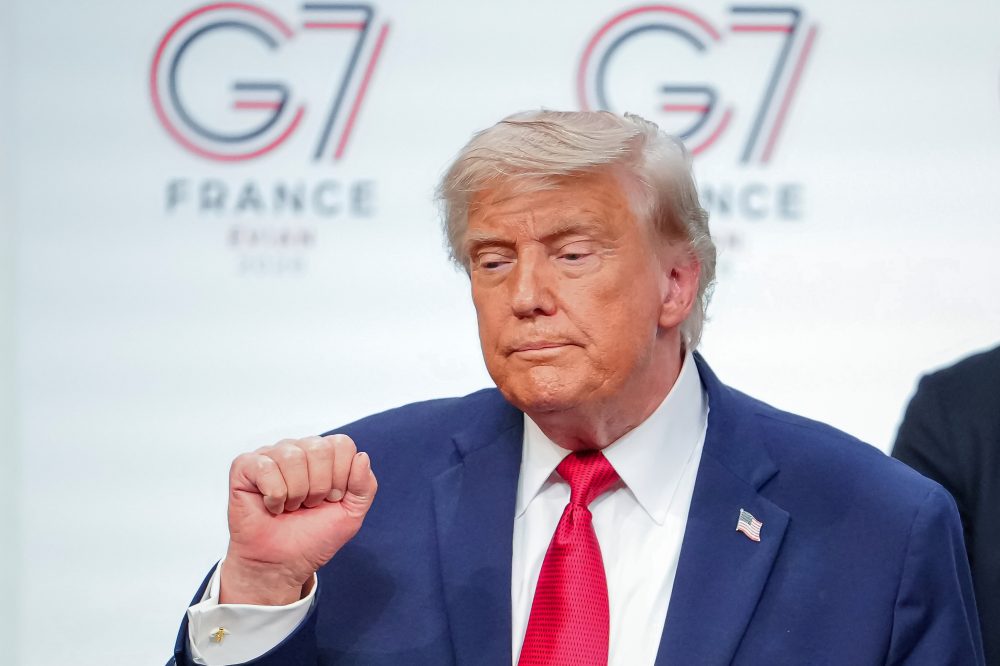
Trump, returning to Washington from the G7 summit in the early hours of Thursday morning, fired back at critics of the deal on social media. “These fools, who think I haven’t been tough enough on Iran, when the Stock Market Just Hit A RECORD HIGH, and Oil prices are ‘tumbling’ down, are either jealous, bad people, or stupid,” he wrote on Truth Social.
One notable side effect of the deal was felt at the gas pump. Average prices for a regular gallon of gasoline dropped below $4 overnight — the first time that’s happened since March. According to motor club AAA, the national average now sits at $3.999 per gallon. Regional differences remain significant, however, with California averaging $5.64 per gallon and South Carolina coming in at $3.58.
The agreement was reportedly signed during a surprise moment at a dinner held at the Palace of Versailles in France on Wednesday night. French President Emmanuel Macron had invited Trump to a private reception, show, and dinner celebrating America’s 250th birthday. The menu included lobster, caviar, and vanilla ice cream. Trump praised the venue, saying, “Versailles is not gold leaf — Versailles is the real deal.”
The dinner also had a practical diplomatic effect — it kept Trump from departing the Group of Seven summit early, as he had done the previous year. Trump told reporters he had originally planned to leave sooner but stayed after “a very nice man” extended the invitation.
Senior U.S. officials had briefed journalists on the contents of the memorandum of understanding on Wednesday, speaking anonymously ahead of any formal signing. Iranian state television later released text that largely matched what U.S. officials had described.
In other major news, Defense Secretary Pete Hegseth sharply criticized NATO allies on Thursday during a meeting in Brussels, announcing a six-month Pentagon review of U.S. military forces stationed in Europe. He said the review’s outcome would hinge on how quickly European nations step up to take primary responsibility for their own defense.
“This will be a real review. It will be designed to ensure that NATO is moving fast and irreversibly toward Europe leading, stepping up to take primary responsibility for the defense of Europe,” Hegseth told his NATO counterparts.
Hegseth also blasted several European allies for refusing to allow U.S. forces access to bases on their soil to conduct strikes against Iran, calling the decision “shameful.” “These allies, they put America’s sons and daughters, our sons and daughters, at risk by denying them the predictable access, basing and overflight that never should have been in question at all,” he said.
Also on Wednesday, the Trump administration announced it is purchasing back offshore wind leases from Chicago-based Invenergy, covering four projects that were in early stages of development. Invenergy will receive reimbursements totaling $765 million in lease fees and plans to redirect that investment into natural gas and geothermal projects. The buyback brings the total amount the administration has spent on such agreements to nearly $2.6 billion. The strategy emerged after federal courts blocked Trump’s earlier executive actions aimed at halting offshore wind development.
Meanwhile, parents of children with disabilities are raising alarms about changes to how civil rights complaints are handled at the federal level. Under a restructuring announced Tuesday, the Department of Justice will take over civil rights enforcement in schools, and the Department of Health and Human Services will assume oversight of special education — moves that fulfill Trump’s campaign pledge to dismantle the Education Department.
Nicole May, an Ohio mother, filed a complaint in spring 2024 with the department’s Office for Civil Rights, alleging her teenage daughter was being bullied over her hearing aids and was struggling in class because she couldn’t hear her teachers. More than two years later, the case remains unresolved. “It’s to the point I don’t even check in anymore with the attorney,” May said.