
WASHINGTON — A short-term agreement between the United States and Iran is meant to kick off a two-month stretch of negotiations aimed at tackling one of the most stubborn disputes between the two longtime rivals: Iran’s nuclear program.
President Donald Trump has cited stopping Iran from obtaining a nuclear weapon as a central reason he launched military operations alongside Israel back in February. Yet the preliminary agreement he has been promoting leaves very little time to work through an issue that has defied resolution for years. For context, the last major nuclear agreement between Iran and world powers took well over a year to put together.
Details about the initial deal have been sparse, but what is known is that it calls for reopening the Strait of Hormuz to international oil shipments, financial incentives tied to benchmarks Iran must meet, and a 60-day window for negotiations aimed at ending Iran’s nuclear activities. The agreement is scheduled to be formally signed Friday in Switzerland.
Doubts about whether the deal is realistic or effective are widespread — among Republican and Democratic lawmakers alike, as well as pro-Israel advocates and Israel itself.
Republican Sen. Lindsey Graham of South Carolina, a close ally of Trump and a longtime critic of Iran, expressed his reservations clearly on Tuesday. “My skepticism is Iran itself. What would a good deal look like? No enrichment. And we’ll see if we can get there,” he said. “But whether or not we can get phase two, I don’t know.”
David Schenker, director of the Arab Politics Program at the Washington Institute for Near East Policy and a former assistant secretary of state for Near Eastern Affairs during the first Trump administration, raised doubts about whether the administration has the staying power to see complex nuclear negotiations through.
“This administration has proven that it has a hard time keeping its attention on these issues,” Schenker said. “This is the kind of thing that requires dogged attention, attention to detail and numerous technical experts involved. Trump loses his attention, moves on, and so does the administration. It’s like they don’t understand Iran’s strategy. They didn’t get it the first time, or the second.”
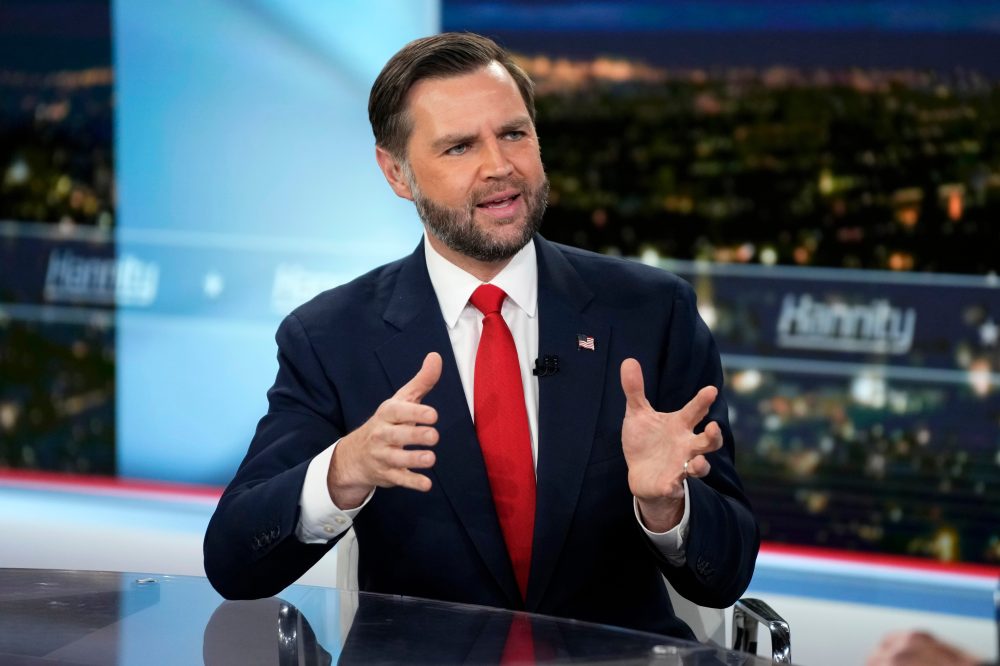
The Trump administration, however, remains confident. Vice President JD Vance said the technical specifics still need to be worked out, but stressed that Iran must take concrete steps before receiving any benefits such as sanctions relief.
“Our plan under this deal is, again, the Iranians are getting a lot of benefits so long as they dismantle that nuclear weapons program,” Vance said during an appearance on Megyn Kelly’s podcast Tuesday.
Vance also addressed skepticism about trusting Iran to follow through. “People always ask me, ‘Why do you believe it this time?’ I don’t believe them,” he said. “I don’t trust anything that anybody says. I trust what people do. And the way this deal is structured is that as they do more, they receive more. As they do less, they receive less.”
Iran has consistently said its nuclear activities are for peaceful purposes.
The 2015 nuclear agreement, formally known as the Joint Comprehensive Plan of Action or JCPOA, required more than 18 months of work before it was finalized. The process began with private conversations between U.S. and Iranian officials in Oman during the final stretch of then-President Barack Obama’s first term. It ultimately required heavy involvement from Secretary of State John Kerry and Energy Secretary Ernest Moniz, along with a large team of technical specialists who traveled across Europe before the talks concluded in Vienna, Austria.
Trump pulled the United States out of the JCPOA in 2018, before many of its more contentious provisions had taken effect. There is currently no sign that Iran is prepared to offer significantly more in a new agreement.
The JCPOA included highly technical provisions covering uranium enrichment limits, advanced centrifuges, and heavy water production, with Iran receiving substantial sanctions relief worth billions of dollars in return. Even critics who opposed the deal — Trump famously called it the “worst deal ever negotiated,” and all Republicans along with several prominent Democrats voted against it — acknowledge it still took more than 18 months to reach even an imperfect result.
Republican lawmakers are insisting that any nuclear deal with Iran must go through Congress, as required by law. GOP Sen. Ted Cruz of Texas said he “would certainly anticipate that” the Senate will have the final say on any agreement.
GOP Sen. John Kennedy of Louisiana said he had little faith that Iran would actually honor any deal it signs.
However, Sen. Roger Marshall, a Republican from Kansas who has spoken directly with Vice President Vance about the agreement, suggested the tight timeline could actually work in the administration’s favor.
“Iran’s modus operandi is to negotiate for the purpose of delaying, so they can rearm themselves,” Marshall said. “I think the president has to give them some type of a finite amount of time, or there’s going to be consequences. So I think it can be done.”
Sen. Tim Kaine, a Democrat from Virginia, noted that negotiators do have a foundation to build on from the Obama-era talks. Still, he pointed out the scale of what was involved previously.
“It took years to put together. You had allies and even adversaries — China and Russia — around the table, you had the IAEA at the table, the Obama chief negotiator had a Nobel Prize in physics, Ernie Moniz,” Kaine said. “I don’t know that either Jared Kushner or Steve Witkoff have a Nobel Prize. So it’s going to be hard.”
Trump envoys Witkoff and Kushner, neither of whom had prior experience in nuclear negotiations, made multiple but ultimately unsuccessful attempts to reach a deal through Omani mediation during the early months of Trump’s second term. Those efforts wound down after U.S.-Israel strikes on Iranian nuclear sites in June 2025, following which Pakistan stepped in as the primary go-between.
Beyond the nuclear issue, there is also uncertainty about other longstanding concerns — including Iran’s ballistic missile program, its backing of militant groups in the region, and its treatment of its own citizens. It remains unclear whether any of these matters will be addressed by either the current interim deal or any potential longer-term agreement.
Brian Katulis, a senior fellow at the Middle East Institute, offered a blunt assessment of where things stand. “A deal is better than more fighting, but the war America and Israel prosecuted against Iran has fallen short of achieving its stated objectives,” he said. “This agreement is mostly about cleaning up an unnecessary mess and putting the best face on it.”