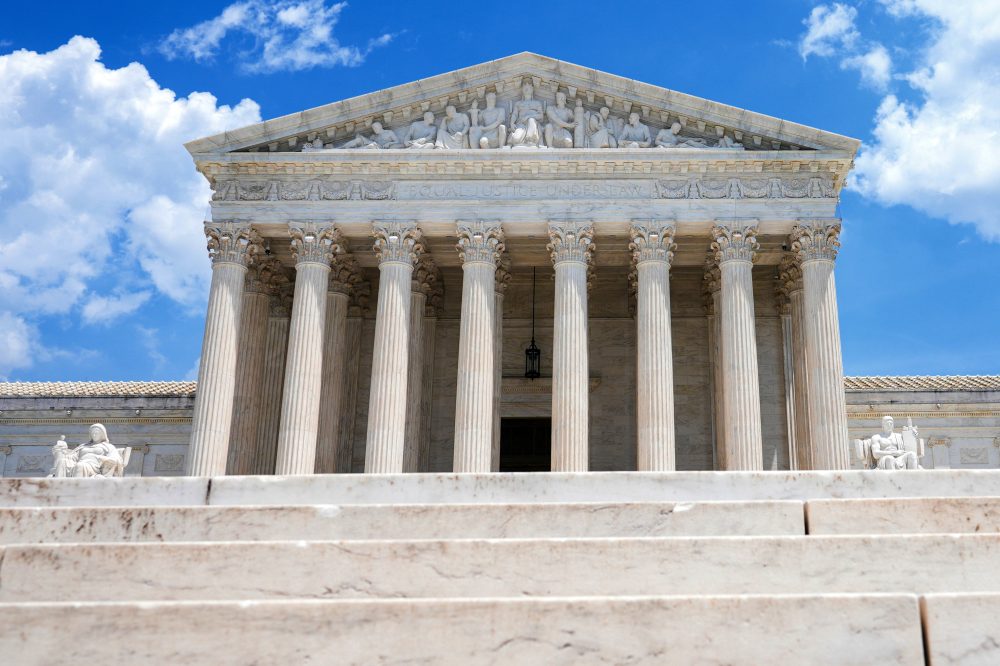

WASHINGTON — The U.S. Supreme Court handed down a unanimous ruling Thursday in favor of a Texas marijuana user who challenged his right to legally possess a firearm, marking the latest in a growing series of decisions that have broadened gun rights across the country.
The justices ruled in favor of Ali Danial Hemani, who contended that a federal law prohibiting anyone who uses illegal drugs from owning a gun runs afoul of the Second Amendment. Hemani had not been accused of any other criminal activity, nor was he alleged to have handled the firearm while under the influence of marijuana.
The ruling is a setback for President Donald Trump’s Republican administration, which had defended the 1968 law even as it has pushed back against other firearms restrictions. That same law played a central role in the case against Hunter Biden, who was convicted in Wilmington, Delaware, of purchasing a firearm while addicted to cocaine in 2018. He was subsequently pardoned by his father, then-President Joe Biden, a Democrat.
Thursday’s decision is the most recent in a string of gun-related cases to reach the nation’s highest court following a landmark 2022 ruling that expanded Second Amendment protections and sparked a nationwide wave of legal challenges.
In the years since that 2022 ruling, the Supreme Court has upheld a law designed to shield domestic violence victims and maintained strict regulations on ghost gun kits, while striking down a prohibition on bump stocks — attachments that allow semi-automatic weapons to fire at a much faster rate. The court took up two separate firearms cases during this term alone.
The legal landscape surrounding marijuana has also undergone major changes in recent years. More than half of all U.S. states have now broadly legalized cannabis, and its use for medical purposes has become widespread. Nevertheless, recreational marijuana remains illegal at the federal level, even following the Trump administration’s move in April to reclassify medical marijuana as a less-dangerous substance.
Standalone criminal charges against individuals accused solely of possessing guns while using drugs are uncommon. In most cases, that charge is added on top of other alleged offenses.
The case drew some unexpected political alliances. Both the American Civil Liberties Union and the National Rifle Association filed in support of Hemani, as did cannabis legalization advocates including NORML. Opposing Hemani were gun safety organizations such as Everytown, which typically find themselves on the opposite side of the Trump administration when it comes to Second Amendment debates.