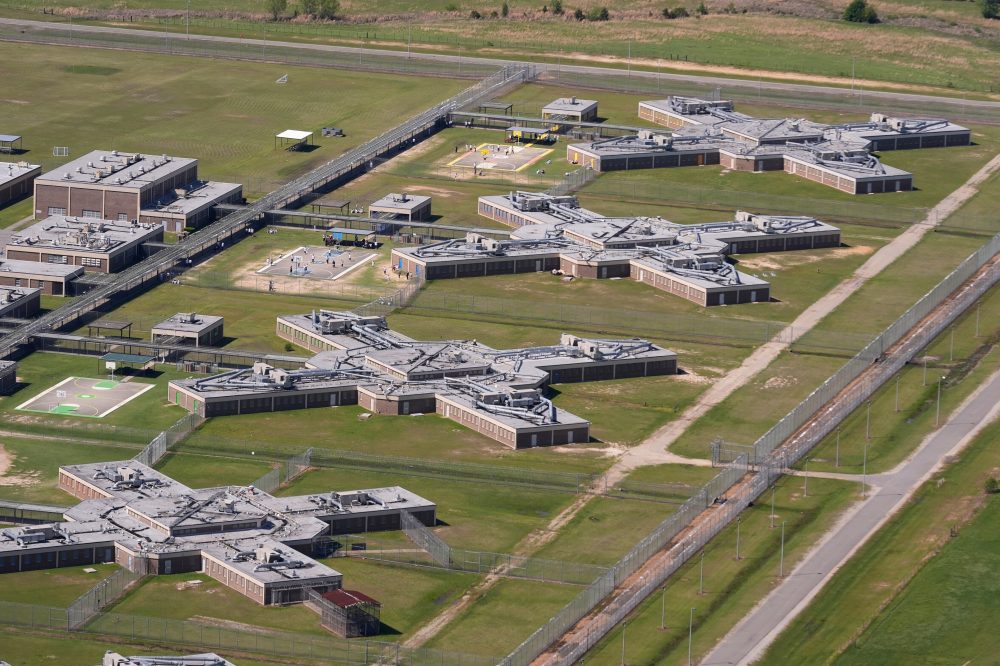

Immigration and Customs Enforcement has unveiled revised detention standards that allow contractors running its facilities to lean more heavily on artificial intelligence tools when communicating with detainees and to continue paying as little as $1 per day for detainee labor — changes the agency says are designed to ease the load on facility operators.
ICE stated the updated rules, which govern for-profit contractors and jails that hold immigration detainees, were revised to “reduce the burden on our detention operators.” Experts, however, say the changes primarily benefit contractors by limiting their legal exposure, cutting costs, and granting greater operational freedom — while doing little or nothing to improve life for the approximately 60,000 people currently in ICE custody.
“100% it’s going to result in deterioration of already problematic conditions of detention,” said Michelle Brane, a former Department of Homeland Security ombudsman who oversaw immigration detention practices during part of the Biden administration. “It’s consistent with their general practice, which is to eliminate accountability and oversight. They are not concerned with people’s basic rights or safety of detainees.”
The updated standards arrive at a time when ICE detention facilities are recording deaths at historically high rates and are facing allegations of medical neglect, insufficient food, and other harsh conditions. They also come as ICE has received a major funding boost, securing more than half of the $70 billion immigration enforcement spending bill recently signed by President Donald Trump.
Dr. Sanjay Basu, a public health researcher who has studied deaths in ICE custody, acknowledged the revisions include “genuine improvements” in areas like suicide prevention and mental health care. However, he said the overall direction is “toward weaker standards governing a growing share of the detained population.”
ICE framed the changes as a way to streamline its rules and bring them closer in line with the more relaxed standards used by the U.S. Marshals Service for holding pretrial federal inmates in jails. The agency said it weighed input from facility operators “alongside operational, legal and policy requirements when making a final decision.”
Dr. Homer Venters, an expert in correctional health care, warned that the changes could reduce access to language assistance. Previous standards required in-person and telephone interpretation and translation services; the revised rules allow facilities to use AI tools — such as machine-learning translation or generative AI — for what they describe as “noncritical communication” or “informal interactions with detainees.” That category could include conversations during intake, discussions in housing units, and responses to detainee grievances or concerns.
Venters called this shift alarming, noting that grievances often contain “very urgent or even emergent information such as when a patient has been denied lifesaving care.” He also raised concerns that the new language leaves open the question of whether health screenings — critical for identifying medical and mental health needs — could be carried out through AI. ICE maintained that the standards still require contractors to provide interpretation and translation services “at no cost to the detainees.”
Several experts flagged another change that prevents facility operators from turning away any detainee sent to them by ICE. Critics say this could mean severely ill or disabled detainees end up in facilities that cannot properly care for them, with delays of several days before ICE is even asked to transfer them elsewhere. At the same time, analysts noted the change may actually reduce contractors’ legal liability if a detainee dies after being admitted.
New language in the standards explicitly states that detainees who participate in voluntary work programs are not considered employees and are therefore not entitled to wages or benefits. Dora Schriro, who served as director of ICE’s Office of Detention Policy and Planning during the Obama administration, called this provision “a favor” to ICE’s for-profit contractors.
Advocates for detainees have pursued lawsuits for years arguing that these work programs — in which detainees can earn as little as $1 per workday — amount to forced labor. Those cases have sought millions in unpaid wages from major ICE contractors. Carmen Iguina Gonzalez, an immigration detention expert at the American Civil Liberties Union, noted that the new rules also prohibit facilities from paying above the $1-per-day minimum stipend — a practice that had previously been allowed and had been used as evidence against contractors in court.
Claire Trickler-McNulty, a former official with the Department of Homeland Security and ICE who specializes in detention standards, said ICE’s expanded budget could have been used to improve conditions rather than roll back protections. She recalled pushing ICE facilities under previous administrations to add recreational amenities like soccer fields using surplus funds.
“Their goal is to make it easier for the jail operators,” she said. “No longer are they trying to make sure the focus is on the detainees and their care and the experience in custody.”