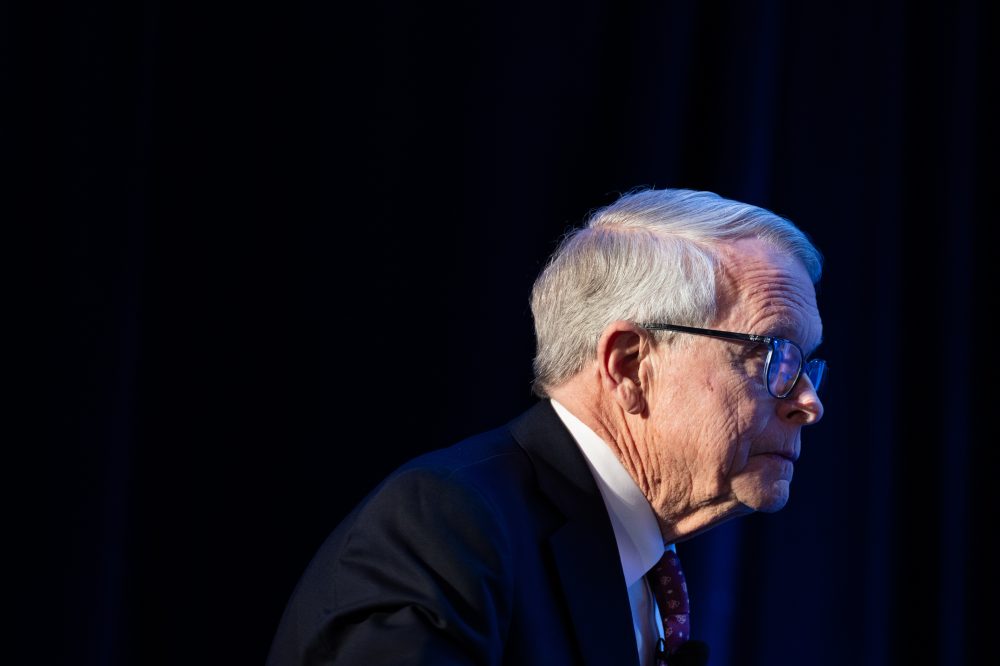

COLUMBUS, Ohio — Ohio’s Republican governor announced Tuesday that the state should do away with the death penalty, stating that both federal and state data show capital punishment fails to discourage violent crime. The announcement marks a dramatic reversal for the 79-year-old governor, who was one of the architects of the very law he now wants to see repealed — legislation he helped craft as a state legislator nearly half a century ago.
Speaking at a news conference, the term-limited governor was direct about his changed position. “I no longer believe the death penalty is a deterrent to murder,” he said, adding, “I believe Ohio should abolish the death penalty.”
Despite the governor’s call for repeal, the chances of the legislature acting on it appear slim. Republican House Speaker Matt Huffman stated back in February that he would “vigorously oppose” any such effort, and the former Republican Ohio Attorney General Dave Yost publicly agreed with that position on social media.
The governor has been quietly extending Ohio’s unofficial moratorium on executions for years, repeatedly pushing back scheduled execution dates because drug manufacturers have refused to supply the chemicals required for lethal injections. In January 2025, President Donald Trump directed then-Attorney General Pam Bondi to assist states in resolving that supply problem. Former Ohio Attorney General Dave Yost, a supporter of capital punishment, told Bondi that “without the assistance of the federal government, Ohio’s situation is unlikely to change.”
The governor has already acknowledged that no executions are expected to take place before his term concludes in 2026. The repeated delays have left Ohio with a backlog of 30 executions scheduled over the next four years, according to the Ohio Department of Rehabilitation and Correction.
Ohio last carried out an execution on July 18, 2018, when Robert Van Hook was put to death for stabbing a man he had met at a Cincinnati bar back in 1985. The current governor took office in 2019.
Ohio had reinstated capital punishment in 1981 under legislation co-authored by the governor, after the practice was ruled unconstitutional in 1972. Executions did not actually resume in the state until 1999, and since that time, 56 people have been executed by lethal injection in Ohio.
The governor’s stance on the death penalty has evolved gradually throughout a political career that began in 1976 and took him from county prosecutor through multiple state offices and a seat in the U.S. Senate. Early in his first term as governor, he directed the state prison system to explore alternative lethal injection drugs. By 2020, he was telling lawmakers they would need to approve a different execution method before any more inmates could be put to death. Since then, neither a bipartisan push to ban capital punishment nor a separate effort to introduce nitrogen gas executions has gained traction.
When the governor first raised the idea of alternatives, he said he had doubts about the death penalty’s value, questioning whether “it in fact did deter crime, which to me is the moral justification.”
Ohio is not alone in reassessing capital punishment. New Hampshire lawmakers overrode a governor’s veto in 2019 to eliminate the death penalty. Colorado abolished it in 2020, and Virginia followed in 2021. Pennsylvania’s governor has urged legislators to do the same, pledging not to sign any new execution warrants. In 2022, Oregon’s governor commuted the sentences of all 17 people on death row and ordered the state’s execution chamber torn down.