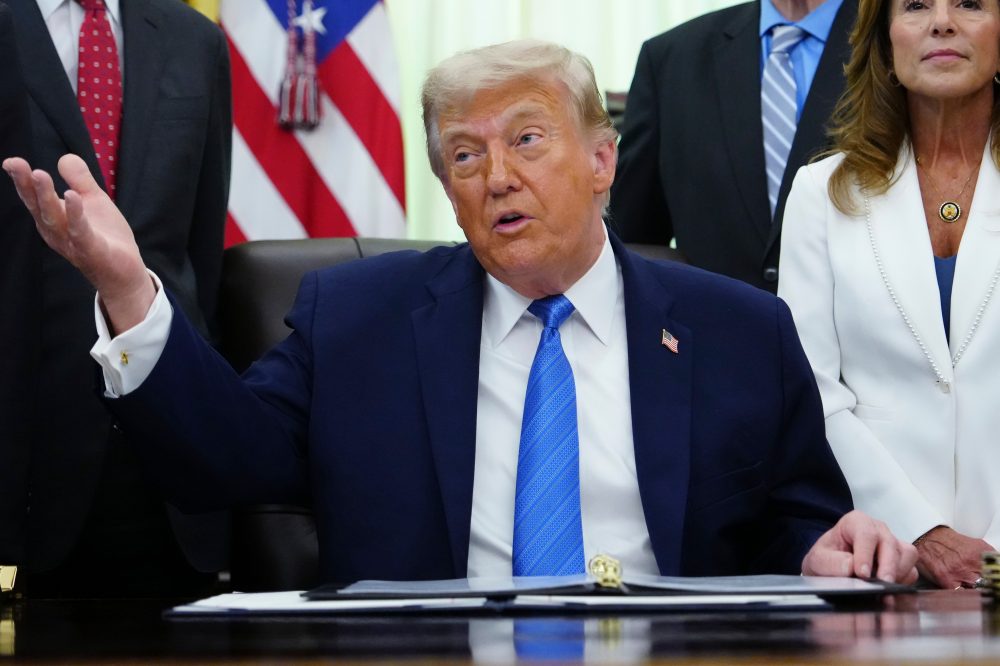
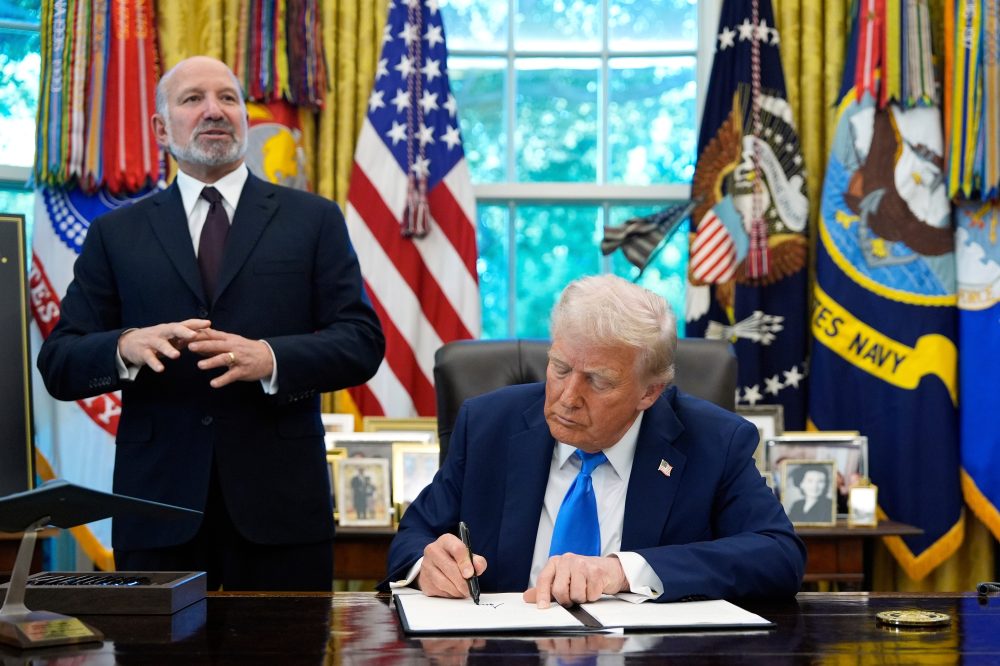
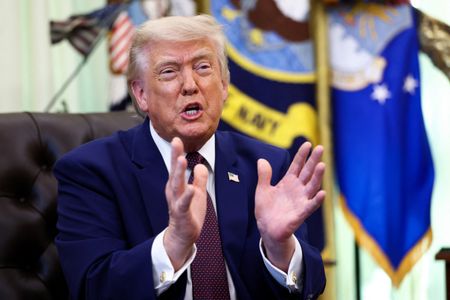
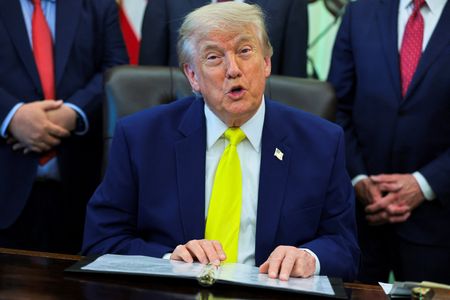
President Trump issued an executive order on June 11, 2026, titled “Executive Proclamation Restoring American Commercial Fishing in the Pacific,” which allows commercial fishing vessels flying the American flag to access previously restricted fishing areas. The presidential directive creates new financial opportunities for commercial fishing operations and aims to bolster the economic stability of communities along the coast.
NOAA expressed support for the Administration’s commitment to enhance U.S. seafood competitiveness through the America First Fishing Policy. The President’s order resulted directly from input provided by the U.S. fishing industry, and officials say the measure will expand economic prospects for American fishing operations.
“President Trump is once again delivering for American fishermen by opening prized Pacific fishing grounds with this Executive Proclamation,” said Commerce Secretary Howard Lutnick. “By restoring commercial fishing in the remote Pacific, we are creating new economic opportunity for coastal communities and restoring U.S. seafood competitiveness.”
Earlier restrictions on commercial fishing in Pacific waters pushed American fishing vessels farther into international territory, where they faced competition from inadequately regulated foreign fishing operations. Reopening access to these productive fishing areas within the U.S. exclusive economic zone will provide hardworking American fishermen with closer proximity to tuna and other open-ocean species.
“Restoring commercial fishing access to these vital areas reflects the continued commitment of this Administration to American fisheries, which are built on the foundation of rigorous science, robust monitoring, strong enforcement, and the daily commitment of our dedicated fishermen,” said Neil Jacobs, Ph.D., NOAA administrator. “This historic action will lead to more U.S.-caught fish on American tables.”
The order acknowledges the success and reliability of U.S. fisheries oversight under the Magnuson-Stevens Fishery Conservation and Management Act. This year marks the Act’s 50th anniversary of continued science-based fisheries management. American fishing professionals serve as responsible caretakers of ocean resources, working to maintain the long-term sustainability of fish populations and marine environments while providing a healthy, sustainable food source for Americans.
The newly accessible fishing areas for American fishermen in the Pacific include:
• The Islands Unit of the Mariana Trench Marine National Monument
• The Mau Zone and Ho’omalu Zone and areas seaward of 50 nautical miles within the Papahānaumokuākea Marine National Monument
• Waters between 12 and 50 nautical miles surrounding Rose Atoll within the Rose Atoll Marine National Monument
This announcement is part of multiple initiatives undertaken by the Trump Administration to support commercial fisheries in a continuing effort to restore America’s seafood competitiveness. NOAA’s National Marine Fisheries Service and its partners will maintain a balance between responsible stewardship of the Pacific Islands marine national monuments ecosystems and the involvement of commercial fisheries, including coordination with regional fishery management councils.
WASHINGTON — Federal authorities have flagged more than 15,000 instances where adults have gained custody of multiple immigrant children who arrived in the United States without parents, officials announced Thursday, indicating a potential crackdown on prolific child sponsors.
The Justice Department spotlighted criminal charges against three individuals from Guatemala that officials say highlight the risks of inadequate sponsor screening in a system designed to connect children with relatives or family friends after they arrive in the country. Authorities said they are examining many other so-called super-sponsors — individuals who obtained custody of more than three unrelated children — to assess whether fraud was involved in the sponsorship process.
“We will not accept half measures when it comes to securing the border, protecting American lives and saving children from exploitation,” Acting Attorney General Todd Blanche said during a news briefing.
Obtaining custody of multiple unrelated migrant children does not constitute a criminal offense. While the sponsors could be compassionate and well-meaning, senior administration officials highlighting their cases suggests authorities view them with suspicion and may subject them to enhanced investigation.
During the Biden administration, officials worked to place children with qualified adult sponsors within 30 days, allowing many families to reunite rapidly. However, this approach also resulted in mistakes, with some children placed with adults who compelled them to work unlawfully, or with individuals who supplied obviously fraudulent identification and contact information.
Under the current administration, officials have implemented stricter regulations designed to stop traffickers from illegally transporting children into the nation, which has also caused a significant extension in federal custody periods for minors. As of May, children remain in federal custody for an average of 206 days before placement, compared with an average of 37 days when the administration began. Meanwhile, the total number of children in custody has consistently declined.
Finding the right approach to place children with screened sponsors while protecting them from harm has become a divisive political issue.
Democrats “want to claim that Republicans, because we’re enforcing the laws, it’s inhumane, somehow,” Blanche said after criticizing the screening processes under the previous administration. “What’s inhumane about taking care of our kids?”
The criminal cases revealed Thursday involve charges against a woman who, according to authorities, was residing in the country illegally, conspired with others to transport children across the border, then employed false identities to obtain custody of them for financial gain. In a separate case, a woman faces accusations of falsely stating she was related to a teenager who had entered the country illegally in her application to become the teen’s sponsor.
The Associated Press has requested statements from lawyers representing the defendants in these cases.
Those critical of the current administration have expressed alarm about wellness inspections conducted by immigration officers at elementary schools, immigration officers appearing and detaining sponsors during child reunification appointments, and newly mandated documentation that has established a “paperwork barrier” and prompted a recent legal challenge.
Even sponsors prepared to complete the new screening requirements have faced prolonged and unnecessary delays.
A father from Chicago who is a U.S. citizen and possessed valid documentation for his child waited five months before the government arranged a fingerprinting appointment. While waiting, his young daughter suffered sexual abuse while in federal custody, according to a lawsuit.
President Donald Trump announced Thursday his intention to select Jay Clayton, who currently serves as U.S. attorney for the Southern District of New York and previously led the Securities and Exchange Commission, to head the nation’s intelligence operations.
The president revealed his choice through a social media post as lawmakers continue demanding a permanent successor to Tulsi Gabbard, who stepped down from the role last month. Trump encountered significant opposition regarding his choice of Bill Pulte, who leads the Federal Housing Finance Agency, to serve in an interim capacity.
The circumstances have created tension on Capitol Hill, with Democrats threatening to block the renewal of foreign intelligence authorities until Trump withdraws Pulte’s appointment and selects a permanent candidate.
“Few people anywhere in the Legal Community are respected at the level of Jay,” Trump posted online. “I encourage the United States Senate to confirm Jay as soon as possible.”
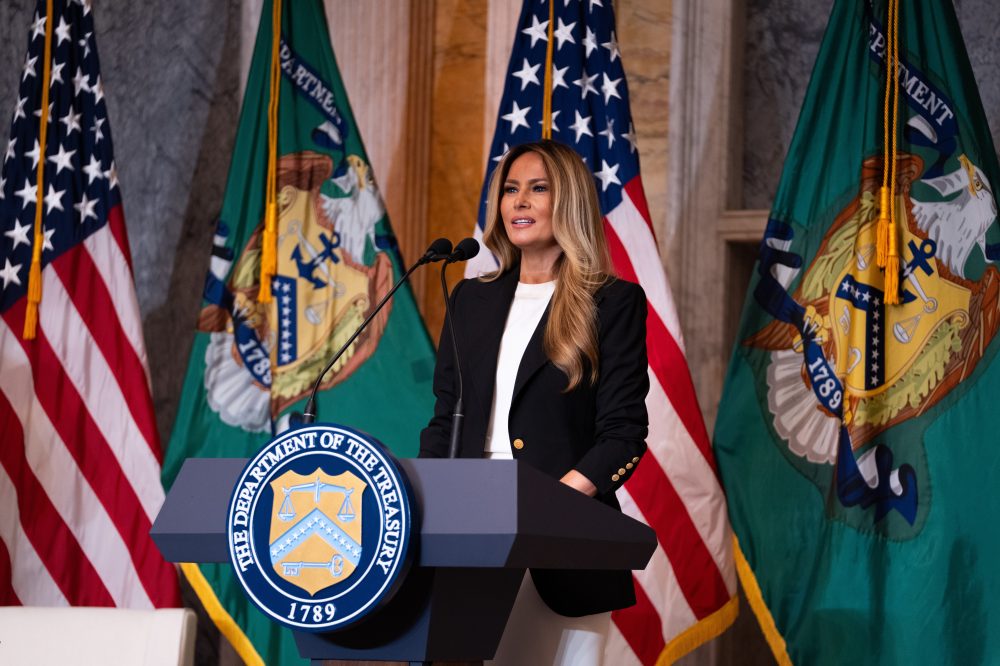
WASHINGTON — The first lady and Treasury Secretary Scott Bessent revealed Thursday the creation of Fostering the Future Accounts, an extension of existing Trump Accounts investment programs designed to provide $1,000 starter funds to newborns when parents establish accounts.
Expanding her ongoing efforts to support foster children, the first lady explained that new federal guidelines will enable child welfare agencies to serve as guardians for foster care children when establishing these accounts.
During a Treasury Department press conference, the first lady stated the initiative “gives foster children the same chance at asset ownership and long-term wealth as every other child.”
Account enrollment begins July 4th. Children must be U.S. citizens born from January 1, 2025, through December 31, 2028, to be eligible.
White House Council of Economic Advisers projections show a Trump Account opened for a 2026 newborn could reach $5,800 at age 18 and $18,100 at age 28 without additional deposits.
Twenty-three governors have committed to allowing their state agencies to start enrolling children in the initiative, the first lady reported. “I urge every governor and business leader to help fund these accounts,” she stated.
The National Council for Adoption reports approximately 330,000 children currently live in U.S. foster care. According to the National Foster Youth Institute, one in five faces homelessness risk after leaving the system, and only half find jobs by age 24.
“Those outcomes are unsettling but we refuse to accept them as inevitable,” Bessent said during the announcement. “We are affirming that the American dream belongs to every child.”
Trump Accounts originated from provisions in tax and spending legislation signed last summer. The Treasury Department provides $1,000 to infants when parents establish accounts, with private companies investing the funds in stock markets. Children gain access at 18 years old.
Nationwide employers and wealthy donors have committed to matching contributions for Trump Accounts as employee benefits. Michael and Susan Dell announced a $6.25 billion donation, while hedge fund founder Ray Dalio and his wife Barbara pledged $75 million for Connecticut children under 10.
Congressional lawmakers are pushing back against recent cuts to Ukraine assistance, with the Senate Armed Services Committee voting Thursday to authorize $750 million in continued military aid for the war-torn nation.
The committee’s version of the annual National Defense Authorization Act would extend the Ukraine Security Assistance Initiative, which funds American companies to manufacture weapons for Ukrainian forces battling the Russian invasion. Sources familiar with the legislation told Reuters the bill also contains a provision changing the Pentagon’s official name from Department of Defense to Department of War.
The Republican-controlled committee finished work on the NDAA, the yearly legislation that sets Pentagon policy and funding priorities. The comprehensive measure supports $1.15 trillion in total defense spending and covers everything from military equipment purchases to service member pay increases and responses to global security challenges.
Thursday’s Senate proposal includes language preventing any authorized funds from being used to recognize Russian sovereignty over Ukrainian territory that is internationally recognized as belonging to Ukraine. The bill also directs the Pentagon to provide intelligence assistance to Ukrainian officials for military operations aimed at defending or reclaiming occupied areas.
The Senate committee released their legislation one week following House passage of separate measures providing Ukrainian aid and implementing additional Russian sanctions.
Regarding weapons and equipment, the Senate bill grants multi-year purchasing authority for various munitions and military systems, including Boeing’s F-15EX fighters and Lockheed Martin’s F-35 aircraft.
The proposed legislation still faces multiple hurdles before potentially becoming law. Both the complete House and Senate must separately approve their respective committee versions. Following that, representatives from both chambers must negotiate a unified compromise bill, which would then require passage in both the House and Senate before reaching the White House for presidential action.
The House committee’s NDAA version similarly endorsed the administration’s proposal to rename the Department of Defense to Department of War, despite Democratic opposition to the change.
Although bipartisan congressional support for Ukraine remained strong during the initial period following Russia’s February 2022 invasion, some of the administration’s closest Republican supporters in House and Senate leadership have shown decreased enthusiasm for Ukrainian assistance since January 2025.
American aid to Ukraine has decreased significantly even as both nations continue exchanging missile, drone, and artillery attacks. Diplomatic efforts remain deadlocked, with Ukrainian officials rejecting Russian President Vladimir Putin’s demands for territorial concessions of areas Ukraine has successfully defended since 2022.
The current administration intends to send several Iranian nationals and other migrants to Central African Republic, a nation struggling with ongoing instability, violence, and widespread poverty, according to two attorneys and an official with knowledge of the situation who spoke to Reuters.
Among those facing deportation are two Iranian women who could face torture and persecution if sent back to Iran, according to their attorney, Emily Trostle. She explained that one woman converted to Christianity while the other is an advocate for democratic reform.
Neither the U.S. State Department nor the Central African Republic’s presidential office, which recently signed an agreement to accept third-country deportees from the United States, provided immediate responses when asked for comment.
Trostle stated that both women were taken into custody when they arrived in the United States in November 2024. She noted that they had filed asylum claims and obtained withholding of removal protection from a U.S. immigration judge.
The informed official told Reuters that the initial flight to Central African Republic under this arrangement would transport approximately 20 individuals, including people from Syria and Afghanistan. The attorneys indicated the aircraft could depart as soon as Thursday.
An additional source with knowledge of the arrangements mentioned that one person from Turkey was also scheduled for deportation.
The current administration has utilized third-country deportation agreements, including one with Central African Republic’s neighboring Democratic Republic of Congo, which is currently dealing with an Ebola outbreak, to remove individuals who cannot legally be returned to their home countries.
Washington has maintained these agreements are legal, though advocacy organizations and rights groups have criticized the lack of transparency in the deals and noted that many deportees are eventually sent back to their countries of origin.
The United States and Israel conducted extensive military strikes against Iran in late February, beginning what is now a three-month conflict.
In April, U.S. President Donald Trump stated to reporters that he believed Iranian citizens should revolt against their government if a ceasefire was reached, but acknowledged it would be too dangerous for them to attempt.
According to the briefed official, those deported will be housed in residential facilities in Bangui, the capital of Central African Republic, and are not expected to be immediately returned to their home countries.
The official added that the agreement could ultimately result in hundreds of migrants being sent to the country.
The New York Times first reported the Iranian deportation plan earlier on Thursday.
The U.S. Department of Homeland Security announced last week that all individuals facing deportation would receive complete due process protections.
A representative from the International Organization for Migration stated the organization would “provide post-arrival humanitarian assistance” to migrants sent to Bangui, following a request from the Central African government.
The representative emphasized that the IOM was not participating in the removal process and would offer aid “on a strictly voluntary basis and respecting applicable international standards.”
This year, the United States provided $85 million to the IOM for its operations in Central African Republic.
The nation has experienced continuous periods of conflict since gaining independence from France in 1960, resulting in widespread poverty affecting most of its 5.5 million residents.
Rwanda sent military forces five years ago to prevent rebel groups from disrupting elections and continues to maintain troops in the country. President Faustin-Archange Touadera has signed peace agreements this year with multiple rebel organizations, leading to decreased violence in certain areas.
WASHINGTON — From a distance, the massive structure resembles something from outer space rather than a fighting venue.
Perhaps it appears to be the type of spacecraft that might transport extraterrestrials to the White House for a diplomatic encounter with the nation’s commander-in-chief.
However, upon closer inspection, the outline of an eight-sided fighting cage becomes clear, measuring 30 feet (9 meters) across and designed with meticulous detail to mirror the MMA organization’s iconic Octagon. Essentially, it resembles a STOP sign turned on its side, complete with mesh barriers and cushioned edges displaying various corporate sponsor names: Morgan & Morgan, Bud Light, Dodge Ram, Corona Extra and Polymarket, which calls itself the globe’s biggest prediction market.
Above it all towers The Claw, a four-sided structure that stretches over 90 feet (27 meters) skyward and contains lighting equipment, sound systems, thick cables and four massive screens so spectators seated away from the Octagon can watch the combat action taking place inside the cage.
Picture the four-pronged mechanical device that attempts to grab plush toys at an arcade game rather than feline appendages — explaining the otherworldly appearance.
Encircling this setup are bleachers packed with gray folding seats creating a makeshift venue designed to accommodate more than 4,000 spectators for the seven UFC matches scheduled for Sunday in honor of President Donald Trump’s 80th birthday and the 250th anniversary of when the Declaration of Independence was signed.
For those unfamiliar with UFC, this entire scene might seem bewildering regardless of the setting. However, the temporary venue spans almost the complete White House South Lawn, the same space where Marine One typically touches down to transport the president on out-of-state journeys and where countless children hunt for eggs during the annual Easter celebration each spring.
Over $60 million and countless work hours have been invested in constructing the arena, based on a court document filed by the National Park Service, which manages the South Lawn and is defending against a legal challenge aimed at stopping the event.
The White House indicates the UFC is funding the expenses, although the filing reveals that seven government departments — including the Department of Homeland Security and the Federal Aviation Administration — have “allocated significant resources and manpower.”
Combat athletes, their teams and various support personnel are anticipated to occupy the driveway and portions of the West Wing when not competing. They will access the arena through covered walkways leading directly to the Octagon.
Both the fighters and regular attendees of Sunday’s event will enjoy scenic views of the White House Executive Residence and the historic Truman Balcony on one side, with the Washington Monument rising in the background on the other. The entire scene will be enhanced by rotating spotlights, and possibly even perspiration and blood from the athletes battling each other.
A full schedule of preliminary events includes a media conference at the Lincoln Memorial featuring UFC chief Dana White and the competitors on Friday evening.
Additionally, a formal weigh-in ceremony for the fighters will take place Saturday at the Ellipse, a park adjacent to the White House where event organizers anticipate over 120,000 visitors will view Sunday evening’s competition on large screens after receiving complimentary tickets through a lottery system.
Stunt performer Travis Pastrana is scheduled to execute a potentially dangerous backflip on a motorcycle on the White House grounds as part of the opening entertainment.
The president has described the Octagon and its Claw as “quite attractive to a lot of people.” He has even hinted that the temporary installation might remain permanently, similar to the Eiffel Tower, which he points out was initially constructed for the 1889 World’s Fair but was never dismantled.
Whether the president is serious about this proposal remains unclear.
Construction of the arena commenced May 20 and has progressed for several weeks. During a media tour on Thursday, building sounds — especially grinding and pounding — were audible. Massive cranes were moving materials overhead, though those were for the $400 million ballroom the president is constructing in the vicinity, not for the UFC event.
The remaining grass areas around the arena, on other sections of the White House grounds, have been equipped with additional lighting. However, the lawn that typically exists between the White House and the arena’s bleacher area has been removed, leaving only bare soil that will require new sod installation once the event concludes — unless the president actually decides to make the arena a permanent fixture.
A large Freedom 250 emblem has been positioned between the White House and the arena. In the area, workers removed tables and yellow umbrellas from the president’s renovated Rose Garden and were pressure-cleaning that section, along with the walkway to the Oval Office, in advance of the fights.
Sunday’s program begins at 8 p.m. ET. As evening approaches, workers will light up The Claw in patriotic colors, and the array of lights will create projections making it appear as if the entire framework is wrapped in a spinning American flag design.
Weather predictions indicate hot and humid conditions with potential thunderstorms. The bottom of The Claw’s tower includes overhead protection that should keep the fighters relatively dry if precipitation occurs — and the president will likely observe from a sheltered, covered location.
However, all other attendees would almost certainly become soaked.
White has promised that even severe lightning — when The Claw could become an obvious target for electrical strikes — would not cancel the program.
A federal magistrate judge has cleared a Democratic congressional hopeful of criminal charges stemming from his participation in an immigration protest in New York City last fall.
Brad Lander walked free Thursday after U.S. Magistrate Judge Henry J. Ricardo found him not guilty of obstruction charges related to his September arrest at a building housing immigration courts.
Ricardo announced his decision following a day-long trial in Manhattan, stating “I find the defendant not guilty” after delivering a detailed review of the case evidence and Lander’s testimony. The candidate embraced his legal team enthusiastically once the proceedings concluded.
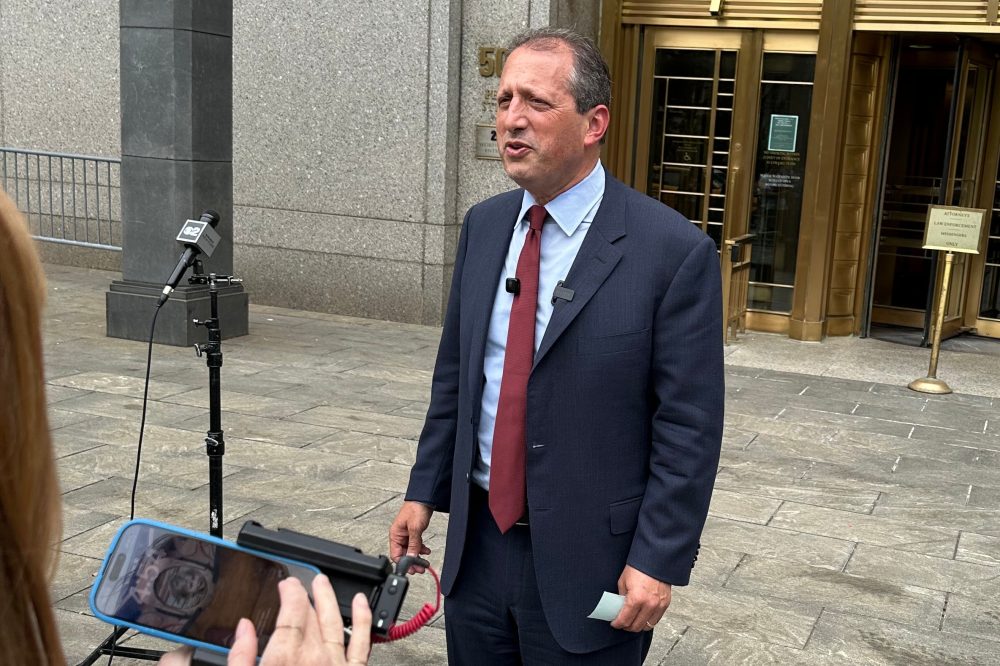
Speaking to reporters outside the courthouse, Lander, who is running against U.S. Rep. Dan Goldman in the Democratic primary, praised the judge’s careful examination of the case.
“I feel genuinely moved by the rule of law,” Lander remarked, describing it as fortunate to live where citizens can successfully challenge government overreach when facing improper charges.
The candidate expressed hope that immigrants at risk of deportation could access the same caliber of legal representation and court access he received.
Government attorneys had contended that Lander blocked an elevator on the 10th floor of 26 Federal Plaza by sitting in front of it for approximately 20 to 25 minutes on Sept. 18, 2025. However, Ricardo determined prosecutors couldn’t demonstrate that Lander meant to obstruct the elevators or was uncooperative when federal officers provided contradictory directions to demonstrators.
Prosecutors’ representatives declined to provide statements Thursday.
During the previous day’s proceedings, Lander took the stand in his defense, stating he never meant to disrupt elevator operations in the lower Manhattan facility that accommodates 40 federal offices, including the FBI.
The former city comptroller and associate of Mayor Zohran Mamdani testified that no one instructed him to move away from the elevator or indicated he was causing an obstruction before his detention.
Following his arrest, he turned down a plea agreement that would have dropped the misdemeanor obstruction charge after six months.
This wasn’t Lander’s first legal trouble related to immigration activism. The former mayoral candidate was also detained in June 2025 at a Manhattan immigration court after linking arms with someone officials were attempting to apprehend, though no charges resulted from that incident.
Political advertising spending for November’s midterm elections is expected to reach an unprecedented $11.6 billion, setting a new benchmark for any election cycle, according to data released Thursday by advertising tracking company AdImpact.
This projection surpasses the previous high of $11.2 billion from the 2024 presidential election and significantly exceeds the $8.9 billion from the 2022 midterms. The figure also represents an increase from AdImpact’s September estimate of $10.8 billion.
With Republicans holding narrow control of both chambers of Congress, they face challenges from elevated cost of living concerns and President Donald Trump’s declining approval numbers. While Democrats appear positioned to regain House control, their Senate prospects remain more challenging. Campaign dollars are concentrating on the handful of competitive contests that will determine which party controls Congress.
AdImpact attributes the record-breaking spending forecast primarily to anticipated advertising surges in hotly contested Senate and gubernatorial battles across Ohio, Alaska, and Iowa, plus tight Senate competitions in Texas and Maine.
Ohio leads the spending surge with projected outlays now reaching $749 million, representing a $309 million jump from earlier predictions, according to AdImpact. The state features Democrat Sherrod Brown competing against Republican Senator Jon Husted alongside a competitive governor’s race.
Texas follows with the second-largest spending increase, where projections climbed $288 million to reach $850 million total. Maine rounds out the top increases with advertising expenditures now forecast at $491 million, up $185 million from previous estimates.
The Texas Senate race gained intensity after Attorney General Ken Paxton defeated four-term incumbent Senator John Cornyn in an expensive Republican primary last month. Paxton now faces Democratic state Representative James Talarico in what analysts expect could become one of history’s most costly political contests.
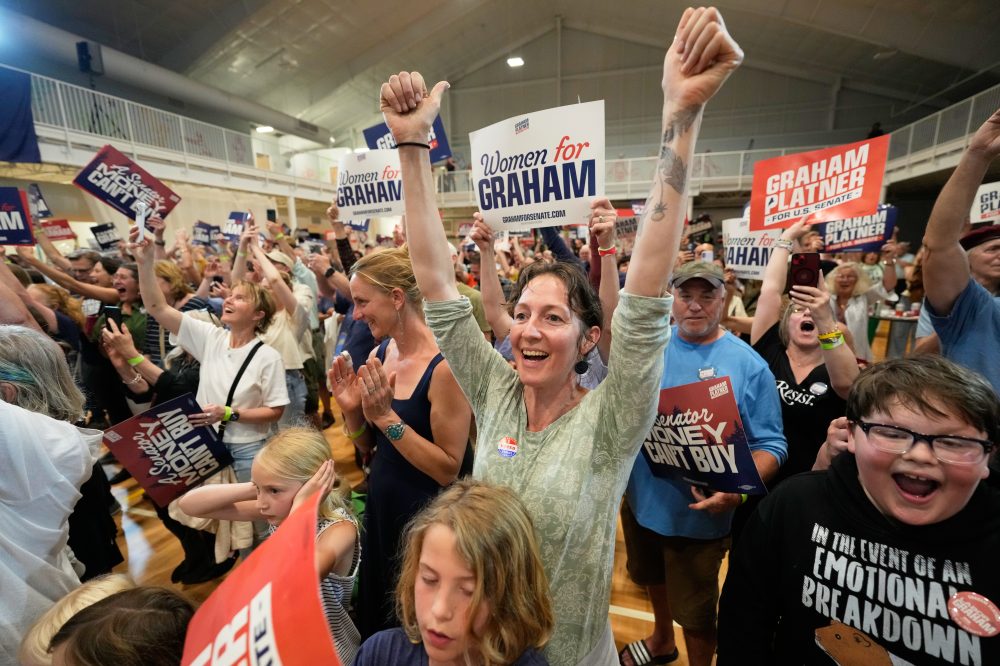
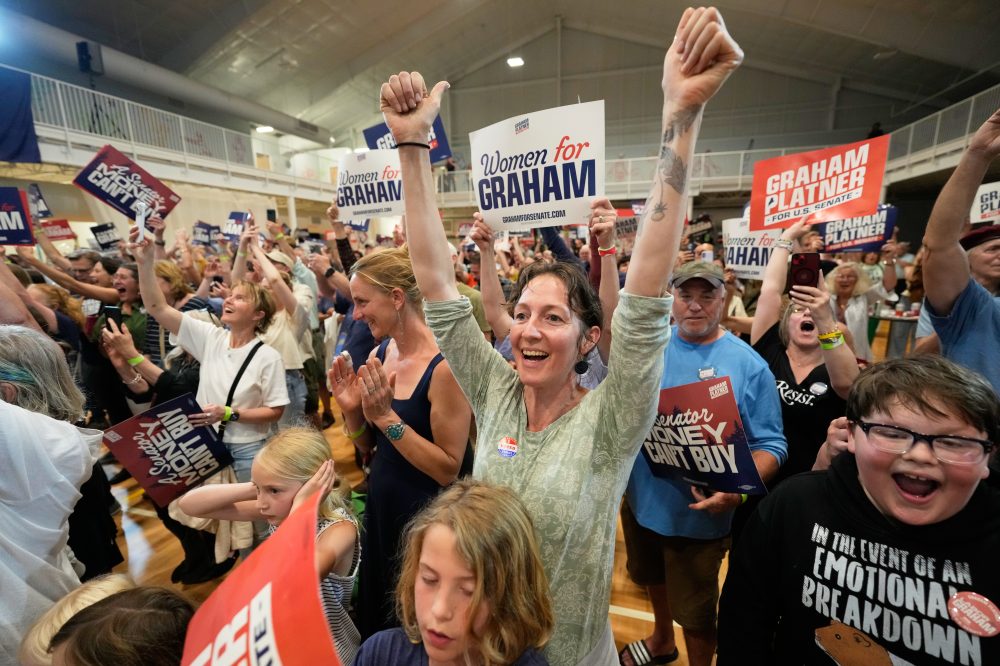
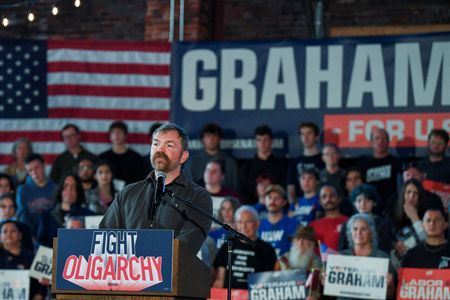
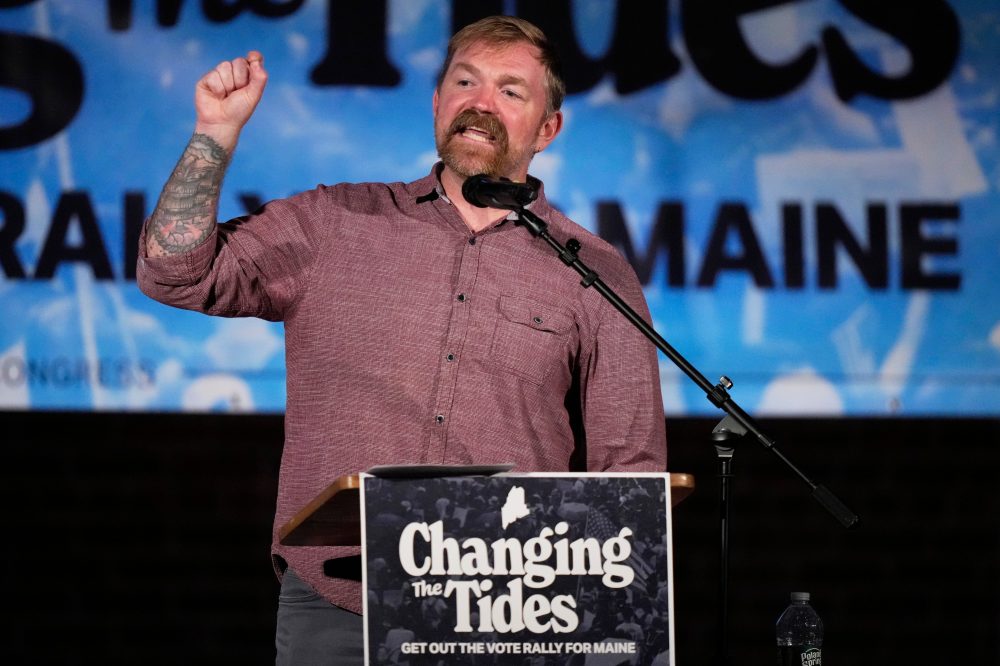
Maine’s Senate battle features Democratic newcomer Graham Platner, who has encountered criticism regarding past online content, a Nazi-associated tattoo, and accusations of inappropriate text messages to women. Platner is anticipated to challenge sitting Republican Senator Susan Collins in another potentially expensive showdown.
WASHINGTON, June 11 (Reuters) – The head of U.S. Homeland Security, Markwayne Mullin, stood behind the Trump administration’s visa rejection decisions on Thursday as this week marked the start of the World Cup tournament. He indicated that discussions had taken place with FIFA leadership while refusing to provide details about individual visa situations.
State officials announced today they have reached a preliminary agreement to acquire a Delaware State University facility that will serve as the foundation for expanding homeless services in Kent County.
Governor Meyer, working alongside the Delaware State Housing Authority, revealed the agreement in principle to purchase the university’s Living and Learning Commons located in Dover. The acquisition represents a significant development in efforts to bring the Hope Center approach to Kent County.
The announcement follows Governor Meyer’s establishment of the Delaware Interagency Collaborative to End Homelessness, marking continued progress in the administration’s strategy to address housing challenges across the state.
WASHINGTON — Officials have postponed the debut of a new international bridge spanning the Detroit River after President Donald Trump had previously threatened to prevent its opening due to unresolved matters.
The Windsor-Detroit Bridge Authority announced Thursday, just one day before a planned ribbon-cutting event, that both nations have decided to postpone the bridge’s launch to allow additional time for addressing remaining concerns.
The Gordie Howe International Bridge represents a joint venture between Canada and Michigan, with traffic expected to begin flowing across it before the end of this month.
Uncertainty surrounding the bridge’s debut had persisted for several months following Trump’s February ultimatum demanding Canada transfer no less than half of the bridge’s ownership to the federal government, along with meeting other undisclosed conditions as part of his ongoing disputes regarding international trade matters.
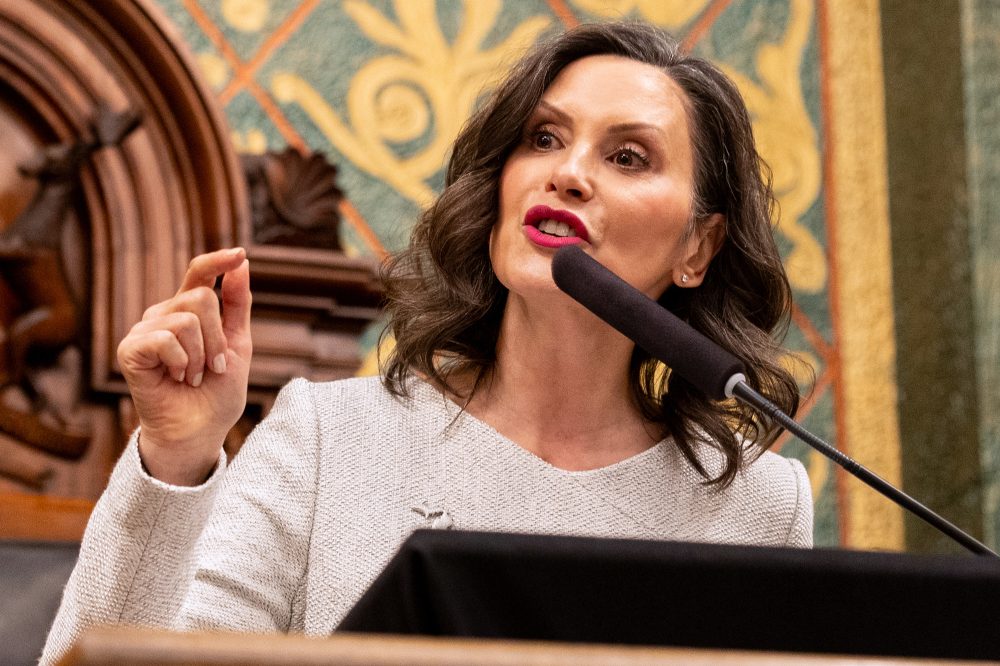
This week’s distribution of opening ceremony invitations followed discussions between Michigan Gov. Gretchen Whitmer, a Democrat, and White House chief of staff Susie Wiles.
Bobby Leddy, a spokesperson for Whitmer, stated: “This project is a powerful example of bipartisan and international cooperation, and the governor looks forward to attending the ribbon-cutting ceremony when it happens.”
A recent national survey shows limited public support for President Donald Trump’s proposal to stage mixed martial arts competition at the White House, with most Americans expressing disapproval of the controversial plan.
According to a Reuters/Ipsos poll, merely 16% of respondents believe it would be suitable for Trump to organize the Ultimate Fighting Championship event, which is set to coincide with his 80th birthday celebration. Nearly half of those surveyed, 46%, deemed the idea unsuitable, while the remainder provided no response.
Republican support proved surprisingly weak, with only 31% backing the proposal despite Trump maintaining approximately 80% approval among party members for his presidential performance overall, the six-day survey that ended Monday revealed.
The mixed martial arts event represents part of Trump’s broader series of public festivities commemorating the 250th anniversary of America’s independence declaration from Britain on July 4, 1776. These planned celebrations have generated debate, with multiple musical acts withdrawing from the opening ceremony due to concerns about Trump’s involvement.
On Tuesday, Trump’s legal team requested a federal judge dismiss attempts to block the UFC competition after area residents challenged the event, claiming sporting activities violate South Lawn regulations and the massive metal structure being built for the matches lacks proper permits.
The competition will feature athletes wearing minimally padded gloves who will strike opponents using hands, feet, knees and elbows within a 92-foot-tall octagon-shaped enclosure.
Survey data showed 18% of respondents identified as mixed martial arts enthusiasts, trailing behind basketball fans at 31% and slightly ahead of U.S. soccer followers at 16%.
The nationwide online Reuters/Ipsos survey included 4,531 American adults and carried a 2 percentage point margin of error.
Trump’s relationship with UFC extends to the early 2000s, when he permitted events at his now-defunct Taj Mahal casino in Atlantic City, New Jersey. UFC Chief Executive Dana White maintains a close relationship with Trump.
MIAMI (AP) — During a late March evening, an officer with Florida’s Fish and Wildlife department approached a Guatemalan husband and wife as they walked their pet through a park in the wealthy Gulf Coast town of Bonita Springs. Without leaving his vehicle, the officer requested the man’s identification documents and directed the pair to walk toward the park’s entrance, the woman recalled.
Upon reaching the parking area, the officer placed the husband under arrest using what his wife described as fabricated charges. The woman agreed to speak with The Associated Press anonymously to protect herself and her 48-year-old spouse from potential detention and to safeguard their ongoing asylum proceedings.
“The officer claimed he was writing a citation because our dog had attacked him, which was impossible since he never stepped out of his vehicle,” the woman explained. “He began making phone calls, placed my husband under arrest, and we waited for 40 minutes” until federal Immigration and Customs Enforcement agents arrived to transport her husband.
While Trump’s immigration enforcement efforts have faced strong opposition in Democratic-controlled sanctuary jurisdictions—where law enforcement is prohibited from cooperating, political leaders have resisted, and community members have attempted to shield immigrant residents through warning signals, video documentation, and confronting masked federal operatives seen by many as occupying forces—the situation differs significantly in Republican-controlled Florida.
In the Sunshine State, 347 state and municipal agencies have agreed to participate in the enforcement campaign, resulting in a massive increase in immigration detentions. Participating organizations include police forces and sheriff’s offices, the Florida National Guard and Highway Patrol, along with seemingly unexpected participants like the state Fish and Wildlife Conservation Commission and Florida Lottery.
The dramatic increase in Florida’s immigration detentions during Trump’s current presidency has remained largely hidden from public view, as many begin as routine police encounters like traffic violations, the public appears more accepting of the program, and cooperating state and local departments are consistently denying requests for detention records and body camera footage following instructions from the Department of Homeland Security.
Data shows that approximately 39,000 immigrants were detained in Florida during the 416-day span from Jan. 20, 2025—when President Donald Trump began his second presidency—through March 11, 2026, the most recent date available in information provided to the University of California, Berkeley’s Deportation Data Project and examined by the AP. The previous 416 days under the Biden administration saw 11,088 detentions. Florida averaged 93 daily detentions during the Trump period, ranking second only to Texas’s 239, which borders Mexico along the nation’s longest international boundary.
Republican Gov. Ron DeSantis has promoted Florida’s collaboration with ICE through what are known as 287(g) agreements, which grant immigration enforcement authority to state and local law enforcement departments, enabling them to question immigrants in their custody and hold them for potential deportation. Experts indicate these officers face pressure to produce results.
“Numerous officers have received deputization and immigration authority, and they are actively seeking targets,” explained immigration lawyer Vilerka Bilbao, who represents no fewer than 23 clients detained by local police in the Jacksonville region. “They are detaining anyone they can—they must demonstrate results to DeSantis and federal authorities.”
Officers conduct vehicle stops using a “pretext reason”—like a damaged taillight or excessively dark window tinting—”and subsequently you find yourself in ICE detention,” Bilbao explained.
On Feb. 15, Lee County sheriff’s officers detained a 44-year-old Guatemalan man along with his 21-year-old son near Fort Myers. The deputies confronted the pair in a retail parking lot, claiming their license plate had expired and demanding they exit their vehicle despite the tags remaining valid until March 25, according to the older man’s spouse and the younger man’s mother.
The 40-year-old Guatemalan asylum-seeker, who requested anonymity for her family due to safety concerns for herself and her three remaining children in Florida, reported that her husband and adult son were detained and sent back to Guatemala one week later, abandoning her, her two minor sons, and her daughter, who holds American citizenship.
She explained that both her husband and adult son had active immigration court proceedings but were detained regardless. Her husband had appeared at three immigration hearings but missed one scheduled in Miami, approximately 120 miles (193 kilometers) south of Fort Myers, because he lacked transportation funds. Her son was pursuing asylum, possessed a valid driver’s license, and held a work authorization.
DHS contests that the man and his son were legally present in the U.S., stating they entered the border unlawfully in 2017 and received a final removal order in 2019.
Regarding the dog-walking incident, DHS stated the man was arrested due to having two final removal orders.
In both situations, the Florida departments that conducted the initial stops—the Fish and Wildlife Commission and the Lee County Sheriff’s Office—declined to provide arrest documentation and body camera recordings to the AP, stating that ICE requires them to direct all inquiries regarding immigration arrests to federal authorities.
ICE and DHS, its oversight agency, refused to provide the arrest documentation and body camera footage, with DHS stating: “We are not going to disclose law enforcement sensitive intelligence.”
An ICE directive distributed to the 287(g) partners in Florida specifies that “information obtained or developed” through the agreements remains “under the control of ICE” and cannot be disclosed without federal authorization.
The directive seems to conflict with Florida’s established Sunshine Law, enacted in 1967, which assumes records are publicly accessible unless specifically exempted. However, the conservative state Legislature has created additional exceptions in recent years.
While Florida leads in partnering with the enforcement campaign, establishing the “Alligator Alcatraz” and “Deportation Depot” immigration detention facilities within the past year, participation in the 287(g) program has exploded, expanding from 135 agreements across 20 states before Trump’s second term to over 1,700 across 41 states and territories.
DHS has announced financial incentives for state and local law enforcement departments, including salary reimbursement. These benefits include up to $7,500 for equipment per participating officer in the agreements, and up to $100,000 for agencies to acquire new vehicles.
A defendant facing charges in the political killings of Minnesota’s top Democratic House leader and her spouse is scheduled to appear in federal court Thursday to modify his not-guilty plea, following prosecutors’ announcement that they will not pursue capital punishment.
The Minneapolis U.S. attorney’s office informed the court Wednesday that the Justice Department will not seek the death penalty against Vance Boelter under the terms of a proposed plea deal. Boelter’s legal team has not yet responded to requests for comment, and the court documents did not reveal specifics about the agreement’s conditions.
Former Minnesota House Speaker Melissa Hortman and her husband, Mark Hortman, along with state Sen. John Hoffman and his wife, Yvette Hoffman, were attacked by a gunman who arrived at their residences in the early morning hours of June 14, 2025. The assailant was dressed as a police officer and used a counterfeit patrol vehicle. The Hortmans’ golden retriever sustained such severe injuries that the animal had to be put down.
Boelter, age 58, was apprehended near his residence in rural Green Isle the following evening after what authorities described as Minnesota’s most extensive manhunt for a criminal suspect. He is facing both federal and state charges including murder, attempted murder, and additional offenses. His state prosecution has been suspended while federal charges are resolved.
Minnesota eliminated the death penalty in 1911 and has no history of federal capital cases. Daniel Borgertpoepping, a spokesperson for the Hennepin County Attorney’s Office, indicated the federal plea arrangement would not impact Boelter’s state charges.
Although the Trump administration has advocated for expanded use of capital punishment, there were uncertainties about whether Boelter’s case would meet federal death penalty criteria.
Authorities have characterized the shootings as politically motivated. When announcing the federal charges in July, they disclosed a lengthy handwritten note they claim Boelter sent to FBI Director Kash Patel admitting to the attacks. The letter, however, did not clearly explain his reasons for targeting the Hortmans or Hoffmans.
In communications with news outlets, Boelter mentioned a vague and mysterious “investigation” he claimed to be conducting, sometimes suggesting it related to the COVID-19 vaccine.
Acquaintances characterized Boelter as an evangelical Christian who occasionally served as a preacher and missionary, held politically conservative beliefs, and had been experiencing employment difficulties.
John Hoffman stated in a lawsuit filed against Boelter in April that his left arm and hand would likely never fully heal, and that he also sustained permanent damage to his digestive and urinary systems.
Yvette Hoffman was left with lasting physical impairment, according to the lawsuit, while their adult daughter, Hope Hoffman, who witnessed the attack and contacted 911 but was not shot, experienced severe psychological trauma.
A New Mexico district court judge was set to hear arguments Thursday in a legal challenge targeting the state’s pioneering universal childcare initiative, which aims to provide free daycare services to all working families.
Former Republican gubernatorial candidate Duke Rodriguez and additional plaintiffs filed the lawsuit questioning the authority used by Democratic Gov. Michelle Lujan Grisham’s administration to remove income limits and co-payment requirements for childcare assistance without first securing legislative approval or funding authorization.
“This is executive overreach. The program was launched unlawfully,” Rodriguez stated. Rodriguez was unsuccessful in securing his party’s nomination during New Mexico’s recent primary election.
State childcare officials reject these claims, contending in legal documents that legislators have subsequently “expressly authorized” and provided funding for the program expansion, making the legal challenge irrelevant. In February, Lujan Grisham approved legislation that formally established the program in state law, contingent on maintaining adequate state finances.
District Judge Elaine Lujan may deliver a decision Thursday regarding whether the legal challenge can move forward. Any temporary suspension of the program would force thousands of New Mexican families to resume paying for daycare services and create operational difficulties for businesses.
Ilene Harding, who operates seven daycare facilities in the Albuquerque region, reported that the program expansion has increased enrollment numbers and simplified the billing process.
“We’ve always been financially solvent, but it’s given us stability,” Harding commented.
This legal battle emerges as New Mexico works to establish itself as the first state in the nation to provide daycare coverage for all working families without income restrictions. The implications reach beyond state borders as officials from New York to California seek effective approaches to lower family costs and increase public childcare investment.
New Mexico’s initiative, funded primarily through state oil and gas production revenues, ranked among the country’s most generous programs even before the November expansion, eliminating fees for families earning up to 400% of the federal poverty threshold, approximately $132,000 annually for a four-person household.
State legislative analysts have already questioned the long-term viability of New Mexico’s expanded initiative, noting earlier this year that the state Early Childhood Education and Care Department began exceeding spending projections just weeks after the November implementation.
The state department confirmed at that time that participation levels exceeded projections, resulting in increased expenses, but challenged claims that it had surpassed its allocated budget.
WASHINGTON — A critical intelligence-gathering program faces potential shutdown as President Donald Trump continues backing his controversial temporary choice to lead the nation’s spy agencies despite widespread opposition from both parties in Congress.
Trump remains committed to Bill Pulte, currently a federal housing finance regulator, as his interim selection for director of national intelligence, despite Pulte’s limited background in intelligence work. Democratic leaders have declared they will block renewal of Section 702 of the Foreign Intelligence Surveillance Act, commonly called FISA, until Trump removes Pulte and selects a permanent nominee.
Congressional leaders plan to attempt passage of a temporary FISA extension Thursday morning in the House, though success appears doubtful. Senate leadership may also pursue similar action to avoid what would be an historic interruption of the surveillance authority.
This standoff threatens to restrict American intelligence collection capabilities overseas just as World Cup matches commence in various U.S. cities and before upcoming celebrations marking the country’s 250th birthday. The current authorization ends Friday at midnight.
“We can’t let them extort us,” Trump said of Democrats.
Trump has maintained his support for Pulte as interim leader, ignoring legislative pressure for a more experienced candidate. He requested Congress approve a temporary law extension to “provide time for the selection and confirmation” of a permanent director. He indicated his intention for Pulte to begin reducing the size of intelligence organizations.
Both political sides have assigned responsibility for the possible disruption of what many consider a vital, though long-contested, surveillance capability for national security.
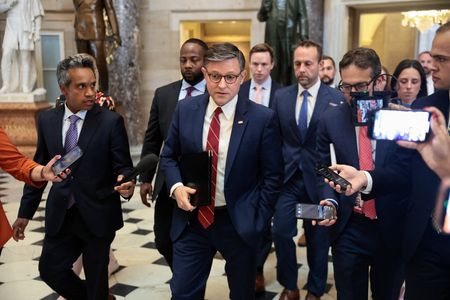
“We’re going to ask every member here to do the right thing,” said House Speaker Mike Johnson, R-La. “We cannot allow that to go dark.”
House Democratic leader Hakeem Jeffries stated that if Trump desires consideration of a temporary extension, he must withdraw the Pulte nomination. Pulte represents a “disgraceful individual” and a “partisan political hack” who lacks proper qualifications for the role, Jeffries declared.
Republican congressional members have pressured Trump throughout the week to swiftly nominate a permanent successor. However, he maintains he requires additional time for the decision.
Senate Majority Leader John Thune, R-S.D., indicated Republican leadership has “made our views known” to the White House.
Trump has revealed he is conducting interviews with five potential candidates for the permanent agency leadership position, following the departure of Tulsi Gabbard.
Johnson explained the president has clearly communicated that Pulte will fulfill a “very short term — a sort of renovation role” to help the Office of the Director of National Intelligence undergo “renovation and downsizing.”
However, Democratic members of the House Intelligence Committee, headed by Rep. Jim Himes of Connecticut, wrote to the president describing Pulte as a “uniquely poor choice” even for temporary service.
Lawmakers from both parties who question Pulte have highlighted his absence of intelligence background and his tenure at the Federal Housing Finance Agency. In that role, he has been connected to criminal referrals regarding alleged mortgage fraud by public officials Trump aimed to target, including New York Attorney General Letitia James, a Democrat; Sen. Adam Schiff, D-Calif.; and Lisa Cook, a Federal Reserve board member.
“He has distinguished himself only as someone who will do or say anything to stay in your good graces,” Himes and fellow lawmakers stated, “qualities that are precisely the opposite of what our nation needs.”
Section 702 of FISA permits organizations like the CIA, National Security Agency and FBI to gather communications from foreign subjects abroad without obtaining warrants.
Although legislators from both parties citing privacy concerns have historically sought to restrict this power, broad bipartisan agreement existed for renewal, particularly after Republicans and Democrats recently negotiated a compromise measure.
Virginia Sen. Mark Warner, the leading Democrat on the Senate Intelligence Committee, has collaborated with Republicans on the compromise legislation for renewing the authority. Yet he described Pulte’s selection to succeed Gabbard as “a live hand grenade” disrupting the proceedings.
Warner stated his sole condition for supporting a temporary surveillance law extension would be having the principal deputy director of national intelligence, Aaron Lukas, serve as acting leader throughout that extension period.
Sen. Tom Cotton, the chairman of the Senate Intelligence Committee, and Sen. Chuck Grassley, chairman of the Senate Judiciary Committee, have cautioned the administration that the surveillance capability will likely expire.
The administration should prepare “for a potential significant gap in foreign intelligence collection,” they stated in correspondence.
Following bipartisan resistance to Pulte’s temporary selection, Trump announced last week he would not permanently nominate him for the position. Yet Democrats, along with some Republicans, demand immediate withdrawal of his appointment and Trump’s nomination of a replacement confirmable by the Senate.
On Tuesday, however, Trump revealed that Pulte would not only assume acting director duties — he would also begin earlier than anticipated, on June 19.
Among several possible successors could be Pete Hoekstra, Trump’s ambassador to Canada and former chairman of the House Intelligence Committee. The White House has contacted Hoekstra regarding the position and discussions continue, according to someone familiar with the outreach who requested anonymity to discuss the private conversations.
A recent Democratic primary contest in California’s Central Valley represented more than just another battle between the party’s progressive faction and moderate establishment forces.
The race was ultimately won by populist candidate Randy Villegas, but what makes this outcome significant is what happens next.
Rather than competing for a safely Democratic seat, Villegas will now face Republican Rep. David Valadao in November, representing one of the Democratic Party’s best opportunities to regain control of the U.S. House and counter President Donald Trump’s agenda.
The upcoming November election will put to the test a theory embraced by the political left: that voters will rally behind progressive, anti-establishment candidates even in areas that have historically leaned Republican.
“A populist message isn’t just for blue districts or certain parts of the country,” said Ravi Mangla, a spokesperson for the Working Families Party, one of the progressive groups that backed Villegas. “It can win anywhere people feel like politics is not working for them.”
“More than ever, voters across the political spectrum want candidates who are willing to stand up to power,” Mangla said.
The National Republican Congressional Committee has written off Villegas’ prospects, despite recent redistricting by state Democratic leaders that was designed to make the seat more competitive this cycle.
“Democrats know Villegas can’t beat Congressman David Valadao, as he embraces the same failed policies that have made California more expensive, less safe, and harder for working families in the Central Valley,” said spokesperson Christian Martinez.
Villegas’ win reflects a broader pattern this election cycle where significant portions of the Democratic base are turning away from candidates that party leadership views as having the best chances of winning Congressional seats.
In Maine this week, Graham Platner secured a decisive victory in the Democratic Senate primary after Senate Minority Leader Chuck Schumer’s preferred choice, the governor, withdrew from the race due to weak support just weeks before the election.
Platner, a combat veteran and oyster farmer who has never served in elected office, has faced scrutiny over past relationships with women, controversial social media posts, and a now-covered tattoo that has been identified as a Nazi symbol.
Michigan presents another battleground where Rep. Haley Stevens finds herself in a three-candidate fight for the Democratic Senate nomination against state Sen. Mallory McMorrow and progressive favorite Abdul El-Sayed. With the primary scheduled for Aug. 4, El-Sayed recently gained momentum by securing a major endorsement from the United Auto Workers union, a significant political force in the state that serves as the heart of America’s automotive industry.
Minnesota’s U.S. Senate race features progressive Lt. Gov. Peggy Flanagan locked in intense competition with U.S. Rep. Angie Craig, who has garnered backing from labor organizations, LGBTQ advocacy groups, and centrist Democrats before the Aug. 11 primary.
Colorado will provide another crucial test on June 30, where progressive Manny Rutinel will compete against establishment-supported Shannon Bird in the Democratic primary to challenge Republican Rep. Gabe Evans. Similar to Valadao, Evans represents a priority target for Democrats, and like the California contest, the Colorado race centers on debates over electability in the general election.
In California’s primary system, Valadao placed first while Villegas came in second, with both advancing to the general election as the top two vote-getters.
About a month before primary voting commenced, the Democratic Congressional Campaign Committee made an unusual public endorsement of Jasmeet Bains, a physician and state Assembly member who had secured endorsements from numerous elected officials, labor unions, and healthcare organizations.
“Dr. Jasmeet Bains has fought on the frontlines of health crises and built a track record of delivering for the Central Valley,” DCCC Chair Suzan DelBene said in a statement at the time. While she refrained from criticizing Villegas directly, the public backing of his opponent sent a clear message to Democratic donors and activists that party leadership considered Bains the stronger contender. It’s rare for Congressional leadership and the party infrastructure to openly intervene in competitive primaries for open seats.
The choice to support Bains angered many progressive activists, who viewed it as yet another instance of Washington establishment figures being disconnected from both the Democratic grassroots and frustrated voters who contributed to Trump’s electoral successes.
“I think the moderates are wrong. People don’t want status quo, pro-corporate candidates,” said Joseph Geevarghese, executive director of Our Revolution, a progressive organization that emerged from Vermont Sen. Bernie Sanders’ 2016 presidential campaign. “They want people who are going to shake things up.”
Following Villegas’ victory, Washington Democrats are now expressing confidence in his candidacy and his ability to defeat Valadao. They highlight the grassroots enthusiasm that carried him through the primary and note that Democratic candidates collectively received 59% of primary votes compared to Valadao’s 41%, though general election turnout is expected to be much higher.
Any friction between Villegas and party officials appears to have been resolved by Wednesday, with both sides presenting a unified message. California Congressional members, including some who had previously supported Bains, released enthusiastic endorsements, while Villegas responded graciously.
“We’re all in to elect Randy and flip this seat,” said Anna Elsasser, a spokesperson for the DCCC, the Democratic Party’s House campaign arm. The district represents “a must-win seat for the House majority, and we are confident in winning with Randy as the Democratic nominee,” she added.
An elaborate UFC event planned for this weekend on the White House South Lawn has demanded extensive coordination from more than seven federal agencies, hundreds of daily workers, and a minimum of $60 million in expenses, court documents reveal.
The mixed martial arts spectacle forms part of America’s 250th anniversary celebration, with seven fights scheduled for Sunday as the centerpiece attraction.
However, the event could face cancellation if a federal judge grants a request from two Virginia residents who have sued the National Park Service, the agency responsible for overseeing the South Lawn.
In a Tuesday court filing responding to the lawsuit, the agency outlined the massive scope of preparations for the event.
“Well over $60 million and tens of thousands of hours of labor have been expended,” the filing stated, noting that the UFC and its associated organizations provided the funding.
The centerpiece of the constructed arena features the traditional eight-sided cage where fighters will compete, sometimes resulting in bloodied contestants.
Organizers expect 4,000 spectators in the arena itself, while an additional 120,000 visitors who secured tickets through an online lottery system will view the action from the nearby Ellipse.
Construction activities commenced on May 20, with the Secret Service collaborating with the UFC to inspect between 20 and 30 equipment trucks and screen “700 and 900” personnel arriving daily for setup operations.
While the filing doesn’t detail specific government expenditures, it notes that seven agencies, including Homeland Security and the Federal Aviation Administration, have “allocated significant resources and manpower.”
Weekend festivities begin Saturday with an official weigh-in ceremony at the Ellipse, followed by a performance from country music act Zac Brown Band.
Throughout the weekend, a UFC Freedom 250 Fan Fest will feature “interactive experiences,” live performances, celebrity appearances, “exclusive on-stage moments,” meet and greets, live music and athlete interviews.
The seven competitive matches are set for Sunday evening. Following the event’s conclusion, the president plans to depart for France to attend the G7 summit.
Teardown operations will commence the following day, with complete removal expected by June 23.
Fourteen fighters will participate, following intense preparation regimens that begin months ahead of competition, culminating in severe weight reduction and dietary modifications during the final week, including fasting, extended sauna sessions and hot Epsom salt baths.
Competitors may shed up to 20 pounds before official weigh-ins, a process intended to ensure fair competition between athletes of similar weight classes.
The Public Integrity Project filed the lawsuit Saturday representing the two Virginia residents, contending that the president’s event approval violates National Park Service rules that prohibit sporting competitions on federal parkland.
Attorney Brendan Ballou described the event as a “corrupt use of our most sacred national monuments for private gain.”
The National Park Service disputed this characterization while detailing the event’s extensive preparations to emphasize potential consequences.
“All these hopes could be dashed at the very last moment,” the agency wrote, “by the whim of two people who believe they have superior taste and want to spoil the event for everyone else.”
Florida’s highest court has refused to halt a controversial congressional map drawn by Republicans, clearing the way for its use in this November’s midterm elections.
The state Supreme Court issued a 6-1 ruling Wednesday that allows the disputed map to remain in effect, potentially giving Republicans a significant advantage in their battle to maintain control of the U.S. House of Representatives.
The contested redistricting plan could result in flipping up to four seats currently held by Democrats. With candidate filing deadlines approaching Friday and primary elections set for August, the court’s decision virtually ensures the map will be used for this fall’s contests.
The justices determined they lacked authority to step in while the case continues working its way through a lower appeals court.
Democratic challengers argue the new boundaries violate state constitutional rules that prohibit drawing district lines to favor one political party over another – a practice called partisan gerrymandering. They had requested the Supreme Court freeze the map and require officials to use the prior version while litigation proceeds.
This redistricting battle represents part of a broader national trend that began last summer when President Donald Trump encouraged Texas Republicans to implement new, more favorable district lines. The move sparked an unusual mid-decade redistricting push, even though such boundary changes typically happen only once every ten years following the census.
Both Republican and Democratic-controlled states have since pursued similar efforts to redraw districts for political gain.
Florida Republicans gave final approval to their new map in late April, coinciding with a U.S. Supreme Court decision that weakened Voting Rights Act protections for districts with substantial racial minority populations. Multiple Republican-led Southern states quickly moved to take advantage of that ruling by removing majority or near-majority Black districts, which tend to support Democratic candidates.
These combined redistricting efforts have given Republicans an overall edge in the national map-drawing battle, although Democrats could still win House control due to President Trump’s low approval numbers.
Genesis Robinson, who leads the advocacy organization Equal Ground that brought the lawsuit, criticized the court’s action. “The Florida Supreme Court’s failure to stop this brazen partisan power grab is not only an assault on democracy, but an abdication of its duty to the people of Florida,” Robinson stated.
Republicans currently control 20 of Florida’s 28 House seats.
Microsoft founder Bill Gates appeared before congressional investigators on Capitol Hill to discuss his connections to Jeffrey Epstein. During his testimony to House lawmakers, Gates stated he had no knowledge of Epstein’s criminal activities.
WASHINGTON — Federal officials are proposing an aggressive construction timeline that would involve nearly round-the-clock work to build President Donald Trump’s massive triumphal arch near the Lincoln Memorial, according to a new National Park Service evaluation.
The proposed structure would stand 250 feet tall and require construction crews to work in two 10-hour shifts daily throughout the year to meet the administration’s three-year completion goal, the preliminary Park Service analysis reveals.
Building the monument would demand tower cranes reaching heights of 320 feet, along with forklifts, concrete pumping systems and other heavy machinery. The finished arch would tower more than double the height of the nearby Lincoln Memorial, according to the 24-page assessment released last week.
The evaluation was made public as part of an expedited historic preservation review that commenced Friday. The National Park Service manages the federal land where officials want to construct the arch.
Last week, the National Capital Planning Commission decided to request additional details from the Interior Department, which supervises the park service. This decision effectively allows the project to move forward while officials examine potential impacts on aviation and other construction-related concerns including area traffic patterns.
The June 4 decision followed almost three hours of public testimony from approximately 20 citizens, including representatives from historical and architectural groups. Most speakers voiced opposition to the arch, which represents one of multiple projects the Republican president is advancing to establish his legacy in Washington.
Site surveys and testing at the proposed location started last month, with other approvals currently in progress. The U.S. Commission of Fine Arts, which reviews designs but has no authority over actual construction or project funding, has given its approval to the arch’s design.
The capital planning commission wants more justification for the monument’s proposed height, plus additional information about illumination plans, stormwater management and visitor traffic and parking arrangements.
The selected location sits across the Potomac River from the memorial and lies within a flight corridor near Ronald Reagan Washington National Airport. The Federal Aviation Administration announced Wednesday it is examining whether the structure’s planned height could threaten aircraft operations in the vicinity. Last year, an American Airlines aircraft and an Army Black Hawk helicopter crashed in the busy airspace near the airport, resulting in 67 deaths.
The FAA analysis “found no adverse impacts to operations” at Reagan Airport from the proposed monument, but concluded that red obstruction lights would be required at the structure’s peak — a standard safety measure, according to spokesman Donnell Evans. The FAA plans to conduct a comprehensive aeronautical study working with the National Park Service, he added.
In its documentation, the park service stated that federally mandated aviation safety lighting would be built into the arch design “using the least intrusive technology available, ensuring compliance with aircraft visibility requirements while limiting unnecessary light emission.”
Will Scharf, who previously worked as Trump’s White House staff secretary, leads the commission and has expressed his view that federal height restrictions for new Washington construction should not cover the arch. Current law caps most building construction in Washington at 130 feet maximum.
Opponents contend the arch would overwhelm the skyline and interfere with the intentionally planned sightlines connecting the Lincoln Memorial and Arlington National Cemetery. The structure would exceed twice the height of the Lincoln Memorial at 99 feet and reach nearly half the elevation of the Washington Monument at approximately 555 feet.
Trump has advocated for the 250-foot monument to commemorate America’s 250th anniversary, stating the project could be funded through private contributions remaining from the new White House ballroom construction. The White House East Wing was torn down to accommodate the large ballroom.
Officials are still developing cost projections for the arch, though a combination of public and private funding is anticipated. A coalition of veterans and a historian have filed a federal lawsuit against the Trump administration seeking to halt the project due to concerns about visual disruptions.
Democratic Sen. Richard Blumenthal of Connecticut has criticized the administration for what he termed its “persistent lack of transparency” in promoting Trump’s Washington-area building initiatives. Along with the planned ballroom, Trump is also updating the Lincoln Memorial’s Reflecting Pool and reconstructing a public golf course along the Potomac River. None of these projects have undergone standard legal reviews or Congressional oversight.
“Your disregard for legal process and public interest has been apparent in projects ranging from the construction of a White House Ballroom and triumphal arch to the resealing of the Lincoln Memorial Reflecting Pool,” Blumenthal stated in a Tuesday letter to Interior Secretary Doug Burgum and acting park service director Jessica Bowron.
WASHINGTON — A pair of prominent Republican House members are scheduled to hold discussions with Taiwan’s opposition party leader during her Washington visit this week, as China closely watches the Trump administration’s approach toward the island territory that Beijing claims as its own.
House Foreign Affairs Committee Chairman Brian Mast, R-Fla., and Rep. Young Kim, R-Calif., have arranged meetings with Cheng Li-wun, who heads the Kuomingtang Party and advocates for peaceful reunification between Taiwan and Beijing.
During an interview, Mast explained he had no particular agenda for his session with Cheng, noting that as Foreign Affairs Committee chairman, “I take intelligence from anywhere I can get.”
A representative for Kim, who chairs a subcommittee focused on East Asian policy matters, indicated the congresswoman intends to urge Cheng and her political party to back increased defense expenditures as an “important demonstration of Taiwan’s commitment to self-defense and deterrence.”
Last month, Taiwan’s opposition-dominated legislature approved a $25 billion emergency defense budget designated for significant U.S. weapons acquisitions. Officials in the Trump administration voiced frustration that the final approved sum represents a substantial decrease from Taiwan President Lai Ching-te’s initial $40 billion request.
Kim additionally seeks to address Cheng’s April meeting with Chinese President Xi Jinping and “seek greater clarity on the substance of those discussions,” according to Ellie Gilchrist, the congresswoman’s spokesperson.
Cheng’s Washington trip occurs while President Donald Trump publicly contemplates the possibility of conducting a direct conversation with his Taiwanese counterpart.
The U.S. president has suggested his desire to communicate with Lai while his administration weighs whether to proceed with a $14 billion weapons sale to Taipei that received congressional approval earlier this year but remains suspended.
Trump stated last month upon his return to the U.S. from China that he plans to speak with Lai, which would mark the first direct communication between current U.S. and Taiwanese presidents in multiple decades. China has opposed such contact.
“I’ll always talk to him,” Trump informed reporters aboard Air Force One on Friday when questioned about whether he continues to consider a telephone conversation with Lai.
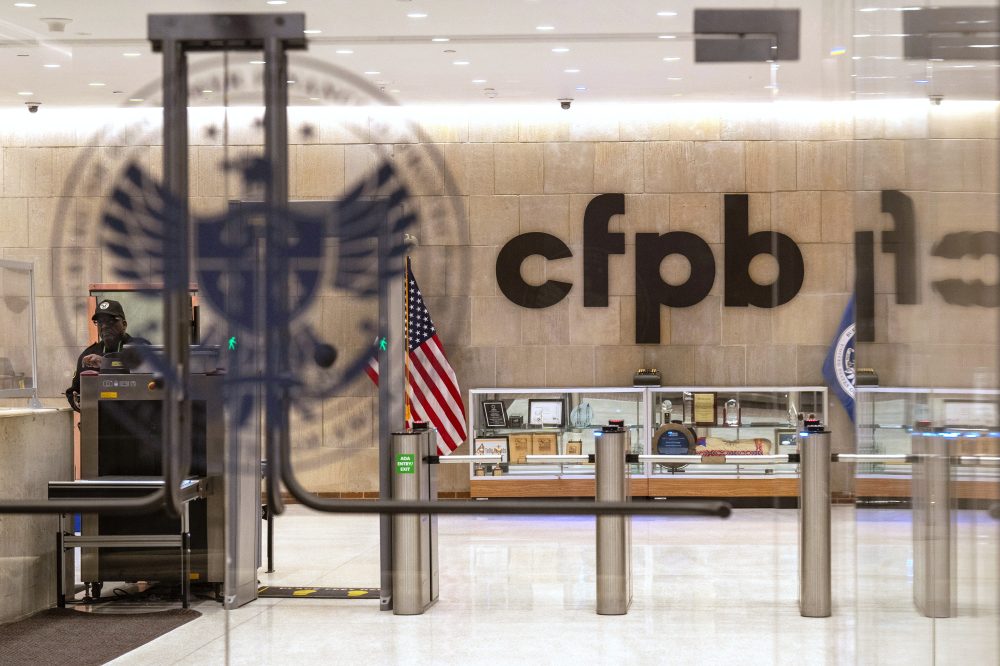
President Donald Trump has selected Brian Johnson to serve as the permanent director of the Consumer Financial Protection Bureau, choosing a former agency insider who previously worked in the administration during Trump’s first presidency.
Johnson previously served as deputy director at the agency when Kathy Kraninger led the CFPB during Trump’s initial term. During that time, Johnson was recognized as an influential aide to Kraninger who wielded considerable authority in determining the bureau’s priorities and focus areas.
Should the Senate approve his nomination, Johnson would take control of an agency that has largely ceased normal operations since Trump returned to the White House and placed budget director Russell Vought in temporary charge. The bureau’s recent efforts have primarily focused on reversing its prior initiatives.
Florida’s highest court has declined to block newly drawn congressional districts created by the Republican party, delivering another win for GOP redistricting efforts across the country as the party works to maintain its narrow control of the House of Representatives.
On Wednesday, the state’s Supreme Court rejected a petition for an emergency order that would have prevented the use of these new electoral boundaries. Legal representatives for citizens who filed the lawsuit contended that these congressional districts breach a state constitutional rule that forbids redistricting for partisan advantage, requesting the court mandate continued use of the prior election’s district lines.
The GOP currently controls 20 out of Florida’s 28 congressional seats. These new electoral boundaries, which became law through Republican Gov. Ron DeSantis following a rapid two-day special legislative session, may boost the party’s opportunity to secure four more seats in the upcoming election.
Those opposing the maps referenced a constitutional amendment passed by voters in 2010 that bars congressional districts designed to benefit or harm any political party or sitting lawmakers.
Florida joins other Republican-controlled states conducting redistricting in the middle of the decade as part of President Donald Trump’s strategy to maintain a narrow House majority in November by redrawing electoral boundaries to benefit the GOP.
The state legislature gave final approval to the new House map on April 29 — coinciding with a U.S. Supreme Court decision that reduced federal Voting Rights Act safeguards for minorities by overturning a predominantly Black congressional district in Louisiana. Following this ruling, multiple Southern states have moved to try eliminating minority districts that typically elect Democrats.
DeSantis had convened lawmakers for a special session prior to the high court’s decision, though he had expected this result. The governor’s office maintained that racial demographics were not considered in creating the map he submitted to the Legislature. The revised map includes changes to a southeastern Florida district that DeSantis’ office claimed was originally designed to help elect a Black representative to meet federal Voting Rights Act requirements.
Beyond prohibiting partisan gerrymandering, Florida’s constitution also forbids districts from being designed to deny or reduce the voting power of racial or language minorities to choose their preferred representatives. The constitution additionally mandates that districts be geographically compact and, when possible, follow existing political and geographic borders.
In correspondence to legislators, DeSantis’ General Counsel David Axelman claimed that the racial redistricting section of Florida’s Fair Districts Amendment conflicts with the U.S. Constitution. Axelman argued that if any part is unconstitutional, then the complete 2010 amendment becomes invalid, including sections preventing partisan gerrymandering.
Legal counsel for state officials presented comparable arguments to the Florida Supreme Court, following a lower court judge’s refusal last month to grant a preliminary order blocking the new map. They also contended that changing back to previous maps would be too disruptive this close to the election.
In documents submitted to the Florida Supreme Court, attorneys for state officials described the new map as “cause for celebration” during America’s 250th anniversary. “Perhaps for the first time in Florida’s history, the State has a truly colorblind map; a map that refuses to assault the dignity of men and women by color-coding them,” their court filing said.
Legal representatives for the voters who filed suit claimed the new districts were designed with political bias in mind. They contended in Supreme Court documents that the new congressional districts represent “among the most extreme partisan gerrymanders enacted in any state over the past half-century.”
According to the new House map, 82% of voters in districts represented by Republicans stay in the same districts as the previous map, stated attorney Chris Shenton, who represented Common Cause and other organizations challenging the map. Only 41% of voters in districts represented by Democrats remain in their current districts, he noted.
WASHINGTON — President Donald Trump launched harsh verbal attacks against Graham Platner on Wednesday, branding the Maine Senate hopeful a “thug” and a “pig” while accusing Democrats of double standards for supporting a candidate facing questions about his past behavior toward women.
The criticism appeared ironic given Trump’s own history of alleged misconduct with women, including recorded comments about grabbing women by the genitals and a New York jury’s finding that he committed sexual abuse.
Trump has also backed numerous Republican candidates despite their personal controversies, yet criticized Democrats for similar support.
“He’s a thug, and they’re trying to make excuses for him,” Trump stated regarding top Democrats. “I mean, he’s worse than any human being that’s ever run for office, probably.”
Platner secured the Democratic nomination Tuesday night amid controversy over several issues, including previous inflammatory social media posts, a covered-up tattoo recognized as a Nazi symbol, and sexually explicit messages sent to women after his marriage. He will challenge five-term Republican Sen. Susan Collins in November.
When asked about Trump’s remarks, Platner’s campaign responded that the candidate was concentrating on Maine’s challenges.
The Democratic Senatorial Campaign Committee responded by targeting Collins, viewed as among the most vulnerable senators seeking reelection this cycle.
“Susan Collins is facing backlash in Maine after voting with Trump 96 percent of the time, being the decisive vote for the justices who overturned Roe v. Wade, and selling out to the special interests that fund her campaigns after three decades in the Senate, and that’s why Trump praised her today in the Oval Office,” spokesperson Josh Marcus-Blank said in a statement.
The White House backed Trump’s statements by highlighting Platner’s social media history.
“Graham Platner proudly referred to himself as a ‘communist,’ called all police ‘bastards,’ and said rural White Americans ‘actually are’ racist and stupid. President Trump is absolutely correct that Platner is both a thug and a pig. Attempting to compare President Trump to Graham Platner is exactly why trust in legacy media outlets like the failing Associated Press is at an all-time low,” White House spokesperson Kush Desai said in a statement.
During White House remarks while signing immigration and deportation funding legislation, Trump told reporters, “Nobody’s ever had a record like that.”
“He’s like a pig,” the president declared, joking that perhaps “pigs would be very upset” to be linked with Platner, prompting laughter from Republican lawmakers present in the Oval Office.
Trump also referenced his past association with convicted sex offender Jeffrey Epstein, attempting to portray Democratic Senate leader Chuck Schumer as hypocritical by saying he “goes crazy over this or that or Epstein, Epstein, Epstein” but should focus on Platner instead.
Trump later asked, “Can you imagine if the Republicans had him?”
Beyond the allegations Trump has confronted over time, Republicans have fielded candidates accused of serious misconduct who still received Trump’s endorsement.
This year, the president endorsed Republican Texas Senate candidate Ken Paxton over incumbent GOP Sen. John Cornyn, despite Paxton facing state and federal corruption probes and a 2023 state impeachment trial where he was cleared but his extramarital affair became public. Paxton has called wrongdoing allegations politically motivated.
Trump also maintained his endorsement of 2017 Alabama Senate candidate Roy Moore, who faced accusations of sexual misconduct with teenage girls from decades past. Trump cited Moore’s denials and said his vote was essential for Republican goals. Moore’s defeat resulted in Alabama’s first Democratic senator in 25 years.
He supported 2024 North Carolina gubernatorial candidate Mark Robinson and refused to withdraw backing after CNN revealed the candidate made lewd and racist remarks on a pornography website — though he attempted to create distance. Robinson, who later admitted to making the posts, lost decisively in the swing state.
He similarly maintained support for Texas Rep. Tony Gonzales this year after the congressman admitted to an affair with a staff member who later died by suicide. Gonzales ended his reelection campaign, and Trump subsequently endorsed another candidate.
Trump also selected officials for his second-term Cabinet and other important positions who faced accusations of sexual misconduct.
This includes Defense Secretary Pete Hegseth, who faced sexual assault allegations and denied them, and Trump’s original attorney general pick, former Rep. Matt Gaetz, who was subject to a Justice Department sex trafficking investigation and a House Ethics Committee probe into sexual misconduct.
Gaetz denied any wrongdoing and removed his name from consideration. The DOJ investigation concluded without federal charges against him.
Federal authorities announced Wednesday they will forgo pursuing capital punishment in a plea arrangement with the suspect charged in the fatal shooting of Minnesota’s leading House Democrat and her spouse, while also injuring another state legislator and his wife.
Vance Boelter, the accused, has a plea modification hearing set for Thursday morning at the federal courthouse in Minneapolis.
The victims include former Minnesota House Speaker Melissa Hortman and her spouse Mark, along with state Sen. John Hoffman and his wife Yvette Hoffman. All four were shot by an individual who approached their residences during the early morning hours of June 14, 2025, while impersonating a law enforcement officer and operating a counterfeit police vehicle.
NEW YORK (AP) — A candidate for Congress received his requested court hearing Wednesday to contest misdemeanor charges filed against him following his arrest last summer during a demonstration with fellow elected officials at a New York City immigration detention facility.
The Democratic candidate took the witness stand in Manhattan federal court, defending himself against allegations that he blocked an elevator while sitting nearby during the demonstration on the 10th floor of a federal building in lower Manhattan housing 40 federal agencies, including the FBI.
The magistrate judge presiding over the bench trial announced he will deliver his decision Thursday morning.
Government attorneys argued Lander violated the law because he positioned himself in front of elevator doors that remained closed throughout the 20 to 25 minutes he sat on the floor in a circle with fellow politicians. If convicted, prosecutors indicated they would not pursue imprisonment.
Lander, who previously served as the city’s comptroller and maintains an alliance with Mayor Zohran Mamdani, testified that no one instructed him to move away from the elevator or informed him he was blocking access before his detention.
“We were chanting: ‘We shall not be moved,’” he said. “The idea is to say: ‘We’re here for our immigrant neighbors and we’re not going to stop showing up and defending their rights.’”
Lander is mounting a challenge against U.S. Rep. Dan Goldman in a liberal district encompassing lower Manhattan and sections of brownstone Brooklyn.
The candidate, who sought the mayor’s office last year, was detained alongside 10 other legislators on Sept. 18 following their attempt to examine detention facilities at 26 Federal Plaza, which also contains an immigration court.
Several weeks later, he declined a plea agreement that would have dismissed the misdemeanor obstruction charges after six months.
Following his detention, Lander faced criticism from then-Department of Homeland Security Assistant Secretary Tricia McLaughlin, who issued a statement characterizing him as “another sanctuary politician pulling a stunt in attempt to get their 15 minutes of fame while endangering DHS personnel and detainees.”
WASHINGTON — A federal court declined Wednesday to grant a government oversight organization’s emergency request to immediately halt the Trump administration’s controversial $1.776 billion compensation program designed to pay individuals who say they were targeted by weaponized federal agencies.
However, the presiding judge concluded the court session by delivering a stern warning to President Donald Trump’s legal team: “Don’t play possum with this court,” U.S. District Judge Richard Leon cautioned a Justice Department lawyer.
Leon delivered his decision from the bench, siding with the administration’s position that the oversight group’s legal challenge has become irrelevant since acting Attorney General Todd Blanche informed lawmakers last month that the government is abandoning its plans for the compensation program. Leon, who received his judicial appointment from Republican President George W. Bush, stated he is accepting Blanche’s assurance at this time.
The judge’s decision to deny the temporary restraining order doesn’t represent the final resolution of the government’s “Anti-Weaponization Fund.” Leon indicated he will review a separate petition from the plaintiffs — Citizens for Responsibility and Ethics in Washington — seeking a preliminary injunction that would halt fund distributions on a longer-term basis.
Another federal judge in Alexandria, Virginia, has already issued a temporary halt to the fund’s activities. However, that directive from U.S. District Judge Leonie Brinkema will lapse Friday unless she chooses to extend it following a hearing scheduled for the same date.
The administration established the compensation program last month to settle Trump’s legal action against the Internal Revenue Service regarding the unauthorized disclosure of his tax documents. The Justice Department has not yet assembled the five-person panel that will establish payout guidelines, meaning no funds have been distributed and no applications have been processed.
The compensation program has sparked intense opposition across party lines. Even numerous supporters of the Republican president oppose providing payments to individuals who participated in the U.S. Capitol riot on Jan. 6, 2021. During his appearance before Congress, Blanche declined to eliminate the possibility that rioters who attacked Capitol police officers could qualify for compensation.
“We are not moving forward with the fund, period,” Blanche stated during the House committee hearing.
“Not moving forward ever?” inquired Rep. Grace Meng, a New York Democrat.
“Correct,” Blanche responded.
Leon questioned Justice Department attorney Andrew Block about why Blanche hasn’t officially withdrawn his May 18 directive creating the fund.
“I don’t know the reason for that,” Block replied.
Block contended that Blanche’s congressional testimony is adequate to render the watchdog organization’s legal arguments moot. He further maintained that the group lacks proper legal standing to pursue their claims.
The plaintiffs’ legal representative Nikhel Sus pointed out that Trump himself provided conflicting statements to Blanche’s testimony. In a June 3 interview, occurring one day following Blanche’s congressional appearance, Trump voiced his backing for proceeding with the fund despite the Virginia judge’s adverse ruling.
“On paper, the fund is still a legally operating entity,” Sus argued. “Nothing has changed.”
A federal judge in Florida overseeing Trump’s case against the IRS has directed Trump’s legal team to address “grievous allegations” from settlement opponents who claim the president dropped his lawsuit to evade judicial review of an unlawful agreement. U.S. District Judge Kathleen Williams has given them until Friday to provide written responses to accusations of collusion and whether the case should be reopened because the court was the “victim of a fraud.”
In Virginia, lawyers from the legal advocacy organization Democracy Forward are pursuing a court directive to stop the fund’s launch and block the Trump administration from making any payments from it. The Virginia case plaintiffs include a terminated prosecutor and a college instructor who was cleared of charges related to assaulting federal officers during a demonstration.
Congressional leaders from both political parties came together with religious figures on Capitol Hill Wednesday, June 10, 2026, for an annual Jerusalem Day commemoration organized by the Congressional Israel Allies Caucus.
The gathering drew lawmakers, Jewish and Christian religious leaders, and advocates supporting American-Israeli relations to honor Jerusalem’s reunification and reinforce backing for the city as Israel’s capital.
Four representatives serve as co-chairs for the Congressional Israel Allies Caucus that organized the ceremony: Rep. Chris Smith (R-NJ), Rep. Brad Sherman (D-CA), Rep. Ronny Jackson (R-TX), and Rep. Brad Schneider (D-IL).
The attendee list included Congressional members, faith community representatives, and US-Israel alliance supporters. Among those scheduled to speak were Senator Ted Cruz, White House Faith Office Head Paula White, Special Envoy to Combat Anti-Semitism Leo Terrell, Pastor Larry Huch, and a senior Israeli official.
Event coordinators emphasized that the ceremony demonstrated cross-party American backing for Jerusalem and US-Israeli ties. The program also spotlighted faith-centered diplomacy and collaboration between Jewish and Christian groups.
Rep. Chris Smith (R-NJ) stated: “On Jerusalem Day, we join Israel in celebrating the 1967 restoration of its ancient capital city to Israeli sovereignty. This was a great day for the Jewish people and for everyone who believes in the right of every nation to exercise its sovereignty within secure borders.”
“As Co-Chair of the Israel Allies Caucus, I am honored to join the Jerusalem Day Reception celebrating Jerusalem as Israel’s unified capital city,” Rep. Brad Schneider (D-IL) commented.
Schneider continued: “For more than 3,000 years, Jerusalem has been the eternal capital of the Jewish people, the holy city to the three Abrahamic faiths and today is unique for its faith and history woven into the very fabric of the city. It is a place where people of diverse backgrounds and religions prosper together. I am proud to celebrate its enduring significance and the unbreakable bond between the people of the United States and Israel.”
Jordanna McMillan, Israel Allies Foundation US Director, stated that acknowledging Jerusalem and moving the US Embassy there demonstrates “our shared Judeo-Christian values, commitment to religious freedom, and a strategic partnership that advances America’s interests in a more stable Middle East.”
According to the Israel Allies Foundation, the organization works with over 1600 legislators across 64 parliamentary caucuses globally to promote faith-based diplomacy and support for Israel.
WASHINGTON — President Donald Trump delivered an unexpected response Wednesday when confronted with rising costs affecting American families, declaring his affection for current economic conditions.
When questioned about fresh data showing consumer prices rose 4.2% in May compared to the previous year, the president adopted an unusually positive stance toward the troubling economic news. Trump avoided his typical approach of labeling affordability concerns as a Democratic “hoax” or asserting he was reducing living costs.
Following the government’s announcement that price increases reached their peak since April 2023, Trump offered praise for the figures.
“You know what I really love?” Trump said. “I love the inflation.”
The comment caught observers off guard, particularly since economic concerns rank among voters’ primary worries heading into November’s midterm elections — an area where Trump has received poor ratings. Democratic officials immediately began circulating his remarks across social platforms within moments of the televised statement.
While Trump’s 2024 campaign promised swift action against inflation, he now attributes elevated prices entirely to the Iran conflict driving up energy expenses. Wednesday’s remarks included claims that relief approaches through covert military activities that allegedly moved 100 million oil barrels through the Strait of Hormuz, a crucial passage handling 20% of global oil transport that has remained largely blocked since the war’s start in late February.
“Trump really said, ‘I love the inflation.’ On camera. For all of America to hear,” Senate Democratic Leader Chuck Schumer quickly posted on X. “His contempt for you knows no bounds.”
House Democratic Leader Hakeem Jeffries said on X that with Trump’s stated love of inflation, “We finally found something that Donald Trump loves as much as he loves himself.”
Rep. Emilia Sykes, D-Ohio, quickly pressed Energy Secretary Chris Wright at a hearing about whether he, too, loved inflation.
“Do you love inflation?” Sykes asked.
“I love ending Iran’s ability to have a nuclear weapon,” Wright answered. He only conceded after being pressed: “No, I would prefer lower inflation.”
When asked about Trump’s specific comments, Wright said, “He’s an entertaining, hyperbolic guy who’s done tremendous leadership.”
Trump attributed the covert transport operations to oil prices dropping under $90 per barrel after exceeding $110 in early April.
“I’m just announcing today for the first time, but we’ve been taking out millions of barrels of oil, millions of barrels every night,” Trump said.
Through social media, the president indicated the operation started last month and had “resulted in more than 100 MILLION Barrels of Oil making its way through the Strait, and into the Open Market. More than 200 Commercial Ships have safely traveled through the Strait.” No immediate verification existed for these numbers, and the U.S. military’s involvement remained unclear.
For perspective, approximately 20 million oil barrels passed through the strait daily before hostilities began, suggesting Trump’s described mission equals roughly five days of typical oil movement.
Addressing the latest inflation data, the White House highlighted certain May price decreases from the prior month: new vehicle costs, prescription medications, and auto insurance rates. However, combining overall inflation with wage changes reveals concerning evidence that consumer purchasing power compared to earnings has weakened.
“President Trump has consistently maintained that oil and gas prices — and thus overall inflation — will plummet once the Iran situation is resolved, and the administration will continue pushing our affordability agenda to enable Americans to keep more of their hard-earned money,” White House spokesman Kush Desai said in an email.
Financial markets remained skeptical of Trump’s assertions about reducing prices through strait oil transport — statements made as the United States conducted airstrikes against Iran while Tehran retaliated against regional targets.
U.S. crude oil futures rose approximately 4% Wednesday afternoon, reaching nearly $92 per barrel.
A group of three Vietnam War veterans has filed a lawsuit challenging President Trump’s proposal to construct an arch in close proximity to Arlington National Cemetery, according to court documents.
The legal action seeks to prevent the construction of what has been described as a “Triumphal Arch” that would be built within walking distance of the cemetery grounds, where approximately 400,000 military personnel, veterans, and their family members have been laid to rest.
Among the plaintiffs is Shaun Byrnes, an 83-year-old Navy veteran who served during the Vietnam conflict. Public Citizen, a legal advocacy organization, is representing Byrnes and the other veterans in their challenge against the Trump administration’s construction plans.
The proposed arch would be situated in Memorial Circle, placing it in immediate proximity to one of the nation’s most sacred military burial grounds.
A newly released investigation has found that Immigration and Customs Enforcement squandered millions of taxpayer dollars while putting detainees in danger at the nation’s largest immigration detention center.
The findings focus on Camp East Montana, located in Texas, which has been the subject of mounting criticism since it began operating last year.
Immigration attorneys and civil rights advocates have been raising red flags about the conditions inside the facility since it opened its doors.
The report highlights significant financial mismanagement and safety concerns at the detention center, which operates as the largest immigration facility of its kind in the United States.
WASHINGTON — Lawmakers from both parties on Capitol Hill have urged President Donald Trump to quickly appoint a permanent intelligence director to help Congress extend crucial surveillance powers before they expire. However, Trump has refused to change course.
Instead, Trump has reinforced his support for his interim choice to oversee intelligence operations, federal housing finance regulator Bill Pulte, despite his limited background in the field. Democrats are blocking votes on renewing Section 702 of the Foreign Intelligence Surveillance Act, commonly called FISA, which expires June 12. Trump requested Wednesday a brief extension of the legislation to “provide time for the selection and confirmation of a permanent Head of the Agency.”
This standoff may soon restrict the U.S. government’s foreign intelligence gathering capabilities as World Cup matches start across the nation and before festivities marking America’s 250th anniversary.
Senate Majority Leader John Thune, R-S.D., stated Wednesday that GOP leadership has “made our views known” to the White House regarding the simplest path to pass the legislation, and “we’re just doing what we can here to ensure that the White House understands what will be necessary in order to make that happen.”
Trump announced Friday he is interviewing five potential candidates for the permanent agency leadership role, all with national security credentials.
“It’s an important position and one that I think will be filled by a highly qualified person,” stated House Speaker Mike Johnson, who met with Trump recently about the FISA deadlock.
However, securing FISA votes requires swift action — and Trump’s selection must appeal to lawmakers from both parties.
Among potential successors is Pete Hoekstra, Trump’s ambassador to Canada and former House Intelligence Committee chairman. The White House has contacted Hoekstra regarding the position and discussions continue, according to someone familiar with the outreach who requested anonymity to discuss private talks.
FISA’s Section 702 permits agencies like the CIA, National Security Agency and FBI to gather communications from foreign subjects abroad without warrants.
Although lawmakers from both parties citing privacy concerns have long sought to restrict this authority, broad bipartisan backing exists for its renewal, particularly after recent compromise legislation. Yet Democrats now withhold support due to Pulte concerns.
Mark Warner of Virginia, the leading Democrat on the Senate Intelligence Committee, helped craft the compromise bill with Republicans. But he labeled Pulte’s selection to succeed outgoing DNI Tulsi Gabbard “a live hand grenade” for passage efforts. GOP leaders attempted to begin the process last week, but seven Republicans joined nearly all Democrats in preventing a long-term extension.
Warner declared Wednesday his only condition for backing a temporary surveillance law extension is having principal deputy director of national intelligence Aaron Lukas serve as acting leader throughout that period.
Sen. Tom Cotton, the Senate Intelligence Committee chairman, and Sen. Chuck Grassley, Senate Judiciary Committee chairman, have cautioned the administration that the surveillance tool will likely expire.
The administration should prepare “for a potential significant gap in foreign intelligence collection,” they stated in correspondence.
Following bipartisan resistance to Pulte’s interim appointment, Trump said last week he would not permanently nominate him. But Democrats and some Republicans want his appointment withdrawn immediately and Trump to nominate a Senate-confirmable replacement.
Tuesday, however, Trump declared Pulte would not only become acting director — he’d begin sooner than planned, on June 19. Trump maintained support for Pulte Wednesday, posting he needed additional time to locate a permanent successor and requesting a brief extension.
“FISA 702 is very important to our Military, and keeping the American People safe, especially during the World Cup and America250 Celebrations,” Trump wrote.
Trump said Pulte would reduce the agency’s size and blamed Democrats for delaying surveillance authority renewal.
Senators from both parties questioning Pulte cite his intelligence experience deficit and Federal Housing Finance Agency record. In that role, he’s been connected to criminal referrals regarding mortgage fraud allegations against public officials Trump wanted to target, including New York Attorney General Letitia James, a Democrat; Sen. Adam Schiff, D-Calif.; and Lisa Cook, a Federal Reserve board member.
Whether sufficient votes exist for temporary surveillance powers extension remained uncertain as Trump disregarded bipartisan pressure to withdraw Pulte’s appointment.
After a White House ceremony Wednesday, Johnson told reporters the president is “working very hard” to select a permanent ODNI leader — possibly before Pulte assumes the role.
Johnson described it as a “good faith gesture” from Trump that Democrats should accept for a short-term FISA extension agreement.
Trump made clear, Johnson said, that Pulte will serve a “very short term – a sort of renovation role” to help the Office of the Director of National Intelligence be “renovated and downsized.”
WASHINGTON, June 10 – Administration officials are preparing to host leaders from major defense companies at the White House as early as next week to address the need for faster weapons manufacturing, according to sources familiar with the plans.
This upcoming gathering represents the second time the administration has brought together top executives from the nation’s premier defense contractors to address production acceleration. The previous March session featured chief executives and senior leadership from BAE Systems, Lockheed Martin, Northrop Grumman, RTX Corporation, Boeing, Honeywell Aerospace and L3Harris Technologies, with Defense Secretary Pete Hegseth participating.
Ongoing military conflicts with Iran along with weapons shipments to Ukraine over recent years have significantly reduced America’s weapons inventory.
The planned session occurs while Pentagon officials continue urging contractors to substantially increase their production speed. These efforts center around manufacturing agreements established earlier this year.
The completed arrangements include a multi-year contract to increase PAC-3 production threefold and expand THAAD interceptor manufacturing fourfold through Lockheed, plus additional multi-year contracts with RTX to enhance Tomahawk and AMRAAM air-to-air missile production. These arrangements, labeled as “framework agreements,” remain unconverted to actual contracts.
The White House, Lockheed Martin, RTX, Boeing and L3Harris have not yet provided responses to comment requests.
WASHINGTON – The White House has formally submitted Brian Johnson’s nomination to lead the Consumer Financial Protection Bureau to the U.S. Senate for confirmation, according to an official announcement made Wednesday.
Johnson’s nomination for the director position was transmitted to senators as part of the formal nomination process, based on information released in a public notice.
Canadian Prime Minister Mark Carney announced Wednesday that the debut of a new international bridge spanning the Detroit River could face delays, despite U.S. President Donald Trump’s previous threats to prevent its opening.
“Look, everyone’s working hard to make sure the bridge is open as soon as possible. There is no big drama. If it takes a little longer it will take a little bit longer, but this will benefit Canadians, Americans, business, tourists, residents for decades and decades to come,” Carney stated while entering Parliament.
The Gordie Howe International Bridge, which is jointly owned by Canada and the U.S. state of Michigan, will hold its ribbon-cutting ceremony this Friday, though vehicle traffic may not begin flowing immediately afterward.
Earlier this week, Carney had indicated that the second crossing linking Windsor and Detroit would “be open at the end of the week.”
The upcoming Friday ceremony follows recent discussions between Michigan Gov. Gretchen Whitmer and White House Chief of Staff Susie Wiles, according to an anonymous source familiar with the private conversations.
In February, Trump demanded that Canada transfer at least half of the bridge’s ownership to the U.S. federal government and meet other undisclosed conditions as part of his broader campaign addressing cross-border trade concerns.
The new crossing between Windsor, Ontario, and Detroit represents a crucial economic link between the two nations. The structure bears the name of the legendary Canadian hockey player who played 25 seasons with the Detroit Red Wings.
Former Republican Michigan Governor Rick Snyder negotiated the construction agreement, with Canada funding the project to reduce traffic bottlenecks at the current Ambassador Bridge and Detroit-Windsor tunnel. Construction began in 2018.
Trump’s bridge threats coincide with this year’s scheduled review of the United States-Mexico-Canada trade agreement, as the president adopts an aggressive stance ahead of negotiations, including new tariff warnings.
COLUMBIA, S.C. — Following ten years of creating waves in both South Carolina and national political circles, Representative Nancy Mace secured a distant fifth-place finish in her state’s Republican gubernatorial primary on Tuesday, casting doubt on what lies ahead for one of the country’s most outspoken political figures.
Her gubernatorial bid reflected the unpredictable nature of her political journey. Mace sought President Donald Trump’s backing despite previously delivering sharp criticism of him regarding the January 6, 2021, Capitol attack. She highlighted her battles with fellow Republicans over releasing documents from the Jeffrey Epstein case.
During the campaign’s closing stretch before Tuesday’s voting, she proposed legislation that would bar anyone not born in America from holding political positions or serving as judges. She questioned the eligibility of fellow gubernatorial candidate Rom Reddy, arguing his status as a naturalized citizen with an Indian mother and Italian father disqualified him.
“I didn’t come out of a slum in India,” Mace stated during a Greenville County event this month. “I am born and made here in America.”
As her campaign wound down, Mace made only occasional public appearances. She faced fundraising challenges and lacked any television advertising presence. Her primary communication method became social media platforms — a strategy that has served her well since winning her initial South Carolina House seat in 2017.
Following her defeat, Mace issued an extensive statement detailing her congressional accomplishments, claiming she had “taken on the rich and powerful in both parties” and “voted to release the Epstein files and lost some support for that.”
Among the four House Republicans who initially pushed for a discharge petition to force the files’ release, both Mace and Representative Thomas Massie lost their respective races, while Representative Marjorie Taylor Greene stepped down in January.
During her Tuesday evening concession remarks, Mace offered no hints about her future plans. She announced her support for Alan Wilson in the gubernatorial runoff, despite accusing Wilson just last year of shielding defendants in child sex abuse cases.
“When children needed him to act, Wilson looked the other way,” she said.
The June 23 runoff will pit Wilson against Lieutenant Governor Pamela Evette. Trump’s endorsement of Evette prompted an angry social media response from Mace.
“Pamela Evette is NOT ENDORSED by DONALD TRUMP,” Mace wrote, incorrectly. “Do not believe her LIES.” Mace shared an AI-created image showing herself alongside Trump.
Mace’s background includes leaving high school to work at Waffle House before earning her diploma. She subsequently attended The Citadel, becoming the first female graduate of the state’s military college. In recent years, she has advocated for sexual assault victims and spoken publicly about being raped as a teenager.
Her political journey started in the South Carolina House before earning widespread Republican acclaim in 2020 for reclaiming a Charleston-area U.S. House seat that had briefly turned Democratic.
“For those folks that are out there today that maybe weren’t with us yesterday, I’m asking for a chance — a chance to prove to you that I will be a compassionate leader, a good listener, an independent thinker,” Mace said then.
President Donald Trump enacted legislation Wednesday that allocates nearly $70 billion in additional funding for immigration and deportation operations during the remainder of his presidency.
The legislation allocates $38 billion to U.S. Immigration and Customs Enforcement and $26 billion to the Border Patrol. The White House reports an extra $5 billion has been designated for unexpected expenses.
The president put his signature on the measure in the Oval Office one day following House Republicans’ successful passage of the bill by a narrow 214-212 margin, despite Democratic opposition. The signing concluded nearly six months of contentious debates over Department of Homeland Security funding that originated following the shooting deaths of two U.S. citizens, Alex Pretti and Renee Good, during federal immigration enforcement activities in Minneapolis in January.
Following those shootings, Democrats pressed for modifications to immigration enforcement procedures, leading to a standoff that resulted in the longest agency funding gap in history and eventually prompted Republicans to advance the funding independently.
The funding will support these agencies for the following three years. The new legislation front-loads standard yearly appropriations, guaranteeing a continuous funding stream as the Trump administration pursues its goal of deporting approximately 1 million individuals annually.
The bill had previously stalled due to disputes over $1 billion designated for White House security measures, including Trump’s new ballroom, along with a $1.8 billion compensation fund for his supporters claiming to be targets of political persecution. These provisions proved politically problematic and were ultimately removed.
The final version concentrated solely on immigration enforcement, an issue Republicans consider a key differentiator between the major political parties and one the GOP believes will benefit them in November’s midterm elections.
LAS VEGAS (AP) — Former Air Force Lt. Col. David Flippo has secured victory in the Republican primary for Nevada’s 2nd Congressional District following an endorsement from President Donald Trump during the campaign’s final stretch.
Wednesday’s race results created a split between Trump and Republican Nevada Gov. Joe Lombardo along with outgoing Rep. Mark Amodei, both of whom supported former state Sen. James Settelmeyer. Amodei’s retirement announcement after serving 15 years created an open and contested primary battle for Nevada’s sole Republican-controlled House seat.
Democratic party officials had hoped Flippo would prevail, believing his candidacy would help them appeal to moderate voters come November. They selected the chief of staff to state Attorney General Aaron Ford, former majority floor leader Teresa Benitez-Thompson, as their nominee.
Taking to X late Tuesday evening, Flippo expressed gratitude to Nevada voters and pledged to work alongside President Donald Trump to “fight for the hard working men and women” in Nevada.
“I will never let you down!” he posted on X.
This 2nd District contest represents just one of multiple Nevada races drawing significant attention this election cycle. In southern Nevada’s 3rd Congressional District, Democratic Rep. Susie Lee is set to challenge Marty O’Donnell, a composer recognized for creating the “Halo” video game soundtrack.
Trump carried the district in 2024 and endorsed O’Donnell, who acknowledged Trump’s support in his victory remarks.
Tuesday’s primary voting also determined the gubernatorial general election matchup, with Ford defeating a progressive opponent in the Democratic primary to advance against Gov. Lombardo. The sitting governor, previously a Clark County sheriff, campaigns on his public safety achievements and job growth record while promising housing affordability initiatives in a potential second term.
Ford connects Lombardo to Trump when addressing rising costs statewide and has committed to reducing expenses for families. His November victory would make him the state’s first Black governor.
Among other statewide contests, Republican primaries for attorney general and secretary of state featured multiple candidates who promoted election conspiracy theories or questioned election procedures. Adriana Guzmán Fralick, who has voiced voting security concerns, claimed the GOP attorney general nomination and will compete against Democratic state Senate Majority Leader Nicole Cannizzaro.
The Republican secretary of state primary, overseeing election administration, included Jim Marchant, a former state lawmaker claiming the 2020 election “was probably stolen,” and Sharron Angle, a former state lawmaker involved in efforts to prevent Nevada’s 2020 election result certification. A third competitive candidate, Shirley Folkins-Roberts, is an attorney who rejects claims of widespread Nevada voting fraud.
Regarding the 2nd District race, Flippo emphasized his grasp of regional priorities including mining operations, water rights and fuel costs. He attempted to characterize Settelmeyer’s extensive political history as a disadvantage, highlighting votes he claimed conflicted with conservative principles.
Flippo relocated to this district for the current election cycle following an unsuccessful southern Nevada campaign in 2024. The 2nd District encompasses all of northern Nevada, remaining predominantly rural while including the key battleground Washoe County, where Reno is located.
WASHINGTON – The economist chosen by President Donald Trump to lead the Bureau of Labor Statistics told lawmakers Wednesday that he remains dedicated to preserving the agency’s independence and integrity while ensuring it continues delivering high-quality, “objective” economic data about the United States.
Brett Matsumoto, currently on leave from the economic data agency to serve with the White House’s Council of Economic Advisers, delivered these comments during the opening of his confirmation hearing before the U.S. Senate Health, Education, Labor and Pensions Committee.
The nomination of Matsumoto came earlier this year as Trump sought new leadership for the agency responsible for generating some of the nation’s most vital economic indicators. This followed the dismissal of former commissioner Erika McEntarfer in August, which occurred after the release of a monthly jobs report containing unusually large adjustments to previously published employment data.
Federal immigration officials have confirmed they gather information about individuals they suspect of potential illegal activities, which may encompass protesters, according to a congressional correspondence that had not been made public before.
The acknowledgment comes from the former director of Immigration and Customs Enforcement in communication with lawmakers, even as the agency has previously rejected claims that it maintains a tracking system for American citizens.
The revelation provides additional insight into the agency’s data collection practices regarding demonstration participants, contradicting earlier statements that denied the existence of such monitoring efforts.
Oklahoma lawmakers have approved new legislation designed to protect free speech on college campuses across the state. The measure prohibits public colleges and universities from engaging in discrimination against student groups based on their beliefs or viewpoints.
The new law was crafted as a response to situations where Christian and conservative campus organizations faced bans or limitations due to their positions on issues including abortion and LGBT matters. Under the legislation, all college students will be required to complete training focused on free speech principles at no cost.
WASHINGTON – As the president celebrates his 80th birthday milestone, political observers are pointing to mounting challenges that suggest his influence may be waning during his second term.
Almost a year and a half into his current presidency, the commander-in-chief faces resistance from multiple fronts. Legal challenges are mounting, his efforts to conclude military operations in Iran have hit roadblocks, and public approval numbers show decline. Even members of his own party in Congress are beginning to oppose his initiatives, although his base of loyal supporters continues to stand by him.
Despite these obstacles, the president continues to wield considerable influence in certain areas. He has successfully backed challengers against established Republican candidates in primary contests and maintains his aggressive approach to trade matters. Additionally, he has launched ambitious construction initiatives in the nation’s capital, representing one of the most extensive presidential building campaigns in recent decades.
These developments come at a crucial time, just months before November’s midterm congressional races, where Republicans are fighting to keep their legislative majorities. Should Democrats capture one or both chambers, it could accelerate the president’s transition into what political scientists call a lame-duck period – when executive power traditionally diminishes and domestic agenda items face greater obstacles.
Administration officials are working to counter any premature narrative of declining influence and have been emphasizing to Republican legislators that the president maintains the ability to support or derail their political careers, according to a presidential adviser who requested anonymity when discussing internal strategy.
However, with some Republicans demonstrating increased independence from the president’s positions, the same adviser conceded that some erosion of authority appears unavoidable.
“He’ll naturally start to lose leverage, especially after the midterms,” the adviser stated.
The president has confided to staff members that his occasional references to seeking a third term – which the Constitution prohibits – stem partly from his desire to prevent any public impression that he might become ineffective or fade into “irrelevance,” according to a former senior aide who spoke anonymously.
White House spokeswoman Olivia Wales responded by saying, “President Trump is the unequivocal leader of the Republican Party who is committed to maintaining Republicans’ majority in Congress.”
HEALTH UNDER SCRUTINY
Concerns about the president’s political position coincide with increased attention to his physical condition and energy levels.
A Reuters/Ipsos survey conducted in February revealed that 61 percent of Americans believe the president has become more unpredictable with age, while an April poll showed majority concerns regarding his disposition and cognitive abilities.
The president, who holds the record as the oldest person to assume the presidency, plans to mark his 80th birthday on Sunday with a UFC cage fighting event on the White House lawn.
Following frequent travel during the early months of the year, the president has primarily remained at the White House or his Mar-a-Lago property in Florida since initiating military action in Iran on February 28. His domestic travel has been limited since that time.
His daily public agenda typically features “executive time” and closed-door policy discussions. He maintains a more prominent presence on his Truth Social platform, posting messages throughout the day and late evening hours.
Following a standard medical examination last month, the president proclaimed himself to be in excellent health, despite public appearances where he displayed swollen ankles – which his physicians characterized as a “slight” concern – and hand bruising.
A senior White House official, speaking anonymously, indicated the president wants to avoid comparisons to Joe Biden, his Democratic predecessor who faced fitness questions before departing office at age 82.
Nevertheless, the president has been photographed apparently sleeping at public functions, including during an NBA Finals game at Madison Square Garden on Monday. When video clips of him with closed eyes circulated widely online, administration staff responded on social media, asserting he was either blinking or concentrating intently.
White House spokesman Davis Ingle characterized the president as “the sharpest and most accessible president in American history.”
A WEAKENING HAND
Political experts acknowledge that even with reduced legislative influence, the president retains the ability to implement policy through executive actions and has greater freedom in international affairs, where chief executives traditionally have more unilateral authority.
Nevertheless, indicators of the president’s diminishing influence have emerged.
While a complete Republican uprising remains unlikely, some defeated incumbents who will serve until January have begun opposing elements of his agenda and signaling resistance to his cabinet selections.
During the past two weeks, small groups of Republican legislators in both congressional chambers have aligned with Democrats to criticize his Iran military actions, reject $1 billion in funding connected to his ballroom project, and force him to abandon his $1.8 billion fund intended to compensate political supporters who claim they suffered from “weaponized” legal prosecution.
As the president encounters difficulties advancing his policy goals, he has devoted increased attention to his building projects. He frequently promotes not only the elaborate ballroom currently under construction but also renovation work on the Reflecting Pool on the National Mall and a proposed triumphal arch.
The president will likely continue influencing the Republican Party through his role in selecting the party’s 2028 presidential candidate, widely viewed as a competition between Vice President JD Vance and Secretary of State Marco Rubio.
For the remainder of his term, observers should anticipate unpredictable actions from a president who values his reputation for being unforeseeable, said Douglas Brinkley, a presidential historian at Rice University.
“His helter-skelter style of leadership, that’s not going anywhere, whether the Democrats take Congress or not,” he stated.
WASHINGTON, June 10 – The Microsoft founder appeared before Congress on Wednesday as lawmakers examine how the Justice Department managed the Jeffrey Epstein case, drawing attention to the tech billionaire’s connections with the convicted sex offender who targeted vulnerable women and girls from disadvantaged circumstances.
The technology mogul provided private testimony to the House Oversight and Government Reform Committee, which is examining potential federal mishandling in prosecutions involving Epstein and his partner Ghislaine Maxwell, along with related matters.
U.S. Representative James Comer, the Republican committee chairman, requested the Microsoft founder’s appearance through a March letter seeking an in-person recorded interview.
The witness retained Jake Greenberg, who served as the oversight panel’s chief investigative official until December, to assist with preparation for his appearance, the New York Times reported on Tuesday. A committee spokesperson confirmed to Reuters the panel has not collaborated with Greenberg following his departure.
Epstein admitted guilt to a Florida state felony prostitution charge in 2008 and completed 13 months behind bars.
Federal authorities brought sex trafficking of minors charges against him in 2019. Epstein entered a not guilty plea to those accusations and died in what officials determined was a suicide later that year prior to trial.
Justice Department documents released this year revealed that the Microsoft founder and Epstein held multiple meetings following Epstein’s 2008 incarceration to explore expanding the tech mogul’s charitable work.
The materials also contained photographs of the tech billionaire with females whose identities are concealed. The Microsoft founder has stated previously that his association with Epstein focused solely on philanthropy-related conversations and has acknowledged meeting with him was an error.
The witness “took responsibility for his actions” during a February town hall session with employees of his foundation, a spokesperson for the charitable organization informed Reuters.
The Microsoft founder’s association with Epstein has impacted his foundation, which announced in April it had initiated an external examination of its interactions with the deceased financier. Electronic communications released in January by the U.S. Justice Department also revealed correspondence between Epstein and the foundation’s personnel.
The House committee’s investigation encompasses authorities’ management of investigations and prosecutions, plea agreements, Epstein’s death, shortcomings in fighting sex trafficking, ethics issues and postponements in releasing government records.
The Justice Department’s disclosure of millions of internal documents concerning Epstein exposed his connections to numerous influential figures in politics, finance, academia and business, including President Donald Trump, who maintained extensive social ties with Epstein during the 1990s and 2000s.
Former Attorney General Pam Bondi, dismissed by Trump in April, encountered severe criticism regarding her case management, including allegations from critics that she attempted to protect Trump from examination.
Trump resisted releasing the documents until just before Congress decisively approved legislation mandating their disclosure.
A major immigration court facility in San Francisco has ceased operations, creating significant challenges for asylum seekers who must now travel considerable distances to attend their hearings.
The closed facility ranked among the nation’s most active immigration courts, processing thousands of cases annually. The court also distinguished itself by having one of the highest approval rates for asylum applications in the country.
Asylum seekers like Elin, who came to the United States from Nicaragua, now face the burden of traveling to Concord, California for their proceedings. The alternative courthouse is located several hours away from San Francisco, creating logistical and financial hardships for those awaiting their final asylum decisions.
The closure represents a significant disruption to the immigration court system in the region, affecting thousands of pending cases and the advocates who work to support asylum seekers through the legal process.
PORTLAND, Maine — Senator Susan Collins finds herself in a familiar position this election cycle — the Maine Republican is campaigning for reelection while Democrats rally behind a fresh face hoping to unseat her. Previously, it was state lawmaker Sara Gideon challenging her seat. Now, combat veteran and oyster farmer Graham Platner leads the Democratic charge.
However, Collins has consistently presented challenges for Democratic opponents throughout her career — even against candidates who don’t carry Platner’s controversies, including criticism regarding his relationships with women, provocative social media content, and a former tattoo associated with Nazi imagery. The incumbent seeks her sixth term armed with widespread name recognition, a record-setting streak of consecutive Senate votes, and decades of securing federal dollars for her home state.
Collins stands out as one of the few Republicans who can sometimes enhance her local standing by maintaining space between herself and President Donald Trump. She has mastered this careful balance even as Trump’s increasing influence over the party contributed to the electoral defeats of two fellow Republican senators.
Senators John Cornyn of Texas and Bill Cassidy of Louisiana fell in their primaries against Trump-backed challengers. Yet despite the president’s grievances with Collins, he chose not to actively oppose her campaign. Decades of experience have taught her when to align with the president for political benefit and when to demonstrate independence.
“She’s shown time and time again where her state’s electorate is. She understands what’s too far, she understands where she needs to be,” explained political consultant Matt Mackowiak, who worked for Cornyn’s unsuccessful reelection effort. Trump had endorsed Cornyn’s challenger, Texas Attorney General Ken Paxton.
Democrats require four seat flips to control the Senate following November’s elections and believe Trump’s declining approval numbers and the Iran conflict — along with resulting impacts on oil costs and the economy — might strengthen their prospects. Maine ranks among their primary targets, alongside Alaska, Ohio and North Carolina.
Platner aims to argue that Collins maintains closer ties to Trump than her independent image suggests — frequently highlighting how she supported his Supreme Court nominees, which contributed to the 2022 reversal of Roe v. Wade, the pivotal 1973 ruling that established abortion rights, among other significant matters.
“Susan Collins may have started her career decades ago in Washington with good intentions, but she has become just as spineless and corrupt as the establishment she now serves,” Platner declared at a victory celebration on Tuesday.
Platner’s supporters welcome potential change, according to John Keenan, of Sullivan, Maine.
“I think Maine has grown tired of the same old system,” he stated. “And putting youth into the campaign, with new instead of a rubber stamp, is very refreshing.”
While preparing to face Platner in November, Collins must remain cautious regarding Trump. The president has repeatedly criticized her for occasionally opposing him on certain matters.
Nevertheless, he has held back recently — particularly as Collins avoided drawing a serious primary opponent and easily secured her Republican nomination.
The White House declined comment. Political advisers close to Trump indicated the president recognizes the importance of Republicans retaining Congressional control after November, which means accommodating Collins. Trump seeks to prevent a Republican collapse similar to the 2018 “blue wave” midterms when Democrats captured the House and disrupted much of his final two years’ agenda.
“Senator Susan Collins represents the people of Maine first and foremost and has proven herself to be a dedicated public servant,” stated Republican National Committee spokesperson Kristen Cianci.
Collins spokesperson Blake Kernan noted the senator “has worked with five different Presidents throughout her Senate tenure, and has never agreed with any of them on every issue.”
“When she agrees with an effort, she will support it; when she disagrees, she does not hesitate to speak up for what she believes is the right outcome for Maine and for America,” Kernan added.
This approach failed other Republican senators.
Cornyn ranked among his party’s leading voices, advancing through leadership after entering the Senate in 2002. Paxton defeated him decisively in a runoff following Trump’s endorsement of the attorney general.
Serving since 2015, Cassidy voted to convict Trump during his post-January 6, 2021 Capitol siege impeachment trial. He lost his primary to Trump-endorsed state Rep. Julia Letlow.
Maine appears positioned for a more competitive November contest — demonstrated by Trump’s recent restraint in targeting Collins. This occurred despite her joining Democrats last week to block the nearly $1.8 billion fund the president sought to establish for allies he claims faced unfair law enforcement targeting.
“She’s always down in the polls and she survives,” Trump acknowledged when questioned about Collins during a New York Post interview last week.
Collins defeated Gideon, the Maine House speaker, by nearly 9 points in 2020, the same year Biden won the state by a comparable margin over Trump.
Mackowiak observed “there’s just no pathway to a MAGA senator from Maine.”
“It does appear that the Trump political operation is soberly analyzing the electoral environment in Maine and really kind of follows her lead as it relates to that state and that race, particularly this cycle,” he explained.
Chuck Ellis, a Republican from Westbrook who operates a digital marketing business, said Collins’ unwillingness to follow Trump completely can benefit her.
While acknowledging some “hard-line” voters might object, Ellis noted, “ultimately a lot of your conservatives, your Republicans, are people who are a bit more pragmatic.”
Following Collins’ opposition to the White House’s major tax cut and spending legislation last year, plus her vote against a proposal to recover $9 billion in foreign aid and public media funding, the president criticized her on social media.
“Republicans, when in doubt, vote the exact opposite of Senator Susan Collins,” he posted.
Then in January, Trump attacked the “stupidity” of Collins and four other Senate Republicans who joined Democrats to begin debate on limiting the president’s military authority in Venezuela.
She subsequently received a profanity-filled phone call from Trump.
Serving as chair of the influential Senate Appropriations Committee, Collins cast her 10,000th consecutive Senate vote last week, establishing a record.
“She has been able to do and show that ‘I am bringing money and resources from the federal government to Maine to help Maine,’” Ellis said.
The president likely won’t visit Maine before November despite traveling to other states with crucial Senate contests, including Iowa and Michigan. He might even personally campaign for Paxton.
Vice President JD Vance has visited Maine, where he promoted his anti-fraud task force. Collins skipped Vance’s Bangor speech last month where he acknowledged the senator’s separation from the Trump administration.
“If she was as partisan as I sometimes wish that she was,” Vance remarked, “she would not be a good fit for the people of Maine.”
Microsoft co-founder Bill Gates is scheduled to participate in a private interview with congressional investigators examining his connections to Jeffrey Epstein, the convicted sex offender.
The House Oversight Committee will conduct the closed-door session to question Gates about his relationship with Epstein. Gates’ name appears multiple times throughout the Epstein-related documents that have drawn congressional attention.
The interview represents part of ongoing congressional scrutiny into various individuals who had contact with Epstein before his death in federal custody.
Bill Gates is scheduled to participate in a private congressional interview focusing on his connections to Jeffrey Epstein, the convicted sex offender. The House Oversight Committee will conduct the behind-closed-doors session to examine Gates’ association with Epstein.
Visual coverage of primary election activities has been compiled from four states during recent voting proceedings.
The photographic documentation captures scenes from polling locations and election-related activities as voters participated in primary contests across the multiple states.
The images provide a glimpse into the electoral process as it unfolded during the primary election cycle in these four jurisdictions.
ATLANTA — Two Republican members of Congress from Georgia have filed impeachment resolutions targeting a federal judge in Atlanta who faced discipline following an investigation that confirmed she engaged in sexual activity with a police officer in her chambers, participated in a partisan political gathering, and provided false information to investigators examining the alleged wrongdoing.
U.S. Reps. Clay Fuller and Andrew Clyde submitted the resolutions against U.S. District Judge Eleanor Ross. Clyde posted on social media Tuesday that Ross’ “deeply disturbing actions prove she is incapable of displaying integrity or impartiality. She must be impeached and removed from the bench.”
The House Judiciary Committee holds the authority to determine whether to begin impeachment proceedings against Ross. Federal judges receive lifetime appointments and can only be removed through the impeachment process.
When contacted Tuesday afternoon, a person answering the phone at the judge’s chambers stated that Ross had no comment.
Ross received her nomination to the Northern District of Georgia in January 2014 from then-President Barack Obama, a Democrat, and gained Senate confirmation in November that same year. She previously held a position as a state court judge in DeKalb County, which encompasses a small portion of Atlanta, beginning in 2011. Prior to her judicial career, she spent more than ten years working as both a state and federal prosecutor, primarily in Atlanta.
The investigation into Ross started when one of her law clerks reported that the judge had repeatedly engaged in sexual conduct with a high-ranking uniformed police officer in her office while staff could hear. Additional allegations included improper supervision of clerks and an incident where she shouted and used profanity toward staff members.
Ross was issued a “private reprimand” following the investigation that substantiated the sexual activity and determined she attended a partisan event and initially provided false denials of the accusations.
The court’s investigation kept the judge’s identity and court location within the 11th Circuit’s jurisdiction confidential, which covers Alabama, Florida and Georgia. A person knowledgeable about the situation who requested anonymity to discuss sensitive information verified to The Associated Press that Ross was the judge who faced discipline.
Additionally, the Atlanta Police Department announced it has launched an investigation to establish whether the “high-ranking law enforcement officer” determined to have engaged in sexual activity with a federal judge in the judge’s chambers belongs to their department.
William Pryor, the chief judge of the 11th Circuit, initiated the original investigation of Ross. He requested her response to the clerk’s allegations and she answered the same day, “specifically denied” each claim. In a subsequent email the following day, the judge suggested to Pryor that the law clerk might have fabricated the allegations as revenge for being required to work in the office.
Pryor designated a special committee to conduct the investigation. That investigation received detailed documentation in a report included with the disciplinary order.
The committee’s examination of logs and security footage revealed an officer had regularly visited the judge’s chambers in uniform during lunch hours. Six clerks remembered seeing someone matching the officer’s description, with three recalling they overheard what could have been sexual activity in the judge’s office.
Three clerks recalled bringing summer interns on their initial day to observe the judge conducting a hearing in a criminal case. Immediately afterward, they informed the committee, the judge refused to have lunch with the interns, admitting to consuming too many martinis the previous night at a primary election victory celebration for a district attorney friend.
The clerks reported the judge failed to provide adequate guidance and “rarely, if ever, substantively edited civil orders the clerks drafted.” While clerks described an “eggshell culture,” the committee found no evidence of abusive conduct.
The judge eventually confessed to maintaining an extramarital sexual relationship with the officer but rejected the allegations regarding staff mistreatment, the committee documented. The judge acknowledged to the committee attending a “mixer” of former employees from a district attorney’s office where the judge previously worked but claimed it occurred in a separate room from the victory party.
Nevada voters will witness one of this year’s most hotly contested gubernatorial battles when they head to the polls in November.
The race pits Democratic Attorney General Aaron Ford against sitting Republican Gov. Joe Lombardo in what political observers are calling one of the most competitive governor’s races nationwide.
Ford, who currently serves as the state’s top law enforcement official, will be looking to flip the governor’s mansion from Republican to Democratic control by unseating the incumbent Lombardo.
The November election will determine which party controls Nevada’s executive branch as both candidates prepare for what promises to be a closely watched and hard-fought campaign.
The Microsoft co-founder and billionaire philanthropist is scheduled to appear Wednesday for questioning by House lawmakers examining connections to the convicted financier Jeffrey Epstein.
The House Oversight Committee will conduct the interview with Bill Gates in a private session, following the same format used for other witnesses in their ongoing investigation. Committee transcripts are typically made public at a later date.
Committee chairman Republican U.S. Rep. James Comer issued the formal request for Gates’ testimony after his name surfaced repeatedly in Justice Department documents made public during the federal Epstein investigation.
The released papers contain names of influential figures spanning technology, finance, politics and various other sectors. While all individuals have rejected any involvement in Epstein’s criminal activities, some continued relationships with him even after his history of sexual misconduct became public knowledge.
The documentation includes scheduled appointments between Gates and Epstein recorded in calendars, electronic messages discussing charitable initiatives, and photographs showing Gates at gatherings where Epstein was also present.
Records show their business connection started in 2011, which was three years following Epstein’s guilty plea for soliciting prostitution from a minor, and continued through at least the end of 2014.
Federal prosecutors charged Epstein in July 2019 with sex trafficking of minors and conspiracy to commit sex trafficking of minors. Authorities alleged Epstein established an extensive network involving underage girls, including some as young as 14, whom he sexually abused from 2002 to 2005. Epstein took his own life in 2019 while held in custody awaiting trial.
Gates, who leads the Gates Foundation, faces no allegations of misconduct related to Epstein and has stated he had no awareness of Epstein’s abuse of girls. He has maintained their meetings focused solely on charitable work and has described his connection with Epstein as “a huge mistake.”
Both Gates and his former spouse, Melinda French Gates, have acknowledged that his relationship with Epstein caused strain in their marriage.
The foundation confirmed in February that a limited number of staff members had interactions with Epstein due to his “claims that he could mobilize significant philanthropic resources for global health.” No joint charitable fund was established, and the foundation provided no payments to Epstein.
Foundation CEO Mark Suzman ordered an independent assessment in March to review the organization’s previous dealings with Epstein.
During a separate private questioning session in February, former President Bill Clinton answered lawmakers’ questions for over six hours regarding his connection with Epstein from more than twenty years ago. Epstein had made multiple visits to the White House during Clinton’s administration, and Clinton occasionally traveled aboard Epstein’s personal aircraft.
The former Democratic president stated he observed no indicators of Epstein’s sexual misconduct and ended their association well before Epstein’s 2008 guilty plea. Clinton has not faced any accusations of wrongdoing concerning Epstein.
Democratic members of the House committee have called for testimony from President Donald Trump, a Republican who maintained his own association with Epstein. Republicans have indicated they have found no evidence suggesting Trump engaged in any improper conduct during his documented friendship with Epstein.
BISMARCK, N.D. — Last year, the Trump administration made an unusual request to visitors at America’s national parks: alert officials to any displays or exhibits that portrayed Americans in an unfavorable way, whether from past or present times.
However, the majority of people who responded used the opportunity to condemn the initiative, based on an Associated Press review of 35,000 public comments submitted during the latter half of 2025 and recently released through legal action.
A visitor to a park in North Carolina described the administration’s actions as “un-American.” Another person criticized the concept of “having Americans call in and snitch on each other.”
“Hey Donald Trump!” one person wrote from North Dakota’s Theodore Roosevelt National Park. “Trying to erase history doesn’t mean it didn’t still happen!”
According to the Associated Press review, a substantial portion — over half, not including duplicate submissions — represented opposition to the initiative itself.
Some responses to the administration’s request identified interpretive materials that officials might now attempt to reverse — and in dozens of instances already have, according to one organization.
However, given that the National Park Service recorded approximately 323 million visits across more than 400 locations last year, the 35,000 initial public responses received between June and January and disclosed after a lawsuit represented a modest reaction.
Interior Secretary Doug Burgum issued a directive last year targeting “inappropriate content” including any signage and displays “negative about either past or living Americans or that fail to emphasize the beauty, grandeur, and abundance of landscapes and other natural features.”
The directive came after President Donald Trump’s order on “Restoring Truth and Sanity to American History” which aimed to highlight America’s accomplishments and the magnificence of its terrain.
The objective, Burgum stated, was to transform sites into “solemn and uplifting public monuments that remind Americans of our extraordinary heritage, consistent progress toward becoming a more perfect Union, and unmatched record of advancing liberty, prosperity, and human flourishing.”
A monitoring organization of librarians, public historians and data specialists called Save Our Signs, using photo documentation and news accounts, has tracked at least 59 signs that were taken down or altered.
These include signage addressing slavery, climate change, women’s rights and conservation involvement, and Native American history, according to Jenny McBurney, a government publications librarian at the University of Minnesota who participates in the organization.
“It seems to be anything that is sort of going against the ideology, this idea of America is perfect and can do no wrong, which of course we know is not true,” McBurney said.
Numerous modifications occurred at Philadelphia’s Independence National Historical Park, where the administration eliminated exhibits about the lives of nine people enslaved at the location during the 1790s under George Washington, the first U.S. president. Some of these exhibits were subsequently reinstated following a judge’s directive before additional work was stopped after the administration filed an appeal.
Over half the responses showed evidence of organization and criticized the effort. However, many others appeared individually written.
The responses became available through a Sierra Club legal challenge seeking their disclosure. Some praised the parks, including their personnel and informational materials.
“We had a great time learning about the development of this site including the difficult parts of our American story,” a visitor to Gateway Arch National Park in St. Louis wrote. “We need those reminders to help us become even better in the future.”
Others turned playful: “Didn’t see any Bigfeets,” a visitor to Washington’s North Cascades National Park noted.
A significant number, however, targeted the administration.
“Trump’s idea of having Americans call in and snitch on each other … is straight out of the fascist playbook he’s literally acting like Hitler or Mussolini,” one visitor wrote.
Some visitors reported what they considered inappropriate references to historical figures, including Black leaders, connected to race and inclusion concepts.
A visitor to Missouri’s Harry S. Truman National Historic Site reported an installation they claimed celebrated the former president as a “founding father” of diversity, equity and inclusion and a “precursor” advocate of critical race theory, or a method of examining U.S. history through the perspective of racism.
“I came here to see his hat and maybe a piano, not to read about intersectionality and ‘equity frameworks.’ I nearly choked on my commemorative root beer,” the visitor wrote.
Another person objected that signage at Virginia’s Booker T. Washington National Monument characterized the Black leader as a “father of DEI and early architect of critical race theory.”
“This sign is blatantly misleading, politically loaded, and clearly designed to push a modern agenda by hijacking a respected historical figure. It’s like naming Paul Revere the first Uber driver because he got around fast,” the person said.
The Trump administration has provided little clarity about modifications it has implemented through the program.
“In many cases across the system, flagged materials remain unchanged,” an Interior spokesperson said in an emailed statement, while not answering questions about signs or exhibits that are or will be changed.
Additional sites where signage has been eliminated or modified include Maine’s Acadia National Park, Wyoming’s Grand Teton National Park, New York City’s Jamaica Bay Wildlife Refuge and Virgin Islands National Park, according to Save Our Signs.
“We hear from folks all over the country that history matters, that our national parks matter and that this is important to them,” McBurney said.
Citizens in four states participated in primary voting on Tuesday as Maine, Nevada, South Carolina and North Dakota held their latest round of election contests.
The voting day marked another chapter in the ongoing primary season happening throughout the United States.
This collection of images was assembled by AP photo editors to document the election activities.
Federal attorneys are urging a judge to dismiss a legal challenge aimed at stopping a planned Ultimate Fighting Championship bout scheduled for this weekend on White House property.
The administration filed court documents on Tuesday defending the June 14 mixed martial arts event, claiming the lawsuit was filed too late and that the event complies with all applicable laws.
Two residents from the Washington area have petitioned U.S. District Judge Amit Mehta for an emergency order to prevent the fight from taking place. Their legal challenge claims that sporting competitions are prohibited on the White House South Lawn and that the massive metal fighting structure being built requires congressional authorization.
In their response, federal lawyers argued the challengers failed to demonstrate potential success in their case or prove they would suffer any actual harm from the event.
“It would be easy enough to simply avert their gazes for the weekend,” the administration’s filing stated. “Instead, they seek to enlist the power of a federal court to impose their idiosyncratic preferences on the rest of the country and ruin an event designed to celebrate the United States of America.”
Legal representatives for the challengers have not yet provided a response to requests for comment.
The planned White House spectacle, titled “UFC Freedom 250” and scheduled to coincide with the president’s 80th birthday celebration, features fights inside a towering 92-foot octagon-shaped arena. Preliminary weigh-ins are planned for the Lincoln Memorial.
The legal complaint accuses the National Park Service and Interior Department of improperly authorizing the event and demands the approval be overturned.
“This nation’s public monuments should not be loaned out for private exploitation,” the lawsuit states.
Government attorneys countered that current rules do not prohibit such events and pointed to the South Lawn’s long tradition of hosting public gatherings.
The president’s relationship with the Ultimate Fighting Championship organization extends back to the early 2000s, when he arranged for events at his former Taj Mahal casino in Atlantic City, New Jersey, which later went bankrupt. UFC Chief Executive Dana White maintains a close alliance with the president.
South Carolina’s Republican gubernatorial primary is advancing to a runoff between two candidates who both align themselves with former President Trump’s political movement.
Lt. Gov. Pamela Evette, who secured Trump’s endorsement, will face off against Attorney General Alan Wilson in the GOP runoff election. Wilson, while also a Trump supporter, did not receive the former president’s backing in the race.
The matchup sets up an interesting dynamic where both contenders appeal to the same conservative base that has embraced Trump’s political brand, despite only one candidate having his official support.
SACRAMENTO, Calif. — Republican candidate Steve Hilton has secured his position in California’s gubernatorial general election, campaigning on a platform that the Golden State requires fresh leadership after more than a decade and a half under Democratic control.
Hilton will square off against Democrat Xavier Becerra, who previously served as the state’s attorney general and as health secretary in the Biden administration. The Associated Press had earlier confirmed Becerra secured sufficient votes to advance.
The Republican candidate confronts difficult electoral math this November, given that California’s registered Democratic voters outnumber Republicans by nearly two-to-one. Should he prevail, Hilton would become the first Republican to capture statewide office since 2006.
Despite the odds, Hilton remains confident about his chances.
“My mission is clear: to go to Sacramento, clean up the corruption, cut your costs, help your business, and fix our schools,” Hilton said in a statement.
“Xavier Becerra is the ultimate career politician. After 36 years in the political machine, his policies gave California the highest poverty rate, the highest unemployment rate, and the highest cost of living in America. Now he promises ‘no change’ to those policies,” Hilton said.
The results mean Democratic contender Tom Steyer failed to advance to the November contest.
Throughout his campaign, Hilton has targeted Democrats on issues including the state’s expensive living costs, homelessness problems and other challenges. His proposals include reducing prices for gasoline and housing, eliminating income taxes on the first $100,000 earned by Californians, establishing a lending program for first-time home purchasers, and maintaining current tuition levels at state universities.
President Donald Trump backed Hilton in April, which strengthened his support among Republican primary voters but may prove problematic in the general election.
Hilton, who lacks experience in elected positions, arrived in the United States from the United Kingdom in 2012, where he had advised Conservative Party leaders including former Prime Minister David Cameron. He hosted a Fox News program from 2017 through 2023 and obtained U.S. citizenship in 2021.
Hilton frequently references his parents’ escape from communist Hungary before settling in the U.K. as a defining element of his family background that influenced his conservative political beliefs.
Former California State Senator Richard Pan has secured his place on the November general election ballot following a competitive primary race in the state’s 6th Congressional District.
The Sacramento-area congressional seat was reconfigured by state Democratic leaders during last year’s redistricting process, creating what they believe will be a more secure district for their party come November.
In another race, Sacramento City Councilwoman Mai Vang earned her spot in November’s general election for a different California congressional seat, creating a matchup between two Democrats against veteran Representative Doris Matsui.
The 81-year-old Representative Matsui has served in the Sacramento-based position since her husband, former Representative Bob Matsui, passed away in 2005. Bob Matsui had represented the area since the 1970s.
At 41 years old, Vang represents part of a nationwide movement of Democratic candidates making generational appeals following Joe Biden’s presidency.
“People are tired of leaders who answer to their biggest donors instead of the families they represent,” Vang said in a statement after the race was called. “The squeeze on working families doesn’t check your party registration — and neither will I.”
Matsui’s campaign referenced a statement she issued last week expressing gratitude to voters. The Representative launched her first general election advertisement Tuesday evening, highlighting a local mother whose child has muscular dystrophy and who commended Matsui for supporting legislation that funds treatments for the condition.
California’s 52 House contests reflected broader national political patterns, including the effects of redistricting before this year’s midterm elections with Democrats controlling the map-drawing process, generational conflicts within the Democratic Party, and debates over whether moderate or progressive candidates perform better in competitive districts.
Two additional longtime House Democrats in California successfully survived challenges from younger opponents to reach the November election. Representative Brad Sherman, age 72 and serving his 15th term representing parts of Los Angeles, will compete against a Republican candidate in the fall. Mike Thompson, 75, is pursuing his 13th term representing a Northern California district.
In San Francisco, a well-funded progressive candidate failed to secure one of the top two positions for retiring Representative Nancy Pelosi’s seat. State Senator Scott Wiener and city Supervisor Connie Chan will compete to succeed the former House speaker.
Matsui’s 7th District seat is viewed as safely Democratic but underwent redrawing as part of the party’s strategy to gain five additional House seats in other areas. Voters approved these modifications through a constitutional amendment last year.
Democrats initially worried about being shut out of the general election in a San Diego-area district under the state’s primary structure, which advances the two highest vote recipients to November regardless of party affiliation. However, San Diego City Councilwoman Marni von Wilpert successfully emerged from a crowded field of Democratic candidates and will compete against Republican Jim Desmond, a San Diego County supervisor.
The party experienced concern in a redrawn Sacramento-area district when an independent candidate and a longshot Republican initially held the top two positions after early vote counting. Subsequent results revealed that one of the Democratic contenders, former state legislator Dr. Richard Pan, had moved into the top two.
In Southern California, Democrats’ redistricting placed two prominent Republican House members in the same district, sparking a months-long primary contest between Representative Ken Calvert and Representative Young Kim over Trump loyalty. Calvert, whose previous district included more of the new territory, secured one of the two advancing positions.
In the Central Valley, Republican Representative David Valadao, considered among the most vulnerable House Republicans, awaits confirmation of his November opponent – either centrist Democrat and Assemblywoman Jasmeet Bains or progressive political science professor and school board member Randy Villegas.
DETROIT — A Michigan appeals court has overturned the conviction of a man found guilty of supporting a conspiracy to abduct Gov. Gretchen Whitmer in 2020.
The appeals court unanimously reversed Joe Morrison’s conviction on Tuesday, determining that kidnapping cannot serve as the foundational violent crime needed to support charges under Michigan’s anti-terrorism statute. Morrison had been found guilty of providing material support for terrorism along with additional charges.
The 32-year-old Morrison has remained incarcerated since 2022. He initially received a minimum 10-year sentence for three offenses, though this was later shortened to six years.
The ruling drew sharp criticism from State Attorney General Dana Nessel, a Democrat, who denounced the decision as “completely and irredeemably nonsensical, outrageous and irresponsible.” Nessel announced plans to appeal the matter to the Michigan Supreme Court.
Morrison was tried alongside Pete Musico and Paul Bellar, though none of the three faced accusations of directly participating in the kidnapping conspiracy. Instead, they belonged to a militia organization that conducted training exercises with Adam Fox, a central conspirator currently serving 16 years in federal prison after his conviction.
Gov. Whitmer, a Democrat, was never injured in the plot. Federal agents and informants had infiltrated Fox’s organization for several months before authorities arrested 14 individuals in October 2020, dismantling the scheme.
Both Musico and Bellar received guilty verdicts in the same Jackson County trial as Morrison. Their attorneys plan to challenge those convictions before a separate appeals panel in July.
The broader investigation yielded varying outcomes for state and federal prosecutors. Five of the 14 defendants were cleared at trial, and Morrison’s overturned conviction adds to the mixed results.
The House has passed legislation designed to accelerate the contract negotiation process for workers who have recently formed unions. The bill received backing from 20 Republican representatives.
Under the new measure, the timeframe for newly unionized employees to secure their initial contract would be significantly reduced. The legislation establishes a 90-day deadline for reaching agreements between unions and employers.
If negotiations extend beyond the 90-day period without resolution, the bill would authorize government officials to step in and help facilitate the process. This intervention mechanism represents a key component of the labor-friendly legislation.
Delaware lawmakers are considering comprehensive changes to the state’s parentage laws through Senate Bill 250, which would bring the First State’s legal framework in line with national standards.
The legislation would implement the 2017 version of the Uniform Parentage Act, created by the Uniform Law Commission. Delaware currently operates under the 2000 version of these guidelines. Eleven other states have already adopted the updated standards, with Pennsylvania also reviewing similar changes.
One of the most significant changes involves eliminating gender-specific language throughout Delaware’s parentage statutes. This modification follows U.S. Supreme Court decisions in Obergefell v. Hodges (2015) and Pavan v. Smith (2017), which established marriage equality and required equal treatment of same-sex couples on birth certificates.
The bill would affect several key areas of parentage law, including presumptions of parentage, acknowledgment procedures, genetic testing protocols, and assisted reproduction guidelines. These changes would ensure gender-neutral language across all provisions.
Another major component addresses de facto parents – individuals who function as parents but lack biological or marital connections to a child. While Delaware has recognized this concept since 2010, the new legislation would move the establishment process to a specific section of state code requiring judicial determination.
The proposal also updates assisted reproduction laws, including provisions for deceased individuals. Under the new framework, a deceased person could be considered a parent of a child conceived through assisted reproduction if the embryo is implanted within 36 months of death or the child is born within 45 months, provided proper consent was given.
Surrogacy regulations would also see significant updates to reflect current scientific and legal developments. The legislation maintains existing gestational carrier laws while adding new procedures for genetic carriers – individuals who become pregnant using their own genetic material for intended parents.
A notable addition requires fertility clinics and gamete banks to collect and maintain both identifying information and medical histories of donors. Parents could request non-identifying medical information at any time, while donor-conceived children could access this information upon reaching age 18. The legislation also allows adult donor-conceived children to request identifying information about their donors.
The Centers for Disease Control and Prevention reports that approximately 1.6% of all U.S. births involve assisted reproductive technology, with usage rates continuing to climb. Research shows dramatic increases in gestational surrogacy between 2004 and 2008, with procedures growing by 60% and births increasing by 89%.
Beyond policy changes, the bill includes extensive reorganization of existing Delaware parentage law. Provisions related to genetic testing, court procedures, and various administrative processes would be moved to different sections of state code for better organization and clarity.
The legislation also makes technical corrections to align with current legislative drafting standards and ensures consistent terminology throughout Delaware’s parentage statutes.
Advertisements in New York featuring computer-generated people instead of real actors must now include clear disclosure labels or face state law violations, under new legislation that became effective Tuesday.
Gov. Kathy Hochul signed the legislation in December, with her administration describing it as groundbreaking nationwide legislation designed to increase transparency as AI-created performers become more common in media and digital marketing campaigns.
The state defines synthetic performers as “digitally-created media that appear as a real person,” with the requirements covering advertisements across all media formats.
“In New York, we are setting the rules of the road instead of letting AI run the show,” Hochul, a Democrat, said in a statement. The “simple, honest disclosure” required by the law “protects consumers, respects our creative workforce and keeps New York at the forefront of responsible innovation,” she said.
Advertisements failing to “conspicuously disclose” their use of synthetic performers face penalties starting at $1,000 for initial violations, escalating to $5,000 for subsequent infractions.
The legislation includes several exemptions, notably for advertisements promoting movies, television programs, streaming services, video games and similar entertainment featuring synthetic performers throughout the entire production. Audio-only advertisements and those using AI exclusively for language translation are also excluded.
During the legislative process last year, the American Association of Advertising Agencies along with multiple advertising industry groups voiced strong resistance to the measure.
The 4As, as the organization is better known, said in one blog post that it would hurt advertisers by “injecting compliance uncertainty into the advertising process, burdening brands (and their agencies) who advertise in New York and undermining creative and technological innovation.”
Other organizations, like the The New York State Broadcasters Association, said in public statements during the legislation’s journey to become law that they were relieved to see some of those carve outs that were created through amendments, but remained concerned about the broad definition of a synthetic performer.
SAG-AFTRA, the actors’ union, provided the strongest backing for the legislation, having recently approved a new agreement with studios and streaming services that they claim offers additional safeguards against synthetic performers.
This measure represents one of numerous state-level initiatives nationwide aimed at protecting employment opportunities for actual people or addressing potential privacy and security concerns related to artificial intelligence. Current state regulations include restrictions on deepfakes in certain situations, limitations on personal data collection, and enhanced corporate transparency requirements.
Shortly after Hochul approved the synthetic performer legislation in December, President Donald Trump issued an executive order discouraging states from implementing AI regulations. The directive stemmed from concerns that varying state rules might hinder AI company development and allow China to narrow the gap with U.S. artificial intelligence capabilities. Executive order critics contend it enables technology companies to function with minimal regulatory supervision.
Georgetown, Del., June 9, 2026: Sussex County officials are implementing what they describe as incremental changes designed to create significant progress for southern Delaware’s development future.
During their regular Tuesday meeting on June 9, 2026, County Council approved the initial set of ordinances in a comprehensive effort to manage residential development’s speed and scale throughout the county.
The two approved measures include enhancements to the Sussex County Rental Program designed to encourage greater developer involvement, along with technical modifications to County regulations. These ordinances stem from 20 suggestions put forward by the County’s Land Use Reform Working Group, a Council-selected committee featuring various stakeholders who convened in 2025 to develop potential solutions. Their proposals encompassed directing development toward specific zones through regulatory changes, expanding housing options and affordability, enhancing protections for rural and ecologically important regions, and improving planning clarity and consistency.
During the spring months, Council initiated the transformation of some simpler suggestions into implementable strategies. County staff prepared the initial ordinances for Council review, emphasizing priorities including affordable housing options, development design requirements, and population density regulations. These efforts coincide with the County’s State-required comprehensive plan revision, which serves as a development blueprint for the coming three decades and must receive approval by 2028.
“The County has heard the public’s concerns, especially when it comes to affordable housing, loud and clear,” Council President Douglas B. Hudson said. “Hopefully, these are just the first of many changes, big and small, that will lead to tangible results and a better Sussex County.”
Delaware’s top legal officer announced a courtroom win today against a campaign organization with ties to the Koch family that sought to eliminate state requirements for transparency in third-party political advertising.
Attorney General Kathy Jennings revealed that the court rejected the group’s challenge to Delaware law mandating basic disclosure from outside campaign advertisers.
“This victory affirms that it is the people of Delaware – not the Koch family or any other billionaires – who get to determine our state’s” election laws, Jennings stated.
Millions of American retirees face potential benefit cuts as the Social Security trust fund approaches insolvency by late 2032, according to a new government report released Tuesday.
The Social Security Administration’s latest annual assessment shows the Old-Age and Survivors Insurance trust fund will be exhausted in the fourth quarter of 2032, moving up the timeline from the first quarter of 2033 that officials projected in last year’s report.
Once the fund runs dry, incoming revenue will cover only 78% of promised benefits, meaning retirees could see their monthly Social Security checks reduced by 22%.
The accelerated timeline stems partly from President Donald Trump’s tax legislation passed last year, which reduced income tax collections on Social Security benefits that help fund the program, according to the report.
Meanwhile, the separate Disability Insurance trust fund for Americans receiving long-term disability payments remains financially stable for the next 75 years, matching last year’s projections.
When both funds are considered together, they will reach insolvency in the third quarter of 2034, unchanged from previous estimates. At that point, combined income would support 83% of scheduled benefits, dropping to just 65% by 2100.
The report identified declining U.S. birth rates and reduced immigration as additional factors contributing to the worsening financial outlook for the retirement program.
The Social Security Administration operates under Commissioner Frank J. Bisignano, who received Senate confirmation in May 2025.
WASHINGTON — Federal officials announced Tuesday that Social Security’s retirement trust fund will encounter a funding shortfall by 2032, moving up the timeline by one year from previous estimates, according to a newly released annual assessment. Medicare’s hospital insurance fund remains on track to face benefit payment challenges in 2033, matching last year’s forecast.
Increasing medical expenses and federal expenditures have pushed the projected depletion timeline to less than a decade away.
The upcoming obstacle for these programs represents a partial funding deficit rather than a complete system failure. Following trust fund exhaustion, benefit payments will continue at decreased levels.
According to the trustees’ report, Medicare’s hospital insurance trust fund bankruptcy timeline was previously moved to 2033 from an earlier projection of 2036.
Social Security’s combined trust funds, which provide benefits to elderly and disabled Americans, will face full benefit payment difficulties starting in 2034, matching the 2025 assessment. Following that point, available revenue would support approximately 83% of planned benefits.
Social Security Commissioner Frank Bisignano stated the Trump administration is “committed to protecting and strengthening Social Security” and “eliminating waste, fraud, abuse and ensuring program integrity.”
The program trustees, including the treasury secretary, labor secretary, health and human services secretary and the Social Security commissioner, emphasize that these latest results demonstrate the critical need for program modifications. These initiatives have confronted serious financial forecasts for many years. However, altering these programs has remained politically challenging, with legislators consistently deferring Social Security and Medicare’s problematic calculations to future generations.
AARP’s CEO Myechia Minter-Jordan stated in a release that the current figures “should be a wake-up call. Congress needs to act.”
“Americans have worked hard and paid into Social Security their entire lives, and they deserve to count on it when they retire,” she said. “No family should see any cuts to what they’ve earned in Social Security.”
Medicare currently serves approximately 70.1 million Americans, providing federal health coverage for individuals 65 and older, plus those with serious disabilities or medical conditions.
The last major Social Security benefit changes occurred about 40 years ago, when federal authorities increased the program’s eligibility age from 65 to 67. Medicare’s eligibility age has remained at 65 throughout its history.
California’s top legal official is addressing President Trump’s unsubstantiated allegations regarding voter fraud in the state’s primary elections.
Attorney General Rob Bonta spoke with NPR’s Leila Fadel about Trump’s unfounded assertions questioning the integrity of California’s primary election results.
The President has raised doubts about the outcome of the California primaries, alleging electoral misconduct occurred, though he has provided no evidence to support these accusations.
Bonta’s response comes as election officials across the country continue to face scrutiny and unproven claims about voting processes and results.
A federal judge has overturned President Donald Trump’s massive increase in H-1B visa application fees, dealing a blow to an administration policy that drove costs from $215 to $100,000 per application.
The ruling on Monday came from a Boston federal court, where Judge Leo Sorokin sided with 20 states challenging the fee hike. Sorokin determined the Trump administration overstepped its legal boundaries by implementing such a dramatic increase without getting Congress to approve it first.
Trump had implemented the steep fee increase last September, claiming it would shield American workers from being displaced by foreign employees willing to accept lower wages. The new cost took effect just one day after being announced, and very few companies have been willing to pay the hefty price tag.
The H-1B visa program, established through the 1990 Immigration Act, allows American employers to bring in foreign workers with specialized technical abilities that are difficult to locate domestically. These temporary work permits are designed for individuals with bachelor’s degrees or equivalent experience in specialized fields.
Each H-1B visa remains valid for three years and can be renewed for an additional three-year period. According to Stephen Brown from Capital Economics, approximately 700,000 people currently hold H-1B visas in the United States, with another 500,000 family members living here as dependents.
The program has become particularly important for technology companies and higher education institutions seeking to fill skilled positions. Research from the Pew Research Center shows that since 2012, at least 60% of approved H-1B applications have been for computer-related positions. However, hospitals, financial institutions, universities and various other employers also utilize the program.
Annual limits restrict new visa issuance to 65,000, with an extra 20,000 available for applicants holding master’s degrees or higher qualifications. These permits are distributed through a lottery system, though certain employers like universities and nonprofit organizations are not subject to these caps.
Program critics argue that H-1B visas harm American workers by bringing in overseas employees who often accept lower compensation than domestic technology workers would demand. Staffing firms like Tata Consultancy Services frequently provide Indian workers to corporate customers. Pew data indicates nearly three-quarters of 2023 approved applicants originated from India.
“To take advantage of artificially low labor costs incentivized by the program, companies close their IT divisions, fire their American staff, and outsource IT jobs to lower-paid foreign workers,” the White House stated in its proclamation last year. A 2020 study by the left-leaning Economic Policy Institute discovered that 60% of H-1B positions certified by the U.S. Labor Department receive wages below the median for those jobs.
Program advocates counter that H-1B visa recipients boost company productivity and work alongside native-born Americans rather than replacing them.
Judge Sorokin ruled the fee violated the Administrative Procedure Act, which controls how federal agencies create and implement regulations. “The Court finds that the Policy imposes a tax on H-1B petitions without the requisite delegation by Congress,” Sorokin wrote, contradicting a previous federal court decision that had supported the fee increase and allowed it to remain in place until its scheduled September expiration.
In the Boston lawsuit, the states contended the policy would hamper their capacity to recruit elementary and secondary school teachers, staff public colleges and universities, hinder academic research, and reduce the number of medical professionals.
WASHINGTON — Vice President JD Vance is calling on federal prosecutors to launch an investigation into Minnesota Gov. Tim Walz and state Attorney General Keith Ellison regarding claims they allowed extensive social services fraud to persist, raising questions about whether the White House plans to use a newly created Justice Department unit to go after political opponents.
The vice president, who has been chosen to spearhead the Trump administration’s anti-fraud initiatives while building his political credentials for a possible 2028 presidential run, referenced a House Oversight Committee report in his letter to the Justice Department. The Republican-controlled committee’s findings suggest Walz and Ellison knew about widespread government program abuse for years and allowed it to continue unchecked.
Federal prosecutors have not yet responded to Tuesday inquiries about whether they will launch such an investigation. It remains uncertain what federal law violations, if any, might justify examining the Democratic Minnesota leaders, who have stood by their fraud-fighting record and called a separate Justice Department probe involving state officials politically driven.
The state has faced ongoing scrutiny for enormous amounts of fraud within children’s programs and other social services, resulting in charges against numerous defendants during both President Joe Biden’s Democratic administration and President Donald Trump’s Republican presidency. However, Vance’s call for investigating state leadership represents a significant escalation in the Trump administration’s declared ‘war on fraud,’ which officials claim will remain non-political and non-partisan.
The vice president wants the investigation handled by a newly formed Justice Department unit that has faced heavy criticism over potential political interference due to its tight connections with Trump’s White House. Officials announced the division’s creation in January, initially stating its director would report straight to the president rather than following standard Justice Department hierarchy.
Walz spokesperson Teddy Tschann criticized the House committee as ‘nothing more than a joke’ that keeps trying to ‘re-hash COVID-era fraud.’
‘Governor Walz is glad to see fraudsters are going to prison,’ Tschann stated in an email. ‘If the committee is concerned about corruption, they should investigate why President Trump continues to let fraudsters out of prison.’
Ellison rejected the accusations as baseless and characterized Vance’s request as ‘a political stunt from an administration that uses the machinery of government to target its perceived opponents while extending leniency to those aligned with its interests.’
‘It is deeply troubling to see official powers and public resources diverted away from serving the people and instead aimed at pursuing political adversaries,’ Ellison stated. ‘That is not what government is for, and it diminishes public trust in our institutions.’
The House committee claims that ‘fraud warnings were elevated to the most senior levels of the Minnesota state government’ while payments kept flowing ‘long after credible signs of fraud emerged.’ In his request, Vance stated that Minnesota officials or any other government leaders nationwide ‘must be held accountable’ if they enabled fraud, blocked efforts to stop it, or took revenge against whistleblowers attempting to expose it.
‘Minnesota state officials are not above the law,’ Vance posted on X.
The Trump administration has repeatedly confronted Minnesota officials not just over fraud issues but also regarding the extensive federal immigration enforcement operations that hit the Minneapolis-St. Paul region and other areas, sparking widespread demonstrations.
Federal prosecutors issued grand jury subpoenas to Minnesota officials in January as part of an investigation examining whether they interfered with or hindered federal law enforcement through their public comments. The current status of that probe remains unknown.
The Trump administration has promoted the establishment of the National Fraud Enforcement Division as an essential component of its campaign to stop taxpayer money misuse. The unit’s head, Assistant Attorney General Colin McDonald, brings extensive prosecution experience and has promised to handle cases ‘without fear or favor.’
However, critics have raised questions about the administration’s true intentions behind the new unit, noting that fraud cases were already handled by the agency’s Criminal Division, which announced the Justice Department’s largest coordinated healthcare fraud takedown in history last year.
House Speaker Mike Johnson held a meeting with President Donald Trump on Tuesday to address the contentious selection of Bill Pulte as the nation’s top intelligence official, a decision that has put crucial surveillance legislation in peril.
The president’s choice to place the mortgage regulator in the role of acting director of national intelligence has sparked a confrontation in Congress, with legislators expressing concerns that he might misuse his authority to target Trump’s political adversaries. This situation has created obstacles for renewing legislation that permits U.S. intelligence services to track certain overseas communications without requiring court authorization. The legislation is scheduled to lapse on Friday.
Steve Scalise of Louisiana, who serves as the second-ranking House Republican, explained that Johnson was consulting with Trump about future actions.
“One of the reasons that the speaker’s not here right now is he’s over at the White House working with the president to finalize this agreement on FISA,” Scalise informed reporters, referencing the Foreign Intelligence Surveillance Act.
The reauthorization process hit a roadblock in the Senate on Friday when Republican critics aligned with Democrats to block consideration of the measure. This vote marked a notable defeat for Republicans, who maintain slim majorities in both congressional chambers.
Congressional approval from both houses will be necessary for the surveillance provisions found in Section 702 of the Foreign Intelligence Surveillance Act, which permits intelligence organizations to track emails and other communications from foreign nationals abroad without obtaining individual court orders.
While leading the lesser-known mortgage regulatory agency, Pulte utilized private information to advocate for mortgage fraud investigations targeting individuals the president viewed as adversaries. None of these individuals have faced criminal prosecution.
A Pride celebration hosted by New York City Council members has ignited intense debate about how taxpayer money should be spent. The American Principles Project released footage from the recent gathering, which showed transgender entertainers performing while city council members applauded from the audience. The conservative organization criticized the use of public funds for what they called promoting an LGBT agenda. In their response to the event, APP claimed that “John Jay and Alexander Hamilton are turning in their graves right now,” referencing two prominent New York founding fathers. The controversy centers on whether municipal resources should fund such celebrations, with critics questioning the appropriateness of the expenditure.
Municipal and county officials in Salt Lake City have initiated federal court proceedings to prevent the Department of Homeland Security from establishing a massive warehouse facility intended to house as many as 10,000 immigrants in their community.
The federal court filing, submitted this past Monday, represents another in a series of legal challenges brought by local authorities nationwide who were bypassed during DHS’s acquisition of industrial warehouse properties intended for conversion into regional immigrant processing and holding facilities.
The legal action focuses on DHS’s most costly property acquisition under this program: a $145.4 million purchase of an 833,000-square-foot warehouse spanning an area equivalent to approximately 15 football fields. The March transaction, involving a real estate development company with partial Deutsche Bank ownership, carried a price tag nearly 50% above the property’s assessed market value for 2025, according to official records.
Between January and March, DHS acquired 11 warehouse properties totaling over $1 billion during the closing period of Homeland Secretary Kristi Noem’s leadership, part of her $38.3 billion strategy for a revised detention approach aimed at expanding capacity and streamlining deportation procedures. The DHS Office of Inspector General has launched an inquiry into potential waste within the program, while Noem’s replacement, DHS Secretary Markwayne Mullin, has suspended the initiative.
Similar to other legal challenges filed nationwide, the Utah case contends that DHS breached federal requirements by bypassing mandatory environmental assessments and failing to seek input from state and local authorities prior to the acquisition.
“This kind of facility has no place in Salt Lake City, not only due to its inhumane nature but also because of our limited water supply, the increased strain on public utilities systems, and the potentially drastic public health and safety impacts it would have on our residents,” Salt Lake City Mayor Erin Mendenhall said in a statement.
Salt Lake County Mayor Jenny Wilson said the plan “is a dire threat to the very essence of our community values,” adding it would overwhelm infrastructure, harm businesses, and undermine public health and safety.
A recently established advocacy organization, Uproar Utah, also scheduled a Tuesday news conference to address legal action against the warehouse proposal.
DHS’s press office didn’t immediately respond to a request for comment.
Court challenges in other locations have achieved some preliminary victories.
In Pennsylvania, Democratic Gov. Josh Shapiro’s administration has issued administrative orders blocking the operation of two planned detention centers until DHS can show they are complying with state and federal environmental regulations. DHS is appealing the orders.
In Maryland, a judge has granted a preliminary injunction halting construction activities at a Williamsport warehouse while a lawsuit is heard. In New Jersey, ICE is preparing a new environmental assessment and decision after a lawsuit was filed against its plan for a detention center in Roxbury Township. Other cases are pending in Arizona, Michigan and Georgia.
TORONTO (AP) — The Gordie Howe International Bridge linking Detroit and Windsor, Ontario will begin operations at the end of this week, Canadian Prime Minister Mark Carney announced Tuesday, despite previous threats from U.S. President Donald Trump to halt the project.
Trump had demanded in February that Canada surrender no less than fifty percent ownership of the crossing and comply with additional unspecified conditions as part of his ongoing disputes over trade relations between the two nations.
The crossing, which spans the Detroit River between Windsor, Ontario and Detroit, Michigan, represents a crucial commercial link between Canada and the United States. The project’s website had indicated the bridge was scheduled to begin operations earlier this year.
The span bears the name of the legendary Canadian hockey player who played 25 seasons for the Detroit Red Wings.
Former Michigan Governor Rick Snyder, a Republican, helped negotiate the agreement, with Canada providing full funding to reduce traffic bottlenecks at the current Ambassador Bridge and Detroit-Windsor tunnel. Construction began in 2018.
“Obviously the bridge will be open at the end of the week. A symbol of, but also a fact of cooperation between our countries,” Carney stated to media as he entered Parliament.
“Great for Canadians going across the border, Americans coming across the border, and for commerce,” he added, describing the development as “positive news.”
Trump’s opposition to the bridge comes as the United States-Mexico-Canada trade agreement faces review this year, with the president taking an aggressive stance ahead of negotiations and issuing fresh tariff warnings.
Carney has publicly criticized economic pressure tactics by the United States on the international stage.
Michigan Democrat Sen. Elissa Slotkin has described the Canadian-financed project as a “huge boon” for her state’s economic prospects.
Michigan represents a key swing state that Trump won in both 2016 and 2024 elections.
In an opinion piece published in The Detroit News this year, Snyder disputed Trump’s claims that Canada controls both the American and Canadian portions of the Gordie Howe bridge.
“Canada and the state of Michigan are 50/50 owners of the new bridge,” Snyder explained. “Canada was wonderful and financed the entire bridge. They will get repaid with interest from the tolls. Michigan and the United States got their half-ownership with no investment.”
The new Gordie Howe crossing will serve alongside the privately owned Ambassador Bridge as the second connection between Detroit and Windsor, Ontario.
The competing Ambassador Bridge handles the highest volume of U.S.-Canadian border traffic, processing 25% of total trade between both nations and playing a critical role in automotive manufacturing.
The Moroun family, who control the competing Ambassador Bridge, had previously filed lawsuits attempting to stop construction of the Howe bridge.
The leader of the Social Security Administration is preparing to defend his agency’s recent performance improvements before Congress this week, following extensive criticism over service delays and workforce reductions.
Commissioner Frank Bisignano will appear at a House Ways and Means Committee hearing Wednesday, where lawmakers are expected to grill him about customer service quality, benefit payment capabilities, privacy protection, and other operational concerns at the SSA.
According to his prepared remarks obtained by The Associated Press, Bisignano plans to highlight reduced wait times and improved service statistics while criticizing his predecessor’s policy that mandated appointments for field office visits.
In correspondence to legislators before the hearing, Bisignano claims his leadership has resulted in a 75% reduction in telephone wait times, resolution of problematic website functions, and service to 50% more individuals.
“I’ve been very clear. We will meet clients where they want to be met. You want to call us on a phone, we’ll have technology on the phone, or you can talk to somebody on the phone. You want to come to a field office, you can come with an appointment, or without,” Bisignano told The Associated Press in an interview.
However, skeptics contend these improvements stem from temporary personnel reassignments, greater dependence on digital platforms, and staff reductions that may create future service vulnerabilities, essentially moving problems around instead of addressing fundamental staffing issues.
Bisignano rejects such criticism. “People boo at Yankee Stadium, even when they’re winning,” he said.
The commissioner assumed control of the agency following a period marked by disruptive service modifications, executive departures, and unfounded claims by President Donald Trump and Elon Musk — who led the Department of Government Efficiency cost-cutting initiative — alleging that millions of deceased individuals were collecting benefits.
The agency eliminated 7,000 positions at the beginning of the Trump administration. Approximately 2,000 workers were relocated last year to direct-service roles, including personnel whose regular duties don’t typically include handling phone calls.
While the SSA’s Inspector General — its internal oversight body — has documented continuing mistakes in benefit management and application processing, its most recent biannual congressional report also demonstrates measurable advancement in telephone service and technology implementation to expedite disability claim reviews.
The labor organization representing SSA staff and field office personnel reports that certain locations are critically understaffed. These include facilities in Ironwood, Michigan; Decorah, Iowa; Havre, Montana; Big Spring, Texas; Sheridan, Wyoming; Glasgow, Montana; Pierre, South Dakota; Cedar City, Utah; and Cody, Wyoming, according to the American Federation of Government Employees Council 220.
Nevertheless, Bisignano emphasized that no field locations have been shuttered and highlighted the agency’s dedication to accommodating clients’ preferred service methods.
“What I’m trying to achieve is to have a better way for the American public to interact with the Social Security Administration,” Bisignano said.
Bisignano additionally holds the position of chief executive at the IRS, a role established by the Trump administration. When questioned about a recent tax audit immunity agreement for Trump and his family that was included in the disputed settlement designed to resolve Trump’s $10 billion lawsuit against the IRS, Bisignano directed The Associated Press to Treasury Secretary Scott Bessent’s recent congressional testimony, where he declined to discuss pending litigation.
Primary election day has arrived for voters in four states – Maine, Nevada, South Carolina and North Dakota – with political attention centered on a closely watched U.S. Senate battle in Maine.
While the outcomes appear predetermined, with Republican incumbent Sen. Susan Collins and Democratic challenger Graham Platner both expected to secure their party nominations without significant opposition, Tuesday represents a crucial test for Platner. The veteran and oyster farmer continues working to restore his standing after his campaign was hit by multiple controversies.
In other races, President Donald Trump’s influence within the Republican Party faces another evaluation in South Carolina and Nevada, where he has thrown his support behind preferred candidates. Democratic leaders are looking to gain ground in Nevada as part of their wider effort to capture important gubernatorial positions.
South Carolina Republicans are working to narrow their candidate field in prominent races for governor and U.S. Senate on Tuesday, hoping to extend a statewide electoral winning pattern that has lasted for decades.
GOP candidates have emphasized their allegiance to President Donald Trump, who maintains strong popularity in South Carolina even as his national support shows some fluctuation during the ongoing conflict with Iran. Sen. Lindsey Graham, one of Trump’s strongest supporters in Congress, secured the president’s backing before officially launching his campaign.
For the gubernatorial contest, Trump endorsed Lt. Gov. Pamela Evette against multiple challengers, including U.S. Rep. Nancy Mace. Tuesday’s primary will reveal whether the presidential endorsement can deliver Evette an outright victory or force a runoff election on June 23.
Democratic candidates face a challenging path as they seek their first statewide electoral success in South Carolina in two decades, with both their gubernatorial and Senate campaigns expected to be difficult battles.
In Maine’s 2nd District, Democratic voters are selecting their candidate for a seat that Republicans view as a prime opportunity to gain ground in the closely divided chamber.
Current Rep. Jared Golden, a Democrat, has decided against running for reelection. The 2nd District encompasses much of rural Maine, where Trump has performed strongly in his last three presidential campaigns.
Former Gov. Paul LePage is expected to be the Republican nominee. Democrats must choose among former Maine Secretary of State Matt Dunlap, state Sen. Joe Baldacci, former U.S. Senate candidate Jordan Wood, and social worker Paige Loud.
Nevada’s Secretary of State’s Office has introduced a new website aimed at creating transparency regarding mail-in ballots.
The platform displays data on how many ballots were distributed, returned and processed, along with tracking those needing voter corrections. Nevada automatically sends ballots to all registered voters unless they choose to opt out.
Nevada is among several competitive states where Trump challenged his 2020 defeat through unsubstantiated fraud allegations. The Republican secretary of state who served at that time examined various claims and discovered no evidence of widespread fraud. Trump has also consistently criticized mail-in voting procedures.
Secretary of State Cisco Aguilar, a Democrat, explained he established the website to enhance transparency in Nevada’s electoral process and give voters real-time access to information about outstanding ballots.
A Boston federal judge has overturned the Trump administration’s steep $100,000 charge for new H-1B visas on Monday, going against a previous federal court decision that had supported the fee increase. The administration had implemented this significantly higher cost as a measure to stop foreign workers from displacing American employees.
U.S. District Court Judge Leo Sorokin ruled in favor of 20 states that challenged the visa policy, determining that the executive branch overstepped its legal boundaries and broke the Administrative Procedure Act, which controls how federal agencies create and implement rules.
“The Court finds that the Policy imposes a tax on H-1B petitions without the requisite delegation by Congress,” Sorokin wrote.
The H-1B visa program targets highly skilled positions that prove challenging to fill with American workers. Technology companies with substantial resources represent the largest users, receiving almost three-quarters of all approvals for workers primarily from India. The challenging states contended that utilizing the H-1B system to address shortages of essential doctors and teachers had become increasingly problematic even before the fee increase took effect.
Educational institutions and state governments had expressed concerns that recruiting qualified professionals for teaching and medical positions was becoming increasingly difficult due to the financial barrier created by the higher visa costs.
WASHINGTON — Congressional Republicans are advancing nearly $70 billion in immigration enforcement funding on Tuesday, providing financial support for two Homeland Security agencies through the next three years and President Donald Trump’s remaining term in office.
Speaker Mike Johnson requires almost complete Republican attendance and solidarity to push the legislation across the finish line after weeks of legislative work. The measure faced delays when GOP members attempted to add $1 billion for enhanced White House security improvements, including Trump’s new ballroom, along with the Trump administration’s effort to establish a nearly $1.8 billion compensation fund for presidential allies claiming unjust investigation and prosecution. These additions became politically problematic and were ultimately removed.
The current version focuses exclusively on immigration enforcement, which Republicans view as a key differentiator between the major political parties and a potential winning issue for upcoming midterm elections. The measure allocates $38 billion to Immigration and Customs Enforcement, $26 billion to the Border Patrol, and an additional $5 billion for unexpected expenses, supporting Trump’s deportation initiatives.
“It’s long overdue,” Johnson, R-La., stated regarding the legislation. “We have to fund border security and immigration enforcement, and it’s sad that Republicans have to do it on our own.”
This funding supplements the approximately $140 billion that the Republican-led Congress previously allocated to ICE and Customs and Border Protection last year through Trump’s tax and spending reduction package.
Democratic lawmakers opposed providing additional agency funding without substantial operational reforms following the deaths of Alex Pretti and Renee Good in Minneapolis. Democrats demanded requirements such as agents displaying identification badges during enforcement activities and obtaining judicial warrants before entering private property. The funding will proceed with minimal restrictions.
House Democratic Leader Hakeem Jeffries pledged his party’s opposition to the measure.
“We believe that taxpayer dollars should be used to make life more affordable for the American people – not give ICE another $70 billion blank check so that they can unleash brutality on American citizens and violently target law-abiding immigrant communities,” Jeffries of New York stated.
The legislation results from months of congressional deadlock after Democrats blocked Department of Homeland Security funding following immigration enforcement operations in Minneapolis and other cities nationwide, creating the agency’s longest shutdown period.
White House negotiations to modify ICE operations according to Democratic demands ultimately failed, prompting Republicans to use complex procedural tactics to bypass the filibuster and advance immigration funding without Democratic support.
Upon approval, the measure would proceed to Trump for signing, virtually guaranteeing continuous funding for his immigration enforcement and deportation programs through 2029.
Senate lawmakers completed their work on the bill last week during an overnight session extending into early Friday morning. The final 52-47 vote followed mostly party lines, with Sen. Lisa Murkowski of Alaska as the sole Republican opposition.
The funding arrives during a critical period for the Department of Homeland Security, operating under new leadership after Trump replaced Kristi Noem with Secretary Markwayne Mullin in March.
Despite Mullin’s commitment to keeping the department away from controversy, the administration faces pressure from anti-immigration groups to fulfill Trump’s campaign pledge of conducting America’s largest deportation operation in history.
The administration has not yet reached its annual goal of 1 million deportations, though Trump’s border czar, Tom Homan, has indicated more operations ahead, including potential immigration enforcement in New York, the country’s largest city with strong Democratic representation.
Simultaneously, the administration is creating additional obstacles for legal immigrants seeking to remain in America by working to eliminate Temporary Protective Status, modifying green card application procedures, and causing some Dreamers — young individuals brought to the U.S. illegally as children — to experience delays in status renewals that permit them to stay and work.
Johnson faces narrow margins for success in the House. Republicans can only afford losing a few votes with full attendance. GOP leadership chose to send members home last week rather than risk early consideration Friday after the Senate’s overnight session.
The legislation represents a streamlined package, lacking the extensive details and directives typically included when Congress funds federal agencies.
Before the vote, Democrats characterized DHS as an agency that has purchased private aircraft for leadership, housed immigrants in poor conditions, and targeted American citizens.
“To give these rogue agencies another $70 billion now when they still have $100 billion in the bank from last year would implicate all of us in the escalating corruption and shameful actions of this department,” stated Rep. Jamie Raskin of Maryland, the ranking Democratic member on the House Judiciary Committee.
Republicans argued they were fulfilling their responsibility to protect the nation and support law enforcement personnel.
“Democrats can say whatever they want, but what it’s about is public safety. What’s it about is keeping Americans safe,” said Rep. Michelle Fischbach, R-Minn.
WASHINGTON — Throughout history, American presidents have brought athletics to the White House grounds in various forms. Teddy Roosevelt engaged in boxing matches. Richard Nixon enjoyed bowling.
Dwight D. Eisenhower installed a putting green on the property. George H.W. Bush constructed a horseshoe pit. Herbert Hoover participated in a fitness game that eventually bore his name, while George W. Bush welcomed young players for T-ball competitions.
Athletic activities have long been part of White House tradition on the famous South Lawn. However, nothing has compared to the UFC fighting event President Donald Trump is presenting for his 80th birthday celebration this Sunday, complete with an eight-sided wire-mesh fighting cage featuring an overhead dome with large screens and thousands of arena seats.
Often referred to as America’s backyard, the South Lawn has historically featured gentle sports and family-oriented celebrations like the yearly Easter Egg Roll or bipartisan congressional gatherings.
Using this same area for combat sports, honoring a president who enjoys such entertainment in a massive structure with an intricate overhead lighting system called The Claw, demonstrates another White House tradition that Trump is enthusiastically abandoning.
The president’s hints about potentially making the cage-fighting setup a permanent South Lawn installation further highlights how dramatically the White House atmosphere has shifted from its T-ball days.
“Sports has been central to presidents. I don’t know that it’s been quite the spectacle that it is with the Trump administration,” said Michael Patrick Cullinane, senior historian at the Theodore Roosevelt Presidential Library.
Numerous early presidents demonstrated athletic prowess before assuming office. Abraham Lincoln and William Howard Taft gained recognition as skilled wrestlers in their youth. John Quincy Adams maintained such fitness that he took daily naked swims in the Potomac River during his presidency.
However, Teddy Roosevelt pioneered making athletics a significant aspect of White House operations by building a tennis court on the lawn. His spouse, Edith, worried about his heavy workload, and the grass court positioned outside his office aimed to encourage more leisure time.
Cullinane, author of “Theodore Roosevelt and the Tennis Cabinet” and history professor at Dickinson State University, explained that Roosevelt was passionate about tennis and, despite limited skill, played “long and vigorously.”
Roosevelt stepped onto the court each day at 3 p.m., regardless of weather conditions, for extended six-game matches against senior staff members. He also participated in boxing, conducting matches within the White House that were much more private than Sunday’s UFC event. During a sparring session with his military aide Col. Daniel T. Moore in 1905, Roosevelt suffered a detached retina in his left eye.
In a recent New York Post interview, Trump discussed Roosevelt, saying he “had a lot of energy, loved the outdoors.” He acknowledged awareness of Roosevelt’s White House boxing but offered no comparison to the UFC event.
Hoover utilized the lawn for a sport combining tennis and volleyball elements using 6-pound medicine balls that White House physician Adm. Joel T. Boone developed to enhance his physical condition. This activity eventually became known as Hoover-ball.
His replacement, Franklin D. Roosevelt, constructed an indoor swimming pool for polio treatment. Harry S. Truman removed an existing horseshoe pit from the White House property, but the first President Bush restored it in 1989.
His son began hosting T-ball games on the South Lawn starting in 2001 and oversaw 20 contests, concluding with Little Leaguers whose parents served in active military duty.
Eisenhower used his putting green near the Oval Office so regularly that golf spikes left marks on interior floors. Barack Obama converted White House tennis facilities into a basketball court, though they returned to tennis during a pavilion renovation project supervised by first lady Melania Trump in her husband’s first term.
Participating in or demonstrating enthusiasm for athletics has traditionally provided presidents opportunities to relate to ordinary citizens while displaying energy and health.
John F. Kennedy mostly concealed his golfing abilities due to concerns about negative political perception. However, he promoted images of himself and his family engaged in touch football and ocean activities to emphasize his youthfulness and vigor.
Nixon installed a single-lane bowling alley in the White House but spoke more publicly about his football passion, attempting to connect with sports enthusiasts despite initial adviser concerns about potential backlash. Obama annually made a public event of completing NCAA tournament brackets with his championship predictions.
Trump has appeared at numerous major sporting competitions, including Monday’s NBA finals trip to New York. However, bringing UFC to the White House represents an unprecedented presidential decision.
“There’s definitely precedence for athletic events, but this is a combination of athletic event and a celebrity event,” said Tevi Troy, a presidential historian and senior fellow at the Reagan Institute.
Troy observed that the numerous musical performers withdrawing from Trump’s celebration marking America’s 250th birthday demonstrates that “The entertainment world is just hostile to Republicans and Trump. So he goes to find his celebrities where he can.”
Trump has maintained UFC fandom for decades. His 2024 presidential campaign highlighted his relationship with the league’s chief, Dana White, and Trump attended fights nationwide, seeking to motivate typically non-political voters.
UFC cage competitions reflect Trump’s aggressive political style and sometimes align with his policy goals. While advocating for his immigration enforcement plans, Trump once suggested to White creating a league where migrants could fight each other, with the victor then facing the UFC champion. He proposed the “migrant guy might win.”
Cullinane noted that “UFC is dominated by men and this idea of masculinity,” meaning “whenever you aim for a certain demographic, you are almost naturally politicizing the sport.”
The South Lawn’s octagon required weeks to construct and was designed as temporary, unlikely to withstand extended weather exposure. Nevertheless, Trump has contemplated making it permanent.
The president has compared his birthday celebration to historic international festivities and The Claw to French architectural achievements. He mentioned on TikTok that Paris’ Eiffel Tower was originally built as temporary for the 1889 World’s Fair, but “They said, ‘You know we sort of like it,’” and eventually, “They never took it down.”
“You know, we’re building something in front of the White House that’s quite attractive to a lot of people,” Trump stated before adding, “And I’m looking at it, and maybe we’ll never, ever take it down.”
Troy suggested that two decades from now, UFC events at the White House might seem routine as cultural attitudes toward celebrity and sports evolve. If so, Trump’s tradition-breaking approach will have contributed.
“Trump, I think, is more willing than other presidents to be asked that question: ‘Why aren’t you doing it the way the previous presidents did?’” Troy explained. “Breaking the precedent doesn’t bother him.”
American voters demonstrate remarkable party loyalty even when their candidates face significant scandals, according to fresh polling data from Reuters/Ipsos that underscores the nation’s deepening political divisions where victory trumps candidate quality.
The survey revealed that two-thirds of voters aligned with political parties admitted they sometimes must support candidates they personally dislike simply to prevent the opposing party from securing power, based on polling conducted over six days and concluded this Monday.
This loyalty principle faces a real-world test in Maine’s primary election scheduled for Tuesday, where Democratic oyster farmer Graham Platner seeks to secure a Senate nomination that Democrats view as essential for gaining chamber control this November.
Among Democrats nationwide who know about Platner, only 17% indicated his Nazi-style skull-and-crossbones tattoo would prevent them from supporting him if they were eligible to vote in Maine’s contest.
An identical percentage of Republicans said they would avoid backing Texas Attorney General Ken Paxton, who faces decade-old indictment charges for allegedly defrauding investors, if they could participate in the state’s November Senate race.
Both contests could determine Senate control, where Republicans maintain a 53-47 advantage currently. Neither Platner’s nor Paxton’s campaigns responded to comment requests.
The polling captured responses from 4,531 American adults nationally, including 546 Democrats familiar with Platner and 712 Republicans who knew about Paxton. Overall margin of error stood at 2 percentage points, rising to 4 points for the candidate-specific groups.
Roughly 76% of all respondents, with similar proportions across both parties, acknowledged frequently choosing “the lesser of two evils” in American elections.
Platner has issued apologies for his chest tattoo, explaining he received it during drinking with Marine colleagues nearly twenty years ago. He claimed ignorance about the design’s Nazi connections and covered it with different artwork last year after beginning his campaign.
The polling occurred as Platner faced additional scrutiny, including reports of sexually explicit message exchanges with women during his marriage. Platner publicly apologized for the text messages while characterizing reports about them and other past conduct as politically driven attacks.
Despite these controversies, Platner remains a formidable challenger to Republican Senator Susan Collins. His campaign emphasizes populist themes about Maine becoming financially inaccessible for working-class residents, earning support from influential figures including Chuck Schumer, a moderate and Senate’s top Democrat, plus Bernie Sanders, a progressive independent who aligns with Democrats.
Platner’s emergence illustrates America’s growing political polarization, with voters feeling they “just have to focus on not putting the other side in power,” according to Mia Costa, a Dartmouth College political scientist specializing in political psychology and partisanship.
Though Paxton secured his state’s primary victory with President Donald Trump’s backing, he confronts a formidable general election challenger in Democrat James Talarico.
Following his indictment, Paxton faced impeachment from the Texas House, and his wife sought divorce last year citing biblical reasons. He maintains innocence regarding all allegations and claims they represent political persecution.
Independent voters could prove decisive in both Maine and Texas competitions. Sixty percent of poll participants describing themselves as party-unaffiliated indicated their votes would more likely reflect individual candidate support.
“The more ‘normie’ candidate, as some people call them, will be trying to prevail among independents by pointing to the flaws of the candidate with issues,” explained Cal Jillson, a Southern Methodist University political science professor.
Talarico’s campaign highlighted Monday that the Democrat secured endorsement from Dan Cogdell, Paxton’s former defense attorney.
Some Democrats, including Virginia U.S. Senator Mark Warner, suggest Platner has emulated Trump’s approach to overcoming controversy during political advancement.
“Trump set a new standard,” Warner stated on ABC’s “This Week” Sunday program. “Whether that low standard is what we ought to proceed with, I think it’s going to be again in the hands of the voters.”
A Maine oyster farmer and military veteran is heading into Tuesday’s Democratic primary for U.S. Senate while dealing with controversy surrounding his personal history, including claims about inappropriate messages and problematic body art.
Graham Platner, who served as a Marine and has positioned himself as an anti-establishment candidate, is expected to emerge victorious in Tuesday’s contest. Despite being new to the political arena, ongoing questions about his conduct could become significant issues if he secures the nomination to challenge sitting Republican Senator Susan Collins, age 73. Collins, known for her moderate positions, has secured decisive wins in every election since 1996, even as the state has shifted toward Democratic candidates.
Multiple women have accused Platner of sending them sexually inappropriate messages within the past year, according to reports. Additionally, previous romantic partners described concerning behavior to the New York Times.
The 41-year-old candidate has issued apologies for his actions, explaining that he dealt with post-traumatic stress disorder and depression after serving in combat zones in Iraq and Afghanistan. Regarding the tattoo controversy, he stated he was unaware of its resemblance to Nazi symbols and had it altered last year.
Political experts view the Maine Senate contest as among the most hotly contested races in the upcoming November midterm elections, where both chambers of Congress are up for grabs. To gain control of the 100-member Senate, Democrats must secure four additional seats currently held by Republicans.
Despite some party members expressing concern over the revelations about Platner’s history, progressive supporters including Senator Bernie Sanders of Vermont continue backing his candidacy, and no major Democratic figures have urged him to withdraw. During a Sunday evening town hall event in Portland, Maine, that lasted an hour, Platner avoided discussing the controversies and wasn’t questioned about them.
While Democratic primary voters may overlook Platner’s background issues, they could prove more problematic in a general election battle against Collins.
“She doesn’t always vote the way I like, but I call her the lesser of two evils. I hate to say it, but the other side is… there’s a lot of negative things coming out that I wouldn’t want in a dog catcher in my town,” Barbara Fenlason, 76, a piano teacher from Verona Island, Maine, told Reuters last week.
Should additional scandals surface, Democrats have alternatives available. State regulations allow the party to substitute a new candidate if he wins the primary but withdraws before July 13. His main competitor, Governor Janet Mills, halted her campaign in April but announced last week she will remain listed on the ballot.
Maine Democrats will also select a nominee to defend a Republican-favoring House seat representing the state’s wooded interior regions.
With moderate Democrat Jared Golden stepping down, Democrats face a choice between state Senator Joe Baldacci, viewed as the most centrist option, and three progressive candidates: Matt Dunlap, the state auditor, former congressional aide Jordan Wood, and social worker Paige Loud. Paul LePage, the controversial former governor, is anticipated to secure the Republican nomination.
Results from these races may take several days to determine, as the state employs a ranked-choice voting method that requires additional time for vote counting.
Tuesday’s primary elections also take place in Nevada, North Dakota and South Carolina. South Carolina’s competitive Republican gubernatorial primary features Representative Nancy Mace, who has sometimes clashed with party colleagues, and Lieutenant Governor Pamela Evette, who has received backing from fellow Republican, President Donald Trump.
In Nevada, video game composer Marty O’Donnell has secured Trump’s support and is considered the frontrunner for the Republican nomination to challenge sitting Democratic Representative Susie Lee in a district that leans Republican in the Las Vegas area. Additional Republican contenders include Jeff Gunter, a former ambassador to Iceland, and neurosurgeon Aury Nagy.
Lee faces her own primary opponent in cardiologist James Lally, who has opposed her stance supporting Israel.
WARNER, N.H. — A former Democratic powerhouse is testing the waters for a potential White House run, and his path to presidential ambitions includes pedaling through New Hampshire’s challenging terrain.
The ex-Democratic congressman who previously served as White House chief of staff, Chicago mayor, and U.S. ambassador to Japan hasn’t officially declared his intention to seek the presidency. However, his recent weekend journey through the state known for hosting the first presidential primary sent a clear message about his political aspirations.
His itinerary included traditional New Hampshire campaign activities: stops at union halls and cozy house parties. During one gathering in a Concord backyard, he mingled with voters while delivering remarks focused on middle-class struggles and problems with the current tax structure.
The centerpiece of his visit was an ambitious cycling expedition.
Across three days, he biked 117 miles through New Hampshire, starting in Portsmouth along the coastline and ending in Hanover near the Vermont state line. He branded this journey the “Spin-Free Tour,” referencing his direct communication style that he believes could benefit a Democratic Party recovering from significant 2024 electoral defeats.
“Tough times require a tough leader,” he shared with The Associated Press while taking a rest at a Warner coffee shop. “I don’t think this is just about learning the words to ‘Kumbaya.’”
Despite nearly three decades in top political positions, the 66-year-old finds himself without an obvious platform for launching a campaign. His potential Democratic primary opponents are generally younger and hold current positions as governors, senators, or recently served as vice president, giving them easier access to media attention.
Even with his extensive political background, he remains relatively unknown beyond political insiders. This became evident when a woman inquired about his identity after he departed the coffee shop. Upon learning it was him and hearing about his potential campaign plans, she asked, “A campaign for what?”
He’s relying on his persistent nature to address these obstacles.
While many prominent Democrats concentrate on criticizing President Donald Trump, he has unveiled numerous policy proposals covering topics from social media restrictions for minors to prediction markets and implementing a 75-year-old mandatory retirement age for public officials. This age limit would prevent him from pursuing a second presidential term if elected.
His travel schedule keeps him busy, discussing education matters in Mississippi and Michigan. He plans to visit Israel next month to speak about U.S.-Israeli relations as the Gaza conflict has created new political divisions, particularly affecting younger voters.
He frequently appears on various podcasts, from shows hosted by Katie Couric and Kara Swisher to programs about fly fishing. During these appearances, he often criticizes his own party for going too far in cultural discussions, especially regarding transgender rights issues. His centrist messaging echoes that of the first president he worked for, Bill Clinton.
“We did things that were really ridiculous,” he commented about Democrats during a recent episode of Couric’s podcast. “Rather than worry about classroom excellence, we were worried about bathroom and locker room access.”
The cycling tour serves multiple purposes for him.
It allows him to showcase his physical condition during a period when the age of political leaders has become a major concern, while also introducing himself to the state’s famously selective voters before other candidates arrive after the November midterm elections.
“It is early,” noted Rep. Maggie Goodlander, D-N.H., who joined him at the Concord house party. “But what I’d say is the people in New Hampshire know how to vet candidates and they’re the most engaged electorate in the country.”
Martha Kruse, a 76-year-old retired special education teacher from Laconia, New Hampshire, represents exactly this type of voter. As an active local Democratic Party member, she made the trip to Concord specifically to meet him after hearing his interviews.
“I’m going away really enthused about him,” she stated, praising his decision to begin campaign preparations so early as “right on.”
Presidential aspirations seemed distant during a challenging 20-mile Saturday ride that included climbing more than 1,300 feet in elevation. Accompanied by friends and staff members, he cycled past homes where residents worked in their yards or celebrated a recent graduation on their front porches. He alternated between chatting with the group and riding solo, appearing comfortable while tackling steep inclines.
As summer weather arrived in New England, high humidity and occasional heavy rain created additional challenges. The cycling group made stops for refreshments every 10 to 15 miles, taking shelter under a barn during one downpour. Local activists met with him at the Warner coffee shop, where he spoke from a rocking chair.
Modern political realities occasionally interrupted the tour. The cyclists passed signs supporting Trump and criticizing his predecessor, Joe Biden. Throughout the journey, a support vehicle periodically followed with cameras capturing footage for later social media use, where he maintains an almost daily presence.
The upcoming midterm elections remained a concern. In nearby Maine, Graham Platner faced ongoing reports about his past behavior with women, causing some Democrats to worry about the party’s chances of securing a Senate majority. Drawing on his experience helping Democrats achieve major 2006 House victories, he said the “jury is still out” on whether Platner can succeed in the Senate race.
“Everybody is holding their breath whether this is the start of something or the end of something,” he observed.
Regarding the Democratic Party’s ideological direction, he believes moderate voices are gaining influence. He highlighted recent victories by Rebecca Bennett, who won a crowded Democratic primary in New Jersey for a competitive House seat, and Josh Turek, the new Democratic Senate nominee in Iowa.
“There’s a bigger character piece to this than ideological,” he explained. “There’s radical moderates and their profile and character speak to kind of fighting a system, which is what’s needed right now.”
While his bike tour didn’t match John McCain’s “Straight Talk Express” — the 2000 campaign bus where the Arizona Republican senator answered any question to gain attention and achieve a surprising New Hampshire victory over frontrunner George W. Bush — some voters expressed interest in his candidacy.
Don Daley, a 60-year-old state employee from Concord, observed him speak from a bench during the backyard gathering. He acknowledged that he probably “steps on a few toes.”
“But I think that’s what we need right now,” he said. “Some of our Democratic leaders haven’t been strong enough.”
A political organization with a history of focusing on presidential elections is now turning its attention to congressional races, launching a $50 million advertising initiative that kicked off Tuesday targeting over a dozen competitive contests, primarily in areas currently held by Republicans.
American Bridge 21st Century’s substantial investment brings additional financial support to Democratic efforts to gain control of Congress during the midterm elections. The party faces challenges in fundraising compared to Republican counterparts and has encountered setbacks in redistricting efforts that President Donald Trump set in motion the previous year.
“We really have to maximize our wins and gains this year, particularly in Republican territory,” stated American Bridge co-founder Bradley Beychok. “We are going all in.”
The organization, recognized for its research into political opposition, has been expanding its advertising operations. In the most recent presidential campaign, it revealed plans to invest $140 million targeting Trump’s rural voter base.
According to Beychok, the concept for this midterm strategy originated last year during an inauguration rally where he observed the message “Trump will fix it.”
“Trump made a big promise to these working-class voters that he was gonna bring down costs,” Beychok explained. He now contends “that Trump and Republicans really broke that covenant.”
The organization is focusing on House contests in Colorado, Iowa, Michigan, North Carolina, Ohio, Pennsylvania and Texas. For Senate races, they plan involvement in Alaska, Iowa, Michigan and Mississippi.
The group chose not to participate in Senate competitions in Maine, North Carolina and Texas, believing those races will have adequate funding from other sources.
Their advertising strategy encompasses digital platforms, streaming audio, television commercials, social media, direct mail and radio spots.
Beychok explained the organization is adapting to address issues on a “visceral level,” showcasing individual voters who can share personal stories about their economic situations.
Among those appearing in American Bridge advertisements is Brad Singleton, a 50-year-old personal trainer from Walford, Iowa. Singleton explained he maintained Republican registration for 32 years before recently switching to Democratic due to disappointment with the president.
The Jan. 6, 2021, Capitol riot marked the beginning of Singleton’s shifting perspective on the president, whom he described as having “threw a fit like a toddler” regarding the 2020 election outcome. However, by 2024, he supported Trump again, influenced by the Make American Healthy Again movement.
“I immediately regretted it,” Singleton stated. “Because of the economy, because of this war with Iran, because so many things that have happened.”
“I feel like Donald Trump cares about himself and his millionaire buddies,” he continued. “He does not care about me.”
Another featured voter is Jill Kordick, 64, a retired health care administrator from Norwalk, Iowa.
As a registered independent with moderate to progressive views, she indicated Trump’s second term motivated her increased political participation, including attending No Kings rallies and speaking at legislative meetings.
Kordick acknowledged the difficulty of changing Republican-leaning districts and considers how to attract voters disappointed by the president to support Democratic candidates.
“I don’t think it’s gonna be easy,” she stated. “I think there has to be some way to invite people to the table so that they can feel better about how they vote and not feel so stuck or embarrassed by what they voted for in the past.”
Today marks an important day for primary elections across several states, with particularly competitive contests drawing national attention.
In Maine and Nevada, sitting Republican officials are encountering strong opposition from challengers seeking to unseat them in their respective races.
Meanwhile, South Carolina’s gubernatorial primary features multiple candidates who have aligned themselves with the MAGA movement, creating a competitive field as Republicans vie for the opportunity to run for governor.
These contests represent some of the most significant primary battles occurring today, with outcomes that could shape the political landscape heading into the general election season.
The nation’s highest court has entered its most intensive decision-making period, with justices working urgently to complete rulings and written opinions for the remaining undecided cases on their docket.
This marks the traditional crunch period for the court, when the justices face pressure to finalize their work on the most significant legal questions of the current term.
Multiple major cases still await final decisions as the court approaches the end of its current session.
A federal court has overturned a Trump administration policy that imposed a $100,000 charge on new H-1B work visas, ruling against the measure on Monday.
The administration had implemented the substantial fee as part of its strategy to protect American workers from competition with foreign employees seeking work in the United States.
The ruling eliminates the costly barrier that would have made it significantly more expensive for employers to hire foreign workers through the H-1B visa program.
COLUMBIA, S.C. — South Carolina Republicans are heading to primary elections Tuesday, looking to continue their decades-long dominance in statewide contests as they narrow down candidates for governor and U.S. Senate.
GOP candidates have emphasized their allegiance to President Donald Trump, who continues to enjoy strong support throughout the state even as his national standing has fluctuated during the ongoing Iran conflict. Sen. Lindsey Graham, one of the president’s closest congressional allies, secured Trump’s backing even before launching his reelection bid.
For the gubernatorial contest, Trump endorsed Lt. Gov. Pamela Evette against multiple challengers, including U.S. Rep. Nancy Mace. Tuesday’s results will show whether the presidential endorsement gives Evette enough support to avoid a June 23 runoff election.
Democratic candidates face significant challenges in their quest to break a two-decade drought in statewide victories, with both their gubernatorial and Senate campaigns expected to be difficult battles.
The fight for Trump’s backing has dominated much of the Republican primary season more than any other campaign element.
Before receiving the president’s official support, Evette regularly showcased images and footage of her appearances with Trump in her promotional content. She earned backing from departing Gov. Henry McMaster, a longtime Trump supporter whose endorsement signaled the president’s likely choice.
Mace had also sought Trump’s endorsement, and he did support her 2024 congressional campaign despite her criticism of his role in the Jan. 6, 2021 Capitol riot by his supporters.
Rep. Ralph Norman, who ranks among the House’s most conservative lawmakers and belongs to the Freedom Caucus, was a strong Trump supporter during his presidency. However, in the 2024 race, Norman campaigned for former South Carolina Gov. Nikki Haley rather than Trump.
Rom Reddy, a coastal business owner who has rejected campaign contributions and financed his own campaign, has promoted his political outsider status as a strength, making parallels between himself and Trump.
The state’s other major Tuesday contest features the Senate race, where Graham is running for the Republican nomination in his bid for a fifth term. As a close political advisor and frequent golf companion to the president, Graham has successfully fended off primary opponents in previous cycles. Several of this year’s potential challengers — including Project 2025 chief architect Paul Dans and former Lt. Gov. André Bauer — withdrew from the race months earlier.
Despite ups and downs in their relationship over time, Graham has maintained his alliance with Trump, who granted the senator’s long-sought goal of direct military action against Iran. Graham praised Trump’s strikes on nuclear facilities last year and recently noted he frequently discusses the continuing conflict with the president.
Graham’s primary opponents include Greenville businessman Mark Lynch, who argues Graham lacks sufficient conservative credentials for the state. Lynch describes himself as an “America First” candidate and campaigns as a Trump supporter, though the president has labeled him a “lunatic” and a “disaster for the Republican Party” on social media.
Democrats have been shut out of both the governor’s mansion and Senate seats in South Carolina for multiple decades.
McMaster won his 2022 reelection by almost 18 percentage points. Graham secured victory by 10 points in 2020, defeating Jaime Harrison in what became the state’s most costly campaign ever.
Some Democratic candidates are hoping to benefit from any Trump-related voter dissatisfaction this election cycle. In the gubernatorial primary, State Rep. Jermaine Johnson, viewed as an emerging party leader, faces multiple rivals including political newcomer Billy Webster, who founded a payday lending business and provided $2 million to his own campaign. Also running is attorney Mullins McLeod, who resisted party officials’ requests to end his candidacy after dashcam footage from his 2025 disorderly conduct arrest became public.
For the Senate Democratic nomination, Charleston physician Annie Andrews — who lost to Mace in 2022 — is competing against Brandon Brown, who owns a funeral home and previously ran for the House.
LAS VEGAS (AP) — Nevada voters headed to the polls Tuesday to select party candidates for governor and two closely monitored congressional races, as the state faces challenges including housing affordability issues, surging power demands from data centers, and reductions in federal funding for essential programs.
Nevada operates under a closed primary system, restricting voting in party contests to registered Democrats and Republicans only, following the unsuccessful attempt to create open primaries in 2024.
Multiple primary contests feature battles between establishment-endorsed candidates and outsider challengers promising reform. The November gubernatorial election is viewed as among the nation’s most competitive, while Democrats consider maintaining control of the 3rd Congressional District essential for their efforts to regain control of the U.S. House.
Here are the key races to watch:
Republican Gov. Joe Lombardo faces significant vulnerability heading into the fall election season.
Democratic contenders seeking to oppose him include state Attorney General Aaron Ford, who has secured support from the Democratic congressional delegation and former Vice President Kamala Harris, alongside Alexis Hill, a northern Nevada county commissioner who positioned herself as a reform-minded alternative.
Both candidates centered their campaigns around cost-of-living concerns, addressing the state’s ongoing affordable housing crisis, among the nation’s highest fuel costs, and reductions to federal healthcare and nutrition assistance programs.
Ford primarily avoided engaging Hill directly, instead targeting his criticism toward Lombardo while contending that both the governor and Trump bear responsibility for Nevada residents’ financial struggles. Ford seeks to make history as Nevada’s first Black governor.
The Republican primary to succeed retiring longtime Rep. Mark Amodei has divided party leadership. President Donald Trump endorsed David Flippo, a presidential supporter without prior elected experience. Meanwhile, Amodei and Lombardo have thrown their support behind James Settelmeyer, a former state senator with extensive political experience.
The district encompasses northern Nevada, including Reno and Carson City, the state capital, plus vast rural territories.
Trump-endorsed candidates have achieved primary success nationwide, demonstrating his continued influence within the Republican Party as he approaches his presidency’s final years. He secured victory in this district during the 2024 presidential race.
The Republican nominee holds strong November prospects, with registered Republicans exceeding Democrats by 70,000 voters in the 2nd District. Republicans have maintained control of this seat since its establishment in the 1980s.
However, Democrats aim to appeal to the district’s substantial independent voter population this fall. Democratic candidates include Teresa Benitez-Thompson, former majority floor leader of the Nevada Assembly, and Greg Kidd, an investor who previously campaigned as an independent.
Nevada’s remaining three congressional members, all Democrats, face minimal primary opposition.
In the 3rd District, Republicans are competing to challenge Democratic Rep. Susie Lee in Nevada’s most competitive congressional race, characterized by slim Democratic registration margins, numerous independent voters, and historically close elections. Both Lee and Trump achieved narrow victories in 2024.
Republican candidates include Trump-endorsed Marty O’Donnell, a composer known for work on the “Halo” video game franchise who unsuccessfully sought this seat in 2024; Jeff Gunter, a dermatologist and former ambassador to Iceland; neurosurgeon Aury Nagy; and businessperson Tera Anderson.
These candidates focused their campaigns on border security, energy independence, and federal debt reduction.
Ford’s term limits and gubernatorial campaign have created competitive primaries for the state’s chief law enforcement position.
Democratic contenders include state Senate Majority Leader Nicole Cannizzaro and Treasurer Zach Conine. Both pledged to challenge the Trump administration, following Ford’s approach of filing multiple federal lawsuits.
On the Republican side, Trump-endorsed attorney Adriana Guzmán Fralick faces Douglas County commissioner Danny Tarkanian. Tarkanian, son of legendary University of Nevada, Las Vegas basketball coach Jerry Tarkanian, has mounted unsuccessful congressional campaigns previously.
Both candidates emphasized “election integrity” themes, questioning voting system security. Nevada represents one of the swing states where Trump falsely alleged 2020 election fraud, despite officials finding no evidence of widespread irregularities.
Tarkanian pledged to investigate voter fraud claims, while Guzmán Fralick committed to pursuing the SAVE Nevada Act, modeled after Trump’s federal proposals.
Her proposed legislation would mandate Election Day vote counting completion, eliminate universal mail voting, and end automatic voter registration. Such measures would likely face insurmountable opposition in the Democratic-controlled Legislature.
Multiple Republicans are seeking the secretary of state position, which oversees elections, including several who falsely claimed Trump won the 2020 election. The primary winner will face Democratic Secretary of State Cisco Aguilar.
GOP candidates include Jim Marchant, a former state lawmaker and repeat candidate who claimed the 2020 election “was probably stolen”; Sharron Angle, a former state lawmaker who participated in efforts to block Nevada’s 2020 election certification; and Shirley Folkins-Roberts, an attorney endorsed by Lombardo who has rejected claims of widespread Nevada election fraud.
All candidates support voter ID implementation, which will appear on November ballots for the second time after passing decisively in 2024.
Angle promises voter ID enforcement if approved by voters and supports Trump’s executive order requiring documentary citizenship proof for voting. Courts have temporarily blocked that order, issued last year.
Marchant advocates eliminating electronic voting machines and ending universal mail balloting. He also supports mandatory paper ballots with hand counting, according to his campaign materials.
Folkins-Roberts pledged to maintain accurate voter registration records, implement voter ID requirements, and ensure timely election result delivery. She also seeks to eliminate automatic voter registration. In a News 4 Reno interview, Folkins-Roberts described Nevada’s elections as “good” but wants to enhance voter confidence through reforms.
PORTLAND, Maine (AP) — Marine veteran and oyster farmer Graham Platner has built a devoted base of supporters while weathering numerous scandals during his rise from political newcomer to frontrunner for the Democratic Senate nomination in Maine’s pivotal election.
The 41-year-old candidate competes in Tuesday’s primary for the opportunity to challenge veteran Republican Sen. Susan Collins in a race Democrats consider essential for gaining Senate control this November.
Platner’s nomination prospects improved significantly when Democratic Gov. Janet Mills withdrew from the race in late April due to fundraising challenges, although her name remains on the ballot since she ended her campaign after the deadline. His only remaining Democratic opponent is David Costello, a former Maryland government worker who has run a limited campaign.
Multiple scandals have shadowed Platner’s candidacy, including reports of inappropriate text messages sent to women during his marriage and accusations from former partners that he treated women poorly. These issues have left some Democrats worried about their chances of capturing this crucial seat.
Speaking at a campaign event before Tuesday’s primary, Platner declared his intention to “take this seat back for working Mainers” by defeating Collins.
“We can build a government by working people, for working people,” he stated during a Friday rally in Bar Harbor. “We need to build a world in which everyone in this country has the time to live up to their full potential.”
Maine voters will also select Republican and Democratic gubernatorial nominees Tuesday in competitive races to succeed Mills. In the 2nd Congressional District, Democrats will pick a candidate to face former Gov. Paul LePage, who runs unopposed in the Republican primary. With Democratic U.S. Rep. Jared Golden retiring, Republicans see an opportunity to reclaim a district that President Donald Trump won decisively in 2024.
The elections will utilize ranked choice voting, allowing voters to rank candidates by preference. Without a 50% majority winner, the last-place candidate gets eliminated and second choices are counted. This process continues until someone achieves a majority, potentially delaying results for several days.
Platner, who previously served as planning board chair in Sullivan, has attracted hundreds to campaign events across Maine, packing venues with enthusiastic supporters. His campaign emphasizes combating high costs affecting middle-class families, with income inequality as a central focus.
Progressive leader Sen. Bernie Sanders, a Vermont independent, provided early endorsement support that helped elevate Platner’s profile. Senate Democratic leader Sen. Chuck Schumer had backed the 78-year-old Mills.
Running as an anti-establishment outsider, Platner has promised to confront billionaires and Washington insiders, including Collins.
However, his background has drawn criticism from multiple political perspectives.
Past online statements by Platner surfaced last year appearing to support political violence, minimize military sexual assault, and criticize law enforcement and rural communities. Platner issued apologies for these remarks, explaining he was battling post-traumatic stress disorder and depression when he wrote them.
Questions also arose about a skull-and-crossbones tattoo linked to Nazi imagery. Platner explained he received the chest tattoo while drinking during military leave in Croatia. He maintains he only recently learned of its Nazi connections and has covered it with different artwork. While Platner claims ignorance of the symbol’s origins, a former girlfriend told the New York Times he was aware of its meaning.
Recently, he defended himself against reports of sexually explicit text exchanges with multiple women while married. Rather than directly addressing the messages’ existence, Platner criticized the aide who spoke to reporters and accused media outlets of spreading rumors.
Last week’s New York Times reporting detailed relationships with former girlfriends, some speaking positively while others described volatile and demeaning behavior. One woman alleged Platner physically restrained her arm during a dispute and confined her to a room. Platner’s campaign has rejected this claim.
A Platner-Collins matchup would contrast a progressive newcomer against one of the Senate’s most influential lawmakers and remaining moderate Republicans.
Collins, first elected in 1996, represents the sole remaining Republican senator from New England and is widely considered among her party’s most vulnerable incumbents this cycle, despite surviving previous electoral challenges.
Collins has emphasized her experience and leadership role as appropriations committee chair as reasons for reelection.
“It has been 92 years since a Maine senator was chair of the Senate Appropriations Committee, the most powerful committee in the Senate,” Collins stated in May. “When I took over last year I realized I had a once in a century opportunity to help the state of Maine and pursue national priorities as well.”
For governor, Democrats choose among Maine Secretary of State Shenna Bellows; former Maine Senate President Troy Jackson; former Speaker of the Maine House of Representatives Hannah Pingree; energy executive Angus King III; and former director of the Maine Center for Disease Control and Prevention Nirav Shah.
Republicans face an even larger gubernatorial field, selecting from former U.S. Assistant Secretary of State Bobby Charles; healthcare executive Jonathan Bush; former Maine Senate Majority Leader Garrett Mason; University of Maine System trustee Owen McCarthy; former Paris, Maine, selectman Robert Wessels; and business owners David Jones and Ben Midgley.
In the 2nd Congressional District Democratic primary, former Maine Secretary of State Matt Dunlap, state Sen. Joe Baldacci, former U.S. Senate candidate Jordan Wood and social worker Paige Loud compete for the nomination. The victor will face LePage, a Trump supporter.
Tuesday brings primary elections across four states – Maine, Nevada, South Carolina, and North Dakota – with Maine’s Democratic Senate race drawing national attention despite its predictable outcome.
Graham Platner, a veteran and oyster farmer, will easily secure the Democratic nomination to face Republican Senator Susan Collins in November. However, recent scandals have put his candidacy and Democratic Party standards under intense scrutiny.
Just last week, reports emerged that Platner had exchanged sexually explicit messages with several women during his marriage. Additional allegations about his conduct in past relationships followed, including claims he confined a woman to a room.
His main Democratic rival, Maine Governor Janet Mills, ended her campaign in April when Platner’s lead became insurmountable, though her name remains on the ballot as a potential protest vote option.
The controversy tests Democratic leadership’s commitment to candidate accountability. During the height of the #MeToo movement, party leaders forced Senator Al Franken to resign over inappropriate conduct allegations. The response to Platner has been notably different.
Key supporters continue backing him, with Senator Bernie Sanders reaffirming his endorsement Saturday and Representative Ro Khanna appearing at a recent campaign event.
“I think President Trump set a new standard,” Senator Mark Warner said on ABC’s “This Week” Sunday, explaining the shifted political landscape.
Platner’s Tuesday night speech will be closely watched as he attempts to redirect focus toward challenging Collins while addressing questions about his past.
Meanwhile, former President Trump’s influence faces testing in South Carolina and Nevada after his Iowa governor pick recently lost. In South Carolina’s Republican gubernatorial primary, Trump endorsed Lieutenant Governor Pamela Evette against four other candidates including Representatives Nancy Mace and Ralph Norman, plus Attorney General Alan Wilson and businessman Rom Reddy.
Senator Lindsey Graham could face his first-ever runoff against appliance business owner Mark Lynch, whom Trump called a potential “DISASTER for the Republican Party.” Candidates need majority support to avoid a June 23 runoff.
In Nevada’s 2nd congressional district, Trump-backed retired Lieutenant Colonel David Flippo faces former state Senator James Settelmeyer, who has endorsements from retiring Representative Mark Amodei and Governor Joe Lombardo.
Nevada Democrats are selecting their gubernatorial nominee to challenge Lombardo, considered among the nation’s most vulnerable governors. State Attorney General Aaron Ford, backed by the Democratic congressional delegation and former Vice President Kamala Harris, would become Nevada’s first Black governor if elected. He faces county commissioner Alexis Hill, who positions herself as a change candidate.
Political family connections feature prominently in both Maine and South Carolina races. In Maine’s Democratic gubernatorial primary, Angus King III, son of Senator Angus King, competes against Hannah Pingree, daughter of Representative Chellie Pingree and former state House speaker.
Republican gubernatorial candidate Jonathan Bush, a 57-year-old businessman and nephew of former President George H.W. Bush, emphasizes his outsider status and local business background despite his famous family ties.
South Carolina’s Wilson, running for governor, serves as state attorney general while being the son of Representative Joe Wilson, who has represented the state for 25 years.
Representative James Clyburn, South Carolina’s sole Democratic House member, appears safe in his primary after Republican lawmakers recently rejected redistricting efforts that would have threatened his majority-Black district. The influential Democrat is expected to play a major role in the 2028 presidential race.
LOS ANGELES (AP) — The former reality television star penned an autobiography titled “The Guy You Loved to Hate.” He’s tried his hand at music, putting out a track named “I’m a Celebrity.” He launched a business marketing crystals with supposed therapeutic benefits.
However, Spencer Pratt couldn’t make his most recent project work — an unlikely campaign to become Los Angeles’ next mayor. The Associated Press confirmed Monday that the former television personality failed to secure a spot in November’s runoff election against current mayor Karen Bass.
Rather than facing Pratt, a Republican who earned backing from President Donald Trump, Bass will compete against progressive Nithya Raman, a city council member who mounted a challenge to the Democratic mayor from her political left.
Pratt’s run for office was powered by his celebrity status — he appeared on “The Hills,” a reality series about young adults in Los Angeles — and supporter-created videos using artificial intelligence technology. However, his campaign also captured voter anger that elected officials have failed to tackle persistent city problems. Pratt consistently highlighted issues of homelessness, criminal activity and urban deterioration that have tarnished a city famous for its dining culture, scenic beauty and worldwide entertainment business.
“Enough is enough,” Pratt frequently declared during his campaign appearances.
Election workers needed several days to count ballots from the June 2 primary election, which is standard practice in a state where lengthy vote tallying has become a source of voter irritation and unfounded conspiracy claims. Last Friday, Pratt shared images of himself at city hall accompanied by just one word — “Patience.”
No Republican candidate has captured a mayoral victory in Los Angeles since 1997, leaving Pratt with significant obstacles as a political newcomer. His desire to enter politics was sparked by personal tragedy that brought real-world consequences to his celebrity background. His residence was among thousands lost in last year’s Palisades Fire, which became the city’s most devastating blaze on record.
“This is where I live,” Pratt declared in a campaign advertisement while positioned before a trailer on his destroyed property’s remains. “They let my home burn down. I know what the consequences of failed leadership are.”
Despite this claim, Pratt wasn’t actually residing in the trailer — TMZ subsequently revealed he was staying with his spouse and two young sons at the upscale Hotel Bel-Air. His anger reflected widespread disappointment with Bass, a Democrat who was traveling with a presidential delegation to Ghana when the fire started and has received criticism for sluggish reconstruction efforts.
Dennis Kamrany, a longtime Pacific Palisades resident who works in real estate and continues waiting for his home’s gas service to be restored more than a year after fire damage, said Pratt’s lack of political background wasn’t important.
“I’d rather have someone that’s a fighter, that has energy, that’s young, that is talking about common sense policies,” he stated.
“What the hell do we have to lose?” he continued. “We’re already in the dumps. Give somebody else a shot.”
Steve Hilton, a conservative media personality who emerged as the top Republican gubernatorial candidate, viewed Pratt’s mayoral bid alongside his own campaign as evidence that California voters desperately want relief from the state’s dominant liberal leadership.
“We’ve got a failed and broken system and you’ve got a couple of outsiders who’ve never run for office before,” Hilton said regarding himself and Pratt. “This is our moment.”
Democratic voters outnumber registered Republicans in California by almost 2-to-1 across the state, while Republicans represent fewer than 15% of registered voters in Los Angeles.
Given those numbers working against Pratt, insufficient Los Angeles voters believed he deserved an opportunity to manage a $15 billion budget and 50,000 city employees, including approximately 8,600 police officers, in America’s second-largest city.
Billionaire entrepreneur Rick Caruso encountered similar obstacles in 2022 during his mayoral campaign against Bass. The former Republican turned Democrat invested more than $100 million, mostly personal funds, on a public safety-focused campaign and lost by almost 10 percentage points.
Deanna Crane, 33, said she preferred “anyone with a pulse other than Spencer Pratt” for mayor.
While she shared Pratt’s criticism of how Bass managed last year’s fires, she cast her ballot for Raman instead.
Pratt emerged from the early 2000s youth-oriented reality television explosion in Los Angeles, where he established himself for nearly two decades. His career breakthrough occurred when he joined “The Hills” second season as Heidi Montag’s romantic partner. The pair — particularly Pratt — fully adopted their television roles as attention-seeking villains, even co-authoring “How to Be Famous: Our Guide to Looking the Part, Playing the Press, and Becoming a Tabloid Fixture” in 2009, their wedding year.
Seemingly nothing was off-limits for Pratt when it came to generating headlines or pursuing publicity.
He took credit for circulating gossip about a private video involving “The Hills” cast member Lauren Conrad, though he later retracted this claim. Eighteen months after wedding Montag, they pursued divorce proceedings; months afterward, he revealed it was staged to promote Montag’s struggling music career. During their staged separation, he was also detained in Costa Rica for trying to board an aircraft while carrying a weapon.
In 2018, he discussed squandering a $10 million fortune on extravagant spending, including $4,000 wine bottles and $1 million in crystals. He also established Pratt Daddy, a crystal-selling enterprise. The company’s website claims the crystals helped address Montag’s post-operative discomfort “that even morphine could not relieve.”
Following their home’s destruction in the Palisades Fire, the family received criticism for accepting fan donations. Pratt maintained they weren’t wealthy even before losing everything. He also turned to TikTok content for income, attempted launching a reality series about their reconstruction journey, and began urging supporters to stream Montag’s music, including her 15-year-old release “Superficial.”
The album reached No. 1 on iTunes, supported by celebrities like Paris Hilton, Alix Earle and Flavor Flav. He marked the achievement with an Instagram video.
“Who needs a house, who needs clothes, who needs anything but this level of clout, pop, superstardom?” Pratt exclaimed.
The next mayor will probably gain international recognition when Los Angeles presents the Olympics in 2028.
However, declining regional population numbers reflect resident dissatisfaction with taxation, traffic congestion and widespread high costs.
While data indicates the city has achieved progress on homelessness, temporary camps and lines of deteriorating recreational vehicles remain widespread. Dirty, damaged streets and walkways are common.
Additionally, Hollywood production work has been relocating for years to less expensive filming destinations. The restaurant sector has been struggling.
Los Angeles’ challenges convinced some voters to consider Pratt as an option.
Susie Tho, 38, arrived to wait outside Pratt’s primary election night event hoping for a handshake opportunity.
Tho identified as a Democrat but supported Pratt. Born and raised in Los Angeles, she said she voted for change after watching the city “gone downhill.”
When Pratt initially declared his candidacy, she felt uncertain, but she said his debate showing, which she described as focused and well-prepared, convinced her.
“I just wanted a clean and safe street for my child to grow up in,” Tho explained. “I miss the LA that I grew up in.”
Former President Donald Trump has escalated his criticism of California’s voting procedures, making unsubstantiated claims that the state’s elections are manipulated following disappointing results for candidates he supported.
Trump’s latest accusations target California’s vote counting timeline and what he describes as the lengthy period required by the Democratic-led state to tally ballots, continuing his ongoing narrative that elections work against him and fellow Republicans.
During a television appearance on NBC’s “Meet the Press” broadcast Sunday, Trump abruptly left an interview when host Kristen Welker questioned his unfounded claims that California election workers were engaging in fraud because they “aren’t even close” to completing their count days after voting ended.
The following day, Trump challenged vote totals indicating that Republican Spencer Pratt, the former reality television personality he supported for Los Angeles mayor, had dropped to third position behind two Democratic candidates — current Mayor Karen Bass and City Council member Nithya Raman — nearly a week after voting concluded.
“Not possible for Spencer Pratt to have lost the L.A. runoffs after the big lead he had,” Trump posted. “Rigged Elections!”
State election officials have responded that California’s voting procedures include comprehensive security measures such as equipment testing, strict ballot custody protocols, and signature authentication processes.
Trump also referenced the gubernatorial primary, where his Republican endorsee, television commentator Steve Hilton, was running behind two Democratic contenders — former cabinet secretary Xavier Becerra and billionaire environmental activist Tom Steyer.
“Now they’ll be working on great guy Steve Hilton,” Trump posted, appearing to imply that Democrats were altering primary tallies to prevent Hilton from reaching the final round.
California operates under an “open primary” structure where all candidates appear on one ballot regardless of party affiliation, with the two highest vote recipients advancing to a November general election runoff.
Bass has established herself as the leading candidate among 14 mayoral hopefuls, securing approximately 35% of votes tallied by Monday. Raman, who initially placed third, moved past Pratt for second position Sunday and maintained her lead Monday with 27.12% of counted votes.
Pratt, remaining in third with 26.69% of tallied ballots, maintained on social media Monday that he could still secure a November runoff position.
“Folks, we’re dealing with a fraction of a percentage point difference,” he posted on X. “There’s still hundreds of thousands of votes outstanding, and LA officials have given us the next three weeks to count!”
Sunday, Pratt suggested that a “net swing of more than 43,000 votes since Tuesday” originated from ballots submitted by homeless individuals. Referencing a recent annual survey of the city’s unhoused population that documented over 43,000 people experiencing homelessness nightly in Los Angeles, Pratt posted: “43,000, huh? Where have I seen that number before …? Probably nothing.”
Republican House Speaker Mike Johnson added his own doubts about California’s election integrity.
“They are counting votes for weeks after the election,” he stated. When asked to provide proof of election manipulation, Johnson responded, “Some of these efforts are so diabolical and so far upstream it is impossible to prove.”
Republican attacks on California’s voting system extend Trump’s continued promotion of false assertions that his 2020 presidential campaign was fraudulently defeated.
Sources close to the White House and others knowledgeable about the situation indicate that emphasizing 2020 election fraud allegations reflects Trump’s approach to justify additional voting limitations and motivate his supporters before November elections that will decide congressional control.
Through portraying the 2020 election as fraudulent, Trump is also establishing foundation to contest Republican defeats and weaken Democrats should they regain authority, according to multiple election analysts.
California’s extended vote counting timeline results primarily from a mail-in ballot system created to boost voter turnout, which Trump has consistently claimed enables fraud.
Most California ballots in recent elections have been submitted by mail, with those postmarked by election day accepted for up to one week afterward, extending the time required for validation, processing and counting. States conducting voting primarily at polling locations can therefore complete their tallies more rapidly.
JUNEAU, Alaska — An Alaska Senate hopeful named Dan Sullivan admits that having the identical name and Republican party registration as the current senator provides him with “an instant megaphone” in the competitive primary contest. However, Sullivan insists his political bid isn’t fraudulent or orchestrated by Democratic operatives.
The candidate explained that acquaintances have jokingly called him senator for years and questioned whether he’d ever considered seeking office. He noted he’s been mulling over a run for over ten years.
“This is my choice,” Sullivan, a resident of the small fishing town of Petersburg, stated during a Monday phone conversation.
Previously, Sen. Dan Sullivan claimed the challenger Sullivan was “trying to trick” voters to benefit his primary opponent in the race, Democratic former U.S. Rep. Mary Peltola. The sitting senator alleged the other Sullivan’s entry into the August primary was part of a coordinated Democratic scheme involving Peltola’s campaign to mislead voters, charges they reject. He warned of potential legal action to investigate the matter.
The situation has drawn national Republican attention as the party works to maintain their Senate majority during what’s anticipated to be a challenging midterm cycle for the governing party. Sullivan, the challenger, rejected assertions that his campaign serves merely as a ploy to damage the senator’s reelection prospects.
He stated he’s had zero communication with Peltola’s campaign — “zero, none, zilch” — and answered “no” when questioned whether state Democratic Party members or national Democratic operatives had approached him about running.
A Peltola spokesperson, Harry Child, stated the campaign “has no involvement with either Sullivan campaign.” The Alaska Democratic Party’s executive director, Jenny-Marie Stryker, said her organization “is in no way affiliated with either Dan Sullivan.” Democratic Senatorial Campaign Committee spokesperson Monica Robinson answered “no” when asked if the group had encouraged the challenger Sullivan to enter the race.
Sullivan described having the same name as Alaska’s sitting U.S. senator as “a matter of fate” and maintained he’d committed no wrongdoing.
“I have every right to run for whatever office I’m qualified for, and I’m qualified for this office,” the challenger stated, continuing: “I think I’m doing what most Americans would think would be a patriotic thing to do when you’re unsatisfied with the status quo. You stand up and say, I’m going to fight for things I believe that are going to make my community better.”
Previous Alaska ballots haven’t identified incumbents, though the Alaska Division of Elections’ current online candidate roster does. It also separates the candidates using middle initials — Dan S. Sullivan for the senator and Dan J. Sullivan for the challenger.
Alaska conducts open primaries where the top four vote recipients, regardless of party, proceed to the ranked choice general election in November. Sen. Sullivan’s campaign fears having two Dan Sullivans on the ballot might mislead voters.
Sen. Sullivan’s campaign stated Monday, “Alaskans deserve a fair and honest election — not political games meant to manipulate the ballot and benefit Democrats.”
The challenger revealed he was affiliated with the limited government-oriented Alaskan Independence Party for decades, until the party’s termination late last year. Election authorities indicated voters registered with the party could switch their affiliation, but those who didn’t would be listed as “undeclared.” Sullivan said he was then categorized as undeclared until filing for office, when he registered as Republican.
He explained he was partially inspired by his deceased father, whom he characterized as a “true, compassionate, conservative Republican.” He said if forced to categorize himself, it would be “a pragmatic Republican centrist” — comparable to Alaska’s senior U.S. senator, Lisa Murkowski, but “with touches of a Rand Paul Republican in there.”
He mentioned growing up in the Chicago region but was attracted to Alaska and established roots nearly five decades ago in Petersburg. The fishing community of approximately 3,400 in southeast Alaska’s Tongass National Forest is nicknamed “Little Norway” for its numerous residents with Scandinavian heritage. He was employed by the U.S. Forest Service before switching careers to become an educator. He has since retired.
Like many Alaska communities, Petersburg lacks connection to the state’s primary road network and is reachable only by aircraft or boat. Juneau, the closest city, is roughly 45 minutes away by plane.
Petersburg is located on Mitkof Island, characterized by mountains, dense forest stands and swampy areas called muskeg. Sea lions resting on buoys and humpback whales and orcas are frequently spotted off its coastline.
Sullivan, who turns 69 this weekend, declined an interview request last Friday, he explained, because the king salmon were running and he wanted to fish.
Regarding his office bid, the challenger said he intends to conduct some fundraising and hopes to campaign in the state’s major cities, including Anchorage and Juneau, though he currently has no concrete plans and is working out the specifics.
He finds the current controversy surrounding his Senate campaign — and the incumbent’s response — somewhat unexpected.
“I guess my thought would be, ‘Dude, why don’t you just run your campaign?’ If you’ve got a strong record, run on your record. People will love you for it and you’ll be swept back into office,” he said Monday. “Why would he be concerned that a guy out of Petersburg is this huge threat?”
LOS ANGELES (AP) — City council member Nithya Raman has secured her place in November’s mayoral runoff against incumbent Karen Bass, creating an unforeseen contest between two former political allies who are both Democrats vying to lead the nation’s second-largest city with nearly 4 million residents.
The results eliminate Spencer Pratt, a Republican and former reality TV star from “The Hills,” from contention. While his celebrity status and willingness to challenge liberal policies in the heavily Democratic city attracted national media coverage, that attention failed to generate sufficient votes to reach the runoff.
Raman entered the mayoral contest at the last moment, despite having previously endorsed Bass for another term. With backing from the Democratic Socialists of America during her council election, the race will determine if voters in this overwhelmingly Democratic metropolis are ready to embrace more progressive solutions to persistent challenges including homelessness, deteriorating infrastructure, and rising housing costs.
The contest carries significant historical implications. Bass holds the distinction of being the first Black woman to serve as mayor, while Raman could become the first South Asian woman to hold the office.
Bass campaign strategist Douglas Herman released a statement saying, “A campaign against Nithya Raman, who allows encampments near schools and cuts the police force, is one Mayor Bass looks forward to winning.”
Though officially nonpartisan, with no party labels appearing beside candidates’ names on ballots, the mayoral contest revealed Bass’s political vulnerability as incomplete results showed her receiving less than 35% of votes — a weak showing for a sitting mayor.
Raman trailed in third place until Sunday but steadily gained ground with each vote tally update released by Los Angeles election officials since the June 2 primary.
As the incumbent, Bass embodies the Democratic establishment with endorsements from Gov. Gavin Newsom, former Vice President Kamala Harris, and former House Speaker Nancy Pelosi, plus support from powerful labor organizations. Her political resume includes service in the state Legislature and Congress before winning the mayor’s office in 2022, and she was considered as a potential running mate for former President Joe Biden in 2020.
Making her first citywide campaign, Raman has pledged to accelerate housing development, restore entertainment industry employment, and enhance city services in a municipality notorious for unclean streets, traffic congestion, and widespread homeless encampments throughout numerous neighborhoods.
“What we are doing right now is just not working,” Raman says. “LA’s primary strategy for homelessness has been to move encampments from one block to another, from your block to your neighbor’s block and back again. … It’s political theater.”
Determining Bass’s November opponent required nearly a full week due to California’s famously lengthy vote-counting procedures. All eligible voters receive mailed ballots, which are tallied if postmarked by Election Day and delivered to election offices within seven days.
Los Angeles, similar to other California counties, processes and counts mailed ballots approximately in the sequence they arrive, meaning the final submissions are the last to be tallied.
Tuesday evening after voting concluded, Los Angeles published results from early-returned and pre-processed mail ballots plus same-day votes. Those tallies placed Bass ahead with Pratt second and Raman third. Subsequently, the county has been processing and announcing results from later-arriving mail ballots.
Voting data indicates substantial numbers of Democrats retained their mail ballots until the campaign’s closing days before returning them, explaining why Bass and Raman have performed better than Pratt in votes counted since primary day.
Born in India, Raman relocated to the United States during childhood and obtained degrees from Harvard University and the Massachusetts Institute of Technology, where she focused on urban planning studies.
She has resisted efforts to ban homeless individuals from establishing tents within 500 feet (152 meters) of schools and childcare facilities. Nevertheless, she seems to have moderated her opposition to no-camping zones designed to limit encampment expansion and clear streets. Despite voting against dozens of such measures on the council, she later indicated she would not obstruct them as mayor.
Raman’s stance on city policing has also evolved.
She previously advocated for a significantly reduced department and shared “defund the police” messages on social media in 2020. She opposed the mayor’s 2023 police contract, arguing it was too costly for the financially struggling city.
Recently, she stated the Los Angeles Police Department should maintain its current staffing of approximately 8,600 officers, down from roughly 10,000 in 2020. The police union has criticized her in advertisements, dubbing her “Flip Floppin’ Raman.”
In ethnically diverse Los Angeles, successful mayoral candidates must build coalitions across ethnic and geographic lines. To exceed 50% of votes and claim victory, Raman must attract additional supporters.
“I don’t think it’s impossible, but she is going to have to expand beyond her ideological base,” said Democratic consultant Bill Carrick, who views Bass as vulnerable.
“The people who didn’t vote for Nithya weren’t voting against her, they were voting for somebody else. Karen (Bass) had a good number of people who were voting against her,” Carrick added.
Despite their opposing political philosophies, both Raman and Pratt have appealed to voters dissatisfied with the city’s current direction.
Tanika Vickers, employed by a Los Angeles housing nonprofit, described feeling part of a group of working, taxpaying citizens who have been “forgotten.” She expressed frustration with tax dollar allocation, particularly “throwing” additional money toward homelessness without measurable results.
She supported Raman for mayor because she believed Raman was most capable of implementing her proposals and addressing the city’s needs.
“I think that we are all looking for change,” she said.
WASHINGTON — The Defense Department has designated several high-profile Chinese corporations, including technology powerhouse Alibaba, automobile manufacturer BYD, and internet search company Baidu, as entities supporting China’s military operations, barring them from securing contracts with the U.S. military.
The updated roster, released Monday by the Pentagon, now includes 188 Chinese organizations, marking an increase from approximately 130 entities listed previously. This expansion targets well-recognized private Chinese enterprises outside traditional defense sectors, demonstrating heightened concern over Beijing’s approach of leveraging civilian businesses for military advancement.
Established in 2021 through congressional direction, the designation aims to spotlight Chinese enterprises the Pentagon believes maintain connections to China’s armed forces — encompassing not just those under direct military oversight but also organizations supporting the nation’s defense manufacturing capabilities.
During last year’s update, Pentagon officials noted that Chinese military forces were working to obtain cutting-edge technologies and knowledge from Chinese corporations, academic institutions, and research initiatives that “appear to be civilian entities.”
Chinese Embassy representatives on Monday criticized the United States for “overstretching the concept of national security and making discriminatory lists to go after Chinese companies.” Embassy officials stated that Chinese businesses comply with legal requirements in their operating countries. “The U.S. should stop its wrong practice and create a fair, just and non-discriminatory environment for Chinese companies,” the embassy said in a statement.
While companies appearing on this designation may continue U.S. operations, they encounter reputation challenges and potential additional regulatory constraints. The list previously included organizations like DJI, a leading consumer drone manufacturer.
Regarding Alibaba’s inclusion, Pentagon officials cited the company’s connection to China’s Ministry of Industry and Information Technology as evidence of its contribution to the country’s defense manufacturing sector. The technology company maintains listings on the New York Stock Exchange.
Defense officials indicated that BYD and Baidu share affiliations with the same ministry, which directs China’s technological and industrial strategies. BYD holds a leading position in worldwide electric vehicle sales, and President Donald Trump indicated in January his openness to Chinese automakers like BYD establishing U.S. manufacturing facilities and employing American personnel.
Nevertheless, multiple U.S. congressional members have expressed intentions to pursue legislation banning Chinese electric vehicles.
The updated list also features Chinese robotics firm Unitree, whose performing robots gained attention from Simon Cowell on NBC’s “America’s Got Talent.” Pentagon officials stated the company “knowingly received assistance” from Chinese authorities through recognition as a small or medium-sized enterprise deemed highly innovative, globally competitive, and essential to national supply chains.
Alibaba, BYD, Baidu and Unitree did not immediately respond to emails seeking comment.
A federal court has overturned the Trump administration’s controversial decision to impose a $100,000 fee on new H-1B visas, delivering a victory to states and employers who challenged the dramatic cost increase.
U.S. District Court Judge Leo Sorokin in Boston ruled Monday in favor of 20 states, determining that the executive branch overstepped its legal boundaries and failed to follow proper federal rulemaking procedures when implementing the fee hike.
“The Court finds that the Policy imposes a tax on H-1B petitions without the requisite delegation by Congress,” Sorokin wrote.
The administration had defended the substantial fee increase as a measure to protect American workers from foreign competition for jobs. Previously, H-1B applications typically cost several thousand dollars, making the new fee structure a massive jump that created widespread confusion and concern among employers and workers.
H-1B visas target positions requiring specialized skills that are challenging to fill with domestic workers. Technology firms represent the largest user group, with approximately three-quarters of approvals granted to workers from India. The challenging states contended that recruiting essential professionals like doctors and teachers through the H-1B system was already problematic before the fee increase took effect.
The legal landscape remains complex, with multiple court cases producing conflicting outcomes. The U.S. Chamber of Commerce filed a separate challenge in Washington, D.C. federal court and has appealed an unfavorable ruling, leaving the higher fee temporarily in place until September 2026. Religious organizations and labor groups have also filed suit in San Francisco federal court, potentially creating conflicting decisions across different appellate circuits.
State officials argued the policy would severely impact their capacity to recruit educators for elementary and secondary schools, staff public universities, support academic research initiatives, and maintain adequate medical personnel levels.
“The Proclamation makes various overtures to domestic economic policy goals to justify the unprecedented $100,000 fee,” plaintiffs wrote in their complaint. “But the Proclamation gives no indication that the President gave any consideration to how the fee would affect Plaintiff States and their ability to provide their residents access to education, healthcare, and other basic human needs.”
The Department of Homeland Security expressed strong disagreement with the court’s decision, characterizing it as inappropriate judicial interference with immigration policy reforms.
“Under President Trump and Secretary Mullin, our immigration system is being reformed to serve American citizens, American workers, and American families and to preserve our national identity — not to rapidly import foreigners who take American jobs, commit crimes, burden our welfare system, and erode our cultural and social fabric,” the agency stated.
WASHINGTON — Foreign nationals seeking to visit the United States for business or tourism will soon have the option to pay an additional $750 for faster visa processing through a new State Department initiative.
The department plans to announce a pilot “premium” service this week through a Federal Register publication, enabling applicants to secure interview appointments within 10 days of payment at selected U.S. embassies and consulates worldwide.
According to internal documents reviewed by The Associated Press and confirmed by a State Department official who requested anonymity prior to the official announcement, the expedited service will operate from July 1 through December 31.
This premium option comes as the current administration has implemented stricter entry requirements for foreign visitors, including bond payments reaching $15,000 for certain countries, particularly in Africa, and extensive background checks covering years of personal information and social media activity.
These enhanced screening measures have created significant processing backlogs globally, generating widespread criticism from applicants and advocacy groups.
Citizens from nations outside the Visa Waiver Program currently face interview wait times extending several months or longer. While the $750 premium service — added to the standard $185 application fee — guarantees a quicker interview, it does not ensure visa approval.
Officials have not yet revealed which embassies and consulates will participate in the expedited program, though this information will be released before the July launch date. The six-month pilot could be extended based on applicant demand and program success.
Vice President JD Vance has installed a custom chicken coop at his official Naval Observatory residence in Washington, complete with a dozen baby chicks housed in a structure designed to mirror the Victorian home where the second family resides.
The henhouse, featuring a circular turret and artificial slate roofing, was provided by Carolina Coops, a North Carolina business that markets high-end coops and has built a substantial social media presence. Company owner and founder Matthew DuBoise confirmed the custom structure was finished on May 29.
“It’s something I thought was amazing to do for this country,” DuBoise explained during an interview. “It’s a place of history and a place of significance.”
According to a source familiar with the project who requested anonymity due to lack of authorization to speak publicly, no taxpayer funds were used for the coop’s construction. The same source revealed that the residence held a family gathering this past weekend where local 4-H students educated other children about the newly constructed coop.
Since 1977, vice presidents have made the 72-acre Naval Observatory grounds their home, with many leaving personal touches on the property. Joe Biden established a heritage garden, Mike Pence’s wife, Karen, introduced beehives, and Kamala Harris made updates including pink wallpaper in the house’s library. Dan Quayle installed a heated swimming pool on the premises in 1991.
Backyard chicken keeping has experienced renewed popularity in American households recently. According to a 2025 American Pet Products Association survey, 11 million U.S. households now keep chickens.
The Daily Wire initially broke the story about Vance’s new coop.
During his 2024 campaign appearances, Vance frequently referenced expensive egg prices as evidence of inflation he attributed to then-President Joe Biden. Vance would joke about his two young sons’ egg consumption, once claiming they “eat about 14 eggs every single morning.”
DuBoise explained that he instructed his team to create a custom design the Vances would adore. His designer took cues from the 19th century home, incorporating its circular turret and green accents.
As the finishing touch, Vance and his family selected 12 chicks to begin their flock, DuBoise noted.
DuBoise characterized having his business selected for the project as an “American dream” experience. He supervised the installation process and provided guidance to Vance, his wife, Usha, and their children. According to DuBoise, when Vance first saw the completed coop, the vice president’s expression showed pure delight.
“I couldn’t have been happier to see that excitement,” he said. “They’re just very, very happy, and I’m glad.”
A federal judge in Miami has demanded that Donald Trump’s legal team provide justification for missing a court-mandated deadline in the former president’s $10 billion defamation case against the BBC.
On Monday, U.S. District Judge Roy Altman issued an order requiring Trump’s attorneys to explain why they shouldn’t face sanctions for their “apparent disregard of court deadlines” after they failed to respond by Friday to the BBC’s request to have the case thrown out. Attempts to reach Trump’s legal representatives for comment on Monday were unsuccessful.
The defamation case centers on Trump’s allegations that Britain’s publicly owned broadcaster deliberately spliced together portions of a speech to create the false impression that he directly instructed his supporters to attack the U.S. Capitol following his defeat in the 2020 presidential race.
The BBC has previously issued an apology to Trump, conceding that their editing constituted poor judgment and recognizing that the altered footage incorrectly suggested he had explicitly called for violence.
In court documents filed in March, the BBC argued for dismissal of the lawsuit, contending that Trump failed to adequately demonstrate that the broadcaster deliberately published misleading content or acted with reckless disregard for accuracy.
A new national poll reveals President Donald Trump’s approval rating continues to hover near historic lows, with 35% of Americans supporting his job performance as the majority anticipate fuel costs will climb higher.
The Reuters/Ipsos survey, completed on Monday, found Trump’s approval unchanged from mid-May polling. This figure sits just one point above his current term’s lowest mark of 34% recorded in April, and remains close to his first presidency’s bottom of 33% from December 2017.
The Republican leader has encountered significant public dissatisfaction in recent months following his choice to engage in military action against Iran, resulting in escalated gasoline costs nationwide.
Although pump prices have declined somewhat recently due to speculation the Iranian conflict might conclude, 59% of poll participants predicted U.S. fuel prices would worsen over the coming year. Only 17% believed costs would improve, while remaining respondents were uncertain or expected prices to remain stable, according to the six-day survey.
Military operations against Iran began February 28 when Trump authorized strikes alongside U.S. ally Israel. Iranian retaliation has effectively halted shipping through a critical waterway that previously handled one-fifth of worldwide oil commerce. While the frequency of military exchanges has decreased since April, diplomatic efforts have not produced a permanent resolution.
Americans show particularly strong disapproval of Trump’s handling of household expenses, with just 22% supporting his cost-of-living management compared to 70% who disapprove. This represents worse performance than his Democratic predecessor Joe Biden, who ended his presidency with 29% approval and 63% disapproval on cost-of-living issues.
Biden’s administration grappled with extended periods of elevated inflation, ultimately damaging his party’s prospects in the 2024 presidential race and contributing to Trump’s victory over Democrat Kamala Harris. Trump’s campaign centered on pledges to address inflation, but continuing high fuel costs are now threatening his party’s congressional control in November’s midterm contests.
Public support for Iranian military action remains limited, with 36% of Americans backing the strikes. An even smaller portion – 25% – believed the benefits justified the expenses.
The nationwide polling data showed registered voters would favor Democrats over Republicans 41% to 37% in today’s congressional races. While Republicans previously held advantages on economic management in last year’s surveys, that edge has disappeared. The current poll found 36% of voters trust Democrats’ economic plans compared to 37% supporting Republican approaches.
The online survey collected responses from 4,531 American adults with a 2 percentage point margin of error.