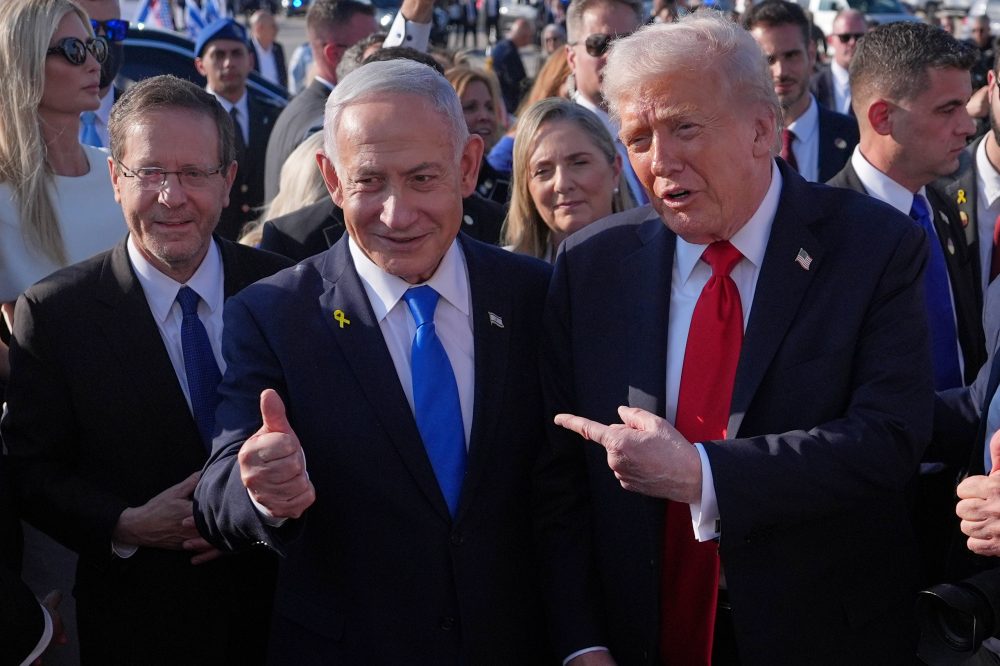

Not long ago, Israeli Prime Minister Benjamin Netanyahu called President Donald Trump the “greatest friend Israel ever had in the White House.” Now, with Trump working to wrap up a deal to end the conflict with Iran, that friendship is being put to a very public test.
Trump has directed some of the sharpest rhetoric any American president has ever used publicly against an Israeli leader. He claimed personal credit for Israel’s very survival — saying “without me, there would be no Israel” — and used harsh language to question Netanyahu’s judgment, even calling him “crazy” in interviews.
Netanyahu has served as prime minister through four U.S. presidencies, and he has managed to frustrate each of those presidents at some point. But none of them have spoken out against him as openly as Trump, who originally launched his current term working closely alongside Netanyahu.
The friction is building as Trump criticizes recent Israeli military strikes in Lebanon, which he says threatened to derail negotiations between Washington and Tehran. Trump is pushing hard for a deal, facing pressure at home where the ongoing war has become politically unpopular and has contributed to rising gasoline prices.
Aaron David Miller, who spent more than two decades advising both Democratic and Republican administrations on Middle East matters, put it plainly: “If Netanyahu gets in between something Trump really wants, and that’s out of this war, he’s prepared to use the leverage that he has.”
A formal agreement is set to be signed this Friday in Geneva. Speaking Tuesday at the G7 summit in France, Trump said he made clear to Netanyahu that he is unhappy with recent decisions.
“Without the U.S., there would be no Israel. Without me, there would be no Israel because no other President was willing to do what I did,” Trump said. “I have had a great relationship with Bibi. Now Bibi has to be more responsible with respect to Lebanon.”
For years, there has been strong bipartisan agreement in Washington around supporting Israel, but that consensus has weakened. Progressive voices have grown increasingly critical of Israel’s treatment of Palestinians, particularly during the Gaza war, while some on the right have started questioning the value of longstanding U.S. support. Concerns about antisemitism have emerged across the political spectrum.
Trump’s remarks quickly drew condemnation from left-leaning organizations. Halie Soifer, who leads the Jewish Democratic Council of America, said the comments crossed a line. “He is framing Israel’s mere existence as contingent on him,” she said. “It’s deeply offensive to the vast majority of Jews who care about Israel’s future.”
While former President Joe Biden and former Vice President Kamala Harris also clashed with Netanyahu over the Gaza war and occasionally criticized him publicly, they were more careful in their wording to avoid accusations of being anti-Israel.
Among conservative, pro-Israel voices, opinions were split on how seriously to take Trump’s public criticism of Netanyahu. Republican Jewish Coalition President Matt Brooks downplayed the tension, comparing it to the kind of disagreements that happen within any family.
Brooks also brushed aside the idea that the muted response from Republicans sent a mixed political message, arguing that Trump has a strong track record of supporting Israel. “If Biden or Harris said something critical, it came from the position of someone who was hostile toward or didn’t have the same level of support for Israel that President Trump has,” Brooks said.
He pointed to actions from Trump’s first term, including moving the U.S. embassy in Israel from Tel Aviv to Jerusalem, as well as the return of Israeli hostages from Gaza during Trump’s second term, as evidence of that support. He added that Trump’s criticism carries a “tremendous reservoir of goodwill on this issue that neither Biden nor Harris ever had.”
Conservative, pro-Israel advocate Mort Klein took a different view, arguing Trump should have kept his frustrations private — particularly given Trump’s history of publicly praising authoritarian leaders in Turkey, North Korea, and China. Klein, who serves as president of the Zionist Organization of America, expressed concern that Trump may be making the comments publicly to appeal to those who are critical of Israel.
“He sees that Americans have become more hostile toward Israel than they’ve ever been,” Klein said. “That worries me.”