Category: Politics

  • Qatar-Donated Presidential Jet Could Be Ready by Independence Day

    Qatar-Donated Presidential Jet Could Be Ready by Independence Day

    Military officials are pushing to complete work on a luxury aircraft donated by Qatar’s royal family in time for Fourth of July festivities, according to a government source and someone close to the project.

    The White House received the Boeing 747 from Qatar earlier this year and directed the Air Force to quickly bring the plane up to presidential flight standards. L3Harris has been chosen to handle the extensive modifications needed for the aircraft.

    Should the company meet its target date, President Donald Trump would have access to a new presidential aircraft for the nation’s 250th birthday celebration. Sources indicate there have been discussions about potentially finishing the work by June 14th to coincide with Trump’s birthday, rather than waiting until the July deadline.

    The acceptance of this gift has sparked controversy among Democratic lawmakers and government ethics watchdogs, who argue it creates potential conflicts of interest that might sway presidential policy decisions. Trump has rejected these concerns about taking the 13-year-old aircraft valued at $400 million, calling it “stupid” to refuse such an offer. The current presidential fleet consists of two specially modified 747-200B planes, though any Air Force aircraft carrying the president receives the Air Force One designation.

    Converting the luxury jet provided by Qatar’s monarchy involves extensive security enhancements, upgraded communication systems to prevent electronic surveillance, and defensive capabilities against missile attacks, according to aviation specialists.

    A military spokesperson confirmed, “The aircraft is on schedule to deliver this summer.” Officials announced Friday that modification work and test flights have been completed, with painting currently underway.

    OFFICIAL REPLACEMENT PROGRAM FACES SETBACKS

    Meanwhile, Boeing’s official Air Force One replacement initiative – converting two 747-8 aircraft into modern presidential jets – continues to face significant delays, running four years past the original timeline. Current projections show delivery won’t occur until summer 2028, potentially leaving Trump without his new aircraft before his presidency concludes in January 2029.

    Boeing remains bound by a fixed-price agreement valued at $3.9 billion from 2018, though actual expenses have grown beyond $5 billion, forcing the company to absorb $2.4 billion in project losses. To address ongoing challenges, Boeing brought in Steve Sullivan in 2025, a former Northrop Grumman leader with experience on the B-21 bomber project.

    Military officials recently revealed updated paint colors featuring red, white, dark blue and gold for the executive aircraft fleet – bringing back a design scheme Trump had long advocated for. A similar color scheme had been abandoned in 2022.

    This new appearance will be used on the VC-25B – the military’s term for the Boeing 747-8 – replacing the white and blue design that has been standard since President Kennedy’s administration. Four Boeing 757-200 aircraft used by the vice president, cabinet officials and other senior leaders will also receive the updated paint scheme.

    Last December, the Air Force acquired two former Lufthansa 747-8i planes for $400 million – designating one for crew training and maintenance practice, while the other will provide replacement parts as officials prepare to eventually phase out the existing fleet that entered service in 1990.

  • California Governor Hopefuls Square Off Over Healthcare, Immigration in Heated Debate

    California Governor Hopefuls Square Off Over Healthcare, Immigration in Heated Debate

    SACRAMENTO, Calif. — Seven contenders seeking California’s top executive office engaged in a spirited televised debate Tuesday evening, sparring over contentious issues including a proposed wealth tax and government healthcare for undocumented residents.

    The CNN-broadcast forum represented one of the final opportunities for candidates to make their case to voters before the June 2nd primary to replace term-limited Democratic Governor Gavin Newsom. With mail-in ballots already circulating, the top two vote-getters will move forward to November’s general election regardless of political affiliation.

    While no Republican has occupied the governor’s mansion for over ten years, the crowded field suggests uncertainty with less than four weeks remaining until election day.

    Tuesday’s debate featured Democrats Xavier Becerra, former Biden administration health secretary; Katie Porter, ex-congresswoman; billionaire environmental advocate Tom Steyer; San Jose Mayor Matt Mahan; and former Los Angeles Mayor Antonio Villaraigosa. Republicans Steve Hilton, a conservative media personality, and Riverside County Sheriff Chad Bianco also participated.

    Healthcare policy sparked intense exchanges among the candidates.

    The contenders battled over eliminating private insurance for a government-controlled system, a concept that has repeatedly stalled in the state legislature.

    Porter, an advocate for government-managed healthcare, challenged Becerra directly about his shifting position on the matter.

    “Do you support CalCare — California having its own state-run, single-payer system, yes or no?” Porter asked.

    Becerra provided an ambiguous response.

    “The most important thing about having a Medicare for All plan is that it includes everyone,” he said. “What we have to do is get to the point where we are covering everyone with something like Medicare for All.”

    Mahan, opposing a state-controlled system, later interjected that Becerra “was unable to clearly answer the most important question on healthcare.”

    Becerra pushed back: “I did answer that question.”

    Steyer aligned with Porter in supporting the proposal, while Bianco, Hilton, and Villaraigosa dismissed it as impractical or financially unrealistic.

    Immigration discussions revealed stark partisan divisions.

    Steyer, Porter and Becerra endorsed state-funded medical coverage for low-income undocumented immigrants, a program Newsom initially expanded but later reduced. Bianco labeled the approach “ridiculous.”

    Democratic candidates strongly criticized Trump administration immigration enforcement operations.

    Steyer argued the state should pursue legal action against federal agents and immigration officials who engage in racial profiling or violence against Californians. Mahan noted that San Jose business owners have seen customers disappear because many immigrants fear leaving their homes.

    Bianco defended Immigration and Customs Enforcement activities, stating agents were upholding federal law and working to remove individuals he described as “criminals” without legal status.

    Hilton, who emigrated from England, emphasized he was the debate’s only immigrant participant. He cautioned against mixing legal and unauthorized immigration issues.

    “Although it is the federal government’s responsibility to determine and implement immigration policy, I think it’s important that all the laws are peacefully enforced,” Hilton said. “As governor, I would make sure that we work with the federal government to enforce our laws.”

    Democratic candidates repeatedly stressed their opposition to Trump’s immigration agenda.

    Neither Hilton, who has Trump’s backing, nor Bianco frequently mentioned the former president, except to argue that Democrats wrongly hold him responsible for state problems.

    Becerra referenced Trump most frequently, highlighting his numerous lawsuits against the administration during his tenure as state attorney general from 2017 to 2021, before Biden appointed him health secretary.

    “I’m going to repeat Donald Trump as often as I have because he’s the menace,” Becerra declared.

    When Villaraigosa pressed Hilton to confirm Trump’s 2020 election defeat, Hilton declined to respond.

    “Endlessly going on about Donald Trump doesn’t serve the needs of the struggling families and small businesses,” Hilton said.

    Mahan attempted to stake out centrist ground. He criticized Becerra for attributing high fuel costs entirely to Trump, while noting San Jose has challenged the Trump administration’s immigration policies in court. He called Republican support for Trump’s “cruel and ineffective policies” disqualifying.

    Porter offered a blunt assessment: “Donald Trump sucks.”

    Tax policy discussions centered on wealth inequality measures.

    Steyer stood alone in endorsing a proposed billionaire tax likely appearing on November ballots. The one-time levy would restore funding eliminated by Trump-era cuts that reduced healthcare access for low-income residents.

    Porter supports higher taxes on California’s wealthiest residents but characterized the proposed tax as a short-term solution to systemic problems.

    Mahan proposed suspending gasoline taxes to ease burdens on working families.

    Hilton suggested eliminating income taxes on the first $100,000 of earnings.

    Both Mahan and Steyer advocated taxing artificial intelligence companies and directing revenue toward worker support programs, including job training initiatives.

    “The answer is to tax these companies, not to regulate them to the point that they simply go to other places,” Mahan said.

  • Virginia Senator Faces Federal Investigation After Cannabis Store Raid

    Virginia Senator Faces Federal Investigation After Cannabis Store Raid

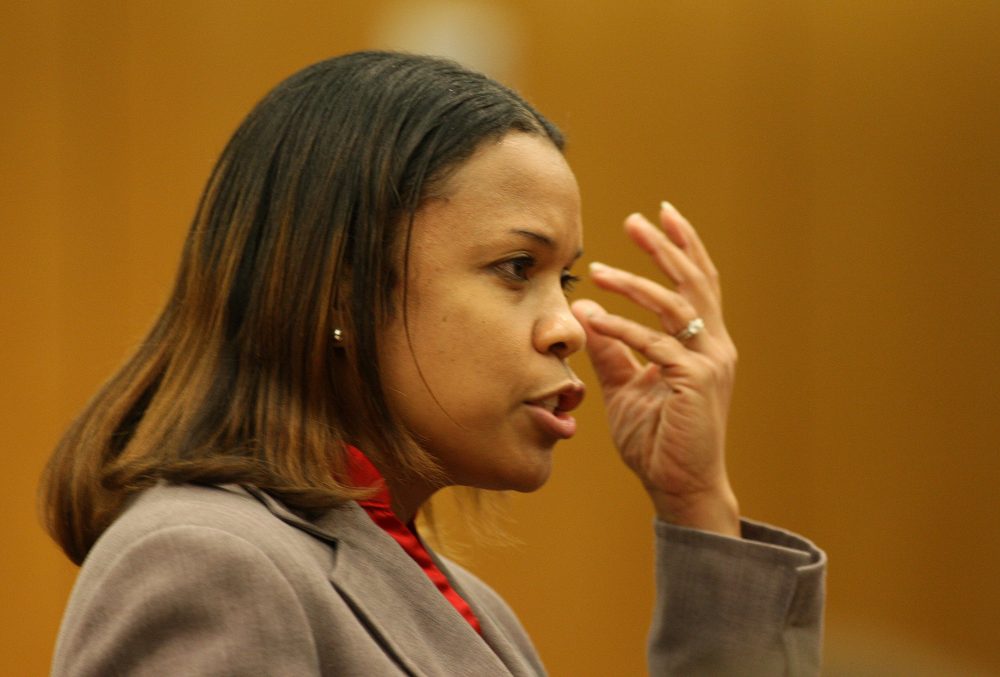
    PORTSMOUTH, Va. — A prominent Virginia state senator who has championed cannabis reform throughout her political career now finds herself at the center of a federal investigation after law enforcement raided her marijuana business this week.

    Senator L. Louise Lucas, known for her passionate advocacy on cannabis legalization, has built much of her legislative agenda around reforming drug laws that she believes unfairly target African American communities. Her commitment to the cause led her not only to author legalization legislation but also to establish her own cannabis retail operation.

    Federal agents conducted a court-authorized search at Lucas’s business on Wednesday, though the FBI has not disclosed the specific focus of their investigation. The raid has thrust the longtime politician’s three-decade career back into the spotlight.

    Lucas made history in 2019 when she became Virginia’s first Black woman to serve as Senate president pro tempore following the Democratic takeover of the chamber.

    Her political journey has not been without controversy. In 2020, she faced felony accusations related to her participation in a demonstration against a Confederate memorial, though a judge ultimately threw out those charges.

    A Portsmouth native, Lucas broke barriers early in her career as the first woman to work as a ship fitter at Norfolk Naval Shipyard, according to state library records. She currently leads a Portsmouth company that provides housing, daily programming, and transportation services for adults with intellectual disabilities.

    Lucas launched The Cannabis Outlet in her hometown of Portsmouth in 2021, selling legally permitted hemp and CBD merchandise.

    “Let’s talk about pot,” Lucas wrote on social media platform X in 2022. “Yes, we legalized it and I even opened the Cannabis Outlet after we did! But the job isn’t done. People are still in jail for something that is legal today.”

    Witnesses reported seeing an armored FBI vehicle and multiple federal agents at Lucas’s cannabis shop on Wednesday. The FBI confirmed only that agents were executing a court-approved search warrant in Portsmouth.

  • President Claims Iran Eager to Negotiate Deal with United States

    President Claims Iran Eager to Negotiate Deal with United States

    WASHINGTON – Former President Donald Trump announced Wednesday that Iranian officials are eager to enter negotiations and reach an agreement with the United States, describing the current diplomatic situation as progressing well.

    Speaking during a White House event, Trump expressed optimism about the diplomatic efforts. “We’re doing very well in Iran. It’s going very smoothly, and we’ll see what happens. They want to make a deal, they want to negotiate,” the former president stated.

    Trump further emphasized Iran’s apparent willingness to engage in talks. “We’re dealing with people that want to make a deal very much, and we’ll see whether or not they can make a deal that’s satisfactory to us,” he added.

    Meanwhile, Iranian officials confirmed Wednesday they are examining a fresh proposal from the United States. According to sources familiar with the matter, both Washington and Tehran are working toward finalizing a brief memorandum aimed at resolving Gulf region conflicts, though complex matters including Iran’s nuclear activities would be addressed in future discussions.

  • Trump Administration Prioritizes Fighting Drug Cartels in New Counterterrorism Plan

    Trump Administration Prioritizes Fighting Drug Cartels in New Counterterrorism Plan

    WASHINGTON — The White House revealed Wednesday that President Donald Trump has approved a new counterterrorism strategy placing the elimination of drug cartels throughout the Western Hemisphere at the forefront of national security priorities.

    This strategic document follows the administration’s previously released national security framework that identified the hemisphere as America’s primary area of focus.

    The Trump administration has taken bold steps to transform the region, including efforts to remove Nicolás Maduro from Venezuela’s presidency, conducting numerous military operations against suspected cartel vessels, and applying fresh pressure on Cuba’s communist leadership.

    Sebastian Gorka, the White House’s counterterrorism czar who led the development of this new approach, explained that the priority shift reflects a stark reality: drug cartels have caused more American deaths through illicit narcotics than the number of U.S. military personnel killed in overseas conflicts since World War II.

    “Whether it is strangling their illicit funds, whether it is tracking their drug boats, we will not permit them to kill Americans on a massive scale,” Gorka said in a telephone call with reporters to announce the strategy.

    This initiative represents another demonstration of the administration’s dedication to concentrating U.S. foreign policy efforts on the Western Hemisphere while simultaneously managing global challenges.

    Since early September, the Republican administration’s campaign of destroying suspected drug-trafficking boats in Latin American waters has continued, resulting in at least 191 total fatalities.

    Simultaneously, Trump has worked to encourage regional leaders to collaborate more extensively with the United States in combating cartels and conducting their own military operations against drug traffickers and international gangs that he characterizes as an “unacceptable threat” to hemispheric security.

    According to Gorka, the administration’s additional counterterrorism objectives include targeting and eliminating Islamic military organizations capable of conducting operations against the United States; identifying and neutralizing violent secular political groups with anti-American, “radically pro-gender,” or anarchist ideologies; and strengthening efforts to prevent non-state actors from acquiring weapons of mass destruction.

    Gorka indicated that administration officials plan to meet with allies later this week to explore ways they can strengthen their counterterrorism approaches.

    “As the president made very clear, we will measure your seriousness as a partner and ally by how much you bring to the table,” he said. “So we expect more — from our partners in the Middle East, as well as elsewhere.”

  • Federal Agents Search Virginia Senate President’s Office in Corruption Investigation

    Federal Agents Search Virginia Senate President’s Office in Corruption Investigation

    Federal agents executed a search warrant at the district office of Virginia Senate President L. Louise Lucas on Wednesday as part of an ongoing corruption investigation, according to a source with knowledge of the situation.

    The Portsmouth office belongs to the Democratic state senator, who played a prominent role in Virginia’s recent redistricting efforts.

    Federal Bureau of Investigation officials confirmed they were executing a court-approved search warrant in Portsmouth but provided no additional details. The source who verified the search of Lucas’s office requested anonymity because they were not permitted to publicly discuss the active investigation.

  • Trump Demonstrates GOP Influence with Indiana Primary Victories

    Trump Demonstrates GOP Influence with Indiana Primary Victories

    Former President Donald Trump has demonstrated his continued influence within the Republican Party after his endorsed candidates successfully defeated nearly all Indiana state senators who had previously opposed his redistricting agenda five months earlier.

    The primary election outcomes are expected to strengthen Trump’s position as he prepares for additional Republican contests where he aims to remove more sitting officials, including Louisiana Senator Bill Cassidy and Kentucky Representative Thomas Massie.

    Tuesday’s Indiana results also increase pressure on GOP legislators in other states to aggressively pursue congressional redistricting before November’s general election. Special legislative sessions have already commenced in Alabama and Tennessee that could reduce Black voter influence in districts that typically lean Democratic, while Trump supporters in South Carolina are pushing for similar actions.

    Indiana State Senator Linda Rogers, who cast a vote against redistricting and subsequently lost her position on Tuesday, warned the results “will probably discourage others in other states.”

    “If someone is going to ask you to take a tough vote, you may think twice about your conscience and what’s best for your community and instead what’s best for you and your career,” Rogers explained.

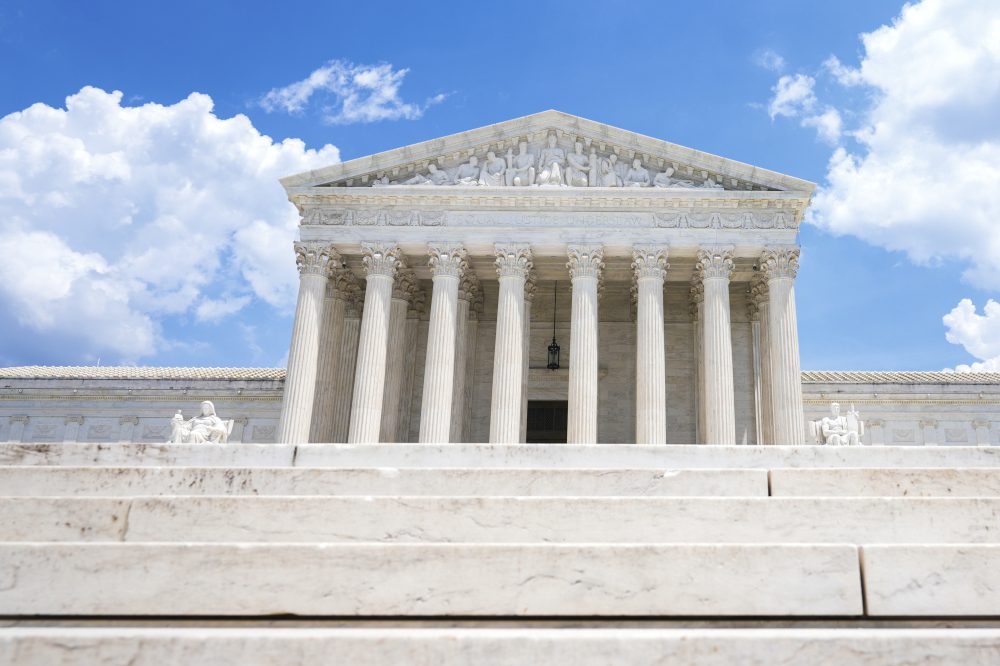
    While redistricting initiatives launched last year when Trump identified a chance to provide Republicans with additional advantages, they gained momentum following last week’s Supreme Court decision that eliminated a key Voting Rights Act provision affecting how political boundaries are established.

    Trump’s Indiana success, supported by over $8.3 million in campaign funding for races that typically receive minimal financial investment, reinforced the former president’s ongoing dominance within the Republican Party he has controlled for ten years, even as he faces declining approval ratings and approaches lame-duck status.

    “Historic night for Indiana as Republicans stood with me and President Trump to nominate some great America First conservatives,” Indiana Governor Mike Braun posted on social media. “I look forward to winning big in November and serving Hoosiers with this team in the statehouse!”

    The former president supported primary opponents against seven Republican state senators who had rejected his December redistricting proposal. Five of Trump’s chosen candidates secured victories, while one contest remained undecided.

    Trump maintained a measured approach on social media regarding the election results. He posted several images celebrating his endorsed candidates’ wins in both Indiana and Ohio, which also conducted primaries Tuesday, but refrained from additional boasting or renewed criticism of Massie or Cassidy.

    Massie has frustrated the president by advocating for the release of Jeffrey Epstein case documents. Cassidy joined other Republican senators in voting to convict Trump during his 2021 impeachment trial following the January 6 Capitol riot.

    James Blair, a senior Trump political advisor, took a more direct approach by sharing a “Gladiator” movie image showing Russell Crowe’s character Maximus celebrating after a combat victory.

    Rogers faced nearly $670,000 in television advertisements opposing her candidacy, financed by political action committees linked to Braun and Indiana Senator Jim Banks.

    She expressed no regret about her redistricting vote.

    “It would have been easy for me to hit that ‘yes’ button,” Rogers stated. “To hear the number of people who asked me not to, then the number of people who thanked me, would mean I wasn’t representing them.”

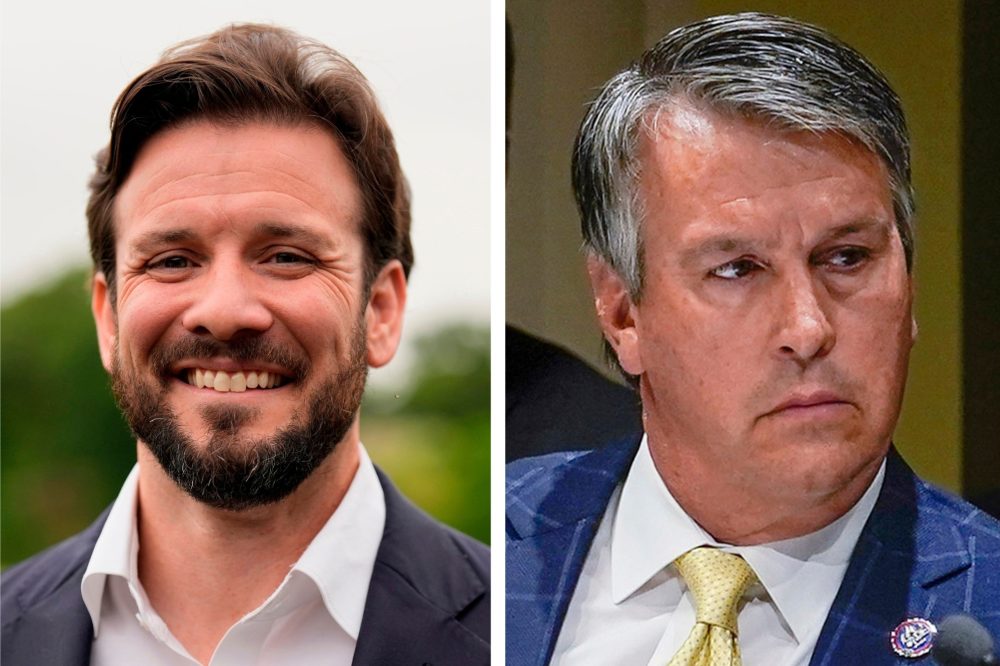
    Louisiana’s primary featuring Trump’s endorsement of Representative Julie Letlow against Cassidy is scheduled for May 16. Kentucky will hold its primary May 19, where Trump has backed retired Navy SEAL Ed Gallrein to challenge Massie.

  • Trump Issues Bombing Threat to Iran as White House Eyes Peace Deal

    Trump Issues Bombing Threat to Iran as White House Eyes Peace Deal

    President Donald Trump issued a stark warning on social media Wednesday, threatening intensified military action against Iran unless the country accepts terms of a potential peace deal that could conclude their ongoing conflict.

    “If they don’t agree, the bombing starts, and it will be, sadly, at a much higher level and intensity than it was before,” Trump’s post said.

    According to Axios reporting, the White House is close to finalizing a brief, one-page agreement with Iran that would bring the war to an end. The proposed deal reportedly contains several key elements: halting Iranian uranium enrichment activities, removing U.S. economic sanctions, releasing frozen Iranian assets, and reopening the Strait of Hormuz to maritime traffic.

    In his social media statement, Trump suggested that energy shipments of oil and natural gas could resume if Iran agrees to the undisclosed terms. However, he acknowledged uncertainty about Iran’s willingness to accept the proposal.

    Trump wrote that it was “perhaps a big assumption” that Iran would agree to the terms being offered by the United States.

    White House officials declined to provide additional details or respond to inquiries about the reported negotiations.

    Meanwhile, Commerce Secretary Howard Lutnick faced questioning Wednesday before a House panel investigating Jeffrey Epstein. Lawmakers are examining Lutnick’s interactions with the convicted sex offender following 2008. Despite providing conflicting accounts of his relationship with Epstein, Lutnick maintains his innocence and expressed willingness to participate in the private congressional interview.

    Tuesday’s electoral results across Indiana, Ohio, and Michigan painted a familiar political landscape heading into November’s midterm contests. Trump continues to wield significant influence within Republican circles, though Democratic candidates appear to be gaining ground.

    In Indiana specifically, Trump successfully backed five candidates in primary races, supported by over $8.3 million in campaign spending. The president targeted seven Republican state senators who had opposed his congressional redistricting proposal, with five of his endorsed challengers emerging victorious.

    Trump has also renewed his public disagreements with Pope Leo XIV, the first American-born pontiff, potentially creating diplomatic complications for Secretary of State Marco Rubio’s planned Vatican visit this week. In a recent interview, Trump criticized the Pope’s stance on Iran and immigration policies, claiming the religious leader’s positions make the world less secure.

    Chinese Foreign Minister Wang Yi expressed his nation’s concern about the U.S.-Iran conflict during meetings with Iranian Foreign Minister Abbas Araghchi in Beijing. This marked Araghchi’s first visit to China since hostilities began on February 28. The Trump administration is encouraging China to leverage its economic and political relationships with Tehran to pressure Iran into reopening the Strait of Hormuz.

    Recent polling data from AP-NORC reveals that approximately one-third of American adults report knowing someone whose life has been affected by immigration enforcement measures over the past year. Hispanic Americans are particularly impacted, with more than half reporting personal connections to individuals who have altered their daily routines, travel plans, or documentation practices due to immigration concerns.

    Democratic candidates have demonstrated unexpected strength in recent special elections nationwide, winning in traditionally challenging districts and narrowing margins even in losses. While higher midterm turnout could change these dynamics, the trend has energized Democratic supporters and concerned Republicans about maintaining their congressional control.

  • Commerce Secretary Faces House Panel Over Inconsistent Epstein Claims

    Commerce Secretary Faces House Panel Over Inconsistent Epstein Claims

    WASHINGTON — Commerce Secretary Howard Lutnick faced questioning Wednesday during a House committee session focused on convicted sex offender Jeffrey Epstein, as congressional members demanded explanations for Lutnick’s interactions with Epstein following his 2008 guilty plea for soliciting prostitution from a minor.

    The Cabinet member under President Donald Trump represents the most recent high-profile political figure to testify before the House Oversight Committee. Despite providing conflicting accounts regarding his connection to Epstein, Lutnick maintains his innocence and expressed willingness to participate in the private legislative session.

    The recorded testimony served as an examination of congressional willingness to hold accountable influential individuals who maintained associations with Epstein despite public knowledge of his conviction for soliciting prostitution from a minor. Trump’s Republican leadership has attempted without success to distance itself from this matter for over twelve months.

    Among Trump administration officials beyond the president himself, Lutnick holds the highest position mentioned in Epstein case documentation. Trump has repeatedly denied awareness of Epstein’s criminal activities and stated their association ended years prior.

    Multiple Democratic lawmakers have demanded Lutnick’s resignation, while certain Republicans, including South Carolina Representative Nancy Mace, have insisted he should provide testimony to the Oversight committee.

    Lutnick has minimized his connections to Epstein, who previously lived in his New York City neighborhood. During Democratic questioning at an unrelated hearing this year, he characterized their interaction as limited email exchanges and two meetings during 2011 and 2012.

    However, this acknowledgment contradicted his earlier podcast statement from last year, where he claimed deciding to avoid being alone with Epstein after a 2005 visit to Epstein’s residence that upset both Lutnick and his spouse.

    Epstein entered a guilty plea in 2008 to Florida state sex crime charges, including soliciting prostitution from a minor.

    “I did not have any relationship with him. I barely had anything to do with him,” Lutnick stated to senators in February during questioning about Epstein at a Senate Appropriations subcommittee session.

    Yet Lutnick, formerly leading the Cantor Fitzgerald brokerage and investment firm, actually spent an hour at Epstein’s residence in 2011. His family subsequently visited Epstein’s notorious private island for lunch in 2012.

    Released federal case documents revealed ongoing email correspondence between the two men. In 2018, Lutnick contacted Epstein regarding a proposed museum expansion in their shared neighborhood that would have obstructed views from their properties. Epstein contributed $50,000 to a 2017 dinner celebrating Lutnick, while Lutnick extended an invitation to Epstein for a 2015 Hillary Clinton fundraising event. Both men invested in identical business opportunities in 2013.

    White House officials continue backing Lutnick, who championed Trump’s comprehensive tariff policies. He has maintained a lengthy relationship with Trump and assisted with fundraising efforts for both 2020 and 2024 campaigns.

    The House Oversight Committee plans to receive testimony on May 29 from Pam Bondi, who departed her attorney general position last month.

    Epstein died in a New York detention facility in 2019 while awaiting trial on sex trafficking allegations.

  • Federal Report: Iran War May Have Driven White House Correspondents’ Dinner Attack

    Federal Report: Iran War May Have Driven White House Correspondents’ Dinner Attack

    A federal intelligence assessment has revealed that the ongoing U.S.-Israeli conflict with Iran may have influenced the suspect who allegedly tried to assassinate President Donald Trump at last month’s White House Correspondents’ Dinner.

    According to a Department of Homeland Security intelligence report distributed to law enforcement agencies across the country, Cole Allen harbored “multiple social and political grievances” and the Iran conflict “may have contributed to his decision to conduct the attack.” The preliminary assessment, dated April 27, cited Allen’s social media posts that were critical of American involvement in the war.

    This intelligence briefing provides the clearest insight yet into what may have driven the failed April 25 attack on the annual media event. While still preliminary, the findings represent the strongest indication to date that the Iran conflict, which has resulted in thousands of casualties across the Middle East and disrupted global markets, could have served as a catalyst.

    The document, labeled a “Critical Incident Note,” was secured through public records requests by the transparency organization Property of the People and provided to Reuters.

    Neither the Department of Homeland Security nor the Justice Department responded immediately to requests for comment. The FBI declined to provide a statement.

    This week, federal prosecutors filed an additional charge against Allen for assaulting a federal officer, alleging he opened fire on a Secret Service agent at a security checkpoint. He already faced charges of attempted assassination, discharging a firearm during a violent crime, and illegally transporting weapons and ammunition across state boundaries. Allen has not yet entered a plea.

    Federal authorities have released limited information about Allen’s suspected motives, referencing only an email he sent to family members on the evening of the attack. Officials have described the message as a manifesto expressing frustration with the current administration and mentioning his intent to target the “traitor” scheduled to speak, though Trump was not specifically named.

    Court filings indicate prosecutors believe Allen “disagreed” with Trump’s policies and “wanted to ‘fight back’ against government policies and decisions that he found morally objectionable.”

    Federal investigators are conducting an extensive analysis of Allen’s online presence and digital communications as they work to understand his motivations, according to a senior law enforcement source who requested anonymity.

    “It’s being closely looked at,” the official said.

    The investigation encompasses posts from a Bluesky social media profile connected to Allen that shared numerous anti-Trump messages in the weeks before the incident. These posts included condemnation of U.S. actions in Iran as well as criticism of the Trump administration’s immigration policies, Elon Musk, and Russia’s invasion of Ukraine.

    The account promoted a post demanding Trump’s impeachment following his April 7 statement threatening to destroy Iranian civilization, made just hours before Trump agreed to a ceasefire. It also shared criticism targeting reporters planning to attend the correspondents’ dinner.

    Investigators have also examined a 2024 post where an account linked to Allen appeared to refer to Trump as “the devil” while quoting scripture in response to a message from Trump’s daughter Tiffany.

    The emphasis on Allen’s digital activity is partly intended to prevent conspiracy theories about the suspect’s motivations and online behavior, the official explained, noting that speculation surrounding the online activity of the individual who shot at Trump during a 2024 campaign event in Butler, Pennsylvania, had fueled widespread conspiracy theories.

  • New Poll: Most Americans Say U.S. No Longer Welcoming to Immigrants

    New Poll: Most Americans Say U.S. No Longer Welcoming to Immigrants

    WASHINGTON — A majority of Americans now believe the United States has lost its reputation as a welcoming destination for immigrants, according to new polling data from The Associated Press-NORC Center for Public Affairs Research.

    The survey of more than 2,500 adults nationwide reveals that approximately 60% of respondents think America was once a favorable place for immigrants to settle but no longer holds that distinction. Roughly one-third of those polled — including more than half of Hispanic respondents — report that either they or someone in their circle has begun carrying citizenship documentation, faced detention or removal proceedings, altered travel arrangements, or modified daily activities like attending work or school due to immigration status concerns within the past year.

    These findings emerge as the nation’s highest court weighs whether the current administration can limit automatic citizenship for children born on U.S. soil, following months of intensified immigration enforcement operations and large-scale deportation efforts.

    Reid Gibson, a 72-year-old retired Missouri resident who identifies as politically independent, expressed strong criticism of current immigration policies. Gibson remains hopeful that the country will eventually return to more welcoming practices, though he fears “it may take many years to reverse the damage that the Trump administration has inflicted” through its approach.

    Gibson’s concerns extend to his own family. His stepdaughter now carries her passport regularly due to worries that her appearance might make her a target during enforcement actions.

    “It’s just plain wrong,” Gibson stated. “This is not a good country for immigrants anymore.”

    The polling data indicates that Americans have modified their behavior in response to increased enforcement activities over the past year, as the administration has expanded detention operations while pursuing what officials describe as the nation’s largest deportation campaign.

    Survey results show Democrats are more likely than Republicans or independents to personally know someone affected by these policies, and individuals with such connections are more inclined to view America as no longer immigrant-friendly.

    Kathy Bailey, a 79-year-old Illinois Democrat, has witnessed these policy impacts firsthand at her local swimming facility. Two regular participants in her swim class — both naturalized American citizens — now bring their passports whenever they leave home. Bailey noted that one participant, originally from Latin America, feels particularly vulnerable in their predominantly white community.

    “She’s an American citizen now, but she’s so scared that she has to carry her passport,” Bailey explained. “She’s just another sweet old grandmother swimming at 5 in the morning.”

    Hispanic adults report significantly higher rates of personal impact, with approximately 60% saying they or someone they know has experienced enforcement-related effects, compared to much lower percentages among Black or white adults.

    “This is terrible for these women!” Bailey exclaimed. “I’m just stunned at what we are coming to.”

    Nick Grivas, a 40-year-old Massachusetts resident, draws connections between current policies and his own family history, recalling his grandfather’s journey from Greece to America. This personal background influences his belief that the United States has ceased being a land of opportunity for newcomers.

    “We can see how we’re treating children and the children of the immigrants, and we’re not viewing them as potential future Americans,” Grivas observed.

    The polling shows roughly 30% of adults still consider America a great destination for immigrants, while approximately 10% believe it never was. The view that America has lost its immigrant-friendly status is more prevalent among Democrats, independents, and foreign-born residents.

    Grivas, who identifies as a Democrat, worries that restrictive federal policies could harm the country by discouraging newcomers from establishing roots in their communities, particularly when their long-term residence remains uncertain.

    “You’re less willing to commit to the project if you don’t think that you’re gonna be able to stay,” he explained.

    The Supreme Court recently heard arguments regarding President Trump’s attempt to end birthright citizenship by declaring that children born to unauthorized or temporary residents would not automatically receive American citizenship.

    About two-thirds of poll respondents support automatic citizenship for all children born within U.S. borders, a position backed by most Democrats and independents. Republican support is lower at 44%. The survey also reveals some conflicted views, with respondents supporting birthright citizenship in general while opposing it under certain specific conditions.

    Linda Steele, a 70-year-old Florida Republican, opposes automatic citizenship, believing only children of American citizens should receive it. Steele argues that foreign nationals residing legally in the United States — whether for employment or education — should not be able to have children who automatically become citizens.

    “That shouldn’t be allowed,” she said. “They’re just here visiting or going to school.”

    When presented with specific scenarios, about 60% of adults support birthright citizenship for children born to parents holding legal tourist visas, while only half support it for those born to unauthorized residents. Support increases to 75% for children born to parents with legal work visas, with much of this additional backing coming from Republicans who find this situation more acceptable.

    Kevin Craig, a 57-year-old from Wilmington, North Carolina, who leans conservative, opposes automatic citizenship grants. Craig believes there should be “at least some opportunity for intervention by a human being who can make some sort of a judgment.”

    However, he added: “I think my personal opinion is that I can’t think of a situation where it would not be granted.”

    The AP-NORC survey of 2,596 adults was conducted April 16-20 using NORC’s AmeriSpeak Panel, designed to represent the U.S. population. The margin of error is plus or minus 2.6 percentage points.

  • Cost Concerns Trump Health Priorities for MAHA Movement Supporters, New Survey Shows

    Cost Concerns Trump Health Priorities for MAHA Movement Supporters, New Survey Shows

    A fresh survey indicates that supporters of the “Make America Healthy Again” movement will prioritize cost reduction over other health concerns when casting their ballots in November’s midterm elections.

    According to research conducted by KFF, a nonpartisan health policy organization, reducing expenses ranks as the primary health concern for MAHA supporters across party lines, with at least half stating this issue will significantly influence their voting decisions and candidate preferences.

    Cost concerns continue to challenge a president who made affordability a central campaign promise. Trump’s approval numbers have dropped to record lows as the conflict with Iran drives up living expenses, with gas prices climbing and restaurant sales declining due to the war’s economic impact.

    These financial worries are anticipated to damage Republican chances of keeping congressional control this year.

    The KFF survey found that 61% of all participants said medical costs would significantly affect their November voting choices, placing this concern above food safety and vaccination policy issues.

    “This poll really shows that the issues the MAHA movement has elevated resonate broadly with the American public, but even for voters who support MAHA, healthcare costs are the dominant priority by a wide margin,” said Audrey Kearney, senior survey analyst at KFF.

    Researchers conducted the study April 14-19 through online and phone interviews with 1,343 U.S. adults representing the national population. Approximately 500 participants identified as MAHA movement supporters, according to KFF.

    The organization discovered that 42% of MAHA voters selected cost reduction as their top federal health priority when forced to choose one issue. This compared to 21% who emphasized limiting chemical food additives and 10% who prioritized reviewing vaccine safety protocols.

    Survey results carried a margin of error of plus or minus 3 percentage points.

    Trump previously stated he would allow Health Secretary Robert F. Kennedy Jr. to “go wild” on health policy matters. Kennedy’s efforts to reduce recommended childhood vaccinations and modify dietary guidelines have satisfied MAHA supporters.

    However, the administration has also frustrated movement members with certain decisions, including a February directive protecting domestic production of a commonly used herbicide and April’s appointment of a former COVID response official to head the Centers for Disease Control and Prevention.

    “He shook Bobby Kennedy’s hand and said he’d let him go wild. And nothing has been done to reduce our children’s exposure to toxic pesticides,” Zen Honeycutt, who founded Moms Across America, told Reuters.

    The KFF poll revealed that public majorities believe insufficient regulation exists for chemical food additives and agricultural pesticides.

    The Trump administration received poor approval ratings on two key MAHA priorities. Survey results showed 38% of respondents approved of vaccine policy management and 46% supported food policy handling.

    Kennedy’s approval ratings have stayed relatively stable since September and January polling, with roughly four in ten voters supporting his performance as health secretary, KFF reported.

    Honeycutt expressed continued support for Kennedy while hoping the administration will change direction on pesticide policies.

    “This administration has done more for health than any other administration ever in recorded history,” Honeycutt said. “It was brilliant of Trump to bring Kennedy on board.”

    The health secretary has recently pursued quick victories before the midterms after White House pressure led him to scale back vaccine initiatives that prompted sharp criticism from major medical organizations.

  • Combat Operations End in Iran as Political Focus Turns to Midterm Elections

    Combat Operations End in Iran as Political Focus Turns to Midterm Elections

    Secretary of State Rubio has announced that American military combat activities in Iran have concluded, with the administration now prioritizing diplomatic negotiations moving forward.

    Tuesday’s primary elections in Ohio and Indiana have provided political analysts with key insights as the nation prepares for the upcoming midterm elections. The results from these contests are being closely examined for trends that could influence races across the country.

    Recent polling data indicates that Democratic candidates appear to be positioned favorably heading into the midterm election cycle, suggesting potential advantages as campaigns intensify in the coming months.

  • SC Republicans Target Black-Majority District After Supreme Court Voting Rights Ruling

    SC Republicans Target Black-Majority District After Supreme Court Voting Rights Ruling

    COLUMBIA, S.C. — Republicans in South Carolina have launched an effort to reshape congressional boundaries targeting a district with a Black majority, following a recent U.S. Supreme Court decision that weakened safeguards for minority representation in voting.

    With encouragement from President Donald Trump, GOP lawmakers in the Palmetto State are working to alter the congressional map in hopes of capturing all seven of the state’s House seats, including one currently represented by a longtime Black Democratic congressman.

    South Carolina’s initiative mirrors similar actions already underway across the South. Special legislative sessions are currently happening in Alabama and Tennessee to modify their federal House districts, while Louisiana officials are also preparing new congressional boundaries after the Supreme Court invalidated their existing map last week.

    The nation’s highest court determined that Louisiana placed excessive emphasis on racial considerations when establishing a second district with a Black majority while trying to follow Voting Rights Act requirements. This decision dramatically changed how the law has been interpreted for decades, providing Republicans with justification to challenge majority-Black districts that typically elect Democratic candidates.

    The court’s decision has intensified nationwide redistricting conflicts before November’s midterm elections, which will decide control of the narrowly divided House of Representatives.

    Following Trump’s encouragement for Texas to redraw its House districts last year, eight states have now implemented new congressional maps. Republicans believe they could pick up as many as 13 seats from these changes, while Democrats estimate they might gain up to 10. However, some newly drawn districts may be competitive in November, potentially limiting gains for both parties.

    Democratic Representative Jim Clyburn has served South Carolina’s 6th Congressional District since it was restructured to benefit minority voters in 1992, and he’s seeking his 18th term. However, his reelection prospects could become more challenging if Republicans successfully redraw his district boundaries.

    State legislative leaders have indicated that any redistricting initiative requires approval from two-thirds of both the House and Senate. The matter could be addressed as early as Wednesday, though success depends on near-unanimous Republican support.

    Senate Majority Leader Shane Massey has cautioned that redistricting efforts might backfire due to narrow political margins, potentially creating a second Democratic House seat. Massey informed reporters Tuesday that he had a respectful discussion with Trump regarding redistricting, with both expressing their respective concerns.

    The state’s primary elections are set for June 9, with early voting beginning in three weeks.

    On Wednesday, the House may consider legislation allowing Alabama to conduct a special congressional primary if the Supreme Court permits the state to modify its House districts.

    Based on the court’s Louisiana ruling, Alabama officials have requested that courts suspend a judicial mandate requiring a House map with two districts containing significant Black populations. Republicans prefer using a 2023 Legislature-approved map that could help the GOP win at least one of those seats currently held by Democrats.

    Alabama’s primaries are planned for May 19. If the Supreme Court approves the state’s request after or close to the primary date, proposed legislation would disregard those primary results and direct the governor to schedule new primaries under revised district lines.

    Democrats have criticized the legislation as a Republican attempt to seize power that recalls the state’s disgraceful history of denying Black citizens equal rights and representation.

    Republicans are “working to secure an electoral victory by taking Alabama back to the Jim Crow era, and we won’t go back,” Democratic Representative Terri Sewell declared to a crowd assembled outside the Alabama Statehouse.

    Republican Governor Bill Lee has convened Tennessee lawmakers for a special session to examine a Trump-endorsed proposal that could dismantle the state’s only Democratic-held House district, which centers on Memphis, a majority-Black city. Republicans provided few details about the plan Tuesday.

    As the Senate commenced work Tuesday, protesters in the hallways could be heard shouting “shame, shame, shame” inside the chamber. On the floor, Senator Raumesh Akbari, a Black Democrat from Memphis, described the redistricting as “an act of hate.”

    Martin Luther King III wrote to Tennessee legislative leaders expressing “grave concern” about plans to split Memphis, stating the action could undermine the voting rights work accomplished by his father, Martin Luther King Jr.

    Tennessee’s candidate filing period concluded in March, with the primary election scheduled for August 6.

    Following last week’s Supreme Court ruling, Republican Governor Mike Landry delayed Louisiana’s May 16 congressional primary to provide time for lawmakers to approve new House districts. Republican State Senator Caleb Kleinpeter, who chairs a redistricting committee, announced plans for a public hearing Friday.

    Louisiana voters had already submitted more than 41,000 absentee ballots by last Thursday when Landry suspended the House primaries, according to the Secretary of State’s Office. This represents about one-third of all distributed absentee ballots, with approximately 19,000 from registered Democrats, 17,000 from registered Republicans, and the remainder from unaffiliated voters.

    Democrats and civil rights organizations have filed multiple lawsuits challenging Louisiana’s congressional primary suspension.

  • Midwest Primary Elections Test Trump’s GOP Influence, Michigan Senate Control at Stake

    Midwest Primary Elections Test Trump’s GOP Influence, Michigan Senate Control at Stake

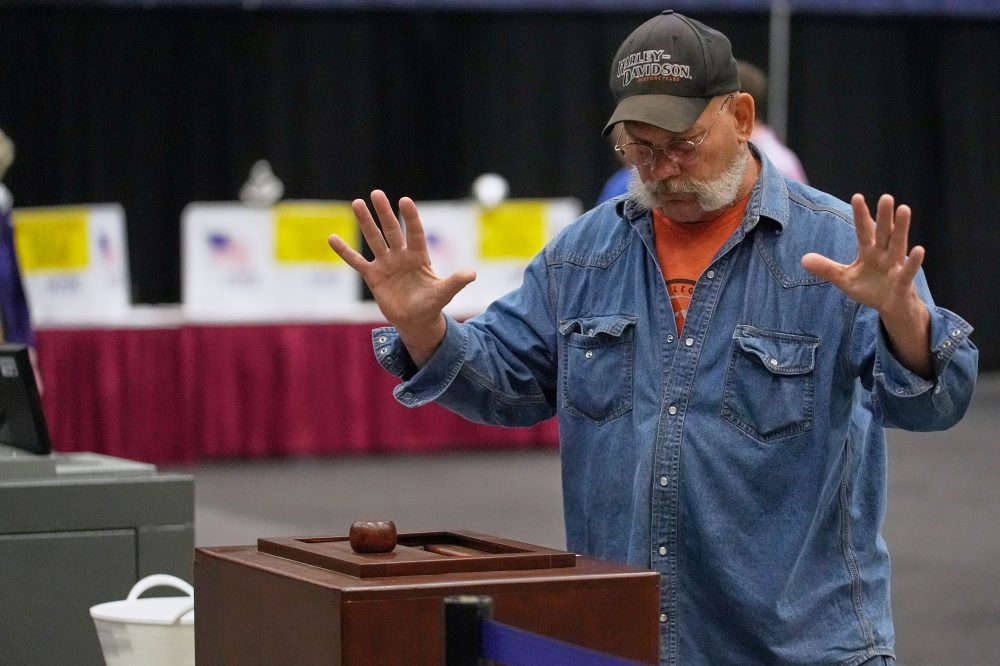
    Citizens in Indiana and Ohio cast ballots Tuesday in crucial primary contests that will measure former President Donald Trump’s continued sway over the Republican Party while setting the stage for November’s midterm elections. At the same time, political observers are monitoring a competitive Michigan state Senate race that has the potential to flip control of that legislative body.

    ___

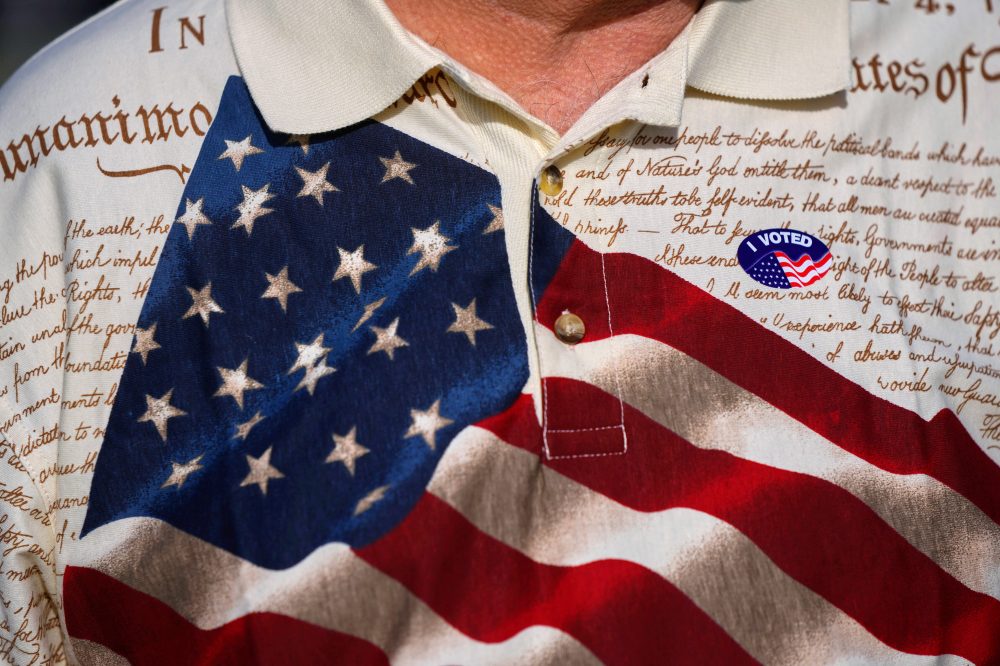
    This represents a curated collection of photographs assembled by Associated Press photo editors.

  • Ramaswamy Secures GOP Nomination for Ohio Governor in Trump-Endorsed Victory

    Vivek Ramaswamy has secured the Republican nomination for Ohio governor after receiving an endorsement from former President Donald Trump, positioning him for what analysts predict could be a closely fought general election battle.

    The entrepreneur will face off against Democratic candidate Amy Acton in November’s gubernatorial contest. Political observers note that Ohio has not elected a Democratic governor in two decades, yet the matchup between Ramaswamy and Acton has the potential to be surprisingly competitive this autumn.

  • Brazilian Leader Lula to Meet with Trump Thursday on Trade and Security Issues

    Brazilian Leader Lula to Meet with Trump Thursday on Trade and Security Issues

    WASHINGTON — Brazilian President Luiz Inácio Lula da Silva will visit the White House this Thursday for discussions with President Donald Trump focusing on economic cooperation and security concerns, according to a White House source who requested anonymity since the meeting hasn’t been formally announced.

    The relationship between the leftist Brazilian leader and Trump has experienced significant ups and downs following Trump’s return to office last year.

    Earlier tensions arose when Trump imposed substantial tariffs on Brazilian goods and criticized Brazilian officials for pursuing legal action against former Brazilian President Jair Bolsonaro related to alleged coup activities.

    The Trump White House implemented a 40% duty on Brazilian imports last July, adding to an earlier 10% increase. Trump defended these trade measures by claiming that Brazil’s policies and legal pursuit of Bolsonaro created an economic emergency situation.

    However, Trump subsequently reduced some of these tariffs as part of broader efforts to decrease costs for American consumers.

    The two leaders began improving their relationship during September’s United Nations General Assembly, followed by their initial one-on-one discussion in Malaysia during October and additional telephone communications.

    Bolsonaro faces allegations of orchestrating a scheme to remain in office after losing the 2022 election to Lula — accusations that mirror those Trump confronted following the January 2021 Capitol attack by his supporters attempting to prevent Democrat Joe Biden from assuming the presidency.

    During the previous month, Lula supported Pope Leo XIV amid heated exchanges between the religious leader and Trump concerning the Iranian conflict.

    The 80-year-old Brazilian president is seeking reelection in the upcoming October contest.

    Brazilian newspaper O Globo initially broke the story about Lula’s planned White House visit.

  • Former Ohio Senator Sherrod Brown Secures Democratic Primary Victory

    Former Ohio Senator Sherrod Brown Secures Democratic Primary Victory

    Sherrod Brown, the former United States Senator from Ohio, secured victory in Tuesday’s Democratic primary race, positioning himself for another shot at the Senate seat he previously occupied before losing his reelection bid in 2024.

    Major news organizations including the Associated Press and NBC News called the race in Brown’s favor following Tuesday’s primary voting. The win gives Brown the Democratic nomination as he seeks to return to the Senate position he held before his unsuccessful reelection attempt last year.

    Brown’s primary victory sets up what could be a competitive general election battle as the former senator works to reclaim his previous role representing Ohio in the U.S. Senate.

  • California Governor Candidates Face Off in Debate as Mail Voting Begins

    California Governor Candidates Face Off in Debate as Mail Voting Begins

    LOS ANGELES (AP) — Seven top contenders for California’s governor’s office took the debate stage Tuesday evening, coinciding with the start of mail-in ballot distribution across the state.

    The two-hour televised debate featured five Democratic hopefuls and two Republican candidates vying to succeed departing Democratic Governor Gavin Newsom. This marks the first time in decades that California has experienced such a competitive race for its top executive position, with over 50 individuals appearing on the ballot.

    Participating in the debate were Republican frontrunners Steve Hilton, a conservative media personality, and Chad Bianco, who serves as Riverside County Sheriff. The Democratic lineup included Xavier Becerra, who previously served as Health and Human Services Secretary under President Biden, former Congresswoman Katie Porter, wealthy entrepreneur Tom Steyer, San Jose Mayor Matt Mahan, and ex-Los Angeles Mayor Antonio Villaraigosa.

    The election takes place as the nation’s largest state grapples with persistent homelessness issues, wildfire insurance availability problems, anticipated budget deficits, and astronomical housing prices. Citizens are simultaneously dealing with rising costs for essential items like food, utilities, and gasoline.

    Republican candidates have criticized the state’s Democratic leadership for these ongoing problems, pointing to high taxation and excessive regulations that they claim are driving businesses away. Democratic contenders have focused on opposing President Donald Trump, who has given his endorsement to Hilton and maintains an adversarial relationship with California.

    As the campaign window narrows, candidates are seeking standout moments to capture voter attention. Mail-in ballots started reaching households this week ahead of the June 2 primary election deadline.

    Steyer, who transitioned from hedge fund management to progressive advocacy, has invested heavily from his personal wealth into advertising campaigns but hasn’t emerged as the clear leader. According to AdImpact’s tracking data, Steyer has allocated or spent close to $150 million on television, cable, and radio advertisements, significantly outspending all other competitors.

    California’s electoral system places all candidates on one ballot, with the top two vote-getters advancing to November’s general election regardless of political affiliation. Democratic party officials are concerned that their crowded candidate pool might allow two Republicans to advance, creating an unprecedented disaster for the party.

    The Republican Party hasn’t secured a statewide victory in California for twenty years, and Democratic voter registration exceeds Republican registration by approximately a 2-to-1 margin across the state.

    The race experienced significant upheaval last month following the sudden exit of Democratic Congressman Eric Swalwell, who withdrew amid sexual assault allegations. His departure from both the campaign and Congress removed one of the race’s leading contenders.

    CNN served as the host network for the debate.

  • DC Police Place 13 Officers on Leave Over Crime Data Investigation

    DC Police Place 13 Officers on Leave Over Crime Data Investigation

    Thirteen Washington D.C. police officers are now on administrative leave as the department continues investigating allegations of misconduct related to crime data reporting, interim Police Chief Jeffery Carroll announced during a Tuesday news conference.

    Carroll revealed that the officers were suspended Monday as part of an ongoing internal probe that launched earlier this year after the U.S. Attorney’s Office made a referral to the department.

    When pressed for details about the investigation, Carroll remained tight-lipped. “What I can tell you is there were allegations of misconduct that were made, and based on those allegations, members were investigated, and the outcome is related to these individuals,” he stated.

    The interim chief emphasized that none of the officers have been terminated and that they retain their administrative rights, including the ability to request an “adverse action panel” comprised of senior officers who review evidence and decide on potential disciplinary measures. “The administrative process must be allowed to take its course, and that process is outlined in our MPD general orders,” Carroll explained.

    The department’s crime data collection methods have come under intense examination over the past year, particularly after former President Donald Trump implemented a month-long emergency directive last summer that placed federal control over the police force and initiated a federal law enforcement initiative in Washington D.C., which his administration claimed was designed to combat crime.

    Trump repeatedly highlighted declining crime numbers during and following the operation as evidence that it had transformed the city into the nation’s safest. However, Washington Mayor Muriel Bowser and other municipal leaders maintained that crime rates were already decreasing before the federal intervention.

    GOP officials and the previous administration countered by raising concerns about potential data manipulation, questioning the effectiveness of the federal operation. Both the House Committee on Oversight and Government Reform and the Justice Department launched independent inquiries.

    A December report from the House Committee revealed that former police Chief Pamela Smith frequently intimidated, disciplined and sought revenge against police supervisors who reported crime increases to her. According to the Republican-controlled congressional committee’s findings, the police chief pressured staff members to alter departmental statistics to create artificially reduced crime figures.

    A concurrent investigation conducted by U.S. Attorney Jeanine Pirro’s office discovered that numerous MPD incident reports had been incorrectly categorized to present crime statistics as lower than actual figures. Both investigations concluded without criminal charges being filed. Pirro stated that addressing “these underlying issues” remained the MPD’s responsibility.

    House oversight committee chairman James Comer released a statement describing the department’s personnel action regarding crime data manipulation as “a step in the right direction.” However, Comer noted that the move simply validated his committee’s work and stated his expectation “to receive MPD’s internal report and all related documents to ensure crime data is reported accurately and that anyone responsible for manipulation is held accountable.”

    Carroll, who assumed the interim chief position in December, said Tuesday that officer evaluations and training programs are currently underway to improve data submission procedures. He noted that the internal investigation findings will not be made available to the public.

    The chief maintained that the department has achieved success in crime reduction over the past three years, particularly regarding homicides, shootings and carjackings.

    “We use crime statistics every day to help us with deployment across the city. I do have confidence in those numbers,” he said.

    Bowser has also requested an independent review by the city’s inspector general. That examination commenced in January.

  • Federal Immigration Detention Watchdog Office Shuttered by Trump Administration

    Federal Immigration Detention Watchdog Office Shuttered by Trump Administration

    The Trump administration has eliminated a federal oversight office that monitored abuse and misconduct within the nation’s immigration detention system, according to an announcement from the Department of Homeland Security.

    The Office of the Immigration Detention Ombudsman has been permanently shuttered, with its webpage now displaying “Archived Content” as of Tuesday. The office had previously been severely reduced last year when the Trump administration targeted various oversight agencies.

    Department of Homeland Security officials placed responsibility on Congress for the closure. “DHS did not shut down the Office of Immigration Detention Ombudsman – Congress did. The House passed the DHS appropriations bill without objection, and it was signed into law last week,” the department stated.

    However, the recent legislation that resolved a prolonged DHS shutdown did not specifically require the office’s elimination, according to initial reports from HuffPost.

    The closure comes amid President Trump’s intensified immigration enforcement policies, which he maintains are necessary to strengthen national security and reduce unauthorized border crossings. However, these measures have drawn sharp criticism from civil rights organizations.

    Human rights advocates argue that Immigration and Customs Enforcement detention practices and the administration’s deportation efforts violate constitutional protections and create dangerous conditions, especially for minority communities. They contend these policies undermine due process rights and freedom of expression.

    Concerns about detention facility conditions have escalated following a surge in custody deaths. ICE facilities reported at least 18 fatalities during the first four months of 2026, following 31 deaths in the previous year – marking a 20-year record.

    Recent controversial detention cases include Palestinian American Leqaa Kordia, who was held for one year and experienced a seizure while in custody. Kordia reported being shackled during her hospital treatment and lost 175 relatives during Israel’s military operations in Gaza.

    Another case involved Hayam El Gamal and her five children, ranging in age from 5 to 18, who were detained together. Each family member reportedly experienced declining health during their confinement.

    Both Kordia and the El Gamal family have since been released from detention.

    Federal officials reject allegations of mistreatment, maintaining that all detainees receive appropriate medical attention and full legal protections under the law.

  • Federal Government Files Lawsuit Against Denver’s 35-Year Assault Weapons Ban

    Federal Government Files Lawsuit Against Denver’s 35-Year Assault Weapons Ban

    Federal authorities initiated legal proceedings Tuesday against Denver and its police force, challenging a prohibition on assault weapons that Colorado’s most populous city has maintained for more than three decades.

    The legal challenge followed Denver leadership’s public refusal to comply with Justice Department demands to eliminate the local regulation that criminalizes possession of such firearms, which has been enforced since 1989.

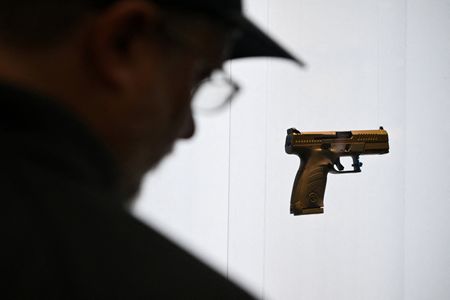
    The current Republican administration contends the prohibition infringes upon Second Amendment constitutional protections. Federal officials are also considering legal action against Colorado’s statewide restriction on high-capacity ammunition magazines, implemented after the 2012 Aurora theater tragedy.

    “The Constitution is not a suggestion and the Second Amendment is not a second-class right,” acting Attorney General Todd Blanche said in a statement on Tuesday. “Denver’s ban on commonly owned semi-automatic rifles directly violates the right to bear arms.”

    Justice Department representatives had contacted city leadership the previous week, requesting suspension of enforcement and proposing discussions to settle the dispute. However, during a Monday press briefing, Denver’s mayor and police commander firmly declined the federal request.

    “Our answer is hell no,” Mayor Mike Johnston said. “No, we will not roll back a common sense policy that has kept weapons of war off of these city streets for 37 years. No, we will not put first responders at greater risk every time they respond to a dangerous incident No, we will not go back to a time when folks are worried about walking into movie theaters or grocery stores or public elementary schools.”

    City officials implemented the weapons restriction during a time when gun violence concerns were particularly acute in the community.

    Colorado has experienced multiple mass casualty incidents in subsequent years — including the 1999 Columbine High School tragedy that claimed 14 lives, the Aurora cinema shooting that resulted in 12 deaths and 70 injuries, a 2021 Boulder grocery store attack killing 10 people, and a 2022 incident at a Colorado Springs LGBTQ venue that left five dead.

    Police Chief Ron Thomas noted he began his career with the department during the same year the weapons prohibition took effect, and credited the policy with helping combat gun violence. Among 2,100 firearms confiscated citywide last year, less than 2% were assault-style weapons, according to Thomas.

    In their court filing, federal prosecutors stated Denver’s restriction encompasses AR-15-style rifles possessed by approximately 16 million Americans nationwide. Government lawyers characterized these as “ordinary semiautomatic rifles” utilized for legitimate activities, “including but not limited to self-defense.”

    Justice Department lawyers have raised comparable objections to Colorado’s high-capacity magazine restrictions, which the state’s highest court validated in 2020. In correspondence dated April 28 to state leadership, the administration warned of potential litigation unless enforcement ceases and officials acknowledge the law’s unconstitutionality.

    “Law-abiding Americans own literally hundreds of millions of magazines identical to those banned in Colorado,” Assistant Attorney General Harmeet Dhillon wrote.

    Colorado’s top legal officer Phil Weiser responded that firearms equipped with high-capacity magazines pose significant public safety risks. In his statement, Weiser defended the restriction as appropriate.

    “Large-capacity magazine laws are responsible policies that decrease the deadly impacts of mass shootings and save lives,” he said.

  • California Man Faces New Assault Charge in White House Dinner Attack

    California Man Faces New Assault Charge in White House Dinner Attack

    WASHINGTON — Federal prosecutors have filed an additional charge against a California resident who allegedly attempted to breach the White House Correspondents’ Association dinner while trying to harm former President Donald Trump.

    Cole Tomas Allen, 31, from Torrance, California, now faces a fourth criminal count after a federal grand jury in Washington, D.C., added an assault charge involving a federal officer with a deadly weapon to his existing indictment on Tuesday.

    Allen originally faced three charges in a criminal complaint: attempting to assassinate the president and two weapons-related offenses. The assassination attempt charge alone carries a potential life sentence if he’s found guilty.

    The new assault charge indicates that investigators have concluded Allen was responsible for firing the shot that hit a Secret Service agent’s protective vest during the April 25 incident at the Washington Hilton. The attack disrupted and forced an early conclusion to one of Washington’s most prominent annual gatherings.

    During the incident, Allen reportedly carried multiple firearms and knives while rushing past a security barrier and aiming his weapon at an officer, who responded by firing five shots without striking anyone, according to officials.

    Acting Attorney General Todd Blanche had mentioned the previous week that investigators were examining additional ballistics evidence before reaching a final conclusion about who fired the shot that struck the officer.

    Allen’s defense team has challenged the prosecution’s claims regarding their client’s intentions to harm the president or his role in shooting the officer.

    “In sum,” they wrote, “the government’s entire argument about the nature and circumstances of the offense is based upon inferences drawn about Mr. Allen’s intent that raise more questions than answers.”

    Allen sustained injuries during the incident but was not struck by gunfire. Following his arrest, he was initially placed under suicide watch, though correctional officials lifted that designation over the weekend. His legal representatives have criticized his detention conditions, citing unnecessary confinement in a padded cell with continuous lighting, frequent strip searches, and restraints when outside his cell.

  • Forest Service Restructuring Plan Faces Sharp Criticism from Opponents

    Forest Service Restructuring Plan Faces Sharp Criticism from Opponents

    A comprehensive restructuring plan for the U.S. Forest Service unveiled by the Trump administration four weeks ago has sparked intense backlash from opponents who view the initiative as a disguised effort to tear apart the federal agency.

    The controversial reorganization proposal encompasses relocating the Forest Service’s main administrative offices as part of broader changes to the agency’s structure and operations.

    Detractors have characterized the sweeping changes as a “stealth dismantling” rather than the promised improvements touted by administration officials when the plan was first revealed last month.

  • Salisbury Schedules Public Input Session for Federal Community Development Grants

    Salisbury Schedules Public Input Session for Federal Community Development Grants

    Salisbury officials are seeking public input on their proposed spending plan for federal community development funding in the upcoming fiscal year.

    The city has released its draft Annual Action Plan for the fiscal year 2026 Community Development Block Grant program, which details how Salisbury plans to use federal dollars aimed at improving housing and community development initiatives.

    Residents can review the proposed allocation of these federal funds and provide feedback during the public comment period. The Community Development Block Grant program provides cities with federal resources to address local housing needs, infrastructure improvements, and community services.

    The draft plan is now available for public examination, giving community members the opportunity to understand how these federal dollars will be invested in local projects and services over the coming year.

    City officials encourage residents to participate in the review process to ensure the funding priorities align with community needs and goals.

  • Federal Agency Sues New York Times Over Alleged Reverse Discrimination

    Federal Agency Sues New York Times Over Alleged Reverse Discrimination

    The U.S. Equal Employment Opportunity Commission filed a federal lawsuit Tuesday against The New York Times, alleging the newspaper engaged in reverse discrimination by rejecting a white male employee for a senior editorial position to advance diversity objectives.

    Filed in Manhattan federal court, the complaint claims the Times violated Title VII of the Civil Rights Act of 1964 by discriminating against the male applicant based on his race and gender when filling a deputy real estate editor role.

    The newspaper has not yet provided a response to the allegations.

    This reverse discrimination case represents a shift in the EEOC’s enforcement strategy under Chair Andrea Lucas, reflecting alignment with President Donald Trump’s administration policies targeting diversity, equity and inclusion programs.

    Trump has publicly criticized DEI initiatives in corporate America and recently signed executive orders eliminating such programs from federal agencies after beginning his second presidential term. The president is separately pursuing a $15 billion defamation case against the Times, claiming the publication attempted to undermine his 2024 campaign and damage his business reputation.

    The EEOC is representing an 11-year Times employee who applied for the deputy real estate editor promotion in early 2025. The veteran journalist had been working primarily as a senior staff editor covering international news.

    According to the federal complaint, the Times had spent several years actively recruiting Black, Hispanic and female staff members to build a “more diverse, equitable and inclusive” newsroom, with leadership deciding in 2024 that more non-white “leaders” were needed.

    Despite his qualifications, the male editor never advanced to final consideration, the EEOC states. Instead, the position went to a multiracial female candidate who was selected over other finalists including a white woman, Black man and Asian woman.

    Court documents reveal that one interviewer described the chosen candidate as “a bit green overall” and stated “I don’t see her contributing to the expansion of the coverage in a significant way.”

    The commission alleges the Times implemented its discriminatory hiring practices “with malice or with reckless indifference” toward the white male editor’s civil rights.

    Federal officials are seeking to halt these employment practices at the newspaper and secure compensation for the affected editor, including back pay, future earnings and punitive damages.

    Lucas outlined her enforcement philosophy in a December Reuters interview, stating “my goal is to shift to a conservative view of civil rights,” which includes “attacking” all racial discrimination forms, including DEI programs.

    The agency has expanded its focus to include investigating whether Nike discriminated against white workers and filing suit against a Coca-Cola bottling company for allegedly barring men from employee networking events.

  • Primary Elections Underway in Ohio, Indiana with Key Senate Races

    Primary Elections Underway in Ohio, Indiana with Key Senate Races

    Primary elections are taking place Tuesday across Ohio and Indiana, along with a crucial state Senate contest in Michigan that will determine which party controls that chamber.

    Ohio’s Democratic primary features former Senator Sherrod Brown attempting to win back his previous position. On the Republican side for governor, tech entrepreneur and former presidential hopeful Vivek Ramaswamy is competing against auto-racing engineer and internet figure Casey Putsch for the nomination.

    Indiana’s primaries center around redistricting disputes from last year, when President Donald Trump’s national gerrymandering efforts stalled after half the state’s Republican senators joined Democrats in rejecting the proposal. Trump has now endorsed primary opponents targeting seven of those GOP state senators.

    Trump is supporting Republican challengers against GOP senators who voted against redistricting, with much of the groundwork being handled by Braun. Following Trump’s promise last year to campaign against GOP senators who blocked the redistricting effort and are running for reelection, Braun selected the candidates.

    Angered by Senate GOP leader Rodrick Bray, who opposed redistricting, Braun recruited seven Republican challengers who pledged to oppose Bray for leadership.

    Breaking with typical party practices, Braun has dedicated $3 million in advertising through his American Leadership PAC to target those incumbents at Trump’s request, according to data from ad-tracking company AdImpact.

    This spending includes nearly $900,000 specifically targeting Republican state Senator Spencer Deery of West Lafayette, who was the first Republican to oppose redistricting and is a mentee of former GOP Governor Mitch Daniels, another redistricting opponent.

    The Republican-majority Indiana Senate voted down the proposal in December that would have configured all nine congressional districts to favor the party, stopping progress on the national GOP redistricting push.

    This decision went against months of pressure from the White House, led by Vice President JD Vance, who made two trips to Indianapolis and brought many caucus members to Washington, where Trump called in to speak with the group.

    During Indiana’s consideration of the proposal, voters in Democratic-leaning California passed Proposition 50, enabling the state Legislature to circumvent the independent commission for redrawing districts in the next three biennial elections.

    Republicans believe they could gain up to nine additional seats through redrawn districts in Texas, Missouri, North Carolina and Ohio. However, Democrats estimate they could secure as many as 10 extra seats through new districts in California, Utah and Virginia, though legal battles continue in Missouri and Virginia.

    Emily Bohall Board, 37, an occupational therapist from Columbus, Indiana, explained she had never participated in a Republican primary until Tuesday. The redistricting issue motivated her to vote for Senator Greg Walker.

    “Greg Walker is the only option not supported by Donald Trump, and I have been very upset about everything Trump has done,” Board stated.

    Madison Long, 28, an attorney who also supported Walker, criticized his opponent Michelle Davis for her Trump connections.

    “She doesn’t have any promises of her own or any agenda of her own. Her goal is to just follow Trump,” Long explained. “I find that extremely concerning given the nature of the nationwide politics.”

    The Michigan race will decide whether Democrats retain their state Senate majority for the year’s remaining months.

    Democrats presently hold a 19-18 state Senate advantage. A victory by Democrat Chedrick Greene would preserve their majority.

    Should Republican Jason Tunney prevail, the Senate would be evenly split, complicating Democrats’ efforts to advance Governor Gretchen Whitmer’s legislative priorities. Although Democratic Lieutenant Governor Garlin Gilchrist II would cast tie-breaking votes, Republicans could effectively halt any legislation by ensuring not all members participate in votes.

    The race draws additional attention because this swing district in a battleground state may preview November’s midterm election outcomes.

    Vance endorsed Vivek Ramaswamy for governor and Jon Husted for Senate. Husted received an appointment to Vance’s former seat after he became vice president.

    “Well, I think Jon’s going to do a great job. He’s a good guy, and he’s been good for Ohio,” Vance commented.

    Vance was accompanied by his son Vivek, who completed a children’s paper ballot.

    “He voted for the Easter bunny over the tooth fairy,” the vice president noted.

    The Democrat is campaigning to return to the U.S. Senate.

    The former three-term senator, historically among Ohio’s most viable Democratic candidates, temporarily stepped away from politics following his 2024 reelection loss to Republican Bernie Moreno.

    Brown, 73, is competing against first-time Democratic candidate Ron Kincaid in his effort to defeat Husted this fall. Husted received his Senate appointment in January 2025 to occupy the seat previously held by Vice President JD Vance.

    Brown entered the Senate in 2007 following an upset victory over current Governor Mike DeWine, who was the incumbent at the time. Previously, Brown served seven terms as a U.S. representative and two terms as secretary of state. Earlier in his career, he became the youngest person elected to the Ohio House, serving eight years.

    Brown is married to Pulitzer Prize-recipient columnist Connie Schultz and has two adult children. The family resides in suburban Columbus.

  • Senate Republicans Propose $1B for White House Ballroom Security Following Threat

    Senate Republicans Propose $1B for White House Ballroom Security Following Threat

    WASHINGTON — Republican senators have introduced legislation that would allocate $1 billion toward enhancing White House security measures, specifically targeting improvements connected to President Donald Trump’s proposed ballroom initiative following a recent security incident.

    The Republican proposal, made public Monday evening, would earmark these funds for the U.S. Secret Service to implement “security adjustments and upgrades” for the ballroom initiative that Trump and his party have championed since Cole Tomas Allen allegedly attacked the April 25 media event at the Washington Hilton while armed with firearms and blades. The proposed law states these funds would support improvements to the ballroom initiative, “including above-ground and below-ground security features,” while explicitly prohibiting use of the money for elements unrelated to security.

    White House representative Davis Ingle commended Republicans for incorporating funding for this “long overdue” initiative, stating it would “provide the United States Secret Service with the resources they need to fully and completely harden the White House complex, in addition to the many other critical missions for the USSS.”

    This funding represents a component of broader legislation designed to support Immigration and Customs Enforcement and Border Patrol operations, as Democratic lawmakers have prevented funding for these departments since mid-February. While Congress approved bipartisan funding for the remaining Homeland Security Department on April 30 following an extended shutdown, Republicans are employing a partisan legislative strategy to advance ICE and Border Patrol funding independently. House representatives have yet to unveil their version, though Senate voting on their proposal is anticipated next week.

    The specific allocation of the $1 billion remains undefined, with the sum significantly surpassing the estimated $400 million construction cost for the ballroom itself. Court filings from the White House describe the East Wing initiative as “heavily fortified,” featuring underground bomb shelters, military facilities, and medical infrastructure beneath the ballroom space. Trump has advocated for bulletproof glass installation and drone-resistant capabilities.

    Legal challenges from the National Trust for Historic Preservation seek to halt the project’s construction, though a federal appeals court ruled last month that work may proceed during litigation.

    Administration officials have indicated private funding would cover construction expenses while taxpayer money would address security components. Some Republican lawmakers have proposed full public financing, citing the dinner security breach as evidence the president requires a protected venue for hosting events.

    “It would be insane” to conduct the dinner at a hotel venue again, stated Republican Senator Lindsey Graham of South Carolina, who partnered with Senator Katie Britt, R-Ala., to introduce ballroom construction funding legislation.

    Democratic representatives have pledged opposition to any ballroom funding efforts.

    “While Americans are struggling to make ends meet as a result of President Trump’s failed policies, Republicans are focused on providing tens of billions of dollars for the President’s vanity ballroom project and cruel mass deportation campaign,” declared Illinois Senator Dick Durbin, the senior Democrat on the Senate Judiciary Committee, which provides oversight for the U.S. Secret Service.

  • FCC Democrat Demands Thorough Review of Foreign Funding in Media Merger

    FCC Democrat Demands Thorough Review of Foreign Funding in Media Merger

    WASHINGTON – A Democratic member of the Federal Communications Commission is pushing for extensive scrutiny of international investments tied to a major media merger on Tuesday.

    The FCC received a request last month from Paramount Skydance seeking approval for foreign financial backing in their planned acquisition of Warner Bros Discovery. Commissioner Anna Gomez expressed concerns about the proposal, stating there are “serious, unresolved questions about how this foreign investment may jeopardize national security, and this commission has a legal obligation to answer them.”

    Gomez highlighted that the transaction includes investment from government-controlled funds from Saudi Arabia, Qatar, and Abu Dhabi. The merged entity would have control over CBS television stations and significant cable news properties, including CNN.

    The commissioner emphasized the need for thorough examination of these foreign ownership stakes before any approval moves forward.

  • Toxic Metals Found in White House Debris Dumped at D.C. Golf Course

    Toxic Metals Found in White House Debris Dumped at D.C. Golf Course

    WASHINGTON — Construction materials from White House East Wing demolition work contain dangerous levels of lead, chromium and additional hazardous substances, according to findings released by the National Park Service.

    A preliminary assessment conducted by Virginia-based Jacobs Engineering Group Inc. found that contaminated soil at East Potomac Golf Links contains toxic metals, PCBs, pesticide residue, petroleum derivatives and various chemicals exceeding standard laboratory detection thresholds. The historic golf facility is slated for renovation under President Donald Trump’s development plans.

    Since October, park service officials have been transporting excavated material from the White House East Wing to the golf course location. The engineering assessment, commissioned by the park service, indicates that more than 30,000 cubic yards of soil had been moved to the site through last month.

    The DC Preservation League, a nonprofit organization, has filed legal action against the Trump administration claiming the disposal operation violates regulations and poses potential health risks. The organization is also contesting the Republican administration’s takeover of the golf facility, located approximately 2 miles southeast of the White House, along with other city properties.

    This lawsuit represents one of multiple legal challenges to Trump’s ambitious plans for transforming public areas throughout the nation’s capital, including proposals to rename and close the Kennedy Center and construct a 250-foot triumphal monument near the Lincoln Memorial.

    Late last year, another preservation group initiated separate litigation aimed at blocking the administration’s East Wing demolition plans, which include constructing a ballroom facility with an estimated price tag of $400 million.

    An Interior Department representative, speaking for the agency that supervises the park service, stated via email Tuesday that White House soil “was tested multiple times by multiple parties, and this project passed all standards set by law.”

    Though the department refrains from discussing ongoing legal matters, “this thorough process was followed to ensure the transfer was safe for the public,” according to the email statement.

    Rebecca Miller, who serves as executive director of the Preservation League, indicated Tuesday that specialists continue examining the engineering assessment. Her organization remains concerned about potential violations of federal regulations, including the National Historic Preservation Act and National Environmental Policy Act.

    Construction debris has become so widespread across the golf course that players must navigate around accumulated piles, Miller explained. “If you Google you’ll see lots of photos of golfers walking past it,” she stated during an interview.

    Miller noted that the Trump administration’s renovation blueprint for the 105-year-old facility would fundamentally change its historical significance and original design by upgrading it to professional tournament standards.

    During Monday’s proceedings, a federal judge instructed government officials to provide advance notification before removing more than 10 trees while the legal dispute continues.

    U.S. District Court Judge Ana Reyes indicated during the virtual hearing that while she would not immediately grant a temporary restraining order, she would view any significant modifications made without proper notice unfavorably.

    Democracy Forward, a national legal advocacy group representing the Preservation League, announced in a statement that “further scrutiny will be required related to potential toxins that were dumped at East Potomac Park by the administration as part of the destruction of the East Wing of the White House.”

    Government test findings “suggest the Defendants dumped a cocktail of contaminants — and despite indications of the refuse’s contents, they continued dumping it,” the organization stated.

    Kevin Griess, superintendent of National Mall and Memorial Parks for the park service, testified during Monday’s court session that no immediate tree removal was planned, though safety evaluations are ongoing.

    Trump, known for his passion for golf, also intends to renovate a military golf facility near Washington that has hosted presidents for decades.

    The Interior Department emphasized its dedication to “continuing the relationships we have built with the local golf communities to ensure these courses are safe, beautiful, open, affordable, enjoyable, accessible, and world-class for people living in and visiting the greatest capital city in the world.”

  • Trump Renews Criticism of Pope Leo XIV Ahead of Rubio’s Vatican Trip

    Trump Renews Criticism of Pope Leo XIV Ahead of Rubio’s Vatican Trip

    WASHINGTON — President Donald Trump has launched fresh attacks against Pope Leo XIV, creating potential obstacles for Secretary of State Marco Rubio’s diplomatic mission to the Vatican scheduled for this week.

    During a Monday conversation with conservative host Hugh Hewitt, Trump accused the nation’s first American-born pope of supporting Iran and claimed his statements about treating immigrants with dignity are making the world more dangerous.

    “The pope would rather talk about the fact that it’s OK for Iran to have a nuclear weapon,” Trump stated during the Monday interview. “And I don’t think that’s very good. I think he’s endangering a lot of Catholics and a lot of people.”

    However, Pope Leo XIV has never advocated for Iran acquiring nuclear capabilities. Instead, he has promoted peaceful dialogue, condemned potential military action against Iran, and specifically criticized Trump’s threats targeting civilian populations. The pontiff has consistently emphasized that his positions reflect scripture and Catholic doctrine rather than political opposition to Trump.

    Trump’s renewed attacks could create additional challenges for Rubio during his Thursday meeting with the pope. The Secretary of State, who frequently finds himself explaining or softening Trump’s controversial statements regarding Europe, NATO, and Middle Eastern affairs, now faces a diplomatic issue with significant domestic political ramifications as midterm elections approach.

    According to State Department officials on Monday, Rubio, a devout Catholic who will have made at least three visits to Italy or Vatican City in the past year following this trip, is scheduled to travel to Rome and Vatican City Thursday and Friday.

    Last month, Trump attacked Leo XIV through social media posts, calling the pope weak on crime and terrorism due to his criticism of the administration’s immigration enforcement and deportation practices, as well as the Iran conflict. The pope responded by stating that God does not hear the prayers of those who pursue warfare.

    Following that exchange, Trump shared a social media image comparing himself to Jesus Christ, which he later removed after facing criticism. He has declined to offer an apology to Leo XIV and attempted to dismiss the controversial post by claiming he believed the image depicted him as a physician.

    The diplomatic friction has affected Italian politics as well, with Prime Minister Giorgia Meloni, traditionally a Trump supporter whom Rubio is also expected to meet during his visit, expressing disapproval of Trump’s papal criticism.

    In response, Trump has criticized Meloni as his frustration with NATO partners grows over what he perceives as insufficient backing for the Iran conflict — tensions that have recently led to Pentagon plans to withdraw thousands of American troops from Germany in the coming months.

  • Trump Restores Presidential Physical Fitness Award for U.S. Schools

    Trump Restores Presidential Physical Fitness Award for U.S. Schools

    WASHINGTON — In an Oval Office ceremony Tuesday, President Donald Trump announced the return of the Presidential Physical Fitness Award, reinstating a competitive fitness program that had been eliminated from American schools.

    The fitness award connects to the Presidential Fitness Test, which served as a standard in public education for many years before being discontinued under former President Barack Obama. Obama’s administration replaced it with a less competitive approach that emphasized long-term wellness over athletic achievement. Trump had issued an executive order last summer to bring back the original testing program, which dates to the 1950s.

    “We’re bringing it back,” Trump declared during the White House event, surrounded by young athletes and professional sports figures. “My administration is working very hard to defend America’s cherished athletic traditions and pass our values of excellence and competitiveness to the next generation.”

    The original assessment required students to complete various physical challenges, including running one mile and performing sit-ups. Students who scored in the top 15 percent for their gender across all test components earned the Presidential Physical Fitness Award. Officials have not yet announced specific details about how the restored program will operate.

    Trump presented the award while surrounded by key Cabinet officials, including Defense Secretary Pete Hegseth, Health Secretary Robert F. Kennedy Jr., Education Secretary Linda McMahon, and Housing Secretary Scott Turner. Young athletes who participate in football, volleyball, hockey, and golf joined the ceremony.

    According to Hegseth, the fitness test will become required at 161 educational institutions on military bases nationwide. He urged civilian schools throughout the country to adopt the program voluntarily.

    “We need young, strong, healthy Americans, whether you serve in the military or any other aspect of your life,” Hegseth stated during the Oval Office gathering. “The idea that competition is bad is the beginning of decline of a nation.”

    The president, known for his passion for golf and sports, stressed the connection between physical conditioning and mental strength, noting that elite competition is “all about the mind.” He complimented the athletes present while making light of his personal exercise routine.

    “I work out so much, like about one minute a day, max — if I’m lucky,” Trump joked.

    Trump indicated he would sign the inaugural copy of the restored award on Tuesday. Following the formal ceremony, the children were taken to the South Lawn for recreational activities set to music including “YMCA” and “Eye of the Tiger.” Trump participated as the young people practiced putting, played soccer, and threw baseballs with professional pitcher Noah Syndergaard.

    The president linked this fitness initiative to Kennedy’s “Make America Healthy Again” campaign. Kennedy, speaking at the event, called Obama’s decision to eliminate the test “very unfortunate” and pointed to rising childhood obesity rates across America.

    “We need to teach people how to win and how to lose and how to process victory and defeat,” Kennedy explained.

  • New Hampshire FAA Worker Charged With Threatening President Trump

    New Hampshire FAA Worker Charged With Threatening President Trump

    CONCORD, N.H. — A contractor working for the Federal Aviation Administration in New Hampshire has been arrested on federal charges for allegedly threatening to kill President Donald Trump via email.

    Dean DelleChiaie, 35, from Nashua, was scheduled for his first court hearing Tuesday facing charges of making interstate threats against the president. Federal prosecutors say DelleChiaie used his personal email on April 21 to send a message to the White House, identifying himself and stating he planned to “neutralize/kill” the president.

    The email threat came almost three months after law enforcement and Secret Service agents had already interviewed DelleChiaie regarding suspicious internet searches conducted on his FAA work computer, where he worked as a mechanical engineering contractor.

    Court filings reveal that in January, DelleChiaie used his workplace computer to look up information about bringing firearms into federal buildings, what percentage of Americans want the president killed, where the vice president lives, and the names of the vice president’s children. When DelleChiaie later requested that the FAA’s IT department erase his browsing history, they instead alerted authorities, leading to his work suspension.

    During a February 3 interview at his residence, DelleChiaie acknowledged conducting the searches and expressed regret, according to Secret Service Special Agent Nathaneal Gamble’s report. He revealed to investigators that he possessed three firearms, was experiencing depression, and while he disagreed with Trump administration policies, he claimed to have no actual interest in carrying out an assassination.

    DelleChiaie’s legal representative did not return calls for comment. His arrest on Monday occurred just over a week following an incident where an armed individual attempted to breach the White House Correspondents’ Association dinner carrying weapons. In that separate case, Cole Tomas Allen faces charges after a Secret Service agent was shot but sustained only minor injuries thanks to protective gear.

  • Analysis: FBI Director Accused of Using AI to Copy Beastie Boys Music Video

    Analysis: FBI Director Accused of Using AI to Copy Beastie Boys Music Video

    Federal Bureau of Investigation Director Kash Patel is facing allegations that he utilized artificial intelligence technology to replicate content from a classic Beastie Boys music video for official FBI social media content.

    According to a detailed examination conducted by NPR, promotional material shared by Patel on social media appears to contain imagery that closely mirrors scenes from the legendary hip-hop group’s 1994 “Sabotage” video, which was directed by Spike Jonze.

    The investigation identified no fewer than six instances where footage in the FBI’s promotional content appears to match corresponding scenes from the original Beastie Boys production. Technology specialists consulted for the analysis concluded that artificial intelligence software was most likely employed to recreate the distinctive visual elements.

    The opening sequence of the FBI video particularly resembles the iconic beginning of the “Sabotage” music video, according to the NPR research. The similarities extend beyond coincidence, suggesting deliberate replication of the original artistic work.

    This development raises questions about the appropriate use of AI technology by government agencies and potential copyright concerns regarding the unauthorized recreation of protected creative content.

  • Delaware Recognizes Outstanding State Workers at Annual Awards Event in Dover

    Delaware Recognizes Outstanding State Workers at Annual Awards Event in Dover

    Delaware’s state government workforce received well-deserved recognition during the Governor’s Annual Employee Awards Ceremony, which took place in Dover as part of Public Service Recognition Week from May 3-9, 2026.

    The ceremony, hosted at the Modern Maturity Center, showcased the outstanding dedication, innovation, and bravery demonstrated by public servants throughout Delaware’s government agencies. Officials used the gathering to acknowledge the vital contributions these employees make to serve residents across the First State.

    For those unable to attend in person, the awards presentation was broadcast live online and remains accessible for viewing on the state’s digital platforms.

  • Michigan Professor Sparks Controversy with Pro-Palestinian Graduation Speech

    Michigan Professor Sparks Controversy with Pro-Palestinian Graduation Speech

    The University of Michigan has issued an apology following controversial remarks made during Saturday’s spring graduation ceremony in Ann Arbor, where a faculty leader commended pro-Palestinian student demonstrators.

    Derek Peterson, a professor of history and African studies who was stepping down as Faculty Senate chair, went off-script during his commencement address to highlight what he described as student activism against the “injustice and inhumanity of Israel’s war in Gaza.” Peterson connected recent pro-Palestinian demonstrations to the university’s broader tradition of student protest movements spanning the past two years.

    While Peterson’s comments received applause from some attendees, they quickly sparked backlash from university officials and community leaders. President Domenico Grasso condemned the remarks as “hurtful and insensitive to many members of our community,” emphasizing that Peterson had strayed from his pre-approved speech.

    “The comments were inappropriate and do not represent our institutional position,” Grasso stated, adding that commencement ceremonies should focus on “celebration, recognition and unity” rather than serve as venues for personal political statements. The president announced plans to reassess future graduation procedures, though no disciplinary measures against Peterson were revealed.

    Board of Regents member Sarah Hubbard expressed her dismay on social media, describing the speech as “incredibly troubling and disappointing.” She called for the board to establish clearer guidelines regarding faculty behavior at university events.

    Republican candidates for the Board of Regents, Michael Schostak and Lena Epstein, issued a combined response criticizing the use of graduation as “a stage for political activism that leaves students feeling excluded or uncomfortable.”

    Peterson stood by his remarks when speaking with CBS News Detroit, arguing that “the idea that graduations should be apolitical is ridiculous.” He maintained that students should be encouraged to engage with controversial topics rather than shy away from them.

  • Federal Immigration Agency Offers Financial Incentives to Local Police Departments

    Immigration and Customs Enforcement is providing substantial financial packages to encourage local law enforcement agencies to participate in a program that authorizes their officers to conduct immigration arrests.

    According to police administrators, the funding opportunities, which cover officer salaries, equipment purchases, and vehicle acquisitions, present attractive incentives for departments considering participation in the federal initiative.

    The program grants local police officers the legal authority to make arrests related to immigration violations, expanding their typical law enforcement duties beyond traditional local crimes.

    Law enforcement leaders indicate that the financial support being offered by the federal agency makes the program particularly appealing to departments that may be facing budget constraints or equipment needs.

  • White House Claims Drug Price Deals Could Save Economy $529B Over Decade

    White House Claims Drug Price Deals Could Save Economy $529B Over Decade

    WASHINGTON — Economic advisers at the White House project that pharmaceutical agreements negotiated by President Donald Trump’s administration could generate $529 billion in economic benefits over the coming decade by bringing U.S. prescription medication costs in line with international pricing.

    The projections, secured by The Associated Press, represent the first comprehensive economic modeling of a policy central to Trump’s electoral strategy ahead of November’s congressional races. Democratic officials remain skeptical of the administration’s savings calculations, and these latest figures are expected to prompt further scrutiny of the underlying data.

    Affordability concerns dominate voter priorities, with energy costs related to the Iran conflict intensifying public financial worries. Trump has attempted to tackle these concerns by emphasizing his pharmaceutical negotiations aimed at eliminating the significant price gap between U.S. drug costs and those in other wealthy nations.

    “Now you have the lowest drug prices anywhere in the world,” Trump declared during a Friday gathering of senior citizens in Florida. “And that alone should win us the midterms.”

    White House Council of Economic Advisers staff conducted the economic modeling. Their calculations also suggest that federal and state Medicaid programs could collectively save $64.3 billion throughout the next ten years under Trump’s “most favored nation” pricing strategy.

    Limited public disclosure of the agreements between the Trump administration and 17 major drug manufacturers makes independent verification of the projected benefits challenging. The White House study attempted to forecast savings as additional medications enter the market under Trump’s framework, with one scenario suggesting potential decade-long savings reaching $733 billion.

    Trump and his Health and Human Services Department have characterized the pharmaceutical agreements as groundbreaking and pushed Congress to enshrine their principles in legislation. Democratic legislators have disputed the administration’s benefit claims. Senate Finance Committee Ranking Member Ron Wyden of Oregon, along with 17 Democratic Senate colleagues, introduced an April proposal demanding the administration reveal the terms of pharmaceutical company agreements.

    “If these deals are so great, why is the Trump administration afraid of showing them to the public?” Wyden questioned when unveiling the proposal. Health Secretary Robert F. Kennedy Jr. indicated his department would provide details excluding proprietary data or trade secrets.

    The Trump administration’s estimated benefits would represent significant savings given that Americans purchased $467 billion worth of prescription medications in 2024, based on the latest available federal statistics. The analysis assumes foreign nations would increase their prescription drug payments, diversifying pharmaceutical revenue streams while maintaining companies’ research and development capabilities.

    The Congressional Budget Office projected in October 2024 that a comparable plan to Trump’s eventual approach might lower prescription drug costs by over 5%, though the reduction “would probably diminish over time as manufacturers adjusted to the new policy by altering prices or distribution of drugs in other countries.”

    The magnitude of the Trump administration’s claimed savings will likely increase Democratic oversight, as they argue that any price reductions would be neutralized by higher costs for medications outside the “most favored nation” structure. A primary Democratic criticism centers on pharmaceutical companies increasing profit margins while participating in the administration’s program.

    Staff members working with Senator Bernie Sanders of Vermont published an April analysis examining 15 companies participating in the drug pricing initiative, discovering their collective profits surged 66% in the previous year to $177 billion. The study highlighted that Trump’s tax legislation from last year “exempted or delayed many of the most expensive drugs” from Medicare price negotiations.

    The Trump administration has dismissed Sanders’ analysis as fundamentally flawed, arguing it relies on pharmaceutical list prices rather than the actual costs patients pay.

  • White House Claims Drug Pricing Agreements Could Save $529B Nationwide

    White House Claims Drug Pricing Agreements Could Save $529B Nationwide

    WASHINGTON — Economic advisers at the White House project that pharmaceutical agreements negotiated by President Donald Trump’s administration could generate $529 billion in nationwide savings over the coming decade by aligning U.S. prescription medication costs with international pricing.

    The economic assessment, which The Associated Press reviewed, represents the first comprehensive financial projections for a policy central to Trump’s electoral strategy ahead of November’s congressional midterm races. Democratic officials have expressed skepticism about the administration’s savings calculations, and these latest figures are expected to prompt further scrutiny of the underlying data.

    Affordability concerns remain a top priority for voters, with rising energy costs related to the Iran conflict adding to public economic worries. Trump has attempted to address these affordability issues by emphasizing his administration’s negotiations with pharmaceutical companies to eliminate the significant price disparities between U.S. medications and those sold in other wealthy nations.

    “Now you have the lowest drug prices anywhere in the world,” Trump declared during a Friday campaign event attended by senior citizens in Florida. “And that alone should win us the midterms.”

    White House Council of Economic Advisers staff conducted the financial analysis. Their calculations also suggest that federal and state governments could collectively reduce Medicaid expenses by $64.3 billion throughout the next ten years under what Trump terms his “most favored nation” drug pricing approach.

    Limited public information about the agreements between the Trump administration and 17 major pharmaceutical corporations makes independent verification of the projected cost reductions challenging. The White House study attempted to forecast savings as additional medications enter the market under Trump’s pricing structure, with one calculation in the report suggesting potential decade-long savings of $733 billion.

    Trump and his Health and Human Services Department have promoted these drug pricing agreements as revolutionary changes while encouraging Congress to establish their framework in federal law. Democratic legislators have disputed the administration’s savings assertions. In April, Senate Finance Committee Ranking Member Ron Wyden of Oregon joined 17 Senate Democrats in proposing legislation that would mandate the administration reveal the terms of pharmaceutical company agreements.

    “If these deals are so great, why is the Trump administration afraid of showing them to the public?” Wyden questioned when introducing the proposal. Health Secretary Robert F. Kennedy Jr. indicated his department would provide information that excludes proprietary data or trade secrets.

    The Trump administration’s estimated savings would represent a significant portion of the $467 billion Americans spent on prescription medications in 2024, based on the latest available government figures. The analysis assumes that international markets would also increase their prescription drug payments, which would expand pharmaceutical companies’ revenue streams and maintain their capacity for developing innovative treatments.

    In October 2024, the Congressional Budget Office projected that a plan resembling Trump’s eventual approach could lower prescription drug costs by more than 5%, though the reduction “would probably diminish over time as manufacturers adjusted to the new policy by altering prices or distribution of drugs in other countries.”

    The magnitude of savings claimed by the Trump administration will likely increase Democratic oversight, as they argue that any price decreases would be counterbalanced by higher costs for prescription drugs excluded from the “most favored nation” system. Democrats primarily criticize that pharmaceutical companies have expanded their profit margins while collaborating with the administration.

    Staff members working for Senator Bernie Sanders of Vermont released an April analysis examining 15 companies participating in the drug pricing initiative, discovering their combined profits increased 66% in the previous year to $177 billion. The report highlighted that Trump’s tax legislation from last year “exempted or delayed many of the most expensive drugs” from Medicare price negotiations.

    The Trump administration has rejected Sanders’ criticism as fundamentally flawed, arguing that his analysis relies on pharmaceutical list prices rather than the actual costs patients pay.

  • Federal Officials Want Names of All Fulton County GA Election Workers from 2020

    Federal Officials Want Names of All Fulton County GA Election Workers from 2020

    ATLANTA — Federal prosecutors are demanding contact details for every individual who participated in Georgia’s 2020 election operations in Fulton County, a Democratic-leaning area that former President Donald Trump has repeatedly claimed engaged in massive voter fraud that he alleges denied him victory over Joe Biden in that state.

    County attorneys submitted a motion Monday evening attempting to block a grand jury subpoena requesting names and contact details of government workers and volunteer poll staff. This development follows the FBI’s January visit to a Fulton County election storage facility where agents confiscated ballots and additional materials from the 2020 contest, which Georgia’s official results confirmed Trump lost to Biden by 11,779 votes from almost 5 million ballots cast. Trump continues to maintain the 2020 contest was fraudulently taken from him despite court rulings and conclusions from his own attorney general stating otherwise.

    In Monday’s legal document, attorneys claim the subpoena aims to “target, harass and punish the President’s perceived political opponents.” County lawyers contend the demand is “grossly overbroad and untethered to any reasonable need.”

    The January confiscation of ballots and additional materials from Fulton County marked the beginning of several actions by Trump’s Republican administration to secure historical election documentation from key battleground states. Federal agents used a subpoena in March to obtain materials connected to a 2020 presidential election review in Arizona’s Maricopa County. Additionally, the Justice Department ordered Michigan’s Wayne County in April to surrender ballots from the 2024 contest, which Trump won against Biden’s running mate, Kamala Harris.

    Federal prosecutors are simultaneously pursuing legal battles with multiple states for voter information containing private personal details. Election administrators, including Republican officials, have stated that releasing such data would breach state and federal privacy regulations.

  • High Court Blocks Abortion Pill Restrictions After Delaware AG Joins Coalition

    High Court Blocks Abortion Pill Restrictions After Delaware AG Joins Coalition

    Delaware Attorney General Kathy Jennings teamed up with officials from 22 other states and Washington D.C. to challenge federal court restrictions on access to mifepristone, an abortion medication, prompting the U.S. Supreme Court to block those limitations.

    The multi-state coalition petitioned the nation’s highest court to halt a decision from the Fifth Circuit Court of Appeals that would have limited availability of the medication that advocates describe as both safe and effective.

    Following the advocacy efforts by Jennings and her counterparts across the country, the Supreme Court granted the request and issued a stay preventing the restrictions from taking effect.

  • GOP Eyes Gubernatorial Gains Despite Challenging Political Climate in 2026

    GOP Eyes Gubernatorial Gains Despite Challenging Political Climate in 2026

    Despite facing what appears to be an unfavorable national political climate, Republican candidates may discover opportunities for electoral success through the numerous gubernatorial contests taking place across America this November.

    This election cycle will feature gubernatorial races in 36 states, providing the GOP with multiple pathways to potentially expand their influence at the state level even as broader political winds may not be blowing in their favor.

    The large number of governor’s races represents significant opportunities for both major political parties to shape policy direction and governance in states nationwide through the remainder of the decade.

  • Court Battles Over Abortion Pill Access Reshape Midterm Election Landscape

    Court Battles Over Abortion Pill Access Reshape Midterm Election Landscape

    NEW YORK (AP) — Consecutive federal court decisions regarding abortion medication access are pushing this divisive political topic back into the national conversation as midterm elections approach, with control of Congress hanging in the balance during President Donald Trump’s second term.

    A federal appeals court decision on Friday limited mail-order access to mifepristone prescriptions, representing the most significant change to federal abortion policy since the Supreme Court’s 2022 ruling that permitted states to implement abortion prohibitions. This medication represents one of the nation’s most frequently used abortion procedures.

    The nation’s highest court intervened Monday to temporarily maintain widespread access to the medication while continuing its review of the matter, potentially leading to a ruling with far-reaching implications for both patients and healthcare providers.

    While it remains premature to determine how these recent court actions might influence this year’s electoral outcomes, particularly when economic concerns are anticipated to dominate voter priorities, advocates from both camps hope the developments will mobilize supporters.

    Organizations supporting abortion access are already developing strategies to engage voters who may be more inclined to support Democratic candidates due to concerns about additional restrictions. Conversely, anti-abortion activists who believe the Republican-controlled federal government has fallen short in banning these medications are cautioning that traditionally reliable Republican voters might abstain from future elections. One prominent anti-abortion leader described the situation as “a five-alarm crisis” for the GOP.

    Following the 2022 reversal of Roe v. Wade, multiple states approved constitutional amendments protecting abortion rights, generating unprecedented voter participation that often benefited Democratic candidates in other races.

    However, Democratic pollster Celinda Lake suggests the issue had begun losing some influence with voters—not due to diminished Democratic concern, but because many felt the “damage has been done.”

    Despite Friday’s ruling being temporarily suspended, it served as a reminder to voters that their access to abortion medication via telehealth services isn’t secure, even in states with protected abortion rights, Lake explained. This situation presents a significant but “horrific” chance to inform voters about what’s at risk in this year’s midterm contests, she noted.

    Mini Timmaraju, president and CEO of the abortion rights organization Reproductive Freedom for All, indicated that voter outreach regarding the instability of abortion access will feature prominently in her group’s midterm strategy. This includes reaching out to voters who backed Trump while simultaneously supporting abortion rights in their 2024 state elections.

    “The only way for us to really stop this back and forth is to have abortion access be legal in all 50 states,” she stated. “The only way we do that is through federal legislation, which makes the midterm elections even more urgent.”

    The Republican coalition faces challenges from an increasingly frustrated segment of abortion opponents who anticipated Trump would deliver on his commitment to serve as the “most pro-life president in history” but claim they haven’t witnessed such action.

    The most pressing concern involves a Food and Drug Administration safety evaluation of mifepristone that anti-abortion organizations hope will lead to additional restrictions, including prohibiting its prescription through telehealth services. These groups have pressed FDA commissioner Dr. Marty Makary to expedite the review, while the administration maintains it “is taking care to do this study properly and in the right way.”

    Monday saw the anti-abortion organization SBA Pro-Life America intensify its rhetoric, demanding Makary’s dismissal over this matter.

    “This is a five-alarm crisis for the pro-life movement and for the GOP,” stated the organization’s president Marjorie Dannenfelser. “The GOP cannot win without its base and simply will not get the enthusiasm that drives turnout without leadership from the top.”

    Trump, whose initial presidential term appointments enabled the Supreme Court majority that overturned Roe, has implemented some measures that abortion opponents have applauded, including attempts to deny funding to Planned Parenthood and initiating investigations into states requiring state-regulated insurance plans to include abortion coverage.

    Nevertheless, he has frequently attempted to avoid the abortion debate, stating his belief that individual states should decide the matter. The president supported abortion rights publicly before entering politics in 2015, and his wife, Melania Trump, declared her broad support for abortion rights in 2024.

    Anti-abortion activists indicate they have no intention of allowing Trump to sidestep this issue for his remaining time in office. Marc Wheat, general counsel for former Vice President Mike Pence’s political advocacy organization Advancing American Freedom, said his group will intensify pressure on the administration. This includes pushing the FDA to quickly release mifepristone-related documents owed to the group through litigation.

    “President Trump thinks that pro-life is a loser,” Wheat commented. “He might see that the pro-lifers may not turn out in the numbers that he needs.”

    While Trump and the Republican-controlled Congress encounter growing pressure from conservative factions to limit medication abortion access, Republicans nationwide are far from unified on this stance.

    Approximately two-thirds of Americans opposed nationwide mifepristone prohibitions, according to a KFF survey conducted in late 2024. Most Democrats and independents rejected such bans, while Republican opinion was more divided.

    American perspectives on abortion remain nuanced, with roughly two-thirds of adults believing abortion should remain legal in all or most circumstances, based on AP-NORC polling data. Relatively few Americans think abortion should be prohibited in every situation.

    At least one abortion opponent, Americans United for Life CEO John Mize, said his focus remains on gradual progress rather than the comprehensive changes some allies advocate. While he wishes the FDA would accelerate its safety review, he acknowledges that not all Americans share his position.

    “I think there is advancement being made in a positive direction,” he said. “While it might not meet the pace that many in the pro-life movement want to see, I think it meets the acceptable place of where we’re at culturally.”

  • Former Ohio Senator Brown Leads Democratic Push to Retake U.S. Senate Control

    Former Ohio Senator Brown Leads Democratic Push to Retake U.S. Senate Control

    Former Ohio Senator Sherrod Brown appears poised to secure victory in Tuesday’s Democratic primary election, positioning himself as a key figure in his party’s strategy to wrestle control of the U.S. Senate away from Republicans this November.

    The Buckeye State has shifted increasingly toward the Republican column over the last ten years, making Brown’s political comeback attempt—following his 2024 electoral defeat—a crucial indicator of whether President Donald Trump’s waning approval ratings are altering the political landscape for the 2026 midterm contests.

    Democratic strategists, who began this midterm cycle with slim prospects of regaining Senate control, now perceive a more favorable battleground as Americans express dissatisfaction with rising costs, the ongoing conflict with Iran, and other contentious issues during Trump’s administration.

    The 73-year-old Brown suffered defeat in his 2024 reelection campaign against Republican Bernie Moreno, a former automobile dealership owner who successfully appealed to working-class voters abandoning the Democratic Party and secured Trump’s backing.

    Brown’s likely November opponent will be Senator Jon Husted, 58, who received his appointment to the position in January 2025 following JD Vance’s elevation to vice president. Husted faces no challengers in the Republican primary contest.

    November’s special election will determine who serves the final two years of Vance’s Senate term.

    Political observers characterize the Husted-Brown matchup as highly competitive, with recent polling data showing a tight race—a stark departure from Trump’s commanding 2024 Ohio performance, where he defeated Democratic presidential candidate Kamala Harris by an 11-point margin.

    Ohio, devastated by significant manufacturing job losses in steel and automotive sectors over recent decades, represents one of four states where Democrats plan major resource investments as they pursue ending the GOP’s 53-47 Senate advantage.

    Regaining Senate control presents significant challenges for Democrats, requiring them to protect multiple vulnerable seats while simultaneously capturing at least four Republican-controlled positions.

    Party leaders believe they possess growing national momentum as voters evaluate Trump’s presidency approaching its midpoint, expressing concern over escalating fuel prices and other costs, the Iranian conflict, and immigration enforcement policies many consider excessive.

    A Reuters/Ipsos survey conducted April 24-27 revealed Trump’s approval rating at 34%, declining from 47% when his second term began. Only 21% of respondents endorsed his inflation management, a primary voter concern.

    According to the nonpartisan Cook Political Report, Brown’s “economic populism may be uniquely suited to this moment when affordability concerns are paramount.”

    However, a Bowling Green State University poll from April 7-14 found 55% of Ohio respondents identifying with Trump’s MAGA movement, which Husted’s Republican Party has embraced.

    Outside Ohio, Democrats anticipate opportunities to claim North Carolina’s vacant Senate seat and challenge Maine’s longtime incumbent Senator Susan Collins, who likely faces a progressive Democratic challenger gaining national recognition.

    Unexpectedly, Democrats also see potential in heavily Republican Alaska, where GOP Senator Dan Sullivan may confront former Democratic Representative Mary Peltola, a candidate with demonstrated bipartisan appeal.

    Simultaneously, Democrats must allocate campaign resources to Michigan, where retiring Democratic Senator Gary Peters narrowly won reelection in 2020. Trump carried Michigan in both 2016 and 2024 presidential races.

    Competitive contests may emerge over the coming months in Iowa, where Republican Senator Joni Ernst is stepping down, and Georgia, a battleground state where Democratic Senator Jon Ossoff seeks reelection.

    Political experts will carefully observe Tuesday’s Ohio primary turnout levels. Strong participation for Brown could signal whether Democrats might achieve an unexpected Senate victory.

    Additionally, three Ohio House of Representatives contests could provide insights into Democratic prospects for capturing that chamber, currently under narrow Republican control.

    Ohio recently implemented a redistricting plan designed by Republicans to strengthen their November election advantages.

    This redistricting threatens Democratic Representative Marcy Kaptur’s four-decade House tenure. While expected to win her primary, her northwest Toledo-area district now includes substantially more Trump supporters, making her a general election underdog, analysts say.

    Likewise, Democratic Representative Greg Landsman’s Cincinnati district became more Republican-leaning, though he maintains an advantage against Tuesday’s likely GOP primary winner.

    Democratic Representative Emilia Sykes’ redrawn Akron-area district may improve her November chances in a moderately competitive race against whichever candidate emerges from a crowded Republican primary field. Sykes runs unopposed in the Democratic primary.

  • Ohio, Indiana Primaries Test Trump’s Political Influence in Key States

    Voters in Ohio and Indiana headed to the polls Tuesday for primary elections that will provide fresh insights into Donald Trump’s continuing influence within the Republican Party.

    In Indiana, the former president is working to remove Republican lawmakers who opposed his redistricting efforts in the state. Trump has endorsed challengers against incumbent Republicans who stood in the way of his agenda during previous legislative sessions.

    Meanwhile, Ohio’s primary races are drawing attention as Democrats see potential opportunities amid increasing voter frustration with Trump-aligned policies. The state’s contests could signal whether Republican voters remain firmly behind Trump-endorsed candidates or are beginning to look elsewhere for leadership.

    These primary battles come as political observers nationwide watch for signs of how Trump’s endorsement power may impact the broader political landscape heading into future election cycles. The results could influence campaign strategies and candidate recruitment efforts in both parties.

    Polling locations across both states reported steady voter turnout throughout the day, with final results expected to provide clarity on the strength of Trump’s political brand in these crucial swing state regions.

  • Trump Targets GOP Lawmakers in Indiana; Major Races Set in Ohio, Michigan

    Trump Targets GOP Lawmakers in Indiana; Major Races Set in Ohio, Michigan

    Former President Donald Trump’s effort to exact political revenge on Republicans who oppose him continues Tuesday with primary elections targeting seven Indiana state senators who blocked his redistricting proposals designed to boost GOP representation in Congress.

    Across state lines in Ohio, primary contests for U.S. Senate and governor will determine the final candidates for two high-stakes races that could have national consequences.

    Meanwhile, Michigan voters in a competitive district will select someone to fill an empty state Senate position, with results that could alter the power dynamic in this key swing state.

    Trump has set his sights on seven GOP state senators in Indiana who rejected his strategy to reshape congressional maps in ways that would benefit Republican House candidates.

    Organizations supporting the former president have poured millions into campaign advertisements, representing an unusual amount of money and focus for contests that normally receive little attention.

    These contests serve as a measure of Trump’s continued influence within the Republican Party as GOP members express growing concern about November’s midterm elections.

    The outcomes will send a message to Republicans nationwide about the potential consequences of separating themselves from Trump, even as his approval ratings decline. They will also reveal whether the former president can still effectively threaten retribution against party members who oppose him.

    All seven targeted state senators represent areas Trump won in 2024, with most victories coming by margins of 20 percentage points or greater.

    The districts worth monitoring include 1, 11, 19, 21, 23, 38 and 41.

    Ohio’s primary serves as preparation for the main event. Despite the state’s shift toward conservatism, Democrats see Ohio as crucial to regaining control of the U.S. Senate.

    Democratic hopes rest on former Sen. Sherrod Brown, who previously lost Ohio’s other Senate seat to Bernie Moreno in 2024.

    Brown is anticipated to compete against Republican Sen. Jon Husted, who received an appointment last year to replace JD Vance after Vance became vice president.

    This contest is a special election to complete Vance’s remaining two-year term.

    For governor, Republican Vivek Ramaswamy has leveraged his national profile, technology sector ties, and Trump endorsement into unprecedented fundraising success. Rather than focusing on Republican opponent Casey Putsch, he’s directing his campaign events and television spots toward the general election.

    Putsch, an engineer and vehicle designer who brands himself as “The Car Guy,” has built a following through bold YouTube content that challenges Ramaswamy and criticizes national Republicans on issues including the Epstein documents, energy-intensive data facilities, and Israel policy.

    Amy Acton, who previously served as Ohio’s public health director and was instrumental in the state’s COVID-19 response, faces no opposition for the Democratic nomination.

    A special election for a central Michigan state Senate position carries significant weight beyond its local scope.

    This race represents another measure of voter enthusiasm in a string of special elections that have consistently favored Democrats since Trump’s return to office. The results could also impact Michigan’s legislative balance. A Democratic win would secure the party’s state Senate majority, while a Republican victory would create a 19-19 deadlock.

    The district shows close political divisions, with Democrat Kamala Harris defeating Trump by under 1 percentage point in the 2024 presidential race.

    The position has remained unfilled for over a year, following Democrat Kristen McDonald Rivet’s resignation to join Congress.

    Democrats have demonstrated unexpected success in special elections and off-cycle races nationwide, securing victories in unlikely locations and substantially closing margins even in defeats.

    While this pattern may not persist through midterm elections with higher voter participation, it has nevertheless motivated Democrats and concerned Republicans about maintaining their congressional control.

  • GOP Primary Battle Tests Trump’s Sway Over Indiana Republicans

    GOP Primary Battle Tests Trump’s Sway Over Indiana Republicans

    Indiana’s upcoming Republican primary elections will serve as a crucial test of President Donald Trump’s continuing grip on the GOP, as he works to remove state senators who declined to support his demands for congressional redistricting.

    In December, twenty-one Republican state senators rejected redistricting legislation, with eight of those lawmakers seeking reelection this cycle. Trump has thrown his support behind primary opponents for seven of these senators, while his supporters have poured millions into contests that typically receive little national attention.

    This expensive and unusual internal Republican conflict has heightened party divisions as November’s midterm elections approach, with control of Congress hanging in the balance.

    Indiana Lieutenant Governor Micah Beckwith characterized the primary as a measure of how aggressively the party will pursue advantages over Democrats, describing it as a battle between “the Republicans who tend to want to avoid the fight and the Republicans who feel like we need to fight.”

    “So the only question is, ‘Will you fight or will you get trampled by the other side?’” Beckwith stated, noting his support for Trump’s endorsed candidates.

    Last year, Trump began pressuring Republican-controlled states to redraw their congressional boundaries to help his party maintain its narrow House majority. While redistricting typically occurs once per decade following the census, Trump sought to break with this practice for political gain.

    Texas became the first state to comply, and the White House subsequently pushed Indiana to follow suit. Vice President JD Vance held meetings with state officials in both Washington and Indianapolis, while Trump participated via conference call.

    Indiana senators ultimately rejected the proposal, marking one of Trump’s first major political setbacks of his second presidency.

    The redistricting dispute has created fractures among Republicans in Indiana, a state Trump has carried three times with margins of at least 16 points. Republican Governor Mike Braun, U.S. Senator Jim Banks, and groups like Turning Point Action have joined Trump’s effort to defeat the sitting lawmakers.

    Jim Bopp, a well-known Indiana lawyer who heads a political action committee supporting Braun, expressed confidence that Trump’s endorsements would prove decisive.

    “Republican voters overwhelmingly support Trump, and when they find out Trump has endorsed a particular Senate candidate, they swing their support behind them,” he explained.

    Resistance to Trump’s initiative has come from anti-Trump Republicans and those concerned about presidential interference in state matters. Former Republican Governor Mitch Daniels, who had withdrawn from politics after his 2015 departure from office, returned to help fundraise for the targeted incumbents.

    The senators who opposed Trump maintained they were responding to constituents who strongly rejected his redistricting proposal. Several also cited discomfort with Trump’s forceful approach in promoting the plan.

    “We hate to be told what to do,” explained Mike Murphy, a former Republican state representative. “We’re very independent-thinking people. So when Donald Trump and his goons come in and try to tell us that we need to redistrict to help his political future, that’s the worst thing you can do.”

    Murphy argued that Trump and his big-money supporters lack understanding of Indiana’s political culture.

    “There’s just so many misjudgments on people’s part because they tend to fly at the 50,000-foot level, and they don’t go to the barbecues and the church fish fries and the things that make Indiana politics,” Murphy said.

    Bopp, who backs Trump’s preferred candidates, framed the primary as an opportunity for Indiana Republicans to demonstrate their commitment to congressional redistricting.

    “It’s not a matter of Trump’s power,” Bopp said. “It’s about Republican primary voters who support his agenda and don’t want a Democratic House that will be hugely destructive to the Trump presidency and the country.”

  • Michigan Senate Race Could Signal November Midterm Trends

    Michigan Senate Race Could Signal November Midterm Trends

    A crucial special election taking place Tuesday in Michigan could provide early insights into this fall’s midterm elections while simultaneously deciding control of the state’s Senate during Governor Gretchen Whitmer’s remaining months in office.

    The contest features Democrat Chedrick Greene facing off against Republican Jason Tunney for the 35th state Senate district position that became open in January 2025. Libertarian Ali Sledz is also seeking the seat. The district encompasses communities including Saginaw, Bay City and Midland, situated roughly 100 miles north of Detroit.

    With Democrats holding a narrow 19-18 advantage in the state Senate, Tuesday’s results will significantly impact the legislative priorities that can advance before Whitmer, who faces term limits, departs office in January. Her departure has already sparked a competitive gubernatorial contest for November.

    Political observers are scrutinizing this race for early signals about November’s broader electoral landscape in this key swing state. The district contains portions of Saginaw County, which holds the distinction of supporting the victorious presidential candidate in the last five consecutive elections.

    “It’s really this microcosm of the Midwest, frankly,” said Democratic U.S. Rep. Kristen McDonald Rivet of the seat she left upon entering Congress. “Given how much it resembles so many other places across the country, we have to look at it and say, this is an indicator of how things are going to go in November.”

    Greene brings experience as both a fire captain and former Marine to his campaign, focusing on reducing costs while highlighting support from labor unions. Tunney, who previously worked as a prosecutor, has positioned himself as a conservative Republican candidate, emphasizing his deep ties to the Saginaw community.

    The GOP has criticized the timing of this special election, claiming Whitmer delayed calling it for too long, resulting in the district lacking Senate representation for almost 500 days.

    Should Greene prevail, Democrats would maintain their majority control. A Tunney victory would create an even split, complicating Democratic legislative efforts. Though Democratic Lt. Gov. Garlin Gilchrist II could cast tie-breaking votes, Republicans might obstruct legislation by ensuring not all members participate in voting. Republicans currently control the Michigan House.

    The position being contested Tuesday only extends through year’s end, requiring another election in November. Despite the brief term, political analysts view this contest as a barometer of public opinion before midterm elections, when Democrats hope to reclaim congressional control.

    However, some strategists warn against reading too much into the outcome, pointing to substantial Democratic financial investment and appearances by prominent figures including former Transportation Secretary Pete Buttigieg and Michigan Sen. Elissa Slotkin. The Democratic Legislative Campaign Committee contributed $250,000 to support Greene in February, stating the race will “set the tone for midterms.”

    “This is a tough race to win in any environment, but they’ve stacked the deck with the spending. And you layer the overall political environment on top of it, it’s going to be tough,” said Jason Roe, a Republican strategist in the state.

    While Republican Donald Trump won all three counties in the 2024 presidential election, the specific areas within District 35 show more competitive dynamics. McDonald Rivet secured the seat in 2022 with 53% support. In 2024, Democrat Kamala Harris narrowly defeated Trump in the district, 49.7% to 48.9%, powered by a commanding 17-point advantage in the Saginaw area.

    The region’s history as an automotive industry center has created a substantial union membership base and significant Black population, while being surrounded by more conservative rural communities.

    Cory Smidt, interim director at Michigan State University’s Institute of Public Policy and Social Research, described the district as one that “looks like the state as a whole.” While cautioning against interpreting results as a definitive midterm preview, he noted that voter participation and demographic voting trends could provide meaningful analysis.

  • VP Vance Makes First Iowa Trip Since Taking Office, Eyes 2028 Presidential Run

    VP Vance Makes First Iowa Trip Since Taking Office, Eyes 2028 Presidential Run

    DES MOINES, Iowa — On Tuesday, Vice President JD Vance made his inaugural trip to Iowa since assuming office, traveling to the state where GOP voters will be among the first to select their party’s presidential candidate in under two years.

    The vice president, widely regarded as a top contender for the Republican presidential nomination in 2028, traveled to Iowa to support Rep. Zach Nunn, who is fighting to retain his Des Moines-area congressional seat in November’s competitive midterm election.

    However, the trip provides Vance with a valuable opportunity to gauge his appeal among Iowa voters, whose first-in-the-nation caucuses grant them significant influence in selecting presidential nominees. By campaigning for a local representative in his capacity as vice president, he gets an early chance to connect with Iowa Republicans, who are experienced at sizing up potential White House contenders before campaigns officially launch.

    The vice president’s Iowa appearance follows closely after Texas Senator Ted Cruz, another potential 2028 contender, addressed a gathering of evangelical Christians who wield considerable influence in Iowa’s Republican primary process.

    Jimmy Centers, a Republican political strategist based in Des Moines, acknowledged that the 2028 race remains “light-years away,” but noted that Republicans attending Vance’s Tuesday event will be assessing his potential as a presidential candidate.

    “I certainly think, as of right now, Vice President Vance would probably be a straw-poll winner of Iowa Republicans for 2028. But I don’t think anyone is saying, ‘We won’t consider anybody else,’” Centers said.

    While Vance has not announced any intentions regarding a 2028 presidential bid, he is set to join Nunn at a Des Moines manufacturing plant. His office declined to discuss how the trip might affect Vance’s political future.

    This visit follows President Donald Trump’s January trip to Iowa, where he promoted the administration’s tax reduction policies as part of their ongoing economic messaging strategy leading up to midterm elections that will decide congressional control.

    However, Vance’s Iowa visit occurs as his political future and expected economic message face complications from the ongoing conflict in Iran.

    The vice president, who has historically questioned foreign military interventions, appears to be an unenthusiastic supporter of the nine-week conflict that Trump has struggled to resolve. Iowans, similar to Americans nationwide, are dealing with elevated gas prices due to the war. Additionally, the state’s agricultural sector is experiencing pressure from increased fertilizer costs related to the conflict and harm from Trump’s tariff policies.

    Despite Iowa farmers’ continued support for the president, they are seeking White House reassurance that current challenges will be temporary.

    Originally planned for the previous week, Vance’s Iowa visit was postponed when the House scheduled a vote on comprehensive farm legislation that required Nunn’s participation.

    The vice president had also been scheduled to participate in an Iowa State University event with Turning Point USA last week, but the organization reported being unable to reschedule with the university until fall.

    Kim Schmett, a veteran Iowa GOP activist, described the presidential cycle as beginning “deceptively slow.”

    While Republican figures exploring presidential runs frequently visit the Westside Conservative Club that Schmett organizes, he noted it remains too early before the caucuses, which typically occur in January of presidential election years.

    Schmett observed that Trump’s Make America Great Again movement “is very alive and going here” in Iowa, which would advantage Vance along with Secretary of State Marco Rubio, another rumored potential candidate.

    “I think there’s going to be a lot of MAGA support,” he said. “And Vice President Vance and Marco Rubio seem to be the recipients of where that is going at the moment.”

    However, Schmett warned, “it’s awfully, awfully early in the process.”

    On the Democratic side, approximately six presidential prospects have been visiting states with early primary contests, including recent Iowa trips by former Transportation Secretary Pete Buttigieg and Michigan Senator Elissa Slotkin.

    Meanwhile, prospective Republican presidential candidates “are treading very lightly,” according to GOP strategist Alex Conant, who served on Marco Rubio’s 2016 presidential campaign.

    “I think Republicans are going to be very reluctant to get in Trump’s way until Trump gives the green light for the campaign to start,” Conant said.

    This means much of the preliminary work involving donor meetings, activist outreach, or staff recruitment may proceed gradually and discreetly for now.

    Following the midterms? Conant predicted: “It’ll be irresistible.”

  • Ohio Governor Race Heats Up as Ramaswamy Eyes General Election

    Ohio Governor Race Heats Up as Ramaswamy Eyes General Election

    COLUMBUS, Ohio — Following a lengthy primary season, Republican candidate Vivek Ramaswamy is ready to shift his attention to November’s general election for Ohio governor on Tuesday, setting up what promises to be a costly battle against Democrat Amy Acton, who previously served as the state’s health director.

    Tuesday’s primary results will also determine candidates for Ohio’s third competitive U.S. Senate contest in recent years, along with several House races expected to see tight competition this fall.

    Term limits have created openings for every statewide executive position this cycle, though the gubernatorial contest has dominated political attention thus far.

    The biotech entrepreneur and former 2024 GOP presidential candidate entered Ohio’s political arena early last year during a period of significant political reshuffling. Former Senator JD Vance was moving up to the vice presidency while leading gubernatorial hopeful Jon Husted received an appointment to replace Vance in Washington.

    This shift created an opening at the top of the Republican statewide ballot.

    Despite being new to state-level politics, Ramaswamy’s national recognition, technology sector background, and close ties to Trump secured him the Ohio Republican Party’s backing. This endorsement helped him clear the field of potential rivals, including the current state attorney general, treasurer, and lieutenant governor.

    Democrats also recognized the opportunity presented by the open governor’s seat, even though Ohio, once considered a swing state, has moved decidedly Republican during the Trump years. The president’s struggling economic approval numbers and public frustration over the Iran conflict have created conditions for a competitive race.

    Dr. Acton, who combines medical training with public health expertise, emerged as the Democratic standard-bearer. She gained statewide recognition during the early COVID-19 period, appearing regularly beside Republican Governor Mike DeWine in daily pandemic briefings. Her reassuring demeanor during the health crisis endeared her to many Ohio residents.

    However, the administration’s strict measures — which included forcing business closures, shutting down schools, and postponing elections — also created significant opposition and made Acton a target for those angry about pandemic policies, with armed demonstrators sometimes gathering outside her residence. Ramaswamy’s team has attempted to exploit ongoing resentment about pandemic restrictions by attacking Acton’s early crisis response role.

    While Acton faces no Democratic primary opposition, Ramaswamy must contend with a long-shot challenge from Casey Putsch. The engineer and automotive designer, known for his YouTube presence, has consistently attacked Ramaswamy over his Indian background and Hindu beliefs while portraying him as a disconnected wealthy “tech bro.”

    Husted runs unopposed in the Republican Senate primary, a special election to complete the remaining portion of the six-year term Vance secured in 2022. His probable Democratic opponent will be Sherrod Brown, the former three-term senator who lost his reelection attempt to Republican Bernie Moreno in 2024, a race that saw $500 million in spending. Brown faces minimal primary competition from newcomer candidate Ron Kincaid.

    Early voting commenced April 7 under revised election regulations, including citizenship verification requirements and removal of the four-day grace period for mail ballot receipt. No significant voter issues related to these changes have been reported to date.

    Following a fresh redistricting cycle that provided slight Republican advantages, the state features numerous partisan congressional primaries.

    The most contentious GOP primary occurs in the Toledo area’s 9th District, where candidates compete for the opportunity to challenge Democratic Representative Marcy Kaptur, Congress’s longest-serving female member.

    The five-candidate field includes former state Representative Derek Merrin, who lost to Kaptur by under one percentage point in 2024, alongside an Air National Guard veteran, a healthcare sector employee, a current state representative, and Madison Sheahan, the former deputy director of U.S. Immigration and Customs Enforcement.

    In Democratic Representative Greg Landsman’s Cincinnati-area district, which party leaders view as essential to retain, the three-candidate Republican primary features Eric Conroy, a CIA and Air Force veteran who has received endorsements from Trump, Vance, and Moreno.

    Landsman faces his own primary challenge from Damon Lynch IV, whose grandfather was a notable civil rights figure. Lynch has criticized Landsman for initially opposing a war powers resolution regarding Iran, though Landsman subsequently voted in favor.

    In the Akron region’s 13th District, five Republicans including business owner Neil Patel, who ran for U.S. Senate in 2022, are competing for the chance to face Democratic Representative Emilia Sykes.

    While a Trump-supported national initiative to redraw congressional boundaries in Republicans’ favor proceeded, Ohio Democrats adopted a pragmatic stance and unanimously approved the map they received.

    Democratic candidates are now filling congressional primaries statewide, seeking opportunities to challenge incumbent Republican representatives who control 10 of Ohio’s 15 seats.

    The redrawn 7th District in the Cleveland region has drawn eight Democrats hoping to face Republican Representative Max Miller, a former senior Trump aide, in November. The group includes former Cuyahoga County Executive Ed FitzGerald, who was the Democratic gubernatorial nominee in 2014.

    In northeast Ohio’s 14th District, former state Supreme Court Justice William O’Neill joins two other Democrats seeking to challenge Republican Representative Dave Joyce. Joyce also confronts two primary opponents.

    Six Democrats appear on the ballot in the Dayton-area 10th District currently held by Republican Representative Mike Turner. Seven Democrats are running in GOP Representative Michael Rulli’s 6th District along the Ohio River, while five compete in Republican Representative Bob Latta’s 5th District.

  • Court Battles Over Abortion Pills Reshape Midterm Election Landscape

    Court Battles Over Abortion Pills Reshape Midterm Election Landscape

    NEW YORK (AP) — Recent federal court decisions concerning access to abortion medication are pushing a divisive political topic back into the national conversation as midterm elections approach, with control of Congress hanging in the balance during President Donald Trump’s current term.

    A federal appeals court decision on Friday limited mail-order access to mifepristone prescriptions, affecting one of the nation’s most widely used abortion procedures. This represents the most significant change to federal abortion policy since the Supreme Court’s 2022 ruling that permitted states to implement abortion prohibitions.

    The Supreme Court subsequently issued a temporary order on Monday restoring widespread access to the medication while continuing to review the matter, potentially leading to a ruling with far-reaching implications for both patients and healthcare providers.

    While it remains uncertain whether these recent court decisions will influence this year’s electoral outcomes, particularly when economic concerns are anticipated to dominate voter priorities, advocacy organizations on both sides are optimistic about mobilizing their supporters.

    Abortion rights organizations are already developing strategies to connect with voters who may be more inclined to support Democratic candidates due to concerns about additional restrictions. Conversely, anti-abortion activists who believe the GOP-controlled federal government has been insufficient in banning these medications are cautioning that traditionally reliable Republican voters might abstain from future elections, with one prominent anti-abortion leader describing the situation as “a five-alarm crisis” for the GOP.

    Following the reversal of Roe v. Wade in 2022, multiple states voted to incorporate abortion protections into their state constitutions, generating unprecedented voter participation that sometimes helped Democratic candidates win other races on the same ballot.

    However, Democratic pollster Celinda Lake believes the issue had begun losing some of its impact among voters, not due to lack of concern among Democrats, but because they feel that the “damage has been done.”

    Although Friday’s court decision has been temporarily suspended, it served as a reminder to voters that their access to abortion medication through telehealth services isn’t secure, even in states with protected abortion rights, Lake explained. This situation created a significant but “horrific” chance to inform voters about what could be at risk in this year’s midterms, she noted.

    Mini Timmaraju, president and CEO of the abortion rights group Reproductive Freedom for All, indicated that voter outreach regarding the uncertain nature of abortion access will be incorporated into her organization’s midterm strategy. This includes reaching out to voters who backed Trump while also supporting abortion rights in their state elections in 2024.

    “The only way for us to really stop this back and forth is to have abortion access be legal in all 50 states,” she stated. “The only way we do that is through federal legislation, which makes the midterm elections even more urgent.”

    Meanwhile, the Republican coalition is dealing with an increasingly frustrated conservative wing of abortion opponents who anticipated Trump would deliver on his commitment to be the “most pro-life president in history” but claim they haven’t witnessed it thus far.

    The most pressing concern involves a Food and Drug Administration safety assessment of mifepristone that anti-abortion organizations hope will lead to additional restrictions, including preventing its prescription through telehealth services. Anti-abortion groups have pressed FDA commissioner Dr. Marty Makary to expedite the review, while the administration maintains it “is taking care to do this study properly and in the right way.”

    On Monday, the anti-abortion organization SBA Pro-Life America escalated its messaging, demanding Makary’s dismissal over the matter.

    “This is a five-alarm crisis for the pro-life movement and for the GOP,” the group’s president Marjorie Dannenfelser said in a statement. “The GOP cannot win without its base and simply will not get the enthusiasm that drives turnout without leadership from the top.”

    Trump, whose first-term judicial appointments helped create the Supreme Court majority that voted to overturn Roe, has implemented some measures that abortion opponents have applauded, including efforts to deny funding to Planned Parenthood and initiating investigations into states that mandate state-regulated health insurance plans to cover abortion procedures.

    However, he has frequently attempted to avoid the abortion topic, stating he believes it should be decided by individual states. The president supported abortion rights publicly until entering politics in 2015, and his wife, Melania Trump, declared her broad support for abortion rights in 2024.

    Anti-abortion activists indicate they have no intention of allowing Trump to sidestep the issue for the rest of his presidency. Marc Wheat, general counsel at former Vice President Mike Pence’s political advocacy organization Advancing American Freedom, said his group will intensify pressure on the administration. This will include urging the FDA to quickly release mifepristone documents it owes the group through legal action.

    “President Trump thinks that pro-life is a loser,” Wheat stated. “He might see that the pro-lifers may not turn out in the numbers that he needs.”

    Despite mounting pressure from conservative groups for Trump and the Republican-controlled Congress to limit medication abortion access, Republicans nationwide are far from unified in supporting that stance.

    Approximately two-thirds of Americans opposed nationwide prohibitions on mifepristone, according to a KFF poll conducted in late 2024. Most Democrats and independents rejected such bans, while Republicans showed more division on the issue.

    American perspectives on abortion remain nuanced, with roughly two-thirds of U.S. adults believing abortion should be legal in most or all circumstances, according to AP-NORC polling data. Relatively few Americans think abortion should be prohibited in all situations.

    At least one abortion opponent, Americans United for Life CEO John Mize, said he is concentrating on gradual progress rather than the comprehensive changes some of his colleagues are demanding. While he wishes the FDA would accelerate its safety review, he acknowledges that not all Americans share his position.

    “I think there is advancement being made in a positive direction,” he said. “While it might not meet the pace that many in the pro-life movement want to see, I think it meets the acceptable place of where we’re at culturally.”

  • Wyoming Legislators Push Abortion Limits to Boost State Population

    State legislators in Wyoming are defending new restrictions on abortion procedures by arguing they’re necessary to address the state’s declining population numbers.

    The proposed legislation would impose tighter limitations on abortion access across the state, with supporters claiming the measures could help reverse population trends that have seen residents, particularly young adults, leave Wyoming in recent years.

    However, population experts and demographic researchers are questioning this approach, pointing instead to economic factors as the primary reason behind the state’s population challenges.

    According to these specialists, job opportunities, wage levels, and overall economic conditions play a much more significant role in determining where people choose to live and raise families than reproductive health policies.

    The debate highlights the unique demographic challenges facing Wyoming, where the University of Wyoming’s football stadium can accommodate 25,000 spectators – a number that surpasses the population of all but four municipalities throughout the entire state.

    Critics of the proposed restrictions argue that limiting reproductive healthcare access is unlikely to address the underlying economic issues that drive young people to seek opportunities elsewhere.

    The legislative proposal comes as Wyoming continues to grapple with population decline and the economic consequences of having fewer working-age residents to support local communities and businesses.

  • Tennessee GOP Plans to Redraw Memphis District After Supreme Court Ruling

    Tennessee GOP Plans to Redraw Memphis District After Supreme Court Ruling

    Republican legislators across multiple Southern states are moving forward with plans to redraw congressional maps following a recent U.S. Supreme Court decision, despite strong opposition from civil rights organizations.

    Tennessee will begin a special legislative session Tuesday to consider redistricting changes, while Alabama started similar proceedings Monday. Louisiana officials are also preparing new House district maps after the Supreme Court overturned the state’s existing boundaries last week.

    The Supreme Court’s decision determined that Louisiana placed excessive emphasis on racial considerations when establishing a second district with a Black majority while attempting to follow Voting Rights Act requirements. This ruling has fundamentally changed how the law has been interpreted for decades and given Republican officials in multiple states justification to target majority-Black districts that typically send Democrats to Congress.

    The potential changes could reverse years of progress made to protect minority voting representation, particularly affecting Black Americans’ congressional representation.

    Former President Donald Trump has pushed additional states to pursue redistricting as Republicans work to maintain their slim House majority in the upcoming elections.

    Hundreds of demonstrators gathered Monday before Alabama’s special session commenced, holding signs that read “No new map” and “We fight back! Black Voters Matter.”

    The protesters assembled across from Alabama’s historic Capitol building, the same location where the Confederacy began in 1861 and where Rev. Martin Luther King Jr. spoke to thousands following the 1965 Selma-to-Montgomery march for voting rights.

    “Much blood, sweat and tears was shed in an effort for us to gain the right to vote,” stated Sheyann Webb-Christburg, who participated as a child in the 1965 Bloody Sunday march in Selma. “In 2026, there are still people who are still not exercising that right to vote, and we are still fighting today, even in an effort to keep our right to vote.”

    Alabama’s Republican Governor Kay Ivey convened the special session to develop backup plans for special primary elections, hoping the Supreme Court will allow Alabama to implement new congressional maps before November’s midterm elections.

    A federal three-judge panel had previously mandated that Alabama use a court-approved map featuring a second district with significant Black voter representation until new boundaries are created following the 2030 Census. Alabama has appealed this ruling and requested permission to return to a 2023 map created by Republican state legislators, citing the Louisiana decision. This earlier map could improve Republican chances of winning at least one seat currently occupied by Black Democratic representatives.

    “This is the voice of the people,” declared Alabama House Speaker Nathaniel Ledbetter while advocating for the Republican proposal. “We had three judges determine how five million people were supposed to vote, and I don’t think that’s the way.”

    During a town hall organized by a Democratic-aligned organization, former U.S. Senator Doug Jones, who is seeking the governor’s office as a Democrat, stated that Alabama was “ground zero for voting rights, and we are going to be ground zero to make sure we retain those voting rights.”

    Tennessee’s Republican Governor Bill Lee summoned state lawmakers to a special session to examine a proposal that could divide the state’s only Democratic-controlled House district, which centers around Memphis and its majority-Black population. This action follows pressure from Trump.

    Tennessee’s candidate filing deadline passed in March, with primary elections set for August 6.

    Religious leaders opposed to splitting Memphis’ congressional representation gathered Monday to condemn the proposed changes.

    “This latest attempt at redistricting is not just about lines on a map. It is about misrepresentation,” declared Rev. Earle Fisher, pastor at Abyssinian Missionary Baptist Church and founder of Up the Vote 901, referencing Memphis’ area code. “It’s about whether the voices of Black people in this state will be heard or hidden.”

    Following last week’s Supreme Court ruling, Louisiana quickly postponed its May 16 congressional primary to provide lawmakers time to approve new House districts.

    Republican state Senator Caleb Kleinpeter, who leads a Senate redistricting committee, informed The Associated Press that his panel plans a public hearing Friday on congressional redistricting. Kleinpeter indicated lawmakers are evaluating various options, including legislation that would remove one or both of Louisiana’s majority-Black congressional districts.

    Democratic officials and civil rights organizations have initiated multiple legal challenges to Louisiana’s primary postponement, including a new federal court filing Monday. They are urging Louisiana residents to vote in congressional primaries during the ongoing early voting period, in case courts later validate those ballots.

    Congressional district boundaries are typically redrawn once per decade following census data to reflect population shifts. However, Trump encouraged Texas Republicans last year to redraw House districts for partisan advantage. California Democrats responded similarly, prompting other states to follow suit.

    Florida became the eighth state to implement new House districts before midterm elections when Republican Governor Ron DeSantis announced Monday he had signed revised maps approved by the GOP-controlled Legislature. The changes could help Republicans secure up to four additional House seats. Legal challenges immediately followed, with opponents arguing the new map constitutes partisan gerrymandering that violates Florida’s constitutional ban on districts favoring one political party.

    Overall, Republicans believe they could gain up to 13 seats from new congressional districts across five states, while Democrats estimate they could add up to 10 seats from new districts in three states. The proposed Southern state redistricting could increase Republican gains.

  • Federal Appeals Court Questions Trump’s Prosecutor Appointment Strategy

    Federal Appeals Court Questions Trump’s Prosecutor Appointment Strategy

    NEW YORK — Federal appeals court judges on Monday questioned whether the Trump administration is circumventing constitutional requirements by installing federal prosecutors for indefinite periods without seeking Senate confirmation.

    The 2nd U.S. Circuit Court of Appeals examined a lower court ruling that determined First Assistant U.S. Attorney John Sarcone was illegally serving as the chief prosecutor for northern New York, making his official actions subject to reversal.

    Circuit Judge Maria Araújo Kahn voiced concerns that any president could “essentially dismantle a system that our Founding Fathers established for checks and balances.”

    Kahn emphasized her concerns transcended party lines and individual presidents.

    “That person could circumvent Senate confirmation of any U.S. attorney by simply repeatedly naming a first assistant to function as acting U.S. attorney. Where would this practice stop?” she questioned.

    Manhattan U.S. District Judge Lorna G. Schofield removed Sarcone in February from seeking subpoenas in an investigation targeting New York Attorney General Letitia James.

    Sarcone joins several temporary U.S. attorneys appointed by the current administration whom courts have determined are serving illegally in their roles.

    Federal statutes typically mandate Senate confirmation for U.S. attorneys and permit only temporary service without confirmation for restricted timeframes. However, under Trump’s leadership, the Justice Department has attempted to keep unconfirmed prosecutors in place permanently, frequently using creative staffing tactics that courts have subsequently deemed inappropriate.

    In December, Alina Habba stepped down as New Jersey’s chief federal prosecutor following an appeals court determination that her service violated legal requirements.

    Lindsey Halligan, who brought charges against two Trump opponents, vacated her acting U.S. attorney role in Virginia after a judge ruled in November that her appointment lacked legal authority and dismissed indictments she had filed against James and former FBI Director James Comey.

    Circuit Judge Guido Calabresi, part of Monday’s appellate panel, noted that the roughly 200-day limit for temporary U.S. attorney service would become “useless because you could continuously reappoint the identical individual.”

    Calabresi suggested the 2nd Circuit might determine that Sarcone could receive authorization from his Washington supervisors to investigate James independent of his U.S. attorney’s office role.

    Justice Department attorney Henry Whitaker informed the three-judge Manhattan panel that the executive branch employed Congressional authorities to place Sarcone in command of the office.

    “Congress has established multiple overlapping mechanisms for the executive branch to ensure temporary performance of those duties. Here, the executive branch employed two such methods to completely authorize John Sarcone to issue grand jury subpoenas and oversee criminal investigations in northern New York,” Whitaker stated.

    Former U.S. Attorney General Pam Bondi designated Sarcone as interim U.S. attorney for northern New York in March 2025. However, when his 120-day appointment expired, district judges refused to extend his tenure.

    Sarcone remained in position regardless, continuing his investigation of James, a Democratic official and persistent Trump critic.

    After Sarcone adopted the “first assistant U.S. attorney” title, federal district judges attempted to address the apparent vacancy in February by naming Donald Kinsella to the position.

    Within 24 hours, then-Deputy Attorney General Todd Blanche announced Kinsella’s dismissal via social media.

    “Judges don’t select U.S. Attorneys,” the president does, Blanche posted, concluding, “You are terminated, Donald Kinsella.”

    Donald Beaton Verrilli Jr., counsel for the New York attorney general’s office, called it “remarkable, absolutely remarkable” that no nominee has been put forward for northern New York’s U.S. attorney position over a year into Trump’s second presidency.

    “What this demonstrates is that everything involving Mr. Sarcone is clearly designed to circumvent the Senate’s constitutional responsibility… to verify that individuals are qualified for the position. They desire this investigation of our office and attorney general to proceed without Senate oversight,” he argued.

    The judges withheld their decision.

  • California Probes Trump Admin’s $900M Deal to Cancel Wind Energy Project

    California Probes Trump Admin’s $900M Deal to Cancel Wind Energy Project

    State officials in California are demanding transparency regarding a Trump administration arrangement that compensates an energy company for abandoning its offshore wind development plans.

    The California Energy Commission announced Monday it has served Golden State Wind with an administrative subpoena. The company had proposed a floating wind energy facility off the state’s central coastline.

    Officials want access to records and details surrounding the firm’s recent arrangement with federal Interior Department officials. The deal provides financial compensation in return for the voluntary surrender of the company’s offshore wind development rights.

    “The Trump administration is recklessly spending billions of taxpayer dollars on backroom deals that would turn back the clock on innovation,” stated CEC Chair David Hochschild. “Californians deserve immediate answers about the nature of this payout. Taxpayer dollars should be used to build a sustainable energy future, not to pay to make projects disappear.”

    The current administration is allocating close to $2 billion to persuade energy firms to abandon offshore wind developments across the United States. Interior Secretary Doug Burgum has argued that companies purchased lease rights for projects that could only succeed with substantial government subsidies when they made bids in 2022 during Joe Biden’s presidency.

    This approach emerged after federal courts blocked President Trump’s attempts to halt offshore wind development through executive orders. Officials have announced three such agreements to date.

    The initial arrangement, revealed in March, provides French corporation TotalEnergies with $1 billion – essentially reimbursing their lease costs for wind projects off North Carolina and New York – contingent on redirecting that investment toward fossil fuel ventures. Last week’s announcements detailed how Golden State Wind and Bluepoint Wind accepted lease terminations worth nearly $900 million combined, with requirements to match those funds in fossil fuel investments.

    Ocean Winds, a partnership between EDP Renewables and French energy company Engie, holds ownership stakes in both Golden State and Bluepoint operations. Bluepoint Wind represented an early-stage offshore development planned for waters off New Jersey and New York.

    Ocean Winds declined to discuss the subpoena Monday, stating the company avoids commenting on ongoing or potential legal proceedings.

    California Attorney General Rob Bonta’s office informed Golden State Wind that the state expects possible litigation involving federal officials and parties involved in lease buyouts that affect California’s energy requirements and offshore wind initiatives. The state has committed approximately $100 million toward offshore wind development to accelerate clean energy adoption and combat climate change.

    Congressional Democrats are also conducting their own investigation. Representatives Jared Huffman of California, who leads Democrats on the House Natural Resources Committee, and Jamie Raskin, the top Democrat on the House Judiciary Committee, are requesting information about the TotalEnergies arrangement.

  • Customs Agency Sets May 12 for Trump Tariff Refund Payments to Begin

    Customs Agency Sets May 12 for Trump Tariff Refund Payments to Begin

    WASHINGTON – U.S. Customs and Border Protection announced Monday that electronic refund payments for certain Trump administration tariffs will begin May 12, pushing back the start date by one day from previous projections.

    The customs agency revealed the updated timeline in a communication to shipping companies, announcing new status tracking systems that will allow businesses to monitor their refund claims as they move through the approval process.

    Last week’s Court of International Trade ruling had indicated refund distributions would commence around May 11, though officials did not provide an explanation for the slight delay to May 12.

    The refund program stems from a Supreme Court decision that found former President Trump exceeded his executive powers when he used the International Emergency Economic Powers Act to impose certain trade penalties. The 1977 sanctions legislation was ruled inappropriate for tariff implementation by the nation’s highest court.

    Customs officials estimate the total value of refundable collections could reach $166 billion, representing tariffs collected under the disputed emergency powers framework during the Trump presidency.

  • California Launches Probe Into Trump’s $120M Wind Project Cancellation Deal

    California Launches Probe Into Trump’s $120M Wind Project Cancellation Deal

    California energy regulators launched an investigation Monday into a Trump administration agreement that resulted in a $120 million payment to terminate an offshore wind development project along the state’s central coastline.

    State officials are demanding details about the substantial government payment to assess whether any laws were broken in the transaction.

    The lease payment reimbursements, which came with requirements for fossil fuel investments, represent part of President Donald Trump’s ongoing campaign to undermine America’s emerging offshore wind sector over the past year.

    The California Energy Commission announced it had served a subpoena on Golden State Wind LLC, a collaborative venture between Ocean Winds and Reventus Power, a London-based offshore wind investment company. Ocean Winds operates as a joint enterprise involving France’s ENGIE and Portugal’s EDP Renewables.

    “Californians deserve immediate answers about the nature of this payout,” stated CEC Chair David Hochschild. “Taxpayer dollars should be used to build a sustainable energy future, not to pay to make projects disappear.”

    The state has established an objective to deploy 25 gigawatts of offshore wind capacity by 2045 as part of its climate change mitigation strategy. California officials noted they have committed over $100 million toward developing necessary port facilities and transmission infrastructure for offshore wind projects.

    Representatives from Golden State Wind and the Interior Department did not respond immediately to requests for comment.

  • Federal Government Seeks to Stop Minnesota’s Climate Lawsuit Against Oil Giants

    Federal Government Seeks to Stop Minnesota’s Climate Lawsuit Against Oil Giants

    The Trump administration’s Justice Department took action Monday to halt a nearly six-year-old legal case where Minnesota state officials accused major oil corporations and a petroleum industry group of misleading residents about climate change impacts.

    Federal attorneys submitted court documents in Minneapolis federal court contending that greenhouse gas emission regulation falls under federal jurisdiction rather than state authority, and accused Minnesota of attempting to wrongfully extend its policy decisions nationwide.

    “The Constitution does not tolerate such a conflict,” Justice Department attorneys argued in the filing. “Nor does it allow Minnesota to national its regulatory powers.”

    Democratic Minnesota Attorney General Keith Ellison initiated the state court case in June 2020, targeting ExxonMobil, Koch Industries, the American Petroleum Institute, and Flint Hills Resources (a Koch subsidiary) for alleged consumer fraud and misleading business practices. More than 15 additional states have pursued comparable legal actions, including Massachusetts, New York and Rhode Island.

    Ellison released a statement Monday dismissing the Justice Department’s intervention as without merit.

    “The American people deserve a Department of Justice that fights for us, and it’s a tremendous shame that Trump’s DOJ would rather sell us out to Big Oil,” Ellison said.

    The Associated Press attempted to reach media representatives from ExxonMobil, Koch Industries and the American Petroleum Institute Monday but received no immediate responses. When Ellison filed suit in 2020, ExxonMobil representatives called the case groundless. The American Petroleum Institute stated at that time that the energy sector delivers dependable power to American consumers while significantly reducing environmental impact.

    Trump has advocated for expanding domestic energy output. In February, the administration eliminated a scientific determination that has long served as the foundation for U.S. greenhouse gas regulation and climate action efforts, representing the Republican president’s most forceful attempt to dismantle climate policies. The Environmental Protection Agency rule eliminated a 2009 government finding called the endangerment determination that concluded carbon dioxide and other greenhouse gases pose threats to public health and safety.

    The Justice Department’s court filing represents another source of tension between the Trump administration and Minnesota leadership. Relations have been strained since January, when federal immigration agents fatally shot two Minneapolis residents in separate incidents during an enforcement operation in the city. Federal authorities conducted multiple searches in April related to an investigation of publicly funded children’s programs, further intensifying conflicts.

  • States Rush to Redraw Congressional Maps Before November Elections

    States Rush to Redraw Congressional Maps Before November Elections

    Political battles over congressional district boundaries have intensified across the country as November’s midterm elections approach, following a Supreme Court decision that reduced federal voting rights protections and allowed states more freedom to alter districts previously designed to protect racial minority representation.

    While congressional districts are normally redrawn once per decade using new census information, an unprecedented wave of mid-decade map changes has emerged. This trend began when former President Donald Trump encouraged Texas GOP leaders last year to redraw House districts to benefit Republican candidates in the midterms. California Democrats responded with their own strategic redistricting efforts, prompting additional states to follow suit.

    Already, eight states have enacted new House district maps, with several others weighing similar changes. Republican strategists estimate they could capture as many as 13 additional House seats through new boundaries in Texas, Florida, Missouri, North Carolina and Ohio. Democratic leaders believe they might secure up to 10 extra seats from redrawn districts in California, Utah and Virginia.

    However, these projections rely on previous election results continuing into November. Traditionally, the sitting president’s political party loses congressional seats during midterm contests. Democrats require only a small number of seat gains in November to take House control away from Republicans, which would strengthen their ability to challenge Trump’s agenda.

    At least three state legislatures are currently meeting to evaluate proposals for new House district boundaries.

    Louisiana’s current delegation includes two Democrats and four Republicans. Republican Governor Jeff Landry delayed the May 16 congressional primary to give state lawmakers time to modify House districts following an April 29 Supreme Court decision that eliminated a majority-Black congressional district. Multiple legal challenges have been filed in both federal and state courts, arguing that Landry overstepped his authority by suspending the primary elections.

    Alabama currently sends two Democrats and five Republicans to the House. Republican state leaders want to return to a House map approved in 2023 but never implemented, which could help the GOP capture another seat. The existing map was court-ordered and intended for use through the 2030 census. State officials have petitioned the Supreme Court to overturn that directive based on the Louisiana redistricting ruling.

    Tennessee’s delegation consists of one Democrat and eight Republicans. Republican Governor Bill Lee has convened lawmakers for a special session to examine a new House map that would divide a Black-majority district in Memphis and boost Republican odds of gaining another seat. The candidate filing deadline has already passed for primaries scheduled for August 6.

    Eight states have adopted new House districts since last summer. Six chose to redistrict voluntarily, one was mandated by state constitutional requirements, and another acted under court directive.

    Texas currently has 13 Democrats and 25 Republicans in its House delegation. Republican Governor Greg Abbott signed revised House boundaries into law last August that could help Republicans secure five more seats. The Supreme Court cleared the new districts for use in this year’s elections in December and has since reversed a lower court ruling that blocked the map for being “racially gerrymandered.”

    California’s delegation includes 43 Democrats and nine Republicans. Voters approved revised House districts in November that were drawn by the Democratic-controlled Legislature and could help Democrats win five additional seats. The Supreme Court permitted the new districts for this year’s elections in February, rejecting appeals from Republicans and the Justice Department who claimed the districts improperly favored Hispanic voters.

    Missouri sends two Democrats and six Republicans to the House. Republican Governor Mike Kehoe signed revised House boundaries into law last September that could help Republicans gain one more seat. A Cole County judge ruled the new map is valid while election officials determine whether a referendum petition meets constitutional standards and contains sufficient valid signatures. The Missouri Supreme Court rejected claims that mid-decade redistricting violates state law and will hear arguments in May regarding allegations that new districts violate compactness rules and should be suspended pending the potential referendum.

    North Carolina’s delegation has four Democrats and 10 Republicans. The Republican-controlled General Assembly gave final approval in October to revised districts that could help Republicans win an additional seat. A federal court panel denied a request in November to prevent the revised districts from being used in the midterm elections.

    Ohio currently has five Democrats and 10 Republicans in its House delegation. A bipartisan panel with a Republican majority voted in October to approve revised House districts that improve Republican chances of winning two more seats. The state constitution mandated new districts before the 2026 election because Republicans had previously approved the prior map without adequate Democratic support following the last census.

    Utah’s delegation includes no Democrats and four Republicans. A judge imposed revised House districts in November that could help Democrats win a seat after ruling that lawmakers had bypassed anti-gerrymandering standards approved by voters when creating the previous map. Both a federal court panel and the state Supreme Court rejected Republican challenges to the judicial map selection in February.

    Virginia sends six Democrats and five Republicans to the House. Voters approved a constitutional amendment on April 21 authorizing new House districts supported by Democrats that could help the party win up to four additional seats. The state Supreme Court allowed the referendum to proceed but has not yet determined whether the effort is legal, considering an appeal of a Tazewell County judge’s ruling that the amendment is invalid due to procedural violations by lawmakers.

    Florida’s delegation consists of eight Democrats and 20 Republicans. Republican Governor Ron DeSantis announced on May 4 that he had signed revised House districts that improve GOP chances of winning four more seats. A court challenge argues the new map violates a state constitutional provision that prohibits districts from being drawn to favor or disadvantage a political party.

  • Former AG Holder Warns Supreme Court Ruling Could Reduce Black Congressional Seats

    Former AG Holder Warns Supreme Court Ruling Could Reduce Black Congressional Seats

    Former Attorney General Eric Holder recently spoke with NPR about concerns that a new Supreme Court decision could significantly reduce African American representation in Congress.

    Holder, who currently leads the National Democratic Redistricting Committee, expressed alarm about a recent high court ruling that changes how longstanding voting rights protections are interpreted under Section 2 of the Voting Rights Act.

    According to data from Holder’s organization, between 12 and 19 congressional seats in Southern states that currently serve as majority-minority opportunity districts could be threatened by this judicial interpretation.

    The Supreme Court’s decision represents a shift in how courts will evaluate voting rights cases, potentially making it more difficult to maintain districts where minority voters have historically been able to elect their preferred candidates.

    Holder’s comments highlight growing concerns among civil rights advocates about the future of minority political representation as redistricting battles continue across the nation.

  • Trump Anticipates Meeting with China’s Xi, Emphasizes US AI Leadership

    Trump Anticipates Meeting with China’s Xi, Emphasizes US AI Leadership

    WASHINGTON, May 4 – Former President Donald Trump expressed enthusiasm Monday about an anticipated encounter with Chinese President Xi Jinping scheduled for later this month, indicating he plans to emphasize America’s dominance in artificial intelligence during their discussions.

    Trump stated he is eager for the upcoming meeting with his Chinese counterpart, where he intends to highlight the United States’ leadership position in AI technology as both nations continue to work through ongoing disputes related to trade and technological competition.

  • President Trump Calls for Lower Interest Rates in Social Media Post

    President Trump Calls for Lower Interest Rates in Social Media Post

    President Donald Trump used his social media platform on Monday to criticize current interest rate levels, declaring them excessive. This latest statement continues the president’s sustained campaign over recent months advocating for reductions to the federal base rate.

  • Delaware Governor Unveils New Fast-Track Permit Program for Key Projects

    Delaware Governor Unveils New Fast-Track Permit Program for Key Projects

    Delaware Governor Matt Meyer has unveiled a new streamlined permitting program designed to fast-track essential development projects throughout the First State.

    The Permitting Accelerator represents a key component of Meyer’s broader JobsFirst program, which seeks to eliminate bureaucratic obstacles, accelerate vital construction projects, and produce tangible benefits for Delaware residents and the business community.

    This new accelerator program will concentrate on high-priority developments across four critical sectors: residential housing, energy infrastructure, broadband expansion, and general infrastructure improvements. Officials indicate the program is now entering its initial implementation phase.

  • Salisbury Names New Assistant Administrator and Communications Chief

    Salisbury Names New Assistant Administrator and Communications Chief

    Salisbury, MD – Two new appointments have been made to strengthen Salisbury’s municipal leadership team, with city officials announcing Austin “Skip” Cox will take on the role of Assistant City Administrator while Jordan Ray steps up to serve as Acting Communications Director.

    With more than three decades of expertise in construction, real estate development, and project oversight, Cox has managed large commercial developments and overseen budgets worth millions of dollars throughout his extensive career. Most recently serving as Senior Property and Project Manager at Brownmarsh LLC, Cox supervised the operations of over 2 million square feet of commercial properties spanning multiple states while spearheading capital improvements and facility enhancement projects. His previous collaboration with Salisbury on various planning and development initiatives provides him with valuable insight into the city’s operations.

    “Austin ‘Skip’ Cox is a well-known and highly experienced contractor and developer. He brings next-level expertise in navigating both infrastructure and development projects. Our administration is extremely fortunate to have secured his skills and abilities as we advance both public and private initiatives. I look forward to his continued contributions and the tremendous value he brings to the Mayor’s Office,” Mayor Randy Taylor commented regarding Cox’s hiring.

    Ray’s promotion to Acting Communications Director comes after his successful tenure as Media Specialist within the Mayor’s Office, where he has been instrumental in developing the city’s public communications strategy through digital platforms, community outreach programs, and media relations. His responsibilities have included creating promotional content, overseeing social media channels, producing multimedia materials, and coordinating coverage of significant municipal events and public announcements. Beyond his municipal experience, Ray founded his own media production business and possesses extensive knowledge in marketing, business growth, and community relations.

    “I am thrilled to have Jordan Ray step into the role of Acting Communications Director. He has proven to be a thoughtful, talented, and gracious member of the team. I fully expect him to excel in this leadership role, as he has in the past, and I look forward to seeing him demonstrate that he is ready to lead,” Mayor Taylor stated about Ray’s advancement.

    Both appointments are expected to bolster the city’s capacity to deliver services to residents, enhance community development efforts, and implement strategic municipal goals.

  • Wrongfully Convicted Man Takes Office After Judge Blocks Louisiana GOP Move

    Wrongfully Convicted Man Takes Office After Judge Blocks Louisiana GOP Move

    NEW ORLEANS — A man who served decades behind bars for a crime he didn’t commit started his new job Monday running New Orleans’ criminal court operations, after a federal judge temporarily stopped Louisiana officials from dissolving his elected position.

    Calvin Duncan secured 68% of voter support to become Orleans Parish criminal court clerk. However, with encouragement from Republican Governor Jeff Landry, the Republican-majority state Legislature quickly enacted a bill to eliminate Duncan’s role just days before he was scheduled to begin serving, moving his responsibilities to a different official.

    On Sunday, U.S. District Judge John deGravelles stepped in, ruling that the legislation abolishing the clerk role violated constitutional principles by replacing a position chosen by voters with one filled through political appointment. He approved Duncan’s request for emergency protection while court proceedings continue and scheduled a Monday status meeting for all parties.

    “The Court is not ruling that the state lacks the authority to abolish an agency or office writ large,” deGravelles stated.

    The judge explained he’s “simply holding” that Louisiana’s method violated Duncan’s constitutional rights to due process.

    Louisiana officials quickly filed an appeal Monday, requesting a higher court suspend the judge’s order.

    The bill, which Landry approved Thursday, would have transferred criminal court clerk duties to the Orleans Parish civil court clerk. Landry and fellow Republicans argued the consolidation would streamline government operations and bring Orleans Parish in line with other areas statewide.

    When Duncan walked up the courthouse steps Monday morning and entered his new workspace, he shared with The Associated Press his enthusiasm about starting work and confidence in ultimately prevailing in court.

    “I’m not just elated but overelated and happy that this day finally came,” Duncan said to the AP. “It’s something I’ve been working towards a very long time. This is a testament that God is still in control.”

    Duncan, whose murder conviction was overturned in 2021, studied law while incarcerated and eventually obtained his attorney’s license. He campaigned for the clerk role promising to make court documents more accessible, inspiring many voters with his firsthand experience battling to prove his innocence. He shared with the AP his plans to use his opening day meeting staff members and fellow courthouse workers.

    Duncan’s advocates argue that efforts by the predominantly white conservative Legislature to eliminate Duncan’s position undermines the democratic choice of New Orleans voters, a mainly Black Democratic stronghold within a Republican-controlled state. Louisiana has been at the forefront of challenging the Voting Rights Act.

    New Orleans Mayor Helena Moreno, a Democrat, praised the judge’s decision in Duncan’s case as protecting voting rights.

    “The court made clear that you cannot change the rules after an election has already taken place,” Moreno stated. “Voters in New Orleans overwhelmingly elected Calvin Duncan and the will of the people should be respected.”

  • High Court Temporarily Restores Mifepristone Access via Mail and Telehealth

    High Court Temporarily Restores Mifepristone Access via Mail and Telehealth

    WASHINGTON — The nation’s highest court has temporarily reinstated widespread availability of the abortion medication mifepristone on Monday, halting a decision that could have dramatically altered how abortions are accessed nationwide.

    Justice Samuel Alito signed the temporary order that permits women to receive the medication from pharmacies or by mail delivery, eliminating the requirement for face-to-face medical consultations.

    These accessibility guidelines had been operating for multiple years before a federal appeals court established additional limitations the previous week.

    Most abortions performed in America involve medication protocols, typically combining mifepristone with another medication called misoprostol. The continued accessibility of these drugs has lessened the effects of abortion prohibitions that numerous Republican-controlled states have begun implementing following the Supreme Court’s 2022 decision that eliminated Roe v. Wade protections and permitted individual states to enact their own restrictions.

    Louisiana brought legal action seeking to limit mifepristone access, claiming the drug’s availability weakened their state’s prohibition.

    Several Democratic-controlled states have enacted legislation designed to provide legal safeguards for medical professionals who use telehealth services to prescribe these medications to patients residing in states with abortion bans.

    Alito’s directive remains active for an additional seven days as both parties submit their responses and the court conducts a more comprehensive review of the matter.

    The companies that produce mifepristone submitted urgent appeals requesting Supreme Court intervention.

  • Federal Judge Orders Notice Before Tree Removal at Historic DC Golf Course

    Federal Judge Orders Notice Before Tree Removal at Historic DC Golf Course

    WASHINGTON (AP) — A federal judge issued instructions Monday requiring government officials to give advance warning before removing more than 10 trees at a historic Washington D.C. golf course that President Donald Trump intends to renovate.

    During a virtual court session, U.S. District Court Judge Ana Reyes declined to immediately grant a temporary restraining order in the lawsuit filed by the DC Preservation League. However, she directed the National Park Service to coordinate with government attorneys before proceeding with the removal of more than 10 trees.

    The court session followed an urgent legal filing by preservationists seeking to halt construction activities at the golf course, based on media reports indicating major renovation work was scheduled to commence Monday.

    During the proceedings, Kevin Griess, who oversees the National Mall and Memorial Parks for the Park Service, stated that no major construction was planned for Monday, though he confirmed that safety evaluations were currently taking place.

    Judge Reyes expressed her reluctance to micromanage park operations, referencing the popular television comedy series when she told the parties she didn’t want to function as the “Parks and Rec” department, while also emphasizing her concern about potential tree destruction.

    “I’m no Amy Poehler,” she remarked, citing the comedy show’s lead actress.

    During Monday’s session, the judge mentioned learning about closure notices allegedly posted at the location, prompting Griess to request verification. He subsequently confirmed that no such signage was present. Reyes requested notification to the government’s legal team if any closure signs were discovered.

    The legal challenge against the Department of the Interior contends that the Trump administration’s plans to reconstruct East Potomac Park, which includes the East Potomac Golf Course, would breach the 1897 congressional legislation that established the park. The approximately 130-year-old law designated the park for “recreation and the pleasure of the people.” The golf facility itself began operations in 1919.

    Trump, who is known for his passion for golf, also has plans to renovate a military golf facility located just outside Washington that has served presidents for many decades.

  • York Names Scott Sipple Jr. as New Deputy State Auditor

    York Names Scott Sipple Jr. as New Deputy State Auditor

    Delaware State Auditor Lydia York has selected a new second-in-command for her office following a recent retirement.

    York announced today that Scott G. Sipple Jr., who holds certifications as both a CPA and CFE, has been promoted to serve as Deputy Auditor of Accounts. The position became available after Robert Sisk stepped down from his role as deputy auditor to enter retirement.

    Sipple’s elevation to the deputy position represents a key staffing change within the state auditor’s office as York continues her oversight responsibilities for Delaware’s financial operations.

  • Secretary of State Rubio Heads to Vatican Amid Trump-Pope Tensions

    Secretary of State Rubio Heads to Vatican Amid Trump-Pope Tensions

    WASHINGTON — This week, Secretary of State Marco Rubio will journey to Rome and Vatican City in an effort to smooth over escalating friction between President Donald Trump and Pope Leo XIV regarding American foreign policy decisions, especially concerning the conflict with Iran.

    On Monday, the State Department announced that Rubio, who practices the Catholic faith and has made at least three previous trips to Rome and the Vatican since assuming his role as the Republican administration’s chief diplomat, will spend Thursday and Friday in Italy.

    “Secretary Rubio will meet with Holy See leadership to discuss the situation in the Middle East and mutual interests in the Western Hemisphere,” the department said. “Meetings with Italian counterparts will be focused on shared security interests and strategic alignment.”

    This diplomatic mission occurs amid Trump’s public criticism of Leo, who holds the distinction of being the first American pope, regarding his positions on Middle Eastern affairs and other global matters. The president has also faced backlash for sharing a social media image that portrayed him in a Christ-like manner. Trump has declined to offer an apology to Leo and has attempted to dismiss the controversial post, which has since been removed, by claiming he believed the image depicted him as a medical professional.

    Throughout his tenure, Rubio has frequently served as a diplomatic intermediary, working to soften or clarify Trump’s aggressive statements concerning Europe, NATO, and Middle Eastern policy. However, this particular conflict with the pope carries significant domestic political consequences as congressional midterm elections draw near.

    Leo, who became the first pontiff born in the United States, has clarified that his general calls for peace and his criticism of the Iran conflict and other global disputes were not intended as personal attacks on Trump or any specific individual.

  • Trump Targets Indiana GOP Senators in Tuesday Primary Revenge Campaign

    Trump Targets Indiana GOP Senators in Tuesday Primary Revenge Campaign

    Former President Donald Trump is launching a revenge effort against fellow Republicans in Tuesday’s Indiana primary elections. The former president has thrown his support behind primary opponents challenging seven GOP state senators who refused to back his congressional redistricting initiative.

    Through multiple social media messages, Trump has attacked the sitting lawmakers with harsh language, branding them as incompetent, calling them RINOs — Republicans in name only — or labeling them as losers.

    During 2025, Trump pressured Republican officials across multiple states to redesign their congressional boundaries to help the GOP keep its slim majority in the U.S. House. While Texas, Missouri, North Carolina and Ohio complied with his request, Indiana’s effort collapsed when more than half of the state’s GOP senators joined with Democrats to reject Trump’s supported proposal. Of the eight state senators who opposed the plan and face reelection in 2026, Trump has endorsed challengers against all except one.
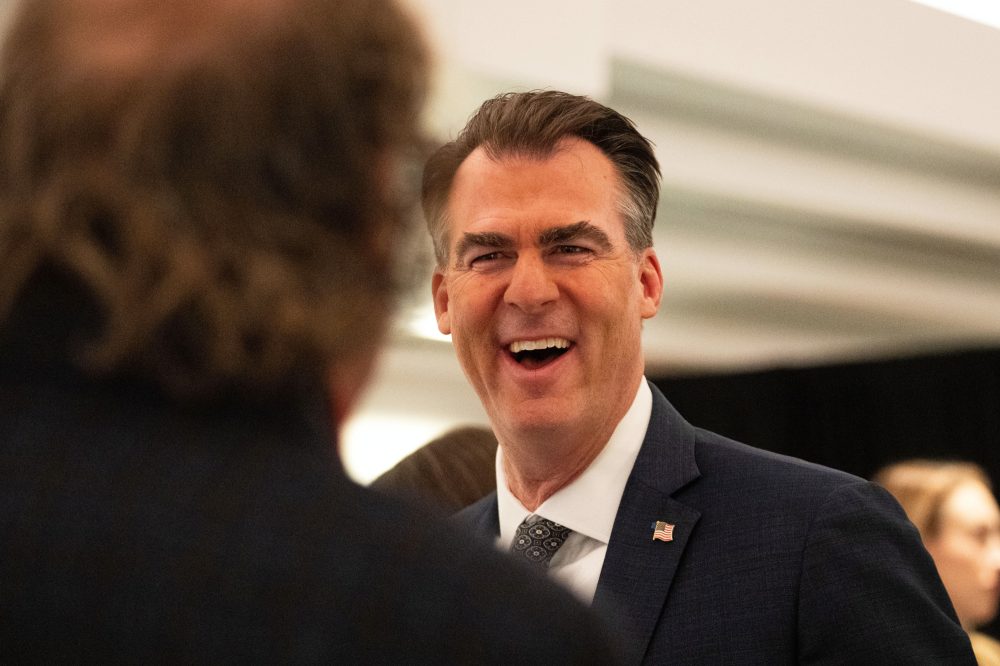
    Democratic-friendly redistricting in California and Virginia has counterbalanced some anticipated Republican advantages elsewhere, though a new Florida map and last week’s Supreme Court ruling that weakened the Voting Rights Act of 1965 have strengthened GOP efforts to alter the political map before November.

    All of the Indiana state senators Trump is targeting come from districts he won in 2024, typically by margins of 20 percentage points or greater. The closest contest was in District 1, located near Lake Michigan and southeast of Chicago, where Trump secured approximately 53% of votes with a 7-point victory over then-Vice President Kamala Harris. Trump’s strongest showing among the seven targeted districts came in District 19 along the Ohio border, where he captured roughly 68% of votes with a 39-point margin.

    Just one of the current officeholders, state Sen. Spencer Deery from District 23, experienced a competitive primary in 2022. He prevailed with about 31% of votes in a four-way race that included Paula Copenhaver, who is now Trump’s chosen candidate to defeat him this cycle. Another Trump target, state Sen. Greg Goode from District 38, was appointed to fill a vacancy in 2023 and has never run in a full district-wide campaign.

    Twenty-five of Indiana’s 50 state Senate positions and all 100 state House seats are on the ballot in 2026. The Republican Party maintains supermajorities in both legislative chambers.

    Indiana voters will also select candidates for the U.S. House under current district lines, though none of the state’s nine congressional seats is anticipated to be crucial in determining which party controls the chamber after November.

    One significant race is the Democratic primary in the 7th Congressional District, where U.S. Rep. Andre Carson is fighting off three opponents as he seeks nomination for a 10th full term. George Hornedo works as an attorney and political consultant. Destiny Wells serves as an attorney, holds the rank of Army Reserve lieutenant colonel, and was the 2024 candidate for state attorney general. Denise Paul Hatch, a former Center Township constable, is challenging a 2024 felony conviction for official misconduct.

    The Associated Press follows strict guidelines and will only declare winners when no mathematical possibility exists for trailing candidates to overcome their deficits. For races not yet called, the AP continues reporting significant developments like candidate concessions or victory claims while clearly stating no winner has been determined and explaining the reasoning.

    Indiana law does not provide for automatic recounts, though losing candidates may request and fund recounts regardless of vote margins. Depending on recount outcomes, costs may receive partial or complete reimbursement. The AP may call winners in races eligible for recounts if the victory margin is too substantial for recounts or legal challenges to alter results.

    Polling locations across Indiana close at 6 p.m. local time. Most of the state operates in the Eastern time zone with 6 p.m. ET closures, while some areas use Central time and close at 7 p.m. ET. Among Trump-targeted seats, only state Senate District 1 has polls closing at 7 p.m. ET. The 1st, 2nd, 4th and 8th Congressional Districts also have final poll closures at 7 p.m. ET.

    The AP will deliver vote tallies and winner declarations for competitive primaries covering U.S. House, state Senate and state House races. Republican incumbents face Trump-endorsed challengers in state Senate Districts 1, 11, 19, 21, 23, 38 and 41.

    Indiana does not require party registration, allowing registered voters to choose their preferred party’s primary ballot. Voter identification is mandatory. State law includes an unusual requirement that primary voters must have supported a majority of that party’s candidates in the previous general election or intend to do so in the upcoming general election if they did not vote previously. While essentially unenforceable, voters facing party affiliation challenges must use provisional ballots unless they sign affidavits declaring party alignment.

    Approximately 4.8 million registered voters lived in Indiana during the November 2024 general election. Registration numbers across the state’s nine congressional districts varied from roughly 442,000 in District 7 to about 505,000 in District 5.

    Most targeted state Senate contests lacked competitive primaries in 2022, but those with contested general elections recorded between approximately 32,000 to 45,000 total votes.

    The 7th Congressional District Democratic primary in 2024 drew about 34,000 votes, representing the highest turnout among all districts and roughly 8% of registered voters. The Republican primary in that district attracted about 25,000 votes.

    Early voting accounted for approximately 29% of all 2024 primary ballots.

    As of Friday, more than 175,000 combined Democratic and Republican primary ballots had already been submitted.

    Indiana permits absentee ballot processing upon receipt, with counting allowed before Election Day poll closures. This system enables rapid absentee ballot tabulation. Election officials from over three-quarters of Indiana’s 92 counties typically include complete or nearly complete absentee and early voting results in their initial evening reports.

    In 2024, the AP released first results for the Republican presidential primary at 6:06 p.m. ET, just six minutes after most polls closed statewide. The final vote update occurred at 11:34 p.m. ET with over 99% of total votes tallied.

    Final election night updates for congressional districts with competitive primaries came much earlier. The 5th Congressional District concluded earliest at 9:10 p.m. ET, while the 1st District finished latest at 11:34 p.m. ET. The 7th District Democratic primary’s final update was at 10:04 p.m. ET.

    Initial vote results for the state Senate District 23 primary appeared at 6:59 p.m. ET, nearly one hour after district polls closed. The last update came at 11:11 p.m. ET with more than 99% of votes counted.

    As of Tuesday, 182 days remain until the 2026 midterm elections.

  • Trump Proposes Major Overhaul of Washington D.C. Buildings and Monuments

    Trump Proposes Major Overhaul of Washington D.C. Buildings and Monuments

    President Trump has unveiled sweeping proposals to transform the physical landscape of Washington D.C., targeting everything from government structures to public monuments and recreational areas.

    The ambitious plans encompass modifications to the White House facilities, updates to reflecting pools, renovations at the Kennedy Center, and the construction of a triumphal arch among numerous other projects throughout the nation’s capital.

    Legal obstacles are mounting against many of these proposed transformations to both the White House complex and the broader city. While some modifications could be easily reversed by future administrations, others have the potential to permanently alter the character of Washington D.C. for decades to come.

    The scope of the proposed changes reflects a comprehensive vision to remake the visual and architectural identity of the federal district, though the timeline and feasibility of implementing these plans remain uncertain given the ongoing legal challenges.

  • Ohio Voters Head to Polls Tuesday for Key Primary Elections

    Ohio Voters Head to Polls Tuesday for Key Primary Elections

    COLUMBUS, Ohio — Voters across Ohio will cast ballots Tuesday in primary elections that will determine candidates for the state’s highest offices, though many contenders are already focusing on November’s general election battles.

    The Buckeye State is positioned to be a major battleground in the midterm elections, featuring races that could determine control of both the U.S. Senate and House of Representatives during the final two years of the current Republican presidency. Several candidates have received backing from President Donald Trump.

    The gubernatorial race to succeed outgoing Republican Governor Mike DeWine pits technology entrepreneur and former 2024 presidential candidate Vivek Ramaswamy against automotive racing engineer and online personality Casey Putsch in the GOP primary.

    Ramaswamy has secured endorsements from both Trump and the Ohio Republican Party, heading into the primary’s final days with a substantial $31 million campaign treasury, with $25 million coming from his own pocket. In contrast, Putsch has raised approximately $123,000 and reported roughly $8,700 remaining in his campaign fund according to April filings.

    A third contender, Heather Hill, was removed from consideration after her running mate departed the ticket amid a bitter disagreement. While their names remain printed on ballots, any votes they receive will not be tallied.

    The Republican primary victor will challenge Dr. Amy Acton, who faces no opposition in the Democratic primary. Acton previously served as Ohio Department of Health director during the initial phase of the state’s coronavirus pandemic response before stepping down in June 2020.

    For the U.S. Senate seat, former Democratic Senator Sherrod Brown is campaigning to return to his previous position in Washington. Brown’s potential November victory is crucial for Democratic aspirations to gain Senate control, similar to the 2024 election when his defeat by Republican Bernie Moreno helped establish a GOP majority.

    Brown competes against Ron Kincaid for the Democratic nomination, with Brown holding a significant fundraising edge over Kincaid as of mid-April reports.

    The Republican nominee will be Senator Jon Husted, who encounters no primary opposition. Husted previously served as lieutenant governor before receiving appointment to the Senate position that JD Vance left vacant upon becoming vice president. This seat will be contested again for a complete term in 2028.

    In notable U.S. House contests, multiple Republican candidates are vying for the opportunity to challenge Democratic Representative Marcy Kaptur in the 9th Congressional District. The 22-term representative barely secured reelection in 2024 against Republican Derek Merrin in one of that cycle’s final decided races.

    Merrin is pursuing the GOP nomination once more, facing competition from former Immigration and Customs Enforcement Deputy Director Madison Sheahan, state Representative Josh Williams, and two additional candidates.

    Lucas County, which includes Toledo, holds the greatest influence in 9th Congressional District primaries, accounting for over one-third of total votes in the 2024 Republican House primary. Both Merrin and Williams represent Lucas County, while Sheahan’s political base is in Ottawa County.

    Franklin and Cuyahoga counties, containing Columbus and Cleveland respectively, represent the state’s largest population centers and significantly impact both Democratic and Republican statewide primaries, alongside Hamilton, Montgomery, and Summit counties.

    Trump’s support should benefit Ramaswamy, as Trump won every county during the 2024 Republican presidential primary.

    The Associated Press maintains strict standards for declaring winners, only making calls when no mathematical possibility exists for trailing candidates to overcome deficits. Until races are officially called, the AP continues reporting significant developments while clearly stating that winners have not been determined.

    Ohio automatically triggers recounts when margins fall below 0.25% in statewide contests or 0.5% in congressional district races. The AP may still declare winners in recount-eligible races if leads appear too substantial for recounts or legal challenges to alter outcomes.

    Election officials will close polling locations at 7:30 p.m. Eastern Time.

    The Associated Press will deliver vote totals and announce winners in competitive primaries for U.S. Senate, U.S. House, governor, attorney general, secretary of state, treasurer, state Supreme Court, state Senate, and state House positions.

    All registered Ohio voters may participate in any party’s primary election. While Ohio doesn’t require party registration, voters participating in party primaries become affiliated with those parties.

    Approximately 7.9 million registered voters were recorded in Ohio as of Friday.

    During 2022, both Republican primaries for U.S. Senate and governor recorded roughly 1.1 million votes each, representing about 14% of registered voters at that time. Democratic primaries drew approximately 518,000 votes for U.S. Senate and 509,000 for governor.

    Early voting accounted for roughly 17% of 2022 primary votes, while 25% of 2024 presidential primary votes were cast before election day.

    More than 153,000 Democratic primary ballots and approximately 122,000 Republican primary ballots had been submitted by Friday for Tuesday’s election.

    Ohio’s 88 counties typically report their complete early and absentee voting results in initial updates, usually before releasing any Election Day voting data.

    During the 2024 Ohio presidential primary, the AP published initial results at 7:36 p.m. Eastern Time, six minutes after polls closed. Approximately 90% of votes were counted by 10:19 p.m., with final updates at 1:28 a.m. showing over 99% completion.

    Following Tuesday’s primary, 182 days will remain until the 2026 midterm elections.

  • Michigan Senate Control Hangs in Balance as Special Election Set for Tuesday

    Michigan Senate Control Hangs in Balance as Special Election Set for Tuesday

    Central Michigan voters head to the polls Tuesday in a crucial special election that will determine which party controls the state Senate, ending a 16-month period where the district lacked representation.

    The contest centers on filling the vacancy left by former Democrat Kristen McDonald Rivet, who departed for Congress earlier this year. Currently, Democrats hold a razor-thin 19-18 advantage in the state Senate, meaning a Republican win would create an even 19-19 split.

    Democrats achieved complete control of Michigan’s government in 2022, securing the governor’s office and both legislative chambers. However, they surrendered the state House in 2024, making this Senate race critical for maintaining any legislative influence.

    Should Republicans capture the seat, they could effectively stall Democratic priorities despite Lieutenant Governor Garlin Gilchrist II’s tie-breaking authority, since most legislation requires 20 votes to advance.

    Three candidates compete for the position: Democrat Chedrick Greene, Republican Jason Tunney, and Libertarian Ali Sledz.

    Greene, who works as a firefighter and previously served as a state Senate aide to McDonald Rivet, dominated his February 3rd primary with 60% support against five rivals. Tunney, practicing attorney and former family roofing business executive, secured his party’s nomination with 51% in a four-way Republican primary.

    The 35th District encompasses portions of Bay, Midland, and Saginaw counties along Lake Huron’s shoreline. Though Donald Trump won all three counties in 2024, the specific areas within District 35 remain politically competitive. McDonald Rivet originally captured this seat in 2022 with 53% of votes.

    Presidential results highlight the district’s swing nature: Kamala Harris narrowly defeated Trump 49.7% to 48.9% in 2024, powered by strong performance in Saginaw County areas. Trump maintained smaller leads in the Bay and Midland County portions. Joe Biden also carried the district in 2020 by a slightly wider margin.

    Governor Gretchen Whitmer scheduled this special election after McDonald Rivet’s January departure, setting the primary for February 3rd and the general election for Tuesday.

    The victor will serve the final eight months of the current term. Both major party nominees have already filed paperwork to seek full terms in the August 4th primaries.

    Voting concludes at 8 p.m. Eastern Time across District 35. Registered voters within the district boundaries may participate, with same-day registration available.

    February’s special primary drew nearly 46,000 participants, with roughly 17,000 votes each from Saginaw and Bay counties, plus about 11,000 from Midland County. The 2022 general election in this district saw approximately 116,000 ballots cast.

    Early and absentee voting comprised 43% of Democratic primary ballots and 29% of Republican primary ballots in February, compared to 60% advance voting in the 2024 presidential race. As of Friday, approximately 32,000 ballots had already been submitted for Tuesday’s election.

    Vote reporting typically begins shortly after poll closing, with Bay County releasing early vote totals at the end of their tabulation process. Midland and Saginaw counties report advance and Election Day results throughout the evening.

    In 2022, initial results appeared at 8:53 p.m. Eastern Time, with nearly 90% counted by 2:23 a.m. and final tallies reported around 5:33 a.m.

    The August 4th state primary follows in 91 days, with the 2026 midterm elections scheduled 182 days from Tuesday.

  • Iowa Democrats Plan Major Push as VP Vance Campaigns for GOP

    Iowa Democrats Plan Major Push as VP Vance Campaigns for GOP

    DES MOINES, Iowa — Following several election cycles of disappointing results, Iowa Democrats believe they can transform their state back into a competitive political arena.

    While Donald Trump secured Iowa with a commanding double-digit victory in the most recent presidential race, increasing frustration with his administration and economic pressures from the Iran conflict may create opportunities for Democrats to achieve previously elusive victories.

    Democratic organizers in Iowa are preparing to deploy 60 field coordinators by June — nearly twice the number from Trump’s first midterm cycle eight years prior. An additional 24 staff members will operate a unified campaign structure designed to assist candidates running for governor, Congress, and Senate positions.

    “Iowa is still, in my view, a purple state,” state party chair Rita Hart said in an interview. “We just haven’t given them an opportunity to show that lately.”

    GOP officials maintain Iowa will stay Republican, though recent White House travel schedules hint at potential concerns. Vice President JD Vance plans a Tuesday visit to campaign for Rep. Zach Nunn, whose district encompasses Des Moines, surrounding suburbs, and central rural areas. Trump similarly selected Iowa for his initial midterm campaign appearance this year.

    The state faces an unusually high number of open-seat contests after Republican Gov. Kim Reynolds and Republican Sen. Joni Ernst decided against seeking reelection.

    State auditor Rob Sand leads what Hart described as “the best statewide ticket we’ve had for a generation” in his gubernatorial campaign. Sand concluded last year with $13 million in campaign funds and frequently emphasizes his small-town background, Christian beliefs, and archery hunting skills, along with his rejection of partisan politics, to connect with diverse Iowa voters.

    State legislators Josh Turek and Zach Wahls are competing for the Democratic Senate nomination in the June 2 primary. The party also hopes to capture three of four Republican-controlled House seats.

    Democratic leaders believe an economic populist platform could gain traction in Iowa, where agricultural producers face tariff pressures and increased costs for fertilizer and fuel. Manufacturing plant closures and meatpacking facility shutdowns have eliminated hundreds of positions, while rural communities must travel greater distances for medical care as health facilities close.

    This election cycle’s candidates are prepared to criticize their own party despite expecting support from national political organizations.

    Turek and Wahls contend Democrats have neglected rural and small-community voters who supported Trump seeking systemic change. Turek, who identifies as a “prairie populist,” argues Congress contains too many wealthy members disconnected from paycheck-to-paycheck living. Wahls, backed by multiple labor organizations, claims political corruption favors corporate interests over working families.

    Christina Bohannan, making her third attempt to defeat Republican U.S. Rep. Mariannette Miller-Meeks in southeastern Iowa, stated both major parties “have failed to really fight for working people.”

    “Everybody’s talking about affordability,” she said. “I don’t want it just to become a catchphrase that people can kind of just brush aside as political rhetoric. This is real.”

    Sand criticizes the broader political framework, which he claims “helps incumbents get reelected, rather than actually forcing them to solve our problems.” His recent policy platform includes term limits, prohibitions on congressional stock trading, and open primary systems.

    Prior to Trump’s regional dominance, Democratic representation in Midwest and Plains state governorships and congressional delegations was common. Trump’s commitments to restore manufacturing employment and “drain the swamp” attracted voters who historically backed populist Democrats, according to Iowa Democratic strategist Jeff Link.

    “Because the knee-jerk reaction to Trump is to be the opposite of Trump, we went away from economic populism to our detriment,” Link said. “By just being anti-Trump, it is being condescending towards people that chose him three times.”

    Former Iowa Democratic Senator Tom Harkin believes Trump’s missteps have opened doors for political change.

    “I think a lot of people wanted to get things shaken up a little bit,” he said. “But I don’t think they wanted them shaken up like this.”

    Harkin suggested his party can reshape its public image.

    “I think Democrats in the Midwest especially got painted with this broad brush, and we didn’t fight back well enough,” he said. “We became more defensive.”

    Republican leaders contend Democratic progressive policies remain disconnected from Iowa values.

    “You can’t have political born-again experiences,” said Jeff Kaufmann, chairman of the Republican Party of Iowa. He argued that messaging adjustments and distancing from national party positions cannot “erase your history in one election cycle.”

    Kaufmann recognized the challenging electoral environment while asserting Iowans support Trump’s strategic vision, understanding his tariff policies aim to protect agricultural interests and Iran military action seeks to eliminate nuclear threats. However, he noted Democrats required years to lose Iowa communities that shifted from Barack Obama to Trump support.

    “It’s going to take a long time for them to build it back up again,” Kaufmann said.

    Democratic electoral prospects have remained dim since Obama carried Iowa in 2008 and 2012. Republicans have controlled Iowa state government completely for almost ten years, with all six federal delegation members being Republican.

    Democratic voter registration trails Republican numbers by approximately 200,000 statewide, with deficits in all four congressional districts.

    Iowa Democrats report 7,000 new volunteer sign-ups over the past year, with planned volunteer training programs. The party has secured eight field office leases and intends to establish seven additional locations, including blue-collar Mississippi River communities in eastern Iowa that supported Obama before switching to Trump.

    “We’re investing so much in these organizers and in our county parties and supporting and training our volunteers,” Hart said. “It’s through these kinds of conversations where we build trust with voters.”

    Party leadership anticipates spending levels comparable to presidential election years, reaching high seven-figure amounts. Their strategy emphasizes personal interactions over text messaging and digital advertising.

    “Since the pandemic, we’ve really struggled with getting back to the basics with person-to-person communication,” Hart said, adding, “We’ve got to get back to that.”

  • Louisiana GOP Legislature Redraws Congressional Maps During Primary Elections

    Louisiana GOP Legislature Redraws Congressional Maps During Primary Elections

    Even as Louisiana voters head to the polls for primary elections, the state’s Republican-controlled legislature is in the process of redrawing congressional district maps with the goal of gaining another Republican seat in Congress.

    The timing of the redistricting effort raises questions about whether ballots already cast in congressional primary races will be counted, as lawmakers work to alter the boundaries that determine which candidates voters can choose from.

    The redistricting push by Republican legislators aims to reconfigure the current district lines in a way that would benefit their party’s representation in Congress.

  • Kennedy Shifts Focus from Vaccines to Food Policy Before Midterm Elections

    Kennedy Shifts Focus from Vaccines to Food Policy Before Midterm Elections

    Health Secretary Robert F. Kennedy Jr. is shifting his strategy toward achieving rapid health policy victories that could benefit Republican candidates in the upcoming November midterm elections, according to senior administration officials who spoke with Reuters. This strategic pivot comes after White House officials urged him to step back from his controversial efforts to overhaul the nation’s vaccine policies.

    Recent initiatives rolled out over the past several weeks have been crafted to resonate with Trump’s political base, including an executive directive that strengthens psychedelic research and the approval of innovative gene therapy for children suffering from a specific form of hearing loss. Administration sources indicate they are actively seeking additional opportunities for similar wins.

    President Trump is eager to highlight prescription drug cost reductions achieved through his appointees’ negotiations, while Kennedy and his staff are developing a series of food policy measures and investigating the possibility of fast-tracking approval for other childhood disease treatments, according to three individuals with knowledge of the plans. Officials noted that it remains uncertain which of these potential actions under consideration will ultimately be implemented.

    Much of the information regarding efforts to synchronize Kennedy’s approach with White House midterm priorities is being disclosed for the first time, drawing from conversations with over a dozen current and former senior administration officials and external advisors. These adjustments follow months of tension between the two groups over staffing decisions and policy directions.

    The political implications are significant for Trump’s Republican party, which polling suggests could lose control of both congressional chambers. Kennedy’s previous actions, including his decision to eliminate vaccines from the recommended childhood immunization schedule in the United States, represent policies that might damage the party’s electoral prospects. Consequently, White House officials have demanded that he avoid taking further anti-vaccine measures this year before the election, four senior administration officials confirmed.

    Simultaneously, the White House recognizes Kennedy’s celebrity appeal and his ability to attract Americans who might not typically support Republican candidates as a valuable political asset, three senior officials indicated. The health secretary is scheduled to participate in campaign activities in competitive congressional districts throughout the coming months.

    Kennedy demonstrates “a good grasp” of the electoral dynamics, according to one senior administration official. The health secretary can identify numerous policy options “that don’t cause consternation” between his department and the White House.
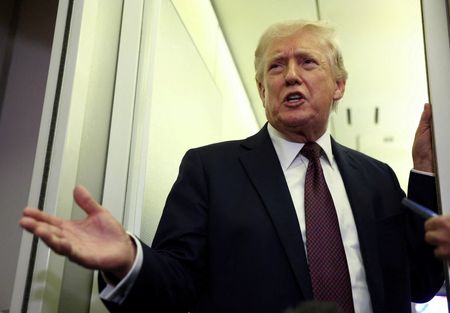
    Republican pollster Whit Ayres cautioned that it remains uncertain whether voters will overlook their opinions of Kennedy after his years of promoting skepticism about vaccine safety and effectiveness, which contradicts established scientific evidence.

    “The vast majority of Americans view effective vaccines as one of the great miracles of modern medicine. An anti-vaccine message is political poison,” Ayres stated.

    Kennedy “is trying to be a team player, but he is so widely associated with an anti-vaccine message that I don’t know that he can effectively pivot away from that,” he added.

    When asked for comment by Reuters, Health and Human Services Department spokesman Andrew Nixon stated that Kennedy “remains focused on the priorities Americans consistently say matter most to them, including chronic disease prevention, food quality, and affordable health care.”

    White House spokesman Kush Desai characterized Kennedy as “an invaluable asset for President Trump since Day One.” Neither official provided commentary on vaccine policies or midterm election strategy.

    Kennedy occupies a distinctive position within Trump’s circle. He stands as the sole cabinet secretary whose agenda differs from, and occasionally conflicts with, the president’s “Make America Great Again” (MAGA) movement, according to Republican strategists and administration officials.

    Multiple administration officials characterized this tension as a “red hat-green hat” division. A “red hat” staff member — referring to Trump’s signature red Make America Great Again caps — demonstrates loyalty to the president’s political priorities. A “green hat” staff member indicates devotion and often admiration for Kennedy, whose “Make America Healthy Again” presidential campaign motto appeared on forest green caps.

    When Kennedy withdrew from the 2024 presidential race to endorse Trump, his political supporters — a combination of vaccine skeptics and critics of pesticides and processed foods — were seen by some Trump allies as beneficial to the president’s reelection campaign. The health secretary was granted considerable freedom to implement his policies during the new administration’s first year.

    The MAHA “green hats” celebrated when Kennedy replaced a federal immunization advisory board with new members who shared his vaccine perspectives. His appointees restricted COVID vaccine eligibility, eliminated universal hepatitis B shot recommendations, and advanced the scientifically unsupported theory that Tylenol use by pregnant women might contribute to autism in their children.

    However, the White House eventually became worried about potential political ramifications, current and former officials revealed.

    In December, fresh polling data released by Tony Fabrizio, a pollster working with Trump, demonstrated strong bipartisan backing for routine childhood vaccines, even among some MAHA voters who consider Kennedy their leader.

    A Republican or Democratic candidate opposing current childhood vaccine recommendations would “pay a price in the election,” Fabrizio wrote in a published analysis, concluding that “vaccine skepticism is bad politics.”

    During that period, Kennedy and his senior staff were planning to eliminate additional vaccines from the recommended U.S. schedule, according to three people familiar with the conversations. Kennedy argued to the White House for proceeding, claiming he needed to maintain MAHA supporter loyalty, four senior administration officials reported.

    Trump advisors, concerned about Fabrizio’s research, informed Kennedy this would be his final major vaccine initiative before the November midterms, the four officials said. On January 5, the federal government eliminated recommendations for childhood immunizations against flu, rotavirus, meningococcal disease, and hepatitis A, stating families should make these decisions with their physicians.

    Public criticism was immediate, including from major medical organizations that had already filed lawsuits to stop Kennedy. The White House compared this criticism to the largely positive reception of Kennedy’s nutrition initiatives, such as new dietary guidelines promoting whole foods and protein over sugar and heavily processed products, a senior administration official noted.

    The response in both the White House and health secretary’s office to the new food guidelines was “‘You know what? this is pretty cool,” the official said. “They thought, ‘Enough already with the negativity, let’s move forward with (food policy). This is where the year begins.’”

    Since January, the White House has assumed a larger role in filling key health department positions to ensure Trump’s priorities are implemented and to prevent negative media coverage of controversial appointments and policies. Last week, Trump nominated a new surgeon general who has endorsed vaccines after it became apparent that Kennedy ally Casey Means, a wellness influencer and non-practicing physician, would not receive Senate confirmation.

    The process has not been entirely smooth. Senior White House advisors attempted to remove Kennedy’s chief of staff and longtime advisor, Stefanie Spear, and relocate her elsewhere in the administration, creating conflict between the teams. In a White House confrontation — which Trump did not attend — Kennedy refused, according to three people familiar with the incident.

    Spear continues as a top advisor to the secretary, but her influence has been reduced, two senior administration officials said. Trump officials promoted Chris Klomp, former head of the U.S. Medicare program, in February to help enforce the president’s priorities at the agency as Kennedy’s deputy. This change, requested by Trump officials to bring organization to the health department, has improved the working relationship with the White House, four officials confirmed. Spear and Klomp did not respond to comment requests.

    Klomp has been instrumental in advancing more traditional health appointees, such as Erica Schwartz, the former deputy surgeon general selected to lead the Centers for Disease Control and Prevention, three officials said.

    Several close advisors to Kennedy helped persuade him that Schwartz would not undermine his previous vaccine work, and White House advisors clearly indicated their support for her nomination, one official said.

    Kennedy and his team have also sought greater coordination with the White House in recent weeks as they finalize new announcements unrelated to vaccines, four senior officials said, while cautioning it was premature to determine whether fundamental differences between MAHA and MAGA will generate new tensions in the future.

  • Trump Backs Challengers Against Indiana GOP Senators Who Opposed Redistricting

    Former President Trump is backing primary challengers targeting Republican state senators in Indiana who stood against his redistricting initiatives, creating a high-stakes political showdown within the GOP.

    The campaign has attracted substantial financial backing, with millions of dollars flowing into efforts to unseat the incumbent Republicans who refused to support Trump’s redistricting agenda.

    Among those facing Trump-endorsed challengers is Republican state Senator Spencer Deery, who was photographed welcoming voters during early voting at a West Lafayette polling location on April 28. Deery represents one of several GOP incumbents now in Trump’s crosshairs following their opposition to the former president’s redistricting proposals.

    The primary battles highlight the ongoing influence Trump maintains within Republican politics, particularly his willingness to target members of his own party who have crossed him on key issues. The redistricting dispute has become a defining issue in these Indiana races, with Trump using his endorsement power to attempt political payback against the senators who blocked his efforts.

    The influx of campaign money demonstrates the high stakes involved, as both sides prepare for what could be decisive primary contests that will test Trump’s continued sway over Republican voters and the fate of lawmakers who have challenged his agenda.

  • New Legislation Targets Companies Exploiting Disabled Veterans

    Lawmakers are moving forward with bipartisan legislation designed to protect disabled veterans from predatory companies following an investigative report by NPR.

    The proposed bill would prohibit firms from utilizing automated dialing systems to collect personal information from veterans with disabilities. These companies have been charging veterans fees for assistance that federal officials say should be available without cost.

    The legislation comes as a direct response to NPR’s investigation into what advocates are calling ‘claim sharks’ – businesses that target vulnerable disabled veterans through aggressive marketing tactics.

    Under the proposed law, companies would be banned from using auto-dialing technology to harvest sensitive personal data from disabled veterans, a practice that has allowed these firms to profit from services the government provides free of charge.

    The bipartisan nature of the bill suggests strong congressional support for cracking down on these exploitative business practices that have taken advantage of veterans seeking help with their disability claims.

  • National Political Update: Iran Plan, Louisiana Redistricting, Senate Races

    National Political Update: Iran Plan, Louisiana Redistricting, Senate Races

    Former President Donald Trump has announced he is examining a fresh proposal from Iran, though details about the nature of the plan remain unclear.

    In Louisiana, state legislators are working to redraw electoral district boundaries following a recent Supreme Court ruling that affected their previous maps. The redistricting process comes as lawmakers work to comply with the high court’s decision.

    Political observers are also keeping a close eye on several competitive Senate races across the country that could significantly impact the balance of power in the upper chamber of Congress.

  • Alabama Voters in Selma Share Views on Supreme Court Voting Rights Ruling

    Alabama Voters in Selma Share Views on Supreme Court Voting Rights Ruling

    Residents of Selma, Alabama are sharing their perspectives on a recent Supreme Court ruling that significantly weakened core provisions of the Voting Rights Act.

    The historic Alabama city holds special significance in voting rights history, as it was the site of the 1965 confrontation known as ‘Bloody Sunday’ that helped drive the creation of the landmark voting rights legislation.

    Community members in Selma are now weighing in on how the high court’s decision has stripped away many of the law’s key safeguards that were born from their city’s pivotal role in the civil rights movement.

  • Supreme Court Decision Sparks New Round of Political Map Battles Nationwide

    Supreme Court Decision Sparks New Round of Political Map Battles Nationwide

    Standing near the Memphis museum that commemorates Dr. Martin Luther King Jr.’s assassination, Willie Simon expressed deep concerns about America’s political future following a major Supreme Court decision.

    The ruling significantly weakened key protections in the Voting Rights Act, leaving Simon, who chairs the Shelby County Democratic Party in Tennessee, worried about the implications for minority voters and the nation’s democratic foundations.

    “Not in the in-crowd group, they can just erase us,” Simon stated, describing what he sees as a dangerous precedent set by the court’s conservative justices.

    The Supreme Court’s decision has removed important safeguards that previously required states to create congressional districts giving minority communities meaningful electoral influence. This change has intensified an already heated national battle over political map-drawing, with both major parties abandoning longstanding practices to gain competitive advantages.

    Republican-controlled legislatures in multiple states are preparing new redistricting sessions this week aimed at eliminating House districts currently held by Democrats, with additional efforts planned in the coming months.

    This development represents another escalation in the deterioration of American democratic norms that has accelerated over the past decade. Political discourse has grown increasingly hostile, incidents of political violence have risen, and efforts to undermine election integrity have persisted since the January 6th Capitol attack five years ago.

    The traditional rules and customs that once helped manage the country’s deep divisions have been replaced by an all-out pursuit of political dominance.

    “I’ve never subscribed to the idea we’re in a civil war, but the gerrymandering wars and the recent decision from the Supreme Court do not make the United States more united,” explained Matt Dallek, who studies politics at George Washington University. “It speeds up the hyperpartisan force and atmosphere that people feel on both sides.”

    Former President Trump initiated the current redistricting battle last year by encouraging Republicans to redraw congressional boundaries to protect their House majority in upcoming midterm elections.

    This represented an unusual departure from normal practice, as redistricting typically occurs only after the decennial census to reflect population changes. However, a 2019 Supreme Court ruling eliminated federal court oversight of partisan gerrymandering, creating an opportunity Trump chose to exploit.

    When Republican states like Texas began altering their district boundaries, Democratic states such as California responded in kind. The conflict appeared headed toward a stalemate until the Supreme Court issued its anticipated decision in Louisiana v. Callais.

    The ruling eliminated the final national barrier to extreme gerrymandering by weakening the Voting Rights Act provision requiring districts to be drawn so racial minorities can elect their preferred candidates in areas where voting patterns differ along racial lines.

    This decision has unleashed new political possibilities.

    Tennessee Republicans intend to eliminate their state’s sole Democratic congressional seat, which has a Black majority and centers on Memphis, by dividing it among more conservative suburban and rural white areas. Over a dozen other minority-majority districts, primarily in Southern states, face similar threats.

    Louisiana has delayed its May 16th congressional primaries to allow time for redrawing two majority-Black Democratic seats that were previously protected. Alabama is seeking Supreme Court permission to redraw its two majority-Black districts.

    “We should demand that State Legislatures do what the Supreme Court says must be done,” Trump posted on social media Sunday. “That is more important than administrative convenience.”

    He predicted Republicans could gain 20 seats through redistricting efforts.

    Democrats have responded with threats to target conservative strongholds in states like New York and Illinois, redistributing Republican voters into more liberal, urban districts.

    With fewer legal or self-imposed restrictions, experts anticipate redistricting will become an ongoing competition to extract maximum political benefit from legislative maps.

    “It’s hard to know where it ends,” said UCLA law professor Rick Hasen.

    Political strategists have enthusiastically shared hypothetical maps showing California’s 54 House seats all drawn for Democrats, or Southern states with minimal Democratic representation. Most observers agree the eventual result will make it nearly impossible for Democrats to win House seats in Republican-controlled states, regardless of substantial Democratic voter populations, and vice versa.

    This outcome contradicts American democratic principles, according to Jonathan Cervas, a Carnegie Mellon political scientist who has redrawn maps for courts reviewing redistricting cases. He noted the nation’s system “was founded on this idea that it’s majority rule with minority rights.”

    “There is no more rule of law in redistricting,” Cervas observed. “There have to be some constraints, somewhere. Otherwise we don’t really have elections.”

    Drawing legislative boundaries represents politicians’ most effective method for manipulating election outcomes. They can create virtually guaranteed victories by including enough of their supporters while limiting opposition voters’ ability to win that seat or adjacent districts.

    This strategy has existed since the nation’s founding. Democratic gerrymandering helped maintain House control during the Reagan presidency. Following 2010 midterm victories, Republican state legislature majorities enabled the GOP to secure House control even during President Obama’s 2012 reelection.

    However, this didn’t prevent the 2018 “blue wave” during Trump’s presidency, when Democrats reclaimed the House. This demonstrated that even aggressive partisan maps may suppress political shifts temporarily but eventually fail as public sentiment changes.

    “When you try to get every last ounce of blood from the stone you can end up shooting yourself in the foot,” noted Michael Li from the liberal Brennan Center for Justice in New York.

    Political alliances also evolve, and previously reliable voters can change allegiances. This has occurred during the Trump era, with Democrats gaining support among wealthy and suburban voters while Republicans have attracted more Black and Latino voters.

    While Republicans cannot fully utilize the Supreme Court ruling’s impact until after November’s midterm elections, Democrats will struggle to identify enough seats to offset those losses.

    Sean Trende, a political analyst who has created maps for Republicans, agreed the court decision will likely trigger unchecked partisan gerrymandering. He noted the difficulty of finding neutral parties to restrain politicians who draw boundaries for their own benefit.

    The approaching conflict, Trende suggested, represents more of a polarization symptom than its underlying cause.

    “All our institutions are broken. We don’t speak a common political language,” Trende explained. “This is what you get.”

  • Southern States Rush to Redraw Congressional Maps After High Court Ruling

    Southern States Rush to Redraw Congressional Maps After High Court Ruling

    MONTGOMERY, Ala. (AP) — GOP leaders in Alabama and Tennessee are calling emergency legislative sessions this week to redraw congressional boundaries following a recent U.S. Supreme Court decision that diminished key protections under the Voting Rights Act.

    Alabama’s Republican Governor Kay Ivey has ordered state lawmakers to return to the capital beginning Monday to establish backup plans for emergency primary elections, hoping the nation’s highest court will permit the state to implement different congressional maps before November’s general election. GOP legislative leaders stated this strategy would “give our state a fighting chance to send seven Republican members to Congress.” Currently, Alabama’s seven-person congressional delegation includes two Democratic representatives.

    Meanwhile in Tennessee, GOP Governor Bill Lee announced a special legislative session beginning Tuesday, where the Republican-dominated state legislature will work to dismantle the state’s sole Democratic-controlled House district, which encompasses Memphis, a city with a majority-Black population.

    The high court’s decision eliminated a majority-Black congressional district in Louisiana, ruling that racial considerations played too significant a role in creating the district boundaries. This verdict has sent shockwaves through state capitols throughout the South, with Republican officials exploring opportunities to implement new district lines for either the 2026 midterm elections or by 2028 at the latest.

    Former President Donald Trump promoted this latest wave of redistricting efforts through a social media message posted Sunday, claiming his party could secure 20 additional House seats.

    “We should demand that State Legislatures do what the Supreme Court says must be done,” Trump wrote. “That is more important than administrative convenience.”

    Florida enacted new districts on the same day as the Supreme Court ruling, while Louisiana quickly delayed its May 16 congressional primary, triggering legal challenges from Democrats and civil rights organizations. Louisiana’s Republican leadership began developing plans for redistricting that could eliminate one or both congressional districts currently held by Black representatives. South Carolina’s governor has indicated his state might also revisit its congressional boundaries.

    Georgia Democratic Senator Raphael Warnock characterized the court’s decision and the subsequent redistricting rush as efforts to reverse progress made during the Civil Rights Movement.

    “They said we’re going to allow partisan politicians to gerrymander you, so that even when you show up, your voice won’t have as much impact because we’ll play with the lines,” he stated Sunday while speaking at Ebenezer Baptist Church, where Martin Luther King Jr. previously served as pastor. “That isn’t a new method. That’s an old method. That’s a Jim Crow method.”

    The Supreme Court’s ruling has intensified an already fierce nationwide redistricting fight by giving Republican officials in certain states additional justification for redrawing electoral boundaries.

    Federal judges had previously mandated that Alabama utilize a court-approved map featuring a second district with significant Black voter representation. The same judges ordered Alabama to continue using this new map through the 2030 Census. Alabama is challenging that ruling and hopes the court will allow the state to return to a 2023 map created by state legislators, given the Louisiana decision.

    “As I continue saying, Alabama knows our state, our people and our districts best,” Ivey stated.

    Tennessee’s actions follow an intensive lobbying effort by Trump and fellow Republicans to restructure the state’s 9th Congressional District. Republicans have long been prevented by the Voting Rights Act from pursuing their goal of distributing the district’s Democratic voters among surrounding conservative districts to make it competitive, but the law may no longer present such obstacles.

    “We owe it to Tennesseans to ensure our congressional districts accurately reflect the will of Tennessee voters,” Lee announced Friday. Trump encouraged this move, posting on social media Thursday that Lee had committed to working diligently to secure Republicans one additional seat.

    Tennessee’s candidate filing deadline passed in March, with the primary election set for August 6. Democrats pointed out that in 2022, the state Supreme Court prevented additional redistricting because it occurred too close to an election. They believe the court represents their strongest option this time as well.

    “We cannot keep doing things like this and calling ourselves a democracy,” Democratic State Senator Ramesh Akbari declared during a press conference held outside Memphis’s Civil Rights Museum.

    Alabama Democrats also strongly condemned the decision to attempt map changes before upcoming elections.

    “This special session is a blatant power grab by Republican leadership in Montgomery to eliminate seats held by Black Democrats,” said former Senator Doug Jones, who is running for Alabama governor as a Democrat.

    Louisiana has postponed its May 16 congressional primary to provide lawmakers time to approve new U.S. House districts, though this decision faces court challenges.

    Trump pressured Texas Republicans last year to redraw U.S. House districts for partisan advantage. California Democrats responded with similar actions, prompting other states to join the redistricting battle. Legislative bodies, commissions, or courts have implemented new House districts across eight states.

  • Trump Plans Major Reduction of American Forces Stationed in Germany

    Trump Plans Major Reduction of American Forces Stationed in Germany

    WASHINGTON — President Donald Trump’s commitment to reducing American military forces stationed in Germany is drawing fresh attention to the United States’ military role across Europe.

    Between 80,000 and 100,000 American service members are typically stationed across the European continent, including more than 36,000 based in Germany. Following the Pentagon’s Friday announcement of plans to withdraw 5,000 German-based troops, Trump indicated the following day he intends to go “a lot further” with reductions.

    America’s European military footprint dates back to World War II, when U.S. forces helped stabilize and reconstruct Europe, continuing through the Cold War era as a defense against Soviet expansion. In recent years, these deployments have become crucial for supporting operations across the Arctic, Africa and Middle East, including ongoing tensions with Iran.

    However, Trump has departed from decades of bipartisan agreement, openly criticizing NATO allies in Europe and acting on previous threats to scale back America’s security commitment to the region. The latest announcement follows rising tensions with German Chancellor Friedrich Merz, who recently claimed the U.S. was being “humiliated” by Iran while questioning Washington’s strategic clarity.

    The U.S. European Command, established in 1947 and called EUCOM, represents one of 11 combat commands under the Defense Department, spanning approximately 50 nations and territories.

    Beyond Germany’s 36,000-plus troops, Italy houses over 12,000 American service members while the United Kingdom hosts another 10,000, based on December Pentagon data.

    Pentagon officials have provided limited information regarding which specific troops or operations would face cuts under Friday’s announced reduction.

    American forces in Europe expanded after Russia began its comprehensive invasion of Ukraine four years ago. NATO partners including Germany have anticipated for more than a year that these additional troops would be among the first to depart.

    Beyond serving as a deterrent against Russia, America’s European military presence enables Washington to project influence worldwide.

    U.S. Gen. Alexus Grynkewich, who leads both American and NATO forces in Europe, emphasized the advantages of maintaining a substantial continental presence during March testimony before the Senate Armed Services Committee.

    “It is having capabilities in Europe, munitions in Europe that allow us to help U.S. Africa Command to target terrorists in Africa, or to help U.S. Central Command as they execute Operation Epic Fury,” he explained to legislators, referencing the Iran conflict. “The distances are shorter, it’s less expensive and it’s much easier to project power.”

    Germany houses headquarters for both U.S. European and Africa commands, along with Ramstein Air Base and Landstuhl medical facility, where wounded soldiers from Iraq and Afghanistan conflicts received treatment. American nuclear weapons are also positioned within German territory.

    Approximately 100 U.S. nuclear weapons are deployed at European installations for aircraft delivery, according to March estimates from the Federation of American Scientists. The organization’s analysis indicates these weapons are located at facilities in Belgium, Germany, Italy, the Netherlands and Turkey, with possible placement at a United Kingdom base.

    Before Trump’s Saturday remarks to media, Republican leaders from both congressional armed services committees voiced opposition to the Pentagon’s strategy, cautioning that premature European reductions would signal “the wrong message to Vladimir Putin” as Russia’s leader continues his Ukrainian campaign.

    Mississippi Senator Roger Wicker and Alabama Representative Mike Rogers advocated for relocating troops to Eastern European installations rather than complete withdrawal.

    The legislators also noted that allies have made “substantial investments to host U.S. troops.”

    Wicker and Rogers revealed that following Friday’s announcement, the Pentagon has also chosen to halt the planned German deployment of a U.S. Army long-range fires battalion, which operates ground-based missile systems.

    Within its January National Defense Strategy — a comprehensive document outlining approaches from Chinese deterrence to cyber defense to disrupting Iran’s nuclear programs — the administration declared Europe must increase its own defense efforts.

    While “we are and will remain engaged in Europe, we must — and will — prioritize defending the U.S. Homeland and deterring China,” the strategy stated.

    The document acknowledged that Europe’s economic influence, though relatively declining globally, remains substantial, noting Germany’s economy alone “dwarfs that of Russia.”

    “Fortunately, our NATO allies are substantially more powerful than Russia — it is not even close,” the strategy observed, highlighting recent NATO commitments to increase national defense spending to 5% of GDP collectively, an initiative championed by Trump.

    Germany has worked to modernize its historically underfunded military, known as the Bundeswehr, since Russia’s 2022 Ukrainian invasion. That year, officials established a 100 billion euro ($117 billion) special fund for Bundeswehr enhancement, with most resources dedicated to acquiring new equipment.

    In late 2024, Merz’s administration revealed intentions to expand military personnel to 260,000, up from approximately 180,000 currently. During 2001, when Germany maintained conscription, total numbers reached 300,000 — over one-third being conscripts.

    Berlin indicates it will require around 200,000 reservists, more than doubling present figures.

    Defense Minister Boris Pistorius, speaking with German news agency dpa after Friday’s Pentagon announcement, recognized Europe’s need for greater security responsibility while noting Bundeswehr expansion, accelerated military procurement, and infrastructure development.

  • Former NYC Mayor Rudy Giuliani in Critical Condition at Hospital

    Former NYC Mayor Rudy Giuliani in Critical Condition at Hospital

    Former New York City Mayor Rudolph Giuliani is receiving hospital treatment in critical but stable condition, according to a statement from his representative released Sunday.

    Ted Goodman, serving as Giuliani’s spokesperson, declined to reveal what medical issue led to the 81-year-old’s hospitalization or provide details about the duration of his stay.

    “Mayor Giuliani is a fighter who has faced every challenge in his life with unwavering strength, and he’s fighting with that same level of strength as we speak,” Goodman stated through social media. The spokesperson emphasized that Giuliani “remains in critical but stable condition.”

    Just Friday evening, Giuliani broadcast his web-based program “America’s Mayor Live” from Palm Beach, Florida.

    During the opening of that broadcast, viewers could hear him coughing, and his voice appeared more hoarse than normal. He told his audience: “My voice is a little under the weather, so I won’t be able to speak as loudly as I usually do, but I’ll get closer to the microphone.”

    Giuliani earned the nickname “America’s mayor” following his response to the September 11, 2001 terrorist attacks while leading New York City.

    He subsequently worked as Trump’s personal legal counsel and became a prominent supporter of Trump’s claims regarding irregularities in the 2020 presidential election, which Joe Biden won. Trump and his supporters filed numerous legal challenges alleging misconduct, but these cases were unsuccessful, and multiple recounts and examinations of voting results found no evidence of substantial fraud or mistakes.

    “Our fabulous Rudy Giuliani, a True Warrior, and the Best Mayor in the History of New York City, BY FAR, has been hospitalized, and is in critical condition,” Trump posted Sunday on his social media platform. “What a tragedy that he was treated so badly by the Radical Left Lunatics, Democrats ALL — AND HE WAS RIGHT ABOUT EVERYTHING! They cheated on the Elections, fabricated hundreds of stories, did anything possible to destroy our Nation, and now, look at Rudy. So sad!”

    A pair of former Georgia election officials successfully obtained a $148 million defamation award against Giuliani. During their efforts to collect this judgment, the former federal prosecutor was held in contempt and faced potential trial regarding ownership of his possessions. He eventually reached an agreement allowing him to retain his residences and personal items, including treasured World Series championship rings, in return for undisclosed payments and an agreement to cease making negative statements about the former election officials.

    In September, Giuliani required hospitalization following a motor vehicle accident in New Hampshire that resulted in a broken vertebra and additional injuries.

    Giuliani won election as New York’s mayor in 1993 following his career as one of America’s most prominent prosecutors, pursuing organized crime figures and corrupt financial industry professionals.

    He launched a campaign for the U.S. Senate in 2000 but withdrew from the race against Hillary Rodham Clinton following a prostate cancer diagnosis.

  • Evidence Links Suspect to White House Correspondents’ Dinner Attack

    Federal authorities have discovered crucial physical evidence that directly connects a suspect to an attack during the White House Correspondents’ Dinner, according to a top prosecutor.

    A projectile recovered from a Secret Service agent’s protective vest has provided investigators with concrete proof linking Cole Tomas Allen to the incident, U.S. Attorney for the District of Columbia Jeanine Pirro revealed during a CNN interview on Sunday.

    Pirro stated that the recovered projectile “definitively” establishes Allen’s connection to the attack on the federal agent.

    The discovery of this physical evidence represents a significant development in the ongoing investigation into the incident that occurred during the high-profile Washington D.C. event.

  • Secret Service Agent Shot by Suspect’s Gun in White House Dinner Attack

    Secret Service Agent Shot by Suspect’s Gun in White House Dinner Attack

    Federal investigators have confirmed that a Secret Service agent was wounded by pellets fired from the weapon of a man who tried to attack the White House Correspondents’ Association dinner with plans to assassinate President Donald Trump.

    District of Columbia U.S. Attorney Jeanine Pirro revealed Sunday that forensic analysis proved the agent was struck by gunfire from Cole Tomas Allen’s shotgun during the April 25 incident at a Washington hotel. Previously, Pirro had only stated there was no indication of friendly fire hitting the officer.

    “We now can establish that a pellet that came from the buckshot from the defendant’s Mossberg pump-action shotgun was intertwined with the fiber of the vest of the Secret Service officer,” Pirro explained during an appearance on CNN’s “State of the Union.” “It is definitively his bullet.”

    Allen continues to be held in custody awaiting trial, while the wounded agent recovered from injuries. Allen sustained wounds during the confrontation but was not shot.

    Earlier this week, Pirro released surveillance footage on social media that captured the moment when Allen allegedly rushed through security carrying firearms and knives, attempting to reach the ballroom filled with media members, government officials and other attendees. Uncertainty had surrounded which weapon fired the shot that injured the officer as Allen charged toward the event.

    Defense attorneys for Allen did not respond to requests for comment Sunday.

    The 31-year-old California resident from Torrance faces charges of attempted presidential assassination along with two additional weapons violations, including firing a gun during a violent crime. If found guilty on the assassination charge alone, Allen could receive a life sentence.

    Court records show Allen worked part-time as a tutor for a test preparation business and developed video games as a hobby.

  • Supreme Court Justice Gorsuch Addresses Ongoing Leak Problems at High Court

    Supreme Court Justice Gorsuch Addresses Ongoing Leak Problems at High Court

    Supreme Court Justice Neil Gorsuch voiced concerns Sunday about ongoing leaks from the nation’s highest court, emphasizing that justices require space for honest deliberations away from public scrutiny.

    During an appearance on Fox News Sunday, the conservative justice addressed recent unauthorized disclosures of internal court documents, including memos leaked to The New York Times last month regarding a 2016 decision that blocked former President Barack Obama’s Clean Power Plan.

    “We want some transparency, but we also have to leave room for candid conversations and deliberations with one another,” said Gorsuch, who joined the court in 2017 after being nominated by former President Donald Trump.

    The justice acknowledged the court provides transparency through publicly available audio recordings of oral arguments, but stressed the importance of private discussions among the nine members.

    “But do we need time to actually talk quietly with one another, to find those places where we can reach agreement? Yeah, we do,” Gorsuch explained.

    The leaked documents published by The New York Times focused on the court’s emergency docket, sometimes referred to as the “shadow” docket, which has been used frequently to grant quick rulings while cases proceed through lower courts.

    The most significant leak in recent memory occurred in 2022 when Politico obtained and published a draft opinion weeks before the court officially released its decision overturning Roe v. Wade, the 1973 ruling that had established nationwide abortion rights.

    When asked about how leaks affect public trust in the institution, Gorsuch pointed to the court’s published opinions as the definitive record of justices’ reasoning.

    “Everything that I think about a case is there, on the printed page for anybody to read if they so choose,” he stated.

    Unlike the court’s regular cases, which include detailed written opinions after months of deliberation, emergency docket decisions often come quickly with minimal explanation.

    Gorsuch made these remarks while promoting his upcoming children’s book titled “Heroes of 1776: The Story of the Declaration of Independence,” which will be released Tuesday in conjunction with upcoming celebrations marking 250 years of American independence.

    The conservative majority on the court, which includes Gorsuch, continues to shift American jurisprudence rightward. Just last week, the conservative justices weakened a crucial section of the Voting Rights Act, making it more difficult for minority groups to challenge electoral districts they believe are racially discriminatory.

  • Federal Prosecutor Awaits Inspector General Report on Powell Investigation

    Federal Prosecutor Awaits Inspector General Report on Powell Investigation

    The federal prosecutor who abandoned a criminal investigation into Federal Reserve Chairman Jerome Powell announced Sunday that the outcome of an internal Fed watchdog review will determine whether the matter continues or closes permanently.

    U.S. Attorney Jeanine Pirro, who was appointed during the Trump administration, initiated the criminal probe against Powell in January but abandoned it last month following a federal judge’s decision to block Justice Department subpoenas related to the case.

    During an appearance on CNN’s “State of the Union” program Sunday, Pirro discussed the Federal Reserve Office of Inspector General’s review of renovation cost overruns at the central bank’s Washington headquarters, stating: “If there’s something there, great – and if there isn’t, I’ll go home.”

    Powell, who frequently faced criticism from Trump, had condemned the criminal probe as an attack on the Federal Reserve’s independence. Judge James Boasberg determined that prosecutors improperly issued subpoenas, ruling that a “mountain of evidence” indicated the investigation was designed to pressure Powell into cutting interest rates quickly or stepping down from his position.

    After ending the criminal investigation, Pirro requested that the Inspector General review the cost overruns. The Inspector General had already begun examining the renovation project following Powell’s request for a review last year.

    “The only way to find out what happened is through the Inspector General,” Pirro stated.

    However, Pirro indicated her office plans to continue legal challenges, saying “we continue to litigate the issue, and we will litigate the issue” and “we’re going to make a motion to vacate the order” issued by Boasberg to establish precedent regarding investigations.

    Since returning to office in January 2025, Trump has consistently pressured the Federal Reserve to reduce interest rates more aggressively and extensively than the central bank has implemented, despite ongoing inflation concerns.

    The criminal investigation had threatened Senate confirmation of Kevin Warsh, Trump’s choice to succeed Powell when his leadership term concludes on May 15. Republican Senator Thom Tillis, who opposed the probe, had blocked Warsh’s confirmation until the investigation ended.

    Pirro’s decision to end the probe and defer to the Inspector General has cleared the path for Warsh’s nomination to advance, with approval by the Republican-majority Senate appearing highly likely.

    Also appearing on CNN’s “State of the Union,” Tillis praised Pirro’s statements and said her choice to pause further action while the internal watchdog conducts its review represents “the way this process is supposed to work.”

    Should the Inspector General discover evidence of criminal conduct, Tillis said, “then we’ll talk about it. But I think this is a nice way of just ramping it down.”

    Tillis also remarked that “at the end of the day, there was no crime committed – and prosecutors that I’ve spoken with all agree.”

    During last Wednesday’s Federal Open Market Committee meeting, Powell announced he would remain as a Fed governor following the conclusion of his chairman term.

    “I’m encouraged by recent developments, and I’m watching the remaining steps in this process carefully,” Powell commented.

  • Pentagon Blocks 165 Wind Farm Projects Nationwide Over Security Concerns

    Pentagon Blocks 165 Wind Farm Projects Nationwide Over Security Concerns

    The Trump administration has effectively stopped the development of wind energy projects across the United States, invoking national security justifications, according to a Financial Times report published Sunday.

    The Pentagon is currently blocking approval for approximately 165 wind energy developments on privately-owned land, the Financial Times stated, referencing information from the American Clean Power Association and sources familiar with the situation.

    The stalled developments encompass a range of projects at different stages – some were on the verge of receiving final approval, others were in active negotiations, and some would typically not fall under Pentagon review, the Financial Times noted.

    Reuters was unable to immediately confirm these details.

    Neither the American Clean Power Association nor the Pentagon provided immediate responses to Reuters’ requests for comment.

    Beginning in August 2025, companies developing wind energy have encountered various obstacles, including unexpected silence from Pentagon officials, meeting cancellations without opportunities to reschedule, and notifications that their applications would no longer be reviewed, the Financial Times reported, citing individuals with direct knowledge of the circumstances.

    According to the publication, correspondence sent to developers in early April indicated the Pentagon was conducting a comprehensive review of its procedures for assessing how energy projects might affect national security.

    The current administration has previously been subject to legal challenges following similar suspensions of wind projects, where officials referenced newly classified national security threats related to radar system interference.

    Wind energy companies have experienced ongoing disruptions during Trump’s presidency, as the president has publicly criticized wind turbines as unsightly, costly and ineffective.

  • Federal Prosecutor: Secret Service Agent Shot During Trump Assassination Attempt

    Federal Prosecutor: Secret Service Agent Shot During Trump Assassination Attempt

    Federal prosecutors have obtained physical evidence confirming that a Secret Service agent was wounded during what authorities describe as an assassination attempt targeting President Donald Trump at last weekend’s White House Correspondents’ Association dinner, according to U.S. Attorney Jeanine Pirro.

    Speaking on CNN Sunday, Pirro disclosed that investigators discovered concrete proof of the shooting. “We now can establish that a pellet that came from the buckshot from the defendant’s Mossberg pump-action shotgun was intertwined with the fiber of the vest of the Secret Service officer,” Pirro stated during her television appearance.

    The revelation provides the first detailed evidence about injuries sustained during the alleged attack on the president at the high-profile media event.

  • Trump Reviews Iran War Proposal; Supreme Court Limits Voting Rights Protections

    Trump Reviews Iran War Proposal; Supreme Court Limits Voting Rights Protections

    The White House confirms that President Trump is currently examining a fresh proposal from Iran designed to bring an end to ongoing military conflict between the nations.

    In a separate development, the United States Supreme Court has issued a ruling that diminishes the strength of the historic Voting Rights Act of 1965, reducing key protections that have been in place for nearly six decades.

    These two significant political developments come as the administration continues to navigate complex foreign policy challenges while domestic voting rights advocates express concern over the court’s latest decision.

  • Trump Promises Release of ‘Very Interesting’ UFO Files from Pentagon

    Trump Promises Release of ‘Very Interesting’ UFO Files from Pentagon

    WASHINGTON — President Donald Trump announced that the Pentagon will soon disclose previously classified UFO documents his administration has discovered, sparking both excitement and doubt as he teases potential revelations about extraterrestrial life.

    The president began generating interest in extraterrestrial matters back in February when he instructed federal agencies to make public their files concerning alien life and UFOs. He has since maintained anticipation with enticing updates, promising the release of government documents never previously shared with the public.

    “We’re going to be releasing a lot of things that we haven’t,” Trump stated Wednesday during a White House ceremony honoring NASA astronauts. “I think some of it’s going to be very interesting to people.”

    The president has enjoyed positioning himself as the leader who reveals government secrets. During his first week back in office, he authorized the publication of files concerning the killings of President John F. Kennedy, Sen. Robert F. Kennedy and Martin Luther King Jr. Those releases contained little new information beyond what was already public knowledge.

    Leading up to that disclosure, Trump declared “the American people deserve transparency and truth.” Now, as he focuses on aerial phenomena, the president has adopted a similar approach, hinting that answers to long-standing questions might be forthcoming. His February social media announcement called for openness regarding “alien and extraterrestrial life, unidentified aerial phenomena (UAP), and unidentified flying objects (UFOs).”

    “The first releases will begin very, very soon,” he informed supporters in April during a Turning Point USA gathering in Phoenix. “So you can go out and see if that phenomena is correct. You’ll figure it out.”

    Prior to Trump’s order, the Pentagon had already been engaged for years in declassifying and publishing government files about UFOs, now commonly called unexplained anomalous phenomena, or UAP.

    Due to national security considerations, Congress established an office in 2022 to examine UAP and declassify as much information as possible. The office’s initial 2024 report documented hundreds of additional UAP incidents but discovered no proof that the U.S. government had ever verified a sighting of extraterrestrial technology. A follow-up report addressing more recent observations is anticipated shortly.

    This agency, the All-domain Anomaly Resolution Office, is currently collaborating with the White House to publish “never-before-seen UAP information,” according to a Pentagon announcement.

    However, the office’s former director dismissed Trump’s commitments as empty rhetoric, calling them a “shiny object” meant to divert Americans’ attention from the conflict with Iran. Sean Kirkpatrick, a physicist and former intelligence professional who headed the office until 2023, stated he has reviewed the government’s files and believes no shocking discoveries await.

    “Readers should not get their hopes up that there’s going to be some document with photos, interviewing the aliens when they came down,” he explained. “Because that just doesn’t exist.”

    Videos claiming to display alien technology typically have ordinary explanations, he noted. Contemporary infrared cameras employed by the U.S. military frequently capture jet engines and other heated objects in extended thermal blooms, which, Kirkpatrick explained, accounts for viral footage of fast-moving, capsule-shaped objects.

    In Congress, these types of recordings have attracted attention from a small group of Trump-supporting Republicans who maintain the Pentagon is concealing secrets.

    The Task Force on the Declassification of Federal Secrets has been pursuing its own inquiry into reports of unexplained aircraft near U.S. military facilities, which the committee claims threaten national security and military personnel.

    Last autumn, the task force received testimony from active and former service members who described UAP encounters. In one instance, a senior Navy officer reported that while off California’s coast in 2023, he observed a glowing “Tic Tac” shaped object rise from the ocean and connect with three similar objects. They departed instantly, he testified.

    Trump’s focus on this subject has motivated congressional Republicans, including Florida Rep. Anna Paulina Luna, an Air Force veteran who co-leads the task force. Luna has condemned what she terms “less than adequate” openness from the Pentagon.

    In a March correspondence to Defense Secretary Pete Hegseth, Luna requested dozens of UAP videos identified by whistleblowers and given titles such as “Spherical UAP in clouds.” Her deadline for Hegseth passed without any videos being provided.

    Trump’s involvement in the UFO discussion earned praise from Luna, who told podcaster Joe Rogan last year that she has witnessed evidence of “interdimensional beings.” The Pentagon “can’t hide from our docs request anymore!” Luna posted on social media following Trump’s directive.

    Trump seems doubtful about extraterrestrial life’s existence. Speaking to the Turning Point USA audience in Phoenix, he remarked, “I figured this was a good crowd because I know you people, you’re really into that. I don’t know if I am.”

    His reasoning for making this announcement at that particular event, held at a megachurch, remains unclear. The previous day, Trump had appeared in Las Vegas, near Area 51, a classified Cold War testing facility that has inspired UFO conspiracy theories.

    Vice President JD Vance has characterized himself as “obsessed” with UFO documents. In March, he mentioned trying to find time to examine Area 51 since assuming office.

    “I’ve still got three more years as vice president,” Vance told conservative podcaster Benny Johnson. “I will get to the bottom of the UFO files.” Referencing his Christian beliefs, Vance suggested that sightings attributed to aliens are actually manifestations of spiritual demons.

    Even before Trump addressed this topic, extraterrestrial interest was already growing.

    Hollywood has renewed its focus with an upcoming Steven Spielberg film, “Disclosure Day.” Former President Barack Obama created excitement in February when he stated on a podcast that aliens exist. He subsequently clarified that while he had seen no proof, “the odds are good there’s life out there.”

    Trump isn’t the first president attracted to UFO mysteries. President Bill Clinton has mentioned ordering an examination of the Roswell Incident — something crashed in 1947 at a New Mexico ranch and authorities later claimed the debris came from a high-altitude weather balloon — around its 50th anniversary in 1997. Presidents Jimmy Carter and Ronald Reagan both claimed UFO sightings before entering the White House.

    The U.S. government has been examining UFO reports since the 1940s, partly to assess whether they represent advanced technology from rival nations or “evidence of off-world technology,” according to the Defense Department’s 2024 report.

    In online UFO communities, some view Trump’s commitment as progress; others expect it will lead nowhere. For dedicated followers of the subject, promises of major revelations have consistently failed to meet expectations, said Greg Eghigian, a Pennsylvania State University professor who authored a book about UFO sighting history.

    “There is almost no satisfaction that is possible for many of the really die-hard folks,” he observed. “So in a sense, I think disappointment can almost be guaranteed to be expected no matter what comes out of this.”

  • Supreme Court Justice Thomas Becomes Second Longest-Serving in US History

    Supreme Court Justice Thomas Becomes Second Longest-Serving in US History

    Supreme Court Justice Clarence Thomas will achieve a historic milestone this week, securing his position as the second longest-serving justice in the nation’s history. The 77-year-old conservative has wielded considerable influence in steering the high court toward more conservative positions throughout his decades-long tenure.

    Thomas joined the Supreme Court in October 1991 after President George H.W. Bush appointed him at just 43 years old to fill the seat left by liberal icon Thurgood Marshall. Marshall had broken barriers as the court’s first Black justice, while Thomas became the second following a heated Senate confirmation process.

    According to the Supreme Court Historical Society, Thomas will surpass Justice Stephen J. Field’s tenure record on Monday, who served from 1863 to 1897. By Thursday, he’ll move ahead of his former colleague Justice John Paul Stevens, who sat on the bench from 1975 to 2010.

    Should Thomas continue serving until May 20, 2028, he would break the all-time record currently held by Justice William O. Douglas, who served from 1939 to 1975.

    Thomas has made an indelible mark on American jurisprudence, though his role has transformed significantly over the years.

    “He began his time on the court often in dissent, and he stood his ground,” explained Haley Proctor, a Notre Dame law professor who previously clerked for Thomas.

    “The justice’s influence on the law has been profound,” Proctor noted. “And that is a consequence, not only of his many years on the court, but also of his persistence.”

    Thomas has been instrumental in helping the court’s current 6-3 conservative majority, established in 2020, take bold action. In June 2022, he authored a groundbreaking decision that expanded Second Amendment gun rights and joined his conservative colleagues in dismantling Roe v. Wade, the 1973 ruling that had protected abortion access nationwide.

    His judicial philosophy has consistently favored broad religious freedom protections, opposed same-sex marriage, challenged affirmative action programs in education and employment, supported capital punishment and expansive executive authority, and reduced campaign finance regulations.

    “Justice Thomas is the most radically conservative justice to serve on the Supreme Court in modern times,” stated Erwin Chemerinsky, dean of UC Berkeley School of Law. “I say this because in addition to being conservative he has taken positions that would dramatically change the law that the court never has accepted.”

    Chemerinsky highlighted Thomas’s desire to overturn precedents protecting access to contraceptives and striking down laws criminalizing gay relationships. He also noted the justice’s opposition to press freedom protections and his criticism of requirements that states provide public defenders for indigent criminal defendants.

    “In some areas, he succeeded in changing the law, such as the Second Amendment, overruling Roe v. Wade and ending affirmative action,” Chemerinsky observed. “But in most places his calls for a radical change in a conservative direction have not gained support from a majority of the court.”

    Thomas has consistently supported former President Donald Trump’s policies when lower courts have blocked them. When the Supreme Court dealt Trump a rare defeat in February by rejecting his comprehensive tariff program, Thomas joined two other conservative justices in dissent, earning praise from the former president.

    Ken Masugi, a scholar at the conservative Claremont Institute, noted that Thomas inspires deep loyalty among those who work with him, particularly former law clerks who have gone on to become federal judges. Masugi worked under Thomas at the Equal Employment Opportunity Commission before his Supreme Court appointment.

    “One notices that his clerks are incredibly loyal to him, even the ones who disagree with him,” Masugi said. “That’s proof of the influence he has on the people within the court.”

    Thomas was serving as a federal appeals court judge when Bush nominated him for the lifetime Supreme Court position. The Senate narrowly confirmed him 52-48 after a contentious battle that included sexual harassment allegations from law professor Anita Hill, a former EEOC colleague. Thomas denied the accusations.

    Future President Joe Biden, then a Democratic senator, chaired the Senate Judiciary Committee during those hearings, which Thomas condemned as “a high-tech lynching for uppity Blacks.” He told senators: “It is a message that unless you kowtow to an old order … you will be lynched, destroyed, caricatured by a committee of the U.S. Senate rather than hung from a tree.”

    Thomas continues to speak forcefully in public appearances. During an April 15 event at the University of Texas, he characterized progressivism as a political movement that threatens America’s foundational principles.

    Thomas argued that progressivism “seeks to replace the basic premises of the Declaration of Independence, and hence our form of government. It holds that our rights and our dignities come not from God, but from government. It requires of the people a subservience and weakness incompatible with a Constitution premised on the transcendent origin of our rights.”

    American University law professor Stephen Wermiel observed, “I understand that he’s a very gregarious guy and that people at the court like him, but he does often come across as sort of an angry, bitter justice. There are times when you feel like he’s still not over the Anita Hill episode, and still has a kind of simmering anger about that.”

    While Bush’s other Supreme Court nominee, Justice David Souter, disappointed conservatives by moving leftward, Thomas became a conservative favorite, though sometimes overshadowed by his contemporary Justice Antonin Scalia, who died in 2016.

    During his first complete term in 1992, Thomas joined a dissenting opinion arguing that states should decide abortion policy and that Roe v. Wade should be overturned. This marked the beginning of his willingness to challenge established precedents.

    In 1995, Thomas authored a concurring opinion criticizing affirmative action initiatives, arguing they perpetuate beliefs that racial minorities need assistance to compete successfully.

    These once-minority positions have now become Supreme Court law.

    “If Thomas believes there were bad precedents set in the past, he doesn’t feel any fidelity to them,” explained Ralph Rossum, a Claremont McKenna College professor who authored a book about Thomas.

    Thomas has also modified one notable habit. For nearly three decades, he rarely asked questions during oral arguments. This changed when the court shifted to telephone hearings during the 2020 COVID pandemic, and he has remained an active questioner since then.

    At 77, with his 78th birthday approaching on June 23, Thomas has shown no signs of retirement plans. Trump, who could make a fourth Supreme Court appointment if any vacancy occurs, has expressed hope that Thomas and fellow conservative Justice Samuel Alito, 76, will continue serving.

    “It’s hard for me to imagine that becoming the longest-serving justice is not of some importance to him,” Wermiel suggested.

    Thomas has previously hinted at a lengthy tenure. During a 2019 appearance at Pepperdine University in California, when asked about potential retirement remarks in 20 years, Thomas responded simply.

    “But I’m not retiring,” Thomas told the interviewer, who followed up: “Not in 20 years?”

    “No,” replied Thomas.

    “Not in 30 years?” the interviewer continued.

    “No,” Thomas answered.

  • Supreme Court Decision Reduces Competitive House Races to Historic Lows

    Supreme Court Decision Reduces Competitive House Races to Historic Lows

    A recent Supreme Court decision has opened the door for more aggressive political map-drawing that could further reduce the already historically low number of competitive congressional races this fall.

    The court’s Wednesday ruling comes during an unprecedented national battle over congressional redistricting and may herald a new phase of blatant partisan gerrymandering that creates even fewer contested elections, diminishing voter influence, according to political experts.

    The scarcity of contested races means House control will probably be decided in November’s midterm elections by less than 10% of Americans, with winners in most districts virtually guaranteed before any votes are counted, a Reuters analysis revealed.

    According to the analysis, just 32 of the House’s 435 seats are presently viewed as competitive. These districts received ratings as toss-ups or leaning Democratic or Republican from three prominent independent forecasters: Cook Political Report, the University of Virginia’s Crystal Ball and Inside Elections.

    The remaining districts are essentially unwinnable for the opposing party. Cook rates 375 seats—over 85% of the House—as either “Solid Republican” or “Solid Democrat,” indicating analysts don’t anticipate serious challenges. Cook labels another 28 races as “likely” Republican or Democratic, meaning they’re currently non-competitive but could shift under different circumstances.

    This election cycle features the smallest number of competitive House contests at this point since at least 2008, based on archived Cook ratings.

    Democrats require only three additional seats to secure a House majority, granting them authority to obstruct President Donald Trump’s legislative priorities and launch investigations into his administration.

    The diminishing House battleground stems from multiple causes, including heightened political polarization. However, the strategic use of congressional redistricting, or gerrymandering—which intensified after Trump began urging Republicans to create new maps last year—represents a crucial factor that will only accelerate following the Supreme Court’s decision, experts indicate.

    “We are now in a cycle of gerrymandering wars,” stated Justin Levitt, a Loyola Law School professor who operates the All About Redistricting website. “What used to be a cold war has gotten very hot.”

    The court weakened a federal Voting Rights Act provision that previously prevented state legislatures from eliminating districts with predominantly racial minority populations. Political analysts anticipate Republican-controlled states will target a dozen or more Democratic-held majority-Black and majority-Latino seats that formerly had stronger protections.

    “I think it gets worse before it gets better,” Levitt commented. “And I think there’s plenty of room for it to get worse.”

    The shortage of competitive districts can impact Congress significantly, explained Matthew Klein, a House analyst with Cook. When House candidates only need to attract their base supporters to win rather than moderates or opposing party members, they’re more inclined to embrace extreme positions instead of seeking middle ground.

    “If you look at Congress and how it acted 20 years ago, 30 years ago, even farther back, you see a Congress that is both less acrimonious and also more productive,” he noted. “There used to be bills that passed with huge majorities on major issues. We just don’t really see that anymore.”

    While gerrymandering has existed throughout American democracy, the practice has intensified recently as both legal and institutional safeguards have disappeared. In 2019, the Supreme Court determined that although partisan gerrymandering might be undemocratic, federal courts couldn’t regulate it.

    Last year, Trump successfully convinced Texas Republicans to abandon their existing map and create a new one targeting five Democratic incumbents, sparking a nationwide competition that expanded to nearly a dozen additional states. This action destroyed the traditional practice of limiting most redistricting to each decade’s beginning, following completion of the U.S. Census population count.

    Wednesday’s Supreme Court ruling has provided lawmakers even greater freedom to draw districts favoring their party. These developments have occurred alongside technological improvements, enabling mapmakers to identify Democratic and Republican voters down to individual census blocks.

    “If there are no guardrails, there are no guardrails,” Levitt observed. “I think the constraint is now realpolitik and imagination, not, ‘We just don’t do that.’”

    Gerrymandering isn’t solely responsible for the lack of competitive districts. Voters have become more geographically separated, with rural areas becoming more conservative while suburban regions shifted left.

    Just as House members have grown more polarized, voters have followed suit. Split-ticket voting, where voters select candidates from different parties for various offices, was once relatively common but has largely disappeared.

    In 2000, 86 House members were elected from districts that voted for the opposing party’s presidential candidate, according to research by Kyle Kondik, Crystal Ball’s managing editor. In 2024, that figure dropped to 16.

  • Secretary of State Rubio Heading to Vatican Amid Trump-Pope Tensions

    Secretary of State Rubio Heading to Vatican Amid Trump-Pope Tensions

    Secretary of State Marco Rubio is planning a diplomatic visit to the Vatican and Italy this week, according to reports from two major Italian newspapers, as tensions simmer between President Donald Trump and Pope Leo following recent social media clashes.

    Italian publications La Repubblica and Corriere della Sera reported Sunday that while it remains unclear if Rubio will have a direct audience with the pontiff, the Catholic Secretary of State is expected to sit down with Cardinal Pietro Parolin, who serves as the Vatican’s top diplomatic representative.

    This upcoming visit follows Rubio’s previous encounter with Pope Leo in May 2025, when he and Vice President JD Vance attended the first American pope’s inaugural Mass at St. Peter’s Square and participated in a private audience with the religious leader the following day.

    Pope Leo, who initially kept a relatively quiet presence on the world stage during his early papal months, has recently become more vocal in condemning the U.S.-Israeli military campaign against Iran and has strongly opposed the Trump administration’s strict immigration stance.

    In April, Trump took to social media multiple times to criticize the pope, at one point describing Leo as “terrible.”

    Neither the State Department, Vatican communications office, nor Italian government representatives immediately provided comments when asked about these travel reports.

    According to the newspaper accounts, Rubio’s itinerary will also include discussions with Italy’s foreign and defense ministers, with the diplomatic mission focused on reducing friction between the two nations after Trump’s harsh public criticism of Italian Prime Minister Giorgia Meloni last month, despite her being among his strongest European supporters.

    La Repubblica noted that while the visit’s agenda remains fluid, a potential meeting with Meloni has not been ruled out, and Corriere reported that scheduling details are still being finalized.

    This diplomatic outreach occurs just days after the Pentagon’s Friday announcement of a 5,000-troop reduction from Germany, America’s largest European military installation, as disagreements over the Iran conflict and trade disputes continue to strain U.S.-European relationships.

    Italy hosts one of Europe’s largest American military contingents, with nearly 13,000 active-duty personnel stationed across six bases as of late 2025.

  • President Trump Hints at Potential Military Action Against Iran

    President Trump Hints at Potential Military Action Against Iran

    WEST PALM BEACH, Florida – Former President Donald Trump suggested on Saturday that the United States might consider launching military strikes against Iran once again.

    The former president made these remarks while addressing members of the media in West Palm Beach, Florida, responding to questions from reporters about potential military action.

    Trump’s comments came during a May 2nd press interaction, though he did not elaborate on specific circumstances that might trigger such military intervention.

  • Man accused in White House dinner shooting asks court to lift suicide watch

    Man accused in White House dinner shooting asks court to lift suicide watch

    BOSTON – Legal counsel for the individual charged with attempting to kill President Donald Trump during the White House Correspondents’ Dinner has filed a motion requesting a federal judge lift his client’s suicide watch status at a Washington detention facility.

    Cole Tomas Allen is accused of breaching a security perimeter and discharging a shotgun near the high-profile media event on April 25.

    Upon his arrival at the detention center on April 27, Allen was placed in what officials term a “safe cell,” which court documents describe as a cushioned room requiring round-the-clock confinement and mandating the wearing of “a vest akin to a strait jacket.”

    His conditions were later modified to “suicide precautions,” which continue to prohibit Allen from making telephone calls, receiving visitors other than his attorneys, or leaving his cell except for legal meetings or bathing under supervision, court filings indicate. Although a medical professional recommended Friday that these restrictions be lifted, they remained active during a recent visit from one of his court-appointed attorneys.

    The defense filing argues that Allen’s current conditions “amounts to punishment” and prevents him from accessing resources including a facility tablet “which would permit him to communicate with loved ones outside of the jail.”

    Federal prosecutors have charged Allen with attempted assassination, firing a weapon during a violent crime, and unlawfully moving firearms and ammunition between states. Allen has yet to formally respond to the charges.

  • Supreme Court Voting Rights Ruling Analyzed with Focus on Justice Alito

    Supreme Court Voting Rights Ruling Analyzed with Focus on Justice Alito

    In a recent NPR interview, Emily Feng sat down with historian Peter Canellos to examine the Supreme Court’s latest ruling on voting rights matters. The conversation focused particularly on the role Justice Samuel Alito played in shaping the court’s decision.

    Canellos provided historical context and analysis of how the ruling may impact voting rights protections across the country. The interview explored Justice Alito’s judicial philosophy and his approach to interpreting voting rights legislation.

  • Drug Company Appeals to Supreme Court Over Abortion Pill Mail Access Block

    Drug Company Appeals to Supreme Court Over Abortion Pill Mail Access Block

    A pharmaceutical manufacturer has turned to the nation’s highest court for help after losing the ability to ship abortion medication through the mail.

    On Saturday, Danco Laboratories submitted an emergency request to the U.S. Supreme Court, asking justices to halt an appeals court decision that suspended postal delivery of mifepristone, a medication used to terminate pregnancies.

    The company is seeking to overturn the temporary restriction that prevents patients from receiving the abortion drug via mail order services.

  • GOP Leaders Question Pentagon’s Decision to Pull Troops from Germany

    GOP Leaders Question Pentagon’s Decision to Pull Troops from Germany

    Senior Republican legislators voiced opposition on Saturday to the Pentagon’s announcement that it would remove 5,000 American military personnel from Germany, a key NATO partner.

    Senator Roger Wicker of Mississippi and Representative Mike Rogers of Alabama released a joint statement expressing their displeasure with the military drawdown decision. Both lawmakers serve as chairmen of their respective Armed Services Committees in the Senate and House.

    “We are very concerned by the decision to withdraw a U.S. brigade from Germany,” the Republican leaders stated in their joint announcement.

    The lawmakers issued their response one day following the Pentagon’s official announcement of the troop reduction, which military officials said would take between six months to one year to fully implement.

    The decision follows recent diplomatic friction between President Donald Trump and German Chancellor Friedrich Merz. Earlier this week, Merz criticized American strategy regarding Iran negotiations, stating that Iranians were “humiliating the U.S. in talks to end the two-month-old war” and questioning Washington’s exit strategy approach.

    According to Wicker and Rogers, any major adjustments to American military positioning in Europe requires proper consultation with both Congressional oversight committees and allied nations.

    “We expect the Department to engage with its oversight committees in the days and weeks ahead on this decision and its implications for U.S. deterrence and transatlantic security,” the legislators declared in their statement.

    The lawmakers warned that reducing American forces in Europe too quickly could send problematic messages to Russian President Vladimir Putin and weaken regional security. They noted that even if NATO member countries increase their defense budgets to 5% of their GDP, developing adequate military capabilities to handle conventional deterrence independently will require significant time.

    The statement emphasized that premature cuts to U.S. forces in Europe “risks undermining deterrence and sending the wrong signal to Vladimir Putin.”