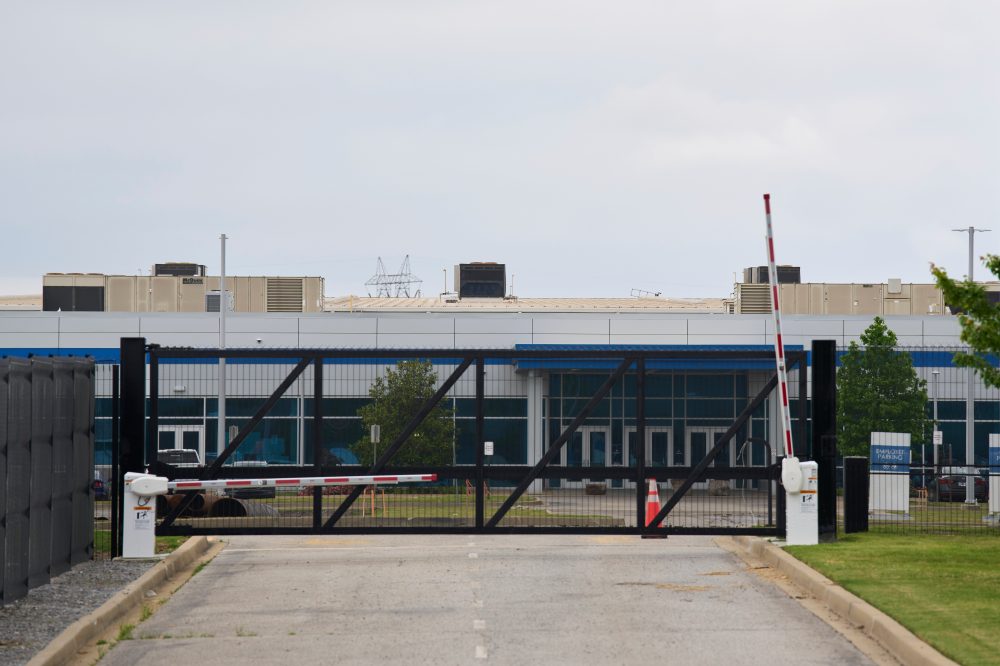

WASHINGTON — The Trump administration is stepping in to defend one of Elon Musk’s companies against a civil rights lawsuit claiming the firm is illegally operating dozens of natural gas turbines to run a $20 billion artificial intelligence data center in Mississippi.
The NAACP and several other organizations contend that Musk’s xAI subsidiary never obtained the required permit for its power plant — which sits near homes, schools, and churches — putting families in North Mississippi and the Memphis area at risk and violating the federal Clean Air Act.
Late Monday, the Justice Department filed a motion seeking to join the case and have the lawsuit thrown out. The department’s argument: the facility is essential to powering an AI data center described as “critical to the economy” and to the U.S. military.
The DOJ also stated that permit authority for the power plant rests with the state of Mississippi — not the federal government — and that Mississippi “decided no permit was required.”
Associate Attorney General Stanley Woodward, the third-ranking official at the Justice Department, framed the move in broad terms. “Ultimate responsibility for enforcing federal law belongs to the Executive Branch, not private interest groups,” he said, adding that the motion is meant to protect national security and advance American energy and innovation.
The Trump administration has designated artificial intelligence as a top national and economic security priority, while also rolling back climate-focused policies and loosening environmental regulations on businesses.
Musk has maintained close ties to President Trump. He led the administration’s federal cost-cutting effort known as the Department of Government Efficiency, or DOGE, earlier last year. Musk was also the largest individual donor to Trump’s presidential campaign and has been channeling money into midterm races. He was crowned the world’s first trillionaire on Friday when SpaceX went public.
The Justice Department’s move comes just days after SpaceX — Musk’s rocket company and the parent of xAI, the defendant in the lawsuit — completed the largest initial public stock offering in history. That milestone came in part due to billions of dollars in federal contracts the Trump administration awarded the company. SpaceX is now valued at more than $2 trillion, surpassing the combined worth of Exxon Mobil, Bank of America, and Coca-Cola.
The NAACP’s lawsuit, filed in April, accuses xAI of running dozens of portable natural gas turbines without proper emission controls and without the permits mandated by the Clean Air Act, which requires industrial polluters to secure air permits before beginning construction or operations.
The Environmental Protection Agency, asked about the case Tuesday, referred reporters to the Justice Department and noted it is not a party in the dispute.
Environmental advocates sharply criticized the DOJ’s intervention. Laura Thoms, director of enforcement for Earthjustice — the environmental law firm representing the NAACP and Southern Environmental Law Center — called it a “desperate attempt to protect wealthy tech companies from obeying the laws meant to protect people from pollution.”
“Trump’s Justice Department wants to shield Elon Musk’s data center company, xAI, from being held accountable for its illegal pollution — and it’s attempting to grab power from impacted communities, the courts and Congress to do so,” Thoms said. She added that the data center and its pollution are “turning our communities into sacrifice zones.”
Abre’ Conner, the NAACP’s director of environmental and climate justice, said the Clean Air Act exists specifically to hold polluters responsible for decisions that harm communities. “This should not be up for debate, and the NAACP will continue to stand up for democracy and against federal bullying and authoritarianism,” Conner said.
In a statement Tuesday, the Justice Department noted that the Pentagon is among many federal agencies relying on AI. “Overly burdensome regulation, including private lawsuits that seek to implement their own environmental enforcement, can threaten technological growth, American energy independence and national security,” the statement read.
SpaceX did not respond to a request for comment by deadline. The company has previously stated it is fully compliant with the law and takes its environmental obligations seriously.