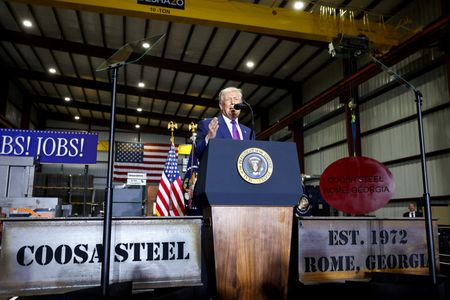

WASHINGTON – After nearly two months of military engagement with Iran, President Donald Trump confronts a political challenge that extends far beyond the battlefield: rising domestic economic costs that threaten his party’s prospects in upcoming elections.
The conflict, which began February 28 when Trump joined Israeli forces in strikes against Iran citing urgent security concerns over Tehran’s nuclear activities, has failed to achieve its primary objectives of regime change or forcing Iran to meet all U.S. demands. However, it has exposed Trump’s vulnerability to economic pressures at home.
Despite Iran’s Friday announcement that it would reopen the Strait of Hormuz to commercial shipping, the Middle Eastern crisis has demonstrated the boundaries of Trump’s tolerance for domestic economic hardship.
While Iran has suffered significant military losses, the country has proven capable of inflicting economic damage that caught Trump’s team off guard, triggering what analysts describe as an unprecedented global energy crisis.
ECONOMIC STRAIN MOUNTS
Although Trump has frequently dismissed public concerns about war-related economic impacts, he cannot overlook the reality that soaring energy costs have affected American consumers, even though the U.S. doesn’t rely on the roughly 20% of global oil shipments that Iran effectively blocked through its control of the strategic waterway. The International Monetary Fund’s recent recession warnings have added to growing economic anxiety.
As November’s midterm elections approach, pressure has intensified on Trump to find an exit strategy from the increasingly unpopular conflict, with fellow Republicans defending slim congressional majorities.
Iranian leadership has recognized this dynamic, leveraging their control over the strait to force Trump’s administration into negotiations.
Foreign policy experts suggest that rival nations like China and Russia may be taking notes: while Trump has demonstrated willingness to use military force during his second term, he appears to seek diplomatic solutions once economic pressures mount domestically.
“Trump is feeling the economic pinch, which is his Achilles heel in this war of choice,” said Brett Bruen, a former foreign policy adviser in the Obama administration who heads the Global Situation Room strategic consultancy.
White House spokesman Kush Desai responded that while the administration works toward resolving what he called “temporary” energy market issues through negotiations with Iran, it “has never lost focus on implementing the president’s affordability and growth agenda.”
“President Trump can walk and chew gum at the same time,” he said.
SHIFTING STRATEGY
Trump’s sudden pivot from military strikes to diplomatic engagement on April 8 came after pressure from financial markets and segments of his political base.
The economic impact has hit key Trump supporters, including farmers affected by fertilizer supply disruptions, while higher jet fuel costs have driven up airfare prices.
With a two-week ceasefire set to expire April 21, uncertainty remains about whether the unpredictable president will secure an agreement that accomplishes his war objectives, extend the temporary truce, or resume bombing operations.
Financial markets, which Trump frequently views as a measure of his performance, responded positively Friday after Iran announced the strait would remain open during a separate U.S.-brokered 10-day Israel-Lebanon truce, causing oil prices to drop significantly.
Trump quickly proclaimed the waterway secure while promoting what he described as a nearly complete deal with Iran largely favorable to U.S. terms. However, Iranian sources indicated to Reuters that significant disagreements remain unresolved.
Policy experts warn that even if hostilities end soon, economic recovery could require months or years.
A critical consideration is whether any agreement achieves Trump’s stated goals, including preventing Iran from developing nuclear weapons – something Tehran has consistently denied pursuing.
Iran maintains a stockpile of highly enriched uranium reportedly damaged in U.S.-Israeli strikes last June. Trump told Reuters Friday that the developing agreement includes provisions for joint U.S.-Iranian efforts to recover the material and transport it to the United States. Iran has rejected any transfer outside its borders.
A senior administration official confirmed the U.S. maintains “several redlines” in ongoing Iranian negotiations.
Meanwhile, Trump’s early calls for Iranians to overthrow their government have gone unanswered.
INTERNATIONAL CONCERNS
Allied nations across Europe and Asia were initially shocked by Trump’s decision to initiate military action without consultation or apparent consideration of risks posed by Iran’s potential closure of the strait.
“The alarm bell ringing for allies right now is how the war has highlighted that the administration can act erratically, without much regard for consequences,” said Gregory Poling, an Asia expert at the Center for Strategic and International Studies in Washington.
The situation contrasts with former Democratic President Joe Biden’s cautious approach to sanctioning Russian energy following Moscow’s 2022 Ukraine invasion, driven by concerns about oil supply reductions and rising U.S. gas prices.
Trump, who campaigned for a second term promising affordable fuel and low inflation, has shown particular sensitivity to accusations that his policies increase consumer costs, as demonstrated when he reduced China tariffs last year following retaliatory measures.
STRATEGIC MISCALCULATIONS
Similar to his misjudgment of Beijing’s response during trade disputes, Trump appears to have underestimated Iran’s capacity for economic retaliation through attacks on Gulf state energy infrastructure and strategic waterway blockades.
U.S. officials privately acknowledge that Trump incorrectly anticipated the conflict would resemble limited operations like January 3’s lightning strike in Venezuela or June’s targeted Iranian nuclear facility attacks.
Instead, the consequences have proven far more extensive.
Asian allies including Japan, South Korea, and Taiwan may interpret these events as evidence that Trump, while seeking improved Chinese relations, will pursue regional objectives with diminished consideration for their geopolitical and economic security.
Analysts believe these governments will prepare for various scenarios, including potential Chinese moves against Taiwan, due to concerns about Trump’s reliability.
European nations, frustrated by bearing substantial economic costs from a conflict they didn’t support, are likely to question Trump’s commitment to continued Ukrainian assistance against Russia.
Gulf Arab states desire swift conflict resolution but worry about agreements lacking security guarantees for their protection.
“An end to this conflict should not also create a continuous instability in the region,” said Anwar Gargash, diplomatic adviser to the United Arab Emirates president.
While most Trump supporters remain loyal despite some prominent criticism, growing questions exist about his ability to help Republicans regain lost ground with independent voters before midterm elections.
“He’s aware that a significant portion of the country outside his MAGA base, and even some within the MAGA base, are vehemently opposed to what he’s done,” said Chuck Coughlin, an Arizona-based political strategist. “And I think the price is going to come due.”