
WASHINGTON — White House chief of staff Susie Wiles is scheduled to discuss Anthropic’s cutting-edge artificial intelligence technology with the company’s CEO Dario Amodei, as the federal government examines how the new Mythos model could impact national security and economic interests.
An unnamed White House official confirmed the Friday meeting, explaining that the administration is actively consulting with leading AI companies about their technological developments and software security measures. The official emphasized that any new technology being considered for government use would undergo thorough technical review.
This scheduled discussion occurs amid ongoing friction between the Trump administration and Anthropic, a company known for its cautious approach to AI development and efforts to establish protective measures that reduce potential dangers while enhancing economic and security advantages for the United States.
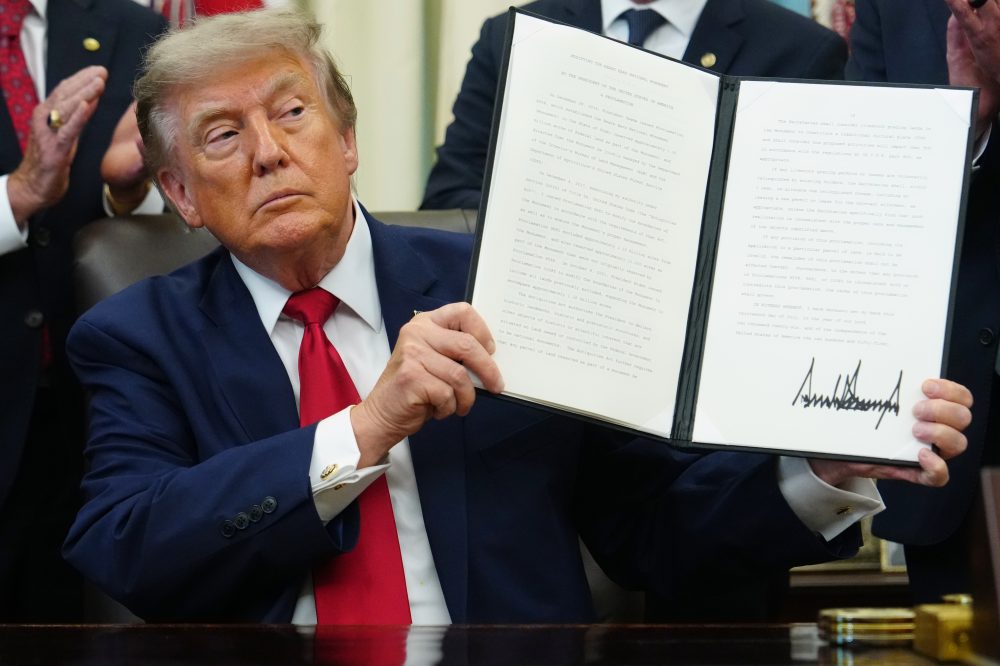
President Trump previously attempted to ban all federal agencies from utilizing Anthropic’s Claude chatbot following a contract disagreement with the Pentagon. In a February social media statement, Trump declared the administration “will not do business with them again!”
Defense Secretary Pete Hegseth additionally moved to classify Anthropic as a supply chain threat, marking an unusual action against an American company that Anthropic is now contesting in two federal courts. The company requested guarantees that the Pentagon wouldn’t employ its technology for completely autonomous weapons or domestic surveillance of Americans. Hegseth maintained that the company should permit any Pentagon uses considered legal.
U.S. District Judge Rita Lin issued a March decision that prevented enforcement of Trump’s social media order directing federal agencies to cease using Anthropic’s products.
Anthropic chose not to comment on the upcoming meeting.
The San Francisco-headquartered company announced its new Mythos model on April 7, describing it as remarkably advanced and restricting access to selected customers due to its ability to exceed human cybersecurity professionals in identifying and exploiting computer system weaknesses.
While some industry observers have questioned whether Anthropic’s assertions about overly powerful AI represent a marketing strategy, even company critics acknowledge that Mythos may signal significant AI progress.
David Sacks, a prominent Anthropic critic and former White House AI and crypto czar, urged taking the development seriously.
“Anytime Anthropic is scaring people, you have to ask, ‘Is this a tactic? Is this part of their Chicken Little routine? Or is it real?’” Sacks commented on the “All-In” podcast he co-hosts with fellow tech investors. “With cyber, I actually would give them credit in this case and say this is more on the real side.”
Sacks explained, “It just makes sense that as the coding models become more and more capable, they are more capable at finding bugs. That means they’re more capable at finding vulnerabilities. That means they’re more capable at stringing together multiple vulnerabilities and creating an exploit.”
The technology’s potential advantages and dangers have drawn international attention as well.
The United Kingdom’s AI Security Institute evaluated the new system and determined it represents a significant improvement over earlier models, which were already advancing quickly.
“Mythos Preview can exploit systems with weak security posture, and it is likely that more models with these capabilities will be developed,” the institute stated in its assessment.
Anthropic has engaged in discussions with the European Union regarding its AI systems, including advanced versions not yet available in Europe, according to European Commission spokesman Thomas Regnier on Friday.
Axios initially reported the planned meeting between Wiles and Amodei.
Alongside the Mythos announcement, Anthropic launched Project Glasswing, an initiative uniting technology leaders including Amazon, Apple, Google and Microsoft, plus companies like JPMorgan Chase, to protect global critical software from potential serious consequences the new model could create for public safety, national security and economic stability.
“We’re releasing it to a subset of some of the world’s most important companies and organizations so they can use this to find vulnerabilities,” explained Anthropic co-founder and policy chief Jack Clark during this week’s Semafor World Economy conference.
Clark noted that while Mythos leads current technology, it isn’t a unique development.
“There will be other systems just like this in a few months from other companies, and in a year to a year-and-a-half later, there will be open-weight models from China that have these capabilities,” he stated. “So the world is going to have to get ready for more powerful systems that are going to exist within it.”