The 12 regional presidents of Federal Reserve banks across the nation find themselves at the center of an unprecedented battle over central banking independence, as political and legal challenges mount against the institution’s traditional structure.
San Francisco Fed President Mary Daly, who reached her position through a selection process that bypassed public elections and political appointments, maintains that regional bank leaders serve as cornerstones of the Federal Reserve’s democratic credibility.
This perspective now confronts significant challenges from multiple directions: a Supreme Court case examining whether presidents can dismiss Fed governors, ongoing transition difficulties between current Fed Chair Jerome Powell and President Trump’s nominee Kevin Warsh, and potential reforms from Treasury Secretary Scott Bessent, who has voiced criticism of Fed operations.
“Look back to the original act … You create these regional Feds and you make the selection of those policymakers different than the selection of the ones in D.C.,” Daly explained in a recent interview, referencing how the Federal Reserve Act sought to balance centralized authority in Washington with regional representation across 12 districts.
The regional presidents hold substantial influence, with five participating in monetary policy votes on a rotating schedule, representing crucial support that Fed leadership must secure when establishing policy directions.
These officials frequently emphasize their extensive interactions with local business leaders and workers as fundamental to the Fed’s mission, arguing that their independence from political appointment processes enables objective decision-making.
Daly noted that Senate-confirmed Fed governors must approve regional bank appointments, creating “the checks and balances that I think are part of a democratic institution. Other people can disagree, but this has stood the test of time.”
However, the current system faces mounting pressure from both the legal challenge regarding Trump’s attempt to remove Fed Governor Lisa Cook and Powell’s decision about remaining on the board through 2028, even if Warsh assumes the chairmanship after Powell’s term concludes May 15.
Warsh’s confirmation process has stalled due to at least one Republican senator’s opposition, stemming from concerns about a Trump administration investigation into Powell that the senator views as undermining Fed independence.
Powell has criticized this investigation and stated he will determine his future “based on what I think is best for the institution and for the people we serve,” potentially setting up continued resistance to changes he considers excessive.
While regional Fed presidents are selected through local processes with minimal Washington involvement, they remain vulnerable to dismissal by a board majority. The current board includes three Biden appointees and three Trump appointees, with Powell originally appointed by Obama, promoted by Trump, and reappointed by Biden.
Trump has not publicly addressed regional bank composition, and his administration has not formally proposed changes to increase White House influence over these institutions.
Nevertheless, discussions about their role have become entangled in broader debates about balancing Federal Reserve independence in monetary policy with democratic accountability and constitutional governance principles.
Columbia Law School Professor Kathryn Judge, speaking at a recent Shadow Open Market Committee gathering, predicted that Trump administration challenges, regardless of their success, would create a period of “disruption” that “is likely to dramatically weaken the ground upon which Fed independence has stood, and that independence is going to remain fragile.”
Future directions remain uncertain. Warsh has called for significant Fed changes without providing specifics, while Bessent has published detailed criticism of what he considers excessive Fed economic influence and suggested residency requirements for regional bank president appointments.
Stephen Miran, before joining the Fed board, co-authored research arguing that presidents should have authority to dismiss both Fed board members and regional bank leaders, claiming the current arrangement creates “some degree of tension” with constitutional principles.
Former Fed Vice Chair for Supervision Randall Quarles echoed similar sentiments, telling the Shadow Open Market Committee that Supreme Court protection of Fed officials from presidential dismissal would be “both wrong and unnecessary.”
“The right answer is to say … the president can, in fact, dismiss anyone on the Federal Reserve Board because he disagrees with their views on policy,” Quarles argued, while expressing confidence that Senate confirmation processes and regional bank leadership would prevent political hijacking of monetary policy.
Former St. Louis Fed President James Bullard quickly challenged this position, warning: “You’re absolutely playing with fire. Do you not think that if you fire all the governors at will, they will just turn around and fire all the (Fed bank) presidents? … One party or another has swept into power and what do they want? They want low interest rates because they don’t want to have to pay a lot for their deficit spending.”
Federal documents obtained through a Freedom of Information Act request reveal that the Trump administration has terminated the Consumer Financial Protection Bureau’s Washington headquarters lease, ending the agreement six years before its scheduled expiration.
The Office of the Comptroller of the Currency ended the CFPB’s lease in February and transferred the downtown Washington property to the General Services Administration at no charge, according to records released to Reuters.
This latest development adds to ongoing uncertainty surrounding the consumer protection agency, which was established by Congress following the 2008 financial crisis to oversee consumer financial products. President Trump has advocated for eliminating the bureau entirely, and court documents show his administration initially planned to close the agency completely.
After facing legal challenges from agency staff, the administration is now pursuing court permission to slash the CFPB’s workforce from approximately 1,700 employees to just one-third of that number.
The OCC acquired the building in 2010 as part of regulatory reforms implemented after the financial crisis that also led to the CFPB’s creation. The original lease was set to run for 20 years, requiring the consumer bureau to pay roughly $11.4 million annually in rent for 2012, with 2% yearly increases.
According to the lease termination documents, the CFPB first approached the OCC about ending the arrangement shortly after Trump assumed office and made the request again in December.
In correspondence dated February 12, Comptroller of the Currency Jonathan Gould informed the GSA that managing the property involved “costs and risks” and that serving as the CFPB’s landlord “does not advance the OCC’s mission.”
The consumer protection agency has experienced significant staff reductions over the past year, with current employment dropping below 1,200 workers based on recent court filings. Sources familiar with the situation indicate that only a small number of CFPB personnel regularly use the building, as most employees now work remotely.
Trump’s Budget Director Russell Vought, who serves as the CFPB’s acting director, suspended agency operations last year and sent staff home. The building’s signage was removed overnight during this period.
Some agency functions have gradually resumed, including regulatory drafting and limited supervisory activities. Recent job postings show the bureau has advertised a small number of attorney positions.
The headquarters building sits across from the White House complex and features modern 1974 architecture with floor-to-ceiling windows. The facility encompasses more than 300,000 square feet, includes over 200 parking spaces, and has an accessible rooftop in a prime downtown location.
The Trump administration characterizes the agency as a politicized obstacle to free enterprise, while supporters argue that efforts to dismantle it will ultimately harm consumers.
Neither the OCC nor GSA representatives provided immediate responses to requests for comment. A CFPB spokesperson confirmed the agency’s headquarters were located at the property in question but declined to answer detailed inquiries.
DEARBORN, Mich. — A year and a half after America’s most prominent Arab American community backed Donald Trump’s return to the White House, residents continue their daily prayers for peace.
Families in this Detroit suburb anxiously await updates from overseas relatives, hoping for safety news while grieving those they’ve already lost to violence.
The initial heartbreak over Gaza’s conflict has expanded significantly. With Dearborn’s substantial Lebanese American residents, Lebanon’s escalating warfare has brought the crisis closer to home. This overseas turmoil now intersects with domestic challenges including stricter immigration policies, economic difficulties, and rising local tensions following a recent synagogue attack.
“The community now sees that it could have got worse — and it did get worse,” said Nabih Ayad, founder of the Arab American Civil Rights League. “But the community was just so desperate.”
The election-season media attention that once focused intensely on Dearborn has diminished. Large-scale demonstrations have subsided. Yet within religious centers, at memorial services, and during family gatherings, discussions show a community still struggling and beginning to consider future options.
Recently, Ayad met with fellow Arab American community leaders for an Associated Press interview. Several had participated extensively in discussions with both Kamala Harris’ Democratic campaign and Trump’s Republican effort as each sought their electoral support.
“We get this all the time by media, okay? It’s basically, ‘How’d that decision go? How’d that work out for you?’” Ayad said.
Nearly a dozen leaders attended — including county officials, state legislators, and business operators — and most agreed that circumstances haven’t improved since Trump’s inauguration.
However, few expressed remorse about their choice. Most explained that Democrats failed to provide a credible option because Harris, serving as vice president then, didn’t sufficiently separate herself from Joe Biden’s pro-Israel stance regarding Gaza operations.
Most don’t intend to back Trump or other Republicans going forward.
“I think November 3rd couldn’t come soon enough,” said Wayne County Commissioner Sam Baydoun, referring to the midterm elections.
Following America’s joint action with Israel against Iran, the regional conflict expanded to encompass Lebanon, Hezbollah’s operational base.
A tentative two-week ceasefire announced recently didn’t cover Israel-Hezbollah hostilities, allowing continued violence there. The warfare has forced over one million Lebanese to flee their homes and resulted in more than 2,000 deaths, including over 500 women, children, and healthcare personnel. Lebanon and Israel conducted their first direct diplomatic discussions in decades this Tuesday in Washington.
Michigan hosts America’s largest Arab American population, with nearly 25% claiming Lebanese heritage. Within Wayne County, encompassing Detroit and Dearborn, approximately one-third of the roughly 140,000 residents who identified as Middle Eastern or North African in 2020 census data are Lebanese.
For many families, this translates to persistent anxiety.
“I have family in Lebanon. I have an uncle with his wife and his kids and his grandkids. And to be honest with you, I’m just waiting for the call from overseas saying that he’s perished,” said Assad Turfe, a Wayne County official who was among the few Arab Americans to endorse Harris in 2024.
“This is the kind of environment that this community is living with every day,” he added. “That story is in the minds and the hearts of almost everyone that lives in this community.”
During Friday services in Dearborn Heights, more than one hundred worshippers filled a mosque for afternoon prayers. The imam began by addressing Middle Eastern conflicts and criticizing Trump’s statements that a “whole civilization will die” unless Iran accepted his conditions.
“Political leaders are supposed to build the bridges, not promote scorched earth policies,” the imam said.
The moment highlighted how profoundly the conflict has penetrated everyday routines, transforming religious spaces into venues extending beyond worship.
That evening, Peace Park in Dearborn became filled with Lebanese flags as a memorial service occupied the central plaza.
Young people sat on flag-draped steps, carrying photographs of children killed during the war. Meanwhile, speakers alternated describing a conflict spanning multiple presidential administrations with minimal progress toward resolution.
“What we have witnessed is not just another headline. It is not distant. It is not abstract,” Suehaila Amen, a Lebanese American, said at the vigil.
“We are a community in mourning,” she said, “and we have been mourning for a long, long time.”
Across Colorado, home cooks are preparing and selling tamales from their personal kitchens in violation of current state regulations. State legislators are now working to change that by adding tamales to the official roster of homemade foods that residents can legally market and sell.
The proposed legislation, known as the Tamale Act, would expand Colorado’s existing cottage food laws to include the popular dish. Currently, numerous home-based food entrepreneurs operate in a legal gray area when they sell their homemade tamales to customers.
Federal prosecutors filed a motion Tuesday requesting an appellate court to dismiss seditious conspiracy verdicts against prominent members of extremist organizations who participated in the January 6, 2021 assault on the U.S. Capitol.
The Department of Justice’s petition targets the convictions of high-ranking figures within the Proud Boys and Oath Keepers organizations, who were found guilty of seditious conspiracy charges stemming from their participation in the Capitol breach.
The legal filing represents a significant development in the ongoing aftermath of the January 6th events, as prosecutors seek to overturn verdicts that were among the most serious charges brought against participants in the Capitol attack.
WASHINGTON — Lawmakers face a Monday deadline to decide the fate of a controversial surveillance program that allows intelligence agencies to monitor foreign communications, with President Donald Trump advocating for its extension despite ongoing privacy debates.
The Foreign Intelligence Surveillance Act provision enables the CIA, NSA, FBI and other agencies to gather and examine extensive overseas communications data without obtaining warrants. The surveillance sometimes captures communications involving Americans who contact monitored foreign targets.
With the program set to expire Monday, lawmakers are debating reforms including mandatory warrants before officials can review Americans’ emails, phone calls or text messages. Critics also seek restrictions on government purchases from internet data brokers, who sell massive amounts of personal information collected online.
Reform prospects diminished after Trump endorsed the program’s continuation, citing its value in providing crucial intelligence for recent U.S. operations in Venezuela and Iran.
“The fact is, whether you like FISA or not, it is extremely important to our military,” Trump posted on social media Tuesday.
Government officials describe the program, called Section 702, as essential for national security and preventing terrorist attacks. Opposition voices characterize it as a dangerous violation of constitutional rights and personal privacy.
In his Truth Social message, Trump acknowledged that a different FISA provision targeted his 2016 campaign but endorsed Section 702’s extension despite concerns about potential future misuse by political opponents. He urged Congress to approve an 18-month extension of the foreign surveillance authority.
“My administration has worked tirelessly to ensure these FISA reforms are being aggressively executed at every level of the Executive Branch to keep Americans safe, while protecting our sacred Civil Liberties guaranteed by our Great Constitution,” Trump wrote.
Trump has historically criticized intelligence agencies and previously opposed Section 702 before changing his position. “KILL FISA” Trump posted on social media in 2024, when lawmakers last renewed the provision.
Trump isn’t alone in shifting positions: Director of National Intelligence Tulsi Gabbard previously sponsored legislation as a Hawaii representative to eliminate Section 702 but now endorses it after her appointment to oversee the nation’s 18 intelligence agencies.
Gabbard credits new safeguards implemented since her congressional service for influencing her changed perspective.
Beyond warrant requirements for accessing Americans’ information, critics seek enhanced protections governing how the FBI and other agencies search communications and report those activities publicly.
“Journalists, foreign aid workers, people with family overseas, all could have their communications swept up in this surveillance merely because they talked to someone outside of this country,” said Sen. Ron Wyden, D-Ore. The persistent law opponent advocates for modifications ensuring the government doesn’t secretly violate constitutional rights.
Multiple Republicans have also proposed changes, including the warrant requirement.
“National security and civil liberties are not mutually exclusive,” said Rep. Andy Biggs, R-Ariz. “We can give our intelligence professionals the tools they need to target foreign threats while ensuring that Americans are not subjected to unconstitutional surveillance.”
In 2025, foreign surveillance targets rose to nearly 350,000 from approximately 292,000 in 2024. Searches using terms possibly identifying Americans dropped slightly to 7,724 from 7,845 in 2024.
These figures are incomplete because agencies like the FBI have developed methods to access data without publicly reporting searches, according to Elizabeth Goitein, senior director of the Liberty and National Security Program at the Brennan Center for Justice at New York University.
FBI personnel repeatedly violated internal guidelines when searching for intelligence about the January 6, 2021, Capitol attack and 2020 racial justice demonstrations, a 2024 court ruling revealed.
“It’s reminiscent of J. Edgar Hoover’s tenure at the FBI,” Goitein said, referencing the FBI’s founding director who employed illegal surveillance to intimidate and monitor Americans. “They can pretty much target anyone.”
Despite bipartisan worries about the law and its civil liberties implications, Congress has limited time to implement changes before Monday’s deadline.
Trump’s endorsement also decreases the likelihood that sufficient Republicans will oppose party leadership and collaborate with Democrats on reform efforts.
Wyden noted that Section 702 votes are typically postponed until the final moment, when lawmakers face pressure that national security requires approval. Legislators are warned, he explained, that “if they vote for any amendments, the program will die and terrible things will happen and it will be all their fault.”
The House presents the strongest opportunity for incorporating changes, where numerous lawmakers from both parties have voiced concerns.
However, Rep. Rick Crawford, an Arkansas Republican leading the House Intelligence Committee, supports Trump’s proposal for an 18-month extension.
Crawford has previously criticized what he terms intelligence weaponization but stated last month that he believes the government can strengthen spy agencies while maintaining accountability.
“We can walk and chew gum at the same time,” Crawford said.
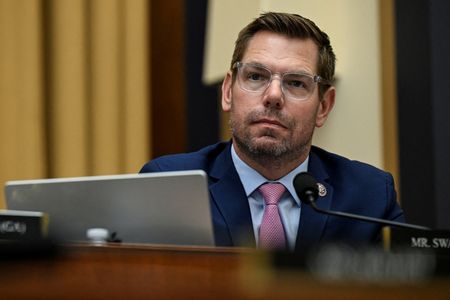
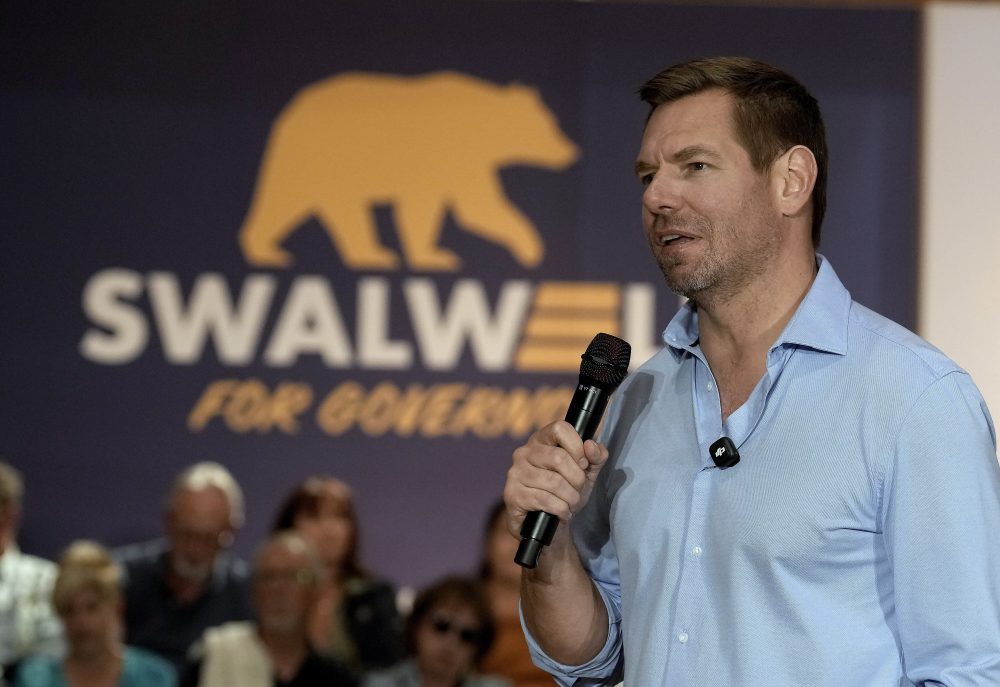
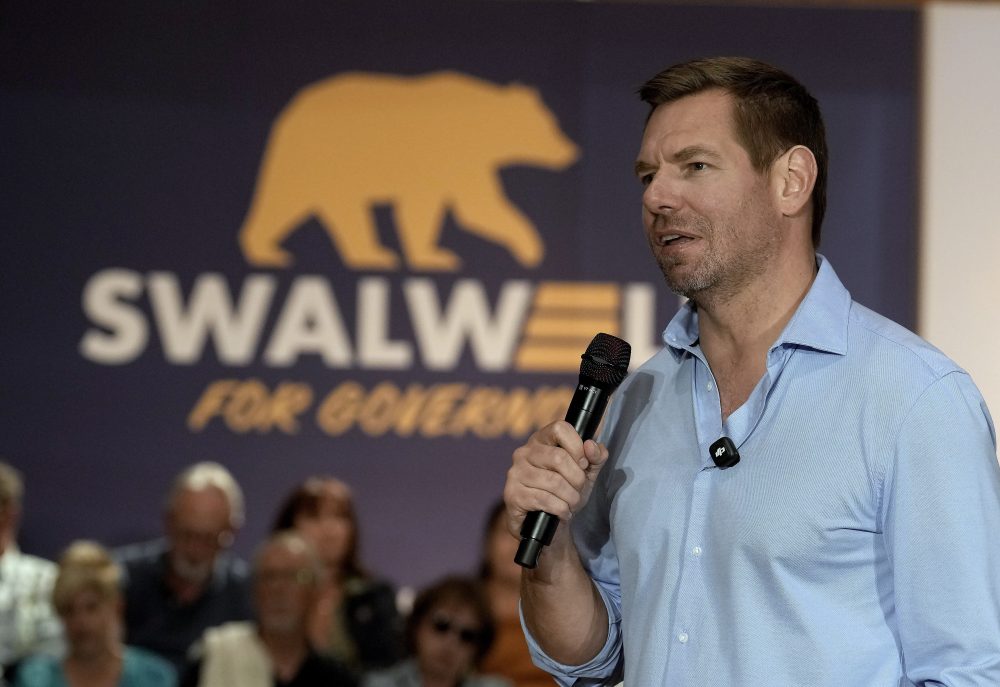
WASHINGTON — Two members of Congress stepped down this week following accusations of sexual misconduct with staff members, but many female lawmakers say the accountability moment has been years overdue and more changes are needed.
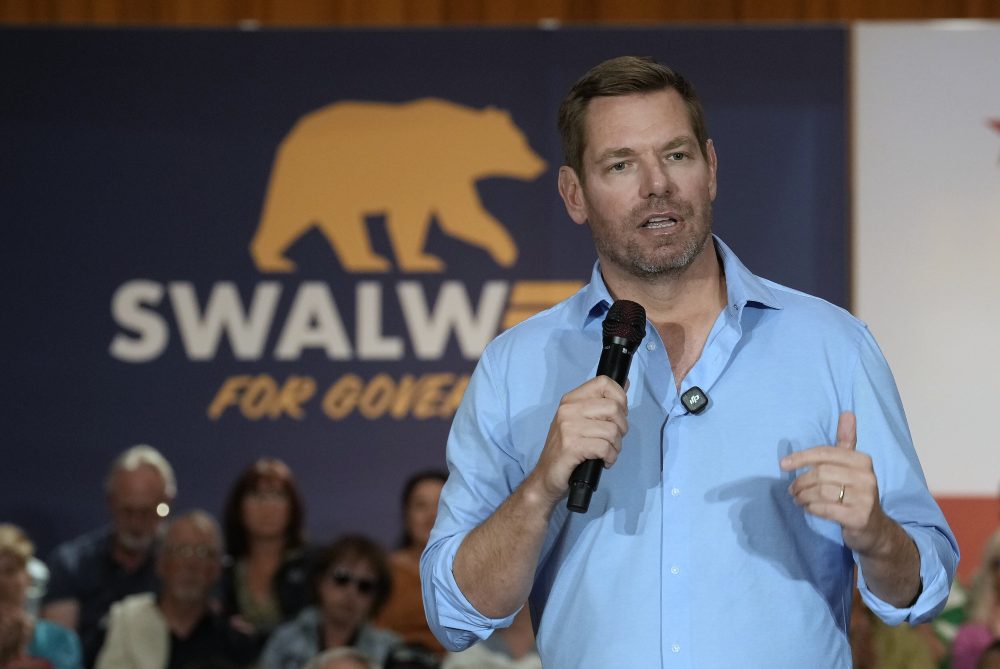
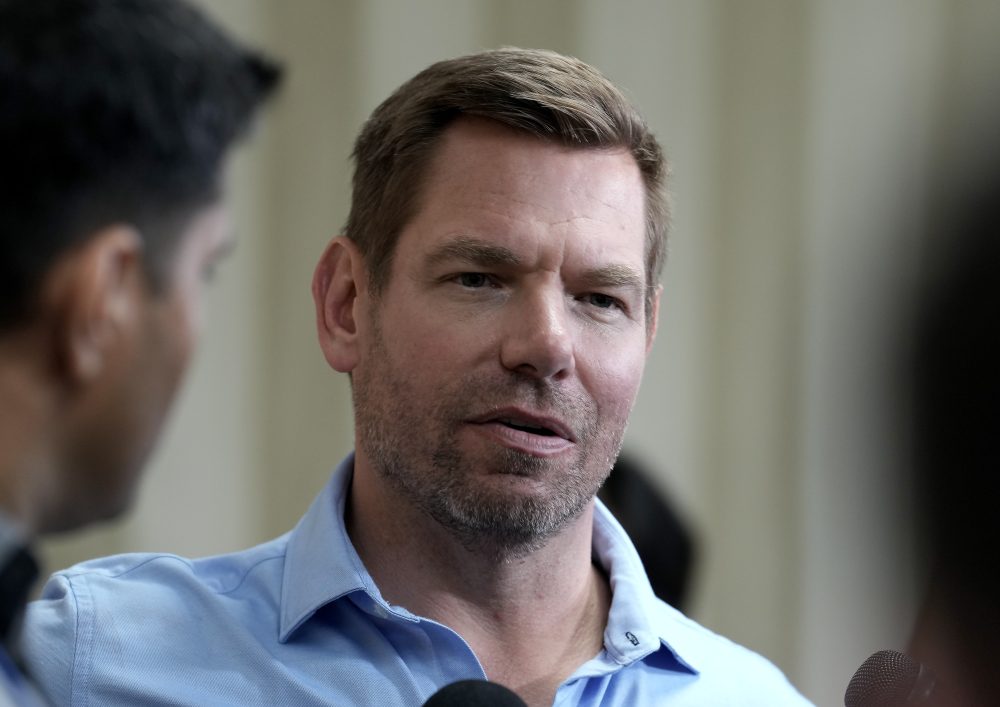
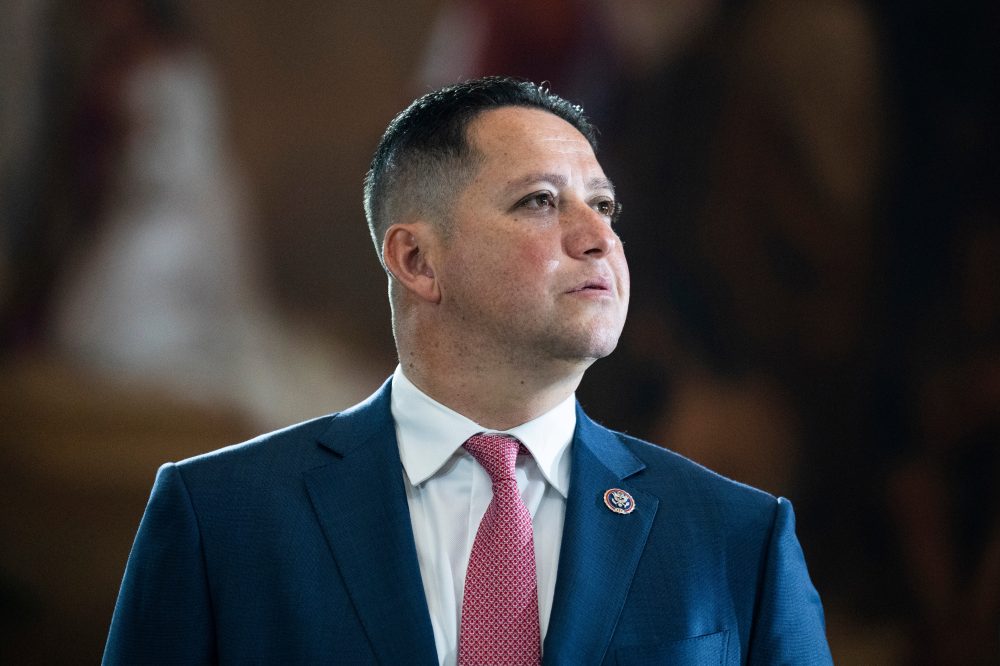
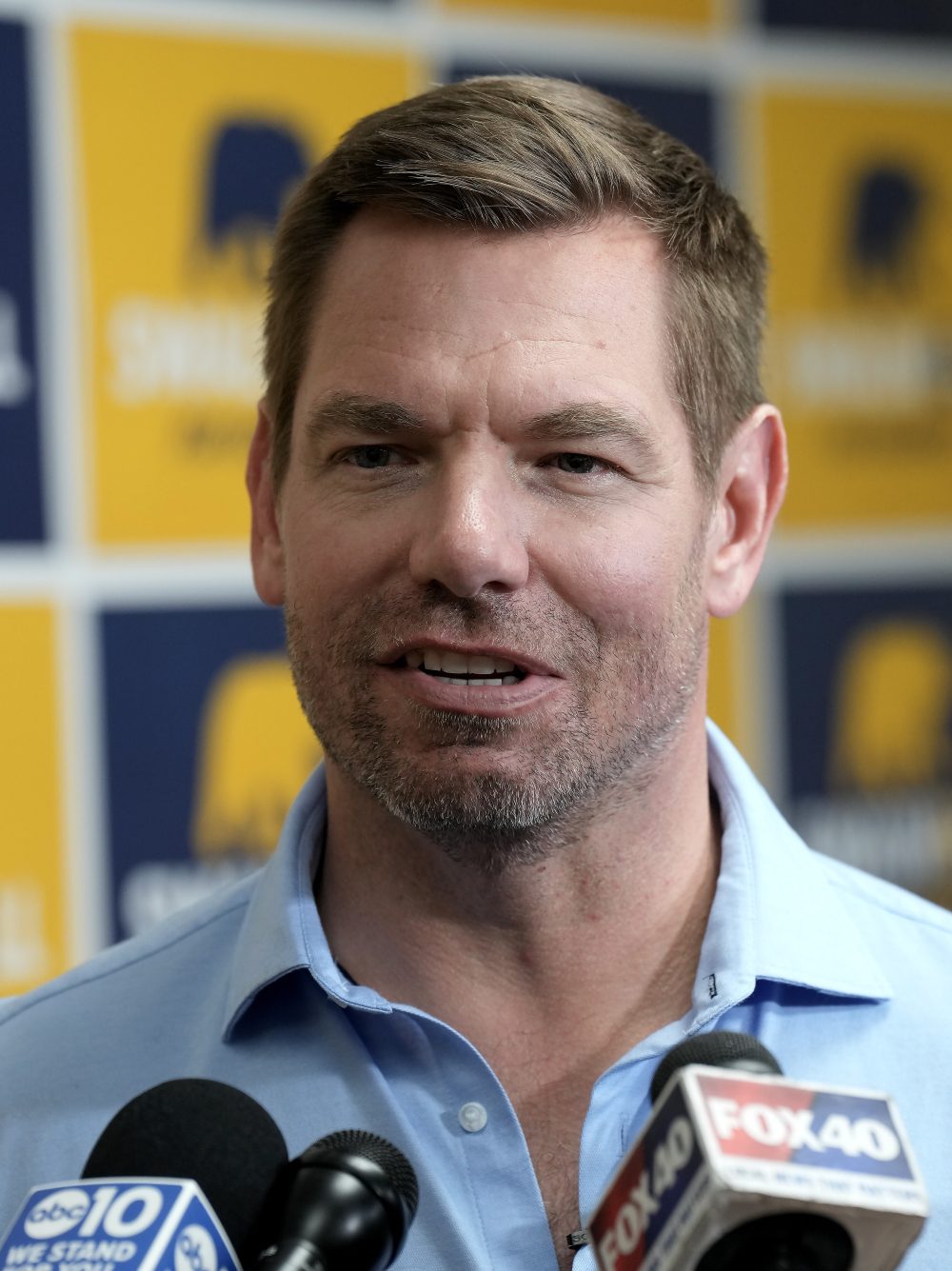
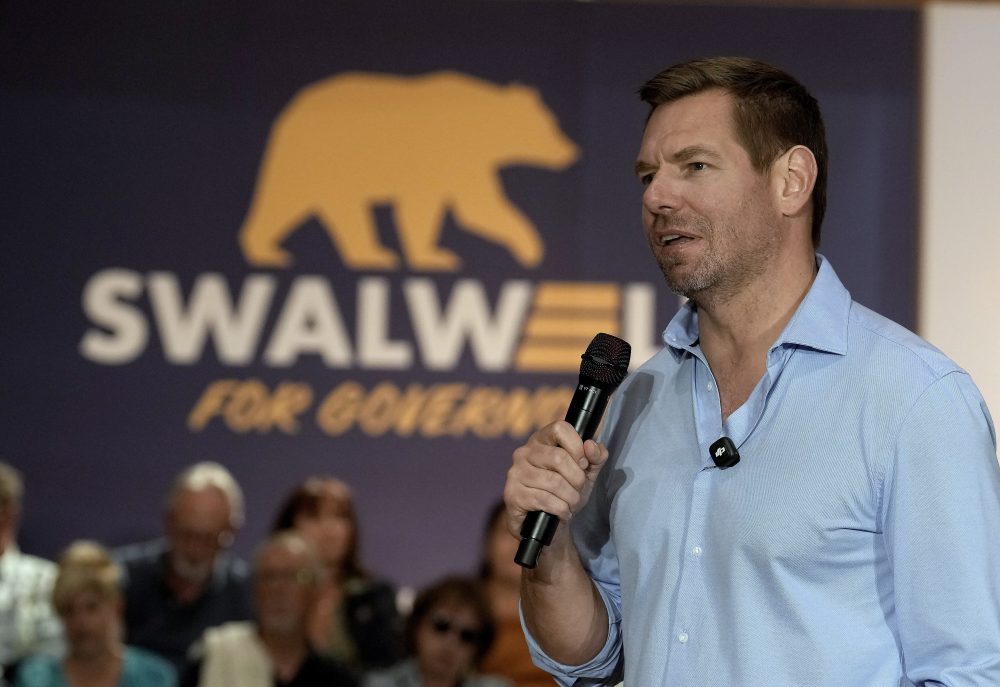
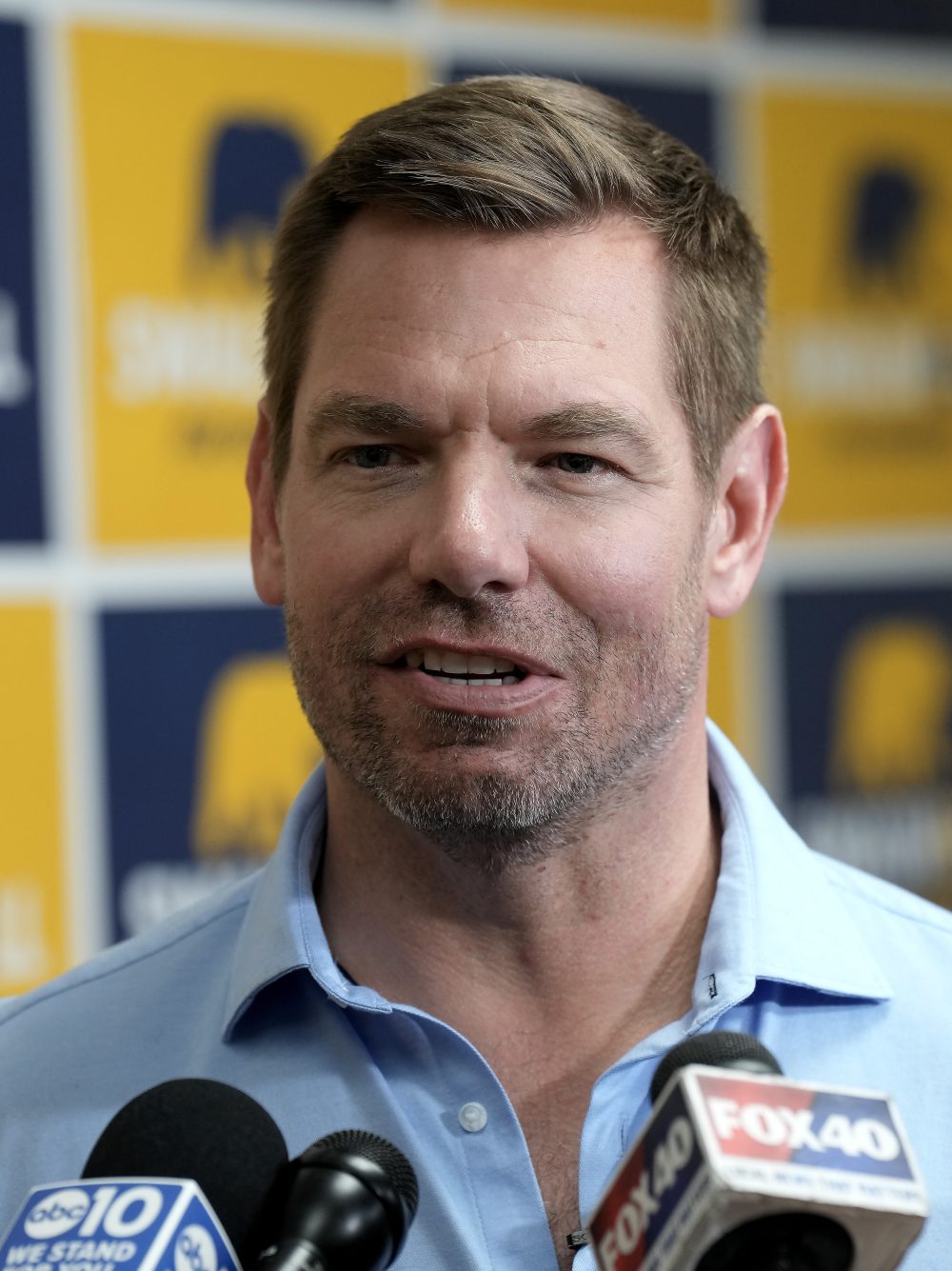
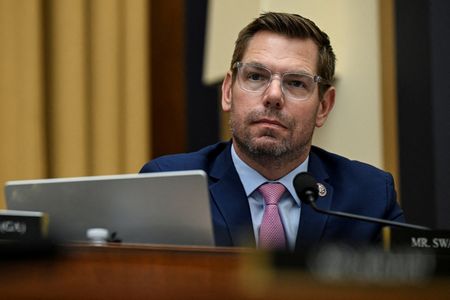
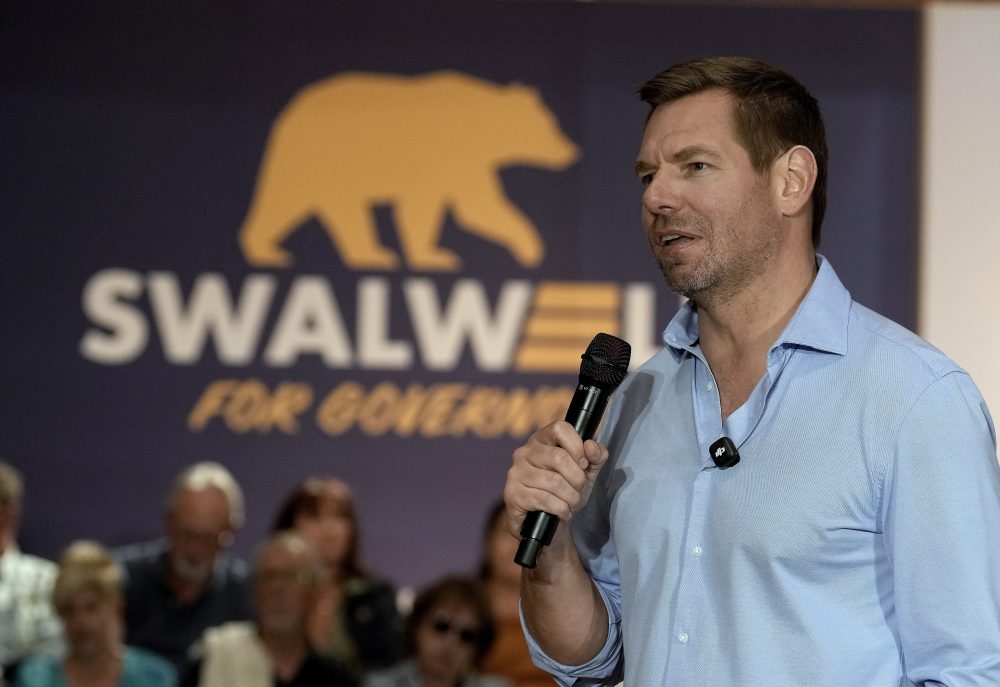
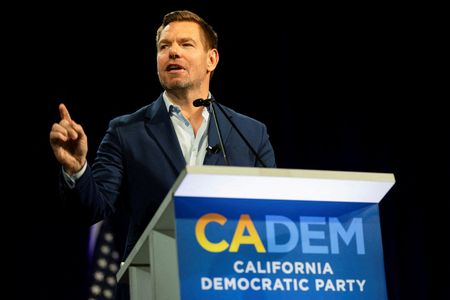
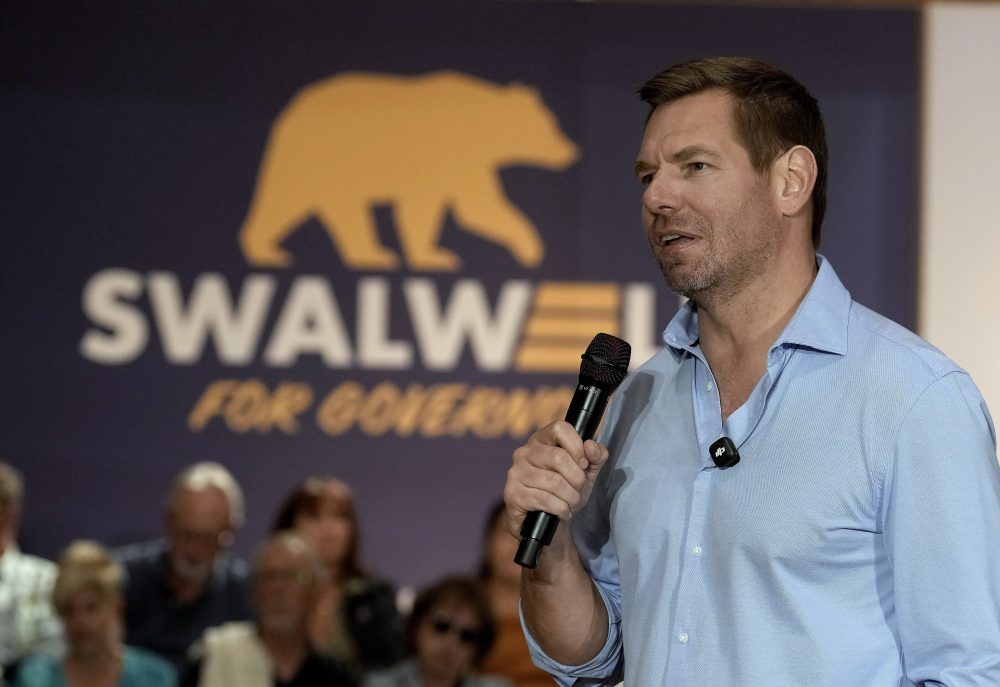
Representatives Eric Swalwell of California and Tony Gonzales of Texas both announced their departures from Congress within hours on Monday. The timing came just before the House reconvened in Washington and as both faced potential expulsion votes from their colleagues.
The departures marked a significant moment for Capitol Hill accountability, representing the most notable action since approximately twelve male politicians saw their careers end during the peak of the #MeToo era. However, several congresswomen argued the resignations took far too long and highlighted ongoing problems with sexual misconduct in Congress.
“Today was an important turning point,” stated New York Democratic Representative Alexandria Ocasio-Cortez. “That it should — that abuse of power — should never be accepted, and above all, in public office. And so, I think this is an important resetting point for the institution.”
A cross-party coalition of female lawmakers had prepared to introduce resolutions Tuesday that would have compelled expulsion votes for both Swalwell and Gonzales. This pressure campaign succeeded after the San Francisco Chronicle and CNN reported Friday that a woman accused Swalwell of sexual assault.
The accusations against Swalwell span from 2019 to 2024, with additional inappropriate behavior claims from other women emerging later. While Swalwell has rejected all sexual misconduct allegations, he has admitted to poor judgment. Gonzales had faced months of resignation demands after acknowledging a 2024 affair with a staff member who later took her own life.
“Accountability can happen. We can hold men accountable when they abuse women, and we’re going to do more of it,” declared Representative Teresa Leger Fernández, who leads the Democratic Women’s Caucus.
House rules explicitly prohibit sexual relationships between members and their staff.
After the #MeToo movement gained momentum, the House implemented mandatory yearly training on sexual harassment and discrimination for all members. Additional legislation passed to accelerate the complaint process for harassment cases, increase settlement transparency, and require lawmakers to personally cover any financial penalties.
Former California Democratic Representative Jackie Speier, who championed sexual assault reforms, told The Associated Press that significant issues remain despite these changes.
“What we do in Congress is basically look the other way,” she explained, urging House Speaker Mike Johnson and Democratic leader Hakeem Jeffries to “really tighten the rules and create a safe environment for these women to report.”
Johnson stated he had no conversations with either lawmaker before their resignation announcements, but told reporters the situation concluded “appropriately.”
“This is the right thing for the institution,” he commented.
Sexual abuse concerns have gained prominence as lawmakers examine the actions of deceased financier Jeffrey Epstein. Several conservative Republican women played key roles in pushing Congress to address these issues.
Republican Representative Nancy Mace, working with Representatives Lauren Boebert and former Representative Marjorie Taylor Greene, defied pressure from President Donald Trump and Johnson last year. They joined Democrats to force a vote requiring the release of many Epstein case files.
Mace, who publicly shared her own rape survival story in 2019, has maintained an active campaign supporting sexual assault victims. She and Republican Representative Anna Paulina Luna repeatedly demanded resignations from both Swalwell and Gonzales.
Mace has also called for Republican Representative Cory Mills to step down, as he faces an ethics investigation over alleged sexual misconduct and violence against a former girlfriend. Mills maintains he will disprove these claims.
Additionally, Mace and Luna are seeking the resignation of Florida Democratic Representative Sheila Cherfilus-McCormick. The House Ethics Committee discovered evidence she violated campaign finance laws related to a mistaken $5 million overpayment from Florida to her family’s healthcare business. She denies any wrongdoing.
“Clean house. Expel them. Hold every last one accountable,” Mace posted on social media. “The American people are watching.”
Notably, Mace herself faces an ethics investigation regarding allegations of improper housing reimbursement claims, which she disputes.
As sexual abuse allegations continued mounting against Swalwell, some Democrats experienced moments of reflection and remorse, particularly those who maintained close relationships with him.
Arizona Senator Ruben Gallego, a longtime Swalwell friend who managed his presidential campaign, held an emotional news conference Tuesday.
“I messed up. I’m human. I trusted this man,” Gallego said with tears in his eyes.
Under intense reporter questioning, Gallego admitted hearing rumors about Swalwell being “flirty” but said he trusted him as a close family friend.
“I definitely look at the world in a different way now,” Gallego stated. “I personally am going to make sure that I’m going to take personal steps and office steps to make sure that we don’t even get close to a gray line.”
Speier, who began her political career as a congressional aide and faced harassment from a supervisor, explained that Congress members operate with extensive autonomy over their offices. All 535 lawmakers serve as bosses of their personally chosen staff.
“There’s really no one overseeing you,” Speier noted. “There’s a sense of entitlement that kind of overtakes many of these members.”
Speier worked with former Representative Bradley Byrne to pass legislation simplifying sexual harassment and discrimination reporting, including prohibiting nondisclosure agreements that protect Congress members.
Since 2018 reforms required the Office of Congressional Workplace Rights to report awards and settlements from formal complaints, House member offices have made eight payments totaling slightly over $400,000. These payments cover all workplace rights violations, not exclusively sexual harassment, and violations could involve other congressional staff within offices.
Speier emphasized the importance of continuing to simplify the reporting process for survivors.
“Unless someone comes forward, you know the conduct continues,” she stated.
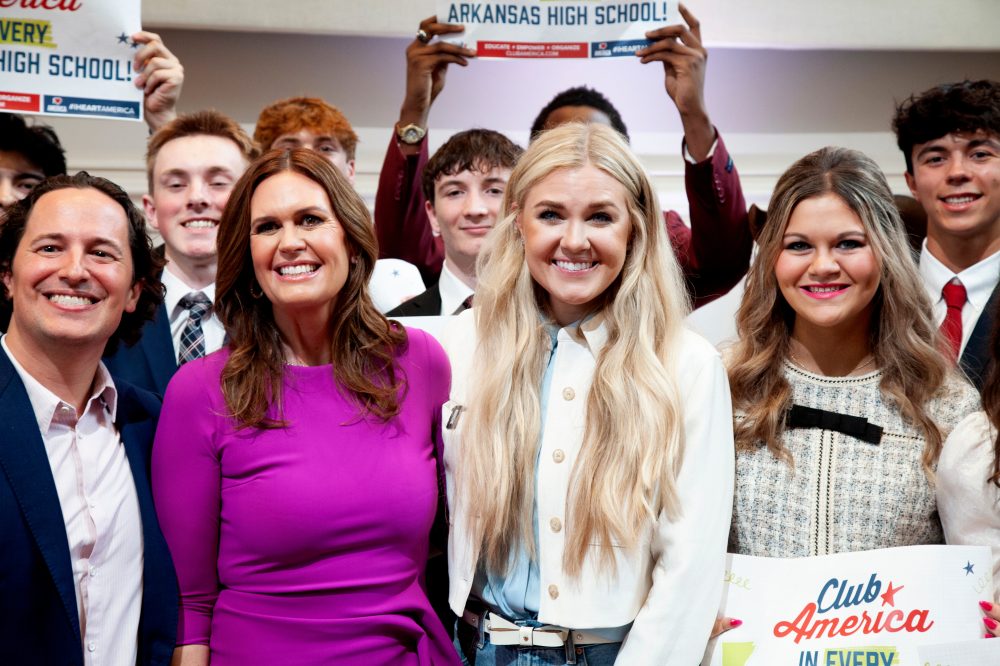
OMAHA, Neb. — Eight Republican governors nationwide are backing efforts to establish conservative political clubs in every public high school following last year’s killing of Turning Point USA co-founder Charlie Kirk, claiming these initiatives will protect conservative student voices from educational suppression.
The gubernatorial support for this conservative organization has ignited controversy over free speech policies in public schools, as opponents point out that many of these same Republican officials have implemented restrictions on classroom discussions about sexual education, LGBTQ+ topics and other subjects.
Religious references by some governors when endorsing these clubs have further intensified the controversy.
During a press conference last month where she announced Arkansas’s collaboration with Turning Point USA, Governor Sarah Huckabee Sanders stated that divine intervention had helped Kirk expand the conservative organization and expressed hope it would inspire “the exact type of civic engagement that we want to see” from high school students.
“It’s never too early to learn the values of faith and freedom that power our country,” she said.
Lily Alderson, a student at Fayetteville High School who leads the Young Democrats club, believes the governor overstepped constitutional boundaries. Alderson contends that Sanders’s religious endorsement breaks the principle requiring government neutrality toward religious beliefs.
“We’re a public school,” Alderson said. “We shouldn’t be a school — or a state, even — that is telling people what they should believe in.”
Lukas Klaus, who heads the Turning Point USA chapter at the same school, views the Republican governors’ actions as protecting conservative students’ right to expression.
“I’ve heard numerous other stories from around the states of Club America chapters trying to get started where they’re having serious problems with the administration straight-up saying ‘no,’” said Klaus. He noted he’s never encountered instances of public schools blocking Young Democrats clubs.
Over recent months, Republican leadership in Nebraska, Arkansas, Texas, Oklahoma, Montana, Florida, Tennessee and Indiana have all declared partnerships with Turning Point USA to encourage Club America chapters in every high school within their borders.
Turning Point USA reports nearly 3,400 Club America chapters currently operate nationwide, with additional state partnerships being developed.
Though these partnerships don’t mandate schools to create conservative clubs, they establish that school administrators cannot deny requests to form such groups.
Turning Point USA launched in 2012 focusing on college campuses, positioning itself as a gathering place for young people supporting conservative principles. Kirk served as co-founder and primary spokesperson, gaining recognition for his “Prove Me Wrong” campus events where he challenged students to debate his conservative positions on political and cultural matters. A sniper killed Kirk in early September while he was speaking at a Utah college campus.
Conservative supporters celebrated Kirk as a free speech advocate, while critics condemned his statements that many Americans considered hostile toward LGBTQ+ individuals, non-Christians, racial minorities and women.
Some critics experienced Republican backlash for allegedly disrespecting Kirk’s memory, resulting in terminations by universities, athletic organizations and media outlets. Florida’s education commissioner pledged to investigate teachers who made objectionable remarks about Kirk. In Texas, an educators’ union has filed a lawsuit against the state education department, alleging an inappropriate “wave of retaliation” against public school staff for their social media posts following the assassination.
Teachers unions and civil rights organizations have criticized the governors’ exclusive endorsement of Turning Point USA over other student organizations.
Tim Royers, who leads the Nebraska State Education Association, the state’s primary teachers union, questioned how Republican officials would respond if a Democratic governor promoted democratic socialist clubs in every high school.
“They would be running to the press to talk about how awful that is,” Royers said. “How is this fundamentally any different?”
The American Civil Liberties Union of Arkansas characterized the state’s club support as “differential treatment based on the content or viewpoint of the clubs, and a problem under the First Amendment.”
Turning Point USA representative Matt Shupe dismissed ACLU objections as contradictory, citing the civil rights organization’s commitment to defending free speech protections.
“The state of Arkansas is not forming our chapters; they’re not doing our job or our students’ jobs for us, nor are they saying other groups can’t be formed,” Shupe said in an email. “They’re simply stating students cannot be blocked from forming a Club America or a TPUSA college chapter when students want to start one.”
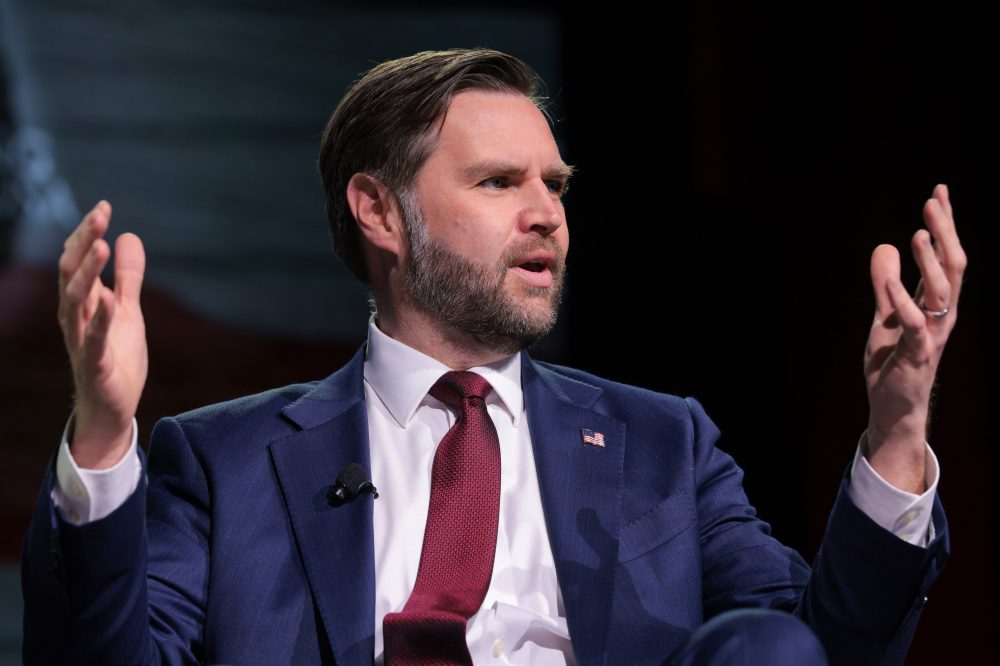
ATHENS, Georgia — Vice President JD Vance arrived in this Georgia university town for a Turning Point USA campus event following an unsuccessful diplomatic mission to Pakistan aimed at resolving the Iran conflict.
Rather than demonstrating the enthusiastic youth support that helped propel President Donald Trump back to office nearly two years ago, the gathering featured a largely vacant venue, uncomfortable moments, and unexpected criticism from attendees.
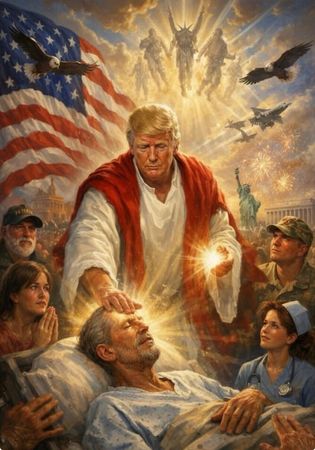
The gathering highlighted Trump’s challenges in gaining support for the Iran conflict and revealed how his recent controversies — including attacks on Pope Leo XIV and posting a social media image depicting himself as Jesus — have created political problems.
“I did vote for Trump. I am not a Trump supporter anymore,” stated Joseph Bercher, a Catholic who praised Leo’s opposition to the Iran war.
Bercher described the Jesus image, which Trump removed Monday following rare conservative pushback, as a “red flag” revealing Trump’s character.
“He sees himself as like a demagogue or someone to be worshipped,” Bercher explained.
C.J. Santini, who recently completed his studies at Liberty University, an evangelical institution in Virginia, expressed uncertainty about whether Iran truly posed an imminent nuclear threat requiring military action. However, he responded with laughter and disbelief when questioned about Trump’s attacks on Leo.
“It’s just stupid. Stupid,” he stated, describing it as a “distraction” from Trump’s domestic and foreign policy objectives.
While numerous college-aged participants wore Turning Point merchandise, Trump campaign gear, and patriotic clothing, empty seats outnumbered attendees by more than two-to-one in what wasn’t even the campus’s largest venue, located roughly 90 minutes from Atlanta.
Vance, an Iraq War Marine veteran, recognized that young conservatives don’t universally support another Middle Eastern military engagement.
“I’m not saying you have to agree with me on every issue,” Vance addressed the audience. “What I’m saying,” he continued, “is don’t get disengaged.”
The vice president fielded questions from Turning Point executive Andrew Kolvet rather than Erika Kirk, who assumed leadership after her husband Charlie Kirk’s assassination. Kolvet explained that Erika Kirk withdrew from the stage appearance due to unspecified security concerns.
Vance, whose attendance required extensive Secret Service and law enforcement security, admitted concerns about potential event cancellation.
While Kolvet questioned Vance about the war and Trump’s dispute with Leo, audience members posed more challenging inquiries. Vance engaged with at least one war protester and faced pressure regarding the administration’s Jeffrey Epstein file handling.
Even supportive audience members expressed reservations and criticisms.
“The pope needs to stay out of politics,” said Jessie Williams, a Methodist. However, he acknowledged his Catholic mother’s perspective and understood Catholic displeasure with Trump calling the pope “weak” and suggesting the first American-born pontiff was selected to oppose Trump.
Williams found Trump’s image inappropriate.
“I don’t like it, but it’s — what can we do?” Williams commented. “He’s a grown man, he’s gonna do what he wants.”
Blake McCluggage, a Baptist, disapproved of both the image and Trump’s profanity-laden Easter Sunday message threatening Iran’s civilian infrastructure.
These threats, combined with Trump’s subsequent message about a “whole civilization” facing destruction, prompted increasing criticism from Leo, with the pope describing the president’s statements as “truly unacceptable.”
Nevertheless, McCluggage noted, “you can still be a Republican” while disagreeing with Trump.
Before arriving in Georgia, Vance attempted to dismiss the image as humor that “a lot of people weren’t understanding.” The vice president also appeared to support Trump’s position that Leo should focus less on international matters.
“It would be best for the Vatican to stick to matters of morality, to stick to matters of what’s going on in the Catholic church and let the president of the United States stick to dictating American public policy,” Vance said during a Fox News appearance.
During the Athens event, he modified his stance, claiming to welcome Leo’s input despite disagreement.
“At the very least, it invites conversation,” said Vance, who embraced Catholicism in adulthood.
Nevertheless, Vance again challenged Leo, specifically disputing the pope’s Palm Sunday statement that God doesn’t hear prayers from those who wage war. Leo had referenced Old Testament scripture from Isaiah. Vance questioned whether God supported Allied forces during World War II as they freed Holocaust survivors from Nazi death camps.
“I certainly think the answer is yes,” Vance declared. When Leo combines international affairs with complex religious doctrine, Vance argued, “it’s very important for the pope to be careful.”
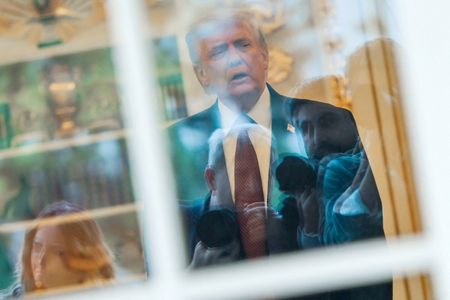
Former President Donald Trump renewed his public criticism of Pope Leo this Tuesday while declaring that Iran must not be allowed to possess nuclear weapons.
In a post on his Truth Social platform, Trump called for someone to inform Pope Leo about the situation in Iran and his stance on nuclear proliferation.
“Will someone please tell Pope Leo that Iran has killed at least 42,000 innocent, completely unarmed, protesters in the last two months, and that for Iran to have a Nuclear Bomb is absolutely unacceptable,” Trump wrote in his social media post.
The former president’s statement combines his ongoing disagreement with the Pope alongside his foreign policy position regarding Iran’s nuclear capabilities.
Multiple government agencies are discreetly working around President Trump’s restriction on collaborating with artificial intelligence company Anthropic, according to a Tuesday report from Politico.
The Commerce Department’s Center for AI Standards and Innovation is currently evaluating the cybersecurity testing abilities of Anthropic’s cutting-edge AI system called Mythos, sources indicate.
Reuters was unable to independently verify these claims. Representatives from Anthropic, the White House, and the Commerce Department have not yet provided responses to requests for comment.
Congressional staff from no fewer than three committees have either conducted or sought informational sessions with the company regarding Mythos’ cyber security scanning features within the last seven days, according to the report.
During Monday’s Semafor World Economy conference, Anthropic co-founder Jack Clark revealed that his company maintains ongoing conversations with the Trump administration. This continues despite the Pentagon’s decision to terminate its business relationship with the AI firm due to contractual disagreements.
Officials have not disclosed specific information about which government departments are participating in discussions with Anthropic or what those conversations entail.
Anthropic unveiled Mythos on April 7, describing it as the company’s “most capable yet for coding and agentic tasks” in an official blog announcement. This refers to the system’s capacity to operate independently without human intervention.
Federal prosecutors conducted an unexpected inspection Tuesday at the Federal Reserve’s headquarters construction project in Washington, marking another chapter in the Trump administration’s ongoing confrontation with the nation’s central banking system.
Two deputy prosecutors working under U.S. Attorney Jeanine Pirro arrived without warning at the renovation site, according to confirmation from Pirro’s office. The Wall Street Journal first broke the story.
The prosecutors spoke with workers at the construction site before being told they needed advance authorization to tour the facility. They received contact details for the Federal Reserve’s legal team, according to the Journal’s reporting.
This latest development continues President Donald Trump’s intensive effort to influence Federal Reserve leadership, particularly Chair Jerome Powell, whose tenure concludes in May. Trump’s goal has been pushing for reduced interest rates, creating significant political controversy and legal battles.
The Justice Department has been conducting an investigation into Powell’s management of the central bank’s headquarters renovation project in Washington, D.C.
A federal judge previously determined that this investigation appears to be a barely concealed attempt to force Powell into either cutting interest rates or stepping down from his position. Despite this ruling, the Justice Department has indicated plans to appeal the decision.
Both Republican and Democratic former Federal Reserve chairs and previous government economic officials have expressed serious concerns about the Trump administration’s investigation.
The Federal Reserve was not immediately available to provide a statement. According to the Journal, Robert Hur, an external attorney representing the Fed, sent a letter of protest to Pirro’s office regarding Tuesday’s unexpected visit.
Hur stated that the prosecutors arrived “without prior notice” at the construction location, where they requested a walkthrough and indicated they wanted to monitor the renovation project’s advancement.
The principle of central bank independence in rate-setting decisions to manage inflation represents a fundamental aspect of sound economic governance, protecting monetary policy officials from immediate political pressures so they can concentrate on long-term price stability objectives.
Trump has selected former Federal Reserve Governor Kevin Warsh as his nominee to lead the central bank.
The Biden administration is reportedly weighing the appointment of Erica Schwartz to head the Centers for Disease Control and Prevention, according to a Washington Post report published Tuesday.
Three anonymous sources with knowledge of the administration’s plans provided information about the potential selection to the newspaper.
Schwartz previously held the position of deputy U.S. surgeon general while Donald Trump occupied the presidency during his initial term in office.
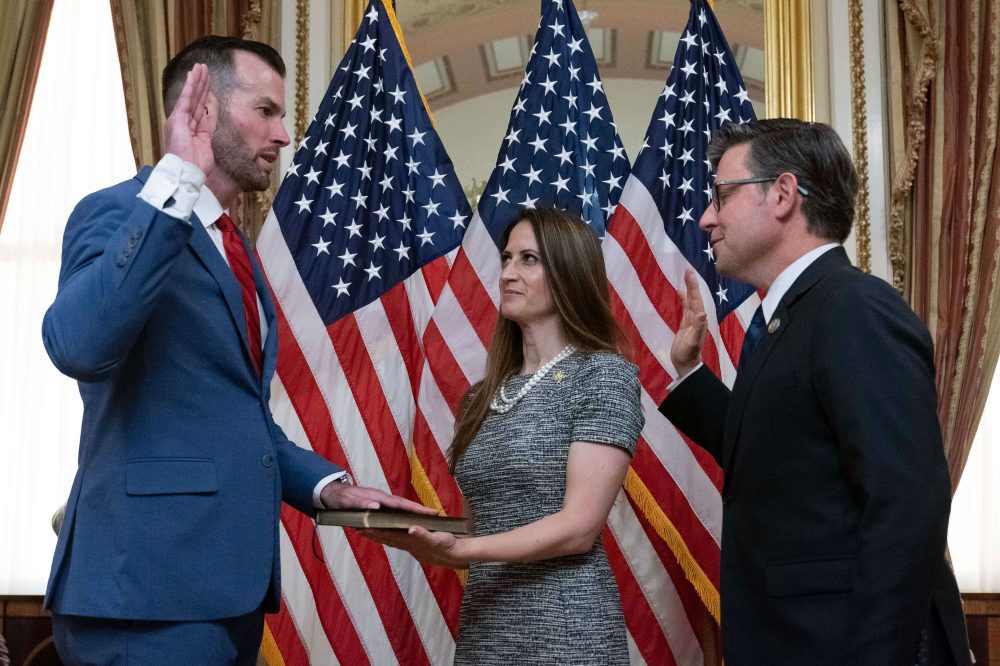
WASHINGTON — Georgia Republican Clay Fuller officially took the oath of office Tuesday following his special election victory to fill the House seat vacated by Marjorie Taylor Greene.
The new congressman hails from a heavily conservative district in Georgia’s northwest region and has made efforts to closely associate himself with President Donald Trump’s agenda. Fuller’s appointment helps preserve the GOP’s narrow control in the House of Representatives as he completes what remains of Greene’s congressional term.
Greene stepped down from her position following an ongoing public dispute with Trump that continues to escalate even after her departure from Capitol Hill.
Speaking to his new colleagues in the House chamber, Fuller told his constituents: “You have sent a warrior to Congress and I can’t wait to fight for you each and every day. To my Democratic colleagues, I look forward to working with each and every one of you.”
The widow of murdered conservative activist Charlie Kirk canceled her scheduled appearance at a political event with Vice President JD Vance on Tuesday after receiving death threats, according to the vice president.
Speaking to students at the University of Georgia in Athens, Vance confirmed that Erika Kirk had received threatening messages. “I know that she did get some threats,” Vance told the audience. “I was a little worried that we were going to have to cancel the event because Erika was not going to come, and she was very worried about it.”
The vice president indicated he had consulted with Secret Service personnel about the situation but expressed no concerns regarding his personal security. Vance did not provide specific information about the nature of the threats against Kirk, who currently serves as chief executive of Turning Point USA.
Neither the Secret Service nor Turning Point USA provided immediate responses when contacted for additional information.
Charlie Kirk was fatally shot in September while delivering a speech at Utah Valley University in Orem, Utah. The suspected gunman is facing murder charges in connection with the killing, which law enforcement officials have characterized as politically driven. Kirk had helped establish Turning Point USA as an organization aimed at mobilizing young people around conservative political issues.
The tragic incident has heightened discussions about political violence across America, drawing widespread criticism from leaders on both sides of the political aisle and resulting in enhanced security measures at university events featuring prominent political personalities.
WASHINGTON — Energy Secretary Chris Wright sparked confusion during a Tuesday ceremony when he declared the nation “looks like we’re going in the wrong direction” while promoting a new natural gas pipeline initiative.
Wright was addressing attendees at the ceremonial groundbreaking for a pipeline system designed to carry natural gas from Pennsylvania to New York City and Long Island. During his remarks, he praised President Donald Trump for “driving down costs for Americans and driving up job opportunities and wages for Americans.”
However, Wright appeared to make an error shortly afterward when he stated, “Just because it looks like we’re going in the wrong direction doesn’t mean that’s the direction we are going.”
Following the event, the Energy Department released selected portions of Wright’s speech that excluded the “wrong direction” remark.
This marks Wright’s second public communications mishap in recent weeks. Last month, he shared a social media video falsely claiming the U.S. Navy had assisted an oil tanker through the Strait of Hormuz during ongoing Middle East tensions. That post was subsequently removed, with department officials attributing the mistake to Wright’s staff.
Tuesday’s ceremony in Brooklyn celebrated the Northeast Supply Enhancement Pipeline, a Williams Companies project that officials say will deliver cost-effective and dependable energy to millions of regional residents.
The initiative represents an extension of current pipeline infrastructure spanning Pennsylvania, New Jersey and New York, and had been designated as a key objective under the Trump administration.
Both this project and another Williams pipeline called the Constitution Pipeline faced lengthy delays due to environmental objections. The Trump administration, which has prioritized expanding oil and gas infrastructure, worked to revive construction efforts for both pipelines.
These pipeline approvals followed the Trump administration’s decision to drop its opposition to a major offshore wind development near Long Island that New York Democratic Governor Kathy Hochul had strongly supported.
Hochul agreed to examine the pipeline proposals last year following intensive pressure from the Trump administration. However, she rejected suggestions of any quid pro quo arrangement linking the wind farm and gas pipeline decisions, stating in a release that she “will work with the administration and private entities on new energy projects that meet the legal requirements under New York law.”
On April 13, 2026, President Donald J. Trump enacted the Holocaust Expropriated Art Recovery (HEAR) Act, a measure advocates say will significantly boost efforts to return cultural treasures stolen from Jewish families during the Holocaust.
The Republican Jewish Coalition, which made this legislation a top priority during the current congressional session, reported that the measure garnered support from both parties in both chambers of Congress.
Key congressional figures backing the initiative included Senator John Cornyn, who played a role in advancing and reinforcing the legislation, alongside Representative Laurel Lee and Senator Ted Cruz.
Joel Greenberg, who leads Art Ashes, emphasized that this new law maintains ongoing responsibility for Holocaust-era atrocities. “Holocaust crimes can never be forgotten; and, with its passage, will not be erased by time. We are grateful for the bipartisan legislative process, including the White House, that has ensured a fair and just path to restitution for Holocaust survivors and their families,” Greenberg stated.
This legislation enhances a previous 2016 statute and aims to broaden judicial access for Holocaust victims and their descendants. The law curtails the application of technical legal defenses, particularly those related to statutes of limitations or concealment issues, while also reducing dependence on international legal systems that have hindered recovery efforts.
Matt Brooks, CEO of the Republican Jewish Coalition, noted the symbolic importance of the signing date, which coincided with Yom HaShoah, Holocaust Memorial Day. “It is deeply meaningful that on Yom HaShoah, Holocaust Memorial Day, President Trump signed the HEAR ACT—landmark legislation to extend and improve the Holocaust Expropriated Art Recovery Act of 2016—into law,” Brooks commented.
Brooks highlighted how this legislation aids families who have spent years pursuing their claims. “The HEAR Act empowers family members, who have fought for decades, to recover artwork stolen from Jews by the Nazi regime during the Second World War,” he explained.
Brooks also commended the president’s commitment to the legislation. “President Trump has consistently proven to be the best friend of the Jewish people ever to occupy the Oval Office, and his signature today ratifies the truth: the passage of time can never diminish the injustice of crimes committed by the Nazis and their collaborators during the Holocaust.”
Vice President JD Vance reported that diplomatic discussions with Iranian officials over the weekend in Islamabad showed advancement but stopped short of reaching a comprehensive agreement, with outstanding issues surrounding nuclear oversight and shipping lane access leaving the next move up to Iran.
In an interview with Fox News host Bret Baier, Vance described the discussions as an uncommon instance of senior-level diplomatic engagement between the nations that helped establish Washington’s position. “We made a lot of progress,” Vance stated, explaining that American diplomats communicated their areas of potential compromise as well as their firm positions. He indicated the critical factor moving forward is “whether the Iranians will have enough flexibility” to satisfy American requirements.
According to Vance, the administration’s non-negotiable boundaries are rooted in one fundamental goal: preventing Iran from acquiring nuclear weapons. Though Iranian officials claim they are not pursuing such weapons, he stressed the importance of reliable monitoring mechanisms.
Vance outlined two essential requirements: the removal of enriched uranium from Iranian territory and guaranteeing Iran’s inability to enrich uranium going forward. “We must have the enriched material out of Iran,” he stated, noting that Washington also demands “their conclusive commitment to not develop a nuclear weapon.”
While Iran demonstrated some flexibility during the discussions, Vance indicated it was insufficient to complete a deal. American officials determined the Iranian representatives needed to return home for additional authorization, effectively suspending the talks. “The ball really is in their court,” he remarked.
The negotiations also covered the Strait of Hormuz, a crucial international shipping corridor. Vance stated America’s expectation for complete reopening of the waterway, characterizing it as connected to the broader ceasefire agreement. “We need to see the Straits of Hormuz fully open,” he declared, claiming Iran tried to modify terms during the talks.
He noted that while maritime traffic has increased somewhat, it has not reached American standards. Vance cautioned that if advancement stops, it could change the direction of future negotiations.
Vance emphasized that Washington maintains considerable influence through military and economic measures, including sanctions on Iranian-connected ships. He characterized Iran’s activities in the shipping channel as “economic terrorism,” explaining that America’s response aims to counteract such tactics.
WASHINGTON — Congressional Republicans are pushing forward with a partisan approach to restore full funding for the Department of Homeland Security, which has remained shuttered for nearly two months while Democrats insist on immigration enforcement reforms under President Donald Trump’s administration.
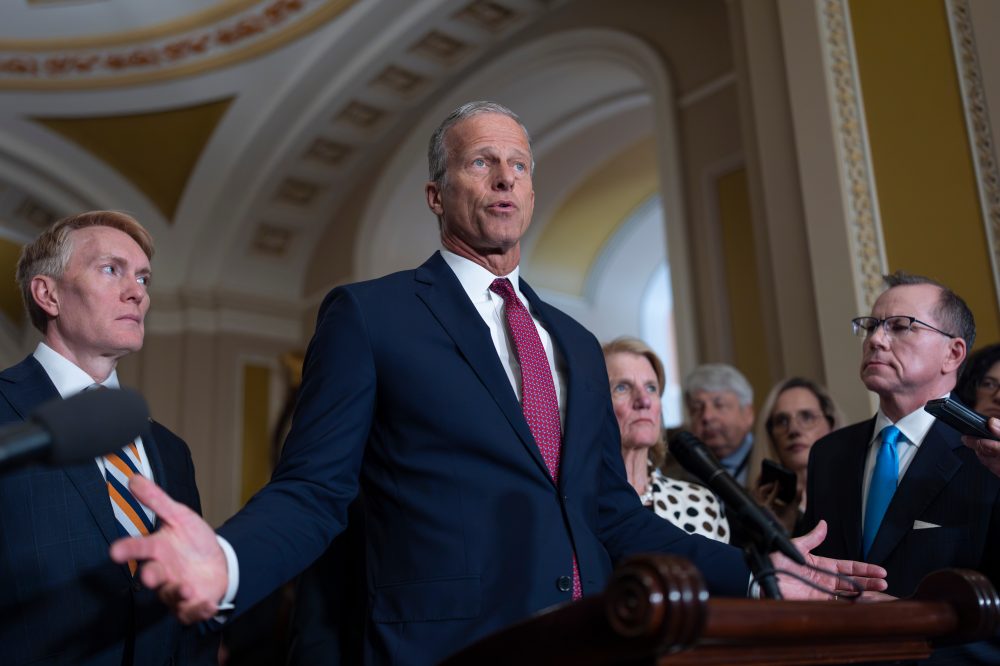
Senate Majority Leader John Thune announced Tuesday that the GOP will attempt to secure funding for Immigration and Customs Enforcement along with Customs and Border Protection through what he called “the hard way.” This approach would sidestep Democratic lawmakers who insist any funding legislation must include restrictions on federal immigration agencies, such as improved officer identification requirements and expanded use of court-issued warrants.
Following the breakdown of bipartisan discussions, Democrats will receive “none of that,” according to Thune’s statement. Instead, Republicans are crafting a partisan measure they plan to advance through budget reconciliation, a complex and lengthy procedure requiring only a simple majority in the 53-47 Senate.
The South Dakota Republican is advocating for a focused bill covering only ICE and CBP funding to quickly reopen the department. However, the process may become complicated as some GOP members will likely attempt to attach additional unrelated priorities.
Democratic opposition remains firm on agency reforms. “Americans want ICE and Border Patrol reined in,” stated Senate Democratic Leader Chuck Schumer of New York.
Thune and Republican leadership emphasize their desire to expedite the legislation through Congress with solely Homeland Security funding to enable the fastest possible department reopening.
During a White House meeting Friday, Wyoming Senator John Barrasso, the second-ranking Republican, and Senate Budget Committee Chairman Lindsey Graham of South Carolina discussed this approach with Trump. Barrasso later shared that “President Trump set a deadline of June 1 to get to his desk a focused reconciliation bill that funds ICE and Border Patrol.”
Trump expressed support on his social media platform, writing that “we are moving FAST and FOCUSED in keeping our Border SECURE!”
However, preventing senators and House members from adding other provisions to the bill will prove challenging.
Trump has been advocating for his strict proof-of-citizenship legislation, the SAVE Act, while the White House may soon request billions for Iran war funding. Agricultural state senators hope to advance comprehensive farm legislation to strengthen the rural economy. Some Republicans argue for offsetting program cuts to cover the estimated $75 billion cost.
Republican leaders indicate they would pursue a second partisan budget reconciliation bill for these additional issues. Many conference members doubt this could occur this year, given narrow GOP majorities in both chambers and the approaching election.
“We’re looking at the narrow vision,” said North Dakota GOP Senator John Hoeven following Tuesday’s Republican lunch meeting about the bill. “Now, do people have other ideas? Of course.”
The Homeland Security Department shutdown began in mid-February.
After federal agents shot two protesters in Minneapolis during January, Trump accepted a Democratic request to separate the Homeland Security bill from broader spending legislation that became law while negotiations continued. However, DHS funding expired without agreement on modifications to the administration’s immigration enforcement methods.
In March, the Senate approved legislation by voice vote that would separate ICE and Customs and Border Protection funding while supporting the remainder of the department, including the Transportation Security Administration as airport security lines lengthened. House Republicans rejected the measure, stating they wouldn’t support any bill excluding immigration enforcement funding.
Congress then departed for a two-week recess, leaving the matter unresolved. Trump has utilized executive orders to cover some department salaries temporarily, though this isn’t a lasting solution.
During the recess, Thune and House Speaker Mike Johnson announced a dual approach — passing the Senate bill covering most department funding through regular procedures while using the party-line bill for ICE and CBP funding. Whether Johnson can convince his members to support this strategy remains uncertain.
Upon returning to Washington this week, Thune said Republicans will attempt to fund the agencies for three years through the budget bill, avoiding annual spending measures to prevent another shutdown during Trump’s presidency.
The agencies would receive funding “not only today but well into the future,” Thune explained.
WASHINGTON — Federal prosecutors on Tuesday petitioned an appeals court to dismiss seditious conspiracy convictions against leaders of the Oath Keepers and Proud Boys extremist organizations who had been imprisoned for orchestrating the January 6, 2021 assault on the U.S. Capitol in an effort to maintain Donald Trump’s presidency more than five years ago.
Trump reduced the prison terms of multiple Oath Keepers and Proud Boys leaders this past January through broad clemency actions affecting all defendants charged in connection with the January 6, 2021 incident — more than 1,500 individuals total.
The Justice Department’s petition would extend beyond sentence reductions to completely eliminate convictions for extremist organization leaders, including Oath Keepers founder Stewart Rhodes, who did not receive clemency in January.
This decision to abandon the convictions marks a dramatic policy shift from the previous Biden administration, which celebrated these guilty verdicts as essential wins in efforts to prosecute individuals responsible for what government lawyers characterized as an assault on America’s democratic foundation. The action continues the Trump administration’s ongoing campaign to reshape January 6 narratives and minimize the severity of violence perpetrated by Trump supporters that resulted in injuries to over 100 law enforcement officers.
Through legal documents, government attorneys requested the U.S. Court of Appeals for the District of Columbia Circuit overturn the convictions to allow permanent case dismissals.
“The government’s motion to vacate in this case is consistent with its practice of moving the Supreme Court to vacate convictions in cases where the government has decided in its prosecutorial discretion that dismissal of a criminal case is in the interests of justice — motions that the Supreme Court routinely grants,” prosecutors wrote in a court filing signed by U.S. Attorney Jeanine Pirro.
Washington D.C. juries found Oath Keepers and Proud Boys leadership guilty of planning violent schemes to prevent the orderly transition of power following Trump’s 2020 electoral defeat to Democratic President Joe Biden.
The department’s dismissal motion encompasses convictions of Oath Keepers members Kelly Meggs, Kenneth Harrelson and Jessica Watkins, along with Proud Boys members Ethan Nordean, Joseph Biggs, Zachary Rehl and Dominic Pezzola.
Additional extremist group participants, including former Proud Boys national chairman Enrique Tarrio, obtained presidential pardons from Trump during his second term’s opening day.
Rhodes received an 18-year prison sentence after his conviction alongside several associates in one of the most significant prosecutions stemming from the January 6 Capitol breach by Trump supporters.
Government attorneys stated that Rhodes and his associates accumulated firearms for potential deployment by “quick reaction force” units stationed at a Virginia hotel, though these weapons were never used.
Nicholas Smith, representing Nordean, expressed appreciation for the Justice Department’s “wise decision” in pursuing conviction dismissals.
“We don’t want a precedent that says that any physical confrontation between protesters and law enforcement means a crime akin to treason, such as seditious conspiracy,” Smith said.
Senate Democrats are preparing for another attempt to restrict President Trump’s military authority, with a planned vote as early as Wednesday on legislation targeting his Iran war powers.
Democratic leadership announced Tuesday they will continue introducing such measures on a weekly basis throughout the ongoing Iranian conflict, which entered its 45th day.
“Forty-five days into this war, Congress has been sidelined because our Republican colleagues refuse to take a strong stand against this war and duck it completely because they’re afraid of Trump,” Democratic Leader Chuck Schumer of New York said in a Senate speech on Tuesday.
The president indicated Tuesday that diplomatic efforts to resolve the Iranian conflict might restart in Pakistan within the coming days, following the breakdown of weekend peace talks that led Washington to establish a blockade of Iranian ports. The failure of those negotiations has cast uncertainty over a two-week ceasefire agreement that still has one week remaining.
Democratic lawmakers have made multiple unsuccessful attempts in recent months to advance war powers legislation that would compel Trump to halt military operations and seek congressional approval before initiating future military campaigns in both Venezuela and Iran.
Party strategists are connecting their push to constrain Trump’s Iran policy with economic concerns, as supply chain disruptions affecting oil and natural gas have driven up gasoline costs and prices for agricultural supplies like fertilizers, adding to existing consumer price pressures.
Rising costs remain among the most politically sensitive issues for American voters, and the current inflationary surge is creating anxiety among Republican strategists concerned about their party’s electoral chances with less than seven months until November’s congressional elections.
Schumer revealed that Democrats have prepared 10 additional war powers resolutions and plan to introduce them weekly while the Iranian conflict, which started February 28, remains active.
Republicans, who maintain narrow control in both congressional chambers, have successfully defeated all previous resolutions and show no signs of changing their stance.
GOP legislators express support for Trump’s military approach and anticipate the conflict will conclude soon. “The military effort here has been extraordinarily successful,” Senate Republican leader John Thune of South Dakota told a news conference.
“I think the administration has a clear objective, a clear plan, and if they can execute on it that question (of whether Congress should authorize a prolonged conflict) won’t be a necessary one that we will be forced to answer,” Thune said.
While the Constitution grants Congress, rather than the president, authority to declare war, this limitation doesn’t extend to brief operations or situations involving immediate national threats.
White House officials maintain that Trump’s military actions remain lawful and fall within his constitutional authority as commander-in-chief to safeguard the nation through limited military interventions.
Senate staff indicated Tuesday evening that the upcoming resolution, sponsored by Illinois Senator Tammy Duckworth, a military veteran, could reach the floor Wednesday, though no official timing was confirmed.
House representatives expect a similar Iran war powers measure to receive a vote in their chamber as early as Thursday.
FORT COLLINS, Colo. — The Trump administration has maintained its rejection of Colorado’s appeal for federal disaster assistance, following devastating wildfires and flooding that impacted communities throughout the state last year.
Democratic Governor Jared Polis had requested federal major disaster declarations for blazes that burned across 240 square miles in western Colorado, as well as flooding that devastated mountain towns in the southern region of the state.
The governor’s request included FEMA public assistance funding, which would allow local communities to receive reimbursement for debris removal and infrastructure reconstruction. He also sought hazard-mitigation money to help the state rebuild with improved disaster resilience.
After initially turning down Colorado’s requests in late 2023, Trump maintained that rejection on appeal this Monday following what FEMA acting administrator Karen S. Evans described as a “thorough review” in correspondence sent to Polis.
The rejection letters provided limited explanation for the decisions. Polis expressed frustration in his response, describing the outcome as “incredibly disappointing” given Colorado communities’ swift disaster response, thorough damage documentation, and cooperative efforts with federal officials.
“These disasters caused real damage to homes, infrastructure, and local economies, and Coloradans should not be left to shoulder these costs alone,” Polis stated.
Although FEMA conducts damage assessments and applies established formulas to evaluate potential impacts on state and local governments, presidential discretion ultimately determines disaster declaration approvals.
When Trump initially rejected Colorado’s request in December, Polis criticized the president for engaging in “political games” regarding disaster declarations.
White House spokesperson Abigail Jackson disputed claims that political considerations influenced the decisions. She told The Associated Press that the administration evaluates each request with “great care and consideration” to ensure federal funds are used appropriately and efficiently to supplement, rather than replace, state disaster response responsibilities.
“President Trump provides a more thorough review of disaster declaration requests than any administration has before him,” Jackson stated.
Multiple Democratic-controlled states have voiced complaints about disaster declaration denials despite demonstrating clear need.
Data analysis by Andrew Rumbach, a senior fellow at the nonpartisan Urban Institute, reveals that nearly 84% of disaster requests from Trump-supporting states received approval during his second term, compared to approximately 42% approval for states that supported 2024 Democratic presidential candidate Kamala Harris.
Rumbach expressed uncertainty about whether political motivations clearly influenced these decisions. He noted the relatively small sample size of about 60 state requests and acknowledged that some states may have presented inadequate justification for federal assistance.
“These are definitely questions worth asking, but I haven’t reached a conclusion that there’s clear political bias going on here,” Rumbach explained. “That’s why it’s really important that FEMA and DHS be as transparent as possible about how they’re making these decisions.”
These rejections have drawn criticism from Democratic governors including Maryland’s Wes Moore and Illinois’ JB Pritzker, who characterized Trump’s February denial of his state’s flood recovery appeal as “a politically motivated decision that punishes thousands of Illinois families in a critical moment of need.”
Colorado Attorney General Phil Weiser has been challenging several recent federal actions affecting Colorado, including the elimination of a climate research facility, threats to reduce transportation funding, withholding assistance for low-income families, and relocating the U.S. Space Command to Alabama.
Some communities nationwide have faced unusually extended delays for disaster request responses during Trump’s second administration, which critics argue hampers emergency response efforts and creates particular hardship for rural areas with limited financial resources.
Homeland Security Secretary Markwayne Mullin pledged last week to address the accumulated backlog of pending requests before the Atlantic hurricane season begins June 1st. Following Mullin’s briefing, Trump approved major disaster declarations for at least seven states last week.
WASHINGTON – The Treasury Department announced Tuesday that it has approved new general licenses permitting financial dealings with select Venezuelan banking institutions and certain government officials from the South American nation.
According to official documents released on the Treasury Department’s website, the authorization covers Venezuela’s central bank, which faced U.S. sanctions in April 2019, along with three government-owned financial institutions: Banco de Venezuela, Banco del Tesoro, and Banco Bicentenario del Pueblo de la Clase Obrera, Mujer y Comunas.
The new licensing represents a shift in the Trump administration’s approach to economic restrictions on Venezuelan financial entities, allowing previously prohibited transactions to move forward under specific conditions.
Senate Republicans are preparing to advance legislation that would provide funding for immigration enforcement agencies through the conclusion of Donald Trump’s presidency in January 2029, with floor action potentially starting within days.
Senate Majority Leader John Thune is driving efforts to expedite consideration of the measure, which would authorize financial support for Immigration and Customs Enforcement and U.S. Border Patrol operations under the Department of Homeland Security umbrella.
Speaking to media representatives Tuesday, Thune indicated the complete Senate chamber might commence deliberations “as early as next week.” Lawmakers are set to enter a seven-day break beginning May 1.
Current annual appropriations for ICE and Border Patrol remain stalled due to disputes between Republican and Democratic lawmakers regarding new operational requirements for both organizations.
To secure approval without Democratic backing, Republicans plan to employ a specialized Senate mechanism that enables passage through simple majority votes, circumventing the typical 60-vote threshold required for most measures in the 100-member chamber.
Drawing from recent years’ baseline appropriations for ICE and Border Patrol, expenditures across the three-year period could reach $50 billion or higher.
This funding would supplement the more than $100 billion in multi-year appropriations Republicans secured last July through separate channels outside standard budget procedures.
Thune is advocating for streamlined legislation to prevent attempts by some among the 53 Republican senators to include unrelated provisions.
Louisiana Senator John Kennedy expressed to Reuters Tuesday his desire to incorporate the “SAVE America Act,” which would establish additional voting limitations across the nation. Trump has actively promoted this measure ahead of November 3 congressional contests.
“If (other) senators start getting their stuff, I want my stuff, and I think you’ll have most senators feel the way I feel,” Kennedy stated.
Republicans contend the election-focused legislation is necessary to block non-citizens from voter registration. Democrats reject the proposal, maintaining that fraudulent voting incidents in states occur extremely infrequently and that SAVE would ultimately prevent millions of eligible voters from registering and participating in elections.
Thune worries that including SAVE or additional unrelated measures could jeopardize the complete initiative.
Florida Republican Senator Rick Scott desires any additional ICE and Border Patrol funding to be balanced through reductions in other federal budget areas. Scott indicated he would review the forthcoming legislation’s specifics before determining his position on supporting or opposing the measure.
Republicans must navigate a two-phase congressional process for this legislation.
Initial passage involves a non-binding budget framework in both the Senate and House of Representatives. Subsequently, a reconciliation measure containing actual spending provisions would require presidential signature to become law.
Congresswoman Jen Kiggans made a special appearance at a Northampton County community facility on April 13, 2026, to formally deliver federal grant funding to local officials.
The representative’s visit to the community center marked an important milestone in securing financial support for the county’s ongoing projects and initiatives.
During the presentation ceremony, Kiggans personally handed over the grant funds to county leadership, demonstrating the federal government’s commitment to supporting local community development efforts.
The funding delivery represents a successful collaboration between federal representatives and local government to address community needs in Northampton County.
The Trump administration has accused the outgoing Biden Justice Department of politically motivated prosecutions against conservative anti-abortion activists through enforcement of federal law.
According to the new administration, the Biden DOJ’s application of the FACE Act represents what they call “the prototypical example” of weaponizing legal authority against conservative groups.
The Freedom of Access to Clinic Entrances Act, known as the FACE Act, makes it a federal crime to use force, threats, or physical obstruction to interfere with reproductive health services.
Trump officials argue that the previous administration selectively enforced this legislation to disproportionately target anti-abortion demonstrators while ignoring similar violations by abortion rights supporters.
The accusation comes as part of broader claims from the incoming administration that federal law enforcement agencies were used as political weapons during the Biden presidency.
This controversy highlights the ongoing tensions between abortion rights advocates and anti-abortion activists that have intensified since the Supreme Court overturned Roe v. Wade in 2022.
WASHINGTON — Congressional Democrats are mounting an effort to block new Trump administration regulations that would modify a widely-used federal student loan forgiveness initiative, with legislators arguing the modifications are politically motivated and may deny promised relief to certain borrowers.
The federal Public Service Loan Forgiveness initiative eliminates outstanding student debt for eligible public sector employees after they complete ten years of qualifying payments. The program has traditionally served workers in government positions, educational institutions, emergency services, public medical facilities, and nonprofit organizations. However, this past autumn, the Trump administration implemented new regulations granting Education Secretary Linda McMahon authority to remove participants from the program if their employers are determined to operate with a “substantial illegal purpose.”
The regulation, scheduled for implementation in July, primarily targets organizations serving immigrant communities and transgender youth populations.
This Tuesday, Democratic members of both congressional chambers filed resolutions aimed at blocking the regulation, describing it as “a clear attempt to intimidate and punish certain organizations.” Although the legislation may receive consideration, passage appears doubtful.
WASHINGTON – Former President Donald Trump is pushing Republican members of Congress to unite behind efforts to reauthorize a crucial foreign surveillance program before its April 20 deadline.
On Tuesday, Trump advocated for extending Section 702 of the Foreign Intelligence Surveillance Act, known as FISA 702, which permits American intelligence agencies to monitor foreign communications that pass through U.S. digital networks. This surveillance tool was among several measures enacted following the September 11, 2001 terrorist attacks.
Trump emphasized that FISA 702 serves as an essential resource for America’s armed forces and stressed the importance of Republican unity in securing its renewal. He indicated he is collaborating with House Speaker Mike Johnson, Judiciary Committee Chairman Jim Jordan, and House Intelligence Committee Chairman Rick Crawford to push through a straightforward extension this week.
Taking to Truth Social, Trump posted: “I am asking Republicans to UNIFY, and vote together on the test vote to bring a clean Bill to the floor.”
He continued: “Our Military desperately needs FISA 702, and it is one of the reasons we have had such tremendous SUCCESS on the battlefield, both in Venezuela and Iran.”
The surveillance authority is scheduled to lapse on April 20 unless Congress acts to extend it.
Ninety-three Delaware public high school students from the Class of 2026 have received recognition as Secretary of Education Scholars from Education Secretary Cindy Marten.
The honored students were celebrated at a special dinner event held in Dover, where Governor Matt Meyer and additional state officials joined Secretary Marten to acknowledge their achievements.
During the ceremony, Marten emphasized the deliberate nature of academic success. “Excellence like we see here tonight doesn’t happen by accident. It is built day by day, decision [by decision],” she stated.
The recognition highlights the academic accomplishments of these students who represent Delaware’s public school system and are set to graduate in 2026.
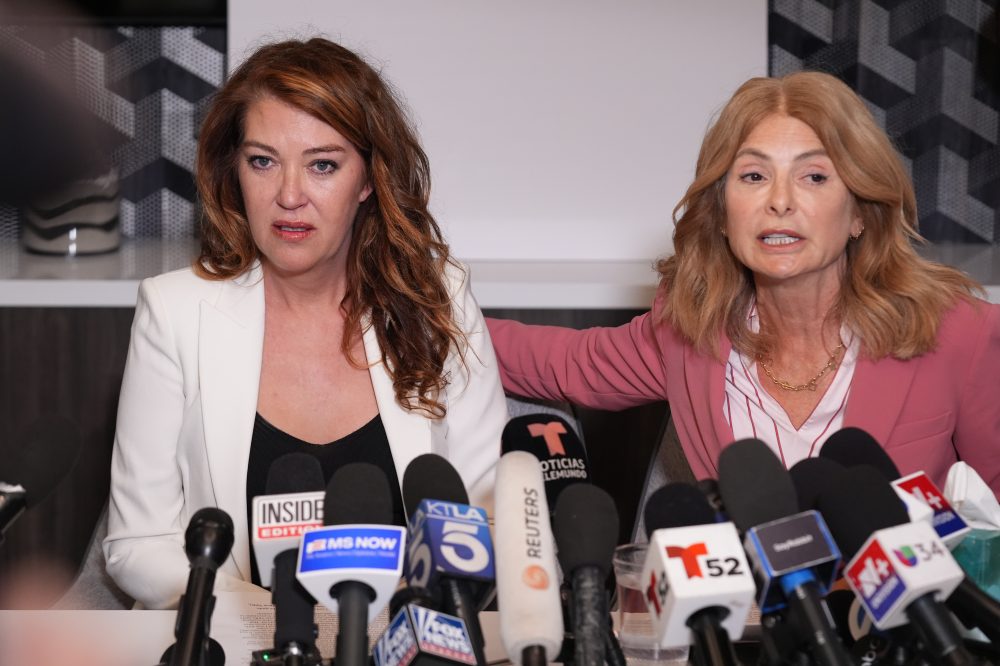
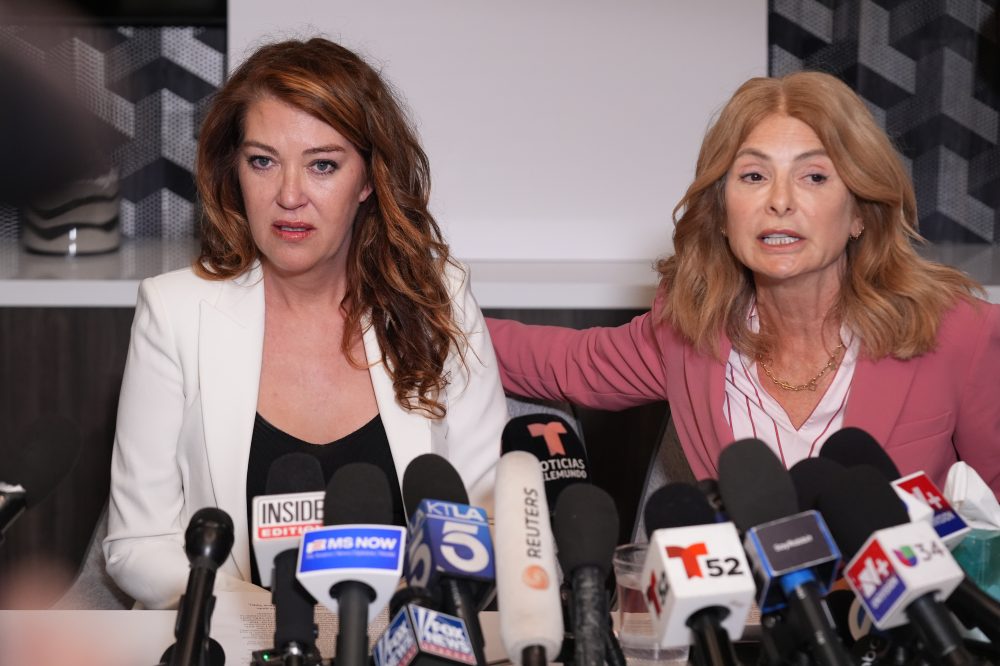
LOS ANGELES (AP) — Another woman has come forward with sexual assault allegations against Rep. Eric Swalwell, claiming the congressman raped her at a Southern California hotel in 2018.
Lonna Drewes made the accusation during a Tuesday press conference, stating she plans to file a formal complaint with law enforcement. Drewes alleges that after consuming just one glass of wine that evening, she believes Swalwell spiked her drink before sexually assaulting her.
“I did not consent to any sexual activity,” Drewes stated.
The congressman’s legal representative, Elias Debaie, has not yet responded to requests for comment regarding these latest claims.
This new allegation surfaces just one day after Swalwell announced his withdrawal from California’s gubernatorial race and his intention to step down from his congressional seat this week. His decision followed previous sexual misconduct accusations from another woman.
According to Drewes, she was operating a Beverly Hills-based fashion software business and working as a model when she first encountered Swalwell. The congressman allegedly offered to provide business connections and was aware of her political interests.
Drewes described meeting Swalwell on two prior occasions before the alleged assault. On the night in question, they attended a restaurant opening together and planned to go to a political gathering afterward. However, Swalwell suggested stopping at his hotel room to retrieve documents, she said.
Once at the hotel, Drewes reported feeling unusually heavy in her limbs and suspected she had been drugged. She alleges Swalwell then raped her and later strangled her until she lost consciousness.
While Drewes did not have a rape examination conducted, she says she confided in close friends about the incident and recorded details in a personal journal. She also discussed the alleged assault during counseling sessions at a Connecticut sexual assault support center.
Attorney Lisa Bloom confirmed that journal entries, text messages, and photographs will be submitted as evidence when filing the report with the Los Angeles County Sheriff’s Department.
Swalwell’s rapid political collapse began after initial allegations were reported by the San Francisco Chronicle and subsequently by CNN. Despite the mounting accusations, he has maintained his innocence, stating: “I will fight the serious, false allegations that have been made — but that’s my fight, not a campaign’s.”
The congressman has faced multiple allegations of sexual misconduct, including at least two other claims of non-consensual sexual encounters. Additional women have accused him of sending inappropriate messages and explicit photographs. While Swalwell has denied the sexual assault allegations, he acknowledged making unspecified poor decisions.
EDITOR’S NOTE: This story discusses sexual assault. Those needing support can contact the national sexual assault hotline at 1-800-656-4673.
Virginia Democratic candidates are jumping into congressional races for districts that don’t officially exist yet, betting on voter approval of a redistricting plan that could dramatically shift the state’s political landscape.
Olivia Troye, a former staffer to ex-Republican Vice President Mike Pence who has emerged as a sharp Trump opponent, threw her hat into the ring Tuesday for Virginia’s proposed 7th Congressional District. She’s joining what’s already become a packed field of hopefuls.
On April 21, Virginia voters will determine whether to embrace a Democrat-crafted congressional map that has the potential to deliver four additional U.S. House seats to the party—an attractive opportunity that’s drawing ambitious candidates out of the woodwork.
“I just feel like we need people that are going to stand up and fight,” Troye said. “And I’m not seeing that right now, across the Democratic and Republican parties.”
The potential 7th District that Troye seeks to represent has been crafted to virtually guarantee a Democratic victory in November, combining portions of what are currently six separate districts.
Roughly six Democrats have declared their intention to seek the seat should voters green-light the new district boundaries. The candidate roster features Dorothy McAuliffe, who previously served as Virginia’s first lady, along with former federal prosecutor J.P. Cooney, who worked under special counsel Jack Smith before being dismissed by Trump.
The proposed district would center around the solidly Democratic northern Virginia suburbs surrounding Washington while extending into rural Republican-leaning territory.
Competitive primary contests are taking shape across several of the newly proposed districts, though the 7th District stands out for its exceptionally strong roster of well-known contenders.
Virginia joins other states implementing partisan redistricting strategies ahead of the 2026 midterm elections, as Democrats seek to reclaim House control and the ability to block Trump’s legislative priorities.
The Virginia proposal would position Democrats favorably in 10 of the state’s 11 House districts, a significant shift from the existing map that produced a delegation of six Democrats and five Republicans.
This redistricting battle began when Trump urged Texas Republicans last year to redraw their boundaries to potentially capture five additional House seats for the GOP. California Democrats countered with their own favorable plan, while Missouri, North Carolina and Ohio have implemented Republican-advantaged maps.
Maryland Democrats opted against pursuing a pro-Democratic redistricting plan this week, even as Florida Republicans continue advancing their own boundary changes.
WASHINGTON — Four Justice Department attorneys who prosecuted cases involving anti-abortion activists have been terminated by the Trump administration, which alleges the previous Biden administration misused federal laws meant to safeguard abortion facilities from blockades and intimidation.
These dismissals represent another round of employee removals targeting those connected to cases that drew conservative criticism or who were viewed as inadequately committed to President Donald Trump’s policies. The terminations occurred alongside the publication of a report claiming the Biden administration conducted biased prosecutions under the Freedom of Access to Clinic Entrances Act, known as the “FACE Act.”
“This Department will not tolerate a two-tiered system of justice,” Acting Attorney General Todd Blanche stated. “No Department should conduct selective prosecution based on beliefs. The weaponization that happened under the Biden Administration will not happen again, as we restore integrity to our prosecutorial system.”
This marks the initial report from the Justice Department’s “Weaponization Working Group,” established by former Attorney General Pam Bondi to examine federal prosecutions of Trump and additional cases that conservatives have challenged.
Former Attorney General Merrick Garland and Special Counsel Jack Smith, who led Trump’s prosecution, have maintained they based their decisions solely on facts, evidence and legal standards. Trump administration critics argue that Bondi — recently dismissed by Trump — and Blanche have actually politicized the department through unprecedented actions that raise concerns about using the institution to further Trump’s personal and political objectives.
Under Biden’s leadership, the administration pursued cases against numerous defendants using the FACE Act, which criminalizes physically blocking access or threatening force to intimidate individuals seeking reproductive healthcare services, while also prohibiting property damage at abortion facilities and related centers. The legislation became law in 1994 during a period of increased clinic demonstrations and blockades, following violent incidents against abortion providers including the murder of Dr. David Gunn.
According to the Trump administration’s report, Biden-era prosecutors frequently “ignored and downplayed” attacks targeting pregnancy resource centers and religious institutions, which also receive protection under the statute. The report further alleges that the Biden administration sought more severe penalties for anti-abortion activists compared to cases involving abortion-rights defendants. Trump previously pardoned anti-abortion activists convicted of blocking clinic entrances, describing them as “peaceful pro-life protesters.”
Kristen Clarke, who directed the Justice Department’s Civil Rights Division during the Biden administration, stood by the prosecutions, stating the attorneys “enforced the law even-handedly and put public safety at the center of this work.”
“The Civil Rights Division brought law enforcement leaders, crisis pregnancy center representatives, faith leaders, and reproductive health care staff together to address the real violence, threats of violence, and obstruction that too many people face in our country when it comes to reproductive health care,” Clarke said in an emailed statement on Tuesday.
These dismissals are part of a wider staff overhaul that has disrupted career Justice Department attorneys who traditionally remain protected from administrative changes through established civil service safeguards.
Justice Connection, an organization of former department staff members, characterized the agency leadership’s actions as showing “cruelty and hypocrisy are on full display in this report.”
“They insist on zealous advocacy by career staff in advancing the President’s priorities, while shaming and firing those who did just that in the prior administration,” said Stacey Young, a former department attorney who established Justice Connection. “They’ve put career employees on notice: if they do their jobs, they face potential termination if future political leadership disagrees with the policy goals of prior leadership.”
Congressional redistricting efforts are intensifying across the nation as states compete for political advantages before November’s midterm elections, with fewer opportunities remaining and deadlines approaching fast.
Maryland’s legislative session concluded this week, ending Democratic hopes to redraw the state’s congressional districts. Meanwhile, Florida legislators will convene Monday for a special session focused on Republican redistricting efforts. Virginia residents will vote Tuesday on a Democratic redistricting proposal that could deliver several additional House seats to the party this election cycle.
Congressional maps are traditionally redrawn every ten years following the census. However, former President Donald Trump sparked an uncommon mid-decade redistricting wave last year by encouraging Texas Republicans to alter House districts for GOP benefit in the midterms. California Democrats responded in kind, triggering redistricting movements nationwide.
Current projections suggest Republicans could secure nine extra seats in states where they’ve redrawn congressional boundaries, while Democrats anticipate gaining six seats through redistricting elsewhere. These estimates assume historical voting trends continue into November, though uncertainty remains high given that the governing party typically loses midterm seats and Trump faces unfavorable poll numbers.
Democrats require only a small number of additional seats in November to reclaim House control from Republicans, potentially enabling them to block Trump’s legislative priorities.
More than twelve states have considered or proposed redistricting measures. Current attention centers on two states with opposing party leadership.
Current composition: eight Democrats, 20 Republicans
Proposed changes: Republican Governor Ron DeSantis has scheduled a special legislative session starting Monday to address congressional redistricting. Republicans have not yet revealed their specific redistricting strategy.
Legal obstacles: The state constitution prohibits drawing districts with the intention of favoring or disadvantaging any political party or incumbent officeholder.
Current composition: six Democrats, five Republicans
Proposed changes: A new congressional map approved by the Democratic-controlled General Assembly could assist Democrats in winning up to four additional seats. Implementation requires voter approval of a constitutional amendment permitting mid-decade redistricting, which appears on Tuesday’s ballot.
Legal obstacles: The state Supreme Court authorized the referendum to proceed but has not determined the effort’s legality. The court is reviewing an appeal of a Tazewell County judge’s decision declaring the amendment invalid due to lawmakers violating procedural rules during passage.
Six states have implemented new congressional districts since last summer. Four states pursued redistricting voluntarily, one was mandated by state constitutional requirements, and another acted under judicial order.
Current composition: 13 Democrats, 25 Republicans
New configuration: Republican Governor Greg Abbott enacted a revised House map last August that could help Republicans secure five additional seats.
Legal obstacles: The Supreme Court cleared the path in December for using the new districts in this year’s elections, suspending a lower court decision that blocked the map for being “racially gerrymandered.”
Current composition: 43 Democrats, nine Republicans
New configuration: Voters approved revised House districts in November drawn by the Democratic-controlled Legislature that could help Democrats gain five additional seats.
Legal obstacles: The Supreme Court permitted the new districts for this year’s elections in February, rejecting appeals from Republicans and the Justice Department claiming the districts improperly favor Hispanic voters.
Current composition: two Democrats, six Republicans
New configuration: Republican Governor Mike Kehoe enacted a revised House map last September that could help Republicans gain one additional seat.
Legal obstacles: A Cole County judge ruled the new map takes effect while election officials determine if a referendum petition meets constitutional standards and contains sufficient valid signatures. The Missouri Supreme Court dismissed claims that mid-decade redistricting is illegal and will hear arguments in May regarding allegations the new districts violate compactness requirements and should be suspended pending the potential referendum.
Current composition: four Democrats, 10 Republicans
New configuration: The Republican-controlled General Assembly finalized revised districts in October that could help Republicans win one additional seat.
Legal obstacles: A federal court panel denied a November request to prevent the revised districts from being used in midterm elections.
Current composition: five Democrats, 10 Republicans
New configuration: A bipartisan panel with Republican majority approved revised House districts in October that enhance Republicans’ prospects of winning two additional seats.
Legal obstacles: None exist. The state constitution mandated new districts before the 2026 election because Republicans had previously approved maps without adequate Democratic support following the last census.
Current composition: no Democrats, four Republicans
New configuration: A judge implemented revised House districts in November that could help Democrats win one seat. The court determined lawmakers had bypassed voter-approved anti-gerrymandering standards when adopting the previous map.
Legal obstacles: Both a federal court panel and the state Supreme Court rejected Republican challenges to the judicial map selection in February.
Governors, legislators, and partisan officials advocated for congressional redistricting in multiple states. At least five states saw these efforts gain initial momentum before ultimately failing in either legislative bodies or courts.
Current composition: seven Democrats, one Republican
Proposed changes: The Democratic-controlled House passed a redistricting plan in February supported by Democratic Governor Wes Moore that could help Democrats win one additional seat.
Legal obstacles: The legislative session concluded in April without the Democratic-led Senate voting on the redistricting proposal. The Senate president cited concerns it might harm Democratic interests.
Current composition: 19 Democrats, seven Republicans
Proposed changes: A judge ordered a state commission in January to redraw boundaries for New York City’s only Republican-represented congressional district, ruling it unconstitutionally weakens Black and Hispanic voting power.
Legal obstacles: The Supreme Court granted Republicans’ request in March to stop the judge’s order, maintaining existing district boundaries for the 2026 election.
Current composition: two Democrats, seven Republicans
Proposed changes: The Republican-controlled House approved a redistricting plan in December that would have enhanced Republicans’ chances of winning two additional seats.
Legal obstacles: Despite Trump’s pressure to adopt the new map, the Republican-led Senate rejected it in a bipartisan vote on December 11.
Current composition: one Democrat, three Republicans
Proposed changes: Several Republican lawmakers attempted to initiate congressional redistricting.
Legal obstacles: Lawmakers abandoned a petition drive for a special redistricting session in November after failing to secure sufficient support.
Current composition: 14 Democrats, three Republicans
Proposed changes: The Democratic Congressional Campaign Committee proposed a new congressional map in October that would improve Democrats’ chances of winning one additional seat.
Legal obstacles: The Democratic-controlled General Assembly refused to pursue redistricting, expressing concerns about impacts on Black representation.
WASHINGTON — A Washington D.C. federal judge has been ordered to halt his contempt investigation into the Trump administration’s handling of deportation flights involving Venezuelan migrants, following a ruling from a federal appeals court panel on Tuesday.
The U.S. Court of Appeals for the District of Columbia Circuit determined that Chief Judge James Boasberg exceeded his authority when he continued criminal contempt proceedings related to deportation flights from March 2025. The appeals court described the investigation as overly “intrusive.”
In the majority decision, Circuit Judge Neomi Rao stated that President Donald Trump’s administration possesses a “clear and indisputable” right to have the contempt proceedings terminated.
“The legal error at the heart of these criminal contempt proceedings demonstrates why further investigation by the district court is an abuse of discretion,” Rao explained in her written opinion. “Criminal contempt is available only for the violation of an order that is clear and specific. (Boasberg’s March 2025 order) did not clearly and specifically bar the government from transferring plaintiffs into Salvadoran custody.”
The controversy stems from events on March 15, 2025, when Judge Boasberg issued an order directing the Trump administration to reverse course on two aircraft that were already airborne, carrying Venezuelan migrants from the United States to El Salvador.
Trump administration representatives maintain that Boasberg demonstrated bias and exceeded his judicial powers. They argue the judge acted inappropriately in his handling of the deportation matter.
In a subsequent April 16, 2025 ruling, Boasberg indicated that the Trump administration potentially acted dishonestly by attempting to expedite the removal of Venezuelan migrants despite his order preventing their deportation to El Salvador. The judge noted he provided the administration with sufficient chances to “rectify or explain their actions” but found that “none of their responses has been satisfactory.”
The political tensions surrounding this case have escalated significantly. President Trump has publicly advocated for Boasberg’s impeachment, while the Justice Department submitted a misconduct complaint last year alleging the judge made inappropriate public statements regarding Trump and his administration. However, Supreme Court Chief Justice John Roberts has publicly dismissed calls for the judge’s impeachment.
The appeals court panel consisted of Circuit Judge Rao, a Trump appointee, along with Circuit Judges Justin Walker and J. Michelle Childs. Walker, another Trump nominee, authored a separate opinion supporting Rao’s decision. Childs, who received her nomination from Democratic President Joe Biden, filed a dissenting opinion. Judge Boasberg was originally nominated by former Democratic President Barack Obama.
A nationwide television advertising effort defending mail-in voting has been launched by a major postal workers union, entering the heated political discussion surrounding absentee ballots that President Donald Trump has repeatedly criticized.
The American Postal Workers Union, representing 200,000 members, announced Tuesday it will air a 30-second commercial showcasing different voters—including a working farmer and airline crew member—sharing their reasons for choosing mail ballots. The advertising blitz starts this week in Ohio, the state where Civil War soldiers first used mail voting in 1864, before expanding nationwide.
The commercial concludes with the statement: “Vote by mail — keep it, protect it, expand it.” This initiative follows Trump’s recent executive order aimed at establishing a national registry of verified voters and preventing postal employees from delivering absentee ballots to individuals not listed on state-approved rolls.
Legal challenges and resistance from postal worker organizations quickly emerged after the order. The National Rural Letter Carriers’ Association stated the USPS lacks the equipment and authority to determine voting eligibility, warning that such responsibilities could politicize a highly trusted government service. The group also expressed concerns about undermining public confidence in both mail delivery and electoral processes.
American Postal Workers president Jonathan Smith clarified that the television advertisement was created prior to Trump’s executive order, rather than as a reaction to it. Trump previously signed election-related orders last year that also targeted mail ballots by mandating Election Day return deadlines, despite over a dozen states permitting extended submission periods.
Smith emphasized the union’s goal of encouraging continued mail voting while voicing concerns about requiring postal employees to make voter eligibility determinations.
“It is our position that it is not the job of the postal workers to verify voter eligibility,” he said. “It is our job to move mail from one destination to the next.” He added: “We do not want to be politicized.”
Multiple legal challenges have already been filed against Trump’s newest election executive order, including lawsuits from Washington Democrats who contend that constitutional authority over election procedures belongs to states and Congress, not the presidency.
Despite having used mail voting himself as recently as last month, Trump has consistently attacked the practice as fraudulent and is pushing congressional action to restrict it through comprehensive legislation. Mail voting existed for over a century and gained steady acceptance in states led by both parties until 2020, when Trump began targeting the method with unsubstantiated fraud allegations. Republican support has since declined.
Research published by the Brookings Institution in 2025 documented mail voting fraud in only a minuscule percentage of total absentee ballots—approximately four instances per 10 million mail votes cast.
The television campaign targets voters directly rather than addressing the president.
“Our message is to America: Vote by mail is efficient, it’s safe, and it’s successful. Period,” Smith said. “This is educating the American people that you can use vote by mail and you can be guaranteed that your voice will be heard and your vote will be counted.”
WASHINGTON — Despite President Donald Trump delivering on key tax-related campaign pledges through legislation passed last year, recent polling data shows most Americans continue to feel their tax burden is excessive.
A new Fox News survey reveals growing dissatisfaction with taxes compared to the previous year. The late March poll suggests Americans remain anxious about their financial situation amid rising inflation and slow economic growth. Additional surveys show frustration extends beyond individual tax bills, with many citizens believing wealthy individuals and corporations avoid paying appropriate amounts while government spending remains wasteful.
The polling follows Trump and Republican lawmakers enacting comprehensive tax and spending reduction legislation last year. The bill introduced various tax benefits, including an expanded child tax credit and new deductions for tips and overtime pay. While tax refunds have increased this filing season and many families are expected to benefit from the Republican tax measures, the Congressional Budget Office projects the wealthiest Americans will receive the most substantial advantages.
Republican leaders have highlighted the legislation as proof they’re reducing costs for working families. However, survey data indicates many Americans may not perceive these benefits, particularly as higher prices offset any tax refund increases.
The Fox News poll found approximately 7 in 10 registered voters consider their taxes “too high,” an increase from roughly 6 in 10 the previous year. The survey shows increased concern among very liberal voters and Democratic men, plus significant growth among groups Republicans hope to attract before midterm elections, including moderates, rural residents, and white voters without college degrees.
Tax dissatisfaction has grown steadily over recent years. March polling from Gallup discovered about 6 in 10 U.S. adults consider their federal income tax burden “too high,” a result that has remained consistent in the annual survey since 2023. This approaches unhappiness levels seen in Gallup polling from the 1980s through 1990s, prior to President George W. Bush’s 2001 and 2003 tax reductions.
Currently, approximately half of Democrats and about 6 in 10 Republicans view their federal income taxes as excessive. While Republicans typically view their tax obligations more negatively than Democrats, Gallup data shows this difference often narrows during Republican presidencies.
A January Pew Research Center poll found most Americans are concerned that some wealthy individuals and corporations fail to pay appropriate tax amounts. About 6 in 10 Americans said each of these issues bothers them “a lot,” a figure that has remained relatively stable in recent years.
In contrast, only about 4 in 10 U.S. adults in that survey said their personal tax payments bother them significantly.
The Pew study found about 8 in 10 Democrats are bothered “a lot” by perceptions that some corporations and wealthy people underpay taxes, compared to roughly 4 in 10 Republicans. Government spending concerns Republicans more, according to the Fox News poll, which discovered 75% of registered voters — and a similar percentage of Republican voters — consider “almost all” or “a great deal” of government funding wasteful and inefficient.
This highlights a perception challenge for many Americans. Even when their personal tax burden seems manageable, the belief that wealthy individuals underpay — or that government wastes their money — troubles many citizens. About half of Americans, 49%, in the Gallup survey say the income tax they’ll pay this year is “not fair,” matching the record high from 2023.
American tax frustration was climbing before Trump returned to the White House, but it remains problematic for the president’s party — particularly if citizens don’t experience the relief he promised.
The Fox News poll revealed about 6 in 10 registered voters, 64%, disapprove of Trump’s tax handling, up from 53% last April. Disapproval has increased most dramatically among independents, but also among Democrats and Republicans.
This corresponds with broader sentiment that Trump isn’t adequately addressing inflation. Most Americans said Trump had harmed the cost of living “a lot” or “a little” during his second term, according to a January AP-NORC poll. Roughly 9 in 10 Democrats and about 6 in 10 independents said Trump has negatively impacted living costs.
Fewer than half of Republicans, 43%, said Trump had improved the cost of living, while 33% said he hadn’t made a difference and only 23% said he’d helped.
The Fox News poll surveyed 1,001 registered voters from March 20-23. The Gallup poll included 1,000 U.S. adults from March 2-18. The Pew Research Center poll surveyed 8,512 U.S. adults from Jan. 20-26. The AP-NORC Poll included 1,203 U.S. adults from Jan 8-11.
While the SAVE America Act appears headed for failure in Congress, nearly two dozen states have already enacted similar voting changes ahead of November’s midterm elections, according to a new Reuters analysis.
Twenty-three states, primarily under Republican leadership, have modified their election procedures to incorporate elements from President Donald Trump’s comprehensive voting restrictions proposal since 2024.
These state-level changes span from Wyoming to Georgia and include stricter proof-of-citizenship demands for voter registration and tighter controls on acceptable photo identification at polling locations.
A significant portion of these states – at least 17 – have adopted one of the federal bill’s most debated provisions: cross-referencing voter registration databases with a federal system typically used for verifying public benefits eligibility.
The Reuters examination found that while these state modifications generally fall short of the federal proposal’s strictest requirements regarding citizenship documentation and photo identification, they still raise concerns among voting rights organizations.
“Still have really serious impacts on voters,” said Danielle Lang, vice president for voting rights and the rule of law at the Campaign Legal Center, referring to the new state-level citizenship and photo ID mandates despite their less severe nature compared to Trump’s federal push.
Voting rights advocates worry these measures could prevent eligible citizens from participating in elections that will decide Republican control of Congress, particularly those lacking specific identification documents.
Senate Majority Leader John Thune, a Republican, made no reference to the SAVE America Act during his opening remarks when Congress returned to session Monday.
Trump signed an executive order in March targeting mail-in voting procedures, describing voter fraud in the United States as “massive” during the ceremony. However, legal challenges make it unlikely this order will be implemented soon.
Research by the bipartisan reform organization Issue One, examining a Heritage Foundation election fraud database, identified just 65 convictions for non-citizen voting from 2000 to 2025 among approximately 1.4 billion federal election votes cast.
The Heritage Foundation characterizes its database as a “non-comprehensive” collection of election fraud cases and did not respond to requests for comment.
The federal legislation’s headline requirement mandates documentary citizenship proof, such as passports or birth certificates, for federal election voter registration.
Among seven states implementing new citizenship verification requirements for November’s election, only New Hampshire matches the federal bill’s stringency.
Chris Diaz, legislative tracking director at the nonpartisan Voting Rights Lab, observed that most Americans already provide citizenship documentation when obtaining driver’s licenses or state identification, with the 2005 Real ID Act requiring states to maintain digital copies of such records.
“It just doesn’t make any sense for a state to not leverage the massive amount of information they already have about voters,” he said.
Diaz noted that most states recognize the federal proposal’s photo identification restrictions – limiting acceptable documents to unexpired U.S. passports, driver’s licenses, state IDs, military IDs, or tribal IDs – as unnecessarily limiting.
Of nine states tightening photo ID requirements for November, several permit student identification, expired documents, or any photo identification displaying the voter’s name. New Hampshire and Indiana represent exceptions, fully replicating the federal bill’s photo ID standards.
The provision most closely replicated by 17 states involves submitting complete voter registration lists to the Department of Homeland Security for screening through a system normally used for verifying citizenship or immigration status for benefit applications.
Election officials previously used this “Systematic Alien Verification for Entitlements” system only occasionally to investigate individual voters with questionable citizenship status.
The Trump administration expanded this system last year to incorporate additional personal data, including Social Security Administration information, while encouraging states to submit entire voter databases for non-citizen screening.
Six states have enacted legislation requiring periodic voter roll submissions to the DHS system, while election officials in 12 additional states have chosen to participate voluntarily.
Iowa’s screening process identified 277 non-citizens among 2.1 million registered voters, with 40 attempting to vote in 2024, according to the secretary of state’s office. Utah’s review flagged nearly 9,000 of 2 million voters for additional investigation, but manual verification found only one non-citizen, according to the lieutenant governor.
“The initial results of those searches mostly just prove that there’s nothing to see here, that there isn’t a problem to be fixed,” said Sean Morales-Doyle, director of the Voting Rights program at the Brennan Center for Justice.
A February investigation by ProPublica and the Texas Tribune revealed that Missouri and Texas officials incorrectly identified dozens of voters as non-citizens through the system, resulting in suspended voting rights or removal from voter rolls.
WASHINGTON – Kevin Warsh, the former Federal Reserve board member selected by President Donald Trump to head the nation’s central banking system, has turned in his mandatory financial disclosure paperwork to move forward with the confirmation process.
The comprehensive 69-page document was submitted to the U.S. Office of Government Ethics during the overnight hours, outlining Warsh’s income sources and investment portfolio. Notable holdings include two separate investments in the Juggernaurt Fund LP valued at more than $50 million apiece, along with $10.2 million earned through consulting work for the investment firm of prominent Wall Street figure Stanley Druckenmiller.
The filing represents a necessary procedural step before Warsh can appear before the Senate for his confirmation hearing, which has not yet been scheduled by congressional leadership.
The Trump administration has reversed its previous decision and will now allow the Pride flag to be displayed once more at Stonewall National Monument, several months after the banner was taken down from the historic location.
The flag’s return comes after it was removed from the site that holds significant importance as the starting point of the contemporary LGBTQ+ rights movement in America.
Stonewall National Monument stands as a symbol of the fight for LGBTQ+ equality, commemorating the historic events that sparked nationwide advocacy for civil rights within the community.
Former President Trump has removed a disputed image from his social media following widespread criticism over its religious imagery.
Trump defended the controversial post, stating that the image portrayed him in the role of a medical professional rather than as a Jesus-like figure, as critics had suggested.
The deletion came after significant public pushback regarding the nature of the image and its perceived religious connotations.
ANNAPOLIS, Md. — A push by Maryland Governor Wes Moore to alter the state’s congressional districts in favor of Democratic candidates has collapsed after facing resistance within his own party during the legislative session that concluded Monday evening.
The redistricting initiative became a victim of Democratic infighting, with the Maryland Senate ultimately keeping the legislation trapped in committee. Senate Democrats expressed worry that the plan might backfire if challenged in court.
This wave of mid-decade redistricting began after President Donald Trump urged Texas Republicans to redraw their congressional boundaries last year. The trend is set to continue with upcoming efforts in Florida by Republicans and a voter referendum in Virginia backed by Democrats.
However, Maryland Democrats will miss an opportunity to potentially gain an additional House seat, as the proposed district lines would have made it more challenging for the state’s only Republican congressman to retain his position.
Moore, who some view as a possible 2028 presidential contender, expressed his disagreement with Senate President Bill Ferguson regarding “what is required to be able to make sure we’re fighting back” against Trump.
“This is not a political game to me,” Moore told The Associated Press. “I don’t look at this as some kind of political talking point. I look at the fact that I think Donald Trump is actively trying to manipulate and change the rules around the November election and beyond because he knows he cannot win on his policies.”
Ferguson maintained that pursuing redistricting could actually harm Democrats in Maryland, as any resulting court battle might lead to a judicial mandate for new maps that could be worse for the party. He stood firm despite pressure from both Moore and House Minority Leader Hakeem Jeffries.
During a Thursday appearance at the National Action Network in New York alongside Rev. Al Sharpton, Moore criticized Trump for encouraging redistricting in some states while advising others to “sit on your hands.”
“Don’t play with me,” Moore declared. “And if the rest of the country is going to have this conversation about mid-decade redistricting, then so should Maryland, and so should every other state. Because until it is done nationally, we have to make sure that this election is not stolen right before our face so this pain is made permanent.”
Despite establishing a commission in November to develop the new district map, Moore was unable to convince the Democratic-majority Maryland Senate to support his proposal.
In January, the governor urged state lawmakers to take action against what he termed “political redlining” by Trump in other states, arguing it would reduce Black representation in Congress.
Moore, currently the nation’s sole Black governor, drew parallels between Trump’s redistricting push and discriminatory housing policies, stating that the president and his supporters “are doing everything in their power to silence the voices and trying to eliminate Black leadership — elected leadership — all over this country.”
Maryland’s Democratic voters outnumber Republicans by a 2-to-1 margin, and Democrats currently control seven of the state’s eight House seats. Representative Andy Harris serves as the lone Republican in the delegation.
While the Maryland House of Delegates approved the redistricting measure in early February, it faced strong opposition from Ferguson in the Senate.
Ferguson referenced a 2021 map that would have threatened Harris’s seat but was struck down by a judge who characterized it as “a product of extreme partisan gerrymandering.” Maryland subsequently adopted different boundaries in 2022, leading both parties to abandon their legal disputes.
Looking at redistricting efforts elsewhere this month:
Florida Governor Ron DeSantis has called a special legislative session for next week, allowing the Republican-controlled legislature to create new congressional districts. Republicans currently hold 20 of Florida’s 28 House seats.
Any Republican-favorable redistricting in Florida could significantly impact Trump’s broader strategy to reshape districts in GOP-controlled states, potentially helping Republicans gain seats in midterm elections and maintain control of the narrowly divided House.
Virginia voters are already casting early ballots on a constitutional amendment for new congressional boundaries next week.
Following this series of redistricting initiatives, Republicans estimate they could secure up to nine additional House seats across Texas, Missouri, North Carolina, and Ohio. Democrats project they could gain six seats combined in California and Utah, with Virginia potentially adding four more Democratic seats.
California Democratic Congressman Eric Swalwell has withdrawn from the state’s gubernatorial race and announced his departure from Congress after facing sexual assault allegations that surfaced earlier this week. The 45-year-old lawmaker denies all accusations against him.
Until recently, Swalwell was considered a top contender among Democrats seeking to succeed Governor Gavin Newsom, who is term-limited and cannot run for a third consecutive term in the country’s largest state.
The congressman’s political future collapsed rapidly after the San Francisco Chronicle published a report detailing allegations that he sexually assaulted a female employee on two separate occasions – once in 2019 and again in 2024. According to the report, the woman claimed she was too intoxicated to provide consent in both instances and didn’t file police reports because she feared not being believed.
Additional allegations emerged when CNN reported that multiple women accused Swalwell of sending inappropriate messages and explicit photographs.
On Sunday, Swalwell suspended his gubernatorial campaign, writing on social media: “I will fight the serious, false allegations that have been made — but that’s my fight, not a campaign’s.”
By Monday, facing mounting pressure from both parties in Congress for his expulsion, Swalwell announced he would resign from the House on his own terms. He stated it would be unfair to his constituents to remain in office while dealing with these distractions from his congressional responsibilities.
Swalwell’s departure creates opportunities for remaining candidates to court his former supporters as the June 2 primary approaches without a clear frontrunner. Key Democratic competitors include former Representative Katie Porter and billionaire Tom Steyer, who previously ran for president in 2020.
The Republican side features Riverside County Sheriff Chad Bianco and former Fox News personality Steve Hilton, who has received President Donald Trump’s endorsement.
California’s unique primary system allows only the two highest vote-getters to advance to November’s general election, regardless of party membership. With seven established Democrats still competing, party leaders worry about vote-splitting that could potentially allow Republicans to claim both spots on the November ballot in this deeply blue state.
Although Swalwell has exited the race, his name will still appear on primary ballots due to timing constraints. The House Ethics Committee had initiated an investigation into the sexual misconduct allegations, though such inquiries typically end when members resign.
Swalwell hasn’t specified his exact departure date from Congress. Once he officially leaves, California law requires the governor to schedule a special election within two weeks of the vacancy.
The seven-term congressman, originally from Iowa, first won his House seat in 2012, representing a district east of San Francisco. He briefly pursued the presidency in 2019 before ending that campaign after several months.
During his congressional tenure, Swalwell served as a House manager during Trump’s second impeachment proceedings in early 2021 and participated in investigations examining connections between Trump associates and Russian officials while serving on the House Intelligence Committee.
LOS ANGELES (AP) — California’s gubernatorial campaign has entered a new phase following the stunning collapse of Democratic Congressman Eric Swalwell’s candidacy.
Swalwell, who had emerged as a prominent contender to succeed outgoing Democratic Governor Gavin Newsom, ended his campaign and announced his congressional resignation after facing sexual assault accusations. The remaining candidates are set to make their first joint public appearance Tuesday in Sacramento since Swalwell’s exit dramatically altered the competitive landscape.
Additional misconduct allegations against Swalwell are expected to be presented by attorneys Tuesday in Beverly Hills.
With no frontrunner emerging in the heavily Democratic state’s crowded field, Swalwell’s withdrawal creates opportunities for remaining contenders to court his former backers just weeks before early May mail-in voting begins. The June 2 primary featuring more than 50 candidates remains highly unpredictable.
For months, Democrats have worried that the extensive candidate roster could split votes enough to exclude the party entirely from November’s general election, potentially leaving only Republican nominees on the ballot due to state electoral procedures.
Republican candidates have also struggled to unite behind a single choice. While President Donald Trump has backed conservative media personality Steve Hilton, state party convention delegates declined to endorse any gubernatorial candidate, with support divided between Hilton and Riverside County Sheriff Chad Bianco.
Swalwell ended his campaign Sunday following reports in the San Francisco Chronicle and CNN detailing the allegations. He maintained his innocence, stating, “I will fight the serious, false allegations that have been made — but that’s my fight, not a campaign’s.”
The following day, he announced plans to step down from Congress without specifying a timeline. In a post on X, he explained it would be unfair to constituents to remain distracted from his duties. He pledged to continue challenging the accusations while acknowledging, “I must take responsibility and ownership for the mistakes I did make.”
Political analysts find it challenging to predict where Swalwell’s base will migrate, with supporters likely dispersing among the seven remaining established Democratic candidates or potentially disengaging from the race entirely.
Nationally recognized as a House manager during Trump’s second impeachment proceedings in early 2021, Swalwell lacked extensive Democratic connections beyond his San Francisco Bay Area constituency.
Billionaire hedge fund executive turned progressive activist Tom Steyer has invested heavily in media advertising using personal funds. Former Los Angeles Mayor Antonio Villaraigosa seeks political redemption after his unsuccessful 2018 gubernatorial bid, while Katie Porter stands among leading Democratic hopefuls following her unsuccessful 2024 Senate campaign.
Porter shared a San Francisco Chronicle opinion piece on X stating “Democrats can pull victory from the jaws of defeat by coalescing around Porter.” Steyer announced endorsements from several legislators, including Representative Jared Huffman, whose coastal district neighbors Swalwell’s territory north of San Francisco. Villaraigosa launched new advertising promising relief from gas and grocery expenses in the notoriously expensive state.
Despite suspending his campaign, Swalwell’s name will remain on ballots.
“Nobody has really caught fire,” observed Democratic strategist Andrew Acosta, who remains uninvolved in the campaign. Swalwell’s backers “will scatter out to other candidates.”
Many Democrats had hoped former Vice President Kamala Harris or Senator Alex Padilla would join the race, but both declined participation.
Several Sacramento lawmakers quickly transferred their endorsements from Swalwell to Steyer. Democratic Assemblymember Nick Schultz expressed confidence that Steyer would develop strong legislative relationships. Steyer’s business experience without prior elected office positions him to challenge existing practices, Schultz noted.
Democratic Assemblymember Corey Jackson, also switching to Steyer, said he wanted to support a viable candidate. He stated in a release that he and Steyer share a “commitment to building an economy rooted in dignity for working people.”
San Jose Democratic Mayor Matt Mahan, pursuing his first statewide office, attempted to differentiate himself from both Steyer and Republican candidate Hilton, known for his six-year Fox News hosting tenure.
With Swalwell eliminated, “now we have a field that’s got a billionaire who made his fortune investing in private prisons, ICE facilities, oil and gas companies … and a MAGA-backed TV commentator on the other hand,” Mahan said during an MSNBC “Morning Joe” appearance.
“California deserves so much better,” Mahan declared.
Swalwell’s rapid political demise occurred amid mounting pressure for his congressional departure. He previously lost backing from influential labor organizations supporting his candidacy, along with former allies including California Senator Adam Schiff and Representative Jimmy Gomez.
A dramatic public confrontation has erupted between President Donald Trump and Pope Leo XIV, marking an unprecedented clash between two of the world’s most influential American leaders. The dispute centers on the ongoing conflict in Iran and reveals stark differences in how each views warfare and diplomacy.
Trump launched a social media attack calling Leo XIV ‘Weak’ and influenced by the ‘Radical Left,’ even claiming the Pope owed his position to Trump’s influence. Meanwhile, Leo XIV has condemned Trump’s military threats against Iran as ‘truly unacceptable’ and has directed Catholics to scripture and church teachings about war and peace.
‘I’m not afraid of the Trump administration,’ Leo said Monday on the way to Africa, ‘or of speaking out loudly about the message of the Gospel, which is what the Church works for.’
This extraordinary public dispute involves two Americans wielding unprecedented global influence for the first time in history. Their conflict has deep roots.
EARLY POSITIONS: During Russia’s 2022 invasion of Ukraine, the future pope served as a bishop in Peru and didn’t hesitate to blame Moscow directly. On the Peruvian program ‘Weekly Expression,’ Prevost called it an ‘imperialist invasion in which Russia wants to conquer territory for reasons of power given Ukraine’s strategic location.’
This footage gained attention in Italian media after his papal election on May 8, 2025.
Earlier in 2025, Cardinal Prevost shared social media content criticizing Vice President JD Vance, a Catholic convert, for defending strict immigration policies by claiming Christianity prioritizes caring for family and citizens over foreigners.
‘JD Vance is wrong: Jesus doesn’t ask us to rank our love for others,’ read the headline the future pope shared.
SIGNIFICANCE: While Catholic bishops frequently comment in local media, they differ widely in their political specificity. Many limit themselves to broad doctrinal statements rather than challenging individual politicians. Prevost’s Peru comments and his rare social media sharing as a cardinal demonstrated his engagement with global affairs and willingness to speak directly.
TRUMP’S INITIAL RESPONSE: ‘Congratulations to Cardinal Robert Francis Prevost, who was just named Pope,’ Trump posted on Truth Social on May 8, 2025. ‘It is such an honor to realize that he is the first American Pope. What excitement, and what a Great Honor for our Country. I look forward to meeting Pope Leo XIV. It will be a very meaningful moment!’
Trump later told the White House press that ‘we were a little bit surprised and very happy’ with Leo’s election.
By Monday, he was claiming credit for Leo’s selection on Truth Social: ‘He wasn’t on any list to be Pope, and was only put there by the Church because he was an American, and they thought that would be the best way to deal with President Donald J. Trump.’
ANALYSIS: Trump views Leo through the lens of national pride and personal loyalty. His immediate interest in meeting Leo (which hasn’t occurred) reflects his typical attraction to power and celebrity, regardless of political compatibility. Trump’s perspective lacks understanding of Leo’s background or Vatican-U.S. relations.
The College of Cardinals has historically approached the U.S. with caution — particularly regarding Washington’s military and economic policies affecting global poverty, and general reluctance to give the papacy to someone from the world’s dominant superpower.
Leo was raised, educated and ordained in America but spent decades leading churches elsewhere, including impoverished South American regions. ‘He was the least American of the Americans,’ said Steven Millies, a professor at Chicago’s Catholic Theological Union, where young Leo earned his master of divinity.
LEO’S FIRST WORDS: ‘Peace with you all … the first greeting of the risen Christ, the Good Shepherd who gave his life for the flock of God.’
These were Leo’s initial words from St. Peter’s balcony. During his first Sunday blessing, he addressed Russia’s war on Ukraine and Israel-Gaza violence, lamenting a ‘third world war in pieces.’ The next Monday, Leo began a journalist audience by quoting Jesus. ‘In the Sermon on the Mount, Jesus proclaimed: ‘Blessed are the peacemakers,” the pontiff said.
SIGNIFICANCE: Leo’s earliest papal statements centered ‘peace’ as Jesus’s core message — previewing a major theme of his papacy. Mentioning Ukraine, Russia, Israel and Palestine showed his readiness to move beyond theory and apply doctrine to current global suffering.
LANGUAGE CHOICES: Equally significant as Leo’s peace-focused words were the languages this polyglot chose: None were English.
At his St. Peter’s Square introduction, Leo spoke Italian, then used Spanish to address Peruvian Catholics where he’d served. His Sunday blessing was in Italian. He briefly greeted journalists in English with obvious Chicago inflection, but quickly switched to Italian for his remarks. Even in recent reporter encounters, Leo opens in Italian before answering in English.
MEANING: While Latin and Italian are Vatican’s official languages, Leo’s conscious choice to use fluent Italian and Spanish emphasizes his role leading a global institution with 1.4 billion followers.
‘He doesn’t want to be perceived, I think, as coming from the American side or as relying on his authority as American,’ said Catholic University professor William Barbieri. ‘He wants to speak in the name of the church.’
EASTER CONFRONTATION: Trump intensified Iran threats around Easter, when Christians commemorate Jesus’s resurrection. Leo used his Palm Sunday message to call Jesus the ‘King of Peace’ and say God ‘does not listen to the prayers of those who wage war, but rejects them, saying: ‘Even though you make many prayers, I will not listen: your hands are full of blood.”
Trump hosted conservative religious leaders at the White House for Holy Week observance. His spiritual adviser Paula White compared the president to Jesus, saying they’re both persecuted figures who endured.
In Rome, Leo washed others’ feet, as the Last Supper records Jesus doing for his disciples. Speaking to reporters, Leo named Trump directly for the first time and said he hoped the president would seek an ‘off-ramp’ in Iran. On Easter, Trump threatened extensive bombing of Iran’s civilian infrastructure and destruction of a ‘whole civilization.’ Leo called that threat ‘truly unacceptable.’
SIGNIFICANCE: Their contrasting viewpoints and personalities, combined with the Iran war’s seriousness, finally eliminated any possibility that Trump and Leo could avoid direct engagement.
CURRENT EXCHANGE: In Trump’s Sunday post attacking Leo as ‘weak,’ among other criticisms, the president said, ‘I don’t want a Pope who criticizes the President of the United States because I’m doing exactly what I was elected, IN A LANDSLIDE, to do.’ He added that Leo should ‘focus on being a Great Pope, not a Politician.’
Leo, meanwhile, reiterated that he’s not speaking politically.
‘To put my message on the same plane as what the president has attempted to do here, I think is not understanding what the message of the Gospel is,’ Leo told The Associated Press aboard the papal flight to Algeria. ‘And I’m sorry to hear that but I will continue on what I believe is the mission of the church in the world today.’
BROADER IMPLICATIONS: This represents an unusual situation for the papacy, whose occupants typically comment on global affairs without specifically naming secular politicians. While Trump routinely attacks perceived enemies, these dynamics are uncommon for him too: This time, Trump is confronting someone who rejects the president’s terms and faces no political pressure to comply.
President Donald Trump has selected former California Representative Michelle Steel for the position of U.S. Ambassador to South Korea, the White House revealed Monday, filling a diplomatic role that has remained empty throughout Trump’s current presidency.
Steel’s appointment requires Senate confirmation before she can officially take the post representing American interests in Seoul, one of the nation’s most important strategic partnerships in Asia.
According to media reports, South Korean presidential officials expressed optimism Tuesday about Steel’s potential appointment, stating they anticipate she would help strengthen the relationship between both nations and foster deeper connections between American and South Korean citizens.
The ambassadorial position has been temporarily filled by State Department official Kevin Kim since October, around the time of Trump’s diplomatic visit to South Korea. The previous Senate-confirmed ambassador was Philip Goldberg, who received his appointment under former President Joe Biden’s administration.
Steel, who is Korean-American and represents conservative Republican values, recently concluded her congressional career after losing a close reelection battle in Orange County to Democratic challenger Derek Tran, a Vietnamese-American candidate, following two complete terms in office.
Media coverage of that 2024 congressional race described it as particularly contentious, with both Steel and Tran trading accusations of using divisive red-baiting strategies against one another during the campaign.
Police in New York City took nearly 100 protesters into custody Monday as demonstrations erupted demanding the United States halt weapons shipments to Israel and cease military assistance to the Middle Eastern ally.
The antiwar organization Jewish Voice for Peace reported that roughly 90 individuals were detained during the demonstrations. Notable among those arrested was Chelsea Manning, the former Army soldier turned whistleblower who previously leaked classified information to WikiLeaks.
While the New York City Police Department confirmed “multiple” arrests occurred, officials declined to specify an exact number of those taken into custody.
Video footage from the demonstrations revealed crowds assembled outside the offices of Senate Minority Leader Chuck Schumer and fellow Democratic Senator Kirsten Gillibrand.
Activists could be heard shouting various slogans including “stop the bombs,” “end the killings” and “free Palestine” as they voiced their opposition to joint U.S.-Israeli military actions against Iran, Israel’s operations in Lebanon, and the ongoing assault on Gaza.
Additional chants heard throughout the protest included “let Gaza live,” “let Iran live” and “let Lebanon live.”
The demonstrations come amid escalating Middle East tensions following joint U.S.-Israeli strikes against Iran on February 28. Iran retaliated with its own attacks targeting Israel and Gulf nations that house American military installations. The combined U.S.-Israeli operations in Iran and Israeli military actions in Lebanon have resulted in thousands of deaths and displaced millions of civilians.
The Trump administration has implemented strict measures against similar protests, including attempts to deport international students, threats to cut university funding where demonstrations occurred, and requirements for screening immigrants’ social media activity. These enforcement efforts have encountered legal challenges in the courts.
New York City became a focal point for pro-Palestinian demonstrations throughout 2024.
American military assistance to Israel has drawn increased criticism from human rights organizations during Israel’s Gaza conflict, which has claimed tens of thousands of lives, created widespread hunger, forced the displacement of Gaza’s entire population, and prompted genocide allegations from academic experts and United Nations investigators.
Israel maintains its military actions constitute legitimate self-defense following the Hamas-led attack in October 2023 that killed 1,200 people and resulted in more than 250 hostages being taken.
SACRAMENTO, Calif. — California’s race for governor has been thrown into chaos after Representative Eric Swalwell unexpectedly withdrew from the contest, leaving Democrats without a clear frontrunner as mail-in ballots are set to go out in less than four weeks.
The Golden State’s unique primary system has party leaders worried about being completely shut out come November. Under California’s top-two format, all candidates appear on a single ballot, with only the highest two vote-getters moving forward regardless of political affiliation. Democratic officials are concerned their large field of contenders could split their voter base, potentially allowing two Republican candidates to claim both spots in the general election.
The battle to succeed Governor Gavin Newsom, who cannot seek reelection due to term limits, has become increasingly contentious as hopefuls clash over debate participation rules and identity-based campaign strategies.
Among the leading Republican contenders is Chad Bianco, the Riverside County Sheriff who took office in 2018. Bianco has been a vocal advocate for former President Donald Trump’s agenda throughout his three-decade career in law enforcement.
Recently, Bianco made headlines by confiscating over 500,000 ballots from a November special election, claiming he was looking into vote counting irregularities. Multiple lawsuits have been filed challenging this action, and California’s highest court has ordered him to halt the investigation.
Steve Hilton brings a media background to the Republican field, having hosted a program on Fox News for six years while also serving as an advisor to former British Prime Minister David Cameron.
Last week, Trump praised Hilton as “a truly fine man” and gave him his endorsement. However, the state Republican Party chose not to back any candidate during their recent convention.
On the Democratic side, Katie Porter stands out as a former House representative famous for using whiteboards during congressional hearings to challenge corporate executives. She first won her Orange County seat in 2018 by defeating a Republican incumbent, though her 2024 Senate bid was unsuccessful.
Porter faced controversy last year when she nearly ended a television interview early following a tense exchange with the interviewer. She has also dealt with accusations regarding her management style with staff members.
Porter represents one of just two prominent female candidates in the race. California has never had a woman serve as governor.
Tom Steyer, a billionaire who made his fortune in hedge funds before becoming a liberal political activist, is largely self-funding his gubernatorial campaign. The progressive candidate also mounted an unsuccessful White House run in 2020.
Steyer has recently faced increased scrutiny over his previous financial involvement with coal mining operations and private prison facilities that now house immigration detainees.
Matt Mahan, currently serving as San Jose’s mayor, emerged as a frequent critic of Newsom before officially entering the race this past January. Positioning himself as a centrist Democrat, he has rapidly secured millions in backing from Silicon Valley executives and other business interests.
Mahan’s political career began in 2020 when he won a city council seat, followed by his mayoral victory in 2022, marking his initial foray into elected positions.
Betty Yee brings extensive state government experience, having previously held the controller position and served as vice chair of the state Democratic Party. In her role as the state’s chief financial officer, she managed fund distribution, conducted government audits, and participated in more than 70 boards and commissions.
While Yee has attempted to establish herself as a progressive leader, her campaign has failed to build significant support despite launching her gubernatorial bid over two years ago.
Xavier Becerra served as President Biden’s Secretary of Health and Human Services, leading the federal COVID-19 response efforts. He also held the position of California Attorney General during Trump’s initial presidency and spent more than twenty years in Congress.
Even with his statewide electoral success, Becerra’s campaign has struggled to gain momentum. His former chief of staff was charged with federal corruption last year for allegedly stealing campaign funds from Becerra, though Becerra himself faces no accusations.
Antonio Villaraigosa made history in 2014 when he became Los Angeles mayor, the first Latino to hold that office in over 100 years. His political background includes time in the state Legislature, where he served as Assembly Speaker.
This marks Villaraigosa’s second gubernatorial attempt, having lost to Newsom in the 2018 primary without reaching the general election.
Tony Thurmond has overseen the state’s education system as Superintendent of Public Instruction since 2019. He gained attention for fighting against policies that would require school personnel to inform parents when students change their pronouns or gender identity. He previously served in the state Legislature.
WASHINGTON — Texas Republican Representative Tony Gonzales announced Monday his intention to step down from Congress following mounting pressure from both parties for his removal from office.
The congressman had previously revealed he engaged in an inappropriate relationship with a member of his staff who subsequently died by suicide, and had already declared he would not pursue reelection. His retirement announcement followed closely after California Democratic Representative Eric Swalwell announced his own resignation while facing similar allegations of improper conduct.
Leadership within the Republican caucus had previously urged the three-term representative to abandon any reelection plans. Additionally, the House Ethics Committee had launched a formal inquiry into his conduct. Congressional ethics regulations explicitly prohibit lawmakers from maintaining romantic relationships with House employees under their direct authority.
“There is a season for everything and God has a plan for us all,” Gonzales wrote on social media. “When Congress returns tomorrow, I will file my retirement from office.”
The departing congressman expressed gratitude for the opportunity “to serve the great people of Texas” but provided no additional information regarding the timeline for his departure.
WASHINGTON – Vice President JD Vance reported substantial advancement in recent diplomatic discussions with Iran during a Monday evening television appearance on Fox News’ Special Report with Bret Baier.
When questioned about whether additional negotiations would take place, Vance indicated that Iran now holds responsibility for the next move in diplomatic relations.
The Vice President also stated that the United States anticipates Iran will take steps toward reopening the Strait of Hormuz, cautioning that the nature of negotiations could shift if Tehran fails to act.
DOVER — Delaware high school students now have the opportunity to serve on the state’s top education policy board after Governor Matt Meyer opened applications for a student representative position.
The application window is now open for the student seat on Delaware’s State Board of Education, covering the 2026-2027 school year. High schoolers who will be entering their junior or senior years and have a strong interest in public education policy are invited to submit their applications.
Interested students must submit their applications no later than 5:00 p.m. on Thursday, April 30th to be considered for the position.
The student board member role provides young people with a direct voice in statewide education decisions and policy development that affects Delaware’s public school system.
WASHINGTON – According to a Monday report from the Washington Post, the Trump administration is weighing the appointment of Dr. Houman Hemmati to oversee a key FDA division responsible for vaccine oversight.
Three sources with knowledge of the discussions told the newspaper that Hemmati, who works as an eye doctor and makes regular television appearances on Fox News, is being evaluated to head the FDA’s Center for Biologics Evaluation and Research.
The center plays a critical role in evaluating vaccines and other biological products before they reach the public.
WASHINGTON — In a carefully orchestrated publicity stunt on Monday, President Donald Trump received a McDonald’s order at the White House and handed the delivery driver a $100 tip to highlight his administration’s tax policy benefiting workers who earn gratuities.
The delivery driver, Sharon Simmons from Arkansas, wore a “DoorDash Grandma” shirt as she approached the Oval Office exterior door while news cameras captured the moment. Trump emerged to greet her, saying “Hello. Nice to see you,” before acknowledging the obvious staging by asking nearby reporters, “This doesn’t look staged, does it?”
The event was indeed completely planned, as accessing White House grounds requires advance security clearance and background checks — making any spontaneous delivery impossible.
The White House organized this media opportunity to draw attention to Trump’s tax legislation passed last summer, which permits Americans to temporarily deduct federal taxes from tip income. The policy allows qualifying workers to deduct as much as $25,000, though benefits decrease for higher earners.
Administration officials are ramping up promotion of this tax benefit before Wednesday’s Tax Day deadline, despite recent focus shifting to the Iran conflict that has driven up gas prices and unsettled markets, plus Trump’s ongoing dispute with Pope Leo XIV.
Trump has long favored McDonald’s and previously used the fast-food chain for political purposes. During his first presidency in 2019, he served McDonald’s and other fast food to the visiting Clemson Tigers football team during a government shutdown that reduced White House kitchen operations. He also created a memorable 2024 campaign moment by working at a Pennsylvania McDonald’s location, operating the fryer and answering reporters’ questions through the drive-thru.
During Monday’s event, Simmons explained how the tax policy helped her receive $11,000 she otherwise wouldn’t have gotten — money that proved essential while her husband fought cancer.
Trump then invited her to join an impromptu press conference, asking “Would you like to do a little news conference with me?” as she stood beside him during questions about his Strait of Hormuz threats and his refusal to apologize to the Pope.
The president eventually asked Simmons: “I think you voted for me. Do you think?” She replied uncertainly, “Um, maybe.” Trump persisted: “I heard you’re a great supporter. We appreciate it.”
When a reporter inquired whether the White House tipped well, Simmons paused and said “Um … potentially.”
“Wait,” Trump exclaimed, pulling out a $100 bill and presenting it to Simmons with a smile. She accepted the money and laughed, changing her answer to “Yes, very,” while Trump patted her back and smiled broadly.
Minutes later, Trump questioned Simmons about whether she thinks “men should play in women’s sports” — a topic he frequently raises while criticizing Democrats’ stance on transgender rights.
“I really don’t have an opinion on that,” Simmons answered, leading Trump to respond, “I’ll bet you do.”
“No, no,” she maintained. “I’m here about no tax on tips.”
The White House later reported that Trump personally distributed the delivered food — cheeseburgers and fries — to West Wing employees.
Officials didn’t mention whether he received any tips for that service.
National Public Radio host Mary Louise Kelly conducted an interview with PBS NewsHour reporter Lisa Desjardins regarding recent sexual misconduct claims involving Representative Eric Swalwell and the continuing trend of similar accusations targeting Congressional members.
The discussion examined the persistent nature of these allegations within the halls of Congress and how they reflect a broader institutional challenge facing lawmakers on Capitol Hill.
NEW YORK — Law enforcement officers arrested approximately 90 demonstrators Monday during a protest targeting Senate Democratic Leader Chuck Schumer and Senator Kirsten Gillibrand over their stance on American weapons sales to Israel.
The antiwar organization Jewish Voice for Peace organized the demonstration, which drew hundreds of participants to the Manhattan offices of both Democratic senators. Activists accused the lawmakers of supporting Israel’s escalating military operations in Lebanon and the broader U.S.-Israeli conflict with Iran.
When building security prevented protesters from conducting their planned sit-in inside the offices, demonstrators moved to the street where they blocked vehicular traffic. Participants chanted “fund people, not bombs” as officers placed them under arrest and transported them on three separate buses.
Notable individuals among the 90 people detained included whistleblower Chelsea Manning, actress Hari Nef, and New York City Council Member Alexa Avilés, a spokesperson for Jewish Voice for Peace confirmed.
The protest centered around legislative measures introduced by Senator Bernie Sanders that would prevent the sale of over $600 million worth of bombs to Israel.
Previous attempts by Sanders, a Vermont independent, to advance similar legislation have been unsuccessful. However, his latest effort during the summer months gained backing from more than half of the Democratic senators in response to widespread humanitarian concerns in Gaza. Neither Schumer nor Gillibrand supported those measures.
Monday’s demonstrators emphasized that Israel’s military campaign in southern Lebanon, combined with the expanded U.S.-Israeli operations against Iran, made the upcoming vote more critical. The Senate is expected to consider the resolution later this week.
“This is the moment when Schumer and Gillibrand must listen to their constituents,” stated Sonya Meyerson-Knox, communications director for Jewish Voice for Peace. “The majority of Americans and New Yorkers want a resolution to what the Israeli government is doing.”
Representatives for both Senator Schumer and Senator Gillibrand did not respond to requests for comment.
The Trump family’s business empire has experienced unprecedented growth during Donald Trump’s second presidency, raising new questions about potential conflicts of interest and what precedent this might establish for future commanders-in-chief.
While the Trump Organization completed zero international agreements during Trump’s initial White House tenure, the family has closed eight overseas deals within the last twelve months alone.
The financial windfall has been remarkable. Revenue from Trump-branded digital “meme” coins over just four months has exceeded twice what the organization earned operating their prominent Washington D.C. hotel throughout Trump’s entire first presidency.
Additional ethical concerns arise from family investments in corporations that rely on federal contracts and pursue government-backed funding and loans.
Columbia University historian Timothy Naftali observed that any previous limitations seem to have vanished entirely. “Whatever constraints there were in the first term appear to have completely disappeared,” Naftali stated.
Princeton University historian Julian Zelizer expressed concern about the precedent being established for future presidents. “He has shown politically there is no price to be paid to making money,” Zelizer explained. “You know you can go there.”
White House officials maintain Trump faces no conflicts of interest, emphasizing his assets remain in a trust overseen by his children and asserting he maintains “no involvement” in family business transactions. The Trump Organization separately declared, “The implication that politics has enriched the Trump family is unfounded.”
However, the recent surge in family business activity presents a stark contrast to Trump’s first presidential term.
International projects include a Qatar golf club and villa development partially backed by a Qatari government-owned company. In Vietnam, where The New York Times documented government displacement of farmers to accommodate a Trump resort, the nation’s deputy prime minister formally approved the project during a signing ceremony. Saudi Arabia is developing a “Trump Plaza” resort along the Red Sea through a Saudi developer with close royal family connections.
While determining whether these deals influenced U.S. policy decisions remains virtually impossible, each country achieved significant policy objectives: Qatar gained access to cutting-edge American technology, Vietnam received tariff reductions, and Saudi Arabia secured fighter jet purchases.
The Trump Organization has earned tens of millions in fees from these arrangements.
Just before inauguration, the Trump family sold nearly half their World Liberty Financial crypto operation to a UAE government-connected firm managed by a UAE royal family member for $500 million.
A second UAE entity, a government investment fund, purchased $2 billion worth of stablecoin digital currency for the offshore cryptocurrency platform Binance through World Liberty. This arrangement allows the Trump company receiving those dollars to invest in secure options like bonds or money market accounts while retaining tens of millions in interest earnings.
Subsequently, the Trump administration lifted Biden-era restrictions, granting the UAE access to advanced American semiconductor technology. Binance founder Changpeng Zhao later received a presidential pardon despite pleading guilty to failing to prevent criminals from using his platform for money laundering connected to child exploitation, drug trafficking, and terrorism.
Regarding the pardon, White House officials characterized Zhao as a casualty of what they termed “The Biden Administration’s war on crypto.” Zhao’s legal representative stated via email, “Any claim of a quid pro quo by Binance or CZ, or preferential financial treatment by Binance, is a clear misstatement of the public record.”
World Liberty has created another revenue source for a new Trump limited liability company through “governance token” sales, which provide buyers voting rights without ownership stakes. These sales generated $2 billion last year, translating to hundreds of millions for the Trumps through their World Liberty ownership and a separate agreement providing them a percentage of sales.
Cryptocurrency billionaire Justin Sun emerged as a major token purchaser, spending $75 million between Trump’s election and inauguration. As a foreign national, Sun would be prohibited under U.S. law from making political contributions to American politicians.
A federal lawsuit accusing Sun of investor fraud was suspended in February before reaching a $10 million settlement last month.
Digital “meme” coins featuring Trump’s image launched just days before his second inauguration have proven extraordinarily profitable.
Within four months, these coins generated $320 million, with the majority flowing to Trump-affiliated entities according to blockchain analyst Chainalysis. Unlike lobbyists or campaign contributors seeking to influence Trump, coin purchasers can buy anonymously.
Forbes estimates place Trump’s current net worth at $6.3 billion, representing a 60% increase since returning to office.
The business expansion has continued into Trump’s second year back in the White House.
Last month, his eldest sons acquired stakes in an armed drone manufacturer pursuing Pentagon contracts and seeking business with Gulf nations under Iranian attack who depend on U.S. military protection led by their father.
Other government contractors where one or both sons have obtained ownership interests this year include a rocket motor producer, an artificial intelligence chip supplier, and a data analytics firm.
When questioned about potential conflicts following the drone deal announcement, Eric Trump stated, “I am incredibly proud to invest in companies I believe in.” A representative for Donald Trump Jr. said he doesn’t “interface” with government officials regarding his portfolio companies.
The president has largely dismissed conflict-of-interest concerns, telling The New York Times in January, “I found out that nobody cared.”
WASHINGTON – California Representative Eric Swalwell faces mounting pressure from his Democratic colleagues to step down from Congress as a House ethics committee begins investigating sexual misconduct allegations against him.
The congressional ethics panel announced Monday it is examining whether Swalwell broke House rules. Four women have come forward with sexual assault accusations against the California congressman.
Swalwell ended his gubernatorial campaign on Sunday, issuing an apology for “mistakes in judgment” while maintaining his innocence and calling the allegations serious but untrue.
Oregon Representative Andrea Salinas issued a statement Monday demanding Swalwell’s resignation. “The allegations against him are serious, credible, and demand accountability,” Salinas stated. “The halls of power must not be a place where predators are shielded by inaction.”
Swalwell joins three other House members currently facing mounting calls for resignation or expulsion from Congress – a bipartisan group of two Democrats and two Republicans.
Texas Republican Tony Gonzales withdrew from his reelection bid last month, abandoning a May 26 runoff against gun rights advocate Brandon Herrera. Gonzales allegedly engaged in an affair with a former staff member who later took their own life.
New Jersey Democratic Representative Nellie Pou condemned both lawmakers in strong terms. “At a minimum, it is clear that Reps. Swalwell and Gonzalez have betrayed their constituents, staff, and their oath of office,” Pou declared. “At worst, it appears they may have committed abhorrent, outrageous, and potentially criminal acts. They should resign immediately; if they refuse, the House should debate their removal through expulsion.”
House expulsion represents the chamber’s harshest disciplinary action and demands a two-thirds majority vote for approval. Throughout history, only six House members have faced expulsion – most recently former New York Republican George Santos in December 2023.
With Republicans maintaining a slim 217-214 advantage over Democrats, any successful expulsion effort would require support from both parties.
Florida Republican Anna Paulina Luna announced plans to introduce expulsion legislation targeting Swalwell. Meanwhile, New Mexico Democrat Teresa Leger Fernandez said she would file similar measures against Gonzalez, with Luna promising her support.
North Carolina Republican Addison McDowell emphasized the need for action. “It’s past time to get rid of predators in Congress who prey on women – especially their own staff,” McDowell stated. “Women working in the halls of Congress deserve to know that, as an institution, we have their backs and that we condemn this behavior at the highest level.”
Arizona Democratic Representative Yassamin Ansari indicated she would vote to remove both men if they refuse to resign voluntarily. Maryland Democrat April McClain Delaney characterized their alleged behavior as “beyond inexcusable” and potentially criminal. “Both should be expelled,” she declared, contingent on investigations confirming “the facts are true.”
A coalition of Democrats from competitive districts that could determine House control in November’s midterm elections urged leadership to accelerate misconduct investigations.
“Public confidence in Congress is at a historic low, but it can be earned back through public accountability,” the group wrote. “We must demonstrate that no one is above the law and that serious misconduct will result in serious consequences. We respectfully request that you work together in a bipartisan manner to ensure these investigations proceed swiftly, that findings are made public, and that action is brought to the floor for a vote.”
New York Representative Nydia Velazquez went beyond her Democratic colleagues by suggesting two additional Florida representatives should also face resignation or expulsion. She named Democrat Sheila Cherfilus-McCormick and Republican Cory Mills alongside Swalwell and Gonzales.
Federal prosecutors have charged Cherfilus-McCormick with misappropriating $5 million in federal disaster relief funds for her congressional campaign. Mills faces allegations of sexual misconduct and campaign finance violations.
“Congress should not tolerate representatives who abuse staff, betray public trust for personal gain, and generally violate their oath of office,” Velazquez stated. “Americans deserve better and Congress must hold our members accountable.”
WASHINGTON – President Donald Trump orchestrated a McDonald’s delivery to the Oval Office Monday as part of an effort to showcase his elimination of taxes on tips, giving the delivery driver what looked like a $100 bill when reporters questioned whether White House staff tip well.
Sharon Simmons, a DoorDash driver from Arkansas sporting a red “DoorDash Grandma” shirt, arrived at the door with two bags of fast food while cameras rolled. The President greeted her and subsequently fielded questions from the press with Simmons beside him, who mentioned she has kept significantly more money since tip taxes were eliminated in January.
As November’s midterm elections approach with Congressional control at stake, Trump’s team began this year planning to highlight the robust U.S. economy. However, the ongoing U.S.-Israeli conflict with Iran has complicated these plans, especially as climbing oil prices have increased fuel costs, diminishing the impact of tax reductions on tips, Social Security benefits, overtime wages, auto loan interest, and state and local taxes that were included in last year’s GOP-supported tax legislation.
In fact, DoorDash and similar companies relying on independent contractors recently implemented strategies to address rising gasoline costs.
When a reporter questioned Simmons about the White House’s tipping practices, she responded: “Ummm, potentially.”
Trump interrupted with “wait,” reaching into his pocket to pull out what appeared to be a $100 bill for her.
“Thank you, you reminded me,” he stated.
During a later Fox News appearance, Simmons commented on the tip: “He took good care of me.” However, she declined to reveal the amount: “I don’t talk money.”
Simmons also skillfully deflected Trump’s attempts to draw her into political discussions before the press.
When Trump inquired: “Do you think that men should play in women’s sports?” she responded: “I really don’t have an opinion on that … I’m here about tax on tips.”
He also questioned whether she had voted for him. Smiling, Simmons answered: “Ummm, maybe.”
Federal workplace safety officials have penalized three construction companies following the workplace death of an employee who was helping construct a massive immigration detention facility in Texas last year.
The U.S. Occupational Safety and Health Administration determined that serious safety violations occurred during its investigation of the July 21, 2025 fatal accident that killed Hector Gonzalez, 38. Gonzalez died when construction materials collapsed on him while crews worked to complete Camp East Montana in El Paso, Texas.
These safety violations were brought to public attention in a Monday report from Public Citizen, a watchdog organization that examined companies earning profits from work at the expensive and problematic U.S. Immigration and Customs Enforcement detention facility.
Gonzalez’s fatal accident occurred just days following the Army’s decision to award Acquisition Logistics a contract valued at up to $1.3 billion for constructing and managing the facility at Fort Bliss, located near the border with Mexico. The detention center began operations the following month and rapidly expanded to become ICE’s biggest facility for immigrants facing deportation proceedings or challenging removal orders, sometimes holding over 3,000 individuals.
The facility has faced numerous problems including accusations of cruel treatment conditions, disease outbreaks, and the deaths of three detainees between December and January. An ICE Office of Detention Oversight inspection conducted in February discovered dozens of violations of federal detention standards. Last month, ICE terminated its contract with Acquisition Logistics, a small Virginia-based company lacking previous detention facility management experience, and awarded a no-bid contract to Amentum Services instead.
“The Trump administration is doling out billions of dollars in taxpayer funds on contracts that have led to the deaths of four people in a six-month period. And things are not likely to improve,” said Public Citizen researcher Douglas Pasternak, who authored Monday’s report.
OSHA conducted its standard investigation into Gonzalez’s workplace death to evaluate compliance with safety regulations. The agency chose not to penalize Acquisition Logistics but pursued fines against three subcontractors involved in the camp’s construction. These companies — Base International, JMJ Production Services and Fulfillment Personnel Services — received citations in January for violations related to powered industrial truck safety standards, according to agency records.
Base International, which employed Gonzalez, is owned by Florida businessman Nathan Albers, who has contributed to Trump and other Republican candidates and organizations in recent years. OSHA determined the company violated safety regulations by exposing workers to “struck-by hazards” from an unstable, elevated stack of composite beams on a forklift during supply unloading operations.
The investigation also cited the remaining two companies for that same violation plus another for failing to verify that employees had proper certification to operate powered industrial trucks at the construction site.
Both JMJ Production Services and Fulfillment Personnel Services accepted reduced penalty payments of $15,000 each through February settlements with OSHA. However, Base International is challenging its citation, which carries a proposed $11,585 fine, according to the agency’s enforcement records. Without a settlement agreement, an administrative law judge will conduct a hearing to review the company’s appeal.
“Base International is appealing the ruling, because there was no wrongdoing by the company,” company spokesperson Tom McNicholas said.
Albers also serves as CEO of Disaster Management Group, a federal contractor operating from the same Jupiter, Florida address as Base International.
Public Citizen’s report characterized Albers as having close ties to the Trump family, noting he contributed over $150,000 to Republican campaigns in 2025. The report also mentioned that Albers’ wife recently co-chaired a pet fundraising event at Mar-A-Lago alongside Trump’s daughter-in-law, Lara Trump.
Juan Munoz, founder and president of Austin, Texas-based JMJ Production Services, told the AP by phone Friday, “I wish I could talk about that but you’d have to talk to my attorneys.” He did not respond to a follow-up email he requested.
Fulfillment Personnel Services, headquartered in Mobile, Alabama, did not respond to phone calls and email messages requesting comment.
WASHINGTON — Federal lawmakers have launched a formal ethics investigation into California Democratic Representative Eric Swalwell following accusations of sexual misconduct involving a staff member who worked under him, officials announced Monday.
The congressional probe was revealed just 24 hours after Swalwell withdrew from the California governor’s race as allegations surfaced that he has consistently rejected.
Democratic Party members swiftly withdrew their backing of Swalwell following reports that he sexually assaulted a woman on two occasions, including during her employment in his office. These accusations, first detailed by the San Francisco Chronicle and subsequently reported by CNN, emerged just as Swalwell was gaining momentum as a top candidate in the competitive gubernatorial contest.
“I will fight the serious, false allegations that have been made — but that’s my fight, not a campaign’s,” Swalwell said in a social media post.
Committee officials emphasized that initiating this investigation and making it public does not suggest any wrongdoing has been established.
The investigation announcement follows mounting pressure from legislators across party lines demanding Swalwell’s resignation from Congress. Some discussions have even addressed the possibility of a House expulsion vote, though no such measure has been placed on the legislative calendar.
The Ethics Committee’s decision to begin its own investigation may temporarily halt other immediate congressional actions regarding the matter.
COLUMBIA, S.C. — Paul Dans, a leading figure behind the conservative Project 2025 initiative, has ended his Republican primary campaign against Senator Lindsey Graham in South Carolina, withdrawing from a race that was expected to highlight divisions within President Trump’s political base.
Dans withdrew his candidacy on Friday, which marked the final opportunity to have his name removed from ballots ahead of South Carolina’s June 9 primary election.
President Trump, who has long supported Graham as one of his key congressional supporters, responded to Dans’ withdrawal with a social media message claiming that Tucker Carlson’s backing of Dans had been the “KISS OF DEATH” for his campaign.
The former president and Carlson have been in a public dispute regarding the Iran conflict, which the ex-Fox News host described as “absolutely disgusting and evil.” Dans rejected claims that Carlson’s involvement influenced his decision to exit the race.
Following his withdrawal, Dans announced his support for Mark Lynch, a Republican candidate who owns an appliance business. Trump quickly criticized this endorsement in another social media message, stating that Lynch “would be a DISASTER for the Republican Party” if he wins.
Dans gained national recognition as a primary organizer of Project 2025, a comprehensive conservative policy framework designed for Trump’s potential return to office. While expressing satisfaction with certain Trump administration achievements — such as reducing federal employment and cutting government programs — Dans indicated that “more work to do” remains in the Senate.
“What we’ve done with Project 2025 is really change the game in terms of closing the door on the progressive era,” Dans shared with The Associated Press in a previous interview. “If you look at where the chokepoint is, it’s the United States Senate. That’s the headwaters of the swamp.”
Dans, who served as White House liaison to the Office of Personnel Management during Trump’s first presidency, frequently traveled to Washington while developing Project 2025 at the Heritage Foundation, a prominent conservative policy organization. The extensive policy document spans nearly 1,000 pages and features contributions from prominent conservative policy experts.
Taking on Graham, who has successfully defended his seat against multiple challengers throughout his tenure, represents a significant political challenge. Six other Republican candidates continue their campaigns, while Graham’s team reported having over $11.6 million available, after raising approximately $1.4 million during the year’s first quarter.
Trump provided early support for Graham, who serves as both a trusted advisor and frequent golf companion, despite their occasionally strained relationship. Graham, who is pursuing a fifth Senate term, has also secured endorsements from South Carolina’s top Republican leaders, including Senator Tim Scott and Governor Henry McMaster, who will lead his 2026 campaign effort.
WASHINGTON — Federal lawmakers have initiated a formal ethics investigation into California Representative Eric Swalwell following accusations of sexual misconduct involving a staff member who worked under his authority, according to an announcement made Monday by the House Ethics Committee.
The investigation was announced just one day after the Democratic congressman halted his bid for California’s governorship when serious allegations surfaced that he continues to refute.
Support from fellow Democrats evaporated rapidly after reports emerged claiming Swalwell sexually assaulted a woman on two separate occasions, including during her employment in his office. These accusations, first reported by the San Francisco Chronicle and subsequently covered by CNN, surfaced just as Swalwell was gaining momentum as a top candidate in the competitive gubernatorial race.
“I will fight the serious, false allegations that have been made — but that’s my fight, not a campaign’s,” Swalwell said in a social media post.
Committee officials emphasized that launching this investigation and making it public does not suggest any wrongdoing has been confirmed.
The investigation announcement follows mounting pressure from legislators across party lines demanding Swalwell’s resignation from Congress. Some discussions have even explored the possibility of a House vote to remove the congressman from office, though no such vote has been officially scheduled.
The Ethics Committee’s decision to begin its own investigation may temporarily halt any other immediate congressional actions regarding Swalwell’s future.
Officials in Minnesota’s Ramsey County announced Monday they are examining whether federal immigration agents committed kidnapping, burglary and false imprisonment when they arrested a Hmong American citizen in an incident caught on camera.
County Attorney John Choi and Sheriff Bob Fletcher told reporters they plan to seek information from the Department of Homeland Security for their probe into the January detention of ChongLy “Scott” Thao. The county encompasses Minnesota’s capital city of St. Paul.
Federal Immigration and Customs Enforcement agents broke down Thao’s front door with weapons drawn, operating without a warrant, before forcing him outside wearing only undergarments and a blanket during bitter cold weather.
“There are many facts we don’t know yet, but there’s one that we do know. And that is that Mr. Thao is and has been an American citizen. There’s not a dispute over that,” Fletcher stated. “There’s no dispute that he was taken out of his house, forcibly taken out of his home and driven around.”
Fletcher added: “Is that good law enforcement, to take an American citizen out of their home and drive them around aimlessly, trying to determine what they can tell them?”
The Department of Homeland Security, which supervises ICE, has declined to assist with other state and local probes into fatal shootings of two American citizens by federal agents in Minneapolis during the previous administration’s immigration enforcement efforts.
Choi explained they are working to establish if any violations occurred that could warrant prosecution under state or federal statutes.
“This is not about, any type of predetermined agenda other than to seek the truth and to investigate the facts,” he stated.
Federal agents ultimately discovered Thao was a long-term American citizen without any criminal history, Thao revealed during a January interview with The Associated Press. Officials brought him back to his residence after several hours.
Homeland Security subsequently stated ICE personnel had been searching for two individuals convicted of sex crimes. However, Thao informed the AP he had never encountered these men and they were not residents of his home.
Recorded footage showed the incident, featuring community members using whistles and horns, while neighbors shouted at more than twelve armed agents to stop bothering Thao’s family.
Minnesota and the top prosecutor in Hennepin County, which contains Minneapolis, filed legal action against the former administration last month seeking access to evidence they claim is necessary for independent investigations of three federal officer shootings in Minneapolis, including the deaths of Renee Good and Alex Pretti.
The legal challenge alleges the federal government broke its commitment to assist state investigations following the deployment of approximately 3,000 federal law enforcement personnel to Minnesota.
Both Minnesota and Hennepin County have requested public assistance in gathering information about potentially unlawful federal officer conduct, citing federal authorities’ refusal to provide evidence.
The former administration argued Minnesota officials lack authority to investigate these incidents. State and county prosecutors maintain they must conduct independent reviews because they lack confidence in federal oversight.
The Justice Department announced in January it was launching a federal civil rights investigation into Pretti’s death, placing two officers on administrative leave, but determined a similar federal review was unnecessary for Good’s killing.
President Donald Trump took down a controversial artificial intelligence-created image from his Truth Social account on Monday after facing sharp criticism from religious supporters who typically back him.
The digitally-generated picture, shared on Sunday, showed Trump wearing white robes while placing his hand on a man’s head in a healing gesture reminiscent of biblical imagery. The image also featured a glowing sphere in Trump’s hand, with the Statue of Liberty, fireworks, military aircraft, and eagles visible in the background.
The controversial social media post emerged during Trump’s intensifying public conflict with Pope Leo, the first pontiff born in America. Leo has condemned the ongoing U.S.-Israeli military campaign against Iran as inhumane. Just before sharing the image, Trump had published a harsh attack on Pope Leo, labeling him “WEAK on crime and terrible for Foreign Policy.”
When confronted by reporters at the White House on Monday, Trump rejected suggestions that the image portrayed him in a Christ-like manner, dismissing such interpretations as “fake news.”
“It’s supposed to be me as a doctor making people better, and I do make people better,” Trump explained to journalists shortly after removing the post.
The incident has created tension between Trump and some of his religious conservative supporters, whose backing proved essential in his 2024 electoral victory. Several prominent Republican figures publicly criticized the image.
Brilyn Hollyhand, who previously served as co-chair of the Republican National Committee Youth Advisory Council, posted on X: “This is gross blasphemy. Faith is not a prop. You don’t need to portray yourself as a savior when your record should speak for itself.”
Riley Gaines, a former competitive swimmer and vocal opponent of transgender participation in women’s athletics who has joined Trump at campaign events, also expressed confusion about the post on X.
“Does he actually think this?” she questioned. “Either way, two things are true. 1) a little humility would serve him well 2) God shall not be mocked.”
Christian voters, including Catholics, represent a crucial segment of Trump’s political coalition. Despite his irregular church attendance, Trump secured overwhelming support from Christian voters in the 2024 election, including Catholics who had previously been more evenly divided politically.
Following Trump’s narrow survival of an assassination attempt in July 2024, some evangelical supporters interpreted the incident as divine intervention.
David Gibson, who directs the Center on Religion and Culture at Fordham University, a Catholic institution, characterized the situation as a critical test for American Catholics.
“Will this move cross a red line for them? Will they finally punish Trump and the GOP and at the ballot box?” Gibson questioned. “This is a watershed moment – will Catholics in America choose the pope or the president?”
Bishop Robert Barron, who sits on a religious liberty commission established by Trump, called the president’s social media statements about Leo “inappropriate” and suggested an apology was warranted, while simultaneously commending Trump’s Catholic outreach efforts.
When asked about apologizing to the pope, Trump told reporters Monday he had “nothing to apologize for.”
In recent weeks, Pope Leo has emerged as one of the most vocal opponents of the Iranian conflict, making an unprecedented direct appeal to Trump to seek an “off-ramp” from the military engagement.
Leo has also stated that Jesus cannot be invoked to justify warfare and that God rejects prayers from those who initiate conflicts. These comments were widely interpreted as criticism of Trump administration officials like Defense Secretary Pete Hegseth, who has referenced scripture to defend using “overwhelming violence” against adversaries and compared the rescue of an American airman in Iran to Christ’s resurrection.
This isn’t Trump’s first papal controversy. He previously clashed with Leo’s predecessor, Francis, who publicly criticized Trump’s deportation policies as un-Christian. After Francis’s death last year, Trump shared an AI-generated image depicting himself as pope, which also sparked outrage among Catholics.
However, Gibson noted that Trump’s confrontation with Leo has escalated beyond his previous disputes with Francis.
“American presidents and American Catholics have disagreed with popes in the past,” Gibson observed. “But this is disrespect. Disrespect is way different than disagreement, and that’s the danger for Trump here.”
Trump’s current cabinet includes at least eight Catholic members, among them Vice President JD Vance and Secretary of State Marco Rubio.
NEW YORK (AP) — Federal officials have reversed their decision to remove the rainbow Pride flag from New York’s Stonewall National Monument, announcing Monday they will restore the banner following legal pressure from advocacy groups.
The decision comes as the government works to resolve a lawsuit brought by LGBTQ+ organizations and historic preservation advocates who challenged the flag’s removal in February. The settlement still requires judicial approval.
Court documents show the Interior Department and National Park Service “have confirmed their intention to maintain a Pride flag at Stonewall.” The flag will remain in place permanently, only coming down for “maintenance or other practical purposes.”
The settlement requires the Park Service to install three flags within one week on the monument’s flagpole, each measuring three by five feet. The Pride banner will be positioned between the American flag and the Park Service flag.
The rainbow flag had become a source of controversy regarding President Donald Trump’s handling of the Stonewall site — the nation’s first national monument dedicated to LGBTQ+ history — along with other historic properties.
Following years of activist campaigns pushing for daily display of the LGBTQ+ pride symbol at the park service location, officials formally installed the flag in 2022 under Democratic President Joe Biden’s administration.
Park service officials in New York described the display at that time as demonstrating the government’s dedication to “telling the complex and diverse histories of all Americans.”
However, the agency took down the flag in February, citing adherence to federal guidelines governing flag displays. A January 21 park service directive primarily limits the agency to showing U.S., Department of the Interior and POW/MIA flags, though exceptions exist for providing “historical context.”
The park service maintained that the monument “remains committed to preserving and interpreting the history and significance of this site” through various displays and educational programs. LGBTQ+ advocates, however, viewed the flag’s removal as a deliberate insult designed to undermine a location central to their struggle for rights and recognition.
Supporters and several New York Democratic officials quickly appeared with another rainbow flag and — following tense moments when the politicians initially seemed willing to place it on a separate, lower pole — hoisted it alongside the U.S. flag that park service had erected.
Democratic President Barack Obama established the Stonewall monument in 2016. The memorial focuses on a small park situated across from the Stonewall Inn, the gay establishment where a 1969 police raid triggered an uprising that helped launch the contemporary LGBTQ+ rights movement.
Following Trump’s return to office as a Republican last year, he has targeted diversity, equity and inclusion programs and protections for transgender individuals. As one result of his policies, numerous references to transgender people were eliminated from the monument’s website and educational materials.
Trump’s administration has similarly scrutinized national parks, museums and landmarks for messaging, working to remove or modify materials the government considers “divisive or partisan” or that “inappropriately disparage Americans.”
WASHINGTON — A fresh White House economic analysis released Monday reveals America faces a deficit of 10 million homes, with economists proposing regulatory reductions as the key to spurring more construction, stabilizing costs, boosting homeownership, and accelerating economic expansion.
The findings, included in the Economic Report of the President, present both political challenges and messaging opportunities for President Donald Trump, whose approval ratings have declined amid concerns over tariff policies, the Iran conflict, and unmet promises to reduce inflation and strengthen economic growth.
While Trump issued two executive orders in March instructing federal departments to ease housing regulatory barriers and simplify mortgage lending for smaller banks, he has moved slowly on additional measures that would demonstrate housing affordability as an administration priority.
For months, the White House has attempted to emphasize housing and affordability concerns in preparation for what many anticipate will be a difficult midterm election cycle for Republicans, though international crises have repeatedly disrupted this focus. A January World Economic Forum speech in Davos, Switzerland, originally planned to highlight housing policy, instead became dominated by Trump’s Greenland acquisition dispute.
Additionally, the Iran conflict has increased homebuying costs, with 30-year mortgage rates climbing from below 6% to 6.37%.
Trump has also expressed support for maintaining elevated home values to protect current homeowners’ investments. “I don’t want to drive housing prices down,” Trump told his Cabinet earlier this year. “I want to drive housing prices up for people that own their homes, and they can be assured that’s what’s going to happen.”
The housing section of the annual economic assessment, acquired by The Associated Press prior to publication, establishes a framework showing how increased home construction would benefit middle-class families and the broader economy, providing Trump with potential voter messaging.
Compiled by White House Council of Economic Advisers personnel, the report determines the nation would have 10 million additional homes if “homebuilding and the growth of the single-family housing stock had continued at their historical pace instead of falling dramatically” following the 2008 global financial crisis. That crisis stemmed primarily from widespread housing market defaults, where prices had been inflated by questionable lending practices.
The study highlights that home values have increased 82% since 2000, while wages have grown only 12% — a disparity previously hidden by historically low mortgage rates. However, when rates surged with post-pandemic inflation, monthly mortgage payments also increased for buyers, making homeownership — a traditional middle-class milestone — a primary concern for voters under 40.
The White House contends that March’s executive orders, combined with plans to acquire mortgage-backed securities, demonstrate the president’s commitment to housing issues.
The report identifies various home construction regulations, termed “the bureaucrat tax,” as adding over $100,000 to building expenses. These costs encompass recent building code modifications, compliance requirements, and zoning approval charges, among other expenditures.
According to the report’s calculations, reducing these regulatory expenses could stimulate construction of up to 13.2 million homes. This development could contribute an average of 1.3 percentage points to annual economic growth over the coming decade and support 2 million manufacturing and construction positions.
Trump might consider making federal funding to state and local governments dependent on regulatory reduction, according to an administration official who requested anonymity to discuss the unreleased report.
The analysis also criticizes green energy housing requirements implemented during the Biden administration as contributing to increased construction expenses. Those measures favored more efficient air conditioning systems and water heaters, along with enhanced ductwork standards.
However, eliminating some requirements could raise other long-term homeowner expenses, including utility costs.
The report references a 2021 National Association of Home Builders study indicating the standards could increase new home prices by up to $31,000, while homebuyers might need as long as 90 years “to realize a payback on the added cost of the home.”
The potential savings from reversing Biden-era housing standards remains uncertain due to ongoing legal challenges regarding enforcement and varying state practices. In March, a Texas federal judge sided with 15 Republican-led states arguing that federally backed housing standards were unlawful.
WASHINGTON — A newly released White House economic analysis reveals America faces a deficit of 10 million homes, with economists proposing regulatory reductions as a pathway to increase construction and address affordability concerns affecting families nationwide.
Released Monday as part of the Economic Report of the President, the study presents both challenges and opportunities for President Donald Trump’s administration as it grapples with public concerns over economic policies and housing costs.
In March, Trump issued two executive directives aimed at reducing federal housing regulations and expanding mortgage access through smaller financial institutions, though critics say additional action is needed to demonstrate the administration’s commitment to tackling housing affordability.
The administration has attempted to prioritize housing and cost-of-living issues in preparation for upcoming midterm elections, but international crises have repeatedly diverted attention. A January housing-focused address at the World Economic Forum in Switzerland was overshadowed by Trump’s Greenland acquisition discussions.
Additionally, ongoing conflict with Iran has pushed mortgage rates higher, with 30-year loan rates climbing from below 6% to 6.37%, further straining homebuyers.
Trump has previously expressed reluctance to lower home values, stating to his Cabinet: “I don’t want to drive housing prices down. I want to drive housing prices up for people that own their homes, and they can be assured that’s what’s going to happen.”
The housing analysis, compiled by White House Council of Economic Advisers staff and obtained by The Associated Press, establishes a framework for how increased construction could benefit middle-class Americans and strengthen economic growth.
Researchers determined the housing shortage exists because “homebuilding and the growth of the single-family housing stock had continued at their historical pace instead of falling dramatically” following the 2008 financial crisis. That economic collapse stemmed largely from housing market failures and risky lending practices.
The report highlights a stark economic reality: home values have surged 82% since 2000 while household incomes grew only 12%. This disparity was temporarily offset by record-low interest rates, but post-pandemic inflation drove borrowing costs higher, making homeownership increasingly difficult for Americans under 40.
According to the White House, March’s executive orders and plans to purchase mortgage-backed securities demonstrate presidential focus on housing challenges.
The analysis identifies what it terms “the bureaucrat tax” — regulatory expenses adding over $100,000 to construction costs through updated building codes, compliance requirements, and zoning approval processes.
Reducing these regulatory barriers could potentially generate 13.2 million new homes, boost annual economic growth by 1.3 percentage points over ten years, and create 2 million manufacturing and construction positions, according to administration projections.
One administration official, speaking anonymously about the unreleased report, suggested Trump might tie federal funding for state and local governments to regulatory reform requirements.
The document also criticizes energy efficiency standards implemented under the Biden administration, arguing these requirements for improved air conditioning, water heating systems, and related infrastructure increase building expenses.
However, eliminating such standards could raise long-term homeowner costs through higher utility expenses.
Citing a 2021 National Association of Home Builders study, the report claims these efficiency standards add up to $31,000 to new home prices, requiring up to 90 years for buyers “to realize a payback on the added cost of the home.”
The potential savings from reversing Biden-era housing standards remains uncertain due to ongoing legal disputes and varying state implementation practices. In March, a Texas federal judge sided with 15 Republican-led states challenging the legality of federally-backed housing standards.
A federal judge has thrown out former President Donald Trump’s massive $10 billion legal action against the Wall Street Journal regarding the publication’s coverage of Jeffrey Epstein matters.
The court ruling, handed down on Monday, determined that Trump’s legal team could not successfully demonstrate that the Wall Street Journal published their report with malicious intentions. The disputed article focused on correspondence to Epstein that the publication claimed contained Trump’s signature.
According to the judge’s written decision, the former president’s attorneys were unable to establish that the newspaper’s story about the letter was created or distributed with deliberate harmful intent, which is a crucial legal standard required for such defamation cases.
The lawsuit represented one of Trump’s efforts to challenge media coverage through the court system, seeking substantial financial damages from the prominent business publication owned by News Corp.
A Florida federal court has thrown out President Donald Trump’s massive $10 billion defamation case against the Wall Street Journal and media mogul Rupert Murdoch over the newspaper’s coverage of his connection to Jeffrey Epstein.
In his Monday ruling, U.S. District Judge Darrin P. Gayles determined that Trump’s legal team had not successfully demonstrated that the publication acted with malicious intent when reporting the story. However, the judge has allowed Trump the opportunity to submit a revised complaint.
The legal action was initiated by Trump in July, stemming from a Wall Street Journal piece that highlighted his documented association with Epstein. The article featured details about a provocative letter allegedly bearing Trump’s signature that was part of a commemorative album created for Epstein’s 50th birthday celebration in 2003.
Congressional investigators later made the letter public after obtaining it through a subpoena of Epstein’s estate records. Trump has firmly rejected claims he authored the correspondence, describing the newspaper’s reporting as “false, malicious, and defamatory.”
Legal representatives for the publication and Murdoch had requested that Judge Gayles declare the article’s claims factually accurate, which would eliminate any basis for defamation. The judge declined this approach, stating that “whether President Trump was the author of the Letter or Epstein’s friend are questions of fact that cannot be determined at this stage of the litigation.”
This court decision represents another setback for the Trump administration as it continues dealing with consequences from the public release of Epstein-related documents and the president’s pattern of pursuing legal action against news organizations whose coverage he considers unfavorable.
Representatives from both the White House and Dow Jones, the Wall Street Journal’s parent company, have not yet provided responses to requests for comment on the ruling.
NEW YORK (AP) — Throughout American history, presidents have traditionally steered clear of any appearance that they might financially benefit from their position in office.
Former President Harry Truman declined to attach his name to any commercial ventures, even after leaving the White House. Richard Nixon grew so concerned about potential conflicts involving his brother that he authorized surveillance of his phone calls. George W. Bush sold off his individual stock portfolio before assuming the presidency.
President Donald Trump has chosen a markedly different path.
The Trump family’s real estate empire is experiencing its most rapid international growth since the company’s establishment 100 years ago, with each new venture potentially influencing decisions on trade policies and military assistance.
Under the leadership of Eric Trump and Donald Trump Jr., the family enterprise has ventured into digital currencies through projects that generated billions in revenue while raising concerns about whether major investors received preferential government treatment.
The Trump sons have also acquired interests in multiple companies seeking government contracts with the administration their father leads. Recently, they secured ownership positions worth millions in a military drone manufacturer pursuing Pentagon contracts and deals with Gulf nations under Iranian threat who rely on U.S. military protection led by their father.
Both the White House and Trump Organization reject claims of ethical violations. When questioned about these issues at a recent cryptocurrency conference, Donald Jr. responded, “Frankly, it’s gotten old.”
While conflict of interest concerns date back to Trump’s initial presidential campaign a decade ago, ethics specialists and historians contend the situation has become more urgent as conflicts accumulate during his second presidency, which they describe as unprecedented, flagrant and threatening to democratic principles.
“I don’t think there’s any line right now between policy decisions and political calculations and the interest of the Trump family,” said Julian Zelizer, a presidential historian at Princeton University.
During Trump’s initial presidency, the Trump Organization completed no international deals. Within just over a year of his return to office, the company has finalized eight such agreements, all reportedly adhering to the organization’s self-imposed guideline against direct business with foreign governments.
However, governments in authoritarian and single-party nations typically maintain significant control over business activities — particularly when those businesses belong to a sitting president.
In Qatar, a Trump golf facility and residential project involves development by a company with Qatari government ownership. In Vietnam, where The New York Times documented government displacement of farmers to accommodate a Trump resort, the nation’s deputy prime minister formally endorsed the project at a signing ceremony. In Saudi Arabia, a proposed “Trump Plaza” resort along the Red Sea coast is being constructed by a Saudi developer with close royal family connections.
While determining whether these deals influenced U.S. policy changes favoring these nations remains nearly impossible, each country achieved its desired outcomes — Qatar gained access to advanced American technology, Vietnam received tariff reductions, and Saudi Arabia obtained fighter aircraft.
The Trump Organization also benefited significantly: tens of millions in licensing fees.
When asked about these projects, the Trump Organization stated it has avoided government deals, emphasizing that the Saudi partner operates privately and clarifying it is “collaborating” rather than forming a “partnership” with the Qatari entity that would violate its self-imposed restrictions.
Another potentially conflicting arrangement first emerged in a Wall Street Journal report in January — one year after the deal’s completion.
Just before inauguration, the Trump family sold nearly half of its World Liberty Financial cryptocurrency venture to a UAE government-connected firm managed by a UAE royal family member for $500 million.
A separate UAE entity, a government investment fund, placed $2 billion worth of a digital currency called a stablecoin into the offshore cryptocurrency exchange Binance through World Liberty. This arrangement allowed the Trump company receiving the funds to invest in secure options like bonds or money market accounts while retaining tens of millions in interest earnings.
Soon afterward, the Trump administration lifted a Biden-era limitation and authorized UAE access to advanced American semiconductors. Binance founder Changpeng Zhao subsequently received a Trump pardon despite pleading guilty to failing to prevent criminals from using his platform for money transfers related to child exploitation, drug trafficking and terrorism.
Zhao’s attorney denied any connection between Binance’s Trump family business relationship and the presidential pardon.
“Any claim of a quid pro quo by Binance or CZ, or preferential financial treatment by Binance, is a clear misstatement of the public record,” said Teresa Goody Guillen in an email to the AP, referring to Zhao by his initials.
Regarding the pardon, the White House stated federal authorities had unjustly penalized Zhao in what it termed “The Biden Administration’s war on crypto.”
World Liberty rejected conflict suggestions, asserting the UAE agreement had no relationship to presidential semiconductor policy.
World Liberty has also generated additional revenue for a new Trump limited liability company through “governance token” sales that provide buyers certain voting privileges in its operations, though not ownership shares, raising $2 billion last year. This translates to hundreds of millions for the Trumps through their World Liberty stake and a separate arrangement granting them a portion of sales proceeds.
One major token purchaser was Justin Sun, a cryptocurrency billionaire who, as a foreign national, faces U.S. legal prohibitions on political donations to American politicians. Between Trump’s election victory and inauguration, Sun invested $75 million in the tokens.
In February of last year, a federal lawsuit accusing Sun of investor fraud was suspended before reaching a $10 million settlement last month.
Additionally, commemorative “meme” coins featuring Trump’s image went on sale days before he assumed office last year.
Over the following four months, these coins generated $320 million, primarily benefiting Trump-related entities, according to blockchain tracker Chainalysis. This amount exceeds double the revenue collected during four years of operating his Washington D.C. hotel during Trump’s first presidency.
Unlike lobbyists or campaign contributors attempting to influence Trump, coin purchasers can buy anonymously. One who chose to publicize his purchase was Sun, who spent $200 million on the coins and gained Trump access at a gala event he hosted for major buyers.
Another family cryptocurrency venture, American Bitcoin, went public in September, providing Donald Jr. and Eric approximately $1 billion in paper wealth at that time. Months earlier, their father announced a new national bitcoin reserve, driving cryptocurrency prices to record levels.
Trump businesses aren’t entirely protected from crypto’s infamous volatility. Bitcoin and other digital token values have since plummeted, unsettling investors. Both American Bitcoin stock and Trump’s commemorative meme coins have dropped 90% from their peaks.
Last month, Trump announced another dinner with new top meme coin holders, temporarily boosting the coin before it declined again.
“Whatever constraints there were in the first term appear to have completely disappeared,” says Columbia University historian Timothy Naftali. “Do you want future presidents to be open to the highest bidder?”
When asked to comment, the White House said Trump operates in an “ethically-sound manner” and that any contrary suggestions are either “ill-informed or malicious.” It emphasized that his assets are managed by a trust overseen by his children and stated he has “no involvement” in family business transactions.
“There are no conflicts of interest,” said spokesperson Anna Kelly.
In a separate statement, the Trump Organization said it remains “fully compliant with all applicable ethics and conflicts of interest laws” and added, “The implication that politics has enriched the Trump family is unfounded.”
Trump told The New York Times in January that regarding potential conflicts of interest, “I found out that nobody cared, and I’m allowed to,” referencing a presidential exemption from federal statutes prohibiting federal officials from maintaining financial interests in businesses affected by policies they help create.
His assessment of American attitudes may be accurate, though they appear to be shifting even among Republicans. A Pew Research Center poll in January showed 42% of Republican voters expressed confidence in Trump’s ethical conduct in office, declining from 55% at the beginning of his second term one year ago.
Forbes estimates Trump’s current net worth at $6.3 billion, rising 60% since returning to office, a remarkable development considering the Trump Organization’s previous struggles.
The Trump International Hotel in Washington never achieved profitability before being sold. Two Trump hotel brands targeting middle-class travelers during his first presidency closed due to insufficient demand. Condominium buildings removed the Trump name from their exteriors after discovering it deterred rather than attracted buyers.
No new American condominiums are displaying the Trump name during his second presidency, but his brand holds value in Washington where individuals conduct federal government business.
Donald Jr. launched a private club in Georgetown, Washington, charging initiation fees up to $500,000 for founding members.
One of the few clubs with comparable fees, Montana’s Yellowstone Club, provides access to multiple resorts, 50 ski slopes and over a dozen restaurants across a members-only area matching Manhattan’s size.
Donald Jr.’s club operates from a building’s basement but offers something different — proximity to political power.
The club’s name is “Executive Branch.”
Other presidents and their families have pursued profit in ways that tarnished the office’s dignity.
Hunter Biden received payment as a Ukrainian gas company director while his father served as vice president. The Clinton Foundation accepted foreign donations, though after Bill Clinton left office. Jimmy Carter’s brother Billy capitalized on the family name by marketing beer.
In Trump’s situation, the president himself markets merchandise, including $59.99 “God Bless the USA” Bibles, $399 sneakers marked “Never Surrender” and electric guitars priced up to $11,500 — shipping excluded — for presidential autographed models.
During the initial months of Trump’s second year back in the White House, this momentum continues.
In January, the Trump Organization announced its third Saudi Arabian deal in under a year, this time a “collaboration” with a company more directly connected to the government through ownership by the country’s sovereign wealth fund chaired by Crown Prince Mohammed bin Salman. When the AP asked whether the project outside Riyadh for Trump residences, a hotel and golf course violated the company’s commitment to avoid foreign government deals, the Trump Organization said it doesn’t “conduct business with any government entity” but didn’t address the project specifically.
Meanwhile, as the two eldest brothers’ new drone company pursues Pentagon contracts, other government contractors in which one or both have acquired ownership stakes this past year are receiving tens of millions in new taxpayer funding. This includes a rocket motor manufacturer, an AI chip supplier and a data analytics company, according to government contracting records.
When asked about potential conflicts following the drone deal announcement, Eric said, “I am incredibly proud to invest in companies I believe in.” A Donald Jr. spokesman said he doesn’t “interface” with the government regarding portfolio companies, adding that “the idea that he should cease living his life and making a living to provide for his five kids just because his dad is president, is quite frankly, a laughable and ridiculous standard.”
A new investment firm that the brothers joined as advisers last year has raised $345 million in an initial public offering to acquire stakes in American companies designed to support their father’s manufacturing revival goals. After the AP inquired about Trump’s chief business lawyer regarding language in a regulatory filing stating the firm would target companies seeking federal grants, tax credits and government contracts, he submitted a new document with that language deleted.
Zelizer, the Princeton historian, expects future presidents will demonstrate greater restraint in self-enrichment but worries about Trump’s message.
“He has shown politically there is no price to be paid to making money,” he said. “You know you can go there.”
The federal government under the Trump administration is making a push to assume control of three historic public golf courses located in the nation’s capital, creating uncertainty about the future management of these recreational facilities.
The administration is currently engaged in a legal battle to wrest control of the golf courses away from the National Links Trust, which currently oversees operations at the Washington, D.C. properties.
The outcome of this federal takeover attempt could significantly impact public access to these longstanding recreational venues in the District of Columbia.
LOS ANGELES — The California governor’s race was thrown into upheaval this weekend when Democratic Congressman Eric Swalwell withdrew his candidacy following published reports of sexual assault allegations, prompting his competitors to immediately pursue his former base of support in an already packed primary field.
Swalwell announced the suspension of his gubernatorial campaign on Sunday, just days after the San Francisco Chronicle and CNN published accounts from a woman alleging he sexually assaulted her on two separate occasions, including once while she was employed by him. Despite ending his campaign, the congressman remained combative in a statement posted to social media platform X, declaring, “I will fight the serious, false allegations that have been made — but that’s my fight, not a campaign’s.”
The congressman’s withdrawal immediately sparked a scramble among remaining candidates to capture his supporters in what political observers describe as a wide-open contest with no dominant frontrunner. Mail-in ballots are set to be distributed to voters in early May ahead of the June 2 primary.
Fellow Democrat Katie Porter, considered among the race’s leading contenders, shared a San Francisco Chronicle opinion piece on social media stating, “Democrats can pull victory from the jaws of defeat by coalescing around Porter.” Meanwhile, billionaire activist Tom Steyer announced he had gained the endorsement of Bay Area Representative Jared Huffman.
The primary ballot features seven established Democratic candidates and two prominent Republicans among more than 50 total contenders. Although Swalwell has ended his campaign, election rules prevent removing his name from the ballot.
“Nobody has really caught fire,” observed Democratic strategist Andrew Acosta, who is not affiliated with any campaign. He predicted Swalwell’s supporters “will scatter out to other candidates.”
Swalwell gained national recognition as a House manager during former President Donald Trump’s second impeachment proceedings in early 2021. However, in a media landscape dominated by Trump coverage, the California governor’s race has struggled to capture widespread voter attention.
Following the sexual misconduct allegations becoming public, “I think there are probably more people who know who Eric Swalwell is than can articulate a Tom Steyer position paper,” Acosta noted.
Political analysts had ranked Swalwell among the top contenders alongside Democrats Steyer and Porter, plus Republicans Riverside County Sheriff Chad Bianco and conservative commentator Steve Hilton.
The dramatic turn of events represents a stunning 48-hour collapse for a candidate who had appeared to be building momentum in the race to succeed outgoing Governor Gavin Newsom, who cannot seek a third term under state law.
While Swalwell has denied the allegations, his public statements have appeared to acknowledge personal misconduct. “To my family, staff, friends, and supporters, I am deeply sorry for mistakes in judgment I’ve made in my past,” he wrote. This followed a Friday video message in which he apologized to his wife.
The allegations have reshuffled a gubernatorial contest that already had Democrats concerned about their numerous candidates potentially splitting the vote and being shut out of November’s general election. California’s top-two primary system advances the two highest vote-getters to the general election regardless of party affiliation.
Swalwell had emerged as a target for Democratic rivals as he secured key institutional endorsements. Some opponents had begun referencing unsubstantiated social media rumors about sexual misconduct weeks before the Chronicle’s investigation.
According to the San Francisco Chronicle’s reporting, a woman alleged Swalwell sexually assaulted her in 2019 while she worked for him, and again in 2024. The woman told reporters she did not contact police following either incident because she feared not being believed. She stated she was too intoxicated to provide consent in both instances. CNN published similar allegations that appeared to involve the same accuser, and interviewed additional women who described other instances of alleged sexual misconduct by Swalwell.
Both news organizations protected the woman’s identity, and The Associated Press has been unable to independently confirm her account or identity. Her attorney declined to provide comment.
The alleged 2024 incident reportedly occurred in New York, and the Manhattan District Attorney’s Office confirmed it is conducting an investigation. Prosecutors have encouraged anyone with relevant information to contact their special victims unit.
As Swalwell’s campaign crumbled over the weekend, several California colleagues called for his resignation from Congress, including Representatives Jared Huffman, Ro Khanna, and Sam Liccardo. They were joined by Representatives Teresa Leger Fernández of New Mexico and Pramila Jayapal of Washington state.
“This is not a partisan issue,” Jayapal stated Sunday. “This cuts across party lines. And it is depravity of the way that women have been treated.”
Several lawmakers indicated they would support the extraordinary measure of expelling Swalwell from the House if he refuses to resign voluntarily.
The mounting pressure began when key allies including Senator Adam Schiff and Representative Jimmy Gomez withdrew their support. Gomez, who had been helping manage Swalwell’s campaign, announced he was immediately ending his involvement.
With Congress returning to session Tuesday, the question of potential expulsion could advance rapidly. Representative Anna Paulina Luna, a Florida Republican, announced Saturday she would file a motion to begin the expulsion process.
House expulsions require a two-thirds majority and are extremely rare, but recent precedent exists. Republican George Santos of New York became just the sixth House member in history expelled by colleagues in 2023 due to his conduct.
Representatives Huffman, Jayapal, and Leger Fernández stated they would vote to expel Swalwell, though they also support expelling Representative Tony Gonzales, a Texas Republican who admitted to an affair with a former staff member who later died by suicide.
Swalwell, originally from Iowa, won election in 2012 and represents a House district east of San Francisco. He launched a brief presidential campaign in April 2019 but ended it months later after failing to gain traction with voters.
WASHINGTON — A weekend election outcome in Hungary is creating major political waves across the United States, as the electoral defeat of Prime Minister Viktor Orbán delivers a significant blow to Donald Trump and his conservative allies.
Trump and numerous American right-wing figures have long championed Orbán, viewing him as a leading figure in the global conservative movement due to his hardline immigration policies. Trump’s political approach mirrors many of Orbán’s tactics for manipulating government institutions, including the press, courts, and voting systems, to maintain his party’s 16-year grip on power.
The former president actively endorsed Orbán’s campaign for reelection and sent Vice President JD Vance to the Hungarian capital just last week to rally support for the embattled leader during the ongoing Iran conflict.
The Hungarian leader’s electoral loss highlights how the current war has weakened Trump’s influence in supporting international political allies, while also demonstrating the challenges leaders face when trying to manipulate democratic processes amid global anti-incumbent sentiment.
“Oppositions can win despite a tilted playing field,” stated Steven Levitsky, a Harvard political science professor who co-wrote “How Democracies Die.” “Democracies are facing many challenges in many parts of the world, but so are autocracies.”
Orbán’s downfall carries immediate worldwide consequences, given his position as Europe’s leader most aligned with Russian President Vladimir Putin and his role in obstructing European Union assistance to Ukraine following Russia’s 2022 military invasion.
Both Democratic and Republican politicians celebrated his defeat on Sunday, with some GOP members criticizing their own party’s administration for so openly backing the Hungarian politician.
“Don’t fiddle-paddle in other democracies’ elections,” Nebraska Republican Representative Don Bacon wrote on social media platform X.
Mississippi Republican Senator Roger Wicker posted: “The freedom-loving people of Hungary have voted decisively in favor of democracy and the rule of law.”
Matt Schlapp, who leads the American Conservative Union, represents the segment of the American right that has embraced Orbán’s leadership style. His organization’s Conservative Political Action Conference hosted its inaugural European gathering in Budapest and regularly features Hungary as a destination.
Orbán delivered a keynote address at the group’s 2022 Dallas conference.
Schlapp offered a straightforward analysis of Orbán’s electoral defeat.
“Eventually, democracies just want change,” he explained. “In democracies, you don’t have kings, and the people in the end speak.”
“The people of Hungary were saying, ‘We’re having a difficult time with inflation, the economy and the war. Let’s try the new guy,’” Schlapp added, while noting his support for Trump’s Iran war policies despite the chaos it has generated, particularly affecting European energy markets and hurting Orbán politically.
Diana Sosoaca, a far-right European Parliament member from Romania, criticized Vance’s Budapest trip on Sunday as “a big mistake” due to widespread European opposition to the Iran conflict.
“You invite a representative of the United States of America, who created the big disorder in this world?” Sosoaca questioned during an interview broadcast on RT, the Kremlin-controlled media outlet. “It was the biggest mistake he could do before the elections.”
Originally an anti-communist activist, Orbán first won the prime minister’s office in 1998 but shifted toward right-wing politics after losing power in 2002. When he regained control in 2010, Orbán and his Fidesz party implemented a comprehensive legal strategy to consolidate power that they had developed during their time in opposition.
Orbán promoted what he called “illiberal democracy,” constructing a wall along Hungary’s southern frontier to prevent African and Asian migrants from traveling through Europe. His administration restricted LGBTQ+ rights, suppressed press freedoms, and weakened judicial independence.
Orbán solidified his control when Fidesz secured enough parliamentary seats during the 2010 economic crisis to completely rewrite Hungary’s constitution. The party restructured the court system to channel judicial appointments through party supporters, redrew voting districts to protect Fidesz candidates from electoral challenges, and facilitated the sale of Hungarian media outlets to business leaders loyal to Orbán.
The European Union has officially classified Hungary as an “electoral autocracy.”
Orbán’s supporters have dismissed claims that the Hungarian leader threatens democratic institutions, and he promptly acknowledged his electoral loss on Sunday. Democrats express concern that Trump may attempt to use presidential powers to influence November’s midterm elections or the 2028 presidential race, similar to his efforts to reverse Democrat Joe Biden’s 2020 presidential victory.
“Most importantly for American voters, even a guy who rigs the system can be defeated when the people unite and turn out against him,” commented Ian Bassin from Protect Democracy, a nonpartisan organization focused on combating authoritarian threats.
California Democratic Representative Ro Khanna used the opportunity to challenge Vance directly: “Your ally Orban conceded. In 2028, will you @JDVance follow suit if you lose?” he posted on X.
Levitsky cautioned that democracy advocates shouldn’t draw excessive encouragement from Orbán’s defeat, pointing out that Trump has employed more severe authoritarian tactics. He referenced Trump’s use of the Justice Department to target political enemies and the fatal shootings of demonstrators by immigration enforcement — actions that Orbán’s administration never pursued, according to Levitsky.
However, Maryland Democratic Senator Chris Van Hollen identified similarities between Trump’s and Orbán’s political strategies, as well as their potential electoral consequences.
“He was essentially doing what Donald Trump is trying to do here in the United States,” Van Hollen said regarding Orbán. “My read of the election is that the people of Hungary rejected that, just like people in the United States are rejecting that here at home.”
Trump remained silent about the Hungarian election results on Sunday.
Democratic politicians nationwide are celebrating after Hungarian voters ousted Prime Minister Viktor Orban, a close ally of President Donald Trump who had held power for 16 years.
The Hungarian election saw record turnout as citizens chose center-right opposition leader Peter Magyar, who campaigned on a pro-European Union platform, over the Trump-endorsed incumbent.
Trump had shown strong support for Orban before the election, even making a brief appearance at a Hungarian campaign event last week when Vice President JD Vance called him during a rally appearance.
Democratic leadership wasted no time connecting Orban’s loss to American politics and the upcoming November midterm elections.
“Pay attention, Donald Trump. Wannabe dictators wear out their welcome,” declared Senate Minority Leader Chuck Schumer.
House Minority Leader Hakeem Jeffries also drew parallels to American politics, stating: “Far-right authoritarian Viktor Orban has lost the election. Trump sycophants and MAGA extremists in Congress are up next in November.”
Republican reactions were more nuanced, with some GOP lawmakers like Mississippi Senator Roger Wicker, who leads the Senate Armed Services Committee, interpreting the results as Hungarian voters rejecting “the malign influence of Vladimir Putin” and choosing to “decide their own future.” Orban had maintained close relationships with the Russian leader throughout his tenure.
While Trump remained silent about the Hungarian results despite his active social media presence and public appearances Sunday, some of his supporters expressed disappointment.
Tech billionaire Elon Musk posted on his X platform: “Soros Organization has taken over Hungary,” referencing Democratic megadonor George Soros, a Hungarian-born American businessman frequently criticized by conservative figures.
Throughout his time in office, Orban had frequently clashed with European Union leadership on multiple fronts, including Hungary’s stance on Russia’s conflict with Ukraine.
The defeated Hungarian leader had promoted what he called “illiberal democracy,” implementing policies similar to Trump’s agenda, such as strict immigration restrictions, opposition to international organizations, and criticism of media outlets and academic institutions.
Orban made history as the first European head of government to support Trump’s 2016 presidential campaign.
Just last week, Trump had promised his administration would be prepared “to use the full economic might of the United States to strengthen Hungary’s economy” if Orban secured victory in the election.
Lawmakers from both major political parties extended congratulations to Magyar following his electoral success.
WASHINGTON — In an unprecedented public confrontation, President Donald Trump launched a scathing attack on Pope Leo XIV Sunday evening, declaring the first American pontiff isn’t “doing a very good job” and characterizing him as “a very liberal person” who should “stop catering to the Radical Left.”
The president’s harsh criticism came during his return flight from Florida to Washington, where he posted a lengthy social media message targeting the Pope, then continued his verbal assault while speaking with reporters on the airport tarmac.
“I’m not a fan of Pope Leo,” Trump told journalists.
The verbal confrontation erupted after Pope Leo XIV suggested during the weekend that a “delusion of omnipotence” was driving the ongoing U.S.-Israel military conflict in Iran. Though disagreements between papal leaders and American presidents aren’t uncommon, direct papal criticism of U.S. leadership is extraordinarily rare — making Trump’s fierce rebuttal equally unprecedented.
“Pope Leo is WEAK on Crime, and terrible for Foreign Policy,” Trump declared in his social media statement, continuing, “I don’t want a Pope who thinks it’s OK for Iran to have a Nuclear Weapon.”
Speaking to reporters, he reiterated his position: “We don’t like a pope who says it’s OK to have a nuclear weapon.”
The pontiff had conducted an evening prayer ceremony Saturday at St. Peter’s Basilica, coinciding with the start of direct U.S.-Iran diplomatic talks in Pakistan amid a temporary ceasefire. Though Pope Leo XIV avoided naming Trump or America specifically, his remarks and tone seemed clearly aimed at the president and administration officials who have celebrated American military dominance and framed the conflict in religious language.
Pope Leo XIV, who begins an 11-day African tour Monday, has previously stated that God “does not listen to the prayers of those who wage war, but rejects them.” He has also quoted Old Testament scripture from Isaiah, declaring that “even though you make many prayers, I will not listen — your hands are full of blood.”
Prior to the current ceasefire, when Trump threatened massive strikes on Iranian power infrastructure and warned that “an entire civilization will die tonight,” the Pope condemned such language as “truly unacceptable.”
Trump’s Sunday evening social media response expanded well beyond the Iranian conflict in attacking Pope Leo XIV.
“I don’t want a Pope who thinks it’s terrible that America attacked Venezuela, a Country that was sending massive amounts of Drugs into the United States,” the president wrote.
“I don’t want a Pope who criticizes the President of the United States because I’m doing exactly what I was elected, IN A LANDSLIDE, to do,” Trump added, referring to his 2024 electoral victory.
Trump also insinuated in his post that the Pope received his position “because he was an American, and they thought that would be the best way to deal with President Donald J. Trump.”
“If I wasn’t in the White House, Leo wouldn’t be in the Vatican,” Trump claimed, adding, “Leo should get his act together as Pope, use Common Sense, stop catering to the Radical Left, and focus on being a Great Pope, not a Politician. It’s hurting him very badly and, more importantly, it’s hurting the Catholic Church!”
During his airport remarks, Trump maintained his critical stance, stating about Pope Leo XIV: “I don’t think he’s doing a very good job. He likes crime I guess,” while describing the pontiff as “a very liberal person.”
The Trump administration has cultivated strong relationships with conservative evangelical Protestant leadership and has asserted divine approval for the Iranian military campaign.
Defense Secretary Pete Hegseth has encouraged Americans to pray for military success “in the name of Jesus Christ.” When questioned about whether God supports the war, Trump responded, “I do, because God is good — because God is good and God wants to see people taken care of.”
Former President Donald Trump launched a harsh verbal assault against Pope Leo on Sunday evening, branding the religious leader as ineffective on crime matters and inadequate in handling foreign policy issues.
The confrontational remarks followed recent criticism from the Pope regarding Trump’s approaches to immigration and international relations.
In a detailed message posted to his Truth Social platform, Trump declared: “Pope Leo is WEAK on Crime and terrible for Foreign Policy.”
The pontiff, recognized for his measured and deliberate communication style, has become a vocal opponent of the ongoing U.S.-Israeli military conflict with Iran that commenced on February 28.
Earlier this month, Pope Leo condemned Trump’s warning to obliterate Iranian civilization as “unacceptable.” Additionally, the religious leader has urged “deep reflection” regarding the treatment of immigrants within the United States during Trump’s presidency.
Trump’s social media post continued with further criticism, stating: “Leo should get his act together as Pope.” When questioned by journalists later, Trump confirmed he was not a “big fan” of the Pope.
The exchange highlights growing tensions between the former president and the Vatican leadership over policy disagreements on multiple international and domestic issues.
NEW YORK (AP) — Marking his first 100 days as New York City’s mayor, Zohran Mamdani gathered supporters Sunday to highlight his administration’s early achievements while unveiling ambitious plans that include launching municipal grocery stores across the city.
Speaking to an enthusiastic audience just days after hitting the milestone, Mamdani reflected on his inaugural promise that “City Hall would hold a singular purpose, to make this city belong to more of its people than it did the day before.”
“For 102 days, we have endeavored to do exactly that,” he said.
Following a review of his administration’s initial successes, the mayor outlined several upcoming initiatives, beginning with progress on a signature campaign commitment: establishing government-operated grocery stores. According to Mamdani, the first location will launch next year, with additional stores planned for each borough before his four-year term concludes.
“At our stores, eggs will be cheaper. Bread will be cheaper. Grocery shopping will no longer be an unsolvable equation,” said Mamdani, a Democrat.
The mayor also revealed plans to broaden the city’s covered waste container program. “Say goodbye to black bags and say hello to the bins,” he declared, committing to implement the system citywide before 2031 ends.
Mamdani also renewed his campaign commitment to improve bus service while eliminating fares, announcing immediate steps to accelerate transit along certain routes. However, the pathway to removing bus costs remains uncertain.
“Tonight, we’re delivering the fast, and we’re excited to keep working with Albany to deliver the free,” he stated, acknowledging the governor and state Legislature’s influence over portions of his agenda.
Prior to the mayor’s remarks, attendees heard from a transportation department employee discussing Mamdani’s pothole repair initiative, a tenant advocate praising his renter-focused policies, and a parent supporting his childcare expansion efforts.
“No longer will city government be afraid of its own shadow,” Mamdani declared upon taking the stage. “If anyone should be afraid it is those who take advantage of working people.”
The 34-year-old mayor assumed office in January following a campaign focused on improving affordability throughout New York City, with his platform emphasizing the use of government resources to support the city’s financially struggling working population.
California Congressman Eric Swalwell announced Sunday that he’s ending his bid for governor while confronting sexual assault accusations.
The Democratic representative took to social media platform X to make the announcement, stating his decision to halt the gubernatorial race.
“I am suspending my campaign for Governor. To my family, staff, friends, and supporters, I am deeply sorry for mistakes in judgment I’ve made in my past. I will fight the serious, false allegations that have been made – but that’s my fight, not a campaign’s,” Swalwell posted.
The congressman indicated he plans to challenge the allegations while keeping that battle separate from his political ambitions.
WASHINGTON — Democratic Congressman Eric Swalwell is facing intense pressure from his own party colleagues to abandon his California gubernatorial bid and step down from Congress following serious sexual assault accusations from a former staff member.
The California representative has firmly rejected the claims, stating they “are absolutely false.” The allegations emerged as Swalwell had gained significant momentum in the race to succeed outgoing Democratic Governor Gavin Newsom.
During the weekend, as Swalwell’s gubernatorial ambitions appeared to crumble, multiple House Democrats began demanding his immediate resignation. Several indicated they would back the extraordinary measure of expelling him if he refuses to leave voluntarily.
Among those calling for his departure are California Representatives Jared Huffman, Ro Khanna, and Sam Liccardo, along with Representatives Teresa Leger Fernández from New Mexico and Pramila Jayapal from Washington state.
“This is not a partisan issue,” Jayapal stated Sunday. “This cuts across party lines. And it is depravity of the way that women have been treated.”
Swalwell’s gubernatorial campaign did not respond to requests for comment from The Associated Press.
The congressman’s political standing continues to deteriorate as high-profile backers, including Senator Adam Schiff and influential labor organizations, have withdrawn their support and demanded he exit the race. Representative Jimmy Gomez of California, who previously helped manage Swalwell’s campaign, announced he was immediately terminating his involvement.
When the House reconvenes Tuesday, the question of Swalwell’s potential expulsion may quickly advance. Florida Republican Representative Anna Paulina Luna announced Saturday her intention to file a motion initiating the expulsion process.
House expulsion votes are uncommon and need a two-thirds majority to succeed, though recent history shows it’s possible. In 2023, Republican George Santos of New York became only the sixth House member ever removed by colleagues for misconduct.
Huffman, Jayapal, and Leger Fernández confirmed they would vote to remove Swalwell from the House, while also supporting expulsion proceedings against Representative Tony Gonzales, a Texas Republican who acknowledged having an affair with a former staff member who subsequently died by suicide.
Florida Republican Representative Byron Donalds, who is pursuing his own gubernatorial campaign, said both Swalwell and Gonzales “need to go home” and pledged to vote for expelling both lawmakers.
Khanna similarly expressed support for congressional action against both representatives.
“So, it depends on if it’s worded in a fair way,” Khanna said. “But this shouldn’t be about politics. Anyone who abuses young girls and staffers should not be in the United States Congress.”
The San Francisco Chronicle published a Friday report detailing accusations that Swalwell sexually assaulted a woman during incidents in 2019 and 2024. The accuser stated she avoided contacting police initially because she feared her claims would be dismissed.
According to the Chronicle’s reporting, the woman was employed by Swalwell when the first alleged assault took place in 2019, while the second incident allegedly happened at a charity gala in 2024. The woman claimed she was too intoxicated to provide consent during both encounters.
The newspaper protected the woman’s identity, and The Associated Press has been unable to independently confirm her account or identity. Her legal representative declined to provide comment.
The alleged 2024 incident took place in New York, and the Manhattan District Attorney’s Office confirmed Saturday it has opened an investigation. The office encouraged anyone with relevant information to contact its special victims division.
Following the publication of the allegations, Swalwell posted a Friday video on social media saying he would spend the weekend with loved ones and provide an update “very soon.” He is not seeking reelection to his House position.
“These allegations of sexual assault are flat false. They’re absolutely false. They did not happen, they have never happened, and I will fight them with everything that I have,” the congressman declared.
Former House Speaker Nancy Pelosi, who continues wielding considerable influence in California Democratic politics, said the “serious allegations” require investigation. She revealed she spoke with Swalwell and recommended the investigation occur “outside of a gubernatorial campaign.”
New York Representative Hakeem Jeffries, the House Democratic leader, and his leadership team have also demanded an investigation while calling for Swalwell to terminate his gubernatorial campaign.
Jayapal and Donalds made their comments during appearances on NBC’s “Meet the Press,” while Khanna was interviewed on “Fox News Sunday.”
Former President Donald Trump indicated that putting a recently declared U.S. naval blockade of the Strait of Hormuz into action will require some time to implement, according to comments he made during a Fox News television appearance.
Trump made the remarks while speaking with host Maria Bartiromo on the Sunday morning news program “Sunday Morning Futures” from Miami, Florida on April 12th.
Former President Donald Trump announced on Sunday that American naval forces would begin an immediate blockade of the strategically important Strait of Hormuz waterway.
In a post on his Truth Social platform, Trump declared that the U.S. Navy would also stop and inspect any ships traveling through international waters that have made toll payments to Iran.
The announcement was made through Trump’s social media channel on April 12th.
JACKSON, Miss. — Transparent glass displays at the Lynching Victims Monolith bear the engraved names of over 600 people killed in documented racial murders throughout Mississippi, alongside descriptions of why they were targeted.
Among them was Malcolm Wright, who died in 1949 when attackers beat him to death as his family watched. His crime? “Hogging the road.” Later investigation showed his mule-pulled cart was simply traveling too slowly for his murderers’ liking.
These displays represent just a fraction of the thousands of items and historical pieces housed within the Mississippi Civil Rights Museum and its connected Museum of Mississippi History. Known collectively as the Two Mississippi Museums, this enormous facility within view of the state capitol serves as a cornerstone of Mississippi’s America 250 commemoration.
“That’s just the people that we know about,” said Kiama Johnson, a visitor from Monroe, Louisiana, as she viewed the victim displays while wiping away tears. “Just imagine the ones that we don’t. Imagine the ones that’s never going to be written in history books.”
Mississippi’s complete and unvarnished presentation of its past for the nation’s 250th anniversary celebration stands in sharp opposition to developments at the federal level since President Donald Trump’s return to office in January 2025.
Softening the harsh realities of America’s sometimes violent history has become a key focus of Trump’s administration. On his first day back in office, he issued an executive order dismantling diversity, equity and inclusion programs across federal agencies. This action, combined with a March 2025 executive order titled “Restoring Truth and Sanity to American History,” has resulted in modified signage at federal parks, altered or removed exhibits, and renamed military installations.
The Republican administration’s America 250 preparations have included pressuring federal institutions like the Smithsonian to present historical narratives that downplay discrimination and racial violence.
In Mississippi, a special exhibition called Mississippi Made was developed specifically for the anniversary celebration, occupying a rotating gallery space designed to encourage repeat visits. However, this showcase of achievements sits within a complex where success stories are woven together with the state’s troubling history involving Native Americans, enslaved individuals, and the Civil Rights struggle.
Nan Prince, who oversees collections for the Mississippi Department of Archives & History, explained that the guidance was straightforward from academics, elected officials, staff, and community and civil rights organizations during the museums’ planning and construction phases.
“Don’t brush over anything, don’t whitewash anything,” she recalled. “Just tell the absolute truth.”
Jackson Mayor John Horhn served as a state senator when he began advocating for the Civil Rights Museum in 1999. His initiative gained momentum when Haley Barbour, former Republican National Committee chairman, assumed the governor’s office.
Museum plans eventually merged with separate efforts to relocate the state history museum from the Capitol area, with both facilities opening together in 2017.
The philosophy for developing the state history museum remained consistent — present the complete narrative, starting with the forced removal of Native Americans from their ancestral lands.
“We said at the beginning we weren’t going to hide anything,” Barbour explained in an interview, referencing his upbringing during segregation. “We weren’t gonna try to justify what was done. That’s what the people wanted — to say, ‘Look, we’re not proud of this, but we’re not going to deny it.’”
Other states have emphasized diversity in their America 250 presentations. Neighboring Alabama’s “America 250” description includes significant Civil Rights Movement achievements.
Mississippi confronts its history directly. The state’s “America 250 MS” platform acknowledges that Mississippi’s story reflects the broader American experience, with Native American displacement paving the way for slavery, which led to the Civil War, followed by Reconstruction and the Jim Crow period.
Horhn commended Mississippi leadership for using the museums to present the state’s complete historical record.
“We still have issues, we still have a lot of challenges,” he noted. “But it’s a demonstration that progress has been made.”
The History Museum entrance features a gallery examining Mississippi’s original inhabitants, Native Americans. A 500-year-old canoe dominates the space, serving as a powerful reminder that Native Americans lived on this land for millennia before settlers arrived, displaced them, and claimed the territory for cotton cultivation using enslaved labor.
The Civil Rights Museum sits across the main lobby. Its first audio experience is jarring: “We don’t serve your kind,” a threatening voice announces when visitors enter the museum space.
This represents one of multiple phrases that were routine during America’s segregated era, confronting visitors immediately upon entering the gallery.
The museum directly addresses one of Mississippi’s most notorious racial murders — that of Emmett Till. The 14-year-old was abducted, tortured and murdered in 1955 following accusations that he whistled at a white woman in a rural Mississippi store.
Till’s killing became a turning point in the Civil Rights Movement. Thousands attended his Chicago funeral, where his mother, Mamie Till Mobley, demanded an open casket to show the nation the horrific condition of her son’s remains.
Following Oprah Winfrey’s narration of events, visitors can view the .45-caliber weapon used to murder the teenager.
Lindsay Ward, 49, wept in the lobby after completing her Civil Rights Museum tour. Growing up in what she called a protected environment in Salt Lake City, she had never encountered the subjects she experienced during her visit — “this heaviness,” as she described it.
Ward, currently living in Denver, expressed distress over how recently some events occurred.
“We’re not talking about hundreds and hundreds of years ago. We’re talking 60 years. It just made me want to weep,” she said. “It doesn’t feel great, but it’s important we understand what happened in the past.”
Connor Lynch, a Chicago history educator and social justice advocate, observed that determining how history gets presented has always been contentious.
“All we have is human narrative” and that includes bias, he explained. “I do believe that no matter what sort of erasure the country might be doing, we know the stories. We know the truth.”
For the America 250 celebration, the museums developed “Mississippi Made,” highlighting the state’s products and accomplishments.
Featured items include Pine-Sol household cleaner, a Nissan Frontier and Toyota Corolla, sections documenting the state’s space program contributions, and medical breakthroughs including the first human lung transplant.
The exhibit also includes work by celebrated Mississippi quilter Hystercine Rankin — a quilt depicting her father’s 1939 murder.
Jessica Walzer, the exhibit’s curator, explained she included it because it represents one of the few narrative quilts in the museums’ collection and because it tells part of Mississippi’s story.
“I think it’s important to have something kind of striking like that to kind of remind us that Mississippi also has this very difficult history that a lot of people have been through,” she said.
Prince, the state collections director, noted that such honesty had been absent for decades. Visitors to antebellum mansions, for example, learned about the families who resided there, but “they would never once tell you about the people that lived behind the house or the people that built the house or the people that worked the fields,” she said.
“For so long,” she concluded, “we just tried to gloss over that because it was uncomfortable.”
WASHINGTON — During the debut episode of “The Apprentice” in January 2004, Donald Trump made a rare admission he would be unlikely to repeat today.
“It wasn’t always so easy,” Trump narrated in a voice-over, acknowledging that during the late 1980s, “I was seriously in trouble” and “billions of dollars in debt.”
This represents one of the rare occasions when Trump has publicly recognized failure. However, even then, he was following a script designed to showcase his comeback story for television audiences, foreshadowing the confrontational appeal that would fuel his political ambitions years later.
“I fought back,” Trump declared. “And I won. Big league.”
According to Trump’s narrative, he never experiences defeat.
He proclaimed success just days after the Iran conflict began and continued making such claims throughout the crisis, even as Tehran launched attacks against American and allied forces while blocking the Strait of Hormuz, creating worldwide economic disruption.
Now that a ceasefire has been established, Trump maintains the United States achieved its objectives.
The president is celebrating a leadership transition following the death of Iran’s supreme leader, Ayatollah Ali Khamenei. However, his replacement is his son, Mojtaba Khamenei, who holds more extreme positions. While Trump insists Iran will be prevented from obtaining nuclear weapons, Tehran continues to maintain uranium stockpiles. The strait is reopening, but under Iranian military oversight.
After The Wall Street Journal’s editorial board criticized Trump for declaring premature success in Iran, the president responded on social media Thursday, stating, “Actually, it is a Victory.”
On Saturday, he posted that media outlets “love saying that Iran is ‘winning’ when, in fact, everyone knows that they are LOSING, and LOSING BIG!” When questioned later about ongoing Iranian negotiations, Trump replied, “Regardless what happens, we win.”
This tendency to claim victory has characterized Trump’s mindset since his youth as a New York property developer. The pattern continues across both significant and minor matters.
From golf tournaments at his properties where he consistently emerges as champion, to unfavorable court decisions he portrays as favorable, to business deals he announces but never finalizes.
“He has this fictional narrative in his head” and is “like a screenwriter,” explained David Cay Johnston, who wrote “The Making of Donald Trump.” “When you need to change the narrative, you just change it.”
The most dramatic example remains Trump’s refusal to accept his 2020 election loss to Democrat Joe Biden, despite confirmation through more than 60 court cases and his own attorney general. Yet Trump’s repeated victory declarations have convinced his supporters. He understands the influence of persistence and volume.
This defines Trump’s reality — as both promoter and president, crafting his narrative and others’, using slogans throughout his second term. One baseball cap he wears and sells summarizes this philosophy in five words: “TRUMP WAS RIGHT ABOUT EVERYTHING.”
“It’s much easier to lead when you’re successful and you’re winning,” Trump told a recent Saudi investment conference in Florida, where he also mentioned, “I always like to hang around losers, actually, because it makes me feel better.”
“People follow you if you win,” Trump added.
While White Houses have traditionally attempted to present negative developments positively to minimize unfavorable political assessments, Trump has elevated constant winning as central to his presidency.
When the Supreme Court overturns his key tariff policies, Trump promises to circumvent the decision so his import taxes can be “used in a much more powerful and obnoxious way, with legal certainty.” When promised American investments he promoted fail to materialize, he simply claims they occurred while sometimes exaggerating their imaginary value.
His Justice Department initially stopped challenging court rulings that blocked executive orders targeting major law firms, then reversed course because failing to appeal might appear as accepting defeat.
This alternative approach has become both a governing philosophy and a Trump family principle.
Eric Trump, one of the president’s sons, stated his father “has never needed to project a ‘winning image.’”
“He IS the definition of a winner,” the younger Trump declared in a statement, “based on what he has built and accomplished.”
Sarah Matthews, a former deputy press secretary from Trump’s first term who resigned following the January 6, 2021 Capitol riot by Trump supporters, said the president’s “ego won’t allow him to acknowledge defeat” and that “reality just kind of bends” to accommodate it.
“That was the messaging strategy,” Matthews explained. “It was, ‘How can we redefine this loss as a victory?’”
She admits regret now, but explained that previously, there was “always a way to find an excuse to justify that loss and defend his position.”
Recently, Trump’s second-term administration celebrated his first year back in office by compiling “365 wins” across the same timeframe. These included some repetitive and inflated claims while highlighting rising stock markets, declining gas prices, and robust job growth that have largely reversed since the Iran conflict started.
White House spokesman Davis Ingle said Trump “proudly projects the unmatched greatness of our country consistently in his public comments.”
John Bolton served as Trump’s first-term national security adviser and initially supported American and Israeli strikes against Iran. However, he said Trump’s victory declaration regarding Iran was always “baked in the cake” regardless of actual results.
“The world for him is divided into winners and losers,” Bolton observed. “And he’s always a winner.”
In 1973, federal officials sued Trump and his father for alleged racial discrimination in apartment rentals at their Brooklyn and Queens properties. Roy Cohn, the infamous attorney who aggressively promoted Senator Joseph McCarthy’s anti-communist hearings during the 1950s, encouraged the Trumps to file a countersuit.
Both parties reached a settlement two years later that prohibited the Trumps from “discriminating against any person.” The future Republican president called it a victory, emphasizing there was no guilt admission — despite the Justice Department describing the settlement as “one of the most far-reaching ever negotiated.”
Trump first encountered Cohn in 1973 at Manhattan’s exclusive Le Club, and Cohn is credited with teaching key principles, including never acknowledging wrongdoing or defeat and counterattacking anyone who attacks you.
Cohn “taught Donald, you never concede as much as a comma,” Johnston explained.
“Whatever position you’ve taken, that’s the position, and anybody who challenges you, they’re wrong. They’re disgusting. They’re incompetent. They’re idiotic,” Johnston continued. “If they’re law enforcement, they’re corrupt.”
Throughout the years, Trump consistently lost money, launching unsuccessful product lines bearing his name including steaks, bottled water, vodka, a magazine, an airline, a mortgage company, and online education. His Trump Plaza Hotel declared bankruptcy, his New Jersey Generals football team folded, and the Tour de Trump cycling event never became America’s equivalent to the Tour de France.
Barbara Res, who worked at Trump’s company for nearly twenty years, recalls him enjoying creating competition among top executives to ensure he remained the dominant voice, even as losses accumulated.
Regarding today’s Trump, she said, “Nothing is wrong to him, if it helps him.”
“He wasn’t always like that. He understood the difference before,” said Res, author of “Tower of Lies: What My Eighteen Years of Working With Donald Trump Reveals About Him.” “I can’t say why he changed. It could be because he has so much power. Or because he never really believed it.”
None of these setbacks damaged Trump’s self-promoted image as wealthy and famous, which was amplified by the television success “The Apprentice.”
However, Robert Thompson, a Syracuse University professor specializing in television and popular culture, said that success built upon earlier elements, including the appealing arrogance reflected in Trump’s 1987 book title “The Art of the Deal,” his aggressive pursuit of media coverage, and his fixation on naming ventures after himself.
This helped Trump become the “stock character of billionaire,” earning appearances on shows like “The Jeffersons,” “The Fresh Prince of Bel-Air,” “The Nanny,” and the movie “Home Alone 2,” Thompson noted.
“When you need someone to quickly and efficiently represent ‘American Rich Guy,’ Trump has kind of cast himself in that position,” Thompson said, “and everybody goes along with it.”
Trump refused to acknowledge his substantial losses. After his three Atlantic City, New Jersey casinos filed for bankruptcy, he told The Associated Press in 2016 that Atlantic City had been “a great period for me.”
Beginning in 2007, he became regularly involved with WWE executive Vince McMahon, whose wife Linda now serves as Trump’s education secretary. The future president enjoyed dramatic, televised events where his chosen wrestler always emerged victorious.
Trump also started addressing crowds, developing the “sketch and the rhythm” that would later become his political strength, Thompson explained: “The rallies are born in wrestling,” he said.
“Winning is an attitude, not a collection of facts,” Thompson observed. “Winning is, in this case, always defined by the person doing the winning.”
Trump brought this never-lose perspective into his political career.
Following his loss in the 2016 Republican Iowa caucus, he posted that winner Ted Cruz “illegally stole it.” Trump claimed victory in the popular vote against Democrat Hillary Clinton that November, “if you deduct millions of people who voted illegally.” Beyond his false assertions about the 2020 election being stolen, he alleged widespread fraud in the 2024 election, despite winning all crucial swing states.
Russell Muirhead, a Dartmouth College professor who has studied Trump’s chaotic leadership approach, said the president has practiced long enough “to live in a world where you make your own reality” with no actual world “outside your own mind.”
Even Trump’s golf playing involves accumulating victories — at least at his own courses.
Trump claims 38 victories at golf clubs he owns. This includes a 2018 tournament in West Palm Beach, Florida, where he didn’t participate but defeated the winner in a later match, one where he missed the opening round, and another where he posted a final-round 67 — a score that would impress even professional golfers.
Matthews said during her White House tenure, she couldn’t remember Trump ever admitting error, even privately.
“When it’s obvious that it looks like a loss on paper, you have to kind of spin this somehow into a victory,” she explained. “Because that’s what Trump would want.”
With Wednesday’s tax filing deadline approaching, Delaware residents and millions of other Americans are preparing to take advantage of new federal deductions for tip income and overtime pay that became available under President Trump’s comprehensive tax legislation.
However, taxpayers shouldn’t expect these same savings when completing their state tax forms. Individual states have the authority to determine whether they’ll adopt federal tax modifications, and the majority have chosen not to implement these particular changes.
Workers in states that haven’t aligned with federal tax policy will still face state tax obligations on tip and overtime income, even when receiving federal deductions for the same earnings.
Wednesday marks the filing deadline for both federal returns and most state tax submissions. Understanding how state income tax policies differ from federal rules is crucial for accurate filing.
Taxpayers in most states must complete two distinct forms – beginning with their federal return, then proceeding to state documentation. This sequence is important since state tax calculations typically begin with information from federal forms.
Nine states impose no income tax on wages and salaries: Alaska, Florida, New Hampshire, Nevada, South Dakota, Tennessee, Texas, Washington, and Wyoming. Missouri exempts capital gains from taxation but taxes regular income, while Washington state does the opposite.
Roughly six states have chosen to mirror the federal tax breaks for tips, overtime wages, and interest on loans for domestically-assembled vehicles.
Idaho, Iowa, Montana, North Dakota, and Oregon provide all three deductions to state taxpayers. Colorado adopted the tip and auto loan breaks while excluding overtime deductions. Alabama only offers the vehicle loan deduction.
Some states automatically incorporate federal tax changes unless officials actively reject them – as Colorado did with overtime deductions. Most states, however, require legislative action to implement these breaks, as occurred in Idaho.
Arizona presents a unique situation where Democratic Governor Katie Hobbs issued an executive order in November allowing deductions for tips, overtime, auto loans, and senior citizens on state forms. She anticipated the Republican-controlled Legislature would subsequently codify these breaks into law.
However, Arizona’s statutes remain unchanged. Hobbs rejected two legislative proposals because they included corporate tax provisions she opposed, and a third attempt hasn’t gained passage.
“It’s an extraordinarily unusual situation,” said Adam Chodorow, an Arizona State University law professor specializing in tax policy.
“We will likely have lots of people deducting tips” and overtime wages “who aren’t legally entitled to do so,” he explained. “But they are being instructed by the state government to take those deductions.”
Arizona could still pass legislation officially authorizing these deductions, potentially with retroactive application beyond the filing deadline.
Several other states nearly extended these tax benefits to workers this year.
South Carolina postponed its refund filing deadline to October 15, giving the Republican Legislature time to adopt federal deductions. While the House approved such legislation, the Senate voted it down.
Wisconsin’s Republican lawmakers passed bills enabling tip and overtime deductions, but Democratic Governor Tony Evers vetoed the measures on April 3.
Georgia, Indiana, and Michigan have enacted legislation providing tip and overtime deductions beginning with 2026 tax filings, making them unavailable for current 2025 returns.
Oregon may reverse course, with pending legislation before Democratic Governor Tina Kotek that would eliminate auto loan deductions and certain corporate breaks starting in 2026.
Additional states may still choose to adopt or reject these tax deductions for their 2026 tax years.
WASHINGTON — More than a decade after President Barack Obama announced America would shift its strategic focus from Middle Eastern conflicts to counter China’s growing influence in Asia, the United States once again finds itself militarily engaged in the Middle East while pulling crucial defense assets away from the Pacific region.
The current military operations against Iran have forced President Donald Trump to postpone his planned summit with Chinese President Xi Jinping by several weeks, raising concerns among foreign policy experts that America is repeating past mistakes by allowing Middle Eastern conflicts to undermine its strategic priorities in Asia.
Foreign policy analysts who oppose deeper U.S. involvement in Middle Eastern conflicts argue that the Iran war is hampering Trump’s ability to properly prepare for next month’s critical meeting with Xi, particularly when significant economic stakes are involved. They caution that reduced American focus on Asia and weakened deterrence capabilities could encourage China to act against Taiwan if Beijing perceives an opportune moment.
“This is precisely the wrong time for the United States to turn away and be sucked into another intractable Middle East conflict,” said Danny Russel, a distinguished fellow at the Asia Society Policy Institute. “Rebalancing to Asia is highly relevant to America’s national interests, but it has been undercut by many bad decisions.”
However, supporters of the president’s strategy contend that taking decisive action in Venezuela and Iran helps counter Chinese influence on a global scale.
“Beijing is the chief sponsor for the adversaries that President Trump is dealing with sequentially, and it’s wise to do this sequentially,” Matt Pottinger, who served as a deputy national security adviser in the first Trump administration, said in a recent podcast.
NATO Secretary General Mark Rutte warned that future conflicts might span multiple regions, noting that China could potentially activate its “junior partners” in other areas to split American attention if it decides to move against Taiwan.
“Most likely it will not be limited, something in the Indo-Pacific to the Indo-Pacific,” Rutte said, speaking Thursday at the Ronald Reagan Institute in Washington. “It will be a multi-theater issue.”
Senator Jeanne Shaheen, the ranking Democrat on the Senate Foreign Relations Committee, recently traveled with a bipartisan congressional delegation to Taiwan, Japan, and South Korea, where officials expressed concerns about rising energy prices and the withdrawal of American military equipment, including missile defense systems from South Korea and a rapid-response Marine unit from Japan.
During her visit, she worked to reassure allies of America’s dedication to preventing conflicts in Asia and maintaining regional security.
“Failure is not an option,” Shaheen told The Associated Press after returning from Asia. “We know China has already said they intend to take Taiwan by force if they need to, and they’re on an expedited time schedule. And we also know that what happened in Europe, in the war in Ukraine, in the Middle East is affecting those calculations.”
Kurt Campbell, who served as deputy secretary of state in the Biden administration, expressed concern that the military resources America had carefully built up in the Indo-Pacific region might not be fully restored even after the Iran conflict concludes.
According to Zack Cooper, a senior fellow at the American Enterprise Institute who analyzes U.S. strategy in Asia, the extended duration of the Middle Eastern conflict will continue drawing resources and attention away from Asia, while also negatively impacting future arms sales to the region.
“The United States has expended substantial numbers of munitions in the Middle East and will have to keep an increased force presence there, some of which has been redirected from Asia,” Cooper said. “Meanwhile, Xi Jinping’s wisdom in preparing a ‘war time’ economy by stockpiling and adding alternate energy sources has shown itself to be beneficial.”
Shaheen noted that America’s defense manufacturing sector faces challenges in meeting demand for weapons stockpile replenishment. “We’re working on a number of strategies to improve that, but at this point, timelines for weapons delivery are slipping,” she said.
The New Hampshire senator expressed optimism that Taiwan, Japan, and South Korea are increasing their own defense capabilities.
Obama’s strategic pivot to Asia demonstrated his recognition that America needed to maintain a strong Pacific presence to capitalize on regional economic growth and preserve U.S. leadership against China’s expanding influence.
“After a decade in which we fought two wars that cost us dearly, in blood and treasure, the United States is turning our attention to the vast potential of the Asia-Pacific region,” Obama said in a speech to the Australian Parliament. “So make no mistake, the tide of war is receding, and America is looking ahead to the future that we must build.”
However, the strategy faced setbacks when the proposed Trans-Pacific Partnership trade agreement with key regional allies failed to gain Senate approval. When Trump first assumed office in 2017, he pulled America out of the partnership and initiated a trade war with China.
His Democratic successor, Joe Biden, maintained Trump’s Chinese tariffs and strengthened export restrictions on advanced technology while reinforcing regional partnerships to counter China.
When Trump released his national security strategy in late 2025, the U.S. approach in Asia had been focused primarily on military deterrence in the Taiwan Strait and the First Island Chain, a series of U.S.-allied islands along China’s coast that limit Beijing’s access to the Western Pacific.
The national security document emphasizes America’s economic interest in maintaining access to advanced semiconductors, which come mainly from Taiwan and are essential for everything from computers to missiles, as well as protecting shipping routes in the South China Sea.
“Hence deterring a conflict over Taiwan, ideally by preserving military overmatch, is a priority,” the document says. “We will build a military capable of denying aggression anywhere in the First Island Chain.”
Regarding the Middle East, the document suggests reduced involvement: “As this administration rescinds or eases restrictive energy policies and American energy production ramps up, America’s historic reason for focusing on the Middle East will recede.”
Salisbury Mayor Randy Taylor has issued a detailed public explanation defending his controversial decision to dissolve the city’s employee union, pointing to what he describes as an unsustainable financial crisis threatening the municipality’s future.
In a letter addressed to Salisbury taxpayers, Taylor outlined the city’s mounting fiscal challenges, revealing that Salisbury is projected to withdraw $3.3 million from its reserve funds just to cover routine operating expenses in fiscal year 2026.
“As Mayor, I believe the public deserves a clear understanding of how their city’s finances work,” Taylor wrote in his message to residents.
According to the mayor, he inherited significant financial obstacles when taking office, including three tax hikes implemented over five years by the previous administration, resulting in Wicomico County’s highest municipal tax rate. Taylor claims the formation of the employee union, initially promoted as wage protection for all workers, ultimately stretched the city beyond its financial capacity.
The mayor provided a breakdown of municipal finance basics, explaining that daily operational costs like salaries, healthcare, and utilities must come from ongoing revenue sources such as property taxes and fees. Meanwhile, infrastructure projects like parks and community centers are funded through reserve money or bonds that require repayment from operational income.
“Every municipality is required to spend less than it takes in. Savings are for capital needs and occasional emergencies — not for recurring operating costs,” Taylor explained.
The financial pressures facing Salisbury stem from union-negotiated salary increases that outpaced the city’s revenue growth, according to the mayor. He noted that the city’s reserve funds have only grown due to one-time income sources, not from operational surpluses.
For the coming fiscal year, Salisbury expects revenue to increase by $1.7 million. However, before considering any wage adjustments, the budget faces significant new expenses: $1 million more for health insurance, $200,000 additional utility costs, and $250,000 in other unavoidable increases including fuel and liability insurance.
These mandatory cost increases total $1.45 million, which Taylor says would normally be manageable. However, existing union commitments compound the problem. The administration’s proposed single-step wage increase would cost $750,000, while career advancement and merit raises add another $120,000. Meeting current union demands would require taking more than $3 million from reserves this year alone.
“No responsible financial professional — whether a banker, CPA, auditor, or municipal finance officer — would advise using savings to pay for permanent operating costs. It is simply unsustainable,” Taylor stated.
The mayor emphasized that his decision to eliminate the union stems from mathematical necessity rather than political motivation. He cited his duty to maintain Salisbury’s long-term fiscal health, ensure adequate public safety funding, and preserve the city’s capacity for community investments.
“Dissolving the union is not a political decision, nor is it an emotional one. It is a decision grounded in math, law, and the obligation to keep Salisbury on stable financial footing,” Taylor wrote.
Despite the union dissolution, the mayor pledged his continued support for fair compensation, competitive benefits, and maintaining a skilled professional workforce. He argued that allowing the current financial trajectory to continue would violate his administration’s fiscal responsibilities.
“I remain committed to fair wages, competitive benefits, and a strong, professional workforce. I cannot stand by and allow Salisbury to drift into a structural deficit that jeopardizes our future,” Taylor concluded.
The mayor thanked residents for their attention to the matter and requested their continued confidence in efforts to ensure Salisbury’s financial stability.
Prosecutors in Manhattan have opened an investigation into sexual assault allegations targeting California Congressman Eric Swalwell, a Democrat who is currently running for governor of his state.
According to reports from the San Francisco Chronicle and CNN, a former employee from Swalwell’s district office has come forward with accusations of two unwanted sexual encounters. The woman alleges one incident occurred in 2019 while she worked for the congressman, and another in 2024 after she had departed his staff. In the more recent incident at a New York City hotel, she told CNN that Swalwell raped her.
The congressman has firmly rejected these claims, calling them “absolutely false” and pledging to defend himself against what he characterizes as false accusations. However, prominent Democrats have called on him to withdraw from the gubernatorial race following these revelations.
The unnamed accuser, whose identity was protected by both news outlets, reportedly stated she was too drunk to give consent during both alleged incidents.
CNN’s reporting also revealed that three additional women have made accusations of sexual misconduct against Swalwell.
Manhattan prosecutors have encouraged anyone with information about these allegations to reach out to their special victims unit.
In his response, Swalwell pointed to the timing of these accusations, noting they surface just before California’s June primary election. Among a crowded field of gubernatorial candidates from various parties, Swalwell has been viewed as a top contender likely to make it to a runoff under California’s nonpartisan primary system.
California’s electoral process allows the two highest vote-getters in the June primary to proceed to November’s general election, regardless of party affiliation.
WASHINGTON — A federal appeals court has directed a district court judge to take a fresh look at potential national security risks tied to stopping construction on President Donald Trump’s proposed $400 million White House ballroom project.
The three-member panel from the U.S. Court of Appeals for the District of Columbia Circuit determined Saturday that insufficient information was available to assess how much of the construction could be halted without compromising the safety of the president, his family, and White House personnel.
The matter has been sent back to the trial court judge who issued a March 31 decision blocking the project from moving forward without congressional authorization, though enforcement was delayed for two weeks. The appeals panel has now extended that delay through April 17, giving the Trump administration time to petition the Supreme Court.
The appellate judges directed U.S. District Judge Richard Leon to determine more clearly if his court order would disrupt the administration’s security and safety preparations.
Administration attorneys contended the construction encompasses vital security elements designed to protect against various potential dangers, including drones, ballistic missiles, and biological hazards. They maintained that delaying the work “would imperil the President and others who live and work in the White House.”
When Leon issued his temporary suspension, he determined the preservationist organization challenging the project would likely prevail since the president doesn’t have authority to construct the ballroom without congressional consent.
Leon carved out exceptions for any construction work essential to White House safety and security, stating he had examined confidential government materials before concluding that stopping the project wouldn’t compromise national security.
The Republican administration’s appeal referenced materials planned for installation to create a “heavily fortified” space, noting the construction involved bomb shelters, military facilities, and medical infrastructure beneath the ballroom.
The appeals panel observed that many government concerns centered on underground security work, which the White House claimed was “distinct from construction of the ballroom itself and could proceed independently.”
However, the White House now appears to indicate these security improvements are “inseparable” from the overall project, the appeals court noted, creating uncertainty about “whether and to what extent” proceeding with certain ballroom elements is essential for the security upgrades’ safety.
Carol Quillen, president and CEO of the National Trust for Historic Preservation, issued a statement saying the organization was waiting for additional clarification from the district court. She emphasized the group’s dedication “to honoring the historic significance of the White House, advocating for our collective role as stewards, and demonstrating how broad consultation, including with the American people, results in a better overall outcome.”
The preservation group filed suit in December, one week after the White House completed demolition of the East Wing to make way for a 90,000-square-foot ballroom designed to accommodate 999 people, according to Trump. The administration indicated above-ground ballroom construction would commence in April.
Leon determined last month the lawsuit would likely succeed because “no statute comes close to giving the President the authority he claims to have.”
“The President of the United States is the steward of the White House for future generations of First Families. He is not, however, the owner!” Leon wrote. The judge was appointed by President George W. Bush, a Republican.
Two days following Leon’s decision, the ballroom project received final approval from a key agency that Trump had filled with supporters. Another oversight body packed with Trump allies had greenlit the project earlier this year. However, the president had moved ahead with the most significant structural modification to the White House in over seven decades before consulting these commissions.
Trump maintains the project receives funding through private donations, though taxpayer money is covering construction of underground bunkers and security enhancements.
The three-judge appeals panel included Patricia Millett, Neomi Rao, and Bradley Garcia. Obama nominated Millett, Trump appointed Rao, and Biden selected Garcia.
Rao authored a dissenting opinion referencing a law that permits the president to make White House improvements.
“Importantly, the government has presented credible evidence of ongoing security vulnerabilities at the White House that would be prolonged by halting construction,” Rao stated, arguing such concerns outweigh the “generalized aesthetic harms” cited in the lawsuit.
Federal officials have granted major disaster declarations for seven states this week, opening the door to federal funding and support for communities recovering from severe weather events, the Federal Emergency Management Agency announced Saturday.
Alaska, Idaho, Montana, Oregon, South Carolina, South Dakota and Washington received approval for the declarations, which provide access to federal resources for infrastructure repairs and survivor assistance. Meanwhile, roughly 15 additional requests from states and tribal nations for extreme weather events from this year and last remain under review, along with three appeals from previously rejected applications.
The approvals come during the early weeks of Homeland Security Secretary Markwayne Mullin’s leadership of the disaster relief agency, suggesting the former Oklahoma Republican senator may bring more stability after the turbulent tenure of his predecessor, Kristi Noem, whom President Donald Trump dismissed in March.
However, FEMA’s operations face potential challenges from the continuing Department of Homeland Security shutdown, now in its eighth week. Although disaster response activities can proceed during shutdowns since FEMA’s Disaster Relief Fund remains available, those resources are dwindling as the funding standoff continues. Congressional appropriations would restore the fund with over $26 billion.
Speaking Tuesday, Mullin indicated he planned to update Trump on outstanding declaration requests that day, emphasizing his commitment to accelerating work on previous disasters before Atlantic hurricane season starts June 1.
“We’re trying to push this stuff forward as fast as possible,” Mullin stated during his first official trip as DHS secretary while examining Hurricane Helene recovery operations in North Carolina, recognizing that “disasters are happening constantly.”
White House representative Abigail Jackson explained Saturday that Trump evaluates such requests “with great care and consideration, ensuring American tax dollars are used appropriately and efficiently by the states to supplement — not substitute — their obligation to respond to and recover from disasters.” She noted the administration aims to have state and local authorities “invest in their own resilience before disaster strikes, making response less urgent and recovery less prolonged.”
Although Mullin affirmed his support for FEMA’s mission during Senate confirmation proceedings, the agency’s long-term direction remains unclear. Trump has indicated interest in transferring more disaster responsibilities to state governments. A FEMA Review Council established last year has yet to publish an anticipated recommendation report that could include significant changes to federal disaster resilience, response and recovery support.
Officials did not immediately clarify whether additional states or tribes had received notification of approvals or rejections not yet made public. Hawaii Governor Josh Green, a Democrat, announced Wednesday that his state had obtained a disaster declaration for destructive flooding in March.
Trump also modified existing disaster declarations for Tennessee and Mississippi, expanding county coverage for individual assistance following severe January winter storms.
Several communities have endured unusually extended waiting periods for responses to their disaster requests during Trump’s second presidency. Associated Press research from September revealed approvals were averaging more than one month.
Presidential approval of governors’ disaster declaration requests typically took under two weeks during the 1990s and early 2000s. That timeframe increased to approximately three weeks over the past decade under presidents from both parties.
Arizona has waited nearly three months for a response to its appeal after being rejected for support related to severe storms and flooding in September.
Several Democratic-controlled states have criticized denials of disaster declarations despite demonstrating need. Maryland Governor Wes Moore described Trump’s decision as “deeply frustrating” after the president rejected the state’s request twice for May 2025 flooding support, despite FEMA assessments showing damages exceeding $33 million.
Although FEMA evaluates damage using established formulas to analyze potential impacts on states and local jurisdictions, disaster declarations remain under presidential authority.
None of this week’s approvals included hazard mitigation funding, previously a standard component of disaster declaration support that helped communities rebuild with greater resilience. Trump has not approved any hazard mitigation requests for over a year.
WASHINGTON – A federal appeals court issued a decision Saturday permitting ongoing work on a proposed White House ballroom project backed by President Donald Trump to move forward until April 17 at minimum.
The court’s ruling means construction activities related to the new ballroom addition can continue for at least the next week while legal proceedings unfold.
WASHINGTON – Speculation about potential Supreme Court retirements is intensifying as two of the nation’s oldest conservative justices approach typical retirement age, with political timing becoming a crucial factor in their decisions.
When questioned about the possibility of Justices Samuel Alito or Clarence Thomas stepping down, President Donald Trump expressed his desire for both men to continue serving on the nation’s highest court.
“I hope they’re going to be around a long time,” Trump stated to reporters on February 20, following the justices’ support of his position in a dissenting opinion regarding the court’s 6-3 decision that rejected his comprehensive global tariffs. “I hope they’re going to stay healthy. They’re great people.”
Neither Alito, age 76, nor Thomas, age 77, has publicly signaled any intention to step away from their lifetime appointments to the Supreme Court. Both justices declined to respond to Reuters inquiries about potential retirement plans for this year.
However, legal experts are increasingly discussing the possibility of a court vacancy as both men near the typical retirement age for Supreme Court justices since 2000, which averages around 80 years old. The approaching November congressional elections add another layer of complexity to the situation.
Should either justice retire, Trump would gain the opportunity to make his fourth Supreme Court appointment. The last president to name four justices was Republican Richard Nixon during his 1969-1974 presidency. Trump’s three previous appointments during his initial term created the current 6-3 conservative majority, which has significantly shifted American jurisprudence to the right since 2020.
ELECTORAL IMPLICATIONS
The Constitution grants the Senate authority to confirm presidential judicial nominees. Republicans currently maintain a 53-47 Senate majority. Should Democrats gain control of the chamber in upcoming midterm elections, they would likely attempt to obstruct any Trump nominee for a Supreme Court vacancy.
“The window for Trump to nominate a Supreme Court justice – or any federal judge – with a friendly Republican Senate could be closing by the end of this year,” explained John Yoo, who previously worked as a Justice Department attorney under Republican President George W. Bush.
“I think a conservative justice would want to retire during a time when an originalist would follow him or her, and that is most likely with Trump as president and the Senate controlled by Republicans,” Yoo continued, noting that Republicans may not simultaneously control both the White House and Senate again for several years.
Originalism represents an interpretive philosophy that constitutional language should be understood according to its meaning when originally written, a principle embraced by most of the court’s six conservative members.
Replacing either Alito or Thomas with another conservative would maintain the court’s current ideological composition while allowing Trump to appoint a younger justice who could potentially serve for decades.
Two additional septuagenarians serve on the court: conservative Chief Justice John Roberts and liberal Justice Sonia Sotomayor, both 71.
None of the court’s liberal members – Sotomayor, Elena Kagan (65), and Ketanji Brown Jackson (55) – are anticipated to retire soon. The same applies to Trump’s three previous appointees: Brett Kavanaugh (61), Neil Gorsuch (58) and Amy Coney Barrett (54).
THOMAS APPROACHES HISTORIC MILESTONE
Thomas, nominated in 1991 by Republican President George H.W. Bush, will next month achieve the distinction of becoming the second-longest-serving justice in Supreme Court history, trailing only Justice William O. Douglas, who served from 1939 to 1975.
Alito, who joined the court in 2006 following his appointment by George W. Bush, completed 20 years of service in January, while Roberts reached the same milestone last September.
Since 2000, five Supreme Court justices have chosen retirement while three died while serving. Justice John Paul Stevens holds the record as the oldest retiree at age 90 in 2010, while Justice David Souter was the youngest to step down at 69 in 2009.
Conservative Chief Justice William Rehnquist passed away at 80 in 2005, with Roberts, his former clerk, taking his place. Conservative Justice Antonin Scalia died at 79 in 2016, eventually replaced by Gorsuch after Senate Republicans blocked Democratic President Barack Obama’s nominee during his final year in office.
Liberal Justice Ruth Bader Ginsburg died at 87 in 2020. Many liberals viewed Ginsburg’s decision to remain on the court during Obama’s presidency as a strategic error. Her death allowed Trump to install a conservative replacement, creating the current conservative supermajority.
“I think it has to loom over everybody’s decision,” said Cornell Law School professor Michael Dorf regarding Ginsburg’s consequential choice to stay rather than retire to enable a like-minded successor.
Both Alito and Thomas appear to have no known serious health issues, though each has required brief hospitalization recently. Alito received treatment for dehydration on March 20 after becoming ill during a Philadelphia event, returning to work the following Monday. Thomas missed court arguments in 2022 while hospitalized with flu-like symptoms.
POLITICAL CALCULATIONS
Legal scholars note that political timing has become increasingly significant in retirement decisions during recent decades, alongside traditional factors like age and health.
According to the Brennan Center for Justice, the last justice to retire under political circumstances likely leading to replacement by an ideologically opposed justice was in 1991, when Justice Thurgood Marshall stepped down due to declining health.
George H.W. Bush replaced the liberal Marshall with the conservative Thomas, who received narrow Senate approval following a controversial confirmation process.
Current retirement discussions have centered primarily on Alito.
“I would be utterly shocked and speechless if Justice Thomas were to retire this year,” said Yoo, a former Thomas clerk now teaching at the University of California, Berkeley School of Law. “He is in great health and is performing at the top of his game.”
Court observers have identified several potential indicators suggesting Alito may be considering departure.
Alito secured his judicial legacy by writing the groundbreaking 2022 decision that overturned the 1973 Roe v. Wade ruling, which had established women’s constitutional abortion rights.
“Generations from now, if somebody looks up Samuel Alito in Wikipedia or whatever replaces it, that will be the first line,” Dorf observed. “He’s the justice who wrote the opinion overturning the right to abortion.”
Alito has also guided Supreme Court doctrine in a conservative direction across various issues including affirmative action, gun rights, and presidential authority, according to Dorf.
Alito’s upcoming book, “So Ordered: An Originalist’s View of the Constitution, the Court, and Our Country,” is scheduled for release on October 6. This publication date, occurring one day after the court’s next nine-month term begins, could complicate Alito’s ability to promote the book while serving as a justice.
“The October publication date is a pretty big tell since one can’t exactly go on a book tour during the first argument session of the term,” wrote Georgetown University law professor Steve Vladeck on his Substack publication, One First.
CONSERVATIVE PERSPECTIVES
Alito and Thomas have encountered minimal public pressure from conservatives to retire. This contrasts with liberal Justice Stephen Breyer, who faced intense pressure from the left to step down before the 2022 midterm elections, which he ultimately did, allowing Democratic President Joe Biden to nominate Jackson, his former clerk, as replacement.
Josh Hammer, a former clerk to Judge James Ho of the New Orleans-based 5th U.S. Circuit Court of Appeals, expressed measured views about potential Supreme Court retirements on his Newsweek podcast “The Josh Hammer Show.” Ho is considered by conservatives as a leading Supreme Court candidate should a vacancy arise under Trump.
“Far be it for me, again, to advise that Clarence Thomas or Sam Alito resign. They are the two greatest justices on the U.S. Supreme Court, by some order of magnitude,” Hammer stated.
“I am simply saying that if you are being as risk-averse and cautious as possible, that this is as good a time as any for one of, potentially both of them, to step down,” Hammer continued. “They’re not going to live forever – as much as we would very much love them to both live forever.”
Yoo predicted that conservative calls for Alito and Thomas to retire will remain subdued as long as they maintain Trump’s support.
“I think they will not come out in public unless President Trump gives some signal – that has been the story with the MAGA world generally on most issues,” Yoo said, referencing Trump’s Make America Great Again movement.
SACRAMENTO, Calif. — California Congressman Eric Swalwell’s bid for governor collapsed into chaos Friday as major Democratic figures and organizations abandoned his campaign following sexual assault accusations that the lawmaker categorically denies.
The dramatic political fallout unfolded rapidly after allegations emerged that Swalwell sexually assaulted a woman on two separate occasions, including once when she was employed by him.
“These allegations of sexual assault are flat false. They’re absolutely false. They did not happen, they have never happened, and I will fight them with everything that I have,” Swalwell declared.
Despite his firm denial, the congressman indicated he would take time to consider his next steps, posting on social media that he planned to spend the weekend with loved ones before providing an update “very soon.”
Swalwell had been considered a frontrunner among Democrats seeking to succeed outgoing Governor Gavin Newsom. However, within hours of the allegations becoming public, his campaign infrastructure began crumbling as key endorsers distanced themselves and demanded his withdrawal.
Senator Adam Schiff announced he was “deeply distressed” by the accusations and urged Swalwell to abandon his gubernatorial pursuit.
Governor Newsom, who has largely stayed neutral in the succession battle and is viewed as a potential 2028 presidential contender, issued a statement calling the multi-source allegations “deeply troubling and must be taken seriously.”
Former House Speaker Nancy Pelosi, who has not endorsed any candidate, described the claims as “serious allegations” requiring investigation and revealed she advised Swalwell that such scrutiny should occur “outside of a gubernatorial campaign.”
The timing proves particularly damaging as California’s election process enters a crucial phase, with mail-in ballots scheduled for distribution next month ahead of the June 2 primary.
According to reporting by the San Francisco Chronicle, a woman alleged Swalwell assaulted her in both 2019 and 2024. The publication examined text messages related to the more recent alleged incident and interviewed individuals the woman had confided in. She explained to reporters that she avoided contacting law enforcement due to concerns about credibility.
The allegations detail that the initial incident occurred in 2019 when the woman was on Swalwell’s staff, while the second allegedly happened following a charity fundraising event in 2024. In both instances, she claims she was too intoxicated to provide consent.
The Chronicle protected the woman’s identity, and The Associated Press has been unable to independently confirm her allegations or identity. Her legal representative declined to provide comment.
Democratic Representative Jimmy Gomez, who had been managing Swalwell’s campaign operations, announced his immediate departure from the role.
“The congressman should leave the race now so there can be full accountability without doubt, distraction, or delay,” Gomez stated on social media.
Major labor organizations also withdrew their backing, with the California Service Employees International Union and California Teachers Association suspending their endorsements. The California Federation of Labor Unions indicated they were “acting urgently” to determine their response.
A representative for House Democratic Leader Hakeem Jeffries emphasized that the accusations warrant a “serious and thorough investigation.”
The controversy has intensified pressure within an already contentious Democratic primary, with party leaders concerned that the crowded field could jeopardize their chances in the November general election. California’s top-two primary system advances the two highest vote recipients regardless of party affiliation.
Earlier this week, Swalwell had launched a series of campaign stops in Sacramento, where he told media representatives he had never engaged in sexual relationships with staff members or interns. He subsequently canceled a planned Thursday event in Palm Springs.
While vague rumors about Swalwell’s conduct with female staff had circulated on social platforms for weeks, the Chronicle’s report represents the first documented accusation from an identified source. CNN has also reported that multiple women have accused Swalwell of sending inappropriate sexual communications.
Swalwell has suggested the allegations represent targeted attacks due to his campaign’s growing success.
First elected to Congress in 2012, Swalwell represents a district east of San Francisco. He briefly pursued the presidency in 2019 before ending that campaign due to limited voter support. The married father of three gained national prominence as a House manager during President Donald Trump’s second impeachment proceedings in early 2021.
WASHINGTON — President Donald Trump has shattered long-standing diplomatic norms by actively campaigning for foreign political candidates, wielding his influence in ways unprecedented for an American president.
From supporting Hungary’s far-right leader Viktor Orbán with social media posts and high-profile visits, to threatening Argentina with the loss of $20 billion in financial aid if elections didn’t favor his preferred candidate, Trump has transformed foreign policy into a personal political tool.
In Honduras, the president endorsed a conservative mayoral candidate while pardoning a politician from the same party just as citizens prepared to cast their ballots.
Trump’s second-term approach represents a dramatic departure from traditional American diplomacy, where presidents typically avoided direct interference in other nations’ democratic processes. Critics argue this strategy prioritizes political loyalty over genuine U.S. national interests.
“The impact of that is to really cheapen a relationship,” explained David Pressman, who served as U.S. ambassador to Hungary under the Biden administration. Pressman witnessed Orbán’s public support for Trump in 2024 and noted that Hungarian foreign policy positions seemed “infused through a political U.S. rubric” rather than representing independent sovereign decisions.
The ultimate measure of Trump’s international political influence arrives this Sunday when Hungarian voters decide whether to grant Orbán a fifth consecutive term. Orbán became the first European leader to endorse Trump in 2016 and maintained their alliance even during Trump’s time out of office, visiting him in Florida and backing his 2024 presidential campaign.
“I love Hungary and I love that Viktor,” Trump declared this week while Vice President JD Vance put him on speakerphone during a Budapest rally attended by over 1,000 Orbán supporters.
The president has embraced his role as an international kingmaker, extending the influence he wields within the Republican Party to global politics.
“I love it when I give endorsements and people win,” Trump told Latin American leaders he had supported during a recent summit.
Trump typically endorses candidates who share his policy positions, including immigration hardliners like Orbán and Japanese Prime Minister Sanae Takaichi, or Argentina’s Javier Milei, who famously wielded a chainsaw to symbolize his commitment to cutting government spending.
The Conservative Political Action Conference has become a regular platform for promoting Trump’s international political allies.
At last year’s CPAC event in Warsaw, then-Homeland Security Secretary Kristi Noem encouraged Polish voters to support conservative candidate Karol Nawrocki, suggesting America’s military presence in Poland could depend on the election results. Nawrocki ultimately won.
During last month’s CPAC gathering in Hungary, Trump addressed attendees via video from the Oval Office, urging support for Orbán.
“The prime minister has been a strong leader who’s shown the entire world what’s possible when you defend your borders, your culture, your heritage, your sovereignty and your values,” Trump stated. “I hope he wins, and I hope he wins big.”
White House spokesperson Anna Kelly defended the president’s strategy as transparent leadership.
“President Trump is a great American statesman who will speak or work with anyone, and he makes no secret about those he likes or supports,” Kelly said. “Many individuals who align with President Trump’s ideology are getting elected to top offices around the world because everyone wants to replicate his immeasurable success on behalf of the American people.”
No foreign leader has received more Trump administration support than Orbán. The president has published multiple Truth Social posts promoting the Hungarian prime minister, whose authoritarian governing style and unwavering loyalty during Trump’s political exile have earned presidential favor.
“Hungary: GET OUT AND VOTE FOR VIKTOR ORBÁN,” Trump posted Thursday evening. Friday brought promises that his administration “stands ready to use the full Economic Might of the United States” to assist Hungary’s economy if needed.
Secretary of State Marco Rubio previously expressed concerns about “democratic erosion” under Orbán while serving in the Senate. Despite these past reservations, Rubio endorsed the Hungarian leader in February, highlighting the “very, very close personal relationship and working relationship” between Trump and Orbán.
During Vance’s Budapest visit this week, he explicitly endorsed Orbán while simultaneously criticizing European Union interference in foreign elections.
“Of course we’re going to work with whoever wins the Hungarian election because we love the people of Hungary and it’s an important relationship,” Vance told reporters. “But Viktor Orbán is going to win the next election in Hungary, so I feel very confident about that and about our continued positive relationship.”
However, independent polling shows Orbán trailing before Sunday’s election, and Trump’s unpopularity across Europe—stemming from his Greenland acquisition efforts and Iran military actions—may limit his influence.
While previous administrations have influenced foreign governments through covert operations, such as the CIA’s role in Guatemala’s 1954 coup under President Eisenhower, Trump’s open political engagement abroad remains unprecedented.
Former President Clinton’s support for Russian President Boris Yeltsin’s 1993 parliamentary dissolution represents one of the few historical examples of explicit presidential endorsement of foreign political actions.
James Lindsay, a distinguished senior fellow at the Council on Foreign Relations, emphasized Trump’s unique approach.
“Trump is just different than other presidents, and he’s viewed differently than other presidents, and that is a strength you can take advantage of,” Lindsay observed.
Senator Tim Kaine of Virginia connects Trump’s election interference to what the administration calls the “Trump Corollary” to the Monroe Doctrine, outlined in December’s national security strategy. The original 1823 Monroe Doctrine has historically justified U.S. military interventions throughout Latin America.
Kaine, who worked as a missionary in Honduras during extensive covert American involvement in the region, condemned the doctrine as “poison language.”
“It’s violating best practice,” he said. “America has been deeply involved in regime support, opposition and regime change in the Americas for centuries, and it is not a legacy that we should be proud of.”
Trump’s foreign endorsements often extend beyond mere political support.
In October, the president explicitly threatened to withdraw assistance from Argentina if Milei’s coalition failed in legislative elections. This ultimatum came shortly after finalizing a $20 billion currency swap agreement that had drawn criticism from American farmers and Democratic legislators.
“If he loses, we are not going to be generous with Argentina. OK?” Trump told reporters while hosting Milei at the White House.
During Honduras’s recent elections, Trump not only endorsed Nasry Asfura but warned that “the United States will not be throwing good money after bad” if his preferred candidate lost. Both Milei and Asfura won their respective races.
Trump also pardoned former Honduran President Juan Orlando Hernandez, who faced U.S. drug trafficking and weapons convictions.
“This cannot be allowed to happen, especially now, after Tito Asfura wins the Election, when Honduras will be on its way to Great Political and Financial Success,” Trump wrote on social media.
The president has repeatedly suggested pardoning Israeli Prime Minister Benjamin Netanyahu, both in formal correspondence and during an address to Israel’s parliament. Netanyahu faces corruption charges including fraud, breach of trust, and bribery allegations, with a challenging reelection campaign expected this year.
Vance’s recent speech at the Munich Security Conference created diplomatic tensions with Germany when he criticized mainstream German parties for refusing to collaborate with far-right political groups.
German Chancellor Friedrich Merz responded that it was inappropriate for American leadership to “say something like that to us in Germany.”
“I wouldn’t do it in America, either,” Merz added.
NEW YORK (AP) — While President Donald Trump has been eliminating diversity programs across the federal government, the acronym “DEI” has largely disappeared from corporate communications and Democratic campaign messaging.
However, this week’s National Action Network conference in New York told a different story, as Democratic leaders and prospective White House hopefuls forcefully defended diversity, equity and inclusion programs that have recently lost political support.
House Minority Leader Hakeem Jeffries addressed a crowded room of Black activists, asserting: “We have the high ground on this issue.” He labeled Republicans as “extremists” conducting “an all-out assault on civil rights, on voting rights, certainly on diversity, equity and inclusion.”
Jeffries further argued: “They’re not trying to celebrate merit, they’re trying to elevate mediocrity. They want to suggest that diversity, equity and inclusion are foreign values. They’re not foreign values, they’re American values.”
These diversity programs expanded rapidly across businesses, universities and government offices following the 2020 Black Lives Matter demonstrations sparked by George Floyd’s killing.
However, GOP officials, particularly Trump, have characterized DEI efforts as divisive and discriminatory toward white Americans.
Trump issued executive orders on his inauguration day prohibiting “illegal DEI” across federal agencies. A subsequent March directive required any companies contracting with the government to follow the administration’s anti-DEI stance.
During his February State of the Union speech, Trump declared: “We ended DEI in America.”
Democratic responses to the administration’s anti-DEI campaign have been inconsistent and sometimes subdued throughout the past year, with certain party members attributing electoral losses to an overemphasis on diversity and identity issues that supposedly alienated voters from various backgrounds.
Nevertheless, several Democrats being discussed as potential presidential candidates are now actively promoting DEI initiatives.
This messaging change also demonstrates the party’s strategy to attract and motivate Black voters, who frequently see DEI attacks as connected to broader resistance against civil rights and economic fairness.
Pennsylvania Governor Josh Shapiro embraced this approach during his opening day appearance at the National Action Network.
“We believe diversity is our strength in the Commonwealth,” Shapiro stated. “We continue to have an Office of Diversity and Equity and Inclusion when other states have shuttered them.”
Maryland Governor Wes Moore, currently the only Black governor in office, emphasized that his state had “unapologetically” countered Washington’s DEI rollback by establishing state departments dedicated to supporting minority-owned businesses and social advancement while fighting racial disparities. He presented his state as an example of fair policymaking.
“We are seeing what the policies and the position are when it comes to belief in diversity from this federal administration,” Moore told The Associated Press afterward. “I actually think the future of how we should think about it should be seen in the present, of how places like Maryland are actually moving in this moment.”
Illinois Governor JB Pritzker spoke about directing his state to “set aside a whole bunch of that money to address inequities that have plagued the Black community over so many years” and supported Illinois’ measures designed to reduce economic and racial disparities.
Kentucky Governor Andy Beshear, scheduled to speak Saturday, plans to emphasize his dedication to diversity despite facing political opposition, according to political consultant Eric Hyers.
Beshear governs a state that Trump won by over 30 percentage points in the last election, yet he rejected what he called a discriminatory bill from his Republican-dominated legislature last year that would have eliminated diversity programs from state universities. Lawmakers later overturned his veto.
“He never wavered even when there was a post-2024 backlash,” Hyers commented about Beshear. “He believes in his core that diversity is a strength, not a weakness.”
Reverend Al Sharpton, who established and organizes the conference, told The Associated Press he wanted 2028 candidates to demonstrate “that what they’re campaigning on is something that addresses the race gap in the country, specifically, not just generalizations.”
Representative James Clyburn, a South Carolina Democrat and former Congressional Black Caucus chair with significant influence, cautioned that leaders from both parties who oppose DEI might be rejecting fundamental American principles.
“DEI stands for ‘diversity, equity and inclusion.’ Who, in search for a more perfect union, would shy away from diversity equity and inclusion? If you’re against those things, you are against democracy,” he explained to the AP.
The Department of Homeland Security has directed all workers who were placed on unpaid leave to report back to their positions amid the continuing partial government shutdown, based on an employee notification distributed Friday.
The department’s recall directive instructs all workers currently on furlough to resume their duties beginning with their next scheduled shift, which for the majority will be Monday.
The notification referenced a White House memorandum from April 3, where President Donald Trump issued an emergency directive guaranteeing that all DHS personnel would receive full compensation and benefits for losses incurred during the agency’s partial closure.
A Trump administration representative independently verified that DHS has instructed its entire workforce to return and confirmed that Trump’s order from the previous week ensures they will receive payment.
The partial closure of federal operations has persisted for almost two months. The majority of DHS personnel are classified as “essential,” meaning they must continue working even during shutdowns. The department employs 270,000 people.
Congressional representatives have not yet reached consensus on a fiscal 2026 budget allocation for DHS.
Democratic lawmakers have expressed strong opposition to Trump’s immigration enforcement policies, particularly his deployment of Immigration and Customs Enforcement agents, which operates under DHS authority.
Civil rights organizations have criticized Trump’s enforcement approach, claiming it undermines due process and free speech protections while creating dangerous conditions, especially for minority communities.
Trump has justified his policies by stating they are designed to strengthen national security and reduce unauthorized immigration.
ICE faced heightened criticism following incidents earlier this year when federal agents killed two American citizens in Minnesota.
DHS Secretary Markwayne Mullin “will be utilizing available funding to recall the entire DHS workforce” to restore operations, a department representative told the Federal News Network, while attributing responsibility for the partial shutdown to Democrats.
The representative confirmed that employee “paychecks are now being processed.”
California Congressman Eric Swalwell, a Democratic candidate for governor, is facing serious sexual assault allegations from a former congressional staffer, which he categorically rejects as false and politically driven.
Multiple prominent Democratic officials are now calling on Swalwell to withdraw from the gubernatorial race in response to these accusations.
According to a Friday report in the San Francisco Chronicle, a woman who previously worked in Swalwell’s district office has alleged two incidents of nonconsensual sexual contact – one occurring in 2019 while she was still employed by him, and another in 2024 after leaving his staff.
The Chronicle reported that the unnamed woman stated she was too intoxicated during both incidents to provide consent.
In a subsequent CNN interview, the former staffer described the 2024 incident as rape, allegations that Swalwell vehemently disputes.
Speaking to CNN while her identity was concealed, the woman described her resistance: “I was pushing him off of me, saying no.” When asked about his response, she stated, “He didn’t stop.”
CNN’s reporting also revealed that three additional women have come forward with separate allegations of sexual misconduct against Swalwell, including claims of unwanted explicit messages and photos. Swalwell has rejected all of these accusations.
In his response to both news outlets, Swalwell stated: “These allegations are false and come on the eve of an election against the frontrunner for governor.”
He continued: “For nearly 20 years, I have served the public – as a prosecutor and a congressman – and have always protected women. I will defend myself with the facts and where necessary bring legal action. My focus in the coming days is to be with my wife and children and defend our decades of service against these lies.”
Reuters was unable to reach a Swalwell spokesperson for additional comment.
The allegations have created significant upheaval in the campaign. Senator Adam Schiff, a nationally recognized Democrat, has rescinded his endorsement and called for Swalwell to exit the race. The California Teachers Association, the state’s largest educators’ union, has suspended its backing. House Democratic leadership, including Minority Leader Hakeem Jeffries, has stated that Swalwell should “immediately end his campaign.”
Among a crowded field of multi-party candidates, Swalwell had been viewed as a top contender to reach the runoff in California’s nonpartisan gubernatorial election. The two highest vote-getters in June’s primary will proceed to November’s general election, regardless of party affiliation.
SACRAMENTO, Calif. — Democratic Congressman Eric Swalwell, currently seeking California’s governorship, has firmly rejected claims that he sexually assaulted a woman on two separate occasions, including once when she was employed by his office.
According to a Friday report by the San Francisco Chronicle, a woman has accused Swalwell of sexual assault during incidents in 2019 and 2024. The publication examined text messages related to the more recent alleged assault and interviewed individuals who were told about the incidents. The accuser explained to reporters that she chose not to contact law enforcement because she feared her claims would be dismissed.
The Chronicle chose not to identify the woman, and The Associated Press has been unable to independently confirm her story or identity. Her legal representative has refused to provide comment.
According to the newspaper’s reporting, the woman was employed by Swalwell’s office when the first alleged incident took place in 2019, while the second alleged assault reportedly happened following a charity fundraising event. In both instances, she claims she was too intoxicated to provide consent.
Swalwell has categorically rejected the woman’s claims and indicated they may be politically motivated attacks targeting his campaign’s recent success.
“These allegations are false and come on the eve of an election against the front-runner for governor,” Swalwell said in a statement. “For nearly 20 years, I have served the public — as a prosecutor and a congressman and have always protected women. I will defend myself with the facts and where necessary bring legal action. My focus in the coming days is to be with my wife and children and defend our decades of service against these lies.”
The Chronicle reported that the woman has received a cease-and-desist letter from Swalwell’s legal team. Attorney Elias Debaie acknowledged sending at least one such letter and dismissed the allegations as “baseless.”
These accusations have emerged during a pivotal moment in the competitive race to lead America’s most populous state. Voters will receive mail-in ballots in less than four weeks ahead of the June 2 primary election.
By Friday afternoon, the California Teachers Association announced it was halting its endorsement. Democratic Senator Adam Schiff retracted his support, and a congressional colleague who had backed Swalwell called for him to abandon his campaign. Multiple gubernatorial competitors have also pressed him to withdraw from the contest.
While vague and unsubstantiated rumors about Swalwell’s alleged inappropriate conduct with female staff members have been circulating on social media platforms for several weeks, the Chronicle’s report marks the first documented account of someone making specific accusations. During a campaign stop in Sacramento earlier this week, he denied to journalists that he had ever engaged in sexual relationships with staff members or interns.
Earlier this week, Swalwell had announced multiple campaign appearances scheduled throughout California, but he canceled a planned Thursday event in Palm Springs.
Swalwell is considered among the top Democratic contenders in the packed field seeking to succeed outgoing Democratic Governor Gavin Newsom. He immediately faced calls to step aside from several Democratic opponents — former state controller Betty Yee, state schools superintendent Tony Thurmond, and San Jose Mayor Matt Mahan. Two other major rivals — former Congresswoman Katie Porter and billionaire environmental advocate Tom Steyer — expressed solidarity with the woman who came forward but did not demand Swalwell end his campaign.
This developing controversy could significantly damage Swalwell’s campaign if financial contributions decrease, limiting his ability to purchase advertising, or if labor unions and other organizations that have endorsed him decide to reverse their support.
Democratic Congressman Jimmy Gomez, who had endorsed Swalwell and assisted with his campaign operations, announced on social media that he was immediately stepping away from the campaign.
“The congressman should leave the race now so there can be full accountability without doubt, distraction, or delay,” Gomez said.
Swalwell, an Iowa native, won his House seat in 2012 and represents a district located east of San Francisco. He mounted a presidential campaign in April 2019 but ended it several months later after struggling to gain traction with voters. He gained national recognition serving as a House manager during former President Donald Trump’s second impeachment proceedings in early 2021.
SACRAMENTO, Calif. — Democratic Congressman Eric Swalwell is pushing back against sexual assault accusations while his California gubernatorial campaign faces mounting pressure from political allies demanding his withdrawal from the race.
According to reporting by the San Francisco Chronicle on Friday, an unnamed woman has accused Swalwell of sexually assaulting her on two separate occasions in 2019 and 2024. The publication examined text message evidence related to the more recent alleged incident and interviewed individuals who said the woman had confided in them about the assaults.
The accuser claims the first incident happened in 2019 while she was employed by Swalwell’s office, and the second occurred following a charitable fundraising event last year. She told the Chronicle that alcohol impairment prevented her from giving consent in both situations. The woman explained her decision not to contact law enforcement stemmed from concerns about credibility.
Neither The Associated Press nor other outlets have independently confirmed the woman’s identity or allegations. Her legal representative has refused to provide comment on the matter.
Swalwell has categorically rejected the accusations, characterizing them as a coordinated effort to derail his campaign’s progress.
“These allegations are false and come on the eve of an election against the front-runner for governor,” Swalwell said in a statement. “For nearly 20 years, I have served the public — as a prosecutor and a congressman and have always protected women. I will defend myself with the facts and where necessary bring legal action. My focus in the coming days is to be with my wife and children and defend our decades of service against these lies.”
The congressman’s legal team has responded by sending cease-and-desist correspondence to the accuser. Attorney Elias Debaie acknowledged dispatching at least one such letter while dismissing the claims as “baseless.”
The controversy has erupted during a pivotal moment in California’s gubernatorial contest, with mail-in ballots scheduled for distribution within weeks ahead of the June 2 primary vote.
Political fallout began immediately Friday afternoon when the California Teachers Association announced the suspension of its endorsement. Democratic Senator Adam Schiff rescinded his support, while Representative Jimmy Gomez, who had been helping manage Swalwell’s campaign, declared his immediate departure from the effort.
“The congressman should leave the race now so there can be full accountability without doubt, distraction, or delay,” Gomez stated on social media.
Multiple gubernatorial competitors have joined calls for Swalwell’s exit, including former state controller Betty Yee, education superintendent Tony Thurmond, and San Jose Mayor Matt Mahan. However, two prominent rivals — former Representative Katie Porter and environmental activist Tom Steyer — offered support for the accuser while stopping short of demanding Swalwell’s withdrawal.
Unsubstantiated speculation about inappropriate conduct with female staff members had circulated on social media platforms for weeks, but the Chronicle’s report represents the first documented allegation with specific details. During a Sacramento campaign appearance Tuesday, Swalwell told reporters he had never engaged in sexual relationships with staff or interns.
The congressman was forced to cancel a Thursday campaign event in Palm Springs, despite having announced a series of statewide appearances earlier in the week.
The scandal threatens to cripple Swalwell’s fundraising capabilities and could prompt additional endorsing organizations to reverse their support, potentially ending his viability in the crowded Democratic primary field seeking to replace outgoing Governor Gavin Newsom.
Swalwell, an Iowa native who won his House seat in 2012 representing districts east of San Francisco, briefly pursued the presidency in 2019 before ending that campaign due to limited voter interest. He gained national recognition serving as a House manager during former President Donald Trump’s second impeachment proceedings in early 2021.
Maryland Representative Jamie Raskin informed his Democratic colleagues on Friday that he plans to reintroduce legislation establishing a commission designed to evaluate presidential fitness for office, according to a House Judiciary Committee spokesperson.
The proposed “Commission on Presidential Capacity to Discharge the Powers and Duties of the Office” represents a revival of legislation Raskin, who serves as the top Democrat on the judiciary panel, originally proposed in 2020 during Donald Trump’s initial presidency.
Congressional Democrats have recently renewed discussions about pursuing Trump’s impeachment or invoking the 25th Amendment to the Constitution, which outlines procedures for removing presidential powers through means other than impeachment.
These conversations intensified after Trump’s recent statement that “a whole civilization will die” in Iran unless that nation’s government permits unrestricted maritime passage through the Strait of Hormuz. Maritime traffic in the region has faced disruptions following a joint U.S.-Israeli military operation against Iran that commenced February 28.
The proposed legislation faces dim prospects in the Republican-majority House, where Speaker Mike Johnson maintains strong support for Trump.
House and Senate Republicans have successfully prevented Democratic efforts to pass separate measures aimed at ending the unauthorized Iranian conflict.
Raskin’s proposal would establish a 17-member bipartisan panel to evaluate situations where a president may be incapable of executing official responsibilities due to physical disabilities, mental impairment, substance abuse, or other disqualifying circumstances.
During his first presidency, Trump faced two impeachment trials, both resulting in Senate acquittals when Republicans controlled that chamber.
While most Democrats have previously avoided impeachment discussions, Trump’s recent Iranian military actions and his apparent lack of clearly defined strategic goals have encouraged many party members to consider presidential removal options—though this approach doesn’t enjoy universal Democratic support.
PHOENIX (AP) — On Friday, a federal judge issued a temporary order preventing Arizona from applying its gambling regulations to prediction market companies, following legal action by the Trump administration after state officials brought criminal charges claiming Kalshi operates an unlawful gambling business.
U.S. District Judge Michael Liburdi’s decision also suspends Arizona’s criminal proceedings against Kalshi, which had been set for an arraignment on Monday. Following the judge’s ruling, a state prosecutor confirmed the Monday hearing has been canceled.
Judge Liburdi indicated he would provide detailed reasoning for his decision in a written order expected to be issued Friday evening.
The federal Commodity Futures Trading Commission initiated legal action against Arizona following cease-and-desist orders issued to Kalshi by state gambling authorities and subsequent criminal charges filed against the prediction market company. The commission contended that Arizona was overstepping federal jurisdiction over national swaps market regulation.
Survivors of Jeffrey Epstein’s sexual abuse are divided over First Lady Melania Trump’s recent call for congressional action regarding the late financier’s criminal activities.
During a public address Thursday at the White House Grand Foyer, the First Lady distanced herself from Epstein while advocating for enhanced congressional oversight of his case. Trump explicitly stated she maintained no personal relationship with the convicted sex offender.
The First Lady’s statement has generated mixed reactions among those who suffered abuse at Epstein’s hands. While some survivors view her congressional hearing proposal as a positive step toward accountability, others remain skeptical about the motivations behind her public declaration.
Epstein died in federal custody in 2019 while awaiting trial on sex trafficking charges. His death sparked widespread controversy and conspiracy theories, with many demanding further investigation into his criminal network and associates.
The First Lady’s unexpected entry into the ongoing Epstein discourse represents a significant development in the case that has captivated public attention for years. Her call for congressional action could potentially reignite legislative interest in examining the circumstances surrounding Epstein’s crimes and connections.