
WASHINGTON — President Donald Trump issued an executive order Saturday instructing federal agencies to expedite evaluations of psychedelic substances for medical purposes, including ibogaine — a drug that has gained traction among military veterans and Republican legislators despite documented health hazards.
Currently classified under Schedule I — the federal government’s most severe category for prohibited substances with high abuse potential — ibogaine faces significant regulatory barriers. However, the new directive aims to streamline access to psychedelic compounds that federal authorities have already identified as potentially breakthrough treatments.
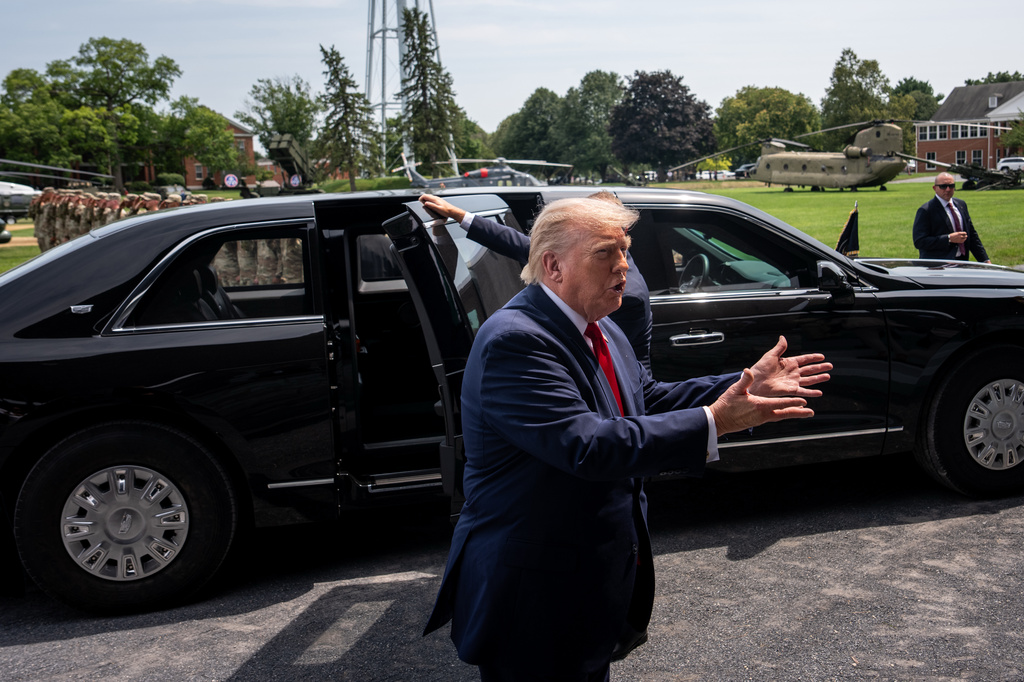
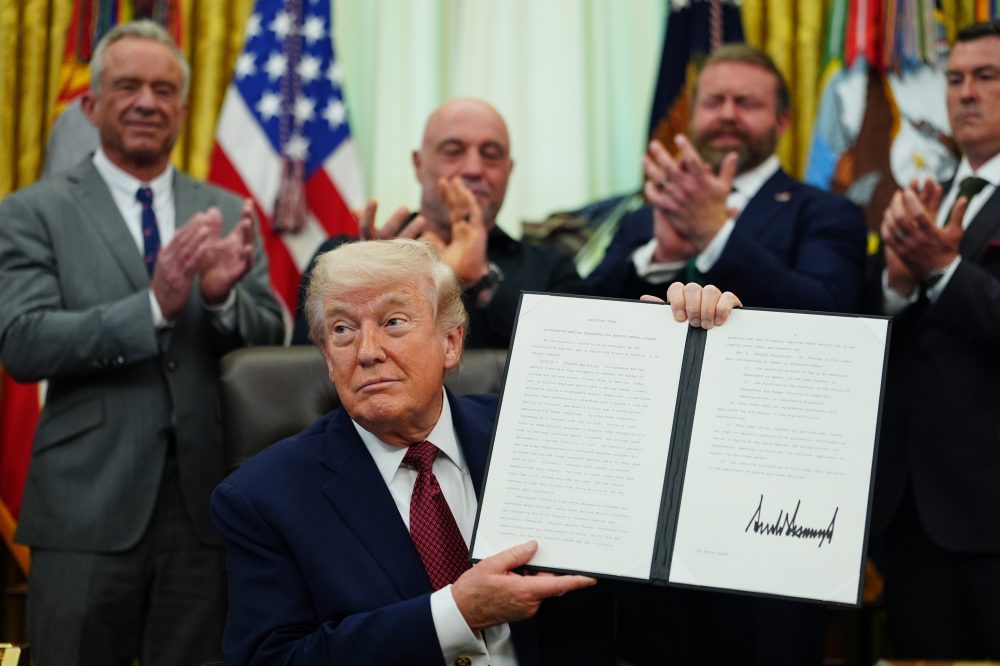
“Today’s order will ensure that people suffering from debilitating symptoms might finally have a chance to reclaim their lives and lead a happier life,” Trump declared during the signing ceremony. The president emphasized his order would help “dramatically accelerate” both research opportunities and treatment availability for psychedelic medications. “If these turn out to be as good as people are saying, it’s going to have a tremendous impact,” he added.
Military veteran advocacy groups and psychedelic researchers have persistently argued that ibogaine — derived from a West African shrub — shows significant therapeutic potential for challenging conditions including post-traumatic stress disorder and opioid dependency.
This presidential action fulfills commitments made by Health Secretary Robert F. Kennedy Jr. and other administration leaders to expand medical access to psychedelic treatments, an initiative that has garnered unusual cross-party political backing.
Present during the Oval Office ceremony were senior health department officials, popular podcaster Joe Rogan, and Marcus Luttrell, the former Navy SEAL whose Afghanistan combat memoir inspired the movie “Lone Survivor.” Rogan revealed he had texted Trump details about ibogaine, prompting the president to reply: “Sounds great. Do you want FDA approval? Let’s do it.”
“You’re going to save a lot of lives through it,” Luttrell told Trump during the event. “It absolutely changed my life for the better.”
The Food and Drug Administration plans to distribute national priority vouchers for three psychedelic substances next week, which agency commissioner Marty Makary explained will enable rapid approval for certain drugs “if they are in line with our national priorities.” This marks the first instance of the FDA extending such expedited processing to any psychedelic compounds.
Federal regulators are also establishing frameworks for the inaugural human testing of ibogaine on American soil.
Trump’s decision caught many veteran psychedelic advocates and scientists off guard, particularly given ibogaine’s documented association with potentially life-threatening cardiac complications. The National Institutes of Health supported brief research into the substance during the 1990s before halting investigations due to ibogaine’s “cardiovascular toxicity.”
“It’s been incredibly difficult to study ibogaine in the U.S. because of its known cardiotoxicity,” explained Frederick Barrett, who directs the Johns Hopkins Center for Psychedelic and Consciousness Research. “If the executive order can pave the way for doing objective, scientific research with this compound, it would help us understand whether it is truly a better psychedelic therapy than others.”
While no psychedelic substance has received U.S. approval, multiple compounds including psilocybin, MDMA, and LSD are undergoing extensive clinical trials for various psychiatric disorders. These substances remain federally prohibited under Schedule I classification, similar to heroin. Oregon and Colorado have authorized therapeutic psilocybin programs within their borders.
Members of the Bwiti religious tradition in African countries like Gabon originally incorporated ibogaine into their spiritual practices.
Recently, American veterans have documented positive outcomes after receiving ibogaine treatment at Mexican medical facilities.
Support from veteran organizations and former Texas Governor Rick Perry resulted in legislation last year allocating $50 million for ibogaine studies in Texas. Perry, who helped establish Americans for Ibogaine, recently advocated for reduced federal restrictions on Rogan’s podcast — his second appearance discussing ibogaine on the influential show within two years.
Medical literature documents ibogaine’s connection to abnormal heart rhythms and links the substance to over 30 fatalities, according to the Multidisciplinary Association for Psychedelic Studies, a nonprofit organization that conducted early international patient studies.
Ismail Lourido Ali, the organization’s co-executive director, suggested Trump’s directive might motivate additional states to adopt Texas-style approaches.
“The stigma around Schedule I drugs is significant,” Ali noted. “It feels like this would give pretty substantial cover for Republican governors and legislatures to step into the ring in terms of funding research programs at their universities.”
Operators of ibogaine treatment centers indicated the order’s effects won’t be immediate.
“There will be no insurance coverage, it will still be considered unapproved and non-covered care,” stated Tom Feegel from Beond Ibogaine, which runs a Cancun, Mexico facility. “But what it does mean is that ibogaine shifts from being fringe and underground to being federally acknowledged.”
Feegel reported his clinic provided ibogaine treatment to 2,000 patients last year, charging between $15,000 and $20,000 per individual. The facility also offered complimentary treatment to approximately 100 veterans.
Medical centers administering the drug routinely monitor patients’ cardiac activity and maintain emergency medical equipment nearby.
Among the few recent U.S.-led investigations, Stanford University researchers found veterans receiving ibogaine treatment demonstrated improvement in traumatic brain injury symptoms, including PTSD, depression, and anxiety. The study involved 30 veterans who obtained treatment in Mexico but lacked a placebo comparison group — a fundamental component of rigorous medical research. Study participants received ibogaine combined with magnesium designed to minimize cardiac risks.