
PHOENIX (AP) — Arizona faces several competitive congressional races this November, with Democrats defending key positions including governor, attorney general and secretary of state.
However, the biggest attention has focused on election operations in the state’s largest county, where significant controversy has emerged.
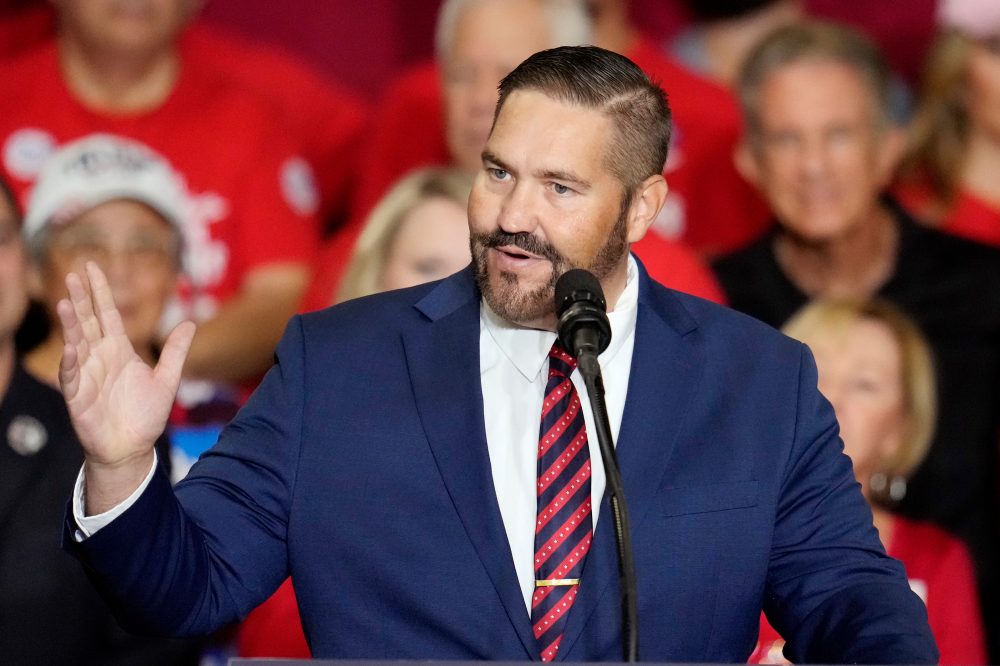
Justin Heap, a Republican who questions election integrity, is conducting his first major election as Maricopa County’s recorder. He’s locked in an intense legal battle with county supervisors regarding election protocols, implemented a disputed mail ballot signature verification system, and used federal databases to screen voter rolls for non-citizens despite accuracy concerns. Heap has also reached out to Trump administration officials seeking voter data and election information.
His decisions have sparked sharp criticism from board members who share election oversight responsibilities with his office, plus condemnation from both the attorney general and secretary of state. A recent court decision will expand Heap’s control over election management.
This conflict has generated uncertainty about midterm election administration in a county frequently targeted by election conspiracy advocates and crucial for determining statewide outcomes in this key political swing state.
Democratic State Sen. Lauren Kuby, who serves on a legislative elections panel and represents portions of Phoenix, expressed concern that the conflict between the recorder and county board creates confusion and erodes trust.
“We’re one of the biggest counties in the country, and we have all of our election administrators fighting right now,” she said. “So I imagine if you’re a voter, you’re pretty confused and worried.”
Despite repeated requests for comment, Heap’s office provided no response. However, Heap released a statement about the court decision, saying it “restores both the authority and the resources necessary for my office to do its job.”
After winning against the sitting officeholder in the 2024 Republican primary, Heap immediately began confronting the Republican-majority board of supervisors.
In June 2025, he filed suit against them with support from America First Legal, a conservative organization established by Stephen Miller, currently serving as White House deputy chief of staff. The legal action claimed the board negotiated arrangements with Heap’s predecessor to move funding, IT personnel and various election duties from his office, including drop box oversight, early ballot processing and early voting location management.
A Maricopa County Superior Court judge ruled mostly in Heap’s favor. Board chair Kate Brophy McGee indicated the board might appeal the decision.
Prior to the ruling, supervisors characterized Heap’s legal action as baseless and “full of falsehoods” in what they described as a power grab that has sometimes escalated dramatically. A January budget session deteriorated into angry exchanges, with Republican Supervisor Thomas Galvin stating Heap “continues to lie over and over again.” Heap later dismissed the confrontation as a “juvenile temper tantrum.”
The board offered a settlement proposal earlier this year but received no counter-proposal from Heap.
After assuming office, Heap modified the mail ballot signature verification process.
The updated system requires workers from both parties to examine signatures, with additional staff conducting extra reviews of questionable signatures, Heap explained to the board during a fall meeting.
However, some officials and observers worry the new approach might result in valid ballots being incorrectly rejected. Galvin described the November 2025 local election rejection rate as “huge” compared to previous elections.
He expressed concern that the revised signature verification represents a “looming disaster” and worried that many people “who legally and validly voted last November saw their ballots be rejected for arbitrary reasons.”
Heap maintains the new approach is both quicker and more secure. “In the end, the signatures either match or they don’t,” he told the board.
Heap has highlighted his office’s utilization of the Department of Homeland Security’s SAVE database to locate potential non-citizens on voter registration lists.
His office reported discovering “137 registered voters who are not U.S. citizens” with 60 of those having “voted in prior elections.” The Maricopa County attorney’s office confirmed receiving 207 names from the recorder for eligibility review.
Non-citizen voting occurs infrequently, and the SAVE database has faced criticism from election officials and specialists who argue it often incorrectly flags eligible voters as non-citizens. Arizona Secretary of State Adrian Fontes, a Democrat, called the system unreliable in an interview.
“The SAVE system is notoriously inaccurate,” he said. “You can’t depend on that to take somebody off the voter rolls or to start the removal proceeding.”
The recorder’s office announced SAVE system usage on the same day Heap attended a Phoenix-area press conference where then-DHS Secretary Kristi Noem promoted congressional legislation requiring documented citizenship proof for voter registration.
Fontes said his office hasn’t received additional details about the alleged non-citizen voters and the announcement’s timing suggests it’s “more of a headline grab than anything without more information.”
Heap’s appearance at Noem’s February press conference wasn’t his only connection to the Trump administration.
Public records from the recorder’s office reveal willingness to cooperate with the Justice Department. This year, the department confiscated ballots and other 2020 election materials from Georgia’s Fulton County, which encompasses Atlanta.
Meanwhile, the FBI subpoenaed similar Maricopa County documents from the state Senate president.
Harmeet Dhillon, who leads the department’s Civil Rights Division, contacted Fontes, Heap and county officials in September requesting preservation of county election materials. Heap responded the following day, emphasizing his office is “committed to full cooperation with the Department of Justice as it conducts its investigation,” adding: “We share your goal of safeguarding election integrity.”
Following similar actions in other states, the department later sued Arizona for non-compliance with requests for comprehensive voter data.
State Attorney General Kris Mayes, a Democrat, told local media that Heap is “trying to undermine Arizonans’ trust in our election system” and cautioned against providing voter lists to federal authorities.
With Arizona’s July primary approaching, some observers fear Heap’s conflicts with the board and other actions may damage public faith in elections.
“The voters need to have a sense that this county is well-run, that the recorder and the board of supervisors have the best interest of every voter,” said Pinny Sheoran, state advocacy chair with the League of Women Voters of Arizona. “And that is frayed with this discord.”