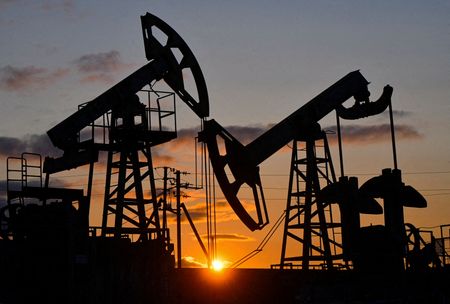

The Trump administration announced Friday it will extend a controversial exemption permitting nations to purchase sanctioned Russian oil through May 16, drawing sharp criticism from Congress members who argue the policy weakens sanctions against Moscow during its ongoing conflict with Ukraine.
The Treasury Department’s latest exemption covers Russian oil and petroleum products that were loaded onto ships as of Friday, replacing a previous 30-day authorization that lapsed on April 11. The waiver specifically prohibits any transactions involving Iran, Cuba, or North Korea.
This decision represents part of the administration’s strategy to manage soaring global energy costs that have escalated during the current U.S.-Israeli conflict with Iran. Asian nations experiencing severe energy supply disruptions had lobbied Washington to permit alternative oil sources to enter international markets.
“As negotiations (with Iran) accelerate, Treasury wants to ensure oil is available to those who need it,” stated a Treasury Department representative.
The announcement marks a notable policy reversal. Treasury Secretary Scott Bessent had declared just 48 hours earlier that Washington would not extend the Russian oil waiver or a separate Iranian oil exemption scheduled to end Sunday.
Oil markets responded dramatically Friday, with global prices dropping 9% to approximately $90 per barrel after Iran temporarily reopened the Strait of Hormuz, a critical Gulf shipping route. However, the International Energy Agency has characterized the current crisis as the most severe global energy supply disruption on record.
The conflict, entering its eighth week Saturday, has already damaged over 80 oil and gas installations across the Middle East. Iranian officials have threatened to close the strait again if recent U.S. Navy blockades of Iranian ports continue.
Rising energy costs pose significant political risks for President Trump’s Republican allies ahead of November’s midterm elections.
International pressure has mounted on Trump regarding oil pricing. Sources indicate partner nations approached the U.S. during recent Group of 20, World Bank, and International Monetary Fund gatherings in Washington, requesting the waiver extension. Trump also discussed oil matters during a phone conversation this week with Indian Prime Minister Narendra Modi, whose country purchases substantial amounts of Russian crude.
According to Bessent’s previous statements, the Iranian oil waiver issued March 20 enabled roughly 140 million barrels to enter global markets, helping ease energy supply constraints.
Congressional leaders from both parties have condemned the sanctions exemptions, arguing they provide economic benefits to Iran during its war with the U.S. and to Russia amid its Ukrainian invasion.
These waivers could undermine Western efforts to cut off Russian war funding and create tensions with allies. European Commission President Ursula von der Leyen has stated this is not the appropriate time to ease Russian sanctions.
Russian presidential envoy Kirill Dmitriev responded to the waiver renewal on social media, writing: “US-Russian economic and energy cooperation will continue.” He previously claimed the initial Russian oil waiver would release 100 million barrels of crude, equivalent to nearly one day of global production.
Brett Erickson, a sanctions specialist at consulting firm Obsidian Risk Advisors, predicted Friday’s renewal likely won’t be the final waiver issued by Washington.
“The conflict has done lasting damage to global energy markets, and the tools available to stabilize them are nearly exhausted,” Erickson explained.