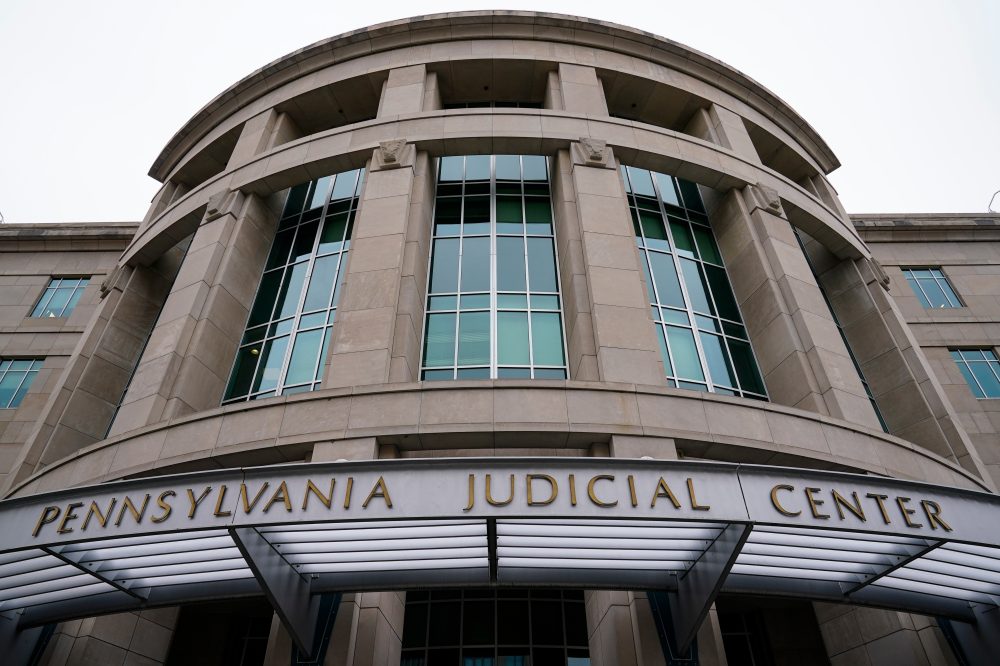

A Pennsylvania appeals court delivered a groundbreaking ruling Monday, declaring that abortion access is constitutionally protected under state law while eliminating a longstanding prohibition on using state Medicaid dollars for abortion procedures.
The decision from a split seven-member panel of Pennsylvania’s Commonwealth Court represents a significant win for Planned Parenthood and reproductive health providers who challenged the state’s Medicaid funding restrictions through litigation filed in 2019.
Though the lawsuit originally focused on Medicaid coverage limitations, the case gained heightened importance following the U.S. Supreme Court’s 2022 decision to eliminate federal abortion protections by reversing Roe v. Wade after nearly fifty years.
Monday’s determination represents the first judicial recognition that Pennsylvania’s state constitution safeguards abortion rights, placing it among a small group of states where advocates have successfully secured reproductive access through state constitutional arguments.
The decision remains subject to potential review by Pennsylvania’s highest court.
“Today, our Commonwealth Court, looking at the Pennsylvania constitution, held that there is a right to reproductive autonomy, and it’s the highest possible level of a right,” said Susan Frietsche, executive director of the Women’s Law Project, which helped represent the clinics.
A representative for Republican Attorney General David Sunday indicated the office was examining the ruling but declined to specify whether an appeal would be pursued.
Democratic Gov. Josh Shapiro welcomed the court’s action.
“I’ve long opposed this unconstitutional ban, and as Governor, I did not defend it — because a woman’s ability to access reproductive care should never be determined by her income,” Shapiro said in a statement.
The original 2019 lawsuit sought to compel Pennsylvania’s Medicaid program to provide unrestricted abortion coverage, with plaintiffs contending that a 1982 state law limiting such funding violated equal protection guarantees for low-income women.
The litigation has experienced multiple developments, including a 2021 lower court decision dismissing the case for lack of standing while citing a 1985 state Supreme Court ruling that upheld the 1982 restrictions.
However, Pennsylvania’s Supreme Court reversed the lower court’s judgment in 2024 and found that earlier rulings had not adequately examined the full scope of state constitutional anti-discrimination protections beyond federal safeguards.
The seven-judge panel that reviewed the case Monday largely endorsed the plaintiffs’ position. The majority wrote that the state should invest in maternal and infant healthcare and related services if it wants women to continue pregnancies to term.
The attorney general’s office had maintained that the state possessed a legitimate interest in “protecting fetal life” and that excluding Medicaid coverage supported that objective.
“If the state believes certain medical procedures may psychologically harm women, the state can license, regulate, and educate around such care. That is less intrusive than taking an entire medical procedure off the table categorically for some women, some of whom may benefit from that procedure — a fact the Attorney General does not dispute,” the majority opinion said.
Anti-abortion groups swiftly condemned Monday’s ruling.
“By declaring a sweeping constitutional ‘right to reproductive autonomy’ and mandating taxpayer-funded abortion through Medicaid, the court has overstepped its authority, ignored the plain text of our state constitution, and forced millions of Pennsylvanians who believe life begins at conception to subsidize the killing of unborn children,” said Michael Geer, president of Pennsylvania Family Institute, which opposes abortion rights.
Current Pennsylvania law permits abortion procedures through the 23rd week of pregnancy.