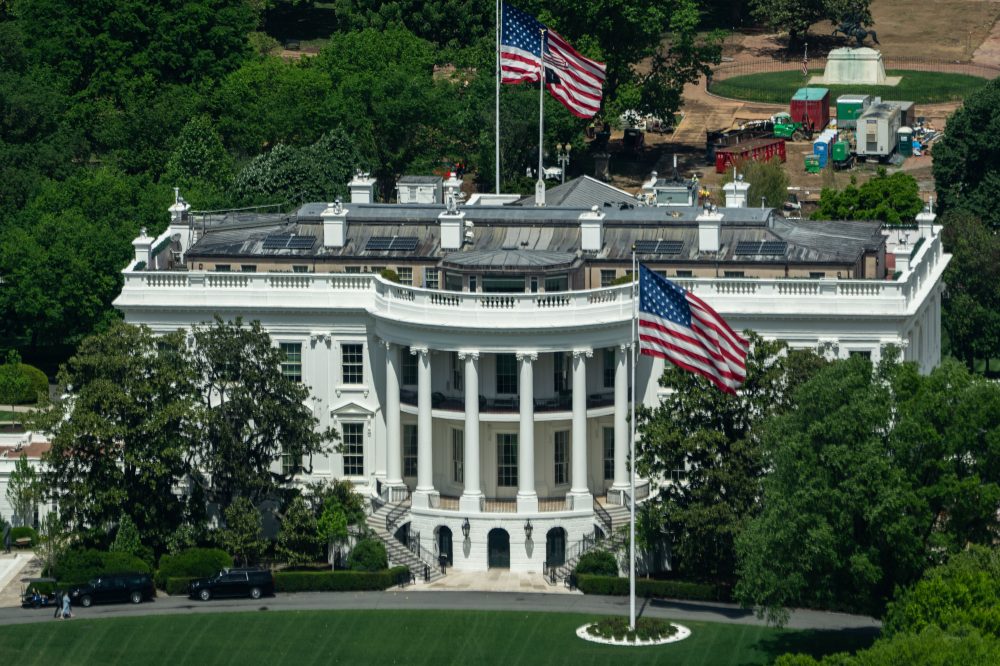

WASHINGTON — A contentious legal dispute over President Donald Trump’s massive $400 million ballroom construction project has unexpectedly revealed information about the White House’s secretive underground security facilities.
The legal battle involves the National Trust for Historic Preservation, which is fighting the enormous 90,000-square-foot ballroom planned for the location where the former East Wing once stood before its demolition last fall. Last week, a federal appeals court allowed Trump to proceed with construction while the case continues.
The appeals court decision suspended a lower court judge’s ban on above-ground building but allowed security-related work to move forward. Court documents from the Republican administration’s appeal detailed plans for what officials describe as a “heavily fortified” complex, featuring enhanced bomb shelters, military facilities, and medical installations below the ballroom.
The White House’s underground bunker system traces back to Franklin D. Roosevelt’s era, when the first bomb shelter was constructed in 1942 following America’s entry into World War II. Security concerns have kept most details about these facilities classified.
Historian and national security expert Garrett Graff explained that the Presidential Emergency Operations Center located under the East Wing was designed for temporary protection only.
“The whole point of the sort of presidential evacuation and continuity of the presidency is you want to get the president out of the place where everyone knows that he is and get him into a place where people don’t know where he is,” Graff said.
The bunker gained public attention during the September 11, 2001 attacks when Vice President Dick Cheney was forcibly taken there by Secret Service agents.
A Secret Service officer rushed into Cheney’s West Wing office, physically grabbed him by his belt and shoulder, and escorted him to the underground facility. “He didn’t say, ‘Shall we go?’” Cheney recalled to NBC News years afterward. “He wasn’t polite about it.”
Trump himself was moved to the White House bunker during 2020 when protesters gathered following George Floyd’s death. Demonstrators at Lafayette Park could be heard from inside the building as Secret Service and police worked to manage the crowds.
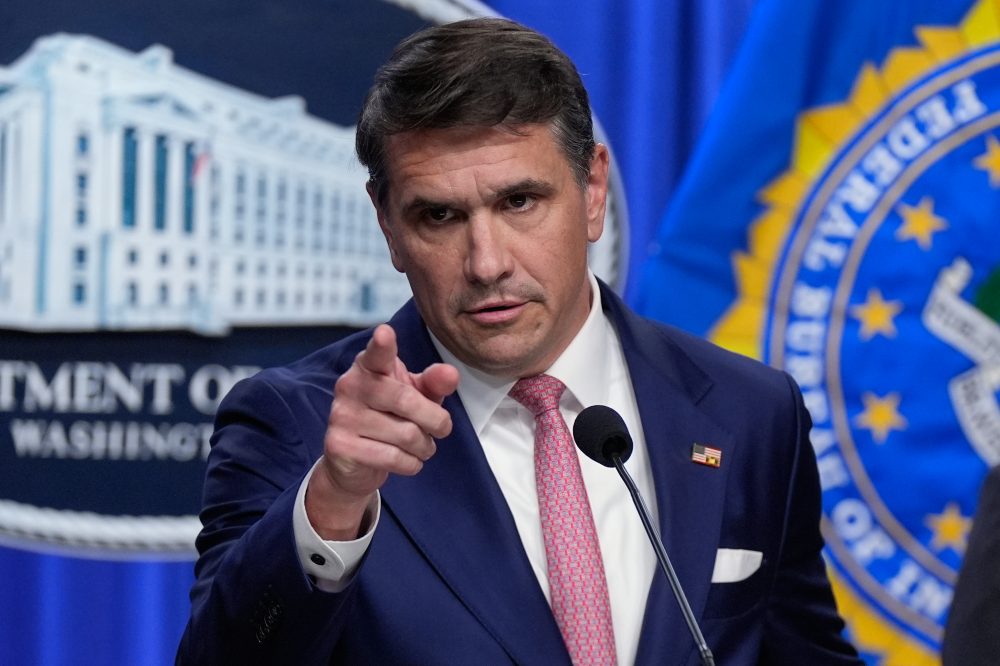
Secret Service Deputy Director Matthew Quinn emphasized in court papers that completing the ballroom project is essential for White House security operations.
“An above-ground slab and topping structure is needed to ensure that key underground structures with a security purpose are properly protected and strengthened,” Quinn stated in his filing.
Quinn further noted: “Leaving the project site unfinished imperils the ability of the Secret Service to meet its statutory mission to protect the President.”
Last month, Trump detailed various security improvements being implemented during the ballroom’s construction.
“The roof is droneproof. We have secure air-handling systems. You know, bad things happen in the air if you have bad people,” the president said. “We have biodefense all over. We have secure telecommunications and communications all over. We have bomb shelters that we’re building. We have a hospital and very major medical facilities that we’re building.”
Trump used social media to condemn the initial court ruling against his project, arguing that the underground components cannot function properly without the surface structure.
The National Trust for Historic Preservation contends that Trump exceeded his executive powers by advancing the project without obtaining required approvals from federal agencies and Congress.
U.S. District Judge Richard Leon sided with the preservation organization in late March but temporarily stayed his ruling while permitting underground construction to continue. The administration subsequently filed an appeal.
The U.S. Court of Appeals for the District of Columbia Circuit has scheduled a hearing for June 5 to examine the case.
While taxpayers will fund the security components of the project, Trump has stated that private donations from wealthy individuals and corporations will cover the ballroom expenses. He has characterized it as a necessary enhancement to the White House grounds that has been delayed too long.
“The underground portion is wedded to, and serves, the upper portion,” the president wrote on social media.
The practical implications of this connection remain uncertain and will likely depend on how the ongoing legal proceedings conclude.