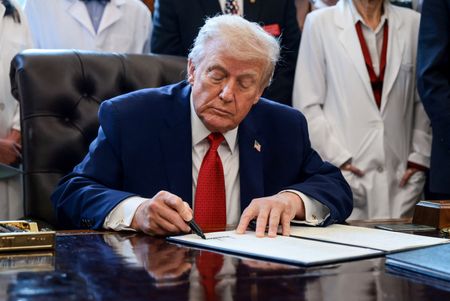

WASHINGTON – President Donald Trump is preparing to direct federal agencies to reassess regulations surrounding ibogaine, a plant-based substance currently prohibited in the United States but utilized overseas for treating post-traumatic stress disorder and various mental health conditions, according to three sources with knowledge of the plan.
The substance, extracted from an African shrub, currently falls under Schedule I classification in America, which designates it as having “no currently accepted medical use and a high potential for abuse,” per Drug Enforcement Administration guidelines. This places ibogaine in the same category as heroin and ecstasy.
Internationally, the substance receives therapeutic use in countries with more lenient regulations for addressing mental health disorders. Mexico operates numerous ibogaine treatment facilities that frequently serve American military veterans seeking alternative treatments.
Sources speaking anonymously due to lack of authorization indicated the presidential directive could be issued as early as Saturday. However, they warned that details may still undergo modifications as the administration completes its proposal, and any reclassification would likely not dramatically change the substance’s current legal standing.
White House representatives declined to provide comment. CBS initially reported on the potential executive action.
Multiple veterans’ advocacy organizations, including one headed by former Energy Secretary Rick Perry from Trump’s first administration, have campaigned for expanded ibogaine availability within the United States.
Perry and W. Bryan Hubbard, serving as chairman and CEO respectively of Americans for Ibogaine, made an appearance on April 1 during the widely-followed “Joe Rogan Experience” podcast to advocate for the substance and expressed intentions to arrange a meeting with Trump regarding the issue.
“I certainly hope that this message reaches the president, and I will try to make sure that it does,” Rogan stated to the guests.
Research published in 2022 within the Journal of Substance Abuse Treatment examined multiple studies and determined that ibogaine decreased cravings and withdrawal effects in individuals struggling with substance abuse disorders while potentially offering benefits for depression and PTSD treatment.
When administered in elevated amounts, ibogaine may produce hallucinatory effects. The substance has also been associated with heart-related deaths, leading practitioners to sometimes provide magnesium supplements alongside ibogaine to reduce cardiovascular risks.
A 2025 research study published in Nature Mental Health by Stanford University scientists discovered that ibogaine combined with magnesium enhanced brain functions related to “cognitive flexibility” and decreased PTSD symptoms in affected individuals.
“From a psychological and physiological level, there’s very promising signals that make us want to learn more,” stated Kirsten Cherian, a clinical assistant professor and neuropsychologist at Stanford University who served as a principal investigator in the 2025 research. “There are people out there with neurological diseases that there’s no treatment for, or there’s no cure for. It’s like a one-way street.”
Supporters anticipate the directive will eliminate substantial obstacles to medical research and compassionate treatment applications.
Numerous possibilities exist for future therapeutic approaches, Cherian explained, but American medical professionals require authorization to conduct domestic studies of the substance to gather superior medical evidence, particularly regarding ibogaine’s safety profile.
In December, Trump authorized an order reducing restrictions on marijuana and CBD products, praising their potential practical therapeutic uses.
The December directive – portions of which remain unimplemented – would maintain controlled status for these substances while having the federal government acknowledge their “moderate-to-low potential for physical and psychological dependence,” according to DEA guidelines. This would increase accessibility for both patients and researchers.
The current administration established a pilot initiative that provides Medicare reimbursement for certain seniors receiving CBD treatments for various medical conditions.
Texas enacted legislation in 2025 to encourage Food and Drug Administration approval of ibogaine for PTSD treatment purposes. The state committed $50 million this year to finance independent clinical trials of the substance to meet FDA approval standards.
“This is just a huge sigh of relief in that our voices have finally been heard, and the veteran community could really stand to experience some significant shifts,” said Amber Capone, CEO and founder of Veterans Experiencing Treatment Solutions, an organization advocating for ibogaine access.
Capone’s spouse, a former Navy SEAL, utilized ibogaine during his struggle with PTSD, prompting the couple to establish an organization supporting such treatment approaches.
“There’s no doubt whatsoever in our minds that it works,” she explained. “But we just can’t say, ‘Believe us.’ The research has to corroborate what we know to be true, and it feels like we could finally, finally be making some impact.”