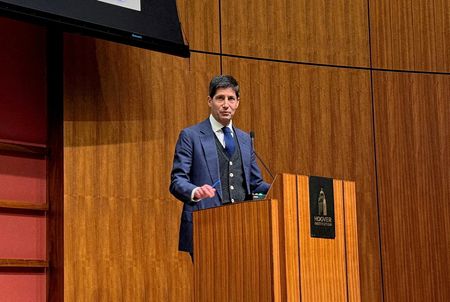

WASHINGTON – Former Federal Reserve Governor Kevin Warsh faces senators Tuesday in his bid to become the nation’s top central banker, though his confirmation path remains complicated by an ongoing criminal investigation into current Fed Chair Jerome Powell.
The Senate Banking Committee hearing begins at 10 a.m., where the 56-year-old financier nominated by President Trump will present his opening remarks before facing questions from lawmakers who will determine whether to advance his nomination to the full Senate.
In prepared remarks released Monday, Warsh committed to making interest rate decisions “strictly independent” of political pressure or commentary from elected officials. He also indicated the Fed should become more “reform-oriented” and promised to collaborate “with the administration and Congress on non-monetary matters that are part of the Fed’s remit.”
“Monetary policy independence is essential,” Warsh stated, despite Trump’s previous comments suggesting he wouldn’t select someone for the Fed leadership who wasn’t planning to reduce borrowing costs.
Warsh believes rate reductions are justified because artificial intelligence-driven technological advances will boost productivity. However, other central banking officials argue this may prove accurate long-term but doesn’t necessarily support immediate rate cuts while inflation continues exceeding the Fed’s 2% objective.
Senator Tim Scott, the Republican Banking Committee chairman, plans to “frame the hearing around affordability” according to his spokesperson, focusing on the Fed’s role in maintaining price stability at the central bank’s inflation target.
The Federal Reserve has fallen short of its 2% inflation goal for over five years, initially due to COVID-19 disruptions but recently because of Trump administration tariffs and elevated oil prices connected to Middle Eastern conflicts – potentially problematic for Republican legislators approaching November’s midterm elections.
The timing for committee and Senate floor votes remains unclear due to political complications.
Republican Senator Thom Tillis, a committee member, has pledged to obstruct Warsh’s nomination until the Justice Department abandons its Powell investigation, which Tillis considers baseless and part of Trump’s strategy to pressure the Fed into cutting rates or forcing Powell’s resignation.
With next week’s policy meeting potentially being Powell’s final one as Fed chief, this standoff creates the possibility he could continue serving beyond his May 15 tenure expiration.
U.S. Attorney for the District of Columbia Jeanine Pirro, a Trump supporter, shows no indication of ending the Powell investigation, and the president isn’t pressuring her to do so – meaning he might accept keeping the current central bank leader for additional months or risk another legal fight by attempting to name an interim replacement from the remaining six Fed governors.
When lacking a confirmed successor, the central bank has previously appointed its own “pro tem” Fed chair. Since Powell’s governor term runs until 2028, he could continue as an influential policymaker even with Warsh’s confirmation.
Trump has also suggested he might dismiss Powell if he doesn’t resign his governor position. Such action would likely trigger legal challenges, similar to the president’s unsuccessful attempt last summer to remove Fed Governor Lisa Cook.
This represents an extraordinary situation for the U.S. central bank, where leadership transitions have traditionally been cooperative, and senators will likely question Warsh extensively about this dynamic.
Warsh, who has significantly expanded his considerable family fortune during the 15 years since departing the central bank’s board, will have opportunities to explain how his extensive Fed criticism and leadership critiques will result in different monetary policy approaches or new organizational management methods.
The Federal Reserve encompasses a Washington-based board and staff plus twelve regional banks, tens of thousands of system employees, and responsibilities spanning national interest rate setting, payments system management, bank supervision and regulation, foreign central bank swap line administration, and research covering topics from digital currencies to rural healthcare.
Warsh has sharply criticized Powell’s leadership, and the hearing provides a platform to elaborate on his planned changes.
“The Fed must stay in its lane,” Warsh wrote in his committee statement, reflecting conservative arguments that the central bank’s climate change work, economic equity initiatives, or fiscal spending commentary exceed appropriate boundaries.
Republicans, including Tillis, have generally endorsed Warsh’s nomination.
Democrats indicate they have substantial concerns to address, ranging from Warsh’s Fed role during major bank bailouts in the 2007-2009 financial crisis to questions about his recent financial disclosures promising to sell portions of his over $100 million portfolio rather than providing detailed asset information.