
WASHINGTON — Federal law enforcement agencies are working urgently to address severe staffing shortages following widespread departures over the past year, implementing new hiring practices that some officials believe compromise traditional standards.
The Federal Bureau of Investigation has launched social media recruitment drives, shortened training periods for candidates transferring from other federal agencies, and loosened requirements for support personnel seeking agent positions, according to sources familiar with the changes and internal documents obtained by The Associated Press. Meanwhile, the Justice Department has begun recruiting prosecutors directly from law school to address vacancies in federal attorney offices nationwide.
Current and former agents report that the FBI is also advancing employees to leadership roles with less experience than typically required for such positions.
These actions represent a comprehensive attempt to stabilize an organization weakened by retirements and departures, many triggered by concerns about the Trump administration’s politicization of the department and the dismissal of personnel considered disloyal to the Republican president’s priorities. Opponents of these modifications argue they represent a decline in standards for a law enforcement organization that has traditionally emphasized professional excellence and handles responsibilities ranging from terrorism prevention to complex corruption cases.
“It’s a sign of, among other things, the difficulty the department is having right now in keeping and recruiting people,” said Greg Brower, a former U.S. attorney in Nevada who left the FBI in 2018 as its chief congressional liaison.
The FBI has justified these modifications as necessary updates to its recruitment process, stating it is improving rather than reducing standards and eliminating what it describes as unnecessary administrative barriers in the application procedure. The agency maintains that candidates continue to be evaluated using identical criteria.
“The Bureau holds high standards for potential and current employees, and there is a rigorous application and background process to join the FBI,” the FBI said in a statement.
The FBI has traditionally maintained its reputation as the country’s leading federal law enforcement organization, with a selection process built around physical fitness evaluations, written examinations, interviews and academy training at Quantico, Virginia.
Components of this system have been occasionally modified to meet the bureau’s requirements, including recent changes under FBI Director Kash Patel’s direction.
Promoting a philosophy to “let good cops be cops,” Patel announced last fall that personnel transferring from agencies like the Drug Enforcement Administration could complete a nine-week training program rather than the standard academy lasting over four months. This modification has frustrated some current and former officials who believe the FBI’s procedures, professional environment and variety of cases help distinguish it from other agencies.
For support personnel seeking to become agents, the bureau recently announced it would eliminate requirements for a written evaluation and an interview with a three-member FBI agent panel designed to assess life experience and judgment, according to sources familiar with the matter who requested anonymity and an internal document reviewed by the AP.
The FBI stated that current employees would still require endorsements from senior leadership and must complete Quantico training.
“We are not lowering standards or removing qualifications in any way. What we are doing is streamlining the process to remove duplicative, bureaucratic steps to the application system for onboard employees,” the FBI said in a statement, adding, “These are changes based on a wide variety of feedback from successful agents with over 20 years’ experience.”
Patel announced in January a 112% increase in applications, and the FBI reports having a “clear path” to add approximately 700 special agents this year with its current Quantico class being among its largest in years. However, some sources indicate that increased applications don’t necessarily translate to a surge in qualified candidates that can compensate for the bureau’s personnel losses.
At senior levels, the FBI also confronts turnover among leadership, including special agents in charge who lead most of the bureau’s 56 field offices. Some were dismissed by Patel over the past year while others retired. Many offices are now managed by individuals who have held their positions for less than a year.
Confronting what current and former officials describe as challenges filling certain positions, the FBI has rapidly advanced agents through the ranks, sources report. This includes promoting assistant special agents in charge to special agents in charge and allowing employees to be considered for leadership positions without the extensive headquarters experience the FBI historically considered essential for comprehensive understanding of bureau operations.
Before becoming director, Patel worked as a conservative podcast host and had discussed closing FBI headquarters to transform it into a “deep state” museum, telling colleagues on his first day he would relocate hundreds of employees from Washington to field offices.
“As a field agent, you have a field agent’s mentality, you have a field agent’s view,” said Chris Piehota, a retired FBI senior executive. Without sufficient headquarters experience, he noted, you don’t understand “the business side of the FBI, the logistical side of the FBI or the political jungle” that can accompany the position.
The Justice Department has similarly reduced hiring requirements for certain federal prosecutors.
Department leadership recently eliminated a policy requiring U.S. attorney offices to hire only prosecutors with a minimum of one year practicing law. The department provided no explanation but stated it is “proud to empower young and passionate prosecutors and offer attorneys at every level the opportunity to invest their talents into keeping their communities safe.”
This occurs as sections of the agency struggle with workload demands amid critical staffing gaps, with the department recently acknowledging the loss of nearly 1,000 assistant U.S. attorneys.
In Minnesota, the federal prosecutor’s office has been severely impacted by resignations amid frustration with the administration’s increased immigration enforcement and the department’s handling of fatal civilian shootings by federal agents.
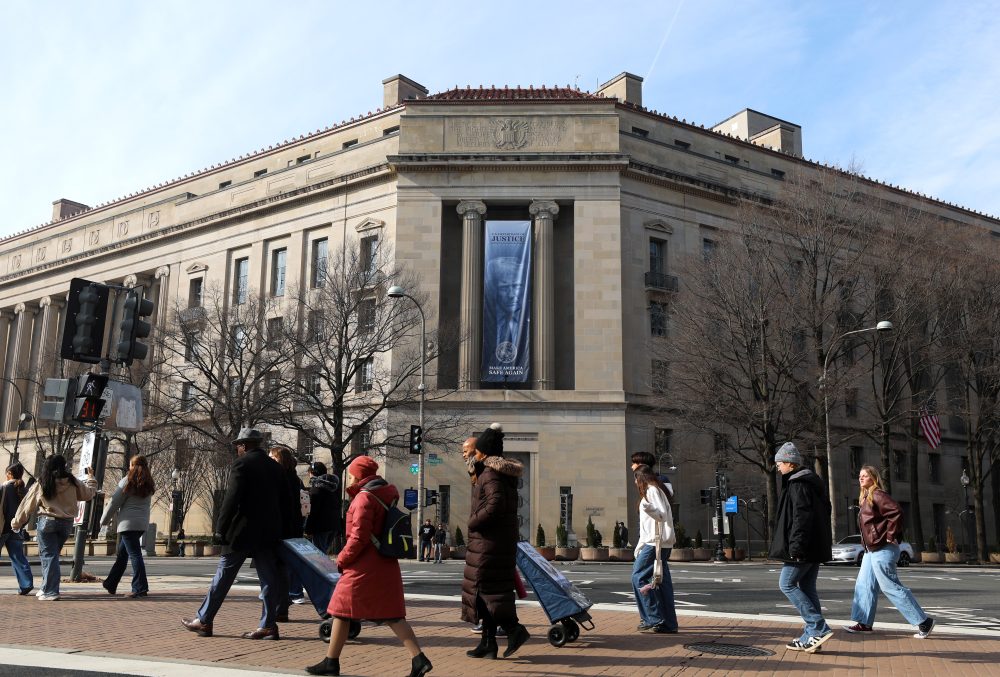
Justice Department headquarters in Washington has also experienced significant staffing reductions.
Attorney numbers in the Criminal Division’s Violent Crime and Racketeering Section, which prosecutes organized crime and violent gangs, have dropped substantially, though the section seeks to hire additional lawyers. A National Security Division section handling espionage cases has reported a 40% decrease in prosecutors.
The department stated it has witnessed increased criminal complaints and indictments despite prosecutor losses, highlighting what it calls the “bloated, ineffective and weaponized” institution the administration inherited.
Officials have recruited military attorneys to serve as special prosecutors in some offices. The administration has also utilized social media for applicant recruitment. One recent post from the FBI’s Omaha, Nebraska office stated: “A calling bigger than yourself. A mission that matters. If you’re ready for the challenge, there’s a place for you on the FBI team.”
Chad Mizelle, who served as chief of staff to Trump’s first attorney general, Pam Bondi, recently encouraged lawyers to contact him on X if they wanted to become prosecutors “and support President Trump and anti-crime agenda.” Mizelle’s post drew attention not only because federal prosecutors haven’t typically been recruited through social media, but also because presidential support hasn’t been a requirement for career employees.
“We need good prosecutors,” wrote Mizelle, who departed the department in October. “And DOJ is hiring across the country. Now is your chance to join the mission and do good for our country.”