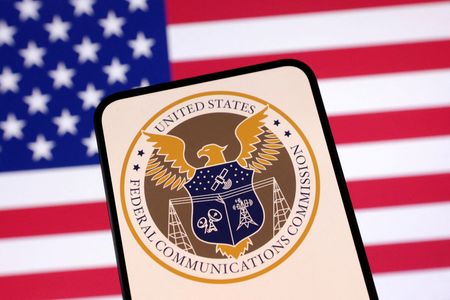

The nation’s highest court will examine on Tuesday whether federal telecommunications regulators violated constitutional protections when they levied massive financial penalties against major wireless companies before allowing them to contest the charges in court.
At the center of this legal battle is the question of whether the Federal Communications Commission overstepped its constitutional boundaries by imposing tens of millions of dollars in fines against telecommunications giants including Verizon Communications and AT&T without first providing the companies access to a jury trial.
The Trump administration is backing the FCC’s internal penalty enforcement system in this case.
This legal challenge represents another examination of whether federal agencies’ internal enforcement mechanisms violate constitutional guarantees of jury trial rights, following the Supreme Court’s 2024 decision that restricted the Securities and Exchange Commission’s in-house proceedings.
The telecommunications case originated from approximately $200 million in penalties that the FCC levied in 2024 against wireless companies after determining they illegally provided third-party access to customer location information without obtaining proper user authorization.
The financial penalties included $80 million assessed against T-Mobile, $12 million against Sprint (which T-Mobile purchased in 2020), $57 million against AT&T, and nearly $47 million against Verizon Communications.
Both Verizon and AT&T satisfied their penalty payments while simultaneously pursuing legal challenges that ultimately created disagreement among federal appeals courts regarding the constitutionality of the FCC’s internal penalty process, called forfeiture orders.
The 2nd U.S. Circuit Court of Appeals in New York sided with the FCC’s penalty against Verizon, determining that the Constitution allows the FCC to issue preliminary penalty assessments provided accused parties can challenge government collection actions in court. This decision led Verizon to petition the Supreme Court.
Regarding AT&T’s situation, the 5th U.S. Circuit Court of Appeals in New Orleans determined that the FCC’s preliminary finding of violations and penalty assessment violated the company’s constitutional jury trial rights. This ruling prompted the FCC to seek Supreme Court review.
Justice Department attorneys representing the Trump administration contend that the FCC’s assessments carry no binding force. They argue in legal documents that if the government pursued court enforcement action, it would provide companies the opportunity to present their defense to a jury.
The wireless companies counter that the FCC’s system inappropriately shifts court-based proceedings to internal agency processes, denying them jury trial rights. They further contend that the FCC’s preliminary assessments cause reputational damage before accused parties receive fair hearings.
The Supreme Court, which maintains a 6-3 conservative majority, has consistently limited federal agency authority through several significant recent decisions.
In its 2024 SEC decision, the court struck down as unconstitutional that agency’s internal enforcement of investor protection laws against securities fraud. The 6-3 decision, driven by the court’s conservative members, concluded that agency proceedings seeking fraud penalties handled by the SEC rather than federal courts violate the Constitution’s Seventh Amendment jury trial guarantee.
However, the Supreme Court delivered a favorable outcome for the FCC last year with a 6-3 decision supporting the agency’s funding mechanism for its multi-billion-dollar program aimed at expanding telephone and broadband internet access to low-income Americans and other recipients.