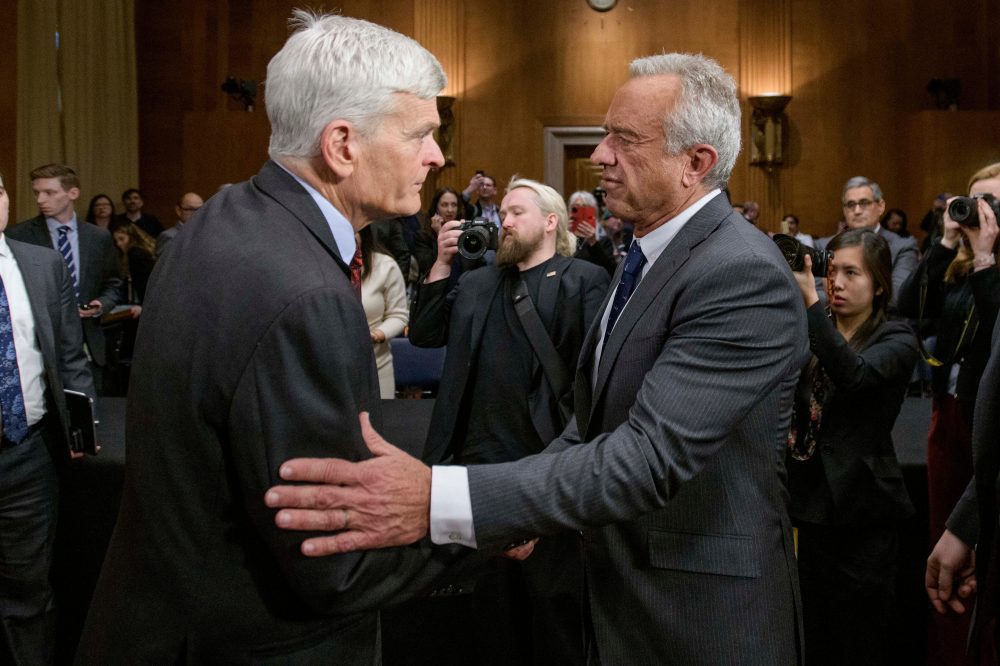

Louisiana Senator Bill Cassidy faces a critical political test Wednesday when he questions Health Secretary Robert F. Kennedy Jr. during two important Senate committee hearings.
The Republican lawmaker holds leadership positions on Senate committees overseeing Kennedy’s department, positioning him to challenge the secretary’s plans for the nation’s health programs and research initiatives. Cassidy’s medical background has put him at odds with Kennedy’s stance against vaccines, despite his earlier support for Kennedy’s confirmation.
Meanwhile, Cassidy battles for his political survival in an upcoming primary election, where President Donald Trump has backed one of his challengers in a rare move against a fellow Republican incumbent.
The senator’s approach during these hearings could significantly impact his reelection prospects and establish how Congress will monitor the country’s health policies amid widespread skepticism and false information.
Cassidy last confronted Kennedy publicly in September. Since then, Kennedy has pursued sweeping changes to vaccine guidelines that could weaken safeguards against illnesses including influenza, hepatitis B, and RSV, though legal challenges have stalled these efforts.
Following criticism, Kennedy has shifted focus toward discussing less divisive subjects such as nutrition, though he continues promoting questionable assertions about dietary cures for various health conditions.
Wednesday’s hearings will test whether Cassidy challenges Kennedy on vaccination issues that matter deeply to him professionally, or whether he sets aside their disagreements to demonstrate loyalty to the Trump administration.
“He’s taken a risk showing any sort of resistance to RFK,” said Claire Leavitt, an assistant professor at Smith College who studies congressional oversight. “He may pay an electoral price for that.”
Cassidy has maintained a delicate political balance for years. He remains among the few Republican senators who supported Trump’s conviction during impeachment proceedings following the January 6, 2021 Capitol attack.
His experience as a liver specialist led him to champion hepatitis B vaccinations for newborns, a measure that could have prevented the disease among his former patients. However, when Trump selected Kennedy, a prominent vaccine opponent, Cassidy backed the nomination after obtaining various assurances, including Kennedy’s commitment to work within existing vaccine approval processes and support childhood immunization schedules.
Supporting Kennedy’s confirmation didn’t earn Trump’s favor. The president has endorsed U.S. Representative Julia Letlow, one of Cassidy’s primary challengers.
Cassidy also confronts resistance from Kennedy supporters within the “Make America Healthy Again” movement, which encompasses vaccine critics and various health and environmental advocates. The MAHA PAC has committed $1 million to Letlow’s campaign, with some observers suggesting this support targets Cassidy for his criticism of Kennedy’s vaccine policies.
“I’m not really sure what MAHA’s beef is,” Cassidy told reporters earlier this month. “Let me point out that I am the reason that Robert F. Kennedy is now the secretary of HHS. He would not have gotten there otherwise.”
Cassidy maintains he has “strongly supported” the MAHA platform, particularly regarding ultraprocessed food concerns. The physician-turned-politician acknowledged disagreements with MAHA regarding vaccines.
“We’ve seen, frankly, that I am right,” Cassidy added, pointing to recent measles-related deaths of children who were not vaccinated.
During September hearings, he criticized Kennedy’s decision to reduce funding for mRNA vaccine research. He questioned Kennedy about replacing vaccine committee members, suggesting potential conflicts of interest among new appointees. He also expressed concern that Kennedy’s vaccine decisions were complicating COVID-19 vaccination access for Americans.
That same month, Cassidy organized a hearing featuring former U.S. Centers for Disease Control and Prevention Director Susan Monarez, whom Kennedy removed less than a month into her role after vaccine policy disputes, and former CDC Chief Medical Officer Debra Houry, who resigned in August citing scientific integrity concerns at the agency.
“I want to work with the president to fulfill his campaign promise to reform the CDC and Make America Healthy Again. The president says radical transparency is the way to do that,” Cassidy said at the time.
Political strategists anticipate Cassidy’s primary rivals, Letlow and Louisiana Treasurer John Fleming, will use any statements from Wednesday’s hearings to portray Cassidy as opposing the Trump administration.
However, Dorit Reiss, a vaccine law expert at UC Law San Francisco, believes the political risks of supporting vaccines among Republicans may be overstated.
“He’s probably not alienating voters by focusing on the issue and calling it out,” she said.
Louisiana political consultant Mary-Patricia Wray thinks committed MAHA supporters have already chosen their candidate, likely not Cassidy.
She suggests he could still attract Democrats who change party registration for the primary, plus undecided Republican voters concerned about healthcare affordability issues he champions in Congress.
“If I was advising Bill Cassidy, I would tell him your goal here is not to get out unscathed,” Wray said. “Your goal is to prove that your consistency on issues regarding public health is an asset in your campaign, not a detriment.”
Cassidy’s potential primary defeat would also affect oversight of the massive U.S. Department of Health and Human Services, given his role as chair of the Senate Health, Education, Labor and Pensions committee.
Leavitt, the Smith College professor, noted that seniority typically determines Senate committee leadership. She suggested another Republican in today’s polarized Congress might be less inclined than Cassidy to challenge Kennedy’s authority.
Reiss, the vaccine law expert, wishes Cassidy had conducted more hearings or proposed legislation to limit Kennedy’s influence. She holds the senator responsible for enabling Kennedy to introduce unsubstantiated vaccine concerns into government.
“His original sin, of course, was voting for Kennedy at all,” Reiss said.