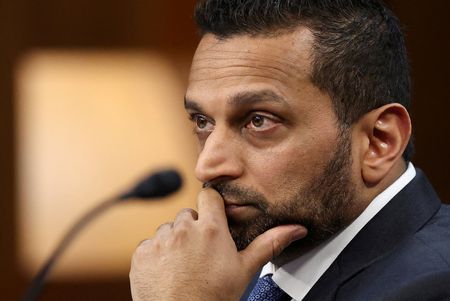

FBI Director Kash Patel has launched a defamation lawsuit against The Atlantic magazine and reporter Sarah Fitzpatrick over a published story that alleged he struggles with alcohol abuse and poses a national security risk.
The legal action, filed April 20 in U.S. District Court for the District of Columbia, seeks $250 million in damages following The Atlantic’s Friday publication of a story originally headlined “Kash Patel’s Erratic Behavior Could Cost Him His Job.”
The magazine’s report drew on statements from more than two dozen unnamed sources who raised concerns about Patel’s “conspicuous inebriation and unexplained absences” that reportedly “alarmed officials at the FBI and the Department of Justice.”
The Atlantic later changed the online headline to “The FBI Director Is MIA” and reported that the FBI has had to postpone early morning meetings “as a result of his alcohol-fueled nights.” The story also claimed Patel “is often away or unreachable, delaying time-sensitive decisions needed to advance investigations.”
The White House, Department of Justice, and Patel all rejected these claims when The Atlantic contacted them. The magazine included Patel’s response: “Print it, all false, I’ll see you in court—bring your checkbook.”
Speaking to Reuters, Patel called the article completely fabricated. “The Atlantic’s story is a lie,” he stated. “They were given the truth before they published, and they chose to print falsehoods anyway.”
Atlantic Editor-in-Chief Jeffrey Goldberg defended the publication’s work in a statement to CNBC after Patel announced his intention to sue during a Fox News appearance Sunday. “We stand by our reporting on Kash Patel,” Goldberg said.
Reuters was unable to verify the claims made in The Atlantic’s article or determine why the publication modified its headline. The Atlantic and Fitzpatrick did not respond to requests for comment.
According to the lawsuit, while The Atlantic has the right to critique FBI leadership, “they crossed the legal line” by publishing a story “replete with false and obviously fabricated allegations designed to destroy Director Patel’s reputation and drive him from office.”
The legal filing accuses The Atlantic of disregarding the FBI’s denials and failing to respond to a Friday letter from Patel’s attorney Jesse Binnall to senior editors and the magazine’s legal team requesting additional time to address 19 allegations the reporter planned to publish.
Court documents show the letter was sent shortly before 4 p.m. Friday, while the story went live at 6:20 p.m. Reuters could not confirm whether or how The Atlantic responded to Binnall’s request.
The lawsuit claims the publication demonstrated “actual malice,” the legal threshold requiring public figures like Patel to prove publishers knowingly distributed false information or recklessly disregarded questions about its truthfulness.
“Defendants’ conscious decision to ignore the detailed, specific, and substantive refutations in the Pre-Publication Letter, and their refusal to give a reasonable amount of time for the FBI and Director Patel to respond, is among the strongest possible evidence of actual malice,” the court filing states.
This lawsuit represents another case of a Trump administration official taking legal action against a news organization. Courts have dismissed Trump’s lawsuits against CNN, the New York Times, and Wall Street Journal, though Trump has refiled against the Times and may refile against the Journal.
However, some settlements have been reached. ABC News agreed to pay $15 million plus $1 million in legal fees, while Paramount Global paid $16 million over what the Trump administration described as “deceptive editing” of a CBS News interview with 2024 election opponent Kamala Harris.