
LOS ANGELES (AP) — A pivotal televised debate is set for Wednesday featuring six frontrunners in California’s gubernatorial contest — each hoping to achieve a standout performance in a wide-open race lacking a definitive frontrunner.
Time is running out for candidates to establish themselves as contenders, with mail-in ballots set to reach voters in early May ahead of the June 2 primary contest. California’s electoral system allows only the two highest vote recipients to proceed to November’s general election, irrespective of party affiliation. For months, Democratic Party officials have expressed concern that the packed candidate field might allow two Republican nominees to advance to November — an outcome that would represent an unprecedented disaster for Democrats in this traditionally liberal state.
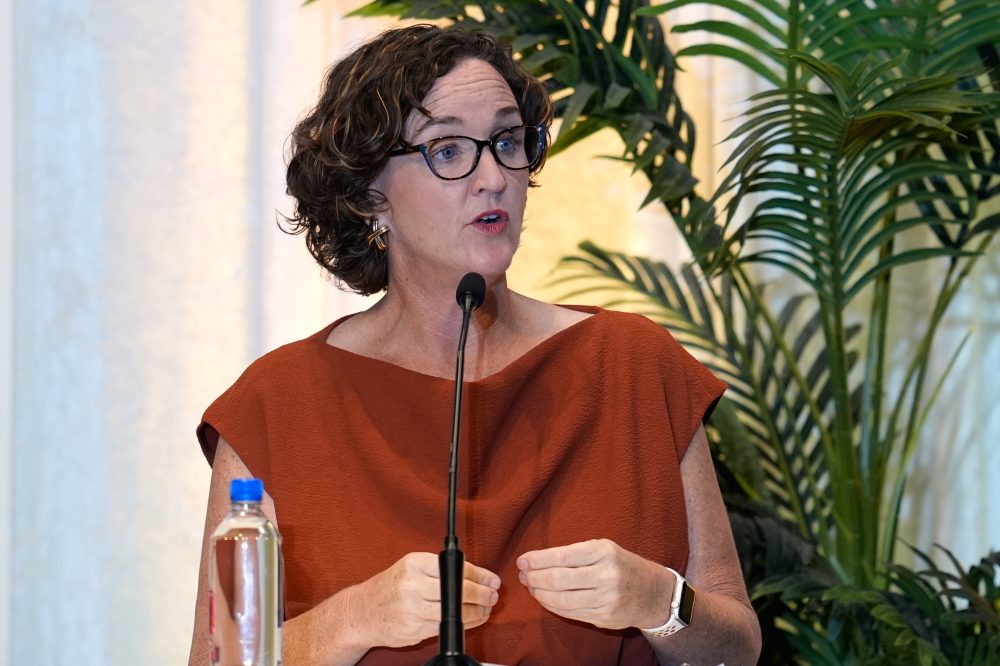
Wednesday’s debate will feature the two Republican frontrunners — political commentator Steve Hilton and Riverside County Sheriff Chad Bianco — alongside four Democratic contenders: former U.S. Representative Katie Porter, wealthy businessman Tom Steyer, ex-Biden administration health secretary Xavier Becerra, and San Jose Mayor Matt Mahan.
As candidates vie for advantage before a statewide television audience, the debate could potentially deteriorate into an hour and a half of heated exchanges, accusations, and personal attacks as participants fight for viewer attention.
The race has experienced significant turbulence recently, with U.S. Representative Eric Swalwell — a prominent Democratic candidate — withdrawing from both the gubernatorial race and Congress amid sexual assault accusations he disputes. Additionally, former state controller Betty Yee ended her campaign Monday following poor polling performance since launching her 2024 bid, subsequently backing Steyer. Concurrently, Becerra secured an endorsement from Democratic Assembly Speaker Robert Rivas.
Both Becerra and Mahan joined the debate roster after Swalwell’s departure from the race. Each candidate has gained renewed attention and endorsements in the reshuffled competition.
Rivas announced his support for Becerra on Tuesday. Mahan has simultaneously launched advertising efforts to boost his campaign visibility.
Democratic candidates largely share policy positions, including efforts to reduce living expenses and oppose President Donald Trump’s political agenda. Consequently, they’ll seek opportunities to differentiate themselves during the debate, either by highlighting their achievements or questioning their opponents’ records.
Porter, who gained internet fame by using whiteboards during congressional hearings while questioning corporate executives, could become California’s first female governor. Steyer, a former hedge fund executive turned progressive advocate who mounted an unsuccessful 2020 presidential campaign, is recognized for his environmental activism. Becerra brings the most extensive political background to the field, having served in the Biden administration, as state attorney general, congressman, and state legislator. Mahan has emphasized his progress addressing homelessness and criminal activity while governing Northern California’s most populous city.
California’s challenges will likely dominate the discussion.
Democrats have controlled government in America’s most populated state for years. Republicans haven’t secured a statewide victory in twenty years, so Hilton and Bianco will likely emphasize established campaign messages, including criticizing Sacramento’s one-party dominance for the state’s problems. These arguments include highlighting how billions in government spending has failed to address the persistent homelessness crisis; the state maintains some of America’s highest tax rates, utility costs, and gasoline prices; excessive government oversight is eliminating employment opportunities; and skyrocketing housing costs remain unaffordable for numerous families.
The competition remains completely unpredictable.
Surveys conducted in late March and early April by the nonpartisan Public Policy Institute of California revealed several candidates in tight competition: Democrats Steyer and Porter, Republicans Hilton and Bianco, and Swalwell. Other contenders were lagging behind. The polling occurred before Swalwell’s withdrawal.