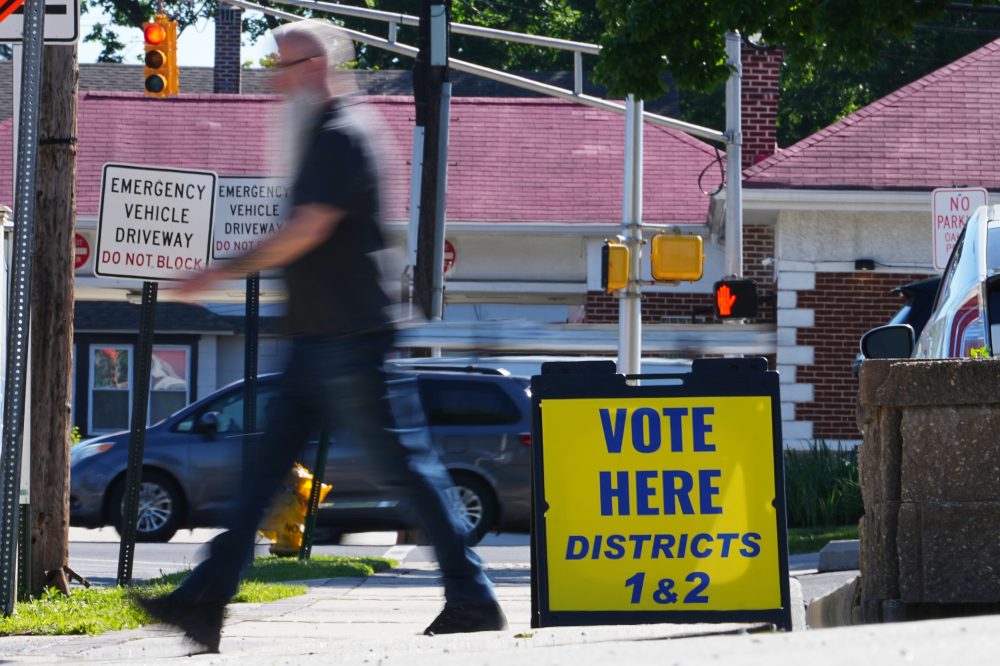

Voters across multiple states are heading to the polls today for primary elections that could reshape the political landscape heading into November’s general election.
In California, despite being the entertainment capital of the world, the gubernatorial contest lacks celebrity appeal. However, Los Angeles is seeing a reality TV figure seeking the mayor’s office as the city gears up to welcome the Olympics.
Tuesday’s primary battles extend beyond California. Democratic leaders see a unique opportunity to make gains in Iowa, a predominantly rural state that has consistently slipped from their grasp in recent election cycles. On the Republican side, concerns are mounting over a New Jersey House member whose mysterious prolonged absence threatens the party’s narrow congressional majority.
The Golden State’s voters are selecting candidates to lead America’s largest state by population, with no frontrunner emerging among those seeking to replace Democratic Gov. Gavin Newsom. Congressional races and the Los Angeles mayoral contest also appear on ballots statewide.
New Mexico’s primary slate features competitions for House seats, a Senate position, and numerous statewide positions, though the governor’s race commands the spotlight. Former Interior Secretary Deb Haaland is seeking the Democratic nomination, potentially marking a groundbreaking moment for Native American political leadership.
In New Jersey, attention centers on one of this cycle’s most watched House races in the competitive district currently held by Rep. Tom Kean Jr. The incumbent has faced intense public questioning after failing to cast more than 100 House votes while dealing with an undisclosed health matter. Today’s Democratic primary will determine his November challenger.
Rep. Tom Kean Jr. faces no Republican opposition in Tuesday’s primary for New Jersey’s 7th congressional district. However, his unexplained medical leave spanning over three months has intensified criticism as he missed more than 100 congressional votes.
Trump offered support via social media Monday night, claiming Kean was “working tirelessly” to advance the MAGA agenda.
While Kean avoids primary competition today, he’s campaigning for reelection in one of the nation’s few truly contested congressional districts this fall. Multiple Democrats competing to challenge him in November have centered their campaigns around his absence and the mystery surrounding it.
Political observers nationwide focus every two years on a Democratic-leaning Central Valley congressional district in California. Republican Rep. David Valadao has successfully defeated multiple Democratic opponents, with the exception of 2018 when he narrowly lost. He regained the position two years afterward.
Democratic strategists redrew district boundaries to create additional obstacles for Valadao. They recruited Assemblywoman Jasmeet Bains, a moderate representing the region in the state capital, as their candidate. However, she faces competition from political science professor and school board member Randy Villegas, who holds more liberal positions. Today’s primary outcome will decide Valadao’s general election opponent.
California’s electoral system places all candidates on a single ballot without regard to party membership. The state has operated under this framework for over ten years.
This arrangement has sometimes produced general elections between two candidates from the same party. This occurred notably in Senate contests during 2016 and 2018, when Democrats competed against each other.
However, the governor’s race has consistently advanced one Republican and one Democrat to November. Democratic officials worried about being shut out this year due to their crowded candidate field, though these concerns have lessened as the race nears conclusion.
Maintaining control of Iowa represents a crucial element in the GOP’s strategy to preserve its Senate majority.
A super PAC connected to Senate Republicans has committed $29 million to keep the seat under GOP control.
Democratic leadership has controlled the governor’s mansion since 2011, when Jerry Brown succeeded Republican Arnold Schwarzenegger.
Democrats have maintained strong control over the state Legislature as well.
Republican candidates Steve Hilton and Chad Bianco argue Democratic leadership bears responsibility for the state’s high gas and housing costs, homelessness problems, and various other challenges. Both have promised to cut regulations and taxes.
Hilton has secured President Donald Trump’s endorsement, which may benefit him in the primary while potentially harming him in the general election within the heavily Democratic state.
The Republican candidates include U.S. Rep. Randy Feenstra, state Rep. Eddie Andrews, businessman and former conservative political director Zach Lahn, former state Rep. Brad Sherman, and former director of the state Department of Administrative Services Adam Steen.
Should no candidate receive at least 35% of Republican primary votes, the nomination would be decided at a contested state party convention.
Trump endorsed Feenstra on Friday, declaring on social media that “Randy is MAGA all the way!”
Generational tensions dividing the Democratic Party are playing out in California’s primary contests.
In the Los Angeles area’s 32nd District, 42-year-old attorney Jake Levine is mounting a challenge against Brad Sherman, 71, who has served 15 terms in the House of Representatives.
Similarly, in the 7th District near Sacramento, 40-year-old city councilwoman Mai Vang is challenging Doris Matsui, 81, who has occupied the seat since her husband, himself a longtime congressman, passed away in 2005.
Tom Steyer, the former hedge fund executive turned environmental activist, invested nearly $200 million of his personal wealth on advertising alone.
The billionaire’s advertising campaign represents the most expensive in the nation this election cycle, according to data from advertising tracker AdImpact.
Steyer’s gubernatorial opponents and critics have alleged he’s attempting to purchase the election.
He has defended his expenditures, stating he’s battling powerful corporate forces that are inflating living costs throughout the state. Pacific Gas & Electric, a major California utility company, is among the corporations and business groups funding advertisements opposing Steyer.
“I’m only working for the people of California,” Steyer stated last week.
The candidates include former mayor of rapidly expanding Rio Rancho Gregg Hull, cannabis business owner Duke Rodriguez, and public relations professional Doug Turner.
While Hull and Turner have not connected their campaigns to the MAGA movement, Rodriguez recently received a cease-and-desist order from attorneys representing Trump for “deceptive use” of the president’s image in campaign materials. The winner of this contest faces significant challenges in a state where no Republican has won statewide office in a decade.