
California conducted primary elections Tuesday that will determine the final two candidates for governor and Los Angeles mayor, while simultaneously evaluating redrawn congressional districts that might alter the balance of control in the U.S. House of Representatives.
The primary contest centers on the open gubernatorial race, as the current governor faces term limits and is widely viewed as positioning for a potential White House bid in 2028. Sixty-one candidates are vying for position under the state’s jungle primary system, where the top two vote recipients proceed to the general election regardless of their party affiliation.
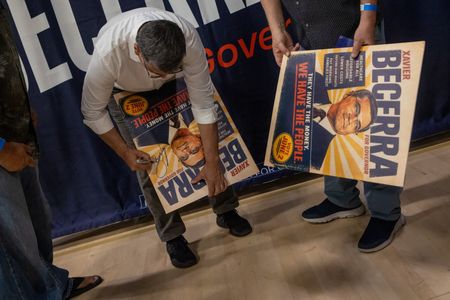
Recent polling indicates that Democrat and former cabinet secretary Xavier Becerra holds the lead, while Democratic billionaire Tom Steyer and Republican television figure Steve Hilton are also contending for advancement to the November 3 general election.
Tuesday’s outcomes will reveal whether Democrats can prevent internal division and if a Republican can take advantage of a split voter base. Additionally, the primary represents the initial evaluation of new congressional boundaries that could transform the midterm competition into a crucial fight for Congressional control.
Following encouragement for Texas to create new district boundaries aimed at securing five Republican seats last year, the current governor responded by guiding a voter initiative designed to shift five California seats toward Democratic control. Under California’s previously independent redistricting process, Democrats already maintained a 43-9 majority within the state’s congressional delegation.
Despite California’s strong Democratic lean, early polling in the governor’s race indicated two Republicans might secure the top positions, as Hilton and Riverside County Sheriff Chad Bianco were leading.
However, Democrats may now be positioned to claim both spots, according to current polls showing Becerra and Steyer near the front.
Since implementing the jungle primary in 2014, California has not nominated two Democrats for governor, although this outcome has occurred in other contests, including a U.S. Senate election in 2016.
Among Republicans, Hilton, a former television news host, gained separation from Bianco after receiving an endorsement from a former president.
The Democratic field seemed to unite behind Becerra after previous frontrunner Eric Swalwell withdrew from the race and resigned from the U.S. Congress in April amid sexual assault allegations from a former staff member. Swalwell has denied these claims.
Mark Baldassare, survey director at the Public Policy Institute of California, indicated that voters appeared to value Becerra’s experience, viewing him as a reliable choice following Swalwell’s exit.
“His message about his time as attorney general defending California, particularly around issues involving the Trump administration, seems to have resonated with many Democratic voters who overwhelmingly are disapproving of President Trump’s job performance,” Baldassare said.
Steyer, who has presented himself as the most progressive among the Democratic frontrunners, has maintained strong polling position after investing approximately $200 million of personal funds in his campaign. He has pledged to increase taxes on billionaires, including himself.
In other races across the state, Los Angeles Mayor Karen Bass confronts more than a dozen opponents amid voter worries about homelessness, housing costs, and consequences from the 2025 Palisades fire.
She faced competition from within her party by city Councilmember Nithya Raman, while surveys indicate the top Republican contender is reality television figure Spencer Pratt.
Regarding congressional races, political analysts consider the 22nd district contest in the agricultural Central Valley the most competitive, with Republican Representative David Valadao pursuing reelection against two Democrats, state Assemblymember Jasmeet Bains and educator Randy Villegas.
Democrats are targeting the 48th district as a potential pickup opportunity, after liberal Palm Springs was relocated from its Riverside County district to inland San Diego County, where Republican incumbent Darrell Issa chose not to seek reelection.
Voting locations operated from 7 a.m. to 8 p.m. PDT on Tuesday, though final results in tight contests may require several days as California permits voters to submit mail-in ballots through Election Day.