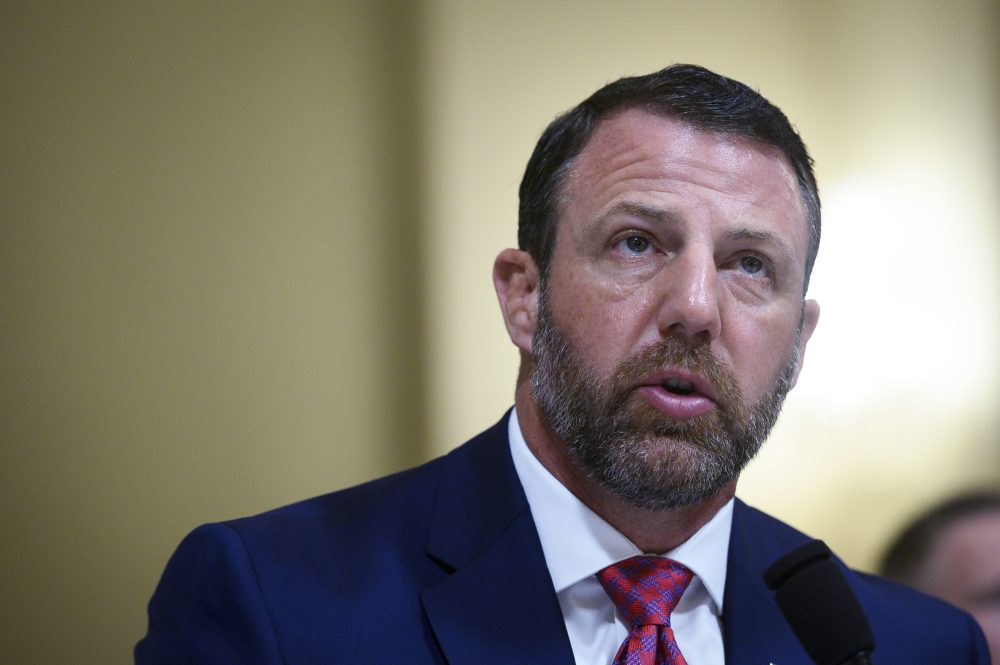

WASHINGTON — The Department of Homeland Security will extend the training period for new Immigration and Customs Enforcement officers starting next month, Secretary Markwayne Mullin announced Wednesday during a congressional hearing.
When questioned about reports of shortened training programs for ICE recruits, Mullin stated the department would restore training from the current 42 days back to 72 days.
“July 1st. We bring it back up. We had to rewrite the curriculum. All training starting July 1st will be back up to the regular standards,” Mullin said. The secretary did not explain the reasoning behind the timing of this change or respond to criticisms about the current training schedule.
The agency had modified its training procedures as part of an effort to rapidly recruit and prepare an additional 10,000 deportation officers, funded by billions of dollars allocated by Congress last summer. The agency previously employed approximately 6,500 deportation officers.
These changes sparked accusations that the department was compromising training quality to deploy officers more quickly, which both Homeland Security and ICE officials consistently disputed.
In February, Ryan Schwank, a former U.S. Immigration and Customs Enforcement attorney who oversaw training for new deportation officers, criticized the agency’s preparation program as “deficient, defective and broken.”
Speaking at a Democratic-sponsored forum, Schwank alleged that the department had dismantled the training curriculum for new deportation officers, reducing its length while being dishonest about their actions.
“DHS told the public the new cadets receive all the training they need to perform their duties, that no critical material or standards have been cut,” he said. “This is a lie. ICE made the program shorter, and they removed so many essential parts that what remains is a dangerous husk.”
Both ICE and Homeland Security officials have disputed claims that new recruits were receiving inadequate preparation. Responding to Schwank’s statements, Homeland Security emphasized that officers received firearms training, learned “de-escalation tactics” and received constitutional instruction. Officials also maintained that no training hours were reduced.
During an August visit to the ICE training facility in Georgia with media representatives, acting ICE director Todd Lyons acknowledged the agency had implemented changes to make the process more efficient but rejected suggestions that standards were lowered.
Department officials explained they expanded training at the federal facility to six days weekly, incorporated additional instruction before and after recruits’ arrival at the facility, and eliminated a Spanish language requirement.