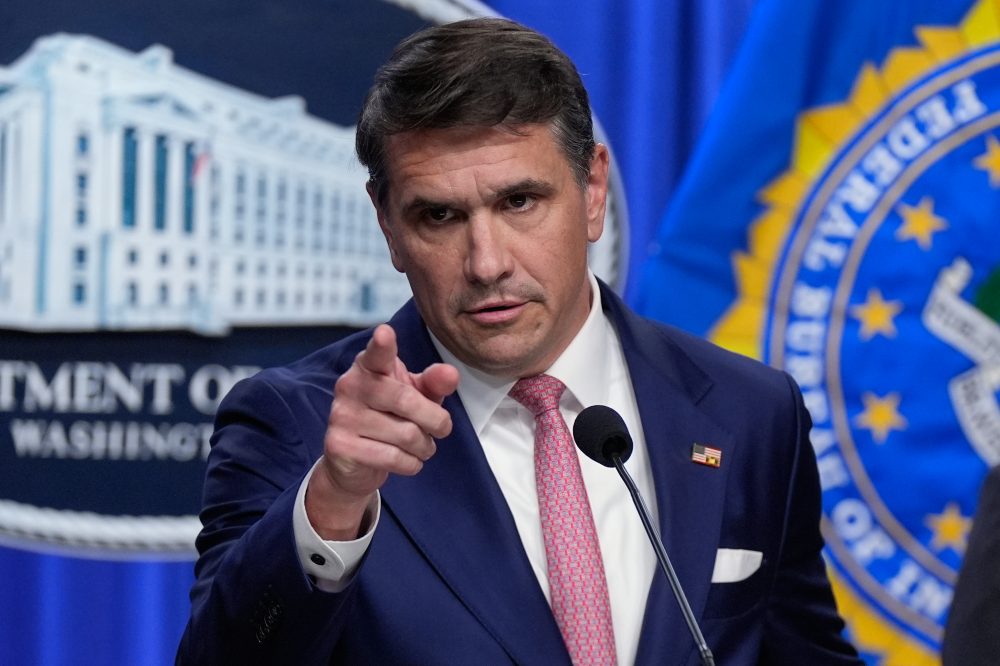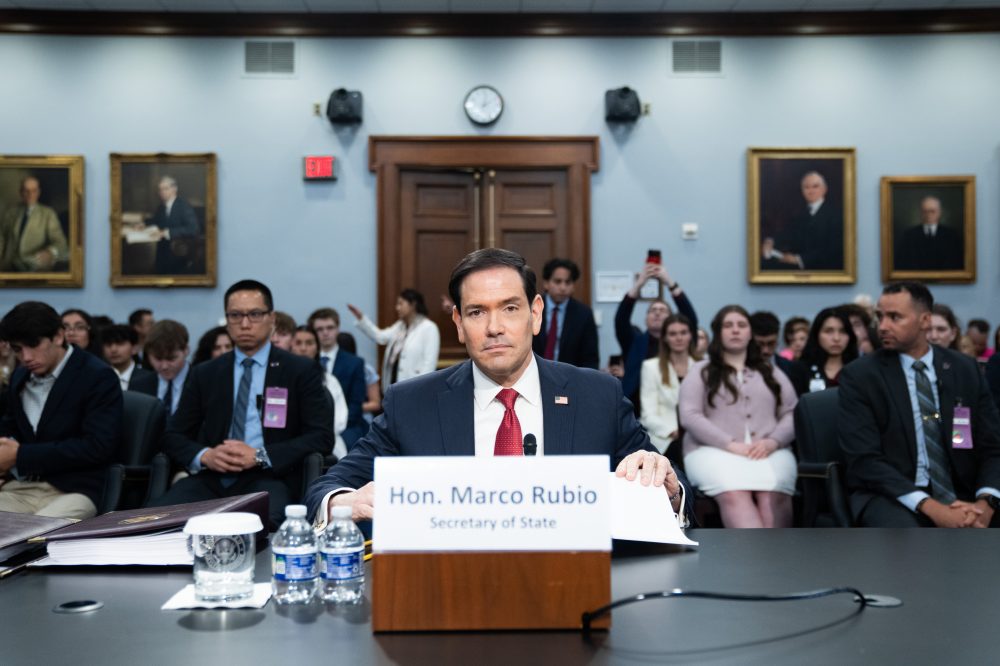

During congressional testimony on Tuesday, Secretary of State Marco Rubio revealed that America continues negotiating with multiple nations to relocate over 1,000 Afghan allies who supported U.S. military operations, while justifying the current administration’s approval of refugee status for thousands of white South Africans.
Rubio’s appearance before lawmakers occurred over a month following reports from The Associated Press and other news organizations that war-ravaged Congo was being evaluated as a potential destination for the 1,100 Afghans and family members of U.S. military personnel who remain stuck in Qatar for over 12 months.
Advocacy organizations warn that these refugees face only one alternative: returning to Afghanistan where Taliban retaliation awaits them.
During the annual budget hearing, Democratic members of House and Senate panels pressed Rubio about America’s failure to honor commitments to accept hundreds of allies who underwent extensive screening before President Donald Trump issued executive orders in January 2025 restricting asylum and refugee cases.
“We’re obviously operating right now under a directive that prohibits the entry of Afghans into the United States,” Rubio said. Despite the restrictions, he said officials had been “engaging every single day” on this issue and that several countries have already indicated their willingness to take in some of those waiting in limbo.
Rep. Grace Meng, a Democrat from New York, told Rubio that regardless of U.S. immigration policy, Congo would be “a death sentence” for those living at the camp in Doha, including Afghans who served as interpreters and with Special Operations Forces as well as the immediate families of more than 150 active-duty U.S. military members.
The African nation has endured prolonged conflict between government troops and Rwanda-supported insurgents in its eastern territories and currently faces an Ebola epidemic.
“Can we rule out deporting people to conflict zones?” Meng asked Rubio. After some deflection, he responded that he doesn’t think any of the countries being discussed would be conflict zones.
However, he noted that the challenge remains determining how many Afghan refugees each nation will accept.
“I don’t think there’s one country that’s going to take all 1,000, but it has to be countries that are willing to assume some of this responsibility and numbers that are manageable to them, but also places that give more options to these individuals that they would be comfortable going to,” Rubio said.
Discussions between America and cooperative nations, including Botswana and Malaysia, began several months ago, according to Shawn VanDiver, a Navy veteran who heads a coalition that supports Afghan resettlement efforts called #AfghanEvac.
VanDiver and fellow advocacy organizations have criticized the administration’s approach to Afghan allies during the past 18 months, claiming America is abandoning those who fought beside U.S. troops throughout the nation’s longest military conflict.
“These are not strangers. They are the spouses, the children, and the parents of men and women wearing our uniform right now,” VanDiver said in a statement Tuesday. “We told them, with the full faith of the United States, that if they stood with us we would stand with them.”
He added, “That promise did not come with an expiration date, and it did not come with conditions.”
Rubio justified certain restrictions, explaining why Afghans who completed extensive background checks and biometric screening face obstacles while the administration has opened America’s refugee program to Afrikaners — a group of white South Africans descended mainly from Dutch settlers.
“Everything we do has to be geared by the national interest, and it is in our national interest if we are allowing people to enter our country — be people who can quickly assimilate into society and be successful,” Rubio said.
Meng challenged this reasoning, pointing to the substantial Afghan community in her Queens, New York district who have integrated successfully, contributed to society and paid taxes.
“We’ve already assumed a lot of Afghan refugees, as you said, you have them in your district. We’ve already assumed a large number in the past,” Rubio responded.