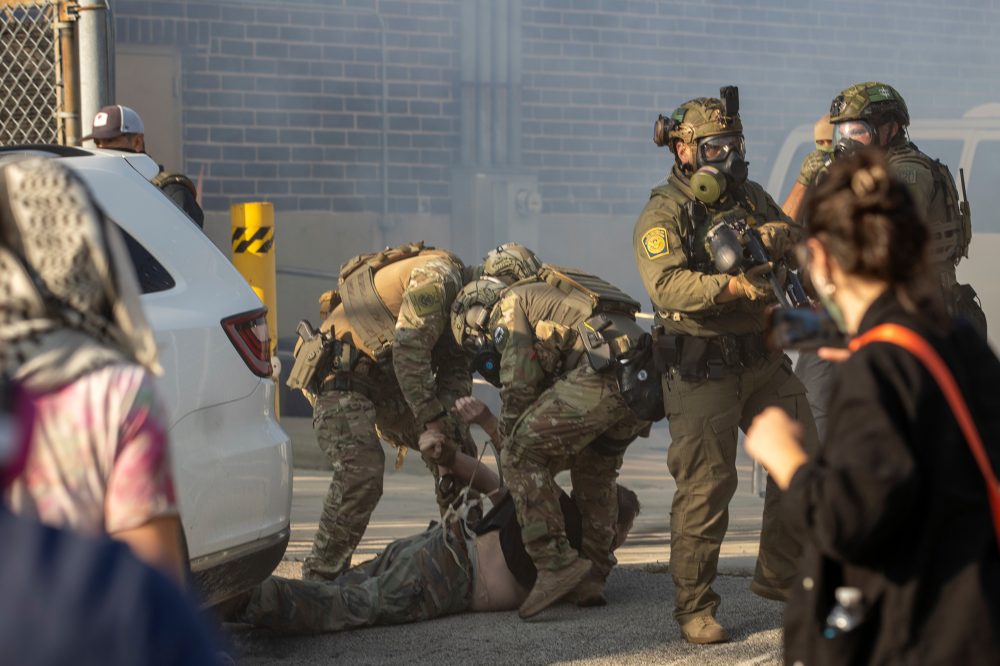

Chicago’s leading federal prosecutor has acknowledged making a direct appeal to grand jurors before they issued indictments against demonstrators who protested immigration enforcement actions during the previous administration. The unusual admission sheds light on his involvement in typically confidential proceedings that weren’t progressing as federal officials had hoped.
U.S. Attorney Andrew Boutros issued a five-page statement on Tuesday, including portions of transcripts, responding to defense attorneys’ allegations that he had improper “personal contact” with the grand jury last October before charges were filed on a third attempt.
Boutros maintained that his appearance was simply to emphasize jurors’ duty to remain impartial and denied attempting to influence their decision-making.
However, Boutros also instructed jurors to “please raise your hand” if they “cannot set aside their personal feelings” regarding immigration or other matters. This occurred during a period when the Justice Department under President Donald Trump was experiencing difficulties with grand juries in other locations.
“It’s not normal,” Sol Wisenberg, a former federal prosecutor, said Wednesday. “Typically it’s a judge who might make remarks.”
The federal case against the demonstrators has since crumbled for additional reasons. Boutros dismissed charges against four activists on May 21 because of alleged improper conduct by an assistant U.S. attorney during grand jury proceedings. There were also allegations that jurors who opposed issuing an indictment were excluded from participation.
When the case was thrown out, Boutros told a judge: “No one acted with the intent to mislead, your honor.”
A federal grand jury consists of 16 to 23 individuals who convene privately. A prosecutor presents evidence without defense attorney involvement. The grand jury doesn’t require unanimous agreement, though 12 votes are needed for an indictment. All jurors, prosecutors and investigators are bound by confidentiality.
It’s unusual for a U.S. attorney in a large city to personally appear before a grand jury. Boutros stated he didn’t discuss legal applications or evidence regarding the protesters at a Chicago-area immigration detention facility.
Instead, he indicated his purpose was merely to provide encouragement while his team managed the case specifics. Boutros argued that a grand jury unwilling to consider “evidence impartially without fear or favor” undermines law enforcement.
“In such unchartered and unprecedented circumstances, extraordinary measures may be required to restore the rule of law,” he said regarding his appearance.
Defense attorney Josh Herman, representing defendants in the case, expressed concern about Boutros’ actions. He called it “chilling” that Boutros asked jurors to identify themselves if they couldn’t set aside personal feelings when reviewing evidence in certain cases before the grand jury issued an indictment on the third try.
“The fact that the indictment has now been dismissed due to other misconduct before the grand jury does not cure the many wrongs that happened here,” said Herman, who along with other lawyers is requesting a judge order the government to cover their legal fees.
The Chicago situation reflects a broader pattern of Justice Department challenges with grand juries during the second Trump administration.
Judges in Wyoming recently threw out charges against nine individuals after the U.S. attorney there called the defendants “bad guys” and “murderers” to jurors. He distributed business cards and encouraged individual contact.
In November, a federal magistrate judge criticized a Trump supporter who obtained an indictment against former FBI Director James Comey, stating Lindsey Halligan had shown a “disturbing pattern of profound investigative missteps.”
These irregularities have been referenced by attorneys seeking grand jury transcripts in the case involving independent journalist Don Lemon. He faces charges related to an immigration enforcement protest at a Minnesota church.
Boutros was named U.S. attorney in 2025 for northern Illinois by the Justice Department, with his term extended last year by U.S. District Court judges. U.S. Sens. Dick Durbin and Tammy Duckworth, both Illinois Democrats, have demanded his resignation, citing turmoil and “deep internal dysfunction” within his office.