
WASHINGTON — The U.S. Senate kicked off a lengthy voting process Thursday on legislation that would provide funding for President Donald Trump’s immigration enforcement operations, pushing toward approval of three-year financing as Democrats have prevented the money for months in opposition.
The approximately $70 billion measure to finance U.S. Immigration and Customs Enforcement and the Border Patrol would break through the Democratic roadblock that has persisted since lawmakers sought policy reforms following the deadly shootings of two demonstrators by federal officers in January. The legislation would provide agency funding for three years, lasting until Trump’s term concludes.
However, Republicans must first overcome a series of potential amendments that Democrats intend to propose, including efforts to permanently eliminate Trump’s $1.776 billion settlement fund designed for supporters he considers victims of political persecution. Democrats announced their initial amendment Thursday morning would remove the fund and return the immigration spending measure to committee.
Senate Republicans are employing a complex procedural strategy to bypass the filibuster and approve the budget measure without any Democratic support. Yet it has required weeks to bring the bill to the Senate floor as Republicans worked through multiple hurdles to passage established by Trump and the White House — including a $1 billion White House security proposal they ultimately abandoned and strong opposition from both parties regarding the settlement fund.
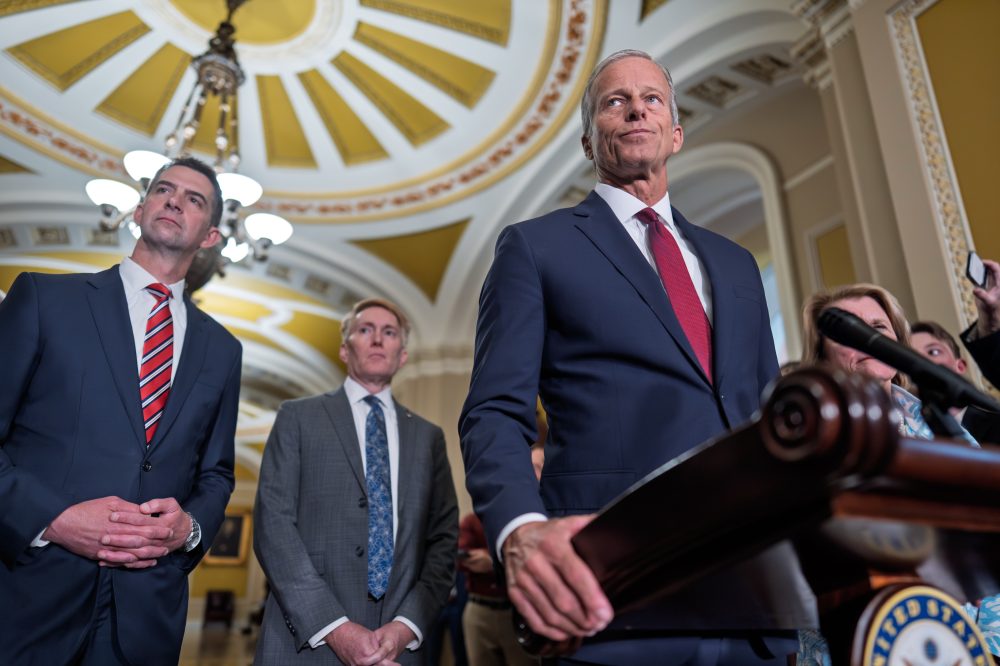
“The thing we’re trying to do here is to keep the focus on funding for ICE and CBP,” Senate Majority Leader John Thune stated Wednesday evening, following the Senate’s vote to begin debating the measure. “This was narrow and targeted from the very beginning and clean, and we’re trying to maintain it that way.”
However, it remains uncertain whether Republicans will possess sufficient votes to defeat the Democratic amendments. Acting Attorney General Todd Blanche announced this week that the fund would not proceed, and numerous GOP senators said Wednesday they were pleased with his statements.
Nevertheless, Trump, who has disagreed with Senate Republicans recently, created fresh uncertainty about the settlement’s fate Wednesday afternoon when he informed reporters that the settlement is “very important” and stated “I don’t know” whether it is terminated or postponed.
“I’d have to ask the lawyers,” he stated.
To advance legislation through the budget procedure known as reconciliation, the Senate must first conduct an extended series of votes. Democrats are utilizing that mechanism to attempt banning the settlement through law — and also defeating the immigration spending bill.
Following Trump’s remarks about the fund, Schumer wrote on X that “this is EXACTLY why” Democrats would be compelling votes to prohibit it.
Several Republicans also intended to formalize Blanche’s commitment in writing. Sen. Thom Tillis, R-N.C., has indicated he will propose an amendment to prevent any effort at reviving the fund.
“We’ve got a sufficient number of Republicans who have been very clear they’ve got concerns there,” Tillis said.
Democrats argue any funding legislation for the Homeland Security Department should impose limitations on federal immigration authorities, including improved identification for federal officers and increased use of judicial warrants, among other demands.
Following the shooting of Renee Good and Alex Pretti in Minneapolis by federal agents, Trump accepted a Democratic proposal that the Homeland Security bill be separated from a broader spending package that became law. But bipartisan discussions failed, and the DHS funding expired in mid-February without agreement on modifications to the Trump administration’s immigration enforcement methods.
Congress ultimately funded the remainder of the Homeland Security Department at April’s end with Democratic backing. But ICE and Border Patrol continued without regular funding, and Republicans initiated a fresh attempt to approve three years of financing for those agencies without Democratic votes.
Progress on the legislation was also slowed by Republican resistance to $1 billion in security funding for the White House, including for Trump’s new ballroom, that was incorporated into the original bill.
Democrats and some Republicans challenged using taxpayer funds for the extensive project, and Republicans excluded it from the final bill when released Wednesday.
Thune said he was coordinating with his GOP conference to attempt defeating any amendments and ensuring he possesses adequate votes for a simple majority to approve the bill in the 53-47 Senate.
“Keep in mind, we’ve got to keep them all together, make sure we’ve got 50 votes for it,” he said.
Republican House leaders said Wednesday they would prefer to complete the legislation before week’s end, if the Senate can finish it. House Majority Leader Steve Scalise, R-La., said that House leaders were conducting internal discussions about the schedule.
“We just need to make sure everybody’s there,” Scalise said.