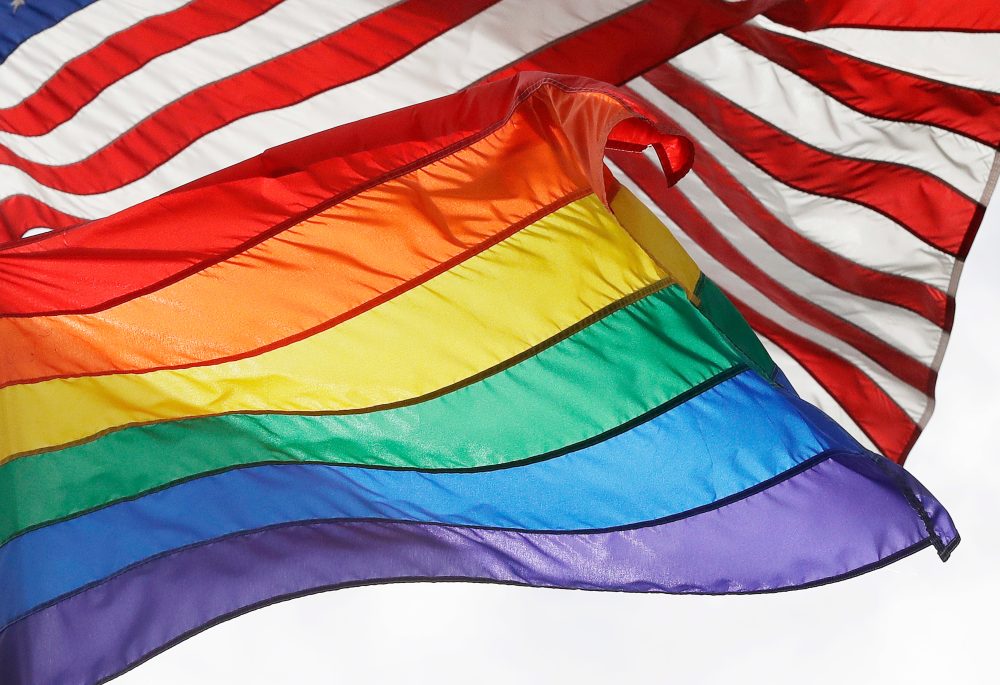

Support for same-sex marriage in America has leveled off following more than twenty years of consistent growth, with Republican backing continuing to decline, a recent Gallup survey reveals.
The poll shows that roughly 65% of American adults now support legal same-sex marriage, representing a drop from the 71% recorded in both 2022 and 2023.
The shift stems primarily from decreased Republican support. The May survey found that just 37% of Republicans believe same-sex marriage should be legally recognized, while 35% consider gay and lesbian relationships “morally acceptable.”
Survey results released Wednesday indicate that Democratic and independent viewpoints have remained relatively steady, with majorities in both groups continuing to support marriage equality and viewing same-sex relationships as morally sound.
This growing political divide mirrors policy debates surrounding LGBTQ+ matters nationwide, especially concerning transgender individuals, and increased efforts in certain states to prohibit same-sex marriage.
Though modest, the decline in marriage equality support stands out given the dramatic transformation in American attitudes over recent decades.
Gallup’s historical data shows that just 27% of American adults favored legal same-sex marriage in 1996. From that point forward, support climbed consistently until recent years, reaching a peak where approximately 7 out of 10 adults endorsed marriage equality.
Attitudes toward the morality of same-sex relationships showed similar trends. Around 4 out of 10 American adults deemed same-sex relations morally acceptable in 2001. This figure rose by nearly 30 percentage points over the following twenty years.
Recent Gallup findings suggest a reversal may be underway. Beyond the marriage equality decline, the latest poll discovered that 62% of American adults now view gay and lesbian relationships as morally acceptable, down from 71% in 2022.
Same-sex marriage gained nationwide recognition through a 2015 Supreme Court decision. This ruling concluded a 12-year period during which judicial decisions and state legislation had established marriage equality in most states.
Data from the Williams Institute at the University of California Los Angeles School of Law indicates that by last year, more than 800,000 same-sex couples had married.
Opposition has persisted, however. An appeal seeking to overturn the 2015 ruling reached the Supreme Court last year, citing Justice Clarence Thomas, who has advocated for reversing the decision. The court dismissed the appeal without commentary.
The Southern Baptist Convention voted overwhelmingly last year to call for overturning the marriage equality ruling and implementing a prohibition.
According to an Associated Press review of legislation tracked by Plural, lawmakers in no fewer than 11 states have introduced bills during current or recent sessions seeking to ban same-sex marriage. While most proposals failed to gain traction, Tennessee’s House approved a measure allowing private individuals and organizations to refuse recognition of such unions, and Idaho’s House passed a resolution urging the Supreme Court to reverse the 2015 ruling.
A comparable number of states have recently seen legislation introduced to safeguard same-sex marriage rights.
Suggesting broader shifts in LGBTQ+ attitudes, the new Gallup survey found that roughly 4 out of 10 Americans consider gender transition morally acceptable, declining from nearly half in 2021.
Transgender rights have become a contentious political topic this decade.
Most Republican-led states have enacted legislation within the past five years prohibiting gender-affirming medical care for transgender youth, limiting transgender individuals’ access to school restrooms, and excluding transgender girls and women from certain athletic competitions.
Trump has issued executive orders pursuing similar federal policies.
Earlier this week, one such policy faced a setback when a court determined that the military’s transgender service member ban was illegal.
The Gallup survey was conducted from May 1-17 through telephone interviews with a randomly selected sample of 1,001 American adults. The sampling error margin for the overall adult population is plus or minus 4.0 percentage points.