
Six Democratic senators have formally challenged two major tobacco corporations about their political contributions and lobbying activities following a recent shift in federal tobacco policy.
The senators sent official letters on Thursday to Reynolds American and Altria, questioning their donations and lobbying efforts directed at the Trump administration. The lawmakers accused the companies of receiving a “lucrative payday” after investing millions of dollars to gain favor with the president.
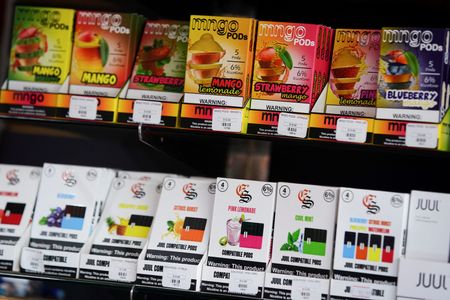
The inquiry stems from the Food and Drug Administration’s recent announcement of a new “enforcement discretion” policy. Under this approach, the agency will permit certain manufacturers to market vapes and nicotine pouches without obtaining the required legal authorization. This policy shift could potentially allow hundreds of additional vaping products to enter the marketplace and came after the White House pushed for regulatory changes.
The policy modification occurred following political contributions from both Reynolds, which operates as the American division of British American Tobacco, and Altria, with donations made as recently as April. A meeting between President Donald Trump and tobacco industry executives also took place in May.
“Money well spent,” the June 4 letters stated, claiming that the donations and lobbying activities allowed tobacco manufacturers to bypass federal regulations for selling addictive vaping products, thereby undermining the FDA’s independence.
“But for you and your shareholders, this was a lucrative payday after years of unsuccessful legislative and regulatory efforts to weaken federal tobacco oversight,” the correspondence continued, requesting specific information about donations, meetings and products that would benefit from the regulatory change.
Neither Reynolds, Altria nor the White House provided immediate responses to requests for comment.
Both companies have long argued that FDA policies have contributed to a thriving market for unauthorized devices, primarily manufactured in China. Reynolds estimates this illegal marketplace generates approximately $9.41 billion in revenue.
The tobacco companies have pursued various strategies including lobbying efforts and legal challenges, suspended sales objectives and warned they might introduce their own unauthorized products to remain competitive.
Following the “enforcement discretion” policy announcement, tobacco companies have already revealed plans to introduce new products to the market.
The letters bore the signatures of six Democratic senators: Dick Durbin of Illinois, Elizabeth Warren and Edward Markey of Massachusetts, Jeff Merkley of Oregon, Richard Blumenthal of Connecticut and Jack Reed of Rhode Island.