
JUNEAU, Alaska — A Republican U.S. Senator from Alaska is facing an unprecedented challenge in his reelection bid: competing against someone who shares his exact name.
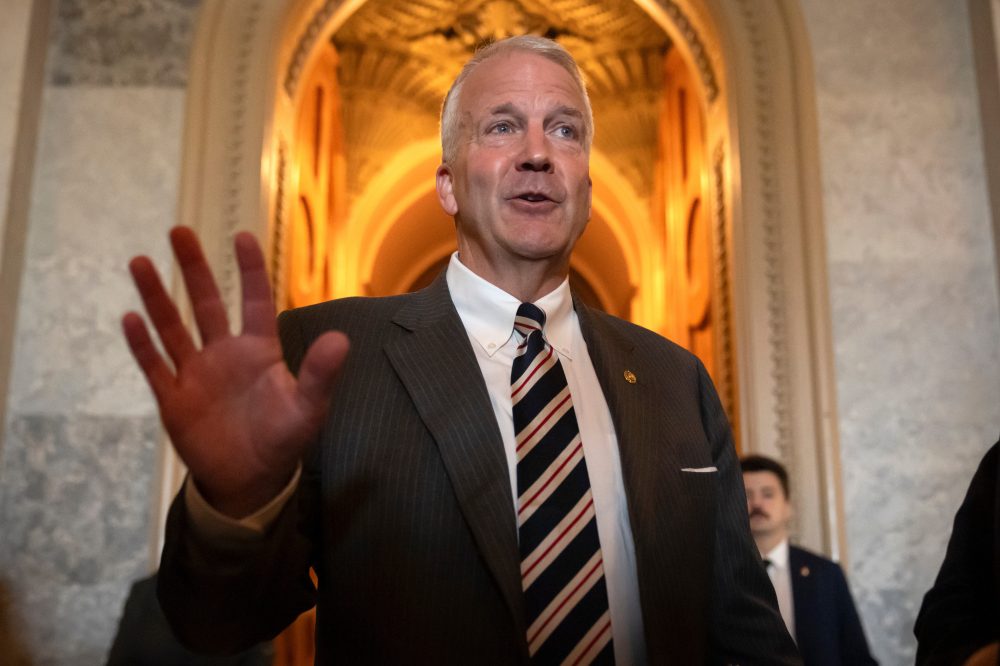
Sen. Dan Sullivan, who is seeking another term, finds himself among 15 candidates on the primary ballot, including another Republican also named Dan Sullivan. The incumbent senator believes this situation represents a calculated political maneuver orchestrated by Democrats and supporters of his main challenger, former Democratic U.S. Rep. Mary Peltola.
Speaking to reporters in Washington, D.C., on Tuesday, the senator expressed his frustration and indicated he might pursue legal action to investigate the matter.
“Everybody in Alaska knows I’m Dan Sullivan-R. So he’s trying to do that. Why?” the senator said regarding his namesake competitor. “He’s not an R. He’s purposely trying to trick my constituents to rig the election for Peltola.”
Representatives from Peltola’s campaign and the Alaska Democratic Party have denied any connection to the situation. Harry Child, a spokesman for the Peltola campaign, stated it “has no involvement with either Sullivan campaign.” Jenny-Marie Stryker, executive director of the Alaska Democratic Party, confirmed her organization “is in no way affiliated with either Dan Sullivan.”
The unusual circumstances surrounding the duplicate candidates on Alaska’s August primary ballot have caught the attention of Republican officials at both state and national levels. They argue that having two candidates with identical names will create voter confusion that could ultimately benefit Peltola.
Alaska’s electoral system allows the top four vote recipients from the primary, regardless of party membership, to proceed to a ranked-choice general election.
Blake Murphy, representing the National Republican Senatorial Committee as legal counsel, addressed Alaska election officials in a Monday letter expressing concerns about potential voter confusion. Murphy questioned the legitimacy of the challenger’s party registration and labeled the other Dan Sullivan a “sham” candidate.
Murphy indicated in his correspondence that the NRSC might pursue legal remedies “to ensure that the Alaska electoral process remains fair.”
Carmela Warfield, who chairs the state Republican Party, noted in a statement that accompanied Murphy’s letter that the challenger had been registered as undeclared until recently. She also mentioned that previous ballots have not distinguished incumbent candidates from challengers.
Steve Kirch, representing the Alaska Division of Elections, did not provide immediate comment on the letter and indicated that accessing details about the challenger Sullivan’s voter registration history would require a formal records request.
The incumbent senator, who maintains ties to President Donald Trump, is pursuing a third term in office. Both he and Peltola represent the most prominent candidates in a contest that has drawn national attention as Democrats work to regain Senate control in the upcoming midterm elections.
Election officials have confirmed that Republican Dan J. Sullivan from Petersburg, a fishing community in southeast Alaska, has been certified as a candidate in the U.S. Senate race. Attempts to contact him on Tuesday were unsuccessful, and he does not appear to have registered with the Federal Election Commission.
According to his campaign website, he describes himself as a Midwesterner who relocated to Alaska for employment with the U.S. Forest Service and has resided in Petersburg for nearly five decades. After growing frustrated with government inefficiency and what he perceived as “lack of long-term thinking,” he transitioned to a career in elementary education, his website states.
The challenger Sullivan wrote on his campaign website that Alaska deserves representation from someone who “puts Alaska first every single day. That’s the commitment I’m making to the people of this state, and together, we’re going to elect a Sullivan that actually stands up for Alaska.”
The incumbent senator, using strong language during his remarks to reporters in Washington, characterized the presence of his namesake on the ballot as a scandalous effort to deceive Alaskan voters: “That’s an insult.”