
WASHINGTON — Senate Republicans are planning a Tuesday meeting to chart their course forward after the Justice Department announced it will follow a court ruling that temporarily suspends a $1.776 billion settlement fund intended to provide compensation to President Donald Trump’s political supporters.
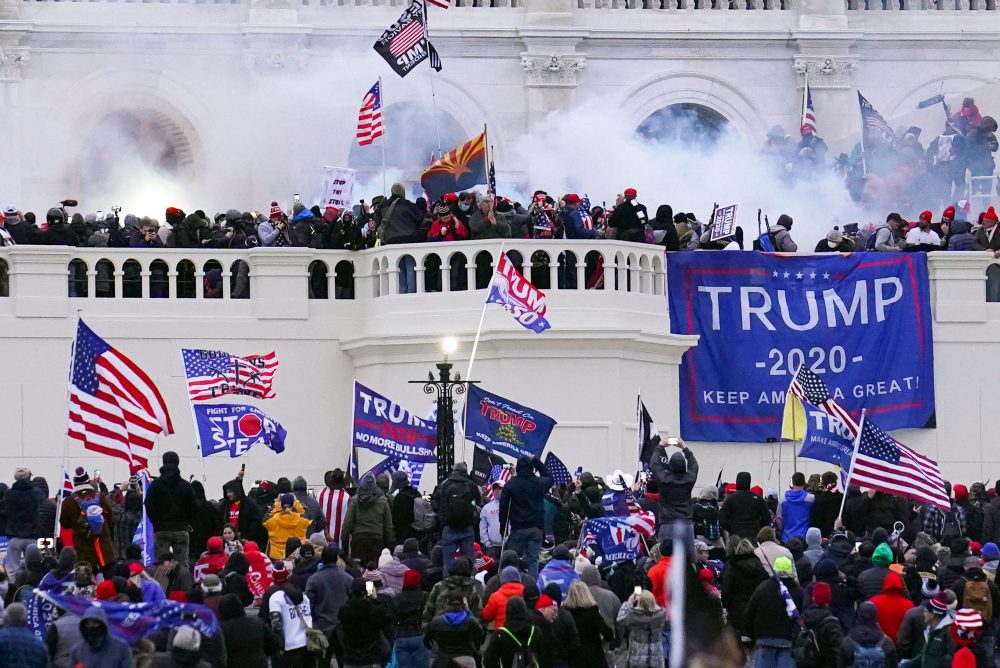
GOP lawmakers who opposed the settlement before departing for Memorial Day break two weeks earlier are demanding additional details from the administration regarding the fund’s future. The money could potentially benefit Trump backers who assaulted law enforcement officers and stormed the Capitol on January 6, 2021. Sources close to Trump indicate he is now questioning whether to proceed with the entire settlement.
Immigration enforcement funding legislation has become entangled in this controversy. The bill would provide three years of funding for Trump’s immigration agencies, but Republicans suddenly departed Washington without voting on it. Democrats had threatened to propose amendments eliminating or reducing the settlement fund, which would have forced Republicans to take public positions on the matter and potentially jeopardized funding for Immigration and Customs Enforcement and Border Patrol.
Upon returning to Washington Monday night, Senate Majority Leader John Thune expressed uncertainty about whether the immigration spending measure would advance this week.
“To be determined,” he said to reporters.
This unprecedented conflict emerged after Trump revealed the fund without informing Congress, announcing it as part of a settlement resolving his legal action against the IRS regarding leaked tax documents. When news of the settlement surfaced, the Senate was already managing difficult negotiations on immigration legislation that included an additional $1 billion for White House security expenses, including Trump’s ballroom project.
Angered Senate Republicans removed the White House security funding from the bill and declared they would block the entire legislation unless the administration significantly modified the settlement.
“I do think the best way to handle it is if the administration decides to shut it down themselves,” Thune told reporters Monday, speaking about the fund.
He indicated Republicans will have clearer direction on how to move forward following their weekly conference lunch meeting Tuesday.
The Justice Department confirmed it will honor Friday’s decision by U.S. District Judge Leonie Brinkema, who imposed a two-week temporary suspension on the fund. The judge has set a June 12 hearing to consider arguments about extending her injunction.
The department issued a statement expressing strong disagreement with the ruling while pledging compliance.
Republican senators remained unsatisfied Monday evening, stating they require more comprehensive information from the administration about post-deadline plans before determining their response.
“It’s pretty clear that the president has to say very explicitly that there’s not going to be a weaponization fund,” stated Senate Judiciary Committee Chairman Chuck Grassley, R-Iowa.
Oklahoma Sen. Jim Lankford emphasized that Trump administration officials “need to say what they actually mean.”
“They need to say, we’re setting this whole thing aside,” Lankford stated.
Alaska Sen. Lisa Murkowski indicated that complete withdrawal of the settlement would satisfy her concerns. “But I haven’t heard anybody say that,” she noted.
Republican Sen. John Kennedy of Louisiana pointed out that the administration must already follow the court ruling, “that’s in the Constitution. I have to know more about their position.”
“Right now, the reconciliation bill looks like a broken arm with the bones sticking out,” Kennedy observed. “It won’t move this week, in my opinion, unless we have some resolution on the weaponization account.”
Opposition to the fund reached a breaking point last month during a private meeting between senators and acting Attorney General Todd Blanche. Republican Sen. Ted Cruz of Texas characterized it on a recent podcast episode as “one of the roughest meetings I’ve seen in my entire time in the Senate.”
GOP senators had been exploring various approaches to restrict the fund, including limitations on recipient eligibility, restructuring the commission overseeing settlement decisions, implementing judicial review for applicants, or eliminating the fund entirely.
Following the intense criticism, a source familiar with the situation, who requested anonymity to discuss the president’s deliberations, revealed Monday that Trump was reassessing whether to continue with the fund. However, the president has not made any public statements about his intentions.
The situation is further complicated by Trump’s campaign-year effort to challenge GOP legislators he considers disloyal, including some of Thune’s most dependable Republican supporters in the closely divided 53-47 Senate. Sens. Bill Cassidy of Louisiana and John Cornyn of Texas both suffered primary defeats in May after Trump backed their opponents, raising questions about their future support for the president’s legislative priorities.
“I think it’s hard to divorce anything that happens here from what’s happening in the political atmosphere around us,” Thune commented before the Senate’s departure from Washington.