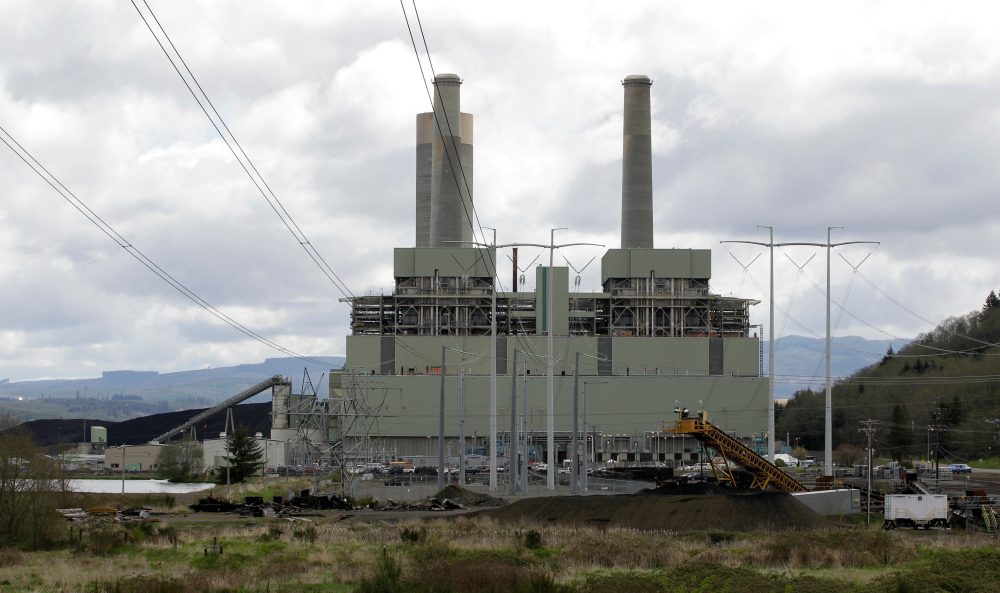

WASHINGTON — President Trump plans to unveil a nearly $700 million federal investment package Thursday aimed at revitalizing America’s declining coal sector through support for power plants and export facilities.
According to a White House official, the administration will invoke Cold War-era defense legislation to back 13 coal facilities nationwide and facilitate construction of new coal plants in Alaska and West Virginia — marking the first such projects built in the U.S. since 2013. The funding will also revive a shuttered coal plant in Maryland and advance a stalled coal export facility in Oakland, California.
The combined initiatives are projected to generate or preserve over 14,000 positions across coal, construction, railroad and shipping sectors, the White House official noted. The official requested anonymity as they lacked authorization to reveal specifics before Trump’s scheduled Thursday afternoon announcement.
Interior Secretary Doug Burgum, Energy Secretary Chris Wright and Environmental Protection Agency Administrator Lee Zeldin are anticipated to join Trump for the White House event.
This represents Trump’s latest effort to halt the coal industry’s prolonged downturn. Last fall, the administration announced plans to make 13 million acres of federal territory available for coal extraction and allocate $625 million for upgrading or restarting coal power facilities. Shortly after returning to office, Trump signed executive directives to revive coal — a dependable yet polluting energy source that has steadily contracted due to environmental rules and competition from less expensive natural gas.
Bloomberg News initially disclosed the new coal funding.
Following Trump’s directives, the Energy Department has mandated fossil fuel plants in Michigan, Indiana, Colorado and Washington state continue operations beyond planned closure dates to address growing electricity needs driven by data center expansion, artificial intelligence development and electric vehicle adoption. The department has issued temporary extensions for these measures and ordered oil and gas facilities in Maryland and Pennsylvania to delay scheduled shutdowns.
Wright stated that the administration’s emergency directives keeping older coal plants running helped avert significant power outages during the severe cold snap that affected much of the nation in late January and early February.
Environmental organizations criticized the latest coal support measures, which coincide with the Trump administration’s restrictions on renewable energy — including halting offshore wind permits, eliminating clean energy tax incentives and preventing wind and solar developments on federal property.
“Propping up coal billionaires with taxpayer money is one more way for the Trump administration to put polluters first and put the rest of us at risk,” said Kit Kennedy, managing director for power at the Natural Resources Defense Council. “What’s next, a taxpayer bailout to build new phone booths?”
Kennedy and other opponents argued Trump’s directive will lead to increased electricity costs and worse air quality. “The best thing for the air, the climate and our utility bills is to let these plants retire peacefully,” she stated.
While coal previously supplied over half of America’s electricity generation, its portion fell to roughly 15% in 2024, declining from approximately 45% in 2010. Natural gas currently accounts for about 43% of U.S. electricity, with nuclear power and renewable sources like wind, solar and hydroelectric providing the balance.
American coal shipments overseas decreased during Trump’s second term’s first year, primarily because fewer exports went to China following its retaliatory tariffs on U.S. goods in response to Trump’s broad tariff policies, the Energy Information Administration reported. While worldwide coal consumption reached historic highs recently, the International Energy Agency expects demand to level off or drop in upcoming years.
U.S. companies face challenges expanding into new markets due to abundant coal reserves worldwide.
Trump plans to utilize the Defense Production Act, a 1950 statute providing presidents extensive powers over industries related to national security.