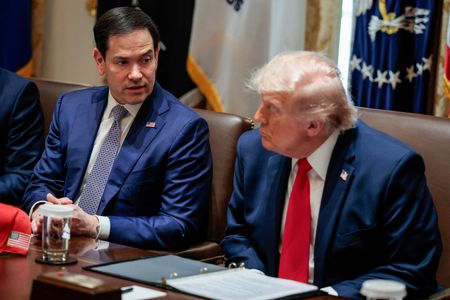

Congressional representatives will have an unusual opportunity this week to publicly question Secretary of State Marco Rubio regarding President Donald Trump’s international policies, amid increasing Republican unease about the ongoing Iran conflict.
Rubio, who simultaneously holds the position of Trump’s national security adviser, is scheduled to appear before multiple committees across two days of hearings. He will address the State Department’s budget proposal to both the Senate Foreign Relations Committee and House Foreign Affairs Committee, along with appropriations subcommittees from both chambers.
The current administration is requesting congressional support for a proposed 30% reduction in foreign affairs funding while simultaneously pursuing a 50% boost in defense spending.
Before assuming his current role in January 2025, Rubio represented Florida in the Senate. Legislators expressed hope that their former colleague will outline a clear plan for concluding the Iran conflict, which began with coordinated strikes by the United States and Israel on February 28.
While Rubio has participated in private congressional briefings alongside other senior administration officials regarding the Iran situation, he has not provided public testimony about the conflict until now.
Speaking on CBS’s Face the Nation program Sunday, Democratic Senator Chris Murphy of Connecticut stated, “We just need this war done, no matter the terms at this point.”
Murphy highlighted how escalating fuel costs are affecting American families and businesses, while also criticizing Trump’s decision to reduce sanctions on Russian oil as a means to address the energy price surge caused by the conflict.
Growing public dissatisfaction with increased costs has prompted Trump’s Republican allies to push for reopening the Strait of Hormuz and reducing domestic fuel prices before November’s elections, which will determine whether their party maintains narrow congressional control.
Simultaneously, Trump faces pressure from hawkish members of his own party who resist making any compromises with Tehran.
Trump and his allies maintain the military action will prove valuable if it prevents Iran from developing nuclear capabilities. The president continues to promise that fuel prices will decrease and has repeatedly claimed he will negotiate a favorable agreement to end the hostilities.
Congressional members from both parties, including some Republicans, have requested additional details from the administration regarding its Iran strategy and other international policy objectives.
Last month, the Senate moved forward with a war powers measure that would terminate the Iran conflict without congressional authorization for Trump’s actions. Subsequently, House leadership suddenly delayed voting on comparable legislation when passage appeared likely.
Legislators have indicated they seek more details about Venezuela following Trump’s deployment of American forces to capture Venezuelan President Nicolas Maduro on January 3. Maduro’s deputy currently serves as Venezuela’s interim leader with no scheduled elections.
Questions also persist about U.S. forces engaging boats near Venezuela’s coastline since September, part of what the administration describes as anti-“narco-traffickers” operations that have resulted in over 200 deaths.
Additional concerns have emerged regarding Trump’s intentions toward Communist-controlled Cuba, as worries mount about potential U.S. military action while his administration intensifies pressure on the island nation.