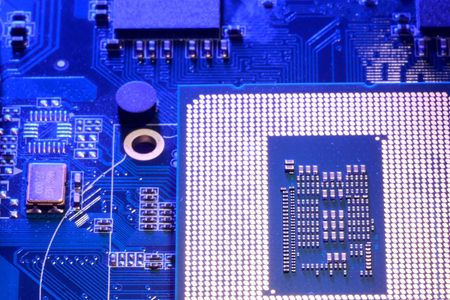
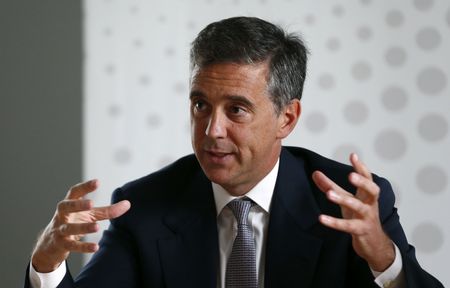
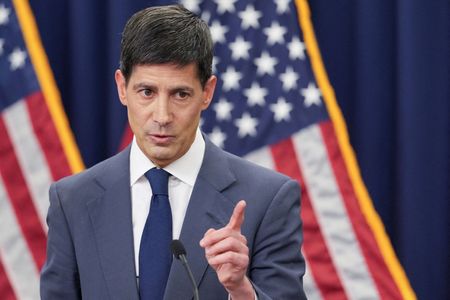
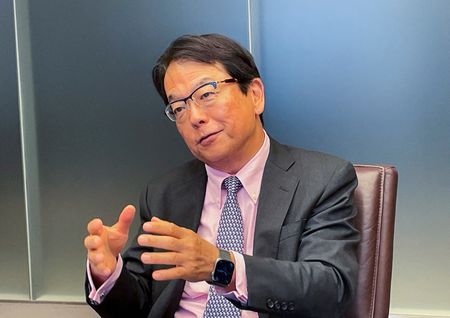
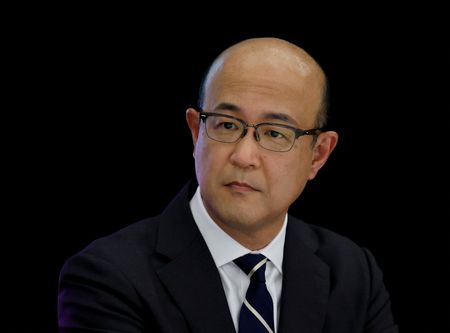
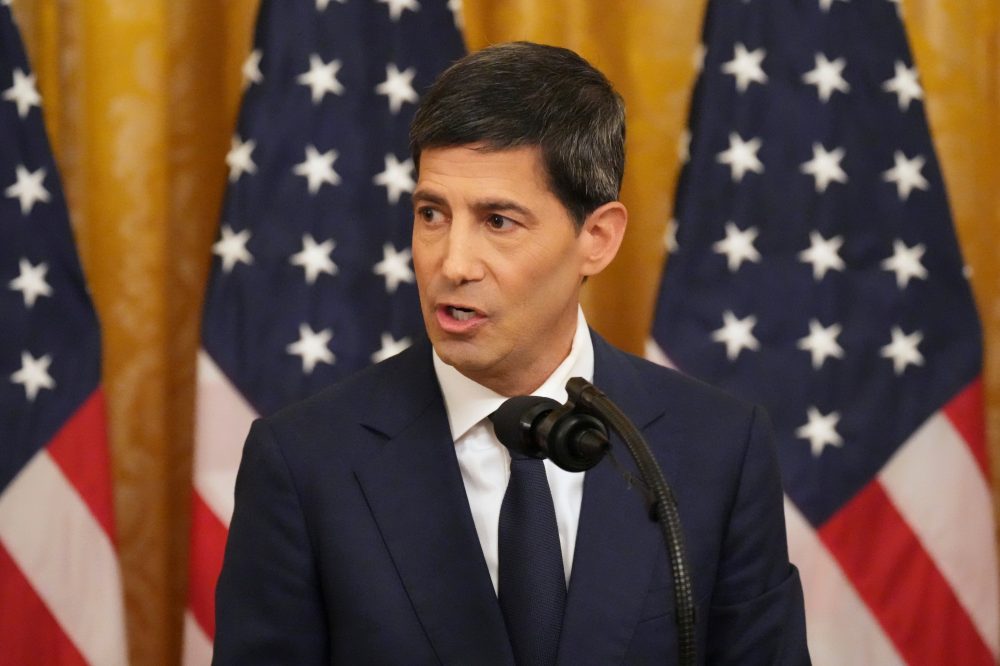
Intel announced Thursday that it has chosen Seok-Hee Lee to serve as executive vice president of its contract chip-manufacturing division, as the company doubles down on its advanced packaging operations.
The U.S.-based chipmaker has been working to breathe new life into its manufacturing arm under CEO Lip-Bu Tan after failing to capitalize on the surge in artificial intelligence demand.
The hiring was announced on the same day President Donald Trump revealed that Apple had agreed to collaborate with Intel to design and produce chips domestically — a development seen as a significant boost to Intel’s contract manufacturing business.
Advanced packaging has grown in strategic importance across the semiconductor industry, as companies look to boost performance by combining multiple chips into a single unified package.
According to an Intel statement, Lee will report directly to CEO Lip-Bu Tan and will oversee all advanced packaging, system integration, back-end technology development, and back-end manufacturing operations.
Lee brings deep experience in the semiconductor field, having previously served as CEO of both SK On and SK Hynix.
With Lee stepping into his new role, Naga Chandrasekaran — who serves as executive vice president of Intel Foundry — will shift his attention to front-end technology development and manufacturing, as Intel pushes to accelerate the rollout of its 18A, Intel 14A, and future technology platforms.
The appointment is the latest in a series of high-profile hires at Intel. In April, the company brought on Samsung foundry veteran Shawn Han to support its contract manufacturing efforts. That same month, Tesla was announced as the first major customer for Intel’s next-generation 14A manufacturing process, which is expected to reach mass production in 2029.
Delaware’s tourism promotion efforts have earned national recognition, with the Delaware Tourism Office and 1440 Film Co. announcing they have received a Silver Telly Award for their “Back of House” video series.
The award was presented in the Campaign: Food & Beverage category, honoring the collaborative video project that has drawn widespread praise since its release.
U.S. stock markets surged Thursday, driven by strength in the technology sector, while crude oil prices tumbled after supertankers began moving through the Strait of Hormuz again — just hours after President Donald Trump signed a peace agreement with Iran.
With markets set to close Friday in honor of Juneteenth, Wall Street’s three major indexes still managed to post gains for the shortened trading week as investors weighed developments in the Middle East and a more hawkish tone from the Federal Reserve under its new leadership.
Here are the major stories shaping markets right now:
Three Saudi-flagged supertankers moved through the Strait of Hormuz shortly after the U.S.-Iran peace deal was finalized. Meanwhile, Ukrainian drones managed to bypass Russian air defenses and struck an oil refinery near Moscow for the second time in three days. Israel released a map outlining an expanded military control zone in Lebanon, raising questions about compliance with the terms of the U.S.-Iran agreement. The Bank of England voted 7-2 to keep borrowing costs unchanged as it continues watching inflation. U.S. weekly unemployment claims declined last week, though the broader trend points upward, hinting at a slowdown in job growth. And space startups are in talks with insurance companies about coverage for AI data centers in orbit.
Key Market Snapshot
U.S. stock indexes finished higher, with the Nasdaq jumping 1.9%, while Europe’s STOXX 600 edged lower. Semiconductor stocks led the way, while energy and aerospace and defense shares lagged behind. The U.S. dollar climbed to a one-year high on expectations of interest rate increases, and Japanese officials issued warnings about weakness in the yen. U.S. Treasury yields pulled back slightly, one day after the Federal Reserve’s new chairman made his debut. Both Brent and WTI crude oil prices fell to their lowest levels since before the Iran conflict began, and gold prices also declined.
Fed Under New Leadership Raises Uncertainty
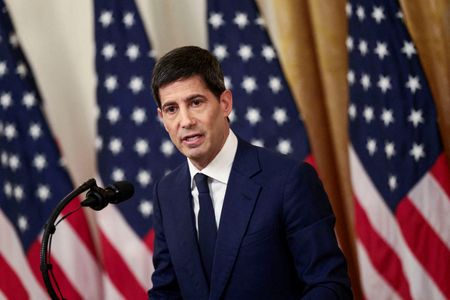
Investors are preparing for a less predictable Federal Reserve now that Kevin Warsh is at the helm. Although the Fed left its benchmark interest rate unchanged Wednesday — a widely expected move — markets were caught off guard by new projections and comments from Warsh suggesting the central bank will stop telegraphing future rate decisions in advance. Warsh also announced he is launching a review of the Fed’s overall operations.
Central Banks Respond to Post-War Inflation
Central banks around the globe are increasingly unable to overlook the inflation surge tied to the Iran conflict, with many either raising interest rates or signaling they plan to. Analysts expect the process of bringing energy prices back to normal levels to stretch well into next year. The Bank of England joined the Fed in hinting at future rate hikes, while the European Central Bank and the Bank of Japan have already moved to raise rates.
Political Friction: Trump and Senate Republicans Clash
Tensions between President Trump and Senate Republicans are growing, with just months to go before midterm elections. After Senate Republicans refused to advance the SAVE America Act — legislation that would have imposed strict voter documentation rules and eliminated the filibuster — Trump retaliated by derailing a Senate effort to pass a key national security bill. The move was widely seen as an attempt to shield his controversial pick of loyalist Bill Pulte for the role of acting U.S. spy chief.
What Could Move Markets Tomorrow
Traders will be watching for further developments in the Middle East, shifts in energy markets, and social media posts from President Trump. On the data front, markets will also track Germany’s producer prices for May, UK retail sales for May, Canada’s retail sales for April, Poland’s industrial output for May, and Moody’s credit rating reviews for Canada and Slovakia.
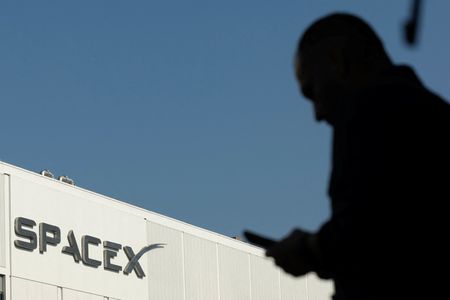
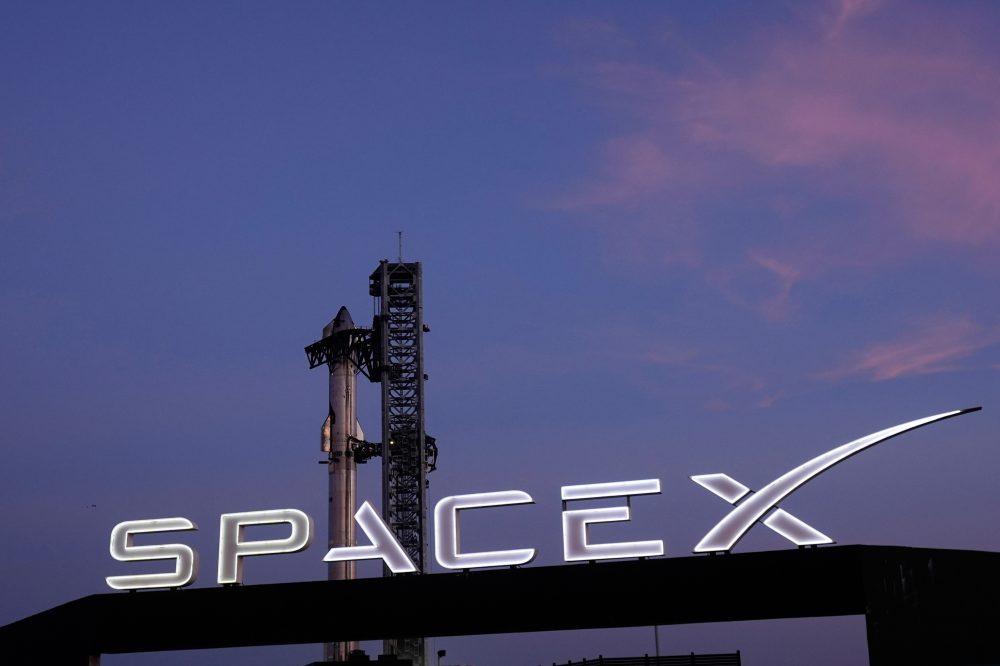
Three of the world’s top credit rating agencies have given SpaceX their investment-grade stamp of approval, each attaching a “stable” outlook to the Elon Musk-led aerospace company following its widely watched initial public offering.
Moody’s assigned SpaceX a “Baa1” rating, Fitch came in with a “BBB+,” and S&P Global Ratings issued a “BBB.” All three designations place SpaceX’s debt in investment-grade territory, which generally means the company carries moderate credit risk and has enough financial capacity to meet its obligations.
The uniform positive assessments reflect widespread confidence in SpaceX’s financial footing as it pursues an aggressive and expensive expansion into artificial intelligence amid stiff competition in that sector.
Despite the favorable ratings news, SpaceX shares dipped 1.1% in after-hours trading Thursday, following a nearly 4% decline during the regular trading session.
The company’s market valuation climbed above $2 trillion after its blockbuster debut on the Nasdaq exchange last week. Shares surged during the first two days of trading before pulling back as investors began weighing whether the company’s lofty valuation holds up against the heavy costs tied to its AI ambitions.
S&P noted that while it views SpaceX’s space and connectivity operations as strong performers, the AI division introduces uncertainty given its significant capital requirements and the crowded competitive landscape it faces.
The U.S. Treasury Department revealed Thursday that foreign investors snapped up an estimated $103 billion worth of American long-term securities in April, while also increasing their Treasury holdings by $4 billion. The figures were released as part of the agency’s monthly Treasury International Capital report.
Japan remained one of the top holders of U.S. Treasury securities, growing its stake to $1.21 trillion in April, up from $1.19 trillion the month before. The United Kingdom also expanded its holdings, climbing to $938 billion from $927 billion in February. China, meanwhile, saw a slight decline, with its holdings slipping to $651 billion from $652 billion.
When combined, total foreign Treasury holdings reached $9.353 trillion in April — an improvement over March’s figure, though still below the record high of $9.49 trillion set in February.
Looking at the broader picture, all net foreign acquisitions in April resulted in a total TIC inflow of $26.1 billion. Within that figure, net foreign private outflows came to $23.1 billion, while net foreign official inflows totaled $49.2 billion.
Foreign residents also stepped up their overall purchases of long-term U.S. securities, with net buys reaching $206 billion for the month. Private foreign investors accounted for $164.4 billion of that total, while foreign official institutions contributed $41.6 billion.
The report is drawing extra attention from market watchers at a time when investors are carefully monitoring foreign demand for U.S. debt. Factors including the Federal Reserve’s continued fight against inflation and a surging bull market in artificial intelligence-related stocks are adding to that scrutiny.
Adding to the day’s financial activity, a U.S. auction of 5-year Treasury Inflation-Protected Securities on Thursday was well received by buyers, partly reflecting a recent uptick in inflation-adjusted “real rates” within the TIPS market.
Delaware State University recently served as the host for a Community Thrive event centered on career readiness and workforce development.
The gathering drew together a diverse group of participants, including current students, alumni, employers, and members of the surrounding community, all coming together to explore opportunities for professional growth and development.
The event was designed to connect attendees with resources and experiences aimed at preparing them for success in today’s workforce.
Shares of Elon Musk’s aerospace and artificial intelligence company SpaceX tumbled nearly 9% on Thursday, as the wave of enthusiasm that followed its initial public offering appeared to be running out of steam.
The stock was last trading down 8.8%, settling at $174.80 per share. That came on top of a nearly 5% drop from the previous session. Even with those back-to-back losses, the stock continues to trade more than 29% higher than its IPO offering price of $135.
Just earlier this week, SpaceX’s total market value had climbed past that of Amazon and even briefly surpassed Microsoft, placing it among the five most valuable companies on the planet.
Adding to the company’s busy week of headlines, Bloomberg News reported Thursday that SpaceX’s banking team was gearing up for a bond sale of at least $20 billion. The company also announced earlier this week that it plans to acquire Anysphere — the startup behind the widely used AI coding tool known as Cursor — in an all-stock transaction valued at $60 billion.
WASHINGTON — If you’ve been watching mortgage rates, there’s a bit of good news this week. The average rate on a 30-year fixed-rate home loan dropped to 6.47%, down from 6.52% the previous week, according to mortgage buyer Freddie Mac. That same rate stood at 6.81% just one year ago.
Shorter-term loans also saw some relief. The average rate on a 15-year fixed mortgage — a popular choice for homeowners looking to refinance — slipped to 5.81% from 5.84% last week. A year ago, that rate was at 5.96%.
The drop is being tied to falling U.S. Treasury yields, which eased after the United States and Iran reached a tentative deal to end their ongoing war. The yield on the 10-year Treasury note fell from 4.53% last week to 4.44% on Thursday. Before the conflict began in late February, that yield was just 3.97%.
Mortgage rates are shaped by a range of factors, including decisions by the Federal Reserve on interest rates and expectations among bond market investors about inflation and economic growth. Lenders typically use the 10-year Treasury yield as a guide when setting home loan prices.
The Fed held its benchmark interest rate steady on Wednesday, as inflation remains well above the central bank’s 2% target. It was the first meeting under new Fed Chair Kevin Warsh, who took over from Jerome Powell after Powell’s eight-year tenure leading the central bank. Several Fed policymakers indicated they would be open to raising interest rates at least once this year.
Mortgage rates had been climbing steadily since the U.S.-Iran conflict erupted in late February, which disrupted the flow of crude oil through the Persian Gulf and pushed energy prices sharply higher. That, in turn, fueled inflation and drove bond yields — and mortgage rates — upward. Two weeks ago, the 30-year rate hit 6.53%, its highest point since August 28.
The tentative peace deal reached earlier this week would allow Iran to reopen the Strait of Hormuz and resume selling its oil on the global market, helping ease those pressures.
As recently as late February, the 30-year mortgage rate had briefly dipped below 6% for the first time since late 2022. It has not fallen back below that mark since.
While rates are still lower than they were at this point last year, the mostly upward trend and uncertainty about where rates are headed have discouraged many would-be buyers from entering the housing market.
Sales of previously owned U.S. homes fell during the first three months of the year compared to the same period a year ago, continuing a housing slowdown that began in 2022 when rates started rising from pandemic-era lows. Sales were essentially flat in April, then picked up speed in May, reaching their fastest pace since December.
Even so, existing home sales continue to hover near a 4-million annual pace — well below the historical norm of around 5.2 million per year.
Mortgage applications declined in the most recent survey from the Mortgage Bankers Association, though the week before saw a significant jump of 10.8%. Pending home sales also rose last month, offering a hopeful signal for the housing market as it heads into the second half of the year after a slow spring buying season.
SAO PAULO — Apple announced Thursday that developers in Brazil will now be permitted to distribute iOS apps through outside marketplaces and handle payment processing beyond Apple’s own platform, following a settlement reached with the country’s antitrust regulator, known as CADE.
The tech giant first agreed to implement these changes back in December, when it resolved a regulatory dispute that had originally been opened in 2022.
Under the new arrangement, developers selling apps through Brazil’s App Store will have the ability to offer customers alternative ways to pay within their apps, as well as the option to send users to external websites to complete purchases.
Apple described the significance of the update in a statement: “These updates create new options for developers to distribute apps on alternative app marketplaces and to process app payments for digital goods and services outside of Apple in-app purchases.”
The company said it plans to put several protective measures in place alongside these changes, including an app verification process called notarization, approval requirements for marketplace operators, and content safeguards aimed at shielding younger users from inappropriate material.
At the same time, Apple cautioned that opening up to third-party app stores and payment systems could expose users to greater risks, including malware, fraud, scams, and threats to personal privacy.
Developers were able to begin using the new capabilities on Thursday, rolled out as part of the iOS 26.5 update.
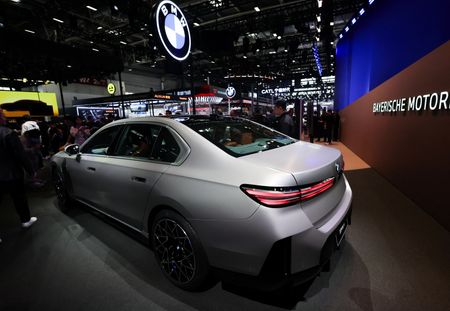
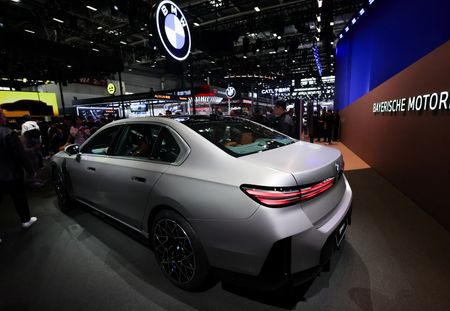
BMW’s supervisory board chairman said Thursday that the German automaker is headed in the right direction with its upcoming vehicle lineup, even as a recent profit warning continued to drag down the company’s stock price.
Speaking to reporters in Paris, chairman Nicolas Peter pointed to strong order numbers for BMW’s Neue Klasse vehicles, calling the demand “good news both for the manufacturer and for the suppliers involved in the project.” The Neue Klasse represents a sweeping lineup of new models designed to modernize BMW’s offerings amid growing pressure from Chinese rivals.
BMW’s shares dropped 5.3% by mid-afternoon Thursday, landing at their lowest point since November 2, 2020. The stock sat at the bottom of Germany’s blue-chip index after several major brokerages, including Citi and HSBC, slashed their target prices following the profit warning. Analysts pointed to prolonged softness in the Chinese market and the Iran conflict as key factors behind the guidance cut.
“The magnitude of this latest downgrade – the third predominantly China-driven downgrade in as many years – is greater than we had anticipated,” analysts at Berenberg wrote. They added: “This could prompt a more profound strategic reset under the incoming CEO,” referring to Milan Nedeljkovic, who stepped into the top role last month after longtime leader Oliver Zipse departed.
Industry analysts have suggested BMW may move to cut production capacity in Europe and speed up efforts to shift manufacturing closer to its key markets in North America and China.
Peter said BMW remains confident about the U.S. market, describing it as stable and significant, though he acknowledged the company is currently selling fewer vehicles in Europe than it produces there. He also noted that despite the fierce price competition among automakers in China — still the world’s largest auto market — there remains room for foreign manufacturers to compete alongside domestic brands.
The early Chinese investors behind the artificial intelligence startup Manus are reportedly planning to purchase the company back from Meta, matching the $2 billion the Facebook parent company originally paid, according to a report published Thursday by The Information.
The publication cited two individuals with direct knowledge of the situation, saying the planned buyback is a direct response to an order from the Chinese government demanding the transaction be reversed.
Wall Street’s three major stock indexes moved higher at Thursday’s opening bell, with technology companies driving much of the momentum as optimism over a potential Iran peace deal helped ease concerns about the Federal Reserve’s aggressive stance on interest rates.
The Dow Jones Industrial Average gained 79.3 points, or 0.15%, reaching 51,571.85. The S&P 500 climbed 67.3 points, or 0.91%, to 7,487.36, while the tech-heavy Nasdaq Composite surged 389.0 points, or 1.49%, to 26,410.623 as trading got underway.
The positive mood in markets came despite lingering unease over the hawkish tone expected from the Federal Reserve under new Chair Kevin Warsh, with investors weighing that uncertainty against the prospect of progress on a Middle East peace agreement.
The number of Americans seeking jobless benefits edged lower last week, with new unemployment claims continuing to hover in a historically low range, according to a federal report released Thursday.
For the week ending June 13, applications for unemployment benefits totaled 226,000 — a decrease of 4,000 from the prior week, the Labor Department announced. That figure closely matched the 225,000 new claims that analysts surveyed by the data firm FactSet had anticipated.
Weekly unemployment filings are widely viewed as a reliable measure of layoff activity across the country and serve as a near real-time snapshot of overall job market health.
Even with concerns that the conflict in the Middle East could weigh on an already sluggish labor market, hiring has shown improvement in recent months. That follows a difficult stretch in 2025 when fewer than 200,000 jobs were added — a sharp contrast to the roughly 1.5 million positions created throughout 2024.
U.S. employers added a better-than-expected 172,000 jobs in May, and the economy has averaged 188,000 new positions per month over the three months since the Iran war began in late February. That marks the strongest three-month hiring stretch since early 2024. The national unemployment rate currently sits at a historically low 4.3%.
Job openings also climbed in April, with employers listing 7.6 million vacancies — up from 6.9 million in March and the highest total since May 2024.
Last week, the government revealed that rising gas prices — driven by the closure of the Strait of Hormuz along Iran’s southern border — pushed consumer inflation in May to 4.2%, the highest it has been in three years. Even with some recent easing, oil and gas prices remain high, putting a strain on household budgets and causing some businesses to hesitate on new hires.
Earlier this week, Iran and the United States reached an agreement to end the war and allow Iran to reopen the Strait of Hormuz and resume selling its oil without restrictions.
With inflation still well above the Federal Reserve’s 2% target, central bank officials chose to hold the benchmark interest rate steady on Wednesday. The meeting was the first presided over by new Fed Chair Kevin Warsh, who took over after Jerome Powell completed his eight-year tenure leading the central bank.
While lower interest rates typically encourage economic growth and hiring, they can also fuel inflation. As a result, several Fed policymakers have indicated they may actually support at least one interest rate increase this year in an effort to bring inflation down — though higher borrowing costs tend to make businesses more cautious about expanding their workforce.
The rapid growth of artificial intelligence has added another layer of uncertainty to the jobs outlook, given the significant investment the technology requires and the possibility that it could transform or eliminate certain positions.
Among the companies that have announced workforce reductions recently are Verizon, UPS, Amazon, Disney, Starbucks, and Walmart.
Since the U.S. economy recovered from the pandemic-era recession, weekly jobless claims have largely stayed within a range of 200,000 to 250,000. However, hiring began to slow roughly two years ago and weakened further in 2025, a trend attributed to President Donald Trump’s tariffs, reductions in the federal workforce, and the lingering impact of elevated interest rates aimed at curbing inflation.
Thursday’s Labor Department report also showed that the four-week moving average of jobless claims — which smooths out week-to-week swings — increased by 4,000 to reach 223,250.
The total number of people collecting unemployment benefits for the week ending June 6 climbed by 24,000 to 1.81 million, coming in slightly above what analysts had projected.
A Silicon Valley startup is making a bold move into the custom computer chip industry, announcing Thursday that it has secured $24 million in seed funding to develop AI-powered tools that could dramatically change how chips are designed.
The company, Architect Labs, is setting its sights on competing with chip industry giants Broadcom and Marvell, both of which currently help major cloud computing companies — including Amazon and Alphabet’s Google — design specialized chips for artificial intelligence and general computing. That custom chip business generates tens of billions of dollars in revenue and serves as an alternative to the powerful hardware made by Nvidia.
Right now, designing a custom chip is an expensive and time-consuming process, typically taking around two years and costing hundreds of millions of dollars in labor and research and development. Architect Labs wants to make that process faster and far less costly.
Co-founder Ebrahim Hussain told Reuters the company plans to work with both chip manufacturers looking to speed up their design workflows and software companies that might benefit from custom chips to make their applications run more efficiently.
“Their biggest problem today is not necessarily the backend execution or the layout,” Hussain said. “Their biggest thing is how can I take this workload that I want to deliver to the world, whether it be AI or robotics or anything like that, and how can I build the (chip) architecture.”
Hussain co-founded the company alongside Aaditya Subedi. The Palo Alto, California-based firm currently employs about 18 people, with staff divided between machine learning and hardware disciplines.
Subedi described the company’s broader vision as making chip design as widely accessible as Taiwan’s TSMC has made chip manufacturing.
The funding round was led by Kindred Ventures, with participation from TQ Ventures, Race Capital, and Together Fund. Google DeepMind Chief Scientist Jeff Dean, as well as executives from OpenAI and Nvidia, also contributed to the investment.
An Israeli AI-focused cybersecurity startup known as Dream has announced it raised $260 million through a private funding round, giving the company a total valuation of $3 billion.
The firm was co-founded by Shalev Hulio, who previously led spyware company NSO Group before stepping away in 2022. His departure came after NSO faced accusations from Meta of targeting WhatsApp and its users. Hulio had originally co-founded NSO back in 2010 and served as its chief executive. He launched Dream in 2023.
While NSO became known for licensing its Pegasus surveillance software to governments and law enforcement agencies for use against terrorism and serious crime, Dream operates with a different mission — defending governments and critical infrastructure, including water systems and oil and gas facilities, against cyber threats. The company unveiled its sovereign AI platform, called Atlas, on Wednesday.
Hulio told Reuters that Dream generated approximately $300 million in sales to governments across Europe, the Middle East — including Gulf nations — and Asia in the past year. “We managed to prevent huge cyber attacks from China, Russia, Iran and North Korea,” he said.
Dream currently operates offices in Tel Aviv, Abu Dhabi, and Vienna, employing a total of 350 people. The company intends to use the newly raised funds to speed up the rollout of its national cyber defense and sovereign AI platforms across Europe, the Middle East, Asia, and into the Americas.
Hulio emphasized the growing role of artificial intelligence in modern cyber warfare. “Everybody understands that the next cyber war is actually going to be AI versus AI,” he said. “We built an AI solution that knows how to prevent cyber attacks created by humans, but also cyberattacks created by AI.”
Former Austrian Chancellor Sebastian Kurz, who is also a co-founder of Dream, pointed to rising global tensions as a driver of demand. “Allies sometimes don’t know if they will be able to trust their allies forever, so there’s a big need for sovereignty and being more independent,” he said.
The funding round was jointly led by Bicycle Capital and Group 11, with additional investment from Antler, Bain Capital Ventures, Tru Arrow Partners, and other international investors.
Looking ahead, Hulio said the company has ambitions beyond private ownership. “Eventually we will go public,” he said. “Our goal is to become a big company, a successful company and a public company.”
LONDON — A recently reached agreement between the United States and Iran to end their conflict has caused oil prices to drop, offering some breathing room for central bankers who have been worried that soaring energy costs could fuel broader inflation. Even so, the situation remains tense across the world’s major economies.
Four developed-nation central banks are already raising interest rates, and several others — including the U.S. Federal Reserve — signaled this week that they are prepared to act if inflation continues to climb. Here is a look at where each central bank in the Group of 10 developed economies currently stands, ordered from the highest policy rate to the lowest.
1. AUSTRALIA — 4.35%
Australia’s central bank has raised interest rates three separate times this year, bringing its rate to 4.35% — the highest among G10 nations. The moves were aimed at countering a global energy shock and fully reversed last year’s rate cuts. This week, the Reserve Bank of Australia chose to pause, noting that tighter financial conditions are slowing the country’s economy, though it left the door open for future increases. Markets currently place roughly a 50% probability on another hike later this year.
2. NORWAY — 4.25%
Norway’s central bank held its rate steady at 4.25% on Thursday, but made clear that inflation remains too elevated and that borrowing costs will likely need to rise again before the year ends. The Norges Bank had already raised its rate in May, and annual core inflation unexpectedly climbed to 3.4% that same month.
3. BRITAIN — 3.75%
The Bank of England has kept its interest rate on hold at 3.75% since the start of the U.S.-Iran war, citing uncertainty about how strong inflation pressures will ultimately become. At Thursday’s meeting, only two of the nine rate-setters voted to raise rates. The central bank cautioned it is too early to declare the inflation threat over, and it expects inflation to climb above 3.25% in the final quarter of this year — up from 2.8% in May — though that is a smaller jump than it had projected back in April under two of its three main scenarios. Markets anticipate at least one rate hike before the end of the year.
4. UNITED STATES
The start of Kevin Warsh’s tenure as Federal Reserve chair came with a surprise on Wednesday. The Fed kept rates unchanged, as widely expected, but new projections and remarks from Warsh caught markets off guard, prompting traders to price in the possibility of a rate increase within months. The Fed released a simplified monetary policy statement, and quarterly projections revealed that nine Fed officials now expect rates to rise by the end of 2026. Markets see a strong chance of a hike in September and consider a second increase before year’s end more likely than not. The news sent short-term bond yields and the value of the dollar sharply higher.
5. NEW ZEALAND — 2.25%
New Zealand’s central bank does not hold its next meeting until early July, when markets expect it to raise its current 2.25% rate, with additional increases anticipated later in the year. The bank faces a difficult situation: inflation is projected to climb well beyond its 1% to 3% target range, while the unemployment rate sits at a ten-year high.
6. CANADA — 2.25%
The Bank of Canada held its policy rate at 2.25% last week, pointing to limited evidence that higher energy costs are bleeding into broader inflation. The bank is expected to keep rates steady in the months ahead. Recent data showed inflation staying within its 1% to 3% target range.
7. EURO ZONE — 2.25%
The European Central Bank raised rates for the first time in nearly three years last week, hoping to get ahead of inflation before the energy cost surge tied to the Iran conflict spreads more widely through the euro zone economy. The widely anticipated move brought the benchmark deposit rate to 2.25%. Traders are pricing in one additional quarter-point hike by the end of the year.
8. SWEDEN — 1.75%
Sweden’s central bank left its policy rate unchanged at 1.75% on Wednesday, in line with expectations. The Riksbank noted that the likelihood of a rate hike later this year has grown as the Middle East conflict has increased inflationary pressure, but added that underlying inflation remains low.
9. JAPAN — 1.0%
Japan’s central bank raised its rate to 1% on Tuesday — a 31-year high — marking a significant step in its effort to normalize monetary policy. The Bank of Japan also signaled it is ready to tighten further to keep price pressures in check. Higher rates could help bolster the weakened yen, though Japanese rates still remain low compared to most other G10 nations.
10. SWITZERLAND — 0%
Switzerland holds the lowest policy rate in the G10 at 0%, and the Swiss National Bank left it unchanged on Thursday. Policymakers said medium-term price pressures have barely shifted despite a recent uptick in inflation driven by higher fuel costs. Swiss officials have been contending with the strength of their currency, but are reluctant to return to negative interest rates. They say they stand ready to step into currency markets to ease pressure on the Swiss franc if necessary.
American drivers are seeing a slight break at the gas pump, with the national average price for a regular gallon of gas falling to $3.999 — just barely under the $4 threshold — as of Thursday. According to motor club AAA, it marks the first time since March that prices have dipped to this level.
The drop came overnight after President Donald Trump signed an agreement with Iran. The deal requires Tehran to dilute its stockpile of highly enriched uranium and lifts U.S.-backed sanctions against the country.
The agreement calls for a permanent end to hostilities and sets a 60-day negotiating window to hammer out a final deal on Iran’s nuclear future, though Trump left open the possibility of resuming military action. Analysts note the deal appears to offer Iran several immediate benefits while requiring relatively little in return.
Gas prices continue to vary widely across the country. Californians are paying an average of $5.64 per gallon, while drivers in South Carolina are seeing prices as low as $3.58 per gallon.
Oil prices have also dropped significantly. U.S. crude fell to around $80 per barrel on Monday — down sharply from the more than $120 per barrel seen during the height of the conflict, and also below the $67 per barrel price that existed before the war began. Overall, the price of a barrel of U.S. crude has dropped 14% this month alone.
However, experts caution that relief at the pump won’t happen overnight. It could take weeks or even months before oil begins flowing freely again through the Strait of Hormuz, a critical passage that previously carried one-fifth of the world’s crude oil supply. Hundreds of ships remain trapped in the Persian Gulf, Gulf oil producers that cut back output will need time to ramp up again, and ship captains may wait to confirm the threat of attack has truly passed.
There’s also a timing issue with refineries, which typically purchase crude oil a month or more ahead of time — meaning even as oil prices fall, they won’t immediately be working with cheaper supplies.
Beyond fuel, the disruption to the Strait of Hormuz has rippled through supply chains for fertilizer, food, and consumer goods like footwear. Businesses are bracing for elevated costs to stick around, and consumers may feel that pressure as well.
UniCredit, one of Italy’s largest banks, turned to a familiar face when it needed help selling off its Russian operations — the brother of its own chief executive.
Riccardo Orcel, who previously held a senior position at VTB Group, a Russian bank backed by the state, helped arrange a recent agreement to offload the Italian bank’s Russian business. His brother, Andrea Orcel, serves as CEO of UniCredit. VTB Group is now subject to Western sanctions.
This marks the first time Riccardo Orcel’s role in the transaction has been publicly reported. His background as a former prominent Western banker in Moscow gave him unique experience to navigate the complex deal.
UniCredit addressed his involvement directly in a statement provided to Reuters: “UniCredit confirmed that Riccardo Orcel presented a proposal regarding their Russian business and was appointed as an independent adviser by UniCredit’s Board in connection with the execution of that process. The transaction announced last month was the successful outcome of that work.”
Riccardo Orcel did not respond to requests for comment from Reuters.
UniCredit had maintained one of the largest Western banking presences in Russia, continuing to operate there even as the war in Ukraine prompted regulators to push Western financial institutions out of the country.
In May, UniCredit announced it had reached a non-binding agreement to sell portions of its Russian banking operations to a “well-established private investor” located in the United Arab Emirates. The bank said it plans to keep only its payments operations in Russia.
The identity of the buyer and those backing the purchase remain largely unknown, apart from the fact that they are based in the UAE. Dubai has emerged as a key hub for conducting business with Russia, as Western sanctions have effectively shut down traditional financial centers that once served that purpose, such as Vienna.
Major U.S. banks are making one final formal appeal to the Federal Reserve on Thursday, urging the central bank to make additional adjustments to proposed rules that determine how much money financial institutions must hold in reserve to cover potential losses.
According to five industry insiders who spoke on the condition of anonymity, the banks’ top priorities include reducing capital requirements tied to Wall Street trading operations, eliminating a proposed requirement to hold funds against unused credit card lines, and adjusting a financial penalty applied to the world’s most interconnected banks.
Back in March, federal regulators — led by the Federal Reserve — released a revised and more lenient version of sweeping capital rules. Officials estimated the updated proposal would cut the amount of loss-absorbing capital large banks must hold by roughly 4.8%, arguing that the existing requirements have been dragging on the broader economy. These regulations, commonly referred to as the “Basel” rules, reshape how banks calculate risk and, by extension, how much capital they are required to maintain.
The banking industry has largely welcomed the revised proposal as a significant improvement over the Fed’s original 2023 plan, which was crafted under Democratic leadership and would have required banks to increase their capital buffers by around 20% — a response to a wave of regional bank failures at the time.
Still, after combing through hundreds of pages of technical proposals, lenders have pinpointed a number of remaining concerns they want addressed before the rules are finalized.
Thursday marks the deadline for banks to submit their official written comments. A spokesperson for the Federal Reserve did not respond to a request for comment.
Matthew Bisanz, a partner at Mayer Brown who focuses on financial regulation, noted the urgency surrounding the process. “There’s a really big push to get it wrapped up in the next six months because there are other items on the regulatory agenda,” he said.
Not everyone supports loosening the rules. Critics warn that reducing capital requirements leaves banks more exposed to financial shocks and could ultimately harm the broader economy if lenders struggle and pull back on loans.
Last month, Phillip Basil, director of Economic Growth and Financial Stability for Better Markets, argued in a public statement that “strong capital standards are the foundation” of a stable banking system, because “they ensure that banks — not taxpayers, workers, or small businesses — absorb losses when risks materialize.”
On the trading side, banks plan to argue that regulators have been overly cautious in assigning capital to trading activities — particularly given that the Fed already evaluates individual banks’ risk exposure each year through its “stress test” process. Industry groups may propose changes significant enough to dramatically reduce or even eliminate the additional trading capital the Fed has outlined.
Banks are also expected to challenge a provision that would require them to hold capital equal to 10% of unused credit lines — known as “unconditionally cancelable commitments” — the most common example being unused credit card balances. Currently, these lines carry no capital requirement because banks can cancel them at any time. However, regulators contend that in practice, banks are unlikely to cancel these lines during economic downturns due to customer relationships and risk management considerations.
A group of the nation’s largest banks will also renew their push to soften a financial “surcharge” the Fed applies to globally significant U.S. banks — known as GSIBs — a measure that has been in place since the 2008 financial crisis. The Fed has proposed a one-time adjustment to reflect economic growth going back to around 2019, along with automatic future updates. But banks are pressing for the adjustment to stretch back further, to 2015, when the surcharge was first introduced.
Despite their concerns, banks are not expected to mount the kind of aggressive opposition they launched in 2023. Multiple executives said the industry has narrowed its focus to the most pressing issues. One industry group reportedly identified close to 100 problems with the proposal but plans to formally argue only a few dozen of them.
Fed Vice Chair for Supervision Michelle Bowman, who is overseeing the rule-writing process, has reportedly signaled to banks that they should keep their feedback measured. Industry executives say they are eager to move past a regulatory battle that has consumed years of time and resources.
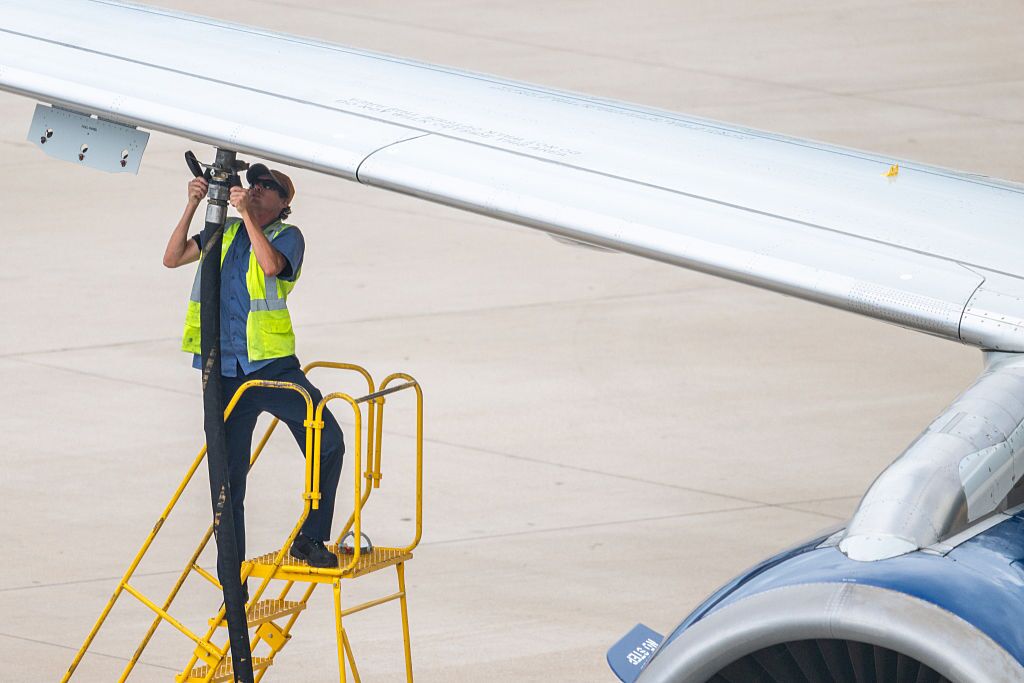
Travelers looking for relief at the ticket counter may have to keep waiting. While the average price of jet fuel has fallen to its lowest level since the conflict with Iran began, aviation experts warn that airfare prices are not expected to follow suit anytime soon.
Despite the decline in fuel costs, industry analysts say passengers should not count on seeing those savings reflected in the price of their plane tickets, at least for the foreseeable future.
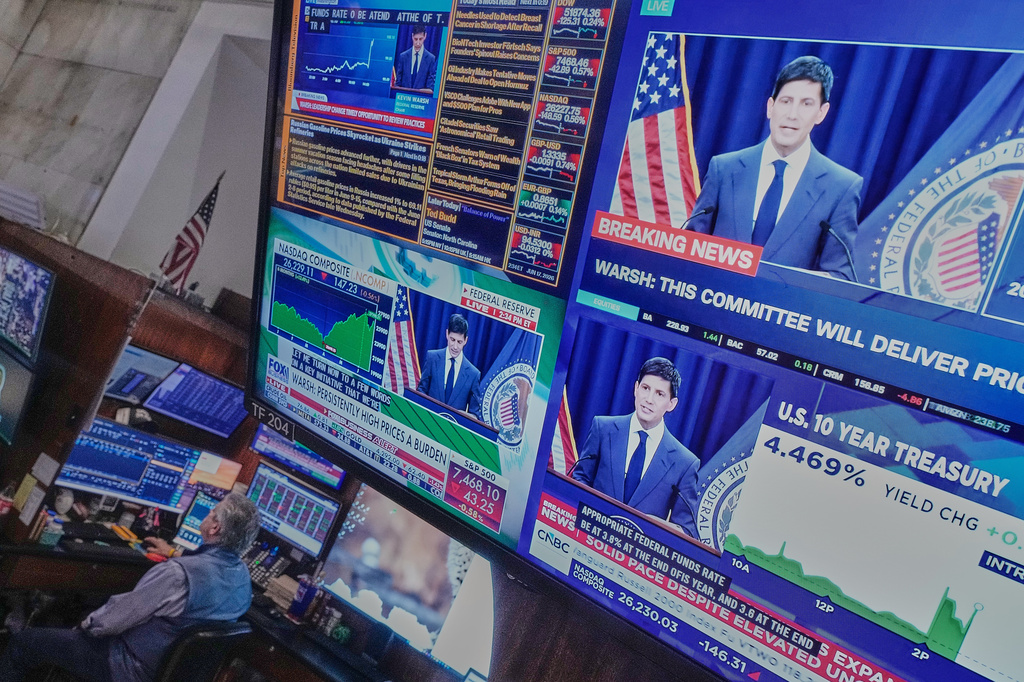
Wall Street got its first taste of the Kevin Warsh era at the Federal Reserve on Wednesday, and it was anything but calm. Investors are now bracing for bigger market swings as the central bank steps back from its long-standing practice of hinting at future interest rate decisions.
The Fed kept rates unchanged at Wednesday’s meeting, which was widely expected. But new economic projections and remarks from Warsh — presiding over his very first meeting as chair — caught traders off guard, sending markets to price in the possibility of a rate increase within just a few months.
Investors are now grappling with a more secretive Fed under Warsh’s leadership, one that is abandoning forward guidance and overhauling the way it talks to the public — a change that analysts warn could bring fresh turbulence to financial markets.
Warsh’s opening policy statement removed any language about where rates might be headed, and he hinted at broader changes to how the Fed communicates, reads economic data, and thinks about inflation.
“He’s hot out of the gate, and he’s putting his thumbprint on everything Fed-related,” said Michael Reynolds, vice president of investment strategy at Glenmede.
Investors had been watching Warsh’s debut closely, looking for signals about how the Fed might operate differently under new leadership. One of the most notable early changes was a pared-down policy statement that left out any mention of possible near-term actions — a format reminiscent of former Fed Chairman Alan Greenspan, who led the central bank from 1987 to 2006.
“You are transitioning from what I believe was the most transparent Fed, who didn’t like to deliver surprises or disappointments, to a less transparent Fed, who doesn’t want to be boxed in or handcuffed to forward guidance that was given previously,” said Michael Arone, chief investment strategist at State Street Investment Management.
Warsh indicated that financial markets should price securities based on their own interpretation of the economy rather than trying to guess what policymakers are thinking.
David Seif, chief economist for developed markets at Nomura, noted that markets have predicted Fed moves with remarkable accuracy over the past two decades. “The simplification of communication could ultimately mean that this idea that has persisted for quite some time, that the Fed almost never surprises markets, could go away,” Seif said.
Warsh also announced a broad review of Fed operations, covering its balance sheet, communications strategy, data sources, productivity, jobs, and its inflation framework.
“Both in what he said and really chose not to say showed to the market and to the Fed watching community that the way the Fed is going to communicate moving forward is going to change appreciably,” said Joseph Purtell, a portfolio manager at Neuberger Berman.
A more aggressive stance on rates could put the brakes on a long-running stock market rally by raising borrowing costs for businesses and consumers, while also pushing up the dollar and bond yields.
Markets had entered 2026 expecting rate cuts, but that outlook reversed after a late-February conflict between the U.S. and Israel involving Iran sent energy prices and inflation higher, shifting expectations toward a possible rate hike by year’s end. Recent data have shown inflation running well above the Fed’s 2% annual target — a target Warsh reaffirmed on Wednesday.
Wednesday’s meeting strengthened those hawkish expectations. The Fed’s quarterly projections showed nine officials now anticipate a rate increase by the end of 2026. Warsh’s strong emphasis on price stability during a press conference was read as a hawkish signal by markets, according to Josh Jamner, senior investment strategy analyst at ClearBridge Investments.
By late Wednesday, Fed funds futures pointed to better-than-even odds of a rate hike at the Fed’s September meeting, according to CME FedWatch data.
“September now is very ‘live’ in terms of the possibility of seeing a rate hike, but if the June data is hot, I think they could hike as early as July,” said Dustin Reid, chief strategist of fixed income at Mackenzie Investments in Toronto.
Stocks retreated from near-record levels on Wednesday, with the benchmark S&P 500 closing down 1.2%. The two-year U.S. Treasury yield climbed to its highest point since February 2025, and the dollar gained ground across the board.
Still, some investors cautioned that Wednesday’s market reaction may have been an overreaction, expressing doubt that rate hikes are truly around the corner. Notably, Warsh himself did not take part in the rate projections that drove much of the hawkish response.
A key consideration for investors is falling oil prices, with U.S. crude dropping to around $75 per barrel by Wednesday following a U.S.-Iran deal reached over the weekend.
“I don’t think that this is necessarily as hawkish as people make it out to be because (Warsh) understands that gas prices will probably pull down overall inflation over time,” said Drew Matus, chief market strategist at MetLife Investment Management in New Jersey.
Travelers hoping for a break on airfare may be waiting a while longer, even as jet fuel prices have dropped significantly. According to aviation experts, the average price of jet fuel has fallen to its lowest level since the war with Iran began — but that relief at the pump isn’t expected to translate into cheaper plane tickets, at least not in the near term.
Industry experts say that while lower fuel costs are a welcome development for airlines, passengers should not count on seeing those savings reflected in the price of their tickets anytime soon. Airfares are expected to remain high for the time being, despite the decline in one of the airline industry’s biggest operating expenses.
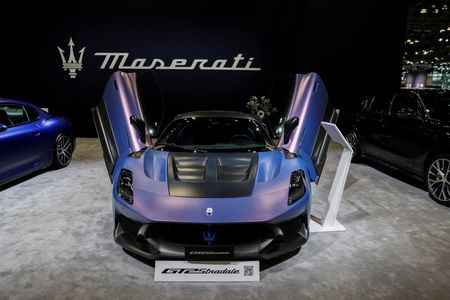
MILAN — Maserati pulled back the curtain Thursday on updated versions of its GranTurismo, GranCabrio, and Grecale models, setting the stage for a pivotal December capital markets day that is expected to chart a new direction for the financially troubled Stellantis luxury brand.
When Stellantis CEO Antonio Filosa laid out the company’s business plan last month, he expressed the automaker’s intention “to strengthen Maserati’s future as a pure luxury brand,” a strategy that includes adding two new large-sized vehicles to the lineup.
Looking further ahead, Maserati also confirmed plans for a brand-new generation of the Grecale SUV, set to arrive in 2027.
The current Maserati lineup includes the Grecale — offered in petrol, hybrid, and fully electric configurations — along with the GranTurismo coupe and its open-top counterpart the GranCabrio, both available in petrol and all-electric versions. The low-volume MCPura sports car and its limited-edition variants round out the portfolio.
Among the updates to the refreshed models are increased electric vehicle range capabilities and a more powerful 590 horsepower six-cylinder engine for both the GranTurismo and GranCabrio. That six-cylinder engine will also now be offered across all petrol variants of the Grecale.
Maserati vehicles are priced starting at approximately €80,000, or about $92,700, in Europe, while U.S. pricing begins around $80,000.
On Wednesday, Filosa revealed that Stellantis is currently in discussions with “two important partners, which can bring us technology, development and excellent ideas,” noting the company is in the process of deciding between the two for Maserati’s long-term future.
During an online presentation of the refreshed lineup, Maserati Chief Santo Ficili addressed the question of partnerships directly. “We clearly seek, want, and must find excellence on the market in electronic architecture, in the supply of specific parts…. we’re moving in that direction,” he said.
Ficili did, however, draw a clear line, ruling out any partnership with Jaguar Land Rover or Tata Motors — both of which signed separate cooperation agreements with Stellantis last month for the U.S. market and for India, respectively.
Filosa also dismissed speculation that Maserati could be sold, including recent reports of interest from China’s BYD. “Maserati is not for sale, for sure,” he stated plainly.
The brand’s challenges are significant — Maserati shipped fewer than 8,000 vehicles last year and posted an adjusted operating loss of €198 million.
Dutch semiconductor equipment manufacturer BE Semiconductor Industries, known as BESI, announced Thursday that it is raising both its long-term revenue projections and operating margin goals, driven by stronger order activity and rising demand tied to data center and photonics applications.
BESI shares have more than doubled since January, a reflection of investor confidence in the company’s advanced packaging technology as chipmakers look for new methods to boost computing power for artificial intelligence. The stock held relatively steady in early trading following the announcement.
The company now projects long-term revenue in the range of 1.7 billion euros to 2.2 billion euros — equivalent to roughly $1.96 billion to $2.54 billion — an increase from its previous target of 1.5 billion euros to 1.9 billion euros. The updated figures were shared ahead of the company’s investor day scheduled for 2026 in Amsterdam.
BESI also adjusted its operating margin target, lifting the lower bound from 40% to 45%, while leaving the upper ceiling at 55% unchanged.
No specific timeline was provided by the company for when it expects to reach these financial milestones.
ING analyst Marc Hesselink offered a measured take on the news in a research note, saying: “While the long-term structural drivers remain intact, (…) the guidance increase appears largely anticipated and reflected in consensus positioning.”
Hesselink added that he would not rule out some investors choosing to take profits following the announcement, given the stock’s elevated valuation.
Private equity fund EQT has announced it is acquiring Exolaunch, a Berlin-based space company that works with satellite operators to get their payloads into orbit, including through a partnership with Elon Musk’s SpaceX.
The deal, announced Thursday, reflects growing investor enthusiasm for the space industry and represents the Stockholm-listed fund’s debut private equity investment in the sector. EQT says it intends to expand the company’s global footprint and pour resources into developing new satellite launch and deployment technologies.
Exolaunch traces its roots to the department of space technology at the Technical University of Berlin, where it was founded in 2013 by associate professor Dmitriy Sternharz before being spun off as its own company.
“There has never been a better time to be in the space economy,” said Robert Sproles, Chief Executive Officer of Exolaunch. “There is such tremendous growth, it really is a confluence of technology, demand, end-product use and funding that is coming together to enable these opportunities.”
The acquisition is being funded through EQT’s flagship private equity fund, which typically writes equity checks ranging from €300 million to €1.5 billion — roughly $348 million to $1.74 billion. A source familiar with the deal, who asked not to be identified because the financial terms have not been made public, indicated the Exolaunch purchase came in toward the lower end of that range.
Nils Ketter, a partner and head of industrial technology on the EQT Private Equity advisory team, expressed enthusiasm about the timing of the investment. “It’s a fantastic moment to invest in that company both from a market perspective but also where the company is in terms of its development,” he said, noting that EQT had been watching Exolaunch since last year. “It is a bit of a hidden gem of German industry.”
To date, Exolaunch has successfully deployed more than 790 satellites over 47 missions, serving a client base of more than 200 commercial and government customers spanning North America, Europe, Asia, and the Middle East.
The company has held a strategic working relationship with SpaceX since 2020 and has taken part in every Falcon 9 Transporter and Bandwagon rideshare mission since those programs launched.
Exolaunch has also recently begun securing its own dedicated launches. Two SpaceX Falcon 9 missions — designated Exo-1 and Exo-2 — are currently scheduled for 2027 and 2028 respectively.
Global investment firm KKR is in advanced negotiations to acquire a controlling interest in the Indian hospital division of Sweden’s Medicover, with the deal valued at a minimum of $1 billion, according to a source with direct knowledge of the situation.
Stockholm-listed Medicover moved quickly to confirm the discussions, issuing a press release shortly after being contacted for comment Wednesday evening. The company stated that Medicover Hospitals India is currently in talks with KKR “regarding a potential sale of its Indian operations.”
While Medicover’s statement offered no financial specifics, sources indicate KKR is looking to acquire the Swedish parent company’s full 66.9% ownership stake for at least $1.05 billion. Talks with minority shareholders are also reportedly underway.
According to the source, who asked not to be identified given the private nature of the negotiations, “discussions are ongoing and a non-binding agreement has been reached.”
Medicover first entered the Indian market in 2016 and has since built a network of 26 hospitals with roughly 6,000 beds. The company also noted in its statement that it has been preparing for an initial public offering on Indian markets, and that there is no guarantee the KKR discussions will result in a completed transaction.
This potential deal would represent another significant step in KKR’s growing commitment to healthcare in India. In 2024, the firm purchased a controlling stake in a hospital group based in the southern Indian state of Kerala and has continued supporting that group’s expansion through additional acquisitions.
India’s hospital industry has become a magnet for investors, driven by rising household incomes, broader health insurance access, and increasing demand for higher-quality medical care — all of which are fueling consolidation across the sector.
Medicover competes in India against Apollo Hospitals, Aster Hospitals, and Fortis Healthcare.
Financial advisory firm Rothschild is handling the sale process on Medicover’s behalf, while Kotak is advising KKR, the source said. Neither firm responded to requests for comment.
Medicover’s India operations posted annual revenue of $234.6 million in 2025, a gain of nearly 1% compared to the prior year. The Indian division represents more than half of the company’s total hospital network worldwide.
Medicover did not respond to additional questions, and KKR declined to comment.
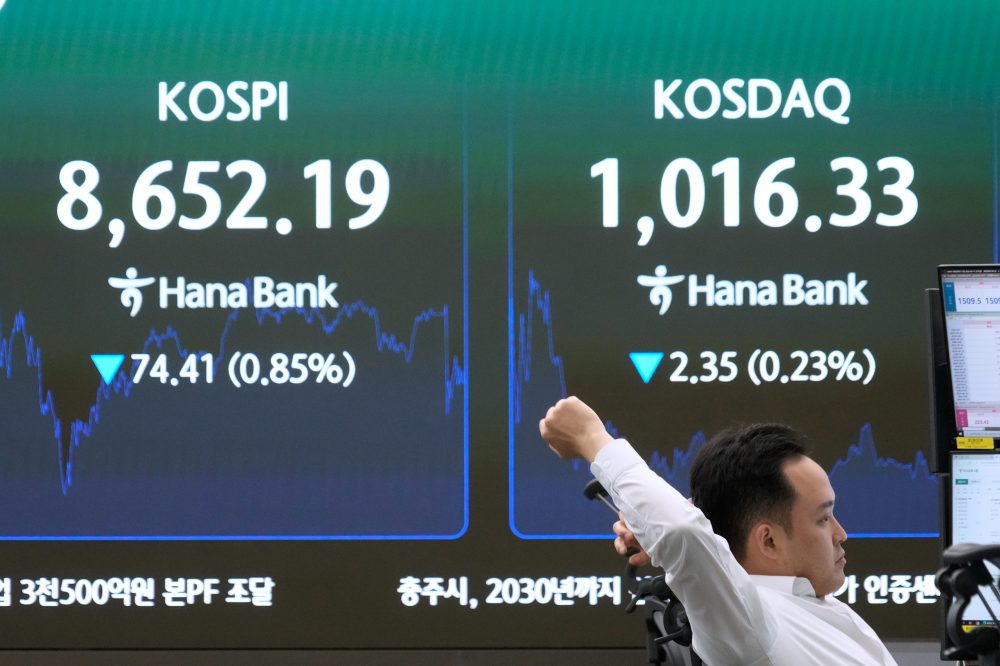
BANGKOK (AP) — Asian stock markets surged Thursday, with major indexes in Japan and South Korea reaching new record highs, following the signing of an initial agreement between the United States and Iran to end the war.
The strong performance across Asia came despite a pullback on Wall Street the day before, which was triggered by concerns that the Federal Reserve might hike interest rates this year to fight inflation. U.S. futures pointed higher early Thursday, while oil prices declined.
Leaders from both the U.S. and Iran put their signatures on a deal formally ending hostilities between the two nations. The agreement sets a 60-day countdown to negotiate a final resolution regarding Iran’s nuclear program. In the meantime, Tehran is required to dilute its stockpile of highly enriched uranium. The deal also immediately removes U.S.-backed sanctions on Iran, allowing the country to sell its oil freely on the global market — a significant concession from Washington, according to details released by both governments.
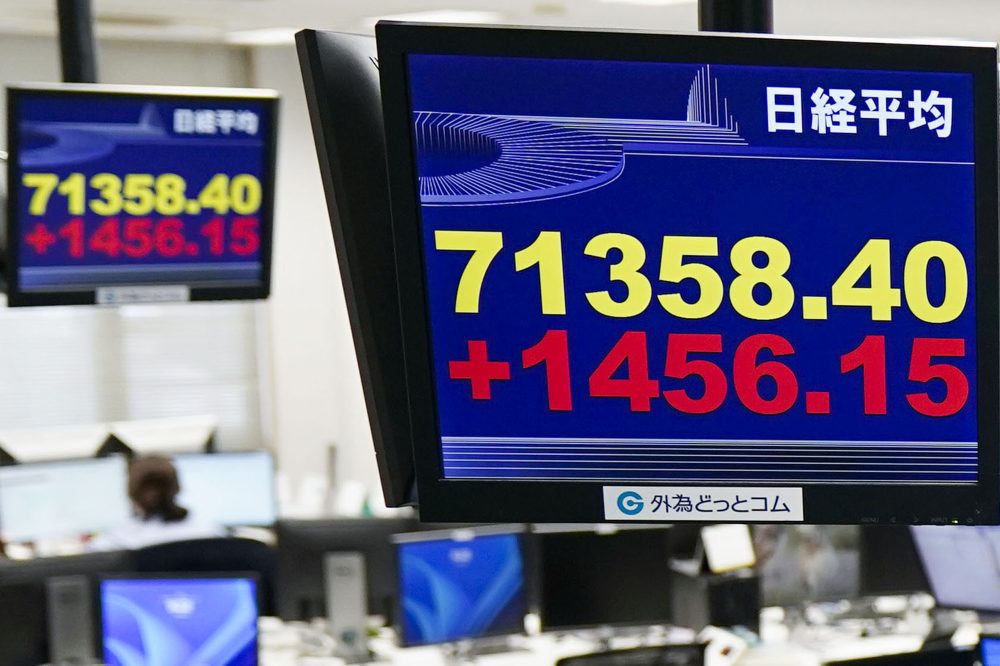
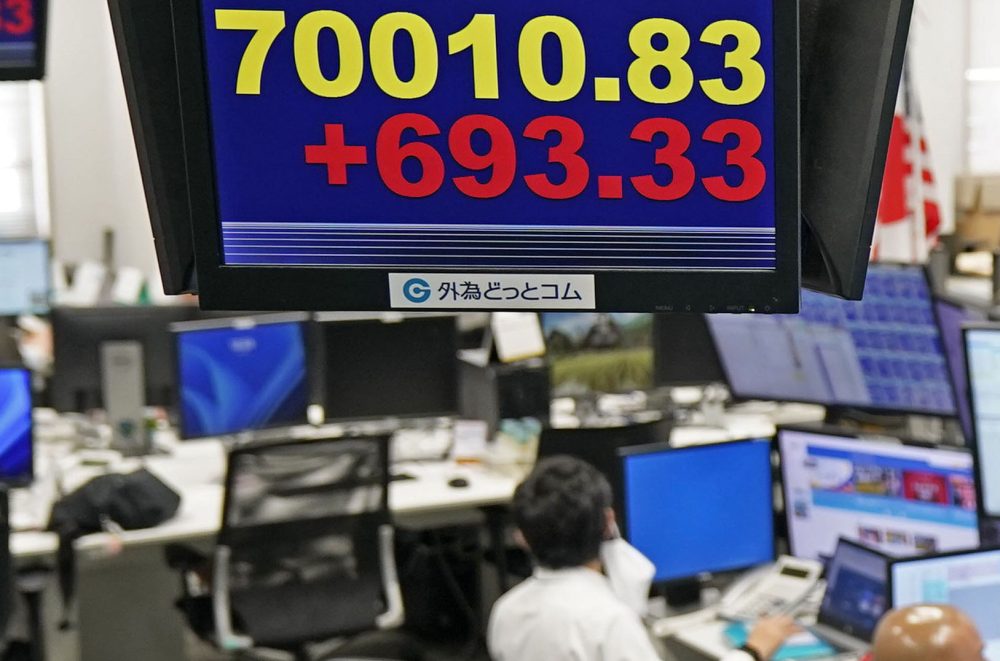
The news broke after U.S. markets had already closed for the day. In Tokyo, the Nikkei 225 climbed 1.9% to finish at 71,233.35. The index had crossed the 70,000 mark for the first time earlier this week and continues to rise on optimism surrounding the war’s end and strong demand for technology stocks tied to the artificial intelligence boom.
Neil Newman, head of strategy at Astris Advisory Japan, described the movement as widespread. “This is very broad-based rally, I believe it’s actually showing some confidence that the Japanese economy is going to recover further from the … the end of the war, and presumably the oil prices in the near future,” he said.
South Korea’s market also hit a fresh record, rising 0.6% to 8,917.31. Taiwan’s Taiex advanced 1%. Hong Kong’s Hang Seng moved in the opposite direction, falling 1.4% to 23,968.66, while China’s Shanghai Composite index edged up just 0.1%. Australia’s S&P/ASX 200 dipped 0.4% to 8,930.50.
Back on Wednesday, the S&P 500 dropped 1.2% to 7,420.10 after the Federal Reserve released projections indicating that nearly half of its policymakers expect at least one interest rate increase before the end of 2026. The Dow Jones Industrial Average fell 1% to 51,492.55, and the Nasdaq composite declined 1.3% to 26,021.66.
While higher interest rates can help bring inflation under control, they also slow economic growth and weigh on investment values. For much of the past year, markets had anticipated that the Fed would be cutting rates rather than raising them.
Kevin Warsh, in his first press conference as the new head of the U.S. central bank, declined to project where the federal funds rate might stand by the end of 2026. He indicated he is exploring changes to how the Fed communicates with financial markets, households, and businesses. Among his early decisions was removing forward-looking hints about interest rate direction from official Fed statements.
Wall Street responded with uncertainty to the Fed’s latest projections. Stocks swung back and forth multiple times after the central bank announced it would hold the federal funds rate steady for now.
Among individual stocks, SpaceX gave back an early gain and closed down 4.9%, marking its first losing session since its much-anticipated debut on U.S. markets last week. Microsoft fell 3.8%, Amazon dropped 3.5%, and Nvidia declined 1.3%, all weighing heavily on the S&P 500.
A report released Wednesday showed that retail sales nationwide grew faster in May than economists had predicted, providing some encouragement that consumer spending could help keep the economy afloat. However, persistent inflation has left many American shoppers feeling financially strained.
Oil prices had stabilized somewhat on Wednesday after sliding earlier in the week as traders reacted to optimism surrounding the tentative U.S.-Iran agreement. With the deal now signed, Iran is expected to take steps to reopen the Strait of Hormuz, which would allow oil tankers to resume deliveries of crude oil from the Persian Gulf — a development that could help ease pressure on inflation.
Early Thursday, Brent crude oil fell 1.6% to $78.31 per barrel. While that remains above the roughly $70 price seen before the war began, it is well below the $100-plus levels recorded just a few weeks ago. U.S. benchmark crude slipped 1.7% to $74.75 per barrel.
In currency markets, the U.S. dollar rose to 160.62 Japanese yen from 159.75 yen. The euro was trading at $1.1515, up slightly from $1.1503.
Singapore-based online car marketplace Carro has completed the purchase of Australian used-car platform CarPlace, making Australia the company’s eighth market, the firm announced Thursday.
Carro had previously signaled its intentions to Reuters back in September, when the company said it was exploring acquisitions as a way to break into Australia ahead of a possible dual stock listing.
Through the acquisition, Carro now has operations in Western Australia, Queensland, and Victoria — three of the four biggest car markets in the country. The financial details of the deal were not made public.
CarPlace is run by Autoleague, described as one of Australia’s largest automotive groups. As part of the agreement, Autoleague will remain a strategic shareholder in CarPlace and will also become a strategic investor in Carro.
Carro says it intends to apply its technology platform to improve how vehicles are inspected, how inventory is tracked, and how dealers connect with customers in the Australian market.
“Australia is one of the largest used-car markets in Asia Pacific,” said Carro co-founder and CEO Aaron Tan, pointing to annual sales of 2.3 million used vehicles and growing demand for electric cars.
The company also has plans to expand wholesale vehicle operations in Australia, which includes importing cars from Japan. Wholesale operations involve selling vehicles in bulk or to dealers rather than directly to individual consumers.
Carro was founded in 2015 and has raised more than S$700 million — equivalent to approximately $545.6 million U.S. — from investors that include SoftBank Vision Fund and several sovereign wealth funds. The company employs more than 4,500 people worldwide.
In addition to Australia, Carro operates in Singapore, Malaysia, Indonesia, Thailand, Japan, Taiwan, and Hong Kong.
The U.S. dollar held firm near a more than two-month high on Thursday as investors ramped up expectations for Federal Reserve interest rate increases, putting mounting pressure on the Japanese yen and pushing it closer to levels that could prompt official intervention.
The Federal Reserve kept its benchmark interest rate steady within a 3.50% to 3.75% range as new chair Kevin Warsh launched a wide-ranging policy review to open his tenure. Despite the hold, nearly half of all Fed policymakers now anticipate at least one rate increase before the year is out, driven by growing concerns over inflation.
According to CME FedWatch data, futures markets are now pricing in an 83% probability of Fed tightening by December. A stronger-than-expected retail sales report added further fuel to those hawkish expectations.
Ongoing uncertainty in the Gulf region continued to weigh on investor risk appetite. U.S. President Donald Trump warned he could resume military strikes if Iran breaks the terms of a ceasefire agreement, a statement that kept oil prices elevated and lent additional support to the dollar. Iran’s leadership offered no public response to the new threats.
The euro edged slightly higher to $1.1511, while the British pound climbed to $1.3318 — both currencies having touched two-month lows earlier in the session. The Australian dollar and New Zealand dollar each gained roughly 0.2%, trading at $0.7025 and $0.5780, respectively.
The dollar index, which tracks the greenback against a group of major currencies including the yen and euro, was little changed at 100.31. The index had surged 0.85% in the prior session — its biggest single-day jump since March 2 — reaching its strongest level since March 31.
“The dollar is up making some sizable gains… this is going to take a little while to shrug off,” said Gavin Friend, senior markets strategist at NAB, speaking on a podcast. “It looks like we could be pushing into new territory here for the dollar.”
The Japanese yen slipped as far as 160.760 against the dollar after hitting its weakest point since 2024 overnight. The currency has been hovering around the 160 level, a threshold widely viewed by markets as a potential trigger for official government intervention.
Meanwhile, the Bank of England appeared on track to hold its own interest rates steady at 3.75% later Thursday as it evaluates what a fragile ceasefire in the Iran conflict means for inflation in the United Kingdom.
Private equity firm KKR has revealed a major new investment in the aircraft leasing industry, committing $1.4 billion alongside partner Altavair as supply constraints at both Airbus and Boeing continue to limit the number of planes available to airlines.
The announcement, made Wednesday, reflects a growing trend of leasing companies and private equity investors stepping in to help fund aircraft purchases. Airlines are grappling with rising operating costs and a rebound in travel demand while facing a shortage of available aircraft.
Today, roughly half of all commercial aircraft worldwide are leased rather than owned outright by airlines. KKR has now poured more than $12 billion into the aviation sector since 2015.
Altavair specializes in buying both new and pre-owned commercial aircraft and renting them to passenger and cargo airlines around the globe.
According to a source familiar with the deal, the bulk of the $1.4 billion has yet to be deployed and will be invested gradually over the next four years.
KKR intends to acquire aircraft from airlines looking to convert their fleets into cash, directly from manufacturers Airbus and Boeing, and through secondary market purchases. These arrangements typically involve buying a plane and then leasing it back to the original carrier under a multi-year agreement — giving airlines an infusion of cash while allowing them to keep flying their planes.
The firm is targeting stable, long-term lease agreements with well-established airlines and cargo operators, deliberately steering clear of distressed situations or bankruptcy cases. The source pointed to Spirit Airlines as an example of what KKR is avoiding — the carrier shut down in May after failing to secure backing for a government rescue plan.
Since joining forces in 2018, KKR and Altavair have purchased 188 aircraft and engine assets and leased them to 67 airline and cargo customers around the world.
The source noted that fluctuating fuel prices and global geopolitical tensions pose limited risk to these types of investments, since leases generally span five to ten years and generate steady, predictable returns.
KKR has a track record in this space, including a 2020 transaction with Etihad Airways in which it purchased Boeing 777 and Airbus A330 jets and leased them back to the airline as part of that carrier’s fleet overhaul strategy.
CME Group chief Terry Duffy announced in a CNBC interview that the major exchange operator plans to take the Commodity Futures Trading Commission to court over the agency’s decision to approve perpetual futures contracts.
Duffy, who recently revealed he will be leaving his CEO role next year, has been an outspoken critic of so-called “perps” — a type of listed derivative that has no expiration date. Unlike traditional futures contracts, perpetual futures allow traders to hold their positions indefinitely without ever needing to roll them over.
“I’m always up for a good battle. I’ve never shied away from one,” Duffy told CNBC, confirming the lawsuit would be filed Thursday. CME Group followed up with an emailed statement to Reuters confirming the legal action. The CFTC did not respond to a request for comment.
The controversy stems from a recent CFTC decision that gave cryptocurrency exchange Coinbase and prediction market platform Kalshi the green light last month to launch perpetual crypto futures. The move marks the first time U.S. investors will have access to such instruments through regulated domestic exchanges.
Beyond having no end date, perpetual futures can carry extremely high leverage — sometimes as much as 50-to-1 — which means investors can dramatically magnify their exposure to market swings.
Earlier this month, Duffy warned at an industry conference that this level of leverage, combined with the automatic liquidation systems commonly used in the sector, creates serious risks for everyday retail investors who may not fully understand how funding rate costs can eat into their positions over time.
He also took aim at how the CFTC handled the approval, arguing the agency skipped the standard “full review” process typically required for what it itself described as a “novel and complex” financial product.
The news rattled financial markets. Shares of CME Group, Cboe Global Markets, and Intercontinental Exchange — the parent company of the New York Stock Exchange — all declined following the CFTC’s approval, as investors grew concerned the decision could create a long-term competitive threat to established exchanges.
Separately, CME Group announced earlier Thursday that Duffy, who took on the CEO role roughly a decade ago, will be succeeded by insider Lynne Fitzpatrick, who will become the company’s first female chief executive.
President Trump expressed measured confidence in Federal Reserve Chairman Kevin Warsh on Wednesday after the new central bank chief wrapped up his first rate-setting meeting with a decision to keep interest rates where they are. Fed projections released alongside the decision showed that nearly half of the central bank’s policymakers believe a rate increase will be necessary at some point this year.
When asked about the Fed’s choice to hold rates steady while speaking from France, Trump kept his response brief. “It’s all right. Whatever,” the president said.
The low-key reaction was a stark departure from Trump’s treatment of Warsh’s predecessor, Jerome Powell, whom the president repeatedly attacked with insults — calling him a moron and a knucklehead, among other things — for declining to cut rates. Trump has long argued that the central bank should lower borrowing costs to support the housing market, strengthen the broader economy, and bring down the cost of government borrowing.
Trump had no such harsh words for Warsh, whom he has previously praised as looking like he came straight out of central casting for the role.
When reporters raised the possibility of a rate hike, Trump acknowledged it could happen but expressed trust in his new Fed chief. “It could happen,” he said. “It’s hard to believe. It just keeps the country down and it’s so, it’s so, unusual. But we have a very good guy over there right now so I’m guided by what he wants.”
At a press conference following the rate decision, Warsh avoided offering any guidance on where interest rates might be headed. He also sidestepped a question about whether he had spoken directly with the president since taking the top job at the Fed last month.
Warsh did, however, acknowledge meeting multiple times with Treasury Secretary Scott Bessent. “So on the president, I don’t have anything for you,” Warsh said. “With respect to the Treasury secretary, he has been posting pictures of our breakfast, so … I don’t think I can deny that the long tradition at the central bank is that the Fed chairman and the Treasury secretary meet weekly. I think we’ve pulled off three of those so far. Believe he’s overseas this week, so this will be the exception of the rule.”
During his Senate confirmation hearing, Warsh had told lawmakers he intended to work closely with the administration on matters outside of monetary policy.
Joshua Baer called himself an “Austinpreneur” — a nod to the Texas capital city and his passion for helping people launch businesses. His LinkedIn profile showed him in a black T-shirt, pointing to the words “I help people quit jobs,” a message he also used as an email handle.
Baer, 50, founded Capital Factory, an Austin-based venture capital firm that has grown into a significant force backing technology startups across a wide range of industries, including robotics and autonomous ships.
He summed up his personal philosophy simply: “Plant lots of seeds. Water everyone’s. Repeat.” Those who worked alongside him in Austin’s business community said that motto reflected exactly how he operated. In 2023, the city’s mayor presented him with a key to the city in recognition of his civic contributions.
Baer was on board a business jet Tuesday when it went down on a highway near Laredo, Texas. The pilots had reported mechanical trouble and asked to divert to a nearby airport for an emergency landing before the crash occurred.
Thom Singer, CEO of the Austin Technology Council, spoke to the impact of Baer’s passing. “Whether you’re in technology or not, there’s a hole in the heart of Austin today,” Singer said.
Bryan Chambers, co-founder and president of Capital Factory, remembered his business partner as a “true super connector.”
Baer’s path to becoming a central figure in Austin’s tech world began after he graduated from Carnegie Mellon University in Pittsburgh, where he had already started an email marketing company. He relocated to Austin in 1996 to work as a software developer at Trilogy Inc. He launched Capital Factory in 2009 and made a habit of meeting with aspiring entrepreneurs over coffee.
In a 2012 interview with the Austin American-Statesman, Baer described his mindset: “My hobby is startups. I don’t watch sports or anything like that. So this is what I do. … I want to be an investor in every great tech company that comes out of Austin. That’s probably unrealistic, but I’m going to try anyway.”
Beyond the business world, Baer frequently spoke to high school students and held the title of “entrepreneur in residence” at the University of Texas.
Singer reflected on what drove Baer: “He was passionate that technology could change the world and make people’s lives efficient and better. And if entrepreneurs did it right, they could make money and help their communities. He believed in those two things.”
U.S. Sen. Ted Cruz, R-Texas, expressed grief over the loss. “Josh has been one of the most significant figures driving innovation and entrepreneurship across America. In Texas, he made our state a global leader,” Cruz said.
Wall Street took a turn for the worse on Thursday after the U.S. Federal Reserve held its key interest rate steady but indicated that a rate hike could be on the horizon before the end of the year. Stocks fell sharply, the dollar continued climbing, and Treasury yields moved modestly higher in the wake of the decision.
The Fed’s move was widely anticipated, but the accompanying policy statement caught markets off guard. Officials removed language that had previously suggested a leaning toward lower rates. New quarterly projections revealed that nine Fed policymakers now expect a rate increase before 2025 is over.
Updated economic forecasts show that Fed officials have become increasingly worried about inflation. Policymakers now project year-end PCE inflation — a key measure of price growth — will reach 3.6% by the time 2027 arrives, a significant jump from the 2.7% forecast issued back in March.
On the market front, U.S. retail receipts rose 0.7% in May, outpacing analyst expectations. Meanwhile, pending home sales climbed unexpectedly to a six-month high in June, offering some brighter news on the housing front.
In corporate news, CME Group announced that insider Lynne Fitzpatrick will take over as its next chief executive, succeeding Terry Duffy. Fitzpatrick becomes the first woman to lead the exchange.
Across the Atlantic, British inflation held steady at 2.8% in May — a 13-month low — with the Bank of England expected to leave its own interest rates unchanged. In Asia, the National Stock Exchange of India, recognized as the world’s most active derivatives exchange, filed paperwork for an initial public offering after years of regulatory setbacks.
On the global stage, leaders of the G7 nations wrapped up their summit with a unified show of support for Ukraine. They also welcomed progress toward a final resolution of the conflict involving Iran and called for a ceasefire in Lebanon. Discussions shifted to securing mineral supply chains and reducing dependence on China.
Regarding the U.S.-Iran framework agreement, the deal includes a private $300 billion fund aimed at stimulating investment, with half of that amount already committed. Israel responded by launching new airstrikes on Lebanon, though the prospects for Israeli Prime Minister Benjamin Netanyahu to retain power after elections this autumn have reportedly dimmed, as the deal could bring an end to the Lebanon and Iran conflicts before Israel achieved its stated objectives.
Looking ahead, traders will be watching for developments in the Middle East, energy market movements, social media posts from former President Trump, and a slate of economic data including U.S. weekly jobless claims and the Philadelphia Fed Business Index for June. Several central bank policy decisions — from the Bank of England, the Swiss National Bank, and Norges Bank — are also on the calendar.
NEW YORK (AP) — American stock markets took a significant hit Wednesday as investors grew anxious over the possibility that the Federal Reserve could raise interest rates before the year is out. Higher interest rates are a tool used to slow rising prices, but they also put the brakes on economic growth and can drag down investment values.
The S&P 500 index lost 1.2%, wiping out an earlier small gain after the Fed published projections showing that nine of its 18 policymakers believe the central bank’s main interest rate should be raised at least once this year. The Dow Jones Industrial Average swung dramatically — from a morning gain of 280 points to an afternoon decline of 507 points, or 1%. The Nasdaq composite fell 1.3%.
Notably absent from the Fed’s rate projections was Chairman Kevin Warsh himself, who did not submit a forecast for where the federal funds rate might stand by the end of 2026. In his first press conference leading the nation’s central bank, Warsh also signaled he is weighing changes to how the Fed shares information with financial markets, households, and businesses.
Among his early actions, Warsh has already eliminated what’s known as “forward guidance” — the practice of including hints in Fed statements about the likely direction of interest rates down the road.
Warsh expressed a desire for Wall Street to respond to economic reports on inflation, employment, and other data based on what those figures actually mean for stocks, bonds, and other investments — rather than simply guessing how the Fed will respond to that data.
Along those same lines, Warsh indicated the Fed may revisit its practice of releasing quarterly projections that outline where officials expect interest rates, inflation, and the broader economy to head.
Markets reacted with uncertainty to the latest batch of projections, even as Warsh cautioned that he “didn’t hear tons of conviction” behind them. Stock prices zigzagged repeatedly after the projections were released. The Fed also announced it would leave the federal funds rate unchanged at this meeting, consistent with its stance throughout the year so far.
In the bond market, yields moved higher. The 10-year Treasury yield — which shapes mortgage rates and other borrowing costs for households and businesses — climbed to 4.49% from 4.43% the prior day. The two-year Treasury yield, which tends to reflect expectations for Fed policy, jumped more sharply, rising to 4.21% from 4.05%.
Traders significantly raised their bets on a rate hike happening this year, with the probability now sitting at 84%, up from 59.5% just one day earlier, according to data from CME Group.
Elevated bond yields worldwide — driven by persistent inflation fears — have already been putting pressure on economies and weighing on investment values across the board.
In individual stock moves, SpaceX gave back an early gain and ended the day down 4.9%, marking its first loss since making its highly anticipated debut on U.S. stock markets last week. Microsoft fell 3.8%, Amazon dropped 3.5%, and Nvidia slipped 1.3% — three of the biggest drags on the S&P 500.
Those declines overshadowed a strong day for La-Z-Boy, whose shares surged 14.8% after the company reported better-than-expected profit and revenue for its most recent quarter. The furniture maker credited newly opened stores for a boost in revenue, though Chief Financial Officer Taylor Luebke noted the company still holds “a measured view” of the overall sales environment.
When the closing bell rang, the S&P 500 had fallen 91.25 points to finish at 7,420.10. The Dow Jones Industrial Average closed down 507.12 points at 51,492.55, and the Nasdaq composite dropped 354.69 points to 26,021.66.
A report out Wednesday showed that retail sales across the country grew faster than economists anticipated in May, offering a positive sign that consumer spending could help prop up the economy. However, persistent inflation continues to weigh on shoppers’ confidence in their own financial situations.
Oil prices stabilized Wednesday after falling earlier in the week, buoyed by optimism surrounding a tentative agreement between the U.S. and Iran. Under the deal, Iran is expected to reopen the Strait of Hormuz after the agreement is signed, which would allow oil tankers to resume deliveries of crude from the Persian Gulf and potentially ease inflationary pressure on energy costs. A barrel of Brent crude rose 0.7% to $79.55 — still above the roughly $70 price seen before the conflict began, but well below the $100-plus levels reached just weeks ago.
Overseas, stock markets showed mixed results across Europe and Asia. South Korea’s Kospi index gained 1.6%, while Hong Kong’s Hang Seng fell 0.7%, among the larger moves seen globally.
NEW YORK — The Federal Reserve left its key interest rate unchanged Wednesday, but policymakers signaled that borrowing costs could rise later this year as concerns mount over inflation running above the central bank’s 2% target.
Updated quarterly projections revealed that nine Fed officials now anticipate a rate increase before the end of 2026. The Fed also stripped language from its policy statement that had previously hinted at the possibility of additional rate cuts in 2026.
With U.S. job growth remaining strong, unemployment holding at a relatively low 4.3%, and inflation continuing to exceed the Fed’s 2% goal, most analysts had already expected the central bank to leave rates where they are.
Kevin Warsh, who is now leading the Fed as its new chair, addressed reporters Wednesday afternoon and quickly pivoted to explaining why the central bank is changing how it talks to the public — including modifications to the so-called dot plot, which tracks economic projections from individual Fed officials. Warsh noted that those submissions are made in pencil “that have big erasers,” and that policymakers “don’t feel bound by their dots.”
MARKET REACTION:
STOCKS: Major indexes turned mixed after spending most of the day in negative territory. The S&P 500 slipped 0.1% after Warsh began speaking, while the Dow industrials were essentially flat and the Nasdaq Composite edged up 0.1%.
BONDS: The yield on the benchmark 10-year U.S. Treasury note climbed 1 basis point to 4.453%, while the 2-year note yield jumped 9 basis points to 4.14%.
FOREX: The U.S. dollar index gained 0.4%, reaching 99.91.
ANALYST REACTIONS:
Michael Pearce, chief U.S. economist at Oxford Economics in New York, said the Fed’s message was clear despite a leaner-than-usual communication: “In a dramatically slimmed-down communication from the Federal Reserve, the key message was that roughly half the committee are now projecting a rate hike this year, reflecting persistent inflation concerns. Our inflation projections for this year and next are far lower than the median projection, which is why we expect the next move will still be a cut. In his first meeting as chair, Kevin Warsh took an axe to the policy statement, which now offers next to no guidance beyond a factual summary of the economic situation. He also appears to have declined to offer economic projections, with 17 of 18 participants submitting rate forecasts for this year and next. The committee is divided roughly in half, with nine participants seeing a hike or a few hikes this year, while a similar number expect cuts by end-2027. Some participants also raised their estimates of long-run neutral rates.”
Michele Raneri, vice president and head of U.S. research and consulting at TransUnion in Chicago, said the hold should bring near-term stability to consumer credit markets: “The Federal Reserve’s decision today to keep interest rates unchanged should support near-term stability across most consumer credit markets. Recent inflation data adds complexity to the outlook, however, as headline inflation rose above 4% for the first time in three years, driven largely by increasing energy costs, while core CPI advanced a more modest and better-than-expected 0.2% in April. This divergence reinforces expectations that the Fed will likely remain on hold rather than pursue additional rate hikes or cuts in the near term.”
Brian Storey, head of multi-asset strategies at Orion in Omaha, Nebraska, noted the unanimous vote and the shift in the economic outlook: “As the market was expecting, the FOMC left the fed funds rate unchanged at a target range of 3.5% to 3.75%. As opposed to multiple dissenters in the past several meetings, this vote to keep the policy rate unchanged was unanimous. Overall, the Fed struck a slightly less upbeat tone on the economy; the updated Statement of Economic Projections showed a slightly lower forecast for GDP growth in 2026 and a notably higher forecast for inflation, with core PCE projected to be 3.3% in 2026 vs. the March forecast of 2.7%. The updated ‘dot plot’ removed the prior outlook for one rate cut in 2026 with a shift to a median outlook of one rate hike by year-end. As it relates to financial markets, the fairly close alignment between the Fed’s ‘dot plot’ and the message from the markets via fed funds futures reduces the likelihood of monetary policy upending equity markets as we move into the back half of the year.”
Kay Haigh, global head of fixed income and liquidity solutions at Goldman Sachs Asset Management in New York, said the meeting confirmed the Fed’s hawkish lean goes beyond just energy prices: “Today’s meeting confirms that the Fed’s recent hawkish shift was not just about higher energy prices. Despite the recent pullback in oil, half of the members of the FOMC expect rate hikes as soon as this year, reflecting strong labor market and inflation data. Our base case remains that the Fed can just about avoid hikes, but the path is narrow and there will be a high premium on the incoming inflation data.”
Stephen Coltman, head of macro at 21Shares in London, pointed to growing hawkish influence within the committee: “The committee remains divided, but the hawks have clearly gained ground since the previous meeting, and the committee is perhaps feeling some pressure in the wake of hikes by the Bank of Japan and the ECB. Warsh’s priority will be to achieve as smooth a handover from Powell as possible, and the recent collapse in oil prices will have been most welcome in this regard. Despite the hawkish tilt in the statement, the Iran deal does ease the pressure on the Fed and provides breathing space for Warsh to establish himself with the media in a calmer environment.”
Phil Blancato, chief market strategist at Osaic in New York, described the moment as a challenging debut for the new Fed leader: “Kevin Warsh is making his debut as chairman of the Fed in a tough moment for the Fed, when inflation is once again on the rise. Inflation is above the Fed’s 2% target, with it being 4.2% at the end of May, its highest level in three years. The labor market remains strong, meaning there is no need for a cut. I’d anticipate the Fed to hold rates here for the foreseeable future. Christopher Waller stated they should remove ‘easing bias’ language from Fed Policy. This is a bearish interest rate move, suggesting that the next move for rates does not have to be down. There is a 98% chance of a hold right now and markets will be more tuned into the Fed’s comments.”
Tom Graff, chief investment officer at Facet in Phoenix, Maryland, highlighted the significance of the dot plot shift: “While the Fed officially made no changes to their rate target today, there has clearly been a big shift. The most notable was the dot plot, where half of FOMC members penciled in at least one hike for the remainder of 2026, while only one member favored a cut. That’s a marked change from the last dot plot where the median forecast was for cuts. We also got our first taste of how Kevin Warsh will handle communication. The post-meeting statement was much more concise, and included only a cursory discussion of the economy. In terms of future rate decisions, the statement only said that ‘The Committee will deliver price stability.’ Overall, this is clearly a bit more hawkish than the market was expecting.”
Brian Jacobsen, chief economic strategist at Annex Wealth Management in Brookfield, Wisconsin, warned that Warsh’s communication overhaul could have unintended consequences: “Warsh turned the table over in the Eccles Building with a radical simplification of the Fed’s policy announcement. By doing this, he’s actually inviting more Fed-speak, not less. Now every Fed President will fill the gap left by the punchy policy announcement. This may backfire on Warsh.”
Ryan Detrick, chief market strategist at Carson Group in Omaha, Nebraska, said Warsh avoided rocking the boat too much in his opening act: “It doesn’t look like Warsh rocked the boat too much with his first meeting in charge. The realization is inflation has clearly been heating up, but the other side is the economy has been fairly firm as well. The chances are, as was widely expected, that there’s probably not going to be a rate cut this year. This further confirms that. Now the question becomes, will we really see a hike or is the Fed on pause the rest of this year?”
Matthias Scheiber, head of the multi-asset team at Allspring Global Investments in London, said consumers have held up better than expected but inflation remains a concern: “The consumer has surprised to the upside, maintaining robust growth of around 2% quarter over quarter but with a falling savings rate. Growth expectations have begun to reprice higher, with investment and consumption both balanced nicely. Inflation, on the other hand, has proved stubborn and is likely to continue to pick up from here. Tariff uncertainty remains, including a small left tail risk that a ‘resolution’ in the geopolitical backdrop could open a flood of demand. The Fed’s balance sheet remains a central question and will increasingly be in focus over the next few Fed meetings. Markets will continue to watch the chair as he implements his vision for the FOMC, which may see subtle shifts in the communications process and provisioning of data. The market will be keenly looking for these signals.”
Karl Schamotta, chief market strategist at Corpay in Toronto, described the statement overhaul as swift and striking: “This Fed decision was short, but not sweet. Kevin Warsh moved swiftly to put his stamp on the central bank’s communication strategy by executing a dramatic revision to the official statement, wiping out anything resembling forward guidance and editing out the bulk of the contextual information typically parsed most closely in financial markets. The committee turned sharply hawkish, with the median participant yanking inflation projections much higher — suggesting that officials don’t expect this weekend’s US-Iran deal to result in a serious easing in price pressures — and penciling in at least one hike this year, marking a stark contrast with the cut previously expected.”
Mark Hackett, chief market strategist at Nationwide Investment Management in Philadelphia, said the outcome largely matched expectations: “So far, as expected — incrementally hawkish with a less detailed statement. Initial market reaction has not meant much in the past several years. We will need to wait for the press conference. They telegraphed the significant changes to the statement, and dropping the easing bias was expected. It’s interesting that gold is having the most significant reaction to what should not have been a surprise.”
Nearly half of the Federal Reserve’s policymakers have grown doubtful that simply keeping borrowing costs where they are will be sufficient to drive inflation back down to their 2% goal, particularly as oil prices have spiked following the war with Iran.
According to projections released Wednesday, nine of the central bank’s 19 policymakers now expect the Fed’s policy rate will need to increase before the year is out. That marks a striking reversal from just three months ago, when the Fed last released such projections and not a single policymaker anticipated a rate hike. The Fed announced it would leave its policy rate in its current 3.50%-3.75% range.
Of those nine policymakers expecting a rate increase, six — representing close to one-third of the full committee — believe more than one quarter-point hike will be necessary this year. Eight policymakers believe rates should remain at their current level, while just one favored a single rate cut. One policymaker did not submit a rate-path projection.
These individual forecasts, displayed in what is known as the Fed’s dot plot, reveal how swiftly the internal conversation at the central bank has changed — shifting from a debate about how long to hold rates before cutting them, to a growing concern that rate increases may be needed to prevent rising fuel costs from pushing broader inflation even higher.
The shift also creates a difficult situation for new Fed Chairman Kevin Warsh, who was selected for the position by President Donald Trump with the expectation that he would lower interest rates — a path that appears increasingly difficult as support for cuts continues to erode.
Global oil prices have fallen sharply since last week, when Iran and the United States announced a deal to end the conflict and restore oil shipments through the Strait of Hormuz. However, it remains uncertain how quickly shipping and exports can bounce back after the agreement is finalized, especially given the damage that energy infrastructure suffered over the course of the three-month war.
Fed policymakers generally have the ability to revise their dot-plot submissions until shortly before they are published, meaning the projections should reflect the most recent developments in the Middle East.
Inflation has remained above the Fed’s 2% target for more than five years.
The Wednesday projections indicate that central bankers have grown more pessimistic about inflation compared to their March outlook, a reflection of how sharply prices have climbed since the war began.
Based on the median policymaker estimate, inflation as measured by the personal consumption expenditures price index is now expected to reach 3.6% by year’s end. Back in March, policymakers had forecast year-end PCE inflation of 2.7%.
Core PCE inflation — which excludes the more volatile categories of oil and food — is now projected at 3.3%, up from the prior forecast of 2.7%.
The unemployment rate is projected to reach 4.3% by the end of the year, which matches the actual reading recorded in May and comes in below the 4.4% that policymakers had anticipated in March. That forecast reflects growing confidence that the job market is holding steady and does not require the support of rate cuts, a concern some policymakers had raised earlier in the year.
GDP growth is now forecast at 2.2% for the year, a slight downgrade from the 2.4% projection made in March.
Federal Reserve Chairman Kevin Warsh appears to have declined to submit an interest rate projection as part of the central bank’s latest quarterly forecasting exercise — a departure from established practice that could hint at the early stages of the sweeping changes he has pledged to make at the institution.
The Fed released its latest “dot plot” on Wednesday, a chart that displays the anonymous rate-path forecasts of individual policymakers. That chart contained just 18 submissions, even though the Fed’s full policymaking body consists of 19 members. The central bank did not identify which member chose not to participate.
Analysts are likely to point the finger at Warsh. He has been a vocal critic of the kind of forward guidance the dot plot represents, and he is the only new addition to the policymaking table since the previous round of forecasts was submitted.
The dot plot has been a fixture of Fed communications since 2012, published four times annually to give the public and financial markets a window into where policymakers think interest rates may be heading — whether that means a cut, a hike, or holding steady for an extended period.
Fed officials themselves acknowledge the tool has its limitations. It does not, for example, show how each policymaker’s outlook on employment or inflation connects to their rate-path view. Still, it has been part of an ongoing effort toward greater transparency that officials believe has helped make monetary policy more effective by giving investors and the public a clearer picture of the Fed’s thinking.
Warsh has long taken issue with that approach, contending that forward guidance can trap policymakers into a predetermined rate path even when fresh economic data would call for a different course. Whether his apparent decision to skip the dot plot signals something meaningful or simply reflects the fact that he is still getting settled in his new role remains to be seen. Either way, it is certain to fuel speculation about the future of the dot plot and the Fed’s overall communication strategy.
The only other Fed policymaker known to have withheld a dot in the past was former St. Louis Fed President James Bullard, who routinely submitted near-term rate projections but stopped short of providing an estimate for the longer-run neutral rate.
The Fed also noted that only 17 of the 19 policymakers submitted projections for the year 2028.
Nippon Steel, ranked third among the world’s largest steelmakers, is bullish on the American steel market and believes favorable conditions could push U.S. Steel’s earnings well above current projections, according to the company’s Vice Chairman Takahiro Mori.
“We are confident that U.S. Steel will be able to post profits in excess of 100 billion yen ($624 million) this year,” Mori said. He added that the positive market outlook stretching through 2027 points to even greater potential gains, and that U.S. Steel could generate between 300 billion yen and 400 billion yen in annual profit over the long term.
Mori described conditions in the U.S. as exceptionally favorable, noting that hot-rolled steel sheet prices have climbed above $1,200 per metric ton — more than twice what the same product fetches in Asian markets. To take advantage of those pricing conditions, U.S. Steel brought back online a previously idled blast furnace in Illinois in March and is now running it at full capacity.
These remarks come roughly a year after Nippon Steel wrapped up its $14.9 billion acquisition of U.S. Steel, a deal that took 18 months to complete and encountered significant political and regulatory resistance in Washington.
Mori said approximately 100 Nippon Steel employees seconded from Japan are currently working on 260 separate operational improvement initiatives aimed at increasing efficiency and generating synergies between the two companies. He also noted that U.S. Steel’s board has already signed off on about one-third of the $11 billion investment package Nippon Steel pledged to deliver through 2028, with projected returns expected to grow to $3 billion annually by 2035.
While Mori acknowledged potential headwinds — including cost pressures tied to inflation and competition for workers among major projects — he said the U.S. government has not stepped in to influence day-to-day management decisions since the acquisition closed, despite holding what is known as a “golden share” in the company.
Looking beyond the U.S., Mori said Nippon Steel plans to keep expanding internationally, with a focus on markets in India, Thailand, Europe, and the United States, even as geopolitical tensions and rising protectionism create uncertainty worldwide.
“We aim to lift overseas profit to more than 500 billion yen by 2030, nearly five times fiscal 2025 levels,” Mori said.
Mori, who personally led the negotiations to acquire U.S. Steel, said shifts in the global landscape have made it increasingly important for multinational companies to cultivate relationships with key government officials and align their business strategies with national industrial priorities.
MILAN — The son of the late founder of EssilorLuxottica is pursuing a major financial move that could make him the single largest shareholder in the family’s holding company, Delfin — the top investor in the $100 billion eyewear giant.
Leonardo Maria Del Vecchio, 31, who serves as EssilorLuxottica’s chief strategy officer and president of the Ray-Ban brand, is exploring private debt financing options to fund a roughly €10 billion ($11.6 billion) transaction, according to a source close to him. Delfin also holds the largest stake in Italian bank Monte dei Paschi, which is currently the target of a €30 billion takeover bid from Italy’s biggest bank, Intesa Sanpaolo.
Until just a few years ago, Leonardo Maria Del Vecchio was largely unknown in financial circles. That has changed dramatically. In 2022 — the same year his father passed away — he launched his own personal investment vehicle, LMDV Capital, and began making a series of smaller acquisitions.
LMDV Capital has since assembled a diverse portfolio that spans hospitality, food and beverage, real estate, healthcare, and technology. Among its holdings are mineral water brand Acqua Fiuggi, hospitality company Twiga — which operates a beach club in the Tuscan resort of Forte dei Marmi — along with restaurants and digital businesses. The company reached breakeven in 2024 while carrying €360 million in debt, according to company filings.
Del Vecchio drew broader public attention last year when he attempted to purchase la Repubblica, one of Italy’s most prominent newspapers. That deal ultimately fell through, with the publication being sold to Greece’s Antenna instead. Undeterred, he moved forward with other media investments, acquiring a 30% stake in the conservative daily Il Giornale and a controlling interest in Quotidiano Nazionale, which publishes regional papers including Il Giorno, La Nazione, and Il Resto del Carlino.
In an interview with Corriere della Sera, he said his goal was to build an Italian media group “untied from political colours.”
Recognizable by his long dark hair, beard, and glasses, Del Vecchio has become a more prominent figure through his efforts to restructure the ownership of Delfin. The Luxembourg-based holding company controls 32.4% of EssilorLuxottica, holds a 17.5% stake in Monte dei Paschi making it that bank’s largest shareholder, and also owns 10.1% of insurer Assicurazioni Generali along with roughly 2.8% of bank UniCredit.
When the elder Del Vecchio died, he divided Delfin equally among eight heirs, each receiving a 12.5% share. He also granted significant authority to a board chaired by EssilorLuxottica CEO Francesco Milleri and required large supermajorities for major decisions. Those requirements have since led to friction among shareholders, with one notable consequence being that the holding company has never distributed more than 10% of the dividends outlined as a baseline in its own bylaws.
In an effort to break through that gridlock, Leonardo Maria Del Vecchio has offered to purchase the stakes held by two of his siblings in the €10 billion deal, which would raise his total share to 37.5% and position him as Delfin’s largest individual shareholder. However, major decisions would still require the support of other heirs under supermajority rules requiring two-thirds or 88% approval. The deal would also leave him carrying a substantial debt load.
A graduate of Milan’s Bocconi University, Del Vecchio joined the family eyewear business in 2017 and has steadily taken on more responsibility over the years. He is now the only direct Del Vecchio heir still working within the company, following the departure of his stepbrother Rocco Basilico last year.
WASHINGTON — Contracts signed to purchase previously owned homes across the country surged beyond expectations in May, though the housing market continues to face headwinds from high mortgage rates and a limited number of available homes.
The National Association of Realtors reported Wednesday that its pending home sales index climbed 3.8% last month, reaching 76.8 — the strongest reading since November of last year. Economists surveyed by Reuters had only anticipated a 0.8% increase. These contracts typically turn into completed sales within one to two months.
Every region of the country posted gains. The Northeast led with an 8.7% jump, followed by the Midwest at 8.1%. Compared to the same time last year, contracts were up 4.8% nationally.
Mortgage rates have been pushed higher as the U.S.-backed war with Iran sent oil prices upward, fueling inflation and driving up Treasury yields. According to data from Freddie Mac, the rate on the widely used 30-year fixed mortgage has climbed more than 50 basis points since the conflict began in late February.
On Sunday, Washington and Tehran announced they had reached an agreement to end the war and reopen the Strait of Hormuz.
Lawrence Yun, the NAR’s chief economist, pointed to a notable shift in the Northeast. “The inventory-constrained Northeast region, which has seen faster home price growth but slower home sales for several months, is now showing more buyer contract signings,” he said. “More supply is needed to help moderate home price growth.”
U.S. stock markets kicked off Wednesday’s trading session on an upbeat note, with semiconductor stocks bouncing back ahead of a closely watched interest rate announcement from the Federal Reserve.
When trading began at 9:30 a.m. Eastern Time, the Dow Jones Industrial Average edged up 11.12 points, a gain of 0.02%, reaching 52,010.79. The S&P 500 climbed 8.44 points, or 0.11%, to land at 7,519.79, while the Nasdaq Composite posted a stronger advance of 113.22 points — up 0.43% — to hit 26,489.56.
The day’s market activity comes as Wall Street waits for the first interest rate decision under Federal Reserve Chair Kevin Warsh, who now leads the nation’s central bank.
Artificial intelligence startup Genspark.ai announced Wednesday that it secured $100 million in an extended investment round, giving the company a valuation of $2.6 billion.
The Palo Alto, California-based firm said the additional capital brings its total Series B funding to $485 million.
The investment is part of a broader trend in which venture capital continues to flow heavily into AI companies developing software designed to automate business tasks and boost workplace productivity.
The funding round was supported by a group of existing backers, including Sozo Ventures, Korea Mirae Asset, and UpHonest Capital.
Genspark operates as an AI workspace company, leveraging multiple artificial intelligence models to handle and automate business processes for both corporate clients and individual users.
Morningstar’s wealth division has announced a partnership with three major financial firms — Apollo Global Management, Franklin Templeton, and J.P. Morgan Asset Management — to roll out a new series of investment portfolios designed to give everyday retail investors a foothold in both private and public markets.
According to Morningstar, the initial portfolios will provide exposure to private credit and real estate through what are known as interval funds. Those interval funds are expected to make up approximately 12% to 20% of each portfolio’s total allocation.
The portfolios are scheduled to become available later this year and will be structured using exchange-traded funds alongside interval funds, with the goal of making private market investments more accessible to individual investors.
This collaboration reflects a broader shift happening across Wall Street, where major financial institutions are working to open up private markets to a wider audience. Historically, these types of investments have been available only to large institutional investors and individuals with extremely high net worth.
Franklin Templeton’s CEO Jenny Johnson spoke to the significance of the moment, saying: “When I think about why private markets matter now more than ever, it’s not just access but also focus on the long-term in a short-term world. We are living in an environment of persistent inflation and structural uncertainty.”
Morningstar’s new public/private select series will feature six different portfolios built around varying levels of risk tolerance, spanning from conservative capital preservation strategies all the way to more aggressive growth options.
NEW YORK (AP) — American consumers stepped up their spending in May, fueled by warmer weather and a dip in gasoline prices at the pump.
New data from the Commerce Department, released Wednesday, showed retail sales climbed 0.9% last month — surpassing expectations and improving on a revised 0.4% gain recorded in April. Government tax refunds provided a financial cushion for shoppers in both April and May, though economists caution that benefit is beginning to wear off.
When gas station purchases are removed from the equation, retail sales still rose a solid 0.7% in May.
Breaking down the numbers by category: clothing and accessories stores saw a 0.3% uptick, while home furnishings and furniture retailers posted a 1% gain. Electronics and appliance stores bucked the trend with a 0.5% drop. Online shopping was a bright spot, climbing 1.5%.
It’s worth noting that the Commerce Department figures capture only a portion of overall consumer activity — things like hotel stays and travel are not reflected in the data. Among service-related categories, restaurants were the only one tracked, and they posted a slight 0.1% decline.
Consumer spending remains the backbone of the U.S. economy, accounting for the majority of the country’s economic output. Despite persistent price increases and a sluggish job market, household spending has held up through the first half of the year.
Inflation climbed to its highest point in three years, according to government figures released last week, with consumer prices up 4.2% in May compared to the same month a year earlier. A major contributor has been rising fuel costs tied to the Iran war.
A tentative agreement to end the Iran conflict and reopen the Strait of Hormuz has been reached, though analysts note it could take some time before oil supplies from the Middle East normalize and prices fully stabilize.
As of the latest figures from motor club AAA, gas prices slipped about a penny overnight to $4.02 per gallon — down 11% from $4.51 a month ago. AAA also noted the national average has not fallen below $4 since March.
Steve Lamar, the CEO of the American Apparel & Footwear Association trade group, offered a cautious take on the situation. “While the deal is encouraging, our industry is still holding its breath,” he said. “Our question now is, will this agreement be strong enough for our global industry to begin recovering?”
Even with gas prices easing, some analysts believe consumers may hold onto habits they developed during the price surge — such as filling up at big-box retailers that offer member discounts.
R.J. Hottovy, head of analytical research at Placer.ai — a firm that monitors foot traffic patterns using cellphone data — said visits to gas stations operated by large membership-based chains like BJ’s, Costco, and Sam’s Club began accelerating in early March, right as fuel prices were spiking sharply.
WASHINGTON — American consumers spent more than expected at retail stores in May, though economists are cautioning that the momentum may not last as the financial cushion from tax refunds begins to fade.
The Commerce Department’s Census Bureau announced Wednesday that retail sales rose 0.9% in May, following a downwardly revised 0.4% gain in April. Analysts surveyed by Reuters had projected a more modest 0.5% increase for the month. It’s worth noting that these figures are not adjusted for inflation and primarily reflect spending on goods.
Part of the jump in sales was driven by higher prices at the gas pump, which pushed up receipts at service stations. Gasoline prices had surged to four-year highs during the U.S.-Israeli conflict with Iran, though prices have since pulled back. The national average at the pump dipped below $4 per gallon this week for the first time since April.
On Sunday, the U.S. and Iran announced they had reached an agreement to end the war and reopen the Strait of Hormuz. In addition to easing energy costs, tax refunds and a rising stock market have helped support consumer spending — though that spending has come at the cost of personal savings. The national saving rate fell to a four-year low in April.
Economists at PNC Financial say their internal data analysis found that “households are spending down refunds more quickly than in prior years, with higher gas outlays accounting for much of the difference.” They added that the trend was “especially pronounced for households in the bottom quartile by refund size, which have drawn down more than 60% of their refunds in 2026 versus 43% at the same point last year.”
With the tax filing season now behind us and much of those refunds already spent, analysts expect consumer spending to slow in the months ahead.
A key measure of core retail sales — which strips out automobiles, gasoline, building materials, and food services — rose 0.7% in May after a 0.5% gain in April. This figure is closely watched because it aligns most directly with the consumer spending portion of the nation’s gross domestic product.
Consumer spending makes up more than two-thirds of the overall U.S. economy. It grew at a 1.4% annualized rate in the first quarter, a period when the broader economy expanded at a 1.6% pace. The Atlanta Fed’s GDP tracking tool now shows the economy growing at a 2.8% rate in the current quarter.
As for interest rates, the retail sales report is not expected to shift the Federal Reserve’s approach. The central bank was anticipated Wednesday to hold its benchmark overnight interest rate steady in the 3.50% to 3.75% range. While the chances of a rate hike have grown somewhat as prices rise, most economists do not foresee any policy tightening this year, pointing to declining oil prices as a stabilizing factor.
CME Group announced Wednesday that Lynne Fitzpatrick, an insider at the exchange operator, has been selected as its next chief executive officer, taking over from longtime leader Terry Duffy.
Duffy, who became chairman in 2002 and has guided CME for over a quarter century, is set to step down from the CEO role on March 1 and will move into an executive chairman position. Following the announcement, shares of the company fell 4% in premarket trading.
Fitzpatrick currently serves as CME’s president and chief financial officer. When she officially assumes the CEO role, she will also be added to the company’s board of directors, according to CME.
Quantum technology company EigenQ announced Wednesday it will enter the public market by merging with blank-check company Silicon Valley Acquisition in a transaction that values the firm at roughly $3 billion.
At the heart of EigenQ’s business is the development of cybersecurity systems designed to shield networks and devices from potential attacks by next-generation quantum computers.
The approach, known as post-quantum cryptography, aims to replace today’s standard encryption methods with new algorithms capable of withstanding the processing power of quantum computers — ensuring that sensitive data and digital systems remain protected well into the future.
Companies around the world are moving toward this technology amid a growing concern that bad actors could collect encrypted data today and hold onto it until quantum computers become powerful enough to break through current security measures. This threat is commonly referred to in the industry as “harvest now, decrypt later.”
Beyond cybersecurity, EigenQ is also working on quantum-safe communication networks and advanced sensing technologies intended for use in defense, industrial, environmental, and strategic settings.
“We believe going public will provide the resources, visibility, and strategic flexibility necessary to accelerate commercialization, expand our technology portfolio,” EigenQ CEO Jose R Rosas-Bustos said in a prepared statement.
The company has formed partnerships with major global technology firms including HPE and AMD. Its early commercialization focus is on government agencies, the defense sector, and critical infrastructure — areas where security regulations and mandates are already generating strong demand for its products.
The merger is anticipated to be completed during the fourth quarter of this year.
A cyber warfare startup known as Twenty announced Wednesday that it has secured $100 million in new funding, pushing its overall valuation to $1 billion.
The funding round was led by Accel and also drew investments from Point72 Ventures, Friends & Family Capital, and Caffeinated Capital.
With this latest round of financing, Twenty’s total funding now stands at $138 million.
The company was established in 2024 and is headquartered in Arlington, Virginia. Twenty focuses on developing artificial intelligence-driven cyber capabilities designed to support the U.S. military and the nation’s intelligence community.
Jazz Pharmaceuticals announced Wednesday that it has entered into a research collaboration and licensing agreement with AbCellera, a Canadian biotechnology company, to develop T-cell engaging multispecific antibodies aimed at treating cancer.
Under the terms of the agreement, AbCellera will receive $56 million upfront to cover two initial research programs set to launch within the next 12 months. An additional $28 million will be paid when a third program gets underway. Beyond those initial payments, AbCellera stands to collect up to $792 million per program in option fees and milestone payments, depending on how Jazz chooses to advance the resulting drug candidates. The company would also earn tiered royalties on any future product sales.
The collaboration will center on developing therapies for gastrointestinal cancers and other solid tumors. Jazz described the effort as consistent with its broader strategy to grow its oncology business while continuing to support its rare disease operations.
AbCellera will take the lead on early-stage discovery work, drawing on its proprietary antibody development platform. If Jazz exercises its options, it would gain exclusive worldwide rights to develop and bring any resulting treatments to market.
The two companies may also choose to broaden the partnership to include as many as two additional research programs. AbCellera could also play a role in later stages of development, potentially assisting with studies required to file investigational new drug applications and with manufacturing clinical supply.
T-cell engaging antibodies work by directing the body’s own immune cells — specifically T-cells — to identify and attack cancer cells. This approach has gained growing attention in the medical research community as a potential strategy for tackling tumors that are difficult to treat with conventional therapies.
If rising gas prices have you searching for a smarter way to get around, a used plug-in hybrid electric vehicle might be worth a serious look. These vehicles work like a standard hybrid but come equipped with a rechargeable battery that allows you to travel short distances using electricity alone. Plug it in regularly at home, and you could dramatically cut down on how often you visit the gas station.
The catch for many buyers is the price tag — new plug-in hybrids tend to cost significantly more than conventional hybrids. That’s where the used market comes in. The automotive experts at Edmunds have put together a list of five used plug-in hybrid models spanning different vehicle types that they consider among the best available. All of the vehicles are less than eight years old, and many have logged fewer than 50,000 miles. Prices will vary based on condition, but Edmunds has provided estimates based on what buyers can expect to find at national retailers like CarMax and Carvana.
Toyota Prius Prime (2023-2024) — Estimated price: $30,000
Toyota gave the Prius a complete makeover for the 2023 model year, bringing a sharper look, better performance, and updated technology. The Prius Prime is the plug-in hybrid version of the iconic hatchback, delivering up to an EPA-estimated 45 miles of all-electric driving before the gas engine kicks in — at which point it achieves up to 52 mpg. With 220 horsepower and a hatchback body that offers more cargo room than a traditional sedan, a used 2023 or 2024 Prius Prime makes for a capable and efficient daily driver. It comes in SE, XSE, and XSE Premium trim levels.
If you need more passenger and cargo room than a compact car can offer, a plug-in hybrid SUV might be a better fit. The Hyundai Tucson Plug-in Hybrid delivers up to an EPA-estimated 33 miles of electric range and achieves 35 mpg in combined city and highway driving. Standard all-wheel drive and a turbocharged engine producing 261 horsepower make for confident acceleration. With up to 66.3 cubic feet of cargo space and a strong suite of technology, safety, and convenience features, the Tucson is a well-rounded choice.
Kia Sorento Plug-in Hybrid (2022-2025) — Estimated price: $30,000
For families that occasionally need a third-row seat, the Kia Sorento Plug-in Hybrid is worth considering. While it’s smaller than a full-size three-row SUV, its compact third row can accommodate children and shorter adults for shorter trips. Fold that row down, and you get up to 45 cubic feet of cargo space. The turbocharged 261-horsepower powertrain offers up to an EPA-estimated 32 miles of electric range and up to 34 mpg in hybrid mode. Buyers with a flexible budget may want to look at a 2025 model for its refreshed styling, interior, and technology upgrades.
BMW X5 Plug-in Hybrid (2021-2023) — Estimated price: $35,000
Most used BMW X5s on the market come with a standard gas engine, but a plug-in hybrid version is also available — and thanks to steep depreciation, it’s more attainable than you might expect. The 2021-2023 X5 plug-in hybrid offers an EPA-estimated 31 miles of electric range and 20 mpg when running in hybrid mode. BMW updated the powertrain for the 2024 and 2025 model years, bumping range to 39 miles and efficiency to 22 mpg. All versions seat up to five people in a roomy, upscale midsize package.
It may seem unexpected, but Porsche offers a plug-in hybrid in the form of the Panamera 4 E-Hybrid — the brand’s flagship luxury sedan with an electrified powertrain. These vehicles are harder to find on the used market, but it’s possible to snag one for under $50,000. Porsche estimates the 4 E-Hybrid can sprint from 0 to 60 mph in just 4.4 seconds. The electric-only range of roughly 14 to 16 miles isn’t exceptional, but the car returns up to 23 mpg and delivers a more exhilarating ride than most plug-in hybrids on this list.
According to Edmunds, plug-in hybrids come in a wide variety of shapes and sizes, but they all share one key advantage: they let drivers ease into electric vehicle ownership without giving up the reassurance of a gasoline engine. Charge one overnight when electricity rates are typically lower, and you’re likely to see real savings on fuel over time.
This story was provided to The Associated Press by the automotive website Edmunds. Christian Wardlaw is a contributor at Edmunds.
American stock markets could be in for a major transformation as the Securities and Exchange Commission prepares to release a new policy that would open the door for crypto companies to offer blockchain-based versions of traditional stocks, according to analysts and legal experts.
These so-called tokenized stocks are digital instruments built on blockchain technology that mirror the value of regular equities. Proponents in the crypto industry argue they could fundamentally change how stock markets work — enabling trading around the clock, settling transactions instantly, improving liquidity, and cutting down on costs.
Industry insiders are expecting SEC Chair Paul Atkins, appointed by President Donald Trump, to announce what’s being called an “innovation exemption” in the near future. Atkins has described the exemption as a way for companies to test out new digital asset business models without needing to follow all of the SEC’s standard disclosure and investor-protection requirements. Most significantly, the exemption is expected to let firms offer trading in tokenized versions of existing U.S. stocks.
Crypto Exchanges Gearing Up
Several major names in the crypto world have already signaled their intentions. Coinbase has indicated it plans to launch tokenized stocks in the United States once regulations permit. Meanwhile, Robinhood, Kraken, and other crypto exchanges are already offering these products in markets outside the U.S. Coinbase announced on Tuesday that it would soon be launching similar offerings internationally.
While Atkins has described the innovation exemption as temporary and limited in scope, analysts and attorneys say it could set the stage for lasting structural changes to equity markets over the long haul. It could put crypto firms in direct competition with established brokerages. Some regulatory experts and traditional financial institutions have cautioned that tokenized stock trading could introduce new risks to the financial system and to everyday investors, depending on how the exemption is ultimately structured.
The overall value of tokenized public stocks aimed at retail investors has surged dramatically. At the end of 2024, the market was worth just a few million dollars, according to RWA.xyz, a firm that tracks tokenized assets. Today, that market capitalization has climbed to more than $6.4 billion, according to data provider CoinMarketCap.
Ladan Stewart, global head of fintech and a partner at the law firm White & Case, called the innovation exemption a “significant win” for the crypto industry. She noted it could potentially allow crypto firms to handle multiple stock market functions at once — such as trade execution and clearing — without having to comply with the full rulebook that applies to SEC-registered intermediaries like exchanges and broker-dealers.
The SEC declined to offer any comment on the matter.
Concerns About Investor Safety and Market Stability
The innovation exemption fits into a broader reversal of SEC crypto policy under the Trump administration. During his campaign, President Trump actively courted support from the crypto industry by promising to roll back the crackdown that had taken place under the previous administration.
Atkins has also signaled that the agency is working on a proposed rule that would create a safe harbor allowing certain crypto companies to raise capital without adhering to traditional securities offering requirements. Analysts say both policy efforts have grown more urgent as the timeline for Congress to pass major crypto legislation continues to shrink.
Not everyone is on board, however. Several prominent Wall Street firms and industry organizations, including Citadel Securities and the Securities Industry and Financial Markets Association, have come out against the innovation exemption. They argue that changes of this magnitude should not be made on a case-by-case basis and should instead go through a formal rule-change process.
Atkins acknowledged last month that, beyond the innovation exemption, the SEC may also pursue a formal rulemaking process.
Citadel Securities previously raised concerns with the SEC that tokenization could pull liquidity away from public markets. Both Citadel Securities and the Securities Industry and Financial Markets Association declined to comment for this report.
Legal and regulatory experts have also flagged potential dangers for investors. Most tokenized stocks are tied to publicly traded companies and issued by outside parties. Some are backed one-to-one by actual shares, while others provide exposure through financial derivatives. Although many are marketed similarly to traditional stocks, they don’t always come with the same rights, disclosures, and legal protections that standard equities carry.
SEC Commissioner Hester Peirce addressed some of those concerns in a social media post last month, indicating she expects the innovation exemption would only apply to tokenized stocks that provide investors with the same rights and protections as conventional equities. Peirce declined to comment further.
WASHINGTON — As the Federal Reserve prepares to announce its latest interest rate decision, economists who help manage billions of dollars in investments are finding themselves on opposite ends of the spectrum when it comes to what the central bank should do next.
The core question dividing the financial community: Will American consumers start pulling back in the second half of 2026 and drag the economy down with them — or will stubborn inflation and a strengthening job market force the Fed to raise rates to cool things off, much like what happened during the COVID-19 pandemic era?
Chris Hodge, the top U.S. economist at Natixis CIB Americas, believes the Fed’s next move will be a rate cut. “The next move will be lower. (Inflation) expectations are anchored, real wage gains are negative,” he said, pointing to consumer weakness and declining inflation-adjusted wages as reasons for two quarter-point cuts in the coming months. He added, “Are they going to want to hike in an environment when inflation is driven by supply considerations?”
That view gets additional support from economists at Citi, who are forecasting an even more aggressive series of rate reductions — sequential cuts at the Fed’s September, October, and December meetings.
Part of the backdrop for that outlook involves oil prices. Since the U.S. and Iran reached a deal to reopen the Strait of Hormuz, global oil prices have dropped sharply to below $80 a barrel. That’s only about 10% higher than where prices stood before U.S.-backed military action caused Iran to close the crucial waterway — erasing most of the 70%-plus price spike that occurred during the conflict.
Taking the opposing view, Robert Sockin, Chief Economist at PGIM, believes the Fed will need to raise rates three times. He describes an economy that “continues to power along with above-trend growth, above-target inflation, and now a warming labor market” that, after a slow start to the year, is now adding jobs at a pace resembling the pre-pandemic years.
The wide range of professional opinion reflects just how many moving parts are in play right now. Ongoing uncertainty surrounds U.S. import tariffs, which remain under legal challenge even as President Donald Trump pursues new avenues to enforce them. Meanwhile, a massive wave of investment in artificial intelligence is creating tension with the declining share of economic growth going to workers.
Wednesday’s announcement will mark the conclusion of the first Fed meeting chaired by new Chairman Kevin Warsh. Rates are broadly expected to stay within the current range of 3.50% to 3.75%, but attention will be focused on a fresh set of economic projections and Warsh’s debut press conference for any hints about whether the Fed sees lower inflation ahead or the need for higher borrowing costs. Investors currently anticipate just one quarter-point rate increase before year’s end.
Thomas Simons, chief economist at Jefferies, captured the uncertainty well. “There are 19 Fed policymakers, and it wouldn’t be a stretch to say that they have 19 different views on the balance of risks regarding the conflict in Iran, the impact on the outlook for growth and inflation, and the appropriate policy response,” he wrote. He added that “solid labor market fundamentals and a lack of bleed-through of high energy prices to core inflation gives the FOMC breathing room to maintain their wait-and-see approach.”
With so much uncertainty in the air, the new Fed chairman may have every reason to keep his cards close to his chest at his first press conference.
WASHINGTON — The Federal Reserve is widely anticipated to leave interest rates unchanged on Wednesday, wrapping up the first policy meeting led by new Fed Chair Kevin Warsh. A fresh policy statement and updated economic forecasts are expected to signal growing worry about inflation driven by the war with Iran, even as global oil prices have pulled back on optimism surrounding a potential peace agreement.
Recent economic data has shown solid job growth in the United States, an unemployment rate sitting at a relatively modest 4.3%, and inflation running well above the Fed’s 2% target. Given that backdrop, many analysts expect the Fed to drop wording from its policy statement about “additional adjustments” to its benchmark rate — language that had previously signaled the likelihood of future rate reductions.
Warsh has publicly expressed skepticism about the practice of giving forward guidance on monetary policy, and several Fed officials have recently suggested it’s time to drop the so-called “easing bias” in favor of more neutral language that leaves open the possibility of rate increases down the road.
Markets currently expect the Fed’s policy-setting Federal Open Market Committee to raise rates by a quarter percentage point in December.
Michael Feroli, chief U.S. economist at JP Morgan, wrote ahead of the meeting: “We expect a more neutral bias.” He added that “it’s possible the committee, under Warsh, takes a cleaver” to the statement and eliminates rate guidance entirely, either at this meeting or a future one.
Feroli also noted that changes to the statement could bring aboard the three policymakers who dissented in favor of tougher language at the April 28-29 meeting. That would give Warsh — who has described dissent as a sign of institutional health and wants Fed meetings to resemble a “family fight” — a unanimous vote in his debut as chair.
The Fed’s rate decision, updated policy statement, and revised economic projections will be made public at 2 p.m. Eastern time Wednesday. Warsh, who took over from former Fed chief Jerome Powell last month, will hold a press conference 30 minutes later, keeping to the schedule his predecessor established.
Powell will remain a voting member of the policy committee in his continuing role as a Fed governor.
During his Senate confirmation hearing, Warsh said he believes Fed officials speak too frequently and contribute too little to meaningful policy debate — a possible sign he may scale back his own public appearances and reduce media access going forward.
Warsh, 56, was confirmed last month to a four-year term as Fed chair and a 14-year term on the Board of Governors. He stepped into the role amid significant tension between Powell and the White House, stemming from Powell’s refusal to deliver the steep rate cuts demanded by President Donald Trump.
That friction included Trump’s effort to gain greater influence over the central bank by attempting to remove Fed Governor Lisa Cook — an unprecedented presidential move — as well as the launch of a criminal investigation into Powell that has since been dropped.
The U.S. Supreme Court is expected to rule this month on whether Cook can remain in her position. Although the decision is anticipated to favor her, it could carry significant consequences for how the Fed is governed in the future.
Powell, who attended Cook’s Supreme Court hearing, has been widely praised for standing firm against White House pressure. Warsh has not publicly commented on the Cook situation or the broader pressure campaign directed at his predecessor.
ECONOMIC UNCERTAINTY COMPLICATES THE OUTLOOK
Although Warsh begins his tenure on better terms with the White House than Powell did, the window for potential rate cuts appears to be closing.
The quarterly projections being released this week are expected to show that the median Fed official no longer foresees the policy rate declining this year. Instead, rates are projected to stay in the current 3.50%-3.75% range, reflecting expectations of higher inflation and potentially a lower unemployment rate by year’s end. Some officials may indicate they expect a rate increase.
Warsh’s first press conference is likely to be dominated by sweeping questions about his agenda. In the period leading up to his nomination by Trump, Warsh repeatedly criticized the Powell-led Fed’s approach to policymaking and communications, called for reducing the central bank’s financial asset holdings, and promised wide-ranging reforms.
More immediate issues are also in play, particularly the apparent winding down of the U.S.-backed conflict with Iran and the reopening of the Strait of Hormuz. Although those developments have pushed global oil prices sharply lower — toward levels seen before the conflict began in late February — Fed officials must now evaluate how much inflationary pressure remains from the recent energy price spike and the anticipated slow resumption of global commodity shipments through the strategic waterway.
With global oil prices near $80 per barrel and some confidence that a Middle East ceasefire could hold, David Mericle, chief U.S. economist at Goldman Sachs, wrote in an analysis of this week’s meeting that “so far the impact on inflation looks more like the usual pass-through from large oil shocks” and likely won’t force Warsh to raise rates.
Still, rate cuts appear unlikely until at least mid-next year — if they happen at all — given that headline inflation is projected to climb above 4% in the coming months and stay above 3% through 2026.
“A long pause would increase the probability that the FOMC could instead decide that the (federal) funds rate is already in an appropriate place if the economy continues to perform well,” Mericle wrote. “We see a flat path as a plausible alternative.”
PARIS — The chairman of global advertising firm Publicis is urging France and Germany to take the lead in establishing a large-scale European artificial intelligence fund, warning that companies across the continent face serious risks from their heavy dependence on American technology providers.
Maurice Lévy made the call Tuesday at the VivaTech conference in Paris, arguing that Europe needs a 100 billion euro — roughly $115 billion — fund dedicated to supporting artificial intelligence development across the bloc.
Lévy said the urgency behind the proposal stems from what he described as a wake-up call: European companies losing access overnight to cutting-edge AI models from U.S. startup Anthropic, with no advance warning.
“There is a need to create a fund at a European scale,” Lévy told Reuters. “It’s a bit like having someone with an on/off switch… who can flip it at will.”
Lévy acknowledged the concept is not entirely new, pointing to previous efforts by France and Germany to strengthen digital cooperation, as well as a push he credited to European Commission President Ursula von der Leyen.
He stressed that Europe must treat artificial intelligence as a matter of strategic importance, arguing that continued reliance on foreign providers could undermine the competitiveness of European businesses — and in some cases, threaten their very survival.
When the Bank of Japan’s second-highest official had to fill in for his ailing superior at a historic policy meeting this week, he wasted no time sending a stark warning: the central bank was at risk of falling behind on inflation.
Deputy Governor Shinichi Uchida — a career central banker considered a potential future head of the institution — stepped into the spotlight to address reporters following the BOJ’s decision to raise interest rates to 1%, their highest level in 31 years.
Though Uchida stopped short of signaling exactly when the next rate increase might come, his tone leaned hawkish enough to prevent a sharp drop in the yen, something analysts attributed to his well-honed understanding of financial markets.
Rather than using the cautious, layered language that Governor Kazuo Ueda has often employed at post-meeting briefings, Uchida — widely credited as a key architect of many BOJ policies — gave investors an unusually candid look at how the bank views inflation risks.
“Price rises are broadening, and there is a risk that underlying inflation may deviate from our target,” Uchida said, emphasizing the importance of keeping price growth anchored near the 2% goal.
He also noted the BOJ was closely monitoring movements in the yen, as businesses have grown more willing to pass along higher costs stemming from the currency’s weakness.
Former BOJ official Shigeto Nagai, now head of Japan economics at Oxford Economics, praised the deputy’s approach. “Uchida was as always, clear and stable. His remarks left no room for error, leaving FX markets with no opportunity to engage in speculative trading,” Nagai said.
That stands in sharp contrast to past statements by Ueda, which some markets interpreted as an acceptance of a weak yen — comments that sent the currency tumbling and prompted yen-buying intervention by Japan’s Ministry of Finance.
Having only recently been discharged from a hospital stay for leukemia treatment, the 63-year-old deputy read carefully from a prepared statement at the start of the briefing, making the case for continued rate increases to head off the risk of inflation running too hot.
The central message was consistent: with financial conditions still relatively loose, the BOJ intends to keep nudging borrowing costs higher while keeping a watchful eye on outside threats, including instability in the Middle East.
What differed was the delivery. Governor Ueda, who came to the role from academia, tends to offer detailed, model-driven explanations of his thinking. Uchida, by contrast, is known for a more practical, grounded approach — focused on real-world decision-making under uncertain conditions, according to those who have worked alongside him.
“While Ueda would add layers of explanations to make his case, Uchida keeps his comments simple and concise,” said Seisaku Kameda, a former senior BOJ economist who worked under both men. “Uchida will be clear and brief on what the BOJ knows or can say. For the unknowns, he’s completely silent.”
That difference showed clearly when Uchida flatly downplayed the usefulness of the BOJ’s neutral rate estimate as a guide for future policy decisions — a more blunt take than Ueda’s, who had previously suggested the bank should work to improve those estimates internally.
Before being appointed deputy governor in 2023, Uchida spent the bulk of his career in the BOJ’s monetary affairs department, the division responsible for developing policy ideas and drafting executive speeches. He played a role in both the launch and the eventual unwinding of negative interest rates and yield curve control — unconventional tools the bank had used to stimulate the economy.
Given his extensive background, some market observers view Uchida as a leading candidate to one day take over as governor when Ueda’s term concludes in 2028.
“Uchida’s remarks were solid and grounded on his long experience as a career central banker,” said Mari Iwashita, executive rates strategist at Nomura Securities. “Instead of elaborating on the various uncertainties, he laid out the BOJ’s focus on inflation risks very clearly.”
By expressing confidence that Japan is now experiencing a lasting cycle of moderate wage and price increases, Uchida pushed back against a perception in some corners of the market that he is a policy dove — a label tied in part to his earlier resistance to rate hikes.
Under former Governor Haruhiko Kuroda, Uchida had authored a speech attributing Japan’s prolonged deflation to sluggish wage growth, and he championed ultra-loose monetary policy designed to overheat the economy enough to force employers to raise pay.
This week, he declared that era of deflation effectively over, crediting the BOJ’s past stimulus, and pointed to upward pressure on prices as the new challenge to manage.
The BOJ has indicated that Governor Ueda is expected to return from the hospital in time to chair the next policy meeting in July.
Still, Uchida’s comments are expected to remain a focal point for markets, given his considerable influence over policy direction and his track record of offering clear hints about near-term shifts. Assuming his health permits, he is expected to make public appearances a few times per year, in line with other board members.
Some analysts now anticipate that Ueda may begin more openly echoing his deputy’s concern that the BOJ is not moving fast enough to address inflation.
“For the first time, the BOJ cited the risk of being behind the curve as among reasons to raise rates. That’s a big change showing its alarm over mounting price pressures,” said Kameda, who now works as an economist at Japan’s Sompo Institute Plus. “With such imminent and real risk looming, the policy message should be pretty clear with little room for ambiguity.”
U.S. drug maker Moderna is eyeing a possible investment in manufacturing facilities in Germany, and its top executive says plants that German competitor BioNTech is planning to shut down could be an attractive option.
CEO Stephane Bancel shared the company’s interest with the German business newspaper Handelsblatt on Wednesday, June 17, indicating that existing infrastructure could be more appealing than starting a new construction project.
“If we were to find the right partnership with the German government, these facilities would be an interesting option — compared with building a new one,” Bancel told the publication.
The comments signal Moderna’s ambition to expand its European manufacturing footprint by potentially stepping in where its rival plans to step back.
Shares of BMW dropped sharply in early Frankfurt trading on Wednesday, falling 8% after the German luxury automaker issued a profit warning the previous evening that caught Wall Street analysts off guard.
The automaker cited two major headwinds behind the downgrade: persistent weakness in the Chinese market and the ripple effects of the Iran war on vehicle pricing and consumer confidence.
Analysts at both Deutsche Bank and Jefferies noted the size of the profit outlook reduction was far larger than anticipated. The revision brought BMW’s operating automotive margin down to a range of 1% to 3%, compared to its previous forecast of 4% to 6%.
In addition to lowering its profit outlook, BMW announced it would step up its cost-cutting efforts. The company acknowledged those measures would result in a one-time negative financial impact during the second half of 2026, though it offered few additional details.
Analysts at Jefferies suggested the restructuring comments pointed to sweeping changes ahead, saying the overhaul “will largely impact German operations and may address a global assembly footprint business model that is still largely centered on exporting ICE powertrain components from Germany.”
The warning is being viewed by some market watchers as a sign that BMW may be rethinking its broader business strategy in response to shifting global conditions.
HONG KONG (AP) — Markets across Asia delivered mixed results Wednesday, with oil prices holding below $80 per barrel as investors monitored developments around an interim agreement between the United States and Iran aimed at ending the war between the two countries.
U.S. futures moved slightly upward ahead of the Federal Reserve’s scheduled interest rate announcement, following a mixed close on Wall Street that left major indexes hovering near record territory.
Japan’s Nikkei 225 index gained 0.8%, reaching 69,926.08 — close to its all-time high recorded earlier this week. The gains came after government figures revealed Japanese exports surged 17% in May compared to the same month last year, driven partly by strong overseas demand for high-tech goods.
South Korea’s Kospi dipped 0.2% to 8,706.10, weighed down by losses among major technology companies following a broader sell-off of artificial intelligence-related stocks on Wall Street. Samsung Electronics, the nation’s most valuable publicly traded company, dropped 1.9%.
Hong Kong’s Hang Seng index declined 0.8% to 24,273.95, while mainland China’s Shanghai Composite slipped 0.1% to 4,089.26. Australia’s S&P/ASX 200 rose 0.5% to 8,965.30. Taiwan’s Taiex fell 0.5%, while India’s Sensex gained 0.3%.
Crude oil prices found some footing after a steep drop earlier in the week, fueled by hopes that the war could be winding down and that the Strait of Hormuz — a critical passageway for global oil and gas shipments — might reopen. However, complications remain, including whether any peace deal will require Israel to withdraw from Lebanon.
Brent crude, the global benchmark, slipped 0.3% to $78.76 a barrel in early Wednesday trading, having already tumbled more than 5% on Tuesday. Despite the recent drop, prices remain elevated compared to the roughly $70-per-barrel level seen in late February before the conflict began.
U.S. benchmark crude fell 0.4% to $75.78 a barrel.
Economists at HSBC cautioned that a return to normal oil flows won’t happen overnight. “Normalizing (oil) flows will take time,” they wrote in a note this week. “Hurdles include mine clearance, insurance reinstatement, emptying excess Gulf oil storage, repositioning ships, and restarting idled production fields.”
Back in the United States, the Federal Reserve kicked off a two-day meeting on Tuesday — the first chaired by new Fed Chair Kevin Warsh — to deliberate on interest rates, with an announcement expected Wednesday.
President Donald Trump has been publicly pushing for rate cuts to give the U.S. economy a boost, but concerns are growing that inflation could worsen due to the energy price shock tied to the Iran war.
Most analysts expect the Fed to leave its benchmark rate unchanged for now. In the bond market, the yield on the 10-year U.S. Treasury note fell to below 4.44%, down from 4.47% late Monday.
Preston Caldwell, chief U.S. economist at Morningstar, offered a measured outlook in a recent commentary. “With weak wage growth and rent growth, underlying forces are pointing to inflation falling sharply once the energy price shock recedes. We don’t expect the Fed to hike rates in 2026,” he wrote.
On Tuesday, Wall Street’s S&P 500 slid 0.6% to 7,511.35 after reaching an all-time high earlier this month. The Dow Jones Industrial Average bucked the trend, adding 0.6% to close at 51,999.67 — another record high. The tech-heavy Nasdaq composite dropped 1.2% to 26,376.34 as several major technology stocks fell amid renewed fears of an AI market bubble.
Nvidia shares fell 2.4%, chipmaker Broadcom dropped 4.4%, and Micron Technology lost 6.2%.
On the upside, SpaceX — the rocket company founded by Elon Musk — climbed 4.8%, marking its third consecutive day of gains since making its Wall Street debut.
Yum Brands rose 1.9% after announcing plans to sell Pizza Hut for $2.7 billion, with the majority of the restaurant locations being acquired by private equity firm LongRange Capital.
In currency markets early Wednesday, the U.S. dollar slipped to 160.30 Japanese yen from 160.42 yen. The euro edged up to $1.1612 from $1.1608.
Shareholders of Toyota Motor gathered Tuesday for the automaker’s first annual meeting under new CEO Kenta Kon, voting to re-elect Akio Toyoda as chairman and formally seating Kon on the company’s board of directors.
Investors also approved the re-election of four additional directors at the meeting, held in Toyota City, Japan. The results reflect strong shareholder confidence in the direction of the world’s top-selling automaker, which has experienced growing demand for hybrid vehicles in markets including the United States and Japan.
Following the meeting, Kon spoke with reporters and said the company plans to keep putting money into growth areas. “Hitting the brakes suddenly” is not something the company intends to do, he said, as Toyota continues its strategy of investing in artificial intelligence, robotics, and a variety of powertrain technologies.
Kon, who previously served as a secretary to Toyoda before being elevated to the CEO position in April, officially joined the board at Tuesday’s meeting. Meanwhile, former CEO Koji Sato, who now holds the title of vice chairman, departed from the board.
Kevin Warsh is concluding his first Federal Open Market Committee meeting Wednesday, with declining oil prices and a fragile peace deal providing a somewhat favorable environment for keeping interest rates unchanged — which is what traders are broadly anticipating.
All eyes will be on how Warsh casts his vote, what he says during his post-meeting press conference, and how he handles the challenge of explaining the economic outlook to markets.
Warsh has historically been skeptical of so-called “forward guidance” — the practice of signaling where interest rates are headed — and he may opt not to include a rate projection in the quarterly economic outlook that the U.S. central bank releases.
However, Warsh was selected by U.S. President Donald Trump with the expectation that he would lower rates. With inflation still running above target and the job market holding steady, markets are actually pricing in a rate increase. That means Warsh will face pointed questions on the topic, and the dollar has been drifting this week in anticipation of his remarks.
If Warsh fails to push back on current market pricing, investors could interpret that as a signal he leans hawkish. On the other hand, if he does push back, it could stoke concerns about inflation — making this a tricky tightrope to walk.
Adding another layer of complexity, Warsh will be operating in a boardroom where his predecessor, Jerome Powell, still holds a vote.
One possible model for navigating the situation came Tuesday from the Bank of Japan’s Deputy Governor Shinichi Uchida, who managed to keep policy options open without rattling financial markets. Uchida also had some assistance from Japan’s finance ministry, which has been signaling it could step in to support the yen if the currency weakens further.
Asian markets moved mostly flat on Wednesday, with investors largely waiting on Warsh’s announcement. Meanwhile, oil sellers also paused, holding out for confirmed details on a reported U.S.-Iran agreement.
Brent crude futures have dropped below $80 per barrel following reports that the U.S. is considering lifting sanctions on Iranian oil exports. Beyond the Fed decision Wednesday, Sweden’s Riksbank is widely expected to hold rates steady but may hint that an increase could come later this year.
In the United Kingdom, inflation is expected to edge up toward 3%, driven partly by higher energy costs. Final inflation readings across Europe are not anticipated to differ significantly from earlier estimates.
Key developments to watch Wednesday include rate decisions from both the U.S. and Sweden, British inflation data, and U.S. retail sales figures.
WASHINGTON (AP) — A new chapter begins at the Federal Reserve on Wednesday as Kevin Warsh, President Trump’s chosen leader for the nation’s central bank, takes charge of his first policy meeting and steps before cameras for his inaugural press conference.
Despite the change in leadership, major policy shifts are not expected right away. Economists anticipate the Fed will hold its benchmark interest rate steady at roughly 3.6%, marking the fourth consecutive meeting without a change. However, policymakers may revise their post-meeting statement to remove any language suggesting the Fed’s next move will be a rate cut — a shift that could signal rates will stay put for a prolonged stretch, or possibly even climb higher if inflation remains stubborn.
The main event Wednesday is expected to be Warsh’s afternoon press conference, which Wall Street investors, economists, and likely the White House will be watching closely to gauge his approach. Warsh brings a background as a former investment banker, a stint on the Fed’s board of governors from 2006 to 2011, and time as a visiting fellow at the conservative Hoover Institution.
Fed observers will be looking for signals on several key questions: Where might interest rates be headed? How does Warsh plan to tackle elevated inflation fueled by the Iran war and the resulting spike in gas prices? And will he reshape how the Fed communicates with the public?
One possible change under Warsh: reducing the number of press conferences from eight per year — currently held after each meeting — down to four, mirroring the approach former chair Ben Bernanke used when he introduced the practice. Warsh has expressed a desire to lower the Fed’s public profile and pull back on economic commentary, arguing that public statements can trap officials into defending specific positions longer than is prudent.
Still, pulling back on communication carries its own risks. Financial markets and the broader public have grown accustomed to clear guidance from the Fed, and less transparency could unsettle both.
Warsh also finds himself in a very different economic climate than when he appeared to be positioning himself for the Fed chair role last year. At that time, he was vocal about supporting lower interest rates — a position aligned with Trump’s repeated demands — and argued that advances in artificial intelligence could dramatically boost economic output and bring inflation down over time. Many economists were skeptical of that argument even then, noting that surging investment in semiconductors and computing equipment was itself contributing to inflationary pressure.
Since the Iran war began on February 28, inflation has climbed to a three-year high of 4.2%, driven largely by rising gas prices tied to the conflict. The Fed’s traditional response to elevated inflation is to raise its key rate to slow spending and economic growth.
Trump has announced a preliminary peace agreement that could end the three-month conflict, but whether the ceasefire will hold remains uncertain. Even if oil supplies from the Middle East resume flowing normally, it could take months before consumers see relief at the gas pump, in grocery stores, or on airline tickets. By the Fed’s preferred inflation measure, prices have already been running above its 2% target for more than five years.
Meanwhile, the job market has shown surprising strength, which reduces the urgency for rate cuts. Back in January, the Fed projected it would cut rates twice this year, partly out of concern that employers were cutting jobs and unemployment would rise. But a government report released earlier this month showed employers added 172,000 jobs in May — the third consecutive month of solid hiring gains.
Trump has consistently pushed for lower rates since returning to the White House, but as inflation has picked up in recent weeks, he has said he wants “Kevin” to act independently and make his own calls. At the same time, he stated earlier this month that the Fed should not raise rates, even in the face of higher inflation.
Trump was a persistent critic of Warsh’s predecessor, Jerome Powell, for not cutting rates aggressively enough. In January, the Department of Justice launched an unprecedented investigation into Powell over brief testimony he gave last July about a building renovation project. A federal judge ultimately threw out the DOJ’s subpoenas, and the government dropped the case.
The effort largely backfired. Powell chose to remain on the Fed’s board of governors after his term as chair concluded on May 15, with the ability to serve as a governor through January 2028. By staying on, Powell denied the Trump administration the chance to fill an additional seat on the seven-member board. Powell is expected to participate in Wednesday’s rate decision vote.
Japan’s export figures continued their upward trend in May, marking nine straight months of growth, according to government data released Wednesday. A weaker yen, rising commodity prices, and robust demand for semiconductors helped push total export values up 17% compared to the same month last year — surpassing the median market forecast of a 16.2% increase and building on April’s 14.8% gain.
Despite the strong headline number, the picture is more complicated when looking beneath the surface. Export volumes rose just 0.5% in May, a figure that tells a very different story than the value data.
Koki Akimoto, an economist at Daiwa Institute of Research, pointed to the yen’s weakness and surging energy costs as key factors inflating both export and import figures in price terms. “With the overall volume hardly increasing, exports lacked underlying strength,” he said.
The global boom in artificial intelligence has provided some cushion for the broader world economy against war-related risks, helping import-dependent countries like Japan absorb the immediate shock to growth and trade. Electronic component exports were a standout driver of overall growth, as AI and data center demand pushed up prices for memory chips and non-ferrous metals.
Exports to the United States climbed 12.5% in May from a year ago, while shipments to China rose 17.9%, according to the data.
On the import side, overall purchases from abroad grew 12.5% year-on-year in May, slightly below market forecasts calling for a 12.8% increase. The gains came even as crude oil import volumes collapsed, largely because the closure of the Strait of Hormuz sent prices for crude and related products sharply higher. Crude oil imports fell 28.5% in value terms and plummeted 57.3% in volume terms, with the per-unit cost in yen reaching an all-time high.
The combination of those factors left Japan with a trade deficit of 378.7 billion yen — equivalent to approximately $2.36 billion — for the month of May. That result was notably smaller than the forecast deficit of 564.6 billion yen.
Japan relies heavily on imported energy, and disruptions to Middle Eastern supply routes have significantly driven up costs. The government has been working to diversify where it sources crude oil, securing alternative supplies from outside the region, including from the United States. Still, those efforts have not fully made up for the shortfall. Crude oil imports from the Middle East dropped 61.9% in volume terms last month, while imports from the United States rose 24%.
U.S. and Iranian officials announced Sunday that they had agreed on a framework for a deal that would end the war, lift the U.S. blockade of Iran, and reopen the Strait of Hormuz. However, analysts cautioned that a full return to normal shipping operations will take time, citing damage to oil processing infrastructure, ongoing security concerns, and the need to restore maritime insurance coverage.
“Higher oil prices driven by supply disruptions tend to erode Japan’s net exports over time, as worsening terms of trade and softer global demand combine to weigh on the export outlook,” Daiwa’s Akimoto warned.
Separately, data also released Wednesday showed Japan’s core machinery orders jumped 8.7% in April from the prior month — well above the median market forecast of just a 0.9% increase — suggesting businesses may be starting to ramp up investment spending.
Crude oil prices tumbled sharply Wednesday after a senior U.S. official announced that the United States plans to waive sanctions on Iranian oil as part of a deal to end the conflict between the two nations — raising the possibility of millions of new barrels entering the global supply.
Brent crude futures dropped below $80 per barrel, hitting their lowest point since the early days of the U.S.-Iran conflict back in March.
The potential surge in oil supply offered some hope for inflation relief and pushed bond yields downward. Ten-year Japanese bond yields fell 1.5 basis points to 2.63%, while Australian rates dropped nearly 5 basis points to 4.787%.
Kim Fustier, a senior oil and gas analyst at HSBC, noted that financial markets seem to be betting heavily on a full return to normal oil flows through the Strait of Hormuz. However, the bank believes that normalization won’t fully happen until the end of September.
The U.S.-Iran agreement is expected to be formally signed on Friday, though few specifics have been made public. A three-month blockade of the Strait of Hormuz has already drained oil stockpiles significantly, with U.S. reserves sitting at their lowest level since 1983.
On Wall Street Tuesday night, investors pulled back from heavily concentrated positions in technology and semiconductor stocks, sending the Nasdaq down 1.15%. At the same time, gains in financial and industrial stocks pushed the Dow Jones Industrial Average to a new record high.
Asian markets were mixed on Wednesday. Japan’s Nikkei climbed 0.4%, while stock markets in Hong Kong and Shanghai held relatively steady. Chipmaker-heavy markets in Taiwan and South Korea edged lower, and the broader MSCI Asia-Pacific index outside Japan fell roughly 0.3%.
Beyond oil, investors were also watching closely for signals from the Federal Reserve’s first meeting under new chair Kevin Warsh. A change in the Fed funds rate is considered unlikely, so attention is focused on Warsh’s press conference and the projections from committee members — who, as of March, mostly expected rate cuts this year.
The euro gained only slightly this week, hovering near $1.16. A widely anticipated rate hike in Japan on Tuesday did little to strengthen the yen, which remained around 160.3 to the dollar.
Xiao Cui, senior economist at Pictet Wealth Management, offered this outlook: “We expect Warsh to downplay forward guidance, instead advocating patience on policy rates and inflation — leaning dovish relative to market pricing.”
Cui added a word of caution: “If Warsh embraces the possibility of rate hikes and does not push back on market pricing, this could be interpreted as hawkish.”
OpenAI is spending money at a staggering pace, according to a new report. The artificial intelligence company went through $3.7 billion in expenses during just the first three months of 2026 — a figure that represents more than half of the $5.7 billion it brought in during that same period, according to The Information, which cited documents OpenAI shared with its shareholders.
Reuters was unable to independently confirm the details of the report.
The financial disclosure comes shortly after OpenAI announced earlier this month that it had quietly filed paperwork for an initial public stock offering in the United States. According to one source familiar with the matter, that IPO could happen as early as September and may place the company’s total value at as much as $1 trillion.
Nvidia CEO Jensen Huang is making a strong case that society must adapt to a world shaped by artificial intelligence. In an exclusive interview with the Associated Press conducted in Sherman, Texas, Huang acknowledged that while AI holds enormous promise — including faster economic growth and scientific breakthroughs — he has also felt the pressure to address concerns about job losses and broader risks to humanity. “We need to create new social norms,” Huang said Tuesday. “I would advocate that everybody use AI. Just go engage it.”
All eyes on Wall Street and in Washington are turning to Federal Reserve Chair Kevin Warsh as he prepares to oversee his first policy meeting since being nominated by President Trump in late January. The central question hanging over the meeting: will Warsh push to raise interest rates to fight inflation, or cut them as Trump has long preferred? Bond markets, which can react sharply to statements from the Fed chair, will be watching Wednesday’s session closely. Economists say Warsh will likely take a neutral stance, given the difficult economic environment he is stepping into.
The Trump administration is siding with Elon Musk’s artificial intelligence company xAI in a civil rights lawsuit over an unpermitted power plant in Mississippi. The NAACP and other organizations allege that xAI has been illegally operating dozens of natural gas turbines to power a $20 billion data center, posing health risks to communities in North Mississippi and the nearby Memphis area in violation of the federal Clean Air Act. The Justice Department has moved to intervene in the case and have the lawsuit thrown out, arguing the facility is “critical to the economy” and the U.S. military.
A new wave of Chinese exports is raising alarms in Europe and drawing attention at the G7 summit. Despite eight years of American tariffs on Chinese goods, China’s industrial output has not slowed — it has simply shifted direction. With U.S. markets largely closed off by tariffs, China is now sending more products than ever to Europe and parts of Asia. Analysts warn this could trigger a European version of the so-called “China Shock” that devastated manufacturing communities across the American heartland in the 2000s, wiping out hundreds of thousands of factory jobs and fueling the political discontent that helped elect Donald Trump — twice.
A fact-check is raising questions about President Trump’s claim that illegal immigration drove up car insurance premiums. Trump has been crediting his immigration crackdown for a recent drop in rates while blaming undocumented immigration under his predecessor for earlier price increases. But experts say the real driver of rising premiums was the COVID-19 pandemic, which led to riskier driving behavior and disrupted supply chains. Insurers are now cutting rates to stay competitive as their finances stabilize. Experts say there is no evidence linking illegal immigration to changes in car insurance costs.
Nvidia is making a bold bet that artificial intelligence will create — not eliminate — American manufacturing jobs. The Silicon Valley company has announced a $2 billion partnership with Coherent, centered on a Texas factory that produces materials for lasers used to improve chip performance. CEO Jensen Huang says the initiative is proof that AI can support domestic job growth. The factory is expected to generate 1,000 positions. Nvidia is also expanding its focus from chip development to full AI systems, with production based in the United States. The AI sector has drawn bipartisan support in Washington as a driver of economic growth and national security.
Pizza Hut is changing hands in a $2.7 billion deal. Parent company Yum Brands announced Tuesday that private equity firm LongRange Capital will acquire Pizza Hut’s operations outside of mainland China for roughly $1.5 billion, while Yum China Holdings Inc. is purchasing the mainland China business for approximately $1.2 billion. The 68-year-old chain has struggled to keep pace with the rise of food delivery platforms like DoorDash and Uber Eats, which connect customers to a wide variety of cuisines beyond pizza. In February, Yum Brands said it would close 250 U.S. Pizza Hut locations. The chain was founded by two brothers in 1958 in Wichita, Kansas — the name was chosen simply because the sign only had room for eight letters.
Oil prices fell below $80 per barrel for the first time since early March, as optimism surrounding a tentative U.S.-Iran agreement continued to ease energy market tensions. Meanwhile, U.S. stocks ended the day mixed. The S&P 500 slipped 0.6%, while the Dow Jones Industrial Average gained 0.6% to set another record. The Nasdaq composite dropped 1.2%, weighed down by declines among several high-profile AI stocks that have been driving market swings amid concerns their valuations climbed too high.
LONDON — British banking giant HSBC announced Wednesday that it has entered into a multi-year agreement with Google Cloud, the tech division owned by Alphabet Inc., with the goal of dramatically expanding the bank’s artificial intelligence capabilities.
The move is the latest in a series of steps by HSBC CEO Georges Elhedery to harness the power of AI — technology capable of processing enormous volumes of data and automating work that was previously handled by human employees. The partnership reflects a broader trend of financial institutions worldwide rushing to integrate AI as competition in the technology space intensifies.
According to HSBC, the collaboration is expected to allow the bank to deploy AI across 200 additional tasks within the next two years. The bank already runs 600 applications on Google Cloud and will now gain access to Google’s Gemini AI model.
Engineering teams from both Google Cloud and Google DeepMind will work alongside HSBC to pinpoint high-priority projects, each of which could potentially generate more than $100 million in revenue gains or cost savings.
The partnership will concentrate on three key areas: providing personalized support for wealth management clients, strengthening financial crime risk management, and equipping frontline employees with AI tools to spend less time on administrative work and meeting preparation.
The announcement follows comments Elhedery made in May, when he encouraged employees to embrace AI while also cautioning that the technology would “destroy certain jobs and create new jobs.”
In a statement, Elhedery said: “A partnership like this one with Google Cloud helps us empower our colleagues with the tools they need to be future-ready, and supports our work in building a simple, agile, faster, and more personal HSBC.”
Fresh off the excitement surrounding SpaceX’s record-setting $75 billion initial public offering, two investment firms are racing to be first to market with exchange-traded funds built around a new AI-themed stock grouping that has taken Wall Street by storm.
Yorkville America — the company behind the Truth Social ETF franchise — and industry newcomer Corgi Securities each submitted separate filings late Monday with the U.S. Securities and Exchange Commission seeking approval for funds tied to the so-called “MANGOS” acronym. The term has been spreading rapidly across X and other social media platforms in the lead-up to the SpaceX IPO.
“MANGOS” is being positioned as a potential successor to the “Magnificent 7” as a shorthand way for investors to track the biggest names in artificial intelligence. The acronym covers four publicly traded companies — Meta Platforms, Nvidia, Alphabet’s Google, and SpaceX — along with two privately held firms, Anthropic and OpenAI, all of which have deep ties to AI technology.
Dan Sotiroff, an analyst at Morningstar, said the swift filings reflect just how fast the ETF industry is moving. “This tells you just how rapidly the product development cycle is moving in the ETF industry right now,” he said. “This is going to be even more concentrated than the Magnificent 7, and just as important, it’s going to be heavily exposed to the big IPOs of the year.”
Yorkville did not respond to requests for comment. Its filing outlines plans for a fund called the Mango Plus ETF, along with an income-generating variation. The portfolio would draw from the core MANGOS stocks as well as seven additional companies — including Micron and SanDisk — that Yorkville believes stand to benefit from the growth of AI. The firm has labeled that secondary group the “Parabolic 7.”
Corgi Securities, by contrast, plans to limit its fund to only the six core MANGOS stocks. Ed Rumell, who heads ETF distribution for the firm, declined to discuss specifics, citing SEC rules that restrict public comment while a filing is pending.
Under current SEC guidelines, both funds could potentially launch before the end of August.
The nation’s busiest container port in Los Angeles recorded its second-highest import volume ever in May, as retailers scrambled to get products onto U.S. shores before shipping companies begin passing along steep fuel cost increases on July 1.
The ongoing Iran war has thrown Middle East shipping routes into chaos, tightening the supply of crude oil and the materials derived from it — including plastics used in everyday consumer goods. Marine fuel prices have skyrocketed, and some businesses are growing concerned that critical raw materials and manufactured products could become difficult to obtain or too costly to transport.
Port of Los Angeles Executive Director Gene Seroka said Tuesday that businesses are carefully weighing energy expenses, tariffs, their inventory levels, and global political risks when deciding where to source goods and how quickly to ship them.
“When they find a window of stability, many are moving quickly to take advantage, speeding cargo through the supply chain while conditions allow,” Seroka said.
In May, the Port of Los Angeles processed a total of 840,165 twenty-foot equivalent units — known as TEUs — a standard measurement used for ocean cargo. A typical shipping container measures 40 feet. Of that total, 449,370 TEUs were imports, representing a 26% jump compared to the same month a year ago, when tariffs that have since been struck down caused shippers to sharply pull back.
Seroka said volume figures for June and July appear to be tracking even higher than May’s record-setting numbers. He cautioned, however, that supply chains will likely take months to return to normal even after hostilities in Iran end and the critical Strait of Hormuz — a key global shipping chokepoint — reopens.
Vessel bunker fuel prices across 20 major ports around the world nearly doubled in March, climbing to $1,053 per unit following the start of U.S. and Israeli military strikes on Iran. Prices have since pulled back somewhat amid talk of a possible ceasefire, but shipping companies are still set to begin recovering those higher fuel costs through contracts starting July 1.
Businesses face additional pressures on the horizon. A 10% global tariff under Section 122 could expire in late July, and the Trump administration has proposed new tariffs of as much as 12.5% on goods from 60 countries linked to allegations of forced labor.
The Port of Los Angeles figures align with data from supply chain technology company Descartes Systems Group, which reported that total U.S. container import volumes rose 11.5% in May compared to a year earlier. Analysis by Descartes Datamyne found that imports of plastic goods surged 26% to 251,706 TEUs — including a nearly 87% spike in plastic office and school supplies and a 57% increase in plastic tableware and kitchenware.
Intel announced Tuesday that its advanced 18A-P manufacturing process has moved into risk production, a milestone the chipmaker is highlighting as demand for its central processors continues to climb.
By advancing 18A-P into this early stage of production, Intel is looking to demonstrate that it can deliver on its manufacturing promises — a move that could make the technology more attractive to outside customers looking for a reliable chip fabrication partner.
Intel’s finance chief David Zinsner noted in March that CEO Lip-Bu Tan has shifted his position on the 18A process, now viewing it as a potential option for external clients. That marks a reversal from Tan’s earlier stance, in which he believed the process would only generate returns through Intel’s own product lineup.
The new 18A-P process brings notable technical improvements over the original 18A. At the same power level — referred to as iso-power — it delivers 9% better performance. Alternatively, at the same processing speed, known as iso-performance, it uses 18% less power. The updated process also offers better thermal management and greater design flexibility.
Intel also noted that 18A-P is fully compatible with the design rules of the original 18A, meaning companies can reuse existing intellectual property and established design workflows without starting from scratch.
The demand for Intel’s central processors from companies providing AI-based services was so robust in the first quarter that the chipmaker ended up selling chips it had previously written off as unsellable.
Looking ahead, Intel projected second-quarter revenue in the range of $13.8 billion to $14.8 billion — well above analyst expectations of $13.07 billion, according to data compiled by LSEG.
NEW YORK — Wall Street wrapped up Tuesday on an uneven note, with the Dow Jones Industrial Average reaching a new closing record even as technology stocks pulled the S&P 500 and Nasdaq lower. Meanwhile, crude oil prices continued their decline following news of a peace agreement involving Iran.
Here is a look at the major stories driving markets on Tuesday:
1. SpaceX has surpassed Amazon in overall market value.
2. President Donald Trump indicated that a peace deal will be made public shortly and confirmed it would prohibit Iran from developing nuclear weapons.
3. On the economic data front, single-family housing starts dropped in May to their lowest point in eight months, and import prices continued to climb.
4. Individual investors in SpaceX who are hoping to quickly sell their shares for a profit are facing tougher restrictions compared to large institutional funds.
5. A member of the European Central Bank’s Governing Council, Gabriel Makhlouf, warned that the Middle East peace agreement may not immediately ease the worldwide energy crunch.
6. Yum Brands announced plans to sell its Pizza Hut chain, which has been underperforming, for $2.7 billion.
Tuesday’s Key Market Movements
Stocks finished mixed as technology shares dragged on major indexes, though the Dow closed at a new all-time high and Europe’s STOXX 600 extended its recent gains. Semiconductor stocks fell while bank shares rose, and gold and silver mining companies also moved higher. The U.S. dollar weakened slightly ahead of Kevin Warsh’s debut as Federal Reserve chairman. The Japanese yen held steady against the dollar after the Bank of Japan raised rates as expected. U.S. Treasury yields edged lower as the Fed began its policy meeting. On the commodities side, West Texas Intermediate crude fell 5.8% and Brent crude dropped 5.1%, while gold prices climbed.
The Federal Reserve Kicks Off Its First Meeting Under New Chairman
The U.S. Federal Reserve opened its first monetary policy meeting under Chairman Kevin Warsh on Tuesday. Most Fed policymakers are expected to favor keeping interest rates unchanged through the rest of the year, according to a summary of economic projections set to be released Wednesday. However, a smaller group is anticipated to support a rate increase to keep rising inflation from becoming a lasting problem.
This expected shift toward a more cautious, inflation-fighting stance in the Fed’s so-called dot plot could create an early challenge for Warsh. Strong job market numbers and persistently high inflation have already made near-term rate cuts unlikely.
G7 Summit Addresses Ukraine, Debt, and Ebola
The second day of the three-day G7 summit centered heavily on the ongoing war in Ukraine. President Trump described a meeting with Ukrainian President Volodymyr Zelenskiy as going very well, noting that Zelenskiy said Trump expressed strong optimism about the United States providing Ukraine with additional air defense missiles.
The summit’s assembled leaders also committed to taking stronger action on what they called “escalating global debt vulnerabilities” and issued a call for a robust international response to the Ebola outbreak currently affecting Congo.
Gas Prices Easing for American Consumers
Drivers across the country have seen some relief at the fuel pump, with gasoline prices down more than 20% from their peak during the Iran conflict in April. With the announcement of a peace deal, prices could fall further in the weeks ahead.
Wholesale gasoline futures have formed what analysts call a “head and shoulders” pattern — a widely recognized chart signal suggesting the market may be turning lower.
What Could Move Markets on Wednesday
Investors will be watching for further developments in the Middle East, energy market shifts, and any social media posts from President Trump. The Federal Reserve is expected to announce its rate decision, and Warsh will hold his first press conference as chairman. On the economic calendar: U.S. retail sales for May, pending home sales for May, and business inventories for April. Internationally, markets will track euro zone consumer prices, UK inflation and producer price data, Canada new home prices, Sweden’s central bank rate decision, Russia’s producer prices, South Africa’s consumer prices, Brazil’s benchmark interest rate, and New Zealand’s first-quarter GDP figures.
SHERMAN, Texas — Nvidia CEO Jensen Huang, whose company played a central role in making artificial intelligence possible, says society must change to keep pace with AI — and that there is simply no alternative.
In an interview Tuesday, Huang acknowledged the concerns raised by critics who warn that AI could eliminate jobs or pose dangers to humanity. But he remained upbeat about the technology’s ability to drive economic growth and accelerate scientific discovery.
“We need to create new social norms,” Huang said. “I would advocate that everybody use AI. Just go engage it.”
Huang argued that AI is actually helping to close the technology gap in America. Whether someone wants to build a website, sort through complicated documents, assist with cutting-edge research, or even map out a kitchen renovation, AI makes it possible without requiring any programming knowledge.
He also called for government regulation and safety standards around AI, saying national security must be treated as a top priority as the technology continues to fuel stock market growth and drive much of the broader U.S. economy.
Huang compared society’s adjustment to AI to how people once adapted to the automobile. Cars were initially blamed for endangering children, he noted, but communities eventually responded by building sidewalks and crosswalks and keeping kids off the streets.
“When I was growing up, I used to play in the streets,” Huang said. “When cars came along, you obviously can’t play in the streets now.”
Nvidia now carries a market capitalization of roughly $5 trillion, making it the most valuable company in the world. AI firms OpenAI and Anthropic are each on track to potentially surpass the $1 trillion mark once their shares become publicly available.
That rapid accumulation of wealth within a small cluster of AI companies has stoked fresh concerns about economic inequality. President Donald Trump has floated the idea of the U.S. government taking ownership stakes in AI companies so that financial gains could be shared more broadly with the public — a concept also supported by Sen. Bernie Sanders, I-Vt., and OpenAI CEO Sam Altman.
Huang pushed back on that idea, saying he believes Americans will already share in the benefits AI companies generate.
“I’m not exactly sure what they’re trying to achieve,” he said of government ownership proposals. “I haven’t had a dialogue with them about that. But just remember that these are American companies. Their success benefits the stock price, of which many Americans are investors in. It generates taxes, which helps many Americans. It creates a lot of jobs.”
He added that the rise of AI could also boost profits for energy producers, construction companies, and hardware technology firms.
“Americans have a stake in American companies already, naturally, in a whole lot of different ways,” Huang said. “I’m not exactly sure what they’re trying to achieve beyond that.”
The Dow Jones Industrial Average climbed to a record high on Tuesday, but not all of Wall Street shared in the celebration. The Nasdaq Composite and the S&P 500 both lost ground as investors stepped back from technology stocks following a strong rally the day before.
Monday’s surge had been fueled by optimism surrounding a U.S.-Iran peace agreement, which sent the S&P 500 up 1.65% and the Nasdaq up more than 3%. On Tuesday, however, traders appeared content to pause and take stock of those gains — particularly with the U.S. Federal Reserve set to announce its latest policy decision on Wednesday afternoon.
“We had a big move yesterday in the market,” said Mark Luschini, chief investment strategist at Janney Montgomery Scott in Philadelphia. “We’re just digesting some of those gains and the setup in anticipation of the Fed meeting is always a little tentative.”
As of 2:17 p.m. ET, the Dow had gained 403.66 points, or 0.78%, reaching 52,074.69. The S&P 500 dropped 25.97 points, or 0.34%, to 7,528.32, while the Nasdaq fell 155.22 points, or 0.58%, to 26,528.72.
Among the S&P 500’s 11 major sectors, technology was the worst performer, dropping 1.7%. Financials led the gainers, rising 1.4%, followed by industrials, which advanced 1.2%. JPMorgan Chase shares climbed 3.4%, Wells Fargo added 1.8%, and Bank of America gained 1.6%.
SpaceX was a standout story of the day, with shares jumping more than 10%. The AI and rocket company’s market value overtook Amazon’s and briefly eclipsed Microsoft’s, continuing a remarkable run since its initial public offering. SpaceX is now ranked as the fifth-most valuable company in the United States.
Oil prices took a significant hit, with U.S. futures tumbling more than 6% after details of the U.S.-Iran interim agreement came to light. President Donald Trump said the deal would prevent Tehran from developing a nuclear weapon, while a U.S. official indicated Iran would be permitted to sell oil once the agreement is signed. The deal is expected to extend a fragile ceasefire — first announced in April — by an additional 60 days and reopen the Strait of Hormuz, which Iran has effectively closed since the U.S. and Israel launched attacks on Iran in February.
The conflict had previously driven oil prices higher and raised concerns about persistent inflation. Markets widely anticipate the Fed will keep interest rates steady in the 3.50% to 3.75% range on Wednesday. Investors will be watching closely for comments from new Fed Chairman Kevin Warsh on inflation, unemployment, and the broader economic picture.
According to CME Group’s FedWatch tool, traders currently see roughly a 42% chance of a 25-basis-point rate increase in December, with rates expected to hold steady for much of the year.
In corporate news, chemical producer Olin saw its shares fall 6.4% after announcing an all-stock deal to acquire Huntsman, valued at $2.43 billion. Huntsman shares plunged 16.7% since the offer came in below the stock’s recent trading price.
Fast-food giant Yum Brands rose 1.9% after announcing plans to sell its Pizza Hut chain for $2.7 billion, citing fierce competition and cautious consumer spending habits.
On the broader market, advancing stocks outnumbered decliners by a 1.21-to-1 ratio on the NYSE, which recorded 280 new highs and 69 new lows. On the Nasdaq, declining stocks edged out advancers by a 1.22-to-1 ratio, with 2,143 stocks rising and 2,610 falling. The S&P 500 posted 22 new 52-week highs and three new lows, while the Nasdaq Composite logged 73 new highs and 102 new lows.
A boom in private golf club memberships following the COVID-19 pandemic is fueling a wave of major acquisitions in the luxury club industry, with Apollo Global Management’s sale of the largest private country-club operator in North America serving as the latest and largest example.
Invited Clubs, which operates well-known venues including Firestone Country Club in Akron, Ohio, and TPC Craig Ranch in McKinney, Texas, announced it has been sold to KSL Capital Partners in a deal worth approximately $3 billion, including debt — confirming what Reuters had previously reported.
Daniel Cohen, a partner at Apollo, pointed to a shift in consumer mindset as a driving force behind the trend. “Post-COVID, there is obviously just a lot more focus on this FOMO or YOLO mentality, the shift of spending money on experiences more than things is never more prevalent than your country club membership for your entire family,” he said, referencing the phrases “fear of missing out” and “you only live once.” Apollo originally acquired Invited nearly a decade ago.
According to data compiled by Reuters, merger and acquisition activity — measured by deal size — for golf and private membership clubs has reached its highest point in at least ten years during 2025.
Exclusivity Commands a High Price Tag
Annual dues at private clubs can easily climb into the tens of thousands of dollars, and some require initiation fees topping $100,000. For the ultra-wealthy, the appeal goes beyond the facilities themselves — privacy and exclusivity carry enormous value. A source familiar with Invited Clubs said the average net worth of its roughly 140,000 members is around $3 million.
The trend toward keeping clubs exclusive has played out in other corners of the industry as well. Soho House was taken private earlier this year in a $2.7 billion transaction involving a group that included MCR Hotels and Apollo, after the company struggled to generate a profit and lost some of its exclusive appeal as a publicly traded company that had grown its membership rolls considerably and reported earnings every quarter.
In another significant deal, Concert Golf — which runs 39 clubs across the country — was acquired by Bain Capital for more than $1.3 billion, including debt, last year. Meanwhile, Reuters reported in May that KKR is looking into selling The Bay Club Company, a West Coast chain offering amenities ranging from spa treatments to golf.
Pandemic Gave Golf a Second Wind
Golf had been losing popularity before the pandemic, largely due to an aging player base. But the sport found a new audience when people turned to it as an activity that allowed for social distancing — and many of those newcomers never stopped playing. Entertainment chain Topgolf, which was valued at $1.1 billion after Leonard Green & Partners purchased a majority stake this year, also helped draw younger players into the sport.
Bank of America data aggregated from debit and credit card transactions showed that golfers spent 37% more at courses last year compared to pre-pandemic averages. That figure outpaced most leisure categories, coming in second only to the cruise industry and ahead of theme parks and boating.
“The experience economy is alive and well, and we see golf as a key beneficiary of this trend,” the bank’s report, released in March, stated.
Invited Clubs: A Resilient Business Through Tough Times
Apollo’s sale of Invited Clubs — which owns more than 150 properties — to KSL represents the largest private-club transaction of the year so far.
Interestingly, KSL is not a stranger to this company. The firm previously owned it under its former name, ClubCorp, from 2006 to 2013, purchasing it for $1.8 billion before eventually taking it public. Apollo then brought Invited back into private hands in 2017 at an enterprise value of $2.2 billion, including debt. Shortly after, the pandemic forced the cancellation of all weddings and large-scale events at its properties.
Cohen noted that golf club membership revenue tends to be remarkably stable — customers rarely cancel, making it a dependable source of recurring income. “A lot of people who belong to country clubs, this is your entire social life,” he said. He added that even when the oil market cratered in the mid-2010s and Texas faced economic hardship, membership at Invited’s Texas clubs held steady.
That durability also showed up during the pandemic itself. Invited’s golf memberships actually grew between 2019 and 2021. The company adapted by converting some tennis courts into pickleball courts and purchasing hundreds of outdoor heaters in March 2020. “By the time the fall came, when the virus was obviously still everywhere, the clubs were able to reopen and have a lot of outdoor activity,” Cohen said.
Reuters reported in December that Apollo had been preparing Invited for a potential return to public markets, but ultimately chose to sell. Under Apollo’s ownership, the company’s annual operating earnings more than doubled to over $350 million, not counting divested clubs and businesses, according to a source with knowledge of the company.
KSL Capital Partners declined to comment. An Invited Clubs spokesperson offered this statement: “As we move forward with KSL Capital Partners, we remain focused on executing our growth strategy, investing in our clubs and member experience, and creating long-term value for our members, employees, and communities.”
When most people think about war affecting oil prices, they picture gasoline at the pump — but the conflict with Iran is hitting drivers in a different way: through the rising cost of motor oil.
The United States may rank as the top producer of crude oil on the planet, but that distinction does not extend to motor oil. The country’s lubricant supply chain tells a very different story, and it’s one that’s costing consumers more every time they pull into a service bay for an oil change.
The price of lubricants has been climbing sharply since the war with Iran began. According to a trade group, the cost of group III base oil — a key ingredient used in motor oil blends — has jumped 175% since the conflict started.
What makes the situation particularly frustrating for drivers is that there may be no quick fix on the horizon. Even if a tentative agreement to end the war were reached, industry analysts say it would not be enough to immediately bring those lubricant costs back down.
Chemical producer Olin announced Tuesday it has agreed to purchase fellow U.S. chemical company Huntsman in an all-stock transaction worth roughly $2.43 billion, bringing together two major industry players as chemical companies look to grow larger and cut costs in a difficult business climate.
According to the terms of the deal, Huntsman shareholders will receive 0.5476 shares of Olin stock for every share they currently hold. Based on Huntsman’s 175.35 million shares outstanding, that works out to a deal value of approximately $2.43 billion. The implied price per share comes to $13.85 — about 12.8% less than Huntsman’s most recent closing price. Following the announcement, Huntsman shares tumbled 13%, while Olin shares slipped 2.4% during morning trading.
The broader chemical industry has been under pressure as demand has remained flat, production costs in Europe have climbed, and regulatory requirements continue to shift. Adding to those challenges, the closure of the Strait of Hormuz — a result of heightened regional tensions since late February — has disrupted the flow of oil and petrochemical products, tightening global supply and driving up prices for plastics and polymers.
Together, the two companies would generate more than $12 billion in combined annual revenue and are projected to achieve over $400 million in savings through operational efficiencies. The combination pairs Olin’s manufacturing strengths — including chlorine and caustic soda production — with Huntsman’s expertise in downstream products and chemical formulations, boosting vertical integration and reducing feedstock costs.
During a conference call with investors, company executives stated that Olin’s ammunition brand, Winchester, will stay a central part of the new company’s portfolio and serve as a foundation for future growth, benefiting from the combined company’s supply chain efficiencies. Executives also highlighted opportunities in the epoxy market, noting that the merged company could compete in sectors that were previously out of reach for either company individually.
The newly combined business will operate under the name OlinHuntsman and will be headquartered in The Woodlands, Texas. Olin’s current Chief Executive Ken Lane will lead the company, while Huntsman’s CEO Peter Huntsman will take on the role of non-executive chairman.
If the deal closes as planned in the first half of 2027, Olin shareholders will hold approximately 54.5% of the combined company, with Huntsman shareholders owning the remaining 45.5%.
Pizza Hut is changing hands in a pair of deals worth a combined $2.7 billion, as parent company Yum Brands moves to offload the struggling chain.
Back in February, Yum Brands announced it was exploring a sale of Pizza Hut, around the same time the chain was looking to shut down roughly 250 locations across the United States. The brand has faced ongoing challenges, including aging restaurant locations and stiff competition in the pizza industry.
Pizza Hut got its start in 1958 in Wichita, Kansas. PepsiCo took over the chain in 1977, and later spun off its restaurant division in 1997 — a move that eventually gave rise to Yum Brands.
Private equity firm LongRange Capital has agreed to purchase Pizza Hut — excluding its mainland China operations — for roughly $1.5 billion, the company confirmed Tuesday. Separately, the mainland China portion of the business will be acquired by Yum China Holdings Inc. for approximately $1.2 billion.
Yum Brands CEO Chris Turner expressed confidence in the new ownership arrangements. “Under LongRange and Yum China, Pizza Hut will be well positioned for future growth with ownership that brings deep expertise in the restaurant industry,” Turner said in a written statement.
Yum Brands — which also owns KFC and Taco Bell — kicked off a formal strategic review of Pizza Hut’s future back in November, following a period of falling sales at comparable store locations.
Neil Saunders, managing director of GlobalData, offered a blunt assessment of the situation. “Pizza Hut has long been the weak link in Yum’s portfolio,” Saunders said. “Despite efforts to revitalize the brand and shut underperforming locations, it has become increasingly clear that pushing the division back into growth will require a level of investment and patience that Yum is just not prepared to commit to.”
Saunders also noted that shedding Pizza Hut will allow Yum Brands to put more energy and resources behind its stronger-performing brands.
Yum Brands, headquartered in Louisville, Kentucky, anticipates both transactions will be finalized during the third quarter of this year. The company’s stock dipped slightly in early pre-market trading following the announcement.
In honor of America’s 250th birthday, McDonald’s is bringing back one of its most nostalgic menu items — the fried apple pie.
The fast food giant announced Tuesday that the beloved treat is making its return for the first time in more than 30 years. Beginning June 23, customers can find the fried apple pie at most McDonald’s locations across the country for a limited time.
McDonald’s isn’t the only chain getting into the patriotic spirit. Burger King recently launched its Firecracker Cookie Pie, featuring a sugar cookie crust topped with red, white, and blue star-shaped sprinkles. Sonic is selling a red, white, and blue slush float for $2.50, while Hardee’s is offering an iced Star-Spangled Biscuit decorated with red and blue sprinkles.
Here’s a closer look at the history of McDonald’s fried apple pie by the numbers:
1968: That’s the year McDonald’s first introduced the fried apple pie, along with the iconic Big Mac. A McDonald’s franchisee in Tennessee named Litton Cochran created the rectangle-shaped pie, which came packaged in a cardboard sleeve. The year 1968 was historically significant, marked by the assassinations of Martin Luther King Jr. in Memphis and Robert F. Kennedy in Los Angeles, widespread protests against the Vietnam War, and the passage of a federal law banning housing discrimination.
1992: McDonald’s swapped out the fried version for a baked apple pie at most of its U.S. restaurants that year, responding to increased public concern about fat and cholesterol in the diet. The U.S. Department of Agriculture also released its first food guide pyramid in 1992. Notably, the fried apple pie never disappeared entirely — it has remained on McDonald’s menus in several other countries, including Mexico, Australia, and China.
230: That’s the calorie count in McDonald’s baked apple pie — actually 10 more calories than the fried version, according to the company’s own website. For comparison, a cup of boiled lentils, a single almond Snickers bar, and a grande coffee Frappuccino from Starbucks each contain roughly the same number of calories.
130: The number of members currently in the Facebook group called “Bring Back the Original McDonald’s Fried Apple Pie.”
170 million: The number of American-grown apples McDonald’s says it uses each year at its U.S. restaurants.
35: The height in feet of a massive fried apple pie installation McDonald’s is placing along Route 66 in Joliet, Illinois, near its Chicago headquarters. That’s roughly the same height as a three-story building or certain species of palm trees. The oversized pie is scheduled to remain on display through July 4.
SHERMAN, Texas — Nvidia CEO Jensen Huang, whose company makes the computer chips at the heart of the artificial intelligence revolution, is now betting that the AI buildout can breathe new life into U.S. manufacturing — and a factory just north of Dallas may be the proving ground for that idea.
On Tuesday, Nvidia formally announced a major expansion of its AI infrastructure through a $2 billion partnership with Coherent, the company that owns the Sherman, Texas facility. The factory will manufacture the material needed to produce a specialized laser that transmits data between computer chips, allowing them to function together as a unified, more powerful and efficient system. Executives described the technology ahead of the public announcement.
“AI factories are the infrastructure of the new industrial revolution,” Huang said in a statement.
The facility represents a real-world challenge to a central question in the AI debate: will the technology create jobs, or will it replace workers as machines become capable of writing software, analyzing data, running assembly lines, and even operating vehicles with little human involvement?
Under Huang’s leadership, Nvidia has grown into the world’s most valuable company, valued at roughly $5 trillion. The company is now looking beyond chip manufacturing toward building complete AI systems. The businesses expected to rely on those systems to advance AI development could soon join the group of companies valued at more than $1 trillion. How that wealth is distributed — and what consequences the technology brings — has become a central debate about the direction of the United States.
AI is fueling breakthroughs in research and carries the promise of significant economic growth. But while stock markets have responded positively, many Americans have raised concerns about the technology’s electricity demands, potential job losses, and emerging national security implications.
President Donald Trump’s administration, which had previously favored a hands-off regulatory approach to encourage AI development, has recently begun changing direction. It imposed export controls on AI company Anthropic’s newest models, prompting the company to shut down all public access to those models on Friday over security concerns.
Trump, a Republican, signed an executive order calling for new AI models to be voluntarily reviewed by the federal government. He has also floated the idea of the government taking an ownership stake in AI companies, so the public could share in the financial gains — though that would blur the boundary between the public and private sectors.
At the same time, Trump is counting on the AI industry to drive economic growth, boost manufacturing and construction, and push stock markets higher. He has made a point of including Huang on international trips, most recently having Air Force One stop in Alaska to pick up the leather-jacketed CEO while heading to China for a state visit.
Trump has described Huang as “smart,” a “friend,” and “amazing,” and has publicly acknowledged that he once considered breaking up Nvidia due to its market dominance — before concluding that Huang was someone he needed as an ally.
“We are proud to have you in our country,” Trump told the Taiwanese immigrant last year.
The Coherent factory in Sherman received support from both political parties. The Biden administration approved $33 million in funding through the CHIPS and Science Act to help build out the facility, while the Trump administration followed with an additional $17 million grant to help ensure this piece of AI infrastructure would be produced domestically.
Coherent estimates the factory will generate approximately 1,000 jobs in total, including construction workers, with around 550 positions in advanced manufacturing, engineering, and technical fields.
The factory expansion will ramp up production of Indium Phosphide, a material used to make a laser with the optical intensity of the surface of the Sun. Every second, light pulses hundreds of billions of times through a fiber the width of a human hair, enabling Nvidia’s chips to share information and operate as one combined system — what Huang calls “AI factories.”
The technology could cut power consumption by as much as 50%, allowing computations to happen faster and at significantly lower cost. Reducing the cost of tokens — the industry’s measurement of AI usage — could help the technology expand its reach and capabilities.
“This investment expands America’s capacity to manufacture critical AI-enabling technologies, creates high-value jobs, and reinforces U.S. leadership in advanced manufacturing, photonics, and innovation,” said Coherent CEO Jim Anderson in a statement.
A paper published this month by economists Jessica Wachter and Jonathan Wachter found that the five largest U.S. technology companies invested $380 billion last year as part of the AI buildout — a figure that could roughly double in the current year. Based on that level of investment, the economists see the potential for rapid economic growth as AI takes up a larger share of U.S. gross domestic product. While AI currently makes up about 3% of the economy, that share could grow to somewhere between 8% and 39%.
One Nvidia executive, speaking on background to outline the company’s industrial strategy, said Nvidia is transitioning from selling computer chips to delivering complete AI systems. That shift has meant concentrating more production in the U.S., with chip manufacturing increasingly based in Arizona and assembly operations increasingly centered in Texas, creating a more dependable domestic supply chain.
The executive described Nvidia as providing both a brain and a nervous system to its customers, allowing the intelligence produced to be applied to their businesses in ways that generate new products and uncover savings. That could enable manufacturers currently relying on overseas suppliers to bring production back to the U.S. — taking AI from laptops into factory floors where it can, in their words, “move atoms.”
President Trump has made clear he views the AI industry as central to American strength. “It’s an amazing industry,” Trump told reporters last week. “It’s bigger than any industry anyone’s ever seen. We are leading China by a lot. And whoever leads that is going to really lead the world to a large extent, that’s how big it is.”
Yum Brands announced Tuesday that it is offloading its Pizza Hut chain in a pair of deals totaling $2.7 billion, as the struggling pizza brand faces fierce competition and cautious spending from consumers.
Under the agreement, Yum China will purchase Pizza Hut’s Mainland China operations for $1.2 billion. The remainder of the business will be picked up by private equity firm LongRange Capital for $1.5 billion.
The pizza industry has been under pressure from rising inflation and higher commodity costs, while demand has softened over time. Analysts also point to the growing use of GLP-1 weight-loss medications, which are pushing more consumers toward healthier food choices, as a contributing factor to the slump.
Yum Brands had signaled last year that it was considering its options for Pizza Hut after multiple consecutive quarters of falling sales. The chain brought in roughly 12% of Yum’s total revenue in 2025, but it had fallen well behind sister brands like Taco Bell in performance.
The sale follows Yum Brands entering exclusive negotiations with LongRange Capital back in May. Yum Brands CEO Chris Turner commented on the decision, saying, “These transactions enable Yum! to be a more focused company.”
Pizza Hut has a long corporate history — it was purchased by PepsiCo in 1977, then spun off in 1997 along with KFC and Taco Bell to create a standalone restaurant company. That company eventually became Yum Brands in 2002.
With the Pizza Hut sale, Yum Brands will be left operating only its Taco Bell and KFC brands. Shares of Yum rose roughly 1% in premarket trading following the announcement.
Yum China Holdings, a Shanghai-based company that was itself spun off from Yum Brands, currently operates and franchises more than 18,000 locations across China, including approximately 13,000 KFC restaurants.
Reuters had previously reported in April that several firms — including LongRange, Sycamore Partners, and Apollo Global Management — were competing to acquire Pizza Hut.
WASHINGTON — The cost of goods brought into the United States jumped more than economists anticipated last month, driven by steep increases in fuel and capital goods prices, pushing the annual rate of import price growth to its highest level in nearly four years.
According to the Labor Department’s Bureau of Labor Statistics, import prices rose 1.9% in May, following an upwardly revised 2.0% increase in April. Economists surveyed by Reuters had expected a more modest 1.0% gain. The import price figures do not include tariffs.
Looking at the broader picture, import prices climbed 6.7% over the 12 months ending in May — the steepest year-over-year increase since August 2022, and well above the 4.2% annual gain recorded in April.
A major factor behind the surge has been rising oil prices, which have soared in connection with the U.S.-Israeli war with Iran. Washington and Tehran announced Sunday that they had reached an agreement to end the conflict and reopen the Strait of Hormuz, though that deal may depend on a resolution to ongoing hostilities in Lebanon.
The inflation picture has been worsening on multiple fronts. Consumer prices rose at their fastest pace in three years in May, while producer prices posted their biggest increase in three and a half years, according to government data released last week.
With inflation climbing and the job market holding steady, the likelihood of an interest rate hike from the Federal Reserve has grown. Still, many economists believe the threshold for such a policy tightening remains high.
Federal Reserve officials were set to begin a two-day policy meeting Tuesday. Economists widely expected the central bank to hold its benchmark overnight interest rate steady in the 3.50% to 3.75% range, while signaling a shift away from its previous stance favoring rate cuts.
Imported fuel prices jumped 12.5% in May, following an even larger 18.6% spike in April. The cost of imported capital goods rose 1.3%, with heavy spending on artificial intelligence technology cited as a key driver behind that increase.
Germany’s automotive industry association is welcoming the European Parliament’s decision to approve a trade agreement between the European Union and the United States, though the group says trade barriers remain far too burdensome — especially for commercial vehicle manufacturers.
The VDA, Germany’s automotive trade organization, issued a statement Tuesday saying the EU-US deal must now be formally adopted by the European Council without delay.
“Reliable operating conditions are of paramount importance to our companies,” VDA President Hildegard Mueller said, noting that the current 15% U.S. tariff rate on passenger cars and their components continues to present a serious obstacle for German automakers.
Mueller also called for action to help commercial vehicle producers, saying the financial impact on that sector is “of existential importance.” Trucks currently face a 25% tariff rate, while buses carry an additional 10% on top of that.
“They also undermine investment and jobs in the U.S., weaken supply chains, drive up costs throughout the entire value chain, and will ultimately burden consumers as well,” Mueller added.
The Accomack County Community and Economic Development Office has announced that it will be operating on modified summer hours.
Those who rely on the office for community and economic development services are encouraged to keep the updated schedule in mind when planning visits or inquiries.
No further details regarding the specific hours or duration of the summer schedule were included in the announcement. Residents are advised to contact the office directly for more information.
SpaceX is pressing forward with its $60 billion purchase of artificial intelligence startup Cursor as Elon Musk’s space and AI company looks to sharpen its competitive edge against Anthropic and OpenAI — coming off a successful Wall Street debut last week.
Back in April, SpaceX announced it had secured the option to either acquire Cursor outright or pay $10 billion to enter into a collaborative arrangement with the company.
A regulatory filing submitted Tuesday confirmed that Cursor will become a wholly owned subsidiary of SpaceX once the transaction is finalized, which is expected to happen during the third quarter.
Cursor is an AI-powered coding assistant developed by San Francisco-based startup Anysphere. SpaceX has pointed to Cursor’s strong reach among professional software engineers as a key draw, giving the company access to an entirely new customer base.
When the potential deal was first made public, Cursor noted that teaming up with SpaceX’s subsidiary xAI would allow it to develop future AI products using xAI’s massive data center complex known as Colossus, located in Memphis, Tennessee.
Founded in 2022, Cursor played a significant role in popularizing a concept known as “vibe coding” — a trend that emerged as AI coding tools became increasingly capable of handling real software development tasks on their own.
While Cursor goes head-to-head with other AI coding products such as Anthropic’s Claude Code and OpenAI’s Codex, it has also leaned heavily on partnerships with those same larger AI companies to power the underlying technology behind its tool.
It was actually a combination of Cursor’s Composer feature and Anthropic’s Claude Sonnet that inspired a well-known AI researcher to coin the term “vibe coding” in early 2025, while experimenting with the tools on personal weekend projects.
SpaceX made its public market debut on Friday in what analysts widely viewed as a strong showing. The company’s shares have climbed since then, rising 9% ahead of Tuesday’s opening bell.
Chinese social media company Xiaohongshu — better known internationally as RedNote — is taking steps toward a public stock offering in Hong Kong, according to two sources familiar with the situation.
The Shanghai-based company has brought on Goldman Sachs and CICC among the banks tapped to assist with the potential initial public offering, the sources said. The exact size of the offering and the company’s expected market value have not been disclosed, though two separate sources indicated that Xiaohongshu was trading at valuations as high as $50 billion in private markets toward the end of last year.
Those same sources said the company could make its market debut as early as the latter half of 2025. All sources spoke on condition of anonymity because they were not authorized to discuss the matter publicly.
Xiaohongshu, whose name translates to “little red book” in English, did not respond to requests for comment. Goldman Sachs declined to comment, and CICC had not responded by the time of publication.
Bloomberg was first to report the IPO plans on Monday, noting that the company was preparing to confidentially file for the Hong Kong listing before the end of June.
Launched in 2013, Xiaohongshu functions similarly to Meta’s Instagram, giving users a platform to share photos, videos, and written posts about their daily lives. In recent years, it has also emerged as a go-to search tool for young people seeking travel advice, lifestyle tips, and dining recommendations. The platform now boasts more than 400 million monthly active users as of 2025.
One source said the company’s projected profit for 2026 could reach $3 billion.
This is not the company’s first attempt at going public. Back in 2021, Xiaohongshu quietly filed paperwork for a U.S. stock listing, but that effort fell apart after Chinese regulators raised objections about the chosen listing location, according to one source and a fifth person with knowledge of the plans.
That same year, Beijing tightened its oversight of private media and internet companies amid rising tensions between China and the United States, and increased scrutiny of Chinese firms listed on foreign exchanges.
The Hong Kong IPO still requires approval from China’s securities regulator, a process that sources say could take several months.
The company’s valuation has fluctuated significantly in recent years — reaching $20 billion during a 2021 funding round before falling to a reported $17 billion in 2024. Interest in the company surged again in early 2025 after large numbers of TikTok users in the United States migrated to its platform, spurred by the prospect of a U.S. government ban on TikTok in January.
Mobileye Global announced Tuesday that it will launch its own robotaxi service in the United States next year, a move that puts the self-driving technology provider in direct competition with some of the automakers and companies it currently supplies.
Stock in the Jerusalem, Israel-based company climbed more than 5% in premarket trading following the announcement.
The push reflects a broader trend in the autonomous vehicle industry, where growing investment in driverless technology is intensifying competition as companies seek greater control over how their products are deployed and how revenue is generated.
Mobileye’s plan calls for deploying roughly 100 vehicles in a major U.S. city starting in 2027. The company aims to expand that fleet to around 17,000 vehicles over the following five years.
Mobileye, which currently supplies advanced driver-assistance systems to automakers, said the new robotaxi venture will not affect its relationships with existing customers. The company described the direct-to-consumer service as a complement to its current business model, not a replacement.
The announcement comes after ride-hailing company Lyft said last year that it planned to roll out fully driverless robotaxis as early as 2026 in Dallas, using Mobileye’s technology to power those vehicles.
Verizon is making a push to win over wireless customers with streamlined plans, a new rewards program, and the elimination of activation and upgrade fees, the company announced Tuesday.
The telecom giant is locked in fierce competition with AT&T and T-Mobile in a saturated U.S. market, where carriers have been offering device subsidies, plan discounts, and ramping up spending on network infrastructure.
Beginning in July, Verizon’s new loyalty program will give postpaid customers 3% back on their monthly bills. Those rewards can be applied toward the purchase of a new phone or used at consumer brands including Sephora, Hilton, Marriott, and Starbucks.
Alfonso Villanueva, interim CEO of Verizon Consumer Group and the company’s chief transformation officer, spoke with Reuters about the strategy, saying it’s designed to give customers more flexibility and simplicity.
“How do we create a value proposition that makes sense for every cohort?” Villanueva said, adding, “We are convinced that our retention will be even higher.”
All postpaid customers on phone and connected device plans will be eligible to opt into the loyalty program and avoid those fees. Additional perks include free Starbucks coffee, a Dunkin’ Donuts treat, or FIFA World Cup 2026 merchandise.
Among the new offerings is a “Simplicity” plan that eliminates network tiers, and another option that bundles Mobility and Home services onto a single bill with taxes and fees already included.
Under new CEO Dan Schulman, Verizon raised its annual profit forecast back in April. The company declined to disclose the cost of Tuesday’s announced changes but said they are expected to add to revenue. Verizon also confirmed the new program would not alter its 2026 financial guidance.
Similar to AT&T, Verizon has been leaning on discounted bundles that pair high-speed broadband with wireless service — a strategy intended to keep customers from switching carriers.
T-Mobile has found success with its own loyalty perks and aggressive marketing, offering plans that bundle Netflix, Apple TV, and Hulu along with five-year price guarantees.
Last month, Verizon cut several hundred positions, following an announcement in November that it would eliminate more than 13,000 jobs.
Every spring, one question dominates conversations between taxpayers and their accountants: “How much do I actually have to pay the IRS right now?” In an ideal scenario, the IRS expects 90% of your total tax bill to be paid in equal portions throughout the year. But for many people, that’s easier said than done.
Unpredictable income — from year-end bonuses, business profits, or a fluctuating stock market — makes it difficult to hit that 90% target consistently. Fall short, and you could be looking at underpayment penalties. The good news is that the tax code includes several legal strategies and “safe harbors” to help you stay in the clear. Here’s a look at five approaches for managing your 2026 tax obligations.
Strategy 1: Use Year-End Withholding to Your Advantage
One of the lesser-known advantages in the tax code is how withholding is treated differently from estimated tax payments. While estimated payments are credited on the date they’re mailed, withholding is considered to have been paid evenly across the entire year — no matter when it actually occurred.
So if you find yourself underpaid come November, you can’t simply send a large estimated payment to make up for earlier shortfalls — those quarterly penalties are already set. But you can increase withholding on your final December paychecks, or take a distribution from an IRA with 100% federal withholding. Because the IRS spreads that December withholding across the whole year, it can wipe out underpayment penalties retroactively.
Strategy 2: Base Payments on Last Year’s Tax Bill
For those who want guaranteed protection from penalties — regardless of what they earn this year — looking at last year’s return is the most reliable approach, and it’s especially popular among high earners.
If your adjusted gross income was $150,000 or less in 2025, paying 100% of last year’s total tax will keep you penalty-free. If your AGI exceeded $150,000, you’ll need to pay 110% of your 2025 tax liability. Even if you sell a business for $10 million in 2026, you won’t owe any penalties in April 2027 as long as you’ve met that 110% benchmark through equal quarterly payments.
Strategy 3: Annualize Your Income for Seasonal Earnings
If your income arrives in waves — say, you’re a consultant paid mostly in the fourth quarter, or you plan to sell a concentrated stock position during the summer — making equal payments in April and June can feel both unfair and financially painful.
The annualized income installment method offers a solution. It requires completing a “mini tax return” calculation each quarter based on what you’ve actually earned so far. This allows you to pay very little early in the year when income is low, then catch up as larger payments come in. It involves more paperwork, but it lets you hold onto your cash longer.
Strategy 4: Treat the Penalty as a Business Decision
Sometimes the most financially logical move is simply to wait until April. IRS underpayment penalties aren’t criminal fines — they function more like an interest charge for using government funds.
As of early 2026, the federal underpayment rate sits at around 7%. If you have an investment opportunity or a high-yield account where your money can earn a significantly greater return, intentionally underpaying and absorbing the penalty cost in April could make financial sense. For some taxpayers, the liquidity alone is worth it.
Strategy 5: Combine Methods for Maximum Benefit
Many experienced investors blend these approaches. They make quarterly payments that meet the 110% safe harbor threshold — guaranteeing no penalties — while keeping the remaining tax they know they’ll eventually owe in a high-yield savings account or short-term Treasury securities until April 15.
The result: no penalties, straightforward equal payments, and interest earned on the balance in the meantime.
Whether you prefer the simplicity of the 110% safe harbor, the precision of annualizing your income, or a last-minute withholding adjustment, there are real options available to taxpayers with unpredictable incomes. Just keep in mind that your state may operate under different rules than the federal government.
This article was provided to The Associated Press by Morningstar. Sheryl Rowling, CPA, is an editorial director and financial adviser for Morningstar.
SANTA CLARITA, California — Inside a massive sound stage housing a set from the Amazon Prime Video series “Fallout,” writer and producer Jonathan Nolan made a strong case for the power of tax incentives in keeping major productions on American soil.
The hit series, a high-budget adaptation of a popular post-apocalyptic videogame, filmed its first season in New York. California managed to draw the production westward for Season 2 by offering $25 million in tax rebates.
“If the tax credit wasn’t here, it would be a non-starter and we wouldn’t be able to be here,” Nolan said, speaking from a folding lawn chair on the show’s “Vault” set — a fictional underground shelter featuring the series’ distinctive retro-futuristic design.
Nolan has been an outspoken champion for California’s film incentive program, actively lobbying for the state to approve $750 million in tax rebates aimed at drawing more film and television projects back to the region. He even brought state lawmakers onto the set last year to demonstrate firsthand how actors and skilled workers would benefit.
The show stayed in California for its third season as well, supported by $42 million in tax credits applied to a $166.3 million production budget. According to the California Film Commission, the production employed nearly 600 crew members and 30 actors as a result.
Nolan noted that industry professionals had grown used to traveling abroad to shoot in cities like London, Budapest, or Sydney, rarely stopping to consider what that trend was doing to Hollywood back home.
“People sort of laughed at the idea that Hollywood would ever stop being Hollywood — but I think the last five years, it really has,” Nolan said.
Entertainment industry employment has been on a downward slide since reaching its peak in late 2022, leaving fewer openings for actors, writers, and the many behind-the-scenes workers — including carpenters, costume designers, camera operators, and catering staff — who depend on productions for their livelihoods.
California has felt the pain particularly sharply, losing 17,234 industry jobs between 2019 and 2023, according to data from the Milken Institute. Researchers found that falling TV advertising revenue and slowing growth in streaming subscriptions pushed studios to seek out cheaper locations for their projects.
The situation in Hollywood’s sound stages tells a similar story. Occupancy rates have dropped to 62% in the first half of 2025, down from near-full capacity in 2016, according to Film LA, the nonprofit group that manages filming coordination across greater Los Angeles.
“That threatens to hollow out and destroy a 100-year cultural institution that is maybe one of the most important parts of American culture and our ability to broadcast our culture around the world,” Nolan said. “So, I think the rebate was essential in bringing us back.”
Actor Walton Goggins, who portrays a dual role on the series — a pre-war Hollywood actor known for Western films named Cooper Howard, and a post-apocalyptic bounty hunter called The Ghoul — told Reuters he is grateful to be working in Los Angeles.
“This job permeates every aspect of this city and so to be back here filming this show that employs this many people — artisans that are the best in the world at what they do, given the opportunity to operate at their highest level — I’m in awe,” Goggins said. He added, “I only hope that this tax credit expands so that more production can come back here.”
Shares of Elon Musk’s SpaceX jumped more than 10% in premarket trading on Tuesday, positioning the aerospace company to leapfrog Amazon.com and claim the title of the world’s fifth-largest company by market value, as its post-IPO surge continued.
After skyrocketing more than 19% on Monday, the stock was recently trading up 10.1% at $211.80 per share. At that price, SpaceX’s total market capitalization would reach nearly $2.8 trillion, provided those gains remain intact.
By comparison, Amazon’s market value stood at approximately $2.66 trillion.
Early Tuesday morning, more than $1.16 billion worth of SpaceX shares had already changed hands — a trading volume that dwarfed the combined activity in Nvidia, Microsoft, Tesla, and Apple as of 4:14 a.m. Eastern Time.
FRANKFURT — Germany’s government finance agency officially turned down an offer from Italian banking giant UniCredit to acquire shares in Commerzbank on Tuesday, pointing to an insufficient purchase price and what it described as the Italian bank’s “aggressive approach.”
The German government currently holds a 12% ownership stake in Commerzbank and has consistently pushed back against UniCredit’s ongoing efforts to take control of one of Germany’s leading financial institutions.
“Accepting the offer was already not an option from a financial point of view, as it does not include an appropriate premium on the current share price of Commerzbank’s shares,” the finance agency stated.
Beyond the price concerns, the agency emphasized its backing of Commerzbank remaining an independent institution. Officials highlighted that Commerzbank serves a crucial function in providing financing to medium-sized businesses and is a key part of Frankfurt’s financial landscape — the country’s primary financial center.
“Both must continue to be ensured in the future,” the agency added.
Chinese artificial intelligence startup DeepSeek has secured more than 50 billion yuan, or approximately $7.40 billion, in its debut funding round, according to a report published Tuesday by the Information. The company’s valuation now exceeds $50 billion.
What makes the deal stand out is its unusual structure: rather than investing directly into DeepSeek, participants were required to place their money into a limited partnership overseen by DeepSeek CEO Liang Wenfeng. The arrangement appears designed to keep decision-making power concentrated with the founder.
Under the terms of the deal, investors are subject to a five-year lock-up period and will not receive any voting rights, the Information reported.
One notable exception is China’s National Artificial Intelligence Industry Investment Fund, which invested directly into DeepSeek and retains both voting rights and the ability to exit without the lock-up restriction.
Reuters had previously reported this month that CEO Liang personally committed 20 billion yuan of his own funds to the round. Tech conglomerate Tencent is reportedly considering a 10 billion yuan investment, while battery manufacturer CATL is looking at contributing 5 billion yuan — moves that would make them the largest outside investors if finalized.
DeepSeek rose to international prominence early last year after its V3 and R1 artificial intelligence models earned significant praise from the technology community in Silicon Valley. The models sparked a broader conversation about China’s growing capabilities in AI development and challenged widely held assumptions in the United States about where China stood in the global AI race.
Reuters said it was unable to immediately confirm the details of the funding report, and DeepSeek was not immediately available for comment.
Novo Nordisk is moving closer to pursuing official approval to sell its weight-loss pill Wegovy in China, with CEO Mike Doustdar announcing the application is coming “very soon.”
Doustdar made the remarks on Tuesday, signaling the company’s push to establish a stronger foothold in the world’s second-largest pharmaceutical market. The move is seen as an effort to keep pace with competitor Eli Lilly, which has also been targeting China’s growing market for weight-loss treatments.
TOKYO (AP) — Japanese stocks briefly crossed a historic milestone Tuesday as the Nikkei 225 surpassed 70,000 for the first time ever, before retreating from those highs following an interest rate increase by the Bank of Japan. The central bank lifted its key rate to 1%, marking the highest benchmark level seen in Japan in roughly 30 years.
The quarter-point increase trimmed some of the early enthusiasm in the market. By early afternoon, the Nikkei 225 had settled to a gain of 0.6%, sitting at 69,713.05.
Elsewhere in Asia, South Korea’s Kospi continued its record-breaking run, climbing 2.1% to 8,721.64. China’s Shanghai Composite edged up less than 0.1% to 4,100.53. Australia’s S&P/ASX 200 dipped 0.3% to 8,892.10, and Hong Kong’s Hang Seng fell 1.3% to 24,533.35. Taiwan’s Taiex rose 0.6%, while India’s Sensex added 0.5%.
The broader positive mood in markets followed a strong Monday session on Wall Street, where stocks surged globally after the United States and Iran reached a tentative agreement aimed at restoring the flow of crude oil. The S&P 500 jumped 1.7%, the Dow Jones Industrial Average climbed 0.9% to a record high, and the Nasdaq composite soared 3.1%.
Oil prices dropped sharply on expectations that the deal could lead to the reopening of the Strait of Hormuz, a critical waterway through which much of Asia receives its oil. Brent crude fell 4.8%. However, some analysts cautioned that significant uncertainties remain. Negotiations between the two countries are expected to continue over the next 60 days, and even after the Strait of Hormuz reopens as anticipated on Friday, energy markets could take months to return to full capacity.
Oil prices had already been declining in recent weeks on hopes for a ceasefire extension in the ongoing war, dropping from levels above $100 per barrel. Prior to the war, oil had been trading around $70 a barrel.
As of early Tuesday, U.S. benchmark crude was down 9 cents at $80.66 a barrel, while Brent crude, the international standard, fell 24 cents to $82.93 a barrel.
On Monday, stocks tied to the artificial intelligence sector posted impressive gains. Micron Technology surged 10.8% and Advanced Micro Devices climbed 7%. Nvidia rose 3.5%, providing the single biggest lift to the S&P 500 due to its status as Wall Street’s most valuable company, giving it more influence over the index than any other stock. SpaceX, the rocket company owned by Elon Musk that also holds the AI firm xAI, jumped 19.6% in its second day of trading on public markets.
In the bond market, Treasury yields eased slightly as investors hoped lower oil prices would reduce pressure on central banks to raise rates further. The yield on the 10-year Treasury note slipped to 4.47% from 4.48% at the close on Friday.
In currency markets early Tuesday, the U.S. dollar was nearly flat against the Japanese yen at 160.33. The euro traded at $1.1580, a slight decline from $1.1592.
NEW YORK — A tentative agreement to end the Iran war has people wondering how soon they’ll see lower prices for gasoline, groceries, airline tickets, and other goods that became more expensive during the conflict. Economists and industry analysts say don’t hold your breath.
Even as oil begins moving again from the Middle East, it could be a significant amount of time before shoppers notice any difference at the fuel pump, the supermarket, or anywhere else they spend their money, according to experts who follow these markets closely.
Combat over the Strait of Hormuz threw a wrench into the supply of both crude oil and refined fuel, as well as the broader supply chains for fertilizer, food, and even shoes. Businesses are bracing for elevated costs to stick around — and that means their customers may have to as well.
“It is not clear, despite three months of war, that anything has been achieved that makes the American consumer better off,” said Brett House, an economist who teaches at Columbia Business School. “In fact, by almost any measure, not just the American consumer, but the world, is worse off as a result of this attack.”
If the agreement between the U.S. and Iran holds, here is how experts see the war’s impact fading — or not — in the coming weeks:
Following news of the tentative deal, oil prices dropped Monday to roughly $80 per barrel for U.S. benchmark crude. That’s compared to $67 per barrel before hostilities began and a peak of more than $120 per barrel during the height of the conflict.
Refineries typically purchase crude oil a month or more ahead of time, meaning even after oil prices decline, they won’t immediately be working with cheaper raw materials.
“The tendency of gasoline prices to fall slowly is partly because the raw material takes weeks to work through the system until it’s delivered to consumers,” said Michael Lynch, a distinguished fellow at the nonpartisan Energy Policy Research Foundation.
In regions that don’t have enough refining capacity to meet local demand — such as the West Coast of the United States — gas prices will be slower to come down, according to Mark Barteau, a professor of chemical engineering and chemistry at Texas A&M University.
In parts of Asia and Africa that depend heavily on Middle Eastern oil, the supply disruption led to school and government office closures and directives for people to work from home, according to the International Energy Agency.
“The bottom line is that getting back to ‘normal’ will be a lengthy process involving many parties and countries,” Barteau said. “Getting an agreement between the U.S. and Iran to open the strait is just the beginning.”
Travel industry experts have spent months cautioning that even a war’s end wouldn’t mean immediate drops in airfare. Airlines tend to purchase jet fuel well in advance, make scheduling changes gradually, and set ticket prices largely based on passenger demand — all of which means it could take weeks or months before cheaper fuel costs show up in what travelers pay.
“I think it’s unlikely that we’re going to see a retreat or reduction in the cost of flying at any point this summer,” said Columbia’s House.
Fuel surcharges that some international airlines added during the conflict may be among the first things passengers see removed, according to Gordon Ho, a professor at the University of Southern California’s business school.
“Consumers are going to say, ‘Wait a minute, why are you still charging me a fuel surcharge?’” Ho said.
Reopening the strait is not expected to bring fast relief to grocery shoppers either, according to David Ortega, a professor of food economics and policy at Michigan State University.
Fuel makes up roughly 15% to 30% of the total cost of food, according to the Independent Grocers Alliance, which represents 7,500 supermarkets around the world.
But energy shocks like the one triggered by the Iran war can take months to ripple through the food supply chain and push grocery prices higher. And once prices climb, they tend to be slow to fall back down — particularly when the future remains uncertain, Ortega noted.
“We’re likely still looking at inflationary pressure on food in the coming months,” Ortega said. “There’s still a good deal of uncertainty about how the reopening will unfold, and it will take time for fuel, diesel and retail fertilizer prices to come back down.”
Rabobank, headquartered in the Netherlands, projected that war-related food price inflation in Europe would peak sometime next year. In the United States, grocery prices are expected to climb 3.2% this year, compared to a historical average of 2.6%, according to the U.S. Department of Agriculture.
Reopening the Strait of Hormuz would also bring welcome news to farmers worldwide. Before the war, roughly 30% of the world’s fertilizer supply passed through that waterway. Prices spiked sharply when those shipments were cut off, and it will likely take a long time for deliveries to return to pre-war levels.
The fertilizer shortage hitting farmers right now could have even deeper consequences down the road. Many growers around the world are entering planting seasons without adequate fertilizer or are paying extremely high prices for both fertilizer and fuel needed to grow and move their crops. The United Nations’ World Food Program anticipates this will have a “devastating impact” on crop yields — and, in turn, on food prices and availability — for months to come.
U.S. shoe retailers were encouraged by falling gasoline prices, hoping that would leave Americans with more cash for back-to-school purchases, said Andy Polk, senior vice president of the Footwear Distributors and Retailers of America trade group.
However, shoe companies expect their own costs to remain elevated for the foreseeable future, Polk said. Member companies typically carry two to three months of finished inventory, but their next rounds of orders may come with suppliers charging more for materials. Polk said he expects shipping costs to stay higher through the rest of 2026 and into 2027.
U.S. tariffs imposed last year have made it harder for shoe retailers to absorb those higher costs or pass them along to shoppers, Polk noted. In May, footwear prices were 5.2% higher than they were during the same month a year ago, according to government data.
Judah Levine, head of research at the freight booking platform Freightos, said the Strait of Hormuz closure has affected roughly 2% to 3% of total global container ship traffic, but the broader impact of higher oil prices and supply disruptions has been felt across the entire shipping industry.
Josh Steinitz, chief strategy officer of the business logistics platform ShipStation Global, said consumers may notice higher shipping costs and more out-of-stock products online through the end of the year.
“I think fuel surcharges, which then flow into shipping costs, which then get passed along to consumers, are still going to be with us for quite sometime from many of the major carriers,” Steinitz said.
OpenAI poured $34 billion into its operations last year in a push to cement its position at the top of the rapidly growing artificial intelligence industry, the Financial Times reported Monday.
According to audited financial figures cited in the report, the maker of ChatGPT directed roughly $19 billion toward research and development in 2024, while spending close to $6 billion on sales, marketing, and other operational costs.
The massive expenditure comes as the company prepares for a planned initial public offering, which would allow the public to buy shares in one of the most talked-about companies in the tech world.
TOKYO — Japan’s central bank took a significant step Tuesday, pushing its short-term interest rate to the highest point in more than three decades in a move that financial markets had widely anticipated.
The Bank of Japan concluded a two-day policy meeting by voting 7-1 to raise its benchmark rate from 0.75% to 1.0%. The increase brings the rate to a level not seen since 1995 and marks the bank’s first rate hike since December.
Officials signaled that the decision reflects the central bank’s concern about inflation risks stemming from the ongoing conflict in the Middle East.
Governor Kazuo Ueda was absent from the meeting, as he is currently hospitalized for medical treatment and did not cast a vote. Deputy Governor Shinichi Uchida is scheduled to hold a news briefing at 3:30 p.m. local time (0630 GMT) on Ueda’s behalf to outline the reasoning behind the policy change.
SEOUL — South Korean brokerage Mirae Asset Securities issued a public apology to its clients on Monday after the firm was shut out of SpaceX’s historic stock market debut, leaving hundreds of millions of dollars in investor orders unfulfilled.
In a letter to clients that was reviewed by Reuters, Mirae Asset Securities co-CEOs Kim Mi-seob and Heo Sun-ho explained that while the brokerage had been qualified to offer SpaceX shares to South Korean investors and had served as one of the IPO’s underwriters, the U.S. lead underwriter ultimately chose not to include Mirae in the final share distribution.
SpaceX made its stock market debut on Friday, sending the company’s total valuation beyond $2 trillion and making founder Elon Musk the world’s first trillionaire.
Earlier this month, Mirae Asset had gathered $500 million worth of orders from investors eager to get in on the SpaceX offering. According to someone with knowledge of the situation, both portions of the offering sold out within minutes of becoming available.
“We made every effort until the very end to secure an allocation of shares. However, due to the discretionary final decision made by the lead underwriter in the United States, no shares were ultimately allocated to us,” the letter stated. The firm added that it is now looking into the circumstances behind that decision.
“We are deeply disappointed and sincerely sorry to all customers who placed their trust in Mirae Asset Securities and participated in this offering,” the letter continued.
The letter did not name the lead underwriter responsible for the allocation decision. Several major banks involved in the SpaceX IPO — including Morgan Stanley, Bank of America, and JPMorgan Chase — did not respond to requests for comment outside of Asian business hours. Goldman Sachs and Citigroup both declined to comment.
According to Korea Economic Daily TV, investors who had already converted their money into U.S. dollars to cover subscription deposits were still on the hook for foreign exchange fees and had to absorb losses tied to recent currency fluctuations.
South Korea’s Financial Supervisory Service opened a formal inspection of Mirae Asset on June 8, looking into whether the brokerage adequately warned investors about the possibility that a share allocation might not come through. A regulator official confirmed the inspection on Tuesday but asked not to be named, citing the confidential nature of the matter.