
BANGKOK (AP) — Asian stock markets surged Thursday, with major indexes in Japan and South Korea reaching new record highs, following the signing of an initial agreement between the United States and Iran to end the war.
The strong performance across Asia came despite a pullback on Wall Street the day before, which was triggered by concerns that the Federal Reserve might hike interest rates this year to fight inflation. U.S. futures pointed higher early Thursday, while oil prices declined.
Leaders from both the U.S. and Iran put their signatures on a deal formally ending hostilities between the two nations. The agreement sets a 60-day countdown to negotiate a final resolution regarding Iran’s nuclear program. In the meantime, Tehran is required to dilute its stockpile of highly enriched uranium. The deal also immediately removes U.S.-backed sanctions on Iran, allowing the country to sell its oil freely on the global market — a significant concession from Washington, according to details released by both governments.
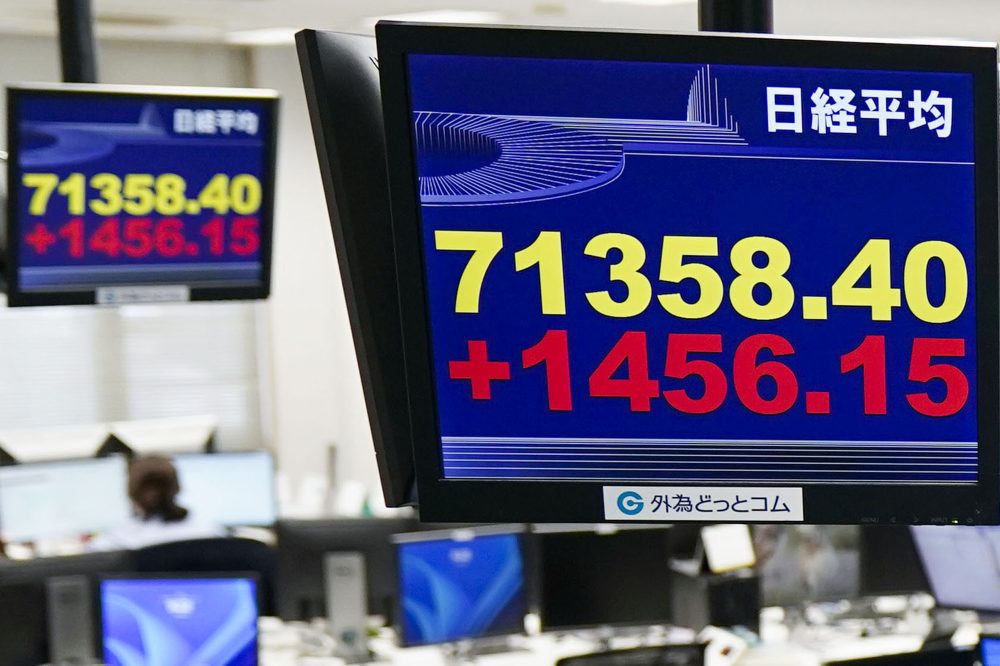
The news broke after U.S. markets had already closed for the day. In Tokyo, the Nikkei 225 climbed 1.9% to finish at 71,233.35. The index had crossed the 70,000 mark for the first time earlier this week and continues to rise on optimism surrounding the war’s end and strong demand for technology stocks tied to the artificial intelligence boom.
Neil Newman, head of strategy at Astris Advisory Japan, described the movement as widespread. “This is very broad-based rally, I believe it’s actually showing some confidence that the Japanese economy is going to recover further from the … the end of the war, and presumably the oil prices in the near future,” he said.
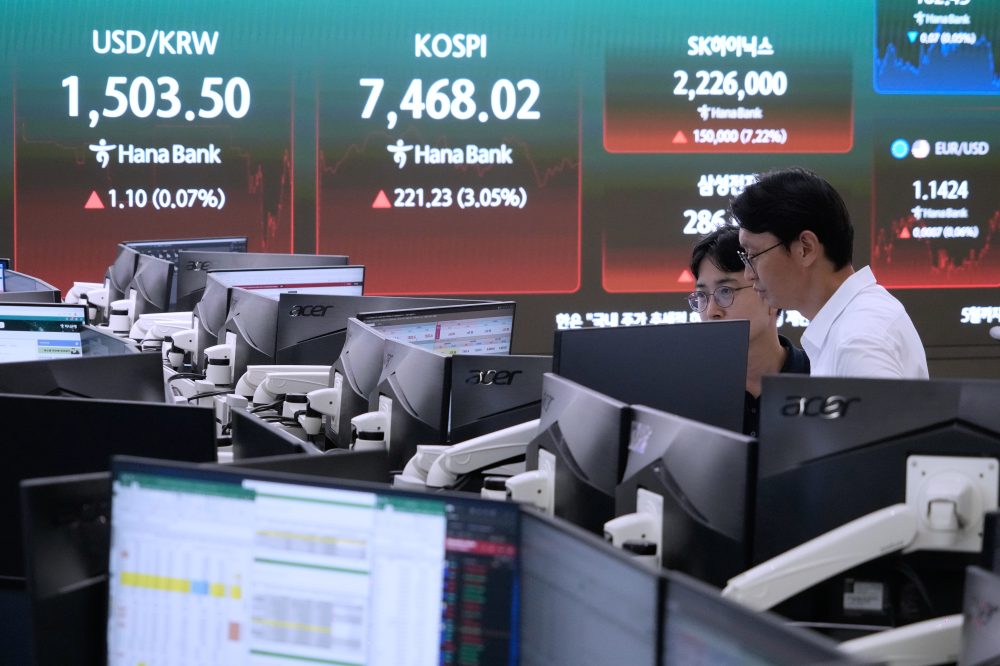
South Korea’s market also hit a fresh record, rising 0.6% to 8,917.31. Taiwan’s Taiex advanced 1%. Hong Kong’s Hang Seng moved in the opposite direction, falling 1.4% to 23,968.66, while China’s Shanghai Composite index edged up just 0.1%. Australia’s S&P/ASX 200 dipped 0.4% to 8,930.50.
Back on Wednesday, the S&P 500 dropped 1.2% to 7,420.10 after the Federal Reserve released projections indicating that nearly half of its policymakers expect at least one interest rate increase before the end of 2026. The Dow Jones Industrial Average fell 1% to 51,492.55, and the Nasdaq composite declined 1.3% to 26,021.66.
While higher interest rates can help bring inflation under control, they also slow economic growth and weigh on investment values. For much of the past year, markets had anticipated that the Fed would be cutting rates rather than raising them.
Kevin Warsh, in his first press conference as the new head of the U.S. central bank, declined to project where the federal funds rate might stand by the end of 2026. He indicated he is exploring changes to how the Fed communicates with financial markets, households, and businesses. Among his early decisions was removing forward-looking hints about interest rate direction from official Fed statements.
Wall Street responded with uncertainty to the Fed’s latest projections. Stocks swung back and forth multiple times after the central bank announced it would hold the federal funds rate steady for now.
Among individual stocks, SpaceX gave back an early gain and closed down 4.9%, marking its first losing session since its much-anticipated debut on U.S. markets last week. Microsoft fell 3.8%, Amazon dropped 3.5%, and Nvidia declined 1.3%, all weighing heavily on the S&P 500.
A report released Wednesday showed that retail sales nationwide grew faster in May than economists had predicted, providing some encouragement that consumer spending could help keep the economy afloat. However, persistent inflation has left many American shoppers feeling financially strained.
Oil prices had stabilized somewhat on Wednesday after sliding earlier in the week as traders reacted to optimism surrounding the tentative U.S.-Iran agreement. With the deal now signed, Iran is expected to take steps to reopen the Strait of Hormuz, which would allow oil tankers to resume deliveries of crude oil from the Persian Gulf — a development that could help ease pressure on inflation.
Early Thursday, Brent crude oil fell 1.6% to $78.31 per barrel. While that remains above the roughly $70 price seen before the war began, it is well below the $100-plus levels recorded just a few weeks ago. U.S. benchmark crude slipped 1.7% to $74.75 per barrel.
In currency markets, the U.S. dollar rose to 160.62 Japanese yen from 159.75 yen. The euro was trading at $1.1515, up slightly from $1.1503.