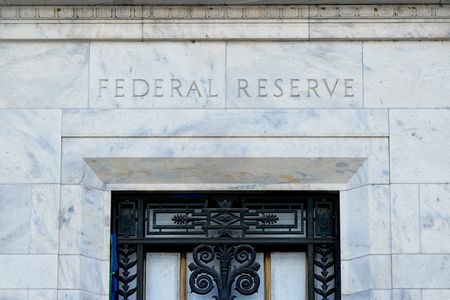

Major U.S. banks are making one final formal appeal to the Federal Reserve on Thursday, urging the central bank to make additional adjustments to proposed rules that determine how much money financial institutions must hold in reserve to cover potential losses.
According to five industry insiders who spoke on the condition of anonymity, the banks’ top priorities include reducing capital requirements tied to Wall Street trading operations, eliminating a proposed requirement to hold funds against unused credit card lines, and adjusting a financial penalty applied to the world’s most interconnected banks.
Back in March, federal regulators — led by the Federal Reserve — released a revised and more lenient version of sweeping capital rules. Officials estimated the updated proposal would cut the amount of loss-absorbing capital large banks must hold by roughly 4.8%, arguing that the existing requirements have been dragging on the broader economy. These regulations, commonly referred to as the “Basel” rules, reshape how banks calculate risk and, by extension, how much capital they are required to maintain.
The banking industry has largely welcomed the revised proposal as a significant improvement over the Fed’s original 2023 plan, which was crafted under Democratic leadership and would have required banks to increase their capital buffers by around 20% — a response to a wave of regional bank failures at the time.
Still, after combing through hundreds of pages of technical proposals, lenders have pinpointed a number of remaining concerns they want addressed before the rules are finalized.
Thursday marks the deadline for banks to submit their official written comments. A spokesperson for the Federal Reserve did not respond to a request for comment.
Matthew Bisanz, a partner at Mayer Brown who focuses on financial regulation, noted the urgency surrounding the process. “There’s a really big push to get it wrapped up in the next six months because there are other items on the regulatory agenda,” he said.
Not everyone supports loosening the rules. Critics warn that reducing capital requirements leaves banks more exposed to financial shocks and could ultimately harm the broader economy if lenders struggle and pull back on loans.
Last month, Phillip Basil, director of Economic Growth and Financial Stability for Better Markets, argued in a public statement that “strong capital standards are the foundation” of a stable banking system, because “they ensure that banks — not taxpayers, workers, or small businesses — absorb losses when risks materialize.”
On the trading side, banks plan to argue that regulators have been overly cautious in assigning capital to trading activities — particularly given that the Fed already evaluates individual banks’ risk exposure each year through its “stress test” process. Industry groups may propose changes significant enough to dramatically reduce or even eliminate the additional trading capital the Fed has outlined.
Banks are also expected to challenge a provision that would require them to hold capital equal to 10% of unused credit lines — known as “unconditionally cancelable commitments” — the most common example being unused credit card balances. Currently, these lines carry no capital requirement because banks can cancel them at any time. However, regulators contend that in practice, banks are unlikely to cancel these lines during economic downturns due to customer relationships and risk management considerations.
A group of the nation’s largest banks will also renew their push to soften a financial “surcharge” the Fed applies to globally significant U.S. banks — known as GSIBs — a measure that has been in place since the 2008 financial crisis. The Fed has proposed a one-time adjustment to reflect economic growth going back to around 2019, along with automatic future updates. But banks are pressing for the adjustment to stretch back further, to 2015, when the surcharge was first introduced.
Despite their concerns, banks are not expected to mount the kind of aggressive opposition they launched in 2023. Multiple executives said the industry has narrowed its focus to the most pressing issues. One industry group reportedly identified close to 100 problems with the proposal but plans to formally argue only a few dozen of them.
Fed Vice Chair for Supervision Michelle Bowman, who is overseeing the rule-writing process, has reportedly signaled to banks that they should keep their feedback measured. Industry executives say they are eager to move past a regulatory battle that has consumed years of time and resources.