
When the Bank of Japan’s second-highest official had to fill in for his ailing superior at a historic policy meeting this week, he wasted no time sending a stark warning: the central bank was at risk of falling behind on inflation.
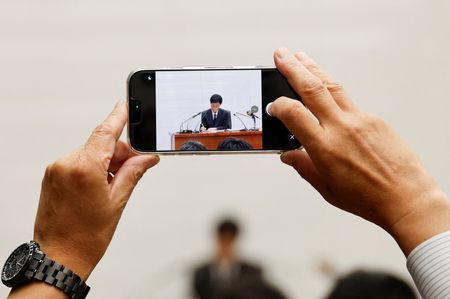
Deputy Governor Shinichi Uchida — a career central banker considered a potential future head of the institution — stepped into the spotlight to address reporters following the BOJ’s decision to raise interest rates to 1%, their highest level in 31 years.
Though Uchida stopped short of signaling exactly when the next rate increase might come, his tone leaned hawkish enough to prevent a sharp drop in the yen, something analysts attributed to his well-honed understanding of financial markets.
Rather than using the cautious, layered language that Governor Kazuo Ueda has often employed at post-meeting briefings, Uchida — widely credited as a key architect of many BOJ policies — gave investors an unusually candid look at how the bank views inflation risks.
“Price rises are broadening, and there is a risk that underlying inflation may deviate from our target,” Uchida said, emphasizing the importance of keeping price growth anchored near the 2% goal.
He also noted the BOJ was closely monitoring movements in the yen, as businesses have grown more willing to pass along higher costs stemming from the currency’s weakness.
Former BOJ official Shigeto Nagai, now head of Japan economics at Oxford Economics, praised the deputy’s approach. “Uchida was as always, clear and stable. His remarks left no room for error, leaving FX markets with no opportunity to engage in speculative trading,” Nagai said.
That stands in sharp contrast to past statements by Ueda, which some markets interpreted as an acceptance of a weak yen — comments that sent the currency tumbling and prompted yen-buying intervention by Japan’s Ministry of Finance.
Having only recently been discharged from a hospital stay for leukemia treatment, the 63-year-old deputy read carefully from a prepared statement at the start of the briefing, making the case for continued rate increases to head off the risk of inflation running too hot.
The central message was consistent: with financial conditions still relatively loose, the BOJ intends to keep nudging borrowing costs higher while keeping a watchful eye on outside threats, including instability in the Middle East.
What differed was the delivery. Governor Ueda, who came to the role from academia, tends to offer detailed, model-driven explanations of his thinking. Uchida, by contrast, is known for a more practical, grounded approach — focused on real-world decision-making under uncertain conditions, according to those who have worked alongside him.
“While Ueda would add layers of explanations to make his case, Uchida keeps his comments simple and concise,” said Seisaku Kameda, a former senior BOJ economist who worked under both men. “Uchida will be clear and brief on what the BOJ knows or can say. For the unknowns, he’s completely silent.”
That difference showed clearly when Uchida flatly downplayed the usefulness of the BOJ’s neutral rate estimate as a guide for future policy decisions — a more blunt take than Ueda’s, who had previously suggested the bank should work to improve those estimates internally.
Before being appointed deputy governor in 2023, Uchida spent the bulk of his career in the BOJ’s monetary affairs department, the division responsible for developing policy ideas and drafting executive speeches. He played a role in both the launch and the eventual unwinding of negative interest rates and yield curve control — unconventional tools the bank had used to stimulate the economy.
Given his extensive background, some market observers view Uchida as a leading candidate to one day take over as governor when Ueda’s term concludes in 2028.
“Uchida’s remarks were solid and grounded on his long experience as a career central banker,” said Mari Iwashita, executive rates strategist at Nomura Securities. “Instead of elaborating on the various uncertainties, he laid out the BOJ’s focus on inflation risks very clearly.”
By expressing confidence that Japan is now experiencing a lasting cycle of moderate wage and price increases, Uchida pushed back against a perception in some corners of the market that he is a policy dove — a label tied in part to his earlier resistance to rate hikes.
Under former Governor Haruhiko Kuroda, Uchida had authored a speech attributing Japan’s prolonged deflation to sluggish wage growth, and he championed ultra-loose monetary policy designed to overheat the economy enough to force employers to raise pay.
This week, he declared that era of deflation effectively over, crediting the BOJ’s past stimulus, and pointed to upward pressure on prices as the new challenge to manage.
The BOJ has indicated that Governor Ueda is expected to return from the hospital in time to chair the next policy meeting in July.
Still, Uchida’s comments are expected to remain a focal point for markets, given his considerable influence over policy direction and his track record of offering clear hints about near-term shifts. Assuming his health permits, he is expected to make public appearances a few times per year, in line with other board members.
Some analysts now anticipate that Ueda may begin more openly echoing his deputy’s concern that the BOJ is not moving fast enough to address inflation.
“For the first time, the BOJ cited the risk of being behind the curve as among reasons to raise rates. That’s a big change showing its alarm over mounting price pressures,” said Kameda, who now works as an economist at Japan’s Sompo Institute Plus. “With such imminent and real risk looming, the policy message should be pretty clear with little room for ambiguity.”