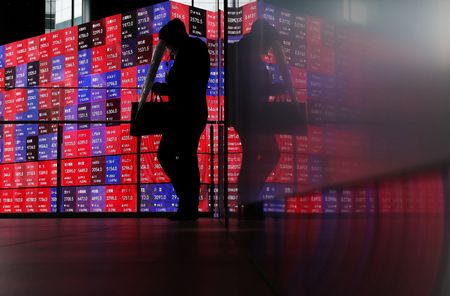
TOKYO — Japan’s central bank took a significant step Tuesday, pushing its short-term interest rate to the highest point in more than three decades in a move that financial markets had widely anticipated.
The Bank of Japan concluded a two-day policy meeting by voting 7-1 to raise its benchmark rate from 0.75% to 1.0%. The increase brings the rate to a level not seen since 1995 and marks the bank’s first rate hike since December.
Officials signaled that the decision reflects the central bank’s concern about inflation risks stemming from the ongoing conflict in the Middle East.
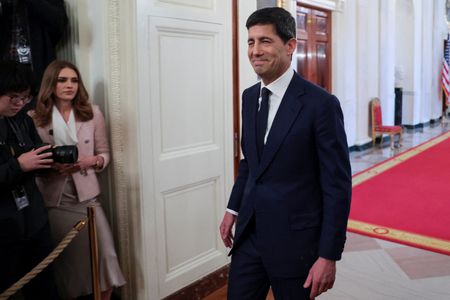
Governor Kazuo Ueda was absent from the meeting, as he is currently hospitalized for medical treatment and did not cast a vote. Deputy Governor Shinichi Uchida is scheduled to hold a news briefing at 3:30 p.m. local time (0630 GMT) on Ueda’s behalf to outline the reasoning behind the policy change.
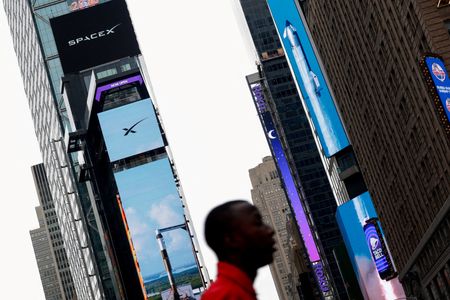
SEOUL — South Korean brokerage Mirae Asset Securities issued a public apology to its clients on Monday after the firm was shut out of SpaceX’s historic stock market debut, leaving hundreds of millions of dollars in investor orders unfulfilled.
In a letter to clients that was reviewed by Reuters, Mirae Asset Securities co-CEOs Kim Mi-seob and Heo Sun-ho explained that while the brokerage had been qualified to offer SpaceX shares to South Korean investors and had served as one of the IPO’s underwriters, the U.S. lead underwriter ultimately chose not to include Mirae in the final share distribution.
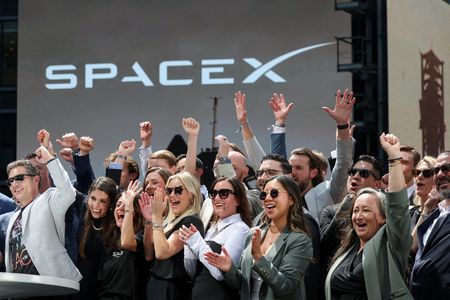
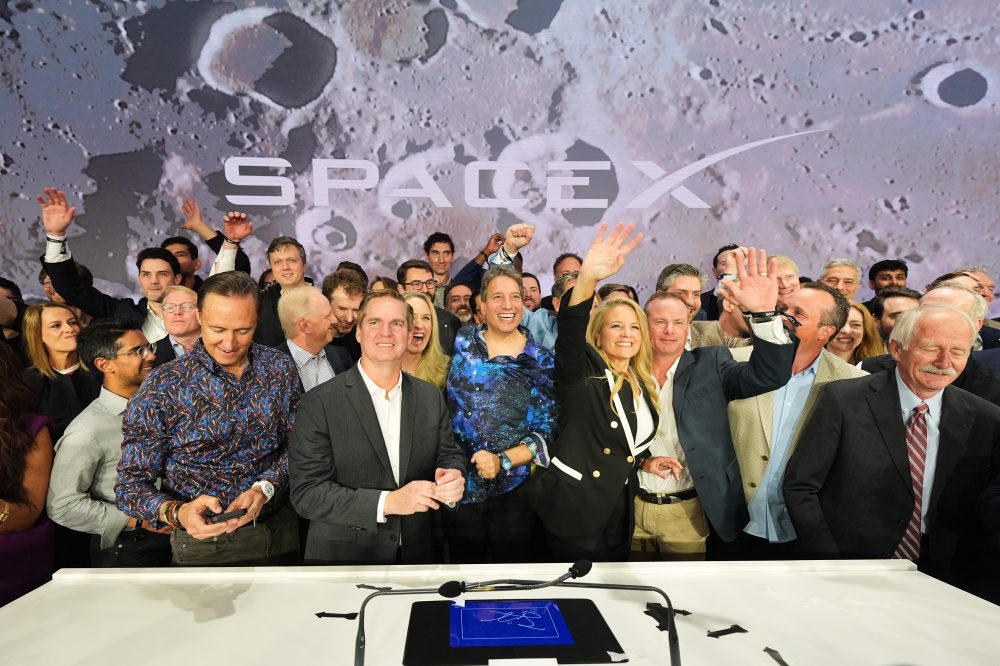
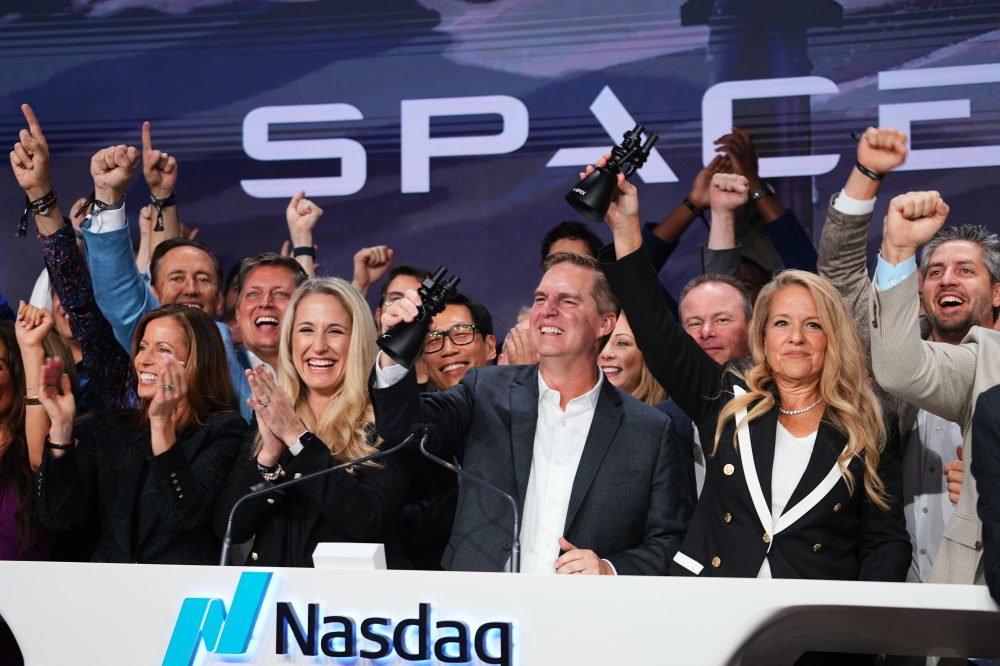
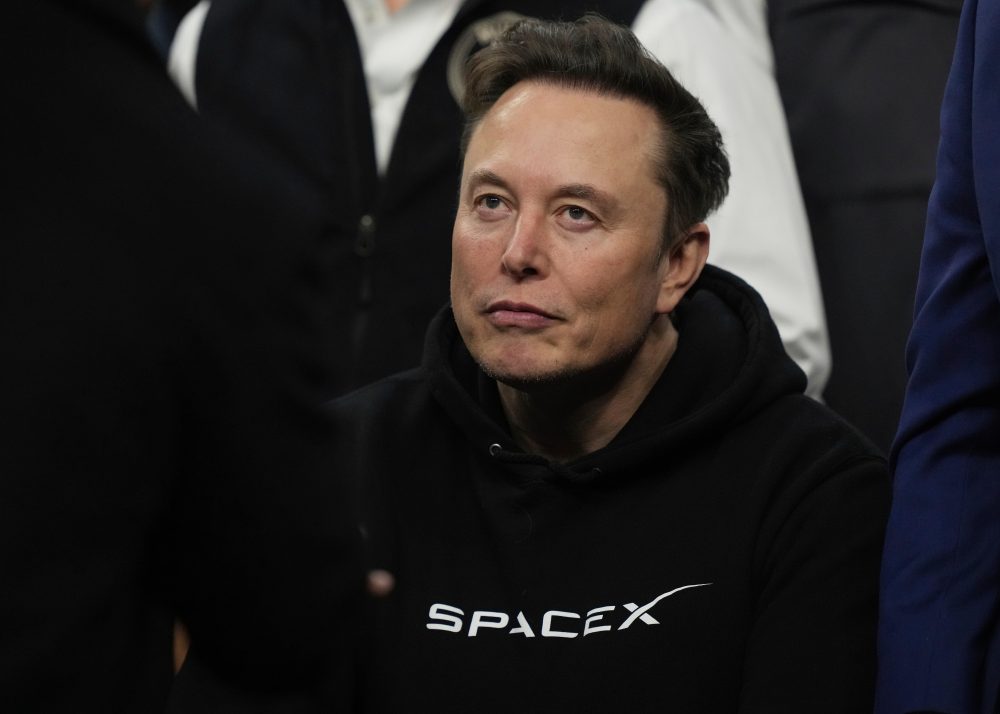
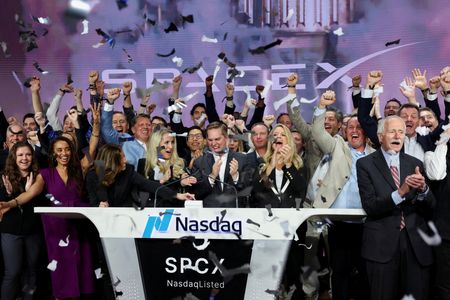
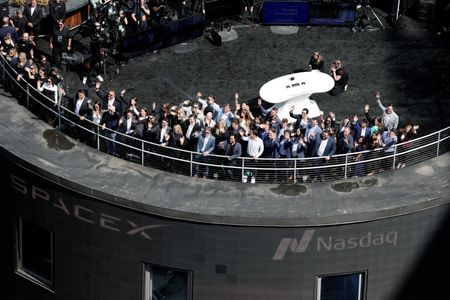
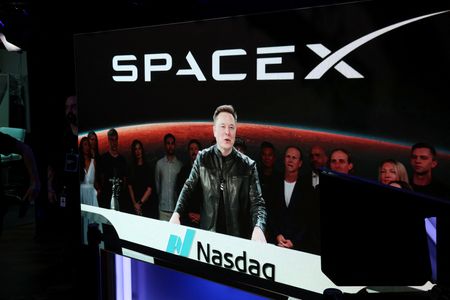
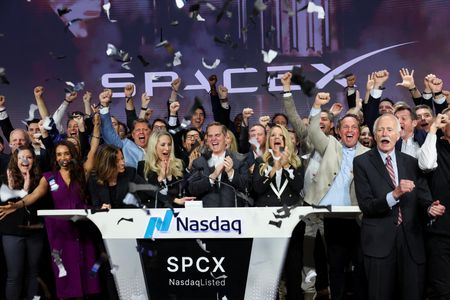
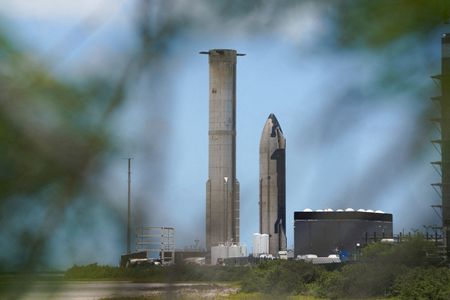
SpaceX made its stock market debut on Friday, sending the company’s total valuation beyond $2 trillion and making founder Elon Musk the world’s first trillionaire.
Earlier this month, Mirae Asset had gathered $500 million worth of orders from investors eager to get in on the SpaceX offering. According to someone with knowledge of the situation, both portions of the offering sold out within minutes of becoming available.
“We made every effort until the very end to secure an allocation of shares. However, due to the discretionary final decision made by the lead underwriter in the United States, no shares were ultimately allocated to us,” the letter stated. The firm added that it is now looking into the circumstances behind that decision.
“We are deeply disappointed and sincerely sorry to all customers who placed their trust in Mirae Asset Securities and participated in this offering,” the letter continued.
The letter did not name the lead underwriter responsible for the allocation decision. Several major banks involved in the SpaceX IPO — including Morgan Stanley, Bank of America, and JPMorgan Chase — did not respond to requests for comment outside of Asian business hours. Goldman Sachs and Citigroup both declined to comment.
According to Korea Economic Daily TV, investors who had already converted their money into U.S. dollars to cover subscription deposits were still on the hook for foreign exchange fees and had to absorb losses tied to recent currency fluctuations.
South Korea’s Financial Supervisory Service opened a formal inspection of Mirae Asset on June 8, looking into whether the brokerage adequately warned investors about the possibility that a share allocation might not come through. A regulator official confirmed the inspection on Tuesday but asked not to be named, citing the confidential nature of the matter.
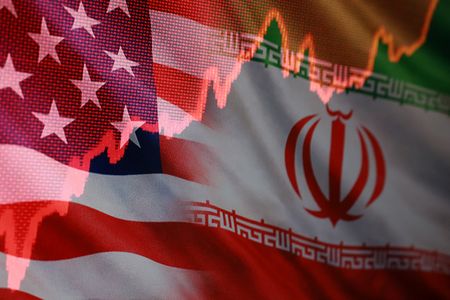
Asian stock markets edged slightly higher on Tuesday, pulling back from the stronger gains seen Monday when news broke of a preliminary peace agreement between the United States and Iran. As the initial excitement surrounding the deal began to settle, investors turned their attention to upcoming central bank decisions around the world.
The early trading mood across the region was more restrained, with markets adopting a wait-and-see approach regarding developments in the Gulf. Oil prices, which had already fallen to a three-month low overnight, showed only modest movement — Brent crude futures rose 51 cents, or 0.6%, to $83.74 per barrel. Shipping companies in Asia and Europe cautioned that rebuilding enough confidence to resume transit through the Strait of Hormuz could take several weeks.
The MSCI index tracking Asia-Pacific shares outside of Japan gained 0.2%, with South Korean stocks leading the way. Japan’s Nikkei 225 slipped 0.2%, pulling back from a record high, while S&P 500 e-mini futures dipped 0.1%.
Although U.S. President Donald Trump’s announcement of the Iran agreement brought a wave of investor relief on Monday, the deal is also expected to create tensions between Washington and Israel.
Analysts from Westpac described the development in a research note, saying, “While it is an important diplomatic breakthrough that should remove a key source of market volatility, the durability of the deal is likely to be tested in the future.” They added, “Many sticking points, including the fate of Iran’s nuclear programme, were left to be resolved in subsequent negotiations.”
On Wall Street Monday night, both stocks and bonds surged. The S&P 500 climbed 1.7% and the Nasdaq Composite jumped 3.1%, while the Dow Jones Industrial Average and Europe’s STOXX 600 both closed at all-time highs.
Looking beyond geopolitical developments, traders are closely watching a series of central bank announcements. The Bank of Japan is widely expected to raise its benchmark interest rate to a 31-year high on Tuesday. Deputy Governor Shinichi Uchida is scheduled to hold a press briefing following the meeting, stepping in for Governor Kazuo Ueda, who will be absent due to medical treatment.
Analysts from Mitsubishi UFJ noted in a research report, “We do not anticipate any major changes to the Bank’s assessment of current conditions.” They also wrote, “We expect Deputy Governor Uchida’s press conference, including the rationale he presents for the rate-hike decision, will be based largely on Governor Ueda’s June 3 speech,” adding that “Mr. Uchida is also likely to follow the governor’s remarks when discussing future policy decisions.”
Separately, a Reuters poll of economists indicates the Reserve Bank of Australia is expected to pause its rate-tightening campaign when it meets later Tuesday.
The U.S. dollar index, which tracks the greenback against a group of six major currencies, held steady at 99.66, staying within the narrow trading range it has maintained throughout the week. The yield on the 10-year U.S. Treasury bond edged up 0.8 basis points to 4.475%, while gold rose 0.2% to $4,313.87.
In digital currency markets, bitcoin fell 0.3% to $66,245.97, while ether dropped 1.2% to $1,793.70.
Oil prices climbed back Tuesday following concerns that a preliminary peace agreement between the U.S. and Iran lacks critical details, and that restoring the flow of oil through a vital shipping corridor could take much longer than initially expected.
Brent crude futures edged up 26 cents, or 0.3%, reaching $83.42 per barrel, while U.S. West Texas Intermediate rose 46 cents, also 0.3%, to $81.12 per barrel, as of 0108 GMT.
The rebound came after oil prices plunged nearly 5% on Monday — hitting their lowest closing level since March 4 — following an announcement by U.S. President Donald Trump that a memorandum of understanding had been signed to bring an end to the U.S.-Israeli war with Iran. The conflict had shut down the Strait of Hormuz, a waterway that normally carries one-fifth of the world’s oil supply, and caused roughly 14 million barrels per day of oil production to be halted.
While the announcement sparked initial optimism, the full contents of the memorandum have not been made public, and a permanent truce has not yet been established. Early reports suggest the deal would reopen the Strait of Hormuz and put a 60-day ceasefire in place, giving negotiators time to work through complex issues such as the future of Iran’s nuclear program.
Iranian President Masoud Pezeshkian described the memorandum Monday as an “important step” toward ending the fighting, but acknowledged that a lasting peace agreement “has yet to take shape.”
A senior Iranian official also said Monday that, pending a final deal, Iran would pause its nuclear activities — halting further uranium enrichment and stopping any expansion of its nuclear facilities.
Market analysts cautioned that investors remain wary until more information becomes available. “The devil may be in the details, and until those details emerge, the market is likely to show restraint regarding the further unwinding of the risk premium in energy markets,” said Tim Waterer, chief market analyst at KCM Trade.
Questions also remain about how quickly oil production and shipping can return to normal, even if the agreement holds. “The path back to normal supply flows remains far from straightforward,” said Tony Sycamore, market analyst at IG.
Sycamore elaborated, noting that “clearing mines, restoring full marine insurance coverage, and getting vessels and operators comfortable enough to return to the Gulf will all take time as will bringing shuttered wells and damaged regional infrastructure back online.”
The U.S. dollar remained close to 10-day lows on Tuesday following news of a preliminary deal to end the Middle East conflict, lifting risk appetite across global markets while investors turned their attention to a series of central bank meetings in Japan and Australia.
U.S. President Donald Trump announced that the U.S. and Iran have signed a preliminary agreement to end the war, though specific details have not yet been released. Despite the lack of specifics, financial markets responded positively, with oil prices falling on the news.
The agreement would extend a fragile ceasefire — first announced in April — by an additional 60 days and reopen the Strait of Hormuz, a critical shipping passage that Tehran has effectively blocked since the U.S. and Israel launched attacks on Iran in February.
The dollar index, which tracks the U.S. currency against six others, stood at 99.66. The index has climbed roughly 2% since the conflict began in late February, driven by volatile reactions to the ceasefire and ongoing retaliatory strikes between the parties involved.
Currency markets were more restrained in their reaction compared to other financial sectors, as traders awaited decisions from several major central banks this week, including the Bank of England and the U.S. Federal Reserve later in the week.
The euro was trading at $1.159, just under the 10-day peak of $1.1622 reached the previous day. The British pound was valued at $1.3413 in early Tuesday trading.
Tony Sycamore, a market analyst at IG, noted that while energy markets moved swiftly to reduce concerns about prolonged supply disruptions, the road back to normal shipping flows is far from simple. “While energy markets moved quickly to price out the immediate risk of prolonged supply disruptions, the path back to normal flows remains far from straightforward,” he said.
Analysts at ING cautioned that market reactions have outpaced actual developments on the ground. “A more durable repricing requires safe, predictable and insured shipping through the Strait of Hormuz,” they wrote. “And demand could likely to be higher than usual as depleted reserves need to be replenished. Re-escalation risks are reduced, but not off the table.”
Uncertainty over supply chains, inflation, and interest rate paths is expected to keep investors cautious in the near term.
The Australian dollar was trading at $0.7069 ahead of the Reserve Bank of Australia’s policy meeting, where the central bank is widely expected to leave rates unchanged following three straight increases, even as inflation stays elevated.
Charu Chanana, chief investment strategist at Saxo, said investors will be watching whether the RBA’s statement continues to signal a leaning toward further tightening or begins to acknowledge that inflationary pressures may be easing. “The RBA may not want to sound too dovish yet. Inflation is still not fully back in the comfort zone and markets are still pricing a meaningful chance of one final hike by year-end,” she said.
In Japan, the yen was trading at 160.24 per U.S. dollar, hovering near the closely watched 160 level that has made traders nervous about possible intervention from Tokyo. Even the peace deal news offered little relief for the struggling Japanese currency.
The Bank of Japan is set to raise interest rates to a 31-year high on Tuesday, a move that is broadly anticipated. Investor focus will instead be on signals about when the next rate increase might come and the overall pace of tightening.
Deputy Governor Shinichi Uchida’s press briefing following the meeting is expected to draw significant attention, with markets anticipating he will reaffirm the central bank’s commitment to continued rate hikes without offering a specific timeline for the next move.
Yuxuan Tang, head of rates and foreign exchange strategy for Asia at J.P. Morgan Private Bank, warned that any communication perceived as dovish could reignite bearish bets on the yen and Japanese government bonds, making efforts to stabilize markets more costly. “That said, the BOJ has not typically leaned hawkish in its communication, particularly given the recent stabilization in inflation and downside growth risks from elevated energy prices,” Tang added.
The top financial officer at SoftBank Group’s Vision Fund investment division is heading for the exit after roughly ten years with the organization, according to an internal company memo obtained by Reuters.
Navneet Govil, who held the role of chief financial officer at SoftBank Investment Advisors, is departing the firm. Alex Clavel, the CEO of SoftBank Investment Advisors, authored the memo and indicated that further details about the handover of responsibilities would be shared at an appropriate time.
SoftBank Vision Fund declined to offer any comment on the matter. Reuters is the first outlet to report on the departure.
Govil originally came on board at SoftBank in 2016, arriving a full year before the debut of the first Vision Fund — a vehicle that shook up the startup investment landscape through a series of bold, high-stakes bets on emerging companies.
Some of those investments paid off handsomely, while others turned into costly setbacks. Office-sharing company WeWork stands out as one of the more notable disappointments, as a number of once-celebrated startups fell out of favor with the broader market.
In recent years, the Vision Fund has gone through rounds of layoffs and internal restructuring. SoftBank’s founder and CEO Masayoshi Son has increasingly redirected the company’s attention toward artificial intelligence-related investments.
Vision Fund 2, which launched in 2019 with a focus on earlier-stage tech companies, has since become the vehicle holding SoftBank’s significant stake in OpenAI, the company behind the widely-used ChatGPT platform.
General Motors may be moving into the defense manufacturing space. According to a report published Monday by the Wall Street Journal, the automaker is in active discussions with Lockheed Martin about supplying parts for the defense contractor’s weapons systems.
The report cited unnamed sources familiar with the matter. Reuters, which covered the story, said it was unable to immediately verify the Wall Street Journal’s reporting.
Federal authorities announced Monday that they have wrapped up their investigation into Delta Air Lines’ catastrophic operational breakdown from July 2024, choosing not to pursue any penalties against the carrier.
The crisis was set off by a widespread CrowdStrike software outage that left 1.3 million Delta customers stranded or with severely disrupted travel plans. While other major airlines managed to bounce back from the outage relatively quickly, Delta’s recovery was notably slower, prompting the Biden administration to launch a formal inquiry into how the airline handled the situation.
A spokesperson for the U.S. Transportation Department said the review concluded that Delta took appropriate steps to address the fallout for its customers. “Delta’s passengers received prompt refunds, adequate baggage assistance, and appropriate assistance for passengers with disabilities,” the spokesperson stated.
With those findings in hand, the Trump administration determined no further action was warranted and officially closed the case.
Newmont, the world’s largest gold miner, announced Monday that Brian Tabolt has been selected as its new chief financial officer, taking over from Peter Wexler, who stepped in as interim finance head after the previous CFO departed.
Tabolt came to Newmont in 2021, having previously worked at Molson Coors Beverage. Most recently, he held the roles of chief accounting officer and group head of finance at the company. His new role officially begins July 1.
The company had previously announced the exit of then-CFO Karyn Ovelmen, at which point Wexler was tapped to lead the finance division on a temporary basis.
Tabolt’s appointment is just one piece of a broader reshaping of Newmont’s executive team. The company is also bringing in Mark Rodgers as chief operating officer and David Thornton as chief technical officer. The moves reflect the mining company’s push to strengthen financial discipline and overall performance.
Mondelez International, the company behind popular chocolates and snack brands including Toblerone, announced Monday that it has appointed Amit Banati as its new chief financial officer. The change takes effect July 1.
Banati steps into the position previously held by Luca Zaramella, who transitioned to the role of chief operating officer in January after serving as the company’s finance chief for more than eight years.
Before joining Mondelez, Banati spent roughly 13 years as CFO at Kellogg and continued in that capacity at Kellanova following the company’s split, remaining there through May 2025. He then served for a year as CFO at Kenvue, the maker of Tylenol.
His career in the consumer goods sector spans decades. He has held senior-level positions at Cadbury Schweppes and at Kraft Foods, the predecessor to Mondelez, along with a 13-year tenure at Procter & Gamble earlier in his career.
Mondelez has managed to hold its ground in a challenging environment for packaged food companies, continuing to see demand for its biscuits and chocolates even as prices have risen.
The company behind the Dannon yogurt brand has filed a federal lawsuit against rival Chobani, claiming the competing yogurt maker is deceiving customers with inflated protein claims on its product labels.
Danone filed the complaint in Manhattan federal court, targeting Chobani’s 20G Protein line, which comes in multiple-serving tubs. Danone argues the product is positioned as a direct competitor to its own Oikos Pro in the ultra-high-protein yogurt market.
“This conduct is particularly insidious when Chobani knows that healthcare providers and the federal government are directing the public to choose foods that offer higher concentrations of protein to maintain their health,” Danone stated in the complaint.
Chobani and the attorneys representing it in separate false advertising litigation brought by Danone had not responded to requests for comment at the time of the report.
At the heart of the case is how protein content is measured per serving. Danone’s Oikos Pro delivers 20 grams of protein in a standard 5.3-ounce serving — a size consistent with industry norms. Danone contends that achieving that level of protein density is both difficult and expensive to produce.
Rather than match that standard, Danone alleges, Chobani simply enlarged its serving sizes without adding more yogurt to the container. Under U.S. Food and Drug Administration guidelines for serving sizes, Danone claims Chobani’s product would actually contain fewer than 18 grams of protein per serving.
That figure, Danone argues, puts Chobani 20G Protein closer in line with Oikos Triple Zero — a lower-cost product containing between 15 and 18 grams of protein per serving.
“If consumers knew the truth, instead of choosing the Chobani product, they would choose either Oikos Pro for a true ultra-high-protein option, or Oikos Triple Zero for a better price,” the complaint stated.
Danone is asking the court for unspecified financial damages and is also seeking changes to Chobani’s product labeling.
This is at least the fourth lawsuit filed between the two companies since 2016. In a separate legal dispute, Chobani has asked a Manhattan federal judge to throw out a Danone lawsuit claiming it copied packaging and the slogan “Bright & Mellow” for a line of cold brew coffee products.
Chobani is headquartered in New York, while Danone is based in Paris, France, with its U.S. operations centered in White Plains, New York.
U.S. stock markets posted strong gains Monday and oil prices fell sharply after Washington and Tehran announced a deal to end their war and reopen the Strait of Hormuz — a critical global shipping lane whose closure had been shaking financial markets and raising fears of widespread inflation.
The Dow Jones Industrial Average climbed to an intraday record following the preliminary peace agreement, while the Nasdaq recorded its largest single-day percentage gain since March 31. Europe’s STOXX 600 index also closed at a record high.
Technology stocks led the charge, with chipmakers posting especially strong gains. Meanwhile, the U.S. dollar fell to a 10-day low against both the euro and the British pound, Treasury yields dropped to a one-month low, and gold prices jumped.
Despite the optimistic market reaction, global shipping companies in Asia and Europe said it could take weeks before they feel confident enough to resume normal transit through the Strait of Hormuz. Carriers are waiting for more details on the deal’s implementation, including the clearing of mines from the waterway. On Monday, only a single liquefied natural gas tanker was observed making the crossing.
In other major developments, Israeli Prime Minister Benjamin Netanyahu appears to be on a collision course with President Donald Trump in the wake of the peace agreement.
G7 leaders began arriving in France on Monday for a summit where they will weigh next steps following the U.S.-Iran deal and seek common ground on the war in Ukraine. The gathering may be overshadowed by new tariff threats from Trump, which have made global leaders increasingly uneasy about U.S. trade policy.
In other news making waves Monday, British Prime Minister Keir Starmer announced a plan to ban social media use for children under 16 years old, while also imposing restrictions on gaming and streaming services. Platforms including YouTube, Facebook, and X would fall under the ban, which has broad support among parents and politicians in the United Kingdom.
On the corporate front, SpaceX announced that its underwriters exercised the so-called “greenshoe” option to purchase additional shares, pushing total proceeds from its initial public offering to $85.7 billion. Fox announced a $22 billion agreement to acquire Roku as it looks to grow its advertising and streaming operations. Chipmaker Nvidia said it plans to raise $20 billion through a U.S. bond sale to fund the massive costs of producing advanced artificial intelligence chips.
International Monetary Fund chief Kristalina Georgieva noted that while there are currently no visible signs of a global economic slowdown tied to the Middle East conflict, risks remain elevated.
Looking ahead, markets will be watching developments in the Middle East, energy prices, G7 outcomes, a widely expected interest rate hike by the Bank of Japan, and a range of U.S. economic data releases including housing starts and import and export prices for May.
Chip designer Qualcomm is in discussions to purchase artificial intelligence chip startup Tenstorrent, with the potential deal carrying a price tag of anywhere from $8 billion to $10 billion, according to a report published Monday by The Information.
The publication cited a source who has direct knowledge of the ongoing negotiations.
Adaptive Biotechnologies announced Monday that it plans to split its immune medicine operation away from its cancer-testing division, as the company weighs what to do with its drug-discovery business and doubles down on diagnostic testing.
The company said it is currently exploring all available options for the immune medicine platform and expects to settle on a preferred course of action by the close of 2026.
Adaptive’s immune medicine platform is designed to assist in drug research by pinpointing therapeutic targets and speeding up the development of precision-based treatments.
Meanwhile, the company’s cancer-testing division — which includes its clonoSEQ diagnostic test — has turned a profit and expanded its coverage through insurance providers, the company said.
The clonoSEQ test is used to detect tiny amounts of cancer that may still be present in a patient’s body following treatment, and it is also utilized in drug-development research studies.
Revenue from the cancer-testing unit climbed to $212 million in 2025, up significantly from $103 million in 2023, according to the company.
Adaptive indicated that the immune medicine business may be a better fit outside of the company’s diagnostics-centered structure.
The company cautioned that there is no guarantee the review process will lead to a transaction or any specific result.
A weekend deal to end the war between the United States and Iran is raising hopes that stock market gains could spread well beyond the technology sector, with consumer-focused companies and smaller businesses seen as potential winners.
Investors say economically sensitive stocks — including consumer shares, small-cap companies, and equities in regions more exposed to energy prices than the U.S. — could see a boost following the announcement. The agreement included the reopening of the Strait of Hormuz, a vital route for global oil shipments.
U.S. crude oil prices dropped to a three-month low on Monday in the wake of the deal, while the S&P 500 climbed 1.7%, landing less than 1% below its all-time record set earlier this month.
“Easing in geopolitical tensions could alleviate some of the inflation pressures and reduce bond yields,” said Angelo Kourkafas, senior global investment strategist at Edward Jones. “That can be the catalyst driving that rotation into cyclical sectors and areas that have lagged.”
Robert Pavlik, senior portfolio manager at Dakota Wealth Management, said retail names such as Home Depot, Target, and Macy’s could benefit as falling oil prices lower gas costs for everyday shoppers. The S&P 500 consumer discretionary sector rose 1.9% in afternoon trading Monday, while the small-cap Russell 2000 index gained 0.9%.
“The end of the war could help fuel the belief that consumers will have discretionary money to spend somewhere else,” Pavlik said.
Strategists at BCA Research announced Monday they were opening a “tactical long” position in the consumer discretionary sector, citing “easing geopolitical tensions and oil-price relief.”
Many investors have been looking for relative bargains outside of tech. Since the conflict began in late February, the S&P 500 technology sector has surged 28%, compared to a 10% gain for the broader market index.
Despite that, Pavlik and other analysts cautioned that investors may be hesitant to leave tech stocks behind while they continue to perform strongly. On Monday, tech was actually the top-performing sector, climbing more than 3%.
“A sustained ceasefire between the U.S. and Iran, combined with easing oil prices, could help the rally broaden beyond AI and tech,” said Anthony Saglimbene, chief market strategist at Ameriprise, though he noted that on Monday, “investors appear most interested in bidding up established winners.”
Looking ahead, a number of market strategists are anticipating a wider expansion of stock market strength in the months to come. JPMorgan equity strategists said Monday they expect market gains to broaden in the second half of the year.
“If our positive macro view plays out — underpinned by strong earnings, stable inflation expectations, and an easing of geopolitical risks in the second half — cyclicals should remain well positioned to outperform through year-end,” JPMorgan strategists wrote in a research note.
Morgan Stanley equity strategists are forecasting “relative strength” ahead for consumer goods, transportation, and regional bank stocks, where earnings trends are on the upswing. “A broadening to under-owned cyclical groups is underway,” Morgan Stanley wrote Monday.
The resolution of the Iran conflict may also provide a bigger lift to international markets that were seen as more vulnerable to oil price spikes than the United States. “While recent shocks have reinforced U.S. resilience, the de-escalation in energy, with oil near about $80, could act as a catalyst for catch-up flows into ex-U.S. markets,” wrote Manish Kabra, equity strategist at Societe Generale.
Still, some investors say the market rally may need additional support to truly broaden out. Interest rate expectations have shifted dramatically — markets that started the year expecting rate cuts are now pricing in a potential rate hike, after energy-driven inflation climbed. The Federal Reserve is expected to keep rates unchanged at its meeting this week.
“When you think about whether the rest of the market will outperform the AI story, I think for that, you may have to see rate cuts being priced in,” said Sonu Varghese, global macro strategist at Carson Group.
Paul Nolte, senior wealth advisor and market strategist at Murphy & Sylvest Wealth Management, said tech stocks may need to stumble before other sectors can take the lead. “Where you’re going to get a boost in the rest of the market is from a stumble in the tech sector, in the AI trade,” Nolte said. “Tech has really just kind of sucked all the oxygen out of the room to this point to where it’s difficult for any other part of the market to do well.”
A federal judge has permanently thrown out a lawsuit filed by Elon Musk’s artificial intelligence company xAI, which had accused rival OpenAI — led by Sam Altman — of stealing its trade secrets.
U.S. District Judge Rita Lin, presiding in San Francisco, ruled that xAI failed to demonstrate that OpenAI encouraged a former xAI engineer named Xuechen Li to improperly take trade secrets. The judge also found no evidence that Li revealed any xAI trade secrets during a presentation he made while OpenAI was in the process of recruiting him.
Judge Lin dismissed the case with prejudice, meaning xAI cannot refile it. She described any attempt to continue the legal battle as “futile.” This was not the first time the case was thrown out — Lin had already dismissed an earlier version of the complaint back in February.
The lawsuit was originally filed last September. It alleged that former xAI employees walked out the door with confidential company information, including source code connected to the Grok chatbot, when they departed for positions at OpenAI.
The xAI company operates as part of Musk’s broader enterprise that also includes the rocket, satellite, and AI firm SpaceX.
Attorneys representing xAI had not responded to requests for comment at the time of reporting.
American consumers who rely on artificial intelligence tools to help them decide what to buy are proving to be more valuable customers for online retailers, according to new data released in May by Adobe Analytics.
Shoppers who landed on retail websites after receiving product suggestions from large language models — such as OpenAI’s ChatGPT or Google’s Gemini — generated 53% more revenue per visit compared to shoppers who arrived from traditional, non-AI sources.
Vivek Pandya, director of digital insights at Adobe, noted that retailers whose products appear in AI-generated recommendations are better positioned to offer more personalized experiences to shoppers who then leave those AI platforms to complete their purchases directly on a retailer’s own website.
The data also showed that AI-driven traffic to retail websites surged 138% in May compared to the same time last year — the largest share of total retail visits recorded since Adobe Analytics began monitoring this trend in October 2024.
Additional findings from the report include:
Shoppers referred by AI tools converted into buyers at a rate 54% higher than those coming from non-AI sources. They also spent 53% more time browsing retail websites and visited more pages per session than visitors who arrived through other channels.
The data underscores a growing incentive for brands to ensure their web content is optimized and readable by AI systems, as more consumers turn to these tools at the start of their shopping journey.
NEW YORK (AP) — Target is bringing fashion designer and TV personality Isaac Mizrahi back into the fold, naming him to a brand-new position called creative director at large as the discount retailer works to rebuild its standing as a go-to spot for budget-friendly style.
In this new capacity, Mizrahi — known for his bold use of color and his emergence on the fashion scene in the late 1980s — will guide Target’s design team, offer input on product development and innovation, and help forge fresh creative partnerships, the company announced Monday. Target noted that Mizrahi will work closely with Gena Fox, the retailer’s senior vice president of design.
The appointment marks a return to familiar ground for the Minneapolis-based retailer. Mizrahi was the very first prominent fashion designer to partner with Target on a clothing collaboration, doing so back in 2002. That relationship wrapped up in 2009, according to Target. His exclusive line of clothing and accessories for the chain helped set the stage for a series of successful designer partnerships that followed, including collaborations with names like Lilly Pulitzer and Missoni.
In a written statement, Mizrahi described his mission as working “to collaborate with its incredible team to bring more joy, style and sophistication to design through storytelling, creativity and a shopping experience that feels even more fun.”
The hiring is part of a wider effort by Target to reverse a slide in sales under CEO Michael Fiddelke, who stepped into the top role in February after longtime executive Brian Cornell’s departure. Since taking over, Fiddelke has reorganized company leadership and brought in outside talent, including a Walmart executive to oversee the supply chain network.
Revamping its fashion and home offerings has been a central focus for Target. The company has said, for instance, that 75% of its decorative home assortment will be replaced with new products.
Target posted its biggest jump in comparable sales in four years this past May, though a cautious financial outlook tempered enthusiasm over signs that the new CEO’s strategy is beginning to connect with shoppers.
Wall Street was set to surge Monday alongside global markets after a tentative agreement was announced to end the Iran war and reopen the Strait of Hormuz — sending oil prices tumbling nearly $5 a barrel to their lowest point in months.
Before the opening bell, futures for the S&P 500 were up 1.3%, Dow Jones Industrial Average futures climbed 0.9%, and Nasdaq futures jumped 1.3%.
After several false starts that left investors skeptical, markets appeared to be betting that an end to the conflict was finally within reach. U.S. President Donald Trump confirmed the preliminary agreement and gave the green light to lift the U.S. naval blockade on Iranian ports.
Iran also confirmed the deal, though officials there indicated the agreement would not go into effect until a formal signing ceremony — which Pakistan said would take place Friday in Switzerland. Negotiations on broader issues, including Iran’s nuclear program, are expected to continue over the following 60 days.
Oil prices dropped sharply in Monday trading. Brent crude, the international benchmark, fell $4.28 to $83.05 per barrel, while U.S. benchmark crude dropped $4.55 to $80.33 per barrel — the lowest prices seen since the war’s opening days in late February.
Energy analysts cautioned that it could take months for oil prices to fully stabilize. The war’s disruptions sent fuel and product costs soaring, and experts said shipping and insurance companies will need confidence that the peace agreement will hold before supply flows freely again.
Stephen Innes of SPI Asset Management offered a measured take in a research note: “The reopening of Hormuz is a relief valve, not a full peace dividend. The market can remove some crude panic, but it still has to price the gap between a headline, a signature, and a regime that actually complies.”
Even so, the announcement brought significant relief to markets that have been in turmoil for more than three months.
On the corporate front, shares of Roku climbed an additional 1.5% Monday morning after Fox Corp. announced it is acquiring the streaming platform in a cash-and-stock deal worth approximately $22 billion. The acquisition gives Fox access to the Roku channel, first-party viewer data, and a customer base of more than 100 million streaming households worldwide. Fox will pay $96 in cash plus 0.9693 shares of its Class A common stock for each Roku share, valuing the transaction at $160 per share. After already jumping more than 20% on Friday when reports of the deal first emerged, Roku shares added another $1.84 to reach $145.50 Monday morning.
Shares of Elon Musk’s SpaceX also gained 5.6% in premarket trading Monday, building on a strong debut on Wall Street last week. The company’s stock had leaped 19.2% on its first day of trading, giving SpaceX a total market value of $2.1 trillion — larger than Exxon Mobil, Bank of America, and Coca-Cola combined. The strong investor appetite reflected continued enthusiasm for artificial intelligence-related companies.
European markets also moved higher by midday. Germany’s DAX rose 1.3% and France’s CAC 40 gained 1.2%, while Britain’s FTSE 100 was essentially flat.
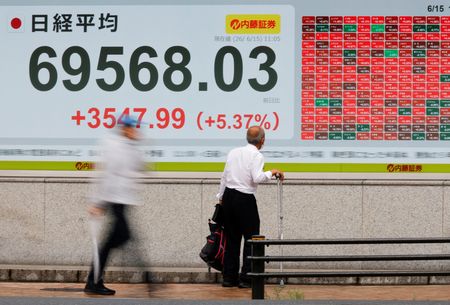
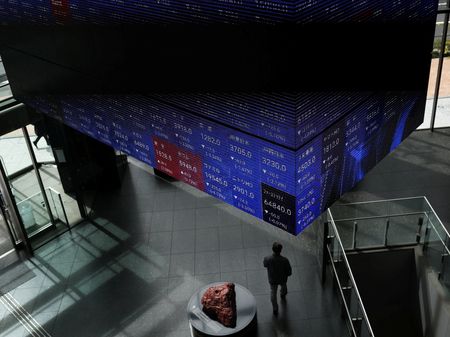
Asian markets posted strong gains. Tokyo’s Nikkei 225 surged 5% to 69,317.50, setting another record high, driven largely by technology and AI-related stocks. Japan’s benchmark index has now risen more than 80% over the past year.
“This is great news,” said Takashi Hiroki, chief strategist at Monex. “Buying by foreign investors is leading the market with expectations of easing tensions around the situation in the Middle East. Then the decline in New York crude oil futures is supporting this positive market.”
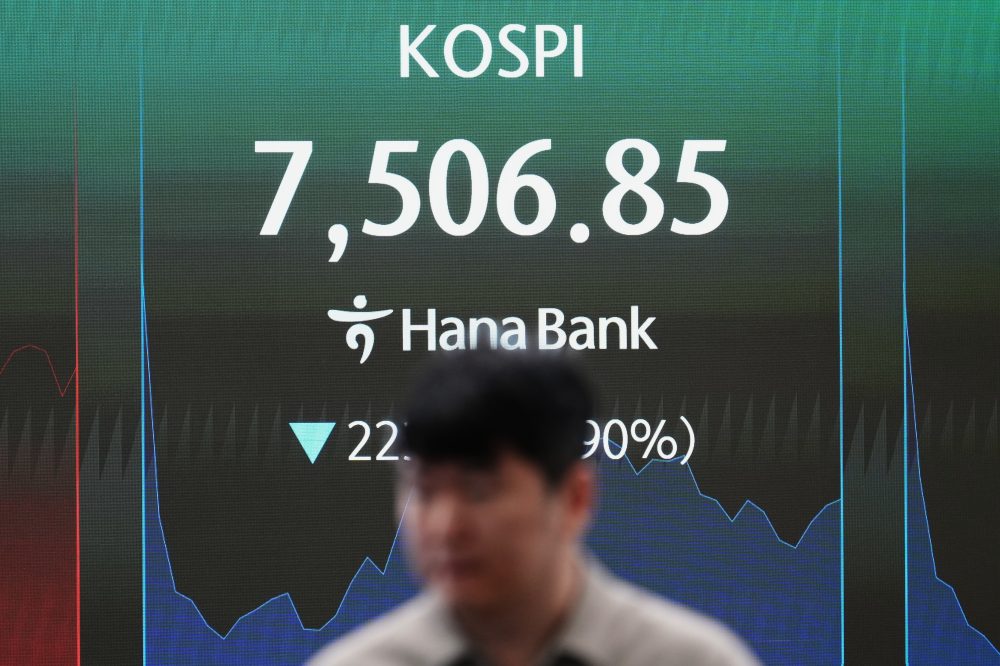
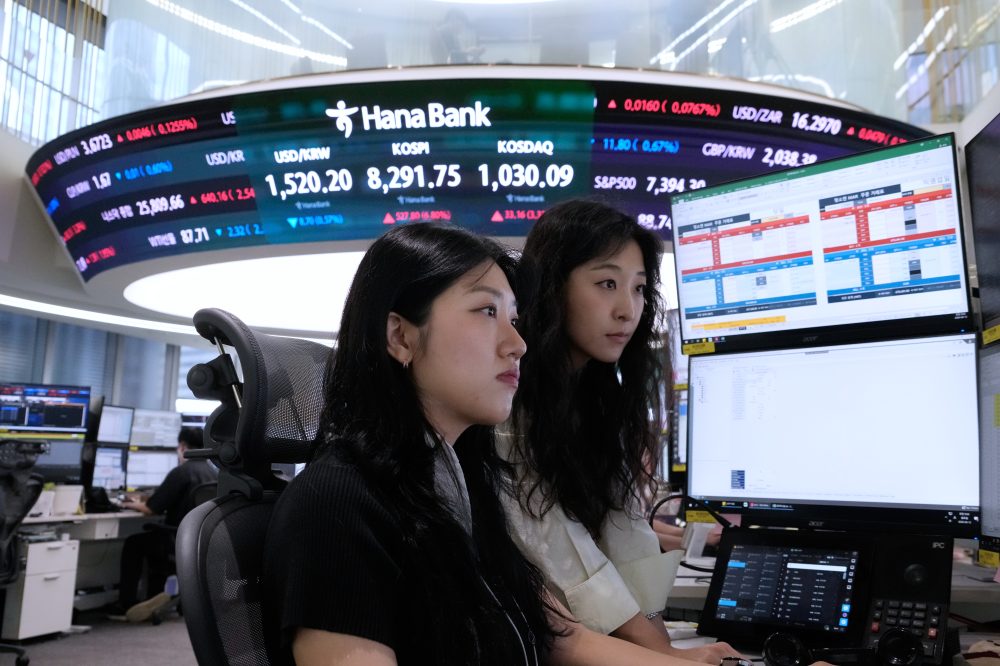
South Korea’s Kospi surged 5.2% to 8,545.98. Hong Kong’s Hang Seng added 0.5% to 24,842.67, and China’s Shanghai Composite rose 1.6% to 4,096.47. Australia’s S&P/ASX 200 climbed 1.3% to 8,922.90, Taiwan’s Taiex was up 2.8%, and India’s Sensex gained 1.2%.
Looking ahead, investors will be watching several major interest rate decisions this week. The Federal Reserve is set to announce its decision Wednesday, followed by the Bank of England on Thursday. On Tuesday, the Bank of Japan is expected to raise its benchmark interest rate from 0.75% to 1% — which would mark the highest rate in more than 30 years.
Fox Corp. has struck a deal to acquire streaming pioneer Roku in a combined cash-and-stock transaction valued at approximately $22 billion, including debt.
The acquisition would hand Fox access to more than 100 million households around the world, along with the Roku channel and its first-party viewer data. Fox already operates a broad portfolio of sports, news, and entertainment properties, as well as Tubi, the streaming service it purchased in 2020.
Roku’s origins trace back to the early 2000s, when founder Anthony Wood worked inside Netflix as the company was making its historic transition away from DVD rentals and toward streaming video. Netflix eventually spun Roku off as its own company, and Roku launched its first set-top streaming box in 2008.
Wood, who serves as Roku’s chairman and CEO, has said his original drive to develop the technology came from a personal desire — he simply wanted to record and watch his favorite show, “Star Trek.”
Both companies announced Monday that Roku will continue operating as an open platform that remains friendly to outside partners. Together, Fox and Roku said the combined entity would rank as the third-largest presence in U.S. television based on share of viewing.
Fox Corp. CEO Lachlan Murdoch said in a statement that bringing the two companies together would unite Fox’s live news and sports programming with a streaming platform boasting a massive audience, while also expanding Fox’s reach into advertising revenue and streaming subscriptions.
“The combination with FOX is an extraordinary opportunity to accelerate our vision, scale faster and innovate more aggressively for viewers, partners and advertisers,” Wood said in prepared remarks.
Wood is expected to remain involved with the company going forward and will join Fox’s board of directors once the transaction is finalized.
Under the terms of the deal, Fox will pay $96 in cash plus 0.9693 shares of its Class A common stock for each Roku Class A and Class B share. The overall transaction is valued at $160 per Roku share.
Once the deal closes, current Fox shareholders are projected to hold roughly 73% of the combined company, while Roku shareholders would own approximately 27%.
The transaction is expected to be completed in the first half of next year, pending approval from shareholders of both companies and sign-off from regulators.
Following the announcement, Fox’s stock slipped in pre-market trading, while Roku shares edged slightly higher.
Australia’s stock exchange operator, ASX, has acknowledged that it made misleading statements to the public about the status of a major software overhaul, agreeing on Monday to pay a penalty of A$20.5 million — roughly $14.5 million in U.S. dollars — pending approval from Australia’s Federal Court.
The Australian Securities & Investments Commission, known as ASIC, brought legal action against ASX in August 2024. The regulator alleged that statements the exchange made in 2022 about its Clearing House Electronic Subregister System — commonly referred to as CHESS — painted a misleading picture of a project that was already in serious trouble. The system had been scheduled to launch in 2023.
Internal records show that by late 2021, ASX had already classified the project’s status as “red,” a designation indicating significant risks to its timeline. According to the ASIC lawsuit, the exchange’s audit and risk committee was briefed on that “red” status just one week before a February 2022 market update was released.
Despite those internal warnings, a February 10, 2022 announcement — which also disclosed that then-CEO Dominic Stevens planned to retire — told the market that the CHESS replacement project was “progressing well.”
Kai Chen, Director at MPC Markets, offered perspective on what the settlement means going forward. “The fine closes a legal chapter, but the reputational discount and deeper structural questions will persist until ASX faces real competitive pressure or demonstrates genuine cultural reform through delivery,” Chen said.
ASX ultimately abandoned the original CHESS project in November 2022 after repeated setbacks and significant expenditures. A redesigned version of the clearing system began its first rollout phase in April and is now expected to be fully completed by 2029.
In addition to the penalty, ASX has agreed to contribute A$3 million toward ASIC’s legal costs, also subject to Federal Court approval. Both the penalty and the legal cost contribution will be recorded as non-recurring significant items in the exchange’s fiscal year 2026 financial statements.
ASX shares ended the trading day up 2.6%, closing at A$50.46 — outpacing the broader market benchmark, which gained 1.3%.
Canadian financial technology firm Nuvei announced Monday that it has agreed to acquire cross-border payments company Payoneer in an all-cash deal worth approximately $2.75 billion, as part of a broader push to grow its global footprint.
Under the terms of the agreement, Nuvei will purchase every share of Payoneer at $7.40 per share — representing a roughly 44% premium over Payoneer’s closing price on June 8. According to data from LSEG, Payoneer currently carries a market capitalization of around $2.26 billion.
Reuters had reported the previous week that the two companies were deep in acquisition discussions.
The deal reflects a broader trend in the payments industry, where companies have been joining forces to strengthen their presence in high-growth areas like international and business-to-business transactions.
Beyond expanding its global reach, the acquisition is expected to position Nuvei to capitalize on emerging opportunities in stablecoin transactions and commerce powered by artificial intelligence. The deal would also give Nuvei access to a roster of major marketplace clients, including Amazon, Walmart, eBay, and Airbnb.
Once combined, the two companies are projected to generate approximately $3 billion in annual revenue and handle more than $500 billion in payment volume each year.
Nuvei CEO Phil Fayer described the strategic value of the merger, saying: “By combining complementary capabilities, we can offer businesses a more complete platform to accept payments, send funds, issue cards, manage treasury and FX needs, and access embedded financial services – at scale.”
Payoneer specializes in helping businesses send and receive payments across international borders and manage money in multiple currencies. The company holds licenses in several major markets around the world.
The transaction requires approval from Payoneer shareholders as well as regulatory clearances, with an expected closing date in mid-2027.
Financing for the deal is being provided by BMO Capital Markets, RBC Capital Markets, Barclays, UBS, and Wells Fargo. Goldman Sachs is serving as lead financial adviser to Nuvei, with Barclays Capital also in an advisory role. Qatalyst Partners is acting as the exclusive financial adviser to Payoneer.
Individual investors who jumped into the SpaceX initial public offering are discovering they’re playing by a very different set of rules than Wall Street’s biggest players — and the stakes are high.
Retail trading platforms including Fidelity, Robinhood, E*TRADE, and SoFi all impose restrictions preventing small investors from selling their newly acquired SpaceX shares within 15 to 30 days of the stock’s debut. Breaking those rules carries serious consequences, from temporary suspensions to permanent bans from participating in future IPOs — including potentially hot offerings from companies like OpenAI and Anthropic.
Those penalties are already relevant for investors who wanted to cash out on Friday, when SpaceX shares climbed as much as 30% during their first day of trading before settling at $160.95, a gain of 19% at closing.
Fidelity’s policy requires clients to hold shares for at least 15 days. Violating that rule can trigger a six-month ban from future IPOs, with repeat offenses potentially leading to a permanent ban tied to the account holder’s Social Security number. Robinhood enforces a 30-day holding window and suspends violators for two months. SoFi and E*TRADE also apply 30-day limits, with SoFi permanently banning customers after a third offense.
By contrast, major hedge funds and asset managers — which often receive IPO shares at the original offer price — can in some cases sell immediately to capture the early price surge, commonly called the “IPO pop.” Firms such as BlackRock and Citadel are among those with that kind of access, though neither responded to a request for comment.
Jay Ritter, an IPO expert at the University of Florida, explained the double standard plainly. “It’s very common for brokerage firms to put restrictions on flipping for retail investors,” he said. “But if the hedge funds are profitable enough customers (for banks), they can do whatever they want.”
The SpaceX IPO made the gap between small and large investors especially apparent because retail participation was unusually significant. According to a source close to the deal, individual investors ended up with 20% of the IPO allocation, hedge funds received 10%, and long-term institutional investors took the remaining 70%.
One asset manager, speaking anonymously, told Reuters they received roughly a $300 million allocation in the offering with no flipping restrictions attached. That manager said they plan “to sell it straight into the open and return cash within five days,” capitalizing on demand from smaller investors.
Ritter noted that for large funds, access to IPO shares is driven more by the fees and trading revenue they generate for banks than by market rules. Those relationships are evaluated on a case-by-case basis, with underwriters considering the overall business relationship rather than any single transaction.
Retail investors, meanwhile, face a difficult choice: sell early and risk losing access to future IPOs, or hold on and potentially miss the window to lock in gains before market volatility sets in.
Part of that timing pressure comes from how large IPOs get added to stock market indexes. Funds tracking indexes like the Nasdaq-100 may be required to buy shares of a newly listed company within two weeks of its debut. Vanguard’s Total Market funds, which follow a CRSP index, can start adding a new stock within just five trading days. That automatic buying creates predictable demand — demand that larger, unrestricted investors can sell into, while retail holders are still locked out.
At Fidelity, the earliest a retail investor can sell without being labeled a flipper is day 16.
Emil Barr, a 23-year-old entrepreneur who set aside $500,000 for the SpaceX IPO, pushed back on the fairness of the system. “Their entire trading account could be restricted,” he said. “It’s a really deep penalizing system in which the punishment doesn’t quite match the crime.”
Barr said he accessed the IPO through JPMorgan’s private banking service, which is generally available only to clients with more than $5 million in assets. Because of that access, he is not subject to the same restrictive rules. He said he plans to hold his shares.
Still, he was critical of how the structure works for ordinary investors. “I think the underwriting firms are using retail investors as cannon fodder because they have to hold the stock for 30 days,” Barr said. “It’s like a cushion to absorb some of the risk from how highly priced the stock is.”
The U.S. Financial Industry Regulatory Authority defines flipping as selling IPO shares within 30 days but does not impose any legal penalties for doing so. The restrictions that exist are set by underwriters and brokerage platforms, which use them to reduce the stock price volatility that can follow a major public offering. Platforms like Robinhood also benefit from enforcing these rules, as banks managing IPOs tend to favor platforms that keep long-term shareholders — rewarding them with larger allocations in future deals.
When spring sales failed to materialize as expected, Coley Brady made a tough call at the end of March — scaling back production from five days a week to four on most of the assembly lines at his five recreational vehicle factories in Elkhart, Indiana.
The timing wasn’t coincidental. The U.S.-Israeli war on Iran was only about a month underway at that point, but the ripple effects on global energy markets had already driven American gasoline prices up 33% and diesel prices up 43%.
“Clearly the war and higher gas prices are the easiest things to point to,” said Brady, who co-founded Alliance RV, a company that manufactures high-end fifth-wheel trailers and motorhomes.
The RV industry, which builds more than 80% of the recreational vehicles sold across the country right there in northern Indiana, is often viewed as a barometer for the broader U.S. economy. Commerce Department figures show that inflation-adjusted consumer spending on recreational goods and vehicles dropped for a fifth consecutive month in April — the longest stretch of declining real spending in that category since the depths of the Great Recession back in 2008.
Recreational vehicles are costly, optional purchases that consumers tend to delay when the economic picture looks uncertain. The University of Michigan’s Surveys of Consumers found that U.S. consumer sentiment hit a record low in May, recovering only slightly in early June. Inflation running at its highest rate in three years continues to squeeze household budgets, and elevated interest rates aren’t helping matters. Most RV buyers take out loans to finance their purchase, and according to LendingTree, the average interest rate on those loans currently sits at 7.53%.
Jeff Hirsch, CEO of Campers Inn — a chain of 50 RV dealerships operating across 22 states — said wealthier baby boomers are still making purchases, but many budget-conscious shoppers “just don’t feel this is the right time to make an investment.”
Spring is typically when RV sales get a boost, as families map out summer road trips to national parks and other destinations. But consumer RV registrations — a closely watched industry indicator — have been falling since last summer, according to Statistical Surveys Inc. That includes a nearly 22% plunge in March and a nearly 17% drop in April when compared to the same months a year ago.
The RV Industry Association reports that manufacturers shipped 13.5% fewer units to dealers during the first four months of this year versus the same period last year. On June 1, the association trimmed its full-year shipment forecast to between 300,000 and 328,100 units — well short of last year’s total of 342,200 units.
“Economic headwinds and tightening household budgets are weighing on consumer demand and contributing to a more cautious outlook for RV shipments in 2026,” said Craig Kirby, the association’s president, in a statement accompanying the revised projection.
The industry has faced a rough stretch in recent years. During the early days of the COVID-19 pandemic, demand exploded as people looked for ways to travel while avoiding airplanes and hotels. Shipments set a record of just over 600,000 units in 2021. But once the pandemic boom faded, sales cratered and manufacturers were left sitting on enormous excess inventory that took years to clear out.
Gregg Fore, a former RV components manufacturer who now consults for the industry, said the war and elevated fuel costs “killed whatever speed there was” in the market heading into this spring. Many manufacturers are now running reduced production schedules, and some are consolidating their factory operations.
Despite the challenges, Alliance RV’s Brady believes business will rebound later in the year — perhaps even by summer if the conflict in Iran comes to an end. Analysts, however, caution that gasoline prices are likely to remain elevated for some time even if hostilities wind down.
“The stock market is strong, and I think that’ll ultimately be good for business,” Brady said. He also pointed to factors that could steer consumers back toward RV travel: skyrocketing airfares, ongoing safety concerns related to cartels and violence in Mexico, and cruise lines dealing with illness outbreaks. “You’d think all of that would guide back to RV use,” he said.
Alliance built 8,200 RVs last year and expects to exceed that figure this year, though Brady acknowledged it “depends on the market.” He estimates the production cutbacks since March have reduced his output by roughly 10%. “We’re scheduled through July, but if the summer goes well, we have the ability to go higher (with production) in August,” he said.
Michael Hicks, an economist at Ball State University who follows the RV sector, said the industry does have some things going for it. He noted that most RV buyers are in their 50s and 60s, many of them with solid retirement savings. “They’ve lived through high gas prices before, they’ve bought homes at higher interest rates,” he said. “Those are the ones that the industry really counts on.”
Michael Provost fits that description. The 69-year-old retiree from Rhode Island has owned three RVs over the past two decades and has no plans to change his routine of heading to Cape Cod in the summer and Florida in the winter with his wife Cheryl. As for the spike in gas prices, he’s not losing sleep over it. “This year, we went to Florida and when we came back, it was a dollar more (a gallon),” he said. “You kind of take it in stride.”
The recent stock market debut of Elon Musk’s SpaceX is creating a headache for the companies that manage major stock indexes, forcing them to weigh two goals that don’t always line up: follow their established rules for adding new stocks, or update those rules to better reflect today’s market landscape.
Financial advisers and asset managers say both approaches can serve investors well — but the tension between them requires careful thinking about how much risk and price swings investors are actually signing up for, even when index funds are often sold as a straightforward, one-size-fits-all solution.
“The IPO is the headline, but the real story is about index methodology,” said Dina Ting, head of global index portfolio management at Franklin Templeton. “Investors should pay attention … because what you actually own depends on whether you’re buying this index versus that index.”
The wave of massive IPOs — starting with SpaceX and potentially followed by AI companies Anthropic and OpenAI — may push investors and index providers alike to take a closer look at which indexes best match the level of risk they’re comfortable with.
For now, Nasdaq’s decision to fast-track SpaceX into its flagship Nasdaq 100 index, while S&P Dow Jones Indices chose not to immediately include it in the S&P 500, is likely to reinforce the Nasdaq’s image as the go-to choice for investors willing to accept bigger price swings in exchange for potentially higher returns.
“You’re going to get very different experiences because all of the indexes made a bunch of active decisions about which stocks to include, when to include them, how much weight to give them,” said Joel Schneider, deputy head of portfolio management at Dimensional Fund Advisors, an investment firm that describes its approach as “going beyond indexing.”
Schneider added that the surge of major IPOs “is causing advisers and investors to start to pay more attention to some of these decisions and how they are made and what they mean.”
Before its listing, SpaceX had been working to speed up its entry into major indexes, including the S&P 500 — the most widely followed U.S. stock index — and the Nasdaq 100, which has long been a showcase for top American technology companies.
Many everyday investors gain exposure to these indexes through mutual funds and ETFs, such as the Invesco QQQ ETF for the Nasdaq 100 and the State Street SPDR S&P 500 ETF.
“I think the most aggressive investors have for years been shifting their focus to the QQQs rather than the SPY. The decision by the different index providers will further that trend,” said Eric Kuby, chief investment officer at North Star Investment Management Corp.
By changing its rules to bring SpaceX in within a month of its listing, Nasdaq is returning to its tradition of embracing high-growth companies that haven’t always shown strong financial results. If Anthropic and OpenAI were also to list on the Nasdaq, it could spotlight a valuation gap in U.S. markets not seen since the technology collapse of 2000.
The stakes are enormous. S&P 500 index funds hold trillions of dollars in assets, and those funds would have been required to purchase SpaceX shares had the rules been changed to allow it in. The three largest ETFs tracking the S&P 500, from Vanguard, Invesco, and State Street, hold $3.2 trillion in assets under management, compared to roughly $600 billion in the largest Nasdaq 100 funds.
The S&P 500’s decision to hold off on SpaceX and similar companies could cause the performance of major indexes to drift further apart, putting investors in a tough spot — attracted by the excitement of AI-related offerings but uncertain about the risk tied to trillion-dollar-plus IPO valuations.
“In general, if you’re sort of more risk-on, if you would, then obviously the QQQ has the ability to include companies that are not profitable,” said King Lip, chief strategist at BakerAvenue Wealth Management in San Francisco. “Risk-off market, you’re going to have the S&P probably going to do better from an overall perspective.”
Schneider also pointed to research published this month in the scholarly Review of Asset Pricing Studies showing that IPOs added to indexes on a fast-track basis outperform non-fast-tracked ones by 5 percentage points up until the date they’re officially added — but that those gains are more than cut in half within two weeks of inclusion.
It’s worth noting that S&P 500-linked funds still carry significant exposure to technology stocks and AI-related trends, which have helped fuel market gains but could also make them more vulnerable.
“Obviously, the early inclusion of some of these companies into the indices is a change, so people that have been investing passively are going to find themselves arguably with riskier portfolios than they were historically,” said short-seller Jim Chanos, who has cautioned that the SpaceX offering is driven by “hopes and dreams” that don’t justify its price tag. “And the AI bull market — to the extent there’s anything systemic, it’s just that equity portfolios have gotten a lot riskier.”
WASHINGTON — New Federal Reserve Chairman Kevin Warsh is set to face reporters for the first time Wednesday in what will be his debut press conference as the nation’s top central banker, offering markets and the public their first real glimpse into how he plans to steer monetary policy.
While Warsh has spoken extensively in recent years about the Fed’s balance sheet, his preference for saying less about future interest rate moves, and his view that the central bank should stay out of issues like climate change, Wednesday’s appearance will be his first opportunity to address current economic conditions — including inflation, unemployment, and the broader economic outlook — from the chairman’s seat.
Inflation remains a central concern. Prices are still running more than a percentage point above the Fed’s 2% target, and how Warsh characterizes the path forward will be a closely watched signal for investors who are already pricing in the possibility of higher interest rates later this year.
Several factors are complicating the inflation picture. Price shocks that might have been short-lived — stemming from the Trump administration’s import tariff increases and elevated oil prices tied to the U.S.-backed conflict with Iran — now appear to pose a more lasting inflation threat. At the same time, the U.S. labor market is near full employment, hiring has bounced back, and a recent report from the Fed’s regional districts pointed to growing wage pressures.
The press conference will follow the conclusion of the Fed’s June 16-17 policy meeting and give Warsh a platform to address these competing economic forces as he begins building his narrative about the risks facing the central bank.
Warsh, who took over from former Fed chief Jerome Powell roughly a month ago, has left many questions unanswered about his specific economic views. “He has been much more vocal in terms of the balance sheet, he’s been much more vocal on communication strategy. When it comes to what’s your theory of change for inflation, what’s your view in terms of the current posture of monetary policy, those things are a big black box that we’re going to start to open up,” said Ed Al-Hussainy, portfolio manager for fixed income and macro at Columbia Threadneedle, speaking to reporters last week.
Analysts expect Warsh to face pointed questions about how tariffs are affecting goods prices, whether the recent spike in oil prices will linger and spread through the economy, and whether the progress on inflation that had been coming from slowing rent increases has now stalled.
Those are topics that Powell — who remains on the Fed’s Board of Governors — would typically address head-on. Warsh has expressed a desire to pull back on so-called “forward guidance,” meaning he doesn’t want to tip the Fed’s hand too much on future rate decisions. How he balances that preference against the need to communicate clearly about the economic outlook will be one of the most telling aspects of Wednesday’s appearance.
Christopher Hodge, chief U.S. economist at Natixis CIB Americas, predicted Warsh will sidestep a direct answer on where inflation is headed. “I think Warsh is going to punt on the question,” Hodge said. He still believes the Fed is more likely to cut rates than raise them, though the timing is unclear. Despite what he called a “neutral-to-hawkish tone,” Hodge added, “I don’t think he will preclude cuts, but the onus will be on the data to prove that the energy shock is past us.”
The Fed is broadly expected to leave its benchmark interest rate unchanged in the 3.50%-3.75% range — where it has sat since December. Alongside the policy decision, the central bank will release updated quarterly economic projections from its policymakers, followed by Warsh’s press conference.
Warsh is known to be skeptical of some of the Fed’s existing communications tools, including those projections and the accompanying “dot-plot” chart that maps out individual policymakers’ rate expectations. However, changing or eliminating those tools would require broad agreement among his 18 fellow policymakers.
Warsh is not required to submit his own projections. Doing so could reveal how closely his economic thinking aligns with the Fed’s mainstream view — a potentially sensitive issue given that former Fed Governor Stephen Miran, a brief board member who backed the sharp rate cuts called for by President Donald Trump, has now departed. Miran’s low projection will no longer appear in the dot-plot.
A more significant question is whether the Fed will drop language in its policy statement suggesting the next rate move is likely to be a cut, replacing it with more neutral wording that leaves open the possibility of a rate hike. Three policymakers pushed for that change at the April 28-29 meeting. Since then, influential Fed Governor Christopher Waller and others have indicated they now support the shift after a strong hiring report eased concerns about the labor market. Such a change would also fit with Warsh’s preference for less forward guidance.
One potential communications challenge for Warsh arises if the policy statement takes a more neutral tone while the dot-plot simultaneously shows many policymakers expecting rate hikes before year’s end.
The median policymaker projection is expected to show the Fed holding rates steady through 2026 — a shift away from the quarter-point cut that policymakers had anticipated in their previous two outlooks, which assumed inflation would continue falling toward the 2% target as part of an easing cycle that began in 2024.
If the median inflation outlook is revised higher without a corresponding expectation of rate hikes, it could raise questions about whether the Warsh-led Fed risks repeating the same mistake made under Powell — treating the forces driving prices higher as temporary and expecting them to fade on their own without higher borrowing costs. The policy rules that Warsh himself once called “aspirational” tools during his time at Stanford University’s Hoover Institution now almost universally point toward raising rates.
In the period leading up to his nomination by Trump, Warsh laid out reasons why inflation — and therefore interest rates — could decline, pointing to the potential impact of reducing the Fed’s $6.71 trillion balance sheet and productivity gains from the artificial intelligence boom. He has also suggested that inflation may be mismeasured and actually running lower than official figures show.
How heavily he leans on those arguments to push back against calls for rate hikes will offer an early window into his leadership style and whether it truly differs from the approach he has sharply criticized.
William English, former head of the Fed’s monetary affairs division and now a professor at the Yale School of Management, put it bluntly: “It’s a bad look for the Fed to say inflation is much too high, but we are going to ignore it because if you exclude these five things it will go away. He does not want to get too far in front of that.”
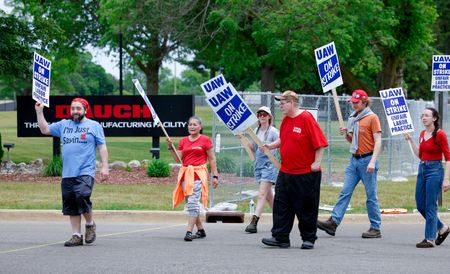
United Auto Workers President Shawn Fain is throwing his hat back into the ring for a second four-year term at the helm of the 400,000-member union. He enters the race as the frontrunner, riding the wave of a successful walkout three years ago that resonated strongly with workers.
Despite that momentum, setbacks in organizing efforts and accusations of mismanagement have stirred unease among some union members.
Fain, who has confirmed his intention to run, along with his challengers, is expected to be formally nominated by delegates at a UAW convention in Detroit this week. The actual election is scheduled for the fall.
The outcome will be closely monitored by Detroit’s major automakers — Ford Motor, General Motors, and Stellantis — whose U.S. factory employees are predominantly UAW members.
During the most recent contract negotiations in 2023, Fain emerged as the most aggressive union leader those companies had faced in decades. The 57-year-old, who previously worked as a Chrysler electrician, earned widespread backing from UAW members after steering a six-week strike against all three automakers simultaneously — a first in the union’s history. The effort resulted in landmark 25% wage increases.
Since those victories, though, Fain has hit some roadblocks. A $40 million effort to unionize non-union autoworkers across the country yielded one notable success at Volkswagen but lost steam in other locations, including a failed unionization vote at a Mercedes-Benz facility in Alabama.
Fain pushed back on criticism in an interview, saying,
FRANKFURT — Commerzbank’s chief executive expressed surprise Monday after rival financial institution UniCredit accused the German bank of misleading the public.
Speaking at a financial industry conference, CEO Bettina Orlopp said the bank was “taken aback” by the accusation, which came earlier the same day.
“We have, of course, simply presented the facts, and we will continue to do so, because we are the only ones who actually have access to them,” Orlopp told attendees at the conference.
SpaceX stock was on track to rise more than 5.6% before markets opened Monday morning, continuing a remarkable run following one of the biggest stock market debuts in Wall Street history.
On Sunday, CEO Elon Musk said the company — which operates in both the rocket and artificial intelligence sectors — could generate as much as $1 trillion in annual revenue by the year 2030. The company posted $18.7 billion in revenue during 2025.
When SpaceX made its Nasdaq debut last Friday, shares soared 19%, catapulting the company to the sixth-largest U.S. firm by market value. The milestone also made Elon Musk the world’s first trillionaire.
Everyday investors who received roughly 20% of the IPO’s share allocation purchased $117.6 million worth of SpaceX stock on Friday alone, according to data from Vanda Research. That made it the most-bought stock of the session and broke the previous record for an IPO set by Coinbase back in April 2021.
Despite the excitement, analysts and portfolio managers are cautioning investors to prepare for potential price swings, especially early in SpaceX’s time as a publicly traded company. The relatively small number of shares available to trade, combined with the company’s high valuation, could fuel volatility.
Additional momentum may be on the horizon. SpaceX is expected to be fast-tracked into the Nasdaq 100 index, which would make it a significant holding for passive investment funds and exchange-traded funds that follow the index — creating new demand for its shares.
Index providers FTSE Russell and MSCI have also announced plans to add SpaceX to their respective indexes, with those changes set to take effect on June 26 and June 29.
Stock futures tied to Wall Street’s major indexes each jumped more than 1% Monday morning after investors welcomed a preliminary agreement between the United States and Iran to end a conflict that had lasted more than three months and to reopen the strategically important Strait of Hormuz.
While the framework agreement signals progress, it leaves unresolved significant issues including Iran’s nuclear program and the ongoing conflict between Lebanon and Israel. Officials expect the deal to be formally signed this Friday in Switzerland.
Oil prices reacted sharply to the announcement, falling more than 4% to their lowest point since March. The drop is expected to draw attention to stocks that are sensitive to energy costs, including airlines, cruise lines such as Delta and Norwegian Cruise, and energy companies like Occidental and Exxon when markets open later Monday.
Max Kettner, chief multi-asset strategist at HSBC Global Investment Research, offered a measured take on the development. “If the overnight news of a deal between the U.S. and Iran proves to be credible and lasting, this should be taken as a positive, whereas setbacks will likely be taken as less of a negative by risk assets,” he said.
Despite the optimism, analysts are cautioning that Brent crude prices may still hover near $80 per barrel even after the resolution, as energy shipments resume through the Strait and Middle Eastern nations work to restore infrastructure that was damaged during the conflict.
Economic data released last week showed that elevated energy costs had begun working their way into consumer prices, putting additional attention on the Federal Reserve’s upcoming monetary policy meeting. The yield on the benchmark 2-year Treasury note dropped 7 basis points to a two-week low, reflecting shifting interest rate expectations.
The Fed is widely anticipated to hold interest rates steady at this week’s meeting, though traders still expect the central bank to raise borrowing costs by at least 25 basis points before the end of the year, based on data from the CME Group’s FedWatch tool.
As of 4:03 a.m. ET, Dow E-minis were up 519 points, or 1.01%. S&P 500 E-minis gained 94.5 points, or 1.27%, and Nasdaq 100 E-minis rose 622 points, representing a 2.1% increase.
SpaceX shares climbed 6% in premarket trading following the company’s successful stock market debut. Led by Elon Musk, the company’s shares closed at $160.95 on their first day of trading, up from an IPO price of $135. The smooth launch on the Nasdaq was seen as a relief across Wall Street and is being viewed as a model for the anticipated IPOs of OpenAI and Anthropic later this year.
All three major indexes finished last week with gains, even after artificial intelligence-related stocks came under pressure early in the week. Analysts attributed that sell-off to the tech sector’s sensitivity to higher interest rates and to investors repositioning ahead of the SpaceX IPO.
This week, market watchers will also be focused on Fed Chair Kevin Warsh’s first meeting leading the central bank. Investors are closely watching his communication approach and looking to economic and interest rate projections for clues about where borrowing costs are headed.
Among other notable early movers, Paramount Skydance shares rose 5.8% after the U.S. Justice Department approved the company’s acquisition of Warner Bros.
U.S.-based cybersecurity company N-able Inc is setting its sights on significant growth in India, with CEO John Pagliuca announcing plans to increase the company’s Indian workforce by at least 50% before the close of 2026.
N-able, which delivers IT management, cybersecurity, and data protection software to over 500,000 organizations around the world, officially opened a Global Capability Center — known as a GCC — in Bengaluru this past Monday. The new facility already has more than 100 employees on staff.
The timing aligns with a surge in India’s broader GCC landscape. According to a report from industry organization Nasscom and consulting firm Zinnov, India’s GCC workforce is expected to climb to 2.36 million workers by the end of 2026, with demand largely fueled by growth in artificial intelligence and cybersecurity fields.
Pagliuca explained the company’s decision to plant its flag in Bengaluru during a recent interview. “The reason we’re in Bengaluru is capability,” he said. “Our priority is to build for the long term, with the right people and a strong foundation, not to pursue a short-term headcount play.”
The CEO was clear that cost savings were not the primary motivation behind the expansion — rather, gaining access to skilled talent was the driving force.
Despite Bengaluru’s reputation as India’s top technology hub, competition for AI and cybersecurity professionals is fierce. Multinational corporations and homegrown tech companies are all vying for the same limited pool of experts.
Pagliuca identified AI engineering, applied machine learning, cloud security, and threat research as some of the most difficult skill sets to recruit. To stand out, N-able is offering competitive compensation packages along with opportunities to contribute to global innovation and build meaningful careers locally.
The new center is also expected to play a central role in countering the growing threat of cybercriminals who are increasingly using generative AI to launch sophisticated, automated attacks. Pagliuca said the Bengaluru team will focus on building defensive AI tools, including systems for automated threat detection, continuous monitoring, and faster incident response.
N-able did not share details about its current reach among small and medium-sized businesses in India or reveal any specific revenue goals for the market.
As Tesla pushes to gain regulatory approval for its “Full Self-Driving” (FSD) technology across Europe, the electric vehicle company has been sharing its own safety statistics with regulators in Sweden and the Netherlands — figures that independent traffic-safety researchers describe as little more than misleading marketing material.
A Reuters investigation published last month revealed that Tesla CEO Elon Musk and other company leaders have repeatedly cited statistics over the past year claiming FSD is up to 10 times safer than human drivers. However, the news agency’s review uncovered several faulty data comparisons at the heart of those claims that significantly overstate the system’s safety record.
According to correspondence obtained by Reuters through public records requests, Tesla has shared this inflated safety data with European regulators as it works to expand FSD’s footprint in a market where it is fighting to win back lost ground. The company approached RDW, the Dutch road regulator, in late 2024 to kick off the approval process.
In a letter sent to RDW in November 2024, Tesla included a link to its safety report and asserted that greater use of FSD “leads to safer roads.” The company sells access to FSD through a monthly subscription. While the system can handle driving under certain conditions, it still requires the human behind the wheel to remain attentive.
Following more than a year of testing and back-and-forth with Tesla, RDW gave FSD the green light for use in the Netherlands in April. The Dutch agency is now pursuing EU-wide approval on Tesla’s behalf.
RDW declined to address the specific problems Reuters identified with Tesla’s safety figures, but released a statement saying the agency “does not rely on marketing claims or external statistics” when making regulatory decisions, and instead conducts its own “tests, analyses and verifications” of the system on both public roads and test tracks. The agency did not clarify whether it evaluated Tesla’s U.S.-based safety statistics directly.
RDW noted that Tesla “collected a lot of data” throughout the testing period and that the agency “validated, tested and audited all of this data,” though it did not specify what type of data was gathered or what it measured. Tesla did not respond to requests for comment.
Shortly after the Netherlands announced its approval on April 10, a Tesla policy manager named Ivan Komusanac sent an email to Swedish regulators requesting similar approval for FSD. Attached to the email was a slide presentation featuring the disputed claim that Teslas operating with FSD can travel more than seven times farther between crashes compared to the average American human driver.
The presentation went further, suggesting FSD could have potentially saved 32,000 lives and prevented 1.9 million injuries.
Researchers who spoke with Reuters called those figures deeply misleading. They said the numbers rest on an unrealistic assumption — that every vehicle on U.S. roads, including freight trucks and crash-prone motorcycles, would be replaced by an FSD-equipped Tesla, and that each of those Teslas would be at least seven times safer than the vehicle it replaced.
Reuters also found that Tesla inflates its safety record by comparing the rate of crashes in FSD-operated vehicles that triggered airbag deployments against a broader U.S. crash rate that includes far less serious incidents. Additionally, Tesla compares its vehicles to the average American car, which is considerably older than the typical Tesla — a distortion that matters because newer vehicles come equipped with modern safety technology that reduces crashes.
Anders Eriksson, an investigator at the Swedish Transport Agency, declined to speak specifically about the data Tesla submitted but said Swedish regulators “look beyond headline figures” and that any evaluation of such a system would not be based “solely on aggregated safety claims, but on the overall evidence presented.” The agency did not respond to questions about what additional evidence Tesla provided.
Dudley Curtis, a spokesperson for the watchdog group European Transport Safety Council, said his organization is “certainly concerned” after Reuters informed the group about the correspondence showing Tesla had submitted what he called “unreliable safety data” from the United States to regulators in Sweden.
Curtis added that if Tesla wants to make safety claims, the company should “give the data to a university, have it independently verified by a qualified researcher, and then let’s talk.”
Tesla has stated that gaining FSD approval in Europe is critical to growing vehicle sales there. The company has been working to recover lost market share after sales dropped sharply last year amid public backlash over Musk’s political activities, including his alignment with far-right European political movements.
Without approval, Tesla could find it increasingly difficult to compete in a region where Chinese electric vehicle manufacturers are steadily gaining ground.
In the months ahead, representatives of member states accounting for 55% of EU membership and 65% of the bloc’s population must vote in favor for FSD to become legal across the entire European Union. In the meantime, individual countries can approve the technology on their own.
A regulator in Greece, which announced last month that it aims to approve FSD, cited data “from the other side of the Atlantic” showing “this system ultimately leads to a very significant drop in accidents.” The Greek transport ministry declined to answer questions about whether that data came from Tesla’s own safety report.
Regulators in other European countries have also been flooded with messages from Tesla drivers citing the company’s safety statistics and pushing for quick FSD approval. Several Tesla owners wrote to Norwegian road regulators last autumn referencing Tesla’s vehicle safety report, with one arguing the technology is “significantly safer than average manual driving” and could “reduce traffic accidents by up to 90% and thus save lives on Norwegian roads.”
Stein-Helge Mundal of the Norwegian Public Roads Administration responded to several of those Tesla enthusiasts, noting that Tesla’s figures “are self-produced,” which makes it “difficult to find correlation with the authorities’ accident statistics.”
Global investment managers have been quietly shifting money into Chinese government bonds since the Iran war began, and not because of the returns they offer — but because of how little those bonds move in sync with markets in the West.
While sovereign debt in the United States, Britain, Europe, and Japan has taken a beating since March — with benchmark yields climbing between 35 and 60 basis points — yields on comparable Chinese government bonds have actually dropped by 8 basis points. That’s a dramatic contrast that has turned heads among serious institutional investors.
Sovereign wealth funds, central banks, and insurance companies are all taking a second look at how they build their portfolios, as Chinese bond yields have fallen to the lowest levels anywhere outside of Switzerland.
Wei Li, head of multi-asset investments at BNP Paribas Securities, said Chinese debt is pulling in investors focused on protecting capital. “Attractiveness is judged on a risk-adjusted footing. China delivers exceptional price stability,” Li said, describing the bonds as a low-volatility counterweight for regional portfolios holding riskier, higher-yielding assets.
Chinese bonds have stood out even more given that traditional safe havens have stumbled. Gold, for instance, has fallen roughly 25% from its peak in January.
Even with the Iran conflict appearing closer to resolution — after the U.S. and Iran struck a deal to end fighting and reopen the Strait of Hormuz — many of the factors supporting China’s bond market remain in place. Those include persistently low inflation, a central bank leaning toward looser policy, and heavy domestic investment flows.
Performance numbers tell the story clearly. The Guotai 10-Year China Treasury ETF has gained 1.26% so far this year. By comparison, the U.S.-focused iShares 7-10 Year Treasury Bond ETF has fallen 2.57%, and Invesco’s equivalent Euro bond ETF has slipped 1.23%.
Matthias Dettwiler, head of active fixed income at UBS Asset Management, pointed to the statistical independence of Chinese bonds from European rates. “If you look at correlations between CGBs and European rates, it’s close to zero. That has its attractiveness,” he said. For investors focused on protecting capital or spreading risk, “I would even go as far as to say the absolute yield doesn’t matter so much,” Dettwiler added.
Several structural factors are shielding China’s bond market from the turbulence triggered by the Middle East oil shock. The country holds substantial energy reserves, and consumer spending remains sluggish enough to keep price pressures minimal. On top of that, a large pool of household savings is being funneled by banks into the bond market, keeping yields in check.
Jerome Tay, senior investment manager of fixed income at Aberdeen in Singapore, noted that “liquidity plays a big part in driving the CGB markets, and liquidity conditions have remained extremely abundant.”
Chinese 10-year bond yields currently sit at 1.75%, now roughly one percentage point below Japan’s — a reversal from the dynamic that existed until late 2025, when Japan held the title of the world’s lowest-rate market.
Unlike Japan, however, where years of aggressive central bank stimulus drove capital to seek returns overseas, China’s strict controls on money leaving the country are keeping domestic investment at home.
Stephen Chang, a portfolio manager for Asia at PIMCO, said the contrast between China and other major economies helps explain the stability. “This divergence in macro conditions and policy stance helps explain why China’s bond market has remained relatively stable within a more volatile global rates environment,” Chang said. “We continue to maintain overall exposure to China bonds, focusing on relative value opportunities.”
Australia’s wealthiest individual, mining billionaire Gina Rinehart, has acquired a stake worth more than $1 billion in Elon Musk’s SpaceX through the company’s record-breaking $75 billion initial public offering, the Wall Street Journal reported Monday, citing a source with knowledge of the deal.
Rinehart’s firm, Hancock Prospecting, declined to confirm the exact size of its investment. However, Rinehart released a statement acknowledging the move: “This is a significant investment for Hancock, and we are pleased to have received an allocation in what has been an extremely popular and oversubscribed IPO.”
She went on to credit Musk with building two of the world’s ten largest companies and described SpaceX as a standout business opportunity.
“We see SpaceX as a rare business: led by a truly exceptional person, technically exceptional and operating in sectors that are crucial, and with long-term potential,” Rinehart said. Her fortune was built on iron ore extracted through her company, Hancock Prospecting.
Hancock, which holds major stakes in critical minerals ventures, has expressed hopes of partnering with SpaceX on mineral supply needs. Hancock CEO Garry Korte elaborated on that vision in the same statement: “In the future, we also see the possibility of mutually beneficial arrangements between SpaceX and Hancock Prospecting’s significant critical minerals investments, as demand grows for the materials and infrastructure needed to support advanced technology.”
The company holds notable positions in a range of rare earths businesses, including U.S.-based MP Materials and Rare Earths Americas, as well as Australia’s Lynas Rare Earths and lithium producer Liontown Resources, among others. Recent filings showed that Hancock expanded its defense, gold, and rare-earths holdings within its $3.3 billion U.S. investment portfolio earlier this year.
The SpaceX investment paid off quickly for Rinehart. Shares jumped 19% on their debut last Friday, vaulting the company’s total value past $2 trillion and making it the sixth-largest U.S. company. Investors rushed to get exposure to Musk’s wide-ranging business empire, which spans rockets, satellites, and artificial intelligence.
Beyond praising Musk’s business achievements, Rinehart also called him a patriot for his role in cutting federal government jobs through President Donald Trump’s Department of Government Efficiency, known as DOGE.
“SpaceX is yet another clear example of why the world needs more enterprise, more builders and much less bureaucracy,” Rinehart said.
Rinehart herself has become more politically active in recent years, reportedly encouraging some of Australia’s wealthiest voters to shift their support away from the country’s opposition Liberal-National conservatives toward the populist, anti-migration party One Nation.
SYDNEY — Australia’s Department of Finance announced Monday that KPMG Australia has agreed to halt all bids for new federal government work for a period of roughly three months, as investigators look into serious allegations against the accounting giant.
A spokesperson for the department confirmed that KPMG will not pursue any new government contracts between June 16 and September 30, while authorities examine the firm’s governance practices, corporate culture, ethics, and overall integrity.
The agreement represents the latest consequence stemming from a widening scandal surrounding the firm.
Both state and federal agencies have said they are taking a closer look at their existing contracts with KPMG, and several private sector clients have already ended their relationships with the company.
One of those clients, Lendlease, confirmed Monday that it would no longer use KPMG as its auditor. According to whistleblower allegations that became public in March, confidential board documents from the real estate company were used to support KPMG’s bids for major audit contracts with a large bank called Westpac and property company Dexus.
KPMG has acknowledged that it mishandled an internal review of those claims, a misstep serious enough to prompt the resignation of both its chief executive and its audit leader.
The controversy has put a fresh spotlight on Australia’s professional services industry, which was already shaken by a 2023 revelation that rival firm PwC had shared confidential government information with potential clients.
PwC faced a similar restriction, refraining from bidding on new government contracts between April 2024 and July 2025 in the aftermath of its own scandal. The firm also sold off its government advisory division — which had represented about one-fifth of its total revenue — for just one Australian dollar in August 2024. That business, rebranded as Scyne Advisory, was subsequently permitted to compete for new government contracts.
TOKYO — News of a planned halt to hostilities between Iran and the United States gave global markets a boost on Monday, but Japan’s yen was left largely unmoved, staying just above the 160-per-dollar threshold that triggered government currency intervention only last month.
Stocks and bonds rallied on the ceasefire announcement, which had raised hopes of easing global inflation pressures — especially in energy-importing nations like Japan. Despite that, the yen remained fragile, hovering near levels not seen in decades.
The Japanese currency now faces a pivotal stretch, with the country’s central bank set to meet and widely expected to raise interest rates to their highest point in 31 years. However, analysts caution the decision may fall short of what investors are hoping to see in terms of aggressive monetary tightening signals.
Attention will be focused on Bank of Japan Deputy Governor Shinichi Uchida, who will speak to the media in place of Governor Kazuo Ueda, who is currently hospitalized. Uchida is not expected to stray significantly from Ueda’s messaging, but any cautious tone could embolden those betting against the yen.
“The yen is still rather weak on the background of the BOJ still being behind the curve,” said Naka Matsuzawa, chief strategist at Nomura Securities. “I don’t really think the BOJ can satisfy the market expectations on hawkishness. The BOJ doesn’t want to go too much ahead of the government policy stance, only to become a scapegoat.”
Markets are nearly certain the Bank of Japan will lift its benchmark rate by 25 basis points on Tuesday to 1%. Even so, pessimism about the yen has grown, with speculative short positions climbing to their highest level since July 2024, according to futures data released Friday.
Ueda had recently emphasized the risk of energy prices feeding into broader inflation across the economy. With him now sidelined due to treatment for an infected liver cyst, Uchida steps into the spotlight — himself only recently discharged from the hospital last month, adding to the uncertainty surrounding what he might communicate after an extended period of public silence.
“Market players tried to read the difference in Ueda’s comments at each press conference to gauge his stance, but this time, they can’t do that,” said Kumiko Ishihara, a senior analyst at Sony Financial Group.
As a career central banker who rose to deputy governor, Uchida has previously offered strong hints about near-term policy direction, including the 2024 decision to wind down a massive decade-long stimulus program. While some observers consider him dovish, those who know him describe Uchida as a pragmatic and flexible communicator.
A formal peace agreement would fit within the central bank’s baseline outlook, under which it had sharply raised its inflation forecasts and flagged growing price pressures tied to the Middle East conflict. The central bank’s former top economist Seisaku Kameda said Monday that the latest developments in the region would not alter the BOJ’s anticipated course of two interest rate increases this year.
Had the war continued, inflation could have remained near 3% for two years — a scenario that might have justified a faster pace of rate hikes. A resolution to the conflict, however, changes that equation.
“Given the drop in oil prices, the risk for accelerating inflation may weaken,” said Masahito Sugawara, a senior strategist at Daiwa Securities. “Market players have been bracing for a hawkish stance from the BOJ, but the post-meeting comments from Deputy Governor Uchida may not be as hawkish as they had expected.”
Markets are currently pricing in one additional rate hike from the Bank of Japan later in the year. The BOJ had been the only major central bank still in a tightening cycle, but inflation stemming from the Gulf war has shifted that picture. Expectations are now building that the U.S. Federal Reserve’s next move could also be a rate increase.
“Overall, gradual yen appreciation is expected, but it will be important to watch for a rise in volatility around central bank events,” said Hirofumi Suzuki, chief FX strategist at SMBC. “If expectations for further rate hikes by the Fed continue against the backdrop of U.S. inflation, there is a meaningful possibility that the dollar will remain strong.”
When the BOJ chose to hold rates steady in April, the yen resumed its decline past the 160-per-dollar mark. That prompted Japan’s Ministry of Finance to spend 11.7 trillion yen — equivalent to roughly $73.12 billion — to support the currency, the largest monthly intervention on record.
With hopes for a more aggressive BOJ stance fading, analysts suggest that further government currency intervention may be the only remaining barrier to another yen slide.
“There is a risk that pressure will arise on the yen and dollar-yen rate could move toward 161,” said Masafumi Yamamoto, chief foreign exchange strategist at Mizuho Securities. “Concerns over intervention will likely increase.”
Elon Musk made a sweeping financial prediction on Sunday, claiming his rocket company SpaceX could generate more than $1 trillion in revenue by the end of the decade — a statement that came just two days after the company made its stock market debut.
Musk posted the forecast on his social media platform X, responding to journalist and financial commentator Jon Erlichman. “And I would be surprised if revenue is not greater than $1T in 2031,” he wrote.
SpaceX went public on Friday, instantly becoming the sixth-largest company in the United States and solidifying Musk’s standing as the world’s first trillionaire, with the company valued at more than $2 trillion.
Despite the lofty valuation, SpaceX currently earns far less than other tech giants of similar size, such as Broadcom and Amazon.com.
The company’s 2025 revenue climbed to $18.67 billion, up from $14.02 billion the previous year. However, SpaceX swung to a net loss of $4.94 billion during that same period, compared to a profit of $791 million the year before.
Not everyone on Wall Street is buying into Musk’s ambitious outlook. Goldman had estimated SpaceX’s revenue would surpass $470 billion by 2030, while Morgan Stanley projected the figure would reach close to $330 billion — both well short of Musk’s $1 trillion target — according to a Wall Street Journal report published earlier this month.
Gold’s extraordinary rally appears to be running out of steam, with prices hovering in vulnerable territory near $4,000 per ounce as expectations for tighter U.S. monetary policy and a stronger dollar take a toll on the metal’s momentum.
After reaching an all-time high of $5,595 per ounce in January, spot gold has dropped 25%, dragged lower by an oil-price surge tied to the Iran war that fueled bets on interest rate increases. That shift has dulled gold’s traditional appeal as a safe-haven investment and pushed prices to their lowest point in six months on Thursday.
“In the very short term, the market has to digest the risk of a Fed hike and a stronger dollar,” said Aakash Doshi, head of gold and metals strategy at State Street Investment Management.
Doshi believes gold could recover if tensions in the Middle East ease and oil prices fall back to $80 a barrel. Over a longer horizon, he says gold may reclaim its safe-haven status as government fiscal deficits grow and geopolitical fragmentation stemming from the Iran conflict deepens.
As of Friday, gold was trading at $4,188 per troy ounce, after bottoming out at $4,022 on Thursday — its lowest since November.
A strong U.S. jobs report last week intensified rate-hike expectations and pushed gold below its 200-day moving average for the first time in two and a half years. That key technical threshold, now acting as a resistance level at $4,446, signals a shift in market dynamics, according to one precious metals trader. For context, gold surged 64% in 2025 — the biggest annual gain in 46 years.
Gold’s remarkable climb in recent years was fueled by heavy central bank purchases and demand for safe-haven assets, as investors looked to hedge against risks tied to U.S. President Donald Trump’s trade tariffs, concerns over Federal Reserve independence, and Russia’s ongoing war in Ukraine.
“While analysts were fixated on Trump’s new world disorder, it now seems that last year’s huge gains were driven in good part by rate-cut expectations,” said Adrian Ash, head of research at online marketplace BullionVault.
Ash also noted that managed short positions on COMEX gold fell to their lowest level since January 2025 in the week ending June 2, leaving considerable room for bearish bets to accumulate.
Standard Chartered analyst Suki Cooper estimates that at least 270 tons of gold held in exchange-traded funds are currently underwater at prices below $4,250 per ounce. If prices fall to $4,000, that figure would climb to 298 tons. Gold-backed ETFs saw outflows of 16 tons in May and an additional 7 tons in the first week of June.
Physical demand is also providing little support, with the market in its seasonally slow period and gold trading at a steep discount in India.
Nicky Shiels, head of metals strategy at MKS PAMP, expects gold to trade in a relatively narrow range over the coming months “before more strategic tailwinds and catalysts emerge.”
BEIJING — China’s top market regulatory authority has called in a Walmart China executive for a formal meeting following recent food safety violations discovered at the company’s Sam’s Club supermarket chain, according to an official notice.
The regulatory body did not disclose the exact date of the meeting. However, it made clear that the U.S.-based retail company must take decisive action to eliminate food safety risks at every level of its supply chain and ensure the safety of consumers’ food.
Stock markets across Asia surged Monday after an agreement was reached to bring the Iran war to an end and restore access through the Strait of Hormuz.
Major indexes in Tokyo and Seoul each climbed more than 5% in early trading, while oil prices dropped by more than $3 a barrel. U.S. futures also reflected optimism, with the S&P 500 futures rising 1% and Dow Jones Industrial Average futures gaining 0.8%, signaling a positive open for Wall Street.
U.S. President Donald Trump confirmed the initial agreement and authorized an end to the U.S. naval blockade of Iranian ports. However, analysts caution that oil prices could take months to fully stabilize, as the wartime disruptions drove costs sharply higher for gasoline and numerous other goods.
Despite that uncertainty, financial markets responded with clear relief after months of turbulence caused by the conflict.
In Tokyo, the Nikkei 225 jumped 5.1% to close at 69,367.06. Seoul’s Kospi led the region with a 5.6% gain, reaching 8,577.62. Australia’s S&P/ASX 200 rose 1.4% to 8,930.50, and Taiwan’s Taiex climbed 2.6%.
U.S. markets had already been trending upward heading into the weekend. On Friday, the S&P 500 added 0.5%, closing out its 10th winning week in the past 11. The Dow Jones Industrial Average climbed 353 points, or 0.7%, while the Nasdaq composite edged up 0.3%. Stocks were also boosted Friday by another drop in oil prices and a highly anticipated Wall Street debut by SpaceX.
The peace agreement brings hope to the global economy more than three months after fighting first broke out, though specific terms of the deal have not yet been made public. Iran confirmed the agreement but indicated that formal implementation would not begin until a signing ceremony, which Pakistan said will take place Friday in Switzerland.
Wider negotiations — including discussions around Iran’s nuclear program — are expected to continue over the next 60 days.
The U.S. dollar slipped to a 10-day low against major world currencies on Monday after the United States and Iran announced they had agreed on a framework to end their conflict, a development that sent oil prices falling and encouraged investors to move money into riskier assets.
American and Iranian officials confirmed Sunday that both sides had reached an agreement in principle to end the war, lift the U.S. blockade of Iran, and reopen the Strait of Hormuz — a critical waterway for global oil shipments. In response, Brent crude oil futures dropped more than 4%, settling at $83.82 per barrel.
Despite the optimism, uncertainty remained in the markets. President Donald Trump told the New York Times on Sunday that if Iran failed to finalize a nuclear agreement with the United States, he would consider resuming military strikes on Tehran — or alternatively, positioning the United States as what he called “the guardian of the Middle East” in exchange for 20% of the region’s revenues.
Currency markets reflected cautious optimism. The euro climbed 0.35% to $1.1607 in Asian trading, while the British pound rose 0.3% to $1.3448. The Australian dollar, which tends to move with global risk appetite, gained 0.50% to $0.7075, and the New Zealand dollar was up 0.4% at $0.5854.
The dollar index — a measure of the greenback’s strength against a basket of currencies including the yen and the euro — dropped 0.31% to 99.492, its weakest reading since June 5.
Nick Twidale, chief market strategist at ATFX Global in Sydney, offered a measured outlook on what comes next. “I think we’ll see the dollar fall over the course of the next few sessions. We’ll probably see some of the risk currencies like Aussie and yen appreciate a little bit. But I don’t think we’re going to see any huge moves,” he said.
Twidale added that much depends on how quickly the Strait of Hormuz can return to full operation. “There’s going to be a lot of wait and see, on how quickly the Strait really reopens and how long it’s going to take for oil flow to really get back to normal. It’s certainly going to be months rather than weeks.”
Meanwhile, the Japanese yen weakened to around 160.15, continuing to hover near the 160 level — a threshold widely considered a trigger point for possible government intervention in currency markets.
Japan’s central bank, the Bank of Japan, is expected to raise interest rates to a 31-year high when its two-day policy meeting concludes on June 16. Officials are expected to signal continued willingness to raise borrowing costs further, even as the bank’s governor is temporarily absent, as it works to address inflation risks tied to the Middle East conflict.
That move would put Japan in step with other central banks tightening monetary policy, including the European Central Bank, which raised its own interest rates on Thursday.
Australia’s Sigma Healthcare announced Monday that it has stepped away from early-stage negotiations to acquire Boots, the well-known British pharmacy chain, after determining that a deal would not satisfy its strategic and capital investment goals.
Earlier this month, the pharmaceutical wholesaler and retailer had confirmed it was weighing a possible purchase of Boots after media outlets reported the company was among those bidding for the UK health and beauty retailer.
Sigma had viewed the potential acquisition as an opportunity to fast-track its growth in the United Kingdom by leveraging Boots’ recognized brand and wide-reaching presence across the country. However, after completing an initial review, the company chose not to move forward.
Despite walking away from this particular opportunity, Sigma reaffirmed that expanding internationally remains a central part of its long-term strategy. The company said it will continue to focus on growing in its primary overseas markets while also exploring possibilities in new regions around the world.
Asian financial markets surged Monday following an agreement between the United States and Iran to reopen the Strait of Hormuz and lift a U.S. blockade on Iran.
U.S. crude oil futures dropped more than 4%, while S&P 500 futures climbed roughly 0.8%. The dollar weakened across the board, pushing the yen to 159.7 per dollar and the euro up to $1.1616.
Market analysts from around the world weighed in on what the deal means for investors and global trade.
Jason Wong, Senior Markets Strategist at BNZ in Wellington, said the market’s response was measured because the deal had been widely anticipated. “This has been well anticipated, that’s why I think the market reaction can be pretty well contained. What you see on your screens today — we’re probably most of the way there now,” he said.
Wong added that he hopes the agreement allows markets to shift focus back to broader economic fundamentals. “It’s a good sign, hopefully we can put this behind us and focus on macro-economic forces…the market will assume things will gradually return to normal. It’s no longer a risk overhanging the market.”
Nick Twidale, Chief Market Strategist at ATFX Global in Sydney, predicted modest currency movements ahead. “I think we’ll see the dollar fall over the course of the next few sessions. We’ll probably see some of the risk currencies like Aussie and yen appreciate a little bit. But I don’t think we’re going to see any huge moves.”
Twidale also cautioned that restoring full oil flow through the Strait would be a slow process. “There’s going to be a lot of wait and see, on how quickly the Strait really reopens and how long it’s going to take for oil flow to really get back to normal. It’s certainly going to be months rather than weeks. I don’t think we’re going to see $70 oil too quickly.”
Kristina Clifton, Senior Currency Strategist at Commonwealth Bank of Australia in Sydney, called the development welcome news for the global economy but echoed concerns about the pace of recovery. “It’s obviously good news for the global economy that the Strait of Hormuz will reopen. It has been our view, though, that it’s going to take some time for oil and gas flows to restart in full. Markets will be focused on how traffic is returning…and seeing how quickly production can come back online.”
She added, “It is our view that energy prices are not going to go back down to the levels that they were pre-conflict for quite some time…and it’s going to take a while for traffic to go back to normal as well.”
Mahjabeen Zaman, Head of FX Research at ANZ in Sydney, noted that some of the positive sentiment had already been priced into markets. “This good news has been expected for some time now, and markets have been inching, waiting, with some of the positive vibe already embedded in pricing.”
Zaman warned that oil prices could see a brief spike before markets reassess the details of the agreement. “You may see (oil) break $80 on just, you know, happy days today…but then maybe the market will realise that, oh, wait a minute, maybe the terms of the deal may not be as lucrative. We also think that oil prices will remain a little bit on the higher side only because infrastructure has been damaged.”
Chris Weston, Head of Research at Pepperstone in Melbourne, said the deal appeared credible enough for markets to move forward. “It looks credible and it looks enough for the market to move on. We’re looking now at what Hormuz looks like in terms of the ramp-up of cargo and logistics through the channel, given there have been some structural changes (and) damage to refineries.”
Weston suggested investors would soon pivot to other market drivers. “I think there’s going to be a lot of other risk assets which are going to try to move on other factors such as the ramp-up of demand, people are looking at earnings again and central bank expectations this week. I think the trade is short volatility here. And that’s going to allow risk to come on…a further decline in long-end bond yields would be certainly quite welcome for equity risk.”
Stock markets across Asia surged Monday while the U.S. dollar weakened and oil prices dropped sharply after news broke that the United States had reached a peace agreement with Iran, lifting investor confidence and raising hopes for relief from energy-driven inflation worldwide.
Pakistani Prime Minister Shehbaz Sharif announced on social media early Monday that a deal had been reached. President Donald Trump confirmed the agreement, stating it included reopening the critical Strait of Hormuz, though he offered few specifics about the terms.
Iran, for its part, indicated that traffic through the strait would be managed jointly by Iran and Oman — a statement that raised eyebrows among trade observers, as it suggested some form of toll or regulation on shipping could be in the works.
Sean Callow, a senior FX analyst at ITC Markets, acknowledged the uncertainty but said it was unlikely to dampen the market mood immediately. “The lack of details especially on freedom of shipping is a concern but not one that should constrain markets today as the surge in risk appetite plays out,” he said.
Callow also noted the broader economic implications, adding, “The prospect of a sustained fall in energy prices changes the conversation for central banks just ahead of a flurry of policy decisions.”
The timing is significant, as numerous central banks are holding policy meetings this week. The news could take some pressure off those institutions to raise interest rates in response to energy-fueled inflation.
Although financial markets had already been anticipating some kind of agreement, the official confirmation was enough to push Brent crude oil down 4% to $83.80 per barrel — a far cry from its May peak of $126.41. U.S. crude fell 4.3% to $81.23 per barrel, though that remains above the $67 level seen before the conflict began.
On the equities side, S&P 500 futures climbed 0.8% and Nasdaq futures jumped 1.4% as investors moved into riskier assets. Nikkei futures rose 2% to 68,685, well above Friday’s closing figure of 66,020.
Central banks in the United States, United Kingdom, Japan, Australia, Switzerland, Sweden, Norway, and Russia are all scheduled to meet this week. Japan is widely seen as the most likely to raise interest rates at this round of meetings.
The U.S. Federal Reserve is broadly expected to hold its benchmark rate steady in the range of 3.50% to 3.75% on Wednesday. It will be the debut meeting for Fed Chair Kevin Warsh, and analysts will be closely watching the Fed’s statement, economic projections, and press conference for any hints that officials are shifting away from an easing stance as inflation concerns grow.
Traders moved quickly to adjust their expectations, with December futures edging up 4 ticks. The odds of a rate hike as early as October were priced at around 40%.
Treasury futures also gained ground on optimism that lower oil prices could sustainably reduce inflation risks, with 10-year note futures rising 10 ticks.
The combination of falling yields and improved risk sentiment pushed the dollar lower across the board. The euro gained 0.4% to reach $1.1608, while the dollar slipped 0.2% against the Japanese yen to 159.93. The British pound rose 0.3% to $1.3446.
The Bank of England is expected to keep its rate at 3.75% on Thursday and hold that level through 2026, with policymakers seen as in no hurry to tighten. Investors will be watching the bank’s vote breakdown and monetary policy report closely.
In the United Kingdom, key economic data releases this week include May inflation and retail sales figures, along with April employment numbers. A local election in Makerfield on Thursday is also drawing attention — a victory for Labour Mayor Andy Burnham there could trigger a leadership challenge against Prime Minister Keir Starmer.
In commodity markets, gold benefited from the drop in yields, climbing 1.4% to $4,280 per ounce.
Investment bank Lazard is reportedly making a late move to push out Centerview Partners as Venezuela’s financial advisor, offering to handle one of the largest sovereign debt restructurings ever recorded — and at a significantly reduced cost, according to a Bloomberg News report published Sunday.
According to Bloomberg, Lazard has put forward a fee of $25 million, which is a small fraction of the $150 million or more that Centerview had been negotiating with the Venezuelan government as recently as last month. Bloomberg cited a letter sent Friday to interim Venezuelan President Delcy Rodriguez as the basis for the report.
Reuters was unable to independently verify the information. Lazard, Centerview, and Venezuela’s Ministry of Communication and Information had not responded to requests for comment at the time of publication.
Venezuela announced in May that it had brought on U.S.-based financial services firm Centerview to help manage the restructuring of both its sovereign debt and the debt of state oil company PDVSA. That announcement gave a boost to bond prices at the time.
Bloomberg reported, citing a draft contract, that Centerview had discussed terms including a monthly retainer of $750,000 along with a success fee equal to 0.1% of the total debt restructured — a figure that would amount to somewhere between $150 million and $200 million.
However, Reuters had previously reported that concerns were raised among investors and government officials about the fairness and transparency of Centerview’s appointment, given that no formal competitive bidding process was held.
Venezuela ranks among the world’s largest cases of sovereign default, with approximately $60 billion in outstanding defaulted bonds between the government and PDVSA. Analysts believe total liabilities — including arbitration judgments and accumulated interest — could surpass $150 billion.
Whoever serves as Venezuela’s financial advisor will be responsible for shaping the country’s debt strategy and guiding negotiations with creditors. Venezuela first defaulted on its debt under former President Nicolas Maduro in 2017. The outcome of these negotiations will determine how much creditors are repaid and will play a major role in shaping Venezuela’s long-term financial stability.
A county in the New Mexico borderlands, eager for economic opportunity, approved what would be one of the largest data centers in the entire country — complete with its own gas-powered electricity plant. But now that the deal is done, some are wishing they had thought twice.
The region, which has long sought ways to bring jobs and investment to its struggling economy, saw the massive data center project as a potential lifeline. Officials moved forward with approval, hoping the development would deliver the economic boost the area desperately needs.
However, a sense of buyer’s remorse has begun to set in. Questions are now being raised about whether the benefits of the project are worth the trade-offs that come with hosting such a large facility — including the gas-fired power plant that will be built to keep it running.
Economic pressures and inflation dominated headlines this past week, with Americans feeling the pinch at grocery stores and gas pumps more than they did a year ago. These escalating costs are forcing both families and businesses to make difficult financial choices.
Here’s what the major economic developments from the week mean for everyday Americans.
The planet’s wealthiest individual has achieved a historic milestone by becoming the first person to reach trillionaire status.
Stock prices for Elon Musk’s space exploration company SpaceX jumped 25% when trading began Friday, marking a promising debut for what represents the largest initial public offering in history and sufficient to elevate the founder and CEO’s wealth beyond the trillion-dollar threshold.
This valuation established the company’s market worth at $2.21 trillion. Musk, who serves as both a significant stockholder and chief executive of Tesla, now possesses an estimated net worth of $1.1 trillion, Forbes reported.
Escalating fuel costs drove inflation to a three-year peak last month, creating complications for the Federal Reserve and presenting political difficulties for the Trump administration with midterm elections approaching.
The Labor Department announced Wednesday that consumer prices increased 4.2% in May compared to the same period last year, climbing from April’s 3.8% and marking the third consecutive month of growth. Monthly price increases reached 0.5% in May, following substantial jumps of 0.6% in April and 0.9% in March.
Beyond energy expenses, price hikes were more moderate, indicating that inflation has not yet permeated the broader economy. If the Iran conflict concludes and petroleum costs decrease, overall inflation might start to moderate. Fuel prices have dropped this month.
American producer prices increased last month at their steepest rate since November 2022, driven by energy cost spikes following the Iran war’s beginning.
The Labor Department announced Thursday that its producer price index — measuring inflation before reaching consumers — surged 6.5% from May 2025. Monthly increases hit 1.1% from April, matching the previous month’s rise. Wholesale gasoline costs jumped over 23% between April and May, and nearly 70% year-over-year.
When removing unpredictable food and energy costs, core wholesale prices climbed 0.4% monthly and 4.9% from May 2025.
Social Security’s retirement trust fund faces a funding shortage by 2032, one year sooner than previous projections, according to Tuesday’s annual report, while Medicare’s hospital insurance fund will struggle to provide full benefits by 2033, unchanged from last year’s forecast.
Increasing healthcare expenses and government expenditures have accelerated the projected depletion timeline to under a decade away.
The approaching challenge represents a partial funding deficit, not complete system failure. Following trust fund exhaustion, benefit payments will continue, though at decreased levels.
Previously, Medicare’s hospital insurance trust fund insolvency date moved to 2033 from 2036 the prior year, the trustees’ report indicated.
Social Security’s combined trust funds — supporting retirement and disability beneficiaries — will face full benefit payment difficulties starting 2034, consistent with the 2025 report. Subsequently, incoming funds would support approximately 83% of planned benefits.
Previously owned American home sales accelerated last month to their quickest rate since December, representing a dramatic demand reversal after a disappointing spring buying season start.
Existing home transactions increased 3.2% in May from the prior month to a seasonally adjusted annual pace of 4.17 million units, the National Association of Realtors announced Tuesday. Sales also grew 3.2% compared to May of last year.
Home purchases rose annually in the Midwest, South and West regions, but declined in the Northeast, NAR reported.
The recent sales numbers exceeded economists’ anticipated 4.07 million pace, according to FactSet.
Home transactions have primarily remained near a 4 million annual rate since 2023, well below the historical average of approximately 5.2 million.
The average long-term American mortgage rate increased this week to nearly its yearly peak, demonstrating that home loan borrowing expenses remain high compared to pre-Iran war levels.
The standard 30-year fixed rate mortgage climbed to 6.52% from last week’s 6.48%, mortgage purchaser Freddie Mac reported Thursday. Even with this rise, the average rate stays under last year’s 6.84%.
Borrowing expenses for 15-year fixed-rate mortgages, frequently chosen by refinancing borrowers, also increased this week. That average rate reached 5.84% from 5.79% previously. One year ago, it stood at 5.97%, Freddie Mac stated.
Rising mortgage rates can increase monthly borrowing costs by hundreds of dollars, diminishing buyers’ purchasing capacity.
American unemployment benefit applications increased slightly last week, but remain at historically low levels despite economic challenges from the Iran war.
Americans filing for unemployment assistance during the week ending June 6 rose by 4,000 to 229,000, the Labor Department reported Thursday. This represents the highest level since early February, before American and Israeli attacks on Iran began, but still indicates economic health. It also exceeds the 216,000 new applications analysts surveyed by FactSet predicted.
Weekly unemployment benefit filings serve as a measure of American layoffs and provide near real-time job market health indicators.
American stock markets gained this week as oil prices continued declining.
The S&P 500 and Dow Jones Industrial Average both advanced. The Nasdaq composite decreased.
Stocks benefited from falling Brent crude oil prices, extending weekly losses. Oil costs have declined since President Donald Trump abandoned his Thursday threat to strike Iran and suggested a potential Iran agreement might be approaching.
NEW YORK (AP) — Delaware residents might think they can avoid the buzz surrounding SpaceX, Elon Musk and initial public offerings, but their retirement accounts probably cannot.
Following its Wall Street debut, SpaceX achieved a $2.1 trillion valuation after shares surged 19.2% on the first trading day. Regardless of personal opinions about whether the company merits a value exceeding the combined worth of Exxon Mobil, Bank of America and Coca-Cola, the market has spoken. Should SpaceX sustain such a substantial valuation, it will likely secure positions in prominent stock indexes.
These indexes operate without consideration for a company’s realistic growth projections or chief executive leadership. Their purpose centers on reflecting the performance of market segments or the entire market. When SpaceX meets the size requirements for index inclusion, whether in weeks or months, it will gain automatic entry.
This development carries significance for Delaware investors and their retirement savings because they increasingly rely on funds that mirror these indexes. This investment approach reduces costs, enabling savers to retain more of their returns. Due partly to this advantage, index funds have typically outperformed funds that actively select individual stocks.
According to Morningstar’s data through 2025, only 21% of actively managed U.S. stock funds both survived and outperformed their average index counterparts over the past decade. These performance differences resulted in U.S. index funds attracting more investor dollars than actively managed funds starting in 2024, with the disparity continuing to widen.
Here’s an examination of the current situation:
The investment industry created these tools to address a simple question: How is the market performing? This question becomes difficult to answer quickly when thousands of U.S. stocks move in various directions simultaneously.
The S&P 500 stands as the most recognized and influential index. It monitors 500 of America’s largest stocks, with trillions of investment dollars either directly copying it or using it as a performance benchmark.
While the Dow Jones Industrial Average enjoys recognition due to its 19th-century origins, it only follows 30 large stocks, receiving minimal Wall Street attention.
Given that index funds serve as the primary vehicle for many investors entering the stock market, companies actively seek index inclusion. Stock prices often experience significant increases following announcements from S&P Dow Jones Indices, Nasdaq, FTSE Russell or other index providers about upcoming additions.
The investment industry has developed funds, encompassing both traditional mutual funds and exchange-traded funds, to follow nearly every index type. By the end of last year, more than 1,000 index funds existed, with 185 of them tracking the S&P 500, according to the Investment Company Institute.
Nasdaq modified its regulations to permit certain large companies to enter its Nasdaq 100 index after only 15 trading sessions. This represents a departure from previous practice, which involved waiting until December for annual reconstitution to ensure inclusion of the 100 largest non-financial Nasdaq companies.
Several popular funds follow the Nasdaq 100 index, including Invesco’s QQQ exchange-traded fund, which manages approximately $477 billion in total investments. This means QQQ shareholders could automatically become SpaceX owners without taking any personal action.
Anthropic and OpenAI represent two additional major AI-focused companies preparing to offer their stocks publicly on U.S. exchanges for the first time. Their IPOs could potentially value each company near $1 trillion.
Historically, companies would go public well before reaching such massive sizes. However, SpaceX, Anthropic and OpenAI grew to enormous valuations through private investor funding, including pension funds, corporations and wealthy individuals, outside public markets.
This trend forces the investment industry to reconsider how quickly companies should be added to indexes that claim to track the largest corporations.
The organization managing the S&P 500 refuses to modify rules for faster SpaceX and other “mega” IPO inclusion. Their requirements mandate that stocks trade on eligible exchanges for at least 12 months before index consideration.
Additionally, S&P Dow Jones Indices demands companies demonstrate profitability in their most recent quarter and across their last four quarters combined.
SpaceX recorded losses of $4.9 billion last year and an additional $4.3 billion during the first three months of 2026. The company admits it “may not achieve profitability in the future.” Long-term stock prices generally correlate with company profit generation.
California and New York pension fund officials representing firefighters, teachers and other workers sent SpaceX a letter last month criticizing its corporate governance, particularly Musk’s control through special voting-power stock ownership.
They indicated potential SpaceX stock ownership through their index fund holdings.
Should Musk control substantial voting power over the board of directors, he would wield tremendous influence over SpaceX, “essentially making him unfireable without his own consent,” wrote the CEO of California Public Employees’ Retirement System, the New York state comptroller and the New York City comptroller in their correspondence.
Index funds mirror indexes. When a stock joins an index, the fund purchases it automatically, regardless of investor sentiment.
Tesla has maintained its S&P 500 position despite years of overvaluation criticism, with Musk’s electric-vehicle company becoming one of Wall Street’s 10 largest corporations.
Some indexes exclude companies with poor corporate governance or other specific criteria, but investors must actively seek these options.
The S&P 500 ESG index notably removed Tesla in 2022, for instance.
NEW YORK (AP) — The world’s wealthiest individual and first person to achieve trillionaire status, Elon Musk, oversees numerous diverse enterprises.
His portfolio includes electric cars, neural implants, subterranean transportation systems, the social platform formerly known as Twitter, and a space exploration company that launched its stock market debut this week.
As time has passed, many of these operations have been consolidated under unified management. Musk combined SpaceX — which began trading publicly on Friday — with his AI venture xAI earlier this year. He continues serving as chief executive at multiple corporations while maintaining various leadership positions and ownership interests in others.
This overview examines Musk’s extensive corporate holdings.
As the chief executive of SpaceX, which he established in 2002, Musk has expanded the enterprise well beyond rocket manufacturing. The company operates Starlink, a satellite internet service that serves as a major revenue generator, producing $4.4 billion in operational profits last year. SpaceX also encompasses social platform X, previously Twitter, which Musk acquired for $44 billion in 2022 and placed under xAI, the developer of the Grok AI assistant.
While both xAI and X operate at losses (the artificial intelligence division reported $6.4 billion in operational losses last year), SpaceX managed to generate substantial investor enthusiasm despite losing $2.6 billion in operations annually. The company achieved the largest stock market launch in history on Friday, ending trading near $161 per share with a total valuation of $2.1 trillion.
Critics suggest this valuation may be excessive. SpaceX has pledged to become an artificial intelligence frontrunner and eventually enable human settlement on other planets — ambitious objectives that include establishing orbital data facilities and Mars colonies. However, these plans depend largely on untested technologies and require enormous financial investment.
Musk also leads Tesla as CEO, a position he has maintained at the electric vehicle manufacturer since 2008.
Tesla faces increasing competition in the electric vehicle market. The company surrendered its position as the world’s top EV producer to China’s BYD last year. Revenue also suffered during consumer boycotts related to Musk’s political activities. While figures have partially recovered, Musk has consistently downplayed these challenges — stressing that Tesla’s future depends more on autonomous taxi services than traditional vehicle sales.
Outside automotive manufacturing, Tesla has increased production of robotic systems for residential and commercial use. The company has also operated in renewable energy for approximately ten years following its acquisition of SolarCity, which Musk founded with two relatives. Tesla became publicly traded in 2010 and later achieved trillion-dollar status on the S&P 500. Its current market value hovers around $1.5 trillion.
Musk additionally serves as CEO of Neuralink, a brain-computer interface enterprise he helped establish in 2016.
Neuralink joins numerous organizations developing connections between human neural systems and computer technology. The company has initiated clinical testing for individuals with spinal injuries, ALS, and related medical conditions. The organization (and occasionally Musk personally) has revealed several brain implant developments in recent years. As of January, Neuralink reported having 21 trial participants globally.
Musk also created The Boring Company, a ten-year-old enterprise focused on tunnel construction and underground transit systems.
The Boring Company operates projects including the “Vegas Loop” — an underground network utilizing Tesla vehicles that initially launched at the Las Vegas Convention Center in 2021. The company has promised high-speed transportation networks with planned expansion to Dubai and Nashville. However, the venture has encountered significant opposition. The organization faces accusations of violating numerous safety and environmental regulations in Las Vegas, where the complete route remains incomplete, plus criticism from Nashville municipal leaders.
Musk built his original wealth through two early companies, Zip2 and PayPal (originally X.com). These former startups were sold to different buyers years ago — generating approximately $200 million for Musk, which he subsequently used to launch SpaceX and make Tesla investments.
SpaceX made a dramatic entrance into public markets this week, achieving a valuation exceeding $2 trillion in what became the largest IPO in United States history. The space company’s market debut has now exceeded the value of two companies within Wall Street’s famous “Magnificent Seven” group – Tesla and Meta Platforms – sparking debate about whether this influential stock grouping needs a new identity.
The rocket company’s public offering has created complications for the widely-used market terminology, according to industry experts. “It becomes very hard to keep using Mag 7 as the clean shorthand for market leadership because one of the most important companies in the world would immediately be outside the label,” explained Shay Boloor, chief market strategist at Futurum Equities.
Market professionals are now scrambling to create fresh terminology for the evolving landscape of dominant technology stocks. One emerging option gaining popularity on social media platform X is “MANGOS,” representing Meta, Anthropic, Nvidia, Alphabet, OpenAI and SpaceX. However, this grouping remains inconsistent, with some analysts interpreting the “A” as Apple, which currently ranks as the third most valuable publicly-traded American company.
“We are already referring to it internally and the industry is picking up on it as well,” stated Aga Kuplinska, SVP of product development at Tidal Financial Group, which assists asset managers with ETF launches.
Alternative suggestions are also emerging. Dan Boardman-Weston, CEO at BRI Wealth Management, proposes “Magna Atoms” – combining the original Magnificent Seven with SpaceX, OpenAI and Anthropic.
These informal market categories serve as convenient labels created by strategists, investors and media outlets to identify the most prominent large-cap stocks during specific periods. Such naming conventions have deep historical roots, including the “Nifty 50” from the 1960s and 1970s era and the “Four Horsemen” during the late 1990s internet boom.
The “Magnificent Seven” designation was originally created by BofA Global Research Chief Investment Strategist Michael Hartnett in late 2023. This group encompassed seven major technology-focused companies: Nvidia, Apple, Amazon, Alphabet, Meta, Tesla and Microsoft.
Market leadership rankings frequently shift due to the artificial intelligence boom driving stock markets to unprecedented levels and the emergence of new trillion-dollar enterprises. In a May 22 research note, BofA discussed the “AI Big 10,” expanding the original seven by including Broadcom, Micron Technology and Advanced Micro Devices to reflect the semiconductor sector’s recent surge. This expanded group represents over 40% of the S&P 500’s total weight, based on LSEG information.
These market labels have transformed previously – evolving from FANG to FAANG to the Magnificent Seven – with each iteration reflecting changes among market-leading companies. The original FANG acronym included Facebook, Amazon, Netflix and Google. FAANG incorporated Apple, while Magnificent Seven removed Netflix and added Microsoft, Nvidia and Tesla, with each modification representing shifts in market dominance.
“It’s been Mag 7 for several years now. Maybe the markets are excited for something new,” observed Dustin Thackeray, chief investment officer at Crewe Advisors.
However, some industry professionals believe the established terminology will persist. “The Magnificent Seven label is not going away,” said Dave Mazza, CEO of Roundhill Investments. “It is too embedded in how investors and the media view large-cap tech leadership. What you will likely see is additive terminology rather than replacement.”
Environmental authorities in India have accused a Tata Electronics manufacturing facility of polluting groundwater supplies for surrounding agricultural areas through improper wastewater disposal, according to regulatory documents.
The facility in question produces components and back panels for Apple’s iPhone and represents a key part of Apple’s strategy to expand manufacturing operations outside of China. Tata Electronics serves as Apple’s second-largest supplier in South Asia, trailing only Taiwan-based Foxconn.
Located in Hosur within Tamil Nadu state in southern India, the manufacturing plant has been the subject of ongoing complaints from local farmers who reported that industrial wastewater was damaging their property and contaminating their water wells.
These grievances prompted environmental officials to conduct five separate facility inspections spanning from December 2025 through May 2026, as documented in a regulatory warning dated May 25 that was obtained by Reuters.
According to the pollution control board’s findings, the company released wastewater into a rainwater collection pond within the facility grounds, which subsequently overflowed and contaminated “groundwater in the open wells located in the adjacent agricultural lands.”
The environmental agency noted that Tata had failed to implement remedial measures outlined in previous correspondence from December 23, 2025, as stated in their three-page warning document.
In response to inquiries, Tata Electronics stated it had arranged for independent testing through a certified laboratory, which concluded the company was “in full compliance with all regulatory norms.”
The company emphasized its “commitment to responsible business practices and protection of the environment and local communities,” noting it had provided responses to environmental regulators without elaborating on specifics.
The pollution authority’s May warning demanded Tata justify why the facility should not face power disconnection and closure due to alleged regulatory violations.
Neither Apple, which maintains stringent supplier requirements for wastewater management, nor Tamil Nadu state officials provided responses to Reuters’ requests for comment.
Environmental compliance issues are common among industrial operations in India. Mercedes-Benz enhanced its wastewater and air quality controls at its sole Indian manufacturing site in 2024 following official findings of environmental regulation violations.
Government data presented to parliament in February revealed that 4.4% of 544,364 industrial facilities failed to meet environmental compliance standards over the past five years, resulting in 3,600 facility closures by pollution control agencies.
This pollution allegation represents another challenge for Apple’s Indian supply network. Production at Tata’s Hosur facility was temporarily suspended in September 2024 due to a fire incident, while a September 2023 fire at former supplier Pegatron’s iPhone manufacturing plant caused several days of production delays.
Additionally, a 2024 Reuters investigation revealed that major Apple supplier Foxconn systematically prevented married women from obtaining iPhone assembly positions at one of its Indian facilities, though the company maintained it followed all applicable regulations.
Research firm Counterpoint projects that India will account for 26% of global iPhone production by 2026, representing a significant increase from just 6% four years earlier.
Celebrities like George Clooney and Nicole Kidman have made Omega’s Constellation timepiece a glamorous symbol at red carpet events and film premieres, but soaring gold values are now sending some of these luxury watches straight to the melting pot.
With gold reaching near-record peaks hit in January, certain classic timepieces are being destroyed because their precious metal worth exceeds what they could fetch at resale, according to more than a dozen industry professionals interviewed.
Timepieces from manufacturers like Omega and LVMH’s TAG Heuer face the greatest risk from this destructive trend, traders and investment specialists report.
Jon White, a British dealer with Gold Traders, destroyed an 18-carat Constellation from the late 1970s in excellent condition during May – just one of many mainstream luxury timepieces he has scrapped this year as investment gold demand climbs.
“Beautiful watch. But in reality, had the customer consigned that to auction, what would they have achieved?” White, who also manages an auction house, told Reuters.
The precious metal content in the Constellation timepiece was valued at £5,750 ($7,749), representing 35% more than its projected £4,000-4,500 auction price, White explained.
James Lamdin, founder of Watches of Switzerland’s second-hand unit Analog Shift, described the melting as “primarily happening with contemporary pre-owned and also with older vintage watches that are not already collectible.”
Company representatives for Swatch and Rolex declined to provide statements for this report. LVMH, Richemont, Patek Philippe and Audemars Piguet failed to respond to comment requests.
Gold values jumped to a record $5,600 per ounce in January as geopolitical tensions and trade uncertainties drove investors toward safe-haven precious metals. Current gold prices hover around $4,200 per ounce, nearly twice the 2024 average.
However, the secondary market for timepieces has not experienced similar price increases.
“I find it very sad, because obviously once something has been melted, it’s gone forever,” said Adrian Hailwood, a specialist in horological history.
Official statistics on luxury watch destruction remain unavailable. World Gold Council information indicates overall gold recycling increased 5% to 366 tonnes during the first quarter, while gold jewelry demand jumped 31% in value to $47 billion.
Timepieces contain anywhere from small gold amounts to more than 200 grams, creating scrap values potentially reaching tens of thousands of dollars. Omega Constellation models feature gold in both the case and band components.
With gold projected to reach between $5,400 and $6,300 per ounce this year, pressure to dismantle certain watches will persist, particularly since resellers must cover operational costs and warranty expenses.
Even new overproduced timepieces may face destruction.
“I’ve seen a lot of totally mediocre watches get melted down,” said Lamdin. “There’s a lot of unsold overstock in the Swiss market. And those watches are basically brand new, unworn, and they’re just getting stripped down… they made too many of them.”
“But when you have something that’s vintage and rare and has some story or some patina, that’s where it becomes a short-sighted tragedy.”
Premium brands that strictly control new production like privately owned Patek Philippe and Rolex maintain the highest premiums above melt value, three industry specialists noted.
For certain models “the wait lists are astronomical. You’re talking anything from two to eight years,” said Simon Lazarus, head of PR and content at online luxury watch platform Chrono Hunter.
Rolex represented 61% of new Swiss watch sales value above 3,000 Swiss francs ($3,770) last year, increasing from 57% in 2023 despite reduced volumes, according to Vontobel.
Less exclusive manufacturers like TAG Heuer, Breitling and Omega face challenges commanding high new retail prices, as consumers can purchase pre-owned models for significantly less.
Products like Omega’s Speedmaster frequently lose value sharply after initial purchase, making them vulnerable to scrapping, three specialists indicated.
Elevated gold prices motivated retired New York engineer Mitchell Talisman to sell two gold timepieces and a chain containing a total 35 grams of 58% purity gold for $2,660 cash in December.
“I’d had a bunch of stuff sitting in a safety deposit box for over 10 years,” he told Reuters.
For certain owners, however, the prospect of selling a timepiece only to have a dealer melt it proves unbearable.
“It may be a family piece, it may be their first watch,” said Hailwood.
“They don’t like the idea of it being destroyed, so they keep it.”
A group of businesses including Kalshi, Crypto.com and Polymarket has taken legal action against Kentucky’s unprecedented excise tax targeting prediction market platforms, filing suit on Friday.
Kentucky lawmakers passed legislation in April establishing a 14.25% tax on transaction fees collected by prediction market operators, marking the first such state-level tax in the nation. The legal challenge contends this levy violates constitutional principles, discriminates against their industry, and conflicts with federal regulations.
These platforms allow users to purchase, sell or exchange contracts tied to real-world outcomes — derivatives that enable wagering on whether specific events like electoral contests or economic data will occur.
The Coalition for Fair Markets, which brought the state court case, argues the tax rate exceeds what Kentucky imposes on its “favored incumbent industry,” pointing to the 9.75% rate applied to horse track betting.
Kentucky Attorney General Russell Coleman responded with a statement filled with gambling references, promising to contest the lawsuit. “You can bet our Office will defend these statutes and the people of our Commonwealth from out-of-state companies that seek to cancel Kentucky’s sports betting laws,” he said. “In any courtroom, the attorneys with the AG’s Office are the odds-on favorite to win.”
According to the lawsuit, the tax creates barriers that discourage prediction market operations within Kentucky’s borders.
“No State currently levies a State-specific excise tax of any kind on derivatives transactions that take place on a federally designated exchange, let alone the sort of specifically targeted and discriminatory tax that Kentucky has imposed here,” the filing states.
Kalshi issued a statement arguing that imposing taxes on federally supervised markets “just pushes people toward illegal platforms with no oversight and no protections.” The company added: “Kalshi is an American company, regulated here at home, and we’re joining the fight for Kentuckians’ access to safe, legal markets.”
The prediction market industry has been working aggressively to establish credibility with both the public and lawmakers as legitimate venues for wagering on topics ranging from athletic competitions to weather patterns to international affairs.
However, several cases have emerged where individuals exploited insider knowledge for profits on these platforms. Recent revelations showed that former former Congressman George Santos faced investigation for allegedly placing illegal wagers on his own attendance at President Donald Trump’s State of the Union address after initially committing to appear. Additionally, in April, military authorities charged a U.S. Army soldier with leveraging classified intelligence to earn $400,000 through Polymarket trades related to the timing of American military actions in Venezuela this year.
Individual investors anxiously checked their email and trading accounts on Friday to discover how many SpaceX shares they secured in the company’s highly anticipated stock market debut, while others headed directly to the trading floor to purchase shares on opening day.
SpaceX and its financial partners decided early on to reserve up to 30% of publicly sold shares for everyday investors during the initial public offering. This decision made generating enthusiasm and purchase orders from individual buyers essential to the offering’s success. Competition for share allocations was fierce, prompting some retail investors to simply purchase shares directly from the market.
Joseph Gutheinz, a former NASA investigator who transitioned to legal practice, expressed satisfaction with his purchase. “I’m very happy with what I managed to get,” Gutheinz stated. Rather than requesting an IPO allocation, he successfully purchased $100,000 worth of shares at $161 per share on Friday.
“It’s a great investment,” he commented. “Win or lose, I’m happy to be invested at all.”
According to Art Hogan, an investment strategist at B. Riley Wealth in Boston, purchases by individual investors contributed to the stock price surge, with SpaceX shares jumping 19% during their inaugural trading session.
“This allocation to retail is far and away the highest I’ve ever seen in my decades on Wall Street,” Hogan observed. “It’s the latest, greatest shiny object for retail investors to get into right now.”
A spokesperson for SoFi, one of the retail brokerages participating in the share distribution, described the offering as “the largest and most subscribed offering on our platform to date.” The representative noted that every individual meeting SoFi’s requirements received a portion of the deal.
SpaceX share purchases represented approximately 4% of all individual stock trading on Friday, totaling $453 million and occurring at 3.5 times the rate of second-place Nvidia.
Vanda Research, which monitors self-directed individual investor activity and tracked the high-profile IPO throughout Friday, reported that “Retail investors have shown up for SpaceX in a big way.” Within the first 20 minutes of trading, SpaceX shares climbed to second place among stocks most actively bought by retail investors, and by mid-afternoon had claimed the top spot, significantly outpacing competitors.
However, share allocations disappointed some individual investors who received less than they requested.
On a Reddit forum dedicated to discussing allocation results, frustrated investors shared their experiences: “Requested 250, received nothing,” wrote one disappointed potential investor. Others posted “Requested 555, got 10” and “requested 1,000, got 85.”
SpaceX founder, whom the IPO transformed into the world’s first trillionaire, made a commitment in 2024 regarding future public offerings of his private companies. He promised to prioritize retail investors, particularly shareholders of his other public company, Tesla, when accessing new deals.
“Loyalty deserves loyalty,” he wrote in a post on X at that time.
Some supporters and SpaceX enthusiasts are already demonstrating their continued dedication and confidence in the company.
Clint Sorenson, chief investment officer of Ascentis Asset Management, told reporters he presented all clients who had previously invested in SpaceX through private investment options before the IPO with the chance to hedge their stock exposure now that public trading is available. None accepted the offer, he reported.
“Everyone wants to keep holding and celebrating right now; no one wants to even think of hedging their risk because they believe in the story so much,” Sorenson explained.
Federal antitrust officials have wrapped up their examination of the massive entertainment industry consolidation between Paramount Skydance and Warner Bros. Discovery, concluding the deal poses no threat to market competition or consumer welfare.
The Justice Department announced Friday it has completed its review of the proposed acquisition, with antitrust officials determining the transaction’s effect “will be to increase competition across the media and entertainment ecosystem, with benefits for American consumers and workers.”
David Ellison’s Paramount Skydance struck an agreement to purchase Warner Bros. Discovery in late February following extensive negotiations and competing offers, including a rival proposal from Netflix that was ultimately unsuccessful. Skydance had previously acquired Paramount last year.
The merging companies argue the combination will drive industry expansion and provide viewers with expanded content offerings, especially through a potential merger of the HBO Max and Paramount+ streaming catalogs. However, opponents worry about additional consolidation in a sector already dominated by a handful of major corporations.
Federal investigators examined various market effects from the transaction, including potential impacts on video streaming competition. They determined the merger would likely enhance competition by creating a stronger “robust competitive alternative” to established streaming giants.
The department also found that YouTube, TikTok and similar social media platforms offering video content “do not appear to be competitive substitutes here under well-established antitrust legal precedents, although they compete broadly for consumer attention.”
Officials additionally concluded the deal won’t damage competition in traditional television broadcasting, pointing to vigorous rivalry for live programming rights.
Regarding Hollywood competition, regulators determined combining two major film studio operations won’t harm rivalry in movie development, production or theatrical distribution.
“Instead, evidence shows extensive competition within the industry, which has generated greater output and diversity of film offerings, and is likely to continue unabated,” officials stated.
Thousands of entertainment industry workers including actors, directors, writers and other professionals have expressed “unequivocal opposition” to the Paramount transaction, contending additional consolidation will result in job cuts and reduced options for creators and audiences. Numerous legislators have raised similar concerns.
Ellison, who leads Paramount Skydance, has committed to maintaining Paramount and Warner Bros. as separate studio operations while promising to distribute 30 theatrical releases annually. Paramount has acknowledged the merger will also result in substantial workforce reductions due to overlapping functions.
Although the Trump administration’s Justice Department has confirmed it won’t contest Paramount’s $81 billion Warner acquisition, the major consolidation remains under scrutiny from additional regulatory bodies domestically and internationally.
California Attorney General Rob Bonta has been especially outspoken regarding the transaction, announcing his state is conducting its own investigation.
Outside the United States, European authorities are also examining the deal. The European Commission has established July 7 as a preliminary deadline for its assessment. The U.K.’s Competition and Markets Authority plans to reach an initial determination about its investigation by early August.
Paramount and Warner had previously indicated they expected to finalize their agreement during the third quarter of this year, with time running short. Paramount has promised shareholders compensation if the deal doesn’t complete by Sept. 30, offering a 25-cent per share “ticking fee” for each subsequent quarter. The company has also accepted a $7 billion regulatory termination penalty.
A bankruptcy court in Houston has given the go-ahead for collapsed auto parts manufacturer First Brands to proceed with its wind-down strategy, which includes pursuing legal action against the company’s indicted founder and other company insiders to recover funds for creditors.
U.S. Bankruptcy Judge Christopher Lopez on Friday authorized First Brands to gather creditor votes on its preferred approach to shutting down operations. The judge turned down requests from a federal watchdog agency and several creditors who wanted the case converted to a Chapter 7 liquidation overseen by a court-appointed trustee.
Lopez stated that First Brands should have the opportunity to determine whether creditors will back its lawsuit strategy, with a July court hearing scheduled to potentially approve the shutdown plan.
The auto parts company filed for bankruptcy protection in September following investigations by lenders into claims that the business fraudulently used the same assets as security for multiple loans.
Unable to successfully restructure during bankruptcy proceedings, First Brands remains saddled with over $11 billion in outstanding debts. Following the bankruptcy filing, company founder Patrick James and his brother Edward James faced federal fraud indictments.
The company’s downfall resulted in significant losses for major Wall Street investment firms and raised questions about fund managers’ risk exposure to struggling borrowers in private credit markets.
First Brands’ financial condition has continued to deteriorate since entering bankruptcy, with lenders facing potential losses on the additional $1.1 billion in emergency funding they supplied when bankruptcy proceedings began.
When those emergency funds were exhausted in January, First Brands had to depend on advance payments from major automotive customers including Ford and GM. Despite efforts to find a complete buyer for the company, First Brands managed to sell only select business segments for a small portion of what it had borrowed. The company divested its Horizon towing operation for $64 million, sold Toledo Molding & Die for $80 million, and disposed of its Walbro division for $50 million.
The company lacks sufficient funds to cover debts incurred after filing for bankruptcy, which typically receive priority as “administrative expenses” that must be satisfied before other obligations.
The Office of the U.S. Trustee, serving as the Justice Department’s bankruptcy oversight arm, reported in court documents that First Brands owes $223 million in administrative expenses, including payments to suppliers who delivered parts after the bankruptcy filing.
If the July court hearing results in approval, First Brands’ bankruptcy plan would establish a litigation trust designed to file lawsuits aimed at recovering additional funds for creditors.
The trust would begin operations with at least $75 million in startup funding, combining $25 million from First Brands’ available cash with $50 million in additional litigation financing from the same lenders who provided the $1.1 billion bankruptcy loan. The legal actions would target James and others accused of removing money from the company before it entered bankruptcy.
A group of state attorneys general has launched an investigation into artificial intelligence company OpenAI, according to a Wall Street Journal report published Friday that cited sources with knowledge of the matter.
The AI firm received a comprehensive subpoena on Friday demanding documents covering numerous aspects of its operations and effects on users, including marketing practices, user participation and retention strategies, and how the company manages consumer and health information, the report stated.
The legal demand, issued by New York’s attorney general, also requests details about activities involving minors and elderly users, deep learning technology, and the company’s internal procedures, according to the Journal.
A spokesperson for OpenAI responded by saying: “AI is a new and powerful technology, and we work every day to safely bring its benefits to people in a responsible way. We take the concerns raised by state attorneys general seriously and intend to engage constructively with their offices.”
New York’s attorney general’s office did not provide an immediate response when Reuters sought comment.
This development follows recent news that OpenAI privately submitted paperwork for a U.S. public stock offering that a source indicated could occur as soon as September, potentially valuing the company at as much as $1 trillion.
Target Corporation shareholders have turned down a proposal aimed at dividing board chair and executive leadership responsibilities, the retail giant announced Friday following its annual meeting.
The measure received backing from 38.1% of voting shareholders, representing an increase from the 29% support a comparable proposal garnered in 2024, but still falling short of the majority needed for approval.
This outcome enables former CEO Brian Cornell to maintain his position as executive chair, a role he took on when Michael Fiddelke assumed the chief executive position.
The retailer’s annual shareholder meeting on June 10 saw all 12 director candidates successfully elected to the board. Vote tallies were verified by independent inspector Carideo Group, with approximately 392.5 million shares participating in the voting process, accounting for about 86.4% of outstanding shares.
Earlier this week, sources familiar with the proceedings confirmed that shareholders also defeated two additional proposals concerning pesticide disclosure requirements and microfiber emission reporting.
This governance initiative represents the most recent effort by investors to restructure Target’s leadership framework. The company has faced six comparable proposals since 2014, all of which have been unsuccessful, with the highest level of support reaching 45.8% in 2014.
The Minneapolis-based retailer continues to face challenges with growth rates that lag behind competitors Walmart and Costco, as changing consumer purchasing patterns and intense price competition create headwinds.
Target’s most recent quarterly earnings report in May indicated signs of improvement, though company executives have warned that challenging economic conditions may continue to impact customer demand going forward.
Federal antitrust officials have given their approval to a major media industry merger, announcing Friday that Paramount’s planned purchase of Warner Bros poses no threat to fair competition.
The U.S. Justice Department’s antitrust division wrapped up its examination of the proposed deal on June 12, concluding that the acquisition would not damage the competitive landscape or negatively impact consumers across the country.
Energy corporation Exxon Mobil is preparing to appoint Alex Volkov as its new global trading chief, according to two industry sources familiar with the decision.
The anticipated leadership change follows reports from Thursday that Tracey Gunnlaugsson, who has overseen the trading operations since 2023, is planning to retire. Company representatives declined to provide comment on the matter.
Attempts to contact Volkov directly for a response were unsuccessful.
Working from Texas, Volkov brings nearly 30 years of experience with Exxon to the potential new role, with assignments spanning the United States, Russia, and London based on his professional profile. Throughout his career, he has held vice president positions in multiple business segments, including global LNG marketing, upstream commercial operations, strategy and business development, and his current role in commercial and integration.
Sources also indicated that David Brown, who worked as an international crude trader, is planning his departure from Exxon as well.
The company faced significant financial challenges in the first quarter, recording a $3.9 billion paper loss from derivatives that drove net income to its lowest point in five years. These losses stood in sharp contrast to the trading gains achieved by European oil companies during the same period, as those firms capitalized on energy market disruptions caused by the U.S.-Israeli conflict with Iran through their established trading operations built over decades.
Wall Street is celebrating in style after SpaceX completed its first day of public trading, with major investment banks throwing elaborate parties to mark the rocket company’s groundbreaking initial public offering.
At JPMorgan’s massive midtown Manhattan headquarters on Friday, CEO Jamie Dimon hosted SpaceX COO Gwynne Shotwell, CFO Brett Johnsen, and 250 company employees at the building’s “Top of the House” location. The space-themed celebration featured moon pies, astronaut ice cream, and specially-made cloud candy, according to someone with knowledge of the event.
Meanwhile, in Manhattan’s financial district, venture capital investors threw their own $30,000 rooftop celebration for 30 guests. The upscale gathering included premium A5 Wagyu beef sliders, Don Julio tequila, 18-year Macallan Scotch, and Dom Pérignon champagne. Even the cocktail ice cubes were customized with SpaceX’s distinctive “X” logo, a source familiar with the party planning revealed.
The public offering created a new generation of wealthy individuals, generated hundreds of millions in banking fees, delivered massive returns to early institutional backers, and elevated founder Elon Musk to become the world’s first trillionaire. These celebrations occurred amid ongoing concerns about consumer spending slowdowns and inflation worries, highlighting the contrast between Wall Street’s excitement and broader economic anxiety.
Data from Hill.com, a platform that handles private company share trading, estimates that at least 4,000 current and former SpaceX workers held equity positions valued at over $1 million when the company went public. An additional 400 employees possessed stakes worth more than $100 million.
“He (Musk) has long been reaching for the stars with his extra-terrestrial ambitions, and it appears plenty of investors share his enthusiasm for the future,” commented Susannah Streeter, chief investment strategist at Wealth Club.
The Nasdaq exchange, which secured the listing rights, displayed a massive 120-foot image of Musk at the opening bell ceremony on its Times Square billboard. Musk shared a photo on X showing Morgan Stanley’s banking team, including CEO Ted Pick, co-president Dan Simkowitz, and prominent technology banker Michael Grimes, all wearing identical green sneakers. The footwear choice referenced the bank’s use of the “greenshoe” provision that allows additional share allocation when investor demand exceeds expectations.
Investment banks participating in the IPO, which are expected to earn approximately $500 million in fees, have been organizing investor gatherings and celebrations throughout the week, sources familiar with the events reported.
At Goldman Sachs’ downtown headquarters, Co-Head of Global Banking Dan Dees held a celebration with Johnsen and other SpaceX leadership after the IPO pricing concluded Thursday evening, according to an event insider.
Goldman Sachs CEO David Solomon posted on social media Friday to congratulate Musk and his team, expressing the bank’s pride in serving as “lead left bookrunner” for the transaction, a designation that appears on the company’s registration documents and indicates the primary underwriter role.
SpaceX-themed party decorations appeared throughout the financial district. Goldman Sachs visitors on Friday received asteroid-shaped macaroons as gifts. JPMorgan plans to illuminate the top of its 1,388-foot Park Avenue tower with SpaceX rocket launch imagery to commemorate the bank’s partnership with the aerospace company.
JPMorgan’s equity trading team conducted their own bell-ringing ceremony on the trading floor when SpaceX shares began trading, followed by sharing a custom rocket-shaped cake.
JPMorgan’s Friday evening celebration is anticipated to be Wall Street’s largest SpaceX party, an event that Dimon personally proposed to Musk several months earlier.
The IPO festivities have extended over several weeks at the investment bank, beginning with Dimon’s interview with Musk during an investor conference call last Thursday for nearly 4,000 bank clients. During that conversation, the CEO described the innovative entrepreneur as the “Edison of our time.” On Friday, moon landing artifacts were exhibited at the bank’s headquarters while internal digital displays showcased SpaceX launch footage.
Investors in Japan sought to purchase more than 1 trillion yen ($6.2 billion) in shares during SpaceX’s historic initial public offering, according to two sources with knowledge of the transaction.
The sources, who requested anonymity because they lacked authorization to discuss the IPO publicly, noted that individual retail investors drove most of this demand.
According to a filing released Friday, Japanese investors ended up receiving $2.2 billion in shares.
This level of oversubscription mirrored the global appetite for shares in Elon Musk’s space exploration and satellite communications enterprise, which secured $75 billion through the largest public stock offering in history. Reuters reported earlier this week that worldwide investor interest reached $250 billion.
Mizuho Securities USA, the Japanese financial group’s division that served as the exclusive Japanese underwriter, refused to provide details about the total Japanese investor interest.
However, a spokesperson for Mizuho Securities revealed that an internal survey found over 1,000 Japan-based clients requested allocations exceeding 100 million yen ($624,500), with some seeking more than 10 billion yen.
The spokesperson also noted that new account applications at Mizuho Securities during the first third of June jumped to four times the 12-month average.
The public offering featured an uncommonly large retail investor allocation of up to 30%. Additional shares could become available if underwriters choose to exercise their option to sell extra stock, a choice typically made within 30 days following the offering.
Space industry stocks experienced significant declines on Friday as investors moved to secure profits following SpaceX’s initial public offering, bringing an end to a sustained rally that had been building for months in anticipation of the major stock launch.
The company led by Elon Musk saw its shares rise 28% on its first trading day, reaching a market valuation above $2 trillion as both large institutional buyers and individual investors participated in what became the largest stock market debut in history.
The intense interest surrounding the IPO has brought increased attention to the previously specialized space industry, boosting investor enthusiasm for satellite communications, commercial space flight, and ventures beyond Earth.
“The space sector has seen a strong run up … and profit-taking is that lazy sort of excuse of why things have gone down. But I think, inevitably, people would be concerned that the hype can’t quite live up to expectations,” said Chris Beauchamp, chief market analyst at UK-based broker IG Group.
During Friday’s trading session, Rocket Lab and Planet Labs each dropped approximately 8%, while Intuitive Machines declined 11%. AST SpaceMobile, a smaller competitor to SpaceX’s Starlink satellite operations, decreased more than 12%.
Virgin Galactic, an aerospace and space tourism company, dropped around 28%. The company’s stock, which trades under a ticker resembling SpaceX’s ‘SPCX’ symbol, had gained over 20% on Thursday, with some attributing the rise to investor confusion between the two companies.
Exchange-traded funds focused on space investments, including Procure Space ETF, Ark Space & Defense Innovation ETF, and Roundhill Space and Technology ETF, all declined between 1% and 6%.
Year-to-date performance for space stocks has ranged from gains of 34% to 89% through the previous trading session.
The surge in space stock valuations had created concern among market observers, with analysts and investors questioning the high price multiples that have resembled SpaceX’s own elevated pricing without the well-known “Musk premium.”
Rocket Lab, as an example, carried a market capitalization of $66 billion as of the previous close, despite generating approximately $600 million in annual revenue last year.
The decline might also indicate that investors were selling these positions to accommodate SpaceX shares in their investment portfolios.
“This could be a classic case of ‘capital recycling’ where institutional investors may be trimming positions in smaller pure-play peers to free up the massive liquidity and portfolio allocation needed to anchor the SpaceX juggernaut today,” said Talley Léger, chief market strategist of The Wealth Consulting Group, a wealth advisory firm.
Soccer enthusiasts who came to Times Square expecting nothing more than photo opportunities and typical city commotion instead became part of an unexpected financial milestone on Friday – the historic stock market launch of Elon Musk’s SpaceX.
Groups of World Cup supporters wearing their national team colors, who had traveled to the United States for tournament matches, mixed with financial professionals, sightseers and Musk enthusiasts outside the Nasdaq building. The rocket company’s groundbreaking public offering transformed what would typically be a business event into an atmosphere resembling a sports celebration.
Paul Tracey, a 47-year-old police officer from Scotland visiting New York with companions before traveling to Boston for his team’s opening game against Haiti, expressed surprise at the scene. “We had no idea any of this was happening,” Tracey commented.
“Bit of a bonus. There’s a good buzz about the place,” Tracey remarked about the SpaceX excitement, though he joked he wouldn’t be purchasing shares. “If I had the money maybe but I spent all my money coming here for the World Cup.”
Large displays on the Nasdaq building’s exterior showed Musk’s image as onlookers took photos, discussed the $1.75-trillion company’s prospects and Musk’s achievement of becoming the first trillionaire, while many visitors watched with confusion.
Some spectators were more informed about the financial event. Lucas Honario, 29, a finance worker originally from Brazil and now living in Rhode Island, intentionally visited while traveling to Brazil’s Saturday match against Morocco.
“It’s doing great things in that industry,” Honario said about SpaceX. When asked to choose between supporting Musk or his national team, the five-time World Cup champions, he answered immediately: “I’ll say the Brazil team.”
Brazilian supporters coming from distant locations discovered the scene unexpectedly.
Barbara Althoff, a psychiatrist from southern Brazil who had journeyed through Mexico for the opening ceremony, initially thought the gathering indicated an emergency situation.
“We didn’t know what was happening,” she explained. “For us, it was a surprise.”
After learning about the SpaceX event, she dismissed the financial discussion and concentrated on soccer, confidently forecasting that Brazil would claim a sixth championship.
Mohamed Azdamou, a Boeing employee and Morocco supporter from Seattle, said he wanted to observe the initial trading of Musk’s company before his team’s game against Brazil.
“It’s amazing to see what SpaceX is doing,” he stated, standing beside a friend who had traveled from Morocco for the tournament.
SpaceX began trading on public markets Friday, with investors supporting CEO Elon Musk’s ambitious plans for an enterprise spanning reusable rockets to orbital artificial intelligence, achieving a market value that places it among the globe’s largest companies.
Below is a chronological overview of SpaceX’s path to this massive public offering:
March 2002 – Elon Musk establishes SpaceX with proceeds from PayPal’s sale.
March 2006 – The company’s inaugural rocket launch, Falcon 1, ends in failure.
September 2008 – Falcon 1 achieves successful launch, becoming the first privately built liquid-fuel rocket to achieve Earth orbit.
December 2008 – The company wins its initial significant NASA agreement to transport cargo and materials to the International Space Station.
May 2012 – A Falcon 9 rocket delivers a Dragon capsule to space, achieving the first private spacecraft docking at the ISS.
June 2015 – A Falcon 9 rocket explodes during flight.
December 2015 – Falcon 9 achieves its first successful upright landing, representing the initial controlled retrieval of a major rocket following payload delivery to orbit.
February 2018 – The inaugural Falcon Heavy mission transports Musk’s Tesla Roadster with its dummy pilot, Starman, beyond Earth.
April 2019 – A Crew Dragon test craft explodes during surface testing.
May 2019 – The company begins deploying Starlink satellites, creating a network designed to provide high-speed internet signals to subscribers worldwide.
October 2020 – SpaceX achieves its 100th successful Falcon rocket mission since Falcon 1’s first orbital flight in 2008.
November 2020 – The SpaceX Crew-1 mission becomes the first operational flight under NASA’s Commercial Crew Program.
April 2021 – NASA selects SpaceX for the initial commercial human lunar lander contract within its Artemis program.
September 2021 – The company launches the first entirely civilian crew to orbit Earth from space.
November 2021 – NASA’s Double Asteroid Redirection Test mission launches on a SpaceX rocket into interplanetary orbit, representing the globe’s initial trial of a planetary defense system aimed at preventing potential asteroid impacts with Earth.
April 2023 – The first Starship rocket explodes following loss of control.
November 2023 – A Starship launch fails shortly after achieving space.
November 2023 – A federal judge prevents the U.S. Department of Justice from continuing an administrative proceeding alleging SpaceX unlawfully declined to employ refugees and asylum seekers.
September 2024 – The SpaceX Polaris Dawn mission conducts its first privately operated spacewalk.
January 2025 – SpaceX’s Starship rocket disintegrates in space shortly after Texas launch, causing Gulf of Mexico flights to change routes to avoid falling debris.
June 2025 – Starship explodes during surface testing.
February 2026 – SpaceX purchases Musk’s AI company xAI in a historic $250 billion transaction, merging the world’s wealthiest individual’s artificial intelligence and space ventures by combining the rocket-and-satellite enterprise with the Grok chatbot creator.
February 2026 – SpaceX changed its priorities from Mars to constructing a “self‑growing city” on the moon, Musk announces.
March 2026 – A NASA representative states the Starship has experienced at least two years of development setbacks since NASA selected the rocket as an astronaut lunar lander in 2021, and will likely need additional time to overcome remaining obstacles before moon landing.
April 2026 – SpaceX privately submits paperwork for its massive U.S. initial public offering, establishing the foundation for potentially the largest stock market debut in history.
May 2026 – SpaceX publicly submits documentation for its highly anticipated U.S. IPO.
June 2026 – SpaceX establishes its IPO price at $135 per share, aiming to collect a record $75 billion.
June 2026 – SpaceX finalizes a multi-year cloud computing agreement with Alphabet’s Google.
June 2026 – SpaceX collects record $75 billion in largest-ever U.S. IPO.
June 2026 – SpaceX commences Nasdaq trading with approximately $1.96 trillion valuation.
NEW YORK — A federal appeals court has confirmed the fraud conviction of digital currency executive Sam Bankman-Fried, ruling that his 2023 trial resulting in a 25-year prison term was conducted fairly.
On Friday, the 2nd U.S. Circuit Court of Appeals in Manhattan determined that prosecutors presented “conservatively stated, robust” evidence against the former prominent figure in the digital currency sector.
Jurors determined that Bankman-Fried swindled customers and investors out of billions while running FTX, previously the world’s second-biggest cryptocurrency trading platform.
The appellate court concluded that evidence demonstrated Bankman-Fried provided false assurances to FTX users while simultaneously moving billions for personal purposes and creating fraudulent business documents to hide these transfers.
“While he was publicly reassuring customers, investors, and regulators that FTX customer funds were safe, he was simultaneously using FTX as his own personal piggy bank, spending customer funds on real estate, political contributions, and investments,” the appeals court wrote.
The 2nd Circuit, which conducted oral arguments in November 2025, dismissed defense claims that the trial was unjust due to judicial rulings that restricted evidence presentation. Judge Barrington D. Parker authored the three-judge panel’s decision.
The 34-year-old Bankman-Fried was found guilty of fraud and conspiracy in 2023 following a rapid ascent and spectacular downfall in the cryptocurrency world, where his business once ran Super Bowl advertisements. Bankman-Fried appeared before Congress and received endorsements from celebrities including quarterback Tom Brady, basketball point guard Stephen Curry and comedian Larry David.
FTX failed in November 2022, creating losses exceeding $11 billion for customers, investors and lenders.
During Bankman-Fried’s sentencing hearing, Judge Lewis A. Kaplan condemned the businessman’s courtroom testimony, stating he repeatedly lied under oath with responses that were “often evasive, hair-splitting, dodging questions.”
Kaplan further stated that Bankman-Fried deserved no leniency despite potential partial recovery for some investors and customers. He specified that customers suffered approximately $8 billion in losses, investors lost $1.7 billion and lenders faced $1.3 billion in shortfalls.
Bankman-Fried’s attorney was contacted for response. A prosecutor’s spokesperson refused to comment.
NEW YORK, June 12 – Elon Musk’s SpaceX made a strong showing in its first day of public trading Friday, with shares climbing 11% above the company’s initial public offering price on the Nasdaq exchange.
The space exploration and communications company launched its shares at $150 Friday morning, well above Thursday’s IPO pricing of $135 per share, before climbing further to $156. The historic $75 billion public offering established a company valuation of $1.77 trillion, setting a new record for initial public offerings. Friday’s trading activity pushed that market value beyond the $2 trillion mark.
MARKET PERFORMANCE:
SPACEX: Stock began trading at $150 late Friday morning, representing an 11% increase from Thursday’s $135 IPO price, with shares reaching $156.
BROADER MARKETS: U.S. stock indices showed mixed results, with the Nasdaq declining slightly while the Dow Jones Industrial Average gained 0.6%.
EXPERT ANALYSIS:
BEN RITCHIE, HEAD OF DEVELOPED MARKET EQUITIES AT ABERDEEN INVESTMENTS, EDINBURGH, SCOTLAND:
“The important thing to note is the relative free float of the IPO is small. The IPO has been constructed to give it the best possible chance not only of achieving a high valuation, but also of trading well initially, a relatively tight float and also a healthy allocation to retail.
“This is a dynamic that’s based on the pillars of confidence, and achieving a high valuation and a successful first day market response is important in driving that confidence. And because we’re at the heavy investing stage of this build-out cycle, and it needs to attract capital. Having those positive share price responses, but also high valuations, are critical ultimately to being able to fund that.”
DON CALCAGNI, CHIEF INVESTMENT OFFICER, MERCER ADVISORS, DENVER:
“First day IPOS are generally pretty volatile. … The first day’s performance doesn’t necessarily predict how the stock will perform in the medium-term. Volatility starts to come down as time goes on, but that volatility can easily persist for a full quarter.
“The volatility is always highest fresh out of the gate because you have all that pent up demand and investors just trying to figure it out. That’s why people get excited, they see this huge pop and want a piece of it. If they buy it today, they might not be getting that huge pop themselves, but they are funding the exponential returns of all the early investors.”
SCOTT CHRONERT, U.S. EQUITY STRATEGIST AT CITI, NOVATO, CALIFORNIA:
“The key from here is investor demand and the amount of available capital/portfolio space for new opportunities.
“An important starting point is the lack of IPOs for much of this cycle. This has been a function of staying private longer given large pools of available private capital and low rates. Before that, there has been a general decline in available public companies, a trend established pre-pandemic. Lastly, consider years of de-equitization with buybacks/takeouts outstripping issuance.
“While those storylines set up well for equity demand, they must be balanced with headwinds. As mega IPOs come to market, the de-equitization story will reverse as the cashflow funding narrative continues to weaken. Combined, this puts more pressure on fundamentals to deliver, especially for AI monetization, as it helps future funding, which filter into broader fundamentals.”
SHIVARAM RAJGOPAL, PROFESSOR OF ACCOUNTING AND AUDITING AND CHAIR OF THE ACCOUNTING DIVISION, COLUMBIA BUSINESS SCHOOL. NEW YORK:
“2026 will go down as the year of the mega IPO. This might even suggest the peak of the bubble fueled by low interest rates since the financial crisis, private credit boom and the unreal expectations from AI companies.”
SENATOR ELIZABETH WARREN OF MASSACHUSETTS, THE RANKING DEMOCRAT ON THE SENATE BANKING COMMITTEE:
“Trump’s SEC greenlit an IPO with numbers analysts have called ‘nonsensical.’ The world will get its first trillionaire while Americans across the country are scraping together every dollar to save for retirement. Rather than changing the rules to rush SpaceX into Americans’ retirement portfolios, index providers should ensure they do their part to protect American families’ investments. And the SEC should do its job and ensure Elon Musk does not rip off investors.”
Global oil markets are witnessing an unprecedented exodus of investors this year as extreme price swings have created chaos that traders say has become impossible to navigate.
Market liquidity – essentially how easily buyers and sellers can find each other – has deteriorated at the fastest rate ever recorded, according to new data. The measure reflects both trading volume and open interest in the market.
Data from LSEG shows that open interest, which tracks how many Brent crude futures contracts investors currently hold, has dropped nearly 17% this year. This marks the steepest decline since records began in 2009.
Market participants point to the constant shifts in political messaging regarding Iran as a major factor driving the instability. The pattern of escalating tensions followed by sudden claims of potential peace deals has created exhaustion among traders.
“People are exhausted by this chaos. They want this to be over. You cannot trade futures without being constantly burned in an environment when the messaging changes every other hour,” said a senior executive from a major trading desk, who requested anonymity due to the sensitive nature of the topic.
Oil prices dropped nearly 3% on Friday to their lowest point in almost two months after U.S. President Donald Trump canceled planned strikes on Iran Thursday, stating that a peace agreement was within reach.
The August Brent futures contract showed the lowest open interest levels since last July when it became the most actively traded contract at the beginning of this month, with 534,227 lots.
When market liquidity thins out, traders must often accept prices much higher or lower than they would prefer due to fewer willing trading partners. This dynamic creates larger price movements that increase both potential profits and losses.
Jeffrey Currie, former commodities chief at Goldman Sachs, argued this week that oil prices haven’t returned meaningfully above $100 per barrel recently not because of abundant supply, but due to what he termed “capital aversion.” Supply has actually been severely restricted by the near-closure of the Strait of Hormuz.
“Policy uncertainty has made oil too volatile to hold,” Currie wrote on X on June 10.
“2026 year-to-date open interest decline is the worst on record. Unlike 2022, there’s no rates shock or sanctions forcing the exit. This is capital aversion,” added Currie, who now serves as a senior adviser to alternative asset manager Carlyle.
NEW YORK (AP) — Driven by his rocket company SpaceX’s stock market launch, Elon Musk may achieve the historic milestone of becoming the planet’s first trillionaire before the day ends.
Such an enormous concentration of wealth in a single individual’s hands was previously unimaginable. Until Friday, the trillion-dollar threshold was typically associated with measurements like the gross domestic product (or overwhelming debt) of select major nations — and over the past ten years, the market value of some of history’s largest publicly traded corporations.
Musk’s unprecedented status comes during a broader surge among the ultra-wealthy. Annually, his former (though now extremely distant) billionaire peers have welcomed an expanding roster of new members — ranging from technology moguls to entertainment figures. Meanwhile, increasing numbers of people globally face difficulties covering basic living expenses. Many have condemned the emergence of the first trillionaire as the most recent and concerning illustration of this economic disparity.
The figure “one trillion” challenges human comprehension by itself. One trillion dollars represents a thousand-fold increase over $1 billion. And exceeds $1 million by a factor of one million.
Nevertheless, here are several approaches to consider how extensively that sum of money might stretch.
Contemplating what $1 trillion represents appears nearly as vast as the space exploration — and currently still largely unrealized — ambitions SpaceX has established for itself.
Regarding physical currency, one trillion U.S. dollar bills placed consecutively would extend approximately 97 million miles (or nearly 156 million kilometers). This distance would cover more than 200 complete round trips to the moon — which NASA reports maintains an average distance of 238,855 miles (almost 384,400 kilometers) from Earth. It would additionally exceed the roughly 93 million miles (approximately 150 million kilometers) separating Earth and the sun.
Currently, nearly 8.2 billion people inhabit Earth, according to recent U.S. Census Bureau data. If $1 trillion were distributed equally among the global population, every individual would receive approximately $122.
One trillion dollars exceeds twice the yearly GDP of South Africa, Musk’s birth nation. Based on 2026 International Monetary Fund figures, that country’s production of goods and services totals nearly $480 billion.
Roughly 21 nations worldwide currently maintain a GDP above the trillion-dollar threshold. The U.S. and China dominate with more than $32.38 trillion and $20.85 trillion respectively, though that significantly outpaces most other economies.
U.S. home sales show a median price of approximately $403,200, according to recent Federal Reserve Bank of St. Louis data. With $1 trillion, one could purchase nearly 2.5 million residences at that price point.
Based on current U.S. gasoline costs — which averaged nearly $4.11 per gallon Friday according to AAA — $1 trillion could purchase over 243 billion gallons of regular fuel.
For perspective, this amount greatly exceeds the nearly 137 billion gallons Americans consumed in finished motor gasoline throughout last year. Pump prices were significantly lower in 2025. Rising oil costs, stemming from the U.S. and Israel’s continuing conflict with Iran, pushed the national average beyond $4 per gallon for the first time in four years.
Forbes reports that Google co-founder Larry Page currently ranks as the world’s second wealthiest individual — holding a net worth of nearly $293 billion as of Friday morning. That places him $707 billion below the trillion-dollar milestone.
Actually, the total combined wealth of the four individuals ranking behind Musk on Forbes’ wealth rankings — including Page, plus fellow Google co-founder Sergey Brin ($270 billion), Amazon’s Jeff Bezos ($251 billion) and Oracle’s Larry Ellison ($230 billion) — totaled slightly over $1.04 trillion as of Friday.
These wealth levels can fluctuate by tens of billions daily, sometimes within hours. Musk’s personal net worth has experienced dramatic growth recently. Just last year, his wealth stood at $342 billion according to Forbes — rising from $195 billion in 2024.
The Brazilian electric aircraft company Eve announced Friday it will maintain careful financial management while working toward certification of its vertical takeoff aircraft by 2028.
Speaking to reporters, CEO Johann Bordais said the company maintains sufficient funding to sustain operations through 2028, reporting cash reserves of $441 million during the first quarter.
According to Bordais, the company anticipates its 2026 cash usage will fall on the lower end of its projected $225 million to $275 million range.
The certification timeline for Eve’s electric vertical takeoff and landing aircraft has been delayed to 2028, moving back from the previous 2027 target date. This represents the second postponement, as the company originally aimed for certification in 2026.
The head of Brazil’s aviation regulator ANAC recently told Reuters the updated timeline appears achievable, noting that Eve’s testing phase has shown positive results.
New York City Comptroller Mark Levine announced Friday that he’s opening up the bidding process for managing city pension funds, giving BlackRock another opportunity to retain its role despite previous recommendations to cut ties with the asset management giant over climate policy concerns.
Former Comptroller Brad Lander had urged the city’s major pension funds in November to sever their relationship with BlackRock and seek new bids for public equity index management services. This recommendation came as one of Lander’s final official actions before leaving office.
Lander’s decision stemmed from his belief that BlackRock had stepped back from its climate commitments, reducing pressure on companies in its investment portfolio as appointees of U.S. President Donald Trump assumed greater control over financial industry oversight.
However, Levine has shown no urgency in implementing his predecessor’s recommendations regarding the pension fund investments, which total approximately $127 billion in public equity holdings. Of this amount, $80 billion consists of passive index products. BlackRock currently oversees $62 billion of the city’s total public equity investments, while BlackRock and State Street serve as major fund managers.
New York Mayor Zohran Mamdani, who also holds sway over city pension funds and previously campaigned as a Lander supporter, has remained silent on the BlackRock situation. His office has not provided responses to inquiries about his position on the matter.
The last competitive bidding for public equity index services occurred in 2017, with pension boards extending the contracts multiple times since then. This new bidding process represents a potentially significant turning point for these assets.
When questioned about whether Levine wanted BlackRock to continue pursuing the work, a spokesperson stated: “All managers are welcome to bid on this.”
Levine emphasized in his statement: “We cannot keep these relationships on autopilot. I look forward to working with my fellow trustees to ensure we select the managers that meet our highest standards of performance.”
Neither BlackRock representatives nor State Street provided immediate responses to requests for comment.
Several Republican officials, particularly those from states with significant fossil fuel production, have pulled investments from BlackRock and similar money management firms, claiming these companies make investment choices based on social or environmental factors.
Any companies that win New York City’s pension management contracts will still need to comply with the funds’ current climate-related requirements.
A federal appeals court has rejected Sam Bankman-Fried’s attempt to reverse his conviction on fraud charges and his 25-year prison term related to the downfall of his cryptocurrency platform FTX.
The ruling came Friday from a panel of three judges at the 2nd U.S. Circuit Court of Appeals in Manhattan.
“The government’s evidence against him was, conservatively stated, robust,” the judges stated in their 42-page decision.
Legal representatives for Bankman-Fried have not yet provided a response to requests for comment.
Once a prominent figure in the digital currency world and worth billions before FTX’s dramatic failure in 2022, Bankman-Fried was convicted on seven felony counts by a Manhattan federal jury in 2023.
Federal prosecutors from the Manhattan U.S. Attorney’s office alleged he misappropriated $8 billion from FTX clients in what they described as a “fraud of epic proportions.”
Bankman-Fried had entered not guilty pleas to two fraud charges and five conspiracy charges against him. During his trial, he acknowledged errors in managing FTX but denied stealing any money.
His defense team challenged the conviction by claiming U.S. District Judge Lewis Kaplan, who presided over the case, wrongly blocked Bankman-Fried from presenting evidence supporting his view that FTX possessed sufficient funds to handle customer withdrawals.
Government attorneys argued that trial evidence, including statements from three former associates of Bankman-Fried, clearly demonstrated his culpability.
These former colleagues, who entered guilty pleas and cooperated with authorities, stated under oath that he instructed them to take FTX customer money to cover shortfalls at Alameda Research, Bankman-Fried’s cryptocurrency hedge fund.
During his sentencing in March 2024, Kaplan stated that Bankman-Fried understood his conduct was improper but “made a very bad bet about the likelihood of getting caught.”
Bankman-Fried remains incarcerated at a minimum-security federal facility near Santa Barbara, California. His scheduled release date is 2044.
Before his downfall, Bankman-Fried had emerged as a prominent figure in the volatile cryptocurrency sector and enhanced his public image through substantial charitable and political contributions.
A well-known environmental activist who performs in drag has found herself at the center of a legal battle with one of the world’s most recognizable outdoor clothing companies.
Wyn Wiley, who performs as Pattie Gonia, publicly revealed in late May that Patagonia had filed a trademark infringement lawsuit against her. In a video posted just before Pride Month, the performer with flowing red hair and mustache accused the sustainable clothing brand of trying to silence an activist.
The outdoor apparel company filed its legal action in January, seeking just $1 in damages but alleging that Wiley’s use of the “Pattie Gonia” name for selling merchandise creates consumer confusion. Legal experts note that while the monetary demand is minimal, attorney fees in such cases often exceed $1 million.
Wiley, based in Bend, Oregon, has built a massive social media presence with nearly 3 million followers across TikTok and Instagram. She gained initial fame in 2018 with a viral video of herself camping in high heels and has since become known for educational climate content and her touring “Save Her! Environmental Drag Show.”
The legal dispute centers on trademark protection. Tim Holbrook, who teaches intellectual property law at the University of Denver, explained that actual consumer confusion isn’t required to win such cases. “If consumers are likely to be confused, that is sufficient,” Holbrook noted.
The conflict began brewing in 2022 when Patagonia contacted Wiley about a fundraising partnership she had with Hydroflask. During that conversation, company representatives asked her not to sell items featuring Patagonia’s logo, typeface, or the “Pattie Gonia” name, then confirmed these requests via email.
The situation escalated when Wiley filed a trademark application for “Pattie Gonia” in September 2025, seeking rights to sell clothing under that name. Patagonia followed up with another email exchange and suggested an in-person meeting to discuss their “different understandings” about trademark issues.
Wiley has called the company’s legal complaint one-sided, saying it “misrepresented not only the facts but also my personal integrity.”
Trademark disputes involving similar-sounding names are common in business. The lawsuit mentions that McDonald’s has sued a dental office called “McDental,” Starbucks went after an Oregon coffee shop named “Sambucks,” and Patagonia itself has previously challenged brands like “Catagonia” and “Fratagonia.”
Trademark attorney Carmel Imani, who represents smaller creators, said the similarity between “Pattie Gonia” and “Patagonia” would likely face rejection. “I get rejections for trademarks for my clients that are way less similar than these brand names,” she observed.
Another trademark lawyer, Lara Pearson with Brand Geek, emphasized that such cases involve broader concerns about future brand protection. Companies must consider whether allowing similar names might “set a precedent that we’re not going to be able to walk back from later,” Pearson explained.
The public announcement of the lawsuit triggered significant backlash against Patagonia from LGBTQ+ supporters and environmental activists. Some customers posted videos of themselves donating their Patagonia clothing in protest.
Supporter Jim Gregory filmed himself outside a Goodwill donation center, telling the camera: “I think that you just completely wrecked your company, at least from my demographic, the LGBTQ demographic.”
However, not everyone sided with the performer. Cleo Schroer, a Brooklyn researcher studying queer politics and culture, initially supported Wiley but changed her perspective after reading the legal documents. “Saying that Patagonia was trying to silence a drag queen or a queer activist… it just felt inaccurate,” Schroer said.
The Patagonia brand name itself comes from the South American region spanning southern Chile and Argentina, an area of glaciers, mountains, and vast plains long inhabited by Indigenous peoples including the Mapuche and Tehuelche. Company founder Yvon Chouinard chose the name for his outdoor gear business, obtaining the trademark after more than ten years of operation.
Trademark attorney Josh Gerben noted that geographic names can be protected as trademarks, citing examples like Chevy Tahoe and Arizona Tea Company. The key factor is how well-known the geographic area was when the trademark was filed.
Since 1973, the clothing company has built a profitable business around the Patagonia name, while the South American region has become a popular destination for outdoor enthusiasts.
If Wiley’s trademark application advances, Patagonia could file an opposition that might take years to resolve. However, Gerben pointed out that the current lawsuit will likely determine the outcome. “If Patagonia wins the lawsuit, the Federal Court can tell the USPTO to deny the application,” he said.
Both parties have shown some willingness to compromise. Wiley has offered to withdraw her trademark application if Patagonia drops the lawsuit. The company issued a statement acknowledging “any hurt (the lawsuit) has caused, especially in the LGBTQ+ community,” but said the case could only be dismissed if Wiley stops using their logo, font, or her stage name for commercial purposes.
While Wiley agreed to avoid using the company’s logo and typeface, she refuses to stop selling “Pattie Gonia” merchandise. Her website address has quietly changed from pattiegoniamerch.com to pattiemerch.com, though she hasn’t explained this modification.
Corley Kenna, Patagonia’s chief impact and communications officer, said the company remains “very open and want to find a resolution,” without providing specifics about potential agreements.
Gerben believes an out-of-court settlement would benefit both sides. “It’s always more ideal because it provides certainty to both parties. And you’re not going in front of a jury wondering who’s gonna win,” he concluded.
Ford Motor Company has announced a major recall affecting more than 250,000 vehicles that received faulty repairs during an earlier recall designed to address engine stalling issues.
The automotive manufacturer is recalling 255,404 Ford Focus cars spanning model years 2012 through 2018. According to Ford, a defective canister purge valve can cause engines to stop running without warning while the vehicle is in motion, creating serious safety hazards including potential crashes and injuries.
Authorized dealerships will resolve the issue by installing updated powertrain software at no cost to vehicle owners.
Notification letters will be sent to affected owners beginning July 6. Vehicle owners can reach Ford customer service by calling 1-866-436-7332.
This recall has been assigned Ford reference number 26S40. The National Highway Traffic and Safety Administration has designated it as recall 26V369. The earlier NHTSA recall addressing this same problem was numbered 18V735.
Starting July 6, owners will be able to search for their vehicle identification numbers on the NHTSA website to determine if their car is included in this recall.
Energy company Shell announced Friday that it is temporarily suspending its $3 billion stock repurchase program beginning June 12 and continuing until markets close on July 14.
The oil giant cited specific requirements linked to its transaction with ARC Resources as the reason for the temporary halt in share buybacks.
British petroleum giant BP has launched efforts to divest partial ownership in two major Gulf of Mexico drilling ventures, according to four industry insiders familiar with the discussions.
The energy company has been considering selling minority interests in its Kaskida and Tiber operations for over a year, with industry analysts valuing each project in the billions of dollars for the corporation, as previously documented.
The sources, who requested anonymity due to the confidential nature of the negotiations, did not specify what percentage of ownership BP plans to divest.
When contacted for comment, BP representatives declined to respond to inquiries.
Energy corporations frequently sell partial stakes in developing projects as a strategy to recover invested capital.
Last year, BP restructured its business approach to concentrate on traditional oil and gas ventures, moving away from renewable energy initiatives following shareholder criticism and declining stock values.
The company’s new chief executive, O’Neill, who hails from Boulder, Colorado, represents the first external appointment to lead the organization in over 100 years. She assumed leadership in April.
Industry experts consider the Kaskida and Tiber ventures to be BP’s most promising Gulf of Mexico assets, with each facility projected to produce 80,000 barrels daily. Kaskida operations are scheduled to begin in 2029, followed by Tiber in 2030.
The London-based corporation is placing greater emphasis on American operations for future expansion. Company goals include boosting U.S. production to approximately 1 million barrels of oil equivalent daily by 2030, representing nearly half of its worldwide production target of 2.3 to 2.5 million barrels per day during that period.
Crude oil values have surged more than 40% this year due to supply disruptions caused by the U.S.-Israeli conflict with Iran affecting global markets.
The renowned Swiss luxury watchmaker implemented a 5% price increase on its gold timepieces this month across major markets including Britain, Hong Kong and the United States, according to luxury research platforms and dealers.
This marks the second price adjustment of the year, following a slightly larger increase in January that was not worldwide and covered all watch types, not just gold models. The move demonstrates continued strong appetite for premium products even as the broader luxury goods sector experiences weakness.
The luxury watch industry has seen similar pricing moves from other major brands. Cartier, owned by Richemont, boosted prices on its gold watches by up to 10% last month, according to Mark Xu, head of marketing at research platform WatchCharts.
Richemont noted in its annual report that it had implemented selective price adjustments at its jewelry divisions, including Cartier, pointing to rising gold costs and currency fluctuations as factors.
Multiple price increases in a single year were also seen last year throughout the industry, though those changes reflected U.S. import duties that now stand at 10% for Switzerland, the world’s largest watchmaking hub.
The second price adjustment this year caught the market off guard, said Eric Boneta, a U.S. certified pre-owned watch dealer. “No one saw it coming,” he stated.
Industry experts note that the luxury watch sector continues successfully marketing timepieces as scarce investment assets to ultra-wealthy clientele, even as middle-class consumers have reduced luxury spending.
The Swiss company raised average prices by 6.2% in January across Germany, Hong Kong, Japan, the United Kingdom and the United States, WatchCharts data shows.
Neither the watchmaker nor Richemont provided comments for this report.
Gold values have nearly doubled since 2024, reaching approximately $4,200 per ounce. Gold timepieces from brands under major luxury groups including the Swiss watchmaker’s parent company, Richemont, LVMH, Swatch, Breitling and Chopard have increased 4% to 6% on average from a year ago, said Zouheir Guedri, founder of luxury research firm Data&Data.
Guedri explained that luxury watchmakers, targeting wealthy consumers who still have disposable income, were “encouraging clients toward precious-metal and higher-end references.”
Some specific models have seen much steeper increases. A white gold version of the company’s Cosmograph Daytona, a model worn by Hollywood actor Paul Newman in the 1970s, now sells for $59,100 in the U.S., representing a 14% increase this year and 33% rise since 2024.
Swiss exports of watches valued above 20,000 Swiss francs ($25,038) have more than doubled from pre-pandemic levels and represented over two-thirds of the industry’s 2025 total value of 24.4 billion francs, according to Vontobel analysts.
This compared to a 22% share of the total in 2019, the analysis showed.
Demand for the luxury brand’s watches will continue exceeding supply, predicts Simon Lazarus, head of PR and content at online luxury watch platform Chrono Hunter.
“It comes down to brand desirability,” he said. “The company has always been the high flyer.”
NEW YORK (AP) — While the SpaceX founder may never fulfill his promise to establish settlements on Mars, sufficient numbers of investors view him as something of a visionary, positioning him to achieve another extraordinary milestone Friday as the rocket enterprise goes public.
The planet’s wealthiest individual is poised to achieve trillionaire status.
Recognized for his innovative technological achievements alongside bold proclamations and delayed timelines, the entrepreneur is anticipated to surpass the trillion-dollar threshold in history’s largest initial public offering as investors wager on an enterprise whose financial shortfalls match its lofty aspirations. Prior to SpaceX’s debut trading, Forbes estimates his wealth at $982.6 billion.
Beyond creating a million-person settlement on Mars, the enterprise has pledged to preserve humanity through additional space installations, deploy orbital data facilities comparable to football field dimensions, and surpass competitors Anthropic and OpenAI in monetizing artificial intelligence technology.
To accomplish these objectives, SpaceX requires billions beyond its current rocket and satellite revenue streams. From early 2025 through March 31, 2026, the enterprise recorded $8.7 billion in losses.
Major institutional purchasers and individual investors have signaled their readiness to invest, offering sufficient pricing for the 555.6 million shares available to generate $75 billion. This amount will substantially exceed the existing record holder, Saudi Aramco, which collected $26 billion during its 2019 public debut.
Should the public offering proceed smoothly, its valuation will depend primarily on one factor: the company’s founder.
The impending trillionaire — at least on paper — built his wealth through two ventures, Zip2 and PayPal, which generated approximately $200 million upon their sales. He invested these proceeds to launch SpaceX and fund Tesla, successfully beating expectations by developing a space enterprise that mastered rocket reusability and an automotive company that popularized electric vehicles.
The entrepreneur has accumulated enormous personal wealth, primarily through stock holdings he hasn’t liquidated or share grants contingent upon Tesla or SpaceX achieving demanding performance benchmarks. His latest Tesla compensation arrangement faced Vatican criticism. At Tesla, he has concerned investors through regulatory disputes or splitting focus among various enterprises, and recently by accepting a position in the Trump administration.
However, climbing share values have resolved these concerns: Following its 2010 public launch, Tesla has delivered 20,000% returns to investors, creating over $1.2 trillion in shareholder value. This success has elevated his pre-SpaceX IPO wealth to $795 billion, per Forbes magazine.
SpaceX leads three “megacap” enterprises anticipated to debut publicly this year, followed by Anthropic and OpenAI. Nasdaq modified its regulations to permit SpaceX inclusion in index-linked funds within 15 days, enabling investors to purchase the rocket manufacturer’s shares much sooner.
Some investors oppose SpaceX’s potential inclusion in their index fund portfolios. Representatives from California and New York pension funds serving firefighters, teachers, and other employees wrote to SpaceX last month criticizing several IPO provisions, including “super voting shares,” required arbitration for shareholder disputes rather than lawsuit options, and the founder’s extensive company control.
NEW YORK – Wall Street faces uncertainty next week as a newly turbulent stock market encounters an unknown factor: Fed Chair Kevin Warsh leading his inaugural meeting as the central bank’s head during a period when investors fear interest rate increases to combat inflation might reduce appetite for stocks.
Market participants are anxious to observe how Warsh manages his debut meeting leading the nation’s central bank, representing one of the financial sector’s most scrutinized gatherings that often triggers significant price movements across various assets.
“As we’ve seen at times in the past, it can be a bit of a challenge for a newer Fed chief to get the message right, to stick the landing,” said Jim Baird, chief investment officer with Plante Moran Financial Advisors. “The market is watching and parsing every word that’s said.”
Following impressive gains, primary stock benchmarks have retreated during this month’s trading. The S&P 500 benchmark recently traded almost 3% below its record closing peak from June 2nd. The Nasdaq Composite has dropped nearly 5% from that same date’s high point.
The Cboe Volatility Index, known as Wall Street’s “fear gauge,” reached two-month peaks this week, while major market averages experienced substantial daily fluctuations, including Thursday’s sharp upward movement.
Tech stocks have spearheaded the selloff, similar to how they propelled indices upward during intense rallies from the year’s market bottom in late March. Market participants remain cautious about an overheated surge driven by excessive AI profit expectations, despite various risks including Middle East conflict developments and their effects on energy costs and inflation.
Market watchers will also pay close attention to Elon Musk’s SpaceX trading activity, scheduled for its market launch Friday following its substantial initial public offering.
The S&P 500 maintains an 8% gain for the year, while the Nasdaq shows an 11% increase.
FED LIKELY ON HOLD, FOR NOW
Any possible Fed rate increase could create obstacles for stocks by elevating borrowing expenses for individuals and companies, while simultaneously making bonds more attractive investment alternatives.
Although the Fed is broadly anticipated to maintain current rates when releasing its monetary policy announcement Wednesday, investors will seek indicators of officials’ future perspectives.
President Donald Trump selected Warsh, having previously criticized the central bank and former chair Jerome Powell for insufficient rate reductions to meet his preferences.
However, Fed fund futures indicate market expectations for central bank rate increases before year’s end, based on LSEG information.
This week’s economic figures revealed U.S. consumer inflation during May rose at its quickest rate in three years. This development, combined with recent strong employment statistics, has prompted investors to believe the Fed will prioritize inflation control, potentially favoring rate hikes.
“Trying to understand the reaction function of this new administration at the Fed is going to be key,” said Marvin Loh, senior global macro strategist at State Street. “If we get that type of a hawkish hold, if you will, I think that that would kind of surprise the market.”
FED PROJECTIONS, WARSH COMMUNICATION IN FOCUS
During the meeting, Fed officials are anticipated to provide forecasts regarding interest rate direction and economic outlook, including inflation expectations. Investors will also carefully examine Warsh’s press conference following Wednesday’s policy announcement.
“The biggest thing is will the Fed hold, and what’s the language around it?” said Marta Norton, chief investment strategist at retirement and wealth services provider Empower. “How does it describe inflation?”
Investors seek to understand Warsh’s policy objectives and potential Fed restructuring plans.
For instance, Warsh has indicated interest in reducing the Fed’s $6.7 trillion balance sheet, which might generate market disruptions.
Warsh may also pursue changes to Fed communication methods or policy guidance approaches, investors noted.
“If we are more data dependent and we’re not getting visibility from the Fed of what they want to do, then I would think every economic release gets a little bit more attention and can create a little bit more volatility than we’ve seen over the last few years,” said Jeff Given, head of developed-market fixed income at Manulife Investment Management.
Elon Musk has maintained strict control over who gets to invest in SpaceX, his rocket company that’s making its highly anticipated public stock debut this week.
The billionaire’s selective approach meant early investors needed personal connections and had to pass interviews before being allowed to buy shares. One investor used ties to the entrepreneur’s cousin to purchase $10 million in stock back in 2018. Another portfolio manager at a major U.S. fund leveraged his relationship with a board member from the Musk-led Tesla to secure SpaceX shares in 2023.
Both early investors told Reuters they had to visit SpaceX facilities where Musk’s team, including CFO Bret Johnsen, conducted interviews before approving their investments. The world’s richest person personally signed off on each deal, though investors received minimal financial details about the company despite investing millions.
The strategy has paid off handsomely for early backers. SpaceX’s value has surged from approximately $30 billion in 2018 when Lyndon Rive — Musk’s cousin and former CEO of SolarCity — sold his stake. The company now expects to go public with a market value of $1.75 trillion.
“When we invested, it was straight up: Elon controls everything, and you’re not going to know anything unless you put in $250 (million),” said Ross Gerber, CEO of Gerber Kawasaki, an investment firm holding SpaceX and Tesla shares. Gerber said he proceeded because his Tesla investment had been extremely profitable.
Musk continues dictating terms as SpaceX enters public markets. Major banks including Goldman Sachs and Morgan Stanley have received specific instructions on marketing the stock and targeting particular investors. Some banks were told exact order sizes to fulfill — sometimes reaching billions of dollars — and given directions on investor types to pursue, according to five sources familiar with the process. Banks agreed to underwrite the offering without knowing their compensation.
The Nasdaq stock market’s CEO, Adena Friedman, spent months lobbying Musk and SpaceX President Gwynne Shotwell to secure the listing. In March, Nasdaq modified its index rules to accelerate large-cap companies like SpaceX joining the Nasdaq-100 after listing.
Unlike early investors with connections who are seeing massive gains, the company’s high valuation leaves little margin for error. Individual investors, including everyday buyers, will have access to 30% of the $75 billion offering.
SpaceX carries multiple risks for public investors: weak corporate governance with Musk holding absolute control, unprofitable operations, transactions between Musk’s various companies, and ambitious goals like Mars colonization and space-based data centers. However, few investors appear focused on these concerns amid the excitement.
“No fiduciary should accept this adverse combination of financial and governance risk,” wrote Tejal Patel, executive director of the union-affiliated SOC Investment Group, in a June 4 letter to other prospective SpaceX investors.
SpaceX and Musk did not respond to requests for comment. Rive and CFO Johnsen also did not respond. Major banks including Citi, Bank of America, Goldman Sachs, JPMorgan, Morgan Stanley and Nasdaq either declined comment or did not respond.
The upcoming public offering promises substantial returns for SpaceX’s early investors and employees. The fund manager who purchased Rive’s stock for $10 million now sits on more than $200 million in gains. After the public debut, SpaceX will represent 20% of his $1.5 billion fund’s holdings.
The anonymous fund manager described visiting SpaceX headquarters for an interview with CFO Johnsen. During the meeting, he faced questions about his fund’s finances, plans for future investments, and funding sources.
He received limited company information from Rive, who needed SpaceX approval before selling shares. To learn more, the investor sought details from outside sources, including a vendor manufacturing parts for the satellite company.
Such rigorous investor screening has become more common as private companies grow and gain market influence, though it was unusual at the time, the investor noted. “We felt like we were getting interviewed more than we were interviewing them.”
He eventually obtained basic financial data — revenue and growth figures — but no detailed information like balance sheet copies. This differed from most companies in his portfolio, which provide comprehensive information and regular updates.
Six investors said SpaceX maintains relatively concentrated ownership for a company its size. Reuters could not determine the exact number of shareholders, but private companies face additional regulations after reaching 2,000 shareholders.
SpaceX has disrupted the traditional public offering process. Banks typically drive investor outreach using their relationships and discretion — contacting investors, measuring interest, and advising issuers on allocations. During company roadshows, investors indicate interest within price ranges, and final pricing reflects that demand.
SpaceX reversed this approach, assigning banks to specific investor groups and regions in what participants call a “lane” structure. This directs firms to focus on defined offering segments rather than competing broadly. The company set a fixed price before launching the roadshow.
A source familiar with the deal defended this arrangement, saying it emerged from the company’s desire to make its 23 underwriting banks handle fair workloads and assign “accountability and ownership.” Some bankers spent over six months at SpaceX headquarters designing what the person called a “great collaboration.”
Another unusual aspect is the large retail investor allocation. During an April 6 virtual meeting with all IPO banks, Johnsen told attendees SpaceX was doing this “intentionally.”
“Those are folks that have been incredibly supportive of us and of Elon for a long time, and we want to make sure that we recognize that,” he said, according to a transcript seen by Reuters.
One banker said SpaceX planned marketing to retail investors internationally, including the European Union, Australia, Canada, Japan and Korea, without a listing.
Demand for the stock appears strong. Analysts handling the deal received up to 20 daily investor calls, above the typical 10 to 15 for popular offerings, one source said.
“I can see both sides of this. But betting against Elon Musk has been a mistake, in hindsight,” said Bradford Briner, North Carolina state treasurer. Briner expects his $149 billion state retirement system will own approximately $30 million in SpaceX shares as the company joins the Russell 1000 index tracked by part of the system.
International stock funds attracted fresh investment for the third consecutive week, as market participants capitalized on recent declines to boost their technology holdings, anticipating the artificial intelligence boom will persist.
According to LSEG Lipper data, investors added a net $3.32 billion to international equity funds during the week ending June 10, down from $21.12 billion in net purchases the previous week.
“For investors who may have under-allocated to the AI supply chain, we think select additions on weakness may make sense,” Mark Haefele, chief investment officer at UBS Global Wealth Management, said in a note earlier this week. “Underlying measures of AI demand remain firmer.”
The MSCI World Index dropped as much as 4.8% from the previous week’s record peak of 1,138.3, though it has since bounced back approximately 2.3% amid fresh optimism about potential diplomatic progress between Iran and the U.S.
Funds focused on European and Asian markets experienced weekly net additions of $6.74 billion and $6.37 billion respectively. Meanwhile, U.S.-focused funds posted $12.57 billion in withdrawals, representing their first weekly net outflows in three weeks.
Technology-focused funds captured $7.05 billion in their tenth consecutive week of positive flows. Financial and industrial sector funds received $624 million and $545 million respectively.
International bond funds registered net weekly additions of $18.27 billion, extending their purchasing momentum to 10 consecutive weeks.
Market participants allocated $6.7 billion to short-duration bond funds, representing the largest weekly addition in three weeks, while directing $3.21 billion to dollar-denominated medium-term bond funds and $2.26 billion to euro-based bond funds.
Money market funds experienced $18.21 billion in net withdrawals, shifting direction after attracting substantial inflows of $154.64 billion the week before.
Participants also pulled a net $1.86 billion from gold and other precious metal funds, continuing a pattern of withdrawals for the fourth straight week.
Emerging market investments faced selling pressure as participants withdrew a net $944 million from bond funds and $3.4 billion from equity funds, extending outflows to seven consecutive weeks, according to data encompassing 28,937 funds.
Federal banking supervisors are intensifying their oversight of artificial intelligence implementation at financial institutions as the technology becomes increasingly prevalent throughout the industry, according to individuals with knowledge of the regulatory activities.
Financial institutions have quickly embraced artificial intelligence technology in recent years, extending its application beyond simple virtual assistants to sophisticated operations including regulatory compliance monitoring and loan underwriting processes, which has attracted increased regulatory attention.
Supervisors are enhancing their oversight as AI adoption accelerates throughout financial services, creating new vulnerabilities to cybersecurity threats and fraudulent activities. Currently, their strategy involves maintaining close observation to gain deeper insight into how financial institutions are implementing this technology.
The Office of the Comptroller of the Currency and the Federal Reserve have begun incorporating AI technology mapping requirements into their standard bank examinations, particularly for high-risk applications such as lending operations, customer identification procedures, and sanctions screening processes, according to three individuals familiar with these developments.
Banking supervisors are requesting comprehensive information about vendor relationships, customer data protection measures, and the presence of safety mechanisms such as emergency shutdown capabilities, these individuals reported. They are also investigating governance structures, including protective measures and human supervision, third-party risk management and vendor oversight, subcontractor exposure levels, and backup plans for system failures.
AI technology discussions have become a standard component of every banking examination, one individual noted.
These conversations occur through both written documentation and verbal communications. Supervisors are not yet providing specific directives but are working to gain better comprehension of how banks implement the technology, the individuals explained.
The individuals requested anonymity due to the confidential nature of these discussions. The OCC, which oversees U.S. banks, did not provide a response to comment requests, while the Fed declined to comment.
U.S. banking supervisors have publicly indicated increased scrutiny of financial institutions’ artificial intelligence usage. Last year, the Government Accountability Office reported that supervisors had informed them of their ongoing assessment of AI risks within financial services.
In April, the OCC announced that it, along with the Fed and the Federal Deposit Insurance Corporation, intended to issue a formal information request regarding banks’ AI usage, including generative and agentic systems. Such requests do not create new regulations but assist agencies in collecting information before determining potential actions.
Supervisors are attempting to evaluate how banks are managing rapidly evolving systems such as Anthropic’s frontier AI model Mythos. Cybersecurity specialists indicate that this system presents substantial challenges to the banking sector and its existing technology infrastructure due to its capacity for exploiting cyber weaknesses.
The U.S. Treasury and supervisors are also reviewing the cybersecurity threats the new artificial intelligence model creates and evaluating how well financial firms are prepared to address them.
Currently, supervisors are concentrating on information collection and industry practice evaluation rather than limiting specific applications, individuals reported.
Rather than creating new regulations specifically designed for AI, the agencies are utilizing existing frameworks including model risk management, third-party risk supervision, and consumer protection regulations to evaluate how banks are managing the emerging technology, the individuals stated.
A primary concern for supervisors is ensuring that AI systems do not exceed their intended functions or access levels, the individuals noted. Supervisors are investigating whether tools can access or deduce information beyond authorized parameters, particularly since AI models are designed to extract and connect information across multiple systems. This creates risks regarding privacy, confidentiality, and regulatory compliance, according to these individuals.
Financial institutions are being required to demonstrate their control measures, including protective barriers that restrict model behavior and data access capabilities, they continued. Supervisors are also emphasizing human supervision and emergency shutdown mechanisms that enable firms to halt systems when necessary, along with clear authority structures for intervention, all three individuals confirmed.
Another significant oversight area involves vendor risk. As banks increasingly depend on third-party providers for AI tools, supervisors are questioning how firms ensure these vendors and their subcontractors maintain the same governance and security standards as the banks themselves, the three individuals reported.
Supervisors are also inquiring whether banks have contingency plans if security breaches occur with vendor systems, one individual noted, a growing concern as AI usage becomes more integrated into various banking operations.
Simultaneously, the rapid pace of AI advancement is creating challenges for supervisors themselves. The three individuals indicated that the technology is progressing at a rate that significantly exceeds traditional regulatory learning and rulemaking cycles, creating concerns that formal guidance, when released, could quickly become obsolete.
Consequently, authorities are expected to continue relying on broad, principles-based supervision rather than detailed regulations, though this approach could potentially change.
“Today, banks are relying on existing risk-management frameworks to guide their use of AI,” Federal Reserve Vice Chair for Supervision Michelle Bowman said in a speech in May. “While these supervisory tools are intended to support banks in applying sound governance and risk management, we should assess whether our supervisory guidance is fit for the future.”
Ford Motor Company announced a nationwide recall of 255,404 vehicles on Friday due to a defective component that could lead to unexpected engine failure while driving, according to the U.S. National Highway Traffic Safety Administration.
The safety recall targets specific 2012-2018 Focus models that had previously undergone faulty repairs, federal safety officials reported.
According to the U.S. National Highway Traffic Safety Administration, the problem stems from a malfunctioning canister purge valve that may cause vehicles to stall without warning during operation.
Vehicle owners can identify potentially affected cars by looking for an activated dashboard warning light or noticing their fuel gauge displaying incorrect readings, safety regulators explained.
Ford dealerships will provide free software updates to the powertrain control module to resolve the safety issue, the U.S. National Highway Traffic Safety Administration confirmed.
The massive $75 billion public stock offering from SpaceX is driving Chinese space companies into overdrive as they rush to capitalize on investor enthusiasm for rocket technology and satellite networks that have propelled Elon Musk toward becoming the world’s first trillionaire.
Chinese space firms are viewing the initial public offering as a roadmap for their own market debuts, though industry observers warn of a critical technology divide. These companies are preparing to go public without the substantial revenue streams or battle-tested innovations that form the foundation of SpaceX’s financial success, creating a mismatch that experts believe will limit their market valuations.
The investor enthusiasm remains strong despite these concerns. Huang Yan, who co-founded Shanghai-based Lantern Capital, revealed his 2016 investment in LandSpace is now delivering approximately 100-fold returns as the company prepares for its public debut.
Huang explained he dismissed early doubts about the sector, choosing instead to focus on the industry’s “technological moat and strategic value” for long-term growth potential.
Seven Chinese rocket and satellite enterprises, including LandSpace and CAS Space, are currently pursuing public offerings or pre-IPO funding rounds, though specific financial terms remain undisclosed. Market analysts at Soochow Securities project China’s commercial space sector could exceed $1 trillion in value by 2030.
The comparison to SpaceX reveals significant gaps in capability. While SpaceX approaches the public market with operational reusable rockets, its Starlink internet service, and ambitious plans for direct device connectivity and space-based artificial intelligence systems, Chinese competitors have not yet achieved successful reusable rocket launches.
“Everything SpaceX does is a bellwether for China’s space industry… I wouldn’t be at all surprised to see a strong uptick in Chinese commercial-space listings and funding,” said Ellis Scherer of the Information Technology and Innovation Foundation.
Scherer identified China’s absence of operational reusable rocket capability as “the biggest barrier” preventing the country from matching U.S. space achievements.
LandSpace, considered China’s leading private sector competitor to SpaceX, conducted its first Zhuque-3 rocket test in December, but the booster was unable to execute a controlled landing and could not be retrieved.
The capacity to recover, refurbish, and relaunch rocket boosters—essential for reducing satellite deployment costs—remains unachieved among Chinese companies.
Revenue figures underscore the substantial development gap facing China’s commercial space industry. LandSpace generated 36.4 million yuan ($5.2 million) in revenue during the first half of 2025, while SpaceX saw its income climb by one-third to nearly $19 billion in 2025, with roughly three-fifths coming from Starlink operations.
Gabriel Deville, a manager at consultancy Novaspace, suggested that a Chinese breakthrough in booster recovery technology could ease pressure on the country’s two primary Starlink-competing projects.
These initiatives—Guowang and Qianfan, internationally known as Spacesail—currently operate several hundred satellites combined, compared to Starlink’s approximately 10,400 operational satellites.
An unnamed Chinese space company executive, speaking confidentially due to media restrictions, estimated the most optimistic timeline would see China matching Starlink’s current satellite deployment around 2033, though acknowledged this target continues shifting.
However, successful deployment of Starship, SpaceX’s advanced heavy-lift rocket capable of launching three times more satellites per mission than Falcon 9, could expand the advantage gap between Starlink and Chinese competitors “exponentially,” the executive warned.
SpaceX’s integrated business model, where Starlink creates demand for the company’s own launch services, lacks a clear parallel in China. The Chinese sector remains divided across multiple companies, forcing startups to rely on contracts from government-backed satellite operators whose purchasing and deployment timelines remain beyond their influence.
“The big move of SpaceX was to move revenue generation away from launch and to broadband constellations,” Deville explained.
Despite these challenges, Deville noted Chinese startups possess stronger demand prospects than many Western competitors, since they can position themselves as crucial for deploying China’s independent satellite networks.
The domestic market opportunity would likely emphasize government and business customers rather than Starlink’s consumer-focused approach, with demand coming from transportation, shipping, remote industrial facilities, emergency services, and Belt and Road Initiative markets, he added.
However, state-owned enterprise dominance may prevent the emergence of a Chinese private sector equivalent to Starlink, according to industry experts.
“If you want to be a telco in China, there are no private telcos in China,” said Blaine Curcio, founder of Orbital Gateway Consulting.
Elon Musk’s SpaceX commenced trading on the Nasdaq exchange Friday following an unprecedented initial public offering that raised $75 billion from investors worldwide. The massive fundraising effort represents the largest IPO in global history, giving the space exploration company a staggering $1.77 trillion market valuation.
This historic public offering has elevated Musk to become the world’s first trillionaire and positioned SpaceX among the planet’s most valuable corporations. The achievement comes despite the company recording losses of nearly $5 billion in the previous year while generating significantly less revenue than other technology companies with comparable valuations.
Market observers will closely monitor the stock’s trading performance as a measure of what analysts call the “Musk premium” – the same phenomenon that has driven Tesla’s valuation above $1 trillion. The debut will also serve as an indicator of investor interest ahead of planned public offerings from artificial intelligence companies Anthropic and OpenAI.
Industry experts view SpaceX’s market entry as a preview for a new wave of massive public listings. Financial exchanges and investment banks face pressure to demonstrate their ability to manage the enormous trading volumes while avoiding the technical problems that plagued Meta’s 2012 market debut.
Trading is expected to begin during the middle of the trading session as the exchange gathers buy and sell orders and underwriters work to balance supply with demand. The company set its IPO price at $135 per share and offered 555.56 million shares to investors.
The record-breaking offering represents the realization of Musk’s longstanding goals in space exploration and technology development. The IPO has distinguished itself by transforming traditional Wall Street practices and attracting large numbers of individual retail investors.
The $75 billion raised through the offering more than doubles the previous record held by Saudi Aramco’s 2019 public debut. SpaceX’s listing marks the first U.S. company to go public with a trillion-dollar valuation and makes it the seventh-largest American company by market value.
The valuation could increase further if underwriters decide to sell additional shares, a choice typically made within 30 days following the initial offering.
While SpaceX may need to wait for inclusion in the S&P 500 index, the company expects rapid entry into the Nasdaq 100 under new fast-track rules. This inclusion will make SpaceX a significant holding for index funds and exchange-traded funds, potentially creating additional demand for its shares. The process should take approximately one month rather than the typical year-long waiting period.
Some market analysts anticipate that SpaceX’s debut could prompt investors to restructure their portfolios, potentially creating selling pressure on other technology stocks as funds shift investments into the new offering.
Jay Woods, chief market strategist at Freedom Capital Markets, noted both opportunities and risks from the intense investor interest. SpaceX allocated 30% of its offering to retail investors, capitalizing on Musk’s popularity with individual investors who have driven significant gains in Tesla stock.
“Historically, those investors tend to be the most vulnerable if momentum reverses,” Woods said. “I think there will be better opportunities to enter this name down the road.”
Determining SpaceX’s true value presents challenges for investors and analysts despite the excitement surrounding the public offering.
The company claims its market opportunity encompasses $28.5 trillion, describing this as the largest potential market in human history. SpaceX points to its dominant position in space operations, stating that its activities account for more than four-fifths of all mass launched into orbit over the past three years, along with revenue from its Starlink satellite internet service.
John Belton, portfolio manager at Gabelli Funds, drew comparisons between SpaceX and Tesla, noting that both companies have established businesses alongside ambitious future opportunities.
“For Tesla, that’s things like humanoid robotics and other future applications. For SpaceX, it’s the AI business,” he said.
The company faces significant challenges at its current valuation, including competition from rivals like Jeff Bezos’ Blue Origin, which is working to accelerate space commercialization and secure government contracts for new markets beyond Earth. Morningstar analysts recently suggested a more appropriate valuation around $780 billion, less than half of the opening market capitalization.
Nancy Tengler, CEO and CIO of Laffer Tengler Investments, emphasized the company’s transformative potential over traditional financial metrics.
“This is not a name you’re buying based on fundamentals. For me, the analogy is Amazon. This was a company that changed the way we live,” she said. “If the IPO comes out at $135 and the stock drops to $100, that’s not ideal, but it wouldn’t change our long-term view. We want to participate.”
Digital currency trading platforms are capitalizing on investor excitement around SpaceX by offering speculative betting opportunities on the company’s stock price ahead of its public offering.
Trading volumes reaching billions of dollars have poured into financial products called “pre-IPO perpetual futures,” which operate independently from actual company shares but base their pricing on SpaceX’s most recent private valuation figures.
These trading instruments, commonly called “perps,” already exist for digital currency speculation. They continue rolling over without expiration dates and permit traders to use borrowed money for larger position sizes.
The growing appeal of these new pre-IPO products — available on platforms such as Binance, Coinbase and Hyperliquid — has heightened tensions between cryptocurrency markets and traditional Wall Street as major public offerings approach, potentially including artificial intelligence companies Anthropic and OpenAI.
When news emerged that federal regulators would authorize these betting contracts for digital currencies, shares of Intercontinental Exchange, which owns the New York Stock Exchange, dropped earlier this week as market participants considered the long-term competitive challenge to established trading venues.
The stock decline extended into the following trading day, partly driven by investor concerns that these contracts might expand into traditional equity markets.
Financial markets worldwide are preparing for the public offering of the company owned by the world’s wealthiest individual, which seeks to raise a record-breaking $75 billion to support growth plans tied to ambitious long-term goals including Mars settlement and orbital data facilities.
Data from analytics firm Talos shows approximately $3.2 billion in trading activity and $390 million in outstanding positions for SpaceX pre-IPO contracts from May 17 through Wednesday, covering eight different trading platforms.
Binance reported $2.1 billion in trading volume for its SpaceX pre-IPO products over 18 days, though the company refused to provide regional breakdowns.
“This is obviously aimed at a crypto-native, crypto-friendly audience that are looking to obtain high-leverage bets on specific market movements,” said Philippe Noeltner, a lawyer at A&O Shearman, calling the volumes “mind-boggling.”
While cryptocurrency perpetual contracts frequently provide extreme leverage ratios up to 100-to-1, the newly introduced pre-IPO versions typically limit leverage between 3x and 5x, according to market analysts.
Digital currency exchanges generally profit from these offerings through market-making activities and transaction fees charged to purchasers.
Supporters argue that pre-IPO perpetual contracts — which are typically unavailable to American investors — serve as price discovery tools and broaden access to U.S. equity market opportunities.
However, detractors warn these instruments carry substantial risks due to limited liquidity, extreme price swings, and unlike tokenized stocks, lack connection to any underlying assets. When companies eventually go public, the contract prices adjust to match share prices, though specific mechanisms differ across platforms.
SpaceX pre-IPO contract prices have dropped from over $200 to approximately $160 within a month, based on Kaiko pricing information. SpaceX shares are expected to be priced at $135 each.
“This pre-IPO perpetual isn’t really anchored towards anything other than speculation,” said Kaiko analyst Laurens Fraussen.
“The pre-IPO thing is, alongside prediction markets, a good example of where the world is heading… it’s like the hyper-gambler-isation of everything.”
The World Federation of Exchanges, representing global stock markets, expressed concern that purchasers might believe they’re acquiring assets with the same protections as listed securities, questioning the reliability of price formation mechanisms.
“These are fundamental principles and we will work this issue into our dialogue with regulators,” a WFE spokesperson told Reuters via email.
Both the SpaceX public offering and digital currencies represent “exciting stories,” according to Alex Edman, a London Business School professor studying investor behavior, though he cautioned people should fully understand their purchases.
“With SpaceX, investors may have done a little bit of research and conclude that space exploration is the future. With crypto, they may learn about potential use cases. But neither tells you what the asset is actually worth.”
Limited information exists about the driving forces behind pre-IPO contract volumes. Coinbase and Binance refused to disclose user numbers for SpaceX pre-IPO products, while Talos indicated public data couldn’t determine this information.
“It’s also very difficult to know who’s active in these markets, whether it’s your retail trader punting £10 or a proprietary trading desk of a hedge fund taking a position,” said A&O Shearman’s Noeltner.
“It’s better not to assume that these are only retail traders.”
Flutter Entertainment, the parent company of FanDuel, announced Friday it plans to remove its shares from the London Stock Exchange this August while maintaining its presence on the New York Stock Exchange, adding to concerns about London’s declining appeal to major corporations.
The gambling company stated that removing its London listing serves the best interests of its shareholders.
This move places Flutter among an increasing number of businesses that have either abandoned plans to go public in London, left the market entirely, or sought to take advantage of more robust international markets by reducing or eliminating their London stock presence.
Tech giant Nvidia has approached Chinese customers about purchasing its latest “Vera” central processing units designed for artificial intelligence data centers, with potential delivery beginning in August, according to three sources with knowledge of the discussions.
This marketing effort highlights how the technology company is rapidly shifting focus to this new product line as it attempts to recover its severely damaged business in China, where deliveries of its H200 AI chip have been stalled for several months.
The company’s CEO Jensen Huang revealed in October that Nvidia’s market presence in China has essentially dropped to nothing, damaged by American export restrictions on advanced semiconductors and China’s drive toward technological independence.
This development also intensifies the competitive battle with major processor manufacturers Intel and AMD, as all companies work to boost their server CPU production for AI data center applications.
According to the sources, several Chinese companies have expressed interest in the Vera processor, which marks Nvidia’s inaugural standalone central processing unit designed specifically for autonomous AI systems. The sources requested anonymity due to the confidential nature of these business discussions.
Currently in full manufacturing mode, the Vera processor handles the background computational work that AI systems require, with Nvidia claiming performance speeds up to 1.8 times faster than competing processors.
During the March introduction of Vera, Huang projected the product would generate billions in revenue for the company. Nvidia announced at that time that major cloud service providers including Alibaba and ByteDance were working with the company on Vera deployment, though it remained unclear when actual ordering would commence.
Nvidia chose not to provide comment for this report. Both Alibaba and ByteDance failed to respond to requests for statements.
One significant Chinese cloud computing firm is considering purchasing more than 300 servers, with each containing two Vera processors, according to one source. The company intends to use these systems for initial testing before making final purchasing decisions based on performance results, the source explained.
However, whether this early interest will lead to widespread adoption remains uncertain, partly due to software compatibility challenges and the complexity of switching from existing domestic AI chip infrastructure, another source noted.
Research firm SemiAnalysis estimates that individual Vera processors will cost “well north” of $20,000 before volume discounts, while a complete rack containing 256 chips could reach approximately $10 million, depending on memory specifications.
Initially, most chips will be installed in large, ready-to-deploy racks preferred by major cloud providers, with simpler two-processor server configurations expected to increase production later, the research company stated.
Nvidia anticipates generating $20 billion in Vera chip revenue by the conclusion of its fiscal year ending in January.
Chinese interest in Vera emerges as the worldwide AI industry transitions from model development to inference computing – the process of responding to user queries – where graphics processors encounter increased competition from CPUs and specialized chips.
This industry shift has contributed to a CPU supply shortage. Intel informed Chinese customers in February about server CPU delivery delays extending up to six months, according to previous reporting. Competitor AMD indicated last month that global CPU markets remain “tight,” with demand exceeding projections and supply limitations expected to continue.
Built on Arm technology, Vera positions Nvidia as a direct competitor to Intel and AMD, companies that have historically controlled the processor market through x86 architecture.
Marketing CPUs in China may face fewer regulatory obstacles compared to graphics processing units, which encounter stricter American export restrictions. While Washington has authorized approximately 10 Chinese companies to purchase the H200 GPU, no actual deliveries have occurred as Chinese authorities, focused on supporting domestic suppliers, have not granted approval.
Chinese customers plan to initially test Vera chips exclusively in their international data centers, one source revealed.
Global financial markets experienced a dramatic surge following President Donald Trump’s announcement of potential peace negotiations, with the promise of a weekend signing ceremony in Europe alongside his vice president sparking investor enthusiasm.
Despite Iran’s subsequent attacks on vessels in the Strait of Hormuz and their denial of reaching any final agreement while maintaining firm positions on key demands, markets responded with overwhelming optimism across Asia.
South Korean markets saw an extraordinary 8% surge leading the regional rally, while Japan’s Nikkei index climbed 3.5%. European markets were positioned to open nearly 2% higher, with Wall Street futures building on strong overnight gains.
Bond markets also strengthened as crude oil dropped to two-month lows, reducing concerns about inflation pressures. The European Central Bank recently implemented its first interest rate increase in almost three years to combat war-related inflation, but potential reopening of the Strait of Hormuz could reduce chances of another rate hike next month.
Kevin Warsh, preparing to lead his inaugural U.S. Federal Reserve meeting next week, would likely welcome a peace agreement, potentially bringing interest rate reductions back into consideration.
Meanwhile, several central bank leaders face health challenges. Bank of Japan Governor Kazuo Ueda will be absent from next week’s meeting where a rate increase to 1% is anticipated, as he recovers from a liver cyst condition.
Russia’s central bank is scheduled to meet next Friday, though its leader, Elvira Nabiullina, has been absent since May 28 due to illness. President Vladimir Putin has already indicated expectations for a rate reduction, similar to preferences expressed by a certain U.S. president.
Adding to market excitement, Elon Musk’s SpaceX launched its public trading debut today following a record-breaking $75 billion fundraising round, establishing a company valuation of $1.77 trillion and making its founder the world’s first trillionaire.
Friday’s key market influences include potential Gulf peace agreement developments, SpaceX’s NASDAQ trading launch, the University of Michigan’s June consumer sentiment report, and monthly UK economic data along with final inflation figures from France and Germany for May.
HONG KONG (AP) — Stock markets across Asia posted strong gains Friday, following substantial increases on Wall Street, while oil prices declined after President Donald Trump announced progress in negotiations to end the Iran conflict.
U.S. futures showed modest increases.
The Kospi in South Korea soared 7.8% to reach 8,370.82, reducing losses from this month’s earlier selloffs involving artificial intelligence-related stocks. Over the last six months, the Kospi has approximately doubled in value, with its record closing peak of 8.801.49 reached on June 2.
Samsung Electronics, the nation’s highest-valued corporation, increased 11.2%. Memory chip manufacturer SK Hynix climbed 7.2%.
Japan’s Nikkei 225 rose 3.5% to 66,442.95, also driven by technology sector gains. SoftBank Group, an international investment firm with significant AI investments, increased 2%. Semiconductor equipment manufacturer Tokyo Electron surged 10.3%.
The Hang Seng in Hong Kong advanced 1.8% to 24,689.32, while Shanghai’s Composite index increased 1.6% to 4,050.51.
Australia’s S&P/ASX 200 traded 1.9% higher at 8,798.10.
The Taiex in Taiwan rose 2.6%, and India’s Sensex climbed 1.2%.
This surge in investor confidence followed Trump’s Thursday announcement that he had halted military operations against Iran. The president declared that America had achieved “a great settlement of the war with Iran,” stating that an extension of the unstable ceasefire between both nations could be completed “in the next few days.” Limited details were provided.
International markets had declined earlier this week as U.S.-Iran tensions intensified. Rising oil costs have contributed to worldwide inflationary pressures as the Strait of Hormuz, a crucial passage for global oil and gas transportation, has remained mostly blocked.
“Trump has said many times before that a deal is very close, only for hostilities to resume,” ING commodities analysts Warren Patterson and Ewa Manthey wrote in a note on Friday. “However, there does appear to be more positive noise around the deal this time.”
“(But) we would be cautious about assuming that the extension of the ceasefire is a done deal,” they added. “Even if it is, it could be fragile.”
Brent crude oil, the global benchmark, dropped 1.7% to $88.87 per barrel in early Friday trading. This remains significantly above the approximately $70 per barrel price before the conflict started in late February.
U.S. benchmark crude decreased 1.6% to $86.33 per barrel.
Thursday saw Wall Street’s S&P 500 benchmark jump 1.8% to 7,394.30, returning to early May levels. The Dow Jones Industrial Average gained 1.9% to 50,848.75, while the tech-focused Nasdaq composite advanced 2.5% to 25,809.66.
AI and technology stock prices have experienced volatility over the past week, partly due to renewed concerns that massive investments and rising share values are forming a bubble that could collapse. Thursday saw U.S. chipmaker Marvell Technology rise 11.1%, while technology firm Oracle dropped 8.5% amid concerns about high spending, despite better-than-anticipated quarterly earnings.
Investors domestically and internationally are also anticipating Friday’s major Wall Street debut of SpaceX, Elon Musk’s aerospace company, which is expected to become the largest IPO in history, raising approximately $75 billion.
In early Friday currency trading, the U.S. dollar strengthened to 160.22 Japanese yen from 159.93 yen. The euro traded at $1.1574, declining from $1.1578.
The chief executive of the world’s largest contract semiconductor manufacturer voiced concerns Friday about his company’s most pressing challenges: finding skilled workers and securing adequate water supplies.
C.C. Wei, who leads TSMC, made these remarks during a ceremony for a new technology park in Pingtung, located in southern Taiwan. The region produces the majority of advanced semiconductors that fuel artificial intelligence technology.
Industry leaders in Taiwan have long discussed what they term the “five shortages” affecting their operations: water, electricity, workers, land, and skilled talent.
Wei welcomed the rainy weather at the outdoor event, noting his recent water supply concerns. “Just last month, I was still wondering: What should we do about water? Should we start using water trucks?” he stated during remarks broadcast on Taiwan’s television networks.
The executive mentioned that Taiwan President Lai Ching-te, who attended the ceremony, had discussed government initiatives to link the island’s water reservoirs. “In that case, in the future I will no longer need to say that land, water or electricity may be in short supply,” Wei commented.
Southern Taiwan typically experiences lower reservoir levels during winter months, though recent heavy rainfall has helped restore water supplies. The island implemented extensive water restrictions in 2021 following its most severe drought on record.
“We may face shortages, but what we still lack most is talent,” Wei emphasized, advocating for expanded worker training programs and efforts to retain people in the predominantly rural Pingtung area.
President Lai, who spoke following Wei, indicated the government was nearing completion of its reservoir connection project. “Our problem is how to retain water, how to distribute water, and how to use water efficiently,” Lai stated.
The president also described government efforts to attract and keep international talent for the technology sector, including streamlined work permit processes.
TSMC, which serves as a key supplier to Nvidia, is committing $165 billion to construct manufacturing facilities in Arizona. However, company officials have consistently stated that Taiwan will continue housing the majority of production operations and research activities.
Wei described semiconductors as having become “inseparable” from all aspects of modern life, predicting continued demand growth. “Regarding semiconductors, Taiwan will definitely be the most important place,” he declared.
Construction work at major semiconductor facilities in South Korea has been disrupted after concrete truck drivers launched a work stoppage earlier this week, according to South Korean media outlets reporting on Friday.
The National Ready-Mixed Concrete Transport Workers’ Union began halting deliveries across the Seoul metropolitan region on Monday, with approximately 8,000 union members participating in the action while seeking improved compensation and working conditions.
Construction activities at Samsung Electronics’ semiconductor facility came to a standstill on Thursday when union members prevented concrete deliveries from two plants located in Pyeongtaek, according to the Chosun Ilbo newspaper.
Similar disruptions affected SK Hynix’s chip manufacturing facility in Yongin, where concrete operations ceased after scheduled deliveries were canceled, industry sources told South Korea’s Newsis news agency.
In a company statement, SK Hynix indicated that immediate effects should remain minimal since the firm has modified its construction timeline to accommodate the situation.
Samsung Electronics chose not to provide a statement regarding the disruption, and the transport union has not yet responded to requests for comment.
Earlier negotiations between the union and concrete producers had yielded a preliminary agreement, but union membership voted down the proposed deal on Wednesday, extending the work stoppage.
While immediate consequences may be contained since construction companies accelerated certain projects ahead of the anticipated disruption, Newsis reported that extended delays could impact future construction timelines.
Financial markets across Asia continued a worldwide surge on Friday as investors grew optimistic about the possibility of a Middle East peace agreement, leading to declining oil costs and reduced concerns about inflation.
Market attention is focused on the highly anticipated public trading debut of Elon Musk’s SpaceX, which has achieved a historic milestone with the largest initial public offering on record. The offering generated an unprecedented $75 billion, giving the rocket and spacecraft company a valuation of $1.77 trillion and establishing Musk as the globe’s first trillionaire.
On Thursday, President Donald Trump indicated that a peace agreement might be finalized as early as this weekend, making this statement just hours after issuing additional threats against Iran. He revealed that diplomatic discussions with Tehran had reached Iran’s top leadership levels and received backing from a wide alliance of regional nations.
These comments from Trump come after multiple instances where the president expressed optimism that ultimately did not result in an agreement, causing uncertainty in financial markets.
However, “This does look perhaps a bit more tangible than we have had,” said Ray Attrill, head of FX strategy at the National Australia Bank.
“If we hear something from Iran that sounds positive, the odds (of a peace deal) are clearly going to flip quite dramatically.”
Should this agreement be verified, it would represent the most important diplomatic progress so far in resolving the three-month conflict, which has caused global energy costs to spike significantly. The European Central Bank was forced to implement its first interest rate increase in almost three years to combat war-related inflation.
Energy prices dropped to two-month minimums following reports of the potential agreement. U.S. West Texas Intermediate crude futures declined 1.9% to $86.08 per barrel, adding to a 2.6% decrease from the previous session. Brent crude fell 1.5% to $89.08 per barrel after dropping nearly 3% overnight.
Asian markets showed strong performance with Japan’s Nikkei gaining 4.3%, while Australia’s resource-focused stocks advanced 1.8%. South Korea’s KOSPI experienced a dramatic 8.3% increase.
During the previous trading session, Wall Street experienced significant gains with the three primary indices recording their largest single-day increases since April 8, when the U.S. and Iran reached a temporary ceasefire agreement. The Nasdaq climbed 2.5%, boosted by anticipation surrounding SpaceX’s strong market entrance.
Economic data revealed that U.S. producer prices rose beyond forecasts in May, resulting in the most substantial yearly increase in 3-1/2 years as the Middle East situation pushed energy costs higher. Regarding employment, the number of Americans applying for unemployment assistance rose slightly last week, indicating ongoing strength in the job market during early June.
Treasury bonds gained value as peace deal optimism caused markets to reduce expectations for Federal Reserve rate increases this year. The probability of an October rate hike decreased from 51% to 36%.
Two-year Treasury yields remained stable at 4.066% on Friday after dropping 6 basis points in the previous session. The benchmark 10-year Treasury yields stayed at 4.4631% following an almost 8 basis point decline overnight.
The dollar experienced weakness due to lower yields. The dollar index, which tracks the currency against major trading partners, remained at 99.78 after losing 0.4% in the prior session.
The dollar gained slightly by 0.1% against the yen to 160.19, following a 0.4% retreat in the previous session. Market participants remain vigilant for potential intervention by Japanese officials as the yen continues below the important 160 threshold.
Precious metals benefited from the weaker dollar. Gold prices increased 0.2% to $4,222 per ounce after a substantial 3.5% overnight surge, while silver rose 0.3% to $67.52 per ounce following a 5.8% gain.
A major Brazilian mining corporation announced Thursday that its largest investor has formally requested a shareholder vote to oust the company’s current chairman from his position.
Vale, which ranks among the globe’s biggest iron ore mining operations, disclosed that pension fund Previ has called for a shareholders’ meeting to vote on removing Chairman Daniel Andre Stieler from leadership.
The pension fund, which handles retirement benefits for workers at the government-owned bank Banco do Brasil, has put forward Jose Mauricio Coelho for a board position while endorsing existing board member Manuel Oliveira to take over as chairman, the mining firm revealed in regulatory documents.
Vale reported that Previ believes Oliveira would help with “the strengthening of governance practices, the improvement of strategic management and the alignment with the interests of shareholders and stakeholders.”
The mining corporation has not made public the actual document it received from the pension fund. Previ did not respond immediately to requests for comment when contacted after normal business hours.
Company officials stated that Vale’s board is currently reviewing what procedures are needed to organize the requested shareholder meeting.
Regulatory filings show that Previ controls approximately 7% of Vale’s shares. The pension fund recently changed its own leadership, installing Marcio Antonio Chiumento as chief executive after Joao Luiz Fukunaga stepped down from the role.
Chiumento became a member of Vale’s board of directors earlier this year.
Manufacturing activity in New Zealand declined in May, ending a seven-month period of growth as companies continue to face challenges from reduced demand and global economic uncertainties.
The seasonally adjusted Performance of Manufacturing Index from Bank of New Zealand-Business NZ dropped to 49.9 in May, down from 50.4 the previous month and 52.8 in March.
When the index falls below 50, it signals that manufacturing activity is shrinking, while readings above that mark indicate growth.
“Manufacturers are obviously struggling in the face of a combination of adverse influences, including lack of customer demand, high fuel prices and the conflict in the Middle East,” BusinessNZ Director of Advocacy Catherine Beard said in a statement.
Graphics processing unit manufacturer Nvidia has brought aboard experienced Washington insider Bruce Andrews to lead its government relations efforts in the nation’s capital, according to two individuals familiar with the appointment who spoke Thursday.
Andrews previously held the position of government affairs director at competing semiconductor company Intel while working under former CEO Pat Gelsinger. Earlier in his career, Andrews held a position within the Commerce Department when Barack Obama was president.
The graphics chip company chose not to provide a statement regarding the hiring.
A tech mogul has reached an unprecedented financial milestone, becoming the planet’s first individual to achieve trillionaire status following his space exploration company’s massive public stock offering.
The entrepreneur, who has become deeply woven into modern popular culture, has built a devoted fan base despite reaching stratospheric wealth levels at a time when public sentiment toward the ultra-rich has grown increasingly negative. Unlike other billionaires who cultivate folksy public images, this business leader has maintained popularity through a more unfiltered approach.
Supporters appreciate his direct communication style, while detractors argue he wields excessive influence and have raised questions about how his companies are managed, particularly regarding his growing involvement in partisan political activities.
His space enterprise, which focuses on rockets, satellites and artificial intelligence alongside his electric vehicle company, completed a historic $75 billion initial public offering on Thursday, demonstrating strong investor confidence in his business ventures. Before the stock sale, financial publications estimated his wealth at approximately $780 billion, significantly ahead of his closest competitor.
“The second richest person has been hovering around $300 billion, so about less than one-third of what Musk can potentially be worth tomorrow,” said Matt Durot, deputy editor at Forbes Wealth. “And only one other person, (Oracle founder) Larry Ellison, has ever been worth $400 billion.”
The majority of his fortune now comes from his space company, where his ownership stake is valued at roughly $866 billion. Combined with his electric car company and other investments, his total wealth will surpass $1.1 trillion when trading begins Friday, according to financial analysts and company documents.
He first gained widespread recognition through his electric vehicle and space companies before expanding his reach by purchasing a major social media platform for $44 billion in 2022. This acquisition provided him direct access to hundreds of millions of users and established him as an influential voice on topics including politics, immigration, government spending and free speech.
His entry into politics, especially his position in the Department of Government Efficiency under the current administration, has generated significant controversy. This political involvement has coincided with declining electric vehicle sales in international markets during 2025, as protests and consumer boycotts have targeted his automotive business.
The 54-year-old entrepreneur was born in Pretoria, South Africa, to parents from Canada and South Africa. He completed his education at the University of Pennsylvania, graduating in 1997.
He assumed leadership of the electric vehicle company in 2008, believing that battery-powered cars could deliver both high performance and advanced software capabilities, ultimately transforming the global automotive sector. Industry experts credit his company’s success and trillion-dollar market value with pushing traditional automakers toward electric vehicle development.
Many investors believe he can achieve similar success in space exploration and artificial intelligence. However, his space company continues to require substantial funding, and much of its valuation depends on technologies that may need years or decades to become profitable.
In addition to his two primary companies, the entrepreneur has helped establish five other ventures, including a tunneling startup and a brain implant company.
As head of the electric vehicle manufacturer, he has generated both controversy and acclaim. He receives credit for building the world’s most valuable automotive company, despite initial skepticism from established automakers who doubted a startup could successfully mass-produce electric vehicles profitably.
“He renewed the world’s respect for American ingenuity in automotive engineering,” said Bob Lutz, a former General Motors vice chairman.
Simultaneously, the electric vehicle company has encountered legal challenges and investor concerns related to its high-profile leader, particularly regarding his 2018 compensation package, previously valued at $56 billion.
His influence has grown so extensive that market analysts have coined the term “Muskonomy” to describe his network of businesses.
This phenomenon has created what some investors call the “Elon premium,” where company valuations increase based on confidence in his vision rather than conventional financial analysis.
“Much like Tesla, SpaceX is a bet on Elon Musk,” said Matt Kennedy, senior strategist at Renaissance Capital, a provider of IPO-focused research and ETFs.
“A market cap of $1.5 trillion-$2 trillion would certainly throw all traditional valuation methodologies out the window, and is instead best characterized as the ‘Elon Musk premium.’”
The concentration of power around one entrepreneur has intensified concerns about corporate oversight, potential conflicts of interest and the dangers of linking company success too closely to a single person.
Throughout his career, he has engaged in public disputes with regulators, other wealthy individuals, short sellers, journalists and media companies, including Reuters, often conducting these conflicts through social media platforms.
His partnership with the current president followed a predictable pattern. After financially supporting the president’s campaign and serving in an advisory capacity through the administration’s DOGE program, he became one of the president’s closest corporate supporters.
The relationship later deteriorated due to disagreements over policy and spending, leading to a public dispute. While both parties have adopted a more diplomatic approach recently, their conflict highlighted the increasingly unclear boundaries between his business interests and political goals.
Despite concerns about his unconventional behavior, many investors believe his proven ability to transform ambitious concepts into highly valuable companies outweighs potential risks.
“Elon is the Edison of our time,” JPMorgan Chase CEO Jamie Dimon said during a recent conversation with the entrepreneur.
The banking executive, who previously opposed him in an extended legal dispute, has since become a supporter. Dimon told CNBC last year that they had “hugged it out,” and praised him as “our Einstein.”
Major homebuilder Lennar announced Thursday it anticipates delivering fewer homes in the upcoming quarter than Wall Street analysts had projected, as the struggling U.S. housing market continues to face headwinds. The company’s stock price dropped 3.2% in after-hours trading following the announcement.
Companies that build single-family homes like Lennar continue to face declining sales as several factors dampen buyer demand, including weak consumer confidence, employment concerns, and elevated mortgage rates.
To combat sluggish sales, builders have implemented targeted promotions including mortgage rate buydowns, but these strategies combined with ongoing inflation have cut into company profit margins.
During the second quarter, Lennar completed delivery of 20,519 homes, representing a 2% increase compared to the same period last year. However, the company’s average home price dropped approximately 5% to $371,000 per unit, reflecting ongoing market challenges and increased promotional incentives.
CEO Stuart Miller characterized the quarter as being “defined by the same stubborn headwinds that have challenged the housing market for the past several years – persistently elevated mortgage rates, constrained affordability, and cautious consumer sentiment.”
Miller noted that global political tensions have intensified these challenges and contributed to inflation rising to 4.2%, largely due to increased energy costs.
The Miami, Florida-based company projects it will deliver between 20,500 to 21,500 homes during the third quarter. Industry analysts had anticipated an average of 22,353 deliveries, based on data from LSEG.
When special items are excluded, Lennar reported second-quarter earnings of $1.31 per share, surpassing Wall Street projections of $1.24 per share.
However, company revenue for the quarter ending May 31 declined more than 5% to $7.94 billion, falling short of analyst expectations of $8.02 billion.
Lennar’s stock value has decreased by nearly half since reaching its peak in September 2024.
Elon Musk’s SpaceX successfully completed a record-breaking $75 billion initial public offering on Thursday, achieving the funding target the company had set for its highly anticipated market debut. The aerospace firm sold its shares at a set price of $135 each, establishing a company valuation of $1.77 trillion for the space, satellite and artificial intelligence enterprise.
This historic public offering establishes SpaceX as the largest IPO on record and solidifies its position among the world’s most valuable corporations. Trading of the company’s stock will commence Friday on the Nasdaq exchange.
Financial experts shared their perspectives on the landmark offering:
Mark Klein, who serves as CEO and President of Suro Capital, commented:
“The IPO parade, which now looks like it’s turning into a stampede, has been coming for a while. You could argue there were flickers of it as early as last year, but it never fully materialized into a broad wave of companies. SpaceX is going to be the bellwether.”
Nancy Tengler, CEO and Chief Investment Officer of Laffer Tengler Investments, offered this analysis:
“From our perspective, it is definitely an AI company, but we’re focused on the benefits, scale, and cost reductions that could come from building data centers in space and from making Starship fully reusable. They’re not there yet. They’re saying the second half of 2026, but that would be a game changer in our view.
“And then they’ve got the profit generator in Starlink. The TAM on that business is pretty compelling, and I think they’re only scratching the surface.”
John Belton, who manages the GABGX portfolio at Gabelli Funds, stated:
“SpaceX is the ultimate growth stock. I think this is a company with significant growth potential ahead of it. It’s definitely going to be a long-term story, and I think it will take time for the stock to find its footing in the public markets. But there are a lot of exciting opportunities ahead.”
Jay Woods, Chief Market Strategist at Freedom Capital Markets, provided this market outlook:
“What we’ve seen with many high-profile IPOs is an initial surge in price followed by a period where investors give some of those gains back. I think that’s the most likely scenario here as well.”
“My concern is that retail investors who receive allocations may not take profits soon enough and could get hurt if the stock pulls back. More importantly, investors who missed the IPO may chase the stock in the secondary market after a significant run-up, and historically those investors tend to be the most vulnerable if momentum reverses.”
Matt Kennedy, Senior Strategist at Renaissance Capital, a firm specializing in IPO research and ETFs, noted:
“Normally I’d say that pricing at the expected terms doesn’t indicate a ton of enthusiasm, but this may be the exception. Here we just don’t know. Sure, an upsizing or downsizing would have given us a signal. But the company set a single proposed price, and stuck with it.”
“We don’t know what kind of demand is behind that number, or will appear tomorrow, so I wouldn’t feel comfortable guessing. Also, this is already a complex offering, so changing the price would have been a significant hurdle. It’s true they could have changed the share offering more easily. But it fits the ‘take it or leave it’ ethos of the terms.”
Financial markets experienced their most significant upward movement in two months Thursday after President Trump called off planned military action against Iran and suggested a peace agreement might be reached within days.
The market rally was accompanied by declining oil prices and falling bond yields as investors responded positively to the diplomatic developments. In a market analysis column, concerns were raised about the upcoming SpaceX public offering and its potential impact on individual investors.
The SpaceX initial public offering, set to begin trading Friday, carries unusual risks for everyday investors due to the high retail allocation and historical volatility following major technology company debuts.
Key market performance showed Asian markets finishing mixed while European stocks climbed. Wall Street’s primary indexes posted gains ranging from 1.9% to 2.5%.
Among individual sectors, eight of eleven S&P 500 categories advanced, with technology, industrial, and materials stocks each rising 3% or more. Energy stocks declined 2%. The semiconductor index jumped 8% in its largest single-day increase since April of the previous year. Notable individual stock movements included Micron Technology gaining 12%, Intel climbing 9%, and Boeing advancing 6%, while Oracle fell 9%.
Currency markets saw the dollar weaken, with the USD/CAD pair reaching above 1.40 for the first time in seven months. Emerging market currencies strengthened, including Brazil’s real gaining 1.5% and South Africa’s rand advancing 2%.
Bond yields dropped 8-9 basis points across all maturities, though the 30-year Treasury auction showed weakness with approximately a 2 basis point tail.
Commodity trading showed oil declining 3% while gold increased 2%.
The SpaceX offering represents a $75 billion market debut with a total valuation of $1.75 trillion, reportedly four times oversubscribed with 30% allocated to retail investors. Investment banks have issued optimistic projections, including potential 100-fold increases in AI revenue by 2030 and total sales reaching $3.4 trillion by 2040, compared to last year’s revenue of $18.7 billion.
The European Central Bank implemented a 25 basis point interest rate increase Thursday, becoming the first major central bank to respond to war-related inflation pressures with monetary tightening. Australia and Norway’s central banks have already taken similar action, with Japan’s central bank expected to follow next week.
Market participants are anticipating two additional ECB rate increases this year, with a possible third early next year. Economic analysts suggest the ECB’s updated inflation projections and President Christine Lagarde’s statements support the possibility of three more rate hikes, positioning the ECB as more aggressive than the Federal Reserve currently.
The World Cup tournament has begun, described by Brazilian soccer legend Pele as “The Beautiful Game.” However, the event faces challenges including fan pricing concerns, weaker-than-expected tourism benefits, and entry restrictions affecting some fans and officials from certain countries.
Friday’s market-moving events may include Middle East developments, New Zealand manufacturing data for May, Japan’s April industrial production figures, India’s May inflation numbers, remarks from European Central Bank policymaker Martin Kocher, Germany’s final May inflation data, UK April industrial production, Brazil’s May inflation figures, preliminary US University of Michigan consumer sentiment and inflation expectations for June, and the SpaceX IPO launch.