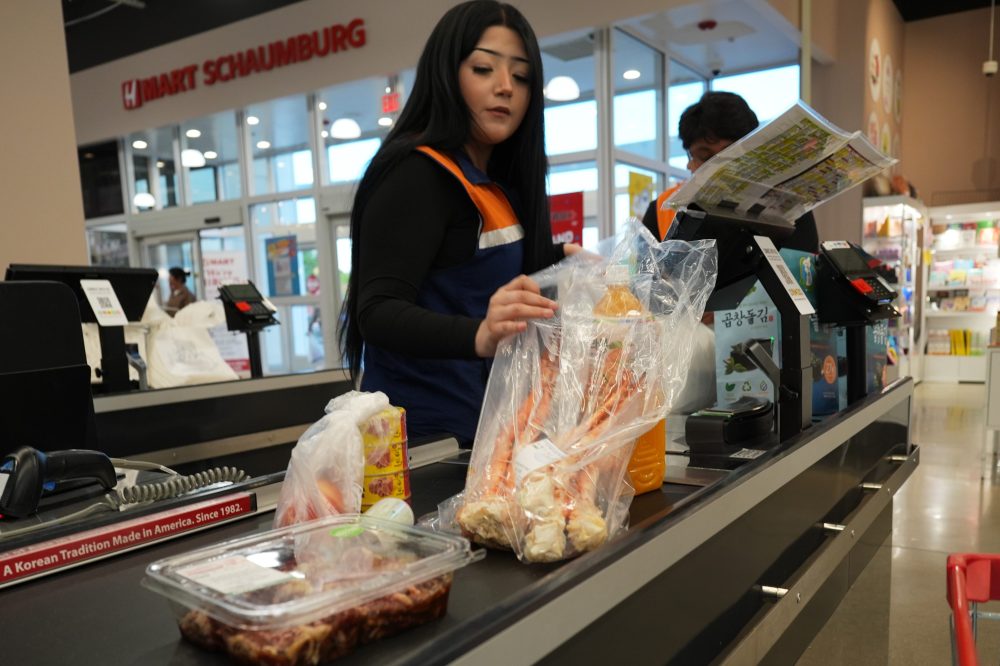

NEW YORK (AP) — American consumers stepped up their spending in May, fueled by warmer weather and a dip in gasoline prices at the pump.
New data from the Commerce Department, released Wednesday, showed retail sales climbed 0.9% last month — surpassing expectations and improving on a revised 0.4% gain recorded in April. Government tax refunds provided a financial cushion for shoppers in both April and May, though economists caution that benefit is beginning to wear off.
When gas station purchases are removed from the equation, retail sales still rose a solid 0.7% in May.
Breaking down the numbers by category: clothing and accessories stores saw a 0.3% uptick, while home furnishings and furniture retailers posted a 1% gain. Electronics and appliance stores bucked the trend with a 0.5% drop. Online shopping was a bright spot, climbing 1.5%.
It’s worth noting that the Commerce Department figures capture only a portion of overall consumer activity — things like hotel stays and travel are not reflected in the data. Among service-related categories, restaurants were the only one tracked, and they posted a slight 0.1% decline.
Consumer spending remains the backbone of the U.S. economy, accounting for the majority of the country’s economic output. Despite persistent price increases and a sluggish job market, household spending has held up through the first half of the year.
Inflation climbed to its highest point in three years, according to government figures released last week, with consumer prices up 4.2% in May compared to the same month a year earlier. A major contributor has been rising fuel costs tied to the Iran war.
A tentative agreement to end the Iran conflict and reopen the Strait of Hormuz has been reached, though analysts note it could take some time before oil supplies from the Middle East normalize and prices fully stabilize.
As of the latest figures from motor club AAA, gas prices slipped about a penny overnight to $4.02 per gallon — down 11% from $4.51 a month ago. AAA also noted the national average has not fallen below $4 since March.
Steve Lamar, the CEO of the American Apparel & Footwear Association trade group, offered a cautious take on the situation. “While the deal is encouraging, our industry is still holding its breath,” he said. “Our question now is, will this agreement be strong enough for our global industry to begin recovering?”
Even with gas prices easing, some analysts believe consumers may hold onto habits they developed during the price surge — such as filling up at big-box retailers that offer member discounts.
R.J. Hottovy, head of analytical research at Placer.ai — a firm that monitors foot traffic patterns using cellphone data — said visits to gas stations operated by large membership-based chains like BJ’s, Costco, and Sam’s Club began accelerating in early March, right as fuel prices were spiking sharply.