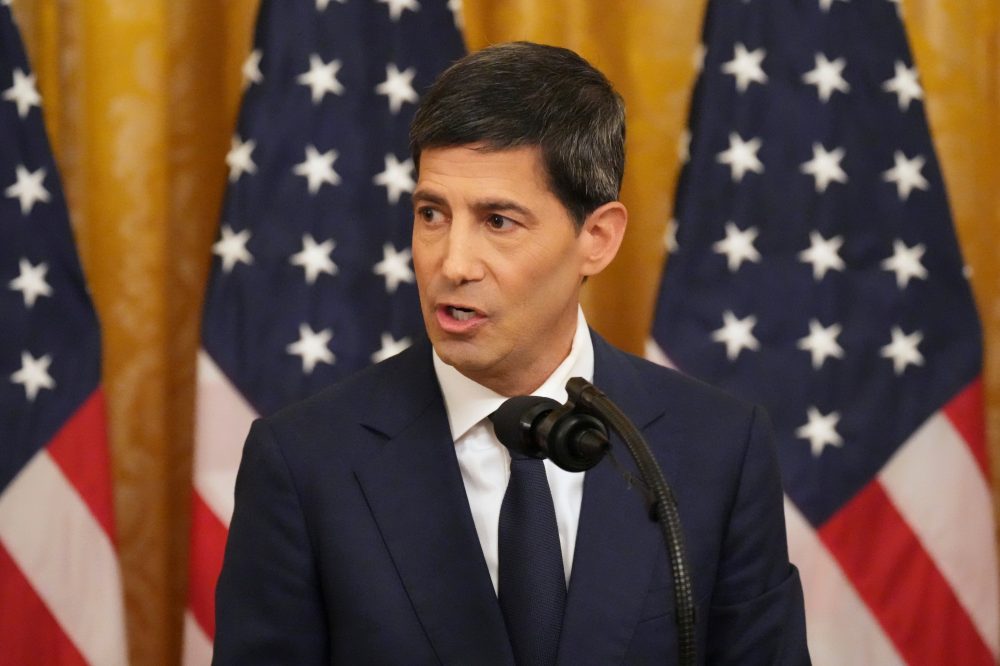

WASHINGTON (AP) — A new chapter begins at the Federal Reserve on Wednesday as Kevin Warsh, President Trump’s chosen leader for the nation’s central bank, takes charge of his first policy meeting and steps before cameras for his inaugural press conference.
Despite the change in leadership, major policy shifts are not expected right away. Economists anticipate the Fed will hold its benchmark interest rate steady at roughly 3.6%, marking the fourth consecutive meeting without a change. However, policymakers may revise their post-meeting statement to remove any language suggesting the Fed’s next move will be a rate cut — a shift that could signal rates will stay put for a prolonged stretch, or possibly even climb higher if inflation remains stubborn.
The main event Wednesday is expected to be Warsh’s afternoon press conference, which Wall Street investors, economists, and likely the White House will be watching closely to gauge his approach. Warsh brings a background as a former investment banker, a stint on the Fed’s board of governors from 2006 to 2011, and time as a visiting fellow at the conservative Hoover Institution.
Fed observers will be looking for signals on several key questions: Where might interest rates be headed? How does Warsh plan to tackle elevated inflation fueled by the Iran war and the resulting spike in gas prices? And will he reshape how the Fed communicates with the public?
One possible change under Warsh: reducing the number of press conferences from eight per year — currently held after each meeting — down to four, mirroring the approach former chair Ben Bernanke used when he introduced the practice. Warsh has expressed a desire to lower the Fed’s public profile and pull back on economic commentary, arguing that public statements can trap officials into defending specific positions longer than is prudent.
Still, pulling back on communication carries its own risks. Financial markets and the broader public have grown accustomed to clear guidance from the Fed, and less transparency could unsettle both.
Warsh also finds himself in a very different economic climate than when he appeared to be positioning himself for the Fed chair role last year. At that time, he was vocal about supporting lower interest rates — a position aligned with Trump’s repeated demands — and argued that advances in artificial intelligence could dramatically boost economic output and bring inflation down over time. Many economists were skeptical of that argument even then, noting that surging investment in semiconductors and computing equipment was itself contributing to inflationary pressure.
Since the Iran war began on February 28, inflation has climbed to a three-year high of 4.2%, driven largely by rising gas prices tied to the conflict. The Fed’s traditional response to elevated inflation is to raise its key rate to slow spending and economic growth.
Trump has announced a preliminary peace agreement that could end the three-month conflict, but whether the ceasefire will hold remains uncertain. Even if oil supplies from the Middle East resume flowing normally, it could take months before consumers see relief at the gas pump, in grocery stores, or on airline tickets. By the Fed’s preferred inflation measure, prices have already been running above its 2% target for more than five years.
Meanwhile, the job market has shown surprising strength, which reduces the urgency for rate cuts. Back in January, the Fed projected it would cut rates twice this year, partly out of concern that employers were cutting jobs and unemployment would rise. But a government report released earlier this month showed employers added 172,000 jobs in May — the third consecutive month of solid hiring gains.
Trump has consistently pushed for lower rates since returning to the White House, but as inflation has picked up in recent weeks, he has said he wants “Kevin” to act independently and make his own calls. At the same time, he stated earlier this month that the Fed should not raise rates, even in the face of higher inflation.
Trump was a persistent critic of Warsh’s predecessor, Jerome Powell, for not cutting rates aggressively enough. In January, the Department of Justice launched an unprecedented investigation into Powell over brief testimony he gave last July about a building renovation project. A federal judge ultimately threw out the DOJ’s subpoenas, and the government dropped the case.
The effort largely backfired. Powell chose to remain on the Fed’s board of governors after his term as chair concluded on May 15, with the ability to serve as a governor through January 2028. By staying on, Powell denied the Trump administration the chance to fill an additional seat on the seven-member board. Powell is expected to participate in Wednesday’s rate decision vote.