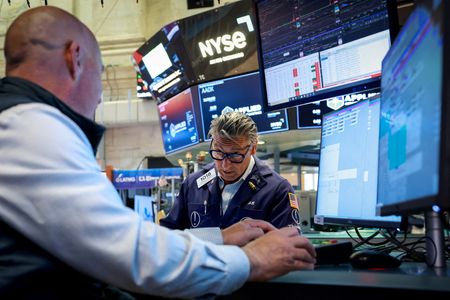

NEW YORK — Wall Street wrapped up Tuesday on an uneven note, with the Dow Jones Industrial Average reaching a new closing record even as technology stocks pulled the S&P 500 and Nasdaq lower. Meanwhile, crude oil prices continued their decline following news of a peace agreement involving Iran.
Here is a look at the major stories driving markets on Tuesday:
1. SpaceX has surpassed Amazon in overall market value.
2. President Donald Trump indicated that a peace deal will be made public shortly and confirmed it would prohibit Iran from developing nuclear weapons.
3. On the economic data front, single-family housing starts dropped in May to their lowest point in eight months, and import prices continued to climb.
4. Individual investors in SpaceX who are hoping to quickly sell their shares for a profit are facing tougher restrictions compared to large institutional funds.
5. A member of the European Central Bank’s Governing Council, Gabriel Makhlouf, warned that the Middle East peace agreement may not immediately ease the worldwide energy crunch.
6. Yum Brands announced plans to sell its Pizza Hut chain, which has been underperforming, for $2.7 billion.
Tuesday’s Key Market Movements
Stocks finished mixed as technology shares dragged on major indexes, though the Dow closed at a new all-time high and Europe’s STOXX 600 extended its recent gains. Semiconductor stocks fell while bank shares rose, and gold and silver mining companies also moved higher. The U.S. dollar weakened slightly ahead of Kevin Warsh’s debut as Federal Reserve chairman. The Japanese yen held steady against the dollar after the Bank of Japan raised rates as expected. U.S. Treasury yields edged lower as the Fed began its policy meeting. On the commodities side, West Texas Intermediate crude fell 5.8% and Brent crude dropped 5.1%, while gold prices climbed.
The Federal Reserve Kicks Off Its First Meeting Under New Chairman
The U.S. Federal Reserve opened its first monetary policy meeting under Chairman Kevin Warsh on Tuesday. Most Fed policymakers are expected to favor keeping interest rates unchanged through the rest of the year, according to a summary of economic projections set to be released Wednesday. However, a smaller group is anticipated to support a rate increase to keep rising inflation from becoming a lasting problem.
This expected shift toward a more cautious, inflation-fighting stance in the Fed’s so-called dot plot could create an early challenge for Warsh. Strong job market numbers and persistently high inflation have already made near-term rate cuts unlikely.
G7 Summit Addresses Ukraine, Debt, and Ebola
The second day of the three-day G7 summit centered heavily on the ongoing war in Ukraine. President Trump described a meeting with Ukrainian President Volodymyr Zelenskiy as going very well, noting that Zelenskiy said Trump expressed strong optimism about the United States providing Ukraine with additional air defense missiles.
The summit’s assembled leaders also committed to taking stronger action on what they called “escalating global debt vulnerabilities” and issued a call for a robust international response to the Ebola outbreak currently affecting Congo.
Gas Prices Easing for American Consumers
Drivers across the country have seen some relief at the fuel pump, with gasoline prices down more than 20% from their peak during the Iran conflict in April. With the announcement of a peace deal, prices could fall further in the weeks ahead.
Wholesale gasoline futures have formed what analysts call a “head and shoulders” pattern — a widely recognized chart signal suggesting the market may be turning lower.
What Could Move Markets on Wednesday
Investors will be watching for further developments in the Middle East, energy market shifts, and any social media posts from President Trump. The Federal Reserve is expected to announce its rate decision, and Warsh will hold his first press conference as chairman. On the economic calendar: U.S. retail sales for May, pending home sales for May, and business inventories for April. Internationally, markets will track euro zone consumer prices, UK inflation and producer price data, Canada new home prices, Sweden’s central bank rate decision, Russia’s producer prices, South Africa’s consumer prices, Brazil’s benchmark interest rate, and New Zealand’s first-quarter GDP figures.