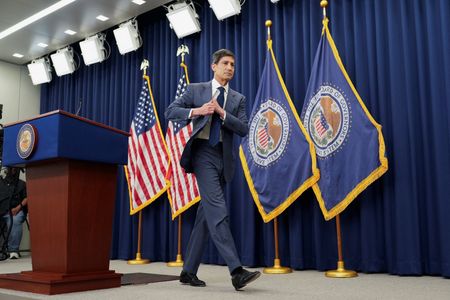

Wall Street took a turn for the worse on Thursday after the U.S. Federal Reserve held its key interest rate steady but indicated that a rate hike could be on the horizon before the end of the year. Stocks fell sharply, the dollar continued climbing, and Treasury yields moved modestly higher in the wake of the decision.
The Fed’s move was widely anticipated, but the accompanying policy statement caught markets off guard. Officials removed language that had previously suggested a leaning toward lower rates. New quarterly projections revealed that nine Fed policymakers now expect a rate increase before 2025 is over.
Updated economic forecasts show that Fed officials have become increasingly worried about inflation. Policymakers now project year-end PCE inflation — a key measure of price growth — will reach 3.6% by the time 2027 arrives, a significant jump from the 2.7% forecast issued back in March.
On the market front, U.S. retail receipts rose 0.7% in May, outpacing analyst expectations. Meanwhile, pending home sales climbed unexpectedly to a six-month high in June, offering some brighter news on the housing front.
In corporate news, CME Group announced that insider Lynne Fitzpatrick will take over as its next chief executive, succeeding Terry Duffy. Fitzpatrick becomes the first woman to lead the exchange.
Across the Atlantic, British inflation held steady at 2.8% in May — a 13-month low — with the Bank of England expected to leave its own interest rates unchanged. In Asia, the National Stock Exchange of India, recognized as the world’s most active derivatives exchange, filed paperwork for an initial public offering after years of regulatory setbacks.
On the global stage, leaders of the G7 nations wrapped up their summit with a unified show of support for Ukraine. They also welcomed progress toward a final resolution of the conflict involving Iran and called for a ceasefire in Lebanon. Discussions shifted to securing mineral supply chains and reducing dependence on China.
Regarding the U.S.-Iran framework agreement, the deal includes a private $300 billion fund aimed at stimulating investment, with half of that amount already committed. Israel responded by launching new airstrikes on Lebanon, though the prospects for Israeli Prime Minister Benjamin Netanyahu to retain power after elections this autumn have reportedly dimmed, as the deal could bring an end to the Lebanon and Iran conflicts before Israel achieved its stated objectives.
Looking ahead, traders will be watching for developments in the Middle East, energy market movements, social media posts from former President Trump, and a slate of economic data including U.S. weekly jobless claims and the Philadelphia Fed Business Index for June. Several central bank policy decisions — from the Bank of England, the Swiss National Bank, and Norges Bank — are also on the calendar.