A newly released AP-NORC poll finds a growing generational divide among American Jews when it comes to their connection to Israel. According to the survey, support for Israel plays a central role in the religious identity of many Jewish adults aged 45 and older — with about half saying that backing Israel is very important to who they are. Among younger Jewish adults, however, that figure drops to roughly 40 percent. Older generations tend to view Israel as a vital safe haven, particularly given the historical memory of the Holocaust and the threat of future persecution.
On the abortion front, some advocacy organizations are pushing for state laws that go beyond what Roe v. Wade established — seeking to eliminate all restrictions on abortion, including up to the moment of birth. The National Abortion Federation, which represents abortion providers, has stated its opposition to what it calls “rigid legal cutoffs that ban or restrict abortion care at viability or arbitrary gestational lines.” While the organization does not fund political campaigns, its stance may reflect the thinking of other groups in the movement. In 2024, national abortion organizations worked to defeat a South Dakota ballot measure that would have banned abortions in the third trimester and permitted some restrictions in the second. Voters ultimately rejected that measure in a referendum.
In Israel, the country’s parliament has passed two significant pieces of legislation that effectively block ultra-Orthodox Jewish men from being drafted into the military. During a lengthy legislative session this week, lawmakers voted to stop the arrests of ultra-Orthodox men who had avoided the draft, and also to formally recognize Jewish religious study as a foundational value of the state. Both measures are seen as major concessions by Prime Minister Benjamin Netanyahu’s Likud party to ultra-Orthodox political allies who have long sought to officially exempt their community from military service — a requirement that applies to most Jewish men and women in Israel. The moves have drawn considerable opposition from many Israeli citizens.
When life takes a difficult turn, many Americans find themselves opening the Bible. A new survey from the American Bible Institute found that people experiencing hardships — whether it’s going through a divorce, battling an illness, or grieving the loss of someone close to them — are significantly more likely to read scripture than those who are not facing such challenges.
The poll also found that losing a job or surviving a natural disaster can push people toward the Bible as well. The findings suggest that personal crisis often serves as a catalyst for turning to faith.
The results echo the words of Romans 15:4, which states that “through the encouragement of the Scriptures we might have hope.”
WASHINGTON — Farmers in 59 Virginia counties and surrounding areas can now apply for emergency loans after a series of natural disasters, including drought, freeze, and frost conditions, struck the region.
The U.S. Department of Agriculture’s Farm Service Agency is making emergency credit available to help agricultural producers recover from the damage. The loans can be used for a variety of purposes, including replacing essential equipment or livestock, restructuring farm operations, or refinancing certain debts.
Counties qualifying for drought-related disaster assistance include: Albemarle, Augusta, Bedford, Carroll, Cumberland, Fluvanna, Franklin, Grayson, Lunenburg, Patrick, Prince Edward, Smyth, Tazewell, Washington, and Wythe, along with the city of Waynesboro.
A separate and longer list of counties is eligible for assistance related to frost and freeze damage. Those counties are: Albemarle, Amherst, Augusta, Bedford, Botetourt, Buckingham, Caroline, Clarke, Culpeper, Cumberland, Dinwiddie, Essex, Fairfax, Fauquier, Floyd, Fluvanna, Frederick, Giles, Gloucester, Goochland, Greene, Halifax, Hanover, Henry, Highland, Loudoun, Louisa, Madison, Montgomery, Nelson, New Kent, Orange, Page, Pittsylvania, Prince William, Pulaski, Rappahannock, Rockingham, Shenandoah, Stafford, Warren, Washington, and Wise.
Tony Banks, senior assistant director of agriculture, development and innovation for Virginia Farm Bureau, highlighted how farmers can find the help they need. “USDA’s Disaster Assistance Recovery Tool is easy to use and allows farmers to quickly drill down to the emergency program or programs available in the county where they experienced losses,” Banks said.
Banks also warned that the situation could expand. “As the drought progresses, additional localities may be designated as disaster areas,” he said. “I encourage farmers to check the discovery tool regularly or reach out to their local Farm Service Agency office.”
Farmers seeking more information can visit farmers.gov, where they will find the Disaster Assistance Discovery Tool, a Disaster Assistance-at-a-Glance fact sheet, and a Loan Assistance Tool to help identify available programs. Those wishing to file a Notice of Loss or learn more about programs can contact their local USDA Service Center. Media inquiries can be directed to Mathew Myers, FSA farm loan specialist, or to Banks at 804-514-5207.
The medical school at the University of Minnesota is now selling dolls specifically aimed at what it describes as “transgender and gender diverse children.” The toys are designed for youngsters between the ages of four and ten, with the university framing their purpose as therapeutic play.
According to reports, the dolls can be outfitted with a variety of clothing and hairstyle options, allowing children to mix and match male and female characteristics as they see fit.
The initiative has drawn sharp criticism from those who argue the dolls serve as a grooming tool. Critics are also raising concerns about where the funding for the project is coming from and whether public or institutional money is being used to support it.
The Trump administration is moving forward with a plan to surround Lafayette Park with permanent fencing. The park sits directly outside the White House and has historically been one of the most well-known protest locations in the country.
A rendering released by the U.S. Commission of Fine Arts shows what the proposed fencing would look like when open, with a view looking south from H Street toward the White House.
Protesters and others who have long used the park as a place to demonstrate are expressing concern that installing permanent barriers could fundamentally change how the public is able to use the space.
Does your hand ache after a long session of scrolling through your phone? You might be dealing with what’s commonly called “texting thumb” — a broad term covering a range of discomforts tied to heavy smartphone use.
The condition can show up as general stiffness, a throbbing sensation near the knuckle, or a clicking feeling when bending the thumb. When ignored, the repeated motion of typing and swiping can develop into more serious medical issues, including carpal tunnel syndrome and arthritis.
Smartphone overuse injuries aren’t new — people have been warned about them for decades, going back to the days of “BlackBerry thumb.” But today’s phones are bigger and heavier than ever, and we use them for far more than calls and texts. Doomscrolling for hours, paying bills, and watching full movies have all become everyday habits.
“Mobile devices are here to stay. So rather than saying ‘you can’t be on your device,’ we really just need to learn and think about ways to make the devices compatible with modern life,” said Dr. Maureen O’Shaughnessy with the University of Kentucky HealthCare Hand Center.
Keeping your wrists and elbows locked in the same position for extended periods can cause soreness at the base of the thumb or wrist. Holding a phone upright for too long can also wear out your other fingers.
Dr. O’Shaughnessy noted that many people only notice the discomfort when they step away from their phones — like during a vacation — and the aches begin to fade.
The most straightforward fix is to simply put the phone down more often and take short breaks between scrolling sessions. If cutting back feels like a challenge, try switching up your posture, alternating hands while typing, or using your index finger instead of your thumb.
Your phone’s built-in accessibility settings can also help reduce strain. Voice-to-text lets you send messages without typing at all, and increasing the font size means you won’t need to hold the phone as close to your face.
There are also ring and circle-shaped grip accessories that attach to the back of your phone, helping spread the weight more evenly across your hand. Many of these accessories double as stands, making it easier to prop up your phone while watching videos.
After a long day of screen time, stretching your hands can provide real relief. Try flexing your wrist by tilting your palm toward and away from you while using your other hand to gently push and pull. Dr. O’Shaughnessy also suggested bending each finger individually and making small circles with your thumbs.
For pain specifically at the base of the thumb, place your hand flat on a surface and stretch the thumb away from your fingers, holding the position for about 30 seconds.
If numbness, tingling, or persistent aching doesn’t improve after cutting back on screen time and trying remedies like ibuprofen or ice, it’s worth seeing a doctor. Ongoing phone use can worsen thumb arthritis, trigger De Quervain’s tenosynovitis — which causes sharp pain and swelling at the thumb’s base — or lead to carpal tunnel from a pinched nerve. Trigger thumb, a painful catching sensation when bending the thumb, can also result from an inflamed tendon.
Breaking the cycle of endless scrolling isn’t easy, but even small, intentional pauses to shift your posture can make a meaningful difference.
“Our hands were not designed to use phones all day long,” said Dr. Eugene Tsai, a surgeon at Cedars-Sinai Orthopaedics and Sports Medicine. “In order for us to use the phones, we have to be kind to our hands.”
DAMASCUS, Syria — Syrian authorities have intercepted a weapons-smuggling attempt at the country’s border with Iraq, with state media reporting Thursday that the shipment was allegedly headed for the Iranian-backed Hezbollah militant group in Lebanon.
According to Syria’s state-run SANA news agency, an unnamed Interior Ministry official confirmed that the seized truck was loaded with advanced weapons and rockets. A preliminary investigation determined that Hezbollah in Lebanon was the intended destination for the cargo. Hezbollah has been engaged in armed conflict with Israel since early March.
Syria’s current leadership, which came to power after ousting former President Bashar Assad in 2024, has made it a priority to crack down on weapons and drug smuggling across its borders — particularly along routes shared with Iraq and Lebanon. For decades, those corridors have been used to funnel supplies to Hezbollah and other Iran-backed groups.
U.S. President Donald Trump has pressed Syria to take direct military action against Hezbollah. Meanwhile, Syrian President Ahmad al-Sharaa has been working to keep his country from being drawn into a broader regional conflict.
Hezbollah issued no statement in response to the allegations.
Separately, Iraqi Prime Minister Ali al-Zaidi traveled to Washington earlier this week to meet with President Trump, who has been pushing Iraq’s government to disarm militias backed by Tehran.
BRUSSELS (AP) — The European Union announced two new regulations Thursday targeting Google, requiring the tech giant to share its search data and open its Android operating system to competing artificial intelligence companies.
The EU framed the new rules as a push to encourage innovation and fair competition, saying the measures will help ensure that rival AI services can access Android devices and search engines on equal footing with Google’s own products.
“Thanks to these measures, we hope to see emerging alternatives to Google Search and Google’s AI services, such as Gemini, and that users in the EU can enjoy greater choice of services,” said Henna Virkkunen, an executive vice president at the European Commission overseeing technology matters.
The move is part of a broader regulatory effort by Brussels to limit the dominance of major technology companies — referred to as “gatekeepers” — including firms based in China and the United States. The EU’s 27 member nations have increasingly positioned themselves as global leaders in holding powerful tech platforms accountable.
Recent actions from Brussels have included pushing Google to give rival AI companies access to its Gemini AI services, requiring Apple to make its devices compatible with non-Apple products, and demanding that Meta remove what regulators called “key addictive features” such as infinite scrolling.
Kent Walker, who serves as president of global affairs for both Google and its parent company Alphabet, warned that the new requirements could have unintended consequences. He argued the rules would remove protections Google had put in place, including the screening of third-party AI assistants.
“Europeans’ private searches would be exposed to unfamiliar companies, without adequate anonymization of the data and without user knowledge or consent. This would weaken citizens’ privacy, risk business trade secrets, and endanger national security,” Walker said in a written statement.
U.S. President Donald Trump has previously criticized EU regulations targeting American technology companies.
In announcing the two new rules, the European Commission said it determined that AI assistants not developed by Google were unable to operate on Android phones at the same capability level as Google’s own Gemini assistant.
Under the new requirements, Google must allow users to activate competing AI assistants using voice commands and permit those assistants to carry out background tasks — such as making restaurant reservations through third-party applications.
Additionally, Google faces a deadline of January 2027 to begin sharing anonymized search data with certain competitors. The commission said this step is necessary because Google holds an enormous amount of user data that no rival company can currently match, giving it an unfair competitive advantage.
UVALDE, Texas — Days of relentless rainfall have triggered life-threatening flooding across parts of Texas, forcing rescue crews to pull people from rising waters before dawn Thursday while forecasters issued urgent warnings: “Move to higher ground now!”
The National Weather Service office in San Antonio warned that a “large and deadly flood wave” was moving down the same river that was devastated by catastrophic flooding a year ago, when more than two dozen children and camp counselors lost their lives at Camp Mystic.
The dangerous storms are threatening several counties near the Mexican border and throughout the Texas Hill Country. Officials in Kerrville urged residents to move to the uppermost levels of their homes for safety.
The Uvalde County Office of Emergency Management also issued a shelter-in-place order, stating: “All major highways and many city streets are closed due to flooding and water over the roadway.”
As of early Thursday, no deaths or injuries had been reported in connection with the flooding. Several tornado warnings were also issued across the region.
According to a spokesperson for the Texas Parks and Wildlife Department, Texas Game Wardens have taken part in rescuing more than 40 people from floodwaters, with most of those rescues occurring in the Uvalde County area.
Meteorologists reported that between 10 and 20 inches of rain — roughly 25 to 50 centimeters — had fallen over the previous two days, including a staggering 8 inches in just a two-hour window early Thursday morning.
A river gauge located less than 10 miles from Kerrville recorded a rise of 32 feet in just four hours. The National Weather Service said the river was expected to crest at levels comparable to the catastrophic July 4, 2025, flood event.
Forecasters cautioned that already dangerous conditions could worsen further in some of the hardest-hit communities. Portions of the Texas Hill Country — where last summer’s flooding claimed more than 100 lives — were among the areas placed under flood watches.
Some flood watches were expected to remain active through Friday evening.
By Wednesday, Uvalde police had ordered mandatory evacuations for certain neighborhoods, with emergency responders going door-to-door to notify affected residents. Others in the area were put on standby in case additional evacuations became necessary.
Residents along the Leona River were seen scrambling to load their vehicles and flee, though many were uncertain of where to go. Some watched from their doorways as floodwaters crept closer by the hour. One man loaded two kayaks into his truck bed as a precaution.
By Wednesday afternoon, lightning illuminated darkening skies as the normally calm river churned with fast-moving brown water, pressing against a high bridge in town and spilling into surrounding neighborhoods.
Texas Gov. Greg Abbott declared disasters in dozens of counties across the state.
By Wednesday evening, more than six million Texas residents spread across 57 counties were under a National Weather Service flood watch, with some watches set to continue through Friday evening.
Uvalde County has seen some of the highest rainfall totals in the region. Officials there conducted dozens of rescues and warned that more people still needed assistance as river levels continued to rise, with highways and roads throughout the area closed due to high water. Under normal conditions, Uvalde County receives approximately 23 inches of rain over the course of an entire year, according to the Uvalde County Extension Office.
A newly released survey from the Pew Research Center is shedding light on the current state of religious identity across the United States. According to the findings, four in ten American adults — 40% — identify as Protestant Christians, making it the largest faith group in the country.
Catholics make up the second-largest group at 21%, while all other faith communities combined account for nine percent of the adult population.
Perhaps the most notable finding is the continued rise of Americans who do not identify with any religion. The survey found that 28% of respondents described themselves as atheist, agnostic, or simply having no particular religious affiliation. Pew researchers say that figure is the highest they have ever recorded for that category, and the group has grown dramatically over the past 20 years.
RURAL RETREAT, Va. — When a local farmer was fatally struck by another vehicle while operating his tractor in September 2022, one Wythe County high school student decided something had to change.
Olivia Crigger was deeply moved by the tragedy and felt compelled to act. “This tragedy made me realize how quickly something preventable can take a life,” she said. “It inspired me to take action and become a voice for safer rural roads.”
What started as a Girl Scout Gold Award community service project grew into a full-scale safety campaign through the Virginia Farm Bureau SAFER contest, which Crigger joined along with 15 other organizations and individuals last year.
Matt Nuckols, the Virginia Farm Bureau’s safety coordinator, explained the purpose behind the contest. “The SAFER contest was created to raise awareness about the presence of farm equipment on our roads and ultimately change behaviors to keep both farmers and drivers safe,” he said. “It’s about giving communities the tools and encouragement to take that message locally and make a real impact.”
Crigger is no stranger to the dangers of slow-moving farm equipment sharing the road with regular traffic. She frequently escorts friends and family during spring planting and fall harvest seasons, using her vehicle’s hazard lights to alert drivers to slow down.
The numbers tell a sobering story: a vehicle traveling at 55 mph needs roughly 5 seconds and 300 feet — about the length of a football field — to brake and avoid hitting farm equipment moving at up to 20 mph.
“But many people will just keep going 55 miles per hour,” Crigger said. “My family, friends and I have experienced many close calls and near-misses.”
Under the slogan “One close call is one too many,” Crigger created posters, flyers, graphics, and videos that were distributed at local businesses, community events, and across social media. Her materials covered safe driving practices, tractor hand signals, and the challenges that come with operating large farm machinery on public roads.
Her campaign reached a high point at Rural Retreat Heritage Day, where she set up a real tractor display and gathered signatures on a petition calling for warning signs along local roadways. The effort drew strong community backing and caught the attention of the Virginia Department of Transportation.
VDOT Wytheville Residency Administrator James Schwartz described the outcome: “Olivia provided VDOT locations where she felt that farm equipment signs were needed for the safety of farmers in our region. Our staff evaluated the locations and determined the need for 14 signs on six routes, and all 14 signs have been installed. Our team was impressed with Olivia’s initiative, and we were happy to work with her in her effort to improve safety for farmers.”
Nuckols said the newly placed signs carry real value. He noted that the signs “can have a lasting impact by raising awareness in the moment, and pairing them with Olivia’s story — a young leader who chose to make a difference — is the kind of connection people remember.”
The Virginia Farm Bureau supported Crigger throughout the process, offering guidance on campaign strategy, branding, and messaging, along with printed materials and connections to local partners.
“Efforts like Olivia’s are exactly what the SAFER contest was designed to inspire: local leaders identifying a need, engaging their community and taking action,” Nuckols said. “That kind of grassroots impact is what ultimately strengthens safety across Virginia.”
Last month, Crigger presented her farm equipment road safety campaign at the Virginia 4-H State Congress, where she earned a blue ribbon and took first place in the public speaking category. She says she plans to continue expanding her outreach through new partnerships and opportunities.
Italy’s governing coalition is calling on the president to pardon a 72-year-old jeweler who was sentenced to more than 14 years behind bars after fatally shooting two men who robbed his store.
Mario Roggero shot and killed two robbers and injured a third in 2021 following a raid on his jewelry shop in Grinzane Cavour, a small community in northern Italy. Surveillance video captured Roggero pursuing the men into the street after the robbery had already ended.
Roggero’s wife and daughter were present inside the store during the incident. The robbers were armed with a toy gun and a knife.
Italy’s highest court rejected Roggero’s appeal on Wednesday, upholding the 14-year, 9-month sentence. The court determined that Roggero had exceeded the legal boundaries of self-defense because the threat from the robbers had already ended by the time he opened fire outside.
Despite that ruling, the coalition backing Prime Minister Giorgia Meloni has stood firmly behind Roggero, arguing he was acting to protect his life and his property. Matteo Salvini, who leads the coalition’s far-right League party, expressed his support publicly.
“After a lifetime of work, I don’t think it’s fair to spend years in prison at 72 after being assaulted and robbed,” Salvini said.
The ruling parties issued a joint statement announcing plans to gather signatures in favor of a formal pardon request. Under Italian law, the justice ministry must review such petitions before they are submitted to President Sergio Mattarella for consideration.
The case has sharply divided Italian public opinion. Those who believe Roggero is guilty argue that he clearly crossed the line of lawful self-defense when he chased the robbers and fired at them outside his shop.
Roggero maintained his innocence on social media, where he built a following of thousands of supporters and also sought financial contributions to help pay his legal costs. Italian media reported that he turned himself in Thursday at a jail located in the northern town of Fossano.
Following the finalization of his conviction, Roggero posted a video online thanking those who supported him and encouraging them to keep fighting for what he described as a justice system capable of addressing “increasingly rampant crime.”
Boeing is in the final stretch of obtaining regulatory approval for a fix to the engine anti-ice system on its 737 MAX aircraft, a development that could open the door for deliveries of the long-stalled MAX 7 and MAX 10 versions, company executives announced.
The redesigned system corrects a problem that could lead to engine overheating and potential failure. That issue has been the primary roadblock preventing certification of both the smallest and largest variants of Boeing’s top-selling commercial jet.
According to aviation analytics company Cirium, Boeing has already manufactured roughly 30 MAX 7s and nine MAX 10s that are sitting in storage awaiting delivery. The MAX 10 alone represents at least 28% of all outstanding MAX orders.
The U.S. Federal Aviation Administration announced in May that it anticipated certifying the smaller MAX 7 this summer. Southwest Airlines holds the largest number of orders for that particular version.
The MAX 10, which generates more profit per unit, has completed 98% of its required certification flight testing, executives revealed to reporters before next week’s Farnborough Airshow.
“We have two flight tests left, and we should be done real soon here,” said Chris Payne, Boeing’s vice president and general manager for 737 MAX development programs.
Certification of both the MAX 7 and MAX 10 is running years behind its original schedule, a delay that has given European aircraft manufacturer Airbus the opportunity to extend its advantage in the narrowbody jet market.
Boeing has faced a more rigorous certification process following two deadly crashes involving the MAX 8 in 2018 and 2019, as well as heightened scrutiny of its manufacturing and quality control operations after a mid-air cabin panel blowout in January 2024 on a nearly new Alaska Airlines MAX 9.
When the anti-ice system problem was first identified in 2021, regulators permitted the MAX models already flying commercially — the MAX 8, MAX 8-200, and MAX 9 — to continue operating and allowed Boeing to keep building them, while holding back certification of the newer variants.
Beyond solving the heating issue, the fix also reduces engine noise and helps prevent fan flutter, based on results from testing conducted at GE Aerospace’s facility in Ohio, according to Mike Sinnett, Boeing’s senior vice president of product strategy, product development, and development programs.
“It was kind of win-win all around,” Sinnett said.
The 737 MAX uses the LEAP-1B engine, which is built by CFM International — a joint venture between GE Aerospace and France’s Safran.
For aircraft already in service, Boeing says the bulk of the engine anti-ice retrofit can be completed within a single maintenance shift, though it also involves installing new wiring that requires more extensive work. Executives said Boeing is coordinating with regulators on a timeline that would let airlines perform the repair when planes are already undergoing scheduled heavy maintenance, limiting disruption and keeping costs down.
The MAX 10 will also feature an upgraded flight crew alerting system — called an enhanced angle-of-attack system — to meet safety standards that Congress required following the two MAX crashes, which together killed 346 people and grounded the aircraft for 20 months starting in 2019.
The updated system simplifies the cockpit warnings that stem from a malfunctioning angle-of-attack sensor. In both the Indonesia and Ethiopia crashes, pilots were overwhelmed with excessive alerts triggered by that sensor failure.
“It’s an IOU from the return-to-service requirements after the very unfortunate accidents,” said Bill Quashnock, Boeing’s 737 deputy chief pilot.
Quashnock added that all 737 MAX jets currently in service will have the new system installed within two years of it receiving regulatory certification.
In other Boeing certification news, the company has surpassed the halfway point in flight testing for its 777-9 widebody jet and remains on schedule to begin deliveries of that aircraft next year, said Terry Beezhold, Boeing’s vice president and general manager of the 777-9 program. Several major certification steps still remain, including approval for extended-range flights over routes with limited airport options along the way.
European Union regulators announced Wednesday that Alphabet’s Google must grant access to its services for AI competitors like OpenAI, as well as rival search engines, as part of sweeping rules designed to rein in the influence of major technology companies.
The European Commission, which serves as the EU’s competition watchdog, issued the detailed requirements six months after launching what are known as specification proceedings to help the world’s most widely used internet search engine come into compliance with the Digital Markets Act.
Google wasted no time expressing its opposition to the mandated changes. Kent Walker, Google’s lawyer, stated in an email: “Today’s decisions risk undermining vital privacy and security guardrails for millions of Europeans.”
Walker went on to say, “We have repeatedly offered solutions to safeguard users while satisfying the DMA’s goals, but these rulings discount extensive evidence of user harm.”
Under the new rules, Google will be required to open up 11 features within its Android operating system, giving AI rivals the ability to tap into key functions and better compete against Google’s own Gemini AI service.
In practical terms, this means smartphone users will be able to activate a competing AI assistant using voice commands — much like saying “hey Google” — to do things like hail a cab or look up local information. Those changes are expected to take effect for users starting in July 2027 with the next version of Android.
The Commission noted that the measures include strong safeguards for user privacy and device security, and that Google will only be required to extend those 11 features to competitors that meet established security and privacy standards.
The ruling also directs Google to share data it gathers to improve its own search results with OpenAI and other AI-powered chatbots that include search capabilities. That data must be anonymized before being shared.
Google will have the opportunity to first evaluate whether competitors present cybersecurity or data protection concerns before granting access. This portion of the decision takes effect in January of next year and includes a set formula for determining how much rivals must pay for the shared data.
EU tech chief Henna Virkkunen expressed optimism about the outcome, saying in a statement: “Thanks to these measures we hope to see emerging alternatives to Google Search and Google’s AI services, such as Gemini, and that users in the EU can enjoy greater choice of services.”
A federal animal and plant health agency has announced plans to seek updated approval for an information collection program connected to rules designed to stop dangerous citrus diseases from spreading across the country.
The Animal and Plant Health Inspection Service published the notice in keeping with the requirements of the Paperwork Reduction Act of 1995. The agency is requesting both a revision to and an extension of approval for the information collection tied to its regulations.
Those regulations are focused on preventing the spread of citrus canker, citrus greening, and the Asian citrus psyllid — an insect that acts as a carrier for citrus greening — into parts of the United States that have not yet been affected by these threats.
NEW YORK — Sunday’s World Cup final between Argentina and Spain has all the makings of a Hollywood script: the European champions squaring off against the reigning world and South American champions, with a coaching duo whose relationship goes back to a training classroom.
Spain, led by manager Luis de la Fuente, is chasing the country’s second-ever World Cup title — their first came 16 years ago in South Africa. Standing in their way is Lionel Scaloni’s Argentina, which is aiming to become the first country since Brazil in 1962 to claim back-to-back world championships.
But the storyline runs deeper than trophies and rankings. After Spain’s 2-0 semifinal victory over France, De la Fuente made a surprising comment — saying he would be “delighted” if Argentina emerged from the other semifinal to meet Spain in the final.
The 65-year-old wasn’t suggesting Argentina would be an easy opponent. Instead, his words reflected a genuine friendship rooted in the past. Years ago, at the Spanish Football Association’s coaching academy in Las Rozas, De la Fuente served as an instructor while Scaloni was among his students.
That chapter unfolded in 2017, two years after Scaloni hung up his boots as a professional player. De la Fuente, who was overseeing Spain’s youth national teams at the time, was one of the mentors who helped the newly retired player begin his journey into coaching.
Neither could have predicted that the lessons exchanged in that classroom would eventually lead them both to a World Cup final.
Scaloni reflected on that time and his connection with De la Fuente during the 2024 Copa America. “Luis has been a huge help to those of us who did the coaching course in Las Rozas. I’ve had chats with him and I wish him all the best,” Scaloni said ahead of Argentina’s Copa America quarterfinal victory over Ecuador.
The respect between the two coaches flows in both directions. Despite Scaloni once being his student, De la Fuente has gone so far as to call him a master — a remarkable compliment given their history, but one that reflects the success Scaloni has achieved guiding Argentina to both global and continental glory.
During the same period, which overlapped with the 2024 European Championship, Scaloni offered his own praise of De la Fuente’s work. “I want Spain to do well (at the Euros) and he helped us lads who did the (coaching) course in Las Rozas a great deal. I like the way he manages things and how the players give their all for him,” he said.
Both coaches went on to win their respective continental championships that year. Now they meet with the sport’s ultimate prize on the line.
SCALONI’S DEEP TIES TO SPAIN
Scaloni’s connection to Spain isn’t limited to coaching credentials. His wife Elisa Montero, whom he met in 2008, is Spanish. Their children were born in Spain, and the family currently lives in Mallorca. Scaloni, now 48, also spent multiple seasons as a player in Spain, suiting up for Deportivo La Coruna, Racing Santander, and Mallorca.
“Part of my family is Spanish and, naturally, I’m supporting Spain (at the Euros),” Scaloni said in 2024.
Speaking earlier this week, after Spain had already booked their spot in the final and with Argentina’s semifinal still to come, Scaloni offered a glimpse of the warmth — and the competitive fire — that now defines this matchup.
“I’m happy for him (De la Fuente). He deserves it. He’s a great bloke. Everything we see in his national team is what we hope to see in ours,” Scaloni said from Atlanta.
He then added with a touch of humor: “If things don’t go well for us, I’ll give him a call. If we play against him in the final … no. Let’s hope there’s no call until after the final …”
That phone call will have to wait until after Sunday. Before any congratulations are exchanged, mentor and former student will first need to settle who learned the most important lessons of all.
A right lane closure is currently in place on Hudson Road between Cave Neck Road and Falls Road as a result of ongoing construction activity.
The closure is expected to remain in effect until 5:30 PM. Drivers traveling through the area should anticipate potential slowdowns and allow extra travel time.
Motorists are encouraged to consider alternate routes if possible to avoid delays in the construction zone.
Ocean City, Maryland is gearing up to welcome elite footvolley talent from around the globe for the 2026 Nations Cup Pro Footvolley Tour, a major international beach sports competition coming to its shores this summer.
Presented by Ocean City Tourism, the four-day event is scheduled to run from Thursday, July 30 through Sunday, August 2. Best of all for beachgoers and sports fans alike, entry is completely free of charge.
The Nations Cup brings together the very best footvolley competitors in the world, giving Delmarva-area residents and visitors a rare chance to watch world-class international beach sports action right on the Ocean City shoreline.
A federal agency that oversees animal and plant health is taking steps to update and continue a data collection effort connected to horse welfare regulations.
The Animal and Plant Health Inspection Service has announced its intention to seek a revision to — and an extension of — an existing approved information collection. The collection is tied to the agency’s Horse Protection Program and its enforcement of the Horse Protection Act.
The announcement was made in accordance with the Paperwork Reduction Act of 1995, which requires federal agencies to notify the public when they plan to collect, revise, or extend information-gathering activities.
BERLIN — German automaker BMW announced Thursday that it has selected Dorothea von Boxberg to join its executive board as the new head of human resources, highlighting her background in guiding companies through major organizational changes.
The appointment, which received approval from BMW’s supervisory board, follows a surprising profit warning issued last month under the company’s new chief executive, Milan Nedeljkovic, along with commitments to pursue additional cost savings.
Europe’s automotive sector — and German manufacturers in particular — have faced significant headwinds as the industry works to transition toward electric vehicles while contending with intensifying competition from Chinese automakers. Those challenges have been compounded more recently by costs tied to U.S. tariffs and uncertainty surrounding the conflict involving Iran.
Despite the turbulent environment, BMW has so far managed to steer clear of the large-scale layoffs that have hit rivals Volkswagen and Mercedes-Benz.
Von Boxberg currently serves as CEO of Brussels Airlines and previously held leadership positions at Lufthansa. She will step into the role on September 1, taking over from departing HR chief Ilka Horstmeier.
Supervisory board chair Nicolas Peter praised the selection, saying, “Dorothea von Boxberg not only brings extensive experience in implementing transformation processes, but also an outside-in perspective on our industry.”
CEO Nedeljkovic also weighed in, stating that “the BMW Group faces new challenges that require consistent adjustment of our structures and ways of working,” and expressing confidence that von Boxberg would be an “excellent addition” to help tackle those demands.
Following the dramatic reduction in its profit forecast — with profit margins potentially falling as low as 1% this year — BMW and employee representatives have been preparing to begin discussions aimed at speeding up efforts to improve operational efficiency.
Drivers traveling along Chaddwyck Boulevard should be aware of intermittent lane closures currently in effect between Heddington Drive and East Saxony Drive.
The lane restrictions are due to construction activity in the area. The closures are expected to remain in place until 4:00 PM.
Motorists are encouraged to allow extra travel time or consider using an alternate route to avoid potential delays.
Drivers traveling on Carsdale Court between Arundel Drive and the end of the cul-de-sac should be prepared for intermittent lane closures as construction work continues in the area.
The lane restrictions are expected to remain in place until 5:30 p.m. Motorists are encouraged to use caution when passing through the construction zone or consider alternate routes if possible.
Motorists traveling northbound on Edgemoor Road should expect a full closure between Governor Printz Boulevard and Philadelphia Pike due to ongoing construction.
The road is shut down in that stretch and is scheduled to reopen by 5 p.m. Drivers are encouraged to find an alternate route until the closure is lifted.
Portugal has become the first member of the European Union to join a global network dedicated to overseeing how artificial intelligence is used in healthcare, a milestone announced on Wednesday as Europe moves closer to enforcing sweeping new AI regulations across the continent.
Under the agreement, Portugal’s healthcare regulatory agency, Infarmed, will partner with HealthAI, a Geneva-based nonprofit organization. Through this partnership, Portugal gains entry to a curated directory of AI health tools that have been reviewed by regulators, along with a real-time alert system designed to flag reports of harmful incidents involving AI in medical settings.
With Portugal now on board, the HealthAI Global Regulatory Network includes Britain, India, Brazil, Singapore, the Philippines, Indonesia, Vietnam, Zambia, and Peru.
The development comes as the EU’s AI Act begins to take effect, coinciding with a rapid increase in the use of AI-powered tools across European health systems.
Infarmed President Santos Ivo emphasized the value of working across borders, stating, “This is clearly better achieved through international cooperation and by sharing experiences and expertise.”
HealthAI, which receives the majority of its funding from governments including Canada, Britain, Norway, and Singapore, was created to establish shared standards and governance structures for AI in the healthcare sector.
HealthAI Chief Executive Baptista Leite revealed that the organization is currently in discussions with additional EU member states. He also stressed the global significance of the decisions Europe makes on this issue. “Whatever Europe will do will have a spillover effect in other regions around the world. It’s incredibly important that Brussels gets it right,” he told Reuters.
Northbound travelers on Kenton Road are facing a lane restriction this afternoon as construction crews work in the area.
A right lane closure is currently in place along the northbound stretch of Kenton Road between Forrest Avenue, also known as Delaware Route 8, and Walker Road.
The closure is expected to remain in effect until 5 p.m. Drivers in the area should allow extra travel time or consider using an alternate route to avoid delays.
BANGKOK — A fire that tore through a Bangkok music bar earlier this week has claimed at least 33 lives and left more than 70 people injured, reigniting a fierce debate about the safety regulations — and the legal gaps — that govern Thailand’s bustling nightlife scene.
Bangkok is internationally known for its lively bar and club culture, but critics say the country’s licensing framework has long allowed venues to sidestep the toughest safety requirements.
The fire broke out Sunday night at the Rong Beer Na Ladprao bar in northern Bangkok. As of Thursday, 27 people remained hospitalized, according to Erawan emergency services. Officials said most of the fatalities resulted from smoke inhalation, while a smaller number died from burn injuries.
The bar had advertised on social media that it could hold roughly 600 guests, though the number of people inside when the fire started remains unknown.
Investigators are still working to determine what triggered the rapid blaze and why the death toll was so high. Amorn Pimanmas, president of the Thailand Structural Engineers Association, pointed to possible factors such as overcrowding, flammable materials within the venue, and blocked exits — an assessment shared by other fire safety and engineering professionals.
Amorn stated the disaster could have been avoided “if proper engineering principles and all relevant laws and regulations had been strictly followed.”
Thailand’s main law covering nightlife establishments, the Entertainment Place Act, was originally passed in 1966. It was updated in 2012 — three years after a fire on New Year’s Eve 2009 at the Santika nightclub killed 67 people and injured more than 200.
The updated rules require entertainment venues to use fire-resistant or non-flammable interior materials and proper acoustic soundproofing. Venues must also install smoke ventilation systems, sprinklers, and fire exits large enough to handle their expected crowd size.
However, these requirements only apply to venues that are officially licensed and operating within designated entertainment zones — three of which exist in Bangkok. Opposition lawmaker Paramait Vithayaruksun of the People’s Party described the law as “outdated and unrealistic.”
Speaking to Parliament on Monday, Paramait explained that despite bars and clubs existing throughout Bangkok, venues outside the three designated zones are legally barred from obtaining proper entertainment licenses — even when owners are prepared to meet the safety standards.
As a result, many of these businesses register instead as restaurants with alcohol service and live music, a classification that carries far less stringent safety requirements, he said.
The bar where Sunday’s fire occurred sits outside Bangkok’s designated entertainment zones and was officially registered as a restaurant with live music, according to officials.
Thailand’s entertainment zone restrictions are in place across 55 provinces, while 22 other provinces offer no entertainment venue licenses at all, according to the Department of Provincial Administration.
Paramait said this structure has effectively allowed nightlife businesses to “evade strict safety standards and face much lighter legal penalties.” Restaurants, for example, are not required to use the same soundproofing materials — meaning operators can legally install cheaper foam insulation for live music events.
Thailand’s conservative, Buddhist-influenced values have also played a role in shaping these policies. Nightlife venues are prohibited from operating within 2 kilometers — about 1.2 miles — of a temple or school.
Prime Minister Anutin Charnvirakul acknowledged this week that the existing laws fall short and said they need to be revisited. “Times have changed. I’ve asked officials to study how we should adjust the rules,” he said. “We need to look at it from every angle — what society is like today, as well as our culture, customs and traditions.”
Wasawat Kitsiriteeraphak, former president of the Building Inspectors Association, argued that safety inspections should be based on how a building is actually being used, not simply on how it is classified on paper. “The risks to lives and assets of the people depends on the actual use of the building rather than how the business is called,” he said in a statement, calling on authorities to conduct a comprehensive review of similar venues across Thailand to prevent future tragedies.
WASHINGTON — A new study is raising alarms about whether artificial intelligence chatbots are quietly reinforcing government-imposed limits on free speech around the world — including in countries where such restrictions don’t legally apply.
The report, released Thursday by a quasi-independent body connected to Meta’s oversight structure, tested several major AI systems — including those developed by Meta, Anthropic, and OpenAI — and found a consistent pattern: these chatbots were far more willing to produce critical content about leaders of democratic countries than about those of authoritarian regimes.
As one example, Anthropic’s chatbot Claude was willing to create a critical pamphlet targeting President Donald Trump or Britain’s King Charles III. But when asked to do the same for Thailand’s king, Saudi Arabia’s crown prince, or China’s leader, the AI refused.
The oversight body tested 10 commercial AI language models using seven politically themed prompts, asking the systems to write critical pamphlets, compose limericks, and list reasons why someone might want to join a protest, among other tasks.
The results showed that a user based in Australia, for instance, was much more likely to get AI-generated political criticism targeting governments in places like Chile, Japan, Taiwan, the United Kingdom, and the United States — countries where political speech is generally protected — than criticism targeting governments in Cambodia, China, Saudi Arabia, Thailand, or Turkey, where such speech can be legally punished.
“There is a real risk that, if model developers do not undertake human rights due diligence and implement mitigation measures, they will build AI infrastructure that, intentionally or not, has the effect of extending illegitimate restrictions on freedom of expression globally,” the report stated.
“Such impacts, wherever they originate, have the practical effect of extending the long arm of restrictive governments across borders to limit speech in free countries,” the report added.
The oversight board acknowledged it could not pinpoint the exact cause of these patterns, but suggested the AI models may have absorbed biases from the data used during training, or that companies may have factored in legal risks when setting up their systems.
A separate study by scholars at American universities, published in the academic journal Nature in May, reached similar conclusions through a different approach. Those researchers asked chatbots the same questions in multiple languages and found the answers could differ significantly depending on which language was used.
For example, when ChatGPT was asked in English whether China is a democracy, it said the country is not generally considered one. But when the same question was posed in Chinese, the chatbot responded that “it depends on how you define ‘democracy.’”
The university researchers said they found no direct evidence that governments had deliberately tried to manipulate AI outputs — but warned that “there is every reason to believe they’ll try to do so in the future, if they are not already.”
“People often talk about AI as if it learns from the internet in some neutral way. It doesn’t,” said Hannah Waight, a co-author of the university study and an assistant sociology professor at the University of Oregon. “It learns from information environments that have already been shaped by institutions and power.”
Carlos Carrasco-Farré, a specialist in machine learning, AI, misinformation, and human-machine interaction at Esade Business School in Barcelona, said that “AI systems inherit not only biases contained within individual documents but also inequalities in who has the power to produce and suppress information at scale.” Carrasco-Farré was not involved in either study.
He suggested that developers could work to address the problem by carefully evaluating training data to avoid treating many copies of the same government-backed narrative as if they were thousands of independent viewpoints, and by conducting audits across multiple languages.
Neither Anthropic nor OpenAI responded to requests for comment on the university researchers’ study. The Associated Press reached out to several AI companies for their reactions to the Meta Oversight Board findings as well.
The study comes at a time when governments worldwide — including the current U.S. administration — are working to establish oversight frameworks for advanced AI systems, balancing national security concerns with the desire to remain competitive in the rapidly evolving technology sector.
Syrian officials announced Thursday that they had stopped an attempt to move advanced weapons and missiles across the country’s border with Iraq, according to the country’s state news agency SANA. An Interior Ministry source cited by SANA indicated the weapons shipment appeared to be intended for the militant organization Hezbollah.
Syria’s General Authority of Ports and Customs revealed that the cargo — which included rockets and drones — had been hidden inside what was described as “one of the oil tanker-trucks headed to the city of Baniyas.” Customs officers discovered the concealed weapons at the al-Tanf border crossing between Syria and Iraq after conducting a more thorough inspection of a suspicious vehicle during routine procedures.
Hezbollah had not issued any response to requests for comment as of the time of the report.
The route through Baniyas has grown into a significant corridor for fuel transportation between Iraq and Syria. Reuters reported last month that Iraq was moving forward with plans to expand exports through Syria to include crude oil and naphtha, building upon an existing arrangement in which fuel oil is transported overland to Baniyas for further export. Iraqi officials have described this initiative as part of a broader government strategy to open additional export routes beyond the Gulf region.
U.S. President Donald Trump stated in June that he had spoken with Syrian President Ahmed al-Sharaa on the subject of countering Hezbollah, which is currently engaged in fighting against Israel in Lebanon.
Syria’s current leadership, made up of former rebel fighters, spent years battling Hezbollah after the group sent fighters to back Syria’s then-president, Bashar al-Assad, during the country’s civil war.
Lebanese President Joseph Aoun’s office reported that Syrian President Sharaa had given assurances that Syria would not interfere in Lebanon’s internal matters.
Federal trade regulators have opened a formal investigation into Samsung Electronics following allegations that the tech giant’s memory chips violate patents belonging to Netlist, a California-based company.
The U.S. International Trade Commission announced Wednesday that the inquiry also extends to products sold by Google, Nvidia, Broadcom, and Super Micro Computer — all of which use Samsung’s chips in their devices.
At the center of the dispute is dynamic random access memory, commonly known as DRAM — a type of chip that temporarily holds data for processors. DRAM has become a critical component in the servers that power the rapidly growing artificial intelligence industry.
Netlist has accused Samsung and its U.S.-based divisions of infringing on its DRAM-related patents, prompting the federal investigation.
Palestinian health officials say at least five people were killed across the Gaza Strip on Thursday as Israeli military strikes continued to escalate, with a conflict monitoring organization reporting attack levels not seen since a ceasefire went into effect last October.
According to medics, an Israeli airstrike claimed two lives near the Tuffah neighborhood in northern Gaza. A third person died from Israeli tank fire in the Zeitoun suburb, located in eastern Gaza City.
A separate airstrike struck a tent camp housing displaced civilians in western Gaza City, killing one person and wounding several others. In the southern city of Khan Younis, another individual was killed when a vehicle was targeted in an attack, medics reported.
Witnesses on the ground also described an airstrike hitting a residential building in Deir Al-Balah in central Gaza. The Israeli military did not offer any immediate response to questions about the incidents.
Thursday’s fatalities add to a growing death toll. Gazan health officials say more than 1,100 Palestinians — the majority of them civilians — have been killed by Israeli strikes since the October ceasefire between Israel and Hamas went into force. Hamas typically does not report its own casualties. During that same stretch, four Israeli soldiers have been killed by militants operating in Gaza.
While the truce halted large-scale combat operations, it has not stopped near-daily Israeli military strikes from occurring.
Conflict monitoring organization ACLED, which tracks Israeli military activity in Gaza, reported that airstrikes and drone strikes targeting Hamas and other armed groups climbed to more than 40 in June — the highest single-month figure recorded since the ceasefire began.
ACLED Middle East Assistant Research Manager Nasser Khdour offered context for the uptick, stating: “With polls showing the opposition in the lead, Israeli Prime Minister Benjamin Netanyahu is facing growing domestic pressure to take a tougher security position against Hamas” — a reference to Israel’s upcoming legislative election scheduled for October.
Israel maintains that its strikes are intended to prevent attacks by militants operating out of Gaza.
Nearly all of Gaza’s approximately 2 million residents are now crowded into a narrow coastal corridor, living primarily in improvised tent shelters or heavily damaged structures, under Hamas control.
The current conflict traces back to October 7, 2023, when Hamas-led fighters launched a cross-border assault into Israel, killing 1,200 people according to Israeli counts. Israel’s military response that followed has killed more than 73,000 Palestinians, according to Gaza’s health ministry.
Eli Lilly announced Thursday that it has agreed to acquire AtaiBeckley in a deal valued at up to $3.8 billion, making a major move into the emerging market for psychedelic-based therapies targeting depression and other mental health conditions.
Under the terms of the agreement, Lilly will pay $6.75 per share in cash for AtaiBeckley — a price that represents roughly a 26% premium over where the stock closed on Wednesday.
News of the acquisition sent AtaiBeckley shares climbing more than 30% before the market opened Thursday.
Through this purchase, Lilly gains access to AtaiBeckley’s most advanced drug candidate, known as BPL-003. The product is a psychedelic-based nasal spray currently in late-stage clinical development, designed to treat treatment-resistant depression — a particularly severe form of the condition that fails to respond to conventional therapies.
The total deal value breaks down to approximately $2.8 billion paid upfront, with an additional $1 billion potentially owed depending on whether specific development milestones are achieved.
India’s fourth-largest software services company, Wipro, reported disappointing first-quarter revenue figures on Thursday, falling short of what analysts had anticipated as customers pulled back on technology spending deemed non-essential.
For the three-month period ending June 30, Wipro’s consolidated revenue climbed 10.6% compared to the same period last year, reaching 244.79 billion rupees — equivalent to approximately $2.54 billion U.S. dollars. However, that figure came in below the analyst consensus estimate of 247.76 billion rupees, according to data compiled by LSEG.
Company officials pointed to two key pressures weighing on the broader tech sector: ongoing geopolitical uncertainty and disruption tied to the rapid rise of artificial intelligence, both of which have made clients more cautious about where they direct their technology budgets.
Eastbound travelers on Bay Road between South DuPont Highway (Route 13) and East Lebanon (Route 10) may encounter slowdowns as a mowing operation is currently underway in the median.
The work is scheduled to continue until 1 PM. Drivers in the area should use caution and allow extra travel time while crews complete the maintenance.
Defense Secretary Pete Hegseth has unveiled a new proposal that would require military personnel who are older than 30 to undergo screening for low testosterone levels.
The announcement has prompted questions from medical and scientific communities about whether sufficient evidence exists to justify such a testing program across the armed forces.
Low testosterone, sometimes called “low T,” can affect energy levels, muscle mass, and overall health — factors that could be relevant to military readiness. However, the medical community has debated whether broad screening of otherwise healthy individuals is appropriate or necessary.
It remains unclear what specific steps the Department of Defense would take based on the screening results, or how the program would be implemented across the various branches of the military.
Wall Street’s largest financial institutions had plenty to celebrate this earnings season, as a combination of booming deal activity, volatile markets, and resilient consumers pushed second-quarter profits well above expectations.
Here is a look at the major themes driving results at the biggest U.S. banks — institutions whose performance often sets the tone for the broader earnings season.
A Banner Quarter for Investment Banking
A wave of massive initial public offerings and multi-billion-dollar corporate deals sent investment banking fees soaring to their highest point since the pandemic-fueled boom of 2021. The standout moment was the landmark stock market debut of Elon Musk’s SpaceX.
According to data from Dealogic, global investment banking revenue surpassed $60 billion during the first half of the year. JPMorgan led all competitors in the rankings, with Goldman Sachs and Morgan Stanley following behind.
Bank executives pointed to healthy deal pipelines and strong backlogs heading into the second half of the year, raising hopes that the investment banking “super cycle” has more room to run.
Trading Desks Thrive Amid Market Swings
Stock trading operations posted exceptional results as choppy markets kept activity elevated throughout the quarter. Concerns about artificial intelligence, tensions in the Middle East, and swings in energy prices all drove clients to make moves.
Market turbulence tends to benefit trading desks, as sharp price swings prompt investors to rebalance portfolios, manage risk, and take advantage of short-term opportunities.
Loan Demand Supports Interest Income
Consistent borrowing demand helped push net interest income higher in the second quarter. Consumers showed continued financial resilience, with spending remaining healthy and supporting loan activity.
“Consumer spending is solid, consumer credit remains durable and commercial defaults appear to be declining,” said Brian Mulberry, senior client portfolio manager at Zacks Investment Management, a firm that holds shares in several bank stocks.
Although the possibility of an interest rate increase later this year — tied to ongoing inflation concerns — could put pressure on future loan growth, analysts noted that second-quarter results came in ahead of forecasts. Bank executives said the U.S. economy continues to show strength and that they have not yet seen any notable shift in how consumers are behaving.
All Six Major Banks Beat Profit Estimates
Every one of the six largest U.S. banks topped Wall Street’s second-quarter profit expectations. Analysts and investors described the magnitude of those earnings beats as “extraordinary.”
Among the highlights: JPMorgan posted the highest quarterly profit ever recorded by a U.S. bank; Goldman Sachs beat estimates on the back of a trading boom and a flurry of corporate deals; Wells Fargo exceeded forecasts on trading gains and loan growth; Bank of America set trading records amid market volatility; Citigroup shares dipped as investor concern over expenses overshadowed its profit beat; and Morgan Stanley topped estimates on strong dealmaking and trading results.
A Heat Advisory is in effect today for much of our region, including New Castle County in Delaware, as dangerously high heat index values are expected to reach around 100 degrees.
The National Weather Service out of Mount Holly issued the advisory, which runs from noon until 8:00 PM this evening. Beyond Delaware, the advisory covers several counties in neighboring Pennsylvania and New Jersey, including Philadelphia, Delaware, Eastern Chester, Eastern Montgomery, and Lower Bucks Counties in Pennsylvania, and Mercer, Camden, Gloucester, and Northwestern Burlington Counties in New Jersey.
Meteorologists warn that the combination of hot temperatures and high humidity could lead to heat-related illnesses, which can become serious — even life-threatening — very quickly.
Authorities are urging residents to take the following precautions during the peak afternoon hours:
• Drink plenty of water and stay hydrated
• Stay indoors in an air-conditioned space when possible
• Avoid direct sun exposure
• Check on elderly relatives, neighbors, and those without air conditioning
The advisory expires at 8:00 PM tonight. Stay with TV Delmarva for any updates to this advisory and your complete local forecast.
Vertical Aerospace announced Thursday that it has entered into a partnership with Near Earth Autonomy, bringing autonomous flight technology to its Valo aircraft as the British electric aviation company pushes into uncrewed defense and commercial operations.
According to both companies, Near Earth’s autonomous flight systems will be woven into the Honeywell Aerospace Anthem avionics platform, which was already scheduled to be part of the Valo aircraft’s design.
The move reflects a growing trend among aerospace startups, which are increasingly relying on specialized outside suppliers for avionics and autonomous systems in order to reduce development costs and accelerate the path to certification.
Vertical is building the Valo in two configurations — a fully electric tiltrotor version and a hybrid-electric variant.
Near Earth Autonomy, which was established in 2012, has previously developed autonomous flight systems for programs tied to the U.S. Marine Corps, U.S. Army, and Honeywell.
Electric vertical takeoff and landing aircraft developers have been looking beyond the urban air taxi market, where slow certification timelines, missing infrastructure, and tight funding have hampered growth. Defense contracts have emerged as an attractive alternative.
“Defense is an increasingly important strategic market for Vertical, and this partnership moves us from ambition to capability,” said Vertical CEO Stuart Simpson.
Other companies in the same space, including Joby Aviation and Archer Aviation, have similarly placed greater emphasis on defense or dual-purpose programs.
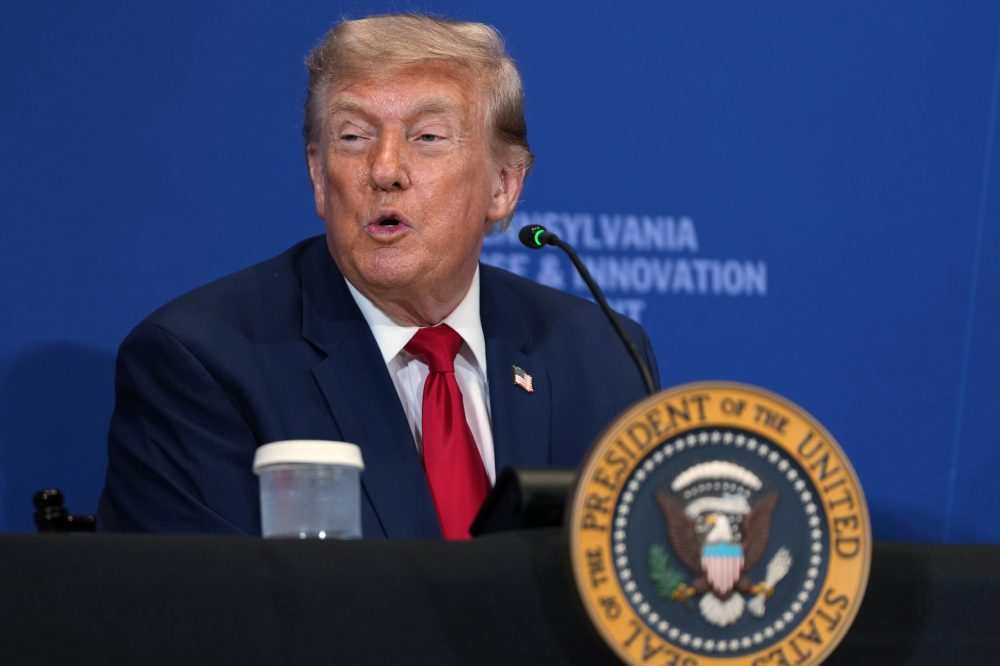
President Donald Trump is planning to address the nation in a primetime speech Thursday evening, with election security as the central topic — a move that puts his long-standing grievances about voting systems back in the spotlight as Republicans brace for a difficult midterm election this November.
According to four sources cited by Reuters on Wednesday, the White House was weighing whether Trump’s remarks would include the release of classified intelligence regarding China’s intentions or capabilities to interfere in the 2020 U.S. election. Several Trump administration officials reportedly expressed concern that sharing the information could be misleading.
Trump has spent years casting doubt on election results, repeatedly and falsely claiming that his 2020 defeat to Democrat Joe Biden was the result of a rigged process. He has also pushed other debunked claims — that mail-in voting is riddled with fraud, that voting machines can be easily compromised, and that non-citizens are casting ballots in large numbers. Multiple courts and vote recounts have found no evidence of widespread fraud in the 2020 election.
The intelligence related to China was gathered during Trump’s first term, which ran from 2017 to 2021. Sources told Reuters that the information did not indicate Beijing had actually altered or manipulated any votes.
A White House task force headed by conservative journalist John Solomon reportedly requested documents from the intelligence community outlining that information. According to one source with knowledge of the group’s activities, the task force has spent several weeks reviewing those materials ahead of Thursday’s speech.
White House spokeswoman Karoline Leavitt pushed back on reports about the speech’s content. “As usual, anonymous sources are speculating about what President Trump will say during his speech on Thursday evening,” she said. “The truth is, nobody knows yet what President Trump will ultimately say.”
The Office of the Director of National Intelligence did not respond to requests for comment, and the CIA declined to comment.
Since taking office again in January 2025, Trump has moved to expand federal authority over election administration — a responsibility that under the U.S. Constitution belongs to state governments. He has also pushed Senate Republicans to pass the SAVE America Act, a bill that would require photo identification to vote and proof of U.S. citizenship to register, while also compelling states to share voter registration data with the federal government. Democrats and voting rights groups argue that voter fraud is extremely uncommon and that the legislation would end up blocking legitimate voters from participating.
Some Republican leaders have privately urged Trump to redirect his attention toward kitchen-table issues like the high cost of living rather than relitigating the 2020 election.
Senate Majority Leader John Thune offered a measured response when reporters asked Wednesday whether he would counsel Trump against bringing up the 2020 election. “I don’t know what he’s going to say,” Thune said. “The only thing I can tell you is, we are focused on the 2026 election, at least I am, and I think most of my colleagues are.”
Republicans are facing political headwinds heading into the midterms, with Trump’s approval rating below water and voters expressing deep frustration over the Iran war and the high energy prices that have come with it.
Democrats need to flip just three Republican-held seats to take control of the U.S. House of Representatives. Winning back the Senate, however, presents a steeper challenge, with key races playing out in states that lean Republican.
Senate Democratic leader Chuck Schumer told reporters Wednesday that Democrats are bracing for the White House to attempt to manipulate the November election. “They know they can’t win the election fair and square,” Schumer said. “So we don’t put it past them to try whatever they can.”
It remains unclear whether television networks will provide airtime for Trump’s speech. That practice is generally reserved for major presidential addresses on matters of significant national concern. Some Democrats, including U.S. Representative Alexandria Ocasio-Cortez, have called on networks to decline, arguing Trump is likely to repeat claims about elections that have already been thoroughly debunked.
A new report from Meta’s Oversight Board is raising serious questions about bias in artificial intelligence, finding that popular AI tools are far less willing to generate criticism of governments that actively restrict free speech.
The board, which receives funding from Meta but functions as an independent body, released its findings on Thursday. The study marked the first time the organization has examined large language models — the technology behind AI chat and writing tools.
Researchers tested 10 AI models, including those developed by Meta Platforms, Google, Anthropic, OpenAI, and China’s DeepSeek. They submitted requests for politically critical content involving 10 different jurisdictions and tracked how often the AI systems refused to respond.
The jurisdictions were divided into two groups — “permissive” and “restrictive” — based on rankings from Freedom House, a nonprofit organization that publishes the annual “Freedom in the World” report.
The results showed a significant difference in how the AI tools responded depending on the type of government involved. Models declined 34% of requests for critical content about “restrictive” governments — such as China and Saudi Arabia — that have laws punishing such criticism. By comparison, the refusal rate dropped to just 14% for regions that either lack those laws or don’t enforce them.
The board also noted a troubling pattern in how the AI systems justified their refusals. “We also saw evidence of models explaining that they were following explicit rules that, as far as we could tell, did not exist and were not evenly applied,” the board stated.
In response to the findings, the board is urging AI developers to carry out thorough human rights assessments and to provide greater transparency about how their models are trained and evaluated.
The report comes just days after the CEO of Google DeepMind called on Tuesday for a U.S.-led international watchdog to review advanced AI models before they are released to the public.
WARSAW, Poland — Polish prosecutors have formally charged an 18-year-old Ukrainian man with sabotage and covert activities conducted on behalf of Russian intelligence services. Authorities allege he was paid to vandalize memorials dedicated to Polish victims of Ukrainian-perpetrated massacres during World War II, with the goal of stirring up hostility between the two neighboring nations.
Poland has long maintained that Russia is waging a campaign of so-called hybrid warfare designed to fracture the relationship between Warsaw and Kyiv. Poland has stood as one of Ukraine’s most steadfast allies since Russia launched its full-scale military invasion in 2022, though anti-Ukrainian sentiment within Poland has been on the rise.
Diplomatic relations between the two countries hit a particularly rough patch in late June, when Polish President Karol Nawrocki revoked Ukraine’s highest Polish state honor from Ukrainian leader Volodymyr Zelenskyy. The move came after Zelenskyy chose to name a military unit after the Ukrainian Insurgent Army, known as the UPA — a paramilitary group accused of carrying out massacres of Polish civilians during World War II.
The UPA fought for Ukrainian independence against both Nazi Germany and the Soviet Union, but the organization has also been accused of killing tens of thousands of Poles, primarily in Nazi-occupied areas of Volhynia and Eastern Galicia.
When announcing the charges, Poland’s Internal Security Agency stated the case had revealed “the mechanism of operation of Russian intelligence services, which pursued their own interests by inciting conflicts between the Polish and Ukrainian nations.”
Polish authorities say the suspect carried out 47 separate criminal offenses between November 2024 and August 2025. Beyond allegedly defacing memorial sites, he also faces charges related to planning a sabotage attack using a drone. Prosecutors allege he intended to fly the drone over the vehicle carrying the Polish president during a military parade in Warsaw on August 15, 2025. He was taken into custody before the parade took place.
Investigators say evidence points to the suspect being recruited through online channels and compensated using cryptocurrency.
This case comes after Poland’s Internal Security Agency disclosed in late June that it had uncovered a separate Russia-funded operation aimed at influencing Ukrainian refugees living in Poland — an effort allegedly designed to incite protests and heighten social unrest.
HONG KONG — Hong Kong’s top security official stepped before reporters Thursday to defend a sweeping police crackdown on independent bookstores, saying sellers bear the responsibility of making sure the materials they offer do not pose a threat to national security.
The statement came one day after authorities arrested five individuals connected to two separate bookshops, the third wave of arrests targeting independent booksellers within a four-month span. The move has drawn sharp criticism from those who say the boundary between legal and illegal content remains frustratingly vague.
Secretary for Security Chris Tang pushed back on those concerns, insisting the law is straightforward. Speaking at the legislative building, he compared book selling to food safety.
“If you are a bookseller, you have the responsibility to make sure the books you sell won’t endanger national security,” Tang said. “It’s equal to, for example, when you are selling food, you need to ensure the food won’t cause a stomach ache and is not either poison or illegal.”
When asked whether authorities planned to publish a list of prohibited books, Tang rejected the idea, saying such a list would hinder effective law enforcement against titles that “intend to harm the country.”
“We will not let criminals off the hook like this,” he added.
Wednesday’s police raids targeted Have A Nice Stay, a bookshop founded by a group of former journalists, and the long-established Greenfield Book Store. Authorities said the five people taken into custody were suspected of displaying and selling seditious materials. A police statement claimed the content in question was designed to stir up hatred toward the city’s government, court system, and law enforcement.
Have A Nice Stay had already announced plans to close its doors on August 30. In a social media post, the shop cited financial pressures and what it described as an elusive red line as contributing factors. The store said it is unable to review every book it carries and does not have the means to determine which titles might be considered “problematic.”
This latest action follows two earlier rounds of similar arrests. In March, police detained the owner and staff of the independent Book Punch store, reportedly on suspicion of selling seditious publications. Among the items flagged was a biography of former pro-democracy media figure Jimmy Lai, who was sentenced to 20 years in prison in a national security case. Then in June, two booksellers were arrested on suspicion of selling seditious publications and receiving money from foreign political organizations.
ATHENS — Four current members of the Greek parliament are among 22 people formally charged Thursday by the European Public Prosecutor’s Office in connection with an ongoing investigation into alleged agricultural subsidy fraud that has shaken the Greek government.
The case stems from accusations that dozens of Greek livestock farmers fabricated ownership of grazing land in order to collect millions of euros in European Union subsidies. Prosecutors allege those farmers received assistance from government workers and conservative politicians in carrying out the scheme.
The fallout from the scandal has already led to the resignations of several ministers and triggered parliamentary investigations that have so far produced no definitive conclusions.
The EU has also penalized Greece financially over the misuse of funds that occurred between 2016 and 2023 through the government agency OPEKEPE, which is responsible for managing subsidy payments.
According to a statement from the European Public Prosecutor’s Office, known as EPPO, the four sitting lawmakers face charges related to actions allegedly taken in 2021. Those charges include abuse of trust, unlawful management of EU funds, false attestation, and attempted computer fraud.
Prosecutors also announced they were dropping allegations against seven other lawmakers due to insufficient evidence.
Earlier this year in April, Greece’s parliament voted to strip 13 members of the ruling New Democracy party of their parliamentary immunity at the request of the European chief prosecutor, allowing investigators to move forward with their inquiries.
Following Thursday’s announcement, Greek government spokesperson Pavlos Marinakis stated that the four indicted lawmakers are presumed innocent until proven guilty, as the charges involve misdemeanors.
EPPO also announced that the former head of OPEKEPE faces five counts of abuse of trust, while additional political staffers have been accused of misdemeanor-level offenses. The office noted that further investigations into alleged wrongdoing during other time periods remain active.
EPPO launched operations in 2021 and serves as the European Union’s independent prosecutorial body, focused on investigating and prosecuting crimes that harm the EU’s financial interests.
The indictments come just weeks after Greek police on the island of Crete arrested 20 individuals following the dismantling of a criminal organization suspected of helping farmers submit fraudulent applications for EU agricultural funding based on false land declarations.
Italy’s lower house of parliament gave the green light Thursday to a deeply divisive government plan to reshape the nation’s electoral system — a move that opposition lawmakers blasted as a calculated effort to keep Prime Minister Giorgia Meloni in power when Italians head to the polls in 2027.
The proposal comes from Meloni’s ruling right-wing coalition, which includes her Brothers of Italy party along with the League and Forza Italia. Under the plan, Italy would move to a fully proportional voting system. Any political bloc that earns more than 42% of the vote would receive a bonus allocation of seats — 70 additional seats in the 400-member lower house and 35 extra seats in the 200-member Senate. To prevent any one group from dominating too heavily, total representation would be capped at 220 seats in the lower chamber and 113 in the Senate.
The road to passage was not without friction. On Tuesday, coalition lawmakers themselves helped sink a related proposal that would have allowed voters to express preferences for individual candidates on party lists, revealing cracks within the ruling alliance.
The legislation still requires Senate approval before it becomes law. The government is targeting the period after the summer recess to push it through that chamber.
Italy’s current voting system elects most lawmakers through proportional representation, but roughly one-third of seats are filled through first-past-the-post contests — a format that analysts say tends to benefit opposition parties. The reform would eliminate those first-past-the-post seats entirely, including in southern Italy where a centre-left alliance led by the Democratic Party and the 5-Star Movement has historically performed well.
Supporters of the reform argue it would produce more stable governing majorities following elections. Meloni is on track to become Italy’s longest-serving postwar prime minister in early September, having overseen an unusually steady period of governance.
Meanwhile, a new political force is complicating the picture for Meloni’s coalition. A far-right movement called Futuro Nazionale, headed by former army general Roberto Vannacci, has been drawing support away from the ruling bloc. The party is now polling at just above 6% and has surpassed the League in some surveys. Whether Vannacci would ultimately align with Meloni remains an open question.
Polling firm YouTrend ran simulations showing that a right-wing alliance that includes Futuro Nazionale could still achieve a parliamentary majority — but that the centre-left could come out on top if Vannacci’s party runs independently.
“The outcome of the next election will depend not only on the electoral law, but crucially on where Futuro Nazionale positions itself,” YouTrend said.
UnitedHealth Group announced Thursday that it is raising its profit outlook for 2026, crediting tighter controls on medical spending and a rebound in operating income at its Optum health services arm.
The news sent shares of the healthcare giant climbing nearly 5% in pre-market trading.
Chief Financial Officer Wayne DeVeydt credited cost discipline within the Medicare insurance business and higher payment rates for Medicaid plans serving lower-income Americans as key factors behind the strong second-quarter showing.
On an adjusted basis, the company posted earnings of $6.38 per share for the quarter — well above the average analyst projection of $4.90, based on data from LSEG.
“These results are not a reflection of a trend bending or coming under control, but rather our efforts to start pushing down what is already an elevated number,” DeVeydt said.
UnitedHealth now projects 2026 adjusted earnings per share in the range of $19.50 to $20.00, a significant jump from its earlier guidance of at least $17.75. Analysts had been expecting $18.47 per share for 2026, according to LSEG figures.
CEO Stephen Hemsley took back the reins of the company last year following a period of missed financial targets, a major ransomware attack that disrupted health services nationwide, and the fatal shooting of a top executive outside the company’s investor meeting.
Since returning, Hemsley has restructured the organization, replaced roughly half of its senior leadership team, stepped away from certain insurance products, and pledged $1.5 billion toward artificial intelligence investments.
Keeping Medical Costs in Check
UnitedHealth’s second-quarter medical cost ratio — which measures what share of premium revenue goes toward paying for care — came in at 86.70%. That was considerably better than the analyst forecast of 88.47% and an improvement from 89.4% in the same quarter a year ago.
The company’s insurance division, UnitedHealthcare, reported second-quarter revenue of $86 billion, nearly flat with $86.1 billion in the prior-year period. Total company revenue climbed to $112 billion from $111.6 billion, topping analyst expectations of around $111 billion, per LSEG.
UnitedHealth attributed the improved cost ratio to changes in how insurance plans are structured and updated pricing on its products.
DeVeydt noted that rising insurance costs contributed to a drop in membership, particularly among people who had been enrolled in marketplace plans through the Affordable Care Act — commonly known as Obamacare — as extra subsidies from the pandemic era expired. He said UnitedHealthcare anticipates 500,000 people will leave its Obamacare plans in 2026.
The company left its full-year 2026 revenue forecast unchanged at $439 billion.
Optum Bounces Back
The Optum health services segment delivered a strong turnaround, with second-quarter operating income rising 29% year-over-year to $4 billion. The gains were driven by better performance in the Optum Insight technology segment and improved patient access within its clinical operations.
That marks a notable recovery from the first quarter, when Optum’s operating income fell 15% compared to the prior year, landing at $3.3 billion.
DeVeydt said artificial intelligence tools introduced this year have helped reduce administrative tasks and freed up clinicians to spend more time with patients.
“We said, with Optum Health, this would be a multi-year journey to return to historical growth levels and margins,” DeVeydt said. “I would say we are ahead of schedule in year one.” He expects full revenue growth to return by 2028.
Earlier this year, UnitedHealth scaled back its Medicare Advantage offerings for older adults, and Optum exited contracts for coordinated care plans that were not financially favorable. The company had previously disclosed that Optum faced a combination of regulatory hurdles and cost pressures amounting to an $11 billion setback for the unit over three years.
U.S. stock index futures showed little movement Thursday as investors took a step back following two consecutive days of gains, while semiconductor stocks continued to face selling pressure ahead of new economic data and another round of quarterly earnings reports.
Chip stocks extended their slide from the previous session, when investors shifted money into large-cap technology companies and bank stocks after major lenders posted strong results.
U.S.-listed shares of TSMC dropped 3.2% in premarket trading, despite the advanced AI chipmaker reporting a 77% surge in second-quarter profit that beat analyst expectations. The company also announced plans to invest an additional $100 billion in the United States.
Memory chip companies were among the hardest hit, with Western Digital and Seagate Technology falling 3.9% and 3.3%, respectively.
Wall Street’s major indexes posted gains for the second day in a row on Wednesday after a Producer Price Index reading came in lower than expected, calming concerns about inflation and reducing fears that the Federal Reserve might tighten monetary policy further. That report came on the heels of similarly mild consumer inflation data released earlier in the week.
A strong start to the second-quarter earnings season also helped boost investor confidence, even as tensions between the U.S. and Iran continued to simmer in the background.
Mark Haefele, chief investment officer at UBS Global Wealth Management, offered this perspective: “While geopolitical dynamics may trigger setbacks, earnings should remain the key driver of performance for the remainder of the year.”
He added, “In fact, with the U.S. second-quarter earnings season kicking off with solid beats, we expect another strong set of results in the coming weeks.”
As of 5:18 a.m. ET, Dow E-minis were off 9 points, or 0.02%, while S&P 500 E-minis slipped 1 point, or 0.01%. Nasdaq 100 E-minis were down 63.75 points, or 0.21%.
Later in the morning, investors will be closely watching retail sales figures and weekly jobless claims, due out at 8:30 a.m. ET, for clues about whether the economy is cooling enough to keep inflation in check without raising concerns about slowing growth.
According to CME’s FedWatch tool, markets are currently placing a 10.2% probability on the Fed raising interest rates by 25 basis points at its upcoming policy meeting this month.
The benchmark S&P 500 has climbed more than 10% so far this year and is still hovering near its record close from June, making the rally susceptible to any disappointing economic or earnings news.
United Airlines shares slipped 2.3% after a renewed rise in oil prices cast a shadow over the airline’s profit outlook for both the third quarter and the full year.
On the earnings front, UnitedHealth is set to release its results before the opening bell, while Netflix is scheduled to report after markets close for the day.
WARSAW — Polish authorities have filed charges against an 18-year-old Ukrainian national accused of desecrating memorials dedicated to Poles who were killed by Ukrainian nationalists during World War Two, the country’s Internal Security Agency, known as the ABW, announced Thursday.
The suspect, identified only as Illia K. under Polish privacy regulations, faces 47 separate criminal counts stemming from actions carried out between November 2024 and August 2025. Those alleged offenses include the desecration of memorial sites and preparations for sabotage activities involving a drone.
According to the ABW, the motive was clear: “The aim was to incite ethnic tensions between Poland and Ukraine.” The agency also revealed that investigators uncovered an online recruitment operation that compensated participants using cryptocurrency payments funneled through exchanges registered in Russia and China.
The memorials in question are tied to what are known as the Volhynia massacres, a deeply sensitive historical episode that has long strained relations between the two neighboring countries.
Warsaw has repeatedly accused Moscow of running espionage and influence campaigns on Polish soil — allegations that Russia, which launched a full-scale invasion of Ukraine in 2022, has consistently denied.
Relations between Poland and Ukraine have also been tested recently after Ukrainian President Volodymyr Zelenskiy chose to name a military unit after fighters from the Ukrainian Insurgent Army, known as the UPA — a group responsible for the mass killings of an estimated 100,000 Poles between 1943 and 1945. While some Ukrainians view the UPA as a symbol of resistance against both the Soviet Union and Nazi Germany, the organization’s role in those massacres remains a point of deep contention in Poland.
Good morning, Delmarva! It’s going to be a hot and hazy one out there today, so let’s break down what you can expect. Smoke will be the story through the afternoon hours, keeping skies milky and air quality a concern — especially for sensitive groups. Please limit your time outdoors if you’re feeling any irritation. Highs will soar near a scorching 96°F with a south wind at 5 to 10 mph. Late in the afternoon after 5 PM, keep an eye to the sky as isolated showers and thunderstorms become possible. The storm chance stays low at around 20%, but any storm that does fire up could pack a punch. Tonight, scattered showers and thunderstorms are possible before smoke moves back in, with lows settling around a warm 74°F. Heading into Friday, expect more smoky conditions with a cooler high near 89°F. Stay hydrated, protect your lungs, and check back with TV Delmarva for updates. Stay safe out there, Delmarva!
Since the outbreak of the Iran war, oil prices have surged — and with them, the profits of major oil companies. Now, a growing number of U.S. lawmakers are calling for those excess earnings to be taxed.
The push centers on what critics are calling windfall profits — the billions of dollars oil companies have collected as a result of rising prices, not because of any change in how oil is produced or what it costs to produce it.
Supporters of a windfall profits tax argue that the money collected should be returned to lower-income Americans who are feeling the pinch of higher energy costs.
The debate is gaining momentum in Washington as oil companies continue to report strong financial results tied to elevated global oil prices driven by the ongoing conflict.
Global funding for space startups stayed near historic highs in the second quarter, with investor enthusiasm sparked in part by SpaceX’s nearly $86 billion initial public offering, according to a new report from Seraphim Space released Thursday.
The high-profile listing has drawn attention from investors outside the traditional space investment community, helping to establish the sector as a mainstream category for capital allocation.
The wave of interest has also helped fuel larger financing rounds for companies working on launch vehicles, satellite networks, defense applications, and other infrastructure designed to operate in orbit.
“We’ve seen a clear increase in investor interest over the past year, which has been supported by the SpaceX IPO, but also reflects broader investor recognition of the commercial maturity of the sector,” said Lucas Bishop, an investment analyst at the British investment firm.
Bishop added, “We are seeing increased inbound from investors with limited or no prior space exposure, who are now looking to build positions in the category.”
While Bishop acknowledged that the first half of 2026 was an unusually strong period for fundraising and that quarterly figures could vary, he said the fundamental forces driving investment in the industry remained intact.
Investors noted growing interest in companies that serve defense and national security clients, as well as those building computing capabilities designed to operate in space — areas where both government and commercial spending is expected to rise.
Space companies collectively raised around $7.5 billion through 141 venture funding deals in the second quarter, falling slightly short of the record $8 billion raised across 159 deals in the first quarter.
“We are now seeing investors put more money into larger funding rounds for established space businesses. That will mean there’s more capital for companies that have already proved their technology works, that there’s clear demand, and that now’s the time to scale,” said Felix von Schubert, executive partner at NewSpace Capital.
Market watchers are now keeping a close eye on whether Jeff Bezos’ Blue Origin follows through on reported plans to raise approximately $10 billion. If completed, the transaction could rank among the largest private fundraises in the history of the commercial space industry and extend what has already been one of the sector’s strongest stretches of capital formation.
A newly released report from the American Civil Liberties Union is raising alarms about how Immigration and Customs Enforcement officers are handling their work on the ground, concluding that the use of force has shifted from a last resort to a routine practice.
The report examines ICE’s conduct during the first year of President Trump’s return to office and finds a troubling pattern in how agents are approaching immigration enforcement operations.
The findings come at a particularly charged moment for the agency. Fatal shootings involving ICE officers in both Texas and Maine have drawn fresh public attention to how the agency operates and what level of force its agents are authorized — and apparently willing — to use.
The ACLU’s analysis suggests that rather than being used only when necessary, force has become what the report describes as a “default tool” for ICE officers carrying out immigration enforcement duties.
The report adds to growing national debate over the Trump administration’s aggressive crackdown on undocumented immigrants and the tactics being employed by federal law enforcement agencies tasked with carrying it out.
The Federal Highway Administration has quietly taken bike lanes, speed cameras, and other road safety measures off a key list of recommended best practices — and the move is drawing sharp criticism from safety advocates.
Critics argue that the measures removed from the list are well-documented tools for reducing traffic crashes and preventing fatalities. The decision to strip them from the agency’s official guidance, they say, could have real consequences for communities across the country that rely on federal recommendations when planning road safety improvements.
The changes were made without public fanfare, but opposition has been vocal. Protesters have already taken to the streets in some areas to demonstrate against efforts to roll back bike lane infrastructure, reflecting broader frustration with the direction of federal transportation policy.
Safety advocates maintain that bike lanes and speed cameras are among the most effective tools available to protect both cyclists and pedestrians, and they are calling on federal officials to reverse course.
BARCELONA — Europe’s highest court delivered a significant ruling Thursday, finding that a Spanish law granting amnesty to participants in Catalonia’s push for independence does not conflict with European Union regulations — a decision welcomed by the Spanish government and its Catalan political partners.
The amnesty law, passed by Spain’s lower house of parliament in 2024, was the product of a deal struck between the ruling Socialist Party and Catalan separatist groups. That agreement allowed Prime Minister Pedro Sanchez to remain in power following the 2023 elections, though it drew fierce opposition from conservative political rivals who tried — and failed — to block the legislation.
Thursday’s ruling from the Court of Justice of the European Union clarified where member nations stand when it comes to passing amnesty laws under the broader framework of EU rules and regulations.
The court concluded that EU law does not stand in the way of Spain’s amnesty measure, since the decision to adopt and carry out such a law falls within each member country’s own authority.
A judge delivering the verdict explained the court’s reasoning, saying it “does not oppose a law which, in order to reduce institutional and political tensions and facilitate a process of reconciliation, provides for the extinction of criminal liability.”
Despite largely siding with the amnesty law, the court drew one clear boundary. It ruled that the law cannot force Spanish courts to lift accounting responsibilities or preliminary proceedings within a two-month window if those cases are still waiting on a decision from the EU court itself.
KYIV, Ukraine — Demonstrators flooded the center of Kyiv on Thursday after Ukrainian President Volodymyr Zelenskyy took steps to remove his defense minister from office, while parliament gathered to appoint a new prime minister as part of a sweeping government overhaul.
The restructuring could serve as a significant test of Zelenskyy’s political standing as Ukraine’s conflict with Russia approaches four and a half years of full-scale warfare.
Defense Minister Mykhailo Fedorov, 35, has been regarded as a forward-thinking modernizer whose background in technology is seen as a key factor behind notable improvements in Ukraine’s battlefield performance in recent months against a much larger Russian military force. He was expected to exit the government after only six months in the role.
Zelenskyy offered no public explanation for Fedorov’s anticipated removal. Unverified reports from Ukrainian media outlets suggested that Fedorov had a tense working relationship with Gen. Oleksandr Syrskyi, the commander of Ukraine’s armed forces.
Syrskyi, 60, is recognized for helping organize the defense of Kyiv in February 2022 and for engineering a successful counteroffensive in the Kharkiv region seven months later. He was born in 1965 in the Soviet Union and trained at the Moscow Higher Military Command School before serving in the Soviet Artillery Corps.
The crowd at Thursday’s protest — made up largely of younger demonstrators — chanted Fedorov’s name and directed sharp criticism at Syrskyi. Protesters were heard shouting, “Syrskyy go away!” and “A European army for a European country!”
Kyiv resident Bohdan Huryak, who attended the demonstration, described himself as “deeply outraged” over Fedorov’s departure.
“I’m not deeply invested in the internal political debates, but this is a person who shows results on the battlefield, we see results, we feel the fighting spirit and confidence in victory rising,” Huryak told The Associated Press. “And then, six months later, he is removed from office? Come on.”
Protests also erupted in other parts of Ukraine, including the city of Dnipro in the center of the country and the southern port city of Odesa.
This is not the first time street demonstrations have put pressure on Zelenskyy. Last July, he reversed course after widespread protests broke out over legislation that would have weakened the independence of Ukraine’s anti-corruption oversight bodies — the most serious challenge to his leadership since Russia launched its full-scale invasion on Feb. 24, 2022.
Before becoming defense minister last January, Fedorov had led Ukraine’s digital transformation efforts and was widely seen as an innovator. He gained public recognition by driving the rapid development and deployment of drone technology and launching several successful digital government platforms.
After taking office, he pledged major military reforms, noting that the armed forces had been dealing with roughly 200,000 desertions and approximately 2 million cases of draft evasion.
In social media posts, Fedorov highlighted what he described as significant accomplishments during his short time in the role. He said he made the calculated decision to redirect funds originally set aside for salaries into midrange strike capabilities, fiber-optic drones, reconnaissance technology, and other military systems.
He also pointed to expanded drone procurement efforts, Patriot missile defense agreements, successful ballistic missile tests, and broad reforms to the military’s procurement process.
At the same time, Fedorov acknowledged falling short in some areas, including completing the Defense Ministry’s organizational transformation “according to NATO standards and common sense,” shifting all procurement to competitive bidding, and building a culture of accountability within the ministry.
He also noted that while many officials had been let go during his tenure, “it was necessary to dismiss even more people who were hindering the changes.”
Zelenskyy never formally announced Fedorov’s removal. However, Fedorov himself confirmed his dismissal late Wednesday in social media posts, where he also outlined his record in office — this came after days of unverified Ukrainian media speculation about his impending exit.
Parliamentary Speaker Ruslan Stefanchuk announced via social media late Wednesday that Zelenskyy had nominated Naftogaz CEO Serhii Koretskyi to serve as the country’s new prime minister.
Zelenskyy stated Wednesday that Koretskyi was the most fitting choice given the government’s top priority of readying Ukraine for another challenging winter season, pointing to the Naftogaz chief’s extensive background in the energy sector.
Lawmakers in Ukraine’s parliament, the Verkhovna Rada, were debating the proposed Cabinet changes ahead of the summer recess, which begins Saturday.
Exchange-traded funds — commonly known as ETFs — have been a staple of financial markets since the 1990s, offering everyday investors an affordable way to own a collection of stocks and trade them through a standard brokerage account.
A newer and riskier variation, known as leveraged ETFs, has existed for about two decades. These products promise to multiply the daily gains of a target investment — and they are now surging in popularity, especially among investors chasing the artificial intelligence boom and the hardware companies powering it.
A specific type called single-stock leveraged ETFs, which made their U.S. debut in 2022, are now booming across Asia. Investors are using them to amplify bets on South Korean chipmakers Samsung Electronics and SK Hynix — and the enormous money flows are reshaping those markets, intensifying volatility, and drawing scrutiny from regulators.
How Do Leveraged ETFs Actually Work?
These funds use financial instruments called futures or swaps — essentially contracts tied to borrowed money — to magnify the daily return of a target stock or index. Depending on the product, that multiplier can be two, three, or even five times the daily move. That means bigger gains when prices rise, but equally bigger losses when they fall.
Single-stock leveraged ETFs launched in South Korea in May, while two-times leveraged funds tracking both Samsung and SK Hynix were listed in Hong Kong in 2025 and have seen dramatic growth. The fund tracking SK Hynix alone has grown 20 times in assets since the beginning of the year.
When investors purchase shares in these funds, the fund must buy shares in the underlying stock plus derivatives to achieve the leverage. If the stock rises, the fund buys more. If it falls, the fund must sell. This daily rebalancing creates a feedback loop that amplifies price swings in both directions.
Who Is Buying These Products?
The firms selling these ETFs market them toward professional traders and experienced investors. Many products carry prominent disclaimers warning that they are not appropriate for long-term, buy-and-hold investors.
The ongoing cost of maintaining a leveraged position chips away at returns over time, causing these funds to often drift significantly from the performance of the investments they track. Despite those warnings, large numbers of everyday retail investors have jumped in, eager to capture the upside gains.
What Is Happening in South Korea?
In South Korea, the situation is especially intense. Samsung Electronics and SK Hynix each carry trillion-dollar market valuations and together make up more than half of the benchmark KOSPI stock index.
The combination is “creating an incredible feedback loop that’s driving volatility in the semiconductor space,” said Michael Green, chief strategist and portfolio manager for Simplify Asset Management. “That’s driving elevated levels of volatility on a single-stock level.”
The Hong Kong-listed two-times leveraged ETF tracking SK Hynix, offered by fund manager CSOP, has grown into the largest fund of its kind in the world, with HK$51.8 billion — roughly $6.6 billion — in assets under management.
The massive inflows helped push SK Hynix’s stock price sharply higher, but the daily rebalancing activity at the open and close of trading has since triggered dramatic price swings in both SK Hynix shares and the broader KOSPI index.
On some days this year, Samsung and SK Hynix together have accounted for more than 80% of all trading volume on the KOSPI, according to Reuters calculations.
The KOSPI’s volatility index stood at 89 on Thursday, well above the 28.85 reading at the end of 2025, and just below the record high of 97.99 reached on June 29. SK Hynix’s debut on the Nasdaq this month has added yet another layer of volatility, with a wave of new leveraged ETF products launching in the U.S. market.
What Are Regulators Doing About It?
South Korea’s top financial regulator, the Financial Services Commission, announced a set of new restrictions on Thursday targeting single-stock leveraged ETFs. The measures include a ban on promotional events and guidance discouraging new fund launches.
Last month, another market watchdog — the Financial Supervisory Service — issued an unusually candid admission, acknowledging that approvals for these funds had been “prepared hastily” as part of a broader effort to draw retail investors back from U.S. markets and slow a weakening of the South Korean won.
President Donald Trump took to his Truth Social platform Wednesday to announce that an American woman who was “wrongfully detained” in Iran during 2024 has been allowed to leave the country.
“She is now safely outside of Iran, and in good condition. The United States of America appreciates this gesture of Goodwill by Iran,” Trump wrote in his post.
Human rights attorney Jared Genser identified the freed American as Dena Karari, a 53-year-old California resident. According to the New York Times, Karari had her passport taken away by Iranian authorities when she traveled to the southwestern city of Shiraz in December 2024 to visit family members. While she was never formally detained, she was questioned by authorities on multiple occasions, the newspaper reported, citing her attorney Genser.
Genser confirmed her freedom in a post on X, writing, “Dena is now safe and traveling back to the United States,” and thanking Trump for his efforts on her behalf.
Iran has not made any public statement acknowledging her release.
The news comes as fighting entered its fifth night across the Middle East. U.S. military strikes against Iran have been targeting the Strait of Hormuz, a critical shipping corridor, with the goal of reopening it. Three U.S. officials told Reuters that those strikes are also being used to weaken Iranian military capabilities ahead of potentially more complex operations.
Trump has issued escalating warnings that he could order attacks on Iranian power plants, bridges, and energy infrastructure. Iran, meanwhile, has claimed it struck U.S. military bases in Kuwait and Jordan in retaliation.
Europe’s highest court has sided with Italian regulators in a legal battle against Google, upholding a €750,000 fine — roughly $854,250 — tied to gambling advertisements that appeared on the YouTube platform.
The Court of Justice of the European Union, based in Luxembourg, issued the ruling on Thursday, finding that Google’s responsibility extends to videos posted by content creators who have commercial agreements with the company.
In its decision, the court stated: “Google may be held liable for the YouTube videos of a content creator with whom it has a commercial partnership.”
The fine was originally issued by Italy’s communications authority four years ago. The case is officially identified as C-421/24 AGCOM (Online gambling).
Eleven people lost their lives and 19 others were hurt when a fire broke out at an orphanage on the edge of Algeria’s capital in the early hours of Thursday morning, according to state media reports.
The blaze originated at the orphanage located in the Mohammadia district, situated in the eastern suburbs of Algiers.
Of those injured, ten sustained burns ranging in severity. Emergency responders also successfully evacuated five individuals with disabilities from the facility, the country’s civil protection agency reported.
Officials said firefighting efforts were still ongoing at the time of the report. No victims have been identified, their ages have not been released, and the cause of the fire has not yet been determined.
The fire comes as Algeria has been enduring a significant heatwave in recent days. According to state news agency APS, citing the General Directorate of Civil Protection, firefighting units across the country had already battled 913 separate fires nationwide between July 8 and Wednesday.
Six Chinese investment banks stand to collect a combined minimum of $41 million in fees tied to chipmaker CXMT’s blockbuster $8.6 billion initial public offering, according to company filings — a welcome boost for an industry that has seen its revenue shrink significantly over the past five years.
The windfall would push total fees from mainland China IPOs this year to approximately $684.62 million, closing in on last year’s $984.75 million, according to data from LSEG. Both figures pale in comparison to the 2022 high-water mark of $4.16 billion, which was fueled by major listings including those of China Mobile and CNOOC.
The share offering is part of a broader recovery in China’s domestic IPO market, driven by government efforts to reduce hurdles for companies in artificial intelligence, semiconductors, and robotics seeking to raise capital from public investors — all part of a national push toward technological leadership.
ChangXin Memory Technologies, known as CXMT, opened its IPO for public subscription on Thursday. The company holds the distinction of being China’s largest producer of dynamic random-access memory chips — commonly known as DRAM — which are essential components in smartphones, computers, servers, and a wide range of other electronic devices.
Should the offering reach its $8.6 billion target, it would become not only Asia’s largest IPO of 2025 to date, but also the biggest semiconductor IPO ever conducted on China’s A-share market, eclipsing the record previously set by Semiconductor Manufacturing International Corp in 2020.
According to IPO filings, China Securities and CICC are serving as the lead sponsors of the share sale. Also participating are China Merchants Securities, Guotai Haitong Securities, Guoyuan Securities, and Huatai United Securities, a subsidiary of Huatai Securities.
CXMT expects to pay total fees of 280.6 million yuan — roughly 0.48% of the total proceeds raised. That figure is dramatically lower than the 4.52% average fee rate for China A-share IPOs so far this year, per LSEG data. Despite the discounted rate, the sheer size of the deal still translates into meaningful earnings for the banks involved.
If investor demand triggers an overallotment option, total proceeds could climb to $9.8 billion, with fees rising to approximately 296 million yuan, the filings indicated.
Shen Meng, a director at boutique investment bank Chanson & Co in Beijing, described the deal’s dual significance. “This high-profile IPO carries both commercial value and strategic importance,” he said. He added that fierce competition among banks to win a role in the offering drives fees down, but noted: “Nevertheless, given CXMT’s huge fundraising size, investment banks can still reap substantial proceeds even with relatively reduced fee rates.”
CICC declined to provide comment on the matter. CXMT, China Securities, China Merchants Securities, Guotai Haitong Securities, Guoyuan Securities, and Huatai United Securities did not respond to requests for comment.
LSEG data shows that China Securities, CICC, Guotai Haitong, and Huatai Securities have all ranked among the top five earners of A-share IPO fees from 2022 through the current year. China Merchants ranked ninth over the same period.
CXMT’s fee rate also compares favorably to other recent large deals. Last month, China Resources New Energy paid 0.65% in fees for its 24.5 billion yuan listing on the Shenzhen exchange. In the United States, SpaceX paid $500 million — about 0.67% of proceeds — for its record-setting $75 billion IPO last month. South Korea’s SK Hynix paid approximately 0.97% of the $26.5 billion it raised through American depositary receipts last week.
Several high-profile confirmation hearings and a major foreign policy development are dominating the national news cycle.
The nominee tapped to serve as the nation’s top law enforcement official faced a series of tough questions from senators during a confirmation hearing, with lawmakers pressing the nominee on a range of issues before potentially advancing the pick forward.
At the same time, President Trump’s decision to issue a notice related to resuming war with Iran is drawing significant attention, arriving at what many are describing as a particularly tense moment on the political stage.
Adding to the busy day in Washington, the president’s pick to lead the national intelligence community also appeared before lawmakers, facing questions as part of the confirmation process.
The U.S. Treasury has introduced a new collectible $1 coin as part of the nation’s 250th birthday celebration — but the design is already drawing attention for a notable reason.
One side of the commemorative coin bears the image of President Trump’s face. That detail has raised eyebrows because federal law prohibits placing the likeness of a living person on U.S. currency.
The coins are being marketed as collectibles tied to America’s semiquincentennial milestone.
Dressing for the office during a brutal heatwave is no easy task, but a leading voice in workplace management has some guidance to help workers navigate the challenge.
Michel Martin of NPR sat down with Johnny C. Taylor, the CEO of the Society for Human Resource Management, to talk through what employees should consider wearing when temperatures outside are dangerously high.
The conversation tackled how workers can balance comfort in the heat with maintaining a professional appearance in the workplace.
With wildfires burning across the Western United States, temporary tent cities are being set up to shelter, feed, and provide services to the thousands of wildland firefighters working to battle the blazes.
These pop-up communities have become an essential part of wildfire response operations, giving crews a place to rest and recover between shifts on the fire lines.
Ukrainian lawmakers are preparing to cast votes Thursday on a newly proposed wartime government, even as demonstrators take to the streets in Kyiv to express outrage over the removal of Defense Minister Mykhailo Fedorov at a pivotal moment in Ukraine’s ongoing conflict with Russia.
This marks President Volodymyr Zelenskiy’s second major cabinet overhaul within a year, and the decision to push out Fedorov — a 35-year-old technology expert who had been working to transform Ukraine’s outgunned military into a leaner, data-driven force — has become a lightning rod for public frustration with Zelenskiy’s wartime leadership.
According to lawmakers, the proposed new cabinet would be led by energy executive Sergii Koretskyi, with current Interior Minister Ihor Klymenko stepping in to take over the defense portfolio previously held by Fedorov.
Late Wednesday, Fedorov himself confirmed on X that his time in the role was coming to an end. Zelenskiy, however, had yet to publicly address the dismissal as of Thursday.
The situation on the battlefield is complex. Ukraine currently holds what analysts describe as its strongest military position since late 2022, carrying out drone and missile strikes against Russia’s oil infrastructure and supply lines. Yet Ukrainian ground forces continue to face relentless Russian pressure in the east, struggling with troop shortages and insufficient air defenses as Moscow increases its use of ballistic missiles.
The editorial reaction has been sharp. Vitalii Sych, chief editor of Ukrainian outlet NV, offered a blunt assessment: “In difficult moments, Zelensky behaves like a hero. But we should not forget that difficult moments are often caused by his idiotic decisions.”
Adding to the fallout, Pavlo Yelizarov — a deputy commander of Ukraine’s air force and a prominent figure in the country’s drone warfare efforts — announced his resignation Thursday, directly citing Fedorov’s removal. He called the decision “a great evil” for Ukraine’s defense capabilities.
Outside Zelenskiy’s office in Kyiv, more than a thousand protesters gathered, chanting “Shame!” and holding signs reading “The Russians are celebrating.” The demonstration drew comparisons to protests last July, when a similar wave of public pressure forced Zelenskiy to walk back a controversial move that had threatened the independence of anti-corruption agencies.
Fedorov had previously served as Ukraine’s first digital transformation minister and earned recognition for cutting red tape, advancing drone warfare capabilities, and pushing a data-focused approach to wearing down Russian forces. Supporters argue his efforts to clean up defense procurement made him enemies within the establishment. He has also faced criticism for not moving fast enough on reforming Ukraine’s military recruitment system.
Zelenskiy announced the cabinet shake-up on Sunday, catching many off guard. He framed the changes as necessary “renewal” for both the government and law enforcement. By Wednesday, he was telling reporters he expected the defense ministry and military leadership to operate with greater cohesion — remarks widely interpreted as an acknowledgment that tensions had been building between Fedorov and senior military commanders.
Whether Fedorov will be offered a different position within the government remains unclear.
The United Kingdom has taken the dramatic step of nationalizing British Steel after the company’s Chinese ownership group moved to close the plant’s blast furnaces, the government announced Thursday.
The Department for Business and Trade said the nationalization would protect thousands of jobs and serve the country’s national interest by guaranteeing a homegrown supply of steel for large-scale construction projects and the defense sector.
Business Secretary Peter Kyle issued a statement declaring: “British Steel now belongs to the British people, and our focus is on the future: stabilizing the business, backing the communities that rely on it and building a sustainable, competitive and decarbonized steel sector for the years ahead.”
An independent assessment will now be conducted to decide whether the plant’s previous owner, China’s Jingye Group, is entitled to any compensation following the takeover.
The government had already assumed operational control of British Steel the previous year after Jingye announced it was weighing the closure of the blast furnaces at its Scunthorpe facility in northern England. Those furnaces hold the distinction of being the only remaining ones in the United Kingdom capable of producing “virgin steel” directly from raw materials.
Steel production at Scunthorpe stretches back more than 130 years, rooted in steelmaking advances that emerged during Britain’s Industrial Revolution. The facility currently provides employment for approximately 2,700 workers.
Jingye acquired British Steel in 2020 and reports that it has poured more than 1.2 billion pounds — roughly $1.6 billion — into keeping the plant operational despite what it describes as “ongoing production instability.”
TOKYO — A major push into the future of robotics is underway in Japan, with Fujitsu leading a collaboration that combines the country’s world-class manufacturing expertise with cutting-edge artificial intelligence from Nvidia.
At the heart of the effort is a concept called “physical AI” — a technology field focused on developing intelligent robots that can think independently, rather than simply executing pre-programmed instructions. The goal is for these machines to work safely alongside humans in settings like factories, private homes, and medical facilities.
The partnership was formally unveiled in Tokyo on Thursday. Nvidia Corp. Chief Executive Jensen Huang and Fujitsu Chief Executive Takahito Tokita made the announcement alongside the heads of Japan’s top industrial robot manufacturers — Fanuc Corp., Yaskawa Electric Corp., and Kawasaki Heavy Industries.
This latest development builds on a separate agreement that Nvidia and Fujitsu had already announced the previous year.
Company leaders expressed optimism that these advanced robots could help ease Japan’s severe worker shortage. The country is one of the fastest-aging nations in the developed world, and officials believe smart robots could play a meaningful role in caring for elderly people living on their own.
Huang explained why Japan is a natural fit for physical AI, pointing to the country’s long-standing reputation for precision and quality — important qualities given that independently moving robots could pose safety risks if not built to the highest standards.
“Japan’s excellence is a philosophy, a way of life. ‘Made in Japan’ means the highest quality, the highest precision. Japan sets the standard for the state-of-the-art in modern manufacturing,” Huang said.
He also highlighted Japan’s celebrated manufacturing philosophy of “kaizen,” a term meaning “continuous improvement.”
The companies stopped short of providing a specific timeline for when these robots might appear in everyday life, though they emphasized that work is actively in progress. They described the first phase of the collaboration as expected to launch later this year.
As of now, no decision has been made about forming a joint venture, though the companies acknowledged that possibility could emerge down the road.
Japan has openly recognized that it has fallen behind countries such as China and the United States in the AI race and has been working to close that gap. Prime Minister Sanae Takaichi’s government recently unveiled a plan to generate more than 370 trillion yen — roughly $2.3 trillion — in combined public and private investment across technology sectors by 2040, covering areas including physical AI, semiconductors, and data centers.
Nvidia, headquartered in Silicon Valley and known for its open-source technology approach, has been actively building relationships across Japan. Its existing partnerships in the country include major banks, automaker Toyota Motor Corp., video game developer Sega, and the national research institute Riken.
Iran issued a stark warning Thursday, declaring the Strait of Hormuz an inviolable “red line” and vowing to strike infrastructure throughout the Gulf region if U.S. President Donald Trump follows through on his threat to attack Iranian power plants and bridges.
The United States launched its fifth consecutive night of strikes Wednesday and reinstated a naval blockade of Iranian ports. Washington says the blockade is intended to reopen the Strait of Hormuz, which Iran closed last Saturday after a fragile ceasefire fell apart.
Following the first wave of strikes Wednesday night, Tehran’s chief negotiator Mohammad Baqer Qalibaf released a statement declaring: “We are in an essential and existential war with America.”
Iranian army spokesman Brigadier General Mohammad Akraminia told reporters Thursday that the Strait of Hormuz — which handled roughly one-fifth of the world’s oil and gas shipments before hostilities broke out — is firmly under Iranian control and will not be surrendered.
“The Americans thought that by attacking some of our bases on the southern coasts of the country, they could take control of this strategic strait,” Akraminia said. “However, the Islamic Republic of Iran has the ability to exert control over the Strait of Hormuz from every single point of its territory, and this matter is never dependent on coasts and islands.”
Three U.S. officials told Reuters that the American strikes aimed at forcing the strait open are also designed to degrade Iranian military capabilities in preparation for potentially more complex operations down the line.
Iran’s army made clear its intentions in an earlier statement: “We will undoubtedly resist until the end and will neutralize American interventions in the region.”
Iran’s military spokesperson added that the only path to reopening the strait would be for the U.S. to honor a 14-point memorandum of understanding signed by both sides in June, along with compliance with Iranian rules governing ship traffic through the waterway.
On Tuesday, Trump threatened to target Iranian power plants and bridges the following week if Tehran refused to return to the negotiating table. Akraminia responded Thursday, warning that if Trump acted on that threat, Iran’s armed forces would hit “all remaining infrastructure” across the region in a response that would be broader, more severe, and more destructive than anything seen so far.
Iran also announced Thursday that it had struck U.S. military bases in Kuwait and Jordan, cautioning neighboring countries that permitting American forces to use their territory to attack Iran would carry consequences. “Our neighbours should know that providing a base to the Americans and allowing them to fire on Iranian soil is unacceptable and will not go unanswered,” Iran’s army stated.
By early Thursday morning in the Middle East, air raid sirens were heard in Bahrain, and Kuwait reported it was dealing with “hostile drone threats.” Iran’s army said it fired ballistic missiles at the Al Azraq Air Base in Jordan, while Iran’s Revolutionary Guards claimed they destroyed a satellite communications center and early warning radar at the Ali Al Salem Air Base, as well as a U.S. military pier in Kuwait’s Al Shuaiba area. Bahrain’s Defense Ministry said its air defense systems successfully intercepted and destroyed several Iranian aerial attacks on the kingdom.
Analysts warn that Iran may also direct its Houthi allies in Yemen to blockade the Bab el-Mandeb strait, which connects to the Red Sea — potentially opening a second front and putting another of the world’s most critical energy shipping lanes at risk.
The ongoing conflict has claimed thousands of lives and forced millions from their homes, primarily in Iran and Lebanon, where fighting has resumed between Israel and the Iran-backed militant group Hezbollah.
Australia announced Thursday that it is stepping up oversight of the country’s four biggest accounting firms, responding to a string of serious governance failures that have shaken the industry.
The government directed the Australian Securities and Investments Commission, known as ASIC, to strengthen how it regulates accounting and auditing firms. Officials described the move as a way of “enhancing the accountability, transparency and oversight of the audit sector.”
While Thursday’s announcement stopped short of spelling out specific new rules, the government earlier this month put forward a proposal to formally bring the major firms under ASIC’s authority and arm the regulator with expanded powers and tougher penalties for misconduct.
ASIC separately announced this month that it would look into whistleblower complaints about auditing practices across the entire industry, while also pressing forward with a distinct investigation into allegations specifically targeting KPMG, whose employees stand accused of misusing confidential information to secure contracts.
The government has also floated the possibility of breaking up the Big Four firms altogether as one potential course of action.
Each of the four major firms has been caught up in its own controversy in Australia in recent years. Beyond the KPMG situation, two employees at EY were fired in June after allegedly accessing the private banking information of the country’s prime minister.
In 2023, PwC faced a major crisis after it emerged that the firm had shared confidential government tax policy details with clients to gain a competitive edge. More recently, Deloitte was forced to apologize after researchers discovered that a report it had produced for a government agency contained fabricated content generated by artificial intelligence.
In addition to the accounting sector crackdown, ASIC was also directed to uphold high standards within Australia’s pension system, take steps to combat corporate greenwashing, and ensure that the country’s financial market infrastructure is functioning properly.
A vast car park sitting in the middle of a former cotton-manufacturing town in northwestern England has become a symbol of what Britain’s incoming prime minister believes went wrong with decades of development policy — and what he intends to fix.
Andy Burnham, who served as mayor of Greater Manchester from 2017 until June of this year, is expected to be sworn in as Britain’s seventh prime minister in ten years on Monday, succeeding Keir Starmer. His approach to governing centers on directing public money into housing, transportation, and urban renewal in order to draw in the larger-scale private investment needed to breathe life back into struggling town centers.
Burnham has kept quiet about the specifics of his first 100-day plan or his broader governing agenda. However, Reuters spoke with at least 10 officials, former aides, and people who have worked alongside him, and they point to projects like the town center of Middleton as a blueprint for what he wants to do nationally.
Middleton, a post-industrial town near Manchester, has been described by locals as little more than a “drive through” — bisected by two major roads and dominated by a large car park. Its shopping center is filled with charity and discount stores, well-paying jobs are scarce, and residents feel left behind, according to Rose Marley, a mayoral adviser in Manchester who now serves as co-chair of the Middleton Mayoral Development Corporation, which launched last year.
The regeneration plan for Middleton is still in its early stages, but it envisions the construction of up to 1,200 new homes, new commercial spaces, and investment in green areas to restore a sense of pride to the community, Marley said.
The success or failure of projects like this one carries major political weight for the Labour Party. The populist Reform UK party, led by Nigel Farage, has been climbing in opinion polls and gaining traction in exactly these kinds of towns, feeding on widespread frustration with the mainstream parties’ inability to improve everyday living standards.
In his first speech after returning to parliament last month, Burnham, 56, said he hoped to foster a more cooperative style of politics — one that puts “place first, not party first.”
That philosophy was already put to the test in the nearby town of Stockport, where a £2 billion ($2.7 billion) renewal effort has transformed abandoned streets into one of the largest town-center redevelopment projects in the country. The historic Underbank area, which was dotted with shuttered storefronts a decade ago, is now thriving again. A new transit hub with a rooftop park is in the works and will link to Manchester’s tram network.
Earlier this month, the Institute for Government think tank held up Stockport — a town of 300,000 residents — as a successful model, noting that 1,500 new homes have been built since 2019, with 200 of those classified as affordable units. The town has set a goal of reaching 8,000 new homes by 2040.
“Collaborative politics is part of the secret sauce,” said Gavin Barwell, who once served as chief of staff to Conservative former prime minister Theresa May and now chairs the Stockport Mayoral Development Corporation. That body has attracted £600 million in private investment, and local authorities report a 40% year-on-year increase in visitors to the town’s shopping center.
In Middleton, Marley said Burnham encouraged her to build support across party lines — and that three local Reform councillors are now actively involved in the project. She hopes to release the findings of a community consultation soon as the team works to secure the private and cooperative funding needed for housing, public spaces, and transit improvements.
According to former advisers and Labour insiders, Burnham’s ambition is to take this model to the rest of the country. They describe the strategy as relying on quicker delivery, bringing in outside experts to sidestep the slower pace of the public sector, and working across party divides.
He faces real constraints, however. To ease concerns in financial markets about government overspending, Burnham has pledged to stick to fiscal rules requiring that day-to-day spending be matched by revenue, as well as Labour’s 2024 promise not to raise taxes on working people. That leaves him with limited room for new spending initiatives.
Burnham argues his approach is about attracting private capital by putting in public money first — rather than waiting for the market to “magically solve the challenges that were left behind in the aftermath of deindustrialisation,” as he has put it.
He points to a decision to publicly fund a residential building alongside Stockport’s new transit hub after the private market deemed it financially unworkable. “Were we going to let the market decide what Stockport could be, or were we going to do that? It has paid dividends already — that development is fully let,” Burnham said in November.
Mark Roberts, the Liberal Democrat leader of Stockport Council, describes the Stockport model as one that goes beyond building for profit. For Middleton, Burnham has said that companies looking to participate must be willing to offer apprenticeships to local young people.
Burnham frequently cites Greater Manchester’s economic track record as evidence that his strategy delivers results. The region’s economy expanded by 17.4% between 2017 and 2023, the fastest growth rate among 46 British sub-regions, well ahead of second-place West England at 13.4%, according to official figures.
Reproducing that growth on a national scale will be far more difficult, analysts say. Greater Manchester benefited from decades of concentrated investment and the gravitational pull of a major city economy, bolstered by universities with strong science and research programs — advantages that rural and coastal parts of Britain simply do not have.
With the next national election three years away, time pressure is also a factor. Starmer lost the support of his own Labour lawmakers in part because he failed to slow the rise of Reform UK, and he was seen as having gotten off to a slow start — losing the confidence of the very business community that Burnham will now need on his side.
The Confederation of British Industry welcomed Burnham’s emphasis on investment outside of London, but cautioned him against adding further to the cost of doing business, which it said was already at a “tipping point.”
“Economic benefits of devolution are unclear, but the costs are tangible,” said JPMorgan economist Allan Monks. “Some transitional costs in the near term appear likely, together with some loss in economies of scale. This could raise spending overall.”
Two international human rights organizations are pressing Thailand to stop the possible deportation of a Chinese journalist who uncovered corruption within China’s government, warning that sending him back would put his life and freedom at serious risk.
Reporters Without Borders and Safeguard Defenders, an Asia-based rights organization headquartered in Spain, issued a joint statement Wednesday saying that Bai Zhaodong is facing deportation pressure after Beijing pushed Bangkok over his reporting on the Chinese government.
According to the groups, Thai authorities have held Bai in custody since January, prevented him from leaving the country, and are currently keeping him at an immigration detention center in Bangkok.
Neither the Chinese nor Thai foreign ministries responded to requests for comment. Thailand’s Prime Minister Anutin Charnvirakul is currently visiting China through Monday and is expected to hold a meeting with President Xi Jinping.
The rights groups say Bai uncovered an extensive network of corruption and financial fraud involving local government officials as well as higher-level members of the Chinese Communist Party. That reporting triggered a campaign of retaliation against him, including increased surveillance, criminal charges, interrogations, and detentions, according to the organizations.
Bai left China in 2023. The following year, the Public Security Bureau in the Chinese city of Yulin issued an arrest warrant for him, the groups said.
Laura Harth, a director at Safeguard Defenders, called on Thai officials to stand firm. “Thai authorities must withstand the growing pressure from (China) to forcibly detain and return individuals sought for clear political persecution by the Chinese Communist Party and uphold its commitments under international and domestic torture prohibitions,” she said in the statement.
The statement described Bai as facing a “foreseeable, present, personal and real risk of political persecution, arbitrary detention, enforced disappearance, torture and other serious human rights violations” if he is deported to China.
Aleksandra Bielakowska, advocacy manager for the Asia-Pacific region at Reporters Without Borders, highlighted China’s record on press freedom. “In recent years, the Chinese regime have gained notoriety for the systematic persecution of journalists and remain the world’s leading jailer of reporters, with 120 individuals currently detained,” she said. “Should Bai be forcibly returned to China, he would face not only persecution but also grave risks to his personal safety.”
French food services company Sodexo announced Thursday that it anticipates a meaningful pickup in revenue growth starting in 2027, with North America serving as the engine of that recovery.
The company projects organic revenue growth of between 2% and 3% in 2027, a significant step up from the 1.2% to 1.5% growth it expects to see in 2026.
Sodexo’s new chief executive launched a review of company operations and contracts back in April, pointing to underinvestment, uneven performance across the business, and sluggish decision-making as key concerns.
“In terms of countries, obviously, the absolute priority is the United States,” CEO Thierry Delaporte said during a call with media.
North America currently accounts for roughly half of Sodexo’s total revenue. The company had already sounded the alarm in October 2025, warning that lackluster results in its education and healthcare divisions within its biggest market would drag on overall performance, with a return to growth not expected until 2027.
“It’s the largest market in the world, and it’s also a rapidly growing market,” Delaporte added.
Looking further ahead, Sodexo has set a target of organic revenue growth exceeding 5% for the full year 2030, along with net new business growth of more than 3%.
Major Taiwanese chipmaker TSMC announced Thursday that it intends to pour another $100 billion into growing its semiconductor production footprint across the United States.
The new pledge brings the company’s total committed U.S. investment to $265 billion. Along with the investment announcement, TSMC also raised its revenue outlook for the year after reporting record profits fueled by explosive demand tied to the artificial intelligence boom.
Known formally as Taiwan Semiconductor Manufacturing Co., TSMC holds the title of the world’s largest contract chip manufacturer and ranks among the most valuable companies on the planet. Industry analysts closely watch the company’s financial results as a gauge of the broader global chip market and the health of the AI sector — particularly as concerns about a possible AI bubble have rattled financial markets in recent months.
As AI-driven demand continues to climb, TSMC has been ramping up production at chip fabrication plants in the United States, Japan, and Taiwan. The company announced it is raising its capital spending budget for this year to between $60 billion and $64 billion, a significant jump from its earlier projection of $52 billion to $56 billion.
TSMC is a critical supplier to both Nvidia and Apple. The company had already committed $165 billion toward building facilities in Arizona, where six fabrication plants are in the works.
TSMC Chairman and CEO C.C. Wei explained the reasoning behind the additional investment during the company’s quarterly earnings call Thursday, saying it was meant to “support the strong multiyear demand from our leading U.S. customers.”
Wei also said the company believes the spending will benefit the broader American tech industry. “We believe this investment will help to further foster the development of the U.S. semiconductor ecosystem, strengthen the supply chain and support an increasing number of high-tech, high-paying jobs in the United States,” he said.
Wei described AI-related demand worldwide as “extremely robust,” noting that the “AI megatrend continues to drive the need for more and more computation.”
For the April-through-June quarter, TSMC posted a record net profit of 706.6 billion new Taiwan dollars — equivalent to approximately $22 billion — marking a 77% increase compared to the same period a year ago and surpassing what Wall Street analysts had anticipated.
British technology and online grocery firm Ocado announced it is in active discussions with several potential retail partners in the United States, as the company works to recover from recent high-profile losses in the North American market.
The London-listed company, which develops automated technology for warehouse distribution centers and operates its own online grocery service in the UK through a joint venture with Marks & Spencer, released its half-year financial results on Thursday. Those results were bolstered by one-time payments received from contract termination fees.
The company has faced significant headwinds after two of its major partners — Kroger in the United States and Sobeys in Canada — announced they would be shutting down robotic customer fulfillment centers, citing demand that came in below expectations.
The fallout from those closures has sent Ocado’s stock price tumbling 36% over the past six months. In response, the company is now aggressively pursuing new U.S. partnerships, stating it is currently holding what it describes as “multiple live engagements” with “significantly evolved solutions.”
When the one-time Kroger and Sobeys termination payments are excluded, Ocado’s adjusted half-year earnings dropped 12% to £81 million, which is equivalent to approximately $109.63 million. Despite that decline, the company maintained its forecast that cash flow would turn positive during the current six-month period, with full-year positive cash flow expected next year.
BERLIN — Uber officially launched a public takeover bid for Delivery Hero on Thursday, placing a value of roughly $14.8 billion on the German food delivery company. The move is part of the U.S. ride-hailing giant’s broader push to grow its food delivery operations around the world.
Under the terms of the offer, Uber is proposing to pay €41.50 — equivalent to about $47.58 — per share in cash. However, the deal hinges on at least 50% plus one share of Delivery Hero being tendered by shareholders.
If completed, the acquisition would bring Delivery Hero’s operations into the Uber Eats network, extending its reach across Europe, the Middle East, Asia, and Latin America. The deal is expected to face scrutiny from antitrust regulators due to overlapping business activities between the two companies in several markets.
Delivery Hero shares jumped about 5.7% in premarket trading in Frankfurt following the announcement. The offer price represents a premium of roughly 34% above Delivery Hero’s three-month volume-weighted average share price before the takeover was announced. Shares in the company had closed at €38.18 on Wednesday.
As part of the broader transaction, Delivery Hero has agreed to divest a portion of its business spanning 14 markets to SSW Partners, a U.S.-based investment firm, for approximately €1.4 billion.
Earlier in the week, on Tuesday, Delivery Hero had confirmed it was in advanced discussions with Uber about a possible takeover. The announcement follows word that major shareholder Prosus has agreed to sell its stake of just under 17% in the food delivery firm, according to Uber. Including derivatives, Uber had already secured a stake of just under 37% in Delivery Hero ahead of the formal offer.
NEW DELHI — India has issued a directive telling shipowners, vessel managers, and maritime recruitment companies to halt the assignment of Indian sailors to ships traveling through the Strait of Hormuz, as fighting in the Middle East continues to intensify.
The country ranks as the world’s third-largest source of maritime workers, with more than 300,000 sailors currently employed across international shipping fleets, according to government figures.
India’s Directorate General of Shipping released the order late Wednesday, stating: “No deployment of Indian seafarers on vessels undertaking voyages involving passage through the Strait of Hormuz until further orders.”
The ban comes after two Indian sailors were killed in separate attacks on ships in the area within a three-day span, as regional tensions continue to rise.
The shipping authority noted that recent assaults on commercial vessels have “significantly” increased the dangers facing crew members and ships operating in the conflict zone.
The agency’s order further stated: “In view of the heightened security situation in the Persian Gulf region … the Directorate considers it necessary to adopt enhanced precautionary measures to safeguard the interests of Indian seafarers serving on board ships operating in the region.”
Ship captains were also instructed to remain highly alert to the security environment in the Persian Gulf, the Strait of Hormuz, and surrounding waters, and to keep a close watch on navigational safety warnings.
In addition, India formally registered a strong protest with Iran on Tuesday, summoning the country’s deputy ambassador in connection with one of the deaths.
Renewed fighting in the Gulf region is sending oil prices higher, and airline investors and industry executives are seeing growing signs that Europe’s financially weaker carriers could be heading for a major shakeout.
British budget airline easyJet is approaching a U.S.-led takeover deal that would take the 30-year-old carrier private at a valuation well below where it stood before the pandemic. Meanwhile, Latvia’s airBaltic is seeking short-term financing to avoid defaulting on its debts, and Norway’s Norse Atlantic has launched a strategic review of its operations.
Although much of the airline industry repaired its finances in the wake of COVID-19, the recent spike in fuel prices has hammered share values and laid bare the shaky financial foundations of some carriers that are now weighing restructuring options, potential buyouts, or bankruptcy protection.
“We are pitching, I think, four or five very large airlines on restructuring situations just at the moment across Europe,” said Barema Bocoum, head of EMEA at financial advisory firm Interpath, in an interview with Reuters.
Last month, the global airline industry slashed its 2026 profit forecast by nearly half, pointing to the Middle East conflict as the driver behind surging fuel costs, disruptions to major flight routes, and the exposure of an industry that already operates on razor-thin margins.
Bankers, investors, and analysts say the ongoing Iran war — which triggered a dramatic jump in fuel prices this year — has piled additional pressure on top of the cost burdens that have lingered since the pandemic era.
“It feels as though the cycle is over almost before it began,” said UK-based aviation analyst Rob Morris.
The difficult environment has caused airlines to pull back on expansion. Airbus this month lowered its 20-year forecast for passenger aircraft demand, as the combination of war and trade tensions has slowed what had been a strong post-pandemic recovery in air travel.
“Airlines are mostly maintaining very modest growth in U.S., Europe and Southeast Asia,” said aviation adviser and former sector banker Bertrand Grabowski. “Apart from some exceptions like Turkish Airlines, carriers are mostly being very prudent in increasing capacity.”
Jet fuel can account for more than a third of an airline’s total costs when prices are elevated, and those high costs have raised serious concerns about the financial stability of carriers this year. Although fuel prices have leveled off somewhat in recent weeks, fresh instability in the Middle East has renewed doubts about whether weaker European airlines can bring in enough revenue during the critical summer travel season to make it through the slower winter months.
“The smaller (airlines) are the ones probably in danger,” said London-based aviation analyst James Halstead, noting that a loss of traffic during the peak summer period could be fatal for some carriers in an industry heavily dependent on cash flow. He added that airlines might manage to get through the summer but could face steeper challenges early next year. “The usual thing is that airlines run out of cash in February,” he said.
Poland’s LOT has long been considered a potential consolidation target, and the yield on airBaltic’s 2029 bond has surged this year — a sign that investors see greater risk in the carrier. Shares of Norse Atlantic have plummeted to near zero since the airline’s high-profile market listing in 2021.
An airBaltic spokesperson declined to comment on the situation. LOT said its performance in recent years reflects the strength of its business model and long-term strategy. Norse Atlantic did not respond to a request for comment.
The airline industry has a long history of proving doom-and-gloom predictions wrong, often showing resilience in the face of major disruptions. However, some analysts say there are early warning signs that the optimistic trend that took hold after the pandemic is beginning to fade under the weight of higher fuel prices. Analysts are watching indicators such as capacity plans, prices for used aircraft, and the frequency of bankruptcies for signs that the industry’s strong run may be losing momentum.
In the United States, rising costs for fuel, labor, maintenance, and aircraft leasing have steadily eroded the cost edge that budget carriers once enjoyed, contributing to the collapse of Spirit Airlines in May. Analysts have also flagged budget carrier Wizz Air’s balance sheet as vulnerable, making it a possible takeover target.
Wizz Air says it has sufficient liquidity, though its CEO told reporters in April that he expected more airline bankruptcies to hit the sector at the end of summer as forward bookings for the less profitable winter season decline. He noted, however, that Wizz could benefit from rivals’ difficulties by picking up routes from struggling competitors. “We remain opportunistic,” he said.
The director general of the International Air Transport Association, the industry’s main trade body, told Reuters in June that some airlines would either go out of business or be absorbed by larger carriers — particularly if fuel prices stay high. “Unfortunately, I think there will be some carriers that will find this high fuel price very difficult to cope with,” he said.
SHUSHA, Azerbaijan — A top Azerbaijani official says his country and neighboring Armenia are experiencing what he calls “real peace” and are rebuilding economic ties after decades of conflict — but a formal peace treaty won’t be signed until Armenia makes changes to its constitution.
The two South Caucasus nations spent much of the time since the late 1980s in intermittent warfare, primarily over the mountainous Nagorno-Karabakh region. That conflict reached a turning point last August when a preliminary peace agreement, brokered by the United States, was reached between the two sides.
However, Azerbaijan continues to take issue with language in the preamble of Armenia’s constitution. That preamble references a Soviet-era document calling for the unification of Armenia with Nagorno-Karabakh, which was once an autonomous region within Soviet Azerbaijan. Azerbaijan seized full control of the territory in a swift military operation in 2023, prompting most of its roughly 100,000 residents — the majority of whom were ethnically Armenian — to flee into Armenia.
Hikmet Hajiyev, who serves as assistant to Azerbaijan’s president and heads the president’s foreign policy department, spoke with reporters this week on the sidelines of a forum held in the city of Shusha. He highlighted the progress both countries have made, pointing to growing direct contacts and increasing bilateral trade, including expanded Azerbaijani oil product shipments to Armenia.
“We are living in conditions of real peace. For Azerbaijan and Armenia, peace is not just something written on paper or contained in a declaration — it is a reality,” Hajiyev said.
Even so, he made clear that Baku’s position on Armenia’s constitution has not softened.
“The form of constitutional changes is Armenia’s internal matter,” Hajiyev said. “What is important for Azerbaijan is that the provisions we regard as territorial claims against our country are formally removed, whether through the adoption of a new constitution or another legal mechanism.”
“Once that issue is resolved, we believe there will be no obstacles to signing the final peace agreement,” he added.
Armenian Prime Minister Nikol Pashinyan has indicated he wants to put a new constitution to a public referendum and plans to release a draft of the updated document before the end of this year. However, his Civil Contract party does not hold the parliamentary supermajority required to call such a referendum, and it remains uncertain whether opposition groups — many of which are aligned with pro-Russian interests — will lend their support.
Hajiyev stated that simply publishing a draft constitution would not be enough to move forward with signing a peace deal.
On a separate but related matter, Hajiyev said Azerbaijan has received “serious and positive signals” from the United States suggesting that construction on a planned regional transport corridor could get underway this autumn. The proposed route, dubbed the “Trump Route for International Peace and Prosperity” or TRIPP, would span roughly 43 kilometers (about 27 miles) through Armenian territory, giving Azerbaijan a direct land connection to its exclave of Nakhchivan and to its close ally Turkey.
The corridor is seen as a way to better link Asia and Europe, particularly as Washington seeks to reduce reliance on Russian trade and energy routes in the wake of the war in Ukraine.
“Our position is that this should be implemented as soon as possible,” Hajiyev said of the TRIPP corridor.
He also noted that infrastructure work in Azerbaijan’s southwestern Zangilan region is expected to be largely finished by the end of 2026, after which it could be linked to planned construction in Armenia and Turkey.
A lasting peace between the two nations could reopen trade and transport routes across the South Caucasus, with broader implications for the regional influence of Russia, Turkey, and Iran.
Britain’s media regulator launched a formal investigation into TikTok on Thursday, examining whether the platform’s UK operation has failed — or is currently failing — to shield children from harmful online content.
The probe arrives just one month after the British government enacted a sweeping ban on social media access for users under the age of 16, while also placing new restrictions on gaming and live-streaming platforms.
Here is what you need to know about the investigation:
The regulator, known as Ofcom, will look into whether TikTok has adequate systems in place to identify when a user is a child and whether the platform has sufficient safeguards to stop minors from being exposed to harmful material.
Back in May, Ofcom had already flagged concerns, stating that TikTok had not outlined any meaningful actions to protect children in the United Kingdom from dangerous online content.
Ofcom was careful to note that opening an investigation does not indicate any conclusion has been reached about whether TikTok has actually violated its legal responsibilities.
As of the time of this report, TikTok had not responded to a request for comment on the matter.
Russia’s defense ministry announced Thursday that it carried out strikes against military and industrial facilities in the Ukrainian capital of Kyiv, as well as port infrastructure in Odesa and Pivdennyi, and hit at least one naval vessel.
The conflict has seen both sides increasingly targeting one another’s critical economic assets. Ukrainian forces have been striking Russian energy infrastructure, including oil tankers, while Russia has ramped up its assault on Black Sea port facilities over recent weeks.
Ukrainian officials reported that Russian ballistic missiles struck at least two districts within Kyiv in the early morning hours Thursday, setting off fires and resulting in the deaths of two people.
According to Russia’s defense ministry, the Kyiv strikes focused on Ukrainian military and industrial sites connected to the production and storage of medium- and long-range drone systems.
The ministry also stated that port facilities in Odesa and Pivdennyi were targeted because they are used to receive, store, and manage military cargo and fuel supplies.
Additionally, Russia’s defense ministry reported that a maritime vessel and a high-speed boat belonging to Ukraine’s armed forces were struck while traveling toward ports in the Odesa region.
An emergency road closure is in effect on Walnut Street, also known as Business Route 13, due to a gas leak reported in the area.
The closure affects the stretch of Walnut Street between 4th Street and 7th Street. The road has been fully shut down while crews work to address the situation.
Motorists traveling through the area should plan for detours and allow extra time for their commute. Drivers are advised to avoid the affected stretch of Walnut Street until the closure is lifted.
No additional details regarding the source of the leak or an estimated reopening time have been released at this time. TV Delmarva will provide updates as more information becomes available.
MASAFER YATTA, West Bank (AP) — Israeli flags in blue and white wave from hilltops and stretch along roads throughout the occupied West Bank, marking the steady growth of Israeli settlements and newly constructed outposts on Palestinian land.
For shepherds living in the Jordan Valley and in Masafer Yatta — a collection of villages in the southern West Bank — those flags and expanding settlements have become an unavoidable part of everyday life, a constant reminder of how restricted their existence has become.
Brothers Thiab and Ayman Draghme guided their flock across the parched hills of the Jordan Valley, making their way back to their community after searching for somewhere to graze their animals. Every step of their route is deliberate. Certain pastures are now considered too dangerous due to a rise in settler attacks. Others can only be accessed when Israeli activists accompany the shepherds, recording any encounters with settlers or Israeli troops and offering what they describe as a protective presence.
The practice of shepherding has changed little across generations. The dangers surrounding it have changed dramatically.
“We are people of generosity and hospitality,” said Thiab, a father of eight. “We want to live in peace.”
He described how his children have grown up amid Israeli demolitions, forced displacement, and constant uncertainty. “What kind of future is that for a child?” he asked.
Nearby, Youssef Moussa Shinaran, 52, says he has been unable to harvest olives from his land since the conflict between Israel and Hamas in Gaza erupted in October 2023. “You’re not allowed to move around. The house has become a prison,” said Shinaran, who lives near Susya in the southern West Bank.
The United Nations humanitarian agency reports that settler attacks surged sharply in 2026. From January through April, the agency documented 761 incidents tied to Israeli settlers, with close to 2,000 people displaced due to violence and restrictions on movement. Whole communities have grown increasingly cut off as new outposts spread across the hills around them.
The strain goes far beyond direct clashes between settlers and Palestinians.
On one occasion, a dispute over a brush fire drew settlers, Palestinians, soldiers, and police to a hillside. After settlers blamed Palestinians for starting the fire, one Palestinian and one Israeli activist were taken into custody, though both were released later that same day.
The ongoing settlement expansion and associated violence have pushed many Palestinian families to change how they live. Like the Draghme brothers, some shepherds no longer take their animals to places they once frequented. Others have given up entirely, selling off their flocks after deciding the dangers had grown too severe.
Near the village of Taybeh, northeast of Ramallah, the family of Shoma Kaabneh sold all of their sheep after an Israeli outpost was established close to their home. Her husband has since turned to construction work, bringing in far less income than the family once earned selling dairy products.
In another community in the northern Jordan Valley, one Palestinian family has left in place an Israeli flag that settlers planted near their sheep pen. They say taking it down risks provoking retaliation from settlers or soldiers.
As darkness settled over the Masafer Yatta area, men gathered outdoors to pray near their homes. Not far away, settlers rode quad bikes before heading back to a nearby outpost just a few hundred meters away.
Residents have organized nighttime watch rotations, taking turns staying up to alert neighbors if settlers approach.
Each morning unfolds much like the one before: sheep are led up into the hills, children play between tents and homes, and families tend to their animals, mend fences, and cook meals — all beneath a skyline increasingly shaped by Israeli construction aimed at pushing them out.
This is a documentary photo story curated by AP photo editors.
KYIV, Ukraine (AP) — A brother and sister make their way through the rows of crosses at a military cemetery in Kyiv, clutching a bouquet of carnations. Every cross in one section carries the same inscription: “unknown defender of Ukraine,” followed by an ID number and a notice that the identification process continues.
One grave is different from the rest. A photograph has since been placed beneath the inscription — the face of Ihor Yalynych, a soldier last seen alive in the Kharkiv region in 2022. After four years of searching, his children, Stanislav and Oleksandra Yalynych, had finally located their father.
The task of identifying Ukraine’s war dead is a burden that will persist for years — one of the most enduring wounds left by Russia’s war. Some graves may never carry a name, leaving families in a state of indefinite waiting.
For much of the conflict, there was no dedicated place to lay the unidentified to rest. Bodies were kept in refrigerated storage while a national military cemetery was still under construction. Even before the facility was finished in January, the first group of unknown soldiers was buried there in August. More than 300 now rest under numbered crosses, and new graves continue to be prepared.
“I was a daddy’s girl, and I took the loss very hard,” said Oleksandra Yalynych, 21. “All these four years, all I wanted was to come and sit with him, to talk. … Now I’m glad we found him. Now I have somewhere to go.”
Ihor Yalynych died in April 2022 in eastern Ukraine. He had been serving in the military since 2015, the year after armed conflict erupted in eastern Ukraine and Russia illegally annexed Crimea.
When Russia launched its full-scale invasion in 2022, he was stationed with a brigade in eastern Ukraine. He came back safely from his first mission and shared photos with his son — but he never returned from the second.
After weeks passed with no word, Stanislav turned to social media to report his father missing. An acquaintance had come across a photo on a Russian Telegram channel showing nine soldiers in Ukrainian uniforms, shot and laid out in a row. The acquaintance recognized Ihor Yalynych in the image. When Stanislav saw it, he knew his father was among them.
Ukraine’s National Police in the Kharkiv region confirmed to AP that investigators are looking into the deaths of a group of Ukrainian servicemen whose bodies were discovered in the region in April 2022, as well as their identification.
Ihor’s body remained in Russian-occupied territory until the area was liberated in September 2022. The family then had to work through multiple layers of bureaucracy — including DNA testing — before they could reclaim his remains. The entire process took four years.
“It could have been faster if the police hadn’t lost the case,” Stanislav said. He explained that the file had been forwarded to police in the Mykolaiv region, where his father was originally from, and went unprocessed for more than two years.
When AP contacted Mykolaiv police in writing, they did not respond to the family’s account of the lost file or the delay. They stated only that no one had initiated criminal proceedings related to Ihor’s identification.
Because the file had gone missing, Stanislav was only allowed to submit a DNA sample for comparison about six months ago. A match came back two months after that.
At Ukrainian military funerals, the flag draped over a coffin is folded and presented to the family. When a soldier is unidentified, there is no family present to receive it. In those cases, the state steps in — accepting the flag and holding it until the soldier can be named, according to Veterans Affairs Minister Natalia Kalmykova.
“Honoring a person who gives their life for their country is, first of all, truly needed by those who remain,” she said. “So we understand the price being paid for independence — in our case, our country’s — for our right to choose our own path and democracy in this country.”
Kalmykova said three of the soldiers from the first group buried as unknown have since been identified.
Part of the reason so many remain unidentified goes back to the early days of the invasion, she said. Soldiers who enlisted in the first years were not required to provide DNA samples, so no database existed at the time. One was built later. About half of Ukraine’s troops have now submitted samples, according to a senior military official who was not authorized to speak publicly.
When no sample exists in the database, identification requires a close relative to come forward — and many cannot, because they live in occupied territory, are abroad, are estranged, have no knowledge of the situation, or are themselves gone.
Since the full-scale invasion began, more than 40,000 samples from unidentified bodies have been entered into the system, said Ruslan Abbasov, deputy director of the State Scientific Research Forensic Center of the Ministry of Internal Affairs. Most have now been cross-referenced against roughly 170,000 samples collected from relatives.
Abbasov noted that identification often extends beyond laboratory work, with investigators finding alternative ways to obtain DNA — such as searching a person’s apartment or personal belongings left behind.
When an unidentified body is buried, a number is placed inside the coffin, marked on the outside, and engraved on the grave’s cross. A registry tracks which number corresponds to which body, so that when a DNA match is made, the correct grave can be found.
Bodies arrive both directly from the battlefield and through exchanges with Russia. Since the invasion began, Ukraine has received back 24,805 bodies, according to the Coordination Headquarters for the Treatment of Prisoners of War.
Personal items like passports, military IDs, or driver’s licenses are sometimes found in pockets. Even so, DNA testing is still required, because documents found on a body may not actually belong to that individual.
Forensic medical examiner Maksym Paziura said that in some cases, the remains of multiple people are combined into a single bag, making even the process of collecting a DNA sample more complicated. The majority of bodies are in advanced stages of decomposition.
His branch in the Kyiv region handles 15 to 20 bodies each day, keeping them in refrigeration until they are identified or ready to be buried. The workload has grown to roughly five times what it was before the war, he said.
“Even if the war ends, we’ll still have a great deal of work,” Paziura said. “Identification is a hard, long process, and it won’t stop when the fighting does.”
For families, identification carries consequences beyond emotional closure. Until a death is officially confirmed, relatives are unable to settle an inheritance, remarry, or receive the financial compensation the government owes to families of fallen soldiers.
Abbasov pointed to the Western Balkans as a reference point, where bodies are still being identified long after the conflicts there concluded. Ukraine, he said, will face the same reality.
When Stanislav Yalynych saw his father’s photograph displayed on the grave, something inside him shifted.
“Now it won’t only be us who know our father lies there,” he said. Since the photo was placed on the grave, strangers have stopped to ask about the man in the picture. To Stanislav, that means his father’s sacrifice was not in vain — and that his memory will endure.
Families of the 43 victims killed when Genoa’s Morandi highway bridge came crashing down nearly eight years ago are expected to fill a courtroom Thursday as verdicts are handed down in the trial of 57 defendants charged in connection with one of Italy’s deadliest infrastructure disasters.
Among those facing judgment are former top executives from highway operator Autostrade per L’Italia, specialists from its engineering subsidiary SPEA, and former government officials from Italy’s Infrastructure Ministry.
The majority of defendants are charged with negligent disaster and multiple counts of manslaughter, stemming from allegations that the bridge was not properly maintained. The structure served as a critical link between northern Italy and the French Riviera.
On the morning of August 14, 2018, a 200-meter, or roughly 650-foot, section of the bridge gave way during a rainstorm. Dozens of vehicles plunged to the ground below. The collapse unfolded on one of Italy’s most heavily traveled days, as millions of people were heading out to celebrate the traditional August 15 Ferragosto holiday, the height of the summer vacation season.
Footage and images of the destroyed bridge circulated around the world, leaving Italians stunned by the scale of the catastrophe.
Prosecutors contend that years of neglected maintenance ultimately caused the collapse and have called for combined prison sentences totaling nearly 400 years across all defendants. The accused deny any wrongdoing, arguing instead that a construction flaw was to blame.
With Thursday’s verdicts and sentencing, the proceedings will officially conclude after spanning more than 280 court hearings over four years.
Attorney Raffaele Caruso, who represents families of victims, expressed what many in the courtroom are hoping to hear. “Our expectation is to feel our pain recognized … and to have it acknowledged that this did not happen by chance, but because of serious failures in maintenance,” he said.
When the Morandi Bridge opened in 1967, it was celebrated as an engineering achievement, featuring three A-shaped concrete pylons and stay cables encased in concrete. Caruso, who represents the families of three of those killed, said the trial revealed that warning signs about structural problems in the pylon that eventually gave way had existed for decades. He pointed to maintenance work carried out on the other two pylons beginning in 1993 that was never applied to the third.
“From 1993 onward, the problem was known. We had three identical pylons. Two had already shown the same defect, and no one seriously asked whether the third one had it as well,” Caruso said.
On Thursday, Autostrade’s current chief executive, Arrigo Giana, issued a public apology through an open letter printed in major Italian newspapers. Giana, who took over as CEO last year, wrote: “The actions and decisions of some people left indelible scars. Offering today the apology that was not made then is, for us, a moral imperative that goes beyond establishing legal responsibility and the course of justice toward the truth.”
Autostrade and its subsidiary previously reached a corporate liability settlement during the proceedings, agreeing to pay roughly 30 million euros, or approximately $34 million, in financial penalties. That agreement allowed the companies to avoid standing trial as corporate defendants and potentially facing far steeper consequences, including being barred from public contracts. The settlements came after the companies put new compliance measures in place and after victims received compensation.
A replacement bridge, designed by Genoa-born architect Renzo Piano, opened in 2020. It spans a memorial dedicated to those who lost their lives in the Morandi Bridge collapse.
International officials are warning that more than 500 people may have perished after two vessels carrying members of Myanmar’s Rohingya minority are believed to have gone down in the Bay of Bengal, according to a statement released Thursday.
Preliminary reports indicate both boats departed Myanmar’s western Rakhine state in late June. Passengers included Rohingya refugees, some of whom had traveled from refugee camps just across the border in Bangladesh. The information was released jointly by the International Organization for Migration and the United Nations High Commissioner for Refugees.
One of the vessels, thought to have had roughly 250 people aboard, went silent shortly after setting out. The second boat, reportedly carrying 280 passengers, is believed to have sunk near Myanmar’s Ayeyarwady coast on July 8.
The two agencies acknowledged that the full scope of the disaster has not yet been officially confirmed. “While the incidents and casualty figures have yet to be officially confirmed, UNHCR and IOM are gravely concerned by the potentially devastating loss of life,” they said in a joint statement.
The timing of the crossings is notable. Rohingya refugees typically avoid ocean travel during this period because monsoon season brings violent storms and treacherous sea conditions. The agencies pointed out that recent heavy rainfall and widespread flooding across the region would have made these particular journeys even more hazardous.
Approximately 1.2 million stateless Rohingya — most of them Muslim — remain confined to severely overcrowded refugee camps in Bangladesh, having fled repeated waves of violence carried out by Myanmar’s security forces. They have no safe path back to Myanmar, where the military remains in power. That same military was responsible for killing thousands of Rohingya in 2017, in what the United States has officially designated as genocide. Those Rohingya still living inside Myanmar face harsh restrictions and many are held in internment camps.
The situation in the camps has grown more dire in recent months. Cuts to foreign aid from the United States and other nations have forced reductions in food rations for camp residents. Meanwhile, ongoing fighting between Myanmar’s ruling military and an ethnic armed group in Rakhine has further destabilized the region.
As conditions worsen, growing numbers of Rohingya have been attempting the perilous sea voyage to Malaysia aboard overcrowded and unseaworthy boats. The death toll from these crossings has climbed into the thousands and has claimed the lives of infants, children, and pregnant women. Maritime authorities in the region have repeatedly failed to respond to distress calls, leaving refugees stranded at sea.
The IOM and UNHCR said Thursday’s reported tragedy once again exposes the absence of lasting solutions for the Rohingya people, and called on the global community to step up support for those stranded in Bangladesh’s camps.
“Stronger regional and international efforts are needed to prevent further loss of life along one of the world’s deadliest maritime routes, including through enhanced search and rescue efforts, access to asylum and protection, and actions against smuggling and trafficking networks,” the agencies stated.
So far in 2025, more than 6,500 Rohingya have attempted to flee by sea, with nearly 900 reported dead or missing — making it the deadliest year on record for Rohingya boat departures. The UNHCR noted that this route now carries the highest mortality rate of any major sea crossing used by refugees or migrants anywhere in the world.
Actor Sam Neill, best known for his iconic role in “Jurassic Park,” died Monday in Sydney from pneumonia, his agent confirmed to The Associated Press on Thursday. The announcement came after his family had already shared news of his passing earlier in the week.
Agent Philip Grenz said he came forward with additional details after speaking with Neill’s family, citing news reports that he said contained “inaccuracies and outright falsehoods.”
“Sam passed away from pneumonia,” Grenz said. “Prior to becoming sick, Sam had valiantly fought and beaten lymphoma through a new treatment called CAR-T therapy.”
Grenz also noted that Neill had completed four film projects “back-to-back” over the past year, all of which are expected to be released in the coming months.
“As Sam was an intensely private man who loathed a fuss, his family will honor him with a private family memorial at his farm in New Zealand at a still-undetermined later date,” Grenz said.
Neill had publicly revealed in 2023 that he had been diagnosed with angioimmunoblastic T-cell lymphoma, a rare form of non-Hodgkin lymphoma. This past April, he announced he was cancer-free. CAR-T therapy, the treatment credited with his recovery, is a type of immunotherapy that uses a patient’s own T cells and is applied to several forms of blood cancer.
The days following his death brought an outpouring of tributes from colleagues in the film industry, who remembered Neill as a warm, witty, and intellectually curious individual.
Director Taika Waititi, who worked with Neill on the 2016 film “Hunt for the Wilderpeople” — one of Neill’s most cherished roles in New Zealand — shared a heartfelt message on Instagram on Wednesday. “You are so loved and will be sorely missed by us all,” Waititi wrote.
Waititi also wrote, “Love you and see you soon, sweet Nigel” — a reference to Neill’s birth name. Neill had told interviewers he changed his name to Sam during his school years because there were too many other students named Nigel in his class.
Director Steven Spielberg, who cast Neill as paleontologist Alan Grant in the original “Jurassic Park,” also paid tribute to the actor. “Sam was exceptionally collaborative,” Spielberg said in a statement. “I adored making all the Jurassic movies with him. Along with Laura Dern and Jeff Goldblum, we will always have our Jurassic family and Sam will never be forgotten by us or his many millions of fans around the world.”
Neill was among a wave of actors and directors who rose to international prominence during the surge of Australian filmmaking that began in the late 1970s. In New Zealand, he was remembered as a grounded, approachable figure who avoided the spotlight and contributed to local causes and community efforts near his home, according to local news outlets.
Beyond acting, Neill was also a winemaker. Under his Two Paddocks label, he produced pinot noir and riesling wines from a winery located in the Central Otago region of New Zealand’s South Island.
He is survived by four children and eight grandchildren.
HONG KONG — Most Asian stock markets finished lower on Thursday, with oil prices also retreating slightly despite continued military strikes between the United States and Iran.
U.S. futures moved modestly higher during the session.
A wave of selling in artificial intelligence-related stocks dragged down markets in South Korea and Japan. South Korea’s Kospi index suffered the sharpest losses in the region, plunging 6.6% to close at 6,816.70. The Bank of Korea’s decision to raise interest rates — its first such move since 2023 — added to the pressure, as the hike was intended to help fight inflation tied to the ongoing Iran conflict. Memory chipmaker SK Hynix saw its shares collapse 11.2%, while Samsung Electronics dropped 8.2%.
In Taiwan, the Taiex index slipped 0.3% as investors awaited an earnings report from chipmaker TSMC, which is widely viewed as a key indicator of the global semiconductor industry and the broader artificial intelligence boom.
Japan’s Nikkei 225 fell 2.9%, settling at 66,767.64. Shares of Japanese memory chipmaker Kioxia cratered 13.5%. Chipmaking equipment company Tokyo Electron lost 5.2%, and chip testing equipment manufacturer Advantest declined 5.6%. SoftBank Group also fell, shedding 6.4%.
Hong Kong’s Hang Seng index stood out as a bright spot in the region, rising 1.7% to 25,111.22. Alibaba’s Hong Kong-listed shares jumped 4.4% after China’s cyberspace regulator announced Wednesday that it had approved Apple’s Apple Intelligence AI tool for use in China. A spokesperson for Alibaba confirmed that its Qwen model would be incorporated into Apple Intelligence.
China’s Shanghai Composite index declined 0.9% to 3,921.20. Australia’s S&P/ASX 200 edged down 0.2% to 8,820.50, while India’s Sensex posted a modest gain of 0.3%.
Oil prices pulled back in early Thursday trading but remained at elevated levels as the United States stepped up its military strikes against Iran. Iran, in turn, launched missile and drone attacks targeting Kuwait and Bahrain.
Brent crude, the international benchmark, fell 0.4% to $84.55 per barrel. Before the war began in late February, Brent was trading around $72 per barrel.
U.S. benchmark crude dropped 0.2% to $79.34 per barrel.
ING commodities strategists Warren Patterson and Ewa Manthey noted in a Thursday commentary that “oil prices managed to eke out a third day of gains amid few signs of de-escalation between the U.S. and Iran.” They added that the rising tensions are “having a meaningful impact on vessel flows from the Persian Gulf,” with tanker traffic through the Strait of Hormuz — a vital corridor for global oil shipments — continuing to face pressure.
On Wall Street, Wednesday’s session ended on a positive note. The S&P 500 rose 0.4% to 7,572.40, the Dow Jones Industrial Average gained 0.3% to close at 52,658.64, and the tech-focused Nasdaq composite climbed 0.6% to 26,269.23.
Elon Musk’s rocket company SpaceX briefly dipped below its initial public offering price of $135 per share before recovering some of those losses.
Markets were also lifted by a U.S. report showing that inflation eased in June, along with better-than-expected quarterly results from investment firm BlackRock and other major companies. BlackRock’s shares surged 6.6% after the company reported revenue and profit that exceeded analyst expectations.
In currency markets early Thursday, the U.S. dollar slipped to 162.09 Japanese yen from 162.19 yen. The euro edged slightly lower to $1.1467 from $1.1464.
A major international energy watchdog is sounding the alarm that China’s restrictions on rare earth exports could put $6.5 trillion worth of industrial production outside the country in jeopardy, according to a report released Thursday.
China, which leads the world in rare earth production, broadened its export controls back in October of last year to include additional materials and added new licensing requirements. The country later agreed to hold off on full enforcement for one year.
Rare earths are a collection of 17 metals that, while used in relatively small amounts, are critical components in a wide range of products — from automobiles and aircraft to consumer electronics and military weapons systems.
Should those export controls go fully into effect, roughly $6.5 trillion in production across the automotive, high-tech, defense, and energy industries could face serious supply disruptions, according to the International Energy Agency’s Global Critical Minerals Outlook report. The U.S. and Europe together would absorb close to half of that economic blow.
“Our latest analysis shows that vast amounts of economic value depend on relatively small volumes of critical minerals, whose supply chains remain highly concentrated and are therefore vulnerable,” said IEA Executive Director Fatih Birol.
The agency also raised concerns about China’s separate planned restrictions on graphite, a material essential for electric vehicle batteries. Those controls were announced alongside the rare earth measures and have also been postponed. If they take full effect, approximately $300 billion in production outside China could be at risk. China currently controls more than 90% of the world’s processed graphite supply.
Western governments have been working to establish alternative supply chains for critical minerals. The IEA noted that public financing commitments for new development projects more than quadrupled between 2023 and 2025, reaching $65 billion.
New rare earth refining facilities in the United States and Malaysia have already helped chip away at China’s dominance, reducing its share of the global market from 90% in 2023 to 85% last year. If additional planned projects move forward on schedule, China’s market share could drop further to around 70% by 2035.
SALISBURY, Md. — Skaters will need to find another spot to ride for a couple of days this week as the Salisbury Skate Park prepares to close for concrete repairs.
The City of Salisbury’s Field Operations Department has scheduled repair work on multiple concrete surfaces throughout the skate park for Thursday, July 23, 2026. Because freshly poured concrete needs adequate time to set and harden, the park will remain closed both Thursday, July 23 and Friday, July 24.
As long as weather cooperates and the concrete cures properly, the skate park is expected to be back open to the public on Saturday, July 25, 2026.
City officials say the repairs are part of a continued commitment to keeping the facility safe, well-maintained, and usable for years to come. Residents are asked to be patient while the work is completed.
Anyone with questions can reach the City of Salisbury Field Operations Department by phone at 410-548-3177.
A Heat Advisory is in effect through 8 o’clock tonight for parts of our region, as dangerously hot and humid conditions are expected to make it feel like 100 degrees outside.
The National Weather Service out of Mount Holly has issued the advisory covering New Castle County here in Delaware, along with several counties in southeastern Pennsylvania — including Philadelphia, Delaware, Eastern Chester, Eastern Montgomery, and Lower Bucks — as well as Mercer, Camden, Gloucester, and Northwestern Burlington Counties in New Jersey.
Meteorologists warn that the combination of high temperatures and oppressive humidity could lead to serious heat-related illnesses, including heat exhaustion and heat stroke. The advisory runs from noon through 8 PM this evening.
Health officials urge residents to take the heat seriously. Drink plenty of water and fluids throughout the day, stay indoors in an air-conditioned space as much as possible, and avoid direct sunlight during peak afternoon hours. Neighbors and family members are also encouraged to check in on elderly relatives and those who may not have access to air conditioning.
If you or someone you know shows signs of heat stroke — including confusion, hot dry skin, or loss of consciousness — call 9-1-1 immediately. Stay cool and stay safe out there today.
A Heat Advisory has been issued by the National Weather Service out of Mount Holly, New Jersey, beginning early Wednesday and lasting through 8:00 PM EDT on July 16.
During a Heat Advisory, conditions are expected to be hot and potentially dangerous for those who are sensitive to heat, including the elderly, young children, and people with certain medical conditions. Residents are urged to limit time outdoors during the hottest parts of the day, drink plenty of water, and seek air-conditioned spaces when possible.
Officials recommend checking on neighbors, friends, and family members who may not have access to air conditioning or who may be especially vulnerable to heat-related illness. Never leave children or pets unattended in parked vehicles.
If you or someone you know experiences symptoms of heat exhaustion or heat stroke — such as heavy sweating, weakness, dizziness, nausea, or confusion — seek medical attention immediately.
BEIJING — Jack Chen has never missed a loan payment since he first started borrowing money during his internship years, but a growing pile of debt has now put a red mark on his credit record, and banks are turning down his new loan applications.
The 27-year-old telecommunications maintenance worker from Jiangsu province is now staring down roughly 140,000 yuan — about $20,685, or nearly a full year’s pay — in combined debt across credit cards, online loans, and a car loan. His troubles deepened after his employer cut his wages and eliminated a fuel reimbursement benefit this year.
Even after slashing his spending down to just food, rent, and gas, he said, “the debt just kept rolling over and getting bigger.”
Chen’s situation is far from unique in today’s China. A sluggish job market and a prolonged downturn in real estate have pushed consumer loan defaults to unprecedented levels, and analysts warn things could get worse — especially for lower-income borrowers who are sinking further into debt.
This is happening at a time when Beijing has been actively urging its citizens to borrow and spend more, as part of a multi-year effort to shift a struggling, uneven economic recovery toward domestic consumption. Official data released Wednesday showed the Chinese economy grew at its slowest rate in more than three years during the second quarter, as weak consumer activity offset strong manufacturing and export numbers.
China’s central bank, the People’s Bank of China, has repeatedly called on commercial banks to increase lending. But the banks have pushed back, instead raising their lending standards to shield themselves from further bad loans.
Data released Wednesday showed that short-term household loans fell 7% compared to the same period last year — the latest sign of a deeply sluggish credit market.
Neither the People’s Bank of China nor the National Financial Regulatory Administration responded to requests for comment.
The underlying problem, analysts say, is that the people most eager to borrow are often those least able to repay.
“More creditworthy customers are reducing credit card usage,” said Nicholas Zhu, a banking analyst at Moody’s. “Less creditworthy consumers remain active borrowers, leading to higher asset risks for lenders.”
According to research firm Gavekal Dragonomics, the total pool of non-performing household loans grew by more than 20% last year to a record 2.22 trillion yuan, or roughly $324.50 billion. That figure represents about 1.6% of China’s entire economy, and the firm estimates as many as one in ten Chinese adults fell behind on debt payments in 2025.
Banking insiders say the surge in bad loans stems largely from looser credit standards adopted last year to meet government targets for consumer spending.
A loan officer at a mid-sized Chinese bank said the institution revised its risk assessment model this year to place greater emphasis on a borrower’s salary income, after experiencing high default rates on loans that had relied more heavily on property ownership and fixed assets as indicators of creditworthiness.
Banks are also finding ways to manage rising defaults without formally classifying loans as non-performing. Sources say lenders are offering struggling borrowers options such as restructuring, payment extensions, or additional time to sell property.
“We communicate with customers first. If they can’t repay the principal, we ask if they can pay interest, or even partial interest. If so, the loan won’t be classified as non-performing,” said one employee at a joint-stock bank, adding, “Currently, the situation with overdue retail loans is very serious.”
All banking sources spoke on condition of anonymity, as they were not authorized to speak with the media.
Analysts say banks carrying large amounts of unsecured consumer loans face the greatest exposure as defaults continue to rise.
All five of China’s major state-owned banks reported increases in their personal loan default ratios last year. Bank of Communications saw the sharpest jump among them — a rise of 0.5 percentage point, bringing its ratio to 1.58%.
China Merchants Bank, considered the country’s top retail lender, reported a personal loan non-performing ratio of 1.14% in the first quarter of this year, up 0.13 percentage point from a year earlier. Its credit card delinquency rate reached 1.90% in the same period, an increase of 0.15 percentage point.
While those figures may appear relatively small, analysts generally believe actual default levels are higher than what banks officially report.
Despite all this, Beijing has continued to push incentives for borrowing. Earlier this year, authorities tripled the per-borrower subsidy cap to 3,000 yuan and expanded the program to cover credit card installment plans.
Yet not everyone is interested. Susan Wu, a 28-year-old office worker in Guangzhou, said she has repeatedly turned down phone calls from China Merchants Bank in recent weeks urging her to take advantage of the subsidies by converting her card payments to installments. She said she has never paid in installments before and doesn’t want the burden of tracking all her receipts.
TS Lombard economist Minxiong Liao argued that the real barrier to stronger consumer spending isn’t a lack of access to credit — it’s slow income growth, unequal income distribution, and the absence of a robust social safety net that would give people the confidence to spend rather than save.
“Pushing cheaper consumer credit at households whose incomes aren’t growing risks adding to the delinquency problem,” he said.
NEW DELHI (AP) — As dawn broke over a protest camp in New Delhi, student demonstrators rolled up their sleeping gear after yet another night outdoors. Inside a tent at the center of the camp, activist Sonam Wangchuk rested, his body visibly weakened after weeks of refusing food.
“If not fasting, what? Riots in the streets? That’s what we don’t want to do. So this is a peaceful way to take your voice to the government,” Wangchuk said one recent afternoon as concerned supporters stopped by to check on him.
At 59 years old, Wangchuk has emerged as an unexpected face of India’s Cockroach Janta Party — a youth-driven movement that exploded onto social media two months ago, fueled by outrage over alleged leaks in the nation’s highly competitive college entrance exams.
Now in its third week of the hunger strike, movement organizers are pushing hard to maintain pressure on Prime Minister Narendra Modi’s government, which they accuse of turning a deaf ear to their calls for the education minister to step down.
“There has been no kind of response from the government. They have left Sonam Wangchuk to die,” said Abhijeet Dipke, a Boston University student who founded the Cockroach Janta Party.
The movement traces its origins to May, when Supreme Court Chief Justice Surya Kant compared certain unemployed young people to “cockroaches” during an unrelated court hearing. Rather than taking offense, supporters adopted the label as a symbol of toughness, transforming it into a satirical political campaign that attracted more than 21 million Instagram followers within just a few days.
The group is demanding the resignation of education minister Dharmendra Pradhan over the alleged exam leaks, along with a complete overhaul of the examination system and financial compensation for families of students who died by suicide — whether connected to the leaks or broader exam pressures.
For countless young Indians, a single entrance exam can determine their entire future, deciding whether they land a government job or gain admission to medical school.
Dipke said the movement’s massive online following has begun translating into real-world action. Since a major demonstration in New Delhi in early June, he said thousands of supporters have shown up at universities and rallies across other Indian cities.
The involvement of Wangchuk, a prominent climate activist, signals that the protest has attracted professionals far outside the education sphere.
The movement is drawing increasingly high-profile attention, with opposition politicians from multiple parties and some Bollywood celebrities visiting the camp or publicly backing the cause in recent days.
Still, physical turnout in New Delhi has been modest compared to the movement’s enormous online presence. Most days, a few hundred people gather at Jantar Mantar for a sit-in, with numbers typically climbing to around 1,000 by evening. Many supporters have endured weeks of monsoon rain, sleeping in tents at the site.
Unlike traditional political parties, Dipke explained, the movement operates without any formal organizational structure. Supporters fund their own travel to New Delhi, where they camp at Jantar Mantar — a designated public protest area surrounded by police barricades. Authorities have made no effort to shut the protest down.
Ajay Zingade, a 33-year-old IT professional, said repeated exam paper leaks drove him to join the protest even though his own student days are long behind him.
“I am just exercising my fundamental right of dissent,” he said.
Organizers say the movement has evolved into a wider push for accountability and a restoration of public trust in institutions — including the judiciary, the political system, and the media — that students feel have let them down.
“The system needs a complete overhaul because the current system is no longer accountable or even taking basic responsibility,” Dipke said.
Despite the ongoing demonstrations, the government has neither entered into negotiations nor publicly responded to the movement’s demands. The education ministry did not reply to questions from the Associated Press.
Senior figures in Modi’s government have largely brushed off the movement. The education minister accused its members of working against the country’s interests, while other government officials argued that although students’ concerns merit attention, there is no obligation for the government to sit down and negotiate with them.
Protest organizers say the government’s continued silence has only strengthened their determination as Wangchuk’s hunger strike presses on.
“In a democracy the government is supposed to listen to the people, to have a dialogue with the people, and more importantly to be answerable to the people. I don’t know why the government isn’t doing that,” Dipke said.
For Wangchuk, the hunger strike is a way to channel public frustration into peaceful civil disobedience.
“It’s to demand accountability, which is important in any government,” he said.
Organizers say they are gearing up to escalate their campaign with a planned march to Parliament on Monday, which Wangchuk described as a way to bring their demands directly before lawmakers.
“We hope that government is sensible enough to reward peaceful ways rather than wait for not-so-peaceful ways,” he said.
Dipke made clear that the movement is prepared to keep up the pressure indefinitely.
“The government was thinking that maybe if they ignore us: These are kids, they will go back home. But I think we have proved that we are here for the long battle, and we are not going to go back home,” he said.
When Donald Trump lost to Joe Biden in 2020, the very officials he had appointed to oversee the Department of Justice, cybersecurity agencies, and intelligence departments all reached the same conclusion — the election was conducted fairly, without major fraud or foreign interference.
Now in his second term, Trump has been working to use the power of his office to challenge that widely accepted conclusion, and he is expected to take that effort to a national audience Thursday night in a primetime address.
Trump has already surrounded himself with loyalists who have repeated his unsubstantiated claims that the 2020 election was stolen, and he has made clear he expects those around him to fall in line.
The extent to which accepting Trump’s disputed narrative has become a requirement within his administration was on display this week during a Senate confirmation hearing. Many of Trump’s nominees have avoided directly answering who won the 2020 election, instead offering only that Biden assumed the presidency. Jay Clayton, Trump’s pick to serve as the next national intelligence director, followed that same approach during his confirmation hearing Wednesday.
When asked about Biden, Clayton said, “He had the most electoral votes. He was declared the winner.”
Sen. Mark Kelly, an Arizona Democrat, pushed back: “And who has the most electoral votes? Is it the person who wins or the person who loses?”
Clayton replied, “That’s your characterization. I’m not going to continue to do this.”
Trump has also embraced elaborate conspiracy theories claiming that an international network infiltrated American voting machines — theories that have already resulted in defamation lawsuits against those who repeated them publicly.
In the days leading up to his speech, Trump has hinted at “really big news,” saying “it doesn’t get bigger, because without free and fair elections, you don’t have a country.”
Those who study elections are bracing for another wave of misinformation.
Victoria Bassetti of States United, a nonpartisan organization that supports state election officials, warned that the evidence is firmly settled. “There has been six-plus years of consistent findings from the intelligence community and from everyone who’s looked at it that there was no foreign interference in 2020, and our voting systems were secure and accurate,” she said. “I suppose the president could come up with some new assertion or new conclusion. It would fly in the face of all the evidence.”
The 2020 election has been examined extensively. Trump and those backing his claims lost dozens of court challenges — including cases heard by judges Trump himself had appointed. Multiple audits, recounts, and investigations, including those conducted by Republicans, turned up no significant issues with the vote or the counting process.
Trump’s own attorney general at the time, William Barr, stated publicly that there was no evidence of significant fraud, a position that drew Trump’s anger. The official Trump appointed to oversee monitoring of cyberattacks on U.S. election infrastructure, Chris Krebs, declared the 2020 election secure and free of tampering — a statement that led Trump to fire him and, after returning to power in 2025, to call for an investigation into Krebs.
An intelligence assessment finalized on January 7, 2021, during the final days of Trump’s first term and released in the early weeks of the Biden administration, found no evidence of foreign manipulation of vote totals or election equipment. Additionally, Trump himself signed a federal document last year — part of a routine review of potential foreign election interference — that stated “there has been no evidence of a foreign power altering the outcome or vote tabulation in any United States election.”
Since returning to the White House, Trump has launched a new review of the 2020 election. Federal agents have seized voting records from Fulton County, Georgia, which is run by Democrats, and Maricopa County, Arizona, which is run by Republicans — two high-profile counties that were central to 2020 conspiracy theories.
Trump chose Kurt Olsen, a well-known figure in election conspiracy theory circles, to lead the investigation. Olsen was previously sanctioned by the Arizona Supreme Court for making false statements in a lawsuit he filed to contest the 2022 loss of an Arizona governor’s race by one of Trump’s allies.
David Becker, a former Department of Justice attorney who now leads the Center for Election Integrity and Research, was blunt in his assessment. “He has committed untold taxpayer resources,” Becker said. “They’ve found nothing.”
A search warrant affidavit filed in connection with the Fulton County case was reportedly filled with previously debunked conspiracy theories about voting in that county. Hundreds of FBI analysts were reassigned to review the materials.
Despite this, election conspiracy theorists — active since Election Day 2020 — have been speculating that Trump is on the verge of presenting undeniable proof of massive election fraud.
One theory circulating claims that Venezuela, and possibly other nations, manipulated U.S. voting machines to deny Trump a victory. Venezuela’s former president, Nicolas Maduro, is currently awaiting trial in Manhattan on federal drug trafficking charges after being removed from his country’s capital by the U.S. military.
These theories have already cost their promoters dearly in court. Fox News paid $787.5 million to settle a defamation lawsuit stemming from airing those allegations in late 2020. Conservative outlets Newsmax and One America News have also reached settlements with voting machine companies over broadcasting similar claims.
A Denver jury found that Mike Lindell, a prominent election conspiracy theorist whom Trump endorsed this week as a Republican candidate for governor in Minnesota, defamed a voting machine company employee by publicly labeling him a traitor.
Becker described a pattern that has repeated itself over the past six years. Conspiracy theorists, including Trump, make sweeping public accusations — sometimes backed by what appears to be vast amounts of data from complex election databases. But in courtrooms, where claims must be grounded in actual evidence, they have consistently failed.
Becker argued that any new claims from Trump should face the same test. “If someone’s alleging a crime that occurred six years ago, we shouldn’t be responding to their claims,” he said. “We should be demanding they meet the burden of proof.”
WASHINGTON (AP) — President Donald Trump is preparing to speak to the nation Thursday evening, and he has indicated the address will cover elections and voting machines — signaling a possible return to the unproven claims he has repeatedly made about past Republican losses, especially his own defeat in 2020.
Trump’s continued focus on his loss to Democrat Joe Biden six years ago, along with theories about that election that have been thoroughly debunked, remains a recurring theme whenever he addresses other topics. Using a primetime presidential address to highlight such politically charged and conspiratorial subject matter reflects how Trump has used his second term to push past established norms while revisiting long-standing grievances.
Trump has kept details about the speech sparse. When a reporter asked him Tuesday whether it would deal with “election machines and integrity,” Trump confirmed it would “concern that subject” and added that “we’ll have a couple of other things to say also.”
He went further, saying he has “really, really big news” and that “our country has to shape up. But that’s what we’re going to be talking about Thursday.” He also stated that “it doesn’t get bigger because without free and fair elections, you don’t have a country.”
Despite Trump’s own comments, the White House on Wednesday suggested the speech’s content could still shift before airtime.
“As usual, anonymous sources are speculating about what President Trump will say during his speech on Thursday evening. The truth is, nobody knows yet what President Trump will ultimately say, which is why everyone should tune in,” White House press secretary Karoline Leavitt said in a written statement.
Primetime addresses to the nation by a sitting president are generally saved for major national events or significant milestones.
Trump’s most recent primetime address came in April, when he spoke about the Iran war, roughly a month after it began. At the time, he said the U.S. would achieve its goals “very shortly” and that “the hard part is done, so it should be easy.” That conflict has continued, however, with exchanges between U.S. and Iranian forces intensifying in recent days.
Trump also delivered a politically driven primetime speech in December, in which he placed blame for difficult economic conditions on Democrats.
It was not immediately clear whether major television networks plan to broadcast Thursday’s address. Messages sent to ABC, CBS, NBC, CNN, Fox News, and MSNBC requesting information about their coverage plans were not returned.
Democrats responded by warning that Trump is attempting to resurrect false narratives about stolen past elections as a way to undermine the credibility of the upcoming 2026 midterm elections, in which his Republican Party faces significant challenges.
“Tomorrow night, Trump is going to use a primetime address to stoke misleading claims about our elections in order to justify interfering in our midterms. It’s on all of us to follow the facts and not accept his constant stream of misdirections and lies,” Virginia Democratic Sen. Mark Warner wrote in a statement posted to X.
“Trump is again trying to drum up baseless election conspiracies ahead of the November elections,” New Jersey Democratic Sen. Andy Kim wrote on X. “Americans are tired of endless war, skyrocketing gas prices, and a president that isn’t looking out for them. Voters will make their voices heard, whether Trump wants them to or not.”
On Capitol Hill Wednesday, Vice President JD Vance pushed back when asked whether he would urge Trump to focus Thursday’s remarks on the November midterms rather than revisit past elections. Repeating the reporter’s phrasing, Vance said, “‘The unfounded claims,’” then added, “You’re basically assuming an answer in the very question that you ask.”
Vance went on to say, “The president is going to talk about a number of things tomorrow night. I’m obviously not going to get ahead of his remarks. But we can talk about a number of the American people’s problems. We can solve a number of the American people’s problems.”
Senate Majority Leader John Thune, R-S.D., told reporters he has no advance knowledge of what Trump plans to say, but added, “the only thing I can tell you is that we are focused on the 2026 election, at least I am, and I think most of my colleagues are.”
When catastrophic disasters hit communities across the country, Americans are increasingly finding themselves waiting weeks — sometimes months — before the president gives the green light on federal aid. And if they happen to live in a state that didn’t back President Donald Trump, the odds of being denied that assistance are significantly higher.
Since returning to the White House, Trump has signed off on roughly 65 major disaster declaration requests while turning down more than two dozen others from states, tribes, and territories seeking help in the aftermath of hurricanes, tornadoes, storms, floods, and wildfires.
An Associated Press analysis of federal data stretching back to 1989 — when a federal law establishing new guidelines for disaster determinations took effect — found that Trump is taking longer on average to approve disaster requests than any other president in that period. The analysis also found that no other president has shown such a stark difference in denial rates between politically supportive and opposing states.
These delays and rejections are happening as Trump’s administration considers a sweeping overhaul of the Federal Emergency Management Agency, which oversees the distribution of disaster assistance. Major disaster declarations are meant to cover events that exceed what state and local governments can handle on their own.
In his second term, Trump has denied a higher percentage of disaster requests than any president since 1989, and those denials have not fallen evenly across the country.
According to the AP’s review of FEMA data, Trump has approved 80% of disaster requests from Republican governors, compared to roughly 60% from Democratic governors. The gap becomes even more pronounced when looking at how states voted in the 2024 presidential election — Trump approved more than three-quarters of requests from states that supported him, but fewer than half from states that did not. While federal criteria exist for evaluating disaster aid, the final decision rests with the president.
Earlier this month, a round of denials hit four Democratic-led states — Massachusetts, New Jersey, New York, and Rhode Island — all of which had sought federal assistance following a February snowstorm.
Democratic U.S. senators and House members from Rhode Island responded with a joint statement, saying: “The President’s denial is part of a pattern of extreme partisanship as he tries to shift a heavier economic burden onto blue states. Disaster aid should be merit-based, not politicized.”
White House spokesperson Abigail Jackson pushed back, stating that “there is no politicization to the President’s decisions on disaster relief.”
Interestingly, during his first term, Trump actually approved a larger share of requests from states that had voted against him than from those that supported him. Still, no other president has displayed as wide a partisan gap in disaster declarations as currently exists under Trump’s second term. For comparison, during his second term, President Obama approved 87% of requests from Democratic governors and 79% from Republican governors — but his approval rate was the same regardless of how states voted.
When requests are turned down, the financial burden falls on individuals, insurance companies, and local governments to cover the costs themselves.
Since Trump began his current term, the AP found it has taken him an average of about six weeks to approve major disaster declarations after receiving a request. Because damage inspections and paperwork can take several weeks following a disaster, the total time people must wait often stretches beyond two months.
In contrast, Trump moved at an average pace of about three weeks during his first term — a speed similar to that of President Joe Biden. Presidents Barack Obama, George W. Bush, Bill Clinton, and George H.W. Bush all averaged less than two weeks to approve major disaster requests.
While all presidents have occasionally taken longer on certain requests, slow approvals have become standard practice in Trump’s second term. About 70% of Trump’s current approvals have taken at least a month — compared to roughly one-quarter during both his first term and Biden’s administration, and fewer than 10% under their predecessors.
Jackson said Trump conducts a more thorough review than previous administrations, “ensuring American tax dollars are used appropriately and efficiently by the states to supplement — not substitute — their obligation to respond to and recover from disasters.”
The longer the wait for a declaration, the longer displaced residents must go without federal help for basic living expenses, temporary housing, and home repairs. Local officials also face uncertainty about whether they’ll be reimbursed for debris removal and infrastructure repairs, which can slow down recovery efforts.
FEMA has cycled through four different temporary leaders since Trump returned to office in January 2025. One of them, Cameron Hamilton, is currently awaiting Senate confirmation to serve as the agency’s permanent director.
At a Senate committee hearing last month, Hamilton pledged to work toward faster disaster declaration decisions and reimbursements, and promised that FEMA would be objective, fair, and consistent in reviewing requests and making recommendations to the president.
Hamilton, a former Navy SEAL, had previously been fired from his role as FEMA’s acting director in May 2025 after publicly disagreeing with Trump’s suggestion of dismantling the agency. His return to consideration for the permanent role suggests the administration may now be leaning toward reforming FEMA rather than eliminating it entirely.
A council appointed by Trump has put forward a series of recommended changes to FEMA that would place more responsibility on individual states, which could result in fewer major disaster declarations and less federal money being distributed.
Among the recommendations is a revised eligibility standard that would require states, territories, and tribes to meet annual minimum spending thresholds before qualifying for a presidential disaster declaration.
Another proposal — which would need congressional approval — would lower the federal government’s minimum share of disaster costs from 75% to 50%, leaving states and local governments to cover more of the tab. However, the funding that is approved could arrive more quickly — within 30 days of a federal disaster declaration — rather than the current system where reimbursements based on documented expenditures can take months or even years to arrive.
For individual disaster survivors, the council recommended combining several types of assistance into a single payment aimed at people whose homes have been rendered uninhabitable.
The idea of never changing your clocks again may sound appealing — but the United States has already given it a shot, and it didn’t go well.
Legislation moving through Congress would make daylight saving time permanent across the country, putting an end to the spring-forward and fall-back routine that many Americans find frustrating. The House of Representatives voted overwhelmingly in favor of the measure earlier this week. President Donald Trump has signaled his support for the change. However, the Senate must still pass the bill before it can become law.
Right now, clocks move forward one hour each spring and back again each fall, giving people longer evenings during the summer months. But that biannual ritual has very few supporters. An AP-NORC poll from last year found that just 12% of American adults actually want to keep switching the clocks, while nearly half are opposed to it. Groups like the American Medical Association and the American Academy of Sleep Medicine have also come out in favor of settling on a single, consistent time.
Still, history offers a cautionary tale. Back in 1973, Congress passed a law establishing permanent daylight saving time as a trial set to run from January 1974 through April 1975. It didn’t make it that far. Public opposition — including concerns about children walking to school in total darkness during winter mornings — led Congress to repeal it in October 1974, less than a year into the experiment.
Kevin Birth, an anthropology professor at Queens College whose academic work centers on how cultures understand time, was a grade school student in Syracuse, New York, during that period and hasn’t forgotten what it was like. “I had to get up for school and it was like it was midnight,” he recalled. “It was just pitch black and it remained pitch black into the school day.”
Birth argues that if the country tries permanent daylight saving time again, adjusting the clocks alone won’t be enough. He says the nation’s time zones would also need to be rethought. The existing four zones span such large geographic areas that sunrise times can vary significantly between the eastern and western edges of each zone, making a one-size-fits-all approach complicated.
Supporters of another attempt point to some things that have changed since the 1970s. More people now work from home, which could reduce concerns about commuting in the dark. Advances in sleep science have also added new layers to the conversation about how time changes affect human health. School start times have also been trending later in many districts, which could ease worries about children heading to class before sunrise.
Whether this latest push will succeed where past efforts have fallen short remains to be seen — the Senate has yet to take up the bill.
WASHINGTON — The Trump administration has put forward plans to tighten security around the White House, including erecting a fence around Lafayette Park to allow law enforcement to restrict public access when needed.
The U.S. Commission of Fine Arts, which oversees the design of construction projects on federal land in Washington, was scheduled to take up both proposals at a Thursday meeting. The plans were posted publicly on the agency’s website ahead of the session.
Commissioners were also expected to revisit the design of an underground facility intended to screen the large numbers of tourists, staff, and guests who visit or work at the White House. All seven members of the commission were appointed by the Republican president.
These proposals are being advanced at a moment when presidential security has taken on heightened urgency. President Donald Trump has survived multiple assassination attempts — two during the 2024 campaign and a third this past April while he was attending a dinner with White House journalists in Washington.
Concerns were further elevated the following month when U.S. Secret Service officers fatally shot a man who opened fire near a White House security checkpoint.
Administration officials say both projects would replace the temporary and makeshift security measures that have long been in place, such as barriers made from bicycle racks, with more permanent and effective solutions.
Trump toured Lafayette Park alongside Interior Secretary Doug Burgum to see progress being made there at his direction. The president has been working with the Interior Department and the National Park Service to restore the park’s dormant fountains.
“We’re really doing a job at Lafayette Park, which is really the entrance to the White House, and that’s going to be completed very shortly and it’ll be incredible,” Trump said in June.
The administration’s 79-page proposal covers the 8-acre (3-hectare) park and calls for fencing the entire perimeter, with gates at the north and south entrances to manage public access. The plan offers two options — one that includes the four monuments at the park’s corners and one that does not. The proposal notes that leaving the monuments outside the fence would leave them vulnerable to vandalism.
The plan is backed by the Secret Service and the Executive Office of the President, in coordination with the Interior Department and National Park Service. Its stated goals are to “enhance long-term safety,” preserve Lafayette Park’s identity as a significant National Park Service landscape, and “maintain public access to this nationally symbolic space.” The park draws large crowds for protests and celebrations.
Lafayette Park has not had a permanent fence surrounding it since the 1800s. The Secret Service expects construction on the fence to begin sometime next year.
The administration is also seeking similar fencing along Pennsylvania Avenue on the north side of the White House complex, stretching from the Treasury Department building at 15th Street to the Eisenhower Executive Office Building at 17th Street. That portion will be treated as a separate proposal and submitted to the commission at a later date.
The commission also reviewed a revised design for an underground screening facility to be built beneath Sherman Park, a federal property southeast of the White House. The facility would handle security screening for public tour visitors, large-event guests, White House staff, and contractors.
An earlier version of the design placed the facility’s entrance at the southern end of the park. Following consultations, the entrance was moved to the western edge to avoid conflicts with existing infrastructure and reduce the visual impact on surrounding views.
Officials say the permanent facility will do away with the temporary screening tents currently used during events, strengthen security on the White House complex, and create a better experience for visitors.
The Secret Service, Interior Department, National Park Service, and Executive Office of the President are aiming to break ground in August on the 33,000-square-foot (3,066-square-meter) underground structure, with a target completion date of July 2028.
Under the proposed screening process, visitors would first show identification at an above-ground pavilion before descending to a lower level for a second security checkpoint. Once cleared, they would ride escalators up to the White House grounds.
WASHINGTON — When Markwayne Mullin stepped in as Homeland Security secretary following the dismissal of his predecessor Kristi Noem, he made a clear promise: he would steer the department away from constant controversy and keep it out of the news cycle.
That promise is now under serious strain. Just months after taking the helm, Mullin finds his department at the center of a firestorm following three deaths involving Immigration and Customs Enforcement officers — all occurring within less than a week of each other.
These incidents represent the first significant crisis of Mullin’s tenure, coming as he tries to manage competing pressures: a White House pushing hard for mass deportations, former congressional colleagues demanding accountability, and a public unsettled by the deaths.
Democratic Rep. Seth Magaziner made his frustration known on the House floor Tuesday, holding up a newspaper as he addressed the situation. “When he took his position, Secretary Mullin said that his goal was to get the department off the front page of the news,” Magaziner said. “Well, you’re back on the goddamn front page now.”
Mullin, a former senator from Oklahoma, was considered a surprising choice to lead the department after Noem was let go following two deadly shootings of American protesters by federal immigration officers in Minneapolis earlier this year.
Noem had embraced a high-visibility approach to immigration enforcement — most notably making a visit to a Salvadoran detention center — and was quick to publicly comment on controversial incidents, including the Minneapolis shootings, where she characterized the killed protesters as agitators.
President Donald Trump, who made mass deportations a cornerstone of his second term, ultimately grew dissatisfied with Noem over a $200 million advertising campaign and her management of the Minneapolis situation.
Mullin charted a different course from the start. His first trip as secretary took him not to an immigration enforcement operation, but to North Carolina to observe hurricane recovery efforts. Unlike Noem, he has not joined officers on immigration raids. The administration also shifted away from high-profile enforcement actions in American cities, opting for a quieter strategy that drew less media attention. Under Mullin, ICE also stepped back from a plan to house migrants in warehouses.
Even so, immigration arrests have continued at a significant pace. ICE detained 10,000 people over a five-day stretch in late June — roughly 2,000 arrests per day. Legal avenues for immigration have also been further restricted during this period.
Trump has spoken glowingly of Mullin during his tenure, calling him “so incredible” and “amazing,” and praising him for leaving his Senate seat to lead the department.
For a time, it seemed Mullin’s softer approach was working. Civil rights advocates continued to raise concerns about immigrant treatment, but the department largely stayed out of the national spotlight.
Then came the events of the past week. ICE officers in Houston and Maine each shot and killed individuals inside vehicles during immigration operations. In Florida, a man died in a car crash while fleeing from ICE officers.
Mullin has not made any public statements about the deaths. The department’s communications office has issued only brief written statements in response to each incident.
Behind closed doors, however, Mullin — known for sharing his personal cell phone number with members of Congress — has been in contact with lawmakers, including both senators from Maine, to share information about the incidents.
Following the second fatal shooting in Maine, and amid growing backlash from protesters and lawmakers, ICE was directed to suspend most vehicle stops. That move drew sharp criticism from conservative voices.
Conservative influencer Nick Sorter called it a “TOTAL CAPITULATION to the left” in a post on X. Conservative activist Mike Davis accused Mullin of acting on the advice of Maine Sen. Susan Collins, who said she had recommended the vehicle stop pause directly to the secretary.
One day later, Trump appeared to push back against that decision, posting on social media: “we must be strong, tough and smart and we CANNOT give up one of ICE’s most important and effective Crime Fighting tools, THE TRAFFIC STOP!”
Mullin reposted Trump’s message, adding that people in the country illegally would be “arrested and deported wherever they are.” He later wrote on X that he and the president are “on the same page.” Whether vehicle stops had actually resumed remained unclear.
The episode highlighted the tension between Mullin’s effort to project stability and the president’s insistence on aggressive enforcement.
Tom Warrick, a former counterterrorism official at Homeland Security who now works at the Atlantic Council, described the challenge Mullin faces. “Trying to deal with competing policy objectives is a challenge for any Cabinet secretary, but Mullin has this worse than most,” Warrick said. “In the case of Homeland Security, the White House wants both to meet their immigration quotas at the same time that they keep public trust, and how you do that — even with the funding that Mullin has — is a really difficult challenge.”
Democrats have been sharply critical, arguing they see little real change at the department. “Secretary Mullin, if he wants to, and if he has the backing of the White House, he has the ability to get ICE under control and make them follow the law,” said Rep. Joaquin Castro, a Democrat from Texas. “So either he has no interest in doing that, or the White House is not backing him up, or the agents are simply out of control.”
Republican lawmakers have largely rallied behind Mullin. Rep. Andrew Garbarino of New York, who chairs the congressional Homeland Security Committee and has requested a bipartisan briefing from DHS on ICE’s use of force policies, offered a measured defense of the secretary.
“I think the Secretary has lived up to what he’s wanted to do to try to change the atmosphere over there,” Garbarino said. “I don’t think anybody is celebrating that ICE is back in the headlines.”
DUBAI, United Arab Emirates (AP) — American military forces stepped up their campaign against Iran in the early hours of Thursday, striking targets deeper into the country’s northern regions while also firing on a ship accused of attempting to break through a U.S. naval blockade. Iran answered with missile and drone strikes aimed at Bahrain, Jordan, and Kuwait before sunrise.
The ongoing exchange of strikes between the U.S. and Iran across the Middle East — combined with renewed threats to the Strait of Hormuz — has put the interim agreement meant to end the Iran war in serious jeopardy and threatens to push the entire region back into full-scale conflict. Iranian officials report that U.S. strikes have already killed more than 35 people and left over 300 others wounded. For the first time in this current round of fighting, strikes also reached areas surrounding Iran’s capital, Tehran.
When the U.S. and Israel launched the war against Iran on February 28, Tehran effectively shut down the strait to shipping, a move that sent oil, fertilizer, and other commodity prices surging well beyond the region and gave Iran significant leverage at the negotiating table.
Those climbing prices present a serious problem for U.S. President Donald Trump and his Republican Party, which is looking to hold onto its majority in Congress during November elections. Washington has struggled to force the waterway back open, which led Trump to reinstate the naval blockade on Wednesday.
Iran’s parliament speaker and chief negotiator, Mohammad Bagher Qalibaf, warned that Iran was ready for a more intense military confrontation if the U.S. fails to honor the terms of the interim agreement. Iran’s paramilitary Revolutionary Guard also threatened to cut off all energy exports from the Middle East in response to the blockade.
“The export of oil and gas from the region will be either for everyone or for no one,” the Guard declared.
Trump continued to maintain that Iran was willing to reach a peace agreement, though he offered no specifics. “They don’t like what we’re doing, and they do want to settle. We’ll find out whether or not we settle with them, or we just finish it off,” he said Wednesday while speaking at the U.S. Army War College in Pennsylvania.
Trump also posted on social media that Tehran had made a goodwill gesture by freeing an American citizen who had been wrongly held in Iran since 2024, though he provided no additional details. Human rights attorney Jared Genser issued a statement identifying the released detainee as his client Dena Karari, a U.S.-Iranian citizen who leads a nonprofit organization and had been charged with espionage.
Iran did not immediately confirm the release, and her case had not been publicly known — a situation that is not uncommon with detentions inside the Islamic Republic.
Iranian state media reported that Thursday’s early U.S. strikes hit areas around Tehran. State media also reported that American forces targeted Semnan province, which is home to Iran’s ballistic missile manufacturing and space program operations.
On Wednesday, U.S. forces resumed striking Iran during daylight hours, signaling a quickening pace of attacks. Central Command reported that a strike on Greater Tunb Island — a strategically important location in the Strait of Hormuz — hit Iranian defense and missile installations.
The U.S. military also announced that it opened fire on the Curacao-flagged oil tanker Belma as it sailed toward Kharg Island, Iran’s primary oil export terminal in the Persian Gulf. After the vessel “ignored multiple warnings,” a U.S. aircraft disabled the ship by firing a missile directly into its smokestack.
A separate American strike on Wednesday targeted barracks belonging to Iran’s 388th Mechanized Infantry Brigade — a unit that operates tanks and armored vehicles — located in Sistan and Baluchestan province, according to Iranian state television. The report indicated that at least 13 missiles were fired in the attack, killing seven people including both conscripts and career military personnel, with additional troops wounded.
Authorities in Bahrain, Jordan, and Kuwait — all countries hosting U.S. military forces — confirmed that Iran launched missile and drone attacks against them on Thursday. No immediate reports of damage or casualties were released.
The current phase of fighting is centered on the Strait of Hormuz, a critical waterway that has posed a challenge for U.S. efforts since Iran choked off shipping traffic in the war’s early days.
Under the interim agreement, some vessels had been moving through a passage near Oman that is monitored by the U.S. military and falls outside Tehran’s control. In recent days, Iran began attacking ships using that route, triggering another round of retaliatory strikes. The U.S. has threatened to force the strait open by military means, though experts warn that doing so would require a significantly larger naval force — or potentially tens of thousands of ground troops. The blockade is being used as an alternative form of pressure against Iran.
Meanwhile, oil prices continue to climb. Brent crude, the international benchmark, was trading above $85 per barrel on Thursday — more than 15% higher than pre-war prices, though still well below the nearly $120 per barrel reached at the peak of the conflict.