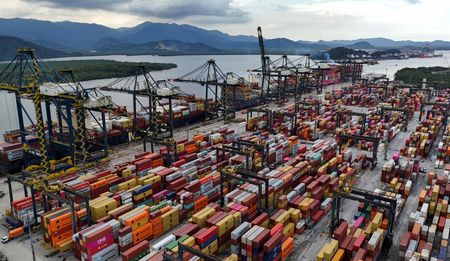
WASHINGTON — The United States is set to place 25% tariffs on a variety of goods imported from Brazil, with the new duties scheduled to go into effect on July 22. Federal officials say the move comes after determining that Brazil, the world’s 10th-largest economy, has engaged in a number of unfair trade practices.
The tariffs were first floated last month, and the final order carves out exceptions for products that either aren’t made in the U.S. or that could cause disruptions to supply chains if taxed. Items that won’t face the new tariffs include coffee, beef, oranges, orange juice, certain oil and gas products, and aerospace components.
The Office of the U.S. Trade Representative wrapped up a year-long investigation concluding that Brazil’s trade practices were problematic in several ways — including weak anti-corruption enforcement and its own unfair tariffs on American goods. Notably, the U.S. has actually maintained a goods trade surplus with Brazil for several years.
U.S. Trade Representative Jamieson Greer issued a statement saying the tariffs were needed to make sure American workers and businesses aren’t competing at a disadvantage.
“Extensive negotiations with Brazil over the past year have not resolved these issues, but we remain open to continuing negotiations with Brazil to bring about long-needed changes to the problems identified in this investigation,” Greer said.
Brazilian President Luiz Inácio Lula da Silva pushed back sharply when U.S. officials first signaled the tariffs were coming in early June. Rather than addressing the trade concerns directly, Lula pointed to political motivations and placed blame on his rival in Brazil’s upcoming October elections, Sen. Flávio Bolsonaro. Bolsonaro had recently traveled to Washington and is the son of former President Jair Bolsonaro, who has been an ally of President Donald Trump.
Secretary of State Marco Rubio weighed in on the announcement via a post on X, writing: “Let there be no confusion about why: President Lula and his government have not negotiated with the US in good faith. His economic policies are bad for Americans and bad for Brazilians. For the past year, Lula has put his own ego ahead of making a deal for the welfare of the Brazilian people, and these tariffs are the price for that.”
The tariffs are being applied under Section 301 of the Trade Act of 1974, the legal authority that allowed the U.S. to conduct the investigation into Brazil’s trade conduct.
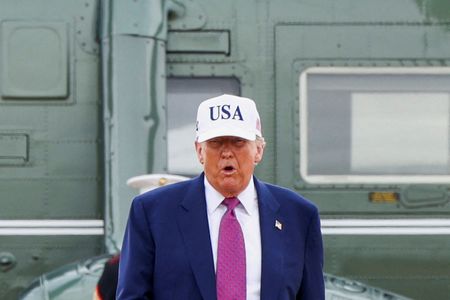
The legal route matters because the U.S. Supreme Court ruled in February against many of Trump’s tariffs that had been imposed under a separate law — the International Emergency Economic Powers Act of 1977. The court determined that Trump exceeded his authority under that law when he used it to impose broad tariffs on trading partners, Brazil included.
Under that earlier law, Trump had imposed a 50% tariff on Brazil in response to Brazil’s prosecution of Jair Bolsonaro, who faced charges related to allegedly attempting to overturn his 2022 election defeat. Relations between Trump and President Lula appeared to warm somewhat in May, when Lula visited the White House.
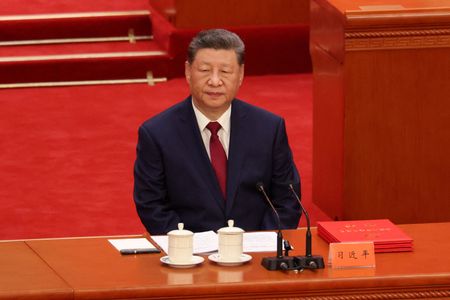
Chinese President Xi Jinping is set to lay out an ambitious vision for how China sees its role in shaping the future of global artificial intelligence at a major forum this Friday — and the event is shaping up to be far more than a technology trade show.
Xi’s first-ever appearance at the annual World Artificial Intelligence Conference, known as WAIC, signals just how seriously Beijing views AI — both as an engine for economic growth and as a key piece of its broader competition with the United States on the world stage.
The forum, running July 17 through 20 in Shanghai, will also serve as the launch pad for Huawei’s Atlas 950 SuperPoD, described as the company’s most advanced large-scale AI computing system to date. The system connects thousands of Huawei’s own Ascend AI processors through high-speed links, allowing them to function together as one massive computing cluster built for large-scale AI training and processing.
The launch is seen as one of the strongest demonstrations yet of China’s push to build AI infrastructure without relying on chips from U.S. company Nvidia. Additionally, DeepSeek’s newest V4 model has been adapted to run entirely on clusters powered by Huawei’s Ascend chips. Chinese media also reported that domestic chipmakers Biren and MetaX plan to unveil new “supernode” computing clusters at the event.
The timing of the conference carries significant diplomatic weight. Washington and Beijing are preparing for their first government-level AI discussions under the current U.S. administration, transforming WAIC into an early indicator of how China plans to compete for influence over the rules that will govern AI globally.
The two nations already staked out competing positions at a United Nations AI dialogue last week. The U.S. argued that heavy regulation could slow down technological innovation, while China framed its affordable, open-source AI models as a benefit to the world that could help close the gap between wealthy and developing nations in AI access.
George Chen, who chairs digital practice at the Asia Group, captured the moment this way: “Against this backdrop, WAIC has become more than a technology showcase; it is now a geopolitical stage where Beijing seeks to articulate its vision of AI as both a national priority and a diplomatic instrument.”
Xi has made his position on AI clear before. In a January speech, he compared the technology to an “epoch-making, major technological transformation following the steam engine,” and Beijing has openly committed to spreading AI throughout its economy while achieving independence in cutting-edge technologies.
China proposed the creation of a World AI Cooperation Organisation, or WAICO, at last year’s conference, though no countries have officially signed on as members. Progress on that initiative, along with steps toward implementing China’s Global AI Governance Initiative, are expected to be announced during a High-Level Meeting on Global AI Governance being held alongside the main conference in Shanghai.
Beijing is also expected to use the forum to promote its open-source AI models as a cheaper alternative to Western technology. A commentary published this week in the People’s Daily stated: “The development of AI must never move toward a technological monopoly that walls itself in, but should always be anchored to the fundamental goal of serving humanity.”
The conference will draw a notable international crowd, including UN Secretary-General Antonio Guterres, Kazakh President Kassym-Jomart Tokayev, and Thai Prime Minister Anutin Charnvirakul. Nine Turing Award and Nobel laureates are also expected to attend, among them deep learning pioneers Yoshua Bengio and Richard Sutton. However, major U.S. technology companies have little representation at the event.
An Asian diplomat, speaking to Reuters anonymously, noted that “China has been making inroads with Southeast Asian countries in terms of AI capacity-building, and portrays itself as speaking up for developing countries who are being left behind in the AI race.”
Other product announcements expected at the forum include AI-powered smartphones from Nubia, which is owned by ZTE, and AI startup StepFun, according to Chinese media reports.
The United States announced plans late Wednesday to impose a 25% tariff on select imports from Brazil, invoking Section 301 of the Trade Act, according to U.S. Trade Representative Jamieson Greer.
The move comes after a year-long investigation that determined Brazilian policies on digital trade, tariffs, intellectual property, ethanol access, and deforestation place an unfair burden on American commerce, the U.S. Trade Representative’s office stated.
The announcement was not entirely a surprise. Reuters had reported the day before that Brazil was preparing for the new tariffs after months of negotiations that produced little progress, according to three people with knowledge of the situation.
Greer defended the decision, saying, “Today’s action is necessary to address these unfair trade practices to ensure American workers and companies can compete on a level playing field.”
He added that “extensive negotiations with Brazil over the past year have not resolved these issues,” but noted that the United States remains open to continued discussions.
U.S. Secretary of State Marco Rubio was sharply critical of Brazil’s leadership, saying the Brazilian government had “not negotiated with the U.S. in good faith.” Rubio also said Brazil’s President Luiz Inacio Lula da Silva had “put his own ego ahead of making a deal for the welfare of the Brazilian people.”
Brazil is the first nation to be targeted under President Donald Trump’s updated tariff approach, which leans on Section 301 of U.S. trade law — a provision that allows the government to investigate and respond to alleged unfair trade practices by foreign countries.
Women’s soccer made history in New York City on Wednesday night when Gotham FC drew a record-breaking crowd to watch a 1-0 victory over Washington Spirit — and welcomed back fan favorite Sam Kerr in the process.
More than 42,000 tickets were sold for the match held at the home of Major League Baseball’s New York Mets, Citi Field. Fans showed up in force despite heavy smoke hanging over the stadium from Ontario wildfires. The turnout set a new record for any women’s sporting event in New York City, topping the more than 28,000 spectators who attended U.S. tennis star Coco Gauff’s championship win at the 2023 U.S. Open women’s singles final.
NWSL Commissioner Jessica Berman spoke with reporters after the match, calling the night a milestone moment. “We know that with investment, if you build it, they will come. And this is a proof point for that,” she said.
“My favourite thing about tonight is that it isn’t transactional. It’s not a one and done. This is the beginning of a new relationship for this team in Queens,” Berman added. “And we know that there’s an entire fan base here that is going to be really hungry to enjoy the best soccer in the world.”
The big crowd arrives at a meaningful time for Gotham. Just days before the match, the team announced it would be leaving its suburban New Jersey stadium and relocating to Etihad Park in Queens — right across the street from Citi Field — starting in 2028. The move is expected to open the team up to a larger and more accessible fan base.
The energy in the stadium was also fueled by growing excitement around soccer in the United States, as the expanded men’s World Cup has been drawing record attendance. Anticipation continues to build ahead of Sunday’s championship match between Argentina and Spain, set to take place in nearby East Rutherford, New Jersey.
On the field, the only goal of the night came courtesy of Rose Lavelle, who won the Women’s World Cup with the U.S. national team in 2019. Lavelle slipped the ball between defender Tara Rudd’s legs and launched it over the outstretched arms of Washington goalkeeper Sandy MacIver in the 37th minute.
The crowd’s excitement reached a new level when Australian striker Sam Kerr entered the game off the bench in the 64th minute. Kerr’s return to the North American league from Chelsea was highly anticipated, and her presence is expected to strengthen an already powerful attack for the two-time champions.
For longtime Gotham supporters, seeing Kerr back in the team’s blue kit brought a sense of nostalgia. She previously played for the club from 2015 to 2017, when the team called the 5,000-seat Yurcak Field home — a far cry from Wednesday’s packed stadium.
Commissioner Berman reflected on the significance of Kerr’s return on such a landmark evening. “In many ways this is like a full circle moment with Sam Kerr coming here and being able to experience this on her first night,” she said. “Playing for the new Gotham, (in) what is so different from the reality that was the NWSL.”
Hyundai Motor Group announced Thursday that it intends to purchase SoftBank Group’s approximately 10% ownership stake in Boston Dynamics, a move that would give the South Korean automaker complete control of the U.S.-based robotics company.
The two companies did not reveal the financial terms of the agreement. However, local media outlets reported last month that the deal is expected to be valued at roughly 500 billion won — the equivalent of about $335 million.
Hyundai says taking full ownership of Boston Dynamics will help the company roll out cutting-edge robotics technology across its business operations.
As part of those plans, Hyundai intends to begin using Boston Dynamics’ humanoid robot, known as Atlas, at one of its car manufacturing facilities in Georgia starting in 2028. The robot is expected to start by handling parts sequencing tasks, with its responsibilities potentially expanding to include component assembly and other manufacturing processes by 2030.
Hyundai originally acquired an 80% stake in Boston Dynamics in 2021.
WASHINGTON — A former high-ranking adviser at the U.S. Federal Reserve was sentenced Wednesday to more than three years in federal prison after being convicted of lying to investigators about secretly sharing restricted central bank information with Chinese intelligence operatives, according to the Justice Department.
John Harold Rogers, 64, was taken into custody in early 2025 on charges that he conspired to steal Federal Reserve trade secrets for China’s benefit, prosecutors said at the time of his arrest.
During his trial, a federal jury spent two days deliberating before returning a guilty verdict on February 3. The jury found Rogers guilty of making false statements to investigators at the Office of Inspector General for the Board of Governors of the Federal Reserve System and the Consumer Financial Protection Bureau, the Justice Department stated.
U.S. Attorney Jeanine Pirro did not mince words in describing the case. “John Rogers spent years secretly funneling sensitive Federal Reserve information to Chinese spies, then looked investigators in the eye and lied about it. And when that wasn’t enough, he lied again under oath at trial,” she said.
Beyond the prison term, Judge Dabney Friedrich also ordered Rogers to complete 12 months of supervised release following his incarceration. Federal prosecutors had pushed for a 60-month sentence, significantly longer than what the judge ultimately imposed.
Rogers served as a senior adviser in the Fed’s division of international finance from 2010 through 2021. According to prosecutors, during that time he passed confidential information to Chinese co-conspirators who worked within China’s intelligence and security apparatus while posing as graduate students.
When Rogers was arrested last year, China denied the allegations, stating that it does not interfere in the internal affairs of other nations.
The Federal Reserve’s international finance division handles research, policy analysis, and reporting on topics including foreign economic activity, U.S. trade and capital flows, and global financial market developments, according to the central bank’s website.
A flash flood watch blanketed a large portion of Texas on Wednesday as powerful rainstorms swelled rivers to dangerous levels, destroying more than 100 roadways and forcing emergency crews to rescue dozens of people trapped by rising floodwaters.
Texas Governor George Abbott identified the Nueces River basin as the area hit hardest by the storms. The basin stretches from a plateau northwest of San Antonio southward through the Texas Hill Country — a region that suffered devastating floods in July 2025.
That disaster claimed nearly 140 lives, including 27 victims — most of them children — at Camp Mystic, located along the Guadalupe River. The Guadalupe runs roughly parallel to the Nueces, and both rivers drain into the Gulf of Mexico. This week’s heavy rainfall inundated both watersheds.
Speaking to reporters at a late-afternoon briefing Wednesday, Governor Abbott said no deaths had been reported from the current flooding. He urged area residents to take flood warnings seriously.
“There will be a lot of rising water for the next 24 to 48 hours,” the governor said. He noted that more than 75 people had been rescued, with most of them being motorists stranded on flooded roads. “We are dealing with and responding to a flood that is likely going to break records in Texas history,” he added.
Video from local news outlets showed streets and vehicles swallowed by deep, fast-moving currents of muddy water. A state transportation official said at least 114 roads and highways had been washed out at the height of Wednesday’s storms.
On Tuesday, Abbott issued a disaster declaration covering 59 counties across south-central Texas — roughly one-quarter of the entire state. The declaration activated emergency response plans and deployed 1,300 personnel from more than 30 agencies.
A flood watch was in place for most of the affected region, with a flash flood emergency declared specifically for Kendall County, which borders San Antonio, Abbott said.
“This is a life-threatening rainfall event,” said state emergency management chief W. Nim Kidd, who told reporters that meteorologists had recorded rainfall rates as high as 3 inches — about 7.6 centimeters — per hour.
Rain that began falling Monday had already dropped between 10 and 15 inches on the stricken region by Wednesday. Abbott warned that an additional 10 to 15 inches of rain was expected to fall through Thursday morning.
Texas was not the only state grappling with dangerous water conditions. The National Weather Service issued a flash flood watch for Thursday covering much of central and southern Arizona, stretching from the Prescott and Phoenix areas south through Tucson and down to the Mexican border, as heavy monsoon storms moved through the region.
Similar flood advisories were put in place for canyon areas in southern Utah.
The flooding across the Southwest was unfolding at the same time a prolonged heat wave was pushing hot, humid conditions into the Rocky Mountain region, the Northern Plains, the Great Lakes, and the mid-Atlantic, according to the weather service.
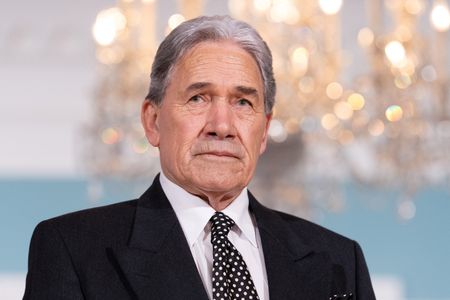
WELLINGTON — New Zealand and Fiji have formalized a renewed five-year partnership, signing what is known as the Duavata Partnership during talks held in Auckland on Thursday. New Zealand Foreign Minister Winston Peters announced the agreement following his meeting with Fiji’s Foreign Minister Sakiasi Ditoka, with the pact outlining shared priorities spanning trade, security, democracy, social development, and climate resilience for the years 2026 through 2030.
The newly signed agreement builds upon an earlier framework that covered 2022 to 2025. Among its key goals, both nations reaffirmed their commitment to growing two-way trade to NZ$2 billion — roughly $1.17 billion U.S. — by the year 2030. The partnership also expands cooperation in areas such as renewable energy, disaster preparedness, and support for a vision of the Pacific as an “Ocean of Peace,” according to a joint statement from both governments.
On the security front, the agreement calls for deeper collaboration across community policing, immigration, customs, border protection, cybersecurity, intelligence sharing, maritime security, and humanitarian and disaster relief efforts.
Minister Peters noted that the two foreign ministers also held discussions regarding New Zealand’s interest in exploratory talks with Fiji and Australia concerning the Ocean of Peace Alliance.
Fiji’s Foreign Minister Ditoka is also expected to participate in a trade and investment ministerial meeting being hosted by New Zealand Trade Minister Todd McClay.
Hong Kong’s national security police have taken five booksellers into custody on suspicion of “doing an act with seditious intention,” according to a government statement released Wednesday evening.
The arrests are the latest blow to Hong Kong’s independent bookstore scene, which has shrunk significantly since Beijing enacted sweeping national security legislation over the city in 2020. These shops had long served as important gathering places for Hong Kong’s civil society, offering a wider variety of political and social books than mainstream retailers and hosting events like book talks and workshops.
According to police, the investigation was triggered by a tip from Hong Kong’s customs department, which reported intercepting “a batch of books with seditious intention” inside a shipment arriving in Hong Kong from overseas.
Officers conducted searches at two shops in Mong Kok, a busy area within the city’s Kowloon district. Two men, aged 37 and 57, and three women between the ages of 30 and 59 were taken into custody.
“Police investigations revealed that the five arrestees are suspected of displaying items with seditious intent and selling publications with seditious content inside the shops,” the official statement read. Authorities added that the materials in question were found to incite hatred toward Hong Kong’s government, its judiciary, and law enforcement. “A batch of books with seditious intention was seized from the shops,” the statement continued.
The South China Morning Post identified the two shops as ‘Have a Nice Stay’ and Greenfield Bookstore. ‘Have a Nice Stay’ had already announced the day before the raid that it planned to shut its doors on August 30, citing financial difficulties and what it described as an “elusive red line” regarding which books might be considered problematic.
Wednesday’s arrests follow a separate incident in June, when police arrested two owners of another bookshop on similar charges of displaying and selling publications deemed to have “seditious” content.
Taiwan President Lai Ching-te took to Facebook on Thursday to weigh in on the situation, writing that every independent bookstore represents a vital space for protecting freedom of thought.
“We wish to express our concern and respect to all bookstores and cultural workers who continue to stand their ground in difficult circumstances. Thought and writing should not be imprisoned because of political pressure,” Lai wrote.
Yalkun Uluyol, a China researcher at Human Rights Watch, responded to the arrests by calling on governments to act, stating that “democratic governments should press the Hong Kong authorities to free these booksellers.”
For most soccer fans, watching every match of the World Cup is a fantasy. For Kevin Akoto and Austin Franklin, it became a paying job.
The two were hired as “Chief World Cup Watchers” by U.S. broadcaster Fox One, tasked with viewing all 104 matches of the tournament from beginning to end — and each walking away with $50,000 for their efforts.
Their workplace was anything but ordinary. On matchdays, the duo sat inside a glass-walled viewing cube in New York’s Times Square, with curious pedestrians frequently stopping to peer inside or even pulling up chairs to catch some of the action on the televisions within.
Franklin, an influencer based in Los Angeles, reflected on just how unusual the gig was compared to more traditional work. “My dad cleans up oil spills for a living,” he said. “I sit here with my friend Kevin and watch all of these matches and get to go outside and interact with fans.”
Akoto, who left his position as a line cook in Florida to take on the role, said the experience highlighted a major shift in how audiences engage with sports. “If we’ve seen anything throughout this World Cup, it’s that people are consuming sports more through social media,” he said. “The more behind-the-scenes stuff is how people are consuming sports content.”
Throughout the tournament, both men regularly posted content to their social media accounts, offering commentary on matches and engaging with their followers online.
With Sunday’s final between Spain and Argentina marking the conclusion of the tournament, the two said they have no regrets — and would gladly sign up again, even if the World Cup grows from 48 teams to 64, a potential expansion that FIFA plans to discuss following the event.
“I don’t think we’re sick of watching soccer yet,” Franklin said. “However many more they want to give us, we’ll watch them.”
The U.S. military announced late Wednesday evening that it had wrapped up its latest series of strikes against Iran, conducted under orders from President Donald Trump. Among the locations hit was Bandar Abbas, Iran’s primary port city situated along the Strait of Hormuz.
According to a statement posted on X by U.S. Central Command, “U.S. forces struck Iranian command centers, air defense sites, missile and drone capabilities, and coastal surveillance facilities.”
The military confirmed that strikes were carried out across several locations, with Bandar Abbas — home to Iran’s largest port and critical navy and Revolutionary Guards installations — among the key targets along the Strait of Hormuz.
Central Command also noted that earlier in the day, “American forces struck coastal defense and cruise missile sites on Greater Tunb Island during a 90-minute wave.”
This week, Trump repeated his threats to strike Iranian energy infrastructure and warned that bridges could be targeted as soon as next week. Those threats have drawn scrutiny from international law experts, who previously stated that attacks on civilian-essential infrastructure may constitute war crimes under the 1949 Geneva Conventions, which prohibit strikes on sites critical to civilian populations.
Trump faced widespread condemnation back in April after threatening to destroy Iran’s entire civilization, a statement made before a ceasefire with Tehran was eventually reached.
The conflict between the U.S. and Iran began on February 28, when the U.S. and Israel launched coordinated attacks on Iran. Iran responded with strikes against Israel and Gulf states where U.S. military bases are located. Since then, U.S.-Israeli strikes on Iran, combined with Israeli military action in Lebanon, have resulted in thousands of deaths and the displacement of millions of people.
The war has also driven oil prices higher and caused significant instability across global financial markets.
SINGAPORE — Shipping data released Wednesday reveals a sharp decline in the number of vessels moving through the Strait of Hormuz, marking the first full day after the United States reinstated a naval blockade on Iranian ports as both nations continue to exchange strikes across the Gulf.
According to data from Kpler, only seven ships made the crossing on Wednesday, the majority traveling along the Iranian route. That figure represents nearly half the traffic recorded the day before, when 13 vessels passed through.
Tensions have been rising since Iran announced late Saturday that it had shut down the Strait of Hormuz. Ongoing military operations have effectively prevented most shipping from passing through the waterway, which was responsible for carrying approximately one-fifth of all global oil and natural gas shipments before hostilities broke out.
Kpler’s data indicates that on Wednesday, four vessels entered the Gulf traveling empty — among them three small oil tankers and a dry bulk carrier used for grain transport. Three ships that departed through the strait that day were carrying liquefied petroleum gas, coal, and fuel oil, respectively.
The previous day, a Suezmax tanker loaded with 1 million barrels of Saudi crude oil slipped out of the strait with its tracking transponder turned off, according to the same data.
No Very Large Crude Carriers or liquefied natural gas tankers were recorded passing through the strait on Wednesday.
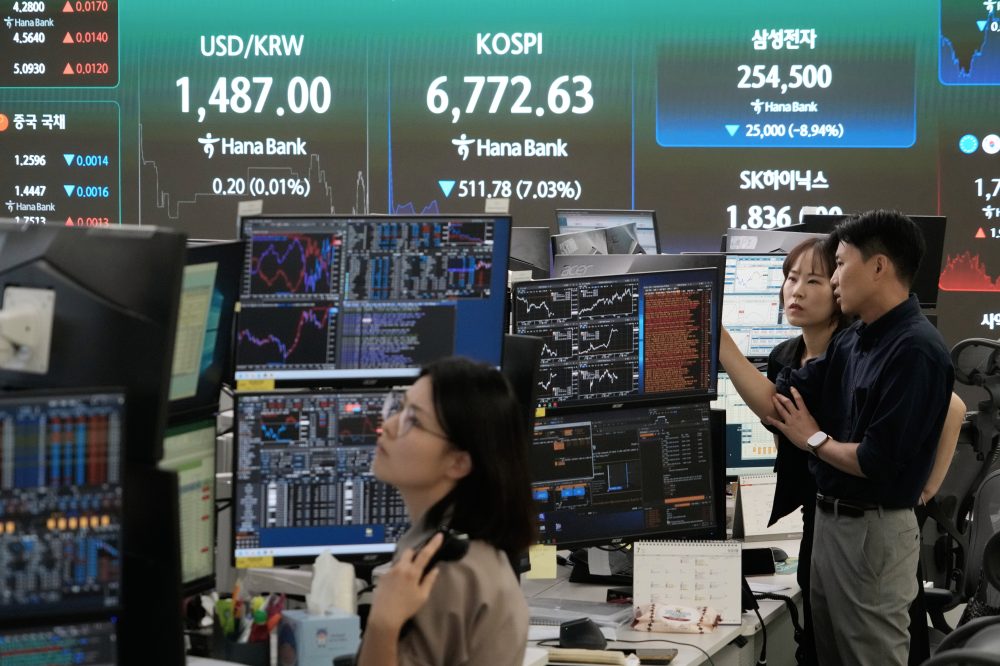
SEOUL, South Korea — South Korea’s central bank took action Thursday to tighten the country’s money supply, raising its key interest rate for the first time in more than three years as officials work to bring down inflation and rein in surging household debt.
After a monetary policy meeting, the Bank of Korea bumped its benchmark rate up by a quarter of a percentage point, moving from 2.5% to 2.75%. It marks the first rate increase since January 2023.
In recent years, the bank had chosen to hold rates steady or reduce them, even as concerns mounted over skyrocketing household debt and climbing real estate prices. Officials had prioritized keeping the trade-dependent economy afloat amid global instability and sweeping tariff increases imposed by U.S. President Donald Trump.
Now, however, policymakers feel more comfortable tightening borrowing costs. The economy has outperformed expectations, largely due to strong semiconductor exports powered by a worldwide surge in artificial intelligence investment. On Tuesday, the government revised its 2026 growth forecast upward to 3%, which would represent the country’s fastest annual growth since 2021.
The rate increase came as little surprise. Bank of Korea Governor Shin Hyun Song had signaled at the bank’s May policy meeting that a rate hike should come at an “appropriate time.” Consumer prices rose more than 3% in both May and June — well above the bank’s 2% target. That inflation has been driven in part by rising energy costs tied to the war involving the U.S. and Israel against Iran, as well as a weakening of the Korean won.
Concerns about household debt remain a key issue as well. Higher property values in Seoul and surrounding areas, combined with a rally in technology stocks, have encouraged more borrowing across the country.
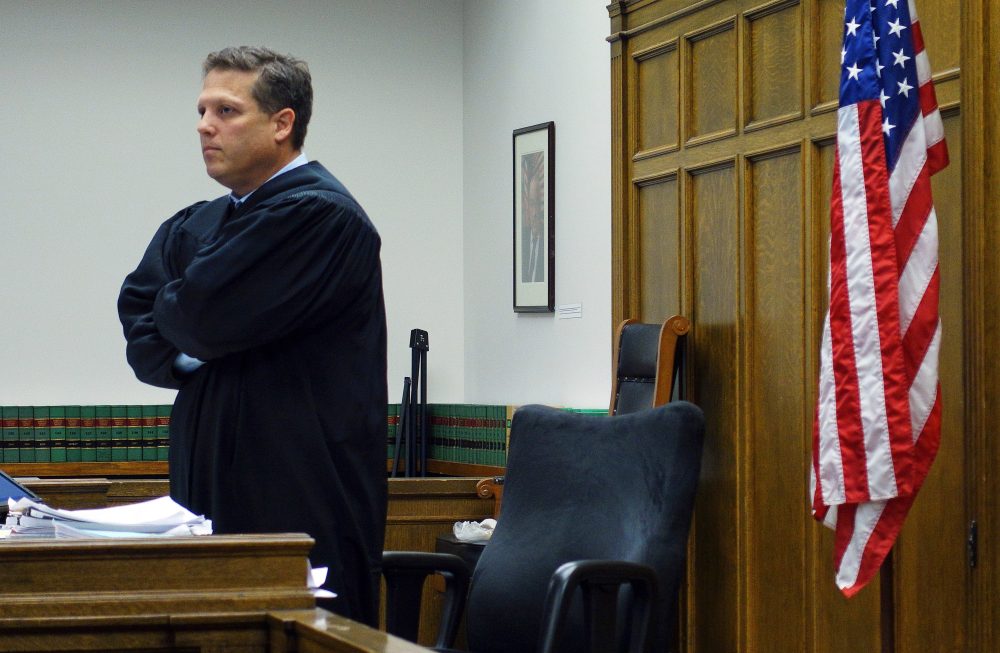
SEATTLE — President Donald Trump wasted no time dismissing the newly named top federal prosecutor in Seattle on Wednesday, firing him in under an hour after the region’s federal judges unanimously selected him for the role — underscoring the deepening friction between the judiciary and the White House over these influential posts.
Roger Rogoff, a former state judge with decades of experience as both a state and federal prosecutor, was sworn in before 8 a.m. at the federal courthouse in downtown Seattle. He then made his way to the U.S. Attorney’s Office, where he intended to meet with Charles Neil Floyd, the man whose 120-day interim appointment had expired back in February.
While waiting in the lobby, Rogoff said he received an email from the Trump administration notifying him that he had been removed from the position. He told reporters he is now consulting with attorneys about the possibility of filing a lawsuit over his dismissal.
Under normal circumstances, the president nominates U.S. attorneys — the chief federal prosecutors in each judicial district — and the Senate confirms them. Temporary appointments are an exception to that confirmation requirement. When an interim appointment runs out before a permanent nominee is confirmed, the district’s federal judges have the authority to step in and select someone for the role.
The Trump administration, however, has pushed to keep unconfirmed prosecutors in place indefinitely, often through unconventional personnel moves.
Acting U.S. Attorney General Todd Blanche addressed the situation in a social media post Wednesday, writing, “District court judges can appoint a temporary U.S. Attorney, and POTUS can fire them.” He also argued that the judges who chose Rogoff “abandoned the time-honored process of consultation with the administration so that the selected U.S. Attorney is qualified to serve in the administration.”
Trump had originally named Floyd — a former immigration judge — as interim U.S. attorney last October, but never submitted his name to the Senate for confirmation. When Floyd’s interim term expired, the administration simply changed his job title to first assistant U.S. attorney, leaving the top position vacant. A federal appeals court panel raised doubts about the legality of that maneuver in May.
The district’s judges then opened up the position for applications and assembled a bipartisan panel to evaluate candidates. On Wednesday morning, the court — made up of 17 active and senior judges appointed by five different presidents — issued a unanimous order naming Rogoff as U.S. attorney for western Washington.
Democratic U.S. Sen. Patty Murray of Washington, who had previously opposed Floyd’s placement in the role, sharply criticized the rapid firing. “Throughout his career, he has demonstrated an outstanding commitment to public service, and he was appointed legally by the federal judges in the Western District of Washington,” she said in a written statement. “This administration doesn’t want to deal with advice and consent — they just want to install cronies to carry out a corrupt political agenda.”
This is not the first time the administration has clashed with courts over these appointments. In December, Alina Habba stepped down as the top federal prosecutor in New Jersey after an appeals court ruled she had been serving unlawfully. In Virginia, Lindsey Halligan left her acting U.S. attorney post after a judge found her appointment illegal and threw out indictments she had brought against two of Trump’s political opponents, including former FBI Director James Comey. The judges in that district then appointed James Hundley, a lawyer with more than 30 years of criminal and civil experience, but the administration fired him as well. A court-appointed U.S. attorney in northern New York was also dismissed.
Rogoff, who spent 20 years as a state prosecutor and six years as a federal prosecutor before becoming a state judge, said he was not surprised by the firing — he had anticipated it was a possibility going in. Still, he said he had no hesitation about stepping into the role despite the likely confrontation. Being a U.S. attorney is “the best job there is” for a prosecutor, he said.
“I’m really proud of my career,” Rogoff said. “The fact that the judges of this district — most of whom I’ve spent my career appearing in front of, or trying cases against, or working with — believed that I was the right person to do this work is just really humbling and amazing.”
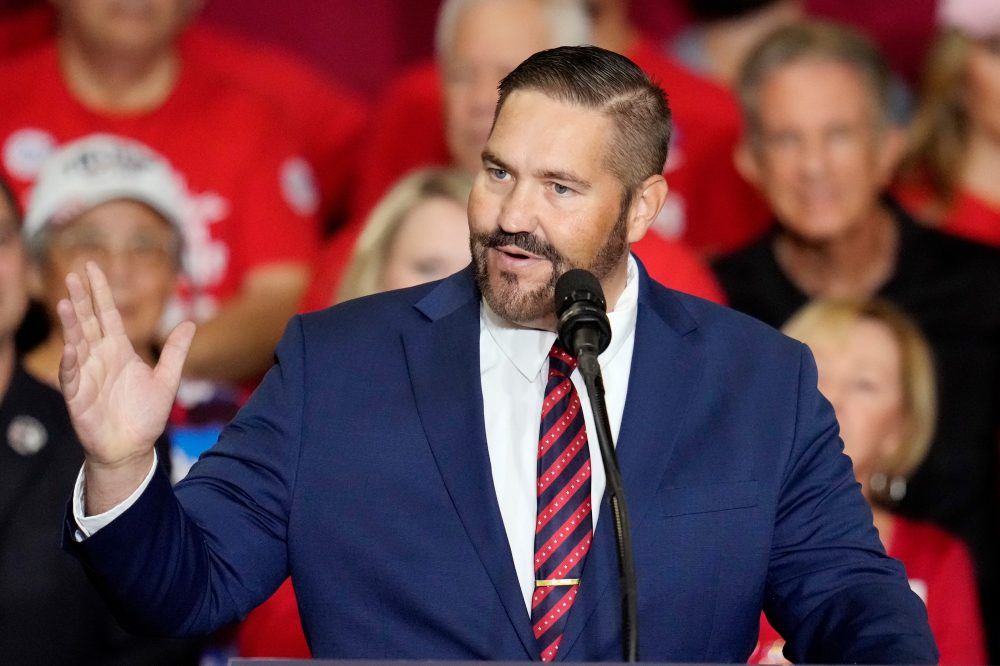
Election officials in Arizona’s most populous county have put an end to a drawn-out legal fight, reaching an agreement this week on how they will jointly manage the county’s elections going forward.
Maricopa County Recorder Justin Heap had filed a lawsuit against the county’s board of supervisors — which is made up mostly of Republicans — back in June 2025. Heap alleged the board had unlawfully seized control over certain election administration functions. The board fired back, calling the lawsuit frivolous and accusing Heap of wasting money that belonged to taxpayers.
After mediated negotiations, both sides came to a settlement, which the board formally approved this week.
Board Chairwoman Kate Brophy McGee expressed relief following Tuesday’s vote. “This deal gets us out of the courtroom,” she said. “I’m sick of drama. We are done with being on the front page going forward.”
Heap described his office’s goal as straightforward — making sure its legally defined responsibilities are carried out properly. “I am pleased we have reached an agreement that, when implemented, will restore those responsibilities and establish a clear framework for administering elections moving forward,” Heap said in a statement released jointly with the board.
The terms of the settlement give Heap’s office primary control over early voting, the selection of ballot drop box locations, and other related duties. The board of supervisors will be responsible for Election Day voting operations, ballot tabulation, and maintenance of voting equipment. The board is also on the hook for funding a $15 million information technology system along with the staff positions that come with it.
An interim plan crafted by Heap’s attorney and approved by the Arizona Supreme Court will be in effect for the July 21 primary. Early voting in that race had already begun in late June.
Heap received support in his legal effort from America First Legal, a conservative public interest organization founded by Stephen Miller, who serves as a deputy chief of staff at the White House. Heap had argued that the board stripped his office of funding, IT personnel, and key responsibilities — including oversight of drop boxes and early voting site placement — through a deal made with his predecessor.
Heap had previously defeated incumbent recorder Stephen Richer in a Republican primary before winning the 2024 general election. The two clashed over how elections in Maricopa County should be run. Heap has stopped short of repeating debunked claims that the 2020 and 2022 elections were stolen, but has argued that voters lack confidence in the state’s voting system and that it is managed poorly. Richer, also a Republican, consistently and forcefully defended the integrity of past elections.
Not everyone on the board was on board with the deal. Supervisor Steve Gallardo, a Democrat, refused to vote in favor of the settlement and took aim at Heap during the meeting. “Honestly, I don’t think he wants to have an election that is conducted transparent or even an election that’s not compromised,” Gallardo said. “Now, with this, he owns it.”
The U.S. dollar lingered near a one-month low on Thursday, as a string of encouraging inflation reports dampened expectations that the Federal Reserve would move quickly to raise interest rates — though an escalating conflict in the Middle East is adding new uncertainty to the economic outlook.
The dollar slipped against the Japanese yen for the third straight trading day, falling 0.1% to 162.075 yen. The euro climbed 0.1% to $1.1472, reaching its strongest level in a month. The British pound held near a two-month high at $1.354, supported by market expectations that Britain’s incoming prime minister will choose a fiscally conservative finance minister.
Both the Australian and New Zealand dollars edged down roughly 0.1%, settling at $0.6995 and $0.5842 respectively.
The U.S. dollar index — which measures the currency against six others — was largely flat at 100.47, hovering near its lowest point since June 18. The index has dropped 0.8% over the prior two sessions and appears on pace for a weekly loss.
A key driver of the dollar’s retreat was a surprise drop in U.S. producer prices in June — the largest monthly decline in 14 months — adding to a growing body of evidence that inflation was already cooling before the latest flare-up in the Middle East.
That report, paired with softer-than-expected consumer inflation and a slowdown in hiring last month, has essentially taken a July rate hike off the table. The probability of a rate increase this month dropped to just 11%, down sharply from a 45% implied chance at the start of the week. Markets currently see roughly even odds of at least a quarter-point rate hike in September, based on Fed funds futures tracked by CME Group.
Bosco Wu, investment strategist at Bank of East Asia, offered this perspective: “The recent dollar weakness appears to be a correction from previous highs. Markets had aggressively priced in a July rate hike, which now looks somewhat overblown given that inflation is cooling fast.”
Wu cautioned, however, that the broader trend toward tighter monetary policy remains in place. A single month of cooling inflation is unlikely to confirm a lasting slowdown, and the Middle East conflict should help put a floor under the dollar’s value.
Heightened tensions between the U.S. and Iran have pushed oil prices toward one-month highs, keeping the inflation outlook uncertain. On Wednesday, the U.S. struck Iranian coastal defenses and missile installations following the re-imposition of a naval blockade on Iranian ports. Iran responded by threatening to cut off more regional energy exports, describing the situation as an “existential war” with America.
Oil markets extended their rally into a fourth consecutive session Thursday, with Brent crude futures trading near a one-month high at $85.28 per barrel.
SEOUL — South Korea’s chief financial watchdog says it plans to roll out new regulations targeting single-stock leveraged exchange-traded funds in the near future.
Financial Services Commission Chairman Lee Eog-weon made the announcement during a radio interview on Thursday, saying the agency would “closely inspect and review improvement measures” related to these investment products. He was responding to questions about how the funds have contributed to increased volatility in South Korea’s stock market.
“This is basically a high-risk product,” Lee said. “We have explained to investors its risks.”
When asked whether a temporary halt to trading in these products was on the table, Lee cautioned that such a move could trigger a “bigger side-effect” in the markets, suggesting regulators are weighing their options carefully.
Beyond the ETF issue, South Korea’s regulators have been focused more broadly on strengthening market stability. Their efforts include encouraging companies to improve how they are governed and to raise dividend payments to shareholders, as well as pushing for South Korea’s entry into the MSCI developed-market index — a move that could draw more long-term institutional investment into the country’s financial markets.
Two prominent human rights organizations have released a damning report alleging serious mistreatment of detainees held at a federal immigration detention facility in Texas, including physical beatings by guards, denial of medical treatment, and being blocked from reaching family members and attorneys.
The report, jointly released Wednesday by Human Rights Watch and the American Civil Liberties Union, runs dozens of pages and draws on 80 interviews conducted by Human Rights Watch with individuals held at Camp East Montana, a detention facility situated at the U.S. Army’s Fort Bliss installation in El Paso.
“People detained at Camp East Montana reported routine beatings and other excessive force by guards, chronic malnutrition, and unsanitary and degrading living conditions,” the report stated. “Together, these abuses violate fundamental protections under U.S. and international human rights law.”
This latest report adds to a growing body of investigations that have examined conditions at the facility, which holds the distinction of being the largest immigration detention center in the United States.
The U.S. Department of Homeland Security, the parent agency of ICE, pushed back strongly, with U.S. media citing a DHS statement calling the allegations of inhumane conditions “categorically false.” The agency did not respond to a separate request for comment from Reuters. DHS also disputed claims that detainees were physically harmed and said ICE takes the health and safety of those in its custody seriously. The agency has issued similar denials in the past when confronted with abuse allegations at other ICE facilities.
The report includes a striking account from a detainee identified as Ismael M., a 28-year-old from Honduras, who described struggling deeply with his mental health during more than five months in detention.
“I sometimes look at my bed sheets, and I wonder if it would be easier to hang myself instead of trying to survive this torture,” he was quoted as saying in the report.
Camp East Montana has drawn repeated criticism from immigration advocacy groups. A U.S. government watchdog report released last month found that the facility failed to file required use-of-force reports, withheld medication from seriously ill detainees, and squandered tens of millions of taxpayer dollars through hastily arranged contracts.
ICE has become a central figure in the immigration enforcement and deportation campaign pursued by President Donald Trump, an effort that human rights organizations have criticized as violating free speech and due process protections. Rights groups have also raised concerns that the crackdown has created an unsafe climate, particularly for ethnic minorities who say they have been subjected to racial profiling. Trump has maintained that his immigration policies are intended to strengthen domestic security.
Since Trump returned to office in January of last year, approximately 50 people have died while in ICE custody across the country.
Wednesday night’s 2026 ESPY Awards ceremony brought together the sports world’s biggest names at the David H. Koch Theater at Lincoln Center in New York, with “Saturday Night Live” cast member Marcello Hernandez serving as host.
The evening’s first major honor went to New York Knicks guard Jalen Brunson, who claimed the “Best Championship Performance” award after steering the Knicks to their first NBA title since 1973. During the Finals, Brunson put up an average of 32.6 points, 4.6 assists, 4.2 rebounds, and 2.0 steals per game.
Taking the stage to accept his award, Brunson began by recognizing his family, then turned his gratitude toward his coaching staff and fellow players. “I am forever indebted to them, thank you,” he told the audience.
Figure skater Alyssa Liu captured the “Best Breakthrough Athlete” award after claiming gold at the Winter Olympics. Liu reflected on a difficult road to get there. “I had some really rough times in (the sport), and I took two years off, and so it really feels like I did break through in my own way, and for my sport,” she said.
Golden State Warriors star Steph Curry received the prestigious “Muhammad Ali Sports Humanitarian” award in recognition of his charity, “Eat, Learn, Play,” which has worked to provide meals and playgrounds for children in the Oakland area.
Curry spoke about the weight of the honor. “When you hear Ali’s name, you think about greatness,” he said. “This award being connected to his legacy is incredibly humbling.”
After acknowledging the volunteers, teachers, and others who make the program possible, Curry challenged fellow athletes to step up in their own communities. “Don’t ever forget you have a platform, you have a voice, you have everything you need to make a true impact, and I encourage you to find your Oakland,” he said.
The “Best College Athletes” awards went to Indiana quarterback Fernando Mendoza and UCLA basketball player Lauren Betts. Betts used her acceptance speech to highlight the importance of mental health for athletes.
Mendoza led the Hoosiers to their first-ever national championship before being selected as the No. 1 overall pick by the Las Vegas Raiders in the NFL Draft. “Football is the ultimate team sport,” Mendoza said. “God bless, go Raiders, thank you, guys.”
Motorists traveling eastbound on Delaware Route 2 between South Dillwyn Road and Melrose Place Drive are facing a lane restriction due to ongoing construction work.
The right lane in that corridor has been closed, and drivers are advised to plan accordingly or consider alternate routes if possible.
According to DelDOT, the lane closure is scheduled to remain in place until 6 a.m., at which point the roadway is expected to return to normal.
A lane closure is in effect at the intersection of Savannah Road and Wescoats Road, with the right lane shut down until 6 AM.
Drivers traveling through that area should expect possible delays and are encouraged to use alternate routes if available. No additional details regarding the cause of the closure were provided.
Motorists are urged to slow down and use caution when approaching the work zone.
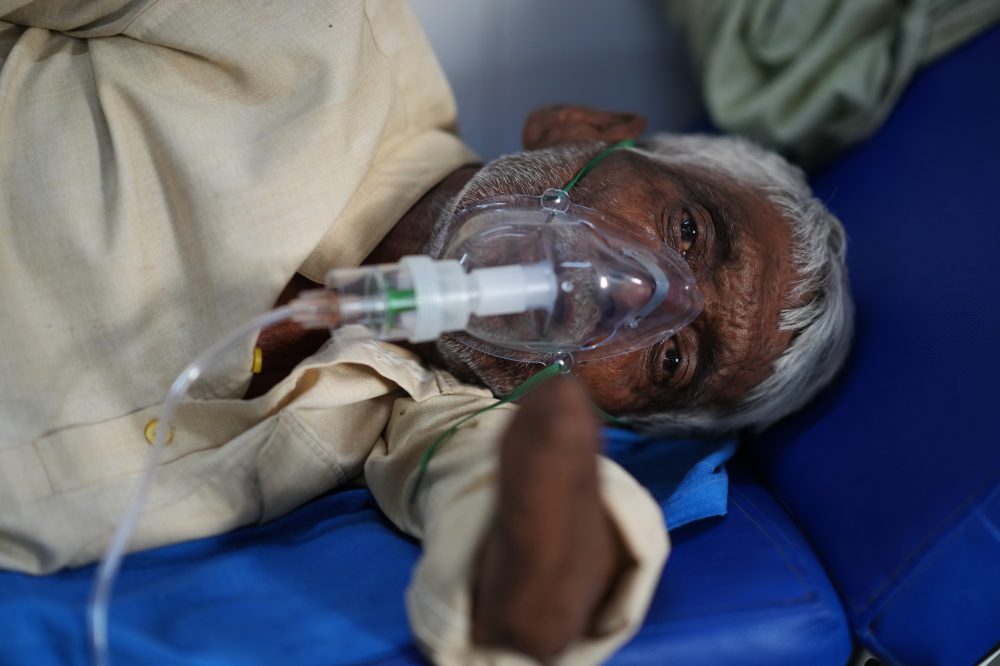
BANDA, India — The heat never lets up in Banda, not even after midnight. Power outages leave many families without even a basic ceiling fan, and residents are constantly searching for any form of cooling — whether that means being sprayed down with a garden hose or dragging a blanket outside to sleep under the open sky.
For the people who call this northern Indian town home, simply making it through each day has become a test of endurance. Banda has recorded some of the highest temperatures anywhere in the country, and the situation is getting worse.
Scientists attribute the worsening heat waves across India largely to global warming, driven by the burning of fossil fuels such as gas, oil, and coal. The state of Uttar Pradesh, where Banda is located, is considered especially vulnerable to extreme heat. In 2023, at least 119 people died over the course of several days during a severe heat wave that struck parts of the state.
This past May, Banda hit 48.2 degrees Celsius — that’s nearly 119 degrees Fahrenheit — one of several occasions this year when the town posted the single highest temperature recorded anywhere in India that day. According to climatologist and weather historian Maximiliano Herrera, who monitors weather extremes around the globe, Banda was also the hottest place on Earth on seven separate days this year, most of them in April. Temperatures have eased somewhat since then, but the heat remains oppressive, especially as seasonal rains bring added humidity.
An Associated Press team traveled to Banda in June to document how residents manage the heat from dawn to dusk and beyond.
At 4 in the morning, when most of the town is still asleep, 70-year-old Munni Devi and her four sons are already hard at work. The temperature has already climbed to 30 degrees Celsius — 86 degrees Fahrenheit — and workers at Banda’s vegetable market are unloading tomatoes, jackfruits, and other produce, transferring goods to smaller vehicles bound for neighborhood shops.
Devi says the heat has grown more punishing with each passing year, and this year has been the worst yet. The work is physically grueling under any conditions, but during a heat wave, it becomes brutal. Still, she says missing a day of work simply isn’t an option.
Motorists heading southbound on US-13 are facing a lane restriction between the US-13 and US-40 split and Schafer Boulevard.
The right lane in the southbound direction is currently closed, and the closure is expected to remain in place until 6 AM.
Drivers in the area are advised to use caution and allow extra travel time while the lane restriction is active. Alternate routes may be considered to avoid potential delays.
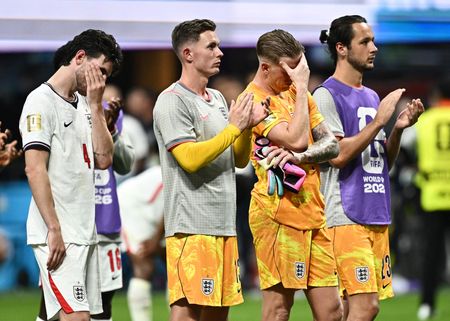
Defending World Cup champion Argentina staged a dramatic late comeback to defeat England 2-1 in the semifinals, booking their spot in the final. England’s Anthony Gordon put his side ahead, but Argentina refused to go quietly. With just five minutes left in regulation, Enzo Fernandez pulled Argentina level in the 85th minute, and substitute Lautaro Martinez headed home the winner two minutes into stoppage time to complete the stunning turnaround.
The stage is now set for a World Cup final this Sunday in East Rutherford, New Jersey, pitting Argentina against Spain. Argentina’s Lionel Messi, the tournament’s all-time leading scorer, will lead the defending champions as they chase their fourth World Cup title — which would make them the first back-to-back champions since Brazil won in 1958 and 1962. Spain, guided by young star Lamine Yamal, boasts the tournament’s top defense and is seeking its second World Cup crown, having claimed the title back in 2010. Spain enters the match on a 37-game unbeaten run, while Argentina has gone 13 World Cup matches without a loss.
Messi, now 39 years old, didn’t find the net himself in the semifinal, but his two assists in the closing moments were the difference. Eight days after orchestrating an improbable comeback against Egypt in the round of 16, Messi once again delivered when it mattered most. He currently leads all players in World Cup history with 21 career goals.
England coach Thomas Tuchel made tactical adjustments in the closing stages to protect the lead, but it wasn’t enough. “Easy to say that it was wrong” to play defensively while holding the advantage, Tuchel acknowledged after the match. Argentina and Messi simply broke through the defensive wall England had built. Tuchel’s in-game decisions are expected to face intense scrutiny in the days and years ahead.
In a unique moment connected to the semifinal, more than 100 inmates at New York’s Rikers Island correctional facility gathered in a gymnasium to watch the England-Argentina match on a projection screen. The special watch party was open to inmates who had demonstrated good behavior, including staying incident-free for at least 30 days. The facility has been hosting similar events throughout the tournament, which began last month.
On the baseball front, the expanded playoff format is making it difficult to predict which pitchers will be traded before the deadline. Twenty-three of the league’s 30 teams are within four games of a playoff spot as the second half of the season gets underway Thursday. Detroit’s Tarik Skubal, a two-time Cy Young Award winner who returned from elbow surgery in June, is considered a prime trade candidate. The Tigers have improved since June and are hovering near a wild-card position, meaning their upcoming results will shape whether they buy or sell. Other pitchers including Joe Ryan and Freddy Peralta could also be on the move.
The Milwaukee Brewers made a move to strengthen their pitching rotation, acquiring right-hander Lance McCullers Jr. and left-hander Colton Gordon from the Houston Astros in exchange for outfield prospect Jadyn Fielder. Houston agreed to cover most of McCullers’ remaining salary, contributing $4,227,273, which leaves Milwaukee responsible for just $2.5 million of his contract. To make room on the roster, the Brewers placed left-handed pitcher Rob Zastryzny on the 60-day injured list.
In the WNBA, four-time MVP A’ja Wilson was the first player selected in the All-Star draft for the exhibition game scheduled for July 25 in Chicago. WNBA legends Cynthia Cooper and Teresa Weatherspoon served as honorary general managers, each building their All-Star rosters from players chosen by fans, media, fellow players, and coaches. Paige Bueckers headlines Cooper’s team, which will be coached by Becky Hammon and also features Breanna Stewart, Kelsey Mitchell, Natasha Howard, and Gabby Williams. Weatherspoon’s squad, coached by Cheryl Reeve, includes Wilson, Caitlin Clark, Olivia Miles, Aliyah Boston, and Jessica Shepard.
The Atlantic Coast Conference is overhauling its tiebreaker rules for determining which team plays in its football championship game, following last season’s controversy that saw a five-loss Duke team advance to the title game ahead of then-No. 10-ranked Miami. The change puts an end to situations that could leave higher-ranked teams out of the College Football Playoff. Going forward, when head-to-head results can’t break a tie, the team with the strongest overall body of work — measured by a SportSource Analytics metric used by the CFP — will earn the championship berth. ACC Commissioner Jim Phillips announced the change.
The 154th British Open teed off Thursday at Royal Birkdale in Southport, England, where hot, sunny weather is expected to make the already firm links course play even faster. The debate this week isn’t just about how far the ball travels through the air, but how far it rolls along the hard, dry turf. Defending champion Scottie Scheffler is among those who say the course conditions force players to make strategic decisions at every hole. Scheffler also offered pointed criticism about some of the changes made to the course.
Authorities in China report that a bus tumbled into a river Wednesday evening after striking a road guardrail, claiming six lives and sending 11 others to the hospital in the southwestern province of Sichuan.
The crash took place at approximately 6 p.m. in Zhonggang village, located in the mountainous Baoxing county, according to a notice released by local officials on Thursday.
All 17 seats on the bus were occupied at the time of the accident, which was the vehicle’s maximum capacity. Among those injured, one person suffered serious injuries but has since been listed in stable condition.
Search and rescue teams completed their work in the early morning hours of Thursday. Officials have launched an investigation to determine what led to the deadly collision.
The U.S. State Department confirmed Wednesday that new travel restrictions tied to the Ebola outbreak in the Democratic Republic of Congo are now preventing American citizens and nationals from flying home on commercial aircraft if they have been in the African nation within the past 21 days.
Reuters first broke the story this week, reporting that President Donald Trump’s administration had put the policy in place to block Americans in Congo from taking commercial flights back to the United States.
The U.S. embassy website in Congo spelled out the rules clearly: “Travelers who have been in the DRC within 21 days of their flight will not be allowed to board flights with U.S. destinations.”
The embassy also advised: “All U.S. citizens and U.S. nationals who have been in the DRC should plan to remain outside the DRC for 21 days before entering the United States.”
The restrictions are a response to an ongoing Ebola outbreak that has spread across multiple provinces within Congo. The latest official Congolese figures, released late Sunday, showed confirmed cases had climbed to 1,926, with 702 people having died from the disease.
Dr. Daniel Jernigan, a former senior official at the U.S. Centers for Disease Control and Prevention who led the American response to the 2014-2015 Ebola outbreak in West Africa, said the use of a “do-not-board” policy to stop U.S. citizens from coming home — even when they face little risk of actual Ebola infection — is without precedent.
Jernigan warned of broader consequences, stating: “This change in policy risks shifting medical and public-health responsibility to third countries, it may encourage travelers to conceal itineraries or exposures, and it will make recruitment of American outbreak responders more difficult.”
Oil prices climbed for the fourth day in a row on Thursday as a new round of American military strikes on Iranian military targets deepened concerns about a wider conflict and potential disruptions to global energy supplies.
The United States targeted Iran’s coastal defense systems and missile installations on Wednesday, following the reimposition of a naval blockade on Iranian ports. Iran responded by threatening to cut off additional regional energy exports, describing its standoff with America as an “existential war.”
Brent crude futures moved up 33 cents, or 0.4%, reaching $85.28 per barrel as of 0026 GMT. Meanwhile, U.S. West Texas Intermediate futures gained 42 cents, or 0.5%, reaching $80.02 per barrel. Both benchmarks had already risen roughly 0.3% on Wednesday and were trading near one-month highs set the previous day.
Hiroyuki Kikukawa, chief strategist of Nissan Securities Investment, offered his take on the market movement. “With tensions in the Middle East flaring up again, buying is taking the lead,” he said. He added that “while mediation efforts by neighbouring countries continue and the consensus view is that a full-scale war is unlikely, WTI could still rise to $85–$87 depending on how the conflict develops.”
The week’s price gains are largely tied to growing supply disruptions in the Strait of Hormuz, a critical waterway that handled roughly one-fifth of the world’s oil and liquefied natural gas trade before the current hostilities began.
The conflict between Iran and the United States reignited last week, unraveling a fragile truce that had been reached in June following several months of fighting.
Analysts note that Iran has signaled it may direct its Houthi allies in Yemen to block the Bab el-Mandeb passage into the Red Sea, potentially threatening two of the world’s most critical energy shipping routes at the same time.
Goldman Sachs projected that Brent crude could exceed $110 per barrel in the fourth quarter if the recovery of Gulf exports continues to stall. However, the bank also noted prices could drop into the $60s by year’s end if tensions subside and oil production rebounds more quickly than anticipated.
Separately, the U.S. Energy Information Administration reported that crude oil inventories dropped by 1.7 million barrels during the week ending July 10, falling short of analyst expectations for a 2.6 million-barrel decline.
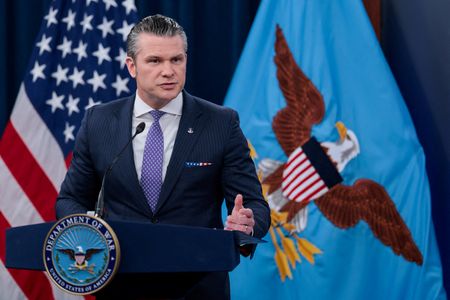
Defense Secretary Pete Hegseth announced Wednesday that all U.S. military personnel aged 30 and older will be required to undergo mandatory testosterone screening on an annual basis. Hegseth described the initiative as a way to fight testosterone deficiency, which he said can negatively impact the health and effectiveness of troops.
According to Hegseth, the screenings could open the door for eligible service members to receive testosterone replacement therapy. In a video statement, he said the goal is “ensuring you have the right testosterone levels to operate at your absolute best.”
“Because it’s well-established science that as we age, testosterone levels often naturally drop,” Hegseth said in the video message.
Under the new policy, the testosterone check will be folded into routine annual testing for service members 30 and older. Any troops found to have low testosterone levels would be given the option — but not the requirement — to pursue hormone replacement treatment. Personnel under the age of 30 would be allowed to request testing on a voluntary basis.
The announcement comes as the U.S. Department of Health and Human Services has been working to loosen certain restrictions around testosterone replacement therapies. Last month, that agency said it would pursue the removal of limitations on the treatment’s use in men experiencing age-related declines in testosterone.
Despite the health-focused framing, Hegseth’s decision quickly drew fire from Democratic lawmakers, who noted the apparent contradiction with his earlier ban on transgender service members — many of whom relied on hormone therapy as part of their medical care.
“So now y’all support gender-affirming care?” asked Democratic Congresswoman Summer Lee.
Senator Tammy Duckworth echoed that sentiment, saying, “Sounds like gender-affirming care to me.”
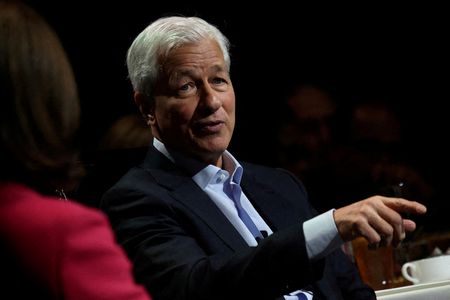
JPMorgan Chase’s chief executive sounded the alarm Wednesday about the risks tied to Anthropic’s Mythos AI model, calling them a “real issue” while noting that the federal government is already paying close attention to the matter.
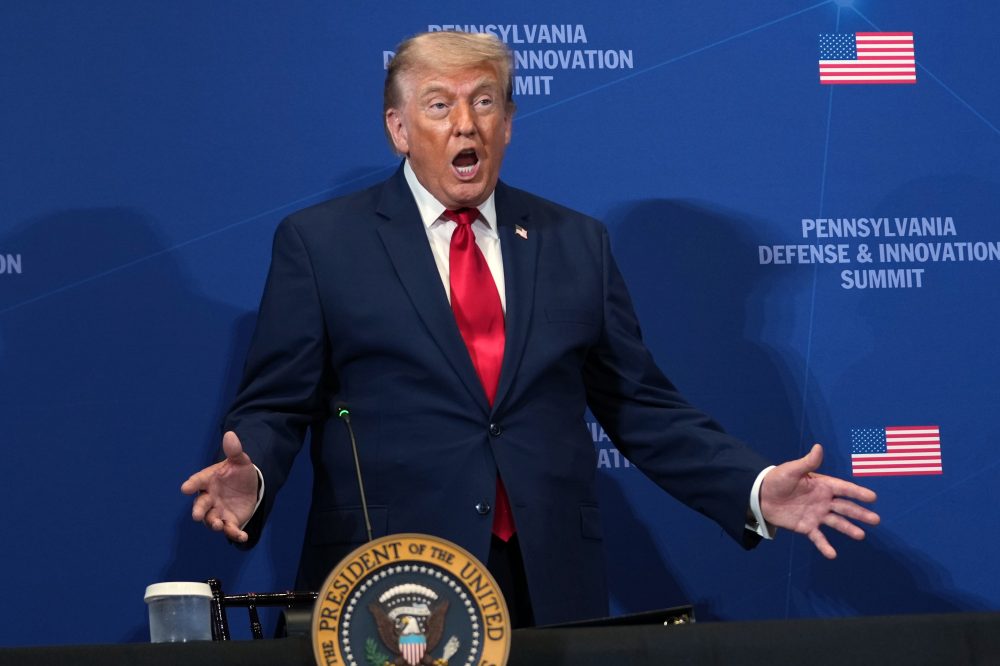
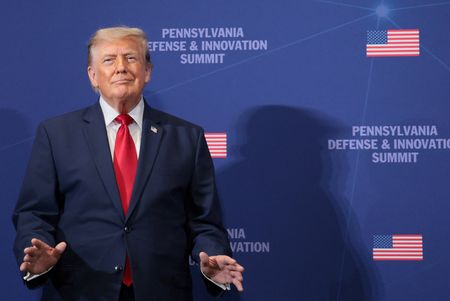
Speaking at Senator Dave McCormick’s Pennsylvania Defense and Innovation Summit, the JPMorgan CEO drew a stark comparison to illustrate the danger, stating that access to advanced AI tools must be tightly controlled. “You’re giving ballistic missiles to individuals with Mythos,” he warned.
Anthropic, a U.S.-based artificial intelligence company, first made Mythos available in April to a limited group of users that included JPMorgan. Financial institutions have taken particular interest in the model because it is regarded as one of the most capable AI systems when it comes to detecting cybersecurity weaknesses, allowing companies to find and address vulnerabilities at a much faster pace.
Despite that appeal, the U.S. government stepped in during June and ordered Anthropic to cut off foreign nationals from accessing its most advanced AI models — Fable 5 and Mythos 5 — citing national security concerns. That directive forced the company to pull worldwide access to those systems.
Access was later restored after Anthropic put new protective safeguards into place to the government’s satisfaction.
The situation reflects a broader struggle playing out between governments and technology companies over how to handle AI safety, particularly when it comes to systems capable of identifying software flaws. Federal officials have increased their scrutiny of new AI model launches, driven by fears that adversarial nations — including China, Russia, and others — could exploit cutting-edge AI for military or intelligence purposes.
Anthropic was not available to respond to the JPMorgan executive’s comments, as they were made outside of normal business hours.
A California-based food company has broadened a recall involving frozen rice ball products that may secretly contain peanuts — a potentially life-threatening danger for allergy sufferers.
Khong Guan Corporation, located in Union City, California, announced the expansion of its recall to cover specific lots of two products: “Glutinous Rice Balls with Black Sesame Filling” and “Black & White Glutinous Rice Balls with Black Sesame Filling.” The concern is that these items may contain peanuts that are not listed on the packaging label.
For individuals with a peanut allergy or a serious sensitivity to peanuts, consuming these products without knowing they are present could trigger a severe or even fatal allergic reaction.
Shoppers who have purchased either of these products are encouraged to check whether their items are part of the affected lots and to avoid consuming them if so. The recall was announced through the U.S. Food and Drug Administration.
PHILADELPHIA (AP) — With the baseball trade deadline set for August 3, the sport’s expanded playoff format is making it far more difficult to determine which star players will be on the move.
As the season’s second half gets underway, an extraordinary 23 of the league’s 30 teams find themselves within four games of a playoff position. The second half opened Thursday with the resurgent Philadelphia Phillies hosting the struggling New York Mets.
“You’ve got a lot of really good teams that were on the bubble that have gotten in and kind of made it,” Phillies first baseman Bryce Harper said. “Anybody that has an opportunity to get in, anything can happen and that’s what makes our sport great.”
At the center of trade speculation is Detroit Tigers pitcher Tarik Skubal, a two-time Cy Young Award winner who will be eligible for free agency after the World Series. The 29-year-old left-hander is 2-3 with a 3.62 ERA across six starts since undergoing surgery on May 6 to remove a loose body from his pitching elbow. He returned to the mound on June 13 following a procedure performed by Dr. Neal ElAttrache using a NanoNeedle scope 2.0, a smaller, more flexible version of the traditional arthroscope.
Detroit entered June with a 22-38 record — sitting 16 games below .500, which matched the 1914 Braves (12-28) for the worst mark of any team that eventually rebounded to reach the postseason, according to the Elias Sports Bureau. Since then, the Tigers have gone 22-14 and now sit just 3.5 games behind the final American League wild card spot, though they must leapfrog six other teams. How they perform over the 16 games remaining before the deadline will be key in deciding whether the club looks to buy or sell.
Minnesota’s Joe Ryan and the Mets’ Freddy Peralta are also names being watched. New York could additionally look to move left-handed relievers Brooks Raley and A.J. Minter, while San Francisco may attempt to part ways with second baseman Luis Arraez.
Only two teams hold division leads of more than three games — the Los Angeles Dodgers at 11.5 games and Milwaukee at five.
“There are some middling teams that are potentially going to finish stronger and some teams that are front-running right now that might fall back to the pack,” Dodgers manager Dave Roberts said. “It’s what the fans wanted. It keeps everyone involved through September, as many teams as possible.”
Just seven teams are more than four games out of a wild-card position: the Athletics (6.5 games back), Cincinnati (eight), Kansas City and the Los Angeles Angels (ten each), the Giants (10.5), the Mets (12), and Colorado (13.5).
“I think having more teams involved and more fan bases feeling like there’s something to play for later in the season is always good,” said Toronto pitcher Dylan Cease, who won the All-Star Game.
In Philadelphia, the Phillies were 9-19 when manager Rob Thomson was let go on April 28, with Don Mattingly stepping in as his replacement. Since then, Philadelphia has gone 44-24 and trails NL East-leading Atlanta (55-40) by just two games.
Harper pointed to the return of pitcher Zack Wheeler as a turning point. Wheeler came back to the rotation on April 25 after surgery last August for thoracic outlet syndrome and has since gone 10-1 with a 2.13 ERA.
“Once we got Wheels back, I think everybody kind of took a deep breath,” Harper said. “That helped a lot of our other starting pitching kind of just fall into place.”
In Boston, manager Alex Cora was dismissed following a 10-17 start, and the Red Sox have gone 36-31 under replacement Chad Tracy. The club closed out the first half with their first 9-0 road trip since 1977. Despite a 46-48 overall record, Boston sits just a half-game out of the final wild-card spot in an American League where only five teams have winning records.
“We’ve done a much better job overall with our approach,” Tracy said. “We’re taking more pitches. We’re seeing more pitches against starters. We are getting starters deep in counts earlier in games. We’re scoring runs in the first five innings of the game and letting our starting rotation pitch with a lead.”
Should the Red Sox stumble in the coming weeks, closer Aroldis Chapman and starter Sonny Gray could find themselves traded before the deadline.
Looking back at last year’s expanded playoff format, three of the four teams that received first-round byes — Milwaukee, Philadelphia, Seattle, and Toronto — reached the League Championship Series. Of the teams that advanced through the Wild Card Series, only the Dodgers went on to win their Division Series.
Securing a bye gives teams a chance to realign their pitching rotations and ensure their top starters open the Division Series.
Yankees pitcher Cam Schlittler reflected on New York losing the AL East title and the first-round bye to Toronto on a tiebreaker last season.
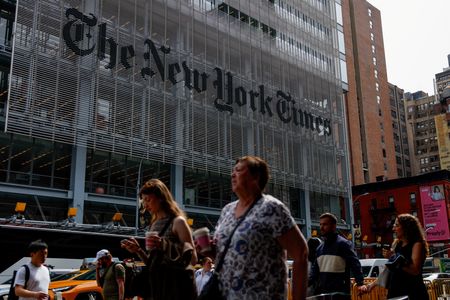
WASHINGTON — The New York Times took legal action Wednesday, filing a motion to block Justice Department subpoenas that were served on its reporters following their coverage of security concerns tied to a new Air Force One aircraft — a plane donated by Qatar and upgraded at a cost of $400 million.
David McCraw, the newspaper’s senior vice president and deputy general counsel, issued a sharp statement defending the move. “As we set out in our motion, these subpoenas are brought in bad faith to punish The Times for its coverage. They violate the constitutional rights of The Times and its journalists. We are going to court to defend our journalists’ rights to report freely on the administration and to provide the public with stories that matter,” he said.
The motion was filed under seal in the Southern District of New York. The subpoenas, which were delivered last Friday — some directly to reporters at their homes — ordered the journalists to appear before a federal grand jury in Manhattan this week.
Press freedom advocates quickly condemned the subpoenas as a government attempt to intimidate news organizations. The action follows an FBI search earlier this year of a Washington Post reporter’s home, during which her electronic devices were seized.
The Times had reported, citing unnamed sources, that the Secret Service recommended against using the newer aircraft because it lacked certain advanced security features found on the older model — including antimissile capabilities. Despite those reports, Trump denied on social media that there were any security issues. He used an older Air Force One to depart a NATO summit in Turkey last week, rather than the newer jet.
The Justice Department defended its use of the subpoenas, stating that reporters are not the intended targets. “To be clear, reporters are not the targets, those leaking classified information are,” the department said. It also acknowledged the role of a free press while asserting its responsibility to protect classified information from unauthorized disclosure.
While it is not unheard of for the government to quietly obtain journalists’ phone records during leak investigations, compelling a reporter to testify before a grand jury and identify sources is considered extremely rare and represents a significant escalation.
In April 2025, then-Attorney General Pam Bondi rolled back a Biden-era policy that had shielded journalists from having their records secretly seized in leak investigations. The new policy gives prosecutors renewed authority to use subpoenas, court orders, and search warrants to pursue officials who share classified information with reporters. A memo from Bondi stated that members of the press are “presumptively entitled to advance notice” of such actions and that subpoenas must be “narrowly drawn.”
Earlier this year, in January, FBI agents searched the home of Washington Post reporter Hannah Natanson — who has been covering changes to the federal government under the Trump administration — as part of a separate leak investigation involving a Pentagon contractor accused of taking classified materials home.
The Atlanta Hawks announced Wednesday that forward Mouhamed Gueye broke his left foot during a workout on July 8, sidelining the young big man at the start of the offseason.
The 23-year-old had surgery on Tuesday at the Emory Sports Medicine Complex in Atlanta to fix the fracture. The Hawks said he will be re-evaluated in three to four months. Atlanta’s preseason opens on October 5 when the Memphis Grizzlies come to town.
Gueye had his most productive NBA season last year, appearing in a career-best 77 regular season games with eight starts. He put up 4.4 points and 3.6 rebounds per game in 15.3 minutes of action. In the playoffs, he contributed 1.7 points and 1.7 rebounds across six games off the bench, averaging 8.3 minutes per contest.
Looking at his full NBA career, Gueye has appeared in 116 games — including 36 starts — since his rookie campaign in 2023-24, averaging 4.9 points, 3.8 rebounds, and 15.4 minutes per night.
Gueye entered the league when the Charlotte Hornets picked him 39th overall in the second round of the 2023 NBA Draft out of Washington State. Just six days after being selected, he was moved to Atlanta as part of a three-team deal that also involved the Boston Celtics.
The New York Times is taking legal action to prevent federal prosecutors from compelling three of its reporters to testify before a grand jury, a spokesperson for the newspaper confirmed Wednesday.
The publication filed a court motion seeking to block the subpoenas, which stem from the journalists’ reporting on security concerns related to President Donald Trump’s new presidential aircraft — a plane donated to the United States by Qatar.
The move signals a significant press freedom dispute between one of the country’s most prominent news organizations and federal authorities over the protection of journalists and their sources.
Data center company Csquare has set the price for its initial public offering at $21 per share, Bloomberg News reported Wednesday, citing sources familiar with the matter.
Brookfield, which backs the Dallas-based company, is reportedly considering purchasing a portion of the shares being offered, according to the Bloomberg report. Reuters, which first reported on the Bloomberg story, was unable to independently confirm the information, and neither Csquare nor Brookfield could be reached for comment outside of normal business hours.
The IPO comes amid a broader resurgence in public market listings. Companies have been moving to take advantage of favorable market conditions and launch their offerings while investor appetite remains strong, even as global uncertainties persist.
Investor enthusiasm for data center operators has grown significantly in recent months, driven by surging demand for artificial intelligence computing infrastructure. Companies in this space are rapidly expanding their capacity to handle the increasing workloads tied to AI applications.
Csquare was founded in 2019 and currently owns and operates 64 data center locations spread across 21 metropolitan markets throughout North America and the United Kingdom. The company provides co-location and connectivity services to a range of clients, including enterprises, cloud service providers, and telecommunications firms, according to its IPO filing.
The company has stated that the majority of the money raised through the IPO will go toward paying down existing debt. Any remaining funds are earmarked for general business purposes, which may include acquisitions, working capital, and capital expenditures.
Russian missiles hit at least two districts within the Ukrainian capital of Kyiv early Thursday morning, sparking fires in multiple locations before authorities declared the situation under control, officials reported.
Kyiv Mayor Vitali Klitschko took to Telegram to share details of the attack, stating that a storage facility in a western suburb of the city had been struck and that debris had come down on the opposite side of the Dnipro River. He confirmed that fires ignited in both affected areas.
Reporters from Reuters on the ground in Kyiv heard multiple explosions ring out across the city during the incident.
After approximately one hour, officials lifted the air alert, signaling that the immediate threat had passed.
Argentine tennis player Roman Andres Burruchaga delivered a stunning upset on Wednesday in Croatia, knocking out world No. 9 and top-seeded Flavio Cobolli of Italy 6-2, 6-4 in the second round of the Plava Laguna Croatia Open Umag.
It marked the first career victory over a top-10 opponent for Burruchaga, who was dominant throughout, converting four of seven break point opportunities and winning 78.1% of his first-serve points. Cobolli had been making his return to competition following a run to the Wimbledon quarterfinals. Burruchaga will now face fellow Argentine Camilo Ugo Carabelli, the tournament’s seventh seed, who came back to defeat Spain’s Pablo Carreno Busta 3-6, 7-5, 7-5.
Spain’s Daniel Merida also caused a stir by ousting No. 3 seed Tomas Martin Etcheverry of Argentina 7-5, 6-4. Second-seeded Alejandro Davidovich Fokina of Spain avoided a similar upset with a 6-4, 7-5 victory over Argentina’s Marco Trungelliti. Italy’s No. 4 seed Matteo Arnaldi took care of Argentine qualifier Federico Agustin Gomez 6-3, 5-7, 6-3. Damir Dzumhur of Bosnia and Herzegovina, Alex Molcan of the Slovak Republic, and France’s Titouan Droguet also moved into the next round.
Nordea Open — Bastad, Sweden
Former champion Nuno Borges breezed past Bulgarian wild card Grigor Dimitrov 6-4, 6-2 to book a quarterfinal spot in Bastad, Sweden. The fifth-seeded Portuguese player needed only 65 minutes to finish the job. Borges, who earned his only ATP Tour title by defeating Rafael Nadal at Bastad in 2024, will next square off against defending champion Luciano Darderi of Italy.
Darderi, seeded second, dispatched Germany’s Daniel Altmaier 6-4, 6-4. Two other seeds were shown the door: Italian Stefano Travaglia beat No. 4 Mariano Navone of Argentina 6-4, 6-2, and Paraguay’s Adolfo Daniel Vallejo rallied past sixth-seeded Botic van de Zandschulp of the Netherlands 4-6, 6-3, 7-6 (4). With that win, Vallejo became the first Paraguayan player to reach a tour-level quarterfinal since Ramon Delgado accomplished the feat back in 2006.
EFG Swiss Open Gstaad — Gstaad, Switzerland
Fourth-seeded Frenchman Arthur Rinderknech survived two match points to edge past fellow Frenchman and qualifier Clement Tabur 6-7 (9), 7-6 (5), 7-5 in a grueling second-round battle that lasted 3 hours and 21 minutes. Tabur had come within two points of forcing a victory during the second-set tiebreaker, but Rinderknech rallied and ultimately broke through late in the third set to advance to the quarterfinals.
Third-seeded Valentin Vacherot of Monaco made a successful comeback from a foot injury, defeating Germany’s Yannick Hanfmann 4-6, 6-3, 6-4 in his first match since the French Open. Belgium’s No. 7 seed Raphael Collignon took down Italy’s Lorenzo Sonego 7-6 (2), 7-6 (5). A match between Greece’s Stefanos Tsitsipas and Swiss wild card Jerome Kym was halted due to darkness with the third set level at 5-5, after each player had won one of the first two sets.
Worcester County, Maryland is letting residents know they have options when it comes to paying their property taxes — even before their bills show up in the mailbox.
The county is encouraging taxpayers who are waiting on their annual tax bills to take advantage of payment methods already available to them, including online tools and in-person services.
Whether you prefer to handle things digitally or face-to-face, Worcester County wants residents to know they don’t need to wait for a paper bill to arrive before taking action on their tax payments.
Residents looking for more information on how to pay or access their tax account details are encouraged to reach out to the county directly or visit the county’s official website for guidance on available options.
ARLINGTON, Va. — The National Grain and Feed Association (NGFA) is applauding a unanimous vote by the Senate Environment and Public Works Committee to advance the Water Resources Development Act (WRDA), describing the move as a crucial step toward improving the country’s inland waterways and keeping American agriculture competitive on a global scale.
The NGFA extended its thanks to Committee Chairman Shelley Moore Capito (R-W.Va.), Ranking Member Sheldon Whitehouse (D-R.I.), and the full committee for pushing the bipartisan measure forward.
“America’s inland waterways are a cornerstone of the agricultural supply chain, connecting producers to domestic customers and export markets around the world,” said NGFA President and CEO Mike Seyfert. “The committee’s bipartisan action reinforces Congress’s longstanding commitment to investing in the infrastructure that keeps U.S. agriculture competitive while providing the certainty needed to plan and deliver critical modernization projects.”
The grain and feed industry relies heavily on a dependable network of waterways, railroads, and highways to move products across the country. Each year, around 80 million tons of grain and oilseeds travel by barge alone, on top of the hundreds of millions of tons shipped by truck and rail. Ongoing investment in locks, dams, and navigation infrastructure is seen as essential to keeping goods moving efficiently, reducing transportation costs, and maintaining a stable supply chain.
The NGFA has voiced support for provisions within the bill that focus on maintaining and upgrading the inland waterway system, cutting down on delays caused by outdated infrastructure, and boosting the overall efficiency of freight movement.
“With strong bipartisan support in both chambers, Congress has an opportunity to deliver another WRDA bill that strengthens America’s infrastructure and economy,” Seyfert added. “NGFA looks forward to working with lawmakers to advance this legislation and ensure a final bipartisan WRDA bill reaches the President’s desk this year.”
Motorists traveling along South Heald Street should be aware that the right lane is currently closed due to an active mowing operation in the area.
The lane restriction is in place to allow crews to safely carry out the roadside maintenance work. Drivers are encouraged to use caution and allow extra travel time when passing through the affected stretch of roadway.
No information was provided regarding how long the closure is expected to remain in effect. Updates may be available through local traffic monitoring resources.
TAIPEI — The world’s largest producer of advanced artificial intelligence chips is poised to announce another record-breaking quarter on Thursday, with analysts forecasting a 59% increase in net profit for the April-through-June period, fueled by surging worldwide demand for AI infrastructure.
Analysts say demand for Taiwan Semiconductor Manufacturing Co.’s cutting-edge 3-nanometer and 2-nanometer chip technologies, along with its advanced chip packaging process known as CoWoS, continues to be robust.
That momentum has pushed Asia’s most valuable company — a critical supplier to both Nvidia and Apple — to remarkable new heights. Its market capitalization now stands at roughly $1.95 trillion, nearly double that of South Korean competitor Samsung Electronics.
According to a SmartEstimate compiled by LSEG from 18 analysts, the company is projected to report a net profit of T$632.6 billion, equivalent to approximately $19.65 billion, for the second quarter. The SmartEstimate methodology gives greater weight to analysts with stronger track records of accuracy.
Any quarterly result exceeding T$572.5 billion would represent the company’s all-time highest quarterly net income and mark its tenth straight quarter of profit growth.
Earlier this week, the company reported a 36% increase in second-quarter revenue, surpassing market expectations and setting a new record high.
An earnings call scheduled for Thursday morning will include third-quarter guidance and an updated forecast for the full year. Analysts are broadly anticipating the company to raise its full-year revenue growth outlook, and many will be watching closely to see whether management also increases its capital spending projections — a key signal of confidence in the staying power of AI demand.
During its most recent earnings call in April, the company indicated that its 2026 capital expenditure would land at the upper end of its previously stated range of $52 billion to $56 billion.
The company is also investing $165 billion to construct chip manufacturing facilities in the U.S. state of Arizona.
Shares of the company listed on the Taipei stock exchange have climbed 57.4% so far this year, keeping pace with the broader market.
A right lane closure is currently affecting US-13 southbound between School Lane and Second Avenue, according to Delaware Department of Transportation officials.
The lane restriction is expected to remain in place until 6 AM. Drivers traveling through that stretch of highway should be prepared for reduced lanes and potential slowdowns.
Motorists are encouraged to allow extra travel time or consider using an alternate route until the closure is lifted.
NEW ORLEANS (AP) — New Orleans Saints running back Alvin Kamara reached an agreement Wednesday to restructure his contract ahead of the upcoming season.
Kamara’s agent, Bradley Cicala, confirmed the deal to The Associated Press, adding that his client wants to stay put. “His goal is to remain with the Saints,” Cicala said.
Questions about Kamara’s future in New Orleans surfaced back in March when the Saints inked free-agent running back Travis Etienne to a four-year deal worth $52 million. Kamara, who turns 31 this season, had been in the final year of a two-year, $24.5 million extension he signed prior to the 2024 campaign.
Neither Cicala nor Saints general manager Mickey Loomis revealed the financial specifics of the restructured agreement. However, Loomis had hinted at a pay reduction back in May, saying there was a “resource management element” involved in keeping Kamara on the roster this season.
Although the new contract is designed to ease Kamara’s impact on the 2026 salary cap, it does not rule out the possibility of the Saints trading him.
Last season was a difficult one for Kamara, who battled through a knee injury and finished with career-worst numbers — appearing in just 11 games, rushing for 471 yards and one touchdown, and adding 186 receiving yards with no receiving scores.
That stands in sharp contrast to the start of his career. When Kamara entered the league in 2017, he earned AP Offensive Rookie of the Year honors and helped the Saints reach the playoffs in each of the next four seasons under head coach Sean Payton and Hall of Fame quarterback Drew Brees.
Since Brees hung up his cleats after the 2020 season, however, New Orleans has not returned to the postseason. The team is now on its second head coach since that era ended, with Kellen Moore taking the reins after serving as Philadelphia’s offensive coordinator and winning a Super Bowl during the 2024 season.
Carbon monoxide has been confirmed inside a parked Ford Explorer in Toledo, Ohio, where five people were discovered unresponsive Wednesday morning — three of whom did not survive, according to officials.
Toledo Fire Chief Allison Armstrong said the vehicle had pulled into a parking lot after getting a flat tire. The victims were found shortly after 11 a.m. A city spokesperson identified the victims as a grandmother and her grandchildren, and said the woman’s son — who had been called to the scene to help — was the one who discovered them.
Mayor Wade Kapszukiewicz confirmed that investigators do not suspect foul play. Three of the five victims died, while two children were taken to the hospital in critical condition. Names, ages, and hometowns have not yet been released.
The mayor took to Facebook to address the tragedy, writing: “Today, a family experienced a tragedy that no family should ever have to endure.”
To determine the cause, investigators started the vehicle with the doors shut and placed a meter inside the passenger compartment. Armstrong described what they found: “We had a high spike of carbon monoxide inside the passenger compartment on that vehicle.” The SUV was subsequently towed by police.
Armstrong said more investigation is needed to determine exactly how the carbon monoxide built up inside the vehicle. “They’re going to have to do some further investigation to see if they can identify how does that happen,” she said. “I think that’s an important piece of this that people want to know, and they should know for everybody’s safety.”
The fire chief noted that a “very similar” incident had occurred several years ago, in which carbon monoxide seeped into a vehicle through holes in the floorboards.
Ford Explorers have previously been the subject of a lengthy federal investigation. The National Highway Traffic Safety Administration spent six years reviewing complaints about exhaust odors making their way into passenger cabins. In 2023, the agency concluded its review of more than 6,500 consumer complaints — which also included field testing and consultations with automotive, medical, environmental health, and occupational safety experts — and determined that the SUVs did not have dangerously high carbon monoxide levels and did not require a recall. That investigation covered approximately 1.5 million Explorer models from the 2011 through 2017 model years.
Armstrong said it was not yet known what model year the Explorer involved in Wednesday’s incident was manufactured.
Lawyers representing the family of Nolan Wells announced they will cooperate with the local district attorney’s office to jointly examine the contents of a cellphone recovered after the teenager went missing during a July 4 boat outing near an island off the Mississippi coast. The family had retrieved the phone from one of Wells’ friends after using a location-tracking app to find it.
Prior to this agreement, the family had raised concerns that messages appeared to have been deleted from the phone before it was returned to them — just one of several troubling questions they have raised about the circumstances surrounding the teen’s death and the investigation that followed. On Wednesday, family attorneys met with District Attorney Angel Myers McIlrath, primarily to discuss the investigative process. Attorney Ben Crump announced that McIlrath also pledged to bring the completed investigation before a grand jury.
Requests for comment sent to McIlrath’s office went unanswered.
“The hope is when this is presented to the grand jury, all relevant witnesses and evidence will be presented to them, so we can have a fair and impartial investigation into the death of Nolan Wells,” Crump said. “Our lived experiences tell us that we must question everything, everybody’s role, law enforcement’s role. That is the lived experience as Black people in America.”
Ronald Rychlak, a law professor at the University of Mississippi, noted that the majority of felony cases in Mississippi do go before a grand jury. He explained that a grand jury typically consists of 15 to 25 ordinary citizens who review the prosecutor’s evidence and determine whether sufficient grounds exist to issue an indictment.
Wells had been on the island with a group of friends on July 4, but did not leave with them when they departed around 3 p.m. He had been spending the weekend with friends before heading back to college for football training camp. Conflicting stories have emerged about whether he intended to remain on the island — located roughly 7 miles, or about 11.27 kilometers, off the Mississippi coast — to speak with a young woman, or whether he planned to leave with his friends.
His mother reported him missing just after midnight on July 5. Search and rescue crews took to the water and combed the area around the island the following day. Wells’ body was discovered in the water near Horn Island, off Mississippi’s Gulf Coast, on July 6.
Widespread speculation and suspicion about the circumstances of his death have spread rapidly online, as many people reflect on the state’s history of racial tension and what it means to be a Black person in a predominantly white setting. Attorneys and family members have pointed out that, based on photos and videos from the July 4 gathering — which drew nearly 200 people to the island — Wells appeared to be one of very few Black individuals present.
The Congressional Black Caucus also voiced its concerns on Wednesday, joining growing calls for an independent investigation into Wells’ death.
Officials from the Jackson County Sheriff’s Department and other agencies moved quickly to state they did not believe foul play was involved. However, results from the official autopsy remain pending, and the investigation continues, according to officials.
Both the family’s legal team and investigators from the Jackson County Sheriff’s Department have urged anyone who was on the island or who captured video footage there to come forward, as authorities work to piece together what happened in the moments before Wells disappeared and died.
Wells, who would have celebrated his 19th birthday next month, attended Southwest Mississippi Community College, where he played wide receiver for the football team. His family has pushed for a more thorough investigation, pointing out that he was a capable swimmer and questioning why his friends left the island without him while taking his keys and phone.
Family members located the phone using a tracking app and retrieved it from a friend’s home on the evening of July 4. The family noted that Wells was a frequent Snapchat user, yet the app showed no activity — no posts or messages — in the roughly 24 hours before they got the phone back.
Crump had previously stated his intention to bring in a digital forensics expert to determine whether deleted data could be recovered from the phone or from social media platforms. On Wednesday, he confirmed that effort will now proceed in coordination with the prosecutor’s office.
Rychlak, the law professor, said it is unusual for both law enforcement and a victim’s family to jointly inspect evidence. “Evidence is secured and not usually shared,” he said, while also noting that this kind of cooperation between the family and investigators could help speed up the overall investigation.
Wells’ death has deeply moved the Black community across the country. Actor and producer Tyler Perry is helping cover the costs of Wells’ funeral. Former NFL quarterback Colin Kaepernick is contributing to the cost of an independent autopsy, and filmmaker Spike Lee attended a press conference last week to show his support for the Wells family.
Wells’ mother, Christine Wonsley, spoke Wednesday about how she wants Monday’s funeral to be a joyful tribute to her son. “He would not want us to be sitting around crying and eating, and so what we’re gonna do is kind of have a party to celebrate him,” she said.
NEW YORK — A former cargo ship captain admitted his guilt Wednesday in the drugging and rape of a 21-year-old U.S. Merchant Marine Academy cadet who was aboard his vessel as part of the school’s Sea Year training program.
John Merrone, 53, entered his plea in Brooklyn federal court just moments before his trial was set to get underway. He acknowledged that he had sexual intercourse with the cadet without her consent — describing it as happening “on the ship, in the middle of the ocean” — after rendering her unconscious with an intoxicant in 2019.
A jury had already been selected, and the victim — referred to in court only as Jane Doe — was present in the courthouse and prepared to take the stand. Prosecutors had also planned to call several other women who have alleged that Merrone sexually assaulted them over the past three decades.
The Associated Press does not typically identify individuals who report sexual assault unless they choose to be named publicly.
Merrone had previously faced a conviction for false imprisonment and battery after a Florida Keys waitress accused him of non-consensual sex, but an appeals court threw out that verdict and prosecutors chose not to pursue a retrial.
The former cadet, who continues to work in the maritime field, watched from the courtroom gallery with tears in her eyes as Merrone, showing no visible emotion, said “guilty” to each of five charges against him, which included aggravated sexual abuse and abusive sexual contact.
Her attorney, Ryan Melogy, said she turned to him following the plea and told him, “It’s over.”
“Sex crimes are notoriously difficult to prosecute in general,” Melogy said. “When they occur in the middle of the ocean aboard a ship, the level of difficulty involved in prosecuting them probably increases exponentially.”
Merrone could face up to life behind bars. However, Assistant U.S. Attorney Kayla Bensing noted that federal sentencing guidelines suggest a range of approximately 15 to 19 years in prison. Merrone’s defense team contends that estimate is too high. The guidelines are not binding, and Judge Ramon E. Reyes Jr. has discretion to impose a sentence above or below that range.
Merrone will remain out on bail until his sentencing, which is set for December 22. He and his attorneys, Bruce Barket and Nicole Aloise, had no comment as they departed the courthouse.
A request for comment was submitted to the U.S. Merchant Marine Academy.
“It is my hope that today’s guilty plea will give the survivor of this attack some measure of closure knowing that the defendant has been held accountable for his despicable conduct,” U.S. Attorney Joseph Nocella Jr. said in a written statement.
Prosecutors say Merrone began reaching out to the cadet and another student via Facebook messages several weeks before the two boarded his ship — the 623-foot-long Liberty Glory — for a voyage from Bahrain to Corpus Christi, Texas.
On September 9, 2019, after more than a month into the voyage and with roughly a week remaining, Merrone messaged both women and invited them to his cabin for a “soda,” according to prosecutors.
“Captain you know I stay away from soda!” the cadet replied in the exchange.
“U may like my soda!?!?” Merrone shot back.
The two women agreed to visit, and prosecutors say Merrone poured each of them a drink from an already-opened bottle of alcohol, then opened a fresh bottle and poured one for himself. Shortly after consuming the drinks, both women lost all memory of the rest of that evening, according to prosecutors.
The cadet woke the following morning in her own bed wearing only a shirt and bra, with no pants or underwear, feeling nauseated, with a headache and vaginal discomfort, prosecutors said. Her friend woke up with severe stomach cramping and a debilitating headache but did not accuse Merrone of sexual assault.
Merrone then summoned the cadet to his cabin and told her he had “fun last night,” that “one thing led to another,” and asked if she wanted to repeat the encounter, prosecutors said. When the cadet told him she had no memory of what happened and that it was not consensual, Merrone offered her money, which she turned down.
Merrone later sent the cadet a photo of herself holding cash, which she believed was taken the night of the assault, along with the message: “lol. That how u make a woman happy!!!!” She had no recollection of the photo being taken, prosecutors said. The captain then went to the cadet’s room and pulled from his pocket the underwear she had been wearing the night of the assault.
The U.S. Merchant Marine Academy, located in Kings Point, New York, prepares students for careers in the commercial shipping industry and enrolls approximately 1,000 students. It is one of five U.S. military service academies and the only one under the jurisdiction of the U.S. Department of Transportation.
In 2016, the academy temporarily halted its Sea Year program — which places cadets aboard container ships, oil tankers, passenger liners, and other vessels — due to concerns about sexual abuse and bullying. The program returned in 2017, limited to ships operated by companies the academy said had adopted new protective policies.
The Sea Year program was suspended again in 2021 after another cadet alleged that a cargo ship supervisor got her drunk and raped her. It later resumed following the implementation of additional safety measures.
WASHINGTON — When the Lincoln Memorial Reflecting Pool was drained this week, it revealed something unexpected: the liner that President Donald Trump once described as “American flag blue” has visibly faded, now looking closer to gray than the vibrant color it displayed when the pool was repainted and refilled in early June.
An Associated Press reporter and photographer got a look at the fenced-off pool on Wednesday by viewing it from the top of the Washington Monument. Work crews had already cleared away debris that was visible earlier in the week following the pool’s draining.
The renovation project has been anything but smooth for the Trump administration, which initially hoped to have the Reflecting Pool ready in time for the nation’s 250th birthday celebration on July 4. That deadline came and went.
The president originally suggested the project would cost around $1.5 million, but expenses climbed to more than $16 million by June. Two companies were hired for the work: Ohio-based Green Water Solutions, also known as Greenwater Services, received a $1.7 million contract to install a water-purification system, while Virginia-based Atlantic Industrial Coatings was awarded $14.7 million to repaint and waterproof the pool’s concrete floor.
Trump had claimed the repairs would hold up for a hundred years, but problems emerged almost immediately after the project was first completed. Within days, an algae bloom spread through the water and pieces of the new coating appeared to be coming loose from the bottom.
The president has repeatedly pointed to vandals as the cause of the peeling, while critics argue the real culprit is poor workmanship. Trump has claimed, without providing evidence, that vandals created a “350-foot gash” in the liner. However, no large slash marks were visible from the Washington Monument vantage point on Wednesday. A dark fence surrounding the pool made a closer inspection impossible.
Interior Secretary Doug Burgum, whose department oversees the National Park Service, laid out a simple plan for moving forward. Speaking with conservative podcaster Katie Miller, he said the path ahead is clear: “Repair the vandalism that was done. Fill it back up again.”
Court documents reveal that the National Park Service reported a June 9 incident to U.S. Park Police, in which a sharp knife or razor blade was said to have cut into the pool’s new liner.
Former Olympic canoe racer David Hearn entered a not guilty plea last week in D.C. Superior Court on charges of deliberately damaging the Reflecting Pool. Hearn has maintained that he only reached into the pool to look at the peeling sealant and released a piece of it when a park worker told him to do so. His legal team and other critics of the Trump administration have called the prosecution an overreach and argue Hearn is being made a scapegoat for a botched repair job.
At least three additional individuals have also been charged with misdemeanors in the same court for allegedly taking pieces of paint from the pool. All three have pleaded not guilty.
The Reflecting Pool project is part of a broader set of renovations Trump has championed across Washington. Among the most notable efforts, he ordered the demolition of the White House’s East Wing to make way for a $400 million ballroom and has announced plans to construct a large arch between the Lincoln Memorial and Arlington National Cemetery.
Motorists traveling along DE Route 2 between Meadowood Drive and Delaware Park Drive are facing overnight lane restrictions as construction crews work in the area.
According to DelDOT, the left lanes in both directions along that stretch of roadway are currently closed. The closures are expected to remain in effect until 6 a.m.
Drivers are advised to plan ahead and allow extra travel time if their route takes them through that corridor. Use caution when passing through the construction zone.
Some of China’s most ambitious pharmaceutical companies are finding it difficult to hire the internationally experienced professionals they need to bring their medicines to markets around the world, according to industry executives.
Companies like Jiangsu Hengrui Pharmaceuticals and CanSino Biologics are among those feeling the pressure. Their goals are big, but the pool of workers who understand global drug development, international regulatory systems, and cross-cultural business management is simply too small to meet demand.
The problem stems from how quickly China has grown as a center for testing experimental medications. That growth has far outpaced the industry’s ability to develop a workforce capable of taking those drugs to international markets.
According to data from health sector research firm IQVIA, Chinese-headquartered clinical trial sponsors conducted 88% of their trials exclusively within China in 2025. Meanwhile, only 5% of their trials took place in the United States — a striking contrast that highlights just how much work lies ahead, especially after U.S. regulators declined to approve some drugs tested only in China and began pushing for multi-regional trials that better reflect American patients and medical practices.
Sun Piaoyang, the chairman of Hengrui — a company focused on oncology and metabolic diseases — told Reuters that running global multi-center clinical trials, registering drugs overseas, and commercializing products internationally all require highly qualified professionals that the industry simply doesn’t have enough of.
“The challenges that we are currently facing are also the common challenges facing China’s biopharmaceutical industry,” he said.
Yu Xuefeng, the CEO of vaccine maker CanSino, said qualified specialists are still hard to come by in areas like conducting trials in other countries, preparing regulatory filings for multiple governments, and marketing products internationally. He noted that historically, not much effort had gone into taking Chinese-developed innovative products global, including through multi-center international trials.
Industry experts say this talent crunch is especially severe in China compared to other countries. A recent survey by research organization ICON found that biotech professionals in the Asia-Pacific region were nearly three times more likely than their global counterparts to say talent shortages were affecting their operations.
Zhong Yao, the general manager of ICON’s China business, said that while India has benefited from its outsourcing industry and Japan from a more established pharmaceutical sector, China’s rapid expansion has made its hiring pressures more intense.
The scale of China’s growth in drug development is remarkable. According to IQVIA, Chinese-headquartered clinical trial sponsors accounted for 32% of all global clinical trials in 2025 — up from just 2% in 2009. At the same time, licensing deals with partners in the greater China region have exploded, rising from roughly $318 million in 2016 to around $138 billion in 2025, according to data provider Pharmcube.
Catherine Gregor, the chief clinical trial officer at U.S. software firm Florence Healthcare, said China “faces bottlenecks in global commercialization without access to more internationally trained senior talent.”
Hengrui’s Sun said his company plans to ramp up internal training and pursue global talent more aggressively, but acknowledged that professionals with international experience have become highly sought-after worldwide, which is pushing up the cost of recruiting them.
CanSino’s Yu said his company’s core regulatory and clinical teams have been learning from international advisers. Meanwhile, Shanghai Henlius Biotech — which specializes in oncology and autoimmune diseases — stated in its most recent annual report that it has built in-house clinical and regulatory teams in the United States, Europe, Japan, and Australia to independently manage clinical trials in those regions.
Part of the push to expand internationally is being driven by regulators who want clinical data drawn from more diverse patient populations. Richard Pazdur, a former chief of drug evaluation at the U.S. FDA, explained that multi-regional trials allow regulators to compare results across different countries, helping them figure out whether differences in a drug’s effectiveness or safety reflect data quality, ethnic differences among patients, or variations in how medicine is practiced.
“I think if, when there are studies exclusively done in China, then some people may wonder about how applicable those results are,” he told Reuters.
Japan’s Pharmaceuticals and Medical Devices Agency also told Reuters that most new drugs approved in Japan require clinical data specifically from Japanese patients, rather than relying solely on studies done in Chinese populations.
One recruiter said the talent shortage can push Chinese drugmakers to lean on overseas partners when running international clinical trials. However, the recruiter suggested this is more likely to slow things down than completely derail expansion plans.
“Talent gaps at big China-headquartered pharma are showing up more as friction — slower or more partner-dependent execution — than clearly documented failures of overseas clinical trials so far,” said Nihar Parikh, a pharmaceutical executive recruiter at U.S.-based Smith Hanley Associates.
Parikh added that some job candidates are hesitant about joining China-based firms because they’re uncertain about the long-term stability of those companies’ international strategies and teams. He also noted that compensation packages from Chinese companies can sometimes fall short of what top U.S. or European multinationals offer.
James Nyssen, global head of life sciences at British recruiter Hays, said Chinese drugmakers need to clearly spell out their scientific goals, how decisions get made, and what their long-term international plans look like if they want to attract senior talent with experience in global clinical development, regulatory strategy, and product launches in the U.S. and Europe.
“Where that proposition is well defined, Chinese biopharma companies are highly competitive,” he said. “Where it’s still evolving, hiring can take longer — not because candidates aren’t available, but because they are selective.”
Airbus is currently in negotiations to sell more of its A330neo wide-body jets to Flynas, a Saudi low-cost airline, according to industry sources speaking on Wednesday. An official announcement could potentially come as early as next week during the Farnborough Airshow.
Bloomberg News had earlier reported that Flynas was looking to convert options for eight A330 aircraft into firm orders.
That same Bloomberg report also indicated that Germany’s Condor Flugdienst was in discussions to purchase approximately six Airbus A330neos, citing individuals familiar with the situation. However, industry sources pushed back on that claim, downplaying the likelihood of a Condor deal.
Airbus declined to offer any comment on the matter.
ATLANTA — England’s strategy of protecting a lead came back to haunt them in a stunning fashion Wednesday night, as Argentina mounted an improbable comeback to defeat them 2-1 in the World Cup semi-final and advance to the final.
Anthony Gordon put England ahead 10 minutes into the second half, and for a while it looked as though they were bound for the championship match. But the same vulnerability that has plagued other teams in this tournament — the inability to hold a lead — proved to be England’s downfall as well.
Argentina had already shown their resilience earlier in the tournament. Just one week prior in Atlanta, they had been down 2-0 with only 11 minutes remaining against Egypt in the round of 16 and still managed to claw their way back and win. Wednesday’s match was no different — a fierce, high-stakes battle played out before an electric crowd.
Much of the scrutiny following the loss has fallen on England manager Thomas Tuchel and the substitutions he made after Gordon’s goal. While those changes were widely regarded as errors in judgment, analysts noted that even the most aggressive tactics might have struggled once Lionel Messi took control of the match.
Tuchel addressed the decisions after the game, saying, “I had no feeling that an offensive substitution would help. Instead, we stayed in our 4-4-2 but became passive, conceding a lot of chances and couldn’t turn the ball possession in our favour.”
For the first hour, England had done a reasonable job of containing Messi, with Elliot Anderson tracking the 39-year-old closely and teammates limiting the space he could exploit in the midfield. When Messi drifted out to the right wing, it seemed as though England had successfully neutralized him — but that shift only opened up a new threat.
From the wing, Messi began delivering dangerous crosses into the box. Nico Gonzalez’s header was turned away by goalkeeper Jordan Pickford, and Alexis Mac Allister rattled a header off the post with such power that the ball bounced nearly to the edge of the penalty area. England’s backline was under constant pressure, and a breakthrough seemed inevitable.
The equalizer arrived in the 85th minute — not from close range, but from a strike outside the penalty area by Enzo Fernandez. A visibly tired Jude Bellingham failed to close him down in time. Messi had delivered the pass from the wing that set up the shot.
Then, as the match moved into nine minutes of stoppage time, Argentina delivered the knockout blow. Messi crossed the ball once more with pinpoint accuracy, and Lautaro Martinez headed it home for the winner.
The statistics told a damning story: from the moment Gordon scored to Martinez’s decisive header 38 minutes later, England held just 12 percent of possession.
Former England striker Alan Shearer offered a blunt assessment of the defeat. “He played his cards very early in the hope he’d hang on,” Shearer said of Tuchel. “And it’s backfired. But Argentina are world champions for a reason because it’s not only about ability, but know-how and attitude when things are going against you.”
Cadence Design Systems introduced a new artificial intelligence “super agent” on Wednesday aimed at revolutionizing how engineers design printed circuit boards and chip packages, marking another step in the company’s effort to automate complex engineering tasks.
The new tool, known as AuraStack, allows engineers to describe what they want to accomplish in everyday language. The system then takes over, planning and executing the work using Cadence’s existing suite of software to lay out and virtually test circuit designs. The company noted that Nvidia chips will be used to power the AI processing behind the tool.
According to Cadence, AuraStack has the potential to reduce the time it takes to bring a product to market by as much as half, while also boosting efficiency on specific tasks by up to 15 times. The new offering for circuit boards and chip packaging builds on similar AI tools the company released earlier this year focused on chip design itself.
During a live demonstration, Cadence showed how an engineer used AuraStack to redesign a 5G smartphone circuit board with the goal of creating a more affordable version for a new market. The tool recommended combining components to achieve a 28% reduction in cost and also identified a less expensive power-management chip that was compatible with the new board layout.
Michael Jackson, Cadence’s corporate vice president and general manager for system design and analysis, explained the thinking behind the product. “The bottleneck isn’t automation. It’s really engineering intelligence,” he said, describing the system’s ability to weigh trade-offs between cost and performance.
Cadence identified Nvidia, Taiwan Semiconductor Manufacturing Co, and Schneider Electric as among the first companies to use the new tool.
Jackson said customers will be able to connect AuraStack with the AI model of their choosing, including OpenAI’s ChatGPT, Google’s Gemini, Anthropic’s Claude, or open-source alternatives. The pricing structure will be based on usage — specifically how much computational work the AI models perform — and will still require customers to use Cadence’s underlying software tools.
AuraStack is set to become available later this year, with the full rollout expected to wrap up in September, according to Jackson.
Drivers using Interstate 95 northbound should plan for lane restrictions overnight due to active construction work.
The two left lanes are closed along the northbound stretch between South Chapel Street and Chapman Road. The closure is expected to remain in effect until 5 AM.
Motorists are encouraged to allow extra travel time or consider alternate routes until the lanes reopen.
ATLANTA — Following their 2-1 World Cup semi-final victory over England on Wednesday, Argentine soccer players raised a politically charged banner reading “Las Malvinas Son Argentinas” — translated as “The Falklands are Argentine” — in what appears to be a violation of FIFA’s rules.
FIFA’s Stadium Code of Conduct explicitly prohibits “banners, flags, flyers, apparel and other paraphernalia that are of a political, offensive, and/or discriminatory nature” from being displayed inside stadiums. The organization had not responded to a request for comment by the time this report was filed.
The territorial dispute over the South Atlantic islands — called the Falklands by the British and the Malvinas by Argentines — has been a persistent point of tension between the two countries. The two nations went to war over the islands in 1982, a conflict that claimed the lives of 649 Argentine soldiers and 255 British combatants. Britain emerged victorious, and the overwhelming majority of island residents have expressed a desire to remain under British rule.
Argentina, however, has long maintained that it inherited the islands from Spain following its independence in 1816, and that Britain’s takeover in 1833 was an unlawful act of colonialism.
Players Lisandro Martinez and Giovani Lo Celso were seen holding up the banner with broad smiles, waving toward fans in the stands. The origin of the banner remained unclear.
This is not the first time political banners have sparked discussion during the current World Cup. Last month in Los Angeles, Iranian Americans waved pre-revolutionary flags — symbols of opposition to the Tehran government — during matches involving Iran. Those games proceeded without any reported incidents.
WASHINGTON — A majority of House Democrats cast votes Wednesday in favor of cutting $3.3 billion in U.S. military funding to Israel, sending the clearest signal yet that long-standing bipartisan backing for the country is fracturing in the wake of its war in Gaza, which has claimed thousands of Palestinian lives.
The amendment was defeated 104-314 and will not be added to a broader national security spending bill. Even so, the outcome laid bare a dramatic realignment of opinion within the Democratic Party — and across the country — regarding Israeli Prime Minister Benjamin Netanyahu’s military strategy, which is now entering its third year.
Democratic leaders in the House were themselves divided on the measure, which many observers viewed as a test of where the party stands before this fall’s midterm elections that will decide control of Congress. More than 100 Democrats voted to strip the foreign military aid, while nearly as many voted to preserve it. Republicans largely sided with keeping the Israel funding in place.
House Democratic Leader Hakeem Jeffries announced his opposition to the amendment but acknowledged that change is needed. “For the good of Israel and the Palestinian people, American policy in the Middle East must change,” he said.
In a letter sent to fellow Democrats ahead of a closed-door caucus meeting where the Israel debate took center stage, Jeffries wrote that he believes “there are more decisive ways to achieve the urgent change necessary when it comes to the far-right Netanyahu government.”
The widening rift over Israel policy poses a serious threat to Democratic unity, as the party contends with a more energized progressive wing that has backed self-described democratic socialists in several high-profile House races, including last month in New York.
While more centrist Democrats have maintained their support for U.S. assistance to Israel, a growing number have pulled back from Netanyahu’s approach since the Hamas attack on Israel on Oct. 7, 2023.
Democratic Whip Rep. Katherine Clark of Massachusetts announced she would vote in favor of withholding the funds.
Republicans have used the internal Democratic disagreement to argue that the party is being pulled too far left — even as House Speaker Mike Johnson navigates his own divisions, with President Donald Trump’s most committed America First allies pushing for reduced foreign military spending.
A poll conducted this month by AP-NORC found that roughly one-third of American adults — including about half of Democrats — believe Israel has carried out genocide against Palestinians during the Gaza conflict, a charge that has been made by some human rights groups but is strongly rejected by both Israel and the U.S. government.
The amendment to cut Israel’s aid was introduced by Rep. Thomas Massie, a libertarian-leaning Republican from Kentucky who recently lost his own reelection bid after President Trump endorsed his opponent.
On the House floor, Massie argued the $3.3 billion would be better directed toward domestic needs such as roads, bridges, and veterans’ services, particularly as the national deficit continues to grow. He also said U.S.-supplied weapons had been used on “oftentimes innocent civilians.”
“I think we should stop it — we should put them on a diet,” Massie said.
On the other side of the debate, Democratic Rep. Steny Hoyer of Maryland, a former party leader, spoke out strongly in defense of continued U.S. support for Israel.
“I rise in strong opposition to this amendment, which would dangerously undermine American national security,” Hoyer said. He warned that cutting aid would hamper the United States’ ability to stand against terrorist groups like Hamas and Hezbollah, which he said “expressly target American citizens and military personnel.”
Lawmakers faced pressure from multiple directions as they look toward the fall midterm elections.
The pro-Israel lobbying organization AIPAC urged its members to reach out to Congress and push for the amendment’s defeat. “We must ensure his dangerous amendment is defeated,” AIPAC said in a statement released before the vote.
Meanwhile, the progressive advocacy group J Street gave members more room to vote their conscience — even as the organization itself opposed the amendment, calling it poorly written and too sweeping in scope.
J Street President Jeremy Ben-Ami said in a statement that the group understands “that, for many Democrats, this is one of the few opportunities to cast a recorded vote expressing opposition to the way American military assistance and American-supplied weapons have been used by the Israeli government in Gaza, the West Bank, Lebanon and elsewhere.”
Ben-Ami added that what brings most Democrats together “is far more significant” than any single vote as they work toward supporting “the security and rights of both Israelis and Palestinians.”
NEW YORK (AP) — George Santos has filled quite a few roles over the years: swindler, congressman, prison inmate, and podcast host. Now, he’s adding reality TV contestant to that list.
Fox announced Wednesday that Santos will appear this September on the fifth season of “Special Forces: World’s Toughest Test,” a punishing competition that puts participants through military-inspired challenges — including chemical gassing — set deep in a Malaysian jungle.
Santos took to X to share the news alongside a promotional photo of himself standing stone-faced beside a tree. “I took my fat behind off the coach and tried something new!,” he wrote. “And it changed EVERYTHING! I can’t wait to share this experience with y’all!”
He’ll be competing against more than a dozen others, including former NBA player Matt Barnes and actor Ruby Rose. Fox has described the show as the “ultimate test of physical, mental and emotional resilience.”
Santos won a House seat representing New York in 2022 as a Republican, but his tenure lasted less than a year after it came to light that he had invented large portions of his personal biography. He was expelled from Congress while facing criminal charges that included stealing from campaign donors, fraudulently claiming unemployment benefits, and lying to Congress about his personal finances.
He eventually pleaded guilty, but President Donald Trump commuted his sentence after he had served roughly 84 days behind bars. Santos later attempted a political comeback with another House run, but abandoned the effort almost immediately after failing to raise any money.
Just last month, online prediction marketplace Kalshi reported Santos to federal authorities after he publicly claimed he would attend Trump’s State of the Union address, then allegedly placed a bet against his own appearance. The incident led Polymarket, another online prediction platform where Santos had been working as a paid influencer, to cut ties with him. Santos has called the allegation “preposterous.”
He did not respond to a request for comment Wednesday.
According to Fox, the show’s challenges include navigating a claustrophobic underground bunker search and retrieving supplies while dangling high above the jungle floor.
WASHINGTON — Vice President JD Vance is openly admitting that the Trump administration dropped the ball when it came to communicating with the public about the Jeffrey Epstein files.
In a wide-ranging podcast conversation with Joe Rogan that was released Wednesday, Vance directed much of the blame toward former Attorney General Pam Bondi. Bondi drew widespread criticism after she famously claimed that an alleged “client list” connected to Epstein was “sitting on my desk right now.” Epstein, a convicted sex offender, was well-known for his extensive connections to powerful and wealthy figures around the world.
Beyond those remarks, the Justice Department under Bondi’s leadership also distributed binders to conservative commentators and influencers that were labeled “The Epstein Files: Phase 1” and “Declassified.”
“I know Pam. I like Pam. I don’t think there was anything malicious going on,” Vance told Rogan. “I think Pam was trying to respond to the political moment. I think she overstated what we had and what we didn’t have.”
Vance said those missteps resulted in Bondi being publicly “roasted” and caused many people to “mistrust” the administration’s stated commitment to transparency regarding the Epstein documents.
“We absolutely screwed up the comms of the Epstein files. Like, we just did,” Vance said. “But do I think the reason we screwed up the comms is because we were trying to hide something? No.”
The Epstein files controversy haunted the administration throughout much of last year. Congress eventually passed legislation requiring the release of a large collection of government documents tied to investigations into the disgraced financier. The Justice Department began making those records public in late December, with the release including photographs, call logs, grand jury testimony, and transcripts of interviews.
WASHINGTON — For the first time in approximately 20 years of global opinion tracking, more people around the world view China favorably than the United States, according to a new survey from the Pew Research Center — a dramatic reversal that researchers say is closely tied to friction between the Trump administration and American allies.
Out of 36 countries and territories surveyed, people in 25 of them — including Canada and Mexico — now hold a more positive view of China than the U.S. Only six countries still view the United States more favorably than China. The poll was conducted between February and May, a period during which the United States and Israel launched a military campaign against Iran.
In 22 of the 36 countries and territories surveyed, people also view Chinese leader Xi Jinping more favorably than U.S. President Donald Trump. That includes Canada, Mexico, and major European nations such as France, Germany, and the United Kingdom — though researchers note that people in many of those countries have low confidence in both leaders.
Laura Silver, associate director of Pew’s Global Attitudes Research and one of the study’s authors, said this marks an unprecedented milestone. While global opinions of China and the U.S. have been close at various points in the past, China has never before come out significantly ahead — until now.
Silver said the shift is partly due to the COVID-19 pandemic fading from public consciousness, while at the same time global perceptions of the United States have deteriorated.
Federal Reserve Chairman Kevin Warsh appeared before Congress this week with a firm message: inflation must come down. But he offered little detail about how he plans to make that happen, even as fellow Fed policymakers were openly discussing their own positions on rates and the economy.
The gap between Warsh’s silence and his colleagues’ openness underscores just how hard it is to predict the Fed’s next move — especially as fresh conflict in the Middle East pushes fuel prices higher and artificial intelligence investment continues to drive up costs.
It also reflects Warsh’s effort to overhaul how the central bank communicates with the public, as he believes his colleagues have been saying too much.
“We want to get policy right, and I think being somewhat more circumspect in our communications, at least for me, is a better way of calling balls and strikes,” Warsh told members of the House Financial Services Committee on Tuesday.
Over the course of two days of congressional testimony — first before the House panel and then before the Senate Banking Committee — Warsh repeated more than a dozen times that inflation remains too high. When U.S. Senator John Kennedy pressed him on what he intended to do about it, Warsh responded: “It’s not going to be permanent under my watch.”
“What are you going to do about it?” Kennedy, a Louisiana Republican, asked directly.
“We’re going to look at our tools and the changing economy, both balance sheet and interest rate, and see whether we need to adjust policy to take it head on,” Warsh replied, without revealing what specific conditions would trigger action.
Kennedy pushed further, listing the three basic options — hold rates steady, raise them, or cut them. Warsh acknowledged each as a possibility, then suggested that none of them might be the answer.
“You use five task forces to get to the big and hard questions instead of trying to paper it over with policies that have not been proven a success,” Warsh said. He was referring to panels of outside experts he has assembled to recommend changes to how the Fed runs monetary policy — including its communications strategy — with findings due by December.
The Fed’s policymakers are scheduled to meet in less than two weeks, with three additional meetings still on the calendar before year’s end.
On the question of artificial intelligence driving up prices, Warsh said AI-related cost pressures would likely increase “measured prices” over the next 12 months. But he added, “whether that’s inflationary or not, that’s up to the Federal Reserve, and we’re going to have something to say about that.”
Omair Sharif, founder and president of the forecasting firm Inflation Insights, found Warsh’s testimony lacking in direction. Warsh’s “answers on inflation remain puzzling, as does the fact that it is not clear what, if anything, he would be prepared to do to tackle inflation, other than ‘having something to say about it,’” Sharif said.
While Warsh stayed vague, his Fed colleagues were considerably more direct about how they would respond to economic changes.
Fed Governor Lisa Cook, speaking to the Exchequer Club of Washington, D.C., on Wednesday, said she sees it as wise to allow more time to watch how inflation develops. However, she also cited concerns about price pressures from AI investment, tariffs, and the Middle East conflict. “If we do not see signs of disinflation soon, I am prepared to act,” Cook said — a clear signal that she would support raising interest rates if needed.
New York Fed President John Williams struck a more optimistic tone on Wednesday, acknowledging that “inflation is unquestionably too high at about 4%” but adding that “there are encouraging reasons to expect that inflation has peaked and should edge down in coming quarters.” He described current policy as “well-positioned” — language central bankers typically use to indicate they see no need for a change.
Fed Governor Christopher Waller, speaking before new data showed that year-over-year consumer inflation cooled to 3.5% in June from 4.2% in May, said on Monday that he would need to see “several months” of declining inflation before feeling confident it is moving toward the Fed’s 2% target.
Additional remarks from Fed officials are expected before the central bank’s standard pre-meeting communications blackout begins Saturday. Both the Dallas Fed president and the Fed vice chair are scheduled to speak on Thursday.
Warsh has been consistent in his message to financial markets: stop waiting for signals from Fed policymakers and focus on the economic data instead.
“There are plenty of people on Wall Street who are upset with me already that I’m somehow not feeding them all the information they’ve gotten before, and if they only had my dot, everything would be swell,” Warsh said Wednesday. He was referring to the Fed’s quarterly chart showing each policymaker’s expected path for interest rates, known as the “dot plot.”
The most recent dot plot from June showed that half of Warsh’s 18 colleagues expect a rate increase by year’s end. Warsh himself did not submit a dot. His advice to investors: “Play the ball, not the Fed.”
His colleagues, however, appear to disagree with that approach. Williams said Fed policymakers need to connect the dots between their economic outlooks and their rate expectations — a view also expressed by Waller, who has been open about his differences with Warsh on communications policy.
“There’s no change in that at all, and I think that that provides … that rich kind of set of perspectives of the 19 participants in the committee sharing their views,” Williams said.
Will Grier, a well-traveled backup quarterback, has officially stepped away from professional football. The Carolina Panthers announced his retirement Wednesday, placing the 31-year-old on their reserve/retired list.
Grier had most recently rejoined Carolina on April 21, just weeks after being let go by the Dallas Cowboys on March 12 following parts of two seasons in Dallas. It was a full-circle moment — Carolina was the franchise that originally drafted him.
The Panthers selected Grier in the third round of the 2019 NFL Draft. He came to the league after playing college ball at West Virginia for two seasons (2017-18), having previously spent two years at Florida (2014-15).
His only regular-season action came during that 2019 campaign with Carolina. In two starts, he completed 28 of 52 passes — a 53.8% completion rate — for 228 yards, while throwing four interceptions. That remains the only year he appeared in either a regular-season or playoff game throughout his professional career.
After his initial stint with the Panthers, Grier spent time with the Cowboys from 2021 through 2023. He also had brief stints with the Cincinnati Bengals, New England Patriots, and Los Angeles Chargers — all in 2023 — before joining the Philadelphia Eagles in 2024.
Carolina’s quarterback room now consists of starter Bryce Young, veteran Kenny Pickett, and undrafted rookie Haynes King out of Georgia Tech.
ATLANTA — England captain Harry Kane was devastated Wednesday after his team gave up two late goals and fell to Argentina in a World Cup semifinal, saying the squad tried to hold their lead but ultimately came up short.
England got on the board first when Anthony Gordon scored in the 55th minute, but Argentina kept pushing forward relentlessly. Enzo Fernandez pulled Argentina level, and then Lautaro Martinez delivered the winning goal deep into added time.
“We played a good game for the large majority of it. Once we went 1-0 up, we seemed to just try and hold on,” Kane said in an interview with the BBC.
“At this level, it’s not enough, so just gutted, gutted because we’ve worked so hard to be here and the lads have given every last bit of running, sweat, blood, tears, whatever it is.”
Kane went on to describe how Argentina’s relentless pressure overwhelmed England’s defense after the equalizer. “After the goal, whether it was them putting more men forward or us just not being able to match them man for man, it just was wave after wave and we were trying to hold on as we were putting blocks in. But in the end, it wasn’t enough.”
England has not appeared in a World Cup final since capturing the title back in 1966. Manager Thomas Tuchel’s squad came tantalizingly close before suffering a familiar and painful exit.
Kane reflected on the team’s mindset after going ahead, noting that the message in the locker room was to push for a second goal rather than sit back. “The boys are always ready for any moment in the game. When we went ahead, the messaging was to go again and get another goal,” he said.
“Then obviously once they scored their two goals, it was to try and find something, but we couldn’t quite get the momentum back in the game.”
Despite the loss, Kane acknowledged the positive moments England had throughout the tournament. “We had a lot of good moments in this tournament. A lot of good games, another semi-final. We talk about knocking on the door. We’re close, we just need to find that missing piece in the final stage of the tournament.”
He closed with an emotional message: “Just gutted for the boys, gutted for everyone, the team, the staff, the fans.”
New historical panels went up overnight at George Washington’s former Philadelphia home Wednesday, as the Trump administration moved quickly after a federal appeals court cleared the way for changes to how slavery is portrayed at the national landmark.
The Department of the Interior defended the updated displays, saying they provide historical context for the President’s House and other sites within Independence National Historical Park. However, Philadelphia Mayor Cherelle Parker sharply condemned the move.
“Overnight, under the cover of darkness, the federal government removed panels at the President’s House that told a thorough history of Philadelphia,” Mayor Parker said in a statement.
Parker added that the Democratic-led city intends to pursue a rehearing on the legal questions surrounding the case.
Last month, a federal appeals court reversed a lower court ruling that had blocked the Trump administration from replacing the existing slavery exhibit at Independence National Historical Park.
The newly installed panels still include references to slavery and to those enslaved by George Washington, but several prominent headings from the previous exhibit were removed. Among those dropped was the heading “The Dirty Business of Slavery.” In its place, the new panels carry the title “Celebrating Independence Throughout the Years.” A map showing slave trade routes was also left out of the updated display.
“These new panels are full of historical context and highlight the momentous events that took place in the President’s House and the other sites at Independence National Historical Park,” the Department of the Interior stated, adding that the panels “acknowledge the evils of slavery.”
The changes drew concern from Alan Spears, senior director for cultural resources at the National Parks Conservation Association.
“This appears to be an effort to soften or sanitize the way the history of slavery is interpreted at Independence National Historical Park,” Spears said. “And I have grave concerns about how this impacts the ability of our national parks to fulfill their role as honest brokers of our shared national narrative.”
The exhibit change is part of a broader pattern during President Trump’s second term. His executive orders and declarations have led to the removal of slavery exhibits, the return of Confederate statues, and other actions that civil rights advocates argue could roll back decades of social progress and diminish recognition of key chapters in American history. Trump has stated his goal is to eliminate what he calls “anti-American” ideology.
The White House has also taken aim at the Smithsonian Institution over its historical presentations. Groups including the Organization of American Historians have spoken out against Trump’s actions, arguing they serve a political agenda rather than historical accuracy.
Trump has faced widespread criticism from civil rights organizations for invoking “reverse discrimination,” for claiming that civil rights policies have harmed white Americans, and for suggesting that museums place too much emphasis on “how bad Slavery was.”
The U.S. Mint is moving forward with plans to produce a $1 coin bearing President Donald Trump’s likeness as part of the country’s 250th anniversary commemoration, Treasury Secretary Scott Bessent announced on Wednesday.
The coin’s front face displays Trump’s image alongside the inscriptions “Liberty,” “In God We Trust,” and “1776-2026.” The reverse side features the bald eagle image taken from the presidential seal. This finalized design represents a change from an earlier draft that was released to the public in October, which showed Trump with a raised clenched fist on the back of the coin, accompanied by the words “fight, fight, fight” — a nod to the 2024 assassination attempt on the president.
Trump expressed gratitude for the honor during an interview on Fox Business. “They gave me a coin,” he said. “That’s very unusual from what I understand.”
The announcement has not come without controversy. Some critics are questioning whether the design is even legal. A law dating back to 1866 prohibits the use of any living person’s portrait on U.S. currency, though legal experts note that restriction applies specifically to paper money produced by the Bureau of Engraving and Printing — not coins, which are handled by the U.S. Mint.
However, a separate piece of legislation passed by Congress in 2020 gave the Treasury Secretary authority to mint $1 coins marking the 250th anniversary while explicitly barring any design that depicts a living individual.
The U.S. Treasury had not responded to a request for comment at the time of this report.
Good evening, Delmarva! If you’re stepping outside tonight, be prepared for a combination of heat and haze. We’re looking at a warm, partly cloudy night with temperatures only dropping to around 77°F — and with heat index values climbing as high as 105°F, it’s going to feel downright oppressive even after dark. A west wind at 5 to 10 mph will offer little relief. The bigger story? Patchy smoke moves into the area after 3 AM, so those with respiratory sensitivities should plan accordingly and limit time outdoors.
Heading into Thursday, conditions remain concerning. Smoke settles over the peninsula with a daytime high of 97°F — dangerously hot. Air quality is expected to be poor, so keep the kids and pets inside and stay hydrated. Thursday night brings little relief, with temperatures around 74°F and lingering smoke. By Friday, we’re back up to 91°F with areas of smoke continuing.
Stay cool, stay safe, and keep it here on TV Delmarva for the latest updates. We’re watching out for you!
Construction activity is causing intermittent lane closures on Carsdale Court at the intersection of Arundel Drive, according to traffic officials.
The lane restriction is expected to remain in effect until 6 PM. Drivers traveling through the area should anticipate possible delays and consider allowing additional time for their commute.
Motorists are encouraged to stay alert for construction crews and equipment in the area and follow any posted signage or directions from workers on site.
Argentina is heading to the World Cup final after pulling off a dramatic comeback against England, scoring two goals late in the match to claim a 2-1 victory in their semifinal showdown held Wednesday in Atlanta.
The win extends England’s painful wait for a World Cup title — a drought that has now stretched more than six decades — as the Three Lions were unable to hold on for an upset.
Lautaro Martínez was responsible for Argentina’s second goal of the match, with superstar Lionel Messi celebrating the milestone moment on the field. The victory sets up a highly anticipated final on Sunday, where Argentina will take on Spain for the championship.
Despite the summer heat, fishing opportunities remain strong across Maryland — just make sure your fishing license is current before heading out.
Under updated regulations, the Chesapeake Bay recreational striped bass season remains open through July 31, then closes for the entire month of August before reopening on September 1. During the remaining open season, anglers are urged to monitor forecast conditions and exercise caution when targeting striped bass, as high water temperatures and reduced oxygen levels put stress on the fish.
The daily limit for striped bass is one fish per person, measuring at least 19 inches but no more than 24 inches. Once that limit is reached, anglers should stop targeting striped bass altogether to reduce the number of catch-and-release encounters. Any striped bass that does not meet the size requirement should be released directly back into the water without being lifted out. Safe catch-and-release guidance is available through the Maryland Department of Natural Resources website.
This time of year is also a great opportunity to pursue other species. Blue catfish are plentiful in nearly every tidal river, and the Chesapeake Channa — also known as the northern snakehead — is particularly active in warm water conditions. Angler Rodney Hamm landed an impressive 32.5-inch Chesapeake Channa in the Sassafras River back in June.
Regional fishing reports covering the Chesapeake Bay, freshwater areas, and the Atlantic and coastal bays are expected to be published later this month.
Forecast Summary: July 15 – July 21
Water temperatures along the main Bay surface and at river mouths have climbed into the low 80s and are expected to keep rising throughout the week. Smaller rivers and streams are also hovering around the low 80s. As water temperatures increase, oxygen levels near the bottom are dropping.
Most Bay bottom waters currently have adequate oxygen, with notable exceptions. Low oxygen conditions are present in the Potomac River from near Indian Head to the Wicomico River, in the Bay from the Sassafras River south to the Bay Bridge area, and along the lower western shore from the Severn River down to Chesapeake Beach. These warm, oxygen-depleted zones are reducing the amount of suitable habitat available for striped bass.
River and stream flows across most of Maryland are expected to run below average, while water clarity in Bay and river areas should be near normal. Tidal currents will be stronger than average through Sunday, a result of the new moon on July 14.
Anglers looking to pinpoint the best fishing spots should focus on underwater points, hard bottom areas, drop-offs, and concentrations of baitfish. For the most current and detailed conditions in specific Bay areas, the Eyes on the Bay
WASHINGTON — The U.S. House of Representatives struck down a proposal Wednesday that would have ended American aid to Israel, even as nearly half of all Democrats voted in favor of cutting off the funding — a sign of how sharply opinions within the party have shifted over Israel’s ongoing military operations in Gaza.
The final tally was 314 against and 104 in favor of the amendment, which was attached to a State Department spending bill. The measure was introduced by Republican Representative Thomas Massie of Kentucky.
Despite the lopsided defeat, 103 Democrats and one Republican voted in support — a striking contrast to past years when legislation backing Israel sailed through Congress with near-unanimous support. Progressive Democrats have been pushing to end U.S. aid to Israel altogether, while more moderate members of the party favor limiting any assistance to defensive weapons only.
Massie, known for opposing all foreign aid on fiscal grounds, said he was also motivated by the human cost of Israel’s military campaign. “There have been 70,000 casualties in Gaza and I don’t think we should be part of that,” he told colleagues during floor debate.
His amendment would have prohibited any money in the spending bill from going to Israel and would have blocked the $3.3 billion in annual security assistance the United States currently provides to the country.
According to Israeli figures, Hamas-led fighters killed 1,200 people during a cross-border assault on October 7, 2023. The Gaza health ministry has reported that Israel’s military response has since killed more than 73,000 Palestinians in the territory.
Large portions of Gaza have been reduced to rubble. Almost all of the enclave’s roughly 2 million residents — most of whom have been displaced multiple times — are now crowded into a narrow coastal strip, living primarily in makeshift shelters or heavily damaged structures.
Even if the House had approved the amendment, it would have been largely a symbolic gesture. For it to take effect, it would also have needed to clear the Senate and survive what would almost certainly have been a veto from President Donald Trump, who has made strong support for Israel a cornerstone of his foreign policy.
U.S. military assistance to Israel, along with campaign donations flowing from pro-Israel groups to political candidates, has become a flashpoint within the Democratic Party this year.
The level of political criticism now directed at Israel represents a significant departure from recent history. Massie’s amendment targeted annual funding tied to a 2016 Memorandum of Understanding with Israel that remains in effect through 2028. Back in September 2016, the House voted 405 to 4 in support of a resolution backing that same agreement.
Some candidates have won surprising primary victories by running on progressive platforms that include opposition to Israel’s actions in Gaza — and in some cases, challenging the country’s very right to exist.
The issue has also created visible fault lines among Democratic leaders. Representative Hakeem Jeffries of New York, the top Democrat in the House, said Tuesday he would vote against the Massie amendment, calling it “too broad.”
But the second-ranking House Democrat, Representative Katherine Clark of Massachusetts, announced Wednesday she would vote for it. “We should not provide a blank check for military aid to any country that does not comply with U.S. law, interests, and values,” she said in a written statement.
Last month, influential Representative Adriano Espaillat was defeated in a New York Democratic primary by Darializa Avila Chevalier, a member of the Democratic Socialists of America. She received support from New York City Mayor Zohran Mamdani, who also identifies as a democratic socialist.
The Democratic Party’s relationship with Israel will face another test on August 4, when Michigan voters head to the polls to choose candidates for U.S. Senate, the U.S. House, and governor, with U.S.-Israel relations expected to be a central issue in those races.
MILWAUKEE — The Milwaukee Brewers made a move to shore up their pitching staff Wednesday, landing right-handed pitcher Lance McCullers Jr. and left-hander Colton Gordon from the Houston Astros in a trade involving outfield prospect Jadyn Fielder.
Brewers general manager Matt Arnold confirmed the deal, which also included cash coming from Houston. To make room on the 40-man roster, Milwaukee placed left-handed pitcher Rob Zastryzny on the 60-day injured list.
The Brewers entered the All-Star break sitting five games ahead in the NL Central, though they trailed the defending NL champion Los Angeles Dodgers by 1.5 games in the overall league standings.
Milwaukee boasts the second-best team ERA in the majors at 3.48, trailing only the New York Yankees, but a string of injuries to their starting pitchers pushed the front office to seek additional depth.
Two-time All-Star Brandon Woodruff remains on the 60-day injured list after an MRI revealed a new injury to the anterior capsule in his shoulder — the same area that was surgically repaired following the 2023 season. Additionally, left-hander Kyle Harrison was placed on the 15-day injured list Saturday due to tightness in his throwing forearm.
McCullers, 32, is a familiar face in Houston’s championship history, having been part of the Astros’ World Series-winning teams in both 2017 and 2022. He has spent his entire career with Houston, compiling a 53-40 record with a 3.85 ERA across 154 games. He earned an All-Star selection in 2017 but underwent Tommy John surgery in November 2018, causing him to miss the 2019 season entirely. Another surgery in June 2023 sidelined him for the remainder of that year and all of 2024.
The son of former MLB reliever Lance McCullers has struggled this season, going 2-3 with a 6.86 ERA over eight starts. Shoulder inflammation landed him on the 15-day injured list on May 19, and he has been working his way back through a rehab assignment at Triple-A Sugar Land.
Gordon, 27, made his big league debut in 2025, posting a 6-4 record with a 5.34 ERA and one save across 20 games. He has appeared in four games for Houston this season, making one start.
Fielder, 21, is the son of former Brewers first baseman Prince Fielder. He made his professional debut in 2025 and was playing at the Class A level prior to the trade.
Acting Attorney General Todd Blanche sat before the Senate Judiciary Committee on Tuesday as part of his confirmation hearing, enduring hours of questioning while working to lock down the votes he needs from every Republican senator on the panel.
While Blanche maintained a steady demeanor for much of the session, the hearing was not without friction. Several rounds of questioning grew contentious as senators pressed him on a range of issues.
The confirmation process comes as the Justice Department has faced increased scrutiny during Blanche’s time as acting attorney general. Among the issues drawing attention are the department’s involvement in pushing President Trump’s $1.8 billion anti-weaponization fund and questions surrounding how the department has handled the Epstein files.
Blanche will need to hold together Republican support on the committee if he hopes to advance his nomination toward a full Senate confirmation vote.
MOSCOW — The chief engineer at the Zaporizhzhia nuclear power plant, which is under Russian control, has been killed in what Russia says was a Ukrainian drone strike near the facility, the head of Russia’s state nuclear corporation Rosatom announced Wednesday.
Rosatom chief Alexei Likhachev said in an official statement that the drone hit a service vehicle traveling between the plant and the city of Enerhodar, killing the engineer, Alexander Yakovlev, along with the driver.
Russian forces took control of the plant — located in southeastern Ukraine and recognized as the largest nuclear facility in Europe, housing six reactors — during the opening weeks of Russia’s 2022 invasion of Ukraine.
In the time since, both sides have repeatedly blamed each other for military actions they say put nuclear safety at risk.
Enerhodar, the city where most of the plant’s workers reside, has been the site of repeated attacks throughout the conflict.
Likhachev criticized Western nations for failing to respond to the attacks, arguing that their silence “encourages escalation of terrorist acts by the Ukrainian government.” He added that strikes in the area have resulted in 13 deaths and 48 injuries over the past two and a half months.
Rafael Grossi, the director general of the International Atomic Energy Agency — the United Nations’ nuclear oversight body — condemned the attack without directly naming Ukraine or Russia. Grossi stated that the incident “represents an unacceptable attack on the plant and its management, seriously threatening nuclear safety.”
Russian Foreign Ministry spokeswoman Maria Zakharova took to Telegram to respond, writing: “This is a crime of the Kyiv regime that Grossi must finally see — we demand a clear statement condemning this killing from the relevant international bodies, first and foremost the IAEA.”
The Kremlin had already raised alarms last Friday, accusing Ukraine of stepping up what it described as “terror” operations against the power station. Kremlin spokesman Dmitry Peskov specifically accused Ukraine of striking civilian infrastructure as well as infrastructure tied directly to the nuclear plant.
As of Wednesday, Ukraine had not issued any response to the latest incident.
A wide-ranging coalition representing the U.S. aviation industry stepped forward Wednesday to call on Congress to allocate $20 billion toward a sweeping overhaul of the nation’s air traffic control infrastructure.
The group — which includes airlines, aircraft manufacturers, labor unions, and other industry stakeholders — says the funding is essential to replace and modernize hundreds of outdated air traffic control facilities. The money would also go toward equipping controllers with cutting-edge technology and building advanced tools to better manage airspace traffic.
Industry leaders say the investment is critical to addressing long-standing safety concerns and reducing the chronic flight disruptions that have plagued the U.S. aviation system for years.
The Houston Astros officially completed a trade Wednesday, sending right-handed pitcher Lance McCullers Jr. and left-hander Colton Gordon, along with cash considerations, to the Milwaukee Brewers. Houston received minor league outfielder Jadyn Fielder in exchange.
McCullers brings a decorated resume to Milwaukee, having earned two World Series rings and a spot on the American League All-Star team during his career. However, his 2025 campaign has been rocky — he has thrown just 39 1/3 innings across eight starts, finishing with a 2-3 record and a 6.86 ERA.
The 32-year-old has been sidelined since May 21 due to right shoulder inflammation, landing him on the 15-day injured list. He is earning $17 million this season, which marks the final year of a five-year, $85 million contract.
Over his career with Houston dating back to 2015, McCullers compiled a 53-40 record and a 3.85 ERA across 154 appearances, including 148 starts. He earned All-Star recognition in 2017 and helped the Astros claim World Series titles in both 2017 and 2022. Injuries, however, cost him three full seasons — 2019 and 2023-24.
Gordon, 27, also heads to Milwaukee after a difficult stretch in the majors this year. In four appearances totaling 9 1/3 innings, he gave up 12 earned runs. At the Triple-A level with Sugar Land, he was 6-3 with a 3.69 ERA in 14 games, 13 of which were starts.
The player coming back to Houston, 21-year-old Jadyn Fielder, carries notable baseball bloodlines. He is the son of Prince Fielder and the grandson of Cecil Fielder — two MLB stars who combined for nine All-Star selections and 638 home runs over 25 big league seasons. Jadyn is currently in his first full professional season with Class-A Wilson, batting .233 (31-for-133) with three home runs and 23 RBIs in 45 games.
The trade comes at a critical time for Milwaukee, whose starting rotation has been hit hard by injuries. Kyle Harrison, who carries an 8-2 record and a 3.01 ERA, is currently on the 15-day injured list. Brandon Woodruff recently moved to the 60-day IL while sporting a 2-2 record and a 2.98 ERA. Logan Henderson, 3-1 with a 3.18 ERA, returned to action on July 9 after a six-week absence.
The U.S. Senate is taking a closer look at legislation that would permanently lock in daylight saving time, but the bill’s path forward remains uncertain, according to the Senate’s top Republican.
Senate Majority Leader John Thune said Wednesday it is not yet clear whether the daylight saving time bill can reach the 60 votes required for passage in the Senate.
“We’re looking at it. You know the House had a big vote. There’s a lot of interest in it from members on our side over here. Some for, some against,” the South Dakota Republican told reporters. When asked if he personally could get behind the bill, Thune said: “I’m from a northern clime. I voted against it in committee.”
The House of Representatives already approved the measure by a strong 308-117 vote, which would put an end to the practice of adjusting clocks twice a year — a tradition observed across most of the United States since the 1960s.
Should the bill become law, clocks would no longer be turned back to standard time each November. However, states that do not currently observe daylight saving time, or those that voted to adopt permanent standard time before the law took effect, would be allowed to opt out.
Backers of the change argue that shifting clocks twice a year disrupts sleep patterns, leads to more workplace injuries, and contributes to a rise in traffic accidents. They contend that keeping clocks set an hour ahead throughout the entire year would extend evening daylight and give the economy a boost during the winter months.
Opponents of the bill point out that making daylight saving time permanent would push winter sunrises an hour later, meaning more children would be heading to school and workers — including commuters, construction crews, farmers, and others — would be leaving for work before the sun comes up. In some areas, sunrise would not occur until close to 9 a.m. or even later during the depths of winter.
President Donald Trump has spoken out multiple times in support of ending the biannual clock changes and is a strong backer of the bill.
Senator Tom Cotton of Arkansas, a Republican, is among those opposing the measure. Cotton has argued that locking in daylight saving time year-round would result in extremely late winter sunrises and send children to school in the dark across large parts of the country.
The United States previously experimented with year-round daylight saving time during World War Two and again in 1974 as a way to cut energy consumption. That effort turned out to be widely unpopular, and Congress reversed course later that same year.
SALISBURY, MD — The City of Salisbury’s Department of Field Operations is gearing up to put the finishing touches on the Queen Anne Street resurfacing project this Friday, July 17, 2026 — as long as the weather cooperates.
Crews are scheduled to be on-site from 7 a.m. to 5 p.m., with the goal of wrapping everything up in a single day. The work will focus on the last 200-foot stretch of Queen Anne Street, running between Decatur Street and Priscilla Street, which will be repaved by the city’s paving contractor.
Anyone traveling or living in the area should be prepared for some temporary traffic disruptions while the paving work is underway. To help things go smoothly and safely, residents are being asked to keep their vehicles off the street during those hours.
The city expressed appreciation for the community’s patience throughout the project, noting that the completed resurfacing will lead to better road conditions and a smoother ride for both residents and visitors to the area.
Anyone with questions can reach the Department of Field Operations directly at 410-548-3177.
Drivers in Rehoboth Beach should plan ahead for a road closure on Country Club Drive this Monday, July 20.
The portion of Country Club Drive between Sandalwood and Munson will be off-limits to through traffic that day, with access restricted to local residents and homeowners only. The closure is necessary to allow crews to install a new sewer tap and lateral.
The primary work zone is located directly in front of 201 Country Club Drive, spanning from the manhole on the opposite side of the street and extending onto the property.
Drivers are encouraged to use alternate routes and allow extra travel time while the work is completed.
United Airlines is looking to win over travelers with a perk that many flyers have long dreamed about: an empty middle seat.
The Chicago-based airline revealed plans this week to introduce a new configuration within its “Economy Plus” cabin that eliminates the middle seat entirely. In its place, the space would become a shared table between the passenger in the aisle seat and the one by the window — along with some welcome extra elbow room.
For now, the option is only planned for a single row aboard United’s upcoming Airbus A321XLR aircraft. The airline has not yet released pricing information, saying those details will be made public later this year. However, United hinted that the concept could eventually make its way onto other planes in its fleet.
The announcement is part of a larger trend across the airline industry, where carriers are increasingly rolling out premium tiers and special add-ons to attract passengers willing to spend more for a more comfortable journey.
United isn’t the first to embrace the empty-middle-seat concept. Several European carriers — including Lufthansa and Finnair — already offer this kind of setup for business class travelers. Other airlines have also given passengers the option to pay extra or purchase additional tickets to keep nearby seats vacant.
United stated on Tuesday that it believes it will be “the only U.S. airline” to offer this type of row. The middle seat has long been a source of frustration for travelers — whether they’re the ones crammed into it or the aisle and window passengers forced to share armrests with whoever ends up in between them.
This latest announcement follows another seating innovation United unveiled just months ago called “United Relax Rows.” Beginning early next year, that program will let economy passengers on certain wider Boeing aircraft convert a three-seat row into a makeshift couch for sleeping or lounging after the plane takes off.
“We’re investing nose-to-tail across our fleet,” said Andrew Nocella, United’s executive vice president and chief commercial officer, in a statement released Tuesday. Nocella added that both new offerings give travelers more “choice and value in every cabin.”
Even on the same flight, passengers can find themselves having very different travel experiences depending on what they’ve paid for. While there is clear demand for roomier seating and upgraded perks, budget-minded flyers may feel increasingly left behind — or frustrated by new fees for services that used to be included and by the growing number of fare tiers to sort through when booking.
Some major airlines, like Delta, have leaned into strategies centered on offering the best experience rather than the lowest price. United’s leadership, meanwhile, has pushed back against the notion that the industry is only chasing big spenders, arguing that investments in premium offerings are part of a broader effort to improve the experience for all passengers.
SAN SALVADOR, El Salvador — A sweeping three-month court proceeding against hundreds of alleged MS-13 gang members came to a close Wednesday in El Salvador, with prosecutors wrapping up their closing arguments and calling for the harshest possible sentences.
The trial involved 485 members of the international criminal organization known as Mara Salvatrucha, or MS-13. Charges against the defendants include homicide, extortion, drug trafficking, arms trafficking, and human trafficking. Human rights organizations have raised serious concerns about the proceedings, arguing that defendants’ rights are being violated under the country’s ongoing state of emergency.
That state of emergency, which took effect in March 2022, suspended certain constitutional protections. Since then, tens of thousands of Salvadorans have been taken into custody.
According to the Public Prosecutor’s Office, the accused gang members are collectively charged with involvement in 14,420 criminal acts — among them 444 killings — that allegedly took place between 2012 and 2022. Prosecutors are seeking the maximum penalty for each offense, which could mean life imprisonment for some defendants and a total of $9 million in civil damages.
Prosecutors also argued that MS-13 — which has been designated a foreign terrorist organization by the United States — used roughly 1,200 minors in its criminal operations, exploited 638 women, and operated through 32 separate groups, two of which functioned from outside El Salvador.
As part of the hearings, prosecutors presented audio recordings of phone calls attributed to gang leaders, in which the individuals allegedly issued orders for killings and other criminal acts.
The trial was held virtually, with defendants appearing on camera from the Terrorism Confinement Center, known as CECOT — a massive prison facility constructed under President Nayib Bukele’s government. The facility bans visits, recreational activities, and educational programs. It has also held hundreds of migrants who were deported from the United States.
No timeline has been given for when a verdict might be delivered.
El Salvador made large-scale group trials like this one possible through a criminal code reform enacted in July 2023, which allows individuals detained under the state of emergency to be grouped together based on gang affiliation or geographic territory.
Government officials report that more than 92,480 people accused of gang membership or gang ties have been imprisoned since the state of emergency began. Bukele has stated that 8,000 people who were wrongly detained have since been released. Human rights groups, however, say they have recorded more than 6,000 complaints of rights violations and unlawful detentions, and have documented at least 547 deaths among those held in custody.
Despite ongoing criticism, the state of emergency continues to enjoy broad public support in El Salvador, where many citizens have grown weary of years of gang violence and credit Bukele with making the country safer.
This marks El Salvador’s second mass gang trial. Last November, 45 members of the Barrio 18 gang were found guilty on charges including extortion and homicide, with one of the gang’s leaders receiving a sentence of 397 years in prison.
Among the MS-13 figures currently on trial are Dionisio Arístides Umanzor Osorio, known by the alias “El Sirra de Teclas,” along with Borromeo Henríquez Solórzano, also called “Diablito de Hollywood,” Carlos Tiberio Ramírez Valladares, known as “Snayder,” and César Antonio López Larios, whose alias is “Greñas.”
PORT-AU-PRINCE, Haiti — Former Haitian President Michel Martelly touched down in Haiti on Wednesday, making an uncommon return to the country he once led.
While Martelly has offered no public explanation for the trip, local media outlets in Haiti are reporting that he is expected to provide testimony as part of the continuing investigation into the assassination of former President Jovenel Moïse, who was killed in July 2021. Martelly has not been accused or charged in connection with that case, which was also the reason behind his last visit to Haiti approximately three years ago.
Dozens of supporters turned out to welcome him upon his arrival. Martelly served as Haiti’s president from 2011 to 2016 and currently resides in the United States. He did not stop to answer reporters’ questions as he moved through the crowd. Supporters blasted music, waved photos of him, and chanted phrases including “The father is back!” and “Long live Martelly!”
Martelly had handpicked Moïse as his political successor. Both men belong to the Tèt Kale Party, also known as PHTK, which has been a major force in Haitian politics. The party did not put forward a candidate for the upcoming general elections — elections that have not taken place in more than a decade.
Known by his stage name “Sweet Micky,” Martelly built a career as a musician before entering politics and has faced corruption allegations for years.
Canada imposed sanctions on Martelly in November 2022. The United States followed in August 2024, accusing him of facilitating drug trafficking and providing financial backing to multiple gangs. “It is unacceptable for Haitian political and economic elites to plunder Haiti’s future,” the U.S. Department of State declared at the time.
Then in December 2025, the Council of the European Union announced a travel ban and asset freeze targeting several Haitian politicians, Martelly among them. The EU accused him of arming and bankrolling gangs in order to advance his political goals, extend his territorial influence, and protect his personal and financial interests.
Haiti’s own Anti-Corruption Unit has also accused Martelly of misrepresenting his assets. He has not publicly responded to any of the allegations against him.
His return to Haiti comes at a particularly difficult moment for the country, which is grappling with worsening poverty and an escalating wave of gang violence.
A human rights organization is raising serious alarms about the treatment of immigrants held at a detention facility on a Texas military installation.
According to a newly released report from Human Rights Watch, people detained at the immigration camp located at Fort Bliss military base in Texas were subjected to physical beatings and received medical care so inadequate that it put their lives at risk.
The report details what the organization describes as deeply troubling conditions inside the detention center, including both physical abuse and the dangerous neglect of detainees’ health needs.
The Port of Los Angeles, the nation’s busiest container seaport, announced Wednesday that it shattered its previous June cargo record as businesses across multiple industries raced to bring in goods before facing higher fuel costs and new import tariffs.
The Southern California port moved 1,002,734 twenty-foot equivalent units, known as TEUs, in June — a 12% increase compared to June of last year. Executive Director Gene Seroka noted this marks only the third time in the port’s 118-year history that it has surpassed the one million TEU threshold in a single month. June import volumes climbed 13% to 530,558 units, while exports edged up slightly by 0.2% to 126,365 units.
Nearby, the Port of Long Beach reported Tuesday that it processed 779,331 TEUs last month, making it the third-highest June volume ever recorded at that facility, driven in part by an 11% rise in imports.
Across the country, U.S. container imports rose 8.2% in June compared to the same period a year ago, according to data from supply chain technology provider Descartes Systems Group.
Several factors are driving the import rush. The ongoing U.S.-Israeli conflict with Iran has thrown global and Middle Eastern shipping routes into disarray, causing marine fuel prices to spike. Some retailers and manufacturers are also concerned that critical raw materials and manufactured products could become difficult to obtain or too costly to ship.
Adding to the pressure, the Trump administration is set to roll out a new tariff strategy this month based on Section 301 of U.S. trade law, a provision that allows the government to investigate unfair trade practices by other countries. The new duties are intended to replace emergency tariffs that the U.S. Supreme Court struck down back in February.
The White House is weighing whether to make public classified intelligence connected to China and its potential role in U.S. elections, according to four people with knowledge of the internal discussions who spoke on condition of anonymity.
Trump is expected to reference the intelligence during a speech scheduled for Thursday evening, where he is anticipated to lay out information about alleged weaknesses in the nation’s voting infrastructure that could leave elections open to foreign interference, the sources said.
Reuters was unable to determine the specific contents of the intelligence, but sources confirmed it is classified and centers on whether China had the intention or capability to disrupt U.S. elections in 2020. Importantly, sources said the intelligence does not show that Beijing manipulated or altered any votes.
Trump has continued to repeat the widely debunked claim that the 2020 election was stolen, suggesting foreign involvement in flipping votes — despite court rulings confirming that Democrat Joe Biden won.
Thursday’s address may shed new light on a year-long effort by the Trump administration to gather and examine material on what the White House describes as vulnerabilities in the country’s election systems. That effort is part of a broader push to extend federal authority over how U.S. elections are run — a responsibility the Constitution assigns exclusively to the states.
The White House and the Office of the Director of National Intelligence did not respond to requests for comment. The CIA also declined to comment.
NO EVIDENCE OF VOTE MANIPULATION
The China-related intelligence played a central role in the first Trump administration’s internal debate over foreign interference in the 2020 election and was examined as part of the official intelligence community’s assessment on the matter, the four sources said.
During Trump’s first term, administration officials publicly stated that Chinese hackers had been targeting election infrastructure ahead of the 2020 vote.
Former officials have consistently maintained there is no evidence that China or any other foreign adversary altered votes in 2020. A 2021 U.S. intelligence community assessment concluded there were no signs that any foreign actor attempted or succeeded in changing any technical aspect of the 2020 presidential election — including voter registrations, ballots, vote tallies, or final results.
However, a former intelligence analyst named Christopher Porter, who served as a national intelligence officer on cyber at the Office of the Director of National Intelligence, authored a dissent to that report. Porter argued that China had the capability to interfere in elections and may have been attempting to do so. A version of that dissent was included when the 2021 intelligence assessment was publicly released.
Porter also wrote a highly classified paper expanding on his original argument, according to two sources. Two sources who reviewed the paper described it as detailed, laying out specifics of Beijing’s thinking on U.S. elections. Two other sources said the paper drew from a narrow slice of raw intelligence and did not necessarily represent Beijing’s official position.
Porter has since publicly alleged that the intelligence community suppressed his dissent reports during Trump’s first term. Porter declined to comment for this story.
Sources expressed concern that the Trump administration could overstate the importance of Porter’s dissent and use it to argue that China influenced the outcome of the 2020 election.
The Chinese embassy in Washington did not immediately respond to a request for comment.
DEBATE OVER WHETHER TO DECLASSIFY
Current Trump administration officials have debated in recent weeks whether to declassify the intelligence. Some within the intelligence agencies have raised concerns that releasing it could expose sensitive sources and collection methods, and might imply that Beijing successfully interfered in past elections, two of the sources said.
A White House task force led by conservative journalist John Solomon recently requested documents from the intelligence community outlining the intelligence and has spent several weeks reviewing them ahead of Trump’s speech, according to one source familiar with the group’s work. The White House did not respond to questions about Solomon’s involvement.
The speech had not been finalized as of the time of reporting and could still be revised, the source added.
The White House may also release information tied to a longstanding allegation that China gained access to U.S. voter data in 2020, a source familiar with the internal discussions said. Two people familiar with that matter noted that voter data is not confidential, is already accessible to political consultants for campaign targeting purposes, and cannot be manipulated.
Both the Trump and Biden administrations reviewed intelligence about China’s potential access to voter data. However, two former officials said the intelligence community largely concluded that China did not break into U.S. voter systems but instead accessed the information through publicly available online sources.
Brazilian retail giant Assai announced Thursday it is stepping into the pharmaceutical world, unveiling its first pharmacy location in Sao Paulo state as part of a new in-store health venture called Assai Farma.
The expansion into pharmaceuticals was made possible by a newly enacted Brazilian law passed this year, which permits pharmacies to set up shop inside supermarkets, provided they occupy a separate space and have a licensed pharmacist on site.
As part of an initial pilot program, Assai has outlined plans to open 25 pharmacy locations throughout Sao Paulo state during the second half of 2026. The company says it will use that period to assess how the concept performs before deciding whether to roll it out to additional states.
Shoppers visiting Assai Farma locations can expect to find a broad range of products, including prescription medications, drugs for ongoing medical conditions, over-the-counter remedies, skin care and cosmetic products, vitamins, dietary supplements, and personal care items.
The pharmacies will keep the same business hours as the Assai stores they are located within. Beyond selling products, the locations will also offer basic health services such as blood pressure checks, glucose level testing, injections, and rapid diagnostic tests.
The National Weather Service office located in Mount Holly, New Jersey has issued an Air Quality Alert, according to an official notice released on July 15 at 3:45 PM Eastern Daylight Time.
Details regarding the specific areas affected and the duration of the alert were not included in the available information. Residents are encouraged to monitor local forecasts and official weather service communications for the most current guidance.
During air quality alerts, health officials generally advise sensitive groups — including the elderly, children, and those with respiratory conditions — to limit prolonged outdoor activity until the alert is lifted.
The National Weather Service office located in Mount Holly, New Jersey issued an Air Quality Alert on July 15 at 3:45 PM Eastern Time.
Residents in the affected area should be aware that air quality conditions may pose health concerns, particularly for sensitive groups such as the elderly, children, and those with respiratory conditions.
Authorities recommend limiting prolonged outdoor activity during the alert period. Those with asthma or other breathing-related health issues are especially encouraged to take precautions and stay indoors when possible.
For the latest information on air quality conditions and when the alert is expected to expire, residents should monitor official National Weather Service updates and local forecasts.
The National Weather Service office located in Mount Holly, New Jersey has issued an Air Quality Alert, according to an official notice released on July 15 at 3:45 PM Eastern Time.
Residents in the affected area are encouraged to be mindful of outdoor activity during this period, particularly those who may be more vulnerable to poor air quality, such as children, the elderly, and individuals with respiratory conditions like asthma.
During an Air Quality Alert, health officials generally recommend limiting prolonged outdoor exertion and staying indoors when possible. Those who must be outside should consider taking extra precautions.
Stay tuned to TV Delmarva and your local National Weather Service forecasts for the latest updates on air quality conditions in your area.
Airbus and Boeing have each chartered one of the largest cargo planes on the planet in recent weeks to rush aircraft components to their production facilities — a clear sign that the aerospace industry is still wrestling with supply chain headaches.
The aircraft being used is the Antonov An-124, a massive four-engine transport plane. According to three industry insiders and two regulatory filings, the jet has been used to airlift parts for Airbus’s A350 wide-body jetliner and the Boeing 767 airframe, which is built as a freighter or military refueling tanker. A similar flight carrying components for the Boeing 777 freighter took place earlier this year.
When asked about the arrangement, a Boeing spokesperson said the company uses “a variety of transportation methods to maintain stability in our production,” but did not specifically address the use of the An-124.
An Airbus spokesperson acknowledged that “we sometimes use the Antonov,” but stopped short of confirming whether any of those flights involved the A350 — its flagship wide-body jet that has already faced delivery setbacks.
The decision to move parts by air rather than by sea or truck is significant. Aerospace manufacturers typically rely on dedicated ocean freight, trucking routes, and converted cargo aircraft to move large components between facilities. Switching transportation methods adds expense and is generally a sign that stockpiles of spare parts have dwindled.
While analysts say aerospace supply chains have broadly improved since the COVID-19 pandemic — with overall aircraft deliveries climbing this year — concerns remain about the health of the aerostructures sector and other components such as cabin seats.
Two industry sources said Airbus’s choice to fly A350 parts was tied to problems at a former Spirit AeroSystems plant in Kinston, North Carolina. Airbus took over that facility last December as part of a joint restructuring of the supplier alongside Boeing. One source noted that when the takeover occurred, parts were being shipped by sea with a buffer stock of four sets on hand. That cushion has since evaporated, forcing the switch to air freight to prevent further delays.
Reuters reported in May that Airbus had already warned some airline customers about new A350 delivery delays later this decade, partly due to difficulties obtaining fuselage sections from the Kinston plant.
“Regarding Kinston, we are making progress towards separation from the previous owner and integration into the Airbus landscape. However it remains a complex multi-year journey to complete,” the Airbus spokesperson said.
Airbus also told analysts during a pre-results briefing on Wednesday that its financial assumptions regarding the cost of absorbing the former Spirit facilities had not changed for 2026.
On the Boeing side, U.S. regulatory filings show the company chartered the same Antonov aircraft in late June to transport two upper fuselage sections from a Daher Aerospace factory in Florida. Those parts would normally travel by road to Boeing’s plant in Everett, near Seattle.
In a June 22 letter to the U.S. Department of Transportation — reviewed by Reuters — Boeing described the parts as “urgently required for the production of the 767,” and warned that “those delays would impose a significant economic cost if not avoided.” Boeing submitted a follow-up letter on July 1 supporting another exemption for the Antonov to carry a similar Daher-made component.
Daher declined to comment on operational matters.
The 767 is no longer manufactured as a passenger aircraft but continues to serve as the basis for U.S. military aerial refueling tankers and is in the final phase of production as a commercial cargo plane.
It has been quite a run for Jaxon Smith-Njigba. After capturing the AP Offensive Player of the Year award, winning the Super Bowl, and signing the largest contract ever handed to a wide receiver in NFL history, the Seattle pass-catcher has now been ranked the league’s best at his position in a preseason poll conducted by The Associated Press.
Eight AP pro football writers participated in the survey, each ranking their top five wide receivers heading into the 2026 season. Smith-Njigba came out on top, collecting four first-place votes along with three third-place votes and one fourth-place vote. The scoring system awarded 10 points for a first-place vote, followed by 5, 3, 2, and 1 point for second through fifth place, respectively.
Ja’Marr Chase picked up two first-place votes in the balloting, while Justin Jefferson and Puka Nacua each earned one first-place vote.
The 24-year-old Smith-Njigba put together a record-breaking campaign last season, setting Seattle franchise marks with 1,793 receiving yards and 119 receptions. His performance earned him unanimous All-Pro recognition and included nine games with at least 100 yards receiving. He was also a central piece of the Seahawks capturing their second Super Bowl title in team history. His reward off the field was a four-year contract extension worth $168.6 million, averaging $42.15 million per year with more than $120 million guaranteed.
Chase, who was a unanimous All-Pro pick in 2024 and shared the top spot in last year’s version of this survey with Jefferson, finished second in this year’s voting. He tallied 125 catches, 1,412 receiving yards, and eight touchdowns last season after claiming the receiving triple crown the year before. Chase received two first-place votes, three second-place votes, two thirds, and was left off one ballot entirely.
Nacua earned the third spot after being named a unanimous All-Pro selection, leading the entire NFL with 129 receptions for 1,715 yards and 10 touchdowns. Over his three years in the league, he has averaged 104 catches, 1,397 receiving yards, and six touchdowns per season, giving his quarterback a reliable top target and his team one of the most potent passing attacks in the game. Nacua appeared on seven of the eight ballots and received one first-place vote along with three second-place votes.
Jefferson had a quieter season by his standards, finishing with 84 catches for 1,048 yards and two touchdowns while working with three different quarterbacks for the Vikings. Still, the two-time All-Pro — who has averaged 97 catches, 1,413 yards, and seven touchdowns across six NFL seasons — earned one first-place vote, two second-place votes, and appeared on seven ballots.
Rounding out the top five was St. Brown, who hauled in 117 passes for 1,401 yards and 11 touchdowns for the Lions last season. A second-team All-Pro after back-to-back first-team selections, St. Brown has now strung together four consecutive seasons with more than 100 receptions and over 1,100 receiving yards. He appeared on seven of the eight ballots.
The latest figures from the federal government show a slight uptick in broiler poultry production across the United States, according to a new hatchery report.
Broiler-type eggs set nationally increased by 2 percent compared to the prior reporting period, while the number of broiler-type chicks placed rose by 1 percent.
The data, compiled and released by federal agricultural officials, tracks hatchery activity as a key indicator of near-term poultry supply trends across the country.
A newly released federal report on catfish production reveals a modest but notable dip in the industry’s output across the country.
According to the report, the total water surface acreage dedicated to raising catfish has fallen by three percent compared to previous figures. At the same time, the inventory of food-size catfish — those raised and ready for the consumer market — has also edged slightly downward.
The data was compiled and released by the U.S. Department of Agriculture’s National Agricultural Statistics Service as part of its ongoing tracking of American aquaculture production.
NEW YORK (AP) — The excitement building in your chest. The hunt for the right card. And that chalky, sugar-dusted stick of gum. For countless baseball card enthusiasts across multiple generations, nothing compared to scraping together a few coins and racing to the corner store to grab a wax pack.
Some fans couldn’t wait — they’d tear the slightly sticky paper wrapper apart and flip through all the cards at once. That frenzied approach gave rise to the still-popular term “ripping wax,” used even now to describe opening card packs, despite the fact that actual wax wrappers haven’t been used in roughly 35 years. Others preferred to savor the moment, sliding out one card at a time, maybe peeking at just a corner, or flipping the pack upside down for suspense. No matter your method, it felt like the only right way to do it.
“There is something inherently magic about peeling away the paper of the wax pack. There’s something visceral about it, taking the pack to your face and smelling it,” says Brian Pirrip, owner of collectible business M1NT. “It’s something about the mix of all these scents — the wax, the gum, the cardboard — that transports you back to a different time.”
Trading and collecting baseball cards has been woven into the sport’s culture since the 1860s. But the wax pack as we know it made its debut in 1951, introduced by Topps as the go-to way to deliver cards to eager young fans.
Cracking open a fresh pack was always a rush. Would you pull a future Hall-of-Famer like Brooks Robinson, or a lesser-known player like Sixto Lezcano? It didn’t matter much — Pirrip describes the feeling either way as “an innocent joy.” After opening, the real fun began: scaling cards, flipping them, wheeling and dealing to turn a pack of 15 into 20. Those cards went everywhere you did.
Driven by history, stats, and legend, baseball card collecting caught fire during the nostalgia wave of the 1980s and grew into a massive industry. The market eventually became flooded with cards, pushing prices down — but that same abundance of beloved players has sparked a renewed enthusiasm for hunting down and opening old wax packs.
Modern foil packs offer their own thrills, with collectors chasing autographed cards, refractors, and other premium inserts. But for many, nothing beats the feel of tearing into a wax pack and biting down on that thin pink rectangle of gum.
Pirrip has carried his passion for the hobby across 47 states, watching face after face light up the moment a favorite card appears.
At a recent evening event held at Citi Field, home of the New York Mets, Pirrip brought out a box of 1987 Topps cards and invited guests to rip some wax. Cards featuring Nolan Ryan, Don Mattingly, Roger Clemens, and Kirby Puckett drew audible gasps from the crowd. But even players whose names hadn’t been spoken in years brought smiles to people’s faces.
“It instantly transports people to a happier time,” Pirrip says. “You can’t get that with anything else.”
This story is part of “American Objects,” a recurring series marking the 250th anniversary of the United States.
PESHAWAR, Pakistan — A pair of militant attacks rocked northwest Pakistan on Wednesday, with officials reporting at least three police officers killed and 20 more wounded in what appears to be the latest surge of violence in the country’s troubled border region with Afghanistan.
The first strike took place in the Upper Dir district of Khyber Pakhtunkhwa province, where armed militants opened fire on a security convoy. Local police official Ibrahim Khan said three officers were killed and 15 others were hurt in the ambush. He added that security forces fought back and the gun battle was still underway at the time of his report. Khan did not immediately provide information on militant casualties.
Just hours after that attack, a suicide bomber drove an explosives-packed vehicle into a police station in the city of Bannu, also located in Khyber Pakhtunkhwa province. At least five more police officers were wounded in that blast, which caused significant damage to part of the station. No deaths were immediately reported from the Bannu attack.
No group has stepped forward to claim responsibility for either attack. However, suspicion is expected to focus on the Pakistani Taliban, a militant organization formally known as Tehrik-e-Taliban Pakistan, or TTP.
While the TTP is a separate organization from Afghanistan’s ruling Taliban movement, the two groups maintain close ties. Pakistani authorities have long accused the TTP of using bases inside Afghanistan to carry out attacks, a claim that both the TTP and the Taliban-led government in Kabul have denied.
WASHINGTON (AP) — Defense Secretary Pete Hegseth unveiled a new program on Wednesday that would screen military service members for “testosterone deficiency,” saying the initiative is needed to help troops perform at their “absolute best.”
Under the new policy, troops aged 30 and older will undergo testosterone testing each year as part of their routine medical screenings. Service members younger than 30 will have the option to participate voluntarily. In a social media video announcing the program, Hegseth appeared to be referring specifically to male troops being tested for hormone irregularities, though he did not explicitly say so.
The announcement arrives as other officials within the Trump administration have been pushing for men to have greater access to testosterone replacement therapies. However, the messaging from Hegseth and others mixes established science about the hormone with broader claims that are not as well supported.
When reporters asked what specific medical conditions the new policy was intended to address, the Pentagon pointed back to Hegseth’s video remarks, in which he spoke about keeping troops “strong, resilient and capable” and said that modern battlefield demands require “maximum psychological and mental readiness.” The Pentagon declined to identify particular conditions or diseases the screening program is targeting.
In his video, Hegseth emphasized that any testosterone replacement therapy offered as a result of the screenings would be entirely voluntary. He also stated that the initiative is “not about artificial enhancement.”
The Pentagon did not respond to questions about what medical research or academic studies were used to support the policy. Officials also did not address whether female service members could be screened for declining estrogen levels as they enter perimenopause.
This new initiative comes against a backdrop of controversy involving testosterone use in elite military units. In recent years, special operations forces — and Navy SEALs in particular — have faced scrutiny over the use of testosterone and similar performance-enhancing substances.
The 2022 death of a SEAL recruit during training led investigators to discover substances in his possession, including testosterone, and exposed a far more widespread problem with drug use within that elite program than had previously been known. One year after that death, the Navy announced it would launch its own drug-testing program to screen for “any hormonal substance, chemically or pharmacologically related to testosterone, that promotes muscle growth.”
Hegseth’s move also coincides with broader efforts by Health Secretary Robert F. Kennedy Jr. and other administration officials to make testosterone therapies more accessible. Last month, the Food and Drug Administration proposed relaxing prescribing restrictions on testosterone gels, pills, patches, and injections.
Currently, FDA labeling limits those medications to men diagnosed with hypogonadism, a medical condition that causes severely low testosterone levels. However, many influencers and supporters of Kennedy’s “Make America Healthy Again” movement promote testosterone as a tool for looking younger, building muscle, and staying mentally sharp — uses that most mainstream medical experts do not endorse.
That said, recent studies have provided some support for testosterone’s benefits in treating certain conditions, and have helped ease longstanding concerns about its safety — particularly regarding the heart. Last year, the FDA removed a boxed warning from testosterone drugs that had cautioned about possible risks of heart attack and stroke.
A series of studies conducted by the National Institutes of Health on older men found that testosterone therapy improved erectile dysfunction, libido, and other sexual health measures, and had a modest effect on mood. However, researchers found little or no improvement in areas such as fatigue, memory, or overall sense of well-being. Other studies have pointed to potential gains in muscle development, strength, and bone density.
Despite these findings, current medical guidelines generally advise against routine, broad-based testosterone screening. Doctors are typically recommended to discuss testosterone therapy only with men who are experiencing troubling symptoms and who have documented low hormone levels confirmed by two separate blood tests.
Accurately measuring testosterone also presents practical challenges, since hormone levels naturally shift throughout the day. Medical professionals typically recommend testing in the morning after fasting for the most reliable results.
KANSAS CITY, Mo. — Four University of Delaware men’s basketball players have earned spots on the 2025-26 National Association of Basketball Coaches (NABC) Honors Court, the organization revealed Wednesday.
The NABC made the announcement recognizing the Blue Hens student-athletes for their accomplishments both on the court and in the classroom.
PARIS — The global minimum tax on large multinational corporations helped governments collect more revenue without triggering job cuts or a pullback in investment, according to a new report released Tuesday by the Organisation for Economic Co-operation and Development.
The tax was created to put a stop to decades of countries undercutting each other on corporate tax rates. It works by allowing governments to collect additional taxes when a multinational’s profits are taxed at less than 15% in another country, making it less attractive for companies to route their earnings through low-tax jurisdictions.
So far, more than 60 countries and territories have put the rules into effect, with additional nations preparing to follow suit.
The Paris-based organization estimated that the tax generated between €79 billion and €109 billion — roughly $90 billion to $124 billion — in new government revenue during its first year of operation. That figure represents between 2.4% and 3.4% of total corporate income tax collected worldwide.
The study looked at how businesses adjusted their behavior after the tax took effect in 2024. It applies to multinational companies with annual revenues exceeding €750 million, requiring those firms to face an effective tax rate of at least 15% no matter where they operate.
To measure the tax’s impact, researchers compared companies just above and just below the revenue cutoff. The results showed that businesses subject to the rules paid higher effective tax rates, while there was little sign of any meaningful effect on hiring or capital investment.
Notably, this study was grounded in real-world company data following the tax’s rollout — a departure from earlier OECD analyses that relied on economic modeling.
The revenue figures, while substantial, fall short of the organization’s earlier forecast that the reform could eventually add $155 billion to $192 billion annually to global corporate tax collections. However, officials noted that the current study only covers the first year of implementation.
Because the study focuses solely on 2024, it does not account for a later agreement reached through the Trump administration. That deal exempted U.S.-based multinationals from certain core provisions of the regime through a separate arrangement that gives recognition to the United States’ own existing minimum tax rules.
The U.S. Department of Justice announced Wednesday that federal law bars it from turning over unredacted files about Jeffrey Epstein that New Mexico officials have been seeking, deepening a growing conflict between the nation’s top law enforcement agency and state investigators.
The dispute intensified after New Mexico Attorney General Raul Torrez publicly released a letter Tuesday, charging that the DOJ was intentionally blocking the state’s criminal investigation of Epstein by withholding the requested documents.
“Federal law, court orders, and privacy protections for victims and witnesses do not allow us to release millions of unredacted documents,” a DOJ spokesperson said in a statement. “We will continue to follow federal law and the court orders that are in place.”
New Mexico, under Democratic leadership, reopened its investigation in February into what allegedly took place at Epstein’s former ranch located south of the state capital, Santa Fe. Epstein is accused of abusing women and girls at that location over a span of nearly three decades.
Torrez said that after his office formally requested the unredacted files back in February, the U.S. Attorney’s Office for New Mexico responded on July 10 — delivering only 31 pages of material. According to Torrez, those documents consisted of already-public records, heavily redacted content that was essentially useless, or simply photocopies of local newspaper stories.
“It is a reflection of a deliberate choice not to cooperate,” Torrez wrote in Tuesday’s letter. His office had not responded to a request for comment by Wednesday.
Separately, the New Mexico state legislature has launched its own parallel investigation. Last month, lawmakers issued subpoenas to U.S. attorneys’ offices in three states and the U.S. Virgin Islands, seeking answers about whether — and why — those offices declined to prosecute Epstein.
The legislature’s so-called “Truth Commission” is expected to release a preliminary report before the end of this month. Meanwhile, Attorney General Torrez has not yet announced any findings from his office’s probe.
Victims and advocacy groups have continued to push the DOJ to release the full, unredacted Epstein files, an issue that has put pressure on President Donald Trump, who has publicly stated that the country should move on from the matter.
A deteriorating Ebola crisis in the Democratic Republic of Congo is throwing major roadblocks in front of a U.S.-backed initiative to gain greater access to the country’s critical mineral deposits, according to three people with knowledge of the situation who spoke to Reuters.
The outbreak has made travel to and from Congo increasingly complicated, with quarantine rules and health worries pushing officials and investors to put off planned trips. A diplomat and two consultants advising on U.S. investments confirmed the delays.
Congo holds the distinction of being the world’s leading producer of cobalt and its second-largest supplier of copper. The country also has substantial deposits of germanium, lithium, and tantalum — all considered vital materials for the global shift to clean energy — making it a hotly contested prize in international competition.
Both the United States and China have independently pursued minerals agreements with the Congolese capital of Kinshasa in recent years, each seeking to lock in access to the country’s abundant resources.
The Ebola outbreak was officially declared in mid-May. Since then, government figures show it has sickened 2,011 people and claimed 754 lives.
On July 11, the U.S. Embassy in Kinshasa issued a stark warning, telling American citizens not to travel to Congo “for any reason” due to the Ebola situation. The embassy also cautioned that anyone exposed to the virus could be required to undergo up to 21 days of quarantine at their own cost.
A spokesperson for the U.S. State Department told Reuters that Washington “has no higher priority than the safety and security of Americans.”
In a written response, the State Department said the U.S. is simultaneously working to bring the outbreak under control while continuing to pursue its minerals partnership with Congo. Officials pointed to progress along the Lobito Corridor and Kinshasa’s stated commitment to welcoming U.S. investment.
A diplomatic source confirmed that the outbreak is causing delays in the minerals partnership, saying deal-related discussions have been pushed back, though the source declined to provide specifics.
That same source noted that a Washington meeting originally scheduled for last month — intended to gauge U.S. companies’ interest in Congolese mining projects — was postponed. Some discussions have continued in other locations, including London.
The sources asked not to be identified, as they were not authorized to speak publicly about the matter.
The Congolese government had not responded to requests for comment at the time of publication.
According to one consultant, some investors and officials have relocated meetings to Paris and Brussels. A planned July review of Congolese projects was also cancelled after key U.S.-based partners were unable to make the trip.
Three U.S. officials say the recent rounds of American airstrikes against Iran are serving a dual purpose: pushing to reopen the Strait of Hormuz while simultaneously weakening Iranian military capabilities that would need to be neutralized before any larger-scale operations could be carried out.
The officials, speaking under the condition of anonymity to discuss sensitive military matters, said the strikes are effectively expanding the military options available to President Donald Trump. Trump notified Congress last weekend of a formal resumption of hostilities with Iran, while continuing to keep the world uncertain about his next move.
Now entering its fifth month, the conflict with Iran has continued after a memorandum of understanding — intended to halt the fighting and lay the groundwork for a peace deal — fell apart. Despite suffering significant military losses since the U.S. and Israeli campaign began on February 28, Iran still holds considerable drone and missile capabilities and has continued attacking commercial tankers and neighboring Gulf states.
The U.S. military has confirmed its recent strikes have focused on Iranian air defense networks, coastal radar installations, missile and drone launch sites, small watercraft, and other naval assets.
One official described the ongoing strikes as “shaping operations” — a military term for actions that weaken an enemy’s defenses ahead of more intensive future operations.
“This is helping set the stage, if needed,” the official said.
The Pentagon did not respond to a request for comment.
Earlier reporting from March revealed that U.S. military planners had been developing options to deploy American troops to Iran’s coastline to help secure the Strait. At that time, officials also said the Trump administration had discussed sending ground forces to Kharg Island — the hub through which 90% of Iran’s oil exports flow. That option carries significant risk, as Iran could bombard the island with missiles and drones launched from the mainland.
On Tuesday, Trump said he had directed his military not to strike Iran’s oil infrastructure during previous operations near Kharg Island, but he left the door open to eventually seizing the island itself.
“If we degrade them far enough and deep enough back, I would do that,” Trump told Fox News.
Trump has also floated the possibility of striking a fortified underground facility linked to Iran’s nuclear program, known as Pickaxe Mountain, located near one of Tehran’s primary nuclear sites.
Mark Cancian, a retired U.S. Marine officer with the Center for Strategic and International Studies, said Trump’s willingness to openly discuss potential military moves like taking Kharg Island cuts both ways. While it may apply pressure on Iran and support diplomatic efforts, it also tips off adversaries.
It’s “bad for the military, because we’re saying where we might be going,” Cancian said.
Critics of the conflict — including some members of Congress — argue that while U.S. forces have achieved tactical wins by dismantling large portions of Iran’s conventional military and defense industrial capacity, the campaign has not produced meaningful strategic concessions from Tehran. Iran has responded by exerting an unprecedented grip on the Strait of Hormuz, a waterway critical to roughly one-fifth of the world’s oil supply. Even with its conventional navy largely destroyed, Iran has continued attacking commercial ships using drones and rockets.
That reality has sparked internal debate within the Trump administration over the best path forward. A fourth official said Defense Secretary Pete Hegseth has been pushing for a more aggressive military posture against Iran.
Imran Bayoumi, a former Pentagon official now affiliated with the Atlantic Council, suggested Trump’s sweeping public statements about Iran in recent days are likely aimed at keeping Tehran off balance during negotiations rather than signaling imminent action.
“I would separate the noise from the actions,” Bayoumi said. “I would expect the discussions between him and his national security team are looking a bit different than what he’s posting online.”
Drivers heading through the Bunker Hill Road area should be aware of intermittent lane closures currently in effect due to construction activity.
The closures are affecting Route 15 (Bunker Hill Road) at the overpass above Route 301. According to traffic officials, the lane restrictions are expected to continue until 2:00 PM.
Motorists are encouraged to use caution when traveling through the construction zone and to allow additional time for their commute if passing through the affected area.